Embrace God's truth with our new book, The Lies that Bind

A Letter to God

“Not again!” I said as I wiped away angry tears.

This was the third time my daughter’s car had been vandalized. I didn’t feel safe in my own neighborhood anymore. I woke up several times a night, pulling the curtain back to peer outside. I wanted to move, but every time I mentioned it, my husband, Bruce, would say, “The market’s all wrong. When the time’s right, I promise, we’ll move.”

I started leaving real estate ads next to his coffee cup and making appointments to look at houses. But Bruce was right: The timing was bad. To make matters worse, a neighbor suspected some people were selling drugs. “Haven’t you noticed all the strange cars?” Then her car was stolen.

By the time my annual visit to my sister’s place in Oregon came around, I couldn’t wait to escape for a week. If anyone knew how to soothe my spirit, it was Barb. “There’s got to be a house in another area we can afford,” I said.

“Write a letter to God,” Barb said. “Give him the specifics of what you want.” A letter to God? I’d been praying for months with no results. What good would a letter do? But, really, what do I have to lose? So I poured out my fears and wishes and asked for my new home, a white Victorian with gray shutters, a two-car garage and basement, ending with, Lord, I’m putting this into your hands. Until the right place comes along, please keep us safe.

A year later I was back at Barb’s when my phone rang. It was Bruce. “Sue, I found our house! It has everything, the two-car garage, a basement and gray shutters!” I remembered the letter I’d written here a year ago. Chills ran up my arms. Our home. I knew it. I knew something else too. In the year since I wrote that letter we hadn’t had a single incident on our property.

A Hockey Player’s Prayer

A January evening on our farm in rural Saskatchewan. Snow banks piled high against the house, faintly glowing in the moonlight.

Time to tuck in my nine-year-old son, Ryan. He was just finishing his prayers as I stepped into his room. “God, please help me have my own ice rink,” he whispered. That same prayer again—the same prayer every night for almost two months.

Like most boys in Canada, Ryan loved to play hockey, but the closest rink was 24 miles away. There was no way he could play. I didn’t blame him for wanting a rink of his own, but I worried his young faith would be shaken as his prayers continued to go unanswered. Ice rinks don’t just appear out of thin air.

What could we do? “Our well doesn’t have enough water to make a rink,” my husband, Ken, told me, shaking his head sadly. “Besides, we don’t have the equipment to build one.” Like Ryan, I could only close my eyes and pray. Please don’t let his faith be hurt by this.

The weeks went by and Ryan’s prayer continued. So did mine. Meanwhile, the weather warmed up, unusual for that time of year. We enjoyed spending time outside, making snowmen. But gradually the snow banks melted and flooded our yard. I looked outside one day to find our garden had turned into a muddy pool.

That night a cold front moved in. The wind howled. We tucked ourselves beneath our quilts. The next morning I was still groggy when Ryan came running to me. “Mom, come look!” he shouted. He grabbed my arm and pulled me outside.

There, in the garden, the pool of water had frozen solid overnight—the perfect size of an ice rink. The only time in the 28 years that we’ve lived here it ever happened. The answer to Ryan’s prayers—and mine.

Download your FREE ebook, A Prayer for Every Need, by Dr. Norman Vincent Peale

A Hero’s Prayer Is Answered

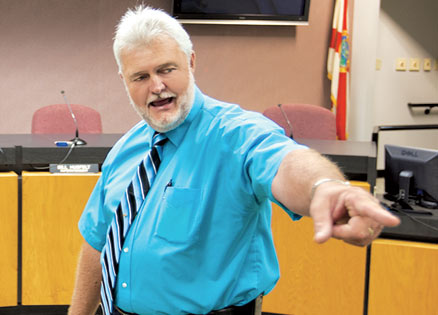
Twenty-six years in law enforcement and I never had to use my gun. That’s the way it should be. That’s the way I always hoped it would be.

Like I tell graduating cadets at the police academy: “The most important people in your career are the ones who love you, the ones who helped you get here today. Your job is to go home to them every evening. Don’t get yourself into anything you can’t get out of and stay safe for the ones you love.”

Well, it doesn’t always work out that way, as I learned one chilly afternoon last December at the school district headquarters in Bay County, where I’m head of the school police department.

December 14 was supposed to be a vacation day for me. I’d taken off the last week and a half before Christmas to get ready for a toy giveaway program I help run in town. The day before, weather reports had showed a big cold front moving in.

The superintendent had asked me to work one more day to make sure that all of the district’s buildings were prepped for the freeze (we don’t get a lot of cold weather down here on the panhandle).

I spent the morning driving around to schools checking on pipes. That afternoon I was at the district office. Four floors below me the school board was meeting in the ground floor boardroom. My cell phone rang.

“Mike,” said a female voice I didn’t immediately recognize, “there’s someone with a gun in the boardroom and we can’t tell if it’s real or fake. Please get down here!” She hung up.

Training overrode my shock. I raced down the stairs. It can’t have taken more than a minute to get down to the ground floor but suddenly I felt like time had stopped and I was running through a tunnel.

My heart beat fast, my muscles tensed. I saw in a flash all my years as a police officer.

My dad had been an auxiliary policeman and my uncle had worked for highway patrol. Straight out of high school I’d worked odd jobs till I could afford the academy. I’d joined the Panama City department the day I graduated.

I’d seen it all and worked every beat from patrolman to sergeant to homicide detective. I’d retired, then come back for more with the school district after a stint on the school board.

I’d fired my gun plenty of times in my career—at the shooting range. Mostly I’d learned how to stay true to that advice I gave to new recruits. I kept safe. I talked shooters into putting down their guns. I never did anything rash, never tried to be a foolish hero.

For over 20 years I’d come home every night to my wife Colleen. I’d never had to ask God whether I’d done the right thing shooting someone. I’d never felt the dread I was feeling now. Please, Lord, keep us safe.

The boardroom was behind a pair of double doors just down the hall from the building’s main entrance. I wasn’t wearing a police uniform—as an administrator I rarely do—but I did have a small .38-caliber pistol in a holster clipped to my khaki trousers. I drew the gun and cracked open one of the doors.

Straight ahead, past rows of upholstered seats with room for about 150 people, sat six members of the school board at a long desk.

Ginger Littleton, the only woman on the board, wasn’t there. The rest of the room was empty except for a tall, heavyset man in a dark sweatshirt, jeans and tennis shoes pacing around in front of the board members.

The man carried a large automatic pistol in his right hand.

Right away I knew this was a hostage situation. The man for some unknown reason was holding the board at gunpoint. He’d told everyone else, including spectators and all the women in the room, to leave.

There might not be enough time to keep this guy talking until the SWAT team arrived, which is one way of dealing with a hostage-taker. And my little .38-caliber pistol was no match for that man’s automatic.

I had five shots. This guy would riddle everyone in the boardroom with bullets before I could empty my chamber.

There was only one thing to do. I had to get to my car parked a few hundred feet away and grab my automatic pistol and bulletproof vest, which I kept in a lockbox in the back hatch.

I would have to confront this man. I would have to put myself between him and the board members.

“Sir,” I called to him. I wanted him to know I was there before I ducked away. “How you doing?”

The man turned. “Oh, one of the cops,” he said—my parka had the word Police on it. I tried to get a glimpse of his face. Was he deranged? Angry? He didn’t look scared at all.

“No, I’m just a school safety officer,” I told him. “You got a real gun there?” The man began walking toward me.

“Come on in,” he said. He sounded aggressive, not one bit afraid. I closed the door and sprinted to my Ford Explorer. I yanked out my gun and threw the bulletproof vest over my parka, not even bothering to cinch it shut.

I raced back to the boardroom, hoping against hope that my brief exchange with the man had bought the board members some time.

The moment I opened the door I heard a shot. The man stood directly in front of the board members, pointing his gun at the superintendent, Bill Husfelt.

Bill’s body jerked back. The other board members dove behind the desk. I was too late!

The man fired again. I stepped into the room, raised my weapon, aimed and squeezed the trigger. The man stumbled forward.

I shot him again. The man fell to the floor with a grunt. I stepped farther into the room, hoping that now that he was wounded the man would surrender.

His arm jerked up and he fired at me. Shot after shot. I dove behind a row of seats and returned fire over the seat-top, trying to keep the man pinned down.

The world seemed to close in even more. I heard nothing but the popping of the bullets. Everything was by instinct.

The firing stopped. Cautiously I raised my head. The man was on the ground, his gun pointed at his own head. Before I could do or say anything the man pulled the trigger. He died instantly.

Bill. I raced to the shooter’s body to make sure he was dead. I grabbed his gun and flung it away. One by one the board members’ heads lifted from behind their desk.

Then Bill’s head rose up. He stood. He was alive! Oh, Lord, I’m either dead and in heaven or Bill and everyone else really did make it, I thought.

“I’m alive, Mike,” said Bill. “I’m alive.”

“Everyone else okay?” I choked.

“We’re okay!” they cried.

At that moment the tunnel that had closed in around me widened and suddenly I was back in normal time, back in the world. Between us, we’d fired 18 rounds in 13 seconds.

I fell to my knees and the full impact of everything that had just happened slammed into me and I burst out crying. The board members staggered out from behind their desk and we all just stared at each other.

Then we looked at the man lying on the floor. Behind Bill’s seat two bullet holes marked the wall—somehow the man’s bullets had ricocheted off the desk and lodged there, missing Bill by inches.

Six more holes scarred a wall at the back of the room—they formed a perfect circle, exactly where my head had been just seconds before I dove behind the seats. If I’d waited even one more instant, I would not have gone home to Colleen. I would not have lived.

Minutes later the SWAT team arrived. Paramedics tended to me, and before I knew it I was being loaded into an ambulance. My heart was going 188 beats a minute. They ended up having to sedate me to bring the rate down.

When I came to in the hospital, Colleen was there at my bedside. It was night. By the grace of God I was alive and with my wife.

It’s been a year since that harrowing December afternoon. I’ve been on TV to talk about the shooting many times and given lots of speeches. I always give thanks for God’s protection, but I do not in any way celebrate that day.

The man I shot was not just some crime statistic. His name was Clay Duke. He was in the boardroom that day because his wife, a schoolteacher, had recently been laid off in a round of budget cuts.

He was a troubled man with a criminal record and extremist views. Still, he was a human being and I do not believe that God ever intends for people’s lives to end in tragedy.

I know God was present in that boardroom that day and I pray that he ministered to Clay Duke’s troubled soul.

I believe that serving in law enforcement is one of the most solemn trusts a person can be given. Police officers have the power to save lives and to take life.

And so even after being called a hero for protecting the Bay County school board, I still give my same advice to new recruits. It’s the ones we love who mean the most.

We honor them and we honor God when we remember that and do everything we can to come home safe at the end of every day.

Download your FREE ebook, The Power of Hope: 7 Inspirational Stories of People Rediscovering Faith, Hope and Love.

A Father’s Inspirational Prayer

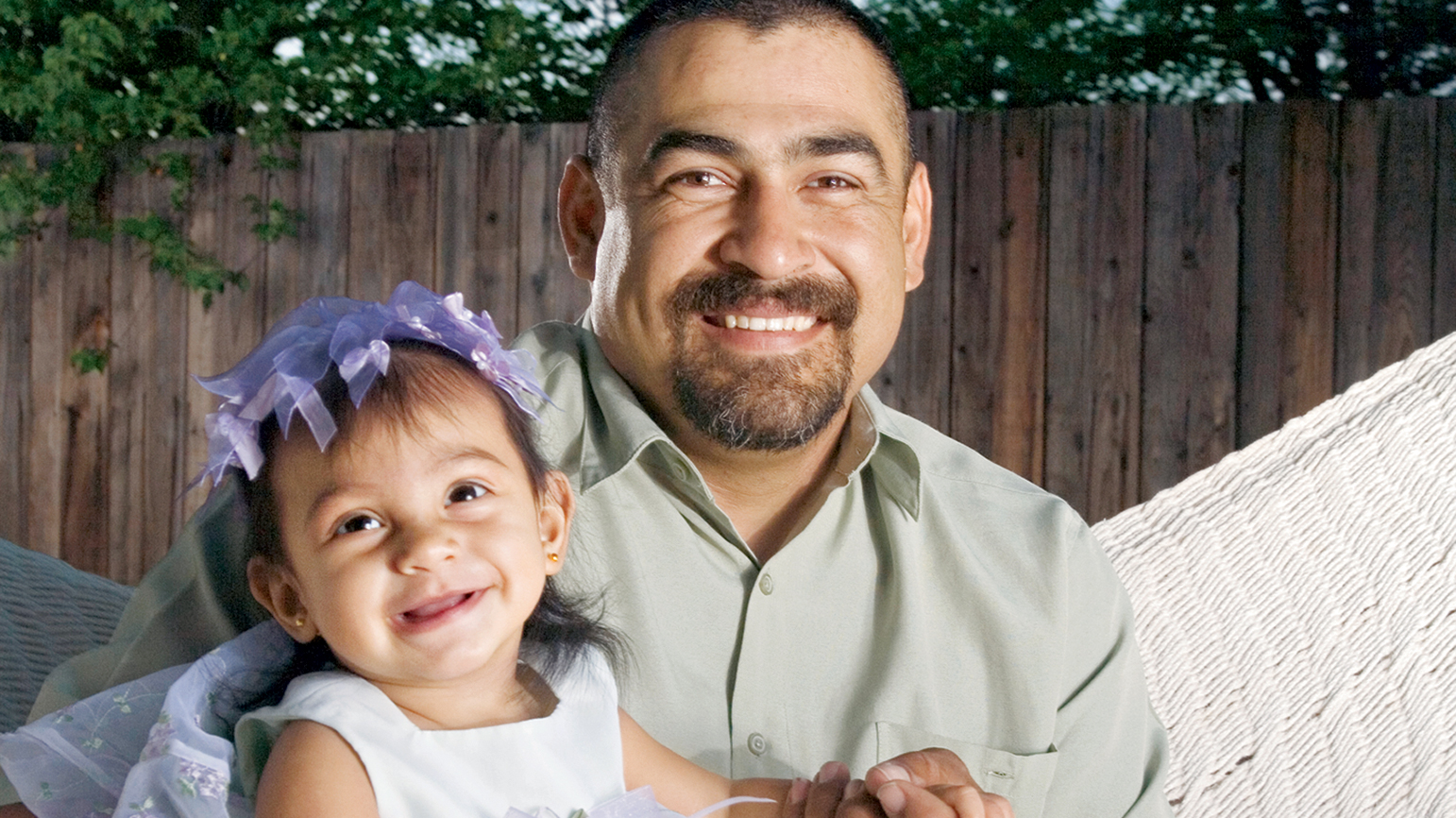
“Manuel…Manuel, wake up. The baby’s coming.” I lifted my head from the pillow and opened my eyes. The dark bedroom slowly came into focus. I could just make out the anxious look on my wife Maria’s face. She brought her hands to her round stomach, where our baby girl, Siara, waited to enter the world. “She’s ready. I can feel it. Today is the day.” I threw off the covers and got dressed. Today is the day, November 27.

Only a year earlier, my son Manuel III had called me while I was at my carpentry job. “Dad, Mom is in the hospital,” he said. “They said she had a miscarriage.” Maria didn’t even know she was pregnant. That made it all the more devastating. We had three teenagers, Manuel, Danny and Cherissa, but another child would’ve been a blessing.

Maria spent hours praying to find some way to move on. Our pastor, our relatives and friends made us meals, helped take care of our kids and sent their prayers. A community of faith got us through. Just like it had when I was a boy.

We lived in Los Angeles, moving from one bad neighborhood to the next. Both my parents had problems with drugs and alcohol. But things began to change when I was 14. My mother was sentenced to a live-in Christian rehabilitation program in Hemet, California. Living there, I learned about faith. These people believed my mother could be helped. They believed I had a future.

I met Maria in Hemet, at a neighbor’s Quinceañera, a coming-of-age celebration for a girl’s 15th birthday. Maria stayed with me despite the mistakes I made over the years. Because of the way I grew up, I didn’t know how to be a husband, how to be a father and how to live a life. But once I trusted God to show me, he didn’t steer me wrong. I had faith that he would find some way to replace our loss.

When we learned Maria was pregnant again after the miscarriage, we were overjoyed, but cautious. Maria is a diabetic, so she was on a strictly controlled diet. The doctors planned to induce labor. I had walkie-talkies so we would be able to communicate with the kids from the delivery room. At Maria’s baby shower all of her friends said blessings over the baby.

It took us six minutes to get to the hospital. “Her contractions are still far apart,” the nurse said. “We have time.” They admitted Maria to the labor room and our kids took turns visiting her.

The contractions came more frequently. Maria grimaced with each one. “I can feel her moving inside of me.” They wheeled her into the delivery room.

“We’re going to induce labor,” the doctor said. “Now.” They broke her water. Suddenly one of the monitors started beeping. The doctor looked up, and the color drained from his face. “Get the crash team,” he shouted. Then, “Code Blue!” More nurses rushed into the room. There were about 20 people now, some around the bed, others setting up a table.

“Okay, Maria,” the doctor said, his voice calm but urgent. “We need you to make this happen now. Push!”

Maria closed her eyes and pushed. A nurse rushed to the doctor’s side, pushing a steel cart carrying different instruments. I stared at my wife’s face, twisted in pain, her teeth gritted. She was trying so hard. I’m pushing with you, Maria. Push! Finally, I saw my daughter’s head poke through. She was blue; she wasn’t moving. They pulled her out, cut the umbilical cord and beelined to the table they’d set up. Why isn’t she crying? A baby is supposed to cry.…

“What’s wrong?” Maria cried weakly. The nurse looked at her through tear-filled eyes. “Pray, Maria. Just pray.”

The emergency team worked frantically. I heard snippets of clipped replies, “no sign of life,” “compressed cord in the birth canal,” “no heartbeat.” They slid a breathing tube down my tiny daughter’s throat. The doctor began gentle compressions on her chest.

Never before had I felt so helpless. I unclipped the walkie-talkie from my belt and called Manuel. I tried to steady my shaky voice. “There are some complications with the baby. You must pray.”

“I will, Dad,” he said. He then told our pastor, who was waiting with him.

I looked at Maria, drenched in sweat. I held her hand lightly and rubbed her shoulder. On the other side of the room, the doctor continued to work. “Zero,” a nurse called out, recording the readings off one of the monitors. Maria and I couldn’t take our eyes off our daughter. Her hair was dark and curly and wet. “I felt her flutter inside of me,” Maria said. “She was alive.” The doctor kept at it. A few more minutes ticked by. The nurse checked the vitals once more.

“Zero,” she said, a flat, hollow sadness to her voice.

The doctor slumped over the table. They removed the breathing tube. The doctor stepped away. “Are you going to call it?” a nurse asked him. He dropped his head. “Yes. We’ve done all we can.”

Maria’s face fell. I held her tight. Lord, no! My wife can’t go home without her baby! All the pain we’d gone through a year ago came flooding back. Most of the staff filed out of the room. Only the doctor and one of the nurses remained.

Suddenly, I was overcome by a strong feeling. An overpowering feeling. Something that was so certain it drove me across the room to the table where Siara lay. I thought about all the prayers we had said. How much God knew we wanted her. No, she could not die.

I went up to my baby and leaned over her. I prayed more intensely than I have in my entire life. Lord, you have never failed. I put my hands on Siara. You raised Lazarus from the dead. Give my daughter your breath of life. I kissed Siara on the forehead.

“Would you like to hold her?” the nurse asked Maria. She nodded weakly. The nurse came over and swaddled Siara in a soft blanket then took her over, laid our baby across Maria’s chest and backed away.

Maria caressed Siara’s tiny face. “Wake up, please,” she said. “You have to fight little one.” She took the baby’s tiny hand and rubbed it against her own cheek. “God, you have to finish what you started.”

Maria wiped away some spittle that had formed on the baby’s lips. Then her eyes went wide. “She’s breathing!” Maria cried out. My heart jumped. Was it possible?

The nurse shook her head. “No, sweetie,” she said sadly. “That’s just the oxygen we pumped into her being expelled.”

Maria’s doctor took his stethoscope and placed it on the baby’s chest. “I don’t believe it! Call Code Blue again!”

A slight pink began to bloom across Siara’s chest. “We’re going to take her to the nursery,” the doctor said. “We’re still working to stabilize her.”

Alone in the room, Maria and I cried together. Tears of joy at what we’d just witnessed. The nurses went back and forth to give us updates. “She has a steady heartbeat. She curled her lip and moved her left arm. These are very good signs.” I radioed my son in the waiting room the good news and he told our pastor. “She’s alive,” I said. The praying continued all through that day and that night, until she was out of danger.

With such a traumatic birth, the doctor was worried about brain and heart damage. She suffered some seizures the first days. But her heartbeat was strong and she didn’t show any signs of being disabled. On December 8 we finally brought Siara home. An early Christmas present. “I can’t explain it,” the doctor said. “Siara is a miracle.”

Today, when I hold my rosy-cheeked, giggling child in my arms, I realize that Siara is a link in a chain of miracles. From the second we heard the silence where cries should have been, despair threatened to make us give up. That same despair that chased my family from neighborhood to neighborhood growing up. That same despair that hit us after the miscarriage. But like those times and so many more in my life, faith replaced despair with hope. We never lost that hope. And that’s a miracle too. The miracle of faith.

A Divine Rescue from the Depths

They didn’t think I could hear them but I could. Every word.

“He’s dead weight,” one voice said. “Exhausted, oxygen deprived, dehy­drated. He’s got nothing left.”

“I don’t know how we’ll get him out before the rain comes,” another man replied. “God help him if that tunnel floods….”

The cold cavern walls stung my cheeks. My lips were caked with dirt, dry and cracked. My empty stomach growled. I strained every muscle in my body, twisted left and right, ex­haled every cubic inch of air that I could. It made no difference.

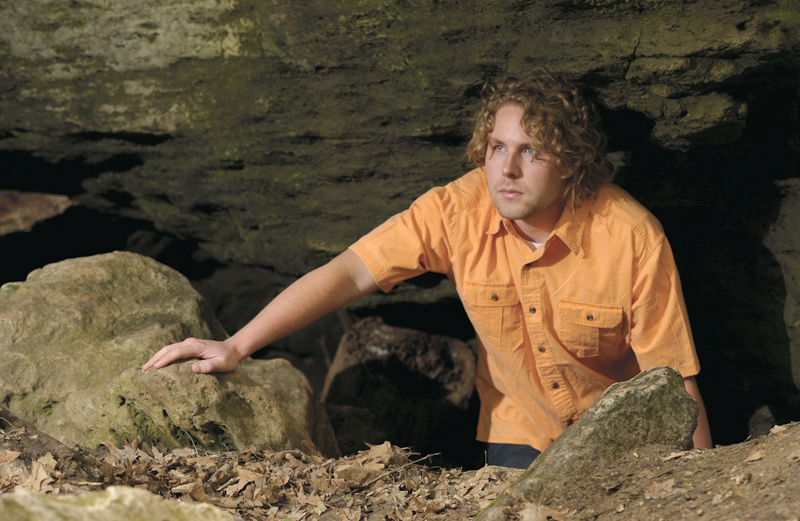
I was far beneath the surface of Maquo­keta Caves State Park. The words of the rescue workers in another cham­ber of the cavern echoed loud and clear. If the tunnel floods…

“Hey, Logan!” This voice was nearer. A female firefighter, one of the only rescuers small enough to squeeze in close to me. “You’re going to be alone for a little bit while we switch shifts. You just take it easy. Okay?”

I lifted my head off the ground and craned my neck toward her. “Yeah, okay,” I said weakly. The firefighter’s flashlight disappeared around the bend and darkness poured into the shaft the way rainwater would, if the forecast held.

These tunnels had been formed by the runoff from cen­turies of storms. What did drowning feel like? I imagined a steady stream trickling into the tunnel, rising around my face, filling my mouth and nose, flooding my lungs.

This was not the day I had thought I’d die. I’d just finished my sopho­more year at Wheaton College, and my friends and I had decided that a spelunking trip would be the perfect way to celebrate.

I knew these caves; I’d explored nearly all of them with my father, starting when I was 10 years old. I never dreamed I’d be in any danger.

Why hadn’t I stayed at camp with the rest of the group? I could be set­ting up the tent, eating s’mores. But my friend Emma and I wanted to ex­plore a real belly-crawler: Wye Cave.

You enter through a sinkhole at the bottom of a valley and descend straight down to a steep boulder slope strewn with wood and leaves swept there by past storms. At the bottom is a tight pinch, about a foot high. You squeeze through, then the cave branches off into several smaller tunnels.

Emma was the first to get stuck. Two other cavers heard our shouts and sent help. It took five hours for firefighters to get her free. As we followed the rescuers out, snaking through the shaft, I got stuck myself.

I’m over six feet tall, and an out­cropping I’d tried to squeeze under trapped my chest against the tunnel wall. “You’re okay, bud,” one of them told me, examining the surrounding rock with his flashlight. “We’ll lead her out and come back for you. Ten minutes, tops.”

I’d believed it at the time. They’ll get me out, ten minutes, tops. When they returned, they tried everything–harnesses and pulleys and ropes, chisels and drills–careful to avoid triggering a collapse. But all the twisting and jostling had moved me less than a foot.

In fact, I was wedged even tighter, my hips pegged against the limestone. First 10 minutes, then an hour, another hour. Now it had been 20, nearly a day in the dark underground.

I wiggled my fingers, the only part of my body I could move freely. I couldn’t feel anything below my knees–just pins and needles. I closed my eyes and breathed deeply from the oxygen mask the rescue workers had set up for me.

I thought of my parents, wait­ing for me at the command center on the surface. They were praying, I knew. Losing their son couldn’t be God’s plan. But what if it was?

A memory flashed before my eyes. The morning before I left for the caves. I’d spent it deep-cleaning my bedroom. Washing my laundry, scrubbing the hardwood floors, or­ganizing my drawers. I browsed the birthday and Christmas cards I’d col­lected over the years.

I even found some of my old toys in the back of my closet and gave them to my three youngest brothers. I laughed at how excited they were about my yo-yos and Matchbox cars.

Somewhere deep down, had I known that I wasn’t coming back from this trip? Had that been God’s way of letting me get my affairs in order?

“Lord, let me free!” I shouted out into the darkness. I gave it my all, what little I had left. Pain shot through my body. I arched my back, twisted my arms and flailed my senseless legs. I clawed at the smooth stone until my fingers felt raw, and screamed like a madman.

Didn’t budge an inch. Too weak. My muscles withered.

It had gotten colder. The lime­stone walls wept with condensation. The rain would be coming soon–no rescue team could stop it. This really is it. I’m 20 years old. This is the way I go.

I would never see my family again. Never finish college or buy my first car, fall in love and get married. I pressed my face against the damp stone and sobbed.

God, I don’t have anything left, I prayed one last time. If there was any chance that I could free myself, it’s gone. I need you now.

I braced my hands against the rock wall and pushed. No strength at all. But cool air whooshed in around me. Like the rock itself had exhaled a breath. The pressure pinning my hips lifted.

I shifted my hips. This time, my muscles didn’t burn. My body didn’t struggle against the stone. Instead, it slipped around the crags, like water through a channel. I could hardly feel my body moving, but every part went exactly where it needed to go, with precisely the right amount of force.

I’d imagined how my body needed to move dozens of times–now every motion was masterfully orchestrated and carried out, with a sudden force­ful jolt. Was someone pushing me from behind?

I flopped out onto the ledge and collapsed like a broken marionette. I was free.

My body buzzed, the blood rushing back into my extremities. I looked behind me. No one there to have pushed me. I was quaking. Exhausted and sore. Someone had left a bottle of water and I guz­zled it down. Ahead, beams of light danced around the dark cavern, the new shift of rescuers on their way.

Strong arms gripped me and helped me stand. Jubilant voices echoed off the cavern walls. “He’s okay! He’s free! Call command. We’re bringing him up now.”

I squinted against the bright after­noon sun. The rain had held off. The clouds were moving away. Dozens of rescue workers surrounded the mouth of the cave, cheering. My par­ents ran up to me, tears in their eyes. EMTs lifted me onto a stretcher and into the back of an ambulance.

It had taken all of their efforts to keep me safe, to keep me alive while I struggled down in the depths. But only a stronger push could set me free.

Read Logan's mom's account of this story!

Download your FREE ebook, Mysterious Ways: 9 Inspiring Stories that Show Evidence of God's Love and God's Grace.

A Desperate Prayer Answered at the Top of the World

A thousand feet. Just over three football fields lined up end to end. But at 28,000 feet above sea level—an altitude climbers call the “death zone”—a single step can require an exhausting effort, even when breathing supplemental oxygen, which I was.

I prayed nothing would go wrong with my equipment on this final, solo push to the summit. Without gas the climb would be almost impossible.

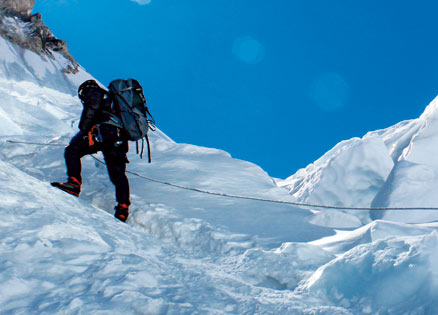
There are very few places on earth where a man can stand at 28,000 feet. Mount Everest is one. It was where I stood that May night last year under the brilliance of a full moon, in my quest to climb the highest peaks on all seven continents.

Of course, Everest was the highest mountain of all, and by far the deadliest of the seven summits.

I checked my watch: 2:30 A.M. It would take all night to reach the top and half of the next morning to get back down. And I’d have to do it alone. Not what I’d planned. And not what I’d promised my wife, JoAnna, back home in Snoqualmie, Washington.

“I’ll have a Sherpa guide the whole time,” I’d said.

Himalayan Sherpas are legendary for their experience and endurance, and I’d engaged a good one for this climb, named Pasang Temba. He’d already summited the mountain three times.

“I’m going to pray for you anyway,” she said. “Constantly. I won’t stop.”

Now I needed those prayers more than my wife could possibly know.

First my climbing partner, Dennis Broadwell, was hit with stomach problems. He was slowly recovering in his tent back at Camp II. Then Pasang got sick.

I thought long and hard about continuing, especially after I might have damaged my goggles. I’d never intended to climb Mount Everest solo.

The risks were much more magnified. A lot of factors were in play—the weather, the conditions, how I felt. I decided to go for it.

Conditions were good—for the next eight or nine hours, anyway. After that you never know. On Everest weather kills more people than anything else. I reminded myself of the reason I’d undertaken this challenge: to raise money for AIDS research.

I tightened my crampons, checked my radio, double-checked the location of the extra oxygen canister Pasang had stashed for me (I’d need it on the way down), and set off up the ropes to the top of the world.

As I did, an image of JoAnna flashed through my mind, her eyes closed in prayer. I recalled our last night together before I left for Nepal two months earlier.

“I’m worried about you, Brian,” she said, clutching me tight.

“Don’t be,” I said gently, listing the reasons I’d return to her and our two young children safe and sound. “I promise I won’t take any foolish chances. You know me better than that.”

I rechecked my equipment, then headed off, my focus toward the top, one slow step at a time. Only a thousand vertical feet. So close….

I felt myself fall into a rhythm, slow and steady. The climbing was hard but not technically difficult. The moon was so huge and close, like a great inflated orb, that the jagged spine of the Himalayas seemed in danger of tearing a hole in it.

Stars punctuated the sky. What a beautiful night it was! I didn’t want this fear and apprehension to ruin it. The wind was baying softly, not screaming as it so often does this close to the jet stream.

Wow, I’m the highest person in the world right now, I thought. Enjoy this moment.

Soon I reached the only real technical challenge on the south approach to the summit: the storied Hillary Step, probably the most celebrated pitch in all of mountaineering.

Named after Sir Edmund Hillary, the New Zealand beekeeper who was the first to conquer Everest in 1953, its 40-foot high, near-vertical, ice-encrusted rock face would at sea level be a quick training exercise.

At above 28,000 feet it is a life-or-death obstacle. And I was doing it alone in the dark. Now let’s see what kind of a climber you really are, I thought.

I checked my harness and carabiners then started up the step guided by the beam from my headlamp. By the time I reached the top of the cliff I was monitoring my oxygen.

I lay in the snow feeling the frantic pounding of my heart through my layers of clothing. I was sweating furiously though the temperature was well below zero. Human beings don’t belong up here, I thought as my respiration and pulse returned to what is considered normal at this height.

I gazed up at the shadowy bulge above. The summit. All that separated me from the final slope was a horribly exposed fin of serrated ice and rock several hundred feet in length with sheer drop-offs on either side.

I clutched the rope and headed across, one foot in front of the other. If I had sat down and straddled the ridge I would have had one leg dangling in Nepal and the other in Tibet, thousands of feet straight down.

Nobody ever finds bodies that fall from here, I couldn’t help thinking.

Finally I made the slope and headed for the top. At 6:30 A.M., with a blinding sun spilling across the vast Tibetan plain, I stood on the roof of the world.

I pulled on my sun goggles and radioed down to Camp III. In a voice hoarse with exhaustion and emotion I announced that I’d made it. They roared their congratulations.

“Way to go, Brian!” I heard Dennis croak above the staticky din.

Kaleidoscopic strings of prayer flags left by earlier summiters snapped wildly in the wind. Yanking off my goggles, I extracted my camera from inside my climbing suit and snapped panoramic pictures all the way to China. I was up there for almost an hour.

It was getting late. I had to get off the summit before apoxia and hypothermia set in. Finally I put away my camera and commenced the descent. I glanced below me and saw…nothing. Oh, no… I was snow-blind.

And then I realized: When I’d dropped my goggles the day before, the internal lens had cracked. They were almost useless. Without my goggles for protection, I’d exposed my eyes to the blazing sunlight and effectively sunburnt my corneas. It would be 48 hours of agony before I would see normally again.

I thought about that knife-edge ridge and the four-story Hillary Step to be negotiated. A feeling of doom crept over me. Lord, no…

I grasped for my radio, but there was no way I could call for help. When I had turned it off, my frozen fingers fumbled with the switch, changing the frequency. Without sight, I couldn’t possibly find the right setting.

Don’t panic, I thought. If you panic up here, you die for sure. I calmed myself, recalling my US Naval Aviation Rescue Swimmer Training.

There, daily I was in an oxygen-less environment, where it felt like I was drowning. I’d made it through that. I can do this now, I thought.

Squinting, I could just make out blurs. One step at a time, I told myself. I felt for the rope. Got it! I clipped in and inched my way along.

Now I had another worry. My oxygen canister only held about six hours of air. At the rate I was moving I’d probably run out before I reached the canister Pasang had stashed. How would I ever find it blind?

I forced myself forward, taking baby steps across the dizzying ridge, stopping every few seconds to check my balance. I arrived at the Hillary Step, 40 feet straight down. I’d have to do it blind.

I rappelled to its base, bouncing off the rock and ice all the way down. I paused to rest and wasn’t sure I’d ever get up again. I’d been 30 hours without sleep.

Concentrate, I scolded myself. I took one step, then another—and then felt a sudden snap as my boot slipped. A blurry object bounced down the face of the mountain, one of my crampons.

I took another step. “No!” I heard myself scream as I went into a free fall. I flew like a shot down 20 feet, till my safety rope drew taut. I took a deep, shuddering breath. The loose crampon had landed 15 feet above me.

I climbed back up to get it. I bent to pick it up. As I put it back on, I heard a deep, ominous sound, like some kind of prehistoric thundering herd, something so powerful it shook the mountain.

Avalanche! It felt like the earth was sliding out from under my feet. I wrapped both arms around the rope and held on for dear life.

The snow came roaring down. Somehow I kept my grip. I held on for a long time even after the tsunami of snow had passed. When I let go, I squinted at my gloves. They’d burned right through. I struggled to my feet and started down.

I checked my oxygen tank, pulling the regulator up to my eyes and angling it into the sun. My air supply was down to almost nothing. Lord, I have to get to that spare tank. I picked up my pace. It was getting harder to breathe.

There, down ahead! A cylindrical object glinted in the sun. I practically crawled to it. The oxygen canister! I unscrewed the almost empty one from my breathing apparatus then attached the full canister. I opened the valve. Nothing. No flow at all. Zero.

I tried again. Still nothing. Frantically I reattached the near-empty canister. For some inexplicable reason, I shoved the spare in my pack before moving on even though it made no sense to carry the extra weight.

I tried taking shallow breaths. Anything to preserve precious fuel. I hadn’t gone 100 yards when I felt my lungs collapsing. The tank was empty. I ripped the oxygen mask off my face. I’m suffocating!

I stood still and did the only thing I could. Lord, I prayed, I cannot do this alone. JoAnna’s image passed before me. I was certain at that very moment she was praying along with me and that our prayers were being answered. I felt an incredible peace, then…

Maybe I sensed my wife’s presence from somewhere deep inside me. Maybe I sensed God’s. All I knew was I felt infused with a strange energy.

Try reattaching the canister, I thought. Laboriously I screwed the tank back on and opened the valve once again. Oxygen hissed through the regulator!

I stood up, weak but rejuvenated. I hiked a little farther, rappelled clumsily down a steep section of the mountain and hiked some more. Ahead of me, a field of boulders started moving.

Am I hallucinating? I wondered.

I heard a voice. A man’s voice. “Brian, you’re alive!” Pasang cried.

My Sherpa grabbed and hugged me, then we staggered together the final quarter-mile to our tents.

“I have been watching the mountain for you,” he said.

I slept 15 hours. Even then, my eyes felt as if they were glued shut and my legs felt like rubber. It took another day, and the help of Dennis and our Sherpas, to get me down the mountain, low enough for my eyesight to begin to return.

That night I called JoAnna on a satellite phone. I told her the whole story, about being blind and about my last, desperate prayer.

“I was praying for you, Brian,” she told me. “I knew you were in trouble. I could sense it. I prayed harder than I ever have. It was almost as if I were there on the mountain with you.”

There was another presence with me at that desperate moment too. A presence without whom no one can do great things. I may have reached the summit of the world by the power of my climbing, but I came home safely only by the grace of God.

Did you enjoy this story? Subscribe to Guideposts magazine.

A Child’s Answered Prayer

It had been a long day as I read a final story to my daughter at bedtime. I’d spent hours trying to figure out how to pay all our bills, knowing my husband was working a job he hated. But it was better than no job at all, which was where we’d been not long ago. We’d prayed and prayed for him to get back into teaching and out of the paper-buying business he’d been stuck in the past few years.

“Please let me see a frog tonight, in Jesus’ name, amen.”

I hugged my four-year-old daughter good-night and tucked her into bed. A frog? Her prayer was simple and cute, something from a book of children’s prayers.

“Well, Michelle, I haven’t seen any frogs yet this year; we’ll just have to wait and see.” I felt bad that she would be disappointed. “God can do anything,” she announced. “Just like Daddy.”

A lump filled my throat. She trusted in her father and her heavenly Father. Difficult times had made me doubt God’s love for me.

I wanted to give her my own reassurance that God loves her even if she doesn’t see a frog. But somehow it wasn’t easy to give her the hope I wasn’t feeling.

I turned off the light and went to the kitchen to do the dishes. With hands sunk in hot, soapy water, I closed my eyes. “I know it’s a silly request, God. But, there’s something about the way she truly believes You’ll answer her prayer. Do You hear her? Do You hear me?”

Strengthen Your Faith with Free ebooks on Prayer, Bible Study and More

My husband returned home late from his volunteer work at church with the English as a Second Language classes for refugees. Michelle had been asleep an hour. “Oops, laundry,” I said, jumping up to move the wet clothes from the washer to the dryer. I turned on the garage light, startled by movement near the open door that led to the backyard.

Our dog followed us into the garage and then ran and barked at the corner, stopping to sniff at something I couldn’t see. He whined and wagged his tail and began to growl. “Stop it, Tippy!” I shouted, worried he’d wake up Michelle. I took a careful step forward, ready to run if one of our giant, fast-moving water bugs should suddenly head my way.

It wasn’t a water bug. Near the back door sat a large bug-eyed brown frog. “Outside,” I ordered the dog.

“Quick,” I shouted, “wake up Michelle!”

My surprised husband stared at me as I quickly explained about our daughter’s prayer. I didn’t tell him I hadn’t believed it would be answered or that a froggy prayer was tied to my own fear that God might not care about us. I just told him it was important that she see the frog that night. “Michelle, wake up. Look what I have,” I said, holding the frog close to her. “God really answered your prayer.”

My heart beat faster as I expected her to leap out of bed with excitement. She held the frog and petted it, more sleepy than interested and not the least bit surprised her prayer had been answered. “I knew He would,” she said as she fell back onto her pillow and closed her eyes. But I was overwhelmed at the quick response to her simple prayer. What a loving Father, to see how important such a small child’s request was, a chance for her to see the power of an earnest prayer.

I carefully took the frog out into the front yard and put him into the bushes. He hopped away and I grinned, wondering if he was off to answer someone else’s prayer. My faith took a leap that night as I watched the frog go. Sometimes my daughter teaches me more than I teach her. And sometimes a frog is more than just a frog. This time, it was a small way for God to show me in a huge way how much He loves our family. He is listening.

7 Prayers God Always Answers

Like everyone, I have received many answers to prayer. As the axiom goes, “Some were answered ‘yes,’ some ‘no’ and some ‘not now.’”

But I have learned that there are some prayers God can’t resist. Some prayers He answers with alacrity. Some prayers seem to spur God to act. Here are seven such prayers:

1) I surrender.
Jesus said, “Whoever comes to me I will never cast out” (John 6:37, ESV). God honors and accepts any act of surrender, large or small.

2) Bring Your kingdom; have Your way.
Jesus taught his followers to pray, “Your kingdom come, your will be done, on earth as it is in heaven” (Matthew 6:10, ESV). Learning to pray this sincerely—and specifically—can transform your praying and your living. It is not only a prayer He taught us to pray, it is one He is anxious to answer

3) Forgive me.
No one who has sincerely asked for God’s forgiveness has ever been denied. He is “good and forgiving, abounding in steadfast love to all who call upon [Him]” (Psalm 86:5, ESV).

4) Lead me.
Do you need guidance in making a decision? Do you crave strength to face a challenge? Do you want God’s purpose to be accomplished in a specific area of your life? Pray like the psalmist: “Teach me to do your will, for you are my God. May your gracious Spirit lead me forward on a firm footing” (Psalm 143:10, NLT). Though you may not always feel His hand holding yours, God will always answer when you ask Him to lead you.

5) Draw them to You.
The Bible says that God doesn’t want anyone to perish; He wants everyone to come to repentance and experience new, abundant life in Christ (2 Peter 3:9). Therefore, whenever you pray for God to have mercy on someone and draw that person closer to Himself, He will answer. It may not seem that way. It may not happen as quickly as you would like or in the way that you had in mind, but when His will and your praying agree with each other, He will answer.

6) Use me.
The Bible records the earliest Christians praying, not for deliverance from hardship or persecution, but for God to “enable your servants to speak your word with great boldness” (Acts 4:29, NIV). And God answered their prayer, as He will respond to any of His servants who pray to be used. However, a warning is in order: Brace yourself when you pray to be used, because you may be surprised at how He answers.

7) Make me like You.
God loves to answer when a follower of Jesus prays to be made to look and act more and more like Jesus Christ, because that is what He wants and a work He has already begun in you (Romans 8:29, 2 Corinthians 3:18, 1 John 3:2).

These are not the only prayers God can’t resist, perhaps. But I’ve never known Him to turn down a single one of them. He has told us to pray these prayers, and over and over again has proven Himself willing and anxious to hear and answer them.

6 Ways to Wait for God’s Answer to Your Prayers

If you’re anything like me, your prayers often reflect impatience, even petulance. “Hurry up, God!” “What’s taking so long?” But the person who prays must learn to wait on God. So what does that mean? How do we do that? Waiting on God is not a passive posture. It involves action. It requires effort, much of which is counter-intuitive, particularly to 21st century people.

Here are 6 ways to actively wait to hear from God:

Community Newsletter

Get More Inspiration Delivered to Your Inbox

Notice: JavaScript is required for this content.

/* FORM STYLES */

#nf-form-5-cont {
background-color:#ffffff;
border-radius:35px;
-webkit-border-radius:35px; }

/* FIELDS STYLES */

.nf-form-content .nf-field-container #nf-field-27-wrap {
margin:0;
border-radius: 25px;
-webkit-border-radius: 25px; }
.nf-form-content .nf-field-container #nf-field-27-wrap .nf-field-element .ninja-forms-field {
background-color:#ffffff;
border-color:#ffffff;
margin-bottom:0;
border-radius: 25px;
-webkit-border-radius: 25px; }
.nf-form-content .nf-field-container #nf-field-28-wrap {
width:120px;
}
.nf-form-content .nf-field-container #nf-field-28-wrap .nf-field-element .ninja-forms-field {
background-color:#00ab84;
width:120px;
}
.nf-form-content .nf-field-container #nf-field-28-wrap .nf-field-element .ninja-forms-field:hover {
background-color:#00ab84;
}


var formDisplay=1;var nfForms=nfForms||[];var form=[];form.id=’5′;form.settings={“objectType”:”Form Setting”,”editActive”:true,”title”:”Sign up for Newsletter”,”show_title”:0,”allow_public_link”:0,”embed_form”:””,”clear_complete”:0,”hide_complete”:0,”default_label_pos”:”above”,”wrapper_class”:”master-signup-form-wrap”,”element_class”:”master-signup-form”,”key”:””,”add_submit”:0,”currency”:””,”unique_field_error”:”A form with this value has already been submitted.”,”logged_in”:false,”not_logged_in_msg”:””,”sub_limit_msg”:”The form has reached its submission limit.”,”calculations”:[],”container_styles_show_advanced_css”:1,”title_styles_show_advanced_css”:0,”row_styles_show_advanced_css”:0,”row-odd_styles_show_advanced_css”:0,”success-msg_styles_show_advanced_css”:0,”error_msg_styles_show_advanced_css”:0,”formContentData”:[{“order”:1,”cells”:[{“order”:0,”fields”:[“master_signup_email”],”width”:66},{“order”:1,”fields”:[“subscribe_now_1660636976556″],”width”:34}]}],”changeEmailErrorMsg”:”Please enter a valid email address!”,”changeDateErrorMsg”:”Please enter a valid date!”,”confirmFieldErrorMsg”:”These fields must match!”,”fieldNumberNumMinError”:”Number Min Error”,”fieldNumberNumMaxError”:”Number Max Error”,”fieldNumberIncrementBy”:”Please increment by “,”formErrorsCorrectErrors”:”Please correct errors before submitting this form.”,”validateRequiredField”:”This is a required field.”,”honeypotHoneypotError”:”Honeypot Error”,”fieldsMarkedRequired”:”Fields marked with an * are required”,”container_styles_background-color”:”#ffffff”,”container_styles_border”:””,”container_styles_height”:””,”container_styles_margin”:””,”container_styles_padding”:””,”container_styles_float”:””,”container_styles_advanced”:”border-radius:35px;n-webkit-border-radius:35px;”,”title_styles_border”:””,”title_styles_height”:””,”title_styles_width”:””,”title_styles_font-size”:””,”title_styles_margin”:””,”title_styles_padding”:””,”title_styles_float”:””,”row_styles_border”:””,”row_styles_width”:””,”row_styles_font-size”:””,”row_styles_margin”:””,”row_styles_padding”:””,”row-odd_styles_border”:””,”row-odd_styles_height”:””,”row-odd_styles_width”:””,”row-odd_styles_font-size”:””,”row-odd_styles_margin”:””,”row-odd_styles_padding”:””,”success-msg_styles_border”:””,”success-msg_styles_height”:””,”success-msg_styles_width”:””,”success-msg_styles_font-size”:””,”success-msg_styles_margin”:””,”success-msg_styles_padding”:””,”error_msg_styles_border”:””,”error_msg_styles_width”:””,”error_msg_styles_font-size”:””,”error_msg_styles_margin”:””,”error_msg_styles_padding”:””,”drawerDisabled”:false,”export_settings”:[],”form_title_heading_level”:”3″,”ninjaForms”:”Ninja Forms”,”fieldTextareaRTEInsertLink”:”Insert Link”,”fieldTextareaRTEInsertMedia”:”Insert Media”,”fieldTextareaRTESelectAFile”:”Select a file”,”formHoneypot”:”If you are a human seeing this field, please leave it empty.”,”fileUploadOldCodeFileUploadInProgress”:”File Upload in Progress.”,”fileUploadOldCodeFileUpload”:”FILE UPLOAD”,”currencySymbol”:”$”,”thousands_sep”:”,”,”decimal_point”:”.”,”siteLocale”:”en_US”,”dateFormat”:”m/d/Y”,”startOfWeek”:”1″,”of”:”of”,”previousMonth”:”Previous Month”,”nextMonth”:”Next Month”,”months”:[“January”,”February”,”March”,”April”,”May”,”June”,”July”,”August”,”September”,”October”,”November”,”December”],”monthsShort”:[“Jan”,”Feb”,”Mar”,”Apr”,”May”,”Jun”,”Jul”,”Aug”,”Sep”,”Oct”,”Nov”,”Dec”],”weekdays”:[“Sunday”,”Monday”,”Tuesday”,”Wednesday”,”Thursday”,”Friday”,”Saturday”],”weekdaysShort”:[“Sun”,”Mon”,”Tue”,”Wed”,”Thu”,”Fri”,”Sat”],”weekdaysMin”:[“Su”,”Mo”,”Tu”,”We”,”Th”,”Fr”,”Sa”],”recaptchaConsentMissing”:”reCaptcha validation couldn't load.”,”recaptchaMissingCookie”:”reCaptcha v3 validation couldn't load the cookie needed to submit the form.”,”recaptchaConsentEvent”:”Accept reCaptcha cookies before sending the form.”,”currency_symbol”:””,”beforeForm”:””,”beforeFields”:””,”afterFields”:””,”afterForm”:””};form.fields=[{“objectType”:”Field”,”objectDomain”:”fields”,”editActive”:false,”order”:1,”idAttribute”:”id”,”label”:”Email”,”type”:”email”,”key”:”master_signup_email”,”label_pos”:”hidden”,”required”:1,”default”:””,”placeholder”:”@Your email”,”container_class”:”master-email-wrap”,”element_class”:””,”admin_label”:”master_signup_email”,”help_text”:””,”custom_name_attribute”:”email”,”personally_identifiable”:1,”wrap_styles_border”:””,”wrap_styles_width”:””,”wrap_styles_margin”:0,”wrap_styles_padding”:0,”wrap_styles_float”:””,”wrap_styles_show_advanced_css”:1,”label_styles_border”:””,”label_styles_width”:””,”label_styles_font-size”:””,”label_styles_margin”:0,”label_styles_padding”:0,”label_styles_float”:””,”label_styles_show_advanced_css”:0,”element_styles_border”:””,”element_styles_width”:””,”element_styles_font-size”:””,”element_styles_margin”:0,”element_styles_padding”:0,”element_styles_float”:””,”element_styles_show_advanced_css”:1,”cellcid”:”c4722″,”value”:””,”drawerDisabled”:false,”wrap_styles_advanced”:”margin:0;nborder-radius: 25px;n-webkit-border-radius: 25px;”,”element_styles_background-color”:”#ffffff”,”element_styles_border-color”:”#ffffff”,”element_styles_advanced”:”margin-bottom:0;nborder-radius: 25px;n-webkit-border-radius: 25px;”,”manual_key”:true,”id”:27,”beforeField”:””,”afterField”:””,”parentType”:”email”,”element_templates”:[“email”,”input”],”old_classname”:””,”wrap_template”:”wrap”},{“objectType”:”Field”,”objectDomain”:”fields”,”editActive”:false,”order”:2,”idAttribute”:”id”,”label”:”Subscribe Now”,”type”:”submit”,”cellcid”:”c4725″,”processing_label”:”Processing”,”container_class”:””,”element_class”:””,”key”:”subscribe_now_1660636976556″,”wrap_styles_border”:””,”wrap_styles_width”:120,”wrap_styles_margin”:0,”wrap_styles_padding”:0,”wrap_styles_float”:””,”wrap_styles_show_advanced_css”:1,”element_styles_border”:””,”element_styles_width”:120,”element_styles_font-size”:””,”element_styles_margin”:0,”element_styles_padding”:0,”element_styles_float”:””,”element_styles_show_advanced_css”:0,”submit_element_hover_styles_border”:””,”submit_element_hover_styles_width”:””,”submit_element_hover_styles_font-size”:””,”submit_element_hover_styles_margin”:””,”submit_element_hover_styles_padding”:””,”submit_element_hover_styles_float”:””,”submit_element_hover_styles_show_advanced_css”:0,”wrap_styles_advanced”:””,”element_styles_background-color”:”#00ab84″,”submit_element_hover_styles_background-color”:”#00ab84″,”drawerDisabled”:false,”id”:28,”beforeField”:””,”afterField”:””,”value”:””,”label_pos”:”above”,”parentType”:”textbox”,”element_templates”:[“submit”,”button”,”input”],”old_classname”:””,”wrap_template”:”wrap-no-label”}];nfForms.push(form);

1. Don’t stop praying.

David, the great shepherd-king of Israel, earned a Ph.D. in waiting on God. He wrote and sang of it often:

I waited patiently for the Lord; And He inclined to me and heard my cry (Psalm 40:1, NASB).

Wait for the Lord; Be strong and let your heart take courage; Yes, wait for the Lord (Psalm 27:14, NASB).

Indeed, none of those who wait for You will be ashamed (Psalm 25:3, NASB).

Who better, then, to show us how to wait on God than David and his Psalm 130? Psalm 130 is a prayer from beginning to end. David pours out his heart to God:

Out of the depths I have cried to You, O Lord.
Lord, hear my voice!
Let Your ears be attentive
To the voice of my supplications
(Psalm 130:1-2, NASB).

Waiting on God is not a cessation of prayer, a pause but intensification. If we are waiting on God we are, if anything, more active in prayer than we were before.

2. Examine yourself.

As he waits, David’s thoughts turn inward, reflecting on the status of his heart and life and reminding himself of God’s fondness for forgiveness:

If You, Lord, should mark iniquities,
O Lord, who could stand?
But there is forgiveness with You,
That You may be feared
(Psalm 130:3-4, NASB).

While we wait on God, we also search our own hearts to confess any sin that may hinder an answer or make any surrender that will further align us with God’s plans and purpose.

3. Focus and refocus your heart, soul and mind.

David doesn’t spend his time twiddling his thumbs or pacing the floor; he focuses his thoughts and aligns himself with God’s word:

I wait for the Lord, my soul does wait,
And in His word do I hope
(Psalm 130:5, NASB).

Waiting on God often involves reading and repeating God’s word and focusing our thoughts on “what is true, and honorable, and right, and pure, and lovely, and admirable….[and thinking] about things that are excellent and worthy of praise” (Philippians 4:8, NLT).

4. Keep your eyes and heart open and alert.

Waiting on God requires a heightened attentiveness and watchfulness in which you scan your surroundings, circumstances, conversations and “coincidences” for clues and indications of God’s answer on the horizon:

My soul waits for the Lord
More than the watchmen for the morning;
Indeed, more than the watchmen for the morning
(Psalm 130:6, NASB).

A watchman on the walls of a city was constantly searching the horizon and scanning the landscape for movement. The soul who waits on God will be similarly alert for hints and harbingers of God at work.

5. Keep trusting, reminding and hoping.

Even as he waits, David reminds himself and those around him of who God is, what God has done and why they should continue to hope in Him:

O Israel, hope in the Lord;
For with the Lord there is lovingkindness,
And with Him is abundant redemption
(Psalm 130:7, NASB).

6. Keep going.

Too often when we are waiting on God—or think we are—we tense and freeze and stop progressing. But God is just as able to close doors and pathways as He is to open them. So rather than choosing inaction, we who wait on God can keep moving ahead, trusting as David did that God will guide our steps as we go:

And He will redeem Israel
From all his iniquities
(Psalm 130:8, NASB).

4 Ways to Ask God to Answer Your Prayers

There are many good reasons to read the Bible–inspiration, comfort, instruction.

But one of the best reasons is for instruction in how to pray. And one of many ways the Bible instructs us in praying is by showing us examples of how the people of God have prayed before us. One such lesson is to give God good reasons to answer your prayers.

Most of us, knowing God knows everything and can see into our hearts, skip this technique. But the prayers of the Bible show us that building a case to God in prayer is definitely a biblical way to pray. The prayers of people like King David and Solomon and others reveal at least four ways to twist God’s arm in prayer, so to speak.

1) Refer to God’s attributes.
The “sons of Korah” (a clan devoted to worship music and pageantry) concluded the long prayer that became Psalm 44 with these words:

Rise up and help us;

rescue us because of your unfailing love (Psalm 44:26, NIV).

They buttressed their requests with an appeal to God’s nature—His unfailing love. Referencing God’s attributes is a great way to pray. It grounds our prayers not in what we want, necessarily, but in who He is.

2) Remind God of His promises.
The prayers of Bible saints include frequent references to God’s promises. At the dedication of the Jerusalem Temple, King Solomon prayed:

“Give attention to your servant’s prayer and his plea for mercy. Hear the cry and the prayer that your servant is praying in your presence. May your eyes be open toward this temple day and night, this place of which you said you would put your Name there. May you hear the prayer your servant prays toward this place” (2 Chronicles 6:19-20, NIV).

God’s memory is not faulty, of course. He does not need to be reminded of anything. But we often do, and praying “You said” prayers can help us remember God’s words and focus our requests on the unfailing promises of God.

3) Mention desirable or undesirable consequences.
What might happen if God doesn’t answer your prayers? How might things be different when He does? These are good questions to ask in prayer, as Heman the Ezrahite did in Psalm 88:

Do you show your wonders to the dead?
Do their spirits rise up and praise you?
Is your love declared in the grave,
your faithfulness in Destruction?
Are your wonders known in the place of darkness,
or your righteous deeds in the land of oblivion?
But I cry to you for help, Lord;
in the morning my prayer comes before you (Psalm 88:10-13, NIV).

God knows all things, of course. So why did Heman pray like that? Maybe because prayer is a two-way conversation. Maybe because Heman wanted God to know he had thought long and hard about what he was asking. Maybe because, again, praying this way focuses our prayers not on our momentary need but on God’s eternal glory, which is always a good way to pray.

4) Reveal your investment in the answer to your prayer.
In a psalm believed to reflect King David’s repentance after sinning against Uriah, Bathsheba, and God Himself, the king prayed:

Create in me a pure heart, O God,
and renew a steadfast spirit within me.
Do not cast me from your presence
or take your Holy Spirit from me.
Restore to me the joy of your salvation
and grant me a willing spirit, to sustain me.
Then I will teach transgressors your ways,
so that sinners will turn back to you (Psalm 51:10-13, NIV).

It seems a little like David is bribing God, doesn’t it? “If you do this for me, I’ll do that for you.” Maybe there was some of that going on. But his promise to “teach transgressors your ways, so that sinners will turn back to you” shows a willingness to change and to contribute in more or better ways to God’s purposes as a result of God’s answer.

Praying like this may feel a little strange at first, as though you are approaching God like a used car salesman trying to swing a deal. But it is nonetheless a biblical way to pray, and apparently a prayer God welcomes. Try it. After all, it may not be God’s arm that needs twisting but yours.

4 Questions to Ask If Your Prayers Aren’t Answered

We read the Bible and wonder why our prayers don’t get answered like the people we read about in Scripture. Elijah called down fire from heaven. Hezekiah rose from his deathbed. Paul raised Eutychus from the dead. Man, if only…

But not every prayer was answered. The Bible itself makes that clear. Here are four questions to ask yourself if your prayers aren’t being answered.

1) Have I asked—or just wished?

A wish isn’t a prayer. James wrote to early Christians, “You do not have because you do not ask God” (James 4:2, NIV). Well, duh. But how often have I wanted God to do something but haven’t really made that “something” a subject of prayer? More often than I care to admit.

2) Have I asked according to God’s will?

The author of the Bible book of 1 John wrote, “This is the confidence we have in approaching God: that if we ask anything according to His will, He hears us. And if we know that He hears us—whatever we ask—we know that we have what we asked of Him” (1 John 5:14-15, NIV). Even Jesus submitted His requests to the Father’s will (see Matthew 26:39, 42). So, it’s worth asking myself whether I’m praying according to my agenda—or God’s.

3) Have I asked from selfish motives?

James also wrote, “When you ask, you do not receive, because you ask with wrong motives, that you may spend what you get on your pleasures” (James 4:3, NIV). Holy moly, this is a loaded question. What percentage of my prayers are motivated by my own desire—demand, even—for pleasure and comfort? Chances are, the higher that percentage, the lesser my experience of answered prayer is likely to be.

4) Have I considered that God may have something better in mind?

Elijah—the great champion of God, the great man of faith, the great prophet of Israel, prayed, “Take my life” (1 Kings 19:4, NIV). Mary and Martha, grieving the recent death of their brother, Lazarus, each said to Jesus, “Lord, if you had been here, my brother would not have died” (John 11:32, NIV). In each case, the petitioner was disappointed—for a time, at least. Elijah eventually went to heaven in a chariot of fire, and Mary and Martha saw God’s resurrection power displayed before their very eyes. God’s ways are not our ways, He says (see Isaiah 55:8-9), so it shouldn’t surprise us too much if our prayers sometimes go unanswered because He has a better idea.

These are not the only reasons our prayers go unanswered (see this post for a few more), but they do provide us with good questions to ask ourselves anytime we pray.

The Most Powerful Prayers in Just One Syllable

Here Are Some Favorite Single-Syllables Words of Prayer

The idea of short one-word prayers is hardly original with me. As you know, Guideposts offers much help in this arena, including a book—available for now as an e-book—with some great examples (okay, I offered a few myself).

Let me also offer up some advice—also not original with me—that comes from a 14th-century anonymous English writer, probably a monk, who authored a wonderful book called The Cloud of Unknowing.

What he suggests—it’s probably a “he”—is using not just single words but words of one syllable, like God, faith, hope, love, Christ, peace, even sin. “Sin?” I wondered. Why “sin?” As the Cloud author writes, “If your word is sin, focus on sin as a lump, impenetrable to your mind, but none other than yourself.”

Yes, I have sinned, and I do sin, and admitting it to God in prayer is a way to be free of sin. After all, it’s there in the Lord’s Prayer, “Forgive us our sins as we forgive those who sin against us.”  Or “trespasses” or “debts.” Whatever translation you’re using, it’s all the same.

So let me give you some of my favorite single-syllable words of prayer:

God

This is my favorite. I come back to it again and again. Can you think of three letters that say more? That encompass so much? Using the word “God” in prayer pulls me back to what’s important, what I need to share, what must be at the center of my life.

Peace

There’s never enough of it in the world, and so if I’m using this word in prayer, I’m asking not only for peace in the world but peace also in my heart. The world can only change one person at a time. Or as a song we used to sing puts it, “Let there be peace on earth, and let it begin with me.”

Love

The more you give, the more you have. Being stingy with love is a losing battle. You give love away, and you get more love back. 

When I pray the word “love” I’m asking for God to fill my heart with God’s perfect love. To love others as I love myself. Jesus commanded us to even love our enemies. Of the three virtues, faith, hope and love—as the Apostle Paul put it—love is the greatest.

Hope

Hope means looking ahead…hopefully. Full of positive thoughts. The news barrages us with information that makes us look to the future in fear. Hope is just the opposite of that. And I find it impossible to hope without God, without prayer.

Strength

As Jesus said you should love the Lord your God with all your heart, all your soul and all your strength (Luke 10:27). The image that comes to mind is some guy at the gym pumping iron. But I don’t think Jesus is talking just about physical strength but inner strength.

Here again, it’s in the giving that we receive. God gives us strength when we love God with that part of our being. I can feel that strength, that resilience, simply by praying the word.

You’ll have your own set of single-syllable words for powerful prayers. Try them.