I had tried repeatedly to stop smoking, but my resolve never lasted. I had built up a powerful nicotine addiction. It had started in the Marine Corps when I was 17. By the time I was city editor of a Pennsylvania newspaper 23 years later, I was up to a four-pack-a-day habit.
One afternoon I was walking down the street puffing away when I had an urge to go into a used-book store. While browsing among the dusty bookshelves, I spotted a worn volume whose title, Direct Healing, caught my eye. I snapped it up.
At home in my apartment that evening I clicked on a lamp, grabbed my new book and settled into a rocking chair, a fresh pack of cigarettes on the table beside me. The book, which talked about how God is capable of healing everything from a broken arm to a broken heart, intrigued me right from page one.
I was three quarters of the way through the book when I came upon a paragraph that stopped me cold. It read, “Let us suppose, for instance, that you are a slave to the tobacco habit … ” Uh, oh. The writer talked about the importance of prayer in overcoming an addiction. When ready to pray, the author advised, “Go into your closet or your quiet, darkened chamber.” I don’t have a dark, quiet room. At that second the light went out and the room was plunged into darkness.
I groped for the lamp and jiggled the shade, thinking maybe the bulb had been loose. No, that wasn’t it. It had to be burned out. Or maybe it was a blown fuse. I flicked the lamp switch off and stubbed my cigarette in the ashtray. Then for some reason I tried the switch again. The bulb blazed with a burst of light so sudden it hurt my eyes.
I got the message. I walked to the front door, opened it and flung my pack of cigarettes as far as I could down the block. That was the first night in years I didn’t want my usual bedtime smoke. Nor did I crave one the next morning.
When I got to the newsroom at 6:00 A.M. the first thing I saw were packs of cigarettes on the desks near mine. I couldn’t go into a dark room, but I could pray. I closed my eyes. Please, Lord, help me. Someone lit up. I got a whiff of smoke—and gagged. I knew I would never touch another cigarette as long as I lived.
Twenty years have passed. I still haven’t.
This story first appeared in the April 1997 issue of Guidepostsmagazine.
In 2020, Guideposts celebrates 75 years of spreading hope and positivity. We hear all the time from readers about the impact our publications and the work of Dr. Norman Vincent Peale have had on their lives. We recently heard from long-time subscriber Cindy Abel about her family’s long relationship with Guideposts. Here is her story:
For Cindy Abel, Guideposts has always been a family affair.
Her father, Richard Savage, was a Guideposts magazine subscriber for years and gifted each of his daughters and daughters-in-law Daily Guideposts every year.
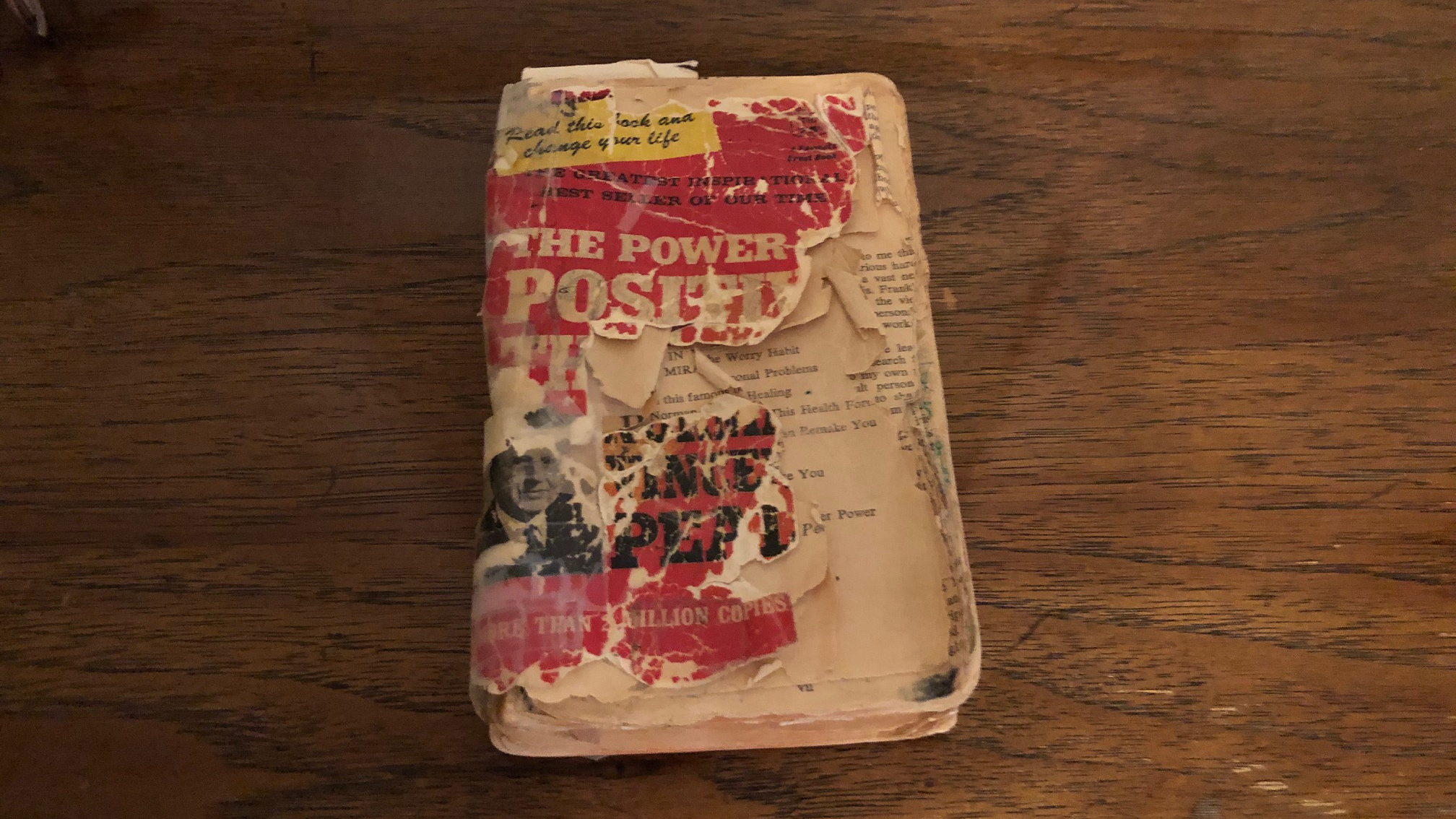
But it wasn’t until her father passed away in 2017 that Abel and her siblings discovered just how much of an impact Dr. Norman Vincent Peale, founder of Guideposts, had on him. While going through his things the family discovered a well-worn copy of The Power of Positive Thinking and Positive Thinking Every Day.
“We all knew that my father had a tremendous amount of faith and that’s what got him through some challenging times in his life,” Abel told Guideposts.org. “But it became very apparent as we went through all of his [things]…that his faith was much stronger than we ever realized.”
In the early 1980s, Savage was going through a challenging time in his personal and professional life, Abel said, adding that it was then he got Dr. Peale’s Book, The Power of Positive Thinking and “just poured himself into this book.”
“Then [he] started getting all the other Guideposts publications,” she said. “[He] spent every morning and every night reading these pieces and…starting with that foundation of thinking positive and believing in yourself.”
The book is full of notes and underlined passages. Some of the notes are dated, showcasing all the years her father spent with the book—dating all the way back to 1982. The notes show that Savage read the book almost every year in the 1980s. He read his copy of The Power of Positive Thinkingso many times that the cover came off and he had to tape it back on.
Abel always knew faith was important to her dad, but discovering his Guideposts memorabilia brought home just how much of a prayer warrior he was. Among his belongings was a collection of letters he had received from Guideposts after sending in prayer requests.
“Dad always saw the glass half full rather than half empty,” Abel said. “And I guarantee you that was impacted by Dr. Peale’s writings in all the Guideposts publications.”
Abel credits her dad’s commitment to his faith and positive thinking for their close-knit family. Her and her siblings all work for their family-owned company.
“We have a very tight family and that foundation comes from my father,” Abel said. “He was the start of all this. It [was] just a great foundation.”
Abel misses her father tremendously. She carries on his legacy by donating to Guideposts and gifting her own family Daily Guideposts every year.
“[Guideposts has] become kind of a second family to me,” Abel explained. “I know how important it was to my father and to be able to…keep that tradition going with my family means the world to me.”
Last week I had the opportunity to share some Peale history with the students in the psychology class I teach. The Peale History Center and Library is located in Pawling, New York. Inside is a very well archived museum and library documenting the lives of my grandparents, Dr. and Mrs. Norman Vincent Peale. Within this space are Grandma and Grandpa’s offices, just as they were when they were in use. Photos, documents, honors and awards are displayed.
My psychology class is made up of high school juniors and seniors. We are learning about the historical and more current perspectives in the field of psychology, one being Positive Psychology.
In anticipation of our visit to The Peale History Center and Library, I had my students read research studies on positive thinking/optimism and pessimism. These studies provided an important opportunity for them to see how positive thinking has been examined, researched and validated through the scientific method.
George Hart, the archivist for the Peale History Center and Library, guided our tour and did a terrific job of explaining to the students how historical events, specifically the Great Depression and World War II, impacted people emotionally and psychologically and how Grandpa Peale’s ministry and mission served such people.
Grandpa Peale joined forces with psychiatrist Dr. Smiley Blanton in 1937 to found the Blanton-Peale Institute and Counseling Center, bringing psychology, psychiatry and religion together to support those struggling.
The Blanton-Peale Institute is still going strong, offering counseling and therapist-training programs. My students not only learned a great deal about the innovative approach taken by Drs. Blanton and Peale, they were also able to see how the Blanton-Peale efforts fit into the history of psychology.
The students were surprised to learn the following day from another teacher that Dr. Peale was my grandfather. I was honored to answer their questions about him and what it was like to be his granddaughter. I shared with them that my choice of social work as a career path was directly influenced by Grandma and Grandpa Peale’s example of helping people from all walks of life see their value and potential.
I took a great photo of my psychology class and Mr. Hart in Grandpa Peale’s office, standing behind his desk. I told my students how much Dr. Peale would have appreciated the opportunity to meet them. He would have had each of them sit down and share with him about themselves. He loved stories and people.
Grandpa Peale’s historical impact is strong (I invite you to Pawling, New York, to tour the Peale History Center and Library), but his message of positive thinking is as relevant today as it was in the 1930s. There is science to prove it.
Did you know you can listen to a Norman Vincent Peale sermon whenever you like? The Power of Positive Thinking, right at your fingertips.
Recently, I was feeling a little stressed and overwhelmed, and I clicked on the “Power of Positive Thinking” app I loaded on my phone. And there was the sermon I needed, “A Sure Cure for Worry.”
There Dr. Peale says, “Say to yourself in the morning, at noontime, when you go home and before you go to sleep, ‘The Lord is with me.’”
Just hearing that booming, kind, wise and good-humored voice was more than enough. As always with Dr. Peale, you can tell he’s not just sermonizing about something you should do. He’s talking about something he does, too.
The “Power of Positive Thinking” app comes to your phone, courtesy of the Ruth Stafford Peale and Norman Vincent Peale Foundation, founded by Norman and Ruth Peale years ago and now operated by all their children and grandchildren. I was talking to Pepper Peale—great name—who is married to Cliff Peale, one of Norman and Ruth’s grandchildren, and she told me about why the Peale Foundation developed the app. Turns out, the foundation is just continuing the long, innovative tradition established by Ruth and Norman by providing access to digital versions of Norman Vincent Peale’s writings and sermons.
Pepper related a couple of stories you may have heard about the way Ruth and Norman Peale started out. Early in his pastoral ministry in New York, he wondered how he could get more people in the pews. He ended up reaching out to ConEd (the local utility provider) and got a list of customers who had just moved nearby. He mailed them letters, then visited and invited them to church. This was years before the onset of direct mail and data targeting. Dr. Peale was decades ahead of his time.
But just getting people in the pews wasn’t enough. The Peales wanted even more people to hear the lessons and inspirations offered from the pulpit. One Monday, someone called the church office and asked if they could have a copy of that week’s sermon. No, they said. There was no printed copy to share. He would write out his sermons longhand ahead of Sunday, but then spoke extemporaneously. That was part of his charm.
Ruth Peale happened to be in the office that day and she lived by that wonderful notion “Find a need and fill it.” This was a need she could fill. She found a secretarial school near the church, hired two stenography students to attend Sunday worship and transcribe the sermons. By Monday, the church had the finished documents to share.
According to the Peale Foundation, that desire to more effectively provide Dr. Peale’s sermons beyond the pulpit was the beginning of sharing those messages with an even wider audience. It was even the beginning of what you’re reading here on Guideposts.org too! The Peales always believed in reaching people where they are. Nice to think that their family is continuing to do that today, through the latest technologies available.
This was the point of Pepper’s stories: the extraordinary ministry Dr. and Mrs. Peale started continues to grow. It lives a new life through the app that delivers hope and help wherever people need it. Thanks, Pepper. So glad to have Dr. Peale’s sermons right on my phone!
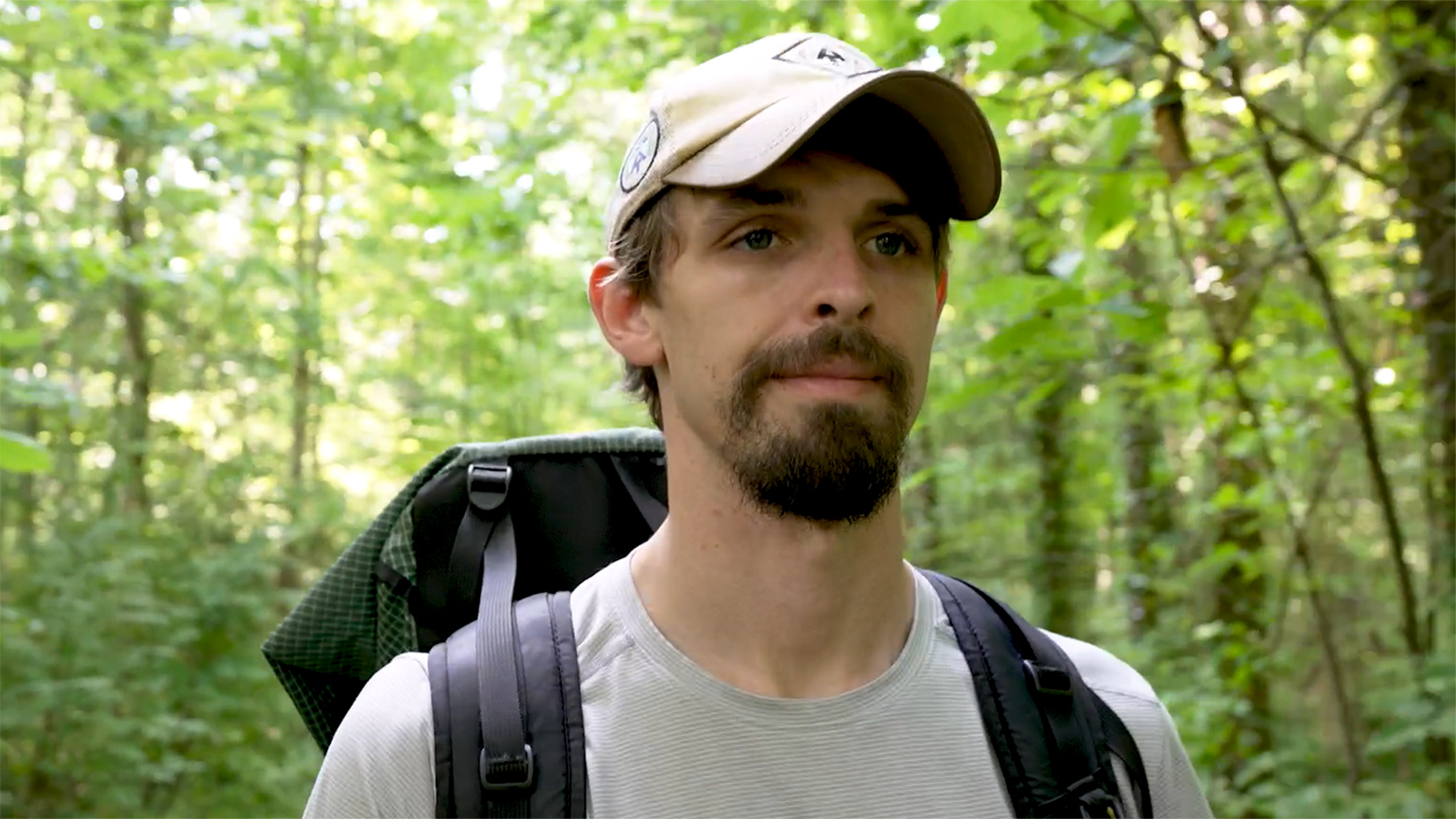
Hi Guideposts readers, my name’s Matt Hall. I served as the 2017 Appalachian Trail chaplain. On the trail, my name was Trigger. I currently serve at First United Methodist Church in Maryville, Tennessee.
My thru-hike helped me in my recovery journey by allowing me to make a physical amends to a body that I’d abused by alcohol and drugs for so many years, while being able to use my body as a tool of ministry.
My thru-hike lasted five months, walking through 14 states and covering over 2,190 miles through the Appalachian Mountains, from Maine to Georgia. I encountered thru-hikers, day hikers and section hikers all along the way. I stayed outdoors in shelters and shared living space with other hikers.
The first day of my hike, I was summiting Mount Katahdin as I was going southbound from there. That day I was coming to the summit and I could feel the hair on my arms standing up, knowing that I was surely in the presence of God.
It turns out I was also in the presence of an electrical storm, but even in the midst of that storm, God was with me, as I was with people made in his image.
I believe that experiencing the outdoors and taking on a challenge can help anyone in recovery, because it allows us to firmly be connected to our Creator and allows us also the ability to connect with others and disconnect from so many of the things that distract us in this modern day.
Any advice I would give to someone struggling with recovery or seeking recovery for the first time would be to reach out to someone locally. There are many organizations that are willing to help. Your local church can help find a recovery ministry or an AA or NA meeting of any sorts.
In the biblical book of 1 Kings, the prophet Elijah is frantic in the wake of violence and threats he’s helplessly witnessed. He flees in fear for his life, into the wilderness, where only by the instruction of angels is he able to eat and drink enough to cling to life.
Eventually, God calls out to Elijah, making God’s presence known through a dramatic series of events—a “great and mighty wind” that splits mountains and shatters rocks, an earthquake, and a fire.
The text tells us, “but the Lord was not in…” the wind, the earthquake or the fire. Instead, God’s voice came to Elijah after these natural wonders ceased. God’s voice came to Elijah, in various translations, as “a soft murmuring sound” or as “a still, small voice.”
This passage is an object lesson in how to connect with your positive inner voice, with the version of your true, authentic, and positive self that can guide you through each day, year, indeed through your whole life.
Just as Elijah knew God’s power caused the wildly dramatic wind, earthquake, and fire, we often witness the loud, brash, intimidating aspects of the world and our place in it.
But just as in Elijah’s moment in the wilderness, the loud things in our lives eventually quiet. And in that silence, we can listen more deeply, noticing with more intention what the soft murmurations, the still smallness of our inner voices have to say.
In the Bible story, God is present in both the loud and soft volumes. So, too, do the most powerful parts of yourself exist in powerful, assertive moments as well as quiet, contemplative ones.
Let’s celebrate that today, that juxtaposition of loud and quiet—and the opportunity each new day brings us to connect with our positive inner voice simply by knowing that after the fires and quakes of life, a soft stillness will always, eventually, call to us from deep inside.
We are a sleep-deprived nation. Up to half of all Americans report having times they find it difficult to do one of the most natural things on God’s green earth—sleep. We may be the only species to have ever suffered this deprivation. Does your cat have trouble sleeping? Your dog? Not mine. I’m looking at her now…and envying her.
I suspect I’m among the sleep deprived. It’s my own fault, really. I always find one thing more I want to do before hitting the sack. Check out an article online, watch part of an old movie—just the opening, I promise myself. The next thing I know I’m waking up to the end credits, slumped over on the couch with the remote still clutched in my hand.
Or I answer just a few emails or post something on social media where I end up in digital quicksand. I love to read in bed, but a good book is as likely to keep me up as put me to sleep. And then there are those nights my mind gallops through all the “what-ifs” my brain can randomly generate.
In researching the book I’m writing for Guideposts on Alzheimer’s and my family, I’ve read about the importance of proper sleep and long-term brain health. The neurologist I’m seeing in addition to scheduling an MRI, blood tests and cognitive evaluation, sent me to a sleep clinic. The link between poor sleep habits and cognitive decline is fairly well-established. That scares me.
So, if you’re struggling like me, help is on the way. Let me tell you about Abide, a Christian meditation app. Among the things this app can do is put you to sleep. Really. The app will give you Biblically-based sleep stories, devotions and guided meditations all backed by soothing, relaxing music sure to help you drift off naturally and peacefully. As it says in Proverbs, “…when you lie down, your sleep will be sweet.”
The Abide app does more than just put you to bed. It offers Biblically-based meditations on conquering stress, embracing happiness, facing challenges, finding your purpose and much more. Check out their YouTube channel to find out more ways Abide can help you grow and improve your spiritual well-being and relationship with God.
Full disclosure: Guideposts liked Abide so much and was so inspired by their mission to promote Christian-based meditation and mindfulness that we have brought them into the Guideposts family. Abide—I love the name—is now part of Guideposts and this is good news for you, and for me. Now I’ll be sleeping better.
Diane: Hi Guideposts! I’m Diane Stark, this is my mother-in-law, Judy. We’re gonna talk about a story I wrote for Guideposts about how Judy learned to use technology to communicate with family members that live far away.
I noticed Judy becoming withdrawn after her husband, Larry, died in June of 2016. He needed a lot of care before he passed, and so she always had one of her children or one of her in-law children with her to help her care for him.
After he passed, we all kinda went back to our old lives and our jobs and everything, and she was a widow and kind of alone. And I noticed that she just was really struggling with remaining close to the family. We’d all pulled together for so long, and then everybody kind of went their own ways after he passed. And so we just really tried hard to look for ways to include her in everything that we were doing, and technology played an important role in that.
Judy: Some of my favorite apps on my phone are Pinterest, WhatsApp. I use online banking, and I like WeatherBug. WhatsApp has helped me keep communicating with my youngest daughter, who lives in Amsterdam. And the other, just the plain texting, I use for my other daughter, who lives in Texas.
There are still times I prefer talking, because I sometimes get lonely and I’d like to talk with my sons and daughters and daughter-in-laws, and my friends. A lot of my friends.
When my daughter, she usually sends me pictures of her dog, and she sent one cute one, when she put boots on him, so I really had a laugh about that. [chuckles]
Susan Burton knows how difficult it is to start over.
The author of a new memoir, Becoming Mrs. Burton, and founder of A New Way of Life Re-Entry Project, a nonprofit that helps people rebuild their lives after incarceration, has spent more than twenty years trying to earn her clean slate. Burton grew up in a rough neighborhood in South Los Angeles. Her home life was dysfunctional and often violent. She was sexually abused as a child and was a survivor of rape by the time she hit her teen years. But it was the tragic death of her five-year-old son, K.K., in 1982 that finally broke Burton’s spirit. He was playing in the street when an off-duty police officer struck and killed him with his car.
“I wasn’t able to manage the pain anymore,” Burton tells Guideposts.org.
She began to drink heavily and soon turned to drugs to numb her grief.
Burton spent the next two decades cycling in and out of prison for nonviolent crime and drug possession. Each time she was released, she told herself she’d get her life back on track. Each time, the pain of her loss and the trauma of her early years brought her back to drugs – crack, cocaine, and alcohol.
The cycle was exhausting, but it felt unbreakable to Burton who found only punishment instead of the promised rehabilitation of prison life.
“There was no rehabilitation at all happening inside of prison,” Burton says. “Basically, you would go in, you would be stripped of all your dignity, all of your dreams and all of your hopes and your humanity. Then you’re released one day. You come out and you try to make a life for yourself, but there are so many barriers and you are totally unprepared. It’s like holding onto this rope and you see the rope unraveling and you just fall back again into the same things that brought you there in the beginning.”
Burton remembers one release clearly, for all the wrong reasons. It wouldn’t be the last time she went to prison, but it felt like a wake-up call all the same.
“The officer said, ‘We have a bed waiting for you,’” Burton recalls. “And I’m all like, ‘No I’m not coming back, I’m going to get a job.’ He says to me, ‘The only job you’ll be able to get is a job inside of a prison.’”
It wasn’t until a friend behind bars directed her to a treatment center in an affluent Santa Monica neighborhood and got her a job as a live-in caregiver that Burton began to confront the buried trauma fueling her relationship with drugs and her trips to prison.
“I didn’t know anything about treatment,” Burton says. “I didn’t understand that I suffered from a disease and there was a solution to it. [In treatment] I built a personal relationship with God. I began to heal and process some of the misfortune of my earlier days, the loss of my son. And I became stronger. I went through a process of forgiveness and letting go. And I began to question why programs and processes that I found in Santa Monica were not available to women in South L.A.”
Treatment was a blessing to Burton, but it also opened her eyes to the racial injustice that permeated the California legal system.
According to the New York Times, decades of research has shown that criminal courts sentence black defendants more harshly than whites for the same offenses. In her Santa Monica treatment center, Burton saw that predominately white, wealthy drug offenders were sentenced to court-appointed drug treatment centers or were punished with community service for their crimes, whereas she was continuously sent to prison for minor drug offenses.
“I can remember being in a meeting and a man standing up saying he hated the color green because he had an accident under the influence and had been sent to court and in court, his sentence was to paint the jail, and he painted the jail green,” Burton recalls. “And he hated the color green because he’s spent so much time painting that jail. I sat there and listened to him and I thought, ‘Hell, I had to live in the jail.’”
After she finished treatment and saved up enough money from her job as a live-in caregiver, Burton decided to do something brave and extraordinary.
Most people choose to rebuild their lives far away from the places and people that hurt them in their past. Burton decided to grow something beautiful from her misfortune, planting it right in the middle of her old neighborhood, where so much violence and tragedy had taken place. She bought a tiny bungalow in South L.A., filled it with bunk beds and other necessities, then made trips to a place called skid row where a Greyhound bus would drop off former female inmates after they had served their sentences.
Her goal was straightforward, but not simple: to convince as many women as she could to come live with her, drug and crime free, and to help them find the fresh start she was already working on.
“It was ten of us living in the house and we all just kind of pooled our money together to pay the bills and create a community of women helping women,” Burton says of the early years of her nonprofit. “We would share the resources and we were all just helping one another. It was magical.”
Her work eventually caught the attention of the California Wellness Foundation and an agency called Community Partners. Both groups helped Burton attend classes on creating and managing a nonprofit. They also aided her in applying for a 501(c)(3) and donated $50,000 dollars in fellowship money to her cause. As a nonprofit, Burton was able to raise even more funds from angel investors and silent donors to open five more houses, eventually helping over a thousand women find a better life after prison.
A New Way of Life Re-Entry Program offers everything from legal services, employment opportunities, and case management to organizing the community to help change harmful policies that affect former inmates.
“The first step is to get her there and introduce her to the other women and usually she has a few friends in the house that will comfort her and help her feel welcome,” Burton says of the process every woman goes through at one of her homes. “Then we get her medical care and any types of public benefits that she’s entitled to: a driver’s license, birth certificate, social security cards. All those things take about a month to get into place. And then we begin to support her in going back to school, finding work or getting back into touch with her children. It’s just different for everybody.”
Burton knows we have a long way to go before our justice system corrects itself. It’s why she’s running her nonprofit, helping women who’ve fallen through the legal cracks. It’s also why she’s sharing her own journey in her intimate memoir, Becoming Mrs. Burton.
The book, which details Burton’s abuse as a child, rape, violence and her dehumanizing stints behind bars, is slowly making its way into prisons across the U.S. per Burton’s wishes. Over 11,000 copies have been sent to facilities across the country and through her website. People who know someone behind bars that could benefit from reading Burton’s story can order a book for them, free of charge.
“I see women who are so hungry for something better for their lives,” Burton says. “My hope is that women will read the book and be inspired to fight for the best that they can be. There is life and success after incarceration, but you must work for it.”
To send a free copy of Susan Burton’s book, Becoming Mrs. Burton, to an inmate, visit becomingmrsburton.com.
“I need help.” The three most powerful words a person can say. I should know. It took me a long time, but I finally said them. It most likely saved my life.
I guess it started when I was about 13. Today I understand I was having symptoms. Back then they were just feelings that left me unsettled: a passing sense that nothing mattered or would ever really matter, anxiety that made me climb out of bed in the middle of the night and pace the floor for no reason, a kind of spiritual numbness, feelings of not being loved even though I was.
I soon learned that these were signs of depression. In a way, I thought I simply had to live with them. Even years later, when I was performing in Destiny’s Child, those feelings would rear up. I’d be like, “Oh, depression. You still here? I gotta go do a show. We’ll talk later.” I tried to ignore what was happening. Or maybe I was just trying to accept it.
As seen in the June-July 2021
issue of Guideposts magazine
Three years ago, I plunged into such a dark hole that I couldn’t get out. I could barely get off my sofa. Things came to a head when I didn’t show up for a promised event with my pastor and his wife. Didn’t call or text. Just didn’t show up.
“This isn’t like you, Michelle,” they said. It was then that I finally allowed myself to say those three powerful words. I need help. I called the therapist I’d been seeing—that much I had been doing—and she recommended a facility to go to. Arrangements got made. I drove myself there. Didn’t pack a bag, a toothbrush, a change of clothes. My hair was sticking up like a bad Halloween wig. I just drove.
More than 16 million American adults a year develop a major depressive disorder the way I had. Generalized anxiety disorder affects nearly 7 million. Less than half seek or get treatment. Less than half. Christians can be especially prone to this, as if we don’t want to let down the Great Physician or think that depression is a failure of faith. I ask you, though, would we do the same if we had cancer or some other disease?
Depression is a disease like any other. It doesn’t care who you are or what your external life looks like. It gets inside you. I had a good career. My music grew out of my Christian faith. Things seemed to be going well for me, at least from the outside. But inside I was a mess. The act of checking into that treatment center was the first step of taking back the power. Here’s what I learned.
Accept the help. It’s not enough to ask for help. You have to be willing to accept it. “What do you have to be depressed about?” I’d scold myself. “You’re doing well. People would love to have your career.” The externals don’t matter. Only when my pastor reached out did I give in.
Depression tells you that you don’t deserve to feel better. That your feelings are the truth. It felt as if I had been dogpaddling in the middle of the ocean. At the facility, I was finally on shore, able to catch my breath.
This nice nurse found out that I hadn’t brought any clothes with me and went to Target, loading me up. I was so grateful, I couldn’t believe it. Depression smothers gratitude. But that spark of gratitude was the beginning of acceptance and healing.
Own your truth. Don’t just talk about—or around—what you’re going through; you have to own it. I had been transparent about my battle with depression, occasionally even opening up about it to interviewers. But there’s a big difference between transparency and acceptance. An alcoholic who admits to being one but still drinks isn’t really owning the disease.
The same is true with depression. By owning your depression, you allow yourself to be helped. By the people around you and by God. Especially by God—because you can’t fool him.
My first name is Tenitra—pronounced “Teh-nee-trah.” Michelle is my middle name. When I launched my career, they said, “Who do you think little girls want to be like? A Tenitra or a Michelle?” I went along with it—becoming Michelle in Destiny’s Child—while losing a part of myself. I just buried it and didn’t say anything. But it hurt.
Back in seventh or eighth grade, I’d discovered the power of my voice, feeling the presence of God smack-dab in the middle of a song we were singing at Macedonia Baptist Church in Rockford, Illinois, where I grew up. But I never saw myself as an entertainer. I don’t regret the career I’ve had, but for too long I left half of myself hidden.
Not long ago, I had the thrill of competing in The Masked Singer. Performing with a mask on, I was wild and free. I had labeled myself as used, tired and done. Michelle was over. Not Tenitra. I rediscovered the gift that God had given me. Not what others said. What I knew. The truth. It was freeing.
Feel your feelings, but don’t let them fool you. I was so ashamed of how I felt, and shame feeds depression the way oxygen feeds a fire. Some people are predisposed to depression. No need to judge it. Treat it like a disease.
I have a magnet that says, “Sometimes when I open my mouth, my mom comes out.” My mother is a bright woman. She could write you an eloquent 10-page letter in 10 minutes. But, baby, you do not want to be on the receiving end of Mrs. Williams’s anger.
Anger could pop out of me too, especially when I was hiding deeper emotions, such as my fears of rejection or of somehow not measuring up. Feelings are not facts. They can feel very real without being true. Like not feeling loved when you are loved. Or not feeling good enough when you are. Or going by some false label. Feel your feelings, but then confront them. Push back.
Don’t compare. It’s not just people in the music business who end up comparing themselves to others, checking record sales or social media followers. Open Instagram or Facebook and you’ll see people exactly as they want to be seen. But does the picture tell the whole story?
Ask yourself who you are measuring yourself to. My faith tells me to compare myself to the life Jesus led and try to live up to that. And know that he loves me despite my stumbles, even more so because of them.
The comparisons we make through social media can be especially harmful. It’s no wonder that so many kids, attached to their phones 24/7, are finding themselves struggling with anxiety and depression.
Cast your cares. My uncle used to take us fishing all the time. I didn’t like it much. It was often freezing, and my uncle used little hot dogs as bait that really smelled. You had to cast your line into the water, which was hard for me. I’ve always been lanky with long arms, and casting a fishing line is not something a lanky preteen girl is going to nail the first time around. Or the second. Or the third. In other words, it takes practice. I used to get frustrated.
But here’s something. The disciple and fisherman Peter uses the word cast when he talks about our cares and anxieties. “Cast all your anxiety on him because he cares for you,” he says in 1 Peter 5:7 (NIV). Other translations say, “Cast all your cares” or “Cast all your worries.”
The point is, we need to do it with God’s help. Doing it takes practice. And it can be frustrating because we are human and don’t always get it right. I sure don’t. But that’s okay. I’ve learned the most powerful antidote to depression is sharing it with the Lord, however imperfectly. Nothing will get you more depressed than trying to be perfect.
My whole life, I had a little list of what I thought a perfect daughter was, a perfect employee, a perfect Christian. If I crossed off everything, then I was okay. If I didn’t check all those boxes, then I was a bad person. Instead of casting my cares on God, I collected them. I ended up serving those lists, not God.
If we define a bag by its creator—like the Dooney & Bourke my aunt gave me back in the day—why don’t we define ourselves by the same standard? By who created us?
Today instead of checking in with my own lists, I check in with God’s. Instead of asking myself, “Who is mad at me? What have I done career-wise? Why am I not married?” I start by looking at God’s list and what he has done for me. I’ll even write it down. A blessings list. A door to joy. I mean, what’s more joyous than God’s love for us? Is there anything to be more grateful for?
This past year has been tough for us all. When I first heard about Covid-19, I was in Los Angeles for award-show season. The Emmys, the Grammys. I was in a much better place, gearing up for a huge tour that would launch at the end of May. All at once we were being asked to stay home. No tour. Nothing.
I’m used to living alone, but after a while I was like, Oh, no. I’m going to get depressed. What if I spiral down? Who will help me? Depression, after all, thrives in isolation. It loves getting you alone.
Back home in Atlanta, I’d go out for long walks, breathing in the fresh air. I’d listen to myself, checking in. “Are you avoiding any dark feelings? Own them. Are you really okay? Don’t fake it. What cares do you need to cast on the Lord today? Do it!”
Especially painful was losing my father this past December, a terrible loss at a time like this. Again and again, I calm myself by remembering, “God is with you. He is bigger than depression, and he loves you. Rejoice in that.”
You may not struggle with the level of depression I have, but almost everyone gets depressed from time to time. It’s part of being human. Don’t be afraid to reach out, to ask for help, even if it’s just from a friend. I need help are the most powerful words. They are the key to opening the door to joy.
Michelle Williams is the author of Checking In: How Getting Real About Depression Saved My Life—and Can Save Yours.
For more inspiring stories, subscribe to Guidepostsmagazine.
Executive secretary. Office manager. Paralegal. Medical records supervisor. Slowly I went through the job listings online, slumping more in my seat with each one. I would’ve been thrilled to land any of these jobs. I dreamed of working in an office, where I could dress up instead of wearing a uniform. Where I could be in a position of responsibility.
But that was never going to happen. Something was holding me back. The same thing that had held me back my whole life.
Community Newsletter
Get More Inspiration Delivered to Your Inbox
Reading.
It had been a struggle for me as long as I could remember. I did okay with short, basic sentences. But more than that was beyond me. And spelling? What a nightmare! There were so many words I didn’t feel confident writing without looking up.
Take that word confident. Or was it confidant? I couldn’t rely on spell-check. Not with the number of words I didn’t know. For these office jobs, they wanted people who were fast. Accurate. Smart. Not me.
Best to stick with the kind of work I knew. I typed “cashier” in the search bar, each letter like a nail in the coffin where my dreams were buried. My previous job had been as a nursing assistant at a hospital. I’d liked working in a health-care setting, helping people. But a confrontation with a difficult patient had left me shaken up and I’d resigned, even though my boss urged me to stay. I was 45 and my life was going nowhere!
Other than my husband and kids, no one knew the difficulty I had reading, and even they didn’t know the extent of it. I’d developed all kinds of tactics to hide my problem, like pretending I’d forgotten my glasses and letting someone else decipher a form for me. But the shame and insecurity weighed on me.
I glared at the job listings on my computer. God, can’t you help me learn to read? I don’t want to be stuck like this! It was a familiar prayer, one I’d asked for years.
And one that had never been answered. Did God even care that I couldn’t read? It didn’t seem to matter to anyone when I was growing up, not even my teachers. Naturally, I tried to hide my problem. If a teacher called on me to read aloud, I’d act out to avoid the embarrassment of stumbling over the words.
Every year I was promoted to the next grade. I graduated high school with a 0.33 GPA. It felt as if everyone had given up on me learning to read. My classmates went on to college. I got married. Terry was eight years older than me, a career military man. Doting and protective, he made me feel loved. I didn’t tell Terry I had trouble reading. I didn’t want him thinking less of me.
We’d been married three years when Terry got stationed in Okinawa, Japan. I couldn’t read road signs or newspapers there, but neither could other military wives. We had two sons, Terrance and Neko, and a daughter, Shaleea. I read to them—Dr. Seuss and other children’s books. If I struggled with a word, they didn’t notice. And I wanted them to grow up loving books.
One day I left my grocery list out on the table. Terry walked by and picked it up. “This isn’t how you spell hamburger,” he said, puzzled. “Or spaghetti.”
There was no way to avoid the truth. “I don’t know how to spell a lot of words,” I said. “I’m just not very good at reading. I’m sorry I didn’t tell you.”
I couldn’t meet his eyes, but Terry wasn’t upset. He held me tight and said, “It’s no big deal. There’s a class you can take on the base.”
A program for Japanese wives of American servicemen to learn English. I could only imagine the looks I’d get. What would people think of me, born and raised in America but not knowing how to read English? “I can’t do that,” I said. “I’d be mortified.”
Terry didn’t push me. His next posting was in Germany. We mixed with sophisticated, educated people. I saw how they held themselves, paid close attention to the words they used in conversation. I didn’t want them thinking I was different. But I felt less than. When I looked in the mirror, all I saw was a failure.
After eight years overseas, we came home to Oklahoma. I needed a job. There was no way I’d get hired to work in an office, like some of the women I’d known in Germany. I found a job as a cashier. Nothing wrong with that. It was just that part of me wanted something more. But with every year that passed, that seemed even farther out of reach.
At my computer, I went to another job website. The kids were grown now, chasing their own dreams. Terry was retired, enjoying life. I was the only one who was trapped in dead-end jobs, the only one who was miserable.
It wasn’t as if I hadn’t tried to get help over the years. I’d gone to GED classes despite having a diploma, but they were geared toward passing a test and I couldn’t read the material. Another course was designed for single mothers, with parenting lessons I didn’t need. At a vocational rehab program, a psychiatrist tested me, chalked my problem up to anxiety and advised me to apply for disability benefits.
I want to work, to learn, I thought. I just don’t know what the answer is.
Almost unconsciously, I typed “learning to read” into Google. An ad popped up—for a place called the Community Literacy Center. It wasn’t a new program, but somehow I’d never heard of it. I went to the website. “Where every adult who wants to read has the opportunity to learn.” For the first time, I felt a flicker of hope.
I told Terry about it. “You should try it,” he said. “But no matter what, I’ll always love you.”
One evening a week later, I drove to the library for the introductory session. I sat in the car, afraid to go in. Was I really ready to let strangers know my secret?
I forced myself to open those library doors and walk inside. I took a seat in a meeting room. There were 10 of us, men and women who seemed almost as nervous as I was.
A tall blonde woman stood at the front of the room. “I’m Ms. Angela,” she said. “I’m happy to see y’all. Tonight we’re not going to do any studying. Just tell me a little about yourself and why you’re here.”
My chest tightened. The only thing scarier than reading was the idea of talking about my struggles. The secret I’d hidden all my life. I wasn’t the first to speak. It turned out that the others, like me, had been too embarrassed to admit they had a problem.
Finally, it was my turn. “I’m Lisa,” I said. “I don’t read so well. And I want to be able to spell better.” As the words tumbled out, the shame that had been weighing me down left me too.
I’d been angry at God, thinking he didn’t care about my struggles. But hadn’t he brought me Terry, who’d encouraged me from the moment I told him my secret? God wanted the best for me. He was just waiting for me to be ready to fully trust my problem to him. Now I was.
Lord, help me to read.
The class met again two days later. On a whiteboard, Ms. Angela wrote phonetic vowel and consonant sounds beside each letter of the alphabet, explaining how different sounds make words. She read them. We repeated. Something clicked…. I could see how it all worked together!
At the next session, we reviewed. Then Ms. Angela handed out worksheets and had us read a paragraph silently. There were a lot of words I couldn’t figure out. I started to panic. In an instant, Ms. Angela was beside me. “Remember the vowel sounds,” she said. “Some words have a short ‘o’ sound like off. Others have a long sound. You’re a smart woman, Lisa. You’ll get it.”
“I’m not smart,” I said. “I wish I was.”
“Lisa, I’ve been teaching 40 years. I know smart when I see it.”
No teacher had ever told me I was smart before. For the first time in my life, I thought, I can do this!
Two evenings a week, I went to class. Ms. Angela made all of us feel capable and valued. In six months, my reading level went from a fifth-grade to a ninth-grade level. I started reading books for fun. One class, I got stuck on a word in my book. I waved for Ms. Angela. She glanced at the cover. “Joyce Meyer,” she said. “One of my favorites. Let me know what you think.”
I couldn’t believe it. I was reading the same author as Ms. Angela! One day I got a call—my old boss at the hospital. “We have an opening, and I thought of you,” he said. “A receptionist for the mental health unit.”
I thought of everything that job would entail. Taking down patient information. Helping with paperwork. Reading charts. Filing. Entering prescription orders. A lot of responsibility. “I’m not sure…” I started to say. Then I thought of how Ms. Angela believed in me. How much Terry loved me. Wasn’t this the kind of job I’d prayed for? “I’ll apply right away,” I said.
I got the job. Terry and Ms. Angela were so proud.
On my first day, I told the woman who was training me that I struggled with reading and was taking a class to improve. I wasn’t ashamed anymore.
“You’ll do fine,” she said. “I’m glad you told me. I’ll help you any way I can.”
I took literacy classes for three years, and I look forward to more advanced reading and writing classes. One thing I know about smart people is, they never stop learning. Someday I hope to go to college.
In the meantime, I have a new job I love: I’m a claims examiner at a health clinic. There are still words that trip me up. Sentences I struggle with. But I’m not afraid to ask for help. I don’t need to have all the answers. I trust the One who does.
For more inspiring stories, subscribe to Guidepostsmagazine.
I pulled my sweater tighter around my shoulders as I passed the words painted on my fireplace mantel: “If your heart is cold, my hearth will never warm you.” What it might take to truly warm my heart in time to celebrate the birth of our Lord, I didn’t know. Christmas was coming fast, and I wasn’t ready. Not deep down inside.
I turned to fluff the couch cushions but felt too restless to sit for a spell. At the same time, I didn’t have the energy to make a fire. I never hesitated to start one when Mom was here, I thought. But I no longer had her to care for, so what was the use?
In the last months of her life with cancer, my mother spent all her weekends with me in my quaint log cabin that spoke to my nostalgic side. Mom’s body often pained her, so I did everything I could to make her comfortable. One afternoon she was on the sofa wrapped in a time-softened Sunbonnet Sue quilt, her feet poking out at one end for a foot rub. I’d scooted the sofa in front of the crackling fire and thought she’d drifted off to sleep while I massaged her heels. When I glanced up, Mom was gazing at the words on the mantel. “If you ever lose your way, Roberta,” she said, “this right here is how you find it.”
In some sense, I had lost my way since Mom died. I’d struggled with my own health problems and medical bills. I neglected the cozy home I loved, stopped switching out seasonal treasures from garage sales and secondhand stores. But my health had improved, friends helped get me back on my feet, and the cabin was tidy again. I looked into the brick hearth. So why do I still feel a coldness inside?
I tucked a pillow into Mom’s old spot on the couch, remembering the two of us sitting together one chilly afternoon, Christmas on the horizon. Mom was propped up on pillows with a hot cup of tea. I’d found a Victorian feather tree with white lights and ornaments, put it in an old crock and placed it in view. Our only real Christmas decoration that year. “So what do you think?” I asked her.
“The tree is beautiful,” she said. “But you know, Roberta, it always feels like Christmas here.”
I looked at the spot where the feather tree once sat in its crock. I’d agreed with Mom back then. Covering her with a quilt, whipping the cream potatoes she could still enjoy, propping her feet up—making Mom happy had made me happy too. Brewing her tea. Putting lotion on her hands. Brushing her hair. Taking care of her the way she’d once taken care of me. Caring for Mom had warmed my heart. But who did I have to care for now? I buttoned up my sweater. Well, I do have myself…
The next morning, I collected pine boughs to fill my indoor window boxes, then lined up my nostalgic holiday collectibles by the chimney. I swapped out my everyday aprons for Christmas-themed ones. I hung a pair of old-time ice skates and a plaid woolen scarf by the front door. With renewed energy, I made up my bed with cheerful red-and-white linens and added a throw over the blanket just because.
On Christmas Eve, I laid three fat logs in the fireplace. I tucked newspapers all around them to start a really good blaze. I tossed in some pine cones to fill the room with a wintery scent. While the fire got going, I headed to the kitchen to warm a pan of milk for a decadent hot chocolate. When it was ready, mini marshmallows floating on top, I hooked a candy cane on the mug and settled down in front of the hearth. My feet were toasty in thick woolly socks; my favorite quilt was spread over my lap. I stirred my hot cocoa with the candy cane and took a careful sip so as not to burn my tongue. But the real warmth was in my heart. I had found my way, just where Mom had promised I would. I had someone to care for. I was cozy. I was loved. I was ready for Christmas deep down inside.