Embrace God's truth with our new book, The Lies that Bind

6 Favorite Quotes on Prayer

We’re moving offices soon, which has given me a chance to go through some old files. At the back of a drawer, I found a long-forgotten file with quotes I had collected, most of them typed on a typewriter, which should indicate how long they have been there! Here are just a few of my favorites:

“God uses broken things. It takes broken soil to produce a crop, broken clouds to give rain, broken grain to give bread, broken bread to give strength. It is the broken alabaster box that gives forth perfume—it is Peter, weeping bitterly, who returns to greater power than ever.” —Vance Havner, speaker and preacher

“The paradox of prayer is that we have to learn how to pray while we can only receive it as a gift.” —Henri J.M. Nouwen, priest and spiritual writer

“In the pure, strong hours of the morning, when the soul of the day is at its best, lean upon the window sill of God and look into his face, and get the orders for the day. Then go out into the day with the sense of a hand upon your shoulder and not a chip.” —E. Stanley Jones, missionary and theologian

“It takes humility to acknowledge our need for forgiveness—and even more to accept it, because guilt is the last stronghold of pride; it represents my opinion of myself. Forgiveness is not something I can do for myself. It is something only God or you can bestow on me.” —William Sloane Coffin, minister and chaplain

“Prayer really does things. It cannot change God’s intention, but it does change God’s action. God had long intended Isaiah to be his prophet. When Isaiah said, ‘Here am I, send me,’ he did not alter in the least the divine purpose, but he did release it. God could do then what before he could not.” —Harry Emerson Fosdick, founding minister of Riverside Church (where I used to sing in the choir)

“There is, immediately in front of us, an appointed task, a call: some difficult, clear, utterly simple thing the Lord is asking us to do. It is not a general admonition to whoever might happen to be standing about. It is instead an utterly private request whispered, as it were into each one’s ear. What the Lord is asking me, he is asking no one else. More than likely, it is a request with no particular glamour of notoriety attached to it. And if I pay attention, the Lord leaves me in no doubt about it. Especially if I ask in prayer.” —Emilie Griffin, author

5 Ways to Sing Your Praise to God

Most people—even the prayingest among us—spend their time making requests of God or giving thanks. But for some reason, praise is often a neglected component. Maybe it’s because our needs seem so pressing. Or it could be that we’re more experienced in offering gratitude than praise (how many times did our parents tell us to “say thank you” while hardly ever telling us to “say Glory to God?”). Or maybe it’s because we don’t sing enough.

One of the best ways to offer praise to God is through song. Sure, there are times, like when we see a glorious sunset or a beautiful horse galloping across a field that we cry out in spontaneous praise to God. Most of the time, however, music is the key that opens our hearts and mouths in praise to God. That is why the ancient psalmist sang:

Shout for joy to God, all the earth!
Sing the glory of his name;
make his praise glorious.
Say to God, “How awesome are your deeds!
So great is your power
that your enemies cringe before you.
All the earth bows down to you;
they sing praise to you,
they sing the praises of your name” (Psalm 661-4, NIV).

The Bible actually tells you not only to speak but also to sing your praises to God. So here are a few ways to do that:

1. Grab an old hymnal.
Many churches have stopped using hymnals but that doesn’t mean you have to. Many can be found in church basements, used bookstores or yard sales. And they are rich in words of praise that can still be sung as loudly and sincerely as ever.

2. Adopt several hymns and praise songs as “go to” prayers.
If I asked you to sing your praise to God right now, what song would come to mind? “How Great is Our God?” “O Worship the King, All Glorious Above?” “How Great Thou Art?” “Immortal, Invisible, God Only Wise?” Keep a short list in your mind or in your Bible that you can turn to often for a few moments of heartfelt praise.

3. Adapt a few psalms.
Some Bible psalms can be sung too. You may know Psalm 23 as “The King of Love My Shepherd Is,” Psalm 100 as “The Doxology” and Psalm 103 as “Bless the Lord, O My Soul.” Such musical settings of Biblical psalms can help you sing your praise to God.

4. Sing a new song.
I’ve posted previously about singing a new song to God in prayer. You may sometimes feel a height of wonder or depth of awe that cannot be expressed except in a new, original song that springs from your soul, heart and mouth simultaneously. It doesn’t matter if it’s not a “good” melody or a particularly clever lyric; all that matters is that it helps you to express what is rising up from within you, producing “a new song in my mouth, a hymn of praise to our God” (Psalm 41:3, NIV).

5. Drop in on a praising church.
Some churches sing more than others, and some are especially good at songs and hymns of praise. If the church you attend regularly is not that kind of church, you might consider visiting another church every once in a while in order to sing your praise to God. Many Mennonite churches are known for their singing (and harmonizing), as are many National Baptist Churches, among others. Not all singing is praise, of course, so it will take some discernment and possibly trial and error, but there are still many churches that sing enthusiastic (and sometimes even tuneful) praise to God.

These aren’t the only ways to sing your praise to God, but try just one or two of these, and your praying will soon be music to God’s ears.

5 Hebrew Words to Pray

Prayer can be boring. We say the same things in the same words over and over again. We tend toward the same subjects and concerns, and all that “sameness” can lead to monotony and frustration.

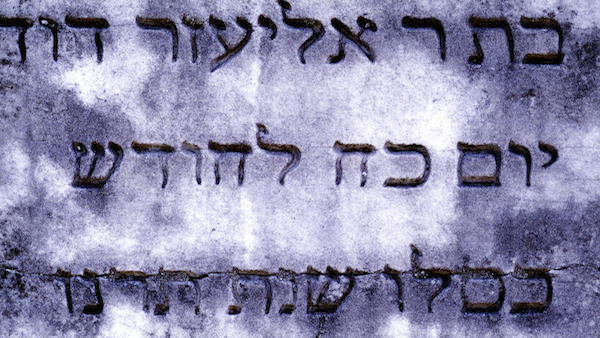
That is one good reason (among many) to introduce the richness, depth, of variety of a few Hebrew words into your praying.

You probably already use the most common Hebrew prayer word—“amen”—which can mean several things but is most commonly understood as “yes, let it be so.” But here are five other Hebrew words that can inform, guide and enrich your prayers:

1)  Hallelujah
You already knew this word. Hallelujah and its root word, “halal,” occurs dozens of times in the Psalms. It means simply “praise God!” In public worship it is frequently sung (e.g., “Hallelujah! What a Savior!”) and sometimes shouted. It is less often used in private times of prayer. But it doesn’t have to be excluded from your personal prayer life.

Try saying hallelujah anytime your soul swells with praise and thanks to God. Say hallelujah to express your appreciation for God’s beauty, faithfulness, power and presence.

If you pray the “Gloria/Glory Be,” you might even sometimes substitute the Hebrew equivalent for the English word “glory” or “praise.” (“Hallelujah to the Father, the Son, and the Holy Spirit,” etc.)

Ask Guideposts’ OurPrayer team to pray for you!

2)  Teshuvah
Literally, “return,” teshuvah is the Hebrew word for “repentance.” It doesn’t mean to “be sorry” but to “turn around,” to change direction and “do a 180,” so to speak. Teshuvah is such an important concept that the Talmud says God created repentance before He created the physical universe. So include teshuvah in your prayers, not only confessing your sins but turning your back on them and returning to your God.

3)  Tsedek
When David sang, “He leads me in the paths of righteousness” (Psalm 23:3, NKJV), he sang the word, tsedek. When Amos prayed, “let justice roll on like a river, righteousness like a never-failing stream” (Amos 5:24, NIV), he used the Hebrew words tsedek (righteousness) and mizpat (justice).

Tsedek means not only upright behavior but also just and wise actions. So pray for more tsedek in your life and community and world.

4)  Chesed
Chesed is one of the richest and deepest words in the Hebrew language. It is most often translated as “lovingkindess” or “mercy” in the Bible. It is intrinsic to God’s character and incumbent upon God’s people. Chesed is so rich in meaning that it can’t be expressed with a single English word.

Read More: 6 Ways to Pray While You Exercise

When you pray for chesed in your life and the lives of those around you, you pray for God’s beauty, grace, kindness, mercy and generosity to flow in and from the objects of your prayer.

5)  Shalom
Shalom means “peace.” But, like chesed, it is a much bigger word than that single syllable. Shalom is used by Hebrew-speakers to say “hello” and “goodbye.” It is a prayer (Psalm 122:6). It is a blessing (Psalm 122:8). It conveys not only the idea of peace but also of health and wholeness, of everything being right and pleasing.

So say shalom in your prayers. Pray for the shalom of God, “which transcends all understanding, [to] guard your hearts and your minds in Christ Jesus” (Philippians 4:7, NIV). Pray for shalom to rule your heart, life, home, family, church, community, country and world.

Just five words, but each is rich in meaning. Each holds far more beauty than the most common English equivalents. And each can make a difference not only in how you pray but also in how God answers your prayers.

5 Good Reasons to Sing “Silent Night”

Ask anyone what their favorite Christmas carol is and the top of most everyone’s list is “Silent Night.” Composed in 1818 by an Austrian organist and schoolteacher, Franz Gruber, it will soon reach its 200th anniversary, 200 years of carolers, choirs, churches, organists, pianists, guitarists and people like you and me finding “heavenly peace” in its words and music. Here are a few keys to its enduring popularity. For a faith lift this Christmas or any time of year plug into “Silent Night.”

1)  It’s easy to sing.
A long-standing myth holds that the church organ was on the blink back in 1818 when Franz Gruber had to compose his piece, and he needed a tune that would go well with a few basic guitar chords. Whether the story is true or not, the tune works beautifully with almost any accompaniment. All it takes is a few chords.

2)  The tune is unforgettable.
My dad loved to sing and always sat in the front pew at church where he could bellow out the hymns as loud as he pleased. Unfortunately he wasn’t always on pitch. As I liked to tease him, “Dad you have a few really good notes. And sometimes they happen to be the right notes.” No matter. I was always happy to sing “Silent Night” next to him. We could always claim that the notes he was hitting were part of the harmony!

3)  Everybody knows it.
A very true and poignant story of the troops in the trenches during the first Christmas of the First World War, Germans on one side, British and French on the other, tells of the truces they held that bloody year, 1914. The sworn enemies ventured into no man’s land and greeted one another and several reports have them singing carols. The one surefire tune that everybody knew was “Silent Night.” No matter that its words were first written in German, “Stille Nacht.” It had been translated by then into English and French. Today it exists in some 140 languages.

4)  The song is a prayer.
No wonder the troops sang it, it expresses our yearning for peace, at the heart of our faith. All was not anymore calm in 1818 than in 1914 than in 2015, but we welcome the Christ Child with a tune that’s almost a lullaby: May he sleep in heavenly peace as we worship in a heaven-sent peace, the only one that could ever be truly lasting. “Jesus, Lord at thy birth,” we sing, celebrating the baby who will change the world and continues to change it.

5)  It will bring you inner peace.
I was reminded of this recently when I sang “Silent Night” in Times Square, of all places. Hundreds of tourists swarmed around me, the billboards were flashing their garish lights, and just when I came to “All is calm” a loud horn honked. You can hear it here. No need to stop singing, though. The night was not silent, but the message of Christmas was still clear. Christ the Savior is born, Christ the savior is born.

3 One-Word Prayers When You’re Feeling Impatient

Just like a kid, I get impatient every year around this time. I want Christmas to come. Now. If I pray while I’m waiting, my prayer is usually of the “speed up time” and “make it get here quicker” variety. At least those have been my most frequent prayers when it comes to waiting for a package to be delivered, waiting in line at a store, waiting for the kitchen timer to go off or something else.

Waiting can be hard, excruciating even. Such moments try our patience and test our sanctification. But waiting can be good for us, particularly if we learn to pray in those moments. Instead of asking God to speed up time or make the wait “go away,” try praying a one-word prayer:

1)  Use
The next time you find yourself in a “waiting room” of some kind, instead of scrolling through emails or playing a game on the phone, try turning your thoughts to God and asking Him to use the wait for His purposes. The results can be astounding. He may answer some other prayer. He may prompt you to close your eyes, slow your heart rate and enjoy a few minutes of peace. He may use moments of waiting to steer you away from danger or make you right on time for a surprising opportunity.

2)  Fill
While you wait—in line, on hold, in traffic—ask God to fill those moments with His presence. It could be music. Maybe petitions for the needs of those around you or something else of His kind, providential, even miraculous choosing.

3)  Re-direct
When I’m approaching a traffic jam in the car, my map app will sometimes suggest an alternate route that ends up saving time and frustration. That sort of thing can happen anytime we face a delay or detour. Pray just one word to God: re-direct. Allow Him to suggest alternate thoughts, routes and actions that can redeem the wait in wonderful ways. It might be an unexpected gift idea, a thoughtful way to reach out to a coworker or even a long-neglected habit you want to restart.

That’s it. Just three words. Keep them in mind and pray them the next time you’re faced with an interruption or delay. They can turn waiting into a wonder of beauty and blessing, prayer and possibility. And that is especially welcome at this most wonderful time of the year.

3 One-Word Prayers for Emergencies

Sometimes life comes at you fast. So fast that you barely have time to think or speak, much less pray. But even in an emergency, a one-word prayer like these can make a quick and powerful difference:

“Help”
In her book, Help, Thanks, Wow, Anne Lamott says, “This is a hard planet, and we’re a vulnerable species. And all I can do is pray: Help.” She’s right. But “Help” may be the most instinctive prayer any of us ever prays. So don’t hesitate. After all, the God of the universe is “our help and our shield” (Psalm 33:20, NIV).

“No”
In the prophet Ezekiel’s day, God saw His people “practice extortion and commit robbery; they oppress the poor and needy and mistreat the foreigner, denying them justice.” He longed for someone “who would build up the wall and stand before Me in the gap,” presenting a prayerful impediment to evil (Ezekiel 22:29-30, NIV). When evil looms and emergencies arise, one word—“No!”—can be a righteous prayer of defense, even defiance.

“Now”
The great church planter, Paul of Tarsus, wrote to early Christians (as paraphrased in The Message), “God reminds us, I heard your call in the nick of time; The day you needed Me, I was there to help. Well, now is the right time to listen, the day to be helped” (2 Corinthians 6:2, The Message). Sometimes, when things are happening fast and the need for God’s intervention is urgent, a sharp, single-word prayer—“Now”—can say it all.

Prayers like these are not only simple, they’re also effective. Keep them in mind, have them ready and use one or all three whenever an emergency arises.

3 Foolish Prayers to Avoid

April Fools’ Day is often celebrated (in many countries) by playing practical jokes on friends and family members. Famous “April Fools” hoaxes include a 1957 BBC television program that showed Swiss farmers harvesting spaghetti from trees and the 1996 announcement by The Taco Bell Corporation that it had bought the Liberty Bell and was renaming it the Taco Liberty Bell.

Most April Fools’ efforts, however, are much simpler than that, like putting salt in the sugar bowl or filling someone’s car hubcaps with rocks. But April Fools’ Day is not a good day—nor is any other—for praying foolish prayers.

What qualifies as a foolish prayer? I can think of three:

1)  The Foolish Vow
You may know the story of King Saul’s hasty vow when Israel was fighting the Philistine army at Mikmash. He had forbidden his troops to eat that day, saying, “Cursed be anyone who eats food before evening comes, before I have avenged myself on my enemies!” (1 Samuel 14:24, NIV).

But his son, Jonathan, was unaware of the vow and so ate some honey. At that, Saul was prepared to kill his own son, until the people intervened and saved Jonathan’s life.

It is a foolish prayer to make a vow—even to God—without carefully considering its consequences and planning for its fulfillment. As the Bible says, “God takes no pleasure in foolish gabble. Vow it, then do it. Far better not to vow in the first place than to vow and not pay up” (Ecclesiastes 5:4-5, The Message).

Ask the OurPrayer team to pray for you!

2)  The Foolish Boast
Jesus once told the story of a Pharisee who went to the Jerusalem Temple to pray. He stood apart from a despised tax collector and said (loudly, we may infer), “God, I thank you that I am not like other people—robbers, evildoers, adulterers—or even like this tax collector. I fast twice a week and give a tenth of all I get” (Luke 10:11-2, NIV). Jesus made it clear that the man’s foolish prayer got him nowhere with God.

It is foolish to pray in any posture other than the humblest. That is why some people bow their heads to pray, or kneel, or even—like the tax collector—beat their chest as they pray.

3)  The Foolish Suspension
The patriarch Abraham once hosted a trio of divine visitors on their way to destroy the wicked cities of Sodom and Gomorrah:

“But Abraham remained standing before the Lord. Then Abraham approached him and said: ‘Will you sweep away the righteous with the wicked? What if there are fifty righteous people in the city? Will you really sweep it away and not spare the place for the sake of the fifty righteous people in it? Far be it from you to do such a thing—to kill the righteous with the wicked, treating the righteous and the wicked alike. Far be it from you! Will not the Judge of all the earth do right?’” (Genesis 18:22-25, NIV).

The Lord agreed to withhold judgment for the sake of fifty righteous souls. So Abraham pressed the negotiations, like the Middle Eastern tribal chief he was. He bartered for forty-five. Then forty. Thirty. Twenty.

And, finally, Abraham heard the Lord say, “For the sake of ten, I will not destroy it” (Genesis 18:32, NIV). But there it stopped. As you may know, however, there were not ten righteous people in that city, and so it was destroyed.

Why didn’t Abraham keep going? Why did he stop at ten? Why didn’t he keep asking as long as the Lord kept answering? Could lives—souls, even—have been saved if Abraham had kept asking?

It is a mistake many people make. Jesus said, “Keep on asking, and you will receive what you ask for” (Matthew 7:7i, NLT). Yet we sometimes stop asking before the Lord is done answering. I wonder how often we give up for lack of a quick answer when God wants us to persevere for the sake of a long obedience—or a deeper relationship.

So on this April Fools’ Day, try to avoid foolish prayers and pray instead something like, “Lord, please help me to pray wisely, humbly and perseveringly, in all I ask, in Jesus’ name, amen.”

10 Scripture Prayers for Safety and Protection

Look around. We may not fear, as the psalmist did, “the terror of night, nor the arrow that flies by day, nor the pestilence that stalks in the darkness, nor the plague that destroys at midday” (Psalm 91:5-6, NIV), but we still live in a violent and sometimes frightening world. However true that may be, the Bible tells us that “God has not given us a spirit of fear, but one of power, love and sound judgment” (2 Timothy 1:7, CSB).

Among the best ways to prevent a spirit of fear from afflicting us is through prayer—especially prayers for safety and protection—and the Bible itself supplies many such prayers. The following are just 10 among many:

1)  Psalm 9:9-10 GWT, slightly revised
You, Lord, are a stronghold for the oppressed,
a stronghold in times of trouble.
Those who know Your name trust You, O Lord,
because You have never deserted those who seek Your help.

2)  Psalm 16:1 NIV
Keep me safe, my God,
for in You I take refuge.

3)  Psalm 17:8 NIV
Keep me as the apple of Your eye;
hide me in the shadow of Your wings.

4)  Psalm 23:4 NIV
Even though I walk through the darkest valley,
I will fear no evil, for You are with me;
Your rod and Your staff, they comfort me.

5)  Psalm 32:7 NIV
You are my hiding place;
You will protect me from trouble
and surround me with songs of deliverance.

6)  Psalm 57:1 NIV
Have mercy on me, O God, have mercy,
for in You my soul takes refuge.
I will take refuge in the shadow of Your wings
until the danger has passed.

7)  Psalm 121:5-8 NIV, slightly revised
Lord, You watch over me—
You are the shade at my right hand;
the sun will not harm me by day,
nor the moon by night.
You will keep me from all harm—
You will watch over my life;
You will watch over my coming and going
both now and forevermore.

8)  Psalm 91:1-7 NIV, slightly revised
Whoever dwells in the shelter of the Most High
will rest in the shadow of the Almighty.
I will say of You, Lord, “You are my refuge and my fortress,
my God, in whom I trust.”
Surely You will save me
from the fowler’s snare
and from the deadly pestilence.
You will cover me with Your feathers,
and under Your wings I will find refuge;
Your faithfulness will be my shield and rampart.
I will not fear the terror of night,
nor the arrow that flies by day,
nor the pestilence that stalks in the darkness,
nor the plague that destroys at midday.
A thousand may fall at my side,
ten thousand at my right hand,
but it will not come near me.

9)  From the Lord’s Prayer, Matthew 6:13 ESV
Lead us not into temptation,
But deliver us from evil.

10)  Romans 8:31, 37-39 NIV
If God is for us, who can be against us? … . We are more than conquerors through him who loved us. For I am convinced that neither death nor life, neither angels nor demons, neither the present nor the future, nor any powers, neither height nor depth, nor anything else in all creation, will be able to separate us from the love of God that is in Christ Jesus our Lord.

Pray these portions of scripture as often as necessary, and you will probably find your fear easing and your strength increasing.

10 Great C.S. Lewis Quotes on Prayer

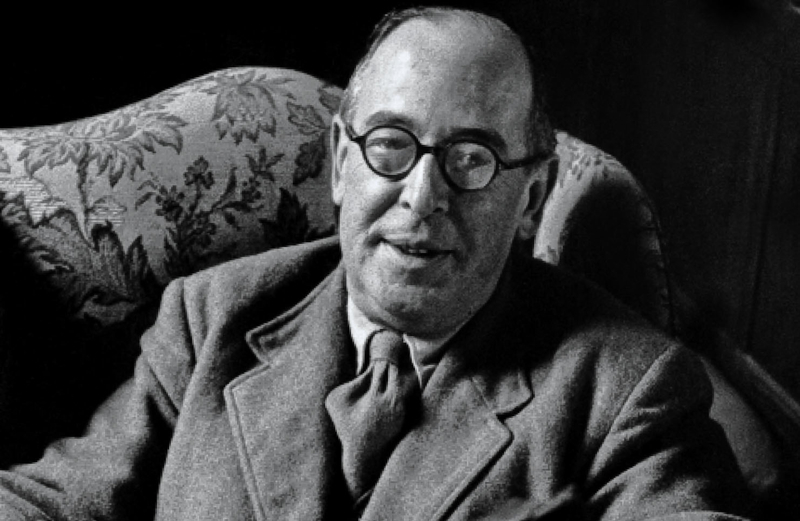
That November 22, 1963, was the day a U.S. president was assassinated cannot be forgotten, but it was also the day the author, apologist, professor and luminary C.S. Lewis died in England.

His Chronicles of Narnia were hallmarks of my youth, as they were for my kids, and time and again I meet Christians who found their faith through C.S. Lewis’ writings.  His influence seems to have grown since his death, not diminished.  Here, in honor of his memory, are 10 of his best quotes on prayer:

Community Newsletter

Get More Inspiration Delivered to Your Inbox

Notice: JavaScript is required for this content.

/* FORM STYLES */

#nf-form-5-cont {
background-color:#ffffff;
border-radius:35px;
-webkit-border-radius:35px; }

/* FIELDS STYLES */

.nf-form-content .nf-field-container #nf-field-27-wrap {
margin:0;
border-radius: 25px;
-webkit-border-radius: 25px; }
.nf-form-content .nf-field-container #nf-field-27-wrap .nf-field-element .ninja-forms-field {
background-color:#ffffff;
border-color:#ffffff;
margin-bottom:0;
border-radius: 25px;
-webkit-border-radius: 25px; }
.nf-form-content .nf-field-container #nf-field-28-wrap {
width:120px;
}
.nf-form-content .nf-field-container #nf-field-28-wrap .nf-field-element .ninja-forms-field {
background-color:#00ab84;
width:120px;
}
.nf-form-content .nf-field-container #nf-field-28-wrap .nf-field-element .ninja-forms-field:hover {
background-color:#00ab84;
}


var formDisplay=1;var nfForms=nfForms||[];var form=[];form.id=’5′;form.settings={“objectType”:”Form Setting”,”editActive”:true,”title”:”Sign up for Newsletter”,”show_title”:0,”allow_public_link”:0,”embed_form”:””,”clear_complete”:0,”hide_complete”:0,”default_label_pos”:”above”,”wrapper_class”:”master-signup-form-wrap”,”element_class”:”master-signup-form”,”key”:””,”add_submit”:0,”currency”:””,”unique_field_error”:”A form with this value has already been submitted.”,”logged_in”:false,”not_logged_in_msg”:””,”sub_limit_msg”:”The form has reached its submission limit.”,”calculations”:[],”container_styles_show_advanced_css”:1,”title_styles_show_advanced_css”:0,”row_styles_show_advanced_css”:0,”row-odd_styles_show_advanced_css”:0,”success-msg_styles_show_advanced_css”:0,”error_msg_styles_show_advanced_css”:0,”formContentData”:[{“order”:1,”cells”:[{“order”:0,”fields”:[“master_signup_email”],”width”:66},{“order”:1,”fields”:[“subscribe_now_1660636976556″],”width”:34}]}],”changeEmailErrorMsg”:”Please enter a valid email address!”,”changeDateErrorMsg”:”Please enter a valid date!”,”confirmFieldErrorMsg”:”These fields must match!”,”fieldNumberNumMinError”:”Number Min Error”,”fieldNumberNumMaxError”:”Number Max Error”,”fieldNumberIncrementBy”:”Please increment by “,”formErrorsCorrectErrors”:”Please correct errors before submitting this form.”,”validateRequiredField”:”This is a required field.”,”honeypotHoneypotError”:”Honeypot Error”,”fieldsMarkedRequired”:”Fields marked with an * are required”,”container_styles_background-color”:”#ffffff”,”container_styles_border”:””,”container_styles_height”:””,”container_styles_margin”:””,”container_styles_padding”:””,”container_styles_float”:””,”container_styles_advanced”:”border-radius:35px;n-webkit-border-radius:35px;”,”title_styles_border”:””,”title_styles_height”:””,”title_styles_width”:””,”title_styles_font-size”:””,”title_styles_margin”:””,”title_styles_padding”:””,”title_styles_float”:””,”row_styles_border”:””,”row_styles_width”:””,”row_styles_font-size”:””,”row_styles_margin”:””,”row_styles_padding”:””,”row-odd_styles_border”:””,”row-odd_styles_height”:””,”row-odd_styles_width”:””,”row-odd_styles_font-size”:””,”row-odd_styles_margin”:””,”row-odd_styles_padding”:””,”success-msg_styles_border”:””,”success-msg_styles_height”:””,”success-msg_styles_width”:””,”success-msg_styles_font-size”:””,”success-msg_styles_margin”:””,”success-msg_styles_padding”:””,”error_msg_styles_border”:””,”error_msg_styles_width”:””,”error_msg_styles_font-size”:””,”error_msg_styles_margin”:””,”error_msg_styles_padding”:””,”drawerDisabled”:false,”export_settings”:[],”form_title_heading_level”:”3″,”ninjaForms”:”Ninja Forms”,”fieldTextareaRTEInsertLink”:”Insert Link”,”fieldTextareaRTEInsertMedia”:”Insert Media”,”fieldTextareaRTESelectAFile”:”Select a file”,”formHoneypot”:”If you are a human seeing this field, please leave it empty.”,”fileUploadOldCodeFileUploadInProgress”:”File Upload in Progress.”,”fileUploadOldCodeFileUpload”:”FILE UPLOAD”,”currencySymbol”:”$”,”thousands_sep”:”,”,”decimal_point”:”.”,”siteLocale”:”en_US”,”dateFormat”:”m/d/Y”,”startOfWeek”:”1″,”of”:”of”,”previousMonth”:”Previous Month”,”nextMonth”:”Next Month”,”months”:[“January”,”February”,”March”,”April”,”May”,”June”,”July”,”August”,”September”,”October”,”November”,”December”],”monthsShort”:[“Jan”,”Feb”,”Mar”,”Apr”,”May”,”Jun”,”Jul”,”Aug”,”Sep”,”Oct”,”Nov”,”Dec”],”weekdays”:[“Sunday”,”Monday”,”Tuesday”,”Wednesday”,”Thursday”,”Friday”,”Saturday”],”weekdaysShort”:[“Sun”,”Mon”,”Tue”,”Wed”,”Thu”,”Fri”,”Sat”],”weekdaysMin”:[“Su”,”Mo”,”Tu”,”We”,”Th”,”Fr”,”Sa”],”recaptchaConsentMissing”:”reCaptcha validation couldn't load.”,”recaptchaMissingCookie”:”reCaptcha v3 validation couldn't load the cookie needed to submit the form.”,”recaptchaConsentEvent”:”Accept reCaptcha cookies before sending the form.”,”currency_symbol”:””,”beforeForm”:””,”beforeFields”:””,”afterFields”:””,”afterForm”:””};form.fields=[{“objectType”:”Field”,”objectDomain”:”fields”,”editActive”:false,”order”:1,”idAttribute”:”id”,”label”:”Email”,”type”:”email”,”key”:”master_signup_email”,”label_pos”:”hidden”,”required”:1,”default”:””,”placeholder”:”@Your email”,”container_class”:”master-email-wrap”,”element_class”:””,”admin_label”:”master_signup_email”,”help_text”:””,”custom_name_attribute”:”email”,”personally_identifiable”:1,”wrap_styles_border”:””,”wrap_styles_width”:””,”wrap_styles_margin”:0,”wrap_styles_padding”:0,”wrap_styles_float”:””,”wrap_styles_show_advanced_css”:1,”label_styles_border”:””,”label_styles_width”:””,”label_styles_font-size”:””,”label_styles_margin”:0,”label_styles_padding”:0,”label_styles_float”:””,”label_styles_show_advanced_css”:0,”element_styles_border”:””,”element_styles_width”:””,”element_styles_font-size”:””,”element_styles_margin”:0,”element_styles_padding”:0,”element_styles_float”:””,”element_styles_show_advanced_css”:1,”cellcid”:”c4722″,”value”:””,”drawerDisabled”:false,”wrap_styles_advanced”:”margin:0;nborder-radius: 25px;n-webkit-border-radius: 25px;”,”element_styles_background-color”:”#ffffff”,”element_styles_border-color”:”#ffffff”,”element_styles_advanced”:”margin-bottom:0;nborder-radius: 25px;n-webkit-border-radius: 25px;”,”manual_key”:true,”id”:27,”beforeField”:””,”afterField”:””,”parentType”:”email”,”element_templates”:[“email”,”input”],”old_classname”:””,”wrap_template”:”wrap”},{“objectType”:”Field”,”objectDomain”:”fields”,”editActive”:false,”order”:2,”idAttribute”:”id”,”label”:”Subscribe Now”,”type”:”submit”,”cellcid”:”c4725″,”processing_label”:”Processing”,”container_class”:””,”element_class”:””,”key”:”subscribe_now_1660636976556″,”wrap_styles_border”:””,”wrap_styles_width”:120,”wrap_styles_margin”:0,”wrap_styles_padding”:0,”wrap_styles_float”:””,”wrap_styles_show_advanced_css”:1,”element_styles_border”:””,”element_styles_width”:120,”element_styles_font-size”:””,”element_styles_margin”:0,”element_styles_padding”:0,”element_styles_float”:””,”element_styles_show_advanced_css”:0,”submit_element_hover_styles_border”:””,”submit_element_hover_styles_width”:””,”submit_element_hover_styles_font-size”:””,”submit_element_hover_styles_margin”:””,”submit_element_hover_styles_padding”:””,”submit_element_hover_styles_float”:””,”submit_element_hover_styles_show_advanced_css”:0,”wrap_styles_advanced”:””,”element_styles_background-color”:”#00ab84″,”submit_element_hover_styles_background-color”:”#00ab84″,”drawerDisabled”:false,”id”:28,”beforeField”:””,”afterField”:””,”value”:””,”label_pos”:”above”,”parentType”:”textbox”,”element_templates”:[“submit”,”button”,”input”],”old_classname”:””,”wrap_template”:”wrap-no-label”}];nfForms.push(form);


“Relying on God has to begin all over again every day as if nothing had yet been done.”

“It is much easier to pray for a bore than to go visit him.”

“For most of us the prayer in Gethsemane is the only model. Removing mountains can wait.”

“We must lay before him what is in us; not what ought to be in us.”

“A concentrated mind and a sitting body make for better prayer than a kneeling body and a mind half asleep.”

“For prayer is request. The essence of request, as distinct from compulsion, is that it may or may not be granted.”

“To be a Christian means to forgive the inexcusable because God has forgiven the inexcusable in you.”

“A man can no more diminish God’s glory by refusing to worship Him than a lunatic can put out the sun by scribbling the word ‘darkness’ on the walls of his cell.”

“You can’t know, you can only believe—or not.”

Photo credit: The Paris Review

10 Easy Prayer Reminders

Chances are you have a fairly set morning routine like brushing your teeth or taking medicine. You don’t have to remember it (though if you’re anything like me, you occasionally walk out of the house without your glasses. . . or shoes).

It’s almost automatic because you’ve done them in roughly the same order so many times.

In the same way, it is possible to turn some of your habits into prayer reminders or “triggers,” as I call them. I’ve previously written about triggers on this blog, but here are 10 easy prayer triggers to turn routine tasks into prayer prompts:

1)  While pouring a morning cup of coffee, pray, “God, thank you that your love has been poured out into my heart through the Holy Spirit” (see Romans 5:5).

2)  Before turning on the car radio, “Lord, tune my heart to sing Thy grace” (from “Come, Thou Fount of Every Blessing”).

3)  While getting dressed, pray, “God, clothe me today with compassion, kindness, humility, gentleness and patience” (see Colossians 3:12).

4)  Before turning on the stove or oven, “Save me, God, from being lukewarm in my love for you” (see Revelation 3:15-16).

5)  When using the ATM, take a moment to pray for the poor around the world. You might also choose an ATM password that reminds you to pray.

6)  While waiting at a stoplight, pray, “Lord, let righteousness go before me and prepare the way ahead” (see Psalm 85:13).

7)  When picking up a pen or pencil, pray, “Father, write your words on the tablet of my heart” (see Proverbs 3:3).

8)  As you see your reflection in a mirror or store window, pray, “Father, let my life reflect, more and more, the image of Your Son” (see Romans 8:29).

9)  When saying goodbye to a friend, “God, be with him or her until we meet again.”

10) When turning a light on or off, “Jesus, let me walk in the light, as You are in the light” (see 1 John 1:7).

You probably won’t use all of the above, of course. But incorporating just a few of these (or others that occur to you) into your daily routine can make a huge difference, injecting moments of prayer throughout your day.

10 ‘Breath Prayers’

You can’t always stop into a church or find somewhere to kneel or light a candle or even close your eyes and bow your head. But you can always pray. Especially if you cultivate the habit of “breath prayers.” They are simple prayers. Short. Easy. They can be spoken in a single breath and repeated numerous times throughout the day. But the habit of “breath prayers” can make a huge difference in your life as they help you to “pray without ceasing” (1 Thessalonians 5:17).

Christians have used this technique for centuries. Books have been written about the practice (The Way of a Pilgrim, for example).

As Rick Warren described it in The Purpose-Driven Life, “You choose a brief sentence or a simple phrase that can be repeated in one breath….Pray it as often as possible so it is rooted deep in your heart.”

Here are ten short, simple “breath” prayers, based on Scripture, that you can pray anytime, anywhere:

Have you prayed any of these “breath prayers?” Are there others you pray often?

Pray the Carols

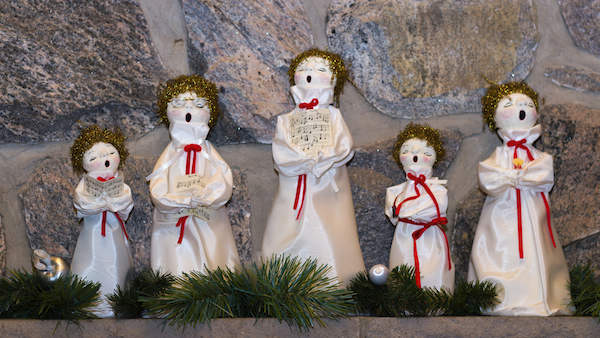
I’m sure you can hear Christmas carols playing. They seem to be all over, blasting down from the heavens or at least the loud speakers in the mall. Of course it’s fun to sing along. But often the words are great for praying. Here are a few verses that on their own feel like prayers:

Right off, isn’t “Silent Night” everybody’s favorite? What more prayerful words are there for a noisy world than “All is calm, all is bright?” As we pray for the baby to “sleep in heavenly peace,” we can pray for the peace that the Christ Child promises to bring.

Prayer is praise and adoration, a time to lift up our voices. “O come, all ye faithful,” we sing, and then get to repeat the refrain endlessly at the end of each stanza: “O come, let us adore Him,/O come, let us adore Him/O come, let us adore Him.” If we are adoring our Lord, our differences will surely fade away.

Read More: My Prayer Closet

The holiday lights are meant to guide us on our meandering way, as the star in the East guided the Wise Men. I love the way the refrain in “We Three Kings” reminds us that there is a light even brighter than the one in the sky. “O star of wonder, star of night…Guide us to thy perfect light.” Guide us to God.

Sometimes the prayer in a carol can be in the second, third or last verse. “Away in a Manger” was one of the first carols I ever learned. There is an especially lovely prayer in the third verse: “Be near me, Lord Jesus,/I ask Thee to stay/Close by me forever/and love me I pray!”

Okay, so maybe the weather is bitter cold and the rain, sleet or snow is mucking up with our travel plans. Perhaps it’s worth pulling out a prayerful “Fa-la-la-la” or two. “Sing we joyous, all together./Fa-la-la-la-la-la-la-la-la/heedless of the wind and weather.” We can ask for heaven-sent joy to make us heedless of life’s storms.

Shop Guideposts: Books of Daily Devotionals

We pray for change in ourselves as much as change in the world. The last verse of “O Little Town of Bethlehem” says it all: “O Holy Child of Bethlehem/Descent to us, we pray;/Cast out our sin and enter in;/Be born in us today.” Every day.

And finally, my favorite verse of any carol, the very end of “In the Bleak Midwinter.” A good prayer for anytime of year:

What can I give Him, small as I am?

If I were a shepherd, I would give a lamb.

If I were a wise man, I would do my part.

What I can, I give Him, give my heart.