Emily Ireton
Regina, Saskatchewan, Canada
So many older people here in Regina, Saskatchewan, don’t have family nearby. It’s a reality I became even more aware of after I retired. After many years as a pastoral care volunteer with my church, I’d seen the need—loneliness, requiring help for small daily activities—firsthand. Was there something I could do to help?
I talked to my husband, Tom. We’d worked together in real estate before retiring. “Why don’t you start your own business?” he said. “I’ll help you get the word out.” I took a course in how to be a caregiver, as well as first aid and CPR through the Red Cross. Tom helped me put together a brochure and business cards for My Angel Personal Care Services.
My first client was someone I already knew: Indu, an older East Indian woman whose daughter lived in Toronto.
“Could you visit with her once a week?” her daughter asked.
“I’d love to,” I said. Our time together soon grew to three times a week, for about an hour each visit. We talked about her life growing up abroad. She’d overcome numerous obstacles to achieve her dream of becoming a nurse. She and her husband had moved to Canada in search of a better life. My job was to keep her company, but it soon became apparent that she was the one inspiring me.
“God has always been there for me,” she told me one afternoon. “Faith is what gave me the courage to take on new challenges.”
Word spread, and I got more calls, people wanting connection, conversation. A dozen in all. Visiting with my clients, I felt closer to God. I sometimes read devotions to them, and we prayed together. I’d never been comfortable talking about my beliefs, praying aloud. But now it seemed natural.
One of my clients, Joe, is a retired priest. His eyes and his entire expression are so kind and warm, it’s as if God himself is smiling back at me. As I took on more clients, I began to understand that the most important part of caregiving is listening.
Joe had grown up on a farm, as I had. I drove him to the bank and to the barber, and we always stopped for coffee and a pastry. One day he asked if I’d make him lunch. I readily agreed. Then, lost in conversation with him, I burned his toast and set off the smoke detector. I was mortified. “I can get more bread,” Joe reassured me. “But good company’s harder to come by.”
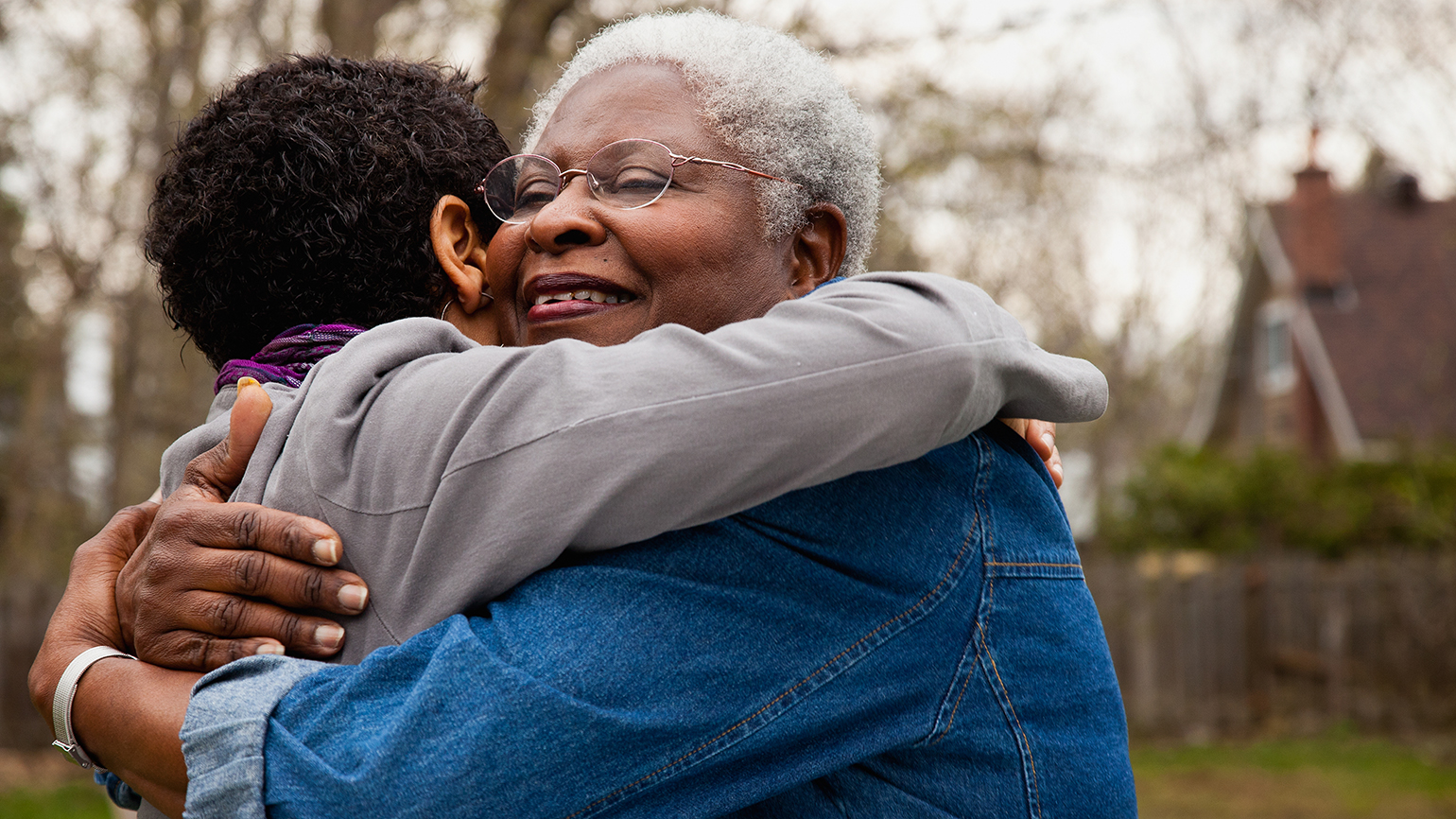
Since beginning my business, I’ve learned a lot about how to help and communicate best with elderly people. For example, don’t forget the importance of touch. That’s something everyone needs. A touch of a hand and a gentle caress are all ways to make an emotional connection. If the person is comfortable with it, nothing beats a warm hug.
Being a good listener and asking questions make a huge difference. We all feel more valued when someone takes an interest in what we have to say. Each of my clients has amazing stories to tell. I only needed to ask.
Remember not to talk over the older people in a group, treating them as if they’re not there. Find ways to include everyone.
Don’t correct people with dementia when they “remember” things that couldn’t have happened. What matters aren’t the details but the mental stimulation that comes with simply talking.
Patience is a virtue. Make the people you’re caring for feel as if there’s nothing more valuable than the time you’re able to spend together. I know I have enjoyed every minute.
Pat Crosby
Hurleyville, New York
I started out as a caregiver five years ago. After hours of instruction, I’d felt in no way prepared. Before that, I’d spent my career working on Wall Street and running my own small business. When I retired and moved to the Catskills, I was looking forward to spending my days hiking and gardening. Then the financial crash hit, and my retirement income was almost wiped out. I was desperate for money. I saw a flyer for a job as a caregiver, no experience necessary. It even offered paid training. It seemed perfect, as if God were directing me. I learned how to move a client from a bed to a wheelchair from watching a video. How to be a calming presence. How to deal with a dementia patient. “You’re ready for your first assignment,” my supervisor said.
I took a deep breath and knocked on the door of the patient’s home. I would be working the night shift, caring for a 103-year-old woman. The day shift caregiver led me down a darkened hallway to the woman’s bedroom. “She sometimes hallucinates,” she said. “You’ve dealt with that before, right?”
“This is my first client,” I said.
“Good luck,” she said. “Just be sure to talk loudly. At night, without her hearing aids in, she’s virtually deaf.”
I jumped as she shouted, “Beth, Pat is here to take over!” The covers stirred, and a frail woman peered out, a look of terror on her face.
I took Beth’s hand, and she drifted back to sleep. An hour later, she woke and pointed toward the bathroom. I’d watched videos on how to transfer a client from bed to wheelchair, but this was the real thing. When I finally managed to get her to the foot of the bed, she lay down and fell asleep. I bunched up pillows and tucked them around her, feeling as if I’d failed at this most basic of tasks. Toward dawn, she stirred again. This time I was ready. I set my feet and reached my arms underneath Beth’s. She slid easily into the wheelchair. She smiled up at me. I said a prayer of thanks.
My clients after Beth were no easier. Some of them were terminally ill. Despite my training, I struggled with knowing what to say.
Then I was assigned to Karen. She was only 60 and had a terminal autoimmune disease. She was a wife and mother and had once owned her own business. Some families are afraid to talk about death, but Karen’s handled her decline with grace and humor. It felt natural talking with them. I learned Karen and I shared an interest in meditation.
One day I brought her a meditation book that was a favorite of mine. “We can do some of it after lunch,” I said. Karen hugged the book close. “I’ve been praying for someone like you to come along,” she said.
The next day, her adult daughter thanked me. “We hired you to help with cooking and cleaning, but you’ve restored Mom’s passions. I haven’t seen her this relaxed for some time.”
I realized that I didn’t have to say anything brilliant to be a comfort. It was enough just to be myself.
Five years have flown by since that first night with Beth. But with each client, part of me feels as if I’m starting anew. Richard is a former sculptor, and his work is displayed throughout his home. Losing his independence has been hard for him. I was hired to give his wife time to run errands and get other work done. But each time I arrived, she would spend the first half hour watching me, ever protective of her husband.
One day, Richard called for help soon after I walked in. “I’ve got him,” I said. His wife looked at me uncertainly but left on her errands.
“Oh, it’s you,” Richard said. “I want to get up for lunch.” I readied his walker and helped him upright. As he shuffled slowly to the table, his leg gave out and he began to crumple. I quickly supported him from behind and used my foot to pull over a chair, easing him down securely. Richard was shaken, but after resting in the chair he walked the last few steps to the table on his own. Over lunch, he chatted easily with me for the first time.
The next week, his wife met me at the door with her purse and keys. “He’s been asking about you all morning,” she said. “He told me how you caught him the last visit. He said he has complete confidence in you. And I do too.”
“Thanks,” I said. I’d learned a lot since that first night with Beth. Discovered skills and abilities I never knew I had. Most of all I’d found a sense of purpose—a retirement plan that never loses its value.
Carolyn Adkins
Lesage, West Virginia
I slid the cheese omelet I’d made onto a plate, then spooned some fruit salad into a bowl. Breakfast was almost ready. This is my job, cooking three meals a day for an older woman in the late stages of dementia and coordinating round-the-clock care for her. It’s work I feel I was meant to do. But I haven’t always been a caregiver. How I was led to it amazes me even still.
For more than 20 years, I was a hairdresser. I loved the relationships I built with my customers, seeing the difference something as simple as a new hairstyle could make—giving someone more self-confidence. A sunnier attitude. I’d seen it happen time and again. I talked to them about their families, their work, books they’d read, movies they’d seen, but also hardships, layoffs and financial struggles. We were there for each other.
Then my life was upended. My 21-year-old daughter, Ginger, was killed in an auto accident. I didn’t want to do anything after that. I didn’t want to talk to anyone. I quit my job and got by on savings. For five years, I lived in a kind of fog, disconnected from everyone, even the Lord.
Then one day, the son of a woman I’d known for years called. His mom, Jin, had been like a second mother to me.
“My mother fell and broke her shoulder,” he said. “Would you be able to take her grocery shopping? And to her doctor’s appointments? Of course, I’d pay you.”
I hesitated.
“And if you could do her hair?” the son added.
I felt my resistance slipping. Hairstyling. I hadn’t realized how much I missed it.
“I’d be happy to help,” I said. “How often would you need me?”
Twice a week, I took Jin grocery shopping. I drove her to doctor’s appointments, and of course I styled her thinning white hair. “You make me look beautiful,” she’d tell me.
For the first time in years, I felt as if what I did mattered. Jin’s face glowed when I finished with her hair. I took her on long drives into the country, down by the Ohio River or to Barboursville Park to watch the ducks.
We spent hours in conversation. We talked about Ginger. About losses Jin had suffered. All my years as a hairstylist had been the perfect training. That too was a kind of caregiving, looking after a client’s needs. Being present. Engaged. The work I’d always loved.
I’d done caregiving before but never thought of it as a job. While I was growing up, my grandmother had come to live with us. She and I shared a room, and after school I would help my mother change her linens and feed her dinner. My grandmother was so small, I carried her from room to room. It seemed as natural as could be. She even died in my arms. “You handed your grandma over to the angels,” my mother told me.
When I was older, I cooked special meals for my father—chili, chicken livers, sweet potato casserole—filling his freezer for the week. Now I was getting paid, but the feeling of being useful, of being a comfort, was the same.
After nine years, Jin’s health declined to the point that she needed more help than I could give her. I figured I wasn’t needed anymore. Until a friend called, asking if I could care for his mother, a woman I call Princess, who was struggling with dementia. This time I didn’t hesitate.
At first I drove her to appointments, just as I had Jin. And I helped her get to bed. But as her dementia progressed, Princess needed round-the-clock care. I found others who could help and coordinated her care. I began cooking all her meals, like the breakfast I’d just finishing making.
I put the dishes on a tray, carried it to the living room and helped her into her favorite rocking chair. I sat next to her and lifted a forkful of omelet to her mouth. “Here you go,” I said. “Eat it while it’s hot.”
She chewed slowly but ate every bite. Her eyes searched mine. “Who are you?” she asked. “You’re so good to me. You make me the best food. Thank you. I love you.”
“I love you too, Princess,” I said. I told her the names of her children and grandchildren and assured her of their love. “And Jesus loves you, Princess,” I said. She smiled, and I knew we both had felt the Lord watching over us.
Read More: 6 Fun, Flexible and Fulfilling Unretirement Jobs
For more inspiring stories, subscribe to Guideposts magazine.