Embrace God's truth with our new book, The Lies that Bind

Your Yard…A Wildlife Refuge

Want a bird-friendly yard so you can attract an exciting variety of feathered friends? Maybe you’re thinking you can’t, because your space is small. Maybe you’re thinking you need acres of land, fields of grass, and towering trees. If so, think again.

My nephew, Luke Springer and I visited Judy Switzer of Middletown, Pennsylvania whose backyard is small…very small. Yet, it’s been declared a wildlife refuge!

How could that be? First thing you notice about Judy’s backyard is that on her fence is an impressive sign from the National Wildlife Federation stating that you are entering a wildlife refuge. The second thing is how small her yard is, at most 50 square feet.

Initially, you ask yourself…this is a wildlife refuge? But then you begin to notice all the specific details…the very deliberate and loving way Judy has planned it all.

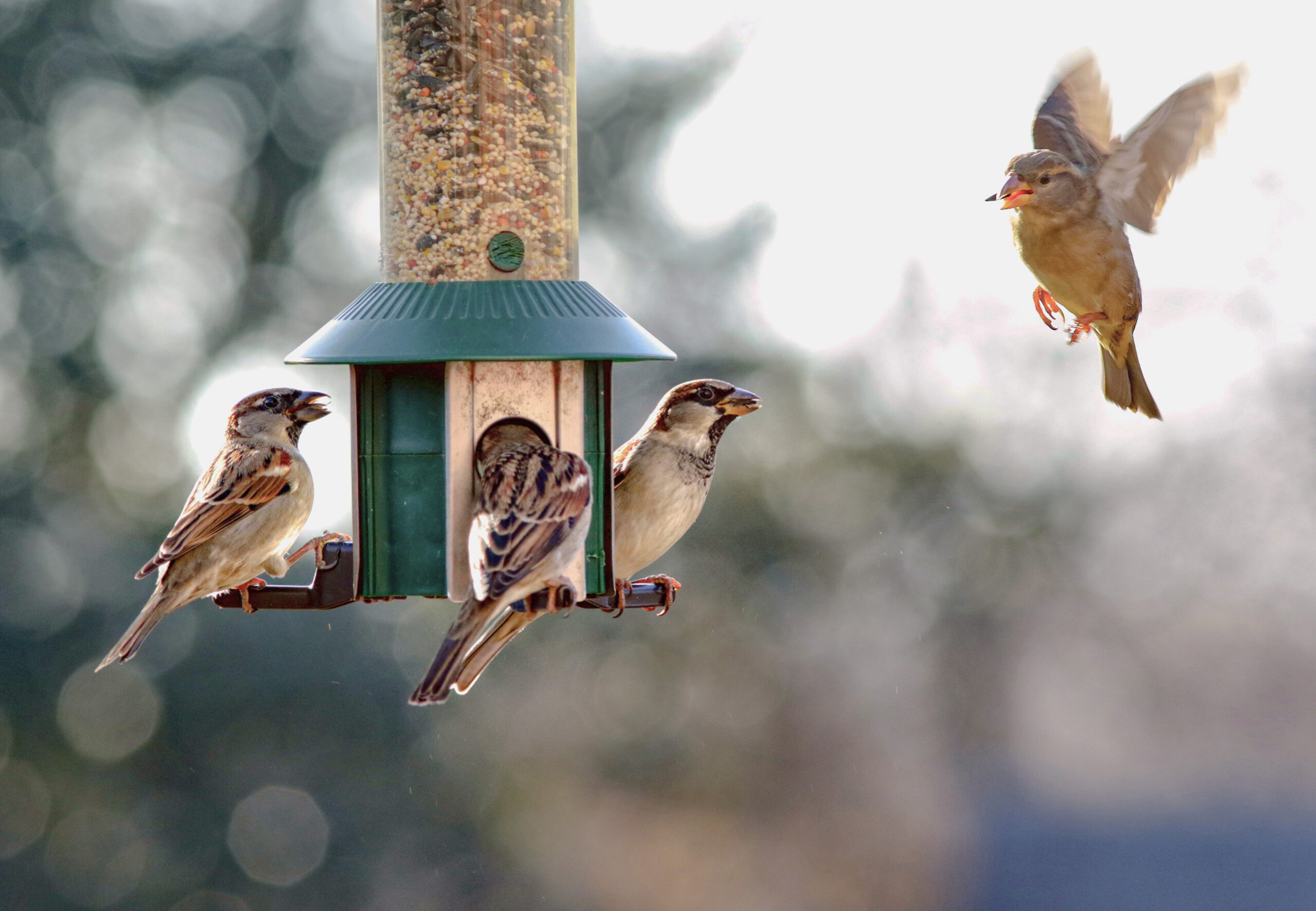
Hanging from the trees, there are many feeders for the birds Judy loves to attract. Under other trees are birdbaths where they can come to bath and drink. “The birds give such pleasure…they’re like friends,” she says smiling.

That’s not all. Judy is helping the return of native plants of hundreds of years ago. She has replaced exotic plants with species that grow naturally in her locale. Her flower garden shows a variety of beautiful colors…pink and blue hydrangeas, yellow goldstorms, auburn coral bells, and echinacea. Judy is lucky to have a sister, Carol Schroding who owns a store in Quakertown, called Northeast Natives and Perennials, specializing in native species who I’ve asked to add info on native species to this blog.

Judy is passionate about not adding any poisons to the planet, so she uses no pesticides or herbicides. Her clothesline shows she saves electricity by hanging out her laundry.

She’s also passionate about people having a right to breathe clean air. To help make this happen, she has drastically cut back grass, as mowers are much more wasteful than cars in the fuel they burn and much dirtier in the toxins they add to the air. She has replaced most of her grass with a variety of cool, green ground covers, attractive river gravel, and a large, woodsy deck that made me want to sit right down to listen to the birds calling.

“My yard may be small, but it’s a healthy place…not only for the birds, but for me, too!”

More than 125,000 backyards and public areas have already been certified, and the National Wildlife Federation is aiming for 25,000 more. Learn how you can participate by checking out their website. I’ve checked it out, and am hoping my backyard will qualify!

Enjoy your backyard birds and bunnies this summer!

Carol

Your Teen Doesn’t Believe? Don’t Panic…

What happened? You took your little girl to Sunday school. You read her Bible stories. You showed her how to pray. You dedicated her life to the Lord as a young child. You watched her grow in faith, but then, something changed.

She hit the teenage years, and now she doesn’t believe in God anymore.

Has your teen lost her faith? Photo from 123RF(r)I’ve had many conversations over the years with parents who have struggled with watching their teens walk away from Christianity and watching them walk toward an impartial view on faith, faith that believes that we all have the same God.

We just worship him differently. Or maybe she doesn’t believe in God at all. What do you do?

1. Remember that God has not forgotten His promises to you or your teen daughter. She is His child and He will lead her back to Him. It may not be in the time frame you want, but it will happen in God’s timing.

2. Stay calm and nonjudgmental. In the Bible, Jesus tells us the parable about the prodigal son for a reason. It’s not uncommon for us to stray or question our faith.

Many do, especially when we are living a life that isn’t God’s best for us, but we always find our way back home to those who love us most. God loves your daughter most.

3. Try not to preach to your teen. Many teens feel that Christians live a hypocritical life when we say one thing and do the opposite. Let her know that we all make mistakes and we need forgiveness.

Live what you believe. Show her the Lord’s love, grace and forgiveness by your actions.

4. Continue to pray for God’s guidance and protection for your teen daughter or granddaughter. She will face many temptations as she ventures out into the world.

Stay encouraged and know that God is working in her life. He is in control.

Now faith is confidence in what we hope for and assurance about what we do not see. (Hebrews 11:1, NIV)

Your Heavenly Father–The Perfect Dad

Today’s guest blogger is Wendy Lanier.

The Lord is my strength and my shield; my heart trusts in him, and he helps me. My heart leaps for joy, and with my song I praise him. (Psalm 28:7)

Daddies are protective. Well—real daddies are. Baby daddies don’t count, because anybody can make a baby. It takes a real man to be a father.

Real fathers guard their children and serve as their protectors as long as they have breath. No matter how old I get (already past the half-century mark), and no matter how old he gets, my dad will always look out for me.

He’ll fuss over whether there is washer fluid in my car, whether my tires are properly inflated, and if my favorite ice cream is in the house when I come to visit. He’ll shoot snakes for me and babysit my dog if I ask him. He’d defend me from a grizzly bear if the need arose. I have never doubted his love for me.

My husband takes the same attitude toward our own daughters. And that’s as it should be. Because that’s what dads do.

But even if your earthly father falls short of that mark, you can be sure your Heavenly Father never will. He guards you (Psalm 97:10) and helps you (Psalm 28:7). He is your protector (2 Thessalonians 3:3), and a mighty warrior who loves you, delights in you, and rejoices over you with singing (Zephaniah 3:17).

Good or bad, earthly dads are subject to faults. Not one of them is perfect. And, unfortunately, lots of people have earthly fathers that are just outright horrible. But no matter who you are or where you live or what your station in life—the Heavenly Father will always be the perfect dad to you if you’ll let Him.

Like the gentleman He is, He will never force you to spend time with Him or demand your attention. He will simply be there. And when you make the effort to know Him, when you seek Him, you’ll find that He is the answer to every need you have.

As great as my dad is, he can’t do that for me. As much as he may want to, my dad can’t heal me or bind up my broken heart or give me eternal life. That’s something only my Heavenly Father can do. And He can do that for you, too.

Wendy Hinote Lanier is a former elementary teacher who writes and speaks for children and adults on a variety of topics. She holds a B.S. and M.S. in Speech Language Pathology and an M. Ed. in Elementary Education. She is the author of more than a dozen books for children and young people as well as articles and devotions for children and adults in various publications.

World’s Oldest Couple Celebrates 80 Years of Marriage

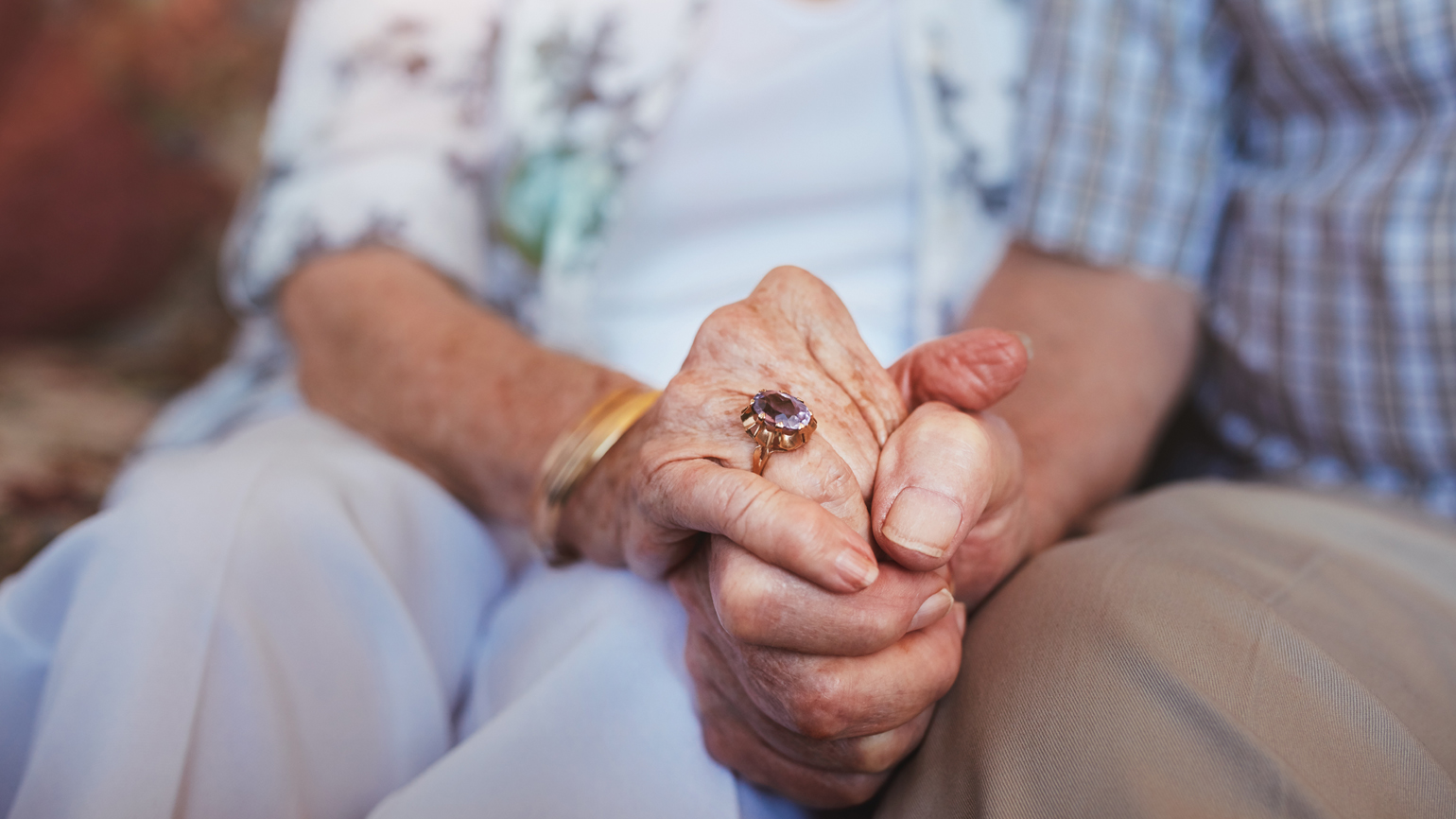
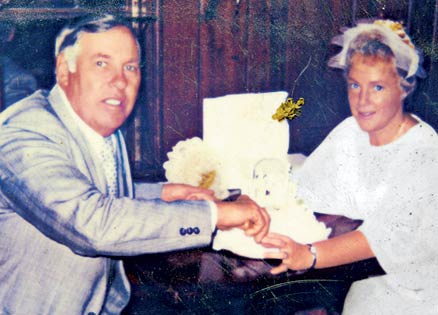
Their combined ages of 211—with 80 years of marriage—makes them the oldest living couple on Earth, according to the Guinness World Records, but for John Henderson, 106, and his wife Charlotte, 105, of Austin, Texas, it’s as if time never mattered.

The couple, who met in 1934 while attending the University of Texas where Charlotte was studying to become a teacher and John played for the university’s football team, married in 1939 during the Great Depression.

When asked about their years together, Charlotte reflected on how “one year just went into the next year,” according to USA Today.

“We’ve always loved each other, cared for each other,” Charlotte said. “It’s just one of those things that comes naturally to us.”

Longhorn Village, the senior living community where the Hendersons live, helped the couple celebrate their anniversary on December 22 by throwing a huge party with friends and family. The two lovebirds were also surprised with a 1920s roadster for the day, similar to the one John used to drive to impress Charlotte when they first met.

The couple’s great-nephew, Jason Free, who nominated them for the world record, spoke to an NBC affiliate in Austin, Texas about his great-uncle and aunt’s special relationship.

“They are a wonderful couple, and an example of a very happy couple…glad to be around each other, travel together, and live life,” Jason said. “They’ll tell you the stories of the past, but they don’t dwell on the past—they remember it, but they look forward to the future, and they’ve always been that way.”

The coupled settled in to Longhorn Village, a retirement community for University of Texas alumni and staff, after returning 10 years ago. Although they never had kids, the two were always surrounded by children, Charlotte while teaching and John while coaching junior high football. John is currently the oldest living football player for the University of Texas and according to PEOPLE, the two have attended at least one game every year for the last 84 years.

The Hendersons remain grateful for not only each of their long lives, but for their long-lasting relationship.

“I’m thankful for life itself and being able to live a full life and really a healthy life,” said John. “I’m thankful for every day that rolls around,” Charlotte added. “I’m just thankful for everything.”

Words for the Wise

“More books?” the salesclerk asked my husband, Richie, and me as we browsed the science section.

“We can’t get enough,” I said.

Reading books about mysterious topics and trying to understand them was one of the most intimate parts of our marriage. We called it our intellectual romance. We’d vowed to grow old and interesting together, and books were our means of doing so.

Each year, from November to March, we exchanged the winter months on our Connecticut farm for months of sunshine, books and long talks in Florida. Every year we picked a new topic to explore together.

“I told my girlfriend about you two and all your book adventures,” the salesclerk said. “She wants us to start reading books together too.”

“Do it,” I said. “Magnets, the 1920s, tornadoes, crop circles. Just choose something that interests you, and cover it from top to bottom.”

“Don’t choose herbs,” Richie advised. “It is dreadfully boring to talk for days about dill and coriander. We’re much happier with the subject we’re studying now. Maybe you and your girlfriend should start with that.”

“What?” the salesclerk said.

I held up the book we’d just bought. “Angels.”

Download your FREE ebook, True Inspirational Stories: 9 Real Life Stories of Hope and Faith.

Winning the War of Worry

Therefore, do not worry about tomorrow, for tomorrow will worry about itself. Each day has enough trouble of its own. (Matthew 6:34)

The boys are in our backyard pool with a few of their friends. There is laughter. Joy. The rowdy sort of glee that comes with having a good deal of boyness in a somewhat small space.

They swim and splash and make the water nearly slosh over the pool walls.

I’m on the swing that my husband Lonny built. It’s my perch. My watching spot. But today, as I sit in the sun, my thoughts wander. And soon I find myself in a worrisome place.

Summer days are numbered.

Change is near.

I never deal with change well. It may be my strongest spiritual struggle. Change brings uncertainty, and that translates to fear. Close-at-hand autumn will move us, as a family, into new territory.

Our oldest son Logan will return to Wheaton to finish his Bible degree. What will come next? Grant will begin his senior year in high school. What will the future bring? The three youngest boys and I will begin our homeschool year. Will what I teach them be enough?

Sometimes I draw worry into my emotional heart as naturally as my physical lungs draw air.

Yet, I know, as I contemplate, with still-summer sounds wrapping around me, that Jesus tells us not to worry. In fact, in His grace, he encourages us to live just one day at a time. Each day will bring what He’s prepared me for. Each day will bring what, in His strength, I can handle. The rest is a burden I place upon myself.

A self-willed yoke.

A weight He’s told me not to bear.

I’m still thinking about this when I’m hit with a cold water spray. Droplets fall like cool spring rain.

“Sorry, Mom,” a son calls. His water gun is pointed high, and he’s wearing a grin. Several boys poke their heads up from the water, hair slicked back smooth as seals.

I decide that I want to live today.

I think of the water gun in the shed behind me. I’m going to join the boys in their fun. A sneak attack will be just the thing.

This war with worry? I’m going to win it one day at a time.

It’s what the Lord commanded.

And peace floods my soul as I obey.

Teach me to live one day at a time, Lord. To appreciate and work within the here and now. Help me to trust and to leave the details of my tomorrows to you.

Will We Meet Our Pets in Heaven?

This week Gracie finally got to go to her favorite place (no, not the puppy store, though she got to go there too and scored a new toy on which she promptly performed a squeakerectomy. Does your dog do this?). No, I’m referring to Monument Mountain near Great Barrington, Massachusetts, considered sacred by the indigenous Mohicans who once lived here and also of personal spiritual significance to me.

Always by My Side by Edward GrinnanI wrote about Monument Mountain in my book, Always By My Side: Life Lessons from Millie and All the Dogs I’ve Loved. It was Gracie’s predecessor Millie’s favorite place in the world and has become Gracie’s. There is something magical about this shoulder of rock and pines that rises 1700 feet above Route 7 with its several winding trails to the summit. Odes have been written to it.

In 1850 Nathaniel Hawthorne and Herman Melville arranged their first meeting at the summit (where the young Melville announced he was contemplating writing a novel whose protagonist was a whale. No record of what the famously aloof Hawthorne thought of this, though Melville subsequently dedicated the book to him). Several years ago a good friend’s dog plunged over the summit cliff and miraculously survived with minor injuries after being rescued by first responders who rappelled down to her. It made the papers.

So why finally? Since the emergence of COVID-19 last March, Monument Mountain has been mobbed. With gyms and rec centers closed, folks flocked there for fresh air and exercise, jamming the parking areas and trails, forcing Gracie and me to more remote wanders. Which we happily did, but the other day was blustery and overcast and the crowds at Monument had finally thinned in the colder weather.

Halfway up the Hickey Trail we detoured to a waterfall and sat by the pool at its base. “Here is where I scattered your Aunt Millie’s ashes,” I told Gracie. No telling if she comprehended this. She did some perfunctory sniffing then settled by my side. It felt good to finally return to this spot.

I’ve wondered if our beloved animals will meet us in heaven and have concluded they will. What sort of cruel heaven would that be without them? I’ve been pleased by the number of people who agree with this belief, as if God would ever deny us the eternal pleasure of our pets. The problem of loving pets is you outlive all but the last one. I miss all my dogs and pray that I will be reunited with them some day. How many of you feel the same way?

While Gracie found a stick to gnaw, I said a little prayer that God would indeed admit our furry friends into paradise. Then we headed to the top, a little closer to heaven.

Willow the Heaven-Sent Comfort Cat

Beth, our dietary manager, peeked in my office door. “I want you to meet our newest resident,” she said. I smiled and turned in my chair.

Welcoming people and helping them adjust to their new surroundings is one of my responsibilities as chaplain at Madrid Home Communities, a nursing home with 110 residents in central Iowa. I was always happy to greet a new resident. But Beth was holding a tiny calico kitten.

“One of the nurses found her at the front door,” she said. “She had her paws against the glass like she wanted to come in. We’re going to call her Willow.”

“We’re not really keeping her, are we?” I protested.

“It’s so cold outside and there’s no sign of her mother,” she said, stroking the kitten’s head. “The director of nursing said she could stay, for a while. She said a cat might even be good for the residents.”

“Really?” I threw up my hands in mock surrender. No way is this going to work, I thought when Beth left. This is farm country. People don’t keep cats indoors. What about allergies? Germs?

I love my work, but it’s challenging. Moving to a nursing home is a major life change. There’s the loss of independence. Sometimes it’s not the person’s choice to move here. There’s anger to work through. And grief.

It takes time for people to open up and feel they can trust me. I have to work at it. It’s more than just being warm and fuzzy.

Sadly, the residents’ time with us can be all too short. I sit with the family as the end draws near and often hold memorial services at the nursing home. Definitely no place for a cat.

Yet no one seemed to have told Willow. She settled in right away, roaming the halls as though she belonged here. Afternoons, I’d find her sprawled across a sofa, snoozing away.

One day I spied her sitting on the lap of a man who had recently lost his wife. He wouldn’t talk to me about it. I watched as Willow stood on her hind legs, her front paws on the grieving man’s shoulders. She nuzzled his cheek, her purr so loud I could hear it across the room.

“It’s almost like she was hugging him,” I told Beth later. “Like she knew he was hurting.”

“Maybe she did,” she said.

Willow took to visiting residents’ rooms. She had a kind of route she followed, like a doctor making rounds. I’d overhear people talking to her, or reading to her. One afternoon I sat down with a woman who had recently received some bad news from her doctor. Her face and shoulders sagged with worry.

I heard a rustling and turned to see Willow padding into the room. A smile crossed the woman’s face and her shoulders lifted, as though a weight had been taken from her. I knew the comfort hadn’t come from me.

Even the chapel wasn’t off-limits. I hold worship services twice a week and was speaking from the pulpit one day. In came Willow. She sat in front, gazed up at me, yawned, scratched herself. Then, when I went on too long—too long for her—she turned and sauntered out.

Everybody’s a critic, I thought. The next time I saw her in the chapel she was sitting at the altar, paws folded in front of her as if in prayer. I know, cats can’t pray. But it was quite a sight.

Late one evening I sat with two sisters keeping a vigil over their dying mother. The room grew stuffy and one of the women opened the door. There was Willow. She walked in and jumped into the lap of the sister who was still sitting.

The woman absently began to stroke Willow, while holding her mother’s hand. Willow didn’t make a sound. After a while she hopped down and climbed into the lap of the other sister. For hours she went from one to the other, never intruding, just being present, a gentle, healing touch.

Early the next morning the mother breathed her last. Willow padded over to a hide-a-bed in the corner, curled up and went to sleep, her job done.

“God be with us,” I prayed with the sisters. “Help us to feel your love and the power of your spirit even now in our time of sorrow.” I opened my eyes and looked over at Willow, knowing my prayer had already been answered. I wasn’t the only one ministering to the residents.

I told Beth the next day what had happened. “Aren’t you glad we let her stay?” she said.

“Yes,” I said. “Call me a convert, but I think Willow’s going to work out fine.”

Today Willow is one of six comfort cats at the nursing home. I can’t imagine doing my job without them. Willow sits in the chair next to my desk every morning and I talk to her about the day ahead. She’s a great listener, a colleague I believe was heaven-sent.

Download your FREE ebook, Angel Sightings: 7 Inspirational Stories About Heavenly Angels and Everyday Angels on Earth

Why You Should Plan a Family Reunion

July is Family Reunion Month–a great reminder for all of us about the importance of being with loved ones. Time with family is truly one of God’s great blessings.

Now that our sons are grown and have families of their own, we have to be intentional about spending time together. One of our sons teaches at a college and two of our sons are in ministry, so we have to plan around their (and their wives’) hectic work schedules. Add in school calendars for the grandchildren, our business and my crazy writing projects and deadlines, and it takes some real dedication to make time together happen.

But it’s so much fun when it all comes together. We’re already planning a trip to Disney World for all of us. Having my children and grandchildren under one roof for a week makes my heart so happy!

Summer’s Simple Pleasures for Family Fun

Family vacations are fun and a great way to bond, but a family reunion is also an awesome way to span the generations and to pass down the stories and recipes from those who came before us.

When I was just a little girl, I remember those times at my Granny and Grandpa’s house. Long rows of tables were set up in the front yard, and relatives from near and far arrived laden with their family-famous fudge, potato salad or other bounty fresh from the garden. Grandpa’s pound cake nestled next to Granny’s shortbread, surrounded by a variety of pies, candies and cookies.

Introductions were made as family members arrived with a new spouse who hadn’t yet met the extended family. Babies were admired. Laughter ruled the day as “Do you remember when…?” stories were told. And, often, hymns were sung as evening settled across the mountains, sweet harmonies drifting on the breeze.

It was a time for great-grandparents to sit with babies in their arms, to get hugs from grandchildren, aunts, uncles and cousins. It was a time to celebrate “us,” to see the similarities in facial features, mannerisms and other traits that only belonged to our family.

But best of all, it was a time for stories of faith to be told, to hear about what God meant to each of them and about a great-great-grandmother who prayed for her children, grandchildren and future generations.

Those were precious memories from my childhood, moments of knowing I belonged to a special family, and times that I can pass down to my own children and grandchildren.

As it says in my Just 18 Summers novel, “Sometimes the days feel really long, but just remember, the years are really short.” Don’t miss them.

Attend your family reunion or set one up if it doesn’t exist. Make some memories together. You’ll be so glad you did.

Why This Veteran Brought a Dog Home from Afghanistan

“What kind of dog is that?” the woman asked me. There was a slight accent to her voice that made me pause for a moment.

People were always surprised when Fred ran out from the back room to greet them at the men’s clothing store where I worked, a job to pay the bills while I finished my degree at Georgetown University.

The woman’s daughter bent down and scratched Fred behind his ears. “He’s from Afghanistan,” I said. “I served there when I was in the Marines.”

There was a flicker of interest in her dark eyes, so I kept talking.

Inside our Marine compound, we’d been under near constant attack. My nerves were shot. In the afternoons, the temperature would reach 115 and the Registan Desert, Sangin District, Helmand Province, fell quiet. There was a stark beauty to the desert you never get used to. I was staring into the heat when I saw him, short legs, floppy ears, trotting across the compound to a shady spot. He wasn’t like the other dogs I’d seen in Afghanistan. Those dogs ran in packs. This guy was fending for himself in the middle of a war zone.

I grabbed a piece of beef jerky and walked over to him. He sat but watched my every step. I paused. “How’s it going?” I said. His eyes were so expressive, almost human. I heard a noise…thwap, thwap, thwap. A cloud of dust kicked up behind him. He was wagging his tail.

He was maybe eight months old. His fur—mostly white, with large spots of light orange-brown—was covered with black bugs the size of dimes. I offered the jerky and he took it. I dug my fingers into his fur, coarse and matted in dust. He leaned into me, and I wondered if he’d ever been petted. I’d always wanted a dog as a kid, but my family was into cats.

It felt as if I’d been chosen to look out for this little guy. Before the Marines, I’d never taken on a lot of responsibility. In high school, I hadn’t pushed myself. I’d graduated anyway. That’s what had drawn me to the Marines. I wanted to find a place that would hold me to a higher standard. I’d hoped it would help me figure out what God had planned for my life.

But this was crazy. Cozying up to dogs was prohibited. There was the chance of rabies. The risk of a dog drawing a Marine’s attention away at a critical moment. It wasn’t a joke. If you got caught with a dog, it would be euthanized. Reluctantly I headed back to my corner of the compound. I felt a nudge at my ankle. I looked down to see that little guy staring up at me. “Looks like you’ve made a friend,” one of the guys shouted. But what I heard was, “Looks like a Fred.”

Fred followed me to my sleeping mat and curled up on top of it. Like it was his. Another Marine and I picked the bugs off him. He didn’t protest, even as the tweezers were pulling away clumps of fur. Fred and I soon were inseparable. No one minded. He won over all of us, even our tough-as-nails master sergeant.

Join Us in Prayer for Veterans

When we went on patrol, Fred went too, loping along beside us, staying quiet. He wasn’t trained, of course. He didn’t do any actual work. But he felt like part of our unit.

With Fred around, I wasn’t on edge as much. I began to imagine a future outside of the Marines, back in Virginia, maybe a government intel position.

There was just one problem. How to get Fred back to the States. We’d been in the field for six weeks. Soon we’d be back at base for two weeks before heading out in the field again. That was my chance to ship Fred to my dad’s in Virginia. But at base, regulations were strictly enforced. Fred wouldn’t get a pass. There’d be no place to hide him.

I wracked my brain, trying to come up with a plan. Was I being selfish wanting to take Fred with me? He’d survived in the desert before we met. I needed a sign to be sure I was doing the right thing.

I paused in my story. The woman’s daughter was rubbing Fred’s tummy. The woman had sat down on a sofa, leaning forward, her eyes fixed on me. She was exquisitely dressed, a cut above my usual customers.

“The day before we were to leave, I sat with Fred and told him the deal,” I continued. “‘The helicopters are coming to take us back to base,’ I said. ‘It’s going to be loud. A little scary. But if you wanna come with me, you have to do this. Or you can stay. It’s up to you.’”

Fred stared back at me. Did he understand? I called my big sister, Sarah, back home in Virginia, just to make sure she didn’t think I was crazy. “I’ll do some research on my end,” she said.

The next morning, everyone was quiet as we packed up. But Fred was nowhere to be found. There was no time to look for him. I heard the low thump of the helicopter rotors. As the first giant bird descended outside the compound wall, a wave of sand erupted into the air. A brownout. The line of Marines began to move, still being pelted by dust and rocks. I had to focus on the guy’s rucksack in front of me.

Just as I was about to climb aboard, I felt a poke at my heel. There was Fred. His ears were pinned back. He looked terrified. But I had my sign. The master sergeant was behind me. He scooped Fred up like a gallon of milk, and I put him in my duffel bag. “We’re doing this!” he shouted.

At the base, I smuggled Fred over to the privately run shipping center the first chance I got. “What do I need to ship a dog to the U.S.?” I asked.

The manager took one look at Fred and laughed. “It can be done,” he said. “But there are forms to fill out. He’ll need a veterinarian’s okay. In the meantime, leave Fred here. He’ll be safe with me.”

Donate to help Guideposts give free publications to veterans

I said a long goodbye to Fred, worried I’d never see him again. Among the requirements, that veterinarian’s sign-off, endless customs forms, proof of a rabies vaccination. I didn’t know where to start. I called Sarah and told her the bad news. “Don’t give up,” she said. But I couldn’t get it done. I shipped out again with nothing resolved.

Two weeks in, I suffered a serious concussion when a rocket landed near me. I was sent back to base, where a doctor examined me to see if I should be sent home. I did my best to stay focused during the 45-minute exam, but it was obvious even to me that I wasn’t fully there. All I could think about was Fred. If I failed, I’d be sent home immediately, with no dog in tow. I held my breath as the doc told me her findings. “You can go back out,” she said. “But only after two weeks’ traumatic brain injury therapy.”

Thank you, God! I cried silently. I rushed over to the shipping center. Fred and I had a joyous reunion, cut short when the manager handed me a thick folder.

“What’s this?” I said.

“Your sister filled out all the forms for you,” he said. “All you need is a veterinarian’s okay. And a travel kennel.”

I found a British veterinarian who agreed to give me the approval. A soldier on the base told me where I could get a kennel. I hurried everything to the shipping center. This was it.

I held Fred’s face. “Okay, buddy,” I said. “Say hi to my dad for me.” I put a piece of lunch meat in the crate and latched the door, saying a prayer he’d arrive safe and sound.

The last months of my deployment were the hardest, when the war and the dangers we faced became all too real. We lost two men, Cpl. Sean Osterman, who died while taking fire from the rooftop of our compound, and Gunnery Sgt. Justin Schmalstieg, who was killed by an IED.

Their deaths hit me hard. I felt a responsibility to them. To somehow honor their memory.

“I didn’t want them to be forgotten,” I said quietly to the woman and her daughter.

“How long have you been back?” the woman asked.

“Three years.” I’d gotten engaged, broken it off, not ready for a relationship. I’d taken a job doing intel work. Then quit. Enrolled in college. Fred was with me through all those changes, my constant companion. We had a story everyone loved—but no ending. That thing I’d gone into the Marines searching for? I still hadn’t found it.

“It’s been hard,” I said. “I’ve had nightmares. I’m nervous around crowds. For the longest time, I didn’t want to talk about what happened. But people kept asking me about Fred. I had to tell his story, and it’s helped me. A lot. Even more than counseling.” The woman nodded. She pulled her daughter close. “I was born in Afghanistan,” she said. “My whole family fled once the Taliban took power. Thank you for your story and your service.” She reached down and patted Fred. “It’s nice to meet another Afghan.”

I looked at Fred. Born into a war zone, he was resilient, stubbornly positive. An inspiration. This goofy-looking mutt. God had thrown us together for a reason. I had a story to tell. Not only about an amazing dog but about those whose lives had inspired me. Sean and Justin. All my comrades who had given so much. Even about Afghanistan, a troubled but beautiful land. It started when a dog from the desert was sent into my life, a dog called Fred.


Cover image for Craig and Fred: A Marine, A Stray Dog, and How They Rescued Each Other Craig Grossi is the author of Craig & Fred: A Marine, A Stray Dog, and How They Rescued Each Other (2017, William Morrow).

Why this Military Wife invited 10 Teenagers to Her Home

My idea of fellowship is gathering around the table for a home-cooked meal. (Have you ever noticed how often in the Gospels Jesus is sitting down and eating with someone?) “Come and eat,” I love to call out to my husband, Jeremy. To our friends. Our neighbors. Our church family. Other military wives, especially when our husbands are deployed. I’m so passionate about coming together over meals that I write a blog—and have written a whole book—about it.

I didn’t even know how to cook when Jeremy and I got married. He had to sit me down and tell me, “We can’t get Thai takeout every night because of our budget.” Several weeks later, he said, “We can’t eat hot dogs every night because I have to be physically in shape for my job.” After that, I was on the phone with my mom every day at 5 p.m., having her talk me through the most basic recipes.

There was a lot I had to adjust to early in our marriage. The biggest thing was Jeremy’s deployments. Part of the reason I fell in love with Jeremy was his deep sense of commitment—to his faith, to me and to serving our country. I knew his work would take him away from me for months at a time. Yet I struggled with the whole idea of it.

During our engagement, I came across one of the laws God gave the Israelites in Deuteronomy. In chapter 24, verse 5, it says that when a man is newly married, he should not be sent to war, but rather, for one year, he is to stay home and bring happiness to his wife. I clung to that verse.

Not long after our wedding, Jeremy and I left our family, friends and church in Colorado and moved to his duty station in Florida. I wanted us to have time to establish our life in our new town. “Jesus, give us one year,” I pleaded. “Just one year.”

Three times that year, Jeremy was up for deployment. The first time, just three months into our marriage, I was a wreck. We’d barely gotten involved in the community. We were still new at our church. Why hadn’t God heard my cries? When the deployment didn’t end up moving forward, I was limp with relief.

The second time, I was annoyed. We just dealt with this, God. Why are you letting this happen again? That deployment passed us by too.

The third time, Jeremy’s bags were packed and in the car, and I was driving him to the base when he got a call. “We can turn around,” Jeremy said. “The deployment got canceled.”

I was beside myself with joy.

“Bri, at some point, I’m going to deploy. It’s part of military life,” Jeremy said. “This is what service is like.”

Service. Then it hit me. I’d made everything about me and my wants. What about what God wanted? Would I be a partner in his plan for Jeremy and me, or would I be a stumbling block? I’m going to trust you, God, I promised. Show me how to serve you, not myself.

Jeremy didn’t deploy until April 9, 2012. One day after our first wedding anniversary. God had answered my prayer and given us exactly one year.

Still, I was very sad to see Jeremy leave for Afghanistan. Our townhouse was quiet without him. Lonely.

I was feeling sorry for myself when our pastor announced that a group of high school students would be coming to town in June for a Christian summer camp. “We’re looking for people to open their homes and host these kids on the weekends,” he said. “Give them a place to do their laundry, eat some good meals and use Wi-Fi.”

Hadn’t I asked God for an opportunity to serve others? “Sign me up,” I said. Jeremy and I ate at a high-top table I’d bought in college. It sat four—enough to host two or three kids.

I wanted my home to be a haven for them. I stocked up on snacks, pulled out some of my favorite movies and planned a special dinner—my mom’s famous pot roast.

Then I got my hosting assignment. I wouldn’t be hosting two or three kids. There would be eight to ten!

I e-mailed Jeremy in Afghanistan. “Time to get our first dining room table!” We searched online and decided on a wooden farmhouse-style table with eight matching chairs.

The new dining set arrived the day before I was leaving for a quick trip out of town. I grabbed our tools, opened the boxes and laid out all the parts on the dining room floor. I tackled the largest piece first—the table. Just putting that together took two hours.

The chairs were a whole other story. You really needed two people—one to hold the frame, the other to screw the legs in place. I tried leaning chair parts against the wall, wedging them against my hip. Finally, I called it a night. I’d ask a neighbor to help me when I got back from my trip.

While I was out of town, I got a text. “This is Jenny, one of the girls you’re hosting. Would it be okay if we came by to use your washing machine and Wi-Fi this weekend?”

“Of course!” I texted back. I told her to get the key from my neighbor and gave her my Wi-Fi password. “Help yourselves to anything in the kitchen.”

Later that day, Jenny texted me again. “Would you like us to put these chairs together?”

I was mortified. I’d left the chair parts strewn across the dining room floor. “Gosh, no!” I replied. “I want my home to be a place of rest for you all.” I returned to find all the chairs put together and in place around the table. There was a note (which Jeremy and I keep on our fridge to this day): “Your home was such a needed place of rest for us. We are so grateful for your hospitality. We hope you don’t mind we put these chairs together. We can’t wait to share meals around the table with you.”

The next weekend, they did. With Mom’s long-distance coaching, I made a delicious pot roast with buttery mashed potatoes. I had the best time with the kids.

For the remainder of that deployment, I’d wake up in the morning with tears in my eyes from missing Jeremy. But in the evening, I’d throw open my door and invite new friends to come and eat. Our table became a place of celebration, love, hope and fellowship. And it’s been that way ever since.

Try Bri’s Best Pot Roast at home!

Find out more about Bri’s new book, Come and Eat: A Celebration of Love and Grace Around the Everyday Table, at comeandeatbook.com. Visit her blog at oursavorylife.com.

For more inspiring stories, subscribe to Guideposts magazine.

Why the Wait Is Worth It

My little grandson Nolan, just turned four last week. He loves playing with cars. Loves it! He even sleeps with cars in his hands. So I knew he’d be excited about the Cars racetrack that my husband and I bought him for his birthday.

I talked to Nolan the day I bought his gift and told him that Grandmama had something he was really going to like. For the week and a half after that, it was all he could do to wait. He peppered me with questions about what it was. He asked if it was big. He guessed what it was over and over. And I gave him outlandish suggestions that it must be a bowling ball or ironing board. His eyes sparkled as he’d say, “Grandmama, it’s not that!”

The day of his party arrived and as folks gathered at Nolan’s house, the pile of presents got bigger and bigger. Nolan came to where I was sitting in the kitchen and said, “Grandmama, did you bring my present?” I told him I did, and we walked into the living room so I could show the wrapped box to him. It was almost as big as he was.

A few minutes later, I heard a grunting sound and when I looked, he was trying to lug the heavy box into the kitchen. He looked up at me with pleading eyes and said, “Can I open it now?” I told him he’d have to wait just a little bit longer until after everyone ate.

He had such a hard time waiting, but when his mama said it was time to open presents, Nolan tore into that big box and discovered that it was worth the wait.

Friends, it’s sometimes the same way in our lives. God promises us that He’s going to do something for us and when it doesn’t arrive immediately, we’re just like little Nolan. “How long do I have to wait? When’s it coming, God?”

And then when it still doesn’t arrive, we get impatient. “God, you promised. Why hasn’t it arrived yet?” But just as Nolan learned, it’s worth the wait.

I’ve learned from experience that God’s timing is always perfect—even when it’s not on my timeline. I’ve tried to rush Him and discovered that His timing was always better because the waiting period was always for a reason.

Are you tired of waiting today? Trust God and don’t rush Him—because He knows exactly when the perfect time will be to bring His plan to fruition.