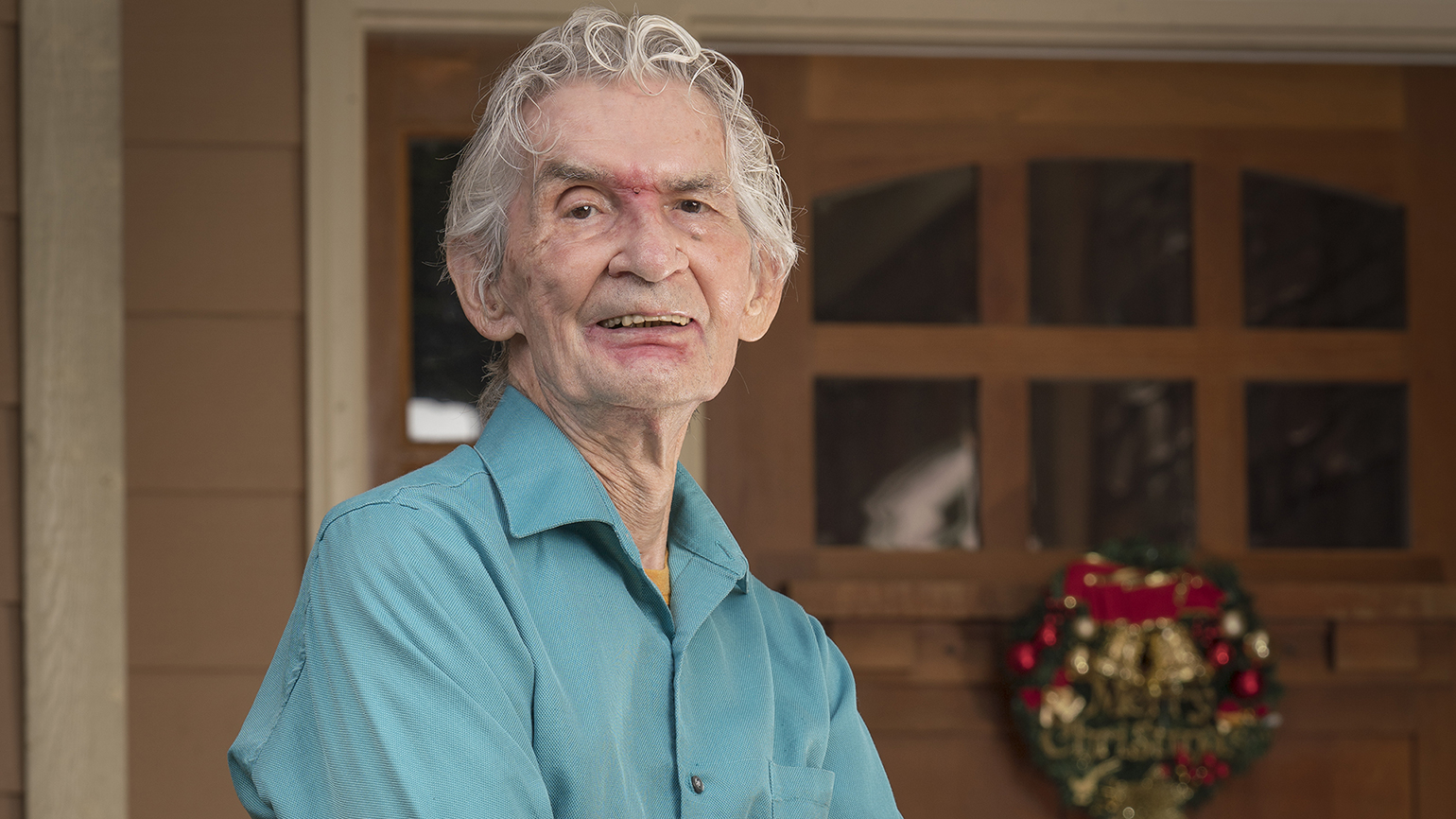
Presidents’ Day weekend in my third semester at the University of Pittsburgh, I went home to Virginia to see my folks. I couldn’t wait to show them what I’d been awarded. Only four freshmen had ever started as a running back for Pitt, and I was one of them. “Look, I got a letterman’s jacket!” I said. I pulled it out of my duffel bag and held it up so Dad could see the golden P stitched on the chest.
“Shad, that’s fantastic!” Mom said.
Dad barely took his eyes off the TV. “So?” he said. My heart sank. Dad had earned a full scholarship to play college football. My brothers, Butch and Bryan, 14 and 10 years older than me, played in the NFL. Dad knew what it meant to letter at a Division I school. “What do you want me to do?” he muttered. “You still ain’t in the pros.”
My whole life, I’d wanted my dad to be proud of me, but nothing ever seemed good enough. I used his taunts to push myself—overcoming weight issues, asthma, a learning disorder. I’ll show him, I told myself. My brothers mentored me athletically, academically and spiritually. From them and from the Bible, I’d learned about the love of my Heavenly Father—a love that I didn’t have to earn, that was freely given. But it didn’t stop me from longing for my dad’s approval.
Dad spent the rest of the weekend watching his TV shows and guzzling beer. I shook off my disappointment and went back to Pitt.
A month later, Mom called, her voice strained. “Are you okay?” I said.
“I am,” she said. “But Dad isn’t. His diabetes has gotten worse. The doctors are amputating his leg next week.”
“I’m coming home,” I blurted out. “You’re going to need help.”
“No,” Mom said. “Butch and Bryan are here. You stay focused on school.” I hung up. I thought of all the times Dad had laughed at me, dismissed me. When I was 13, I’d confronted him about how his smoking aggravated my asthma. “You honestly think you can make it to the NFL without smoking or drinking?” he said.
“Dad, to prove you wrong, I’m never going to drink or smoke,” I said. I weighed 265 pounds then and was riding the bench for my school team. But none of that mattered. Butch had played for the New York Giants. Bryan was a tight end for the Tennessee Oilers. I was going to be like them. Nothing was going to stand in my way.
Now, six years later, the NFL was within reach. But the idea of my family caring for Dad while I chased my dreams didn’t feel right. Even if it cost me a shot at the pros, I was going home.
I transferred to Liberty University, a Christian college near home, in the fall of 2006. Its football program was a huge step down from Pitt’s, but football was no longer my top priority. Every Sunday and a few times during the week, I went home. I helped Dad in and out of the wheelchair-accessible van they’d bought. I brought him food. I helped him exercise his good leg.
He criticized everything I did. Never thanked me. Never acted glad to see me. Couldn’t he at least acknowledge my sacrifice? When Butch or Bryan was around, he was different, making jokes, asking how they were doing. “How’d you get to be Dad’s favorite?” I asked Butch. “What do I need to do?”
“It’s not you,” he said. “It’s what happened to him. Dad never got to play college ball because he joined the Air Force to support himself, Mom and me. Some stuff he saw in the military…affected him. He had a breakdown and got a disability discharge. He couldn’t get a job after that. At first, with Bryan and me, he seemed okay. But he got depressed. Started drinking. Got diabetes. And now his leg. When he sees you succeeding against the odds, I think it makes him feel worse about himself.”
I was stunned to hear that. I’d known bits and pieces of Dad’s history, but I’d never thought about what he had lost, his dreams, his self-worth. I’d been focused only on myself.
Now I saw his pain went beyond the physical, and that made me try harder to engage him.
One day we were watching the Redskins-Cowboys game. “I’ll bet you $2 million Dallas wins,” I said.
Dad looked at me. “You don’t have $2 million.”
“What, you afraid to bet?”
He laughed. “You’re on,” he said. After that, every game we watched we made ridiculous bets. It became a running joke between us.
Dad changed too. He didn’t get all warm and fuzzy, but the edge wasn’t as pronounced. He laughed more easily. Was more accepting of my help. Our relationship was growing, and I was sure this was where God meant for me to be.
On the football field, I set conference records for most rushing yards and touchdowns. I played in the Senior Bowl, a chance for top collegiate players to show their stuff in front of NFL scouts. I killed it in that game and was named MVP. I breathed a prayer of gratitude, hoping I’d made enough of an impression to get to the pros.
That spring, a week before the 2009 NFL draft, we had a party at the house, a great day of eating and playing spades. But the draft was all anyone could talk about. That night, after everyone had gone, Dad and I were sitting in the living room watching reruns of Sanford and Son. Dad caught my eye. “It doesn’t matter if you make it or not,” he said. “I’m proud of you.”
I was 23, but I felt like a little boy again, and that boy pretty much melted. All my life, I’d waited for those words.
A week later, I was drafted in the seventh round by the Jacksonville Jaguars, the 250th player chosen. Before I left for training camp, I bought a white T-shirt and asked everyone in my family to sign it. Dad signed in big bold letters. I wore that shirt under my uniform in every game.
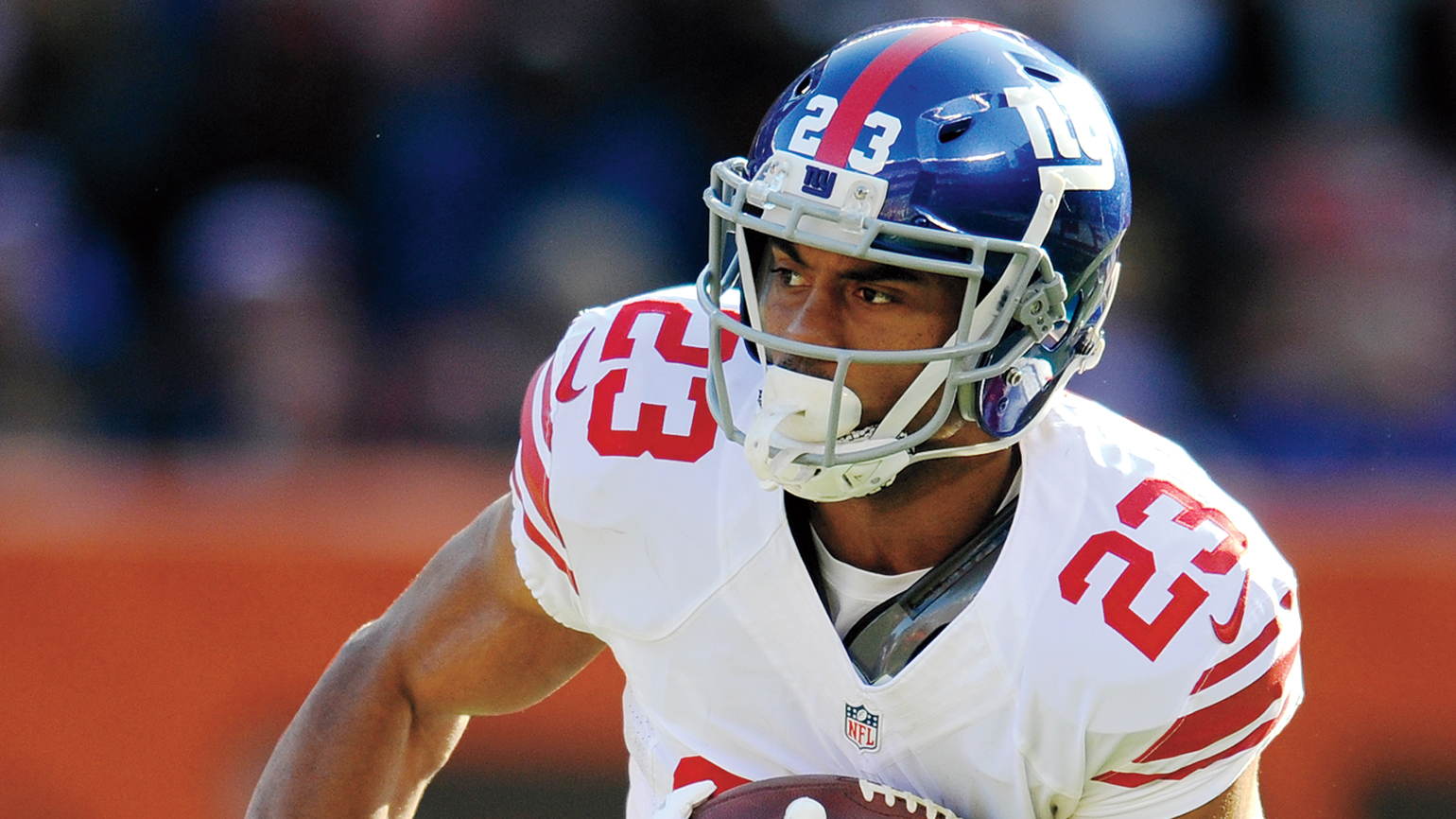
My first four years in the NFL, I was hindered by injuries and had to work harder than ever to keep my job. In the end, the Jags didn’t renew my contract. I signed a one-year deal with the Oakland Raiders. Finally the pieces came together. I was named the team MVP, my 700 yards rushing getting the attention of other teams. In 2014, I was signed by the New York Giants.
I was living my dream. But with his health issues, Dad had made it to only one of my games. It seemed like the connection I’d made with him after moving back home was slipping away.
The Saturday before our third game, our team gathered for meetings, meals and chapel. At dinner, I asked my teammates, “Why do you play?” One by one, the guys answered. For the physical challenge. For love of the game. For a coach who’d inspired them.
Then it was my turn. I took a moment before answering. “I play for my dad,” I said. The other guys looked at me intently. “We haven’t always gotten along….” I told them everything, how we’d both changed with God’s help, how important it was for me to feel his pride in me. I wished there was some way for Dad to know how much he meant to me too.
Before the game, my family called. I asked Mom to put Dad on the line. “I’m dedicating this game to you,” I said.
“Aw, thanks, Shad,” he said.
“I mean it, Dad,” I continued. “Every down, you’re going to be on my mind!”
Dad chuckled. “Go kick butt,” he said.
That day, I rushed for 176 yards, a career high. After the game, the ESPN interviewer asked me what my secret was. “I played this game for my dad,” I said. I told about her about him losing his leg, how I wanted to use my body to honor him.
When I left the stadium, I called Dad. “Rashad, I’m so proud of you,” he said. Maybe our relationship would never be perfect, but I would never doubt that he wanted the best for me.
ESPN was so inspired by my interview that it arranged to bring Mom and Dad to a game to surprise me. One of the greatest moments of my career.
My final year in the NFL, Dad’s other leg was amputated. He called me every day from the nursing home where he was staying for rehab. He was in a lot of pain and struggling emotionally. I felt helpless, not being there physically.
“Dad, I know how hard this is on you,” I told him one night. “I’d like to pray with you every night before you go to bed. Would you like that?”
“Yes, Shad,” he said.
Every night I called him. I prayed for him, his caregivers and our family. At the end of our calls, Dad would say, “Love you, man.”
And each night, from the bottom of my heart, I’d say, “I love you too.”
For more inspiring stories, subscribe to Guideposts magazine.





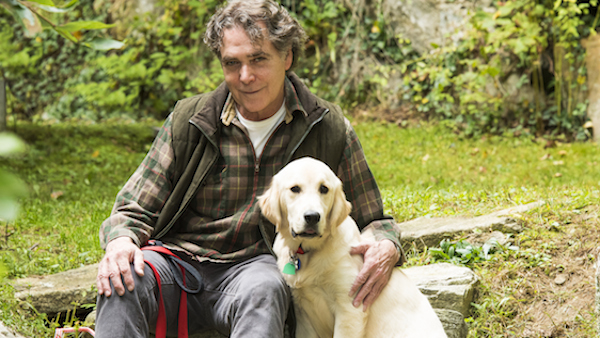
 Then came the first part of training. This involved putting Gracie on a leash (but not the electric collar) and then charging a group of flags and yelling “No! No! No!” as we got up close to them and rushing her back. I then hugged her and praised her to the skies. I liked this part of the training so much I kept doing it long after Gracie got the point, which was after maybe three times. Finally she refused to charge, looking at me as if to say, “I get it already. You don’t like the flags. Now I’m bored.” I believe dogs often think we humans are crazy but I think Gracie thought I was crazier than usual that morning.