Embrace God's truth with our new book, The Lies that Bind

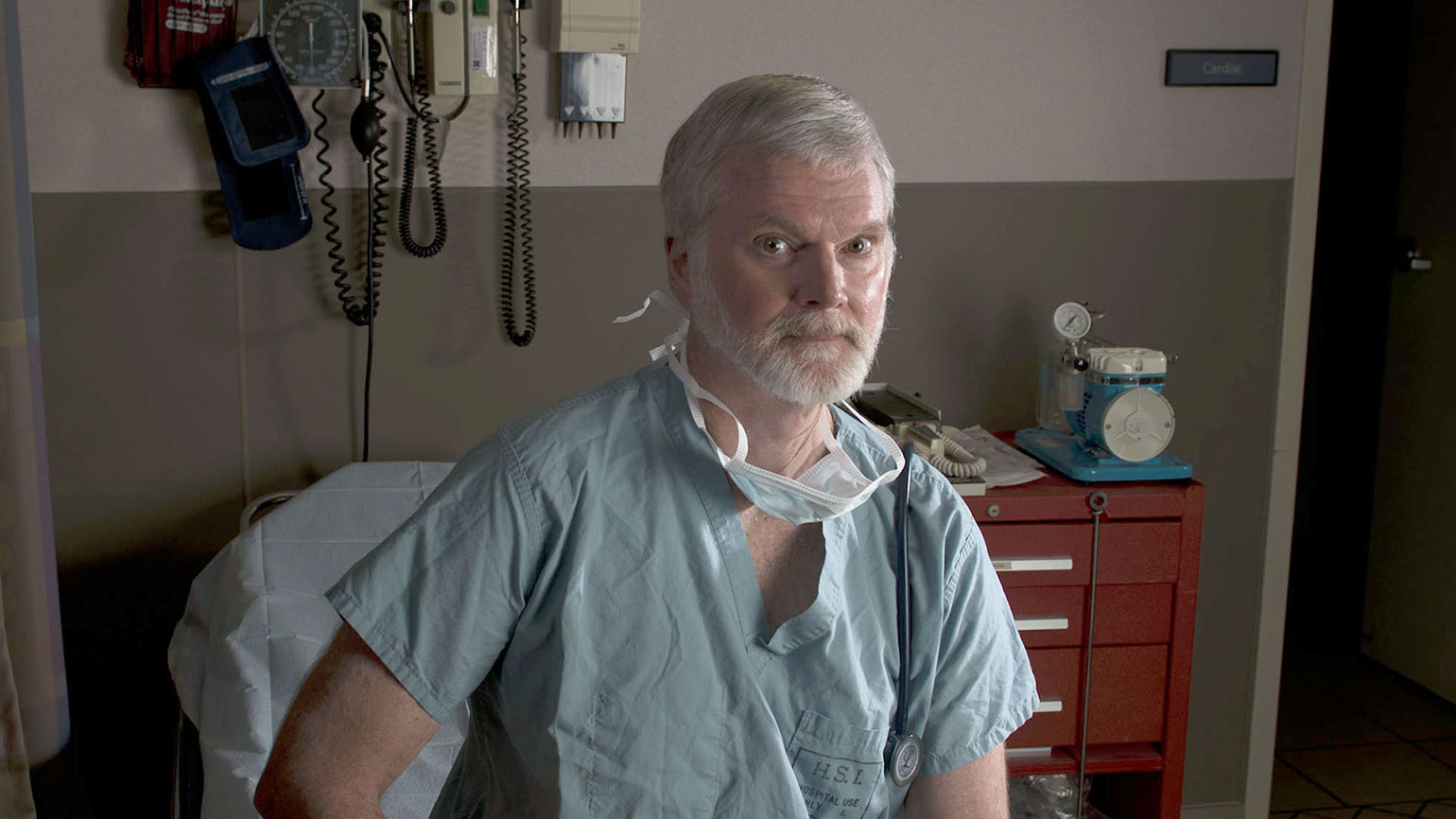
Dr. Robert Lesslie: Guideposts Loses a Beloved Author

I haven’t shot a gun since I was a kid, but my dad liked to go to the range—he was a good shot—and we had a trunkful of his guns in the house, carefully stored. Personally speaking, I never had much of a stomach for hunting. I didn’t see where I had the right to deprive another of God’s creatures of the gift of life, simply for sport.

My father shot a man once. In the middle of the night, he spotted someone trying to steal our brand-new Pontiac Bonneville from the driveway. He got a gun, shouted a warning at the man then put a round in his calf. The man’s howl woke the neighborhood. Soon the police were on the scene, lights strobing the leafy suburban darkness. The man was not badly hurt. He was, however, a bad repo man. He’d meant to repossess a car down the street and confused the addresses.

That was some years ago, obviously, and most everyone would defend my father’s actions in defending the Bonneville (I loved that car). But the shootings we hear about today, especially the mass shootings, are horrifying. They are beyond comprehension and as they seemingly grow more frequent, they get closer.

A few days ago, Dr. Robert Lesslie, his wife and two grandchildren were gunned down for no other reason than they were a target of opportunity for a tragically disturbed individual who shouldn’t have even been able to possess a gun for any fathomable reason.

Dr. Lesslie was a Guideposts author and beloved by his family and community, a man of great talent and even greater faith. That’s what I mean by these senseless shootings getting closer, gunfire that shatters a family and a community the way it shatters the silence.

Will we soon all know someone, or some family affected by gun violence, just as we know families who lost loved ones to Covid-19? The nightmare violence at Sandy Hook Elementary in 2012 shook Guideposts. Some of our employees had children in that school system, and one former colleague lost a daughter.

The violence is getting closer.

There are more guns than people in this country. We are the only society that contends with this level of nihilistic slaughter. The debate over gun rights is acrimonious and driven by fear on both sides—fear of violence and fear of the deprivation of a right.

What we should fear is that we are a country dangerously close to accepting this grotesque level of gun violence and just moving on. We are, I pray to God, better than that. I know we are. Like so many of our national differences, common ground is required to find a solution based in empathy and understanding—not fear. There are those who decry the overuse of the reflexive phrase “thoughts and prayers” in response to these tragedies. Thoughts and prayers are where the solution should begin, not end.

Please say a prayer for Dr. Lesslie’s family and all the people who loved him. Say one for our country, too, and all those who have been affected by gun violence.

Dr. Marty Becker’s Tips for Fear-Free Pets

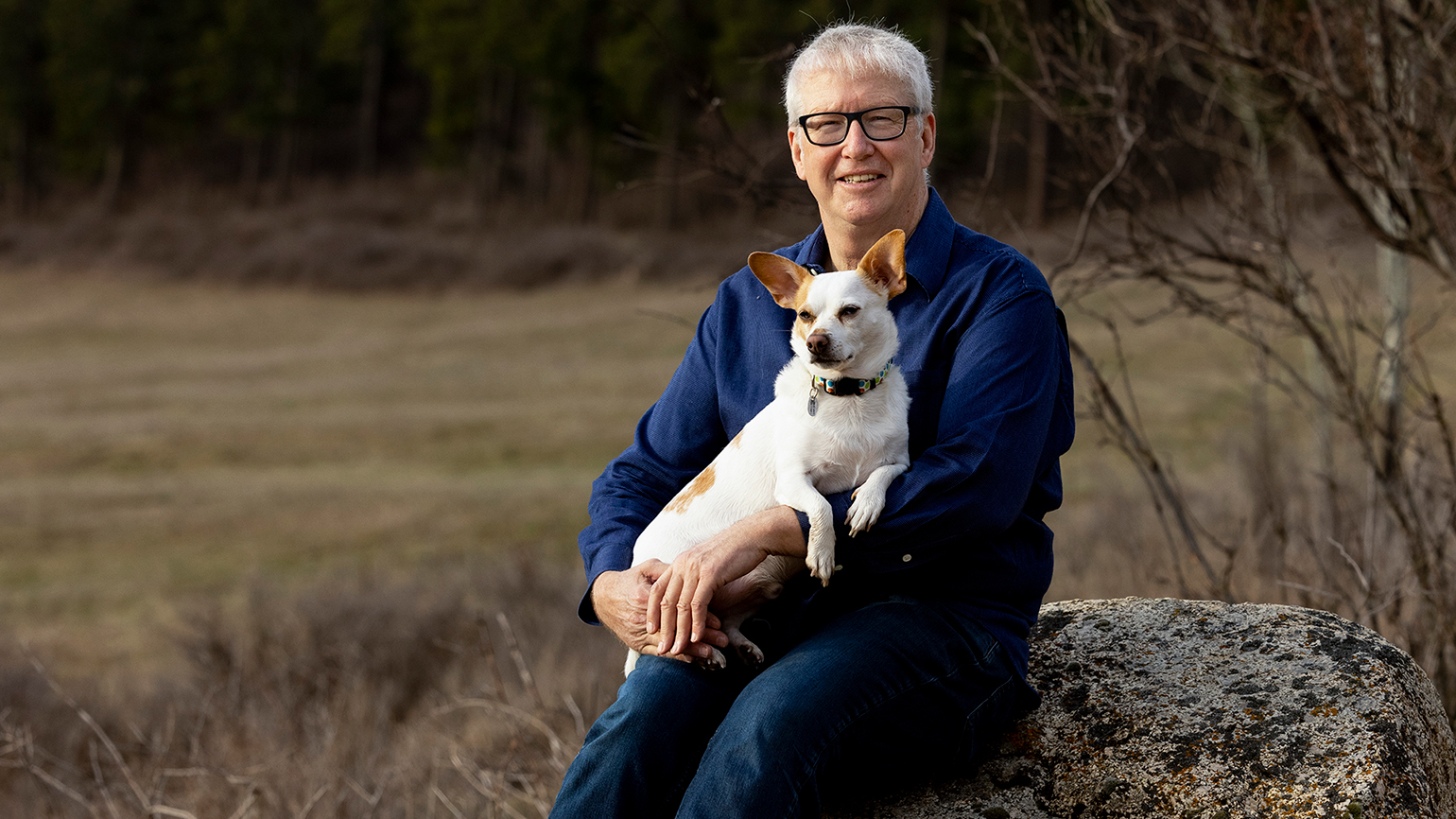
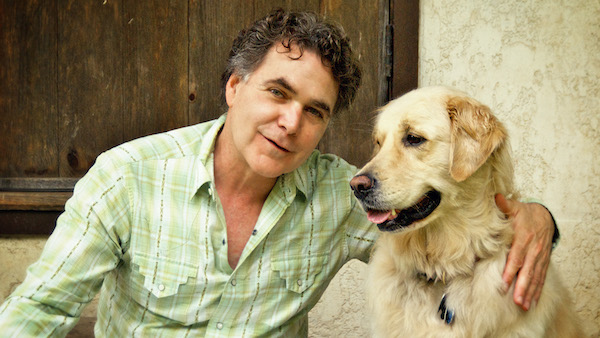
Hi Guideposts. I’m Dr. Marty Becker, here with my wing dog, QT Pi, at Almost Heaven Ranch. I’ve been a practicing veterinarian for over 40 years and a lifetime pet lover. I wrote some books called “Chicken Soup for the Soul” about that affectionate connection between people and their pets. That led to an appearance on Good Morning America to promote the book. That led to 17 years on Good Morning America and then being on Dr. Oz and then 23 books and lastly a syndicated column. But I still practice at North Idaho Animal Hospital in Sandpoint, Idaho.

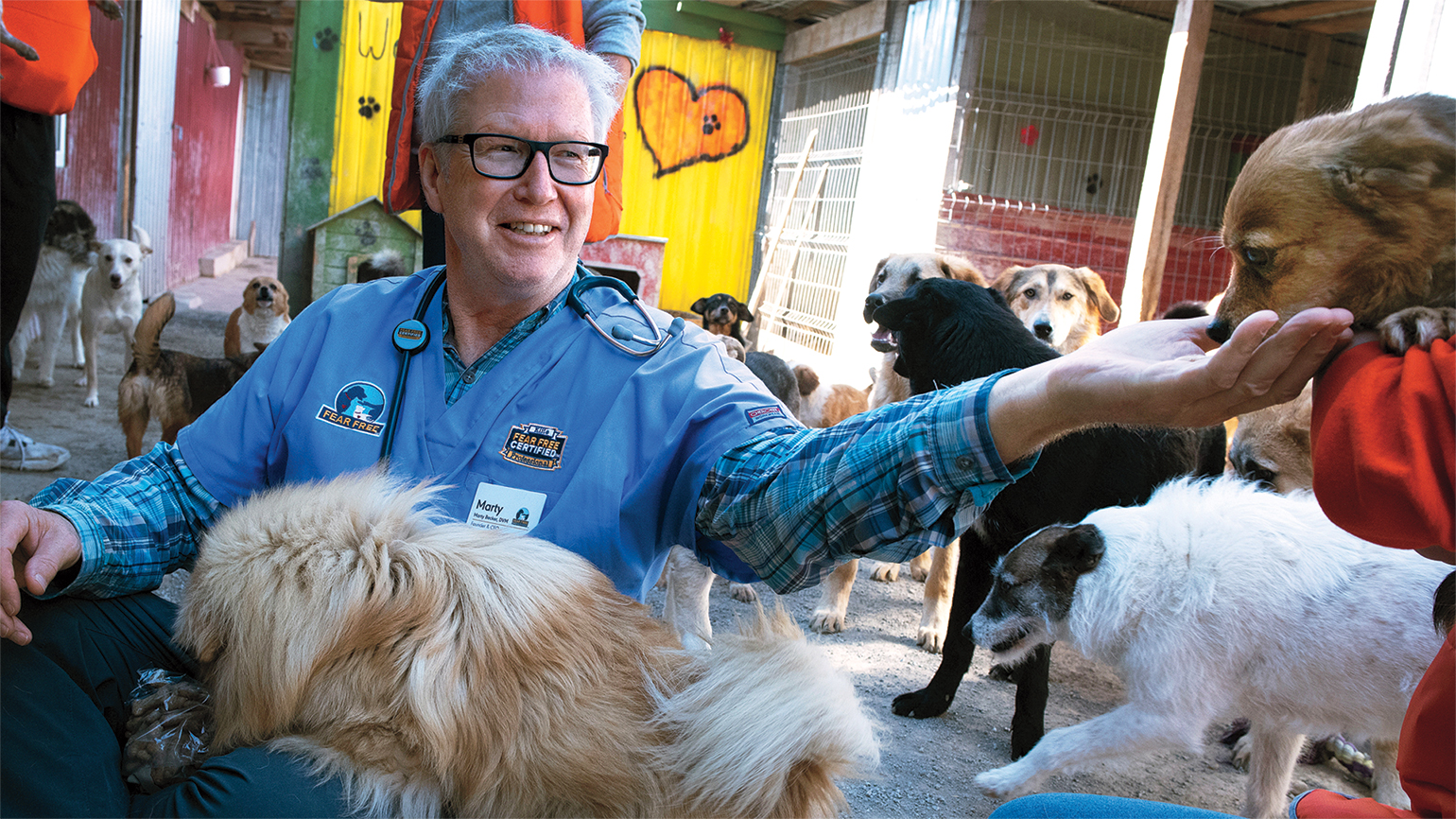
Really delighted to be part of Fear Free, which we look to really take the “pet” out of petrified in all situations, whether it’s going to the veterinary practice, going to see the groomer, going to be boarded. We know that pets have rich emotions just like humans do, so we want pets to not just be physically healthy but emotionally healthy as well.

What can a pet parent do to make a veterinary visit fear-free? The worst thing any pet parent feels is like they’re hurting their pet by trying to help it. It’s sick, it’s injured. You need their teeth cleaned. You need their vaccinations and you think, “It’s so stressful for them. Maybe I’ll just wait.”

The veterinarian is the true pet health expert and there’s no substitute for regular veterinary visits, either for wellness or the first signs of an illness or first moments of an accident. So that’s why you need to go with a veterinarian that’s trained in Fear Free. And in Fear Free, when we go to do a procedure, like we’re giving a vaccination, we’re giving injection, antibiotics, we’re examining them, we’re doing a blood draw. We go very careful. We talk to them, we use a distraction technique.

So if I was going to examine a wound on QT Pi or give him a vaccine, we would actually have a little silicone mat with a little smiley face in Easy Cheese or peanut butter or whipped cream, and while he’s distracted licking this off, that’s when we would examine the wound or give the vaccination. Most of the time, they don’t even know something’s happened.

How can a pet parent alleviate anxiety in their pets? One thing is to desensitize them. And QT Pi here, he was a shelter dog, and we had to do exactly this with him. What usually triggers the separation anxiety, putting your coat on, the jingling of keys, going outside starting your car. So what you do is you put your coat on and then you take it back off. Then you give them a treat. You do your keys, you jingle your keys, you put them back. You go outside, you start your car up, you come back inside. So you desensitize them to those triggers.

Also there are pheromones, so there are some sick pheromones you can give a dog. So you put a plug-in of the pheromone in your house, or you can spritz their bedding with it. There are some nutraceuticals you can use; talk to your veterinarian about it. Some of these are products that mimic the milk that a mother gives their puppies. And then there’s pharmacy solutions.

What is the best way to distract a pet in a stressful situation? Number one, your emergency call is always “come”. Above anything else, you need to have a dog that’ll come to you. You may be out for a walk and there’s a big dog coming down the road. There’s a fire engine coming recklessly. So what I recommend on the word “come” is to have some treat that you give that they don’t get any time else. A good example would be warm deli turkey, little slices of hot dogs or something like that, so they know how to come.

So how do you help pets deal with loud noises? Let’s talk about thunderstorms first. For most dogs, they… Cats very seldom get thunderstorm phobias, But most dogs, they get a buildup of static electricity in their coat before they hear the rumbling of thunder, before they hear the flashes of light. And so if there’s thunderstorms in the forecast, you can take an unscented fabric softener sheet and just wipe it along the whole trunk of your dog’s body. And in about 30% of the dogs they won’t have a thunderstorm phobia just because they don’t get the buildup of static electricity.

QT Pi here is really freaked out by thunderstorms. So if there are thunderstorms in the forecast or let’s say it’s July 2nd, we either give him a product called Sileo, or we get generic xanax or alprazolam. And literally, if he’s on alprazolam, that thunder can hit right outside the house here and shake this whole house, and it does absolutely nothing except give him a very robust appetite. One other thing too, thundershirts work in about 60% of dogs. And how do those work? They’re a compression garment. All of us have seen a baby swaddled. Why do they swaddle a baby? It comforts them. And one more thing is pheromones. Again, pheromones are like a chilling mist. It works throughout a dog’s life.

Dr. Marty Becker: How Facing His Fears Made Him a Better Veterinarian

My dog, QT Pi (“Cutie Pie”), tucked his little white paws under his body and trembled in my arms. As a veterinarian at VCA North Idaho Animal Hospital, I’m usually the one easing pet parents’ fears, but on that day six years ago, I couldn’t calm my own. Or my dog’s.

QT Pi is my heart dog, the one who always wants to be by my side. A Chihuahua–Jack Russell–dachshund mix, he is two dogs long and a half dog tall. I’d adopted him from a litter of shelter puppies that had distemper. He had spent a week in intensive care at Washington State University College of Veterinary Medicine, my alma mater. Afterward, I had taken care of him at home.

Dr. Marty Becker on the cover of the Aug-Sept 2022 Guideposts
As seen in the Aug-Sept
2022 issue of Guideposts

Now I’d brought QT Pi to the clinic for the first time. He was there for a dental cleaning, a procedure that required general anesthesia. When I walked in and tried to hand him over to my colleague, he clung to me, panting and shivering. I kissed his nose. “You’re going to be fine,” I said, wishing he understood. He whimpered as I peeled him away and stepped outside.

I found myself shaking too, and it wasn’t just that I was anxious because there’s a risk of an adverse reaction anytime an animal is put under anesthesia. The fear that my little dog felt hit me someplace deep inside. What was going on here? I took a slow breath in and out. The last time I felt like this was at that lecture….

I’d wanted to be a veterinarian ever since I was a young boy growing up on a dairy farm in Idaho. I graduated from veterinary school in 1980 and went into practice in southern Idaho. My career grew. My wife, Teresa, and I moved halfway up a mountain in northern Idaho in 1997, to a horse ranch that we call Almost Heaven Ranch.

In 1996, I received the wonderful opportunity to become the veterinary correspondent for Good Morning America. I joined the team at the Dr. Oz Show in 2009.

I’d been practicing veterinary medicine for almost three decades by then, and I was thinking about retiring. Then at a conference that year, I went to a lecture by famed veterinary behaviorist Dr. Karen Overall. It had been a busy conference, and I was tired. I stood up, thinking I’d slip out early.

Fear is the worst thing a social species can experience,” I heard Dr. Overall say. I stopped short.

“It causes permanent damage to the brain.” I turned and sat back down.

Dr. Overall explained that pets are like one-year-old children. She asked us to imagine being taken against our will, having no control, being unable to escape, feeling pain that we couldn’t understand. “Think back to a time as a child when you felt manhandled, threatened or abused,” she said.

The memories came flooding back, memories I thought I’d put behind me. My two sisters, brother and I were in the car returning home from a trip to the grocery store with our mom. We chanted a little verse we’d made up: “Daddy’s in a huffy puff. Daddy’s in a huffy puff.”

We were too young to understand, but our father was in the grip of two diseases that would go undiagnosed and untreated until later in his life: alcoholism and bipolar disorder. We never knew what kind of state we’d find him in.

The house was quiet as we unpacked the groceries. I thanked my lucky stars that he was nowhere around. Later that night, as I huddled in my bedroom just off the kitchen, I heard Mom and Dad fighting. Again.

“Outta my way!” Dad yelled. The angry words escalated. Things crashed, and Mom screamed. I shivered under the covers. “I’m going to kill you!” Dad bellowed. I could feel his rage through the thin walls. I was so frightened, I couldn’t move. Mom started crying. A door slammed. The fight was over, for now. But I knew there would be more.

I’d lived with that fear throughout my childhood. In the car when Dad drove, zipping down dirt roads at a hundred miles an hour while I clung to my seat for dear life. Or when I played in the fields, barely old enough to tie my own shoes, and Dad would push me up onto the driver’s seat of the hay baler, and laugh when I screamed, terrified, because I couldn’t handle the huge machine.

Traumatic childhood experiences can teach resilience. I became a high achiever, striving for top grades in school and, later, for the biggest market share for the veterinary hospitals I owned. I was very competitive and never wanted to show weakness.

Even in my personal life, I was driven. Teresa and I married in my third year of veterinary school, and we built the stable, happy family I’d longed for as a boy. A pastor friend helped me learn to accept the pain of my past. I came to trust in the love of God, the father who would never fail me. My positive, high-energy, can-do self shielded my vulnerabilities so well that I almost forgot I had them.

Until Dr. Overall’s lecture drew them to the surface again.

I’d always done my best for my patients. Looking back, however, I hadn’t always recognized the signs of fear: shivering, shaking, yawning, panting, salivating, leaning away, glancing at the door, even biting.

When I’d seen a dog lie perfectly motionless on the exam table, I thought he was calm. Dr. Overall explained that he was likely paralyzed with fear. The way I had been the night I’d heard my dad yelling that he was going to kill my mom. Just recalling it made me feel shaky, as vulnerable as a child again.

If fear still had such a hold on me even though I could talk to a counselor and lean on the comfort of my faith, how must it be for helpless animals? The animals whose suffering I’d promised to prevent and relieve when I took my veterinarian’s oath?

I had to face the truth: Although I had the best of intentions, there were times I had actually caused my patients trauma. Back in veterinary school in the late 1970s, we didn’t receive training in animals’ emotional well-being. The focus was on their physical health. Even pain management was pretty basic.

I knew God had nudged me to stay at that lecture for a reason. Genesis says God gave us humans dominion over the fish of the sea and the birds of the air and every living thing that moves upon the earth. He entrusted animals to our protection and care. I wanted to do better by them. “Show me a better way to treat animals,” I asked God. “A way free of fear.”

I couldn’t retire yet. I had more to learn, to do. I talked to and studied the work of veterinary behaviorists. Alleviating fear would improve the well-being of both pets and their people.

Not only could fear and anxiety in cats and dogs mask other health problems, but these emotions were also at the root of most aggressive behaviors. Behaviors that could destroy the human-animal bond and lead to abandonment, relinquishment or euthanasia.

I experimented using treats and toys to distract pets from procedures. I researched FAS (fear, anxiety and stress) pheromones, chemical signals animals give off that send a message to others of the same species.

That’s what QT Pi must have sensed from the other dogs at the clinic entrance, I thought now, as I waited for my dear little dog to be done with his dental procedure. He was so bonded to me that he’d picked up on my fear, anxiety and stress too. God was nudging me again, as he had at the lecture, reminding me of my vulnerability in order to galvanize me into action. It was time to put my ideas into practice.

The next week, when QT Pi and I returned to the clinic for his vaccinations, I made sure the outside area was cleaned to remove FAS chemicals and then spritzed with pheromones that would evoke a calming response. Because he’d balked at the front door, I brought in QT Pi through the side door, where he hadn’t formed any unpleasant associations. There was no shivering, no trying to escape!

In the exam room, he squirmed at the sight of the big metal table, so I set him on the floor and got down beside him. His ears perked, and his tail wagged. I’d brought him in hungry, so he’d respond better to food rewards. As my colleague readied the syringe, I used a can of spray cheese to write “QT Pi” on a bumpy rubber pad called a licky mat. He licked his name off the mat and barely noticed when he got his injection. I hugged him close, and he kissed my face. What a difference!

From then on, I was committed to implementing my new techniques and teaching them to others. I worked with veterinary behaviorists to enhance the emotional well-being of pets in all aspects of their lives. In 2016, I formally launched the Fear Free Certification Program, an online course designed to help veterinary professionals eliminate fear, anxiety and stress and create a more rewarding experience for all.

Today more than two thirds of all veterinary students graduate Fear Free–certified. Plus, we have Fear Free programs for pet professionals (such as groomers and dog sitters), shelters and pet parents.

None of this would have happened if God hadn’t put me where I would hear what I needed to hear and feel what I needed to feel. Reliving the pain and fear of my past showed me that vulnerability is a strength, not a weakness. It gave me a deeper empathy for and understanding of the animals God has given us to love and care for—animals who, like my QT Pi, love and care for us right back.

Read Dr. Becker’s Fear Free tips for pet parents

For more inspiring stories, subscribe to Guideposts magazine.

Driving with Jesus

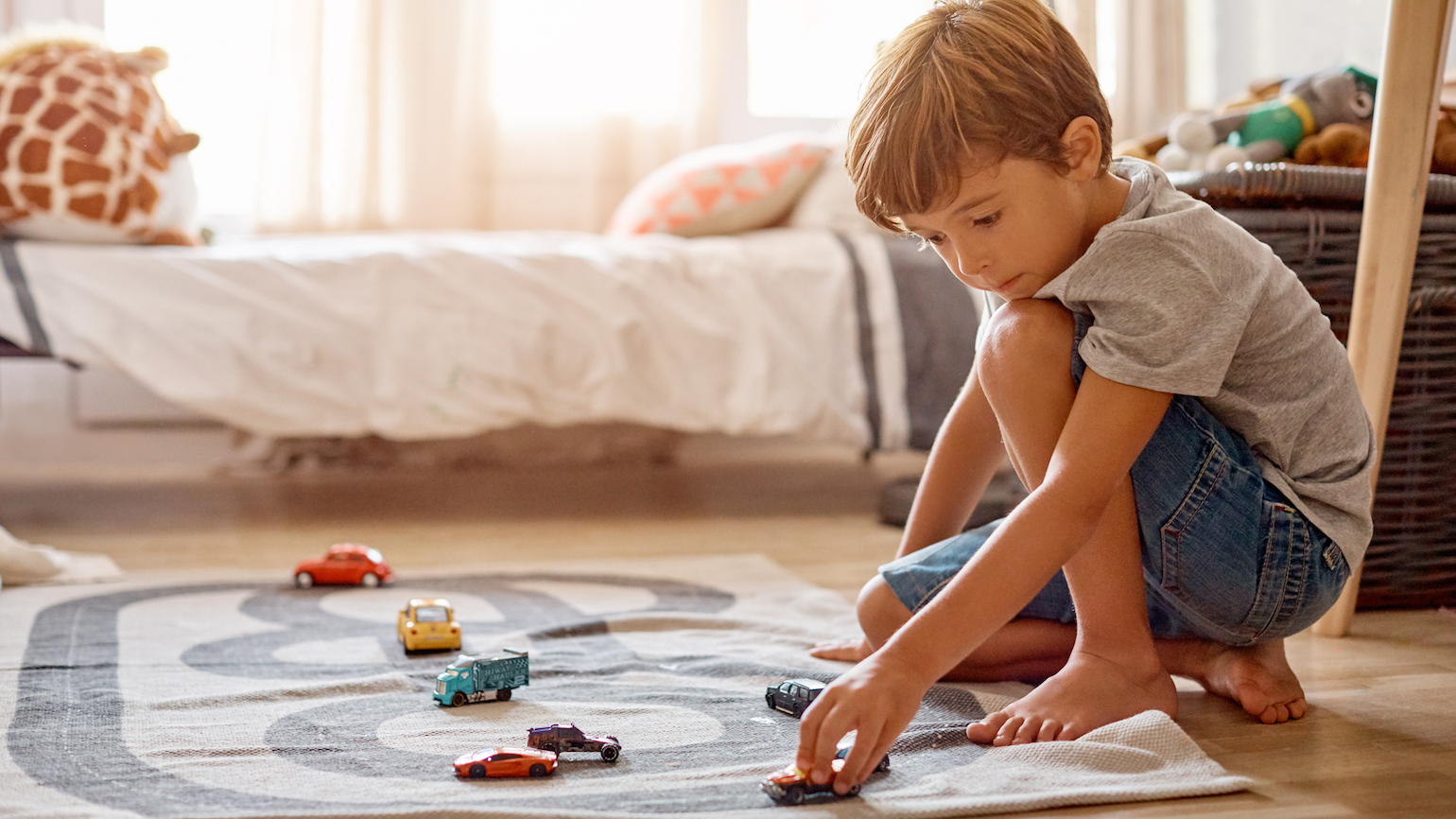
My three-year-old grandson, Nolan, loves cars. I rarely see him without one clutched in each chubby little hand. His cars accompany him to church, the grocery store, on visits to family, and to the dinner table.

When our family went to Disney World for five days, Nolan headed out every day with clutching his cars—and even with all the constant ins and outs from his stroller and countless rides on the attractions, he never lost one.

When we had dinner at his house last Sunday, he spent half an hour on Granddaddy’s lap looking at a pamphlet of cars, showing him which ones he needed.

So when Nolan and our five-year-old grandson, Ethan, came for a sleepover at our house last night, it was no surprise that a cars theme developed for the evening.

We had tacos for dinner and then we baked cookies. Nolan settled in a chair at the kitchen island, a cookie in one hand and a car in the other. After that, we had a Cars movie marathon. While we watched the movies, Nolan had a car tucked in each hand. And then the boys played on our car rug, which depicts roads and various scenes like a football stadium (with parking lot), a gas station, and other places where they can take “road trips.” They lined the cars up in rows. Lined them up in circles. And took them for drives across the rug.

After bedtime prayers, I tucked the boys in. Nolan said, “Wait a minute!” He jumped out of bed and when he slid back under the covers, I realized he had cars to sleep with. And first thing this morning before he was even fully awake, I watched as he flung the covers around until he found his cars.

I love how he holds onto his beloved cars so tightly. As I watched that precious little face that weekend, the prayer on my heart was, “Dear God, please help Nolan to always hold just as tightly to you. Help him to take You everywhere he goes. Help Him to plan his life with You in mind, and help him to love you with a love that’s even fiercer than his love for his cars.”

Hold on to Jesus, little buddy. He’ll be the perfect companion for all the roads that life will take you.

Dr. Becker’s Fear Free Tips for Pet Parents

1. Remember that pets have a full range of emotions, including fear, joy, happiness, jealousy, pleasure, compassion, grief, relief, sadness, despair and love.

2. Dogs pick up on our anxiety. When you’re taking a pet to the vet, don’t use baby talk and coddle it. This amps up their own anxieties.

3. Pets communicate with us through voice, body language and overall demeanor. You have an obligation to connect with your pet in any way you can.

4. Understand your pet, and allow it to be what it is. Retrievers want to retrieve. Let them retrieve. Terriers want to dig. Let them dig.

5. Never allow your pet to get into extreme distress. Use distractions, a compression shirt for dogs, calming music or prescribed medication, if needed.

Read Dr. Becker’s inspiring story about confronting his own fears

For more inspiring stories, subscribe to Guideposts magazine.

Do Pets Go to Heaven?

At 24, on a whim, I became the owner of a netherlands dwarf bunny named Angus. He was about the size of a baseball. In terms of personality, however, he soon established himself as a giant.

I moved around a lot in those days, and wherever I went, Angus went with me. Whether I was waiting tables in Massachusetts or working as an office temp in New York, Angus was always there when I got home, ready to cheer me up with his odd little repertoire of habits.

When he was feeling feisty, he’d charge back and forth and thump his back feet on the floor. In a more relaxed frame of mind, he’d stretch himself out like a cat. I’d sometimes wake up from a nap with him perched alertly on my head.

Then, the unthinkable. I came home to find a cloth draped over his cage. A note from my roommate lay on top. “I’m sorry,” it read. “When I got home, Angus was no longer alive.” I lifted the cloth, and there was my little ball of personality, stock-still.

In all the time I’d had him, I’d never seen Angus asleep. Even at rest, he was partly on the alert. Now, for the first time ever, I saw him with his eyes shut.

Angus’s death was something I should have been prepared for. Dwarf bunnies don’t have a long life expectancy. All the same, I was inconsolable. Just a rabbit? Forget about it. Angus’s passing hurt.

I found myself thumbing through my books on religion and mythology for references to animals and the afterlife. This is silly, I thought. But silly or not, I wanted to know what people over the centuries had to say on the matter.

Plenty. Animals played a large role in most ancient peoples visions of the spiritual world. The mythologies of several ancient cultures claimed that when people passed on, their dogs were waiting to guide them to the land of the blessed.

The Egyptians—cat people were especially emphatic in their belief that cats and other animals played a key part in the afterlife. One Native American legend states that when God set about to create the world, he brought his dog along with him.

What did the Bible have to say? On the surface at least, the Bible seems to say very little about the place of animals in the afterlife. Look up “dog” in a concordance, and you won’t find any evidence that the people of biblical times valued the role dogs play in day-to-day life.

When the writer of Psalm 22, for example, says, “For dogs have compassed me,” he is not describing a pleasant situation.

It doesn’t get much better when one looks to traditional Christian authors beyond the Bible either. Eminent churchmen like St. Augustine and Thomas Aquinas have left a number of very discouraging passages about the place of pets, or any animals, in the world that waits beyond the borders of earthly life.

Though I didn’t know it then, this experience of losing a pet and coming up short on biblical consolation is one that many people have gone through. It’s also one that many have tried to convince themselves they must simply accept.

As Steve Wohlberg, author of the recent book Will My Pet Go to Heaven?, told himself when he lost his dog: “The central focus of the Bible is God, the people, and human salvation, not dogs and cats, right?”

Not so fast. Steve and a number of other writers argue that the question “Will I see my pet again?” isn’t silly, and it isn’t a question without an answer either. To discover as much, all one need do is take a closer look at the Bible.

Okay, the question of whether there are pets in heaven is never answered straight-up in the Bible. But as M. Jean Holmes, author of Do Dogs Go to Heaven?, writes, “The pieces have to be patiently gathered, carefully laid side-by-side, then prayerfully interpreted.”

The Bible does indeed have an answer about whether we will see our furry loved ones again.

Consider the story in Genesis of the very first covenant established between God and his people, made with Noah right after the flood.

The clouds part and the world’s first rainbow appears. God tells Noah that he is creating a covenant “with you, and with your descendants after you; and with every living creature that is with you, the birds, the cattle, and every beast of the earth with you; of all that comes out of the ark, even every beast of the earth.”

God goes on to say that his covenant with “all flesh” shall never be “cut off”—a strong suggestion that animals will not be excluded from his dealings with the world.

(This passage was an inspiration for “Rainbow Bridge,” an anonymous poem that has become very popular on the internet. It describes how when people arrive at the gates of heaven, the first thing they will encounter is their deceased pets.)

Then there’s Luke 3:6. “All flesh shall see the salvation of God.” Or Mark 16:15—a passage well-loved by that great friend of animals, Saint Francis of Assisi. The risen Jesus tells the Apostles to go into the world and “preach the Gospel to every creature.”

Jesus filled his teachings with references to animals. His promise in Matthew and Luke that not even a sparrow falls to earth without God’s knowing it subtly but powerfully suggests what every grieving pet owner feels: God refuses to forget a single one of his creatures, no matter how small or seemingly insignificant.

What about the argument that runs: “Animals can’t go to heaven because the Bible says they don’t have souls”? Norm Phelps points out in his book, The Dominion of Love that the Hebrew term repeatedly used to describe animals in the Old Testament is nephesh chayah.

Chayah means “living,” while nephesh is the Hebrew term for the force that animates the body—what Phelps describes as “the whatever-it-is that makes a person or an animal a conscious, sentient individual.”

A funny thing happened when this term was translated into English. In most English versions of the Bible, different words are used to translate nephesh chayah depending on whether animals or people are being discussed.

In Genesis 1:21 and 24, for example, Phelps points out that nephesh chayah is translated as “living creature.” But in Genesis 2:7, where the term refers to people, not animals, it’s translated as “living soul.”

The use of two different terms in the English translation completely blurs the fact that in the original Hebrew, no such distinction exists.

Why did the Bible’s english translators take such pains to use different terms for the souls of animals and people, when the Hebrew of the Old Testament repeatedly uses just one? Probably because they were concerned not to contradict Genesis teaching that humans alone are created in God’s image.

But to acknowledge that animals have souls isn’t to usurp the unique place of humans in God’s creation—as the original Hebrew makes clear enough.

Of all the biblical passages that I ultimately discovered I could turn to for consolation, the most moving and compelling is the Old Testament’s single greatest passage prefiguring the Christian heaven—Isaiah’s vision of the Peaceable Kingdom:

“The wolf also shall dwell with the lamb, and the leopard shall lie down with the kid; and the calf and the young lion and the fatling together; and a little child shall lead them.”

Why, when Isaiah wanted to paint the ultimate picture of heavenly fulfillment, did he choose to make such rich use of animals? Because he knew what every pet owner knows: A world without animals is a barren one. And clearly, a heaven without our pets would be less heavenly.

Do Our Pets Go to Heaven?

Guideposts Editor-in-Chief Edward Grinnan lost his beloved golden retriever, Millie, to cancer. Before Millie passed away, Edward contemplated the question of animals and heaven.

Does God’s love and comfort extend to the animals that are devoted to us and inspire us? Are our pets angels on loan from the Lord?

It’s been a few weeks since I’ve updated you on the condition of Millie, my eight-year-old golden retriever who had a cancerous spleen removed in April and was given three to six months to live. As you know, Julee and I were devastated. We accept that having a pet usually means you will outlive that beloved creature. Your heart is broken as each one moves on.

Grief is the price we pay for love, and you can love an animal as deeply as you can love anyone. For me life would feel empty without a dog. When the first dog Julee and I had together, Rudy, died Julee refused to return to a “dogless” apartment. That’s when we got Sally, a sassy little cocker pup I’ve written about and who was an inspirational pet for many years.

Millie drinking water on the trail. Do you believe your pets will go to heaven?Millie is the fourth dog Julee and I have had since we’ve been married (that first dog, Rudy, a burly cocker spaniel, actually introduced us, but that’s another story).
Discover More Stories About the Dogs in Edward’s Life in His Book, Always By My Side

One of the very first things I did when we got the news about Millie was ask the Guideposts audience for prayers. Your response was overwhelming, and I credit those prayers with being able to say that Millie is still strong and healthy and showing no signs of illness.

I know this may not continue to be the case. I know the odds for survival are low and can only hope the medicine we are giving her is helping those slim chances. Yet I believe Millie would not have gotten this far without you.

I can’t tell you how grateful I am for every day we have her, for every morning when I wake up to her chin on the bed, her eyes so happy for a new day to begin, her tail swishing patiently for me to get rolling. I know you have a lot of things on your prayer lists but please keep those prayers coming for Millie.

One of the responses that has fascinated me is how many of you believe you will be reunited with your pets in heaven. I myself find it hard to believe that God could contrive a paradise that would be missing some of our best friends.

I mean, there are people I don’t want to run into in heaven any more that I want to run into them down here on earth. But dogs? I pray I see every one of them again someday so I can tell them how much joy and comfort they have brought to my life. What is the greatest reward for being a good dog than to go to heaven?

So, do you believe that your pets go to heaven? Will you see your animal angels again? Please post below and say why. Pictures are always welcome too. And thanks a million times over for your prayers.

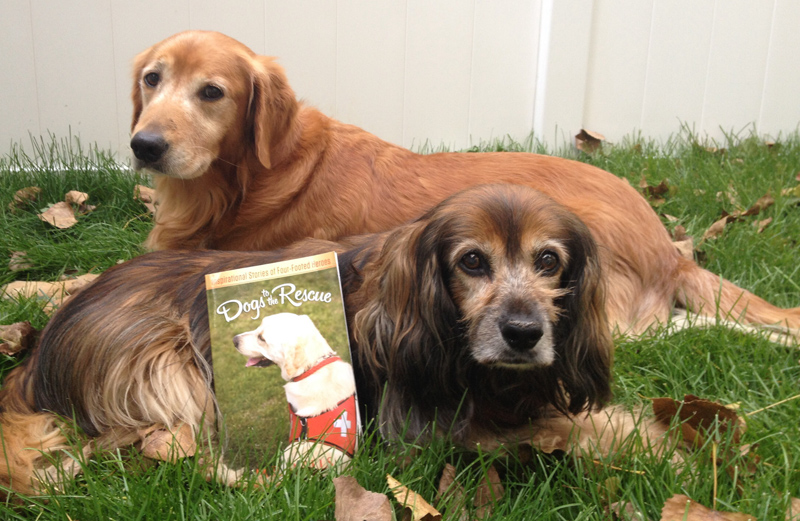
‘Dogs to the Rescue’: A Devotional for Dog Lovers

Visit Molly Ryan’s house in Parma, Ohio, for the first time, and you’re in for a surprise. It’s not the decor that’s unusual; it’s the 20 rescue animals she shares her home with. And these rescues aren’t just cats and dogs. Ryan, 41, a school psychologist and a longtime licensed wildlife animal rehabilitator, takes in all types of creatures, from woodchucks to pigs.

She’s actually caring for four woodchucks right now. Also known as groundhogs, these creatures get a bad rap, Ryan says. Blame it on their burrowing, which ruins lawns, or their pesky shadows, which are popularly thought to indicate a longer winter. “People think woodchucks are dirty and smelly, but that’s not true,” she says. “I’ve actually never lived with a less smelly animal. They’re like cats; they clean themselves every day.”

And they each have distinct personalities. Coco was found on the brink of death, pecked by birds and blind. Today she’s learned her way around Ryan’s home, is a champion snuggler and loves vanilla Oreos. Don’t try to give her a generic sandwich cookie—she’ll reject it.

Then there’s Captain Lee, who has severe neurological problems, most likely from being hit by a car. He sometimes “whistles” in his sleep and loves to bask in the sun. Snow, a rare albino woodchuck unable to survive in the wild because of her color and poor eyesight, is a bit bossy. She likes to pick out the best of the snacks. And Pie came to Ryan as a baby just last year. “He’s the only animal I’ve ever had who didn’t display the instinct to return to the wild,” she says, describing him as “a ham” who begs for treats from whoever comes to the house.

The rehabber, who’s been bringing home injured wildlife since she was a kid, says woodchucks are very social and highly intelligent. “They answer to their names, have learned to do tricks and stay still for photos,” she notes. With a great sense of smell, they’re also quite particular. Once Ryan tried a different laundry detergent. She came home to find her bed linens rolled up and stuffed under the bed. And that cleanliness habit? She and her husband, Doug, normally clean the litter boxes twice a day. On the few occasions they didn’t get a chance to do so, the woodchucks pulled the curtains, rugs and even a lamp over the boxes to block the odor.

Though most of Ryan’s rescues are eventually returned to the wild, the woodchucks—and two flying squirrels—all have severe handicaps and will live out their lives in her home.

The rest of the crew includes seven dogs, three cats, three skinny pigs (hairless guinea pigs) and an African parrot. The dogs have been trained to understand that their housemates aren’t prey, which is especially crucial since the woodchucks still hibernate, whether that be in bed, a cage or a closet.

Ryan gets the least rest. especially during winter and spring, when she and Doug are inundated with orphaned wildlife babies. “The kindness I see is amazing,” she says. “People will drive hours to bring me a little mouse.”

When she’s not tending to her rescue family at home—with the help of local veterinarian Beth Arnold—Ryan enlists them as education animals, visiting schools, scout troops and parks to teach people that wild animals aren’t scary. “We can all help them thrive,” she says. Even when they warn us there will be six more weeks of winter.

For inspiring animal-themed devotions, subscribe to All God’s Creatures magazine.

Do Deceased Loved Ones Watch Over Us?

A dream, realer than real, in which a beloved relative, who passed away years earlier, suddenly appears. The heavenly sign, in the midst of a tough day, that could’ve only come from your mother up above. Or, a voice, seemingly from out of the blue, that sounds just like your deceased grandfather.

Some of the most miraculous and angelic encounters involve the dead offering some guidance, comfort, protection or a message from beyond. This begs the question: do our loved ones become angels—or more specifically, our guardian angels—when they die?

It’s a popular notion, one that pops up over and over again in popular culture, from books to movies where the deceased reappear to those they love on earth. So what’s truth and what’s fiction? Guideposts.org talked to Dr. Charity Virkler Kayembe, who has a doctorate in biblical studies and is the author of Everyday Angels, to find out.

Guideposts.org: There are many miraculous stories out there about people who receive signs from their deceased loved ones. But can the dead become angels?

Dr. Charity Virkler Kayembe: Obviously, we all want comfort after a loved one dies, and we want someone from heaven to be watching over us. But that’s God—He’s the one watching over us with His heavenly host, a.k.a. His angels. The angels, though, are not our deceased relatives. They’re a different, separate order of beings. The Book of Revelation gives us a picture of heaven—there are angels there, but there are also people. And we know that we are created in God’s image, whereas angels are not. That right there shows us we are different; so the spirits of our loved ones do live on after death, but not as angels.

GP.org: Who are our guardian angels then?

Kayembe:
God takes into account exactly who we are and matches us up to the angels who will bring emotional equilibrium and balance to our lives. I always say they’re like the best version of your very best friend. They are spirit beings. Hebrews 1:14 says that angels are ‘ministering spirits sent to serve those who will inherit salvation.’ Again, that’s a distinct order of beings that God created before people. That’s another reason we don’t turn into angels—they were here first.

GP.org: If we don’t become angels when we die, what will we do in heaven?

Kayembe:  Scripture doesn’t really talk about what work we’ll be doing; the one job that’s clear is that we will be worshipping God. Whatever we end up doing, though, I think it’ll be great.

GP.org: A lot of people receive mystical signs from beyond. If their loved ones aren’t behind it, who is?

Kayembe:
Let’s give the credit to God. Every good and perfect gift—including angels—comes from above, from the Father of life. So if you do receive a sign or experience synchronicity, it very well could be from your guardian angel watching out for you.

GP.org: Why would God send us a message using something we associate with a deceased relative, say, your mother’s favorite flower? Is he simply speaking to us in a language we’ll understand?

Kayembe:
Well, absolutely! God knows every single thing about us. The hairs on your head are numbered. He knows what’s going to be the most impactful, significant symbol for us and He wants to encourage and bless us. So, yes, He would use your mother’s favorite flower, or whatever it is, just to let you know that He’s with you, He’s watching over you, and He hasn’t forgotten you.

GP.org: Research shows that people who are dying often have dreams or visions where a deceased friend or relative appears. Why do you think that is?

Kayembe: I believe God wants to comfort us in that time of transition and doesn’t want death to be a fearful thing. It’s not necessarily a dead relative visiting. Rather, if you’re about to die and are afraid, God may show you a glimpse of the other side—your friends or family in heaven—in order to give you a sense of joy and peace.

GP.org: What about deceased relatives who appear in dreams? Are they actually visiting us or is something else going on?

Kayembe:
Dreams are bridges to the supernatural and are usually symbolic. If a deceased relative comes to you in a dream, I would interpret that person as a symbol, the same way I would interpret a living person in a dream as a symbol. So, for example, if your grandmother was very wise and appears in a dream, I wouldn’t say it’s your grandmother herself. Instead, she may represent the wisdom God wants to give you in a situation.

GP.org: What does it reveal about God that he would send us messages in this manner, i.e. using loved ones who have passed away?

Kayembe: God is such a loving, affectionate, compassionate Father—more than we could ever imagine. He will do everything he can just to encourage us at a specific time of need. He knows what will bring us the most comfort in that moment.

Dad’s War Stories

My dad was never one for telling old war stories and that’s probably just as well because we kids wouldn’t have listened much. Like other World War II vets, he came home, finished college on the G.I. bill, got married and did his best to forget what it was like to be on a submarine in the Pacific.

Glimpses of it were revealed when we kids watched an old war film on TV and Dad would say, “See the guy next to the periscope? That’s where I was stationed,” or he’d make a comment like, “I guess I’m sensitive to smell because of all those months on the submarine in the war” (what was he talking about?) or when I actually walked through a sub like his and couldn’t get out of those cramped claustrophobic quarters fast enough.

Dad’s war stories, if they got told, were quick anecdotes about sweltering in the desert during boot camp or spotting a pair of giant tortoises through that periscope and being relieved they weren’t enemy craft.

Only recently, in his 80s, did Dad actually explain what his submarine had done in combat and how grueling it was. A researcher working on an oral history project taped an hour-long interview with him and made copies of it.

Wow, I thought as I listened to it, this is a part of Dad that I never knew. I’m glad in a way that Dad never felt he had to prove anything to us with dramatic war stories at the dinner table, but I sure am glad I got to hear them. Finally.

So Happy Father’s Day, Dad. Thanks for having four raucous children and an even louder bunch now with spouses and grandchildren. But you didn’t have to take so long to speak up!

Rick Hamlin is the executive editor at GUIDEPOSTS.

—–

Watch Rick’s special Father’s Day message, along with other staff members’ dad stories.

Dad Braiding Is Helping Fathers Bond with Their Daughters

Dads are finding a new way to bond with their daughters – by braiding hair.

Cozy Friedman, the owner of the Manahttan-based Cozy Cuts Kids Hair Salon, decided to use her passion for hair styling to help make getting ready a more enjoyable experience for dads and daughters alike. Her popular “Dad Braiding 101” classes flip the notion that dads can’t help their daughter’s fix their hair on its head.

“Mothers usually braid or create their daughters’ hair,” Friedman tells TODAY. “So for a dad and daughter to come together on something and feel really good about it is amazing.”

The class not only teaches men how to wrangle their little girls’ manes, it also provides a special time for dads to connect with their daughters.

Braiding student Craig Axelrod is a father of three girls and says the class has helped him get to know his children better.

“When I saw we had the opportunity to take this class, spend time together, and learn, it’s a win-win for me,” he tells TODAY.

Dads learn basic braiding techniques as well as how to distract kids while they’re fixing their hair. Some of the men even get competitive with one another, wanting to perfect their techniques, but at the end of the day, everyone walks away happy. After all, the real reward lies in these dads learning how to share their time and a bit of confidence with their little girls.

Creative Patchwork

I sat on the sofa, coffee in hand, and flipped on the morning news. Anything to distract myself from the gnawing worry.

Or maybe it was sheer disbelief. What on earth was I thinking? A few days earlier I’d impulsively offered to fly all the way across the country to Florida for my dad’s eightieth birthday. Sure, 80 was a milestone, but my dad and I didn’t even like each other.

I hadn’t seen him in years. We hadn’t had a heart-to-heart since…well, had we ever had a heart-to-heart?

Actually, I knew exactly why I’d offered to fly to Florida. Same old Jill, hoping this time I’d manage to please him. I was 52 years old, for heaven’s sake! I had a husband and two grown kids of my own.

Yet it was as if I’d never left that little house in Bay Shore, New York, where every evening Dad came home grumpy and exhausted from the auto-body shop and I made sure to stay out of his way.

I couldn’t honestly say whether he loved me. Every so often I tried some extravagant gesture, only to fail. This time I’d made arrangements to fly to Daytona Beach and surprise him with a fancy dinner out with my mother, my uncle and his wife.

Not only had I set myself up for failure, now I was on the hook for a gift! What do you get the man who never wanted anything from you in the first place?

I thought back bitterly over the years. All my life the word family meant one thing: stress. When I was very little Dad went into business for himself, opening the auto-body shop. When I was five the shop nearly went bankrupt. We lost our house and moved in with Mom’s parents.

Dad worked like crazy to bring the business back and Mom just about went crazy too. She didn’t get along with her mother and there we were, all piled on top of one another.

My older sister rebelled and spent all her time with her friends. I was the shy one. I holed up in whatever quiet room I could find and played a little chord organ that we had.

Then I got into studying grasshoppers and butterflies. I made a net out of one of Mom’s old stockings and started a collection. The beauty of the butterflies comforted me.

The constant refrain of my childhood was Mom warning us, “Don’t bother your father.” He wasn’t tall but he was built like a football player and, boy, did he have a temper! Any time I was bad his thick hand drew back to spank me. When he talked to me it was mostly to correct me.

Right after I went off to college he and Mom sold their house (the body shop eventually made money and we moved out of my grandparents’) and decamped to Florida. It was like they couldn’t wait to be done as parents.

The final break came when I was 25, pregnant with our son. We’d had a daughter two years before and, just as I’d expected, Mom and Dad didn’t think much of my parenting. “You’re too permissive,” Mom would chide.

One day on a visit I dared to disagree and Dad confronted me. “Don’t you ever disrespect your mother like that!” he thundered. Shaken, I walked out, vowing never to speak to them again.

The coffee had grown cold. I swirled it around in the cup and sighed. What was I going to do? I’d already bought the plane ticket. I needed a gift. But what?

Go get the quilt. The voice spoke calmly and clearly. Startled, I looked around. The morning news hosts chatted away. California sun shone through the window–we were living in San Jose at the time, close to my husband’s work.

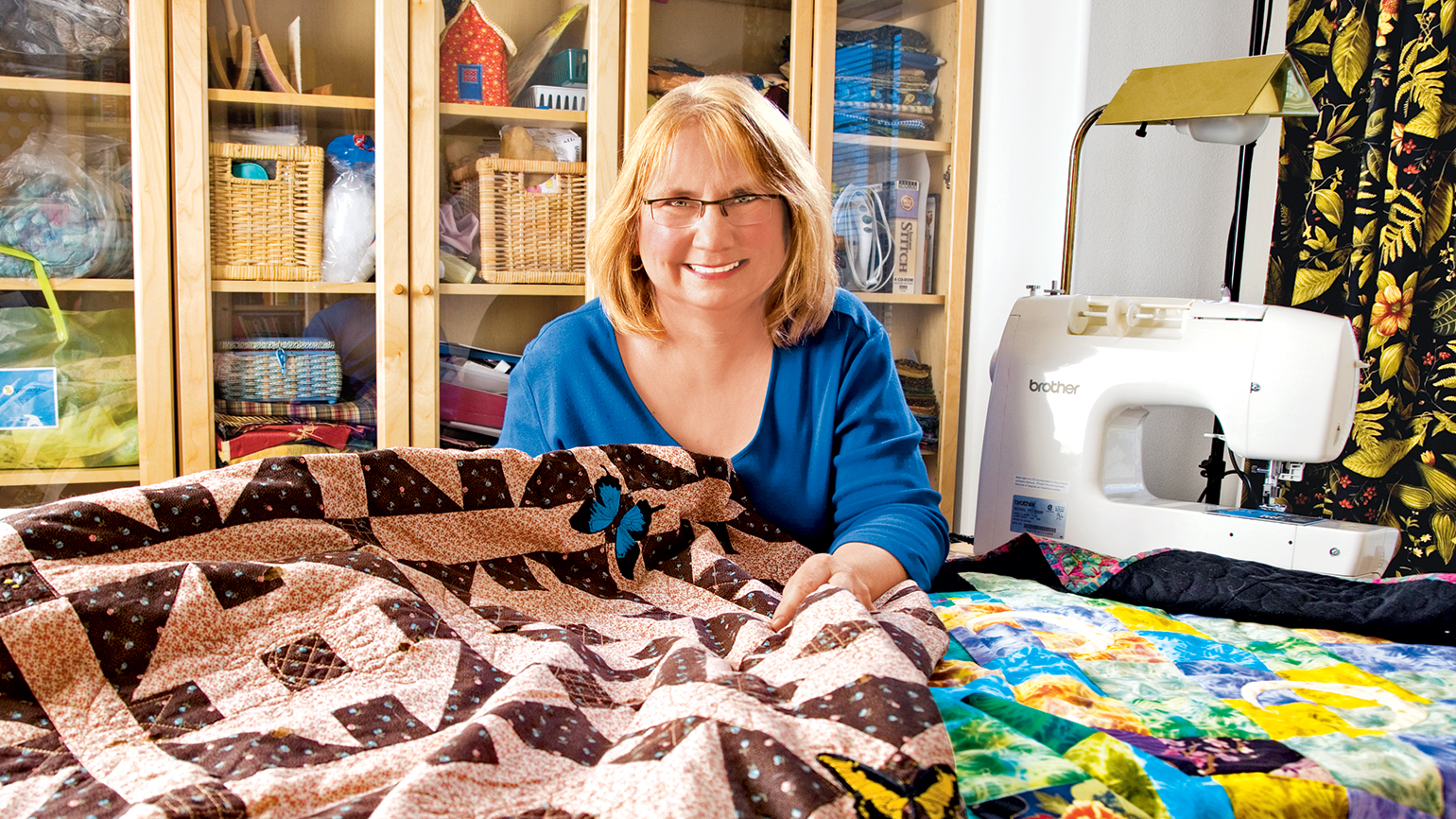
Suddenly I remembered. Ages ago, in yet another ill-advised attempt at a peace offering, I’d begun sewing a quilt for Dad. I loved quilting and all things crafty. I’d set the quilt aside pretty quickly. He wouldn’t appreciate it anyway, I’d told myself. “Do I even still have it?” I wondered aloud now.

I got up and walked to the bedroom. Deep in the closet were my plastic quilt-storage bins. I rifled through one. My breath caught. There, near the bottom, were several partial sections of quilt. I pulled them out and ran my fingers over them. Was this what the voice meant?

Well, I didn’t have any better ideas. What if it was God nudging me to make this quilt? I gathered the pieces and studied them.

Gradually it came back to me. I’d decided to make this quilt using a repeating pattern of squares and triangles that ends up looking like rows of open monkey wrenches. Perfect for a mechanic, right?

How else could I personalize it? I looked online for embroidery patterns and quickly found one called Mourning Cloak. A butterfly. Mourning cloaks–Nymphalis antiopa–were the first species I ever collected. They were beautiful–mahogany wings bordered with bright blue dots and a yellow stripe.

Suddenly my heart leaped with a memory. I’d brought a mourning cloak caterpillar home and raised it until it turned into a butterfly. That day, totally unexpectedly, Dad took me to meet Augie Schmitt, a professional butterfly collector in a nearby town.

I’d ended up working in Augie’s shop. He’d taught me everything I knew about insects. I always considered his shop a refuge from home. And yet–it had been Dad who brought me there!

I found another butterfly pattern, Tiger Swallowtail. Another memory engulfed me. I was 12, at home one humid summer day. Dad called from the shop. “Get down here,” he rumbled. I pedaled over in terror on my bike, certain I was going to catch it for something.

“Look in my office,” Dad said when I arrived. There, inside a jar on his desk, was a gorgeous tiger swallowtail, a black-and-yellow beauty every butterfly collector yearns for. “I found it trapped in a customer’s car,” Dad said gruffly. “Thought you might like it.”

I stitched butterflies onto the quilt –mourning cloak, tiger swallowtail, Papilio ulysses from Australia. My childhood bedroom had been lined with so many lovely butterflies. I’d taken all that beauty with me when I left home. Now I could give some of it back.

I embroidered a bee because once, when I was away at college, Dad had actually added a few words in his own handwriting to a letter Mom sent. “Daddy says BEHAVE!” he wrote.

That was a joke. Any time my sister and I left the house he always barked, “Behave!” I didn’t need to add -have to the bee. He’d get it.

Finally it was time to choose the quilt’s backing. I drove to the fabric store praying I’d find the right thing. As soon as I saw a big bolt of cotton printed with a sheet-music pattern I stopped, remembering the one thing I’d been able to do to make Dad happy.

As he flopped into his chair exhausted from work I’d sit at my organ and play for him. He never said anything but I knew he liked it. He’d have told me to stop otherwise. I pictured his thickset body, his big, grease-stained hands–and I felt an overwhelming rush of love.

Oh, Daddy! I wanted to cry. You did love me. You just never knew how to say it.

I went home and finished the quilt, sewing the last stitch the day before my flight. My uncle and I had planned the visit as a total surprise. I arrived in Daytona, drove to my parents’ house and parked outside.

I called them on my cell phone to make them think I was still in California, then walked to the front door and knocked. They practically fell over when they saw me!

“I’m taking you out for dinner,” I said. At the restaurant all I could think about was the quilt. We returned to their house. The big moment had arrived. I could hardly breathe.

“Happy birthday, Daddy,” I said, bringing out the quilt.

Dad didn’t say a word. Was he surprised? Indifferent? I put the quilt in his calloused hands. He felt the fabric. He peered at the design. I told him what everything meant, how God had led me to each part of the design meant perfectly for him. “Remember the time…?” I kept saying.

All the while a smile slowly spread across his face, as if a lifetime were spooling through his mind. He held the quilt close and whispered, “This is mine.” He looked at me a long time, tears trickling down his cheeks. In his same old gruff voice he murmured, “I love you, baby. Thank you.”

I wiped away my own tears. “I love you too, Daddy.”

The funny thing is, Daddy and I never had to come out and say, “I forgive you.” The quilt did that for us, reminding us both of the love that had always been there between us. I don’t dwell on the lost years or ask what could have been.

Instead, Daddy and I talk all the time. I always pour myself a cup of coffee before I call him and I sit on the sofa, making believe we’re right next to each other. There’s so much to say. A lifetime of love to catch up on.

I suppose forgiveness is a little like a butterfly. Even when it seems impossible, as lifeless as a dry brown chrysalis, that’s when it’s preparing to burst forth in new and beautiful life.

Download your FREE ebook, Creativity and Personal Growth: 7 Inspiring Stories on How Crafts Can Change Your Life