

Embrace God's truth with our new book, The Lies that Bind

A Special Friendship Between Two Dogs

After we brought Millie home, it was a few weeks before her vaccinations kicked in and we could walk her outside on the Manhattan streets. I was looking forward to it. Nothing attracts an adoring, cooing crowd in New York like a puppy, especially a golden retriever pup.

You think New Yorkers are tough? Just watch them make fools of themselves when a golden puppy comes trundling down the street. Kids squeal, doormen bow, cool cats whip off their shades and shout.

Except none of that happened with Millie because she declined to trundle down the street. She refused to go anywhere beyond the sidewalk immediately in front of our building. She’d politely do her business, to my effusive praise, but when I’d try to walk her down the block, she’d come to a crouching halt, digging in her nails, nipping at her leash, as if she had encountered a force field.

PURCHASE EDWARD GRINNAN’S ALWAYS BY MY SIDE

All efforts to entreat her to venture farther failed. I followed the tried-and-true strategies. I tempted her with her favorite toys, enticed her with high-value treats like sirloin chunks, which I gave to the garage guys next door to wave in the air. Real sirloin.

Early one morning I bent down in exasperation and looked into Millie’s eyes, stubborn with fright. Across the street a garbage truck raucously hoisted an industrial-sized Dumpster high in the air, like a monster in a Japanese horror film lifting a car with an earthshaking bellow, the garbage Godzilla.

The clamor set off car alarms. Drivers honked at the traffic stoppage occasioned by the groaning, grinding garbage truck. There were rolled-down windows and angry exchanges.

Millie cringed and drooped her ears, as if she was trying to deafen herself to the cacophony most urbanites are perfectly inured to. An annoyance most city dogs learn to put up with. She was from sleepy, backwoods Florida, bred by a family who was not in it for the money but for the satisfaction of producing a few fine dogs. W

hat am I doing in this madness? I could see her thinking. I want to go back inside with my toys and my bed and my people. She wanted to be where she knew it was safe, and I couldn’t blame her. So I complied, just as the terrifying Dumpster was slammed back to earth. Millie made a beeline for our door.

Things didn’t improve. Sometimes I would lift Millie up, carry her halfway down the block and release her, only to have her immediately jerk me back in the direction of the apartment. At 20 pounds or so, she was already powerful.

I’d find myself brooding about her time in the airplane up from Florida and bemoaning the guy who had pushed the luggage cart she was a passenger on, smashing it into practically anything he could find. I berated myself: We should have driven down and gotten her! We should have borrowed from our retirement savings and rented a private plane!

READ MORE: MILLIE THE DOG, ANGEL OF INSPIRATION

“The whole ordeal traumatized her, poor thing,” my wife, Julee, concluded.

Lord, I prayed one night, this isn’t working. I can’t have a dog in the city who won’t go outside. Especially a dog who was going to be very large, if her parents, Petey and Maggie, were any indication.

Up at our vacation cabin in the Berkshire Hills it was different story. A great story. Millie loved the woods and the yard. She was bold and fearless, a different dog.

At dusk, she would stand on a little bluff above the driveway, on tippy paws, as it were, raise her head, and shout to the emerging stars, a mighty bark even for a youngster, a bark that echoed off the hills like a cannon shot and silenced all the neighboring dogs, who would pause respectfully for a spell until they answered back from their own little hilltops. She loved the house in the Berkshires. She loved the country.

Which is where we decided to retreat that Fourth of July weekend. Julee was touring overseas again for a few weeks, and I decided that rather than continue the failing effort to get Millie acclimated to Manhattan street life, we’d spend the holiday hiking and grilling in the country, just the two of us.

Still, I was feeling despondent upon our arrival even as Millie shot out of the Jeep and tore across the lawn, ears and tail flying. I felt like I had let our dog down. She just didn’t trust me. She didn’t believe in me; I was convinced she simply could not accept that I would keep her safe amid all that noise and chaos and confusion.

“She’s just a little old country girl,” Julee, a little old country girl herself, had said, climbing into the taxi for the airport, waving and wiping away a tear as the car drove off, me holding Millie in my arms and looking, I’m sure, rather at a loss.

It was on the Saturday, I think, of that long weekend, while Millie and I were hiking a buggy trail around Fountain Pond Park, that inspiration struck. At this point I’m satisfied to say it was divine inspiration, for I never could have conjured up the solution that came to me that day as I was slapping gnats off the back of my sweaty neck. We were sitting on a squat rock, sharing some water, when I suddenly thought, Winky.

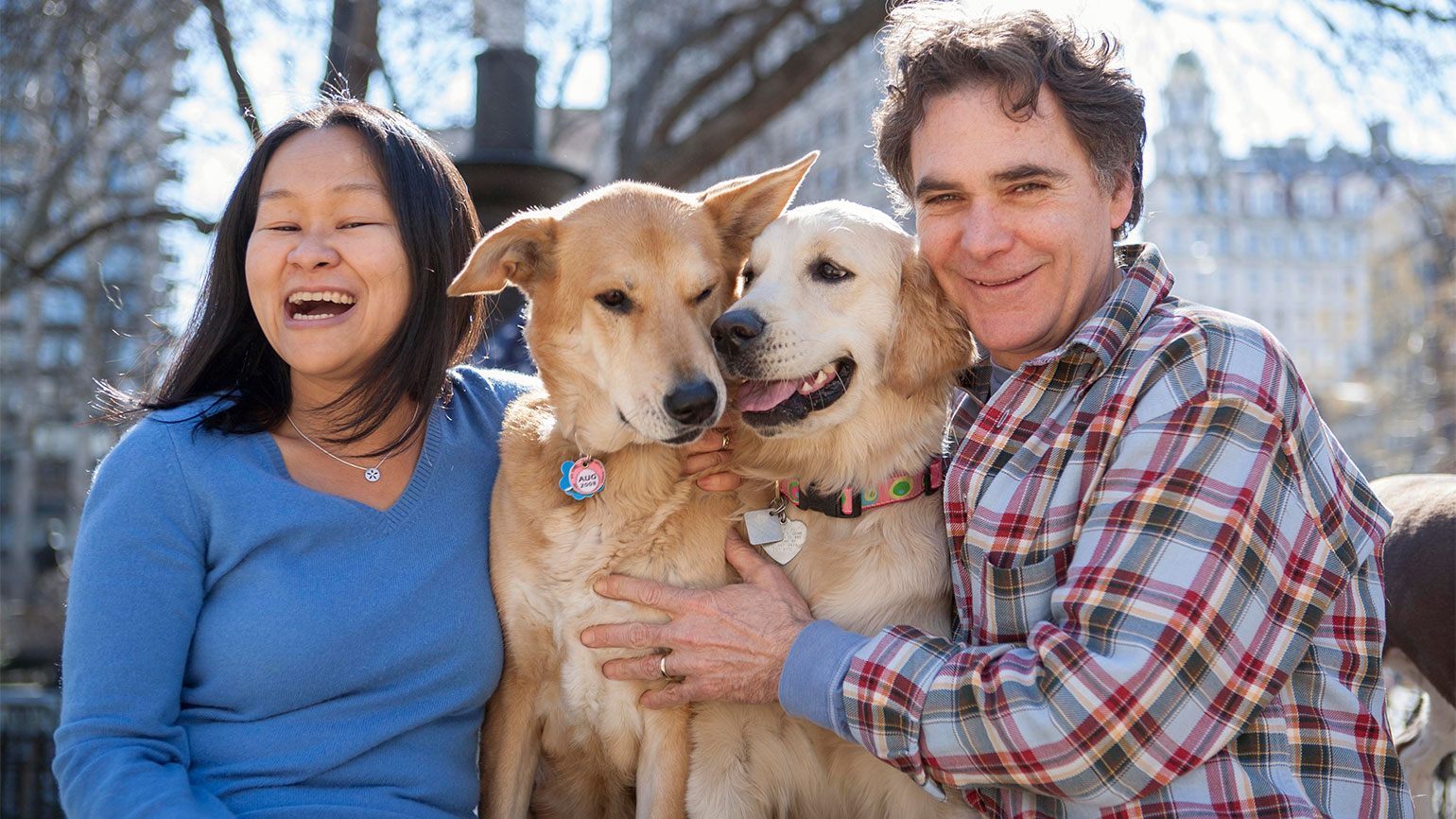
Winky belonged to Amy Wong, a colleague and friend of ours, and a wonderful dog owner. Winky was her 65-pound russet Carolina-dog mix. A rescue, wise and worldly at six years old, a dog who was completely of the city. Whip-smart, just like her owner. Little fazed the confident Winky. She strode the streets as if she owned them. Amy would say that Winky was like a cop walking her beat.

Maybe another dog could teach Millie to walk outside. An experienced dog. A dog like Winky. “What do you think, Millie?” I said, filling her pink portable water bowl. She gave me a happy look and wagged her tail. I don’t think she knew what I was talking about. I wasn’t sure myself what I was doing. What if Winky didn’t like Millie? Then what?

I prayed that Amy was in town. She picked up her phone when I called from that rock in the woods and said she was, and that she’d be willing to meet up with Millie and me at our apartment the next day. That night, Millie and I packed up and headed back to New York. I think Millie was a little disappointed. There is nothing sadder than a disappointed dog, all sighs and discouraged body language and questioning looks.

The next afternoon, a napping Millie raised her ears when the apartment buzzer went off. “It’s Winky,” Amy’s voice announced through the intercom. Millie cocked her head and rose to her feet. She knew something was up.

READ MORE: 13 INSPIRING LESSONS FROM MILLIE THE DOG

A minute later, Winky burst into the apartment and greeted me happily, wagging and wiggling.

“Hello, Dingo,” I said, using my nickname for her. She calmed down, then sniffed Millie perfunctorily, vaguely indifferent to the puppy, who was in turn ecstatic at having a real canine visitor. This had never happened before. This was something else!

Winky let out a quick, bossy bark, intended, I surmised, to put Millie in her place. It worked, because my puppy retreated slightly, taking up a toy in her mouth and sitting politely, her tail pounding against the carpet, expectation in her eyes: Okay, what’s next?

We leashed up the dogs and took them down in the elevator. Millie stayed on her best behavior until we got to lobby, where she drew herself up and put on the brakes, slipping and sliding on the polished tile. Winky paused, gave her a curious glance and continued toward the door to the dreaded outside. Reluctantly, Millie followed, glancing at me for reassurance.

“Good girl, Mil,” I said. Amy held the door and out we went into the shining July Fourth afternoon.

Once on the sidewalk, though, Millie reverted to her fearful ways. She dropped onto her belly, paws splayed, ears back, her tongue lolling out. Noooooo, her body language screamed. Again Winky paused, this time looking a bit more concerned than curious. Amy and I stood back.

Winky took a step or two toward the prostrate puppy, lowering her head. She was assessing the situation, that was quite clear. Then she turned and started up the street, Amy in tow. I stayed with Millie, who stood up and then posed like a statue watching her new friend go. She shot me a quick, frantic look but didn’t move.

READ MORE: BARKING AT HEAVEN

And that’s when it happened. Winky slowed, stopped, and turned to look back at Millie. Their eyes locked. It was a moment I will never forget. I could feel the leash vibrating as Millie moved tentatively forward, straining and holding herself back at the same time, Winky’s gaze boring into her. It said, Trust me.

All at once Millie was on the move, bursting through the force field, then galloping a bit until she caught up to Winky. She glued her snout to the older dog’s flank as they continued on their way, me catching up. I was speechless with relief, but the garage guys cheered and random people on the street applauded, happy for an excuse to celebrate something, especially on Independence Day.

From then on, Millie navigated the streets of New York with increasing confidence—like a real New Yorker—and Winky became her best friend for life, her mentor and protector. Years later, on a bleak December morning when Winky was old and blind and cancer-ridden, Millie let out a sigh and a whine at the very moment of her passing, 15 blocks across town.

But on that glorious night, as fireworks exploded over the Hudson River, a spectacle Millie and I viewed from the roof of our building, I called Julee in Budapest and reported this extraordinary answer to prayer. After a long pause, she said, “All she had to do was find someone she could really believe.” And that someone had to be another dog, because there are things they do better than us when it comes to their own kind.

Did you enjoy this story? Subscribe to Guideposts magazine.
A Special Bond with a Depressed Donkey

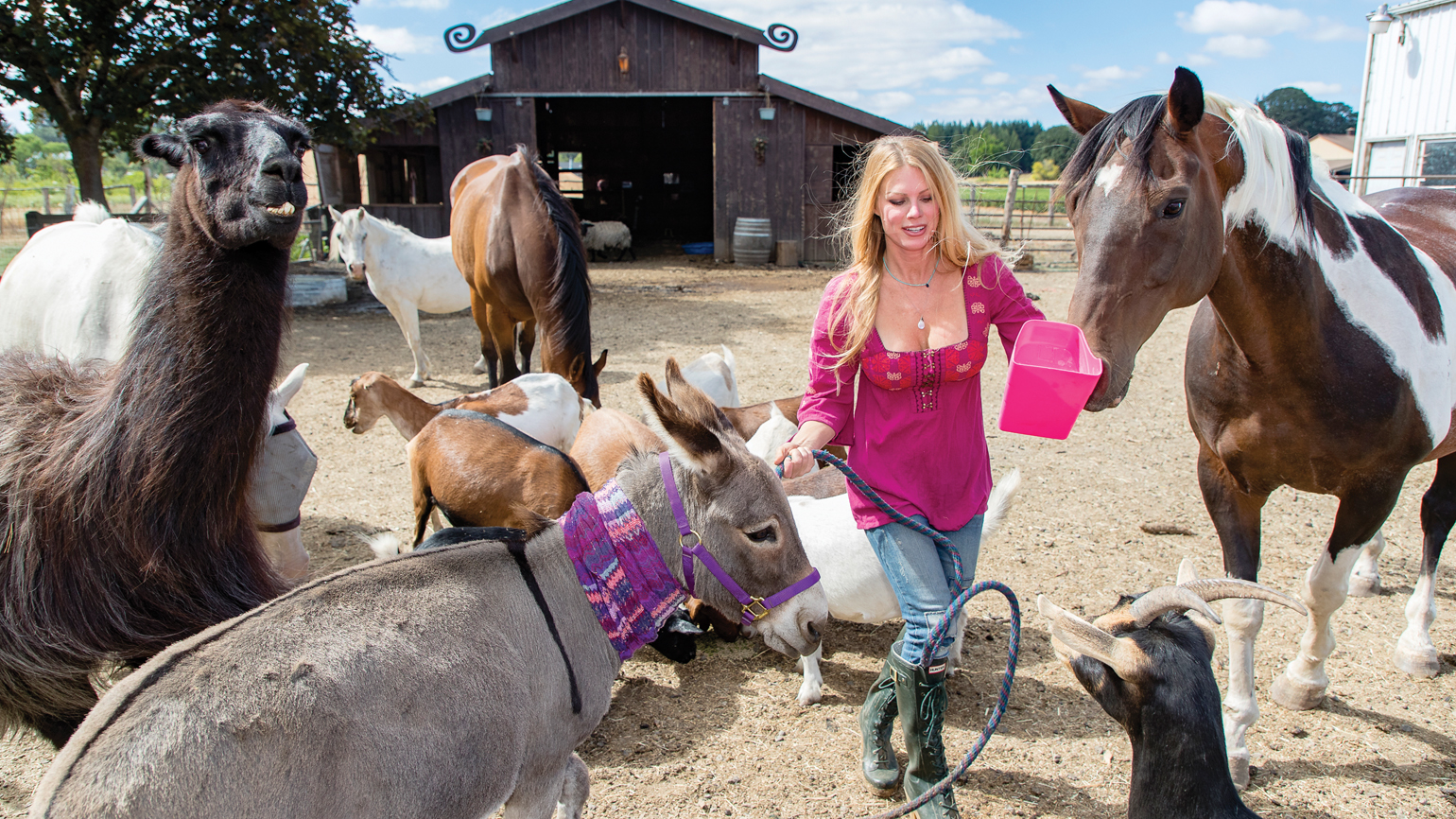
December 21. Winter solstice. The longest night of the year, when some churches hold a service for those who are grieving or hurting. Sadness tinged with hope…I knew that feeling well. It was part of the reason I was having one of my big bonfires—to celebrate the changing of the seasons and to honor the loss that led me to these 20 acres in northwestern Oregon that I’ve turned into a home for rescued farm animals.

The animals here at Enchanted Farm Sanctuary love the bonfires. I don’t know if it’s the sight and sound of me stacking wood in the firepit or the light and heat of the flames that draw them, but they all come from the barn or the fields and gather around. I read them stories, play a little music. I think they sense it’s a special, sacred time to be together.

That year I piled sticks and logs in the pit and opened the barn door. All the animals came out, except the one I wanted most desperately to reach. Ronnie, the five-year-old donkey who had arrived at the sanctuary so depressed, he seemed to have lost the will to live. I took one last look at him, standing listlessly in his stall, and went to light the fire, leaving the barn door ajar in case he wanted to come out.

I’d hoped our serene setting and the company of other animals would give him a fresh start. But Ronnie had been here for three months and nothing had changed. He ignored the two other donkeys, which was unusual because donkeys are extremely social. He showed no interest in food either. He never touched the hay I put in his stall. I made special treats, like molasses-and-beet-pulp muffins, to tempt him, but he barely took a bite.

I’d been so sure that I could get through to him, that I could show him I understood his pain better than anyone else. Now I wondered: Had I made the right decision in taking Ronnie in? Maybe bringing him here had only traumatized him further.

I thought back to that dark time five years earlier, in 2007, when I too had felt there was no reason to live. My home was in Colorado then. My beautiful little boy, Danny, died from sudden infant death syndrome. He was two months old. I fell into a depression so deep that it blotted out everything else. I couldn’t eat, couldn’t sleep, couldn’t function. I spent entire days curled up on the floor. My fiancé, Danny’s father, dealt with his grief in his own way.

This continued for months, until I woke up from a fractured sleep one morning and realized I couldn’t go on like this anymore. I loved my son with every fiber of my being. Where would that love go now?

I needed someone to talk to. I went online and googled bereaved mother to find a counselor or support group. What popped up was totally unexpected: a video of a mother cow who’d had her calf taken from her. She was devastated.

I couldn’t tear my eyes away from that cow, mourning the loss of her baby. She’s going through the same thing I am, I thought. Something shifted inside me, and suddenly I knew what I needed to do. I needed to help animals and their babies, to save other creatures who were suffering.

My 10-year relationship with my fiancé had fallen apart by then. I left Colorado. I didn’t know where I was headed. I just got in the car with my two dogs and started driving. I was on the road for the next three years, getting to know different parts of the country, searching for the perfect farm for the animals I planned to rescue.

Finally I found the right place, a 20-acre property with a tiny farmhouse in Newberg, Oregon. It needed a lot of work, but rebuilding would have to be done bit by bit because word spread quickly about how I wanted to rescue animals. Just 10 days after I closed on the property, neighbors called. They had passed a garage sale that had a mini horse in a cage. Within minutes, I was there in my truck. Molly had been severely beaten. She was the first rescue I brought to Enchanted Farm Sanctuary. Her physical wounds healed quickly. It took a lot longer for her spirit to heal.

The sanctuary became home to many more animals: chickens, ducks, horses, llamas, goats, donkeys, pigs, turkeys and dogs, all of whom had suffered abuse, neglect or some other traumatic experience. I saw a little bit of myself in each of them. But the one I identified with most was Ronnie.

A full barn at Enchanted Farm Sanctuary.

His owners, a farm couple, had come across the sanctuary’s Facebook page and sent me a message. “We’re worried about our donkey. We think your sanctuary would be a better home for him after what he’s gone through.”

Normally I rescued animals from abusive owners. This was unusual—caring owners who wanted better for their animal. I rented a horse trailer and drove an hour and a half to their place. The couple led me to a field. There, staring at the barbed-wire fence edging the field, stood Ronnie. Everything drooped—his ears, his head, his shoulders, his tail. He looked so forlorn.

“He hardly leaves that spot since the accident a year ago,” the woman said. “He won’t eat.”

She and her husband told me the story. Ronnie’s son, Jack, had been a few months old, still learning to walk. He stumbled into the barbed wire and got tangled up. Ronnie saw his child in distress and ran to help. He bit at the barbed wire, trying so frantically to free Jack that he got a bunch of cuts around his mouth. But it wasn’t enough. The little donkey died.

An aching for my own little boy hit me so hard that for a few moments it hurt to breathe.

“People make fun of me for saying this,” the man told me, “but Ronnie is depressed.”

I nodded. I understood.

“He’s the only donkey here now,” he said. “We’re hoping that being around the others at your sanctuary will help him with his grief.”

I got closer to Ronnie so I could look into his eyes. I wanted him to really see me, to see that I knew his pain and that he could trust me to help him. He didn’t look away. Still, it took quite a bit of coaxing—and lots of carrots—to get him into my trailer. When we arrived at Enchanted Farm Sanctuary, he was eager to get out.

That was the only time he’d been eager to do anything. In the three months since, his depression hadn’t lifted. He’d retreated further into himself, further from life

Now it was the winter solstice, a time of ending and beginning. Which would it be for Ronnie? It was possible for an animal to die of a broken heart. I didn’t want that for Ronnie, and I would never give up on him, but if he gave up…

I knelt by the pit and lit the bonfire. With a whoosh, it went up. I sat back to watch the flames dance in the night sky. The animals watched with me. I looked at them, all gathered around the fire, and felt a surge of love. This was where the love I had for Danny went—to this sanctuary, to my rescues.

Then I heard a sound behind me. I turned. There was Ronnie, coming out of the barn, walking toward us. He stopped right beside me. The other animals were looking at him, but his gaze was fixed on the fire. We stayed out there for a while longer. I read stories aloud and played wind chimes. A sense of peace settled over us.

The next morning I went to the barn to feed the animals. I couldn’t believe my eyes. Ronnie was eating! He was chomping down the hay in his stall. When the other animals went out to roam the sanctuary, he joined them. It was as if his anguish had burned away on the night of the winter solstice and a spark of life was lit again.

It’s been five years since Ronnie’s bonfire breakthrough. He’s very active, social and vocal. Stylish too—he likes to wear scarves. He’s the head honcho at Enchanted Farm Sanctuary, out and about every day, checking on the other animals. They all look to him, especially the other two donkeys, Merlin and Morrison. He’s a father figure to them.

As for Ronnie and me? We will always have an unspoken bond. Both of us have known the deepest love and the deepest loss. And we have both found a place for that love to go.

Did you enjoy this story? Subscribe to All Creatures magazine.

A Source of Comfort in a Time of Grieving

Today’s guest blog post comes from my Guideposts colleague Michelene Murphy-Staib.

Recently, Michelene’s mother passed away at the age of 96 after complications from dementia. Michelene and her mother were the best of friends. Even though Michelene knew that her mom was reunited in heaven with her father, she was inconsolable.

And then, in the midst of her pain, Michelene found a powerful source of comfort. Through writing.

Here’s Michelene’s story…

It was one of my first few days back at work after my mom died and I was trying to make sense of my grief. Everyone was telling me that they were praying for me and my family, but I really didn’t think anyone could truly know how I was feeling. I would never see my mom again. No more visits to her in the nursing home. No small smiles from Mama to greet me when I entered her room. No beautiful brown eyes looking back at me, trying to tell me that she knew the time was coming.

I didn’t want to talk about my grief. Instead, I took to my computer. When I did, the words just flowed out. In fact, as I typed, the pain felt like it was softening somehow. The tears, of course, still dripped from my eyes. But I felt, in a really strange way, that my mom and even my dad were with me. By my side. Like they were helping me. Sending their strength so I could get through the next few days.

With their divine assistance, this is what I wrote:

“Grieving”

Why do we all have to go through it? Why does someone have to die?

The emotions, the loss, the tears and the emptiness in our hearts.
Where can we turn? Who will listen? How to bear it?

I pray to the Lord for His help to go through each day now without you.

I cry but it doesn’t help. It won’t bring you back to me.

I find strength remembering you and your battles with cancer, surgeries and dementia
And how you fought them all.

But at the end, the medication helped, the pain subsided. It let you rest and be still.
There were no words from you, but only from me.
I told you how much I loved you and how much I would miss you. I thanked you for everything you gave me.

I know you are in Heaven now, Mama, and you are with Daddy forever.

I will miss you so much.
But my memories and my love for you will never die.
You are in my heart forever.

What about you? Has writing ever helped you find healing during one of life’s storms? Share your story below.

A Soldier’s Letters of Hope

“Mom!” my 10-year-old daughter, Annie, shouted as she burst through the front door after school that fall afternoon nearly three years ago. “I just got a letter from a soldier!”

Annie’s teacher had given them a project: Write a letter to a U.S. serviceman or woman in Iraq. Annie had worked hard on a big picture of a red, white and blue cat. On the bottom of the page she’d written, “Be safe, and thank you.”

I’d cautioned Annie not to get her hopes up too much.

“There are a lot of soldiers over there,” I told her. “And they’re very busy. I’m sure they’ll appreciate hearing from you, but you might not get an answer from them.”

“That’s okay, Mom,” Annie had said. “It was fun making the picture.”

Now Annie pulled the letter from her schoolbag and read it to me.

Hi, my name is Scott Montgomery. I am a sergeant in the South Carolina Army National Guard currently stationed in Kuwait. Two weeks ago in Iraq, on a mission just north of Baghdad, my truck was hit by a bomb. A piece of shrapnel struck me in the arm and I had to be rushed to the hospital. I had two operations and was feeling pretty sad. While I was recuperating, someone gave me an envelope addressed to a U.S. soldier. I found a beautiful handmade card from you. It brought a big smile to my face to know that a young girl in Indiana took the time to wish good luck to someone she doesn’t even know. Thank you, Annie. You really brightened this soldier’s day. I hope you get a chance to write back. Take care, Scott.

“That is so cool!” Annie said. She raced upstairs to show the letter to her sisters, while the words she’d just read echoed in my head. Kuwait. Baghdad. Trucks. Bombs. Shrapnel. The kinds of words I read everyday in the paper, along with another one: Casualties. I instantly liked the young man who had been thoughtful enough to write back to Annie—to make her feel so special. But to be honest, I was worried. My daughter was a sweet little fourth-grader. Her world was small and, I hoped, protected. Scott was a man in the middle of a war where people were getting maimed and killed. A conflict that adults argued about every day…on TV, the radio, even in our own church parking lot. The ugly realities of war were nearly everywhere. Did I really need to expose my 10-year-old to them? Wouldn’t the world find her soon enough?

“She’s going to grow up fast enough as it is,” I said to my husband, Jim, that night. “War is the most horrible thing in the world. Does she have to learn about it now, when she doesn’t even know that Santa’s not real?”

“Look,” said Jim. “We’re the ones who taught the girls that we need to support the troops over there. Annie’s just putting that idea into action. She can learn from this. It is scary, true. But you’re never too young to do the right thing.”

The next day after school, Annie showed me a letter she’d written to Scott. It was short, but I could see the work she’d put into it in every carefully lettered word.

Dear Scott, I’m in fourth grade. I’m in gymnastics 12 hours a week. I like SpongeBob and using my dad’s computer to play office. Annie. “That’s nice,” I told her, and she sent the letter off.

Starting almost immediately, the first thing Annie did when she got home from school or gymnastics class was to check the mailbox. Three weeks passed. I figured Scott wasn’t going to write back.

“Don’t feel bad,” I told Annie one after­noon following another fruitless check of the mailbox. “Scott’s a soldier. He’s got all kinds of things to think about over there. Writing you a letter right now might not be so easy for him.

“I know, Mom,” Annie said, her voice upbeat as usual. “But I can still think he’s going to write back. I can hope.”

A month flew by and I hoped Annie had moved on. Then one day a package with a military return address showed up. Inside was a bracelet made of rope, a small stuffed camel and another handwritten note from Scott. “Every guy in my unit wears a bracelet like the one enclosed,” it read. Annie immediately wrapped it around her tiny wrist; it was a perfect fit. She went to bed that night with it on, and the camel tucked in beside her. I peeked in on her later. Her face, bathed in the soft pink glow of her half-moon nightlight, was peaceful almost beyond imagining, so opposite of the way our world was now. How would she react if Scott or someone in his unit got hurt or worse? I went to bed more worried than ever.

“Christmas is only a month away,” Annie said the next morning at breakfast. “Let’s send Scott a holiday goodie package. We can put cookies in it. The frosted cut-out kind. And Chex Mix. You can’t have Christmas without Chex Mix.”

Christmas in Iraq. I closed my eyes and tried to imagine it. Broiling heat. Constant danger. And homesickness.

I opened my eyes and saw Annie staring at me, a big, eager grin on her face. I looked at that innocent, completely trusting face, and decided I had to say something more than I had so far. “War isn’t nice, Honey. This isn’t just another fun school.”

Annie fixed me with one of those looks she gives me from time to time. A look that basically says: Mom, how can you be so dumb? “I know, Mom,” she said. “And that’s why I wanted to write the letter! That’s why I put Scott and the soldiers in my prayers every night.”

Now I was the one being naive. I should have known Annie had thought this through, and that there was no hiding the world from her. And certainly there was no holding back her prayers. And how could she pray if she didn’t know what she was praying for?

“Christmas in Kuwait!” I said to Annie. “We should put some practical things in the package too. Things he can use everyday, like gum and lip balm. He can’t drive down to Target like we can.”

Annie nodded vigorously, as if this fact had already occurred to her.

By the time we’d gotten everything packed into Scott’s holiday package and sent it off, I was as excited for Scott to get it as Annie was. That night I added Annie’s soldier to my own prayers. Lord, I guess Scott’s a part of our family now. Please keep him safe.

The holidays came and went. No word from Scott. I kept my eye on the mailbox. I was as bad as Annie. Worse, probably. Finally a box arrived—a big box.

Inside was an American flag. With a mix of awe and excitement, Annie and I spread it across the dining room table. It was covered with written messages from everyone in Scott’s unit, like a page from a high school yearbook.

Dear Annie, Scott’s letter read, We flew this American flag in Iraq and Kuwait. As you can see, all the soldiers on my team have signed it for you. They know all about you, and it is our way of saying thank you for your support. You aren’t really supposed to write on the flag, but we made an exception. I hope you like it. Take care. God bless. Scott. I turned my head away. Wars make us cry for the right reasons too.

That spring, Annie developed an injury to her back due to gymnastics class. Her flexibility caused her to develop a hairline crack on one of her vertebra. This meant limited activities for her, and she needed to wear a back brace for several months. She told Scott all about it in a letter. Dear Scott, I had to quit gymnastics. I hurt my back. I have a brace that I wear, and I have to do therapy. Ugh!

Scott wrote back—in an envelope covered with some of the SpongeBob stickers Annie had sent him. Dear Annie, How are you doing? Is your back still bothering you? I hope by now it is all better. Take it easy and be patient. I know you’re upset about not being able to do gymnastics right now. Try not to get too upset. Remember, God has a plan in mind for you. When I got wounded back in October, I was pretty upset about it. I wondered why that happened to me. I now know that it happened so I could get your letter and we could become friends. Your friend, Scott.

“See, Mom?” Annie whispered after we read the letter. “It’s all part of God’s plan.” I couldn’t say anything. I pulled her close to me, kissed the top of her head and breathed in her little girl smell. Sometimes moms forget that there are even bigger plans than their own, and how fast children grow up.

In the fall of 2005, Annie’s friend Sergeant Scott Montgomery came home to Myrtle Beach, South Carolina, to resume duty as a police patrolman—the job he had held before shipping out to Iraq. He invited our family down in February 2006 to meet him face to face. We decided to meet Scott and his fiancée down at the beach.

Annie hesitated at first, feeling a little shy, then threw her arms around Scott like she’d known him her whole life. So did I. It was so good to see him and see that all his wounds were healed. We had dinner with Scott and his fiancée. Scott had arranged for us to attend a tribute to our Armed Forces at the Alabama Theatre the next day. He greeted us at the auditorium and showed us to our seats.

“Just to let you know,” he whispered in my ear, “I have a little surprise to give to Annie, so I’ll be asking her to step up to the stage with me when the time comes.”

When the announcer called Scott up, he walked nervously to the stage. After the applause, Scott called to Annie, “Annie, get up here. I’m not doing this by myself.”

“This young lady was always there for me when I was in Iraq,” he told the audience. “She deserves to share this award.” The room broke into applause as Scott handed a plaque and a bronze eagle to Annie. Someone snapped a picture. “Annie, while we’re up here,” Scott continued, “there’s one more thing I’d like to give you.” Scott reached into his pocket and pulled something out: his Purple Heart, the award wounded soldiers are given by their country. Annie’s eyes widened as Scott pinned his Purple Heart on her jacket. The whole house erupted in applause. Scott’s fiancée gave me a hug.

Annie made her way back to her seat, the plaque and eagle in her hands, the medal pinned proudly to her, and an impossibly huge grin on her face. “Mom, can you believe how cool this is?” she said.

“It’s pretty cool all right,” I said, putting my arms around my daughter. “And so are you.”

A Smart Home Helps an Injured Vet’s Fatherhood Dreams Come True

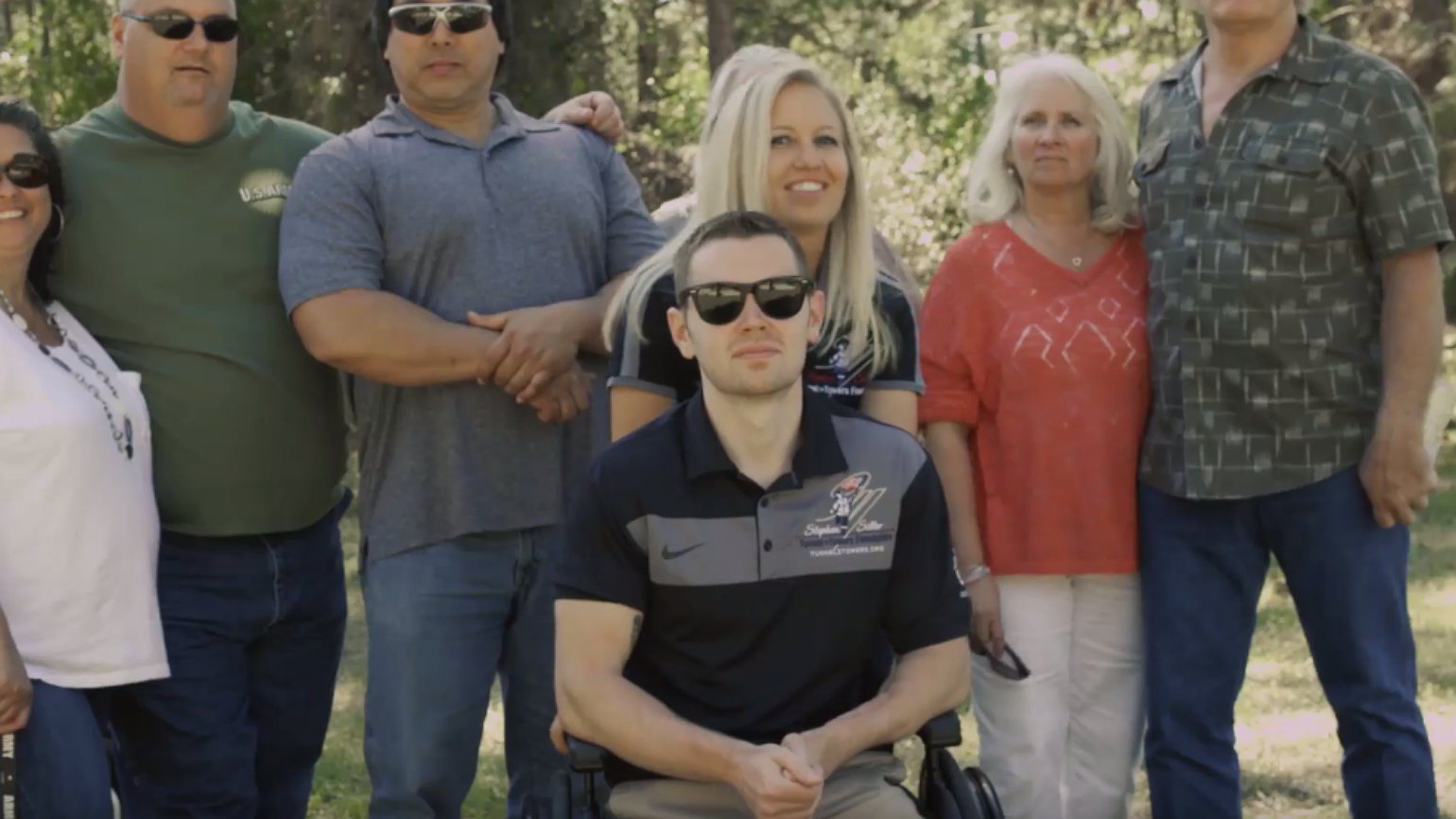
Thanks to a smart home with accessible appliances and lowered countertops, Army veteran and double-amputee Corey Kent is living his dream of being an active father to his newborn daughter Avery.

Kent was just 21 years old, ten months into his military service and three weeks into his tour in Afghanistan when he stepped on an IED while on patrol with his unit and lost both of his legs and the fingers on his left hand in the blast. After receiving over 70 surgeries in order to repair his damaged limbs at Walter Reed National Medical Center in Washington, D.C., Kent was starting to lose hope that he could ever have the family he’d always wanted and be an active provider for them.

“I didn’t know how active and mobile I was going to be and I didn’t want to be dependent and a burden on my family,” Kent told the TODAY Show of his concerns during his long, slow recovery.

While recovering, Kent was put in contact with the people at the Stephen Siller Tunnel to Tower Foundation, a nonprofit created to honor fallen firefighters of 9/11 and military service men and women. Tunnel To Tower was building a smart home to help another injured soldier and Kent hoped they could do the same for him.

A few years later, Kent, who had been living in a studio apartment added to the side of his parents’ house in Cape Coral, Florida, was in need of more space. He had just gotten engaged to his fiancée Brandy and the couple was living in cramped quarters.

Then, they got the call.

The Stephen Siller Foundation, in partnership with the Home Depot Foundation, had decided to build the Kents a smart house. They moved into the home after September 11, 2016, just in time for Avery’s birth.

The wide hallways of their home make it easy for Kent to get around in his wheelchair, and the lowered appliances and countertops allow him to do laundry, bathe his daughter, do the dishes and more.

“Being a dad is something I’ve looked forward to for a long time. I’m excited to have something to focus my energy on,” he said. “I hope I can teach her to be a better person than I am, and to leave the world a better place. In the military you’re part of a team and it’s about more than you, and it’s exciting to feel that again.”

A Small Piece of Heaven: The Joys of Gardening

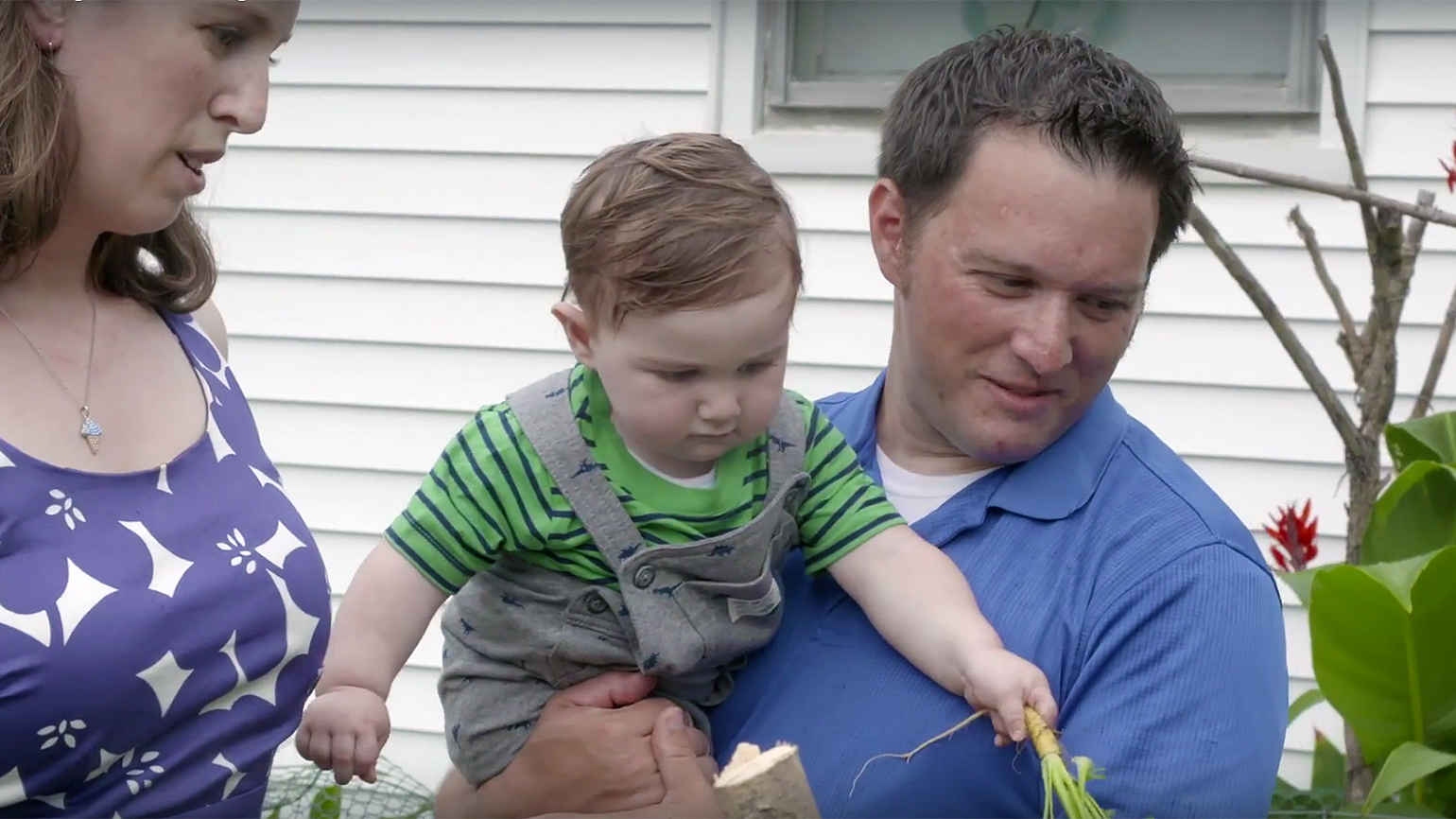
Hi Guideposts. I’m Andrew Siegel, and this is my garden.

This is where my family and I grow a lot of different vegetables and flowers and herbs. Gardening’s been really important to my family because it gives us an opportunity to spend time outside together, away from all the electronics and distractions.

Especially for my five-year-old, it really gives her an opportunity to be in touch with nature—all the little critters and bugs and things that come out here. It’s all part of it.

We find that a lot of the things that we plan for in the garden don’t always go the way that we’d like them to, and some of the things that we don’t plan for in the garden become some of the things that we cherish the most that year. So it’s something that I’ve learned and my family’s learned: To appreciate all of it.

My advice for beginner gardeners is to just start. Get a pot, get a little bit of dirt, get a tomato plant or whatever plant you want and just get started.

I think sometimes it seems a little intimidating. Trust me, it does not need to be perfect. You will cherish every little thing you get out of it.

Gardening has taught me patience, something I don’t naturally have a lot of. It takes weeks, takes months before the work you put into it comes out. You learn not only to be patient, in that end product, but I’ve also learned that, after years of gardening, the end product’s just part of it.

The journey of growing has become much more important to me than the actual produce that we get in the end. Nothing’s been so valuable as the time I spend out here. I’m by no means in a farmland, but I do have my own little piece of what I consider heaven, and I’ve really learned to appreciate every little moment—every bug, every plant, every flower—and when you can appreciate it in that way, there’s nothing better.

A Sicilian Donkey’s Courage Gave Them Hope

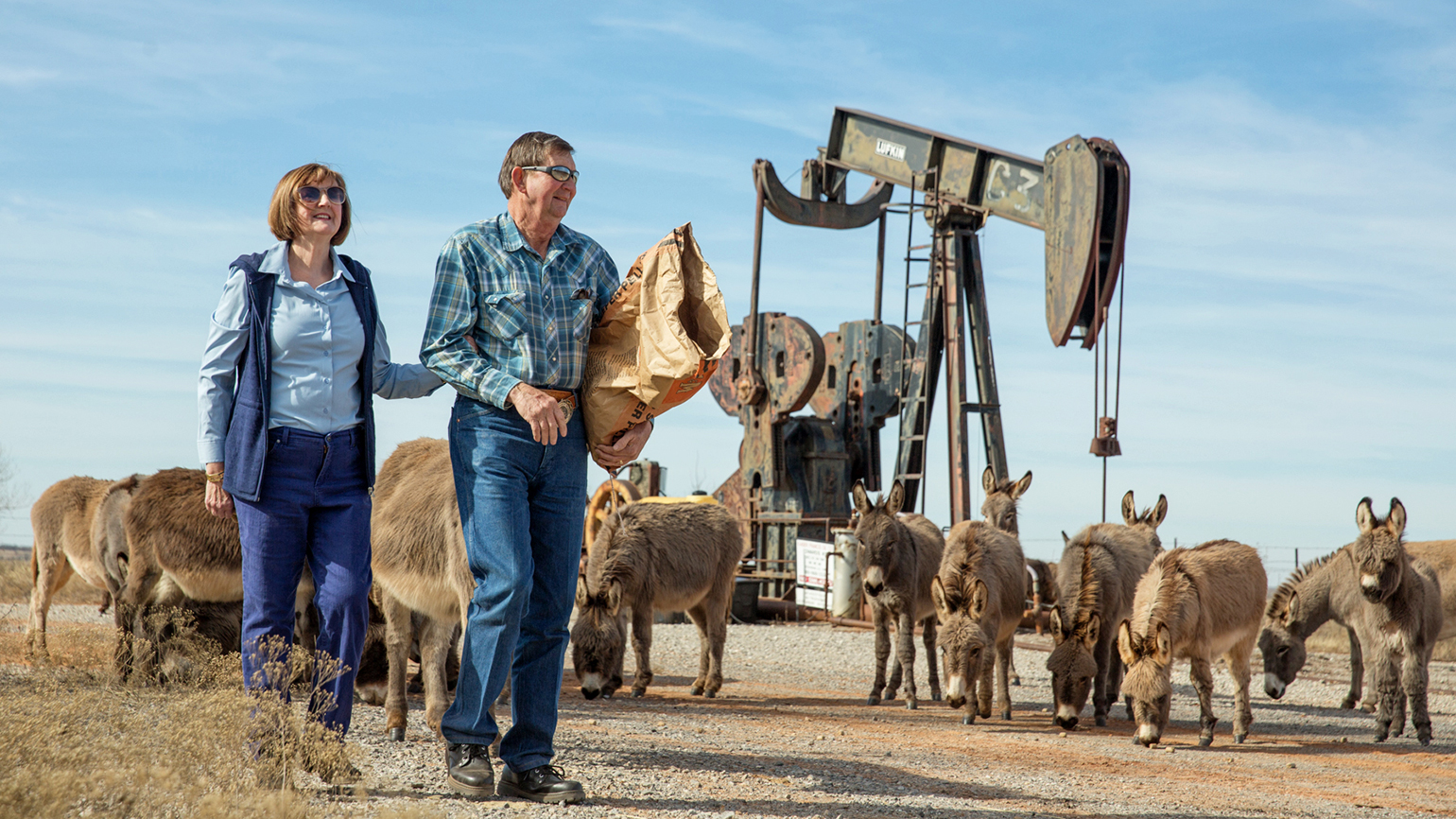
Carolyn and Alan LeGrand were stretched thin. They were running their farm equipment business, caring for Carolyn’s 90-year-old mother as she recovered from a broken hip and driving 130 miles roundtrip several times a week to feed the animals and tend the crops on the farm her parents had purchased years before. But the courage exhibited by one of those animals, a Sicilian donkey named Sissy who had troubles of her own, reminded the LeGrands that they could persevere even in difficult times. Click through to meet the LeGrand’s donkeys, and if you’d like to see more stories like this, check out All Creatures magazine.

Ashley Judd on Playing a Veteran in ‘A Dog’s Way Home’

A Dog’s Way Home follows a puppy, Bella, and her relationship with her friend Lucas and his family. After getting separated from her owners, Bella goes on the adventure of a lifetime, making friends with a homeless veteran and mountain lion as she tries to find her way home. Adapted for the screen by W. Bruce Cameron, the author of A Dog’s Purpose, it’s an emotional, uplifting movie, animal lovers and military members will appreciate.

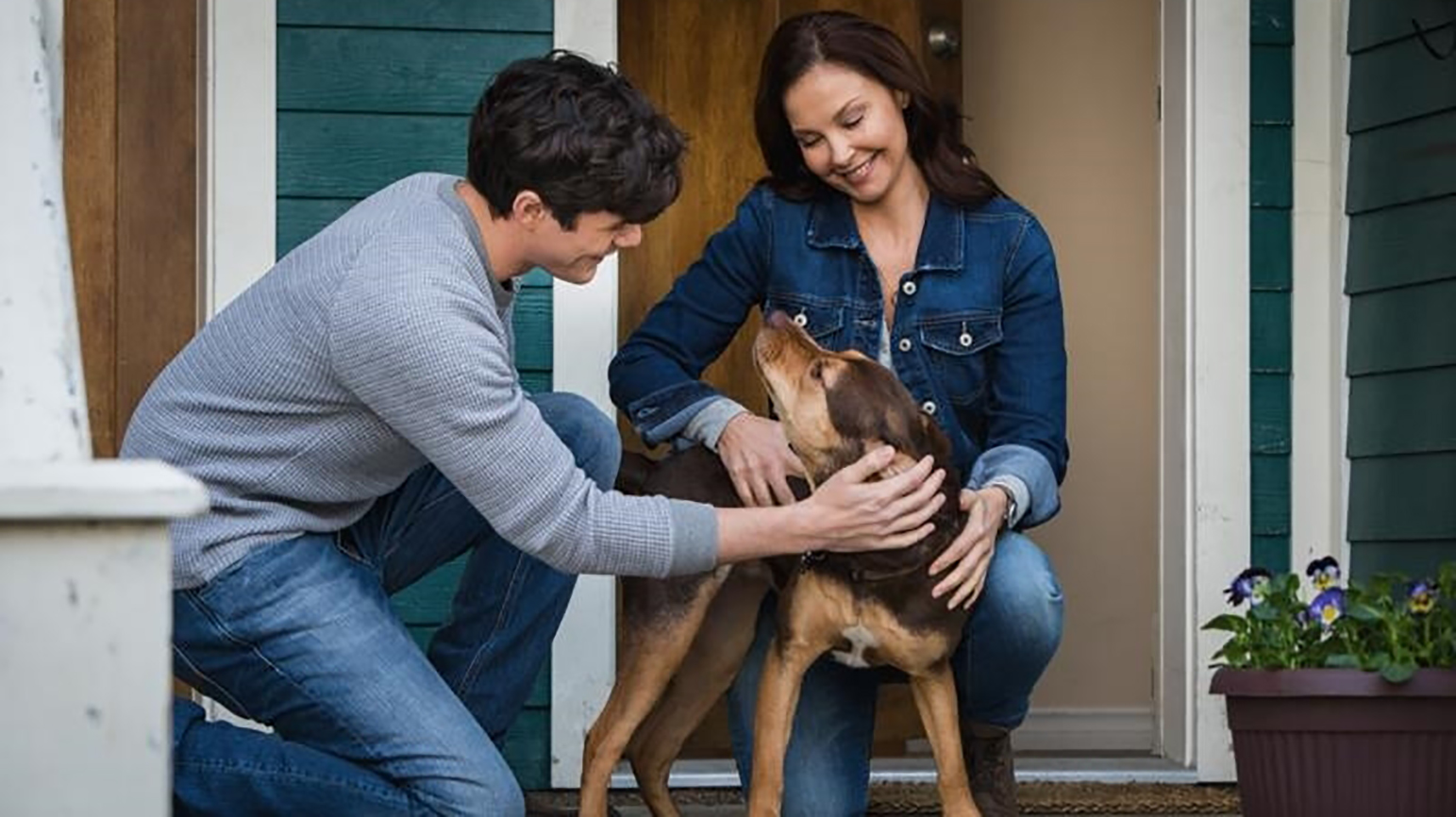
The movie, produced by T.D. Jakes, features Jurassic World actress Bryce Dallas Howard as the voice of Bella. Ashley Judd stars as Terri, a veteran military mom whose son Lucas befriends Bella. Terri struggles with PTSD and spends a lot of time at the local VA (Veterans Affairs). Although she’s not thrilled when Lucas brings Bella home, she soon finds that the pup brings her joy and purpose.

“The movie is about about an extraordinary odyssey taken by a very ordinary dog,” Judd told Guideposts.org.

The journey Bella takes, and her relationship with Terri and the other veterans, give the film depth and staying power.

“I think that the movie brings in really important social themes, like our veterans who have PTSD and need our care, empathy, and access to dental health services,” Judd said. “Then the story of homelessness, as well as the universal theme that we all have a deep need for belonging and community, trust and safety.”

Judd had previously worked with the film’s director, Charles Martin Smith, on Dolphin Tail and Dolphin Tail 2 and appreciated the way he was able to tell emotional stories involving animals. She had firsthand experience with the change a dog can bring. One of her dogs, Shug, who went to heaven in 2017, was a registered psychological support dog.

“I’m an animal lover,” Judd says. “I had my two dogs for 16 and 17 years, respectively, and they were always on set with [me]. By the time I was making A Dog’s Way Home, both of them had gone to heaven, so it was in a way a really sweet tribute to them to be able to do such a special movie about a dog.”

During her time on set, Judd got to know two new animal friends, the dogs who played Bella, Shelby and Amber, both rescue dogs.

“The dogs who played Bella had very sweet temperaments,” Judd said. “One was more shy and retiring, and so she was emotionally, temperamentally well suited for certain scenes, and then the other dog who played Bella was a more gregarious and extroverted…They both learned their tricks so well, and they’re eager to please, and just delightful to be around.”

For her role as a veteran, Judd also put her knowledge of military trauma to use. In 2013, Judd directed a short film starring Jennifer Hudson as a veteran returning home and struggling to process PTSD.

“I’ve been able to study a little bit the sorts of complex PTSD that our veterans go through, and in particular our female vets,” Judd said. “They experience the trauma at higher rates, and then because they have the added risk of sexual trauma, their brains are often really shattered when they come home from service.”

The team behind the film partnered with the VA and Humane Society to support a program that pairs veterans with shelter dogs.

“We know that having a pet [helps] health outcomes improve,” Judd said. “Everyone, when they see the movie, supports that program.”

The charity component of the film is just one way the movie can impact people. To Judd, A Dog’s Way Home is about much more than a dog.

“We have a really deep need for belonging, connection, safety, and trust, and we can find that both in our family of origin and the families that we’re allowed to create,” Judd said. “Just like Bella takes an extraordinary odyssey to get back to her human…for all of us, the risk of vulnerability, [the] effort of being connected with our love in the end is worth it.”

A Dog’s Way Home is in theaters January 11.

A Service Dog Became This Veteran Amputee’s Hero

“You’ll never…” I sat in an exam room at the VA hospital in Augusta, Maine, awaiting my team of doctors. I’d served in the Army as a sergeant in the military police. In July 2006 I’d been severely injured during a peacekeeping operation in Korea. Two fingers on my left hand gone. Skull fractures. Spinal cord injury. I had no feeling in my legs below the knees. I lost my memory, the hearing in my left ear and the ability to speak. The head injury led to frequent seizures.

For a year and a half I had surgery after surgery in Texas, where I was stationed, and worked hard to rehab my brain and body. I relearned how to walk, talk and read. Still I had to medically retire from the Army and move home to Maine so my mom and stepfather could help take care of me. I prayed that the doctors here at the VA could tell me what I needed to do in order to live an independent life again.

The doctors came in. One of them went over a list of things they didn’t think I’d be able to do again.

“You’ll never run again,” he said. “Or drive.” Swim. Ride a bike. Shower alone. He handed me the paperwork. The list went on for three pages.

“I can’t live on my own?” I asked.

“Too dangerous,” he said. “What if you have a seizure while you’re cooking? You could burn down the house. You’ll need to have someone with you 24/7.”

My eyes went to the top of the page. It was right there in black and white: “Severely handicapped, 100 percent disabled.”

I was born to move. In high school, I was a multisport athlete. I’d gone to college on a field hockey and track scholarship. I had joined the Army to serve my country, like my grandfather and uncles, and to stay active. I met the male fitness standards as a female soldier. What was the point of living if I couldn’t do anything?

The meeting with the docs ended. I went to the hallway and cried.

MY LIFESAVER

I knew that being wounded or killed in action was possible. But I never imagined I would be caught in this terrible in-between where I was alive but so incapacitated that sometimes I wished I’d died during that mission overseas. I suffered nightmares, depression, PTSD.

There was one thread of hope I held onto, one thing that stuck in my mind from my rehab in Texas. I’d had such a severe seizure one day, I fell down a flight of stairs. A doctor recommended that I get a dog trained to respond to seizures. I looked into it. There was a five-year wait for a seizure dog. No way could I last that long. I called different organizations. A nonprofit in Pennsylvania agreed to train a dog for me, though their specialty was dogs for the visually impaired. A breeder in New Hampshire had a golden retriever puppy who’d done well on service dog temperament tests.

Christy and MoxieI named the pup Moxie. She came to me at nine weeks old. Seeing her adorable fuzzy face made me want to get up in the morning again. I raised her until she was six months old. We bonded so tightly, it was hard to let her leave for training in Pennsylvania.

At 19 months old, Moxie graduated and came back to me. She was trained to respond to my seizures. If I was conscious, she’d fetch my phone so I could call for help. If I didn’t wake up, Moxie knew to open the door, run to the neighbors’ and ring their doorbell. It turned out she could detect my seizures too. She was so attuned to me that she could sense one coming. She’d take my wrist or hand in her mouth and give a little tug to tell me to lie down. She kept her paws on me until the seizure passed and it was safe for me to get up.

Because of Moxie, I was able to get my own place. She was a lifesaver. I mean that literally. There was a time when suicidal thoughts overwhelmed me. I decided to end my life. I planned how I was going to do it. But then Moxie looked at me, and it was as if her eyes reached right into my soul. If I take my life, how long will she be alone before someone finds her? I wondered. How depressed will she be that I’m gone and that she failed to take care of me?

I pulled Moxie close and rested my head against hers. “I won’t do that to you,” I said. “You deserve better.”

THE ATHLETE REAWAKENED

That day I sat in the hallway at the VA crying my eyes out, a Vietnam veteran rolled up in his wheelchair. Neal Williams didn’t need to ask what was wrong. “The doctors don’t know. You’re the one who decides,” he said. “You’re the one who decides what you can and can’t do.” He asked me to come to an event where veterans with disabilities could try adaptive sports like kayaking and biking.

Seriously? I’d just been told I would never be able to move like I used to, and he wanted me to watch people being active? I couldn’t think of anything more demoralizing.

But Neal kept after me. Every time I was at the VA for physical and occupational therapy, he’d bring it up. Finally, just to shut him up, I went to one of the events. Waterskiing. I actually got the hang of it my first time. It reawakened the athlete—and the achiever—inside me.

At a winter sports clinic for disabled veterans, I fell in love with sled hockey. The rules are the same as ice hockey, but we sit in specially designed sleds instead of using skates. Players have two sticks, one to propel ourselves around and the other to hit the puck. Flying across the ice, going after the puck, driving an opponent into the boards—it felt amazing to compete and be part of a team again.

I joined the U.S. Women’s Sled Hockey Team and in 2013 was named USA Hockey’s Disabled Athlete of the Year. Moxie travels with me to every game. She sits on the team bench and watches till the final buzzer, making sure I’m okay. My most devoted fan. My best friend.

UNSTOPPABLE

Worsening nerve pain and torn ligaments in my legs were affecting my game. Veterans who’d lost their legs functioned better than I did. I had my left leg amputated below the knee in May 2015. Then doctors told me I had to stay in my wheelchair to avoid further damage to my right leg. Not an option. In February 2016, I had the leg amputated below the knee.

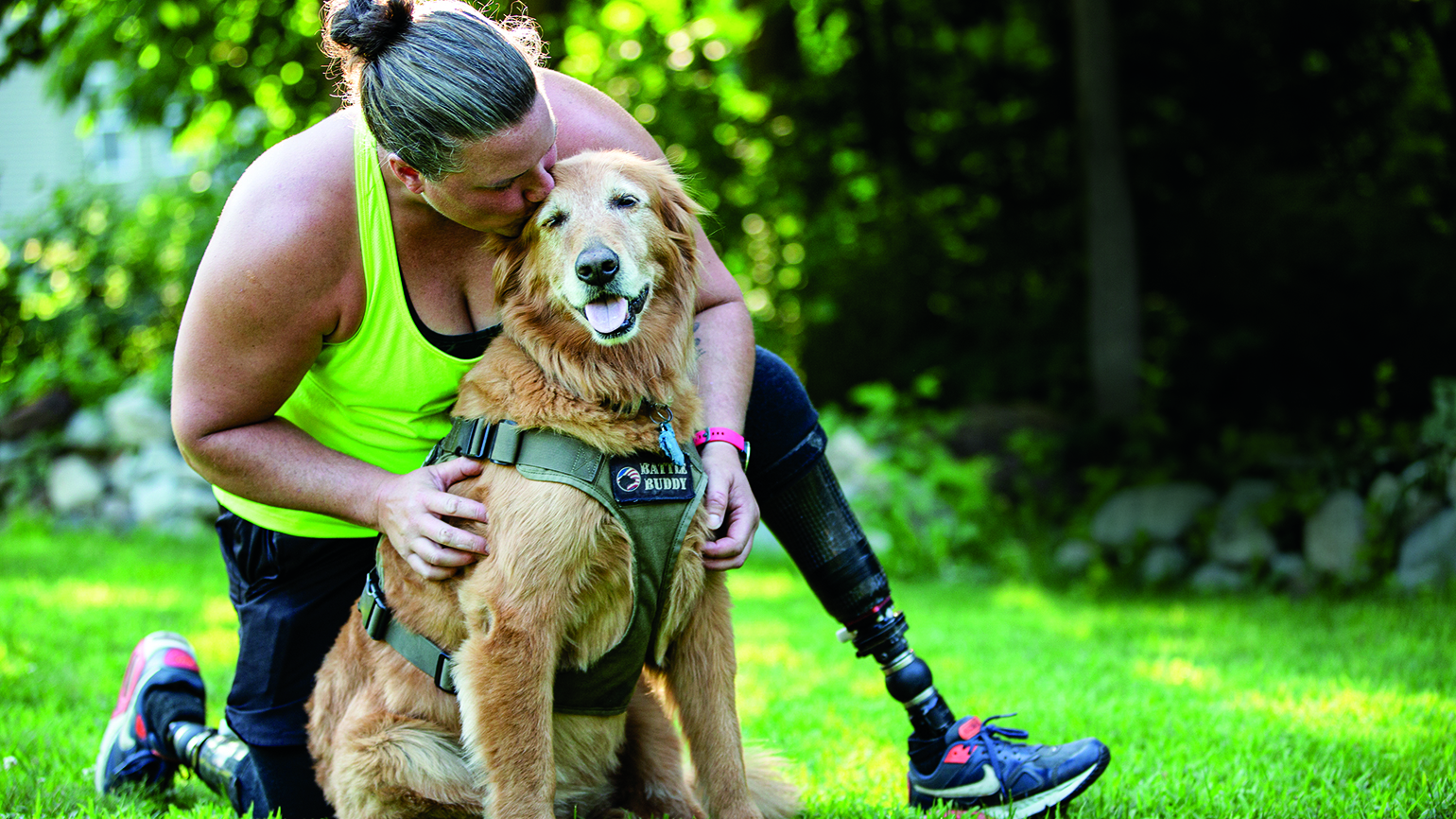
Nine weeks after the surgery, I was walking on prosthetics. Six months later I ran for the first time since I was injured in the line of duty. I took first place in the shot put and discus at the 2016 Rio Paralympic Trials. I competed in 10 events at the Warrior Games. I’m preparing for the Tokyo Summer Paralympic Games, to be held after the coronavirus pandemic is over. These days I use my wheelchair so rarely, I have to put air in the tires each time.

I earned a degree in therapeutic recreation from the University of Southern Maine. I serve as director of the New England Warriors sled hockey program for veterans and Central Maine Adaptive Sports, a nonprofit that offers adaptive athletic opportunities to individuals of all abilities.

Christy with service dogs Gidget, Douglas and Moxie.I began training service and therapy dogs so that other disabled veterans could experience what I had with Moxie. I’ll never forget Lucky, a yellow Labrador puppy who was born without bones in his right wrist. To some, his bum leg might have been a deal breaker. I saw it as an opportunity for him to do great things. And he has. I placed him at Leeds Central School to show kids that challenges don’t have to stop us from succeeding.

Last year, I cowrote a children’s book with author Eileen Doyon. Lucky: Little Guy, BIG Mission is about two fighters—Lucky and me—who never gave up. The proceeds will help fund Mission Working Dogs, the foundation I started to train more service and therapy dogs in Maine.

Recently, I came across a social media post about a six-month-old golden retriever, Douglas, who needed a new home. I asked if I could train him to be a service dog for a veteran I knew. Turns out, Douglas was meant to stay with me. Moxie, 12, tore both of her Achilles tendons, so now Douglas helps me while she takes it easy.

As for the veteran I had in mind for Douglas? I’m training Gidget, a yellow Lab who Lucky’s breeder donated to my program. These service dogs have given me purpose. The best way I can repay them is helping them live out theirs.

That day at the hospital, the doctors gave me a list of everything I can’t do. Thanks to Moxie, now it’s all about, What can I do next?

Did you enjoy this story? Subscribe to All Creatures magazine.

Artist—and Stroke Survivor—Launches Pet Drawing Project to Support Animal Shelters

California resident Ed Attanasio was running an ad agency and working as a writer when the Covid-19 pandemic began in 2020. In April, he was furloughed from his job and lost all his clients.

“I was in complete shock and thought, ‘What am I going to do to occupy my time?’” he told Guideposts.org.

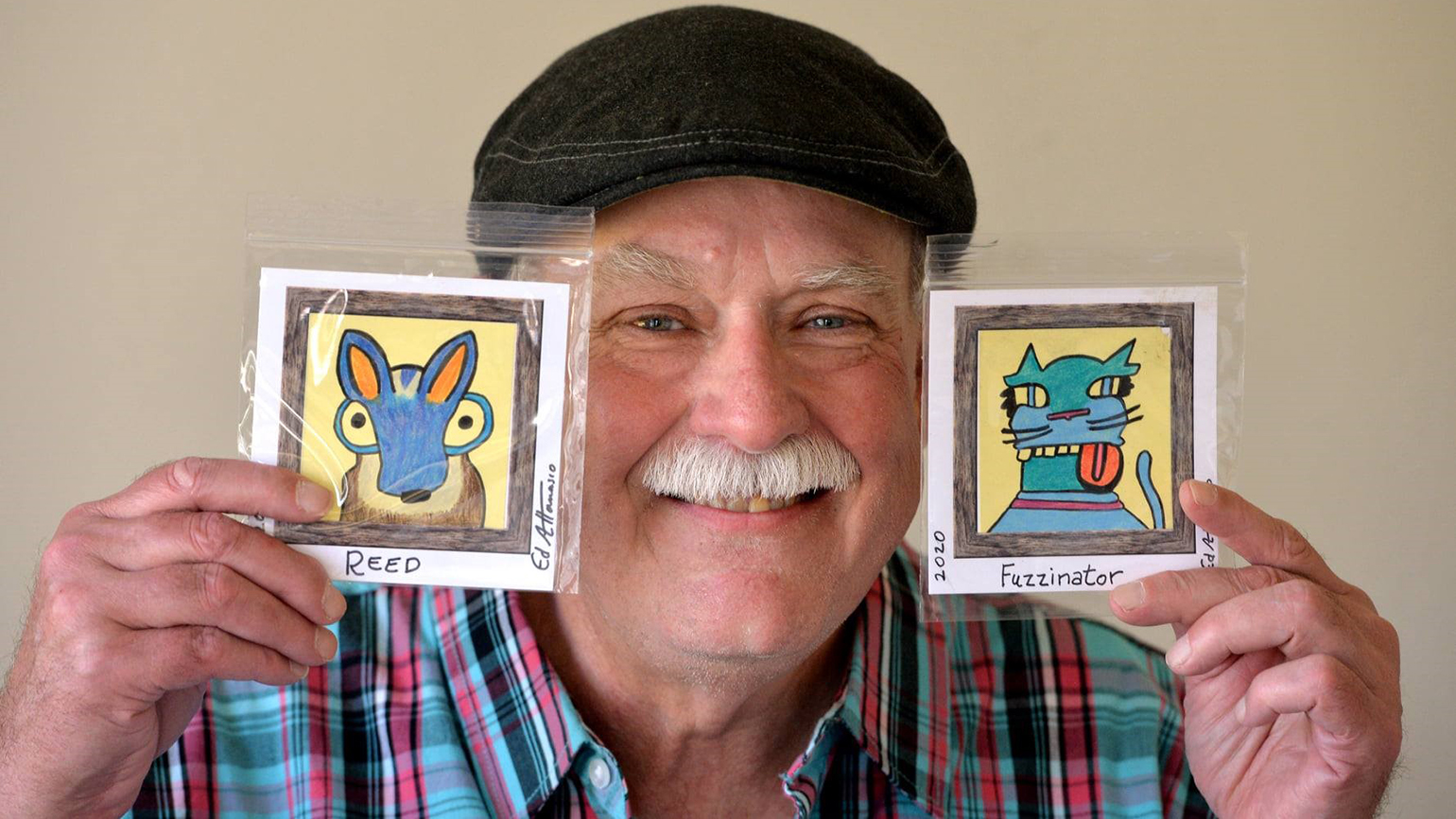
He got a phone call from a friend who was quarantining with his family, asking him to draw some art for his kids. After drawing an abstract portrait of their Boston Terrier, word spread on social media and Attanasio began receiving requests from people who wanted drawings of their own pets.

“I said yes but I didn’t really want to charge,” he said. “I was just creating these art pieces to make people happy.”

That’s when he got the idea to launch the art campaign, Pandemic Pet Project.

People send photos of their pets to Attanasio through his Facebook page, he then creates one-of-a-kind artwork that is hand-drawn on a 3-by-3 Post-it Note and mails them out once they’re completed. Although the artwork is free, Attanasio asks people to pay it forward by making a minimum $50 donation to an animal rescue organization of their choice. Organizations such as Muttville in San Fransisco, California and Hands, Hearts & Paws in Omaha, Nebraska have received donations thanks to the Pandemic Pet Project.

Since launching Pandemic Pet Project, the artist has completed 1,600 drawings, estimating about $100,000 in donations to animal shelters all around the world. The portraits—of dogs, cats, reptiles, goats and horses—have been sent to all 50 states and 26 countries, including Israel, Ireland and Ecuador.
“The feedback I’ve received is unbelievable,” he says. “I get a lot of messages from people all over the world who tell me my drawings have made their day and it makes me really happy.”

Art is a form of therapy for Attanasio, who began drawing after having a stroke at age 50 in August 2009. After his speech therapist suggested that he engage his brain with activities, he began drawing on Post-It Notes for hours during his 14-month recovery.

“The art represents my personal renaissance, which includes significant life changes such as losing 120 lbs., eating healthier and swimming daily,” he said.

Attanasio credits the success of his art to guardian angels, who he says have “worked behind the scenes” throughout his artistic journey. “Every time I’ve announced that I would wrap it up, I’d receive signs or reasons not to,” he said. He noticed a pattern of dogs at Beauties and Beasts, a rescue in Wichita, Kansas, getting adopted just as their completed portraits would arrive. Not long after deciding to step aside from the campaign, he received an emotional phone call from a woman battling stage 3 lymphoma cancer who told him his drawings, which he posts on Facebook, are the highlight of her day.

“I’ve decided I will do this as long as people want me to,” he said. “I just want to help people and make a difference.”

A Reminder to Focus on Family

I pulled the car into the garage and got out, just like every night for the past 16 years. The difference was, I wouldn’t have a job to go to in the morning. I’d known this day was coming, but that didn’t make it any easier.

I slammed the car door. I was—no, used to be, I reminded myself—a VP in technology for a national bank until it collapsed in the recession.

I’d put my heart and soul into my job, helping build the tech-support department from a few employees into a division running computer networks at branches all over the country.

Not only did I work long hours, I was on call 24 hours a day. Weekends and holidays too. If someone had a tech problem, even at 2:00 A.M. Christmas morning, I was on it.

My kids joked that even though they were the teenagers, I was the one who was glued to my cell phone and had to be told not to text at the dinner table. That’s if I sat down at the table at all. Usually, I would set my plate on the arm of my chair and eat while I checked my laptop.

I paced the dim garage, wanting to kick something, smash it into a million pieces, the way my life felt like it had been smashed to pieces.

I knew I was better off than most people—I’d gotten a decent severance package, and my wife, Michelle, had been able to go to back to work full time as an office manager once we heard my job was threatened.

But our three kids would be going to college—our son, TJ, was a high school senior, and the girls, Sarah and Tara, were in ninth grade—and I wanted to give them the education and opportunities they deserved. God, if I can’t provide for my family, I asked, what good am I?

A shaft of light streamed through the window, as if beckoning me. I opened the garage door and stepped out into our yard. Michelle and I were raising our family in the house I grew up in.

The lawn and flower beds that my mom had tended so carefully were overrun with weeds. There was a Japanese maple in the middle of the yard that I remembered my parents planting when I was a boy. It needed pruning. I kept meaning to get out there but I’d let it go.

Treasure this time.

The thought came out of nowhere. Definitely not from me. But clear, clear as could be. Treasure one of the worst days and biggest losses in my life? I shook my head. I couldn’t get distracted by random thoughts. The clock was ticking. I needed to get busy finding a new job.

I lumbered up to the house, my belly jiggling. I’d put on a lot of weight, let myself go over the years—no time to exercise with my crazy hours.

Michelle greeted me at the door with a hug. “It’s going to be okay,” she said. “We’ll get through this together. I thought we could have a family meeting. The kids have been worried.” I was the parent; I was supposed to do the worrying. The kids were supposed to enjoy being kids.

We got together in the living room. “I’m sorry, Dad,” TJ said. “I know how much your job meant to you.” His concern was mirrored in the girls’ faces. When had they gotten so mature?

“I’ll take care of this,” I told them. “I’m going to work round the clock to find a new job and get our lives back to normal.”

After the kids went to their rooms, Michelle laid her head on my shoulder. “Don’t feel like you have to jump back into something stressful,” she said. “We can get by on my income for a while. Maybe you should think of this time as a break…a sabbatical. You deserve one.”

A sabbatical? Was she kidding? This was no time to rest. If anything, I needed to work even harder.

The next morning I got up before everyone else, made a pot of coffee and opened my laptop. I searched job sites, companies in the area with big tech departments. I e-mailed friends with connections. By then Michelle and the kids were up, the house bustling.

“Take some time for yourself,” Michelle said again before she left for work. “This isn’t a problem you need to solve today.”

By midmorning the quiet of the house was driving me crazy. I missed the buzz of the office. I’d updated my résumé and applied for a couple of jobs. Now what? I walked outside to clear my head. My gaze fell on those overgrown flower beds. At least that was a problem I could do something about.

I found the hoe in the garage, behind an old deflated soccer ball. I hadn’t even been working an hour before my back and arms were aching. I’d only cleared a small patch.

Winded, I made my way to the backyard. Not the beautiful yard we had dreamed of. I’d always planned to fix it up. Another thing I’d let go.

I went inside and checked my e-mail. Nothing.

The kids got home midafternoon. “I’m bored,” Sarah said an hour later. “There’s nothing to do.”

I looked up from my laptop. “I’m sorry, honey,” I said. “I’m busy right now. Maybe later.” She nodded and wandered down the hall.

I turned back to my laptop. But I couldn’t focus on job hunting. I kept thinking about how Sarah and I used to watch a lot of soccer together before I got so busy. Manchester United, in the English Premier League, that was our team.

I went to their web page. There was a game the next day, Saturday, at 5:00 A.M. It wasn’t televised, but we could watch it on the computer.

“Hey, Sarah,” I called down the hall. She was thrilled about my idea, even if it meant getting up at the crack of dawn.

The sun was barely peeking over the horizon when we flipped open the laptop the next day. We cheered so loudly I feared we’d wake up everyone else. “That was awesome,” Sarah said.

“Let’s do it again sometime,” I said.

And we did, every week after. I even got us new matching Manchester United jerseys.

I settled into a new routine. I still applied for jobs. Still put in hours every day in front of the computer. But now I took breaks to do other stuff, the things I’d neglected when I was working all the time.

I started putting in a sprinkler system and the new lawn I’d planned for so long. Just a few hours here and there. But it began to take shape. So did I. With the physical labor, the extra weight dropped off, and I felt healthier than I had in ages.

One day I walked into the empty family room and looked at our pool table, which was gathering dust. The kids were always saying they didn’t have anything to do. I decided it was time the room got used. I cleaned off the table and bought some video games while I was at it.

Soon TJ, Sarah and Tara were bringing their friends over after school. There’d be so many teenagers hanging out in the family room, I took to calling it “the kid zone.” But I was the one having a ball. They were loud. And hungry. No problem. I went to Costco and stocked up on snacks.

Weekends Michelle and I gardened together. The flower beds, the Japanese maple looked great; Mom would’ve been proud. On summer evenings the five of us hung out on the deck while I made dinner on the grill.

One day I noticed TJ sitting alone, looking pensive. I knew he had worries about going to college and where his life was headed. Some of his friends had graduated the year before, and he’d lost touch with them.

“TJ, I know how it feels to lose something,” I began. “I wish I knew how to fix it. But with some things, I’ve discovered, you just have to turn them over to God.”

“I know, Dad,” he said. “I learned that from watching you, how you’ve handled being unemployed. You might have been stressed but you never let it affect our family. You kept us together.”

I looked at my son, and it hit me. This was the last year he’d be home. The girls would be off to college soon too. If I hadn’t had this time with them, I’d be wishing for it, praying for it. Maybe God had answered a prayer I hadn’t even said.

He gave me this time to treasure, to be the husband and father my family needed. I’d had the chance to find a healthy balance between work and home—a balance that even after I landed a new position with a great company, I have made sure to keep.

Download your FREE ebook, Rediscover the Power of Positive Thinking, with Norman Vincent Peale

A Ray of Light at a Mother’s Death

Last week I shared some material from a book I’m finishing for Guideposts about Alzheimer’s and my family, especially our journey with our mother and her dementia. I told about my last conversation with her. This week I want to tell you the rest of the story.

I spent the next few days of that last visit sitting in Mom’s room reading while she slept, hardly noting the comings and goings of aides and nurses. Sometimes I would look up and see Pat, her new best friend, standing at the door clutching her empty but ever-present purse.

I had coffee one afternoon with Colleen Burke, the director of the memory care unit. “How much longer?” I asked.

“Not too much, though some hold on longer than others. It’s a process.”

We’d declined the feeding tube, of course, and Mom had been diagnosed with heart failure, a common complication of Alzheimer’s. I wondered if down deep she was fighting or simply letting go. Rossiters were fighters, Norman-Irish warriors. There was no way to tell. And yet my mom appeared at peace.

I left her on a sunny Saturday morning, giving her one last gentle hug. My brother Joe, his wife Toni and the girls would be back the next day from Florida. My sister Mary Lou was coming down that afternoon. I paused in the doorway to take one last look at the woman who had given birth to me. The room seemed incongruously bright. Her caregivers were attending to her. She was in good hands, God’s hands. Then I turned and headed for the airport. On the way I stopped at a pay phone to call my sponsor.

“I feel so overwhelmed,” I said.

“It’s dying,” he said. “We’re supposed to feel overwhelmed.”

By Monday, April 19, I was in Tucson, Arizona, helping teach a Guideposts writing workshop. Two senior editors were conducting the morning session. I would join them for lunch and the afternoon session then host a dinner that night.

Having once lived in Taos, I love the Southwest, and not just because it reminds me of my raw youth. There is a brute beauty to its landscapes, as if the further west you go the more America is America in its newness and wildness. I might have stayed there forever if I could have found a way.

It was a crisp, cool spring morning, and I was up early thanks to the time zone change. I wanted to hike Picacho Peak, but it would take hours I didn’t have so I settled for the tamer and closer Tumamoc Hill near our hotel.

The path was easy for most of the hike but got steeper higher up, and I was surprisingly breathless when I reached the top at a little over 3,000 feet. I lay on my back and looked up into the great western sky, a few tufts of clouds interrupting the boundless blue, a sky that seemed so vast yet so close. A spear of sunlight hit my eyes, and I remembered that I had forgotten sunscreen and couldn’t stay long like this. I thought of my mother’s love of the sun and how it healed her.

And then I felt something, like a swooning of the soul, a gentle rush as if something were leaving, and at that moment I knew she was gone.

I hiked down quickly. There was a message for me at the hotel desk to call home. I knew already what the call would confirm.