Embrace God's truth with our new book, The Lies that Bind

Three-Pea Toss

Peas provide nutrients important for bone health. Almonds are low in cholesterol, helping to reduce the risk of heart disease.

Ingredients

1 to 1¼ cups sugar snap peas

2 tablespoons extra-virgin olive oil

1 medium red onion, cut into 1½-inch dices

Generous pinch of sugar

Salt and fresh-ground pepper

1 to 1¼ cups snow pea pods

1 cup frozen baby peas

2 tightly packed tablespoons fresh mint leaves, chopped

½ cup salted whole almonds, chopped

Preparation

1. String sugar snap peas with a small, blunt knife: Grasp the stem between thumb and blade, and pull down the length of pea pod. Rinse pods and dry.

2. Heat wok over high heat. Swirl oil around. Add onions, sugar, salt and pepper; toss over high heat for 1 minute.

3. Add sugar snaps and toss for 30 seconds.

4. Add in snow peas and cook for 30 more seconds.

5. Add frozen peas and stir-fry for 30 seconds, or till thawed.

6. Turn peas into a bowl and toss with mint and almonds.

This Author Finds Her Inspiration in the Early Morning Hours

It’s not quite four o’clock in the morning at Blodgett Family Farm in the hills of upstate New York. The fields and pumpkin patches may be draped in darkness, but there’s a light shining in the farmhouse window. Ruth Logan Herne, an award-winning inspirational fiction author, is hard at work.

Ruth gets up a little after three o’clock every morning to write. Though she has a home office, she rarely uses it. She prefers to sit on the family room floor with her laptop.

“When you’re older, hips and joints don’t necessarily like soft furniture,” she says. “We have 14 grandchildren, 11 of whom live nearby, and they like to bounce on the furniture. Not a couch or a love seat in that pretty little family room has support anymore. But it’s not about where you write—it’s about the words on the page.”

Ruth has penned more than 60 books this way, waking in the middle of the night and cranking out at least a thousand words before dawn.

It’s a routine that began more than 20 years ago. Back then, Ruth was running a day care out of her home. Though she’d dreamed of becoming an author since she was a little girl, between her job, the farm and raising six children, she barely had time to sit, let alone write.

“I always knew it would happen, though,” Ruth says. “It was just a matter of timing. A matter of faith.”

The time came early one morning—at three o’clock. “I just woke up. I didn’t know why, but I couldn’t go back to sleep. It kept happening over the next few weeks. It was as if God was telling me, ‘You need time? Well, here it is!’”

As her family slept, Ruth would work at her typewriter. “I’m blessed to need only about six hours of sleep,” she says. Ruth goes to bed each day at 9:30 P.M. and wakes at a little after three. She never needs an alarm.

A year into her 3 A.M. writing practice, she got a hand-me-down word processor from an acquaintance. A year and a half after that, Ruth graduated to her first computer, a gift from a friend. “Our two oldest children were in college by then,” she recalls. “Money was nonexistent. But opportunity was there.”

By the time a publisher bought her first manuscript, she’d completed drafts of 11 different novels.

While her books have uplifting endings, Ruth doesn’t shy away from writing about the life challenges—divorce, financial problems, the loss of a loved one—that teach people faith, hope and perseverance. Something Ruth learned from her childhood.

“My parents were both alcoholics. I had a tough upbringing in a lot of ways,” she says. “But it taught me a lot. I believe you have to move beyond the past and grab hold of the future. Make it your own. My stories don’t dwell in that darkness because I don’t dwell in it.”

Her latest book, Prescription for Mystery, the second in Guideposts’ new Miracles & Mysteries of Mercy Hospital series, is all about bringing the truth to light. The story follows four friends who work at a historic hospital in Charleston, South Carolina. When they stumble upon a clue that a doctor’s sudden disappearance may be something more, they band together to solve the mystery.

Ruth has always loved reading mysteries, but it wasn’t until 2017, with the Guideposts series Mysteries of Martha’s Vineyard, that she wrote one of her own. “I’d decided in my head that I couldn’t write a mystery, but when Guideposts asked me, I couldn’t say no.”

Again, it all came down to timing. “I got the call when I had a three-week window of time, waiting for an editor to get back to me about a manuscript. Another God thing!” she says.

With summer soon in full swing, Ruth and her husband, Dave, are busier than ever. The pumpkins that Blodgett Family Farm is known for are planted in May and need to be carefully tended until they’re ripe for the picking, in October. “It’s the family project,” says Ruth. “Children come and help, grandchildren come and help, friends come and help.”

Until winter, the only opportunity Ruth will have to write is during those early morning hours: 3 A.M. to 7 A.M., her quiet time. “I make sure to pray then and sometimes read Scripture,” she says. “I believe that if you live your life as a prayer, you don’t need to be on bended knee as much. Because living your life in a God-honoring way is the best prayer.”

There’s a plaque on Ruth’s desk with a quote attributed to writer Erma Bombeck: “When I stand before God at the end of my life, I would hope that I would not have a single bit of talent left but could say, ‘I’ve used everything you gave me.’”

That’s Ruth’s aim too: Make the most of everything God has given her.

Ruth Logan Herne is just one of the inspiring authors writing for Miracles & Mysteries of Mercy Hospital, a new fiction series from Guideposts. This cozy mystery series features four women from different walks of life who witness miracles happening around them at historic Mercy Hospital and become fast and faithful friends.

Join Joy, Evelyn, Anne and Shirley as they solve the puzzling mysteries that arise over the course of their workdays at this Charleston, South Carolina, landmark—rumored to be under the protection of a guardian angel. Come along as the quartet gathers clues, stumbles upon hidden passageways and discovers historical treasures along the way. This fast-paced series is filled with inspiration, adventure, mystery, delightful humor and loads of Southern charm!

“Think Like a Dog” Director on the Inspiration Behind His New Film

Gil Junger’s marriage was on the brink, and he was wrestling with how the divorce would affect his sons, when he sat on the edge of his bed and began to cry. He was overwhelmed with emotion about everything going on.

“At that time I had a golden retriever named Moki. He was asleep on the floor about 15 feet away, and I started to cry, but I didn’t make any noise,” the director told Guideposts.org. “And all of a sudden, my dog who was asleep, wakes up, looks at me, walks over to the bed, hops up on the bed and licked the tears off my face.”

The small gesture got Junker, who is best known for directing the iconic teen movie 10 Things I Hate About You, thinking about why his dogs always seemed so happy. His conclusion? They approached life from a place of pure gratitude.

That place of gratitude and hope, he said, became the heart of his new movie. Think Like a Dog is a big-hearted romp, packed with humor, jokes and an optimistic outlook that will be a welcome bright spot after months of sheltering at home and physically distancing.

“When writing the movie, I realized it was my love letter to my kids and my dogs,” Junker said. “I’ve had six or seven dogs in my lifetime, and have always been a person who wondered what the heck they’re thinking. That genuine childlike curiosity created the voice of the dog, Henry, in the film.”

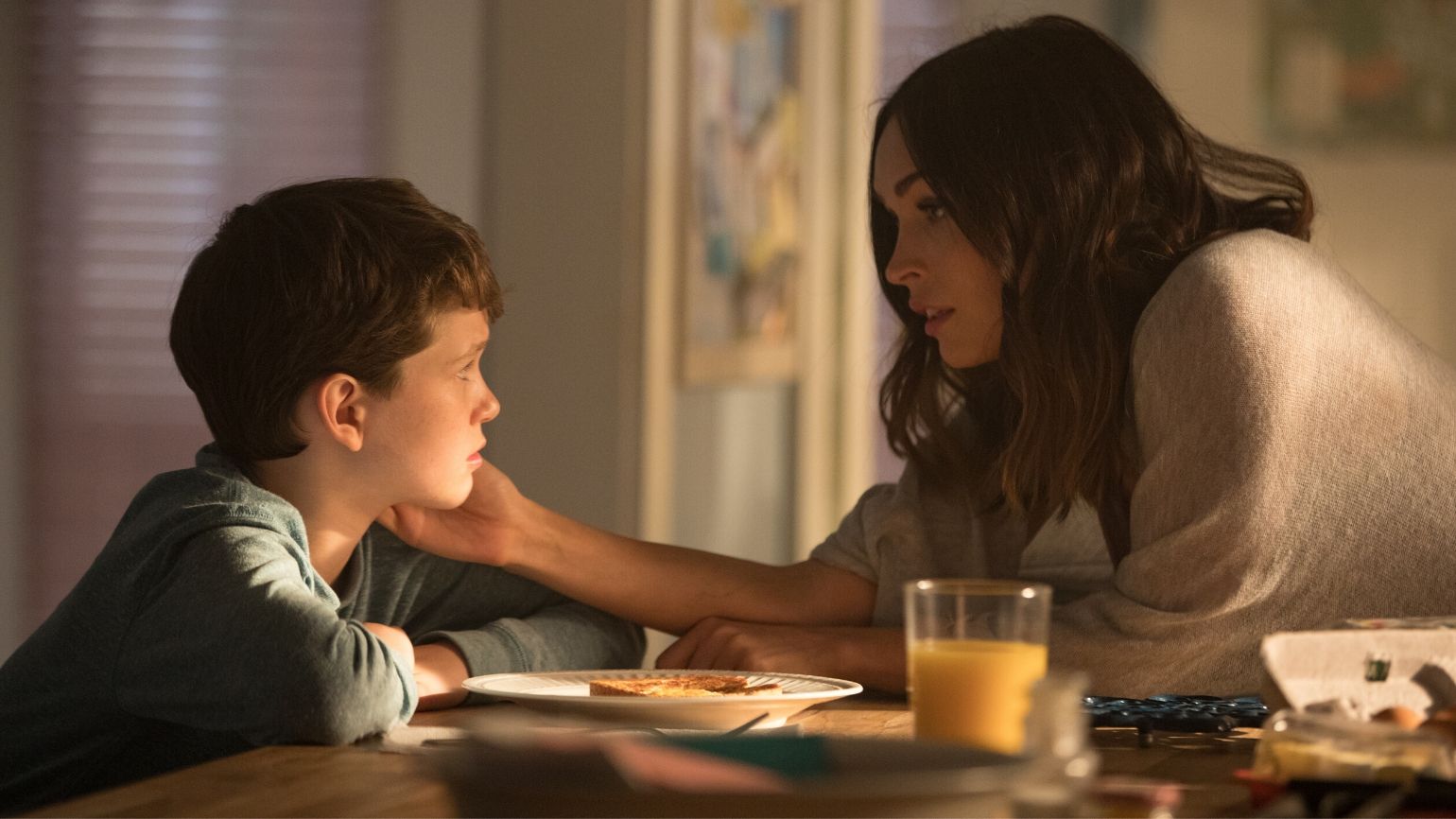
The film follows a young boy named Oliver (played by Gabriel Bateman) whose science experiment gives him the ability to communicate telepathically with his dog, Henry. Meanwhile, his parents (played by Josh Duhamel and Megan Fox) are struggling to keep their marriage afloat, and unsure how to do what is best for their son.

“I wanted to make the parents’ emotional journey a 100 percent real because it would be relatable to adults,” Junker said. “I also wanted kids to be entertained and for the message to them be handled in a lighter way.”

As the pandemic continues to make life uncertain, and society is grappling with the reality of racial injustice, Junker hopes his movie can be a heartfelt, uplifting message for families.

“I truly believe that if you have gratitude for the simplest of things like a dog does, that your life journey is going to be more joyful,” Junker said.

Think Like a Dog is available on video on digital, demand, Blu-ray and DVD.

The Wizard of Oz: 13 Things You Might Not Know

Few motion pictures are more universally beloved than The Wizard of Oz, which opened nationwide on August 25, 1939. Several generations of American children grew up watching the annual broadcast of this classic movie on television, and nowadays, it’s available in a variety of video formats.

Still, as familiar as the film is to most of us, we’re betting you’ll find some fun facts in this photo gallery that will surprise you. Click through to test your Oz-Q!

The Untold Story of How Steve McQueen Found Faith

In the new book, Steve McQueen: The Salvation Of An American Icon, Pastor Greg Laurie and McQueen biographer Marshall Terrill explore a little known side to the “King Of Cool.”

McQueen, who rose to fame during the 1960s, was an actor known for his love of vintage cars and his wild lifestyle. He played cowboys, millionaires, and race car drivers on screen, but behind the camera, McQueen struggled with the effects of a difficult childhood and a drug addiction. Laurie and Terrill set off on a virtual road trip, checking in with friends and family of the star who shared one of the most powerful stories about the actor that many fans have yet to hear: the story of his faith.

Guideposts.org talked to Laurie and Terrill about McQueen’s legacy, his faith, and what others can learn from his incredible journey.

GUIDEPOSTS: You’ve written five books on McQueen before this one. Why sign on for another?

MARSHALL TERRILL: A couple of reasons: the take on McQueen is new and fresh and the focus is totally different than the other McQueen books I’ve written. Another reason I did this was the hope of introducing McQueen to the faith-based crowd and to a younger generation of fans who might have heard about him, but didn’t know his story. The third and most compelling reason was that Greg Laurie was totally sincere in wanting to tell McQueen’s life story as a way to inspire those who might be struggling with their faith or perhaps were contemplating a decision for Christ. He saw the potential and just awoke me to the fact there are life lessons in McQueen’s story which could inspire many people to come to Christ.

GUIDEPOSTS: What did you learn about McQueen’s life that you didn’t know before going on this journey?

GREG LAURIE: He was abandoned by his father and had an alcoholic mother and many stepdads, some who were very abusive. When he was a boy, he literally ran away from home and joined the circus! Who actually does that? Steve McQueen did. He got in trouble as a young man and was on a prison chain gang. He was once a towel boy in a brothel. I didn’t know several facts until I started research for [this] book.

GUIDEPOSTS: Is there a big misconception about Steve McQueen that you hope this book addresses? MT: Yes, that his decision for Christ wasn’t a deathbed conversion but had taken place a good six months before he was diagnosed, and there’s plenty of proof. There’s the word of Leonard DeWitt, the former pastor of the Ventura Missionary Church, who I first interviewed in the early 1990s who told me the conversion happened about a good six months before McQueen was diagnosed with cancer. He also confirmed inspirational books he had given to McQueen, how McQueen was hungry for information, that he took Bible study classes (sometimes at his airplane hangar), and took classes on marriage before he exchanged wedding vows with Barbara McQueen.

GUIDEPOSTS: What did you want to accomplish by telling this untold story of the actor?

GL: Steve McQueen once said to his Pastor, Leonard DeWitt, after he had become a Christian and found out some months later that he had cancer, “My only regret is that I was not able to tell more people about what Christ has done for me.” I wanted to right that wrong. I thought Steve’s story is an amazing one, and a story that very few people know. Steve McQueen was like a modern-day Solomon. He had it all . . . the coolest cars, the most beautiful women, worldwide fame, lots of money, and more. Steve McQueen had “been there, done that, and bought the T-shirt.” In fact, he had been the T-shirt! But just like King Solomon of old, who also had massive wealth, fame, and the rest, he came to the realization that it was “all emptiness, like chasing the wind.”

GUIDEPOSTS: How did faith play a role in McQueen’s later life and how do you think his story of salvation can inspire others?

GL: Steve’s faith gave him the strength to face the greatest challenge of his life: cancer. He sought to share his faith with other cancer patients who were in the clinic with him where he was receiving treatment. Steve wanted to live, and he wanted to share his story of what Christ had done for him. Sadly, that was not to be, at least in his lifetime. But with this book, and a new documentary film that will be released in September called, Steve McQueen: American Icon, a whole new generation will learn that the “King of Cool” met the “King of Kings” and had his life changed.

GUIDEPOSTS: How do you think his discovery of faith impacted him after coming from such a troubled past and a difficult career in Hollywood?

MT: It brought him great peace. He was such a moody and temperamental person who caused chaos on film sets, demanded certain perks, upstaged other actors, drove producers and directors crazy, and suddenly had mellowed. I remember interviewing Buzz Kulik, the director of The Hunter, McQueen’s last movie. Buzz had directed McQueen in a television episode very early in his career and said it was as if he was dealing with two different people. The young McQueen was cocky, selfish, and was willing to step over anyone to get to the top. The older version of McQueen was cooperative, easygoing and a team player. And then there were stories from the people in Santa Paula, who said he was not only a member of the community, but someone they could depend on.

GUIDEPOSTS: What do you hope readers learn about the actor from this book?

MT: The lesson of the book is that Steve McQueen had everything life had to offer and yet he was still empty inside. He drove fast cars and motorcycles, dated and married beautiful women, had stylish clothes, a huge mansion, was idolized by millions and still it wasn’t enough. It was only when he made a decision for Christ that he found true peace and happiness. There’s a beautiful line that Greg wrote that sums this up perfectly: “I’ve always maintained only when you get to the end of yourself do you get to the beginning of God.” That was Steve McQueen’s journey.

The True Story Behind the Hero of ‘Hacksaw Ridge’

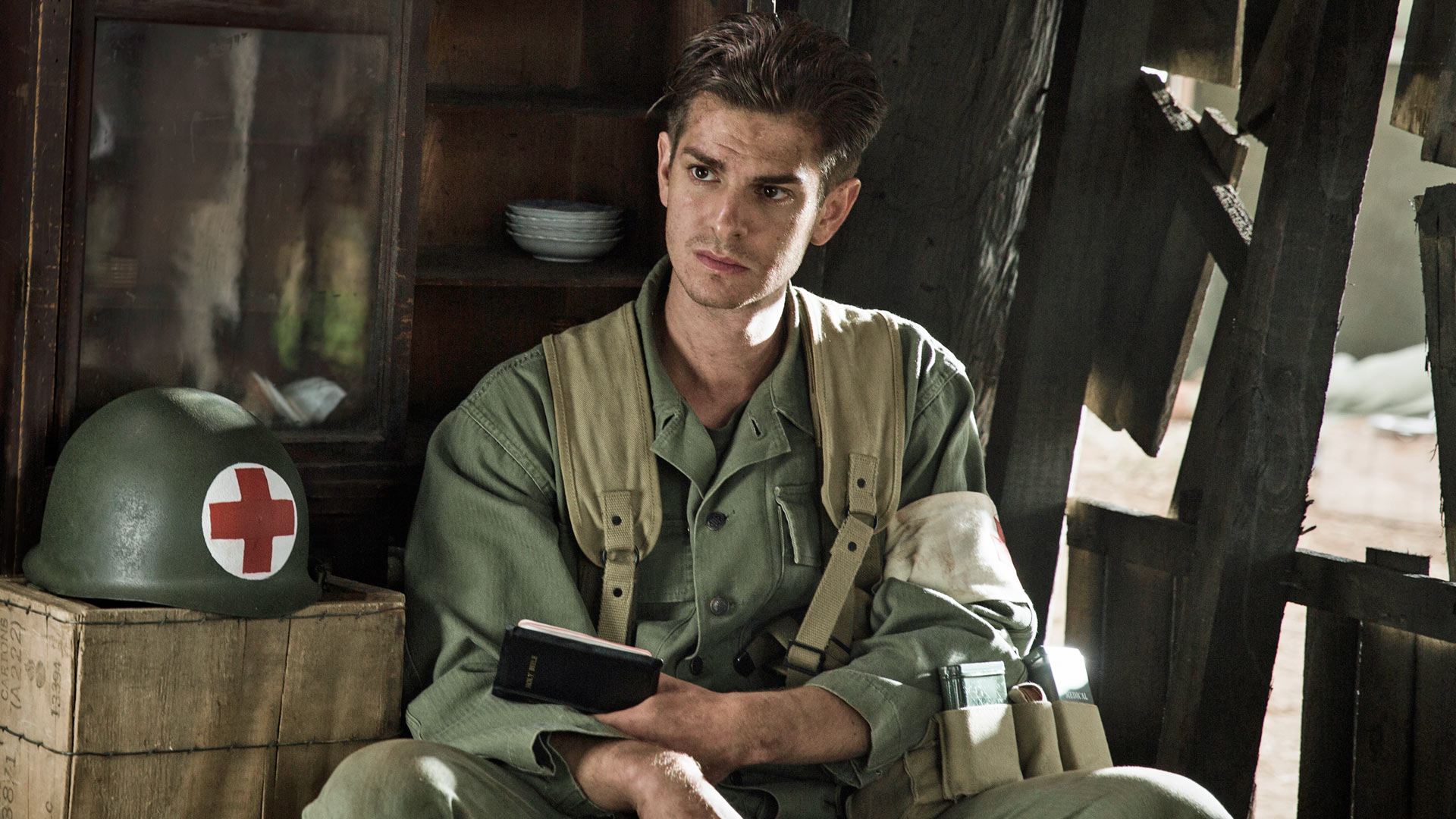
The new critically acclaimed film Hacksaw Ridge tells the incredible true story of World War II hero Desmond Doss, who saved lives without ever firing a gun. Directed by Mel Gibson, the film stars Andrew Garfield as Doss. It’s the latest film from producer and documentary filmmaker Terry Benedict.

Benedict was just 10 years old when he first read about Doss, a Seventh-Day Adventist and a conscientious objector to the war. Although his principles kept him from using a weapon, Doss voluntarily enlisted in the U.S. Army out of a sense of duty to serve. Doss saved 75 men in one of the bloodiest battles with Japan and became the first conscientious objector to receive the Medal of Honor.

READ MORE: A ‘DEEPWATER HORIZON’ SURVIVOR ON WHY PEOPLE SHOULD GO SEE THE MOVIE

When Benedict was a child, Doss spoke at his church camp. “He was unlike any hero I had been reading about,” Benedict tells Guideposts.org.

“He was telling his story and we were just sitting there mesmerized,” Benedict says. “He was a very humble man and very understated, yet he exuded a lot of love.”

Doss’s courage stayed with Benedict, and after Benedict became a successful filmmaker, he approached Doss about telling his story.

Hollywood had been knocking on Doss’s door for 60 years, but Doss wasn’t interested.

“He wanted all the honor and the glory to go to God,” the producer explains. Benedict was insistent on making a documentary about Doss’s life. “So I told him, ‘Look, your story only works if we keep true to the purity of it. Otherwise it’s just another war story and who cares?’”

Doss finally agreed, and Benedict spent the next 3 and a half years interviewing Doss and his fellow soldiers for the award-winning documentary The Conscientious Objector.

While often labeled a conscientious objector and a pacifist, Doss said he was neither of those things.

“He volunteered, he wanted to go to war, he wanted to support the war effort,” Benedict argues. “That’s why when people threw that label at him he said, ‘No, I’m a conscientious cooperator. I want to be here. I want to help.’”

The term “conscientious objector” is one the military used to describe Doss, so that is why it was used in the documentary.

During the making of the documentary, Doss became something of a surrogate grandfather to Benedict. Doss passed away in 2006 at 87.

Not long after the documentary film’s debut, Benedict met with then-20th Century Fox president Bill Mechanic. The two wanted to make Doss’s story into a feature film.

“I just felt like his story could be of great value to humanity,” Benedict says.

When Gibson signed on to direct, Benedict knew the film was in capable hands.

“He understood the importance of the story and the necessity to protect the essence of Desmond’s character,” the producer says of Gibson.

Benedict worked closely with Gibson, sharing his knowledge of Doss with the director and with Garfield who was charged with playing the remarkable young man.

The producer took Garfield on a road trip to Chattanooga, Tennessee where Doss lived most of his adult life.

“He wanted to find any way possible to create an honorable performance, to make Desmond proud,” he says of Garfield’s commitment to the role.

Doss’s devotion to his fellow soldiers plays out in harrowing detail in Hacksaw Ridge. In a hard fought battle in Okinawa, Doss lowers 75 wounded men 100 feet down a cliff to safety.

While his peers traded bullets with the enemy, Doss fearlessly ran into the fray, tying tourniquets, hauling men on stretchers, administering morphine and offering encouragement to the troops.

READ MORE: LUPITA NYONG’O INSPIRES IN ‘QUEEN OF KATWE’

He did this again and again, praying to God to just help him “get one more” as he ventured into enemy territory to rescue friends and lower them down the cliff to safety. Even when the rest of his regiment abandoned the battlefield, Doss remained, searching for survivors, bloodying his hands and straining his tired body to get as many of his men home as he physically could.

“He told me it felt like he was having a nervous breakdown,” Benedict says when describing that experience. “He was totally exhausted. He had no gas left in the tank. He was hanging on by a thread with his faith and trusting that God was going to get him through the day and to me, that’s the most inspirational part of his story. Whether you’re a believer or not, there are spiritual options available and there are ways for us to live a good life and to serve others. Those are some of the principles Desmond wanted to share with people.”

Benedict thinks the timing of Doss’ story may be even more powerful than its message. Hacksaw Ridge opens against Marvel’s superhero flick Dr. Strange. In a time when comic book movies are a dime a dozen, the producer think Doss’ real-life tale makes even more of an impact.

“Desmond was a hero,” Benedict says. “You could make the case that he was a superhero. God empowered him in ways that we still can’t comprehend. It’s physically impossible to have done what he did without some sort of miraculous help.”

He hopes his film makes his friend proud, and makes an impact on those who see it.

“[Desmond] was just a very consistent man of faith. He was a rock,” Benedict says. “He was the same in war. He was the same all the way up until the day he died. That, to me, made his story all the more worth telling.”

The Story of a Song: Save the Last Dance for Me

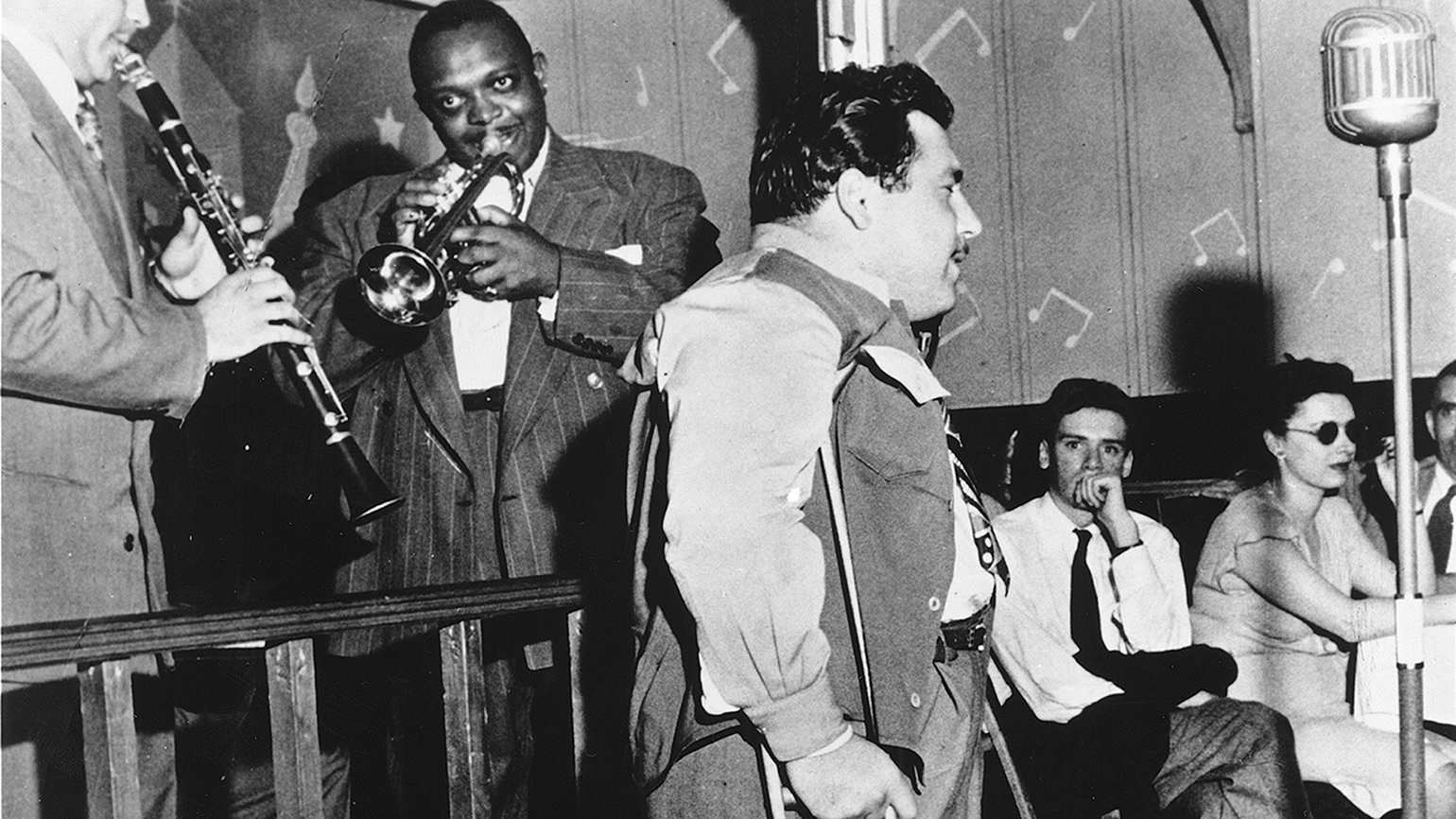
Doc Pomus urged his beautiful bride, Willi Burke, to dance at their 1957 wedding. He watched as she whirled around the floor in the arms of relatives and friends. But she and Doc never danced. He was on crutches, having lost the use of his legs after a childhood bout with polio.

Doc (born Jerome Felder) grew up in Brooklyn, New York, loving music, especially the blues. As a young man, he made a living singing in Black blues clubs. After recording dozens of songs, he thought he finally had a hit. But the record company didn’t release the song after learning he was a disabled Jewish guy.

Doc shifted to songwriting, penning such hits as “Viva Las Vegas,” “This Magic Moment” and “A Teenager in Love.”

Some three years after his marriage, Doc was scribbling lyrics on the back of unused wedding invitations, trying to match words to a soaring Latin melody composed by his partner Mort Shuman. Doc remembered how it felt to watch his bride dance with someone else. “But don’t forget who’s taking you home and in whose arms you’re going to be,” he wrote. “So, darling, save the last dance for me.”

The Drifters recorded “Save the Last Dance for Me” in 1960, and it spent three weeks at No. 1 on the Hot 100 chart. Dolly Parton and Emmylou Harris would later cover the song born of Doc’s selfless love and determination.

For more inspiring stories, subscribe to Guideposts magazine.

The Story of a Song: Mary, Did You Know?

When aspiring gospel singer Mark Lowry was asked to write the script for a church Christmas program in 1984, he talked over ideas with his mom. “If anyone on earth knew for sure that Jesus was virgin-born, Mary knew,” she said. That simple observation lit up Mark’s imagination. “I began writing a list of questions I would like to ask Mary if I could sit down with her,” he says.

The words that have stirred the hearts of millions around the world soon followed: Mary, did you know that your baby boy will one day walk on water? Mary, did you know that your baby boy will save our sons and daughters?

For seven years, Mark carried those questions with him while launching his career. In 1991, he asked songwriter Buddy Greene to come up with a melody for the lyrics. The result was “Mary, Did You Know?” That holiday season, Michael English debuted the song, and it has since be­come a Christmas classic, recorded by hundreds of artists, including Clay Ai­ken, Carrie Underwood, Dolly Parton, as a duet by Kenny Rogers and Wynonna Judd, and even Mark himself.

Mark’s lyrics invite the listener to contemplate the mysteries of Mary and her newborn son and to celebrate the eternal promise of Christmas: Did you know that your baby boy has come to make you new?

For more inspiring stories, subscribe to Guideposts magazine.

The Story Behind “War Horse”

This year has truly been an extraordinary one for me as a writer. I’ve seen my novel, War Horse, become a hit play in the U.K. and on Broadway, and now the acclaimed director Steven Spielberg has brought the story to life on the silver screen.

Rather surprising for a book I wrote 30 years ago, a book I never would have written if it hadn’t been for a chance meeting with a World War I veteran and then a miraculous conversation I overheard one evening.

The story begins, as the novel itself does, in Devon, England.

In 1975 my wife, Clare, and I moved to the tiny village of Iddesleigh, about 200 miles west of London. Clare and I left our jobs as teachers and bought an old Victorian manor house and a few acres of farmland just outside of town.

We had a dream of establishing a farm where children from the cities could spend a week out in the country. They would get a chance to milk the cows and clean the dairy, herd the sheep, care for the horses, collect the eggs and feed the pigs.

We believed the experience would help the children learn how their hard work could make a difference, building their confidence and self-esteem.

We called our program, simply enough, Farms for City Children. Primary-school students ages eight to 12 came to the farm for a week and stayed in the manor house.

Clare had grown up around farms. I, however, was raised in the city and had never made hay or mucked a cowshed in my life. I learned right along with the children from the farmhands.

By far my favorite animals were the horses. To me they were the most beautiful and gentle creatures, and they were truly wonderful with the children.

Farms for City Children was a great success. We received busloads of 36 to 40 students nearly every week of the school year.

Despite how busy we were, this new life in the country allowed me to spend more time writing. After three years, I had published four books for children, which sold well enough for my publisher to ask for another.

One late November day I was waiting for a bus of primary school farmhands to arrive from the industrial city of Birmingham. But my mind was on a conversation I’d had earlier in the year. I felt moved to write about it, but I didn’t quite know how.

It was summer and I was eating a late lunch at the village pub when I spotted an elderly gentleman sitting alone at a table by the fireplace.

I recognized him as one of the three World War I veterans who lived in the village. I bought him a pint and took it over to his table.

“I heard you were in the First World War,” I said, offering him the pint and sitting across from him.

“Well, you heard right,” he said. “I went when I was seventeen. It was the first time I ever left home.”

He talked about how hard it was to be so far from home, and how it was to live in the mud of the trenches on the Western Front.

“But at least I was there with horses,” he said.

Horses? I had to know more.

The old man invited me back to his cottage, where he showed me mementos from his time in the cavalry. He spoke at length about his horse. At one moment, his eyes filled with tears.

“You know,” he said, “my horse was really my only friend over there. I talked to him.”

“What do you mean?” I asked.

“At night I would head alone over to the horse lines to feed them. When I got to my horse, I would tell him all of my troubles and fears.

“The other soldiers were as terrified as I was. So there was no way I could tell them how frightened I was, how much I missed home. The only person I could talk to was my horse.”

He called his horse a person. They were that close.

Later I spoke to the two other veterans in the village. They too had been close to the horses they rode into battle. I did some research and visited the Imperial War Museum in London.

There, I discovered that a million horses were sent to war from England’s shores, and only 65,000 came back. Like the soldiers, they died of exhaustion, drowned, were torn to bits by barbed wire or were shot and killed by machine guns.

To me these animals symbolized all the innocent victims of warfare.

This was the story I wanted to write—one that took no sides on a war, but showed its horrifying effects on those caught in the middle.

How could I tell the story from an unbiased perspective? I couldn’t use a British soldier or a German soldier to give the reader a neutral viewpoint.

The school bus driving up the narrow dirt road interrupted my thoughts. The bus stopped at the entrance to the manor.

I walked up to greet the children and their teachers. Each kid emerged wide-eyed. To them, the lush, open fields of the farm were like a different world, a dream world.

“The children are so excited to be here,” one of the teachers told me. “But I have to warn you. You see that boy…” she lowered her voice and motioned toward the young boy stepping off the bus, “…please don’t ask him questions directly. He’s been in our school for two years and hasn’t said a word.”

“Not one word? In two years?” I said.

The teacher explained that he had a severe stutter that caused him great anxiety and made him painfully shy.

“If anyone tries to make him speak, he panics,” she continued. “Please don’t put him on the spot, otherwise he just might run all the way back to Birmingham.”

I made sure not to single the boy out. But I kept my eye on him.

Over the course of the week, the children milked the cows, herded the sheep, mucked out the shed and collected eggs from the chicken coop.

The boy participated enthusiastically whenever he was with the animals, though he remained silent. I could only hope the week somehow was helping him.

The last night of the children’s stay, I was headed to the manor house to read them a story around the fire when I noticed a light on in the stable yard.

Had someone forgotten to turn it off? No, somebody was there. I took a few steps closer, then stopped.

It was the boy who wouldn’t talk. He was standing there in only his nightclothes and slippers. A horse was at the door of the stable, her head leaning out. The boy was gently stroking the horse’s nose.

“Today we milked the cows in the morning,” the boy said, clearly, crisply, with not a hint of a stutter, “and we fed the chickens. One of them laid a huge egg and I found it. I picked it up. It was still warm.

“We’ll be going home tomorrow, so I won’t be here to talk to you again, but I will always remember you. Promise.”

I ran through the vegetable garden to the back door of the house and found the teachers. “You’ve got to come, quickly,” I told them.

I led them to the stable yard. The boy was still there, stroking the horse behind the ears, talking as naturally as anyone else.

The teachers and I stood silently in the shadow of the barn, watching the boy and the horse under the stable light. The horse never whinnied, never backed away. She stood there, staring into the boy’s eyes.

She couldn’t possibly understand what he was saying, but she seemed to know how important it was for her to stay there, listening to his every word.

I thought about what the old veteran had told me about confiding in his horse. This boy was talking to this horse in the very same way.

In that moment, I finally began to understand how powerful the connection is between man and animal.

And I knew the perspective my story had to take. This had to be a story told by a war horse, listening to the hopes and fears of the people who cared for him, and serving as a silent witness to the war around him.

War Horse was born.

Nearly 30 years later London’s National Theatre was looking for a story to adapt for the stage, one that could put to use the phenomenal lifelike puppets created by a company in South Africa they’d partnered with.

I’m not certain how the book came to their attention, but I get the sense that it wasn’t merely by chance.

Man or animal, we all have a place in the whole patchwork of creation. It’s only rarely, where our lives intersect, whether it be at war or in a country pub or beneath a dim stable light, that we can see and understand how important we are to one another.

Download your FREE ebook, True Inspirational Stories: 9 Real Life Stories of Hope & Faith.

The Story Behind ‘A Spoonful of Sugar’

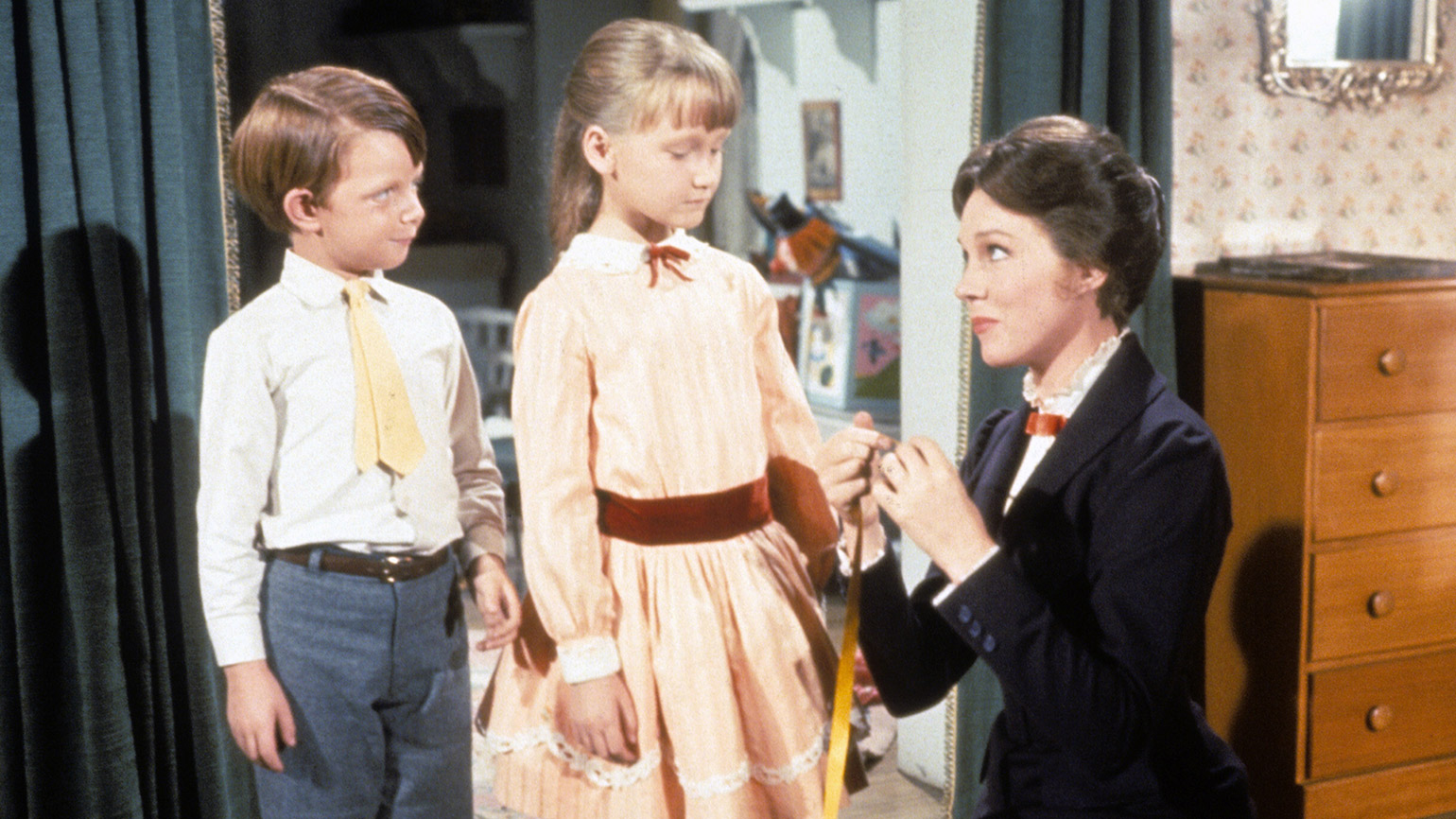
Robert Sherman was desperate. He and his brother, Richard, had been hired to create the songs for Walt Disney’s upcoming 1964 film Mary Poppins, a musical version of the children’s books by P. L. Travers. Disney himself wanted Julie Andrews to play the part of the magical English nanny.

The actress asked to hear the movie’s songs. When the brothers played their tunes, she loved them all…except for their favorite, the one that Robert and Richard had been certain would be a hit. Walt Disney demanded a replacement for it, pronto. The brothers, however, had run out of ideas.

Disheartened, Robert headed home. He asked his family how their day was and learned that his young son, Jeffrey, had received his polio vaccination at school. “Did it hurt?” he asked his son, who was notorious for wreaking havoc whenever anyone tried to give him an injection. No, Jeffrey said, there was no shot this time. Just a drop of liquid on a sugar cube that he swallowed.

A light bulb went off in Robert’s head, and he rushed to call his brother. The next day, Richard put a melody to Robert’s lyrics: “A spoonful of sugar helps the medicine go down.” And so out of a medical miracle, the film’s iconic song was born—in a most delightful way.

For more inspiring stories, subscribe to Guideposts magazine.

The Song: A Modern Retelling of the Story of King Solomon

If you’ve read the Old Testament, you no doubt already know about the story of King Solomon. His was a tale of love and a warning against falling prey to the temptations of the world. In The Song, a new film that opens in theaters today, writer-director Richard Ramsey has taken that age-old story, dusted it off and placed it in the modern world, with all the snares of the rock-and-roll life.

The Song follows the story of Jed King (played by Anthem Lights lead singer Alan Powell), a struggling musician fighting to break out of the shadow his famous father has cast. After toiling away, playing to lackluster crowds and empty venues, Jed is offered a final gig from his slimy manager—a parting gift, Jed’s last show is the final nail in the coffin, proof that he’ll never be as good or as known as his father was.

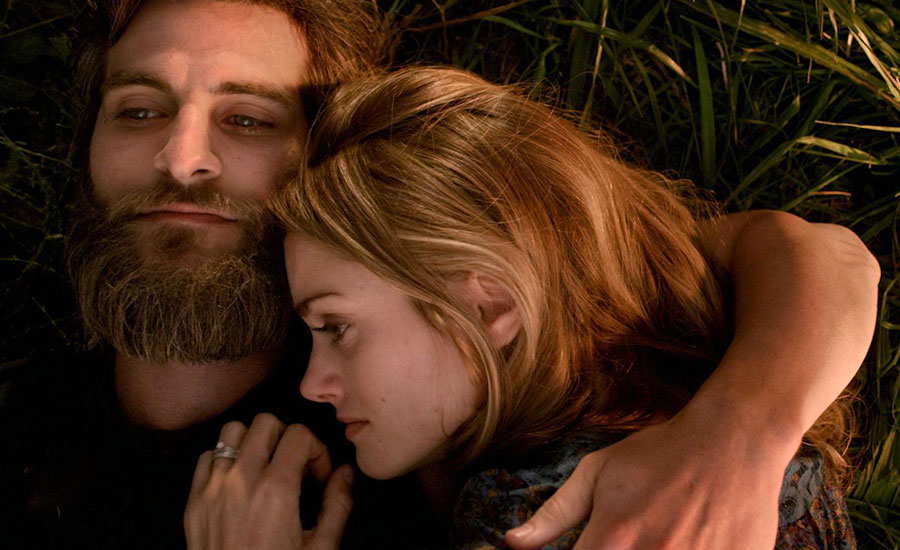
Thankfully, Jed takes it anyway, and there, at a harvest festival on a vineyard in a small town in Kentucky, he meets Rose Jordan (Twilight star Ali Faulkner). The two hit it off, thanks to Jed’s easy charm and his impromptu public performance for Rose, which becomes one of the highlights of the film.

Courtship, love and marriage follow and soon the two are blissfully wed in an unfinished chapel Jed has promised to build for his bride. Being a married man seems to agree with Jed as he finally discovers something to sing about and his new material soon brings him the fame he’s always dreamed of.

But as with everything, it comes with a heavy price. After tedious touring and long stretches of time on the road, Jed and Rose struggle in their marriage. Temptation comes in the form of Jed’s new opening act, a fiddle-playing, fun-loving Shelby Bale (Caitlin Nicol-Thomas) and soon, Jed has found himself spiraling into drugs, booze and adultery, forsaking everything he believes in.

“I have seen everything done under the sun,” Jed narrates in the film, quoting from Ecclesiastes. “All of it is meaningless, a chasing after the wind.”

Both Powell and Faulkner shine in their first lead roles, with magnetic chemistry and endearing portrayals of a young couple searching desperately for wisdom and discernment.

Powell easily transitions from a light-hearted and doting husband to a man consumed with guilt and the desire to be more than the husband and son he’s blessed to be. Faulkner steadily anchors the movie with both innocence and strength, bringing to life a character whose moral compass and faith will leave you envious.

But the most exciting thing about The Song is in the title; the musical performances by Powell and Nicol-Thomas are unforgettable and every song has a message and significance to the film. While it is definitely rooted in faith, any person struggling to find hope and meaning in life can and should be inspired by this redemption story.

Check out Guideposts.org’s exclusive interview with the stars of the film and be sure to go see The Song, in theaters now!

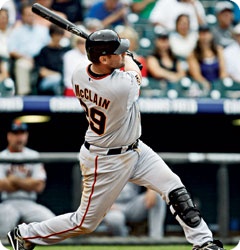
The Rookie At Age 36

My whole life I’ve had this dream, a dream so real I could almost reach out and touch it: a packed big-league ballpark, fans on their feet screaming, me at the plate, the pitcher winding up. There’s the indescribable crack of wood on horsehide. I run hard for first, then slow to a jog. Far away, the ball has sailed in a tremendous arc over the left-field wall. My first major-league home run!

For 19 years my dream was just that…a minor-league fantasy. I’ve played professional ball in towns across the country, from Bluefield, West Virginia, to Fresno, California, to Geneva, Illinois. I’ve even played in Japan. But except for a few scattered games, I’d never made it to the big stage. Never hit that first big-league home run of my dreams.

I’m 36 years old now, way too old to be considered a prospect. The people who care about me—my wife, Jennifer, my family, my friends—have wondered for years when I’ll finally quit. But I still believe in dreams.

Growing up in Simi Valley, California, I played every sport. Yet there was something about hitting a baseball. One day in sixth grade I announced in class, “I’m going to be a major-league ballplayer.” I never wanted to be anything else.

Baseball wasn’t even my best sport. The University of Southern California offered me a full scholarship—to play quarterback. “Lots of guys who do well at USC go to the NFL,” Dad said. But when the Baltimore Orioles drafted me, I told Dad I wanted to go. “I know I’m a little bit of a long shot,” I said. “The Orioles didn’t pick me until the twenty-second round. That’s different than being the starting quarterback at USC. But I’ve waited my whole life for this.”

The next day I left for Bluefield, West Virginia. It was A-ball, the bottom rung in the Orioles’ minor-league system. I won the starting job at third. I was on my way. Except I didn’t tear up the league. In high school I’d been a feared slugger, but the pitchers were a lot tougher in the pros, even the minors. The next season I was reassigned to the same A-ball team. Did I make a mistake? I wondered.

That fall I returned home and ran into my old high school football coach. “Plenty of colleges can use a good quarterback,” he said. “Just say the word and I’ll find you a scholarship.” That night I asked for guidance. Should I take the scholarship? Will I beat myself up the rest of my life for having given up my dream? I tossed and turned half the night till I made a decision. How could I turn my back on the dream I’d been given?

I worked even harder. Trained like crazy. Took batting practice till my hands blistered. My play improved, but more slowly than I’d hoped. Back home, my old buddies had graduated into good jobs. Some had steady girls. Soon they’d be starting families.

By 1997, my seventh season in the minor leagues, I still seemed to be headed nowhere. That spring the Orioles traded me to the New York Mets. At the end of the 1997 season, the Mets gave up on me too. For several nerve-racking months I wondered if any team wanted me.

Finally one team called: the Tampa Bay Devil Rays, then the worst team in all the majors. But I didn’t care. It was the majors. “This is my chance,” I told Jennifer. “They’re looking for somebody, anybody, to step up and prove that he can play.” I reported to spring training full of hope. But when they broke camp, the Devil Rays shipped me back to the minors.

I refused to let it bring me down. About a month into the season something clicked. All those years of practice and training began to pay off.

Suddenly I found my swing. I bashed home runs like I had in high school—34 over the course of the 1998 season. One August morning there was a knock at my hotel door. It was my minor-league manager. “Pack your bags,” he said. “You’ve been called up.”

I grabbed my cell phone and hit speed dial. “Jennifer,” I shouted, “we did it!” Nine long years, I thought, on the plane to Tampa. Maybe the hard part is finally over.

It wasn’t. I didn’t get to play that first night. Then the next game found me on the bench again. Late in the game, the manager signaled for me to pinch hit. I stepped into the batter’s box. This is the moment I’ve dreamed of, I thought. Oh, to hit a home run! A strike sizzled by before I could take a breath. On the next pitch, I flied out weakly to right field. I walked back to the dugout, past Wade Boggs, the Devil Rays’ Hall of Fame third baseman. Boggs didn’t say a word. This was going to be a lot tougher than I’d thought. Two weeks later the team sent me back down.

Frankly, the next six years were a blur. The first two I spent in the minors, the last four with the Seibu Lions, a Japanese professional team. I played strictly for money. I stopped thinking about my big-league dream. I played to survive.

I hit 71 home runs in Japan. But after a few years, the pull of the majors gnawed at me. I returned to the States in the spring of 2005. I was 33—too old to win a regular spot on a major-league team. All I wanted was one last chance to hit a big-league home run. “To hit one out, that would make all those years worthwhile,” I told Jennifer. “If I don’t…” I let the thought slide.

I landed a minor-league contract with the Chicago Cubs, and in mid-August got called up to Chicago. This could be my last chance, I thought. But I struggled as I had in Tampa Bay, and was let go after the season.

The next year I hooked on with the Oakland A’s. I’ll give it one last try, I thought. Had a terrific season for Oakland’s top-level minor-league club. Hit 28 home runs.

The last day of the minor-league season I was at my locker, waiting for that big-league call-up I thought I deserved. Finally the manager approached. “Thanks, Scott,” he said. “Thanks for a great season. But they don’t have room for you in the big club.”

I felt like I’d been punched in the gut. I’d always had a bedrock belief in my ability, even if others didn’t. Now for the first time I was overcome by doubt. I was too old. I had minor-league power. Why, I asked God, did you give me this dream if I couldn’t see it through?

Something told me to give it one last try. I signed a minor-league contract with the San Francisco Giants. After hitting my twenty-ninth home run last year—my fourth in four games—I finally got the call on September 1.

I flew to Denver, where the team was playing the Colorado Rockies. When I walked into the clubhouse, things felt different. I said hi to stars like pitcher Barry Zito and shortstop Omar Vizquel and for once I felt part of a team. The manager put me in the lineup the following day. My first two times up I got hits, even drove in two runs. I felt incredibly relaxed. By the time I came to the plate again in the sixth inning, we were ahead by four runs. I’m going to look for a pitch I can drive, I decided.

I’d faced the Colorado pitcher Steven Register in the minors. He started me out with a couple of fastballs. I knew the next pitch would be a slider. Register wound up and fired. The ball dipped, as I knew it would. I whipped my bat around. Boom! The ball soared high and far, toward left field.

I started running to first, then slowed to a jog just as I had in my long ago childhood dream, and watched the ball sail far over the wall. I did it! I did it! I thought to myself. I slowed my jog till I was nearly walking, so I could take it all in. It was like my dream, only better, because it was so hard won. I didn’t want that trip around the bases to end. That night I must have made a hundred phone calls. But the most important one was to Jennifer. “We did it,” I said.

I played enough games with the Giants last year to qualify as a rookie. A rookie at 36! Not exactly the dream I started out with. But I wouldn’t trade it for anything in the world.