Embrace God's truth with our new book, The Lies that Bind

The Song: A Modern Retelling of the Story of King Solomon

If you’ve read the Old Testament, you no doubt already know about the story of King Solomon. His was a tale of love and a warning against falling prey to the temptations of the world. In The Song, a new film that opens in theaters today, writer-director Richard Ramsey has taken that age-old story, dusted it off and placed it in the modern world, with all the snares of the rock-and-roll life.

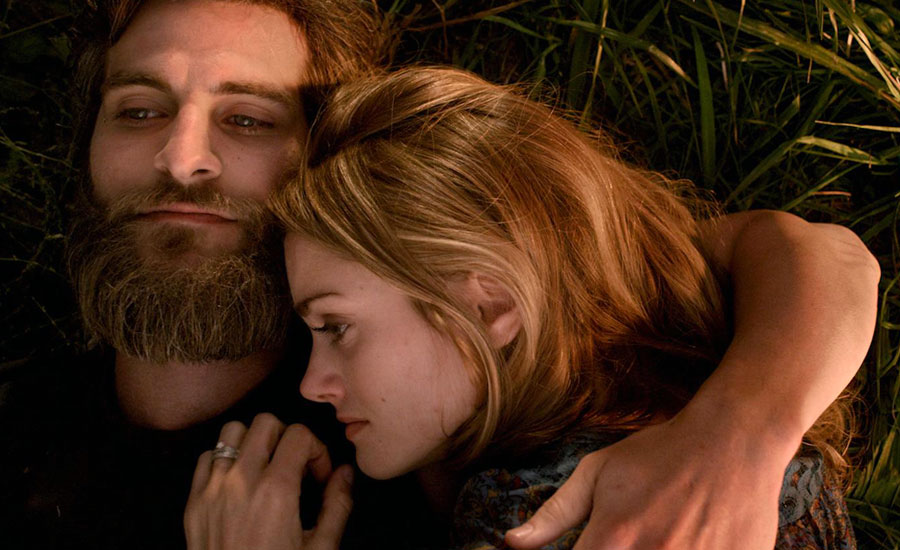
The Song follows the story of Jed King (played by Anthem Lights lead singer Alan Powell), a struggling musician fighting to break out of the shadow his famous father has cast. After toiling away, playing to lackluster crowds and empty venues, Jed is offered a final gig from his slimy manager—a parting gift, Jed’s last show is the final nail in the coffin, proof that he’ll never be as good or as known as his father was.

Thankfully, Jed takes it anyway, and there, at a harvest festival on a vineyard in a small town in Kentucky, he meets Rose Jordan (Twilight star Ali Faulkner). The two hit it off, thanks to Jed’s easy charm and his impromptu public performance for Rose, which becomes one of the highlights of the film.

Courtship, love and marriage follow and soon the two are blissfully wed in an unfinished chapel Jed has promised to build for his bride. Being a married man seems to agree with Jed as he finally discovers something to sing about and his new material soon brings him the fame he’s always dreamed of.

But as with everything, it comes with a heavy price. After tedious touring and long stretches of time on the road, Jed and Rose struggle in their marriage. Temptation comes in the form of Jed’s new opening act, a fiddle-playing, fun-loving Shelby Bale (Caitlin Nicol-Thomas) and soon, Jed has found himself spiraling into drugs, booze and adultery, forsaking everything he believes in.

“I have seen everything done under the sun,” Jed narrates in the film, quoting from Ecclesiastes. “All of it is meaningless, a chasing after the wind.”

Both Powell and Faulkner shine in their first lead roles, with magnetic chemistry and endearing portrayals of a young couple searching desperately for wisdom and discernment.

Powell easily transitions from a light-hearted and doting husband to a man consumed with guilt and the desire to be more than the husband and son he’s blessed to be. Faulkner steadily anchors the movie with both innocence and strength, bringing to life a character whose moral compass and faith will leave you envious.

But the most exciting thing about The Song is in the title; the musical performances by Powell and Nicol-Thomas are unforgettable and every song has a message and significance to the film. While it is definitely rooted in faith, any person struggling to find hope and meaning in life can and should be inspired by this redemption story.

Check out Guideposts.org’s exclusive interview with the stars of the film and be sure to go see The Song, in theaters now!

The Rookie At Age 36

My whole life I’ve had this dream, a dream so real I could almost reach out and touch it: a packed big-league ballpark, fans on their feet screaming, me at the plate, the pitcher winding up. There’s the indescribable crack of wood on horsehide. I run hard for first, then slow to a jog. Far away, the ball has sailed in a tremendous arc over the left-field wall. My first major-league home run!

For 19 years my dream was just that…a minor-league fantasy. I’ve played professional ball in towns across the country, from Bluefield, West Virginia, to Fresno, California, to Geneva, Illinois. I’ve even played in Japan. But except for a few scattered games, I’d never made it to the big stage. Never hit that first big-league home run of my dreams.

I’m 36 years old now, way too old to be considered a prospect. The people who care about me—my wife, Jennifer, my family, my friends—have wondered for years when I’ll finally quit. But I still believe in dreams.

Growing up in Simi Valley, California, I played every sport. Yet there was something about hitting a baseball. One day in sixth grade I announced in class, “I’m going to be a major-league ballplayer.” I never wanted to be anything else.

Baseball wasn’t even my best sport. The University of Southern California offered me a full scholarship—to play quarterback. “Lots of guys who do well at USC go to the NFL,” Dad said. But when the Baltimore Orioles drafted me, I told Dad I wanted to go. “I know I’m a little bit of a long shot,” I said. “The Orioles didn’t pick me until the twenty-second round. That’s different than being the starting quarterback at USC. But I’ve waited my whole life for this.”

The next day I left for Bluefield, West Virginia. It was A-ball, the bottom rung in the Orioles’ minor-league system. I won the starting job at third. I was on my way. Except I didn’t tear up the league. In high school I’d been a feared slugger, but the pitchers were a lot tougher in the pros, even the minors. The next season I was reassigned to the same A-ball team. Did I make a mistake? I wondered.

That fall I returned home and ran into my old high school football coach. “Plenty of colleges can use a good quarterback,” he said. “Just say the word and I’ll find you a scholarship.” That night I asked for guidance. Should I take the scholarship? Will I beat myself up the rest of my life for having given up my dream? I tossed and turned half the night till I made a decision. How could I turn my back on the dream I’d been given?

I worked even harder. Trained like crazy. Took batting practice till my hands blistered. My play improved, but more slowly than I’d hoped. Back home, my old buddies had graduated into good jobs. Some had steady girls. Soon they’d be starting families.

By 1997, my seventh season in the minor leagues, I still seemed to be headed nowhere. That spring the Orioles traded me to the New York Mets. At the end of the 1997 season, the Mets gave up on me too. For several nerve-racking months I wondered if any team wanted me.

Finally one team called: the Tampa Bay Devil Rays, then the worst team in all the majors. But I didn’t care. It was the majors. “This is my chance,” I told Jennifer. “They’re looking for somebody, anybody, to step up and prove that he can play.” I reported to spring training full of hope. But when they broke camp, the Devil Rays shipped me back to the minors.

I refused to let it bring me down. About a month into the season something clicked. All those years of practice and training began to pay off.

Suddenly I found my swing. I bashed home runs like I had in high school—34 over the course of the 1998 season. One August morning there was a knock at my hotel door. It was my minor-league manager. “Pack your bags,” he said. “You’ve been called up.”

I grabbed my cell phone and hit speed dial. “Jennifer,” I shouted, “we did it!” Nine long years, I thought, on the plane to Tampa. Maybe the hard part is finally over.

It wasn’t. I didn’t get to play that first night. Then the next game found me on the bench again. Late in the game, the manager signaled for me to pinch hit. I stepped into the batter’s box. This is the moment I’ve dreamed of, I thought. Oh, to hit a home run! A strike sizzled by before I could take a breath. On the next pitch, I flied out weakly to right field. I walked back to the dugout, past Wade Boggs, the Devil Rays’ Hall of Fame third baseman. Boggs didn’t say a word. This was going to be a lot tougher than I’d thought. Two weeks later the team sent me back down.

Frankly, the next six years were a blur. The first two I spent in the minors, the last four with the Seibu Lions, a Japanese professional team. I played strictly for money. I stopped thinking about my big-league dream. I played to survive.

I hit 71 home runs in Japan. But after a few years, the pull of the majors gnawed at me. I returned to the States in the spring of 2005. I was 33—too old to win a regular spot on a major-league team. All I wanted was one last chance to hit a big-league home run. “To hit one out, that would make all those years worthwhile,” I told Jennifer. “If I don’t…” I let the thought slide.

I landed a minor-league contract with the Chicago Cubs, and in mid-August got called up to Chicago. This could be my last chance, I thought. But I struggled as I had in Tampa Bay, and was let go after the season.

The next year I hooked on with the Oakland A’s. I’ll give it one last try, I thought. Had a terrific season for Oakland’s top-level minor-league club. Hit 28 home runs.

The last day of the minor-league season I was at my locker, waiting for that big-league call-up I thought I deserved. Finally the manager approached. “Thanks, Scott,” he said. “Thanks for a great season. But they don’t have room for you in the big club.”

I felt like I’d been punched in the gut. I’d always had a bedrock belief in my ability, even if others didn’t. Now for the first time I was overcome by doubt. I was too old. I had minor-league power. Why, I asked God, did you give me this dream if I couldn’t see it through?

Something told me to give it one last try. I signed a minor-league contract with the San Francisco Giants. After hitting my twenty-ninth home run last year—my fourth in four games—I finally got the call on September 1.

I flew to Denver, where the team was playing the Colorado Rockies. When I walked into the clubhouse, things felt different. I said hi to stars like pitcher Barry Zito and shortstop Omar Vizquel and for once I felt part of a team. The manager put me in the lineup the following day. My first two times up I got hits, even drove in two runs. I felt incredibly relaxed. By the time I came to the plate again in the sixth inning, we were ahead by four runs. I’m going to look for a pitch I can drive, I decided.

I’d faced the Colorado pitcher Steven Register in the minors. He started me out with a couple of fastballs. I knew the next pitch would be a slider. Register wound up and fired. The ball dipped, as I knew it would. I whipped my bat around. Boom! The ball soared high and far, toward left field.

I started running to first, then slowed to a jog just as I had in my long ago childhood dream, and watched the ball sail far over the wall. I did it! I did it! I thought to myself. I slowed my jog till I was nearly walking, so I could take it all in. It was like my dream, only better, because it was so hard won. I didn’t want that trip around the bases to end. That night I must have made a hundred phone calls. But the most important one was to Jennifer. “We did it,” I said.

I played enough games with the Giants last year to qualify as a rookie. A rookie at 36! Not exactly the dream I started out with. But I wouldn’t trade it for anything in the world.

The Rescue of Belle and Sundance

The Robson Valley, where I live in the Canadian Rockies, is a magnificent landscape of snow-clad peaks, forested mountains, ranches and farms. The area is a magnet for hikers, snowmobilers and horseback riders.

But this can also be a difficult place to live, and not only because of the winters, when temperatures plummet below freezing and more than 30 feet of snow falls on the highest peaks.

The valley is isolated—we’re six hours by car from Edmonton, nine hours from Vancouver—and many of us like it that way. Lots of rugged individualists up here, from old hippies to mountain men. We come together for community festivals, and neighbors drop everything to help neighbors in trouble.

But after living here 11 years, running an 80-acre horse ranch, I’m still amazed how many people I’ve never met. It’s a delicate balance between sticking together and respecting each other’s space.

That all changed dramatically one recent winter when I got a call from my best friend, Monika Brown, a horse owner like me.

“Two horses are trapped on Mount Renshaw,” Monika told me, sounding agitated. “Reg Marek said some snowmobilers spotted the horses high on the peak. They’re snowbound and starving.”

Reg Marek was a brand inspector from the town of McBride, a rancher who kept track of cattle sales. He was a solid, trustworthy man.

“How on earth did two horses get up there this time of year?” I asked. It was December 9. Snow had been falling on Mount Renshaw, a 7,000-foot peak towering over the Robson Valley, for a couple of months. The slopes were impassible.

“I don’t know,” said Monika. “But someone needs to get those horses down. They’ll die up there.” She hung up saying she’d try to find out more. I spent the rest of the evening fretting.

I’ve loved horses since I was a girl. The thought of two horses doomed to freeze to death on a mountain was too much to bear.

What I didn’t know was that three months earlier a lawyer from Edmonton had taken two draft crosses, which are large, muscular horses sometimes used as pack animals, on a backcountry trip up Mount Renshaw.

The lawyer fancied himself a cowboy, but in fact this was his first time using packhorses on the rugged west side of the Rocky Mountains. He got lost and led Belle and Sundance, a three-year-old bay mare and a 14-year-old sorrel gelding, into a bog.

He freed the horses but Belle and Sundance had lost trust in him and refused to follow. The lawyer abandoned them and rode out on his saddle horse. For the rest of that fall Belle and Sundance roamed the slopes, nibbling grass.

Then winter arrived.

I didn’t have a snowmobile or even know how to drive one. Monika and her husband, Tim, tried to find the horses on a rented snowmobile but they were turned back by heavy drifts. The next day a blizzard moved in. I grieved, figuring that was the end.

Then, on December 15, search and rescue crewmembers looking for abandoned snowmobiles came across two horses trapped in six feet of snow. The horses were so emaciated they looked like skeletons. But they were alive.

I was writing Christmas cards when Monika called. “They’re alive!” she cried. “Leif and Logan with search and rescue found them. They know where they are.”

I jumped up. “We’ve got to get up there. They need someone who knows horses to look at them and feed them. I’ll get in touch with my friends Sara and Matt. Matt’s an amazing snowmobiler. If anyone can get up there he can.”

Matt agreed right away to go up the mountain with Leif and Logan to see to the horses. But my hopes of going up myself were dashed—the blizzard made the snow too treacherous for inexperienced riders.

I told Matt to take a bale of hay and gave him detailed instructions for how to feed the horses—not too much or their digestive systems might seize up—and how to determine whether the horses still had a chance to live.

“And if they don’t?” Matt asked.

I paused. “Someone will have to put them down.”

The day dragged on while I waited for word from the riders. I called the Royal Canadian Mounted Police. Technically it’s a crime to abandon an animal where it might die. The RCMP promised to try to track down the horses’ owner.

Finally, as the sun was setting, I got an e-mail. Matt and the others had found them. They did not have to be put down and they had eaten some hay. I was overjoyed.

But now we faced an even bigger challenge. The horses were miles from the nearest road. Snowmobilers routinely got lost or even died under avalanches in the backcountry.

Somehow we had to rally our far-flung community of farmers, ranchers, snowmobilers and mountain men to get two horses out of treacherous terrain before another blizzard arrived.

The next day I was stuck at home with chores. Horses are remarkable survivors. They grow winter coats and, as long as they’re fed, can survive temperatures 40 degrees below zero or even colder.

Which meant I had to keep my own horses fed and tended as a cold snap moved in behind the blizzard.

At last, on Thursday, December 18, the day dawned clear and Matt said I could accompany him up the mountain.

I woke up extra early, fed my horses and pulled on as many layers as I could—socks, long underwear, fleece pants, a turtleneck, two fleece sweaters, a neck warmer, jogging pants and insulated bib overalls, plus gloves, mitts, hats, a pair of winter boots and an oilskin coat.

We met at a parking lot at the base of a logging road. Over the past few days I’d asked everyone I could think of for help. And Matt and the others had devised a plan to dig a trench from the horses to a logging road, where we could walk them down the mountain. Just a handful of people waited at the lot.

We boarded snowmobiles and set off. The frigid air seemed to knife through all my layers of clothes.

Part of the time Matt stood behind me on the snowmobile, reaching over my shoulders to grab the controls. “Keeps us balanced so we don’t sink into the powder,” he explained over the engine’s whine. At last we arrived. I pried myself from the seat and stumbled down a steep slope.

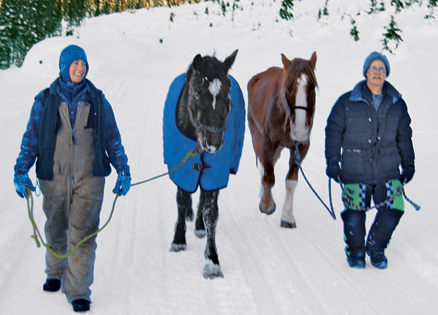
And there they were. The mare, Belle, had a lovely white star-shaped patch on her forehead. Much of the rest of her hair was gone, probably rubbed away by the snow. The gelding, Sundance, stood with his body against Belle’s, doing his best to keep her warm.

Both horses looked surprisingly alert, their ears pricking.

“Hi, guys,” I said. I covered them with blankets and fed them some hay. Then we spent the rest of the day digging. We made a trench a few dozen meters long.

At this rate it would take weeks to reach the logging road, about a kilometer (.6 miles) away. A storm could blow up anytime. We needed more diggers.

The next few days were discouraging. I sent out more e-mails, made more phone calls, even got some media coverage. We set up a command center of sorts at a snowmobile shop in McBride.

Each morning, though, the same small number gathered at the parking lot. The trench lengthened, but not enough. I got frustrated. Once I even lit into a group of snowmobilers massing for a day of carving up the mountain.

“Two horses are going to freeze to death up there if you don’t help us dig!” I cried. The snowmobilers made vague promises to help but we never saw them.

Please, I prayed in desperation one night, don’t let these horses die.

The very next day something amazing happened. Just when I thought the clear weather couldn’t last, help arrived. The media coverage fed on itself until suddenly CTV, the national broadcaster, was covering the rescue effort.

People from every part of the Robson Valley began turning up to dig. Snowmobilers, oil rig workers, ranchers, farmers, everyone grabbed a shovel, boarded a snowmobile and headed up the mountain. The temperature dropped to 40 below zero and still people came.

Two days before Christmas, 24 people showed up to dig. At 1:30 that afternoon, under brilliant mountain sunshine, the trench was completed. We walked Belle and Sundance to the logging road, then almost 30 grueling kilometers (18.6 miles) to the parking lot.

We arrived at 10:00 p.m., frozen to the bone. Ray Long, a Robson Valley rancher, met us with a stock trailer and drove the horses to his farm. Ray had provided the hay they had been eating.

There is much more to Belle and Sundance’s story—how, with the help of the SPCA, the horses found new homes on ranches in British Columbia, and their former owner was charged with animal mistreatment and ordered to pay a fine.

What stands out for me is that last day of digging, when it seemed like the entire Robson Valley was on the horses’ side. People I’d never met before dug snow, drove snowmobiles, made sandwiches and coffee, talked to the media and kept the rescue effort going. A community of individualists came together as one.

I didn’t adopt Belle or Sundance, but Belle’s new owner sent her to me for saddle training. The trailer pulled up and out came a horse I barely recognized, healthy and glossy with strong, defined muscles, standing quiet and alert.

I put my hand on her neck. We saved you, girl, I thought. And then I realized Belle and Sundance had saved us too. Coming together as one—it was the best Christmas gift our beautiful, isolated valley could have asked for.


The Remarkable True Story Behind ‘A Journal for Jordan’

When Denzel Washington’s newest film, A Journal for Jordan, hit theaters this Christmas, it captivated audiences with its heartwarming message and compelling story. And perhaps the most remarkable part is that it is based on true events.

Dana Canedy is a journalist, author, and publishing executive who wrote the 2008 book A Journal for Jordan: A Story of Love and Honor about her life with her fiancée, Sergeant Charles Monroe King. When King was deployed to Iraq in 2005 he started a journal, which he filled with advice and stories, for their infant son, Jordan, just in case King didn’t come home. Unfortunately, King was killed in combat in October 2006.

Right before his death, King sent the journal to Canedy, who held onto it so Jordan could know his father—a man of courage, compassion, and faith. Canedy talked with Guidepost.org about her relationship with King and their inspiring story.

Dana Canedy (Photo: Eileen Barroso/Columbia University)

When Canedy first met King, it was not love at first sight. The two came from very different backgrounds – she was an accomplished writer focused on her career, and King was a more carefree person, devoted to the military. Canedy initially pushed King away because she was convinced it wouldn’t work. But King always came back.

“We were meant to be,” Canedy said. “I could not have known all of that, and that’s just by God’s amazing grace. I was meant to be Jordan’s mother and to be there at the end of Charles’ life. I was meant to tell this story.”

Telling that story to even more people was made possible when it was announced her book would be going to the big screen. Canedy said she was thrilled when Denzel Washington came on as director. “He brought his sense of spirituality and his belief in God to this,” she said. Washington prayed with the cast and crew before some scenes and never lost sight of the fact that the story he was telling was real.

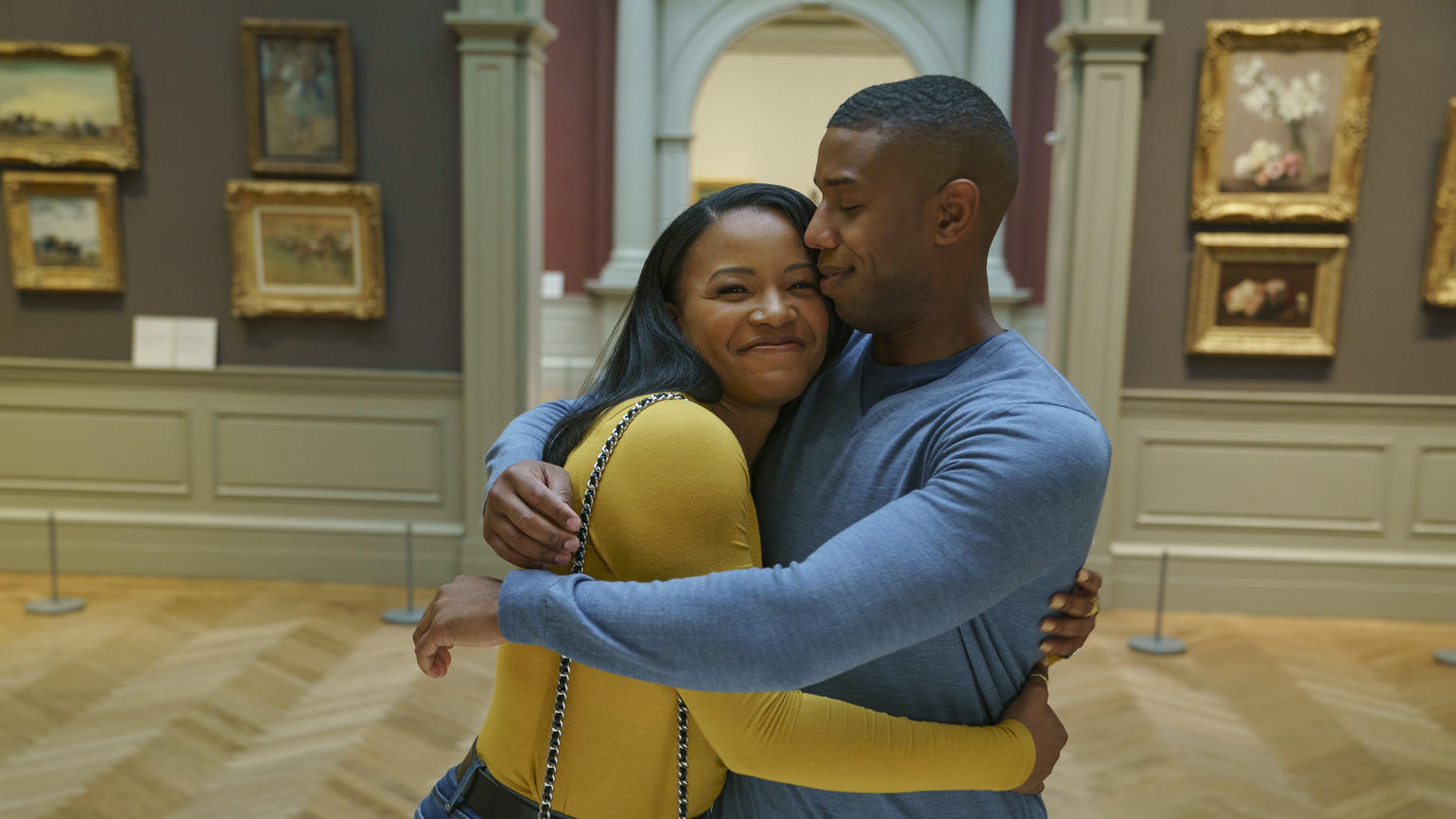
Neither did Michael B. Jordan or Chanté Adams, who play King and Canedy. The first day she was on set, Canedy brought King’s actual journal, as well as his dog tags. Jordan and Adams were both intensely moved by them. “It was important to me that they see that there is a real Charles and a real Jordan,” she said. “You see in their performances a profound sense that they’re honoring Charles and his legacy.”

READ MORE: Michael B. Jordan shares how his upbringing shaped his life.

There was even a hint at God’s hand at work during the production of the film. Early one morning, Washington went to Arlington National Cemetery to scout a location for a scene at King’s grave (King is actually buried in Cleveland, Ohio).

According to Canedy, Washington often looked for signs from beyond during the filming process. After no luck in finding the right spot, Washington paused to ask King to show him where the scene should be filmed. The director then looked up to see three deer sitting calmly under a tree nearby. He took it as his sign. But when he called Canedy to tell her what happened, she was shocked. She told him the last time she and Jordan had visited King’s grave in Cleveland, they’d seen three deer sitting peacefully under a nearby tree. “Denzel didn’t know about that until I told him,” she said. “We both just laughed and said, ‘Yep, God’s got us.’”

It was God that got Canedy through her grief after losing King. She recalled that one day before King’s funeral, everything hit her harder than ever before. She’d just returned to her Manhattan apartment after signing paperwork at King’s military base. “I was walking in a fog,” she said. “Jordan was only six months old at the time, and I remember thinking how heavy he felt. Everything was heavy. Grief is so physical. It was hard to breathe, and everything physically hurt.”

As she walked through her front door, Canedy wasn’t sure if she could keep going. She called out to God for a sign, anything to show her that King was still with her. Then she noticed the voicemail light on her phone was blinking. In a daze, she clicked it.

My name is Sergeant Wesley, the message said. I’m calling you from Iraq. You don’t know me, but I was friends with Sergeant King, and he gave me your phone number. He made me promise that if anything ever happened to him, I would call you and tell you that he loves you and you’re going to be okay.

Canedy was speechless. The moment was so miraculous, she knew without a doubt it was God. “There is no other time in my life that I felt His presence so palpably then when I was grieving,” she said. “My faith is what got me through it.”

This message of faith is exactly what Canedy hopes audiences take away from the film, no matter what they have going on in their lives. While she knows it can be hard to hold onto faith, it’s what we must do during the darkest times until we finally bring ourselves back to the light of hope.

“Meet yourself where you are,” she said. “Lean into your faith in those moments – your friends, your family, your village – and just hold on. If you can’t do anything else, just hold on and believe that it will get better. Because it always will.”

A Journal for Jordan is playing in theaters and available to purchase on demand through Sony Pictures.

The Real Love Story Behind the Movie ‘I Still Believe’

Known for hit songs like “Walk by Faith” and “Overcome,” this March, fans of Christian singer Jeremy camp will get the backstory behind one of his most famous songs I Still Believe, when the movie of the same name hits the big screen.

Camp has been married to musician Adrienne Liesching, the former frontwoman for the Christian band The Benjamin Gate, since 2003. However, the new movie about his life portrays the heartbreaking story of his first marriage.

The film follows a young Camp (played by Riverdale’s KJ Apa), as he falls in love and finds out that his girlfriend Melissa (Britt Robertson) had ovarian cancer. Melissa died three months after they were married. Weeks later, Camp wrote the affirming anthem I Still Believe, which was nominated for a Dove Award in 2004, the same year he won New Artist of the Year. ­The movie is an inspiring story of love and faith made by the same team behind the surprise hit I Can Only Imagine and features Shania Twain and Guideposts cover star Gary Sinise as Camp’s parents.

Guideposts.org spoke with Camp about how the movie came about, what it was like to see his life portrayed on big screen and what he hopes moviegoers take away from his story.

Guideposts.org: For those who haven’t yet had the chance to see the film, how would you describe I Still Believe?

Jeremy Camp: [It’s about] someone falling in love and what true love is. It’s [about] walking with somebody when they’re going through hardships, not leaving in the midst of those hardships.

It’s also a story of God’s love and God’s redemption is all throughout this film. You see the story of the love between a man and a woman, but you’re going to walk out understanding the love of God and His goodness. That’s what gets me excited about it.

GP: This part of your story happened almost two decades ago. Were you hesitant about turning it into a movie or was that an answer to prayer?

JC: Of course, I thought it sounded amazing. My wife and I had the attitude of, “Okay, God, if you want this to happen, we won’t have to push.” When the movie did end up happening, I was excited because we felt like it was a door God opened and so we were going to walk through it.

GP: How involved were you in the process of making the movie?

JC: I was pretty involved. The [filmmakers] did hours of interviews with me and my wife. During filming, we were there probably 80­ percent of the time because we really wanted to be involved in every aspect. The most amazing thing about it is we didn’t really have to do much because everything was done so well.

GP: Was there anything in particular you really wanted to make sure the film emphasized or captured about your story?

JC: I really wanted to make sure that they understood the raw aspect and the real grief aspect of everything. It was not cookie cutter, ‘it’s all good and we’re going to trust the Lord.” It’s real, raw and honest. It had to show that to be authentic because that’s what happened. There were moments of weakness, moments of just crying out, moments of anger, all that. I wanted to show those moments, too.

GP: What was it like seeing the finished movie for the first time?

JC: It wasn’t an easy…I mean it’s amazing but it’s just emotional. This is the hardest trial I’ve ever been through in life. And so, to bring it back up, and to display it on film, and to kind of relive it in a sense was definitely a challenge. You know, the ups and downs of emotions, and battles I had to deal with because of it. But it’s worth it knowing that it’s going to touch people’s lives and encourage a lot of people to draw closer to the Lord.

GP: The title of the movie comes from the title of your song “I Still Believe.” Can you share the background of that song?

JC: I think the reason why it became a focal piece of the film is that that was the first song I wrote after my wife died. I was really having a hard day and just… I mean, big time grief, big time, just anger. All these emotions that were happening. I remember I was sitting down and I felt like God was saying, “Pick your guitar up.”

I finally picked my guitar up, and what came out was that chorus. I was feeling all these emotions but I said, “But I still believe in your faithfulness. I still believe in your truth, I still believe in your Holy word. Even when I cannot see, I still believe.” That’s what came out. And then I started writing the emotions of how I was feeling and it starts off saying, “Scattered words and empty thoughts seem to pour from my heart. I’ve never felt so torn before seems I don’t know where to start.”

I was very raw and honest, but the thing that I landed on was: I still believe.

GP: What do you hope people take away from the movie?

JC: The one thing I don’t hope they take away from it is that like, “Oh, it’s a great movie about Jeremy Camp.” That’s not what we want. I want people to walk away saying, “I have the feeling of hope. I want to go and fall more in love with Jesus.” That’s my desire. Because everyone faces trials, no matter if you follow the Lord or not. Everyone faces trials, and to say He is the answer, and the hope, and the way to everything. That’s what I want to portray.

I Still Believe is in theaters everywhere March 13.

This interview has been lightly edited for clarity and content.

The Rapture Comes Early in ‘Left Behind’

This is not Kirk Cameron’s Left Behind.

The big-budget remake, starring Nicolas Cage, is an action thriller that imagines the chaos that would ensue when Christ returns and raptures his Church. Straight out of the Book of Revelation, Christ has come back “like a thief in the night,” to take Christians—both those who are dead and those still alive—to Heaven with Him.

The characters in the 2014 version are the same ones you’ll remember from the beloved, best-selling Left Behind novel series by Tim LaHaye and Jerry Jenkins. Cage stars as Rayford Steele, the Pan-Continental pilot who distances himself from his newly-converted Christian wife while getting closer to a flight attendant. Cassi Thomson stars as Chloe Steele, Rayford’s head-strong college-aged daughter. And Chad Michael Murray revives Cameron’s Buck Williams, the big-shot news anchor who’s always itching for his next story.

Rayford, Chloe and Buck are all left behind to deal with the aftermath of their loved ones disappearing right out of their clothes.This is where the similarities between the remake, the original movie and the book end.

In the updated film, everything is heightened and more urgent. Rayford has gone from merely fantasizing about his flight attendant in the book version, to plotting a full-on, international affair with her. In the midst of their in-flight rendezvous, the disappearances begin, except it’s not late at night, like in the book, it’s smack dab in the middle of the day. This time change allows the audience to see Chloe (home from college, in the film) fighting with her mother about faith and bonding with her little brother, who disappears in her arms.

Chloe, who seemed more of a plot device than a full character in the first book, comes into her own in the remake. After the rapture, Thomson carries the majority of the scenes she’s in, acting alone or with very little dialogue, as Chloe comes to grips with one disaster after another: cars with no drivers crashing right in front of her, looters being shot around her, a plane with no pilot coming straight for her, an empty school bus careening off of a bridge behind her.

Cage is the complex pilot who finally understands the warnings of his wife, all too late. His panic, shame and grief are palpable as Rayford tempers the emotional fall-out of losing half of his family with the emergency landing he is forced to make when his plane becomes distressed. In the first chapter of the book, Rayford lands his plane outside of Chicago with little fanfare, but in the film, Rayford faces as much drama in the air as Chloe does on the ground, and whether Rayford can land the plane with all passengers surviving —as opposed to dealing with the disappearances themselves—becomes the climax.

The audience feels the heavy hand of the screenwriter when all of those left behind are suggested to be the “bad” people. Chloe is disrespectful to her mother and to another believer; Rayford skips out on family time to have an affair; people immediately start looting and killing each other in the confusion of the disappearances. Contrary to the message in the film, I’d venture a guess that who goes and who stays behind will be much more of a surprise to many people.

But what is pleasantly surprising about the movie is the great production value. The special effects will draw you in and leave any action-loving viewer satisfied with the sequences that begin around the 40-minute mark. And the end credits provide a special treat with Jordin Sparks’s lovely rendition of that old Sunday school favorite, “I Wish We’d All Been Ready.”

Left Behind opens in theaters on Friday Oct. 3.

The Pyramid of Success

My wife, Dolores, flipped on the TV one night back in 2000 and I sat down on the couch next to her. An awards show was on. Not the usual Hollywood stuff, for a change. Important people like former Sen. Daniel Patrick Moynihan, Gen. Wesley K. Clark and humanitarian Simon Wiesenthal were the honorees. The award was the Presidential Medal of Freedom, the highest honor a civilian can receive.

Dolores turned to me. “Has Coach ever won one of those?”

“I don’t think so,” I said. But as far as I was concerned, he should have. John Wooden was the most influential man in my life. I first met the legendary UCLA basketball coach in 1971 when I was a raw freshman out of Philadelphia’s Overbrook High School. There, I’d been a star player. But college was where I grew up, where I learned to be a man. A lot of that was Coach’s doing, though I didn’t make it easy for him. Not at all.

“Goodness gracious, sakes alive, André!” I remember Coach barking at me my first day at practice, after I made a nifty bounce pass behind my back. “We use the basic chest pass here at UCLA.”

Oh, yeah? I thought. Well, you haven’t seen Andre McCarter then. Back in Philly I was my own one-man show. Not to brag, but there wasn’t a player in the city who could stop me. I was the kind of razzle-dazzle player who brings a crowd to its feet. “People will pay to see you play,” a scout once told me, mapping my path through college to the pros and NBA stardom. Colleges from across the country recruited me. Basic chest pass? I wanted more freedom than that. Even if it was UCLA.

Inevitably Coach and I knocked heads. Coach was no-nonsense. He began his career as a schoolteacher in a small, God-fearing Indiana town. He preached efficiency, precision and hard work—all of it rooted in a strong, straightforward faith. He didn’t have patience for frills. Coach Wooden seldom raised his voice and never swore, but man, he could be tough. One day I was five minutes late to a pregame meal. The next four games I lost my place in the starting lineup.

Things came to a head the first day of practice my sophomore year. Back then UCLA was a college basketball dynasty. Coach Wooden was revered and much imitated. He had led the school to seven national championships in the previous eight years. The stands were filled with college coaches from all over who had come to campus hoping to see how Coach did it. Some of them had tried to recruit me back in high school. I felt like I was onstage too.

Coach blew his whistle and play began. Greg Lee, the starting point guard whose job I wanted, had the ball. I was playing on the second team. Greg came at me, and with a quick swipe I stole the ball and raced downcourt. My teammates were open. But instead of passing the ball, I dribbled the length of the court, faked a behind-the-back pass toward one of my teammates and put it in the basket myself, leaving star center Bill Walton staring at air. The visiting coaches came to their feet. My adrenaline surged.

Coach Wooden jumped to his feet too. “Goodness gracious, sakes alive, Andre,” he screamed. “You do that again, you won’t play on our team!”

I’d expected a slap on the back, not a reprimand. Coach and I had a rocky road after that. My style against his, showmanship against fundamental play. And Coach Wooden wasn’t about to change his style. I thought about transferring to another school. “We’ll give you the freedom to play the way you want,” one rival coach said. They enticed me with all sorts of promises. I didn’t know what to do.

So I called my mom. “Coach and I aren’t getting along. I’m thinking of leaving.”

“It sounds to me like you’re not thinking, period,” Mom shot back. “Coach Wooden won a whole bunch of championships before you got there. The man must know something about the game, something you probably have not figured out yet.”

A few days later I stayed after practice, shooting baskets alone in the gym. Set shots and jump shots. Swish went the ball. Nothing but net. I wasn’t really working on my game, just trying to relax. But Mom’s words kept coming back to me. So did Coach Wooden’s. “Our team,” he always said. Swish. Why hadn’t it occurred to me before? Coach and I were after the same thing: We wanted UCLA to be the best team in the country. Coach was a spiritual man. So was I. Swish. What I needed to ask God was hard for me. I held the ball and closed my eyes. Lord, I prayed, give me the strength to put my ego aside. Help me change my attitude.

I decided to learn everything I could about Coach Wooden. I read everything he wrote, every article that was written about him. I studied his coaching technique, his basketball philosophy, why he believed what he believed, everything.

Most of all, I focused on a framed diagram that hung above his desk. It was called the Pyramid of Success. Its cornerstones were industriousness, cooperation and enthusiasm.

“Winning basketball has nothing to do with the highlight plays you see on TV,” Coach said one day at practice. “Teams win because they play unselfishly, and their players have solid fundamentals.” A good basketball lesson, yes. But I—and my teammates—knew he was preparing us for something more important. I realized the skills he taught on the court had as much to do with life as basketball. And that’s why he was so passionate about teaching.

Basketball was just something to prepare us to be good students of life.

I didn’t just change my attitude; I changed my game. Where once I would have driven to the basket one-on-one against the other team’s biggest star, now I looked to make a crisp chest pass to a teammate waiting under the basket. My junior year, Coach made me the starting point guard. He encouraged me to take a leadership role on the court and in the locker room. That spring of 1975, we beat Kentucky 92-85 to win the national championship—Coach’s tenth. “Andre,” he told me in the locker room, “you were my coach on the floor.” I lowered my head, smiled, tried not to cry. There couldn’t have been a better compliment. That title, as it turned out, was his last. He retired after that season.

I went on to play two seasons in the NBA. It was a good career, but I was never the superstar I fantasized about being back in Philly. I was a better player, though. After the pros, I worked as an assistant coach at Haverford College in Pennsylvania and then at UCLA under Walt Hazzard—the star point guard who led Coach’s first championship team, in 1964, and graduated from my high school.

By then I was in my 30s. Maybe it was because I was coaching that Coach was on my mind. Then it hit me: Had I ever properly thanked Coach Wooden?

“Andre?”

I snapped out of my reverie. The awards show had gone to a commercial. Dolores looked at me and said, “Why don’t you nominate Coach for a Presidential Medal of Freedom?”

I was thinking the same thing.

I did some research. President Harry S. Truman established the award in 1945, to recognize those who had served their country in World War II. In 1963 President John F. Kennedy reintroduced it as a way to honor distinguished civilian service in peacetime. Coach Wooden had led 27 UCLA teams. And he had changed hundreds of lives, including mine.

That’s what I would do, nominate him for the Presidential Medal of Freedom. All that was required was a letter of recommendation to the president. One letter from me wasn’t going to do it. So I contacted almost everyone who had ever played for him at UCLA—not just the big stars, like Walton and Hazzard, but players whose lives he had bettered in more private ways. Like me. “Just tell what he meant in your life,” I told everyone, because there wasn’t a man who had played for Coach Wooden who hadn’t felt his effect somehow. I added, “Keep this a secret. If Coach finds out, he’ll put a stop to it.”

Soon letters arrived, some typed on fine stationery, some handwritten. One guy said he was too busy. I phoned his mother. She called him to her house and ordered him to sit down and write. I ran into a forgetful guy at a party. I poked him in the chest. “Where’s my letter?”

Five months later I had 32 letters. I sent them and a copy of Coach Wooden’s Pyramid of Success to President Bill Clinton. Then I waited.

No dice.

The next year, 2001, I resent the letters to President George W. Bush. We never heard back.

Late in 2002 I tried again. Nothing. Then last July I got a call from an old UCLA friend. “Andre, did you see the article in the Los Angeles Times? Coach Wooden got the award.” I could hardly believe it. Coach couldn’t either. He thought it was a prank until a presidential aide confirmed it.

“Andre,” Coach said. “Andre, Andre.” Then he fell silent. This, from a man who was never at a loss for words. It brought tears to my eyes. “Andre,” Coach said again, and trailed off. We were both too choked up to talk. Finally I managed to tell Coach how much I loved him. How much he had taught me. We had come full circle.

“I think about you every day,” I said. “There’s a kid on my team, a lightning-quick point guard named DeJuan who reminds me of me. Guess what I’m teaching him? The Pyramid of Success.”

Next thing you know, I’ll be saying, “Goodness gracious, sakes alive.”

The Promise of Hope: Forgiveness

Hi, I’m Edward Grinnan, editor-in-chief of Guideposts, and author of the new Guideposts book, “The Promise of Hope”, how true stories of hope and inspiration saved my life, and how they can transform yours.

[MUSIC PLAYING]

Chapter 6 deals with forgiveness. Forgiveness is the spiritual antidote to wrongful deeds. We need to forgive.

We need to be forgiven. Without forgiveness, we can’t move on in life. And yet, forgiveness is often not just the most difficult thing to grant, to give people, it’s also sometimes the most difficult thing to accept, and particularly when we talk about about self-forgiveness.

We’re all called upon to forgive tremendous wrongs that have been done to us, sometimes intentionally, sometimes accidentally, sometimes by the very people and communities we love. One of the most powerful stories I ever worked on was with Jeanne White. I don’t know if you remember her, but her son was Ryan White, and we all remember Ryan.

Ryan White was a little boy from Kokomo, Indiana who was struck down with the terrible disease of AIDS very early in the epidemic, when so many people just simply didn’t understand what AIDS was, how it affected people, how you could catch it. And if you remember the story, Ryan was ostracized by his community. Literally, he and his mom were driven out of their little hometown.

And it was one of the most painful betrayals that Jeanna White ever experienced, because she grew up in Kokomo, Indiana. She planned to spend her rest of her life there. She was a third generation citizen of Kokomo. So when her town rejected her, she simply was almost beyond the point of being able to forgive them. But it was her little boy Ryan, really, and his incredibly generous and forgiving spirit that taught her how she needed– she would need to forgive Kokomo if she were ever going to move on to his inevitable death.

I took a plane out to Indianapolis and drove out to Jeanne White’s new hometown and spent the day talking to her. And it was one of the most incredible experiences that I’ve ever had. I mean, this woman, with her faith, and her resilience, and her ability to move beyond the tragedy of her son’s death, and the tragedy that he faced, and the rejection from his own hometown was really informative, and it got me thinking about a lot of things.

But one thing that got me thinking about was what would it be like to lose your little boy if you were a mother? And what I thought about is if I really wanted to know the answer to that question, I only have to ask my own mom. I lost a brother when I was nine years old.

Bobby was 12. He had Down syndrome. So that made him a very special child. And it made my relationship with him very, very special.

I grew up thinking I was there to protect him and to look out for him. And one day, Bobby disappeared, and no one knew what happened to him for the better part of two months. And when they found his body on that spring day, they never really were able to say what happened to him.

And for years and years, I carried that burden of not knowing and thinking somehow it was my fault, and somehow my father would rather have seen me disappear than my brother, which was a crazy thing to think. Yet to a little boy, there was a kind of sad logic to it. Ultimately, in my own change journey and my own spiritual growth, I had to figure out how to forgive myself of this imagined sin and how to accept what had happened.

So that’s what this chapter really is about. And it may sound a little sad, but it really isn’t. It was one of the most uplifting experiences of my life to reach that point, to really look at myself and be able to let go of all the guilt, and be able to accept myself for who I was and forgive myself, and forgive my family and those around me, and use that forgiveness to move on with my life.

[MUSIC PLAYING]

You can order my book by going to Guidepost.org/promiseofhope. Check back next week when I’ll share another inspiring Guidepost story from the next chapter of “The Promise of Hope”. And I’ll tell you a little bit more about my own story as well. See you then.

The Power of Patience

Growing up in Atlanta, Georgia, I always thought of baseball as a way of life. I couldn't get enough of it. But along with the hitting and fielding I developed a growing irritation for anything that didn't work out for me. I got bugged by things that took time.

Without my seeing it, this impatience began to carry over into various parts of my life. I remember once standing in line in the high school batting cage. I was anxious to take some extra cuts and annoyed that others were taking too many. I rudely pushed my way ahead of a couple of players.

I heard the coach holler out to me, "Hey, Ron, patience is a virtue." I laughed and said sure, but I couldn't make it to the big leagues by just standing around. Guys who wait I figured, just didn't go anywhere.

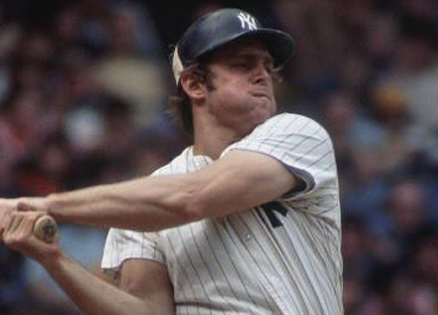
I felt my not waiting had paid off when, in my senior year at high school, after a good season, the New York Yankees signed me to a major league contract. It all seemed fantastic. The Yankees signed me for a nice bonus, and some New York newspapers were beginning to call me the "Jewish Babe Ruth."

That summer the Yankees sent me to their rookie league in Tennessee. I did pretty well there and felt I would sail right into the big leagues in the next year, 1968. Well, the next year the Yankees decided they wanted me to have a bit more training, and sent me to the Carolina League.

After two more years in the minor leagues, I really felt discouragement getting to me and because of it, I pushed extra hard. I was so anxious to be called up that I began to try for a home run every time I got up to bat that year. Sometimes it worked, but most of the time it didn't.

The spring of 1971 was chilly and brisk in Fort Lauderdale, Florida, where the Yankees hold their training camp. I was invited to camp that year and knew it was to be my big chance.

The fall before, I had got married, and I brought my wife Mara down to Florida with me. I told her this year was it for me and I had to do it now, or else.

Right away, problems began. I hurt my back chasing a fly ball on the first day of practice. Then the Yankees said they wanted me to be an outfielder, not a first baseman like I'd always been.

I worked hard but couldn't seem to do anything right. I was too eager. I charged in too fast on ground balls and lunged and missed pitches while straining for home runs. In my anxiety to do good quickly, I fell flat on my face. I was one of the first players cut—it was to be back to the minors again.

I told Mara that's it. We'd go home instead, back to Atlanta. I would finish up my degree in physical education.

Back home, I moped for several days. One evening Mara and I went to temple and as we were coming out, I ran into my old friend and rabbi, Harry Epstein. I told him I had been dropped again by the Yankees but that it was just as well, for I was tired of hanging on.

Rabbi Epstein then asked me what it was deep in my heart that I really wanted to be. I answered with the first thing that came to me—a professional ballplayer.

"Well, he said, "it seems to me what you need most is to unhurry yourself. If you sincerely want something, learn to wait for God to put it in place. It doesn't matter if it's baseball or anything else in life. You must have this perspective."

I told him I had waited enough—three and a half years. I couldn't do it anymore.

"You must, though," he said, "for there are reasons why God makes you wait. He will help you get there when the time comes."

Two days later I was home waiting for Mara. We were going to the movies and she was slow in dressing. "Hey, c'mon," I yelled, "we'll be late." Mara came out of the bedroom, still not ready, and gave me a cross look. "Can't you wait for anything?" she asked angrily.

I looked at her, surprised. "I'm sorry," I said after a moment, and with that, I suddenly realized how far my "hurry-upness" had taken me. I had turned into a nervous whiner who couldn't stand for the slightest interruptions in life.

"We're not going to the movies," I said quickly. Then I reached for the telephone. After some dialing, I managed to get hold of a Yankee official in New York. I asked him if it was too late for me to report to the minors. No, he said, and the Yankees were wondering why I wasn't there.

When Mara and I got to the minor league team in Syracuse, I remembered to do one thing. That was to unhurry myself. To relax and not press so hard. I even learned to play the outfield.

I began hitting consistently, and things went very well. My team was winning, and I was enjoying it. Then on June 25, the call came. The Yankees wanted me up in the majors. They felt I was finally ready, and so did I.

It was a great year for me in 1971. I hit .322 as a major-leaguer and had seven home runs. Probably the most memorable event of that year came in September.

We were playing Cleveland at home and the game was on the eve of Rosh Hashanah, the Jewish high holiday. This meant that to observe the tenets of my Orthodox faith I would have to end my work before sundown, the beginning of the holy day. Since I had already explained this to the New York Yankee officials and players, they understood that I might have to leave the ballpark before the game was over.

The score was tied and it looked like the game was going into extra innings. We had runners on first and third bases, and I was up. Huge shadows now blanketed the outfield of Yankee Stadium as darkness approached. I might not get a chance to bat.

I went to the plate with one eye on Steve Dunning, the Cleveland pitcher, and the other on the skyline. I was nervous and eager, but my confidence in the God who had helped bring me to the majors was now so deep that I would stop my bat in the middle of my swing and walk off the field if the sun began to set.

I looked out at Dunning and was ready to swing at the first pitch to push things. Then I caught myself. Even though the sun was now only partially visible, I knew I had to wait for the pitch I liked.

I watched two pitches go by, then came a high fast ball. I swung and hit it on a line to right field to send home the winning run.

With that swing, I took another big step in learning the value of patience. More important, I learned that when you trust God in all things and are faithful to Him, He gives you strength and power in every area of life.

The Power of Love in ‘A United Kingdom’

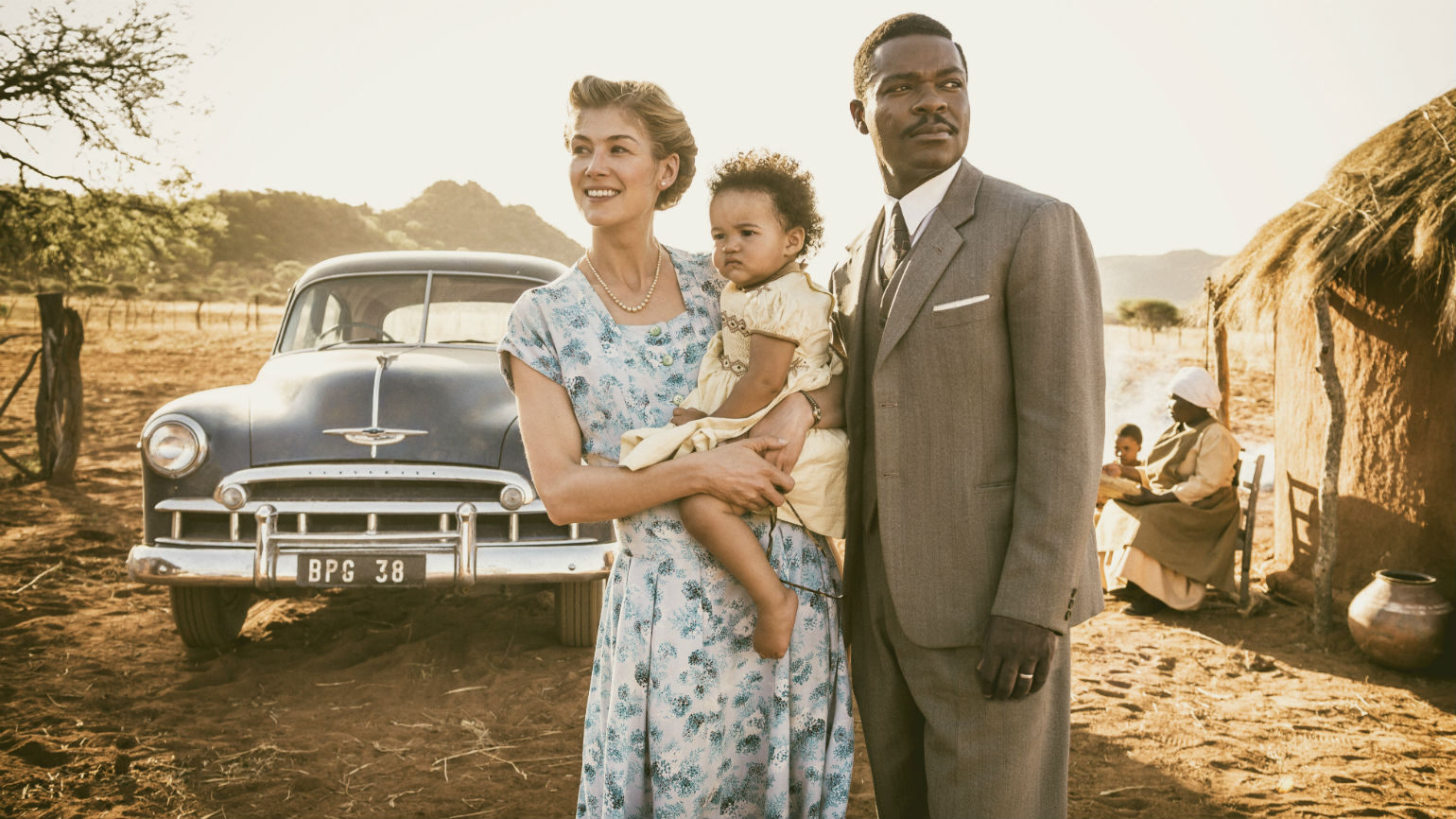
A United Kingdom is the epic, new film from director Amma Asante based on the true story of the internationally controversial marriage of Botswana’s Prince Seretse Khama and white Englishwoman, Ruth Williams in the 1940s. Starring Guideposts cover star David Oyelowo as Khama and Rosamund Pike as Williams, the inspiring film shows that love really can conquer all.

“It’s two people fighting to be together and in the process they change the course of history,” Pike tells Guideposts.org. “That’s the power of love, right there in a nutshell. You do something that’s purely personal and it ends up having an impact.”

READ MORE: David Oyelowo On Faith And Family In Hollywood

Though powerful, the story of Khama and Williams is, sadly, one you won’t find in your history books. The inconvenient romance that almost upended the British Empire and resulted in the independence of a now democratic Botswana has been swept under the rug for generations. Thanks to Asante’s film, a new generation will know how these two individuals impacted the world.

Their story begins in the summer of 1947. Khama met Williams at a dance organized by the London Missionary Society. He was a young king-in-the-making, studying in London and planning to return to his home country to rule. She was a clerk dragged to the dance by her sister. They bonded over their love of jazz and soon fell in love but his royal status and their different races meant their romance was often thwarted by the government, their friends and their family and ridiculed by the media.

Williams’s father soon disowned her. Due to the colonization of the African continent by the British and other European nations, Botswanans were skeptical of Europeans and their intentions and therefore refused to accept a white woman as their queen.

The British Empire, which controlled national decisions for Botswana, strongly opposed the marriage on political grounds. The Empire planned to use gold and uranium from neighboring South Africa during a time when that nation was just beginning apartheid, the legal system of oppression against Black South Africans by descendants of white Dutch and other European colonizers. To support the marriage of a white woman and a Black man meant endangering the British alliance with apartheid South Africa, risking Britain’s economy and potentially starting another war.

The British government constantly attempts to strong-arm the couple into separating by threatening Seretse’s right to rule, exiling him and imposing British rule over his country. That edict marks the true beginning of the couple’s resistance to the British despite mounting political pressure and the threat of war.

For star and producer Oyelowo, who first read the couple’s tale nearly ten years ago, bringing the true story of a Black African man fighting for his people and his family to the big screen was a rare opportunity he couldn’t pass up.

“I grew up around Black men who were very self-possessed, who loved their families,” says Oyelowo, who spent his formative years living in Nigeria. “That bearing, that dignity, that’s the kind of man I grew up with. But they’re never talked about [in media].”

“Whenever you talk about an African leader,” he says, “I found it to be negative. Leaders who are corrupt, who are hell bent on being connected to the West, filching from their country, their resources. To happen upon a story with a man who believes in love and is invested in his own community, I wanted to see that because it represents what I know to be true and I had never seen it on film.”

Pike was also intrigued by the opportunity to make a historical film unlike any she’d ever seen.

“Growing up as a little girl, looking for images of love on the big screen, I never had an interracial marriage or love affair as a representation of what love could look like,” Pike admits. “I think it was exciting for me to put that image on the screen.”

The idea that love can cross all divides is something that appealed to Oyelowo as well, particularly during a time of upheaval and unrest in the U.K. and abroad.

READ MORE: Lupita Nyong’o Inspires In ‘Queen Of Katwe’

“A lot of people have said the film is very timely, I think it is but it’s also timeless,” Oyelowo says. “I’m a big believer in the power of love to heal and to obliterate those things that are different about us and make us recognize that we are so much more alike than we are different, across racial lines, gender lines, age lines, religious lines. For me, the film is hopefully a tonic for people right now.”

For the actor, who’s always relied on his faith to inform the roles he takes, telling Seretse’s story on screen meant paying homage to the kind of love he’s built his life on but has rarely seen on film.

“We’re so used to seeing lust on film made to look like love,” Oyelowo says. “I would argue the two things are quite different. In coming across this story, this felt like evidence of love. Not just love in a Hollywood way but sacrificial love – you’re going to put yourself on the line, you’re going to give to another person without the thought of getting back.”

“As a Christian,” he says, “the greatest evidence and example of that in my life has been Jesus Christ in terms of what he did on the cross for me and, I believe, for the world. One of the reasons I was so inspired by these two is because what they did for each other and for Seretse’s country was an act of sacrificial love.”

The Perfect Comfort Foods

A warm bowl of chicken noodle soup does the body good, especially when fighting off a spring cold. But it wouldn’t taste the same if you substituted the hearty noodles in your soup with say, spaghetti or fettuccini. That’s because there is a marked difference between noodles and pasta that goes beyond taste and texture.

In order for a noodle to be legally considered a noodle, it must contain 5.5 percent egg solids by weight, according to the National Pasta Association (NPA). The lighter pasta, by contrast, is often used in Italian dishes and typically comes steeped in delicious sauces.

Community Newsletter

Get More Inspiration Delivered to Your Inbox


Both pasta and noodles are eaten as comfort foods. In fact, in the first three months of the year, noodle and pasta consumption in the US typically increases by as much as 20%, says the NPA. Noodles are added to a variety of soups and casseroles, and pasta, with some vegetables thrown in, make a great dish on their own.

“Because these are the coldest months in the U.S., people tend to stay indoors and eat warm meals,” says Carol Freysinger, NPA executive director. Especially during the economic downturn, the purchase of noodles and pasta has been increasing as people tend to eat out less. They’re also a great staple to have on hand to extend the life of leftovers. Added to stew or a stir-fry, for example, you’ve got a whole new dish.

The Origins of Noodles and Pasta
Marco Polo is said to have brought the stringy food back to Italy from his travels through China in the late 13th century, creating the Italian pasta craze. However, the consumption of noodles can be traced back much earlier, to the Etruscans, based on cave drawings, as early as the fourth century B.C. Other theories point to the Middle East as the first region to introduce the noodle.

The English word “noodle” derives from the German word “nudel” and can be traced back to the Latin word “nodus” (knot). Today, however, noodle is often used as a generic term for any unleavened dough and can be made from millet, wheat or rice. The word “pasta” is Italian for “dough” and is a generic term for the Italian variants of noodles, or food made from a dough of flour, water and eggs that is boiled. Of course today, pasta comes in many healthy forms, including wheat pasta and Spanish fettuccini.

Nutritional Value
Both noodles and pasta offer nutritional value, but have been given a bad rap of late by “carb-free” diets. However, they are both high in complex carbohydrates, and provide a “time release” of energy rather than a quick boost, explaining why many athletes include them in their diet. Marathon runners will often eat a bowl of pasta for dinner the night before the big race, as carbohydrates turn into glucose energy that is stored in the muscles.

In fact, the U.S. Department of Agriculture’s Food Guide Pyramid recommends eating six to 11 servings of complex carbohydrates daily. Eating a typical serving of cooked pasta or noodles a minimum of three times a week can help you reach the recommended goal. So go ahead and enjoy!

The Most Inspiring Player in the Final Four: Buddy Hield

Even non-sports fans can be inspired by the Final Four of the NCAA Basketball Tournament this weekend. Many college athletes are seeing their dreams come true, but one stands out from the crowd: Buddy Hield, guard for the Sooners of the University of Oklahoma.

Hield, a leading candidate for National Player of the Year, grew up in a poor neighborhood in the Bahamas. His mother worked as a cleaning lady and took on multiple jobs to support her family. She also instilled a deep faith in Hield and his siblings, which bonds them, still—his mother even sends Hield Bible verses to bolster his confidence before big games.

While the NCAA tournament is the latest chapter in Hield’s career, his inspirational story is rooted in family, faith and hard work.

Family
Born Chavano Rainier Hield in Eight Mile Rock, a township near Freeport, Hield was one of seven children. His mother, Jackie Swann, a woman of great faith and a positive outlook, frequently reminded her seven children, “We may not have a lot of things, but it’s enough.”

READ MORE: MISTY COPELAND’S WILL TO WIN

A single mom, Swann cleaned houses for wealthy families and often worked a second job catering weddings. Not only did she she put food on the table, the family’s door was always open to other kids from the neighborhood who needed a meal. As Hield put it in a story he wrote for theplayerstribune.com, “Everyone shared. I figured out a simple lesson. If you shared an extra piece of chicken today, maybe you’d get an extra drumstick tomorrow.”

Swann and her kids frequently slept together on a pair of mattresses pushed together on the floor, and Hield recalls sneaking out of bed and tiptoeing quietly into the kitchen, where he would boil water for a bath. With six siblings, a mom and various other relatives living under the same roof, getting first crack at the bathtub was key.

“[Buddy] learned from hard times,” Swann told CBS Sports. “Growing up here, it’s not a hand-out. You have to work for what you want. But if you put in that hard work, you can succeed.”

Faith
Swann instilled a reliance on God in her children, leading a family Bible study every morning and taking them to church every week. From the time they were toddlers, Swann encouraged her kids to pray.

“When you’re down and you need somebody…there’s God,” she told Hield and his siblings. “There’s a plan for you down the line.”

Hield has admitted that, prior to the University of Oklahoma’s recent matchup with the Oregon University Ducks—the game that sent the Sooners to the Final Four—he was feeling the strain. Nerves were getting the better of him, and he feared he would fail to perform in the game, letting his teammates, his coaches, and Sooner fans down.

It was a rare moment of doubt for the ebullient and positive young man, but his mother sent him Bible verses to focus on as he struggled to sleep the night before the quarter-finals.

Hield later said that Scripture helped calm him; when game time came, he delivered, scoring 37 points to tie an OU record for most points scored in an NCAA tournament game. After the final buzzer, Hield was quick to thank both God and Swann for getting him through a tough game.

“When I saw her, I just told her I made it,” Hield said. “I said I was going to get [to the Final Four], and I made it. I praise God because I couldn’t have done it without her. We shed a lot of tears.”

Hard Work
The neighborhood he grew up in had no public basketball courts, but as a child, Hield created his own hoops and backboards from scrap lumber, milk crates, and bicycle rims. He knew then that he wanted to be a basketball player—not just any player, but the best player. He told anyone who would listen that he was going to be like Los Angeles Lakers great Kobe Bryant and play in the NBA one day.

When Hield was invited to attend Sunrise Christian Academy, a prep school in Wichita, Kansas, he jumped at the chance. There, he continued to work on his game and his studies. He averaged 22.7 points per game his senior year at Sunrise, and drew the attention of college recruiters.

Hield signed on to attend the University of Oklahoma, and he’s experienced a steady climb toward greatness ever since. He’s earned a reputation as one of the hardest workers in college hoops, devoting countless hours in the gym toward improving his skills (but not neglecting his studies—Hield’s earned Academic All-Big 12 honors two years running).

Hield’s work ethic is legendary, and all that effort has certainly paid off. He’s gone from averaging eight points a game his freshman season to more than 25 points per game as a senior. He was recently named the Big 12 Player of the Year for the second season in a row, and he was a unanimous selection for the first-team AP All-American squad.

“The way [Hield] plays the game with a smile on his face and the energy, if a college basketball fan can’t get excited about that, what can you get excited about?” said Oregon coach Dana Altman after his team fell to the Sooners in the round of eight. “He loves the game. He loves his teammates. He loves his coach.”

While many people might credit Hield’s success to his work ethic and the way he was raised, his mother refuses to attribute his success to anything but the faith that guides her life and Hield’s. As Swann told newsok.com, “God did it. I believe it in my heart. You can tell me anything else. You can show me. But I’m going to continue believing.”

Read Guideposts magazine on your phone, tablet or computer!