




The Miracle of Ben-Hur’s Chariot Race
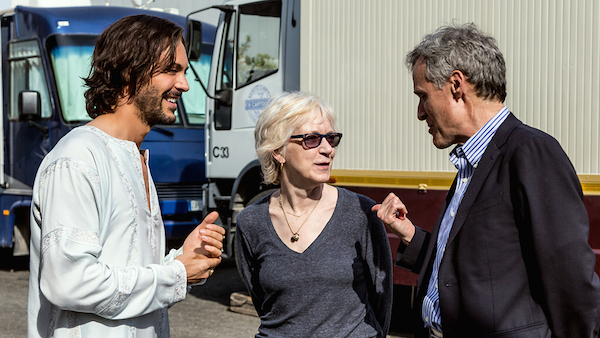
EDITOR’S NOTE: Rick Hamlin and his wife, Carol Wallace, visited the movie set of Ben-Hur last year in Rome. Wallace is the great-great-granddaughter of Lew Wallace, author of the novel published in 1880. She recently published a contemporary version.
The chariot race in the new film of Ben-Hur is really terrific. And the most amazing thing about it is that the leading actors, Jack Huston, who plays Judah Ben-Hur (formerly the Charlton Heston part) and Toby Kebbell who plays his adversary in the race, Massala, did their own driving.
Imagine the challenge of standing in a chariot in costume and driving a team of four trained horses at top speed around a dusty track eight times–and many multiples of that to get the shots necessary for a visually arresting and believable horse race set at the time of Christ.
That’s what so impressive about it. It is intensely believable, probably because it was really happening. My wife, Carol, and I visited the set last year in Italy where they shot the race, and I can tell you the track looked to be just as big as the historic Circus Maximus in Rome.
Read More: How Lew Wallace Found Faith in Epic Fiction
As the producers conceded, one of the challenges of filming the chariot race today is that viewers will easily dismiss the close-calls drama as the work of Computer Generated Imagery or CGI, as it’s called. “They just faked it,” people will think.
Quite frankly, I am completely won over by most special effects, but I can tell when actors are faking it, and the excitement of watching the 15-minute long race was feeling the absorption of the actors. By their eye movements, their focus, the turn of their heads, their grip on the reins, you know they’re not on some Hollywood sound stage.
“We tried doing some shots without the horses,” Jack Huston says, where he was evidently pulled around by a truck with cameras rolling. “That didn’t work,” he added. He might have been holding the reins but he didn’t have four horses on the other end galloping at 40 miles an hour.
Both Jack and Toby had worked with horses before, but driving a chariot was something completely new for both of them. One of the challenges is making sure the right horse is in the right position. As Jack pointed out, “On the curves the horse on the inside is going to go a lot slower the one on the outside.” No spoiler alert here, but this is even a plot point in the film.
In preparing the shoot, director Timur Bekmambetov watched a lot of YouTube footage of NASCAR races, familiarizing himself with the sort of shots a contemporary audience is used to seeing. I thought of that when in one brief sequence a horse flies off the track and tumbles into the crowd.
It’s reassuring to know that no horse was injured during the shot. These animals were treated humanely. The one accident that occurred during the shooting was when one of the drivers fell out of his chariot. A team of horses was right behind him and surely could have crushed him.
“But we watched them leap right over him,” said producer Duncan Henderson. “It was a miracle he wasn’t hurt badly.”
A miracle. Not a word that anyone in Hollywood tosses around lightly. The story of Ben-Hur includes several miracles, but for me one of the greatest pleasures of watching it was observing the craft of artists on both sides of the camera. It made me think it takes a miracle to get any story on film.
This one is well worth seeing. Especially those nail-biting 15 minutes.
‘The Middle’ Star Atticus Shaffer On Being A Role Model

It’s easy to love Atticus Shaffer. The actor, best known for playing the Heck family’s oddball youngest son Brick on ABC’s The Middle, is admittedly a lot like the quirky nerd he plays on TV. (Given the opportunity, he could spend hours detailing his passion for Legos, reciting war history facts or his musical tastes – which range from bluegrass-heavy Mumford and Sons and The Lumineers to Christian Rock bands like Skillet and Casting Crowns.) But while some might take issue with being labeled a geek, Shaffer loves what makes him different and is proud that fans can look to him and his character for inspiration when they feel they just don’t fit in.
“One of the biggest things about playing Brick is that he follows the beat of his own drum, which I do too,” Shaffer told Guideposts.org. “Brick is a role model character. He’s showing it’s okay to be smart and it’s okay to be unique and it’s okay to be quirky.”
Many have to suffer through high school before learning this lesson, but Shaffer picked it up at a very young age. The actor booked the role on his hit family-comedy back in 2009 when he was just 11 years old. The show, now in its sixth season, saw Shaffer working alongside TV legends like Patricia Heaton and Neil Flynn and being thrust into the limelight before he’d even reached his teens.
Now, at 16, Shaffer views the experience as an opportunity to be for millions of kids something he doesn’t remember having growing up: a Hollywood star worthy of looking up to.
“I remember when I was younger [thinking] ‘Why can’t there be better role models?’” Shaffer said. “You see all these reality shows that are on TV right now and it’s truly horrendous and what’s happening is people are tuning in and seeing that and they’re going ‘Oh, doing drugs and drinking before 21, yeah, that’s cool.’ That’s not what you’re supposed to do.”
When you let God take over, anything is possible. |
Shaffer, who grew up in Southern California, credits his faith for keeping him so grounded. “I’m in the position that I’m in because I just let God take over,” Shaffer said of his success. “And when you let God take over, anything is possible. He just guides you to what’s specifically for you.”
One of the biggest blessings in the star’s life is something many would view as a roadblock. Shaffer has a genetic condition called Osteogenesis Imperfecta which is often described as brittle bone disease. The actor doesn’t like that label and explains that the condition – which usually results in growth stunts and easily fractured bones – doesn’t keep him from doing any of the things a normal teenager would do.
“It’s a genetic condition that causes your bones to form at a later time,” Shaffer said of the diagnosis. “My bones are more fragile than another person’s bones and therefore I have to be more careful in certain situations. So, can I run around? Yes. Do I have to be careful about running around? If I fall do I have a chance of [my bones] breaking? Yes. It’s really just as simple as that.”
As easy-going as Shaffer is about his condition now, the actor admits there was a time when being born with a disease that many doctors don’t understand was challenging for him and his family.
“When I was born and going to a hospital that [wasn’t] familiar with O.I., they looked at my mom, shook her and said ‘You need to get a grip on the fact that your son is going to be in a wheel chair for the rest of his life,’” Shaffer admits.
“My mom, being the strong-willed Polish woman that she is, wouldn’t accept that. My mom and dad kept looking for the correct hospital that is familiar with O.I. and that hospital gave me opportunities to do everything and be as close to a normal person as I can be. I don’t like to say normal, because I’m not normal either, I’m just me.”
His condition has afforded the young star an even bigger opportunity to make a difference in people’s lives.
“That’s really a huge blessing on my life,” Shaffer said. “I’m able to be a role model in that regard as well. It’s awesome because it’s all God. It’s all God letting me know ‘Hey, I have a plan for you, this is where you’re gonna go.’ It’s amazing what I’ve been able to do and what I’ve been able to accomplish and even just the people I’ve been able to meet. I’m very blessed to be in the position I’m in and I never want to take it for granted because unfortunately this is a business where you’re kind of all over the place and there’s a bunch of different stuff that can go wrong.”
Shaffer hopes that by being open about his beliefs, he can inspire others to pursue their own dreams. “I want to be able to not only praise Him for what he’s done for me specifically, I want to give hope to other people for what they want to accomplish, whatever their dreams are,” the actor said. “I have been blessed and now I want to bless others.”
The Middle airs Wednesdays at 8 p.m. on ABC.
‘The Messengers’
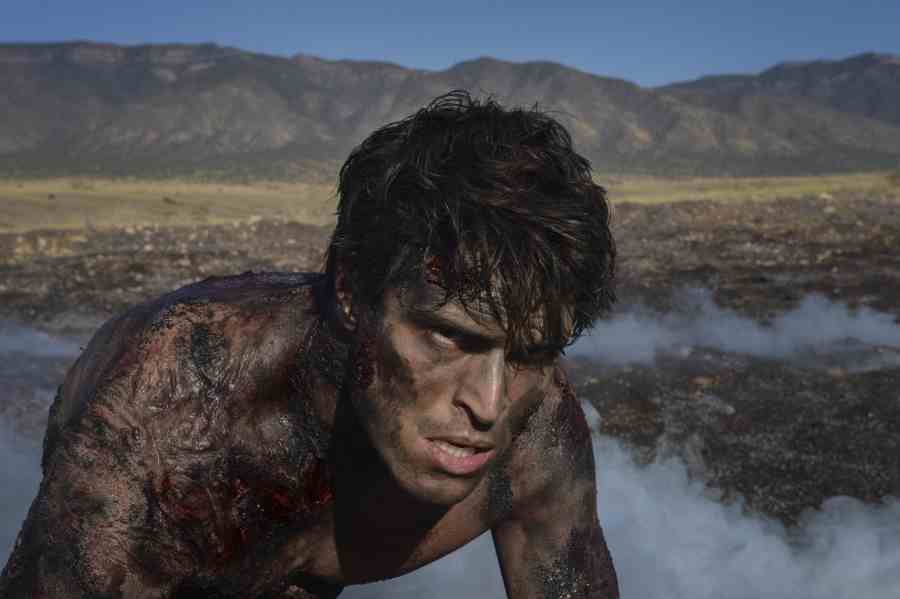
Faith meets the supernatural in The CW’s newest drama, The Messengers. When a mysterious object plummets to Earth five strangers are gifted with extraordinary powers, from inexplicable strength to the ability to heal others. Most mysterious of all is a figure known only as The Man, who brings death and suffering wherever he appears. The wheels of Revelation have begun to turn, and these five newly christened Angels of the Apocalypse may be the only hope for preventing the impending Rapture.
Be sure to tune in for the series premiere, April 17th at 9 pm EDT.
The Matheny Manifesto
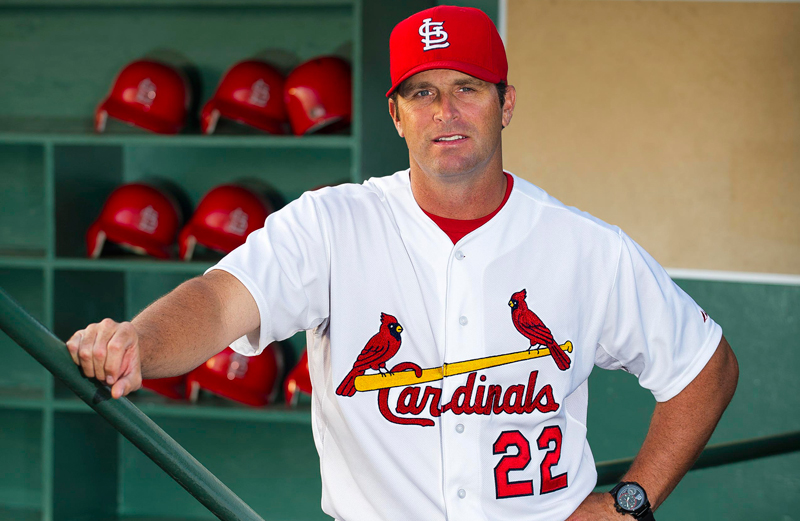
“I’ve always said I would coach only a team of orphans,” Mike said in his now famous manifesto, “because the biggest problem in youth sports today is the parents.” These words lit up the Twitterverse and led to a book. A sample of Mike’s wisdom:
Parents, step back. Baseball should be all about the kids. “It’s hard not to coach from the stands and yell things,” he wrote, “but trust me: Coaching and yelling works against their development and enjoyment.” Clapping is enough.
But be involved at home. Play catch, practice batting, hit ground balls in the backyard, like Mike’s dad did. Then entrust your kid to the coaches when you bring them to a game or practice. Get them there on time with their shirts tucked in and hats on straight— and no pants drooping to their knees.
Develop responsibility. Don’t stand behind the dugout asking your kid if he’s hungry or thirsty. Don’t run back and forth to the concession stand. Let your Little Leaguer take responsibility for his or her own water and snacks.
Every player hustles. “There is never an excuse for lack of hustle on a baseball field,” Mike wrote. “Players who don’t hustle and run out balls will not play.” No matter their level of talent, everyone can hustle.
Let them learn the inner game. Attitude, concentration and effort are three things that kids can control on and off the field, even sitting on the bench. “If they give me those three things every time they show up, they will have a great experience,” Mike wrote. Not just Little Leaguers either. “My wife was a college field hockey player and my daughter is a college ice hockey player. The Manifesto works for them too.”
 Mike Matheny is the manager of the St. Louis Cardinals and author of The Matheny Manifesto: A Young Manager’s Old-School Views on Success in Sports and Life (2015, Crown Archetype).
The Many Sides to Branch Rickey
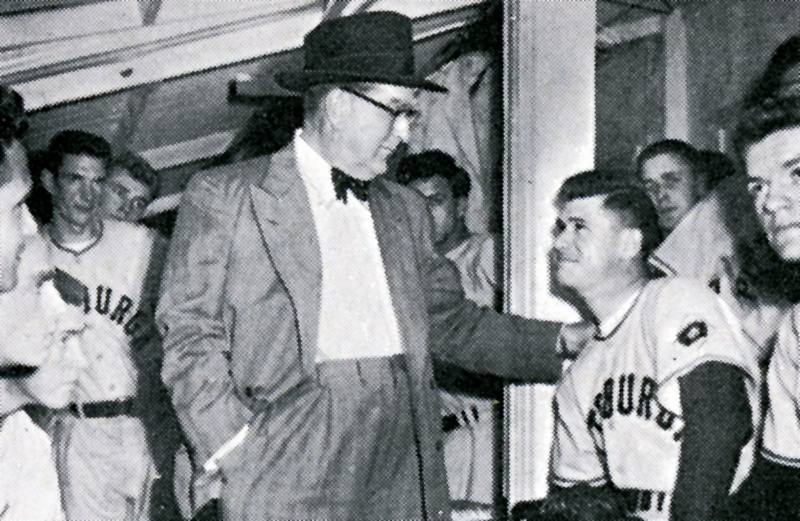
To convert the last-place Pittsburgh team into a pennant winner, Branch Rickey faces his toughest job in 50 years of baseball. The Pirates executive who has built winning teams at St. Louis and Brooklyn admits he has never worked harder, doctor’s warnings notwithstanding.
To him the passage, “In the sweat of thy face shalt thou earn thy bread” (Genesis 3:19), is more of a benediction than a penalty.
A working day for Rickey means endless personal consultations (press, players, friends) and long-distance calls. At the ball park he dictates comments on player performance to his personal assistant, Ken Blackburn.
A pitcher, warming up, can’t control his fast ball. Out comes the Rickey wallet. “This ten-spot is yours if you hit it with your fast ball,” Rickey tells him, placing the green bill on the ground in front of the catcher. The determined pitcher aims at the bill, throws above it by several feet.
“You see,” says Rickey, making his point, “to control your fast ball, you’ll have to aim it lower.”
A descendant of pioneers, Branch Wesley Rickey was born on a farm in Stockdale, Ohio. From his father, who had quite a reputation as a wrestler, Branch inherited his athletic ability.
“My father and mother never went to high school or college,” Rickey states. “What they had came out of a laboratory of testing Christ’s teachings.”
Rickey has never known anything but effort. He taught himself Latin and mathematics, worked at odd jobs to pay for his education at Ohio Wesleyan University. After graduation he played professional football, broke his leg, and then entered baseball as a catcher.
His big chance to play in the Major Leagues came with Cincinnati, but for reasons of personal conviction, he refused to play ball on Sunday. The baffled Cincinnati manager argued, finally released him. To this day, Rickey will not attend a baseball game on Sunday.
In Lucasville, Ohio, he met a girl named Jane Moulton, the daughter of a store proprietor; young Rickey proposed more than a hundred times before she accepted. The newlyweds scrimped through hard times, and Branch’s siege with tuberculosis, before he started his executive career in baseball with the St. Louis Browns.
Rickey has a deep respect, almost reverence, for women. When his peppery, 99 year-old mother-in-law, who loved to sing hymns, was on her deathbed, she and Mr. Rickey sang them together far into the night.
Much has been written about Branch Rickey, but only close associates and friends really know him. Bob Cobb, a close associate and President of the Hollywood Stars, tells of a camping trip in Colorado.
At night he, Branch and a few others were in sleeping bags “so close to the stars we could almost touch them,” Cobb said. “We talked about astronomy, then Branch started in on God and the universe. I’ll never forget it.”
At Amherst College last winter, during a discussion on ethics in sports, Rickey made this statement of belief:
“We’ve talked a lot about right and wrong. When you come down to it, though, what can we really believe? If I strip away all theories, philosophies and books on ethics, many of which are good, I always come to one basic belief … that Jesus was so perfect in His teaching and Life that I attribute to Him Divinity.”
Like any important figure who acts from convictions, Rickey is a target of critics, perhaps the more so because he does not lash back. He has to make decisions which are occasionally unpopular with fans and press. Yet he states:
“I would feel unworthy if adverse or unjustified criticism affected my decision or dulled the edge of my courage.”
The rich, booming Rickey personality can also explode unexpectedly. A political science teacher recently told him, “I want to be fair to other governments, so I expose the weaknesses of democracy and compare them to the strong points of Marxism and other political philosophies.”
Nonplused, Rickey asked him, “Can you quote the Preamble to the Constitution?”
The teacher said tie didn’t think all that was important.
For several moments the Pittsburgh General Manager eyed him with the famous Rickey scowl. Then in a rich voice, he began to repeat word for word, “We the people of the United States…”
Rickey hates disloyalty, deceit, hypocrisy, and demands honesty of his employees above all else. But he can be forgiving.
Last January he appeared as a witness in a Pittsburgh courtroom, where a man was facing jail for attempting to extort money from a Pittsburgh ball player. The prisoner was young, penitent, scared. Rickey eyed him intently, took the stand, and in a moving speech urged leniency. The young man was put on probation.
Rickey is most famous as a baseball pioneer. Seven years ago he paved the way for Jackie Robinson to become the first Negro to play in the Major Leagues. Many standard practices in baseball today (the farm system, sliding pits, etc.) are Rickey innovations.
During spring training last March at Fort Pierce, Florida, a reporter popped this question, “Mr. Rickey, you’ve been in baseball a long time. What has been your greatest thrill?”
Rickey was silent for a moment, looking at some 70 Pittsburgh players working out, many just kids, who with their great promise represented his hopes and dreams. The 72-year-old baseball executive, with his black hair and his bouncing energy, looked as young as any of them.
“My greatest thrill?” Rickey repeated. “It hasn’t come yet.”
For more inspiring stories, subscribe to Guideposts magazine.
The Lion King
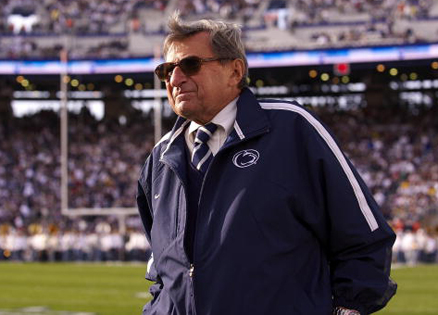
I chose Penn State for its strong journalism program and award-winning daily student newspaper. And for something else I loved—football. A perennial national championship contender led by a legendary coach, Joe Paterno, no less.
I’m the granddaughter of a high school football coach, so I learned the game at an early age. Fall always meant watching our Bucks play under the big lights of the high school stadium in Dunmore, Pennsylvania. Hook and ladder. Flea flicker. Reverse. I tried to predict the plays before they were called. And I couldn’t wait to do the same rooting for the Nittany Lions in Beaver Stadium.
That would be the extent of my connection to Penn State football, I figured. After all I wasn’t on the team. I was one of 37,000 students on campus. I wouldn’t get to know Joe Paterno personally. Yet it didn’t take long for me to find out there was plenty I could learn from Coach Paterno, lessons that I still carry with me years after graduation.
It all started with the very first home game of my freshman year. Sitting in the student section in Beaver Stadium, I joined in the school cheer: “We are,” to which the rest of the 85,000 fans in the stadium yelled back, “Penn State!” The Blue Band marched on the field playing our fight song, the brassy notes echoing in the crisp fall air. I’ll never forget the explosive roar of the crowd as Coach Paterno sprinted from the tunnel onto the field, leading his Nittany Lions players. Not a stripe or insignia or—most notably—name on a uniform. Just plain navy jerseys and white pants. Boring, some complained. But I recalled Paterno’s explanation: “Amazing things can be accomplished when no one seeks the credit.” And I had to agree. It’s what’s on the inside that counts, I thought.
Paterno took his place on the sidelines, wearing a shirt and tie. He dressed more like a professor than a coach. Strangest of all, his pant legs were rolled up. Story goes that when he first started as head coach in 1966 he came home after games with the bottoms of his pant legs muddied. This frustrated his wife, Sue, who’d just had them dry-cleaned. So Joe had an idea: cuff the pants a couple of inches. Fans and the press took note of his “floods”—which made his white socks even more obvious. Not exactly a fashion statement. But it worked: a simple plan to achieve a goal.
Paterno is known to walk to work—he lives about a mile north of campus. One day during winter break of my sophomore year, my friend Laura and I were headed to the library when a guy walked by us.
“Hello, girls!” he said.
“Who was that?” asked Laura. The thick-lensed glasses, the shock of black hair sticking out from the hood of a navy-blue duffle coat. Coach Paterno, of course. He didn’t need to say a thing to us. But with those two words he made us feel like we counted.
Two years ago I went back to Penn State to meet up with my college friend Carolyn. We had dinner at our old hangout, The Diner. “I know what you want to do now,” she said. “Go see the statue, right?” Joe Paterno had just won game 324, making him the winningest coach in major college football. A seven-foot bronze statue had been erected to mark the achievement.
We trekked across campus, making our way past the Carnegie Building, where we’d worked on The Daily Collegian, then up the elm tree-lined mall to the library, right where I had come face-to-face with Coach Paterno my sophomore year.
“Look at this!” she exclaimed. The sleek addition to Pattee Library had been completed. We walked inside and were greeted by a painting of Joe and Sue Paterno. They had donated $250,000 toward the building of the addition. Carolyn, an English professor, was impressed. “More books! I like football even better now,” she laughed. The Paternos have also funded an interfaith campus spiritual center and endowed scholarships and faculty positions in the College of the Liberal Arts. An outsider might be surprised at an athletic coach funding academic programs. Then again, an outsider might not really know Joe Paterno.
We left Pattee and headed to the stadium. On the east side was an impressive sight: Joe Paterno, caught by the sculptor in mid-run, tie flapping, trousers cuffed. Just like on game day. Behind the statue were 36 bronze plaques showing the team’s schedule and score for each season Paterno had coached so far. But what really stood out were the words describing him: “Educator” was first, then “Coach.” They got that right. Joe Paterno championed academics over sports any day. If a player was doing okay class work, but not what Paterno thought was his best, he wouldn’t play. It is no wonder Coach and Mrs. Paterno wanted to put their legacy on the library and not, say, a new stadium.
My cousin Michael works in the athletic department at Ohio State University. When the Lions play the Buckeyes in Ohio, I make a trip to Columbus to cheer for my team—and to rib Michael. It rained and rained for our matchup in September 2000. Then, in the fourth quarter, a terrifying moment: Nittany cornerback Adam Taliaferro lay on the field motionless after a hard tackle. Trainers and doctors ran out, Paterno at their heels. The crowd grew unnervingly silent. Adam was lifted onto a stretcher and rushed to the hospital. We got news later that he was paralyzed from the neck down.
In the locker room after the game, Paterno led the team in prayer. Doctors feared Adam wouldn’t walk again. Paterno and his Lions didn’t want to believe that. From that game on, the team prayed for Adam, as hard as they practiced for the next opponent on the schedule.
Slowly, the cornerback regained use of his legs and arms. Paterno said he’ll always remember one beautiful September evening almost a year to the day after Adam was injured. That night the team’s prayers were answered: Adam led the team onto the field for the opener against Miami. For Joe Paterno, that was a win that meant more than the final score of any Penn State game.
Coach Paterno still says football is a part of life—not life itself. In his shirt and tie, he still looks like a college professor pacing the sidelines. All the things I learned about him when I first set foot on campus are true today, which should come as no surprise. He has always lived what he believed. It is this quality, so rare in sports, that has made him more than a great—maybe the greatest—college football coach. It’s the reason he never moved to the pros. It has made him what he most wanted to be— a teacher who touches the lives of students.
I wanted to study journalism at Penn State and root for a championship football team. Little did I know how much a part of that championship Coach Paterno would make me feel.
The Lightning Sonata
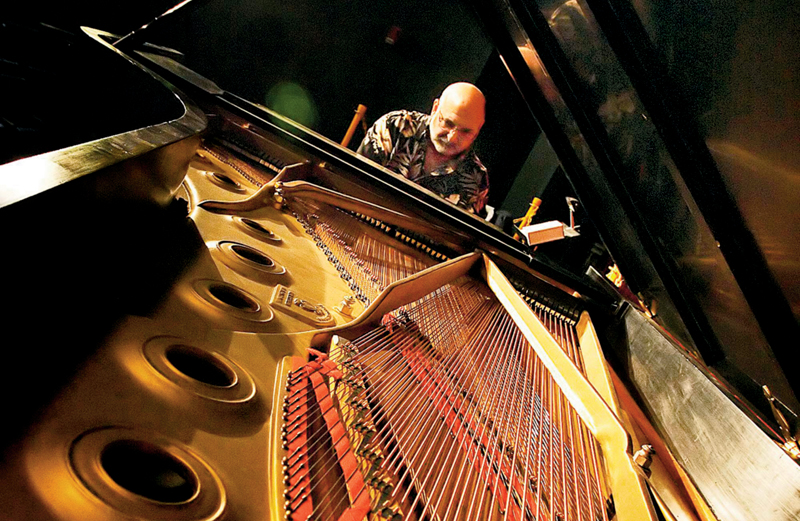
The concert hall is dark and still, all eyes on the lone figure at the center of the stage. The piano player. I creep up behind him, careful not to disturb the soft plink-plink of the keys. This melody he’s playing…it’s beautiful. Unlike anything I’ve ever heard before.
The closer I get, the more familiar the man becomes. I recognize him. The piano player is me. The music? It’s mine.
The same melody echoed in my head nearly 15 years later as I took my seat at the grand piano in front of hundreds at the Goodrich Theater in Oneonta, New York, my hometown. I could remember the notes as if I’d dreamed them up yesterday.
I had dreamed them up, in the dream that haunted me to this day. As did the literal bolt from the blue that started it all.
It was just an ordinary summer day. Not a cloud in the sky. I’d driven up to a lake in Athens, New York, that morning for my wife’s family reunion. The kids were splashing in the lake and I was grilling up burgers and hot dogs. What could be better?
My medical practice was booming, the family was happy. Life was good.
I slipped away to make a call to my mom on a pay phone by a lakeside pavilion, oblivious of the storm clouds on the horizon. The phone rang six, eight times. The wind kicked up. A woman and her daughter waited behind me.
I was about to hang up when boom! A bolt of lightning struck the pavilion, coursed through the receiver and shocked me square in the face with terrifying force, sending me flying 15 feet.
What happened next is a blur. It sounds nuts, but I was submerged in this hazy blue-white light. Like I’d fallen into a peaceful river. I could sense something overwhelming, powerful but loving. God? I wasn’t sure, but I never wanted to leave.
Fifteen minutes later, though, I awoke to a woman pumping my chest, jolting me back to life. The same woman who’d been standing behind me at the pay phone. She was an ICU nurse.
Three weeks later, I was back at work. My doctors had conducted all the routine neurological exams and concluded I was fine. Only something was off—way off.
I had this strange compulsion to listen to classical piano music. The kind that had put me to sleep as a kid the year my mom forced me to take piano lessons.
“I can’t explain it,” I confided to a doctor friend. “It’s like I crave it.”
This from a guy who’d spent the previous two decades roaring around on a Harley and blasting out the Rolling Stones. I bought a Chopin CD just to test the waters, feeling like an imposter in the classical section of the music store. But as soon as I played it, I was hooked.
I hummed to Chopin in the car, at work, even at the dinner table. When I wasn’t listening to the music, I was thinking about it. Obsessively. I was a practical guy, a doctor, not some New Age hippie who spent his time chasing ooey-ooey feelings from the great unknown.
Was I going crazy? Is that what the bolt of lightning had done?
It only got weirder. A week later, our babysitter stopped by. She was moving and needed a favor. “Dr. Cicoria, I have this old piano,” she said. “I can’t take it with me. Can you keep it for a while? A year, tops?”
As soon as we moved the piano into our house, the dream came—me in a concert hall, performing a sonata I’d somehow composed. Me, who had virtually no musical training.
It jolted me awake, the music still ringing in my head. I could hear whole chunks of it, like someone had downloaded a file directly into my brain. This was getting ridiculous. I buried my head in my pillow, but the notes begged and pleaded to come out.
Enough was enough. I tiptoed downstairs, sat at the creaky piano bench and tried to mimic the melody. The moment I plucked out a few soft notes it hit me. That same powerful sense of love and peace.
The lightning bolt had coursed through my body with a force that should have killed me, but instead, it had left something beautiful behind. That beauty wasn’t meant to stay inside my head. I knew nothing about composing, but I knew exactly what I had to do—follow that music.
That’s how I’d ended up in a real concert hall, after years of piano lessons and practicing into the wee hours of the night to release the music within.
A hush fell over the crowd. I couldn’t stop trembling—until my fingers finally found the keys and the music took over.
When I finished, I took a bow as the audience erupted into thunderous applause. All in response to the piece I’d composed—“The Lightning Sonata.”
Listen to Tony performing his music!
Download your FREE ebook, Mysterious Ways: 9 Inspiring Stories that Show Evidence of God's Love and God's Grace.
The Inspiring True Story Behind the Movie “The Vow”

Hi. I’m Kim Carpenter, and this is my lovely wife Krickitt. And we’re the true story behind the movie “The Vow.”
[MUSIC PLAYING]
Our story began in 1992 when I called to order a set of coaching jackets for my baseball coaches. And my wife answered the phone on the other end, and most bubbly personality in the world and just a lot of fun. And I ordered more jackets than a man could wear in a lifetime. But needless to say, we were married a year later.
And 10 weeks after we were married, we were involved in a horrendous automobile crash that nearly killed us both. It critically injured us. Krickitt suffered much more severe damage in the form of a brain injury than I. And she went into a coma. 21 days later, she awoke. We started asking her some questions. Who’s your husband? Got to that question, and she said, I’m not married.
It wasn’t until later that we discovered, because of my traumatic brain injury, that I lost about a year and a half prior to the car accident till about four months after. So all of the memory of meeting, dating, and marrying my husband was completely wiped out.
But I was still married to him. And you know, I made a vow– in good times and bad, sickness and health. And I made a vow before God. And that to me was a promise to keep. So we figured we’re gonna have to figure this thing out. I mean, you know, divorce was never an option. I was going to be committed to the vow that I had made and the promise that I had made to God.
We’re not the perfect couple. We argue. We fuss. You know, we get upset at one another. We’re not this some miraculous couple that the world has tried to portray us to be. We have faults. And you know, we’re sinners saved by the grace of God.
But along the same lines, there was a time that I became very bitter at the Lord. I was very angry. I felt that I was in the deepest of the trenches of just woe is me, nothing else that could happen. And the Lord placed in my life two different families that were much worse off that humbled me to no end.
And I soon learned that, you know, we might be having it bad, but there’s a lot of other people that have it really, really bad and much worse. And so that in itself yet was another message.
The Lord put a social worker in our hands. And he was able to rivet down the fine issue of the fact that she didn’t have any memory of me. And when that day happened– and I’ll let you talk about that.
When the social worker discovered that I had lost all the memory of meeting, dating, and marrying my husband, it was finally like someone put two and two together for me and like an explosion went off in my head. And I’m like, that’s it. No wonder why this is so weird.
And so then I looked over at this man that I had been living with for months and months and months, and I was able to say, I don’t know who you are. I have no memory of you. And that was the day really when I think our recovery began, in a sense.
That’s really where our relationship began to grow again. And that counselor also suggested, why don’t we date and redo our wedding so that I would have a memory to hold onto that I actually did give him my hand in marriage. And from there, we still had challenges for years to come, and we still do. Because marriage is work. It’s not something that happens easily. You have to invest in it.
You know, to have a movie made about you for keeping your word is pretty awesome. To be able to write a book for the world to read about how God has worked in your life and your faith, to me, that is really a wonderful thing and a great opportunity.
The world has tried to make me to be some sort of hero for being this guy who stuck by the girl, and it’s remarkable and heroic and things like that. But the bottom line is that we look at people and tell people, we simply did what we said we were going to do. And for us, it’s kind of sad that we live in a world that we’re getting all of this attention for doing what we said we would do.
And you know, you can see the movie that’s inspired by our story, but the book truly has the true events of our story and our true story. And I think when you read it, think to yourself, what would I do if I was in this same situation? And challenge yourself to see what you would do. Because really, we just did what was expected of us from the Lord, which was to stay true to our word and to stay true to our vows.
[MUSIC PLAYING]
The Inspiring True Story Behind “Red Tails”
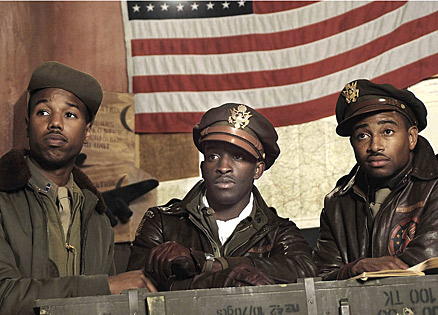
Finally, a remarkable chapter in American history is coming to the big screen.
Based on the inspiring real-life story of the Tuskegee Airmen, the new movie Red Tails chronicles the struggles and triumphs of the first African-American squadron of aviators in the U.S. military.
During World War II, a time when the country was still in the grips of Jim Crow laws, the Tuskegee Airmen fought for the right to fight for their country. In their struggle for respect and equal opportunities in the military, they banded together and supported one another through prayer and their belief in each other.
At the time, military policy kept African-American pilots grounded, claiming they “lacked qualifications” to carry out important missions. When the military brass finally relented and allowed them to fly, it paved the way not only for integration within the Army, but eventually within the country at large.
Which is not to say that Red Tails is just about friendship or politics; it’s also an action-packed adventure, with breathtaking aerial dogfights and cutting-edge visuals (Red Tails’ executive producer is George Lucas, whose Lucasfilm creates some of the best special effects in the world).
Ultimately, Red Tails is a story of perseverance and hope, camaraderie and an inspiring group of men’s belief that anything is possible.
Watch as director Anthony Hemingway explains the importance of prayer in his life and actors David Oyelowo, Marcus T. Paulk and Elijah Kelley describe their experiences in making the film.
The Inspiring True Story Behind New Movie ‘The Best of Enemies’
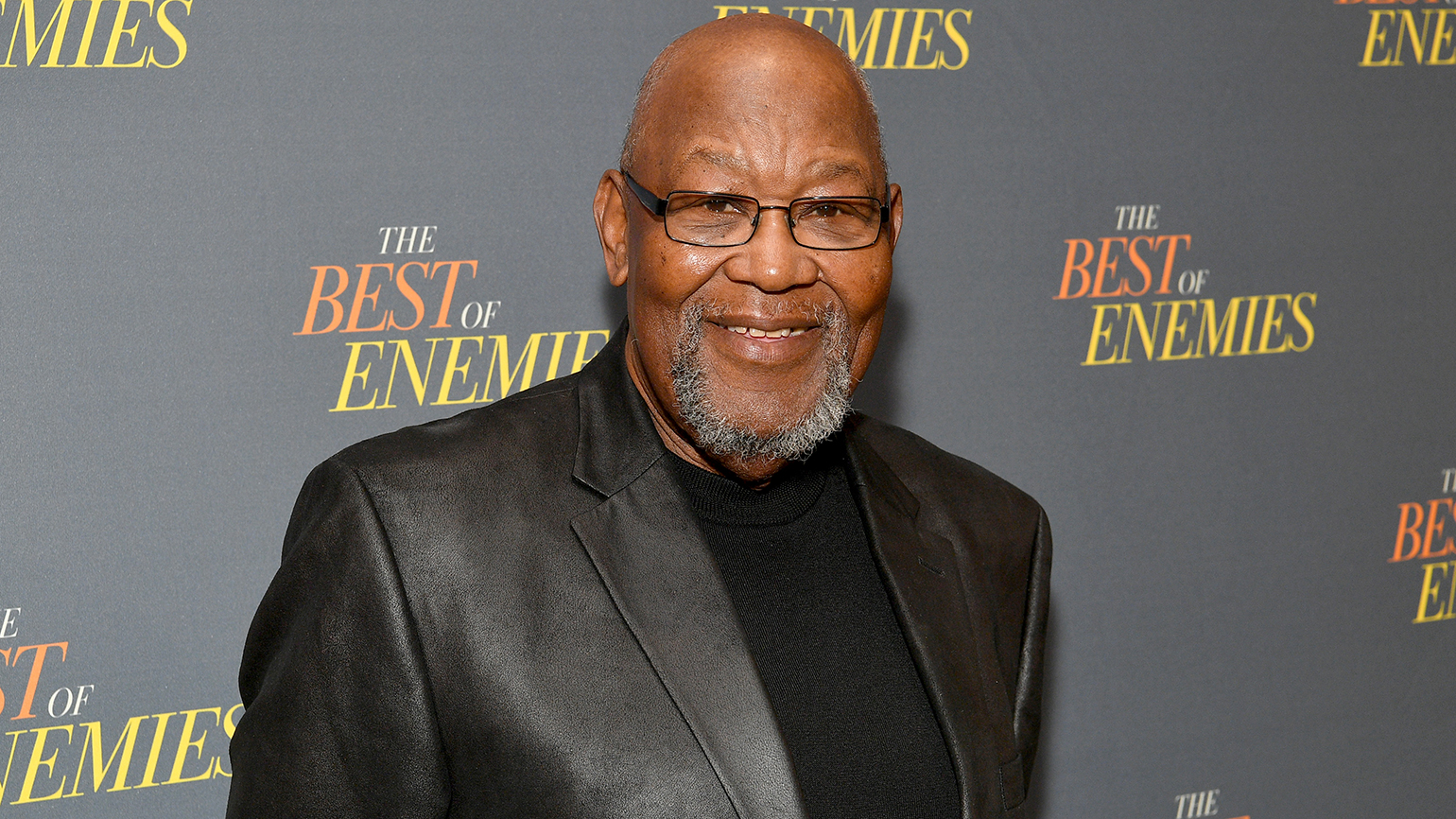
The Best of Enemies, a new movie starring Taraji P. Henson and Sam Rockwell, tells the story of how an unlikely friendship developed between Ann Atwater, an African American activist, and C.P. Ellis, a Ku Klux Klan leader.
A charette—a meeting in which all members of a community get to vote on the outcome of an issue—sparked Ellis and Atwater’s friendship. In 1971, the city of Durham held a charette to determine whether Durham schools would desegregate.
Bill Riddick, who ran a consulting firm and had successfully facilitated several charettes in other communities, was the organizer who brought Ellis and Atwater together. Riddick chose Atwater and Ellis to co-chair the charette because of their leadership roles in Durham. The charette lasted ten days and at the final meeting Ellis tore up his KKK membership card and voted to desegregate Durham. Ellis and Atwater remained friends for the rest of their lives. Atwater even delivered the eulogy at his funeral.
At the time, Riddick was surprised by the outcome, but in the years since, he has come to credit a higher power with what happened in Durham during those 10 days.
“Forty-eight years ago I really thought it was me,” Riddick told Guideposts.org. “As I have become more God-fearing and have worked harder in church the last 20 years, I realize that the Lord gave me a grace and helped me.”
Riddick believes Atwater, a devout Christian, had a much better sense of God’s presence in their midst.
“I didn’t realize when we got started that Ann was extremely religious,” Riddick said. “But now I look back at it, she had a lot more sense than I had about what she was doing.”
While the friendship between Ellis and Atwater became the subject of a book, play and now, a movie, Riddick moved on, continuing his work in other communities and working in student health at the University of North Carolina. He didn’t see the pair again until nearly two decades after the charette.
Now 81 years old, Riddick’s role in the story is finally coming to light, and he was able to offer guidance and input on the film, consulting with Babou Ceesay, the actor who plays him in the movie.
“It is strange to see somebody playing you,” Riddick said. “But I had the opportunity to talk to him during the film. He took my notes and changed his style. He came as close as I could come to being myself.”
The movie focuses on the relationship between Ellis and Atwater and the transformation both of them undertook. But Riddick also had to change in order to successfully facilitate the charette.
“I had as much bias as they had,” Riddick said. “Obviously my bias with [Ellis] is easy to sort out. But I didn’t particularly like the way Ann looked at things. So the first thing I had to do was get rid of my own biases.”
Riddick vividly remembers a realization he had after the first day of discussions in Durham.
“I went home that night and said, ‘I got the same problem that these two people got,’” he said. “And until I’m able to harness my own feelings and have greater respect for these individuals, then I’m not going to be successful.”
The experience changed the course of his life.
“From that day, I have tried to do that as a human being to accept every person for who they are,” Riddick said. “Even if we disagree, that doesn’t mean they’re a bad person.”
The Best of Enemies has given Riddick the chance to reflect on an experience that changed a city and many lives, including his own.
“I’ve lived a long time. I didn’t recognize how fortunate I have been until I became a believer,” Riddick said. “I just thought I was smart and that I could do things. And I realize now that none of that was mine. And I’m so grateful.”
The Inspiring Story Behind New Film ‘I’ll Push You’
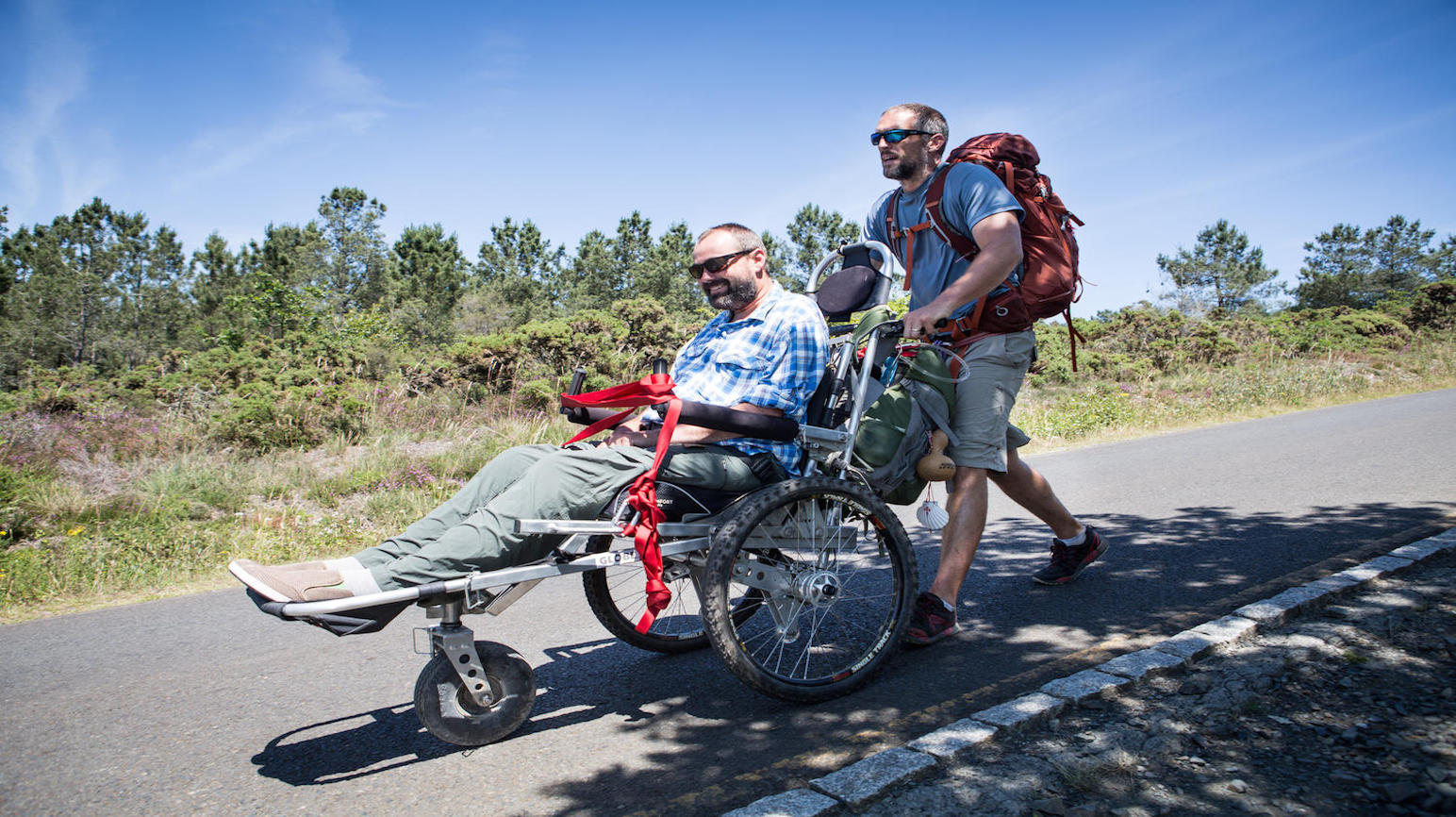
On Thursday, November 2, for one day only, lifelong best friends Justin Skeesuck and Patrick Gray will screen their documentary, I’ll Push You, in theaters across the country. It’s the story of their incredible—and seemingly impossible—journey through Spain’s famous El Camino de Santiago.
Many people have hiked the El Camino—a network of ancient pilgrim routes—but few have done it like Justin and Patrick. Justin has a rare and progressive autoimmune disease, Multifocal Acquired Motor Axonopathy, that means his muscles do not function typically, and he has been unable to move his upper and lower body since 2010. But once he shared his goal with his best friend, Patrick didn’t ask how Justin could achieve that goal, he simply said to Justin, “I’ll push you.” With their faith in God and determination to see this journey through, the duo successfully hiked the El Camino together for 34 days, with Patrick pushing Justin through the rough and rocky terrain.
In 2015, Guideposts.org spoke with Justin and Patrick about the miraculous ways God showed up to confirm that this journey was one they were not only meant to take but also to share with the world. At the last minute before their trip, they were able to get a film crew to join them on their way to Spain and document the excursion. They’d shared with Guideposts.org their desire to release the film about faith and friendship. This week, that desire becomes a reality. Proceeds from ticket sales will also benefit the Muscular Dystrophy Association.
Guideposts.org caught up with Justin and Patrick again to discuss how their lives have changed since their trip and why audiences need to see I’ll Push You.
GUIDEPOSTS.ORG: What does it feel like now that you’ve reached another goal on your El Camino journey by getting your documentary distributed nationwide?
JUSTIN SKEESUCK: I think we’re at the point where we’re real excited. So many people are excited to see the film. It’s very humbling but there’s also a lot of weight on us to get people out of their homes and out to see the film. But [to get to this point is] surreal. I never thought a theatrical release would allow me to be able to support [the Muscular Dystrophy Association,] an organization that has been there for me from the beginning. The funds we raise [selling tickets to the one-night screening] will help with research for cures. It’s very, very cool. It’s going to be such a wonderful night. We’re looking forward it.
GUIDEPOSTS.ORG: What’s the message you want people to take away from this film?
PATRICK GRAY: It’s been interesting to watch the reactions of audiences when we’ve done private screenings of the film. There’s not one take away. The common thread people are walking away with is the desire to have more meaningful relationships. The biggest takeaway is we all have the capacity to invite people into our lives and be willing to engage with each other in more meaningful ways.
GUIDEPOSTS.ORG: What’s your advice for people on how to deepen their relationships?
PG: There’s no set recipe, or magic sauce; for us, it’s been about being very intentional. You have these people in your life, but how much time and energy are we willing to put into truly stepping into vulnerability and allowing people to know us? It’s the moments of Justin saying, “Hey, I can’t do this on my own.” It’s allowing people to love all of who we are, to be vulnerable and open and honest. Christ knows all of who we are, so we have to willingly let people be all of who they are and love them anyway. It’s work that is worth it. Your joys are multiplied and your pain and struggles are divided.
GUIDEPOSTS.ORG: How have your lives changed since returning from this trip and getting this film together?
PG: When we came back, I knew that I was not going to stay in my job for very long. We got back July 2014 and I put in my notice in October and left in January 2015. When I came home from work in mid-October my wife said, “You need to quit; it’s time.” That was a very clear affirmation that we’re on the same page so we talked to the kids about it and even though I was letting go of a lot of certainty, the job was having a negative impact on my family because of how I was letting it affect me. Now, I have so much more time with my family and now the work stress comes from something we’re passionate about [traveling the country speaking about I’ll Push You with Justin]. Despite uncertainty there is peace calm and joy in my house that has not been there before. You ask my 3 kids what they think, and they’ll say, “Ok, we can’t do some of the things we did before,” but they got their dad back.
JS: I didn’t have a job like Patrick did. I’ve been at home since my middle son was born, so 12.5 years I’ve been home. The biggest difference is traveling. [Patrick and I are] not gone for weeks on end, but my wife gets a break she doesn’t have to care for me when I’m on the road. Sometimes, our wives get to travel with us. My wife is truly remarkable. She supports me and says, “I love you,” and we figure it out as we go.
GUIDEPOSTS.ORG: There is a caregiving element to your friendship and also between you and your wife, Justin. How has caregiving impacted your relationships?
JS: In my role in my marriage with my wife, I recognize wholeheartedly she’s going way above and beyond what a [typical] spouse does. She has to be healthy for us to have a healthy marriage. So, my role in our marriage is to make sure she gets the time that she needs to be healthy. It takes a lot of humility in order for me to get there.
For example, in two weeks, she wants to go to a women’s retreat. That requires someone to come in and care for me in the way that she normally does so that she can go get recharged. In order for me to do that, sometimes Patrick helps and in this case it’s going to be my parents. It’s nothing more humbling than being 42 and having my parents wipe my backside. But it’s something I need to have done so I can suck it up for a few days so that my wife can be recharged to do what she does for me.
It’s a two-way street. It’s not just me taking from her. I’m always looking to take care of her too. She needs that. She deserves that.
PG: My background is in nursing, so I spent a lot of time bedside, and it’s different when you’re caring for your friend because there’s an intimacy that doesn’t exist with a patient. There’s a tendency [as a caregiver] to give more than you’re capable of and people get worn out, they get burned out. My ability to be a caregiver [for Justin] gives Kristin a break. It’s not a gift that I give it’s one that I get. When you open up and willingly give to someone, there’s a remarkable amount of reciprocity that happens when you get to help somebody.
There are so many times that Justin is, in turn, helping me. Whatever struggle we deal with, there’s a space where his thoughts, his emotions, his words teach me or coach me to be a better person. That’s what we do for each other—willingly give and willingly receive.