

Embrace God's truth with our new book, The Lies that Bind

The Inspiring Story Behind New Film ‘I’ll Push You’

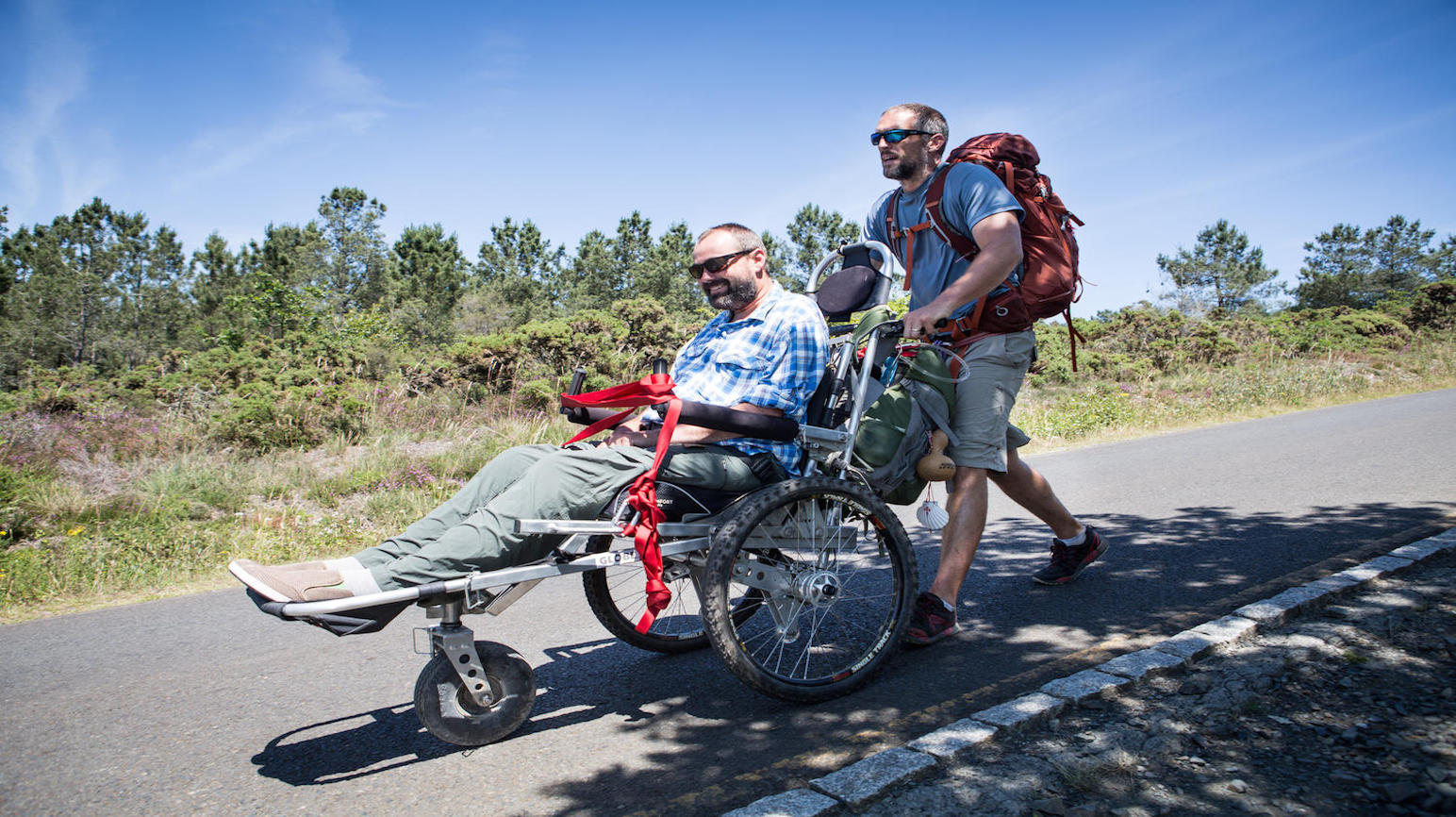
On Thursday, November 2, for one day only, lifelong best friends Justin Skeesuck and Patrick Gray will screen their documentary, I’ll Push You, in theaters across the country. It’s the story of their incredible—and seemingly impossible—journey through Spain’s famous El Camino de Santiago.

Many people have hiked the El Camino—a network of ancient pilgrim routes—but few have done it like Justin and Patrick. Justin has a rare and progressive autoimmune disease, Multifocal Acquired Motor Axonopathy, that means his muscles do not function typically, and he has been unable to move his upper and lower body since 2010. But once he shared his goal with his best friend, Patrick didn’t ask how Justin could achieve that goal, he simply said to Justin, “I’ll push you.” With their faith in God and determination to see this journey through, the duo successfully hiked the El Camino together for 34 days, with Patrick pushing Justin through the rough and rocky terrain.

In 2015, Guideposts.org spoke with Justin and Patrick about the miraculous ways God showed up to confirm that this journey was one they were not only meant to take but also to share with the world. At the last minute before their trip, they were able to get a film crew to join them on their way to Spain and document the excursion. They’d shared with Guideposts.org their desire to release the film about faith and friendship. This week, that desire becomes a reality. Proceeds from ticket sales will also benefit the Muscular Dystrophy Association.

Guideposts.org caught up with Justin and Patrick again to discuss how their lives have changed since their trip and why audiences need to see I’ll Push You.

GUIDEPOSTS.ORG: What does it feel like now that you’ve reached another goal on your El Camino journey by getting your documentary distributed nationwide?

JUSTIN SKEESUCK: I think we’re at the point where we’re real excited. So many people are excited to see the film. It’s very humbling but there’s also a lot of weight on us to get people out of their homes and out to see the film. But [to get to this point is] surreal. I never thought a theatrical release would allow me to be able to support [the Muscular Dystrophy Association,] an organization that has been there for me from the beginning. The funds we raise [selling tickets to the one-night screening] will help with research for cures. It’s very, very cool. It’s going to be such a wonderful night. We’re looking forward it.

GUIDEPOSTS.ORG: What’s the message you want people to take away from this film?

PATRICK GRAY: It’s been interesting to watch the reactions of audiences when we’ve done private screenings of the film. There’s not one take away. The common thread people are walking away with is the desire to have more meaningful relationships. The biggest takeaway is we all have the capacity to invite people into our lives and be willing to engage with each other in more meaningful ways.

GUIDEPOSTS.ORG: What’s your advice for people on how to deepen their relationships?

PG: There’s no set recipe, or magic sauce; for us, it’s been about being very intentional. You have these people in your life, but how much time and energy are we willing to put into truly stepping into vulnerability and allowing people to know us? It’s the moments of Justin saying, “Hey, I can’t do this on my own.” It’s allowing people to love all of who we are, to be vulnerable and open and honest. Christ knows all of who we are, so we have to willingly let people be all of who they are and love them anyway. It’s work that is worth it. Your joys are multiplied and your pain and struggles are divided.

GUIDEPOSTS.ORG: How have your lives changed since returning from this trip and getting this film together?

PG: When we came back, I knew that I was not going to stay in my job for very long. We got back July 2014 and I put in my notice in October and left in January 2015. When I came home from work in mid-October my wife said, “You need to quit; it’s time.” That was a very clear affirmation that we’re on the same page so we talked to the kids about it and even though I was letting go of a lot of certainty, the job was having a negative impact on my family because of how I was letting it affect me. Now, I have so much more time with my family and now the work stress comes from something we’re passionate about [traveling the country speaking about I’ll Push You with Justin]. Despite uncertainty there is peace calm and joy in my house that has not been there before. You ask my 3 kids what they think, and they’ll say, “Ok, we can’t do some of the things we did before,” but they got their dad back.

JS: I didn’t have a job like Patrick did. I’ve been at home since my middle son was born, so 12.5 years I’ve been home. The biggest difference is traveling. [Patrick and I are] not gone for weeks on end, but my wife gets a break she doesn’t have to care for me when I’m on the road. Sometimes, our wives get to travel with us. My wife is truly remarkable. She supports me and says, “I love you,” and we figure it out as we go.

GUIDEPOSTS.ORG: There is a caregiving element to your friendship and also between you and your wife, Justin. How has caregiving impacted your relationships?

JS: In my role in my marriage with my wife, I recognize wholeheartedly she’s going way above and beyond what a [typical] spouse does. She has to be healthy for us to have a healthy marriage. So, my role in our marriage is to make sure she gets the time that she needs to be healthy. It takes a lot of humility in order for me to get there.

For example, in two weeks, she wants to go to a women’s retreat. That requires someone to come in and care for me in the way that she normally does so that she can go get recharged. In order for me to do that, sometimes Patrick helps and in this case it’s going to be my parents. It’s nothing more humbling than being 42 and having my parents wipe my backside. But it’s something I need to have done so I can suck it up for a few days so that my wife can be recharged to do what she does for me.

It’s a two-way street. It’s not just me taking from her. I’m always looking to take care of her too. She needs that. She deserves that.

PG: My background is in nursing, so I spent a lot of time bedside, and it’s different when you’re caring for your friend because there’s an intimacy that doesn’t exist with a patient. There’s a tendency [as a caregiver] to give more than you’re capable of and people get worn out, they get burned out. My ability to be a caregiver [for Justin] gives Kristin a break. It’s not a gift that I give it’s one that I get. When you open up and willingly give to someone, there’s a remarkable amount of reciprocity that happens when you get to help somebody.

There are so many times that Justin is, in turn, helping me. Whatever struggle we deal with, there’s a space where his thoughts, his emotions, his words teach me or coach me to be a better person. That’s what we do for each other—willingly give and willingly receive.

The Imperfect Perfect Game

Everyone is talking about it. Which is why I wasn’t going to. Yet the Detroit Tigers pitcher Armando Galarraga’s imperfect perfect game arouses passions that go beyond baseball and sports and speak to our notions of perfection, fairness and tradition. That’s why I want to know what you think about the controversy.

Last Wednesday night in Detroit pitching against the Cleveland Indians, Armando Galarraga did what has only been done 20 times in the history of major league baseball (and, amazingly, twice this season): He retired 27 consecutive batters without a hit or a walk. Or appeared to. With two outs in the ninth—just one out from perfection and baseball immortality for Galarraga—Jason Donald, the Cleveland shortstop, hit a routine ball to the right side of the infield. First baseman Miguel Cabrera fielded it cleanly and threw to Galarraga covering first base. It was a close play but Galarraga clearly beat Donald to the bag and had his perfect game.

That is when fate—in the guise of umpire Jim Joyce—stepped in. “Safe!” he barked, and the home crowd hushed for an instant before exploding into boos and howls of righteous outrage. Joyce blew the call. It didn’t matter that the Tigers went on to win the game, and in the final analysis that’s what counts. Joyce had made what people were calling the worst call ever. He’d obliterated perfection. He destroyed history.

Replays bore out the obvious. A chagrined Joyce admitted his mistake. Donald agreed he was out at first. But replays, except for home run calls, are not binding in baseball. The call stood. The commissioner, Bud Selig, refused to intervene. To reverse an umpire’s call would be to reverse 160 years of tradition. No, you couldn’t do that, not even for a perfect game.

So, who’s right?

Traditionalists say that an umpire’s call is final; it’s part of the game, just like an out or a hit. Baseball is a game of imperfection. The best hitters fail 70 percent of the time. Pitchers routinely miss the strike zone. And umpires blow calls. On Wednesday night you can be assured that Joyce’s umpiring blunder was one of several made throughout the big leagues. Baseball is a most human game, and humans make mistakes. Can you even mention the words perfect and human in the same sentence?

Besides, what about all the other missed calls that altered baseball history? Do you go back and change them? Is that fair?

The reversalists (I made that word up, folks) think Selig is propagating a flagrant injustice. Why not, in the name of fairness, make an exception? Wouldn’t that be in the best interests of baseball? Wouldn’t that be easier to explain to your kids? You don’t have to change everything, just this one massive error, in the name of justice. It would give Galarraga his well-deserved perfecto and get Joyce off the hook, who will otherwise forever be vilified as the ump who blew The Call.

Those are the choices. Are you a Traditionalist or a Reversalist? Let me know. And remember, this is about more than just baseball.

The Great County Fair Cookie Bake-off

It was the week before the White­side County Fair. One-year-old Gabe was finally down for his afternoon nap and my three older boys, 14-year-old Logan, 10-year-old Grant and four-year-old Samuel, were spread out in the living room, working on their drawings, paintings and collages for the hobby contests. Entering was a family tradition and the three of them were dreaming of shiny blue ribbons.

I would’ve been too—after all, my chocolate chip cookies had won first place two years running. But this year the boys had signed up for five projects. Each. I was totally exhausted, my neck tight with tension. My only prayer was to get through this week.

The front door opened. My husband, Lonny, kicked off his boots. “Looks like Project Central in here!” he said, then turned to me. “How come I don’t smell your chocolate chip cookies? Don’t you usually have us taste test a batch?”

“I’m not making them this year,” I replied, collapsing into a chair.

“I know how tired you must be, especially with the baby. But no cookies? Shawnelle, you’re the Chocolate Chip Cookie Queen. You have to make them.”

“There’s too much to do. We’ll be lucky to get the boys’ projects finished in time,” I said.

Lonny gave me a long look. “Well, then, I’m going to bake them and claim your blue ribbon.”

“Like it’s that easy,” I said. Lonny couldn’t be serious. He’d never baked a thing!

He shrugged. “Can’t be too hard.”

“You don’t have the recipe,” I said.

“I have my own,” Lonny replied.

“I changed my mind,” I said. “I’m entering too.”

“Are you sure about that? You’ll have some competition.”

“Bring it on,” I said.

A few evenings later Lonny got home from work and announced, “Time to bake my cookies!” The boys ran to the kitchen. I did too. Canisters, measuring cups and mixing bowls cluttered the counter. A cookbook was open to a page with “Blue Ribbon Cookies” across the top.

“This recipe calls for three helpers,” Lonny said.

“Oh, no, Dad, we’re not helping you take Mom’s ribbon,” Grant said. “Besides, only she has the right recipe.”

“Yeah,” Logan added. “We just came to watch.”

I leaned in the doorway and hid a smile. “That’s okay,” Lonny said. “Let’s see. Step One: Massage two sticks of butter.” He hummed as he kneaded the wrapped bars. The boys giggled.

“Step two, add three eggs…but only after you spin each one like a top,” he said, handing one to each boy. They cleared part of the counter and spun their eggs. So much for them helping!

“Careful,” I said. “You’ll make a mess.”

“You just stay back there,” Lonny said. “I don’t want you stealing my secrets.”

I laughed as I left the kitchen. And I couldn’t help laughing again that night when I baked my batch of cookies. Thinking of Lonny’s antics melted away the tension. I even had enough energy to help the boys wrap up their projects.

Then it was fair day. The Ferris wheel turned lazily in the blue sky. The air was sweet with the scent of funnel cakes. Vendors bellowed. Lonny and I walked down the dusty midway, the boys ahead of us, comparing the ribbons they’d won earlier that morning. We finally reached the blue-and-white pole barn where the baked goods were judged. Rows of lattice-topped pies, frosted cakes and brown breads were on display.

The boys rushed to the cookies. I saw my batch. They were right out front. And decorated with a first-place ribbon! I scanned the rows for Lonny’s cookies. They were in the back. No ribbon.

“You won, Mom!” The boys wrapped me in hugs. Then Grant said, “Dad, I’m sorry you didn’t get the blue ribbon. I know how hard you worked.”

“It’s okay,” Lonny said. “I got just what I wanted. Look at the smile on your mom’s face.”

I reached for Lonny’s hand as we strolled back down the midway. The shiny blue ribbon was nice, but I knew I’d already been given the best prize. The real prize. A husband who truly understands what I need, sometimes even better than I do.

Try Mom’s Blue Ribbon Chocolate Chip Cookies!

The Good Lie: A Story of Survival and Hope

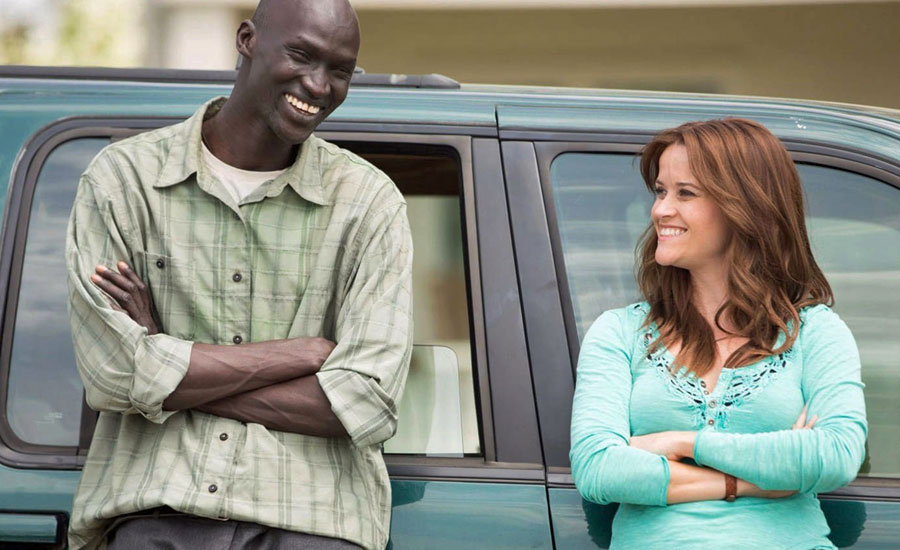
There’s an African proverb that says, “If you want to go fast, go alone. If you want to go far, go together.” That’s the line that closes the movie The Good Lie, which stars Reese Witherspoon, and though the words only appear once on the screen, their meaning can be felt throughout the 112 minutes of the movie.

They’re there when gunslingers ravage a Sudanese village, killing mothers and fathers and orphaning their children. They appear again as group of young boys and their sister walk hundreds of miles, battling nature, hunger and thirst in order to find somewhere far away from their violent homes. They’re even present when a group of refugees get a chance at a new life, an ocean away, in a strange land with even stranger people. They are the all-encompassing message of The Good Lie and they’ll stay with you long after the credits have rolled.

The film, directed by Philippe Falardeau and costarring House of Cards alum Corey Stoll, could’ve easily been another tale of white men and women serving as saviors to those of color. Witherspoon’s character, Carrie Davis, works for an employment agency and is tasked with finding three young men—known collectively as the “Lost Boys”—jobs after they’ve been transported from their war-torn country of Sudan to Kansas City, Missouri. Instead, the movie does something even better, and braver; it eschews its Hollywood A-lister in favor of good story-telling.

For Witherspoon fans, you get your healthy dose of the actress. She’s both neglectful and nurturing in her attitude towards the “Lost Boys” and her own character’s journey is well-sussed out during the film. But the real stars of the show are the men and children who must convey the struggle, heartbreak and loss 3,600 other real-life refugees experienced during the civil war that took place in Sudan in the 1980s and continues today.

After burying friends, watching their brothers be taken as child soldiers, swimming through rivers littered with dead bodies and surviving over a decade in the harsh conditions of a Kenyan refugee camp, Mamere (Arnold Oceng), Jeremiah (Ger Duany), Paul (Emmanuel Jal) and Abital (Kuoth Wiel) are given a golden ticket to America.

Despite the trials they’ve already endured, they must again face cruelty, this time at the hand of the US government, as the boys are parted from their sister before their new life can begin. This separation is even harder to take than some of the atrocities you watch the children go through in the beginning of the film and it only serves to show that nothing will come easy for these young men who have already had it so rough. From temptations to unfulfilling careers and the overwhelming feeling that what they went through doesn’t matter to many people, the Lost Boys struggle with the reality of their American Dream.

Culture-clashing moments inject the movie with a healthy dose of humor. From fearing escalators to hearing the “Why’d the chicken cross the road?” joke for the first time, to reveling in the fact that Carrie is unmarried, with no children and surviving on her own, watching the men adjust to life in America gives the audience some much needed laughs in spite of the film’s heavy content.

Oceng and Duany are brilliant as Mamere and Jeremiah. In his first American starring role, Oceng easily carries the film as his emotionally complex Mamere weighs his dreams of going to college and becoming a doctor against his sense of responsibility to his family, all while battling his own survivor’s guilt. The sacrifices he’s asked to make for his family are incredible and it’s his scene at the end of the movie that will have you reaching for your tissues. Duany’s Jeremiah is the spiritual center of the film, with a tight grip on his Bible and desire to help those in the community. His spiritual journey will touch your heart.

There’s another wonderful moment when Jal’s Paul is explaining the scars on his arm to his co-workers. He tells them a lion’s teeth made the marks, which the men immediately rebuff as a lie, but as Paul goes on to explain how he tried to save his brother from a pack of lions ready to eat them both, a sudden understanding dawns. Life experiences divide them so deeply that they could never even imagine the horrors Paul and his brothers faced. Jal beautifully captures that sense of grief and loneliness with just a look.

What’s amazing about all three characters is their unwavering faith and how heavily they rely on it. Though they’ve been tested with things no person should ever have to experience, they never once question God’s plan for their life. It’s their optimism and love for each other that’s so inspiring.

But what you absolutely cannot ignore while watching the film is the back-story of the actors themselves. Both Duany and Jal are actual children of war, refugees who experienced many of the same things their characters go through in the film, and Oceng is the son of refugees. All three are so connected to the history of this story that they can’t help but be authentic in the emotions they convey. They’re the heart of the film and it’s their own stories as well as the stories they tell that will leave such a lasting impression.

The Good Lie opens in select theaters Friday, October 3, and releases everywhere October 24th.

The Florida Project Is Giving a Voice to the Homeless

According to Volunteers of America, over 600,000 people are currently homeless and even more live in poverty. They’re often an underserved, unnoticed part of America. Many of these families live in pay-by-the-week motels and struggle to make ends meet. Community First! Village is hoping to help change that.

Community First! is a 27-acre master-planned community that provides affordable, permanent housing and a supportive community for the disabled and chronically homeless in Austin, Texas. It’s an offshoot of Mobile Loaves & Fishes, a Christian Ministry that takes to the streets to feed and congregate with people in need.

“It all started with our founder, Alan Graham,” Community First! Director Ed Travis tells Guideposts.org. “[He dreamed] about just getting one person up off the street, moving him into an RV. Now we call Community First! Village a trailer park on steroids,” he says. “We have people coming, living, moving off the streets and moving into permanent housing with us.”

Part of what Travis does at Community First! is to help coordinate events for the homeless community and the community at large, bringing people together and creating paid work opportunities for residents of the Village. One event is movie night. They arrange movie screenings at the amphitheater on the Village’s property, and they offer movie screenings open to the public.

When The Florida Project came across Travis’s desk, he thought it would be perfect to screen at the Village.

From writer-director Sean Baker, the drama, which had a limited debut in theaters last month, follows a young girl named Moonee as she spends her summer in a community of extended-stay motel guests in Florida. The film tackles poverty through the innocent, imaginative eyes of a six-year old. It also portrays a population of people who are normally ostracized by society in a humane, honest way.

“I just feel like a lot of what [Sean Baker] was able to do was really depict people that seemed fleshed out and real, not necessarily portray them with a judgment attached,” Travis says. “It’s just like, here’s life on the edge of homelessness, on the verge of homelessness. Those characters feel relevant and real, and they certainly felt genuine to me and my experience working with folks on the street.”

He thinks the film had a huge impact on the people of the Village and hopefully taught those who don’t live there a bit about the homeless, their triumphs and their struggles.

“People are trying to survive. That’s what it comes down to,” Travis explains. “People are doing what they need to survive and it’s just hard. People find different ways to cope.”

He hopes the film and the work his team is doing at Community First! might encourage others to reach out to the homeless in their own community and start a conversation.

“What [we] live and breathe is just being in relationship with people and not having a transactional approach to interactions,” Travis says. “So just talking to people like they’re human beings, offering dignity where you can, I think that’s sort of what the individual can do.”

The Faith of Jane Austen

Beth Pattillo is the author of the novels Jane Austen Ruined My Life, Mr. Darcy Broke My Heart and The Dashwood Sisters Tell All, fictional accounts of how Austen’s work helped shape the lives of four contemporary young women.

What kind of Christian was Jane Austen?

We know that she was the daughter and sister of clergymen. She grew up in a family that practiced their faith through regular worship and by helping people in need. From her surviving letters, we know that she and her sister often sewed or provided clothing for her father’s parishioners.

She left behind one prayer that she penned; we don’t know if there might have been others. Upon her early death, at 41, she was afforded the honor of a cathedral burial not because of her fame as a novelist—her authorship was still anonymous at the time—but because of her exemplary life among the clergy in her little corner of the world.

As I have studied Jane Austen and her novels, I have wondered why she didn’t write more about her faith. Clearly, her Christian beliefs motivated her. But to try and identify what her faith might have meant to her, we have to look at her novels. In her stories, we find the key to the faith of Jane Austen.

Austen’s characters are capable of great change. Their journey from a narrow understanding to self-awareness is what makes her stories so fascinating and so enduring. Whether it’s Elizabeth Bennet overcoming her prejudice of Mr. Darcy (Pride and Prejudice), Emma Woodhouse coming to terms with her self-delusion (Emma) or Marianne Dashwood finally recognizing what makes a man a hero (Sense and Sensibility), Austen’s characters are good people who become better ones.

Austen values integrity, humility and understanding, and such qualities are rarely cultivated without some hard lessons. Her main characters begin with good hearts and end their stories with more capacity to love and to accept others because of what they’ve learned. Her heroes and heroines are transformed by love, an idea central to Christianity.

In her surviving prayer, Austen writes, “Thou art everywhere present, from thee no secret can be hid. May the knowledge of this, teach us to fix our thoughts on thee, with reverence and devotion that we pray not in vain.”

Austen’s faith may not call attention to itself in her novels, but it is “everywhere present” in her work, just like the love of God.

The Divine Pitch

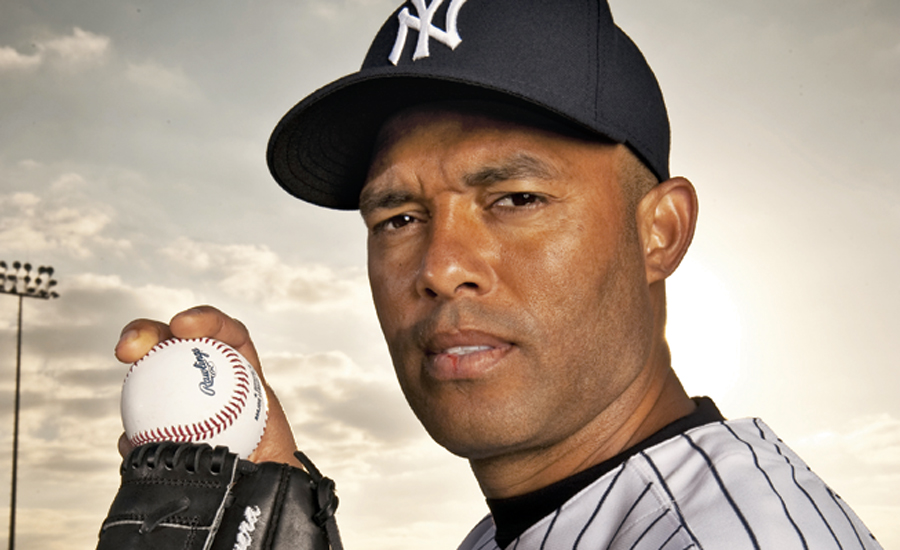
Mariano Rivera’s first baseball was a rock wrapped in fishing net and tape. His glove was a flattened milk carton. Growing up in a tin-roofed house in a tiny Panamanian fishing village, he gave little hint that one day, he’d be the greatest closer in baseball history.

At 18 he was earning 50 dollars a week on a fishing boat, playing various positions for a local team. One game, the manager thrust Mariano into emergency relief. “I got results that were way beyond my physical abilities,” Mariano writes in his autobiography, The Closer. That same year, he’d begun studying Scripture at the urging of a cousin.

Two years later, the New York Yankees signed Mariano to a minor league contract. He was a fringe prospect, with an underwhelming 87-mph fastball. In 1995, he was called up to the majors. In four starts, he gave up 23 runs. He was demoted to AAA Columbus.

There, warming up before a game, he noticed that his pitches had more zip than usual. A radar gun clocked his fastball at 98 mph, an impossible gain in velocity. Scouts thought the gun was defective.

Not long after, he played catch with another pitcher, who grew frustrated that Mariano’s throws kept jumping away. Mariano swore he hadn’t changed his grip. But he could not get his fastball to fly straight.

Mariano had found his cutter—a twist on the fastball that breaks sharply at the last second. “I did not spend years searching for the pitch,” he recalls in his memoir. “It was as if it dropped straight from the heavens.”

In 2009, Mariano and his wife, Clara, founded a church in New Rochelle, New York. Their way of giving back for the miracles that brought him from poverty to a sure spot in the Hall of Fame. Mariano’s 2.21 lifetime earned-run average is even more impressive considering he accomplished it with little more than one pitch in his arsenal. A pitch he believes came from God.

The Divine Inspiration Behind a Famous Salute

You don’t have to be a sci-fi fan to recognize the Vulcan salute from Star Trek: a famously difficult gesture made by raising your hand to form a “V” between your ring and middle finger, with the thumb extended out, accompanied by the phrase, “Live Long and Prosper.”

Actor Leonard Nimoy is credited with developing the greeting for his character, Spock. But its true origin came from a Jewish ritual that the actor witnessed as a boy:

The blessing Nimoy talks about is performed by a rabbi for people observing special occasions. The rabbi makes the “Vulcan” gesture with two hands, to form a Shin, the Hebrew letter that begins the word Shaddai, or “Almighty God.”

The prayer the rabbi says is this:

May the Lord bless you and guard you
יְבָרֶכְךָ יהוה, וְיִשְׁמְרֶךָ
(“Yebhārēkh-khā Adhōnāy weyishmerēkhā…)
May the Lord make his face shed light upon you and be gracious unto you
יָאֵר יהוה פָּנָיו אֵלֶיךָ, וִיחֻנֶּךָּ
(“Yāʾēr Adhōnāy pānāw ēlekhā wiḥunnékkā…)
May the Lord lift up his face unto you and give you peace.

Live long and prosper indeed. It’s easy to see how well that famous Trekkie phrase mirrors the ancient benediction.

What if Nimoy hadn’t stolen a peek at the rabbi? The rabbi hadn’t intended to inspire a fictional TV show and movie franchise. But the blessing did, in fact, do its job. It blessed young Leonard Nimoy with his character’s most memorable salutation.

Has a religious ritual inspired your creativity? What did you invent or develop based on something you witnessed at a service? Share your stories with us!

The Church She Calls Home

Earlier this year I was in a church to film a movie, a historic church in Harlem with magnificent stained-glass windows and rows and rows of pews, with choir stalls and stacks of Bibles. Even though my own church was halfway across the country, I felt right at home.

Church was at the center of my life growing up. My family went to a Baptist church on the South Side of Chicago, and I think we spent more time there than at our house.

Monday nights we had Bible study, Tuesday nights were rehearsals for the adult choir, Wednesday nights the youth choir rehearsed (I sang in both choirs), Saturdays my mother folded and stapled bulletins, Sundays we were at both morning and evening services.

We were always there. And more important, our church family was always there with us, helping us stay close to God in good times and bad.

The movie was Black Nativity, based on the Langston Hughes play. I had the part of a single mother about to be evicted from her Baltimore home.

She’s beaten down by worries, especially about her teenage son. She’s had a falling out with her parents and hasn’t been back to New York City, where her dad’s a preacher, in years.

Still, she sends her son up there to live with them, to be in a safe place away from her problems. That’s why we were here filming.

I know what it’s like to pray for my child. My son, David, Jr., named for his father, has been incredibly blessed in his four years, but I think any mother, no matter how old her kids are, understands what it’s like to have hopes and dreams and prayers for them.

So many of the prayers I said as a girl were sung—and they still are. Our family was full of musicians. My uncle John was one of the lead musicians at church and directed the choir. My cousin Quentin could sit down at the piano and play any song ever written.

We’d sing one of my grandmother’s favorite hymns, like “How Great Thou Art,” or a gospel tune like “Be Grateful.” The words filled my spirit as much as the music did.

“Be grateful,” that gospel song goes, “because there’s someone else who’d love to be in your shoes. Be grateful, oh yeah, my God said he’d never, never forsake you.” Be grateful in everything, at all times, like it says in the Bible. Like I heard in church.

We marked up our Bibles, underlining key verses. We’d take them out and study them when the preacher preached. You’d find one of my mother’s carefully folded programs stuck between the leaves or an inscription inside for an anniversary, a birthday or a graduation.

That was a Hudson family tradition. If you were celebrating a big milestone or heading off somewhere, you were given a Bible.

My grandmother gave my uncle a Bible before he left to serve in Vietnam. When I went away to college my mother gave me my own Bible. It’s small, black, and the cover is worn to pieces, but you know the saying, the Bible that’s falling apart belongs to someone who isn’t.

I had it with me when I was on American Idol and I’d pull it out of my purse whenever I needed inspiration or guidance. Sometimes the other contestants would tease me about it. “Jennifer, you wouldn’t cross the street without your Bible,” they’d say. They were right.

These days there are Bible apps that make it easy to look up a verse. I use them to read something to David, Jr., or we play a Bible game on his iPad. But I still carry that little Bible my mother gave me everywhere. It’s a reminder of how my faith has carried me. Always.

That was how all of us felt in my family—my mother; my older brother, Jason; my older sister, Julia; and me. We had love, we had each other and we had God at the center of our lives.

Even after I grew up and my career took me far from Chicago, I’d still go back there. When I had my big audition for the movie Dreamgirls, a huge opportunity, you know where I went to pray? The steps of the church where I’d been going since I was born, the church where I found my voice.

Or when I won the Academy Award for my role in Dreamgirls, or had my first solo album released or got engaged to David, who did I want to thank? God, first and foremost. Then the people he put in my life to support and inspire me–my family and my church most of all.

They’d given me all I needed to make my way. I try to remember them and honor them in everything I do.

Especially my grandmother, who believed the best way to show her gratitude to God for her beautiful singing voice was to use it to serve him. My mother, who was utterly devoted to our family. My brother, who had such a generous spirit. He loved to barbecue, feeding the whole neighborhood.

And my nephew, Julia’s son Julian King, who was all about education. He was so smart and did his homework without being told. He changed his own bedtime from 9:00 to 8:00 so he wouldn’t be late for school. He had people call him “Dr. King” because he dreamed of being a doctor.

Julia and I started the Julian D. King Gift Foundation to provide children positive experiences in his honor. Every August 14, Julian’s birthday, we hold a “Hatch Day,” a name he came up with (we don’t know how). He loved parties and would send out Hatch Day invites to family and friends.

We celebrate his birthday by donating school supplies to thousands of kids in need. I think Julian would have been totally into getting kids as excited about school as he was. We hold an annual Christmas toy drive in his name too.

Now when Christmas comes I want to do all the things I did growing up, get the fireplace going, get our family together for a fish fry, gather around the piano and sing. And, of course, go to church for the Christmas play, with all the children carrying candles down the aisle and everyone singing carols.

There’s something special about Christmas, about celebrating the birth of Christ, a kind of beauty that brings people together, that heals the wounds only he can heal.

I got that exact same feeling there in that historic church in Harlem while we were filming. “Fix me, Jesus,” sings the character I play. It’s an outpouring of emotion, the kind of crying out to God we make when we’re brokenhearted, when our spirits are as low as they can go.

She goes back to New York for the first time in years, reuniting with her parents and her son. What a celebration follows, the choir leaping to their feet, clapping and singing. At last she’s back in the place that nourished her, that sustains her still. Church–the place I’ve always called home.

Download your FREE ebook, A Prayer for Every Need, by Dr. Norman Vincent Peale

The Broadway Hit ‘Come From Away’ Comes to the Screen

“On the northeast tip of North America, on an island called Newfoundland, there’s an airport. It used to be one of the biggest airports in the world. And next to it is a town called Gander…”

So begins the Broadway musical Come From Away, the true story of how residents of the small Canadian town of Gander came together to help when 38 planes—carrying 7,000 passengers (and 21 animals) from around the world—were diverted to their airport on 9/11. The planes were sent there as a part of Operation Yellow Ribbon, a Canadian initiative to safely land planes at Canadian airports and clear the U.S. airspace on the morning of September 11, 2001. The large Gander International Airport was a natural fit. While it is quieter these days, in the 1950s the airport was one of the busiest in the world as it was an ideal refueling stop for pre-jet aircraft travelling between Europe and North America. During WWII, the airport was the main staging point for Allied aircraft heading to Europe. There were plans to tear the airport down, but the town – miraculously – hadn’t gotten around to it yet.

In 2017, Come From Away was nominated for seven Tony Awards; director Christopher Ashley won for Best Direction of a Musical. Now, to mark the 20th anniversary of the 9/11 terrorist attacks, the beloved musical is being filmed and will stream live on Apple TV+ starting on September 10.

The musical was written by Canadian composer-lyricists Irene Sankoff and David Hein. They were both in New York City on 9/11 and like many, were deeply affected by the experience. They traveled to Gander where they learned how town residents did not hesitate to open their doors to 7,000 strangers. They provided the stranded passengers with everything they needed —clothes, medication, baby formula, beds, and phones to call their loved ones. “There is a sense of collective responsibility to be good to one another that the people there were raised on,” Hein said in a recent interview. “And when the world needed it, they were there for them.”

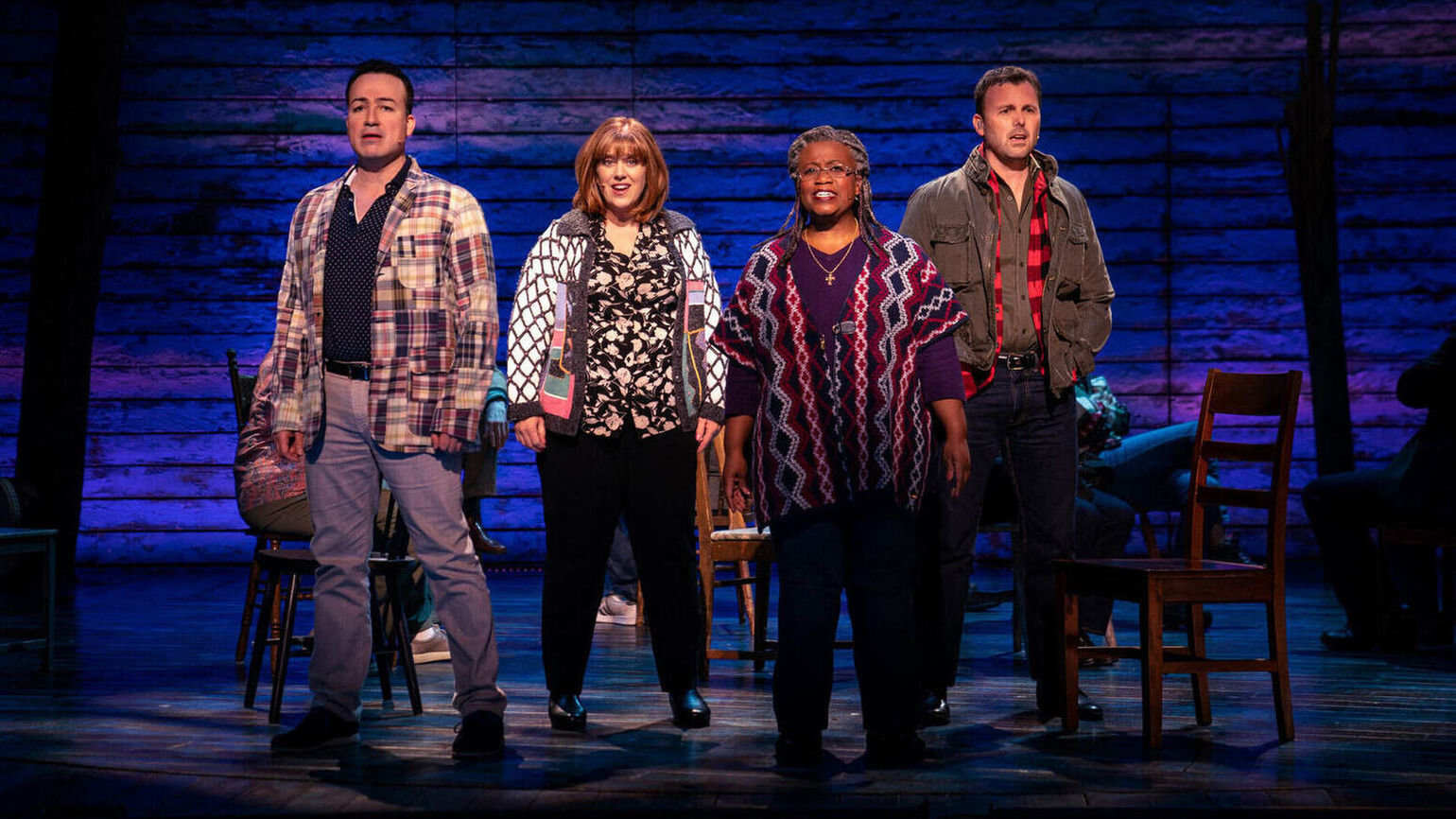
The story also closely follows the stranded passengers, called “come from aways” by the Gander residents. It shows their confusion and horror after learning about the attacks, as well as how they eventually forged deep connections with each other. “This show is not just about the tragedy and the darkness,” says Astrid Van Wieren, who plays the character Beulah Davis, a Gander school teacher. “It’s about the cracks of light getting through, interconnectedness and our humanity.”

One way the passengers and Gander locals connected was through their faith. “We learned how the local library in Gander became this sacred place of worship for many different faiths,” said Sankoff. “We knew that was important to include.” They show this through the song “Prayer,” which follows various characters—Christian, Jewish, Muslim, and others—as they come to grips with the tragedy of 9/11 and pray to God for a sense of hope. “It took work to make the prayers of the world to harmonize together,” said Hein. “But it’s become a wonderful metaphor for the work becoming bigger than itself.”

Faith was particularly important for Q. Smith, who plays Hannah O’Rourke, a mother with a son in the New York City Fire Department. “In the Bible, it says faith is the thing that we cannot see, but the thing to hope for,” says Smith. “In real life faith gives Hannah strength, just like it gives me strength too.”

The musical’s screen premiere comes during the ongoing Covid-19 pandemic. “There’s never a bad time to tell a story about people being good to one another,” says Hein, “but right now it feels important to remind people of that.” That is exactly what the cast and crew hope the audience will take away from it – a sense of duty to one another.

“Newfoundlanders keep their doors open,” says Smith, “They ask, ‘how can I be of service?’ I hope that everyone will walk away as a Newfoundlander. That’s what this show is about – helping one another.”

For more powerful 9/11 stories, check out Guideposts’ collection here.

Come From Away is streaming on Apple TV+ starting September 10th. Check out the trailer below.

The 300th Win

When I was pitching in the major leagues I was known as "Knucksie," because I threw a knuckleball. You don't actually throw a knuckleball with your knuckles.

But that's just one of the many strange things about the pitch. Few pitchers can consistently control it, and fewer still can make a living throwing it.

Yet that's exactly what my brother Joe and I both did. We credit our dad. He's the one who taught me the knuckler—and just about every important thing I know.

Dad was a coal miner in Lansing, Ohio. He was a star pitcher in the local semipro league, throwing serious heat for his Polish lodge and earning the nickname "The Big Bear" because of his massive frame and oaken shoulders.

In his youth Dad could have thrown a grape through a brick wall. He was a local legend, and he quietly dreamed of escaping the backbreaking grind of mining for the glories of major league ball.

That dream came to a disappointing end one cold spring day when Dad, rushing from his shift at the mine and failing to warm up properly before a game, damaged his pitching arm permanently. Just like that, he lost a foot off his fastball.

He was about to hang it up when another miner showed him a pitch that didn't put a lot of strain on his sore arm. Dad became a knuckleballer. And though he never made it to the pros on his knuckler, he did show me how to throw it as soon as I was old enough.

"Son," he said late one afternoon when he got home from the mine, picking up the frayed baseball I was playing with in the yard, "you hold it like this." Coal dust speckled his massive right hand. At age 10, I could hardly imagine my hands ever being that big.

Cupping the ball in his creased palm, and arching his index and middle fingers, he dug his fingernails into the horsehide, making it seem almost as if the ball were being thrown with his knuckles. "The knuckleball's secret," he said, "is that it don't spin. Watch."

I backed way up near our tomato patch and held out my old Dizzy Dean glove. Dad wound up, reared back and delivered.

Wow! The ball seemed to have a mind of its own, floating, dipping, appearing almost to shift gears and change speed along its jerky trajectory before plopping into the webbing of my mitt then bouncing back out onto the ground.

"That's the knuckler," Dad said.

It was a thing of beauty. As I learned later, the lack of spin on the ball makes it more susceptible to air resistance as it travels along. A spinning ball will cut through the resistance. A knuckler reacts to it, floating and bobbing.

It's no 90-mile-an-hour fastball, but it still moves at a pretty good clip. I could understand why batters went crazy trying to hit it, why catchers could hardly hold on to it. The catcher and announcer Bob Uecker once said, when asked the best way to catch a knuckleball, "Wait until it stops rolling and pick it up."

I became a knuckleballer. Nearly every night after dinner, while my mom and sister, Phyllis, did the dishes and little brother, Jo-Jo, watched us from the front porch, Dad schooled me in the art of pitching. Not just the knuckleball, but how to react in given situations—man on first, runners in scoring position, behind or ahead in the count. He taught me everything he had dreamed of putting to use in the majors himself.

It paid off. I graduated high school in 1957 and in 1958 the Milwaukee Braves sent a scout over to the house to talk to Dad about a contract. Dad drove a hard bargain. He wouldn't let me sign without a bonus, and the Braves finally agreed to give me $500. "Takes me a month in the mine to earn that kind of money," Dad said to me later with a satisfied smile.

Then he grew serious. "Baseball is more than just fun, Son. Remember, you want to earn your dollar. You got to work for it."

A few years later Jo-Jo, whom we called plain Joe now that he was grown, made it to pro ball as a pitcher. Dad couldn't have been prouder. Two sons in the big leagues.

Joe and I were fortunate enough to go on to have solid careers. In 1985 we found ourselves together playing for the New York Yankees. What's more, by mid-September I was approaching 300 career wins, a hall-of-fame milestone for a pitcher, and, more importantly, the team was in the thick of a pennant race.

There was one problem: Dad was in the hospital, terribly sick. All those hard years in the mine had exacted a price. He had already lost a leg. Now he had internal bleeding, blood clots in his lungs, pneumonia, everything.

When Mom called to tell us Dad had slipped into a coma, she was crying so hard she could hardly explain herself.

Joe and I hopped the first plane home. We got to the hospital just after Dad received the last rites. The Big Bear was skin and bones, his dulled eyes half open, and a tangle of tubes attached to him. Joe and I stayed with him three days and nights, talking to him. But if he heard us, he gave no sign.

The fourth morning I faced a decision. I was slated to pitch that night—my three hundredth career victory if I won. There was a lot of media interest and fan excitement. Only an elite handful of pitchers had ever reached that many victories.

The season was winding down, and who knew if I would be on the roster next year? At 46, I was a relic by baseball standards. I wanted to help the Yanks win the division and bag number 300. I wanted it for Dad.

Yet how could I leave The Big Bear's side when he was so near death? He would want me to play ball no matter what, I knew, but I needed to hear that from him. I leaned over the bed and explained the situation. "Dad," I finished, "I'm afraid I'll never see you again. What should I do? Can you hear me?"

No response. Nothing. Just the rhythmic beeping of a monitor. I closed my eyes tight and prayed, Please, Lord, let him answer me!

"Dad…"

"Look!" Joe cried. "He's moving his fingers!"

Dad's fingers twitched on the sheets.

"Do you want a pencil and paper?" I asked. "Blink your eyes once for yes, twice for no." Dad blinked slowly, once.

Joe dug around in his bag and came up with a pad and pencil. Carefully we put them in Dad's hands. Very slowly he formed letters. After a few painstaking minutes, the pencil fell from his fingers. He had written: "WIN…HAPPY."

The effort had exhausted him, but Joe and I knew what we had to do. We caught the next flight back to New York, just in time for me to take the mound at Yankee Stadium. In my back pocket I had Dad's scrawled message. Nothing was going to stop me from winning number 300.

Nothing except the knuckleball.

I just didn't have a good pitch that night. As they say, my knuckler wasn't knuckling. Four games later, on my next start, I failed again to win number 300. On October 2 I got another no decision. Something had gone out of my knuckler. I wasn't getting batters out with it.

Between starts I rushed back to Dad's bedside. He was still in a coma. He hadn't responded to anyone since that day he wrote the note. I promised him I would give it one more try.

On October 6 I made my last start of the season, in Toronto against the Blue Jays. They had already beaten us out for the division title. It would be my last shot at 300 that year, perhaps forever. I made a hard decision. I laid off the knuckleball.

All through the game I fired fastballs, sliders, curves, change-ups. But I stayed away from the knuckler. I couldn't chance it anymore. They had the game on the radio for Dad in his hospital room. I wondered if he could hear the announcers talking about my not throwing the knuckler. It would mystify him.

By the bottom of the ninth inning I was pitching a shutout. Even the Blue Jays faithful were cheering me on. But it felt strange without the knuckler. Despite the cool, brisk breeze, perspiration dampened the sweatband on my cap. One out stood between me and number 300. I reared back and threw a fastball. The batter hit a rope to right center for a double.

Manager Billy Martin perched nervously on the top dugout step. I got two quick strikes on the next batter. One strike away. I called time, and my catcher, Butch Wynegar, trotted out to the mound.

"Whatya gonna throw, Knucksie?"

I paused. The answer was clear.

"Knuckler." Butch nodded and trotted back behind the plate.

If I was going to get that out I wanted to do it with a knuckler, Dad's pitch. I checked the runner on second then delivered to the plate. Strike three! My teammates mobbed me.

There was little time for celebration. Joe and I caught a plane back home soon after the game. We were dumbfounded to find Dad sitting up in bed, his eyes bright and clear. He had had a remarkable turnaround and the doctors were optimistic that he would recover.

Mom was beaming. "In the seventh inning," she related, still obviously stunned, "he suddenly looked over at me and said, 'Phil's pitchin' a heckuva game, ain't he?'"

I threw my arms around his shoulders. Then I handed him the game ball and thought about the day he taught me the knuckler. "This is yours, Dad." It was the least I could do, and the most.