




Actress Kate Bosworth stars in the upcoming movie 90 Minutes in Heaven (opening September 11), based on the bestselling book by Don Piper, a pastor who underwent a near-death experience following a horrific automobile accident. Kate portrays Eva, Don’s wife and caregiver, in the film.
Kate Bosworth on Faith and Her New Film

Acting is about connecting. Connecting with your audience. Which can’t happen without connecting with the character you’re playing. You need to know what makes her tick. You want to hear her tone of voice. You want to get inside her skin, her head, her heart. You want to feel what she feels and think what she thinks.
Sometimes, if you’re lucky, there will come a moment, almost an out-of-body experience, when you become one with the person you’re portraying. For me, in the movie 90 Minutes in Heaven, that moment was a turning point not only for the character but for me.
You might know something of the story behind 90 Minutes in Heaven. It was a hugely popular book by Don Piper, a Baptist minister. One cold January day, Don was driving home from a conference when he was hit head-on by an 18-wheeler going 60 miles an hour.
WANT MORE OF THE STORY? OWN DON PIPER’S 90 MINUTES IN HEAVEN
EMTs said he was dead at the scene. There was nothing they could do except wait for the Jaws of Life to cut his body out of his mangled car. But Don was not trapped in the wreckage. He was on a dazzling journey that took him to the gates of heaven, a light-drenched place of enormous peace.
The 90 minutes that he spent there would ultimately change his life forever, but the struggles he faced after he returned to earth were so overwhelming, he wouldn’t talk about his experience for a long time, not even to his wife, Eva.
Another minister came upon the accident and pulled over. He felt compelled to pray over Don’s lifeless body and started singing “What a Friend We Have in Jesus.” The next thing the EMTs knew, Don’s heart was beating again. He was alive, singing along with the minister.
He was cut out of the car and rushed to the hospital. Almost every bone in his body was broken. His recovery was grueling: 34 surgeries, 122 days in the hospital, then 13 months in bed at home. Eva was the one who held the family together. She had to be wife, mom, caregiver, breadwinner.
 I play Eva in 90 Minutes in Heaven. When a movie is based on the lives of real people, you feel an enormous responsibility to get their story right. Fortunately, the director felt the same way. I know because he’s my husband, the filmmaker Michael Polish.
We’d just started dating when Michael was asked to adapt Don’s book for the screen. Looking back, I don’t think it was a coincidence that the book came into Michael’s life around the same time I did. We loved the Pipers’ story. We were drawn to the dynamics of their marriage, perhaps because we saw something of ourselves in them.
LEARN MORE: DON PIPER ON PRAYER
Michael, like Don, is a very patient person. I’m a lot like Eva. We’re both strong-willed, practical, energetic women who just want to go and get things done.
But it takes time to bring a story to the screen. For us, it took four years. What a test of faith—and patience. Michael was able to trust that the right people would come together for the movie to happen. Eventually, when Rick Jackson—who believed in the story the way we did—came on board as producer, they did.
The first night on location, the Pipers joined the whole cast and crew for a kick-off dinner. Rick set the tone. “There will be times in the next weeks when we’ll be tired and cranky and everyone will feel stretched to the limit,” he said. “What I challenge you to do then is, make this not about yourself. Make this about sharing a real-life story that will inspire others.”
Inspiring others…that was Eva. She was such a saint, tirelessly taking care of Don and their three kids, working long days as a schoolteacher. How can I make her someone the audience can relate to? I wondered. Did she ever feel like giving up? Did she ever blow up at her husband, at God?
Before filming, Eva and I talked so I could ask her all my questions. I admitted that I was nervous about playing her. “I keep putting you up on a pedestal,” I said. “You seem like you don’t have flaws the way the rest of us do.”
She laughed. “You don’t have to worry about that,” she said. “I’m very human.”
She told me about the time not long after the accident when Don was undergoing major surgery, a very risky operation that doctors warned her he might not wake up from. She had a moment alone with him before he went into the operating room. “He looked dead lying there on the gurney,” she said. “Not like my husband at all.”
READ MORE: PROOF OF LIFE AFTER DEATH
That was when she broke down and cried out to God. “I’d prayed my whole life, but I didn’t really understand the pure necessity of prayer until that moment, when I felt like I had nothing else left,” she said.
Eva told me that Don was impossible when he came home from the hospital. His pain was so excruciating, it was like hell on earth. Such a contrast to his time in heaven that he questioned why he was even alive.
Instead of talking to Eva, he withdrew. He was self-pitying, irascible, sometimes downright mean. For months she’d been trying so hard to hold their family together, and that didn’t even register with Don.
Finally she let him have it. “Don’t you want to see our kids grow up?” she demanded. “Don’t you want to grow old with me?” Her words shook Don to the core. And they resonated with me. I could imagine saying the same things to my husband.
Eva and Don had gone through a trial that would break many couples, but she said there were always bumps in the road of a long marriage.
“You’re driving along and you’ll go way up, and you think, This is so exhilarating and thrilling and amazing! Then, all of a sudden, you’ll come down and you’re losing your stomach and going, This is terrible! I don’t know how to bounce back from this.”
Yet she did bounce back. What made that possible was prayer—specifically the prayer she said when she broke down at the hospital. I knew it would be the hardest scene in the movie for me, my biggest challenge.
Eva and I got into texting each other. She was open to me asking anything. How were you feeling when you were driving to the hospital that day? Was there a song playing on the radio? She gave me the details I needed, but how was I going to show her praying? It’s one thing to talk about or read about, but how would I make it real on film?
LEARN MORE: DON PIPER—HOLDING THE HAND OF AN ANGEL
She made me a video of herself saying the exact words she’d prayed. They were from the Bible, Jeremiah 29:11–12: “For I know the plans I have for you, says the Lord, plans for welfare and not for evil, to give you a future and a hope. Then you will call upon me and come and pray to me, and I will hear you.”
“You know, Kate, people often leave out that last part,” she said. “But it’s really important because it’s all about prayer. We call on God and he hears us.”
I memorized those words. They weren’t in the script, so I didn’t expect to say them aloud on camera. I would just hold them in my heart.
The day to film the scene finally came. In making a movie you don’t usually shoot things chronologically, so you have to be ready to go forward or backward in time. Like I said, this was shortly after the accident. Don had to go into surgery. Eva went to the hospital to see him. Doctors said it was not only possible but probable that he wouldn’t survive the operation.
I’d felt really comfortable being the pragmatic Eva. But this was Eva at her most spiritually vulnerable. She hadn’t had a light-infused journey to heaven and back. She didn’t even know about Don’s experience yet. She was here on earth, standing over her husband, who looked like the life had been drained out of him.
She’d never felt so desperate, so far from God. How could I show that?
I kept repeating the passage from Jeremiah, then asked Michael, “What if I say that verse on camera?”
He nodded. “Let’s try it that way.”
I was still in my dressing room when I got a text from Eva: You’ve been on my mind all morning. What’s going on?
READ MORE: A SNEAK PEAK OF HEAVEN
She knew. Something had told her that this was the day.
You’re going to do great, she said.
Finally I stepped onto the set. We began filming. That’s when it happened, that out-of-body experience actors hope for, the moment when you and the person you’re playing become one. I was Eva. I didn’t have to pretend that Hayden Christensen, who plays Don, was my husband. I knew it. Just as I knew Eva’s anguish, deep in my heart and soul.
I was in the moment. “For I know the plans I have for you, says the Lord….”
That was the turning point for Eva. She would have countless challenges ahead, but she knew that God had heard her. He would never leave her. The assurance gave her understanding when Don finally told her about his 90 minutes in heaven.
That scene was a turning point for me too. Becoming Eva so fully gave me a new sense of how trust works—in the artistic process, in relationships, in hardships giving way to breakthroughs, and, perhaps above all, in the power of connection.
Karen Kingsbury On Her Latest Novel, 15 Minutes

Karen Kingsbury: Life-Changing Fiction

Kara Killmer On ‘Beyond The Mask,’ ‘Chicago Fire’ and Faith in Film

Picture this: a faith-based, action-adventure romance film set during the international turmoil of the Revolutionary War. That’s the best way to describe the genre-busting new film, Beyond the Mask. Sound interesting? Kara Killmer certainly thinks so.
The actress, who’s been gracing our TV screens this year as Sylvie Brett on NBC’s hit show Chicago Fire, is making personal and professional history with Mask, starring in her first major motion picture in a film that’s blazing a new trail in the faith-based genre.
READ MORE: AN INSPIRING ROLE MODEL
When Beyond the Mask opens in theaters June 5th it will be the first live-action Christian family-adventure film to ever hit the big screen.
In Mask, Killmer plays Charlotte, a woman of strong faith and conviction who finds herself pulled into danger when the man she loves (Andrew Cheney) attempts to thwart a British plot.
“The verse that comes to mind for Charlotte is ‘Gentle as a dove, shrewd as a serpent,’” Killmer tells Guideposts.org.“That was one of the things I really appreciated about her. I think she is very strong in her faith and she’s very rooted in her moral compass.”
It’s a swash-buckler to be sure, but it comes with an inspiring message.
“It has the whole package,” she says. “I think people who aren’t in the faith could watch it and it sort of be a conversation starter about redemption but I also think that people in the Christian community can get a lot out of it because the theme of the movie really is that there’s no point to which you can strive without the Gospel.”
Killmer also appreciated the chance to join the ranks of women inhabiting the kind of leading roles in Hollywood that just haven’t been available before.
“This is a great time in entertainment for heroines,” the actress said of being able to contribute to the conversation on feminism in film. “There’s a lot of material being written for leading ladies and for women saving the day, but at the same time, I feel like there’s a continual redefining of what feminism is. What I liked about Charlotte is that she is very strong, but some of her strength comes from her obedience and faith, her perseverance and compassion and different things like that, that people don’t necessarily view as being the top tier of feminine strength.”
READ MORE: EDUARDO VERASTEGUI CHOOSES GOD OVER HOLLYWOOD
Besides fulfilling her dream of acting in a period piece, becoming a leading lady and donning a corset – spoiler alert: those things are tight – the actress has also enjoyed starring on Chicago Fire this season, calling the show one of the most rewarding and eye-opening experiences of her career.
“It was wonderful,” Killmer says. “The cast was so kind, nobody was pretentious, nobody treated me like the newbie. Everyone was so inviting. There wasn’t a single person that made me feel like a new kid.”
Killmer was also able to discover a new appreciation for the men and women her show depicts on screen.
“Of course we’ve gotten to meet a lot of real Chicago firefighters and real paramedics and they’re just the salt of the earth. They’re wonderful and so dedicated and it’s very rewarding to be able to work on a show that’s putting the limelight on our civil servants.”
But if you think working on one of the hottest series on TV right now gives her more insight into the next season of the show than the rest of us, think again. The actress admits even she was in the dark about her character’s new romance with Officer Sean Roman from Chicago P.D.
“They really keep those things close to the vest, even from us. I had no idea that they were putting Brett and Roman together until the day before we started shooting the episode. They gave me nothing for where it’s going to go. They’re revising and reshaping things as we go to fit the chemistry of the actors and to see where the performance takes it, so it’s really like a living organism.”
With so much success, Kilmer credits her faith and her family for helping her stay grounded.
“There’s always somebody ready to praise and there’s always somebody ready to criticize so I just think, as long as my mom isn’t calling saying ‘I’m really concerned about this’ then I’m okay.’”
‘Beyond The Mask’ hits theaters June 5th.
Just Like His Father

Creating wholesome entertainment in Hollywood isn’t always easy. Neither is following in the footsteps of one of the most beloved, recognizable father figures in TV history. But that’s just what director Michael Landon Jr. has done, crafting a career out of telling stories that parents can feel good about watching with their kids—like the new family-friendly movie The Velveteen Rabbit.
Landon had the kind of childhood so many kids dream about. “I grew up on the sets of Bonanza and Little House on the Prairie,” he says. “They were magical times for me.” He was especially enchanted with the Bonanza visits: “I mean, my dad was playing a cowboy! Riding horses, shooting guns, getting bad guys. I have these amazing memories of seeing all this stuff unfold.”
By the time Landon Sr. was appearing on Little House, his 9-year-old son started showing an interest in his profession. “My father wore several hats; I got to see him as a writer, director, producer and actor. And it was definitely the directing part that interested me the most.”
These early happy experiences profoundly affected Landon, and much of his professional life has been dedicated to making the kind of movies that would fit right in to the Little House world.
Take his most recent project, The Velveteen Rabbit. In this film, Landon has created a fresh interpretation of an iconic children’s book. While Margery Williams’ novel, first published in 1922, centers on the plush toy’s quest to become real through the love of a boy, Landon’s movie instead tells the story from the boy’s perspective.
This half-live-action, half-animated adaptation (which is more “inspired by” than “based upon” Williams’ book, says Landon) imagines the boy—named Toby—”sent away by his very busy father to spend the holidays with his stern, cold grandmother.” He feels unloved in the real world, but Toby discovers a “magic attic” where he can escape into an imaginary world full of love.
“In the Margery Williams classic, [the lesson is that] the more you are loved, the more real you become. What I took from that was the basic theme that love makes us real.”
Landon’s own storybook childhood came to an abrupt halt when, at age 15, his parents went through a bitter divorce. “It was devastating,” he says. “I think it was heightened by the fact that I had, not only in my mind, but in the audience’s minds, the perfect father.”
Angry and confused, he went into a tailspin of drug and alcohol use. “The teenage years are rebellious for everyone,” says Landon, “and some take it further than others. The difference in a broken home is that you don’t come home to the same stability anymore. So as you’re trying to spread your wings and test things, there’s no haven to come back to, because the parents are going through their own crisis. There’s no foundation.”
For the next three years, as he went off to film school to pursue his dream of becoming a director, Landon continued to struggle with substance abuse. During that time, his mother began having some life-changing conversations with her manicurist, Lois. While working on his mother’s nails, Lois “would give her tidbits of wisdom; she would apply them to her situation and realized they worked.” When his mother asked the source of this wisdom, Lois told her, “Let me take you to church.”
And so his mother began attending church services. She got so much out of them that she encouraged Michael to go as well. “She knew I was in a lot of pain,” Landon explains. “But I refused, had no interest whatsoever. Finally, just to appease her, I told her I would go. I can’t remember what the pastor was talking about that day, but he spoke to my heart.” Even then, Landon resisted regular church attendance—until one day “finally I surrendered and turned my life over to Christ.”
Healing the hurt and recovering from drugs and alcohol, however, did not happen overnight. “It was definitely a process—an onion,” says Landon. That process included letting go of his anger toward his father; the two found some peace before Michael Landon Sr.’s untimely 1991 death, at the age of 54.
Like his father, Landon has had success producing wholesome entertainment—much of it set in bygone eras—including Jeannette Oak’s Love Comes Softly TV-movies for the Hallmark Channel.
“One of the reasons I love period [The Velveteen Rabbit is set in 1910] is that no one is expecting language and nudity. I feel responsible for what it is that I’m showing.”
He finds this brand of entertainment to be disappointingly rare in Hollywood, especially in TV programming. “It’s an audience that is underserved. When you tell a good story, even if it doesn’t have all the dollars and the talent behind it, people still will come and see it. It’s either teaching them or affirming how they see the world, what they want for themselves and their families.”
As blessed as he’s been, Landon’s greatest success is his family: He’s happily married, to actress Sharee Gregory, and they have three children (Ashley, 17; Brittany, 14; and Austin, 10). “I’ve been married for 20 years now, been faithful to my wife, have three amazing children, but I don’t take credit for any of that because without God, I would’ve messed it up by now, there’s not a doubt in my mind. At the end of the day, it’s definitely not me. I take no credit. There’s nothing else but grace to me, nothing else.”
Julian Fellowes: The Inspiring Creator of Downton Abbey
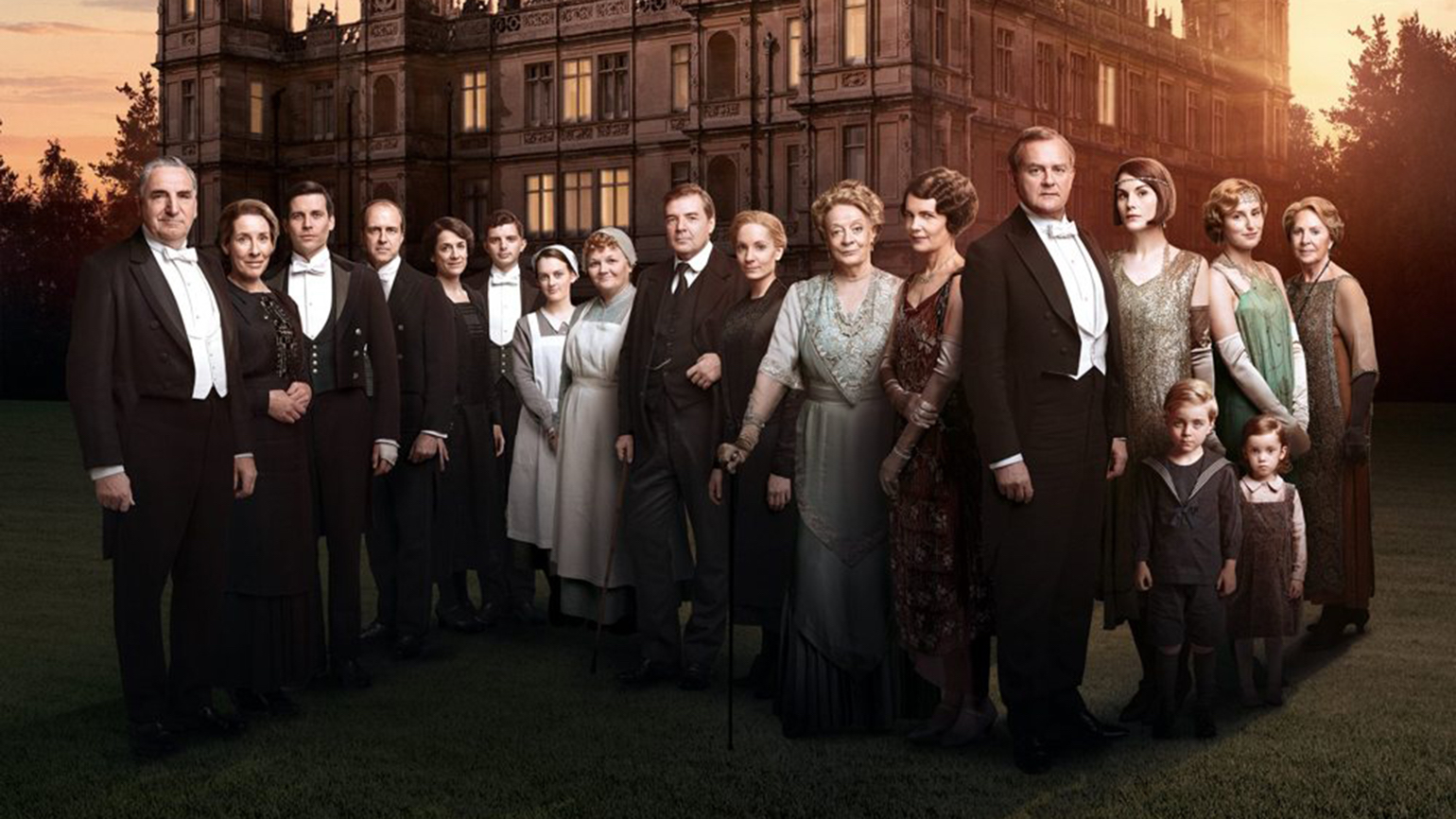
I don’t watch much TV but my wife, Carol, and I eagerly awaited every episode of Downton Abbey, and we look forward to the movie. Maybe that’s because we have a vested interest. You see, the writer who created Downton Abbey got a little inspiration from Carol.
Julian Fellowes is a marvel with his own inspiring story. I wouldn’t say he was born with a silver spoon in his mouth, but he went to good English schools and came from a solid family. No fancy title but a fine heritage including an ancestor who was the founder of the short-lived Downton Agricultural College. (Would that be where he got the name for his TV series?)
He started out as an actor. Worked in theater. Went to L.A. and auditioned for a slew of movies and TV shows. He got work, no doubt about it, in the States and in Britain, but you’d hardly call Julian Fellowes a Hollywood star.
To buy a copy of Rick’s latest book, Prayer Works, click here.
It was only when he took his hand to writing that his gifts came to light. He wrote the screenplay for the brilliantly clever film Gosford Park and won an Oscar for it in 2004. Pretty impressive.
Even more impressive to me is to think of the dogged persistence it took to discover the depth of his talents. Hollywood might always seem to reward the young and restless. Well, Fellowes was well into his fifth decade when he won that Oscar.
Turned out it was only a warm up for the absorbing travails of the Crawley family and their servants. Downton Abbey was a huge hit from the day it launched and all through its 6 seasons.
Before the second season came out in England, some reporter asked him where he got the idea for Downton. He said that he’d read this book called To Marry an English Lord, about the American heiresses who married into the British aristocracy at the turn of the century. He wondered what one of those heiress’s life would have been like 20 years down the road. The rest is TV history.
Here’s the hook. My wife, who writes under the name Carol Wallace, was the co-author of To Marry an English Lord. When she reached out to Julian, he couldn’t have been more gracious. In fact, he provided a blurb for the reprint of To Marry an English Lord that led to it selling thousands of more copies.
I’ve only met Julian once, and he was a delight, as you can imagine. Kind, witty and charming. But I think it goes back to what he learned on his own journey to success. To give credit where credit is due. And to never give up. Never.
That’s the inspiring story behind Downton Abbey. Enjoy the movie. We certainly will. Thanks Julian.
Journeying ‘In the Heart of the Sea’

Many know the plot of Herman Melville’s classic epic novel Moby Dick; the obsessive Captain Ahab hunts for the great white whale responsible for much of his seafaring misery. What you may not know is that Melville’s fictional yarn was based, at least partly, in truth. In his latest film, In the Heart of the Sea, director Ron Howard seeks to explore that truth.
In the winter of 1820, a New England whaling ship, the Essex, was attacked by a mammoth whale, its crew left stranded in the far reaches of the Pacific. While Moby Dick focuses on Ahab’s obessesion with defeating his sea-dwelling foe, Howard’s film (based off of the best-selling book of the same name by Nathaniel Philbrick) chronicles the true account of the Essex and its crew, after the whale destroys their ship and the hunters become the hunted.
Aussie actor Chris Hemsworth (Thor, The Avengers) plays swashbuckling first mate Owen Chase, a family man determined to earn his captain’s hat, despite the class limitations imposed by his father’s farming background. Chase is a leader amongst men with a knowing swagger and an uncanny ability to persuade others to follow him—that makes him a threat to the gifted but inexperienced Captain George Pollard (the brilliant Benjamin Walker), who struggles with his role on board the ship. Chase and Pollard are at odds for the better part of the first half of the film as Pollard aims to test his crew’s salt by sailing them directly into a coming squall, almost capsizing the ship before their journey has even begun.
But the man-vs.-man plot quickly expands thanks to a menacing leviathan – a large white whale bent on serving out his own special vengeance to the men hunting his species for whale oil. The whale wreaks havoc on the ship and the crew, eventually sending the Essex to the bottom of the ocean and stranding the men on the outer edge of the sea.
There is plenty of action and the cinematography, especially the sequences shot on board the ship, is breath-taking, but what’s most intriguing to Howard is the chance to demystify the mythology of the Essex and tell the true struggle of a group of ordinary men thrust into extraordinary circumstances.
“Though the film is set in the past, it touches on ideas about relationships, survival, humanity and nature that are relatable and thought provoking, and connect to our own sensibilities about who we are as people,” Howard says.
The director had his actors endure plenty of their own trails in order to bring authenticity to the film. Hemsworth describes the 500 calorie a day diet he eventually found himself on as a “pretty ugly” experience filled with mood swings and negative side effects.
Strong turns from Cillian Murphy and Tom Holland — the young man set to take on the role of Spiderman next year — round out the talented cast that thrives despite some regrettable script limitations. Bits of clunky dialogue and the intertwining story of Melville (played by Ben Whishaw in the film) interviewing an aged deckhand who survived the ordeal means the action is often interrupted.
While the movie’s draw rests on the clash between man and beast, it’s the fight for survival in the aftermath that is truly harrowing and worth the price of admission.
“There are three great trials encompassed in this story: man against man, man against nature, man against self,” Walker says. “How can you overcome those trials and survive? That’s the question of the movie. But there’s beauty in that; you see the endurance of the human spirit.”
Jones Refuses to Let Life’s Hurdles Deter Her

Remember the dramatic intro to ABC’s Wide World of Sports? “The thrill of victory…” Footage of hurdler Lolo Jones at the 2008 Beijing Olympics could have run with the second part of that famous phrase: “…and the agony of defeat.”
The gold-medal favorite, she was flying in finals of the 100-meter hurdles, ahead of the pack with just two hurdles to go. She planted her foot, her lead leg soaring over the ninth barrier. Then, disaster. The heel of her right lead foot clipped the top of the hurdle. She stumbled.
That was the difference between first place and seventh. She’d made the most basic mistake a hurdler can make.
Lolo pounded the track with her fists, unable to quell the tears. “Why? Why? Why?” she cried out, the hurt almost more than she could bear. She’d faced adversity her whole life. It seemed like there was always one more hurdle to get past.
Growing up in Des Moines, Iowa, Lolo went to eight schools in eight years. Her single mother worked two jobs to feed their family of six.
One summer they lived in a church basement, and Lolo would hurry upstairs early every morning so other kids at the church day camp wouldn’t know about her living situation.
She found refuge in the classroom and on the track. In high school when her mother said they were moving again, to a small town, Lolo stayed behind in Des Moines. “I can’t go somewhere where there’s not a track,” she said. Instead, she shuttled among families of friends.
At LSU she set collegiate records and led her team to a national title. She set her sights on the 2004 Olympics. It wasn’t to be. She failed to qualify. She wanted to quit right then and there. But her coach knew better. “I’ll see you at practice tomorrow,” he said.
Chasing the dream of being an elite athlete meant forgoing a steady job. Lolo worked part-time—at Home Depot, a gym, a restaurant—earning barely enough to pay her bills and travel to meets. Still, she kept pushing herself, getting stronger and faster.
She finished the 2006 season ranked fourth in the U.S. In 2007 she won her first national championship, in the 60-meter hurdles. She was peaking right on schedule, everything finally coming together for the 2008 Olympics. This was supposed to be her moment.
Then she clipped that hurdle. That night in Beijing, the hurt still raw, she did what she’d always done when life’s challenges seemed overwhelming. She prayed.
She counted the many ways that God had blessed her. Her health. Her strength. All the people who had supported her. The opportunity to run in the Olympics. A favorite quote from Frederick Douglass came to her: “If there is no struggle, there is no progress.”
Without all the adversity she would never have developed the drive to make it to the Olympics. Adversity had been a blessing. Lolo turned her focus to London and 2012. She’d be there.
Not surprisingly she’s faced trials since Beijing. A year ago she underwent spinal surgery that forced her to take months off from training. She came back in January as fast as ever.
There will always be hurdles in life. The thrill of victory, Lolo knows, comes from growing in faith and fortitude for having cleared those hurdles and run the race set before you.
Read more inspiring Olympic profiles.
John Wooden, in Profile

John Wooden, UCLA basketball’s “Wizard of Westwood” has died at the age of 99.
The university said Wooden died of natural causes at Ronald Reagan UCLA Medical Center, where he had been hospitalized.
—–
As I drove through Westwood Hills and into the UCLA campus, I wondered about the man I was to see—John Wooden, one the most successful college basketball coach in the country.
Many coaches would consider it a dream come true to have—just once—the best college basketball team in America. During a period UCLA won 192 games, including 47 in a row, and lost 14.
As a sports fan, I knew about John Wooden the coach. I was curious about Wooden the man.
I parked near the Pauley Pavilion, a new five million dollar arena which winning Wooden teams had helped build. As I walked toward the administrative offices I remembered that for four years this campus was the home of Lew Alcindor (otherwise known as Kareem Abdul-Jabbar), that seven-foot, two-inch giant who dominated three of Wooden’s championship teams and became one of professional basketball’s greatest stars.
In a series of articles Alcindor had given me some insights into John Wooden—his intense conditioning program, his “antiseptic needle” (clean but incisive criticism), his rules about short hair, his insistence on academic as well as athletic excellence.
Some UCLA players grumbled about these rules, according to Alcindor, and felt that the coach was trying to make them prototypes of his own Horatio Alger, rural-America, Christian upbringing. During one game in the 1968-69 season, Coach Wooden had planned to insert into the lineup a player named Bill Sweek, but for reasons of strategy changed his mind. Sweek, angry at being left out, walked off the court.
After the game the coach lit into Sweek for his violation of team discipline. In the hot exchange which followed, the young man blurted out his suspicion: Wooden, he felt, gave preferential treatment to players who conformed to his image of the wholesome All-American boy.
According to Alcindor, the whole team was tense and upset when Coach Wooden gathered them together at practice the next day. Most expected Sweek to be dropped from the team. Wooden surprised them. “None of us is too old to change,” he said. “I’m going to try to understand you better from now on.”
Sweek apologized for his insubordination and the two shook hands. According to Alcindor, “From then on we were a closer bunch of human beings. When we went on to win our third straight national championship, I wasn’t as impressed by this victory as I was by the way a group of very different men had come together in tolerance and affection.”
My first impression of John Wooden was of a soft-spoken, scholarly looking man. When I was seated by his desk, I asked him about the Sweek incident.
The coach studied me with clear, direct eyes. “The incident was blown up a bit,” he said mildly. “The social issues and other matters are tearing some players apart inside; you just can’t treat them all the same. And yes, it’s true, I’m learning to understand their differences.”
He paused a moment. “Bill Sweek is a fine young man. He wrote me to say that he was going into the ministry.”
Between incoming telephone calls, the coach answered questions about his boyhood years on a farm outside Martinsville, Indiana, and spoke of his father, Joshua Hugh Wooden, a man who never achieved material success, but was a “great person.”
When young John Wooden went out for basketball in grade school, there was no money for basketball uniforms, so each boy had to buy his own jersey and shoes. “I often played with my jersey on top of my overalls,” Wooden recalled.
“Our coach and school principal was Earl Warriner. He taught me a lot more than just basketball. One morning he told us that a game had been arranged for that afternoon. Now I was the team’s top scorer and was getting a big head about it all. On this particular day I had left my shoes and jersey home, so I told the coach he’d have to excuse me from classes early to go home and get them. ‘Or else I won’t be able to play.’ Mr. Warriner looked at me quietly for a moment and said, ‘That’s too bad, isn’t it, Johnny? We’ll sure miss you.’
“Well, I was pretty shaken by this. When school let out, I found a way to get home in a hurry, grab my jersey and shoes and be back in school before the game started. Coach Warriner paid no attention to me. I did not play—and we lost. After the game he put his arm on my shoulder and said, ‘Johnny, we could have won with you in there, but winning just isn’t that important.’”
“That must have cut your ego some,” I said.
“Yes, it did. And it taught me that you don’t have good team spirit if one player thinks he should get special favors.”
As the coach talked I began searching my memory. He reminded me of someone. But who?
“When I was in high school,” Wooden continued, “one of my teachers—Mr. L. J. Shidler—asked us one day in class to write out our definition of success. Mine, like most of them I guess, had to do with power, status and material possessions. Mr. Shidler was very disappointed in my answer. He told me that to him ‘success is that peace of mind which comes from knowing you’ve done everything in your power to become the best that you are capable of becoming.’ I’ve never forgotten that.
Later Mr. Glenn Curtis, my high school basketball coach, used what he called a ‘ladder of achievement’—listing qualities like enthusiasm, loyalty, team spirit—to inspire us to play better. I’ve used ideas from those men, from my father and from Ward ‘Piggie’ Lambert, my coach at Purdue, and added a few of my own to make a chart I call ‘The Pyramid of Success,’ which I use in my coaching.”
John Wooden went from high school to Purdue University in the early 1930s, where he won All-America honors. He worked hard to make college expenses, digging sewers one summer, waiting on tables and selling sandwiches. After graduation he played professional basketball for a while before starting a career as English teacher, then on into coaching.
Since basketball today is a continuous 40-minute flow of running, jumping, sprawling players who can move fans—and coaches—into a frenzy of emotion, I asked Coach Wooden how he kept from becoming an ulcer-ridden insomniac. To my surprise he began to talk about poetry and its therapy for times of tension.
“From boyhood I’ve memorized great writings of all kinds,” Coach Wooden said. “Doing this feeds my soul. I’ll be driving along a freeway, upset about a practice session, or concerned about a player, when out of the depths will come some verse I memorized years ago. Repeating it lifts my spirit, and sometimes it will even give me an answer to what’s troubling me.”
“And that’s how you keep calm during a game?”
“Yes, and—and with this.” He took out his wallet and removed a small aluminum cross. “I often keep this in the palm of my hand during a game. It will help prevent me from jumping up and shouting at the referee. It also reminds me that basketball is not the most important thing.
“Mind you, I sometimes lose sight of this. I’ve yelled at officials and gone and apologized to them later. Plenty of times I’ve been ashamed at the way I’ve needled players on the other team.”
A call came and Coach Wooden excused himself for a moment, leaving me his brown, zippered notebook to leaf through. There were special prayers, page after page of verse—all neatly typed. Then I came to some notes of a speech he had given to a boys club:
“It is a great experience to be an athlete, to test your skills against the best, to achieve records,” he had told this group. “But there is One who is not very much impressed by all this, or by your sports car or your fancy clothes…. We are on an aimless course which goes around in circles and ends nowhere until we win the real victory. And the life that wins the real victory is the one which places itself totally in the hands of the Lord Jesus Christ.”
When I said goodbye to John Wooden, I realized who he had reminded me of—Guy Baker, my coach back in the 1930s at Bigelow Junior High in Newton, Massachusetts. Mr. Baker also cared about his boys and the character each was forming. Once he caught me in a lie and kept me out of a baseball game. At the time I was devastated, but the lesson in honesty stuck.
Thank you, Guy Baker and Earl Warriner and L. J. Shidler and Piggie Lambert and Glenn Curtis and John Wooden—and all you teachers of boys and molders of men. Thank you for what you have given to all of us.
John Wayne: His Life, Career and Charity

Content provided by INSP.
John Wayne had a 50-year film career and is recognized around the world. This May, INSP will air his films in a month-long event. Recently, we chatted with Ethan Wayne about his famous father.
“Each film brought some adventure, brought some magnificent scenery, brought you a strong character, that was also fair. He was an aspirational character. I think there were a lot of qualities in the John Wayne characters that people liked. They wanted to be like him,” Ethan says, “I remember as a young boy…that he relished where his films had ended up and the way they delivered entertainment to the public.”
Indeed, the characters John Wayne portrayed spanned the spectrum of humanity—lawmen and outlaws, soldiers and historical figures, ranchers, trailblazers, and tough men with soft hearts. He even showcased his flair for humor in films like McLintock!. “With John Wayne, it goes beyond acting…He’s representing, on screen, people who built the country,” Ethan says.
John Wayne was born Marion Morrison on May 26, 1907 in Winterset, Iowa. Before the Morrisons moved to Glendale, California in 1916, they faced many challenges, but those hardships shaped the character of the boy who would become an American icon. “I think he found solace in school and relationships in school,” Ethan says.
At Glendale Union High School, the future star excelled in academics and sports. He captained the football team in a championship season and on a football scholarship, attended the University of Southern California. When an injury cost him his scholarship, he left school to work. “You know he had setbacks. That never shut him down. He kept pivoting and moving forward,” Ethan says.
As an aspiring actor, John Wayne got a job as a prop boy, where he observed renowned director, John Ford, with whom he would later work with on Stagecoach, Fort Apache, and Rio Grande, among other movies. He learned from director Raoul Walsh, who gave him his first leading role in The Big Trail and is often credited with helping create the screen name, John Wayne.
Because he was born when John Wayne was already a 55-year-old veteran actor, Ethan has a unique perspective on his father’s films. “I get to see my father when I didn’t know him, as a younger man.”
John Wayne died of cancer on June 11, 1979 and left several legacies: His extraordinary film career, The John Wayne Cancer Foundation, and now the in-depth exhibit, “John Wayne: An American Experience”.
Ethan is about to drive to Pioneertown, California where a John Wayne Grit Series Run will be held on May 22, to benefit the John Wayne Cancer Foundation. “He was very compassionate. He just gave, and gave, and gave, and gave, financially, emotionally, with his time,” Ethan says, “Yeah, he was a special guy.”
The Duke Days of May event airs on INSP, featuring John Wayne movies Fridays, Saturdays, and Sundays in May at 8PM ET. Visit INSP.com for the full schedule and how to find INSP on your TV.
Johnnie Moore: What Am I Supposed to Do with My Life?

How well I remember asking that question when I was young: “God, what am I supposed to do with my life?” What am I supposed to be? What kind of career should I have? What is my calling? Where should I live?
Johnnie Moore is barely into his thirties but he addresses the question in his new book with a maturity beyond his years, and whether he realizes it or not, his thinking and advice is good for people well beyond their twenties. Because the truth is, people of all ages ask themselves, “What am I supposed to do now, Lord?” In fact, it’s a question you shouldn’t stop asking.

Johnnie worked for a dozen years at a large university, and as he says, five days a week, he was dealing with minutiae and the existential demands of leadership but then on Sundays, he was a preacher, leading worship.
It is that very combination of practicality and spirituality that makes Johnnie a dependable guide. For instance, he is visibly impatient with people who simply wait for the Lord to tell them what to do. “If God told us everything, we wouldn’t need God. So he doesn’t, for our own good,” he writes.
“God gives us the ability to make choices and the information we need to make good ones. When we relinquish that ability and push the choice back to God, we are virtually giving up that freedom, telling him that we do not appreciate the gift he has given us. This is neither honoring to God nor beneficial to us.”
Of course Johnnie believes in praying for help and discernment, but it’s prayer on the go. He uses Paul as a model, pointing out that the peripatetic apostle didn’t wait until God showed him exactly where to go and when; Paul just went until God stopped him.
“God’s will is more about going till he stops you than waiting until he starts you,” says Johnnie.
He sees our own inner discontent as a gift. “It’s discontentedness that reminds us to dream again, to go after God’s will again, to dig down deep and stay committed for the long haul. It’s discontentedness that promotes the possibility of change, and it’s discontentedness that rouses us from the ease of the everyday.”
Johnnie criticizes his own generation for their unwillingness to commit. “We have a hard time just staying in one place, doing any one thing, for any period of time. And what are the results? Shallow faith, weak relationships, short attention spans, more stress, lack of stability in family life, poor physical health, and bad work ethic, among others.” No pulling punches there.
He would say that his own success comes from sticking in one place for a dozen years. “It’s amazing what you can accomplish if you pick one place and one goal and just stick to it for the long haul.”
Recently he left the groves of academe for the challenges of Hollywood, taking on the chief of staff role at Mark Burnett and Roma Downey’s production company.
(Note to Johnnie: I have worked at the same place for 30 years now, and every day I learn something new and find new challenges. No wonder I think your advice is good!)
The book has a subtitle, God’s Will Demystified, which is why I think it’s for more than just the vocation-searching twenty-something. As Johnnie points out, growing in faith means developing a series of habits that strengthen us.
“The more decisions you make,” he writes, “the more you’re prepared to make bigger ones and the more you’ll understand the process that leads you to making a decision when you come to another crossroads.”
At some point, at any age, we all need to step out in faith. And that means taking action. “Faith grows through taking steps of faith,” Johnnie writes, “and faith chooses an attitude of optimism when everything seems to discourage it.
“Faith is required in nearly every moment of significant change in life, and God requires more faith when you’re ready for it. Faith challenges you to flex your spiritual muscles beyond what you think you can bear, but God knows what you’re capable of bearing…Our challenge is taking the leap; it’s God who steps in to catch us and carry us back down to solid ground.”
I’d take that leap with Johnnie Moore any day.