




Interview with the Author: Nancy O’Dell and Scrapbooking

Interview with the Author: Mitch Albom on ‘The God Folder’
Interview with the Author: Liz Murray, The Serenity Prayer
Interview with the Author: Liz Murray, Making Choices
Interview with the Author: Jane Seymour
Inspired to Take Spiritual Flight
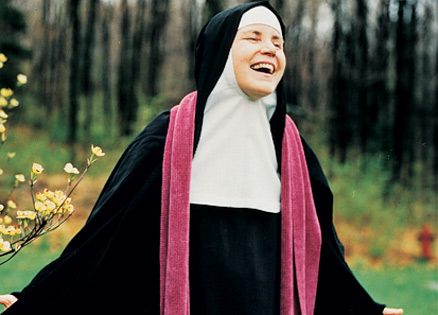
Growing up in a small town in West Virginia, I’d always dreamed of the adventures I would have when I went out into the world. It was 1963, the spring of my senior year at the University of Pittsburgh, when I saw a movie called Come Fly With Me, about three young stewardesses and their adventures.
One stewardess was always in a predicament of some sort; another was shy, demure and reserved. But it was the third who captured my imagination. She was so elegant, with a serene face and a voice like warm honey.
Who was this woman? I wanted to be like her—young and vibrant, in what felt like the most exciting time in history to be young and vibrant.
I read a review of the movie and learned that the actress who had made such an impression on me was Dolores Hart. One critic deemed her the next Grace Kelly.
Close to my age, she had already gotten a Tony nomination for a performance on Broadway, and had appeared in a range of movies from Where the Boys Are to a co-starring role with Elvis Presley in King Creole.
Dolores Hart—forever linked in my mind to her stewardess character—was everything I wanted to be: attractive, confident, adventurous.
The next week, on my way to class, I noticed a poster in a travel-agency window: Be a Stewardess, Wing Your Way to Adventure. Ever since I’d been a little girl, I’d prayed to discover the right path for my life.
As I saw it, that included travel and adventure, with a marriage and family somewhere along the way. Come Fly With Me made me think a stint as a stewardess was the ideal launching point. I went through a series of interviews with TWA, and was hired.
After college I went off to “hostess training,” a whirlwind combination of flight academy and charm school. Then from my base in San Francisco, I flew all around the country. I tied my scarf the same way Dolores Hart did in the movie, and tried to be as gracious and self-possessed as she was.
It was hard to imagine that just a few years before, I’d been living with my parents in a West Virginia steel town.
One day while waiting for passengers to board, a startling headline on a newspaper caught my eye: Actress Leaves Career to Join Convent. Dolores Hart was abandoning her Hollywood life to become a cloistered nun. Is this a publicity stunt?
I scanned the article but there weren’t any specifics about where she was going, just a quote to the effect that she felt this was where God was leading her. I couldn’t help thinking, Why would an attractive young woman give up a glamorous life to join a convent?
In the meantime, I was ready for a change of my own. While I loved flying—the roaring shudder as the jet lifted off the runway, the sweep of clouds struck golden by slanting rays of sun, the glitter of stars as I stared out the galley window at night—I hadn’t counted on being so jet-lagged and footsore.
After a year I turned in my airline wings.
When I was about 10, I’d put out a neighborhood newspaper from our backyard in West Virginia. In college, I’d majored in writing. I was ready to widen my horizons in journalism. I moved to Manhattan and got a job at the Saturday Evening Post.
Eventually I moved on to Seventeen and McCall’s, my love for my work and for the rhythm and color of city life cradling me as surely as the embrace of a small town. Yes, I was living out my dreams, having a grand adventure. Even in my 40s, when I came to work at Guideposts, I still felt brave and frisky and…young.
Then gradually I noticed it happening. When I walked too far in high heels, my knees hurt. I’d glimpse my reflection in a store window and wonder why that older woman was wearing my clothes.
So much of my identity involved being a young woman. I never anticipated that I’d wake up in the middle of my life and be blindsided by the fact that even members of the sixties’ “Youth Generation” don’t remain young forever.
As I approached 50, I felt disoriented and afraid, even angry. It seemed I’d hit some bumps on “the right path,” and the husband and children that I’d expected to share my life with never materialized.
Nothing had prepared me for aging—not college, not hostess training, not even my years in the working world. Was there really such a thing as growing older gracefully?
Then in 1994 I walked into a crowded ballroom at a writers’ convention and, out of perhaps a thousand people, sat down next to a dark-haired woman who introduced herself as Antoinette Bosco. As we chatted, I felt an unexpected urge to open up to her.
“I’ve been having trouble coping with getting older,” I blurted out. “Sometimes I feel so alone and unsure about the future.”
“There’s a special place I go when I’m feeling like that,” Toni said, “not far from where I live in Connecticut. It’s called the Abbey of Regina Laudis. I always have a better perspective on things after I’ve been there. Come visit and I’ll take you.”
In my mind, I pictured a medieval stone edifice on a fog-shrouded mountaintop.
One August afternoon a few weeks later, Toni met me at the bus in Danbury. We drove through rolling hills and woodlands until we reached an opening in the trees and swung into the abbey’s small parking area.
Instead of the intimidating setting I’d imagined, I saw what seemed to be an old farmhouse with a rustic wooden cross on its roof and a greenhouse as its entryway. A tractor rumbled past, driven by a ruddy-cheeked nun in long skirt and flowing wimple who waved at us merrily.
“The nuns run these three hundred and fifty acres as a farm,” Toni explained as we strolled along.
“Close to forty sisters live here,” Toni went on. “Some came to the abbey after successful careers as lawyers and teachers, one was in the state legislature. They wear full habits and never leave the grounds except for emergencies or special studies.”
She pointed toward outlying buildings. “Over there are a blacksmith shop and kilns to fire the nuns’ pottery. Sister Debbora is a beekeeper; others bake bread, milk the cows, tend the oxen.” She told me the sisters had just built a chapel where they gathered to pray and sing eight times a day.
From the far side of a field, a nun appeared and swept down a grassy slope toward us. A wide straw hat with a floppy brim sat on her head over her wimple, sneakers peeked out beneath her long black skirt. Something about her seemed familiar. When she came closer, I caught my breath.
I knew that face framed in an oval of white, but now there was a gentle webbing of lines around her blue eyes and smiling mouth. “Mother Dolores!” Toni said. “This is my friend Mary Ann.”
“Welcome,” Mother Dolores said in that rich, honeyed voice I remembered so well. “How wonderful to have you here.” I sputtered something about being glad to meet her. A gust of wind caught the brim of her hat and she laughed and held it in place.
Like me, she wasn’t a girl anymore. But her expression was luminous, her manner exuded contentment and peace. As the bells rang, calling her to afternoon prayer, she invited me to come back to the abbey again.
Some months passed before I was able to return. When I did, I had a long talk with Mother Dolores through a wooden grill that surprisingly only added to the intimacy of our conversation. I poured out how I’d seen her in the stewardess movie, and at the time felt it was a kind of nudge from the Holy Spirit to set me on my path to adventure.
Mother Dolores laughed. She said that it had been in New York, while publicizing Come Fly With Me, that she had made her final decision to become a postulant and join the nuns at the abbey. She’d started visiting the abbey several years before, while performing on Broadway, and “subconsciously something kept drawing me back.”
I told her how I’d wished to be as glamorous as she was—and how disoriented I’d felt when I was forced to face the reality of getting older.
“Back when I was making movies,” Mother Dolores said, “I looked in the mirror one day and realized that if my sense of worth and fulfillment was based on my looks and youth, it was all short-lived.” She leaned closer. “I sensed inside there was something more—much more. And I was right. Time and age don’t matter.”
As I gazed through the grill into her gentle face, it became clear: True beauty comes not from youth or genes or circumstance, but from a wellspring of inner grace that transcends age and environment.
“Don’t worry,” Mother Dolores said. “Wherever you are on your path of life, however unexpected the twists and turns, God continues to draw you to where you belong.”
We prayed together, then the bells rang and it was time for her to go to vespers. As the shadows lengthened, I climbed the hill to the abbey chapel, where the sun’s slanting rays bathed the sanctuary with amber light.
While the nuns filed in and began to sing, I closed my eyes, filled with a deep feeling of peace. Lifted on the strains of their chanting, I felt older…younger…ageless…safe, an ongoing traveler following God’s path as it continues to unfold. Venite…jubilate…alleluia!
I’d finally discovered what had drawn me to Dolores Hart all those years before. It wasn’t glamour or sophistication, as I’d once thought. The Holy Spirit had been leading me to an inner beauty, the eternal beauty of the soul. A beacon that would light my way through the spiritual adventures ahead.
Download your FREE ebook, Paths to Happiness: 7 Real Life Stories of Personal Growth, Self-Improvement and Positive Change
Inspired to Share Her Gift from God
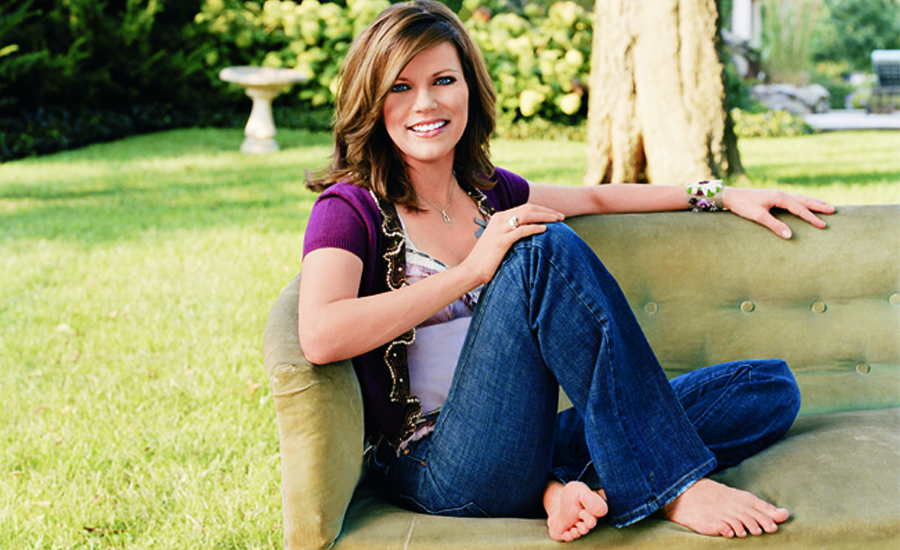
I reached out and turned off the car radio right in the middle of Juice Newton’s “Angel of the Morning.” I was in no mood. My voice was shot, my hair reeked of cigarettes and my ears were still ringing from a long night of belting out top-40 hits in a little club in Wichita.
Not even a good country song was going to cheer me up. Above the empty road, the sky was moonless and clear. A cold light played across the snow-covered fields.
Midwestern towns can get a real lonely feeling in the small hours of the morning. The kind of feeling that makes you wonder about the bigger things in life and ask yourself some tough questions. Especially when you’re feeling 22 going on 40.
Things weren’t that bad, really. I was newly married and getting paid to do what I loved more than anything in the world—singing. I wasn’t getting paid much, that’s for sure.
Most months my husband, John, and I barely scraped by between his sound-engineering jobs and the cash I took home from my nightclub gigs. Still, I thought I’d feel happier than this. Something was missing.
My gigs felt an awful lot like drudge work. I’d even had to scale back my club dates because my voice was getting hoarse. “Your voice is strained from singing,” my doctor had told me recently. “And all that second-hand smoke isn’t helping any either.”
But it wasn’t just my voice that was feeling tired—it was all of me. Lord, I thought, pulling into the driveway of our tiny rented house on the outskirts of town, if I’m this tired at twenty-two, what will I feel like when I’m forty?
I stepped out of the car, pulled my jacket close against the Kansas night and walked up the drive and into the house. Taking off my makeup in the bathroom, I thought back to my first singing gig ever: the Sharon, Kansas, School Christmas pageant of 1972. I was all of six.
I’d rehearsed in the living room of our family farmhouse for the big event, and I can still remember the pride on Dad’s face as he watched me.
Dad was a farmer—a good one—but music had always been his real joy. Like most farmhouses, ours had a big old toolshed out back, but our shed had as many instruments—banjos, mandolins, even a creaky old accordion—as tools.
My brother, Marty, and I would spend hours out there, getting a feel for all of them, trying to force something resembling a tune out of each, imagining we were up on stage somewhere instead of a dusty old shed in the middle of nowhere.
Three years after that Christmas pageant we formed The Schiffters (from Schiff, our last name). My dad played guitar and did most of the singing. Marty played guitar. I sang and—later—played piano and keyboards. Mom ran the sound.
Saturday nights we’d work the local country circuit and Sunday mornings we’d play at church.
Nothing beat the thrill I got standing at the microphone, belting out those country tunes with Dad. Even at nine I was learning to bring emotion to the lyrics I sang. At a typical Saturday night barn dance we might play for four hours, but the time always flew by.
There was a special feeling I’d get, standing on those little Kansas stages—one I could never put my finger on completely. A feeling that I was doing what I was supposed to be doing—what God gave me the talent to do.
Joy. I guess that’s as close a name for it as I can give. It’s that feeling you get when you really connect with the purpose of your life.
I finished high school and moved to Wichita—the big city—and branched out musically. “If you want to make a living singing,” my music friends said, “you can’t be singing Earl Scruggs all your life.” It was a big world, and I had to change to meet it.
So I did. By that cold January night in 1989, I was a level-headed grown-up, with a grown-up understanding of what being a working singer meant. The club audiences didn’t want to hear Buck Owens and Merle Haggard. They wanted to hear Madonna and Cyndi Lauper.
Singing was a job. And if that meant that it didn’t have the old magic, that was just how life went, sore vocal cords and all.
Climbing into bed dog-tired and feeling a lot older than I should have, it just didn’t seem right. I had to make a change. But was it too late?
A couple of days later Dad called. Nothing unusual there. He liked to check up on me. Dad had kept the Schiffters going after I left, but we hadn’t done any singing together lately.
“They’re having a battle of the bands right there in Wichita next month,” he said. “I’m going to enter. I thought you might like to sing a few songs with us. What do you say?” Suddenly that tired feeling faded. Even my voice sounded clearer.
“I’ll be there,” I said. “We’ll blow the competition away!”
The gig took place at a little club that seated about 100—smaller even than the joints I was used to working. John was at the soundboard and Mom was in the audience. As usual, Dad sang most of the numbers with me on backup vocals, but I stepped up and sang a few myself.
I was barely a few bars into a Patty Loveless number when I felt something. A feeling of connection with the audience. And with something larger, something bigger than the music. Like when I was just a kid. That old thrill. That feeling of doing what I wanted to do. What I was meant to do.
You know what? We lost the competition, but I couldn’t have cared less. John was practically jumping up and down when I got off the stage, waving a cassette of the show. “You gotta hear this!” he said. “Let’s go out to the truck and give a listen.”
We walked out to the parking lot and got into John’s truck. He switched on the ignition and slipped the tape in. We sat back in our seats like a couple of teenagers at the drive-in and listened. Pretty soon we were tapping our toes and singing along.
John was right. There was something special in that sound.
I turned to my husband. “Listen,” I said. “We’re all put on this earth for something. I want to be a country singer. This is the music that’s in my soul. I want us to move to Nashville. I want this to be my life.”
That’s just what we did. I was going to make it big in country music. I had the chops and I had the heart. And right off the bat I got a job in the music business—selling T-shirts at Garth Brooks concerts!
No, it wasn’t exactly stardom. But I didn’t care. I’d taken my leap of faith. I was close to the music, and pretty soon, with God’s help, I’d be making that music too.
John and I worked our tails off (John did Garth’s sound and I moved a lot of Garth T-shirts!). We also pestered the record companies, and in 1992 I went out on tour again with Garth—not as his T-shirt vendor but as his opening act.
You know what else? Those pesky voice problems went away too, just like I figured they would.
Last year, I released an album called Timeless, full of nothing but good old country standards. From “I Can’t Stop Loving You” to “Help Me Make it Through the Night,” they’re the kinds of songs I used to sing with Dad back in Sharon.
In 2006, I celebrated my fortieth birthday. I’m blessed to be making the music I love to make. The music I was put here to make. And I have three beautiful daughters whom I’m very much there for as a full-time mom.
Sound tiring? Well it is. But I’ve come to discover that there are two kinds of tired: a bad kind—like the kind I felt that night back in 1989—and a good kind. And this is definitely the good kind.
Inspired to Re-create the World Jesus Knew
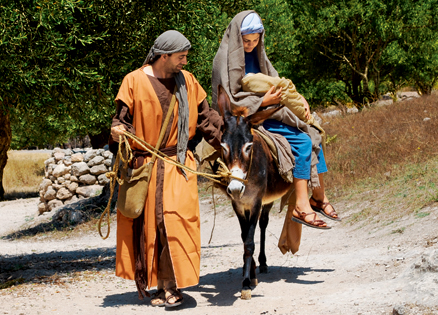
On a dirt road in old Nazareth, a young couple travels under the night sky. The woman is pregnant. She rides a donkey. Her husband walks beside them, past rows of olive trees, and a flock of sheep on a hill.
It could be that night, 2,000 years ago, when Joseph and Mary set out for Bethlehem. Except for the electric lights in the distance, and the occasional plane overhead. This road is in modern-day Israel. It’s part of Nazareth Village, a meticulously recreated Galilean farm. This is their annual Christmas celebration.
My own first visit to Nazareth Village was in springtime. I was part of a group of journalists on the trip of a lifetime: a week in Israel.
Our guide, Marion, took us from one amazing site to another: The River Jordan, where Jesus was baptized, the Mount of the Beatitudes, where he delivered the Sermon on the Mount.
Each day’s activities were more amazing than the last. So we were surprised when she announced our plans for the morning.
“Nazareth Village,” Marion explained, “was the brainchild of Sherry Herschend. She and her husband, Jack, created Silver Dollar City in their hometown of Branson, Missouri. But it was Sherry’s dream to recreate the world Jesus lived in here, in Nazareth.”
The other journalists and I exchanged puzzled looks. I’d heard of Silver Dollar City—it was a recreated town from the old west. It was also a theme park with roller coasters and waterslides.
“I hope we don’t stay long,” said one of the other journalists.
“Yeah, I only care about the real Nazareth,” said another.
Only one journalist didn’t share our trepidation. He just grinned—obviously he knew something we didn’t. “Just wait,” he said.
We reached our destination and I climbed out of the bus. A guide led us through a large door. Actually, it was two doors, one inside the other.
“Back in the first century, everyone had to pass through doors like these to enter a city,” he explained. “The smaller door was for travelers on foot. If they were leading animals, the larger door was open so they could fit through.”
Looking at the ancient door, I was reminded of something. Where had I heard of a door like that before?
“The Gospel of Matthew!” one of the other journalists cried. “For wide is the gate and broad is the road that leads to destruction, and many enter through it. But small is the gate and narrow the road that leads to life and only a few find it.”
Of course, I realized. That must have been what Jesus meant. I had never had a clear picture in my mind of what the narrow and wide gates would look like, but his original audience would have seen these gates all their lives.
Suddenly Jesus’s words, which had always sounded so abstract, were easy to understand.
Our guide then showed us some ancient stonecutting tools. “We all know Jesus was a carpenter,” he said. “But how many old wooden houses have you seen since you’ve been in Israel?”
We laughed. Not too many. “As carpenters in those times, Jesus and his father would have worked more with stone. If you look at the Gospels, Jesus often refers to stonework to explain a point he’s making. The metaphor came naturally to him.”
It might have seemed a small detail, but at the guide’s words my whole perception of Jesus began to shift, his hammer and nails were replaced by mallet and chisel.
I was still getting used to stonecutter Jesus when our guide led us outside. Any fears of roller coasters were immediately dispelled. Nazareth Village was a living archaeological site.
In 1997 the remains of a vineyard were discovered, with the original stone winepress still intact in the bedrock. Nazareth Village had added a donkey-powered olive press, and a synagogue, all made to look just the way they would have back in the first century.
The tour turned out to be the highlight of my trip.
How did the first lady of Silver Dollar City wind up in Nazareth Village? I got in touch with Sherry Herschend as soon as I got home to find out. It turned out Nazareth Village was a dream long before it was a reality.
On the first of many trips to Israel, she visited all the historical sites. As exciting as it was to be where Jesus had once walked, she wished the world Jesus lived in didn’t seem so far away. “I looked around,” she told me over the phone, “and saw nothing but dead stones.”
Back in Missouri she discovered that her friend Pat Boone had felt the same way. “We need to build a Holy Land experience for people.”
Pat wanted to build this new attraction in Missouri, but Sherry felt strongly that it had to be in Israel. It looked like it might not ever happen. Then one day Sherry got a call from Pat about a group in Israel and a man called Dr. Nakhle Bishara.
“Sherry!” he said. “They’re building our dream in Israel! And they didn’t even know it was our dream!” Sherry found out all she could about these dream-builders. “If it was a God project,” she says, “I wanted to be a part of it.”
Sherry joined the board, where her unique experience and expertise turned out to be just what Nazareth Village needed.
Today, Nazareth Village does exactly what Sherry dreamed it would do for so long: bring first-century Israel to life. Going to Nazareth Village really is, as Sherry says, like “visiting Jesus’s hometown.” And what better time to visit than on the anniversary of his birth?
For the Christmas program, staff and volunteers of all ages don first-century clothing and recreate that night so many years ago.
As usual at Nazareth Village, there are a few surprises. According to scholarship, our idea that Joseph and Mary stayed at an inn may come down to a misinterpretation of a Greek word that means guest room.
Small villages did not have hotels. When Joseph and Mary arrived in Bethlehem, they would probably have stayed with family. As more and more relatives arrived for the census, the house would have gotten crowded.
At Nazareth Village, Joseph and Mary walk from room to room, searching for a place for Mary to have her baby.
Instead of a stern innkeeper trying to rent out a stable, they encounter something a little more familiar: a boisterous family reunion. Great aunts baking bread, cousins drinking wine, children getting underfoot, mothers finally getting their babies down for a nap.
From the young couple’s point of view, a manger packed with animals must have looked pretty inviting!
After the presentation is over, visitors step back through the narrow gate, back to the skyscrapers and lights of modern Nazareth. But they bring with them a world where Jesus the stonecutter came to life before their very eyes.
Take a virtual tour via our Nazareth Village slideshow.
Download your FREE ebook, Angel Gifts: Inspiring Stories and Angel Crafts to Nurture Your Creativity
Inspired to Provide Another Kind of Relief

I’m a relief pitcher for the New York Yankees, which means I come in to put out the fire if another pitcher gets into trouble, usually late in the game. Sometimes, after a night game in the Bronx, I don’t get home from the stadium till after midnight.
It was 1:00 A.M. when my wife, Erin, and I walked in the door of our apartment April 28 last year.
“I’m going to bed,” Erin said.
“I’ll be in soon,” I said. I wanted to watch the news and unwind from the game. I flipped on the TV.
“An F5 tornado struck downtown Tuscaloosa early this evening,” the news anchor said.
“Erin, come quick!” I yelled.
Tuscaloosa was my home. I’d moved away when I became a ballplayer, but my entire family and most of my friends still live there. It’s where I first fell in love with the game, playing Little League. It’s where I learned to pitch, taking my high school team to the playoffs my senior year.
It’s where I played college ball for the University of Alabama, and started pulling my socks up high, old-school style. My picture even made it onto the wall at one of my favorite barbecue joints down the road from campus. It’s where I proposed to Erin.
It was home and always would be.
We spent the rest of the night on the phone making sure our friends and family were all okay. Finally I fell into bed exhausted, and prayed the most fervent prayer of my life. Lord, please help my hometown. And guide me in what I can do.
The next morning I woke up early to do a TV interview for the MLB Network, and spoke about the devastation.
“What can people do to help tornado survivors?” I was asked.
I paused, thinking about the U of A campus, the First Presbyterian Church downtown where my family belonged. My town, my people. “Prayers are a good start,” I said, “and the United Way. There’s a number that you can text to donate.”
I headed to the stadium for our game. I did several interviews with the media that day to help raise money and awareness. I’d much rather have jumped on a plane to Tuscaloosa, but I’d be busy playing ball through September, hopefully longer. Any real help I could provide would have to wait.
Yet at that moment I felt so powerless. God and the United Way were a pretty good start, but wasn’t there more Erin and I could do? Dejected, I called Erin and told her how I felt.
She was silent a moment. “Then let’s get involved, David. Now. Let’s start a fund. You’ve got a platform.”
After the game that night we brainstormed a name for our foundation and came up with High Socks for Hope. (I wear my uniform socks up to my knees, remember.) Erin got started on a website, highsocksforhope.com.
“For every strikeout I get, I’m pledging one hundred dollars,” I told reporters. I talked about it as much as I could, and since I was having the best season of my career I got to talk a lot, even at the All-Star Game later that year.
Donations came in. Erin connected with all the organizations providing assistance to the victims, including a woman named Judy Holland at a church in town. She put us in touch with people who needed help and saw to it that the money we raised went directly to them.
More than anything, though, I needed to be on the ground. We landed in Tuscaloosa late one Thursday night a month after the storm hit. My team was traveling to Seattle and it was the first day we hadn’t had a game since April 27.
I jumped at the opportunity to visit, even if I had only 24 hours. We asked a film crew to join us. The Yankees organization was so helpful in getting the word out.
“I’ll drive,” I said, but I had a terrible time even finding my way. Street signs were gone. So were age-old landmarks. Entire neighborhoods were reduced to rubble. It was a wasteland.
The place where my family always bought our Christmas trees looked like it had been through a giant wood chipper. My heart was in my mouth. Erin squeezed my arm.
We saw someone I knew from high school. I gave him a hug. “That was my house,” he said, pointing. My gaze followed his finger. Nothing resembling a house there. “I took cover in the tub. When the storm passed, the bathroom was the only room left.”
He shook his head as if he couldn’t believe it.
The summer went by in a blur of e-mails, conference calls and, of course, ball games. Tuscaloosa and its people were never far from my thoughts and prayers. And my prayers were frequent. Sometimes it was all I could do.
Judy was truly a Godsend, for us and for families like the Johnsons. “Their son, Anthony, has a genetic disorder. Before the tornado, they couldn’t afford homeowners’ insurance and pay his medical bills,” Judy said. “They lost everything.”
We kept fund-raising. I struck out 100 batters from April to October, which meant ten thousand dollars for Tuscaloosa. My teammates signed baseballs for auctions and helped with other events.
Erin and I researched everything from Alabama construction laws to FEMA procedures. We called in favors from every contact we could think of, including Ryan Dempster, a pitcher for the Chicago Cubs whose daughter has the same disease as Anthony.
It was nearly November by the time the Yankees’ season ended. “Let’s get back to Tuscaloosa,” I told Erin as soon as I’d cleared out my locker.
Judy met us our first day back and took us all over town. “See over there?” she said. “Those are some of the Habitat homes your foundation helped sponsor, and down this way…well, just wait til you see how much progress they’ve made.”
It was great to be able to put faces to voices and e-mails. I got hugged by so many people I lost count.
Anthony’s family was still living in temporary housing, but with our help along with Ryan Dempster’s foundation and Habitat for Humanity, their new home will be ready before long. I got to meet Anthony and his folks and we all said a prayer of thanks together.
Then there was Robert Reed, manager of a trailer park just outside of town. The tornado had touched down right on top of the park while most residents were still inside their homes. Robert rescued 12 people from the rubble.
“We just had to meet you,” I told him as I shook his hand. “It’s an honor.”
“Likewise,” he said. “And thank you. For everything.”
Robert Reed. Anthony and his family. All the folks that Judy introduced us to.
Folks in Alabama are still picking up the pieces, still rebuilding homes and lives. God calls each of us to do what we can. That’s how we rebuild. Together.
Download your FREE ebook, True Inspirational Stories: 9 Real Life Stories of Hope & Faith
Inspired to Notice Things
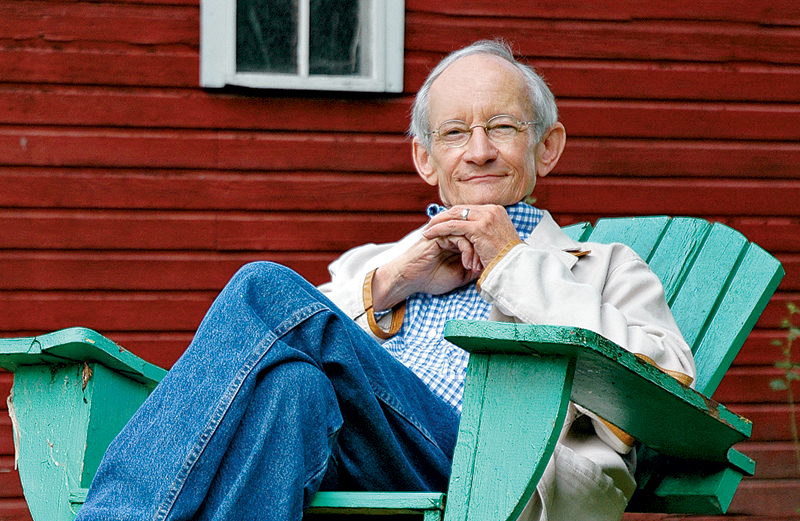
Friday. My flight’s overbooked. And there’s a ruckus at the gate. I’m heading to Des Moines, Iowa, to meet Poet Laureate Ted Kooser at the Des Moines National Poetry Festival, but poetry is far from my mind. I’m anxious.
Why has travel become so stressful? Finally, we board. I settle in and go over my notes.
I’ve admired Ted Kooser’s work for ages. In school I copied his poem “The Red Wing Church” onto a sheet of loose-leaf paper and tucked it into my backpack like a good-luck charm. It’s about an old dilapidated church—no steeple, no congregation—transformed into:
…Homer Johnson’s barn, but it’s still a church,
with clumps of tiger lilies in the grass…
That sense of sacredness remains. It’s all around, in fact. But lately I’ve just been too busy to notice.
“Rosie from Guideposts,” Ted greets me the next day at the Hotel Fort Des Moines, his voice warm and assured. Now 66, Ted’s appointment as poet laureate was recently renewed by Librarian of Congress James H. Billington, and Ted won the 2005 Pulitzer Prize for poetry.
Still, I discover that Ted Kooser is a regular guy. Who happens to be remarkable.
“They put me in ‘The Presidential Suite,’” Ted says, tickled. “It’s bigger than the house I grew up in!” That was in Ames. Ted has lived in Nebraska for decades, but he was in Ames last night, reading at Iowa State, his alma mater.
He pours us each a glass of water and eases into an armchair. “In Ames I visited the church I attended as a boy and spent some time there,” he says wistfully.
“There was an old man, Seaman Knapp, with a collection of bells. At Christmas he always did a bell-ringing in front of the church, running up and down this long table. It’s so sweet in my memory, and he’s been gone fifty years.”
Ted pays close attention to people, places. But he knows it isn’t always easy.
“You drive home from work, find yourself in the garage and can’t remember a thing that’s happened between when you left and when you arrived,” Ted says. “To really participate in life we have to figure out ways of being aware of what’s around us.”
Sure, I think. But how do you do that with a busy life, work, family? “The poet Linda Gregg has her students notice six things a day. Lots of days I don’t notice six things. I’m not always successful,” Ted admits. “But I like paying attention to ordinary things.”
Six things. I make a note. Maybe I’ll try that.
Like the great American poet Wallace Stevens, Ted started out in insurance. His career lasted more than three decades. He rose daily at 4:30 A.M. to write before heading to work. Sometimes poetry and business intersected.
“In the late sixties Bankers Life Nebraska hired an artist to take photos throughout the building, things we passed every day. He gave a slide show and built a production out of the beauty of these ordinary things,” Ted says.
“Poems are like that. They say, ‘Here’s something you may not have looked at. I’m going to show it to you in a way that will make you notice.’”
I ask how poetry took hold in him. “I had an ordinary family, lived in an ordinary town. I wanted to be different. Mysterious. The arts were a way to be different. So I painted and wrote poems.”
Soon his “ordinary family” and “ordinary town” became the subjects of his poetry. Revealing their magic came with maturity.
It troubles Ted when people feel that poetry isn’t for them, that it takes a special skill or degree to enjoy it. His mission is to bring new readers to poetry, to reach regular people in small towns—people like him.
Poetry is a democratic pleasure. The reader brings as much to the page as the author. Nothing pleases Ted more than helping people understand that.
Recently he heard from a new reader. Poetry never interested her, but she’d heard Ted’s poems on public radio. They resonated with her experience of rural life.
“That’s who I want to read poems. Oftentimes a man will come up at the end of a reading and say, ‘I’ve never been to a poetry reading before. My wife dragged me here. But I liked it. I think I’ll read some poems.’”
Ted frets if a line of his poetry is too difficult. Clarity and accessibility are his cornerstones. In his insurance days he’d run poems by his secretary. “I’d say, ‘Does this make sense to you?’ and she’d say, ‘No.’ I’d go home and work on it until it did.”
We’ve talked for more than an hour when Ted excuses himself to get more water. “Dry mouth,” he explains, a lasting effect of the treatment he underwent for oral cancer.
He returns and I ask about that. “June 1998 I went to the dentist. I had a sore spot on my tongue. The dentist referred me for a biopsy right away.”
He was diagnosed with stage 4A cancer. “My surgeon, Dr. Bill, said a marvelous thing: ‘Radiation is gonna be hard. But you are about to enter one of life’s great affirmative experiences.’”
I lean closer. “Did you believe him?”
“I wasn’t in a position to speculate!”
Following his treatment, Ted took walks to regain his strength. Each time he’d bring something home to write about. “Here was a way to take disorder and anxiety, compress them into something small and orderly and take assurance from that.”
Ted was changing, and so were his poems. Now he says, “There’s a real spirit of celebration. I tend to be quite easily moved. More so, having survived cancer.
“I saw people in waiting rooms who were almost beatific in their love of life, their desire to live. There was a tremendous amount of grace in those waiting rooms.” One poem, “At the Cancer Clinic,” records that situation, and ends:
|
…Grace
fills the clean mold of this moment
and all the shuffling magazines grow still.
|
Dr. Bill framed a copy of “At the Cancer Clinic” and hung it in the hospital. In hopes, surely, that those who see it will draw strength from it and, perhaps, grace too. I share with Ted my simple belief that poetry just makes life better.
“It makes life bigger too. Suddenly an artichoke is more than a thing,” he explains. “Joe Hutchinson has a one-line poem, ‘Artichoke,’ that says: ‘O heart weighed down by so many wings.’
“You get that poem in your head and go to the grocery. That crate of artichokes will never look the same. There’s something special about it.”
That night the Hoyt Sherman Place Theater is packed with people who have come to hear Ted and three other poets read. I scan the crowd and can’t help thinking, Are there men here, grudgingly accompanying their wives, who will leave full of wonder with a new way of seeing?
Sunday. I’m flying home. Try to notice six things. Plump beads of condensation on the window. The earrings—silver filigree set with smoky blue stones—on the woman beside me. A crying toddler, with a shock of yellow curls. That’s three.
Ted was right; it’s hard to pay attention. But I feel its effects instantly. Something much like grace. There’s something special about the window. The earrings. The child. They’re bigger. And I feel connected to all of them. For that powerful feeling, that sense of sacredness, I can never be too busy.
Download your FREE ebook, Rediscover the Power of Positive Thinking, with Norman Vincent Peale
Inspired by the Sparkle Box
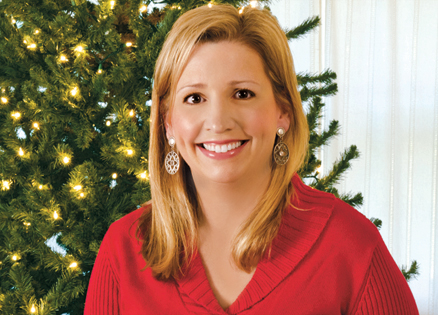
Every year, under our family’s Christmas tree is a small box wrapped in sparkly silver foil. And all of us—my husband, Tim, our kids, Jack and Katie, and I—look forward to opening that gift more than any other present under the tree. After all, it transformed our Christmas.
The box with the sparkly wrapping wasn’t always there. The first time it appeared was when Jack was seven and Katie was 15.
I found myself struggling with the usual holiday stress. Did the kids get enough presents? A skateboard, Legos and a sled for Jack; books, earrings and some new CDs for Katie. Did I have enough stuff for their stockings? Should I get bigger stockings?
One day I threw up my hands in frustration. Is this what Christmas is supposed to be about? Really?
I love giving at Christmastime, especially to my family. But as a parent, wasn’t it also my responsibility to teach my kids why we give on Christmas? I felt like my family had been pulled into the vortex of commercialism and needed a way out.
Inspiration struck while Tim and I strolled with the kids through our church’s “Alternative Gift Market.” Organizations that help those in need, like Habitat for Humanity, Heifer International and the YWCA of Canton’s homeless shelter, had set up tables explaining the programs you can support.
In years past, we donated art lessons to a child in honor of my mother, an art lover. For my brother, a young, single guy, we donated “a flock of chicks,” which made him laugh and helped a poor farm family in need.
That night, Tim and I made a deal with the kids. This year, each one of us would give something to people less fortunate. “Every time we make a donation, we’ll write it down,” I said. “This will be our gift in honor of a very special someone.”
“Who, Mom?” the kids asked.
“You’ll see. Now let’s get going!”
Over the next few weeks, the kids got busy.
“Mom, my class is collecting mittens for the poor,” Jack told us when we picked him up from elementary school one day. We stopped at a department store and he picked out several pairs. Katie earned money and picked out gifts to help her Girl Scout troop fill shoeboxes for Operation Christmas Child.
One evening at the dinner table, we passed around a catalog from Heifer International and picked a goat to give to a family in a poor country.
On Christmas Eve, I put all the gifts we’d recorded into an old jewelry box and wrapped it in sparkly foil. Then I tucked it under the tree.
“Who’s that for?” the kids asked on Christmas morning.
We opened it first, and I unfolded the pieces of paper inside. “Jesus taught us, whatever we do for those in need, we do for him,” I said.
Jack and Katie sat quietly beside the tree and beamed with each gift I read—the perfect birthday presents for Jesus.
Filling that sparkly box has been our Christmas tradition ever since. Last year, Jack, who was saving his money for an iPod touch, donated half his savings to buy mosquito nets to help prevent the deadly spread of malaria in developing countries. Katie matched him by giving money to a water-filter project in Africa.
That small sparkly box transformed our Christmas. It reminded us to remember the greatest gift of all on Christmas.
Watch as Jill Hardie discusses her book, The Sparkle Box.
Download your FREE ebook, True Inspirational Stories: 9 Real Life Stories of Hope & Faith