

Embrace God's truth with our new book, The Lies that Bind

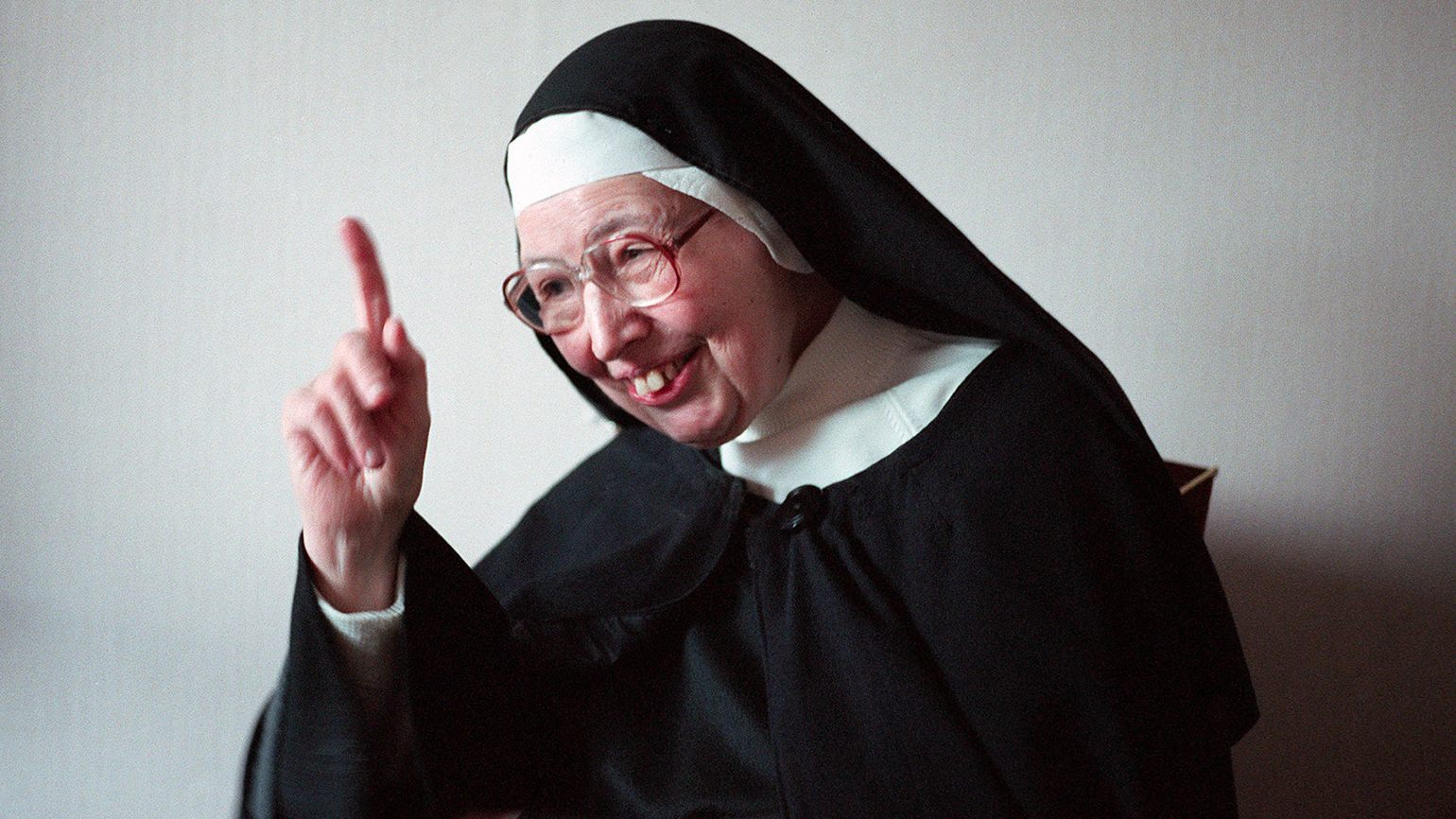
Guideposts Remembers Sister Wendy Beckett

Sister Wendy Beckett, a Roman Catholic nun who became a beloved, if unlikely, art critic and BBC documentary star, passed away on December 26, 2018. She was 88.

I was honored to spend a few minutes conversing with Sister Wendy in 1999, when she agreed to do a telephone interview with me. She was as charming and engaging a conversationalist as one could hope to encounter, but also a challenging one. She didn’t indulge in small talk (not with me, anyway). There were too many larger topics, bigger ideas and compelling theories to be wrestled with. But by the end of our conversation, I felt I had a new friend (though I would never again have the opportunity to speak to her). That’s how engaging—and engaged—a person she was.

Sister Wendy was born in Johannesburg, South Africa, on February 25, 1930, to Aubrey Beckett, a doctor, and his wife, Dorothy. Even as a child, she expressed the intention of devoting her life to serving God, and when she was 16, she joined the Sisters of Notre Dame de Namur. That this order is devoted to teaching seems, in retrospect, entirely appropriate—even prescient—given the direction her life would take years later.

In the 1950s, Sister Wendy studied literature at Oxford. While there, she resided at a convent with a strict code of silence, which she observed. After graduating at the top of her class, she returned to South Africa, teaching at a Cape Town convent and lecturing at Johannesburg’s University of Witwatersrand.

After suffering several grand mal seizures, Sister Wendy was diagnosed with a form of epilepsy. The Vatican gave her permission to stop teaching and devote herself to a life of solitude, and in 1970, she moved back to England, living in a trailer at the Carmelite Monastery in Quidenham.

Her life there was hermitic: Her trailer had no windows, she spoke to almost no one, her diet consisted primarily of skim milk, she prayed several hours a day, and she left her trailer only to attend Mass and to visit a library van for reading material.

She saw no movies after 1945, she visited no museums—the only paintings she experienced during this period were in books—and yet she had developed a passionate interest in art. The first of her books, published in 1988, was entitled Contemporary Women Artists.

Three years later, Sister Wendy was approached by Nicholas Rossiter, a producer for the BBC, to do on-camera work for a documentary about Britain’s National Gallery. She didn’t see the project as life-changing in any way. As she wrote in her 2006 book, Sister Wendy on Prayer, “There was no…‘Am I spoiling my hermit life?’ I really didn’t think it was anything. I thought it was just a weekend here or there.”

That program—and those that followed in the ensuing years—proved to be such a hit with viewers, however, that, in fact, Sister Wendy’s life was altered greatly. Viewers found her insights on art accessible and enlightening, and she would go on to author more than 25 books, including volumes of poetry and meditations, and star in a dozen documentaries, many of them released on DVD.

For someone who had decided to lead a hermit’s life, the sudden fame Sister Wendy experienced must have been jarring, but she told me when we spoke in 1999 that she very much appreciated hearing from people who enjoyed her programs and books.

“I get a lot of very beautiful and encouraging letters,” she said. “I’m sure there must be hundreds of people who think I’m awful, but they don’t write to me. I just get the encouraging letters.”

But there was a downside to this adulation, too, she admitted.

“This may sound very rude, but although it is encouraging [to hear from so many people], it’s a burden. Because I don’t want ever to seem ungrateful, and so there’s postage and the writing of ‘Thank you so much for your letter,’ and I’ve asked [my publisher], if they get any letters for me, please would they answer them and thank the people for writing, but say that Sister Wendy doesn’t really write letters.”

I wondered if she’d ever experienced creative impulses or artistic inclinations of her own.

“No, I’ve no gifts whatever,” she insisted. “I’m almost an astonishingly ungifted woman. I can’t cook, I can’t sew, I can’t garden, I can’t sing, and I certainly can’t paint or draw. I believe that they say everyone can draw, but I’ve never felt the slightest desire to create. I think that’s part of what I do; you know, when an artist sees another artist’s work, they often can’t but think how they would have tackled the theme, what they would have done. Whereas, because I have no creative gifts, I’m able to look at it without any idea of a way of handling the theme. It’s perhaps an advantage to me.

“My gift is to react. It’s a passive gift; it’s a much lesser gift than the creative gift, but that’s my gift and I have to make whatever use I can of it.”

Through it all and despite rubbing shoulders with dignitaries, prime ministers and popes, Sister Wendy remained true to herself and to her God. Having taken a vow of poverty, she kept none of the money she made from her various projects, instead donating all her earnings to the Carmelite order. And she attended Mass every day, no matter where in the world her extensive travels took her.

And in her later years, the Carmelite monastery where she resided, no doubt grateful for all the financial assistance she’d provided, upgraded her trailer and its trappings just a bit.

In a 2010 interview with The Times of London, Sister Wendy said, “I have an electric kettle, fridge, warming oven and night storage heater, so my life is as comfortable as it needs to be.”

I’m grateful Sister Wendy shared a bit of time with me that morning nearly 20 years ago, and that this woman, who sought only solitude and an ever-closer walk with God, so generously shared her passion and insight for art and her deep and abiding faith with the world.
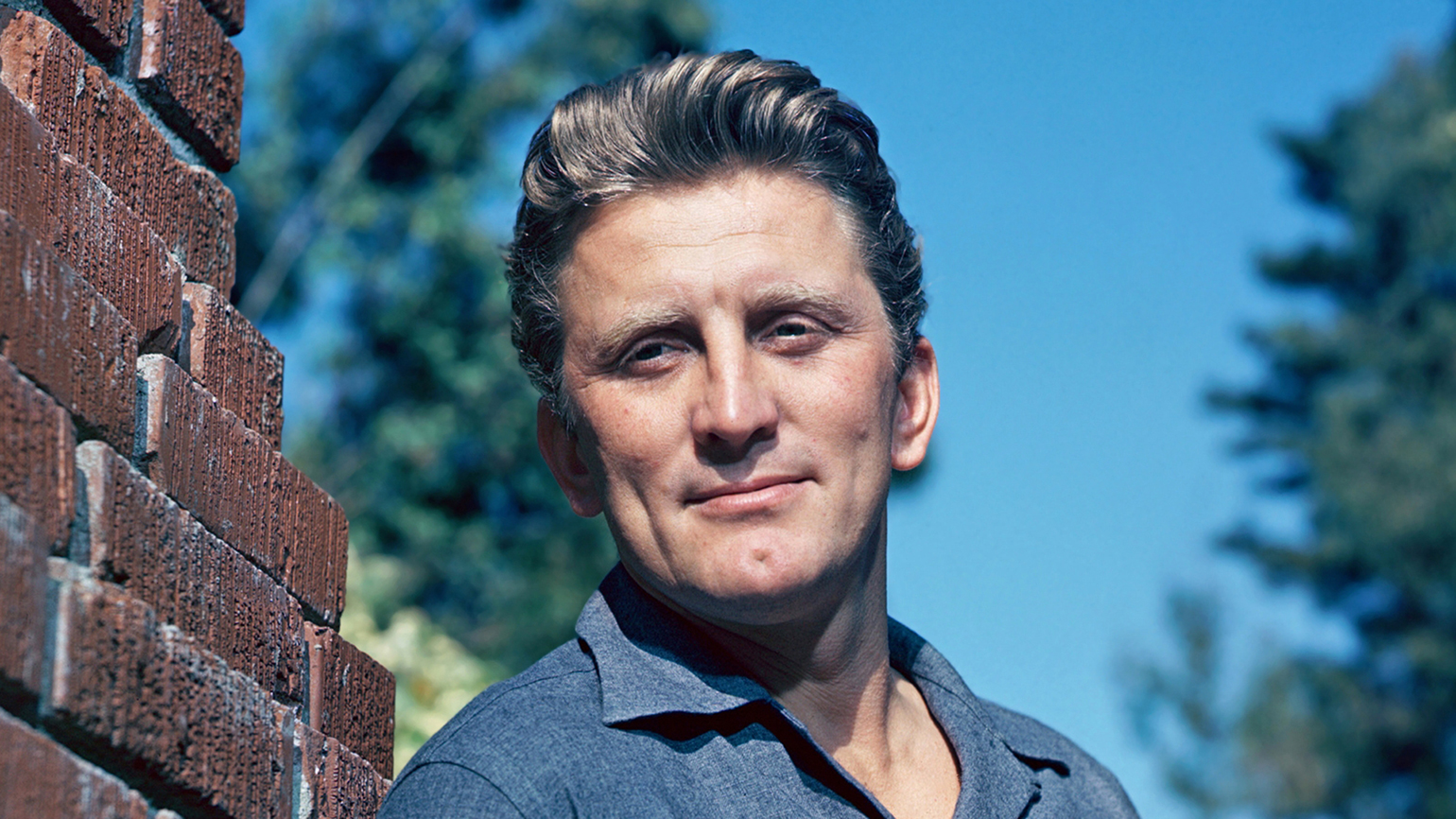
Guideposts Remembers: Kirk Douglas

Hollywood legend Kirk Douglas passed away at 103 on February 5, 2020. The actor, who was one of Hollywood’s biggest stars and whose children found their own success in the entertainment industry, began life “in the poorest section of town.”

Douglas was born Issur Danielovitch in Amsterdam, New York. His parents emigrated from what is now Belarus, and Douglas and his six sisters grew up speaking Yiddish at home. His father was a ragman, a peddler who wondered about with a horse-drawn wagon buying and selling old clothes, scrap metal and other discards.

Douglas described the family’s status this way in his autobiography, The Ragman’s Son: “On Eagle Street…where all the families were struggling, the ragman was on the lowest rung on the ladder. And I was the ragman’s son.”

As a youth, Douglas worked a variety of odd jobs until he was accepted on a special scholarship to the American Academy of Dramatic Arts in New York City (one of his classmates there was Betty Joan Perske, who would later become better known as Lauren Bacall).

Douglas enlisted in the Navy in 1941, serving as a communications officer in anti-submarine warfare. He received a medical discharge in 1941, due to injuries he suffered in battle.

Back in New York City, Douglas began to find work in radio, commercials and theatre, including roles on a number of radio soap operas. He made his motion picture debut thanks to Bacall, his former classmate. By then she was a busy actress in Hollywood, and she recommended him to producer Hal Wallis for a role opposite Barbara Stanwyck in The Strange Love of Martha Ivers (1946).

Douglas would go on to notch more than 90 credits in movies and on television, and he was nominated three times for an Academy Award in the Best Actor in a Leading Role category. Though he never took home the Best Actor Oscar, in 1996 he was presented with a special Academy Award “for 50 years as a creative and moral force in the motion picture community.”

Douglas’ legacy in movies continues to this day, as each of his four sons followed him into the entertainment industry, Peter and Joel as producers and Michael and Eric as actors.

READ MORE: JAMES STEWART ON A FATHER’S STRENGTH

Though his life was a long one and he enjoyed a stellar career, Douglas experienced his share of setbacks. His youngest son, Eric, died in 2004 at the age of 46, and Douglas himself suffered a severe stroke in 1996, limiting his ability to speak. He didn’t let the stroke stop him, however, as he worked tirelessly to recover and rehabilitate after the stroke.

When he was awarded his honorary Oscar later that year, he was able to accept in person, delivering an acceptance speech that inspired those in attendance and millions of television viewers watching the proceedings from around the globe. Douglas would later write a book, My Stroke of Luck, about his experiences in overcoming the stroke; he was the author of a dozen books, including seven memoirs, four novels and a retelling of stories from the Old Testament intended for young readers.

In 1964, Douglas and his wife, Anne, founded the Douglas Foundation, a philanthropic institution that is, according to the foundation’s website, “committed to helping those who might not otherwise be able to help themselves”; the couple also participated in other charitable and philanthropic efforts in the United States and around the world.

In January, 1981, Douglas, a Goodwill Ambassador for the U.S. State Department since 1963, received the Presidential Medal of Freedom from President Jimmy Carter.

Douglas once said, “In order to achieve anything you must be brave enough to fail.” It was a philosophy that served him well in a long and eventful life and career.

Guideposts Releases Free eBook: The Power of Hope: 7 Inspirational Stories of People Rediscovering Faith, Hope and Love

CARMEL, NY—AUGUST 17, 2010Guideposts, the non-profit organization dedicated to providing hope, encouragement, and inspiration to millions across America and the world, today made available via a free download The Power of Hope: 7 Inspirational Stories of People Rediscovering Faith, Hope and Love.

In difficult times, how do others find hope? Download your free copy of The Power of Hope: 7 Inspirational Stories of People Rediscovering Faith, Hope and Love. You’ll meet real people struggling with issues you hear about on the news every day. And you’ll read in their own words how they were surprised by hope and revived by faith.

“Life often tests us with its challenges and difficulties. But the stories found in the free eBook The Power of Hope: 7 Inspirational Stories of People Rediscovering Faith, Hope and Love are the perfect antidote. Each story dramatically shows how people just like you not only overcome illness and hardships but deepened their faith in the process. In these real life stories of everyday men and women, you’ll rediscover the power of faith and hope,” said David Morris, Senior Editor of GuidepostsBooks.

Download your free copy of The Power of Hope and read true stories that will open your heart and help to bring you hope, faith and healing love into your life. The complimentary eBook is available exclusively on Guideposts.org here.

About Guideposts FREE eBooks

Here are a few more eBooks available at Guideposts.org that aim to provide visitors with inspiring material on popular topics:

A Prayer for Every Need

Angels Sightings

Daily Devotionals

Inspirational Quotes

Mysterious Ways

Paths to Happiness

The Power of Positive Thinking

True Inspirational Stories

About Guideposts

Guideposts is a non-profit organization that touches millions of lives every day through products and services that inspire, encourage, and uplift. Its flagship title, Guideposts, has a paid circulation of 2 million. Its website Guideposts.org now offers consumers greater control in choosing content appropriate to their stage in life and key interests. Ideals Publications, based in Nashville, Tennessee, is the retail book sales and distribution outlet of Guideposts; including GuidepostsBooks, Candy Cane Press, Williamson Books, and Ideals. In total, Guideposts has annual direct to consumer and retail book sales of over 5.7 million copies. Through magazines, books, a prayer network and outreach programs, Guideposts helps people connect their faith-filled values to their daily lives. For more information on Guideposts, please visit http://www.Guideposts.org and follow Guideposts on Twitter: twitter.com/Guideposts_org, and on Facebook: facebook.com/Guideposts.

Guideposts’ Inspiring Cameo in an Alfred Hitchcock Classic

Alfred Hitchcock on the cover of the October 1959 edition of Guideposts

What’s the first name you that comes to mind when you think of Guideposts? Our founder Norman Vincent Peale? Our editor-in-chief, Edward Grinnan?

Legendary film director Alfred Hitchcock?

Ok, that last is a bit of a stretch, though Hitch did write a cover story for Guideposts back in October 1959.

Guideposts has seen many people of prominence from the fields of movies, music and television write for our publication over the years, but the Master of Suspense might well strike many as among the more unlikely contributors we’ve ever featured.

READ MORE: ALFRED HITCHCOCK ON THE GREATEST GIFT OF ALL

Hitchcock is famous, of course, for the cameo appearances he made in his own pictures. It’s always fun to try to spot him, whether he’s riding a bus in To Catch a Thief, winding a apartment tenant’s clock in Rear Window, or exiting a pet shop in The Birds.

The cover of the August 1958 edition of Guideposts, featuring author AJ Cronin​But did you know that Guideposts once made a cameo in a Hitchcock picture? It’s true, and I have the evidence to prove it. Recently I took in a screening of the classic thriller North by Northwest at NYC’s Museum of the Moving Image. In that picture, as you may recall, adman Roger O. Thornhill, played ably by Cary Grant, is mistaken for a fellow named George Kaplan by some very bad men who intend to do away with Mr. Kaplan.

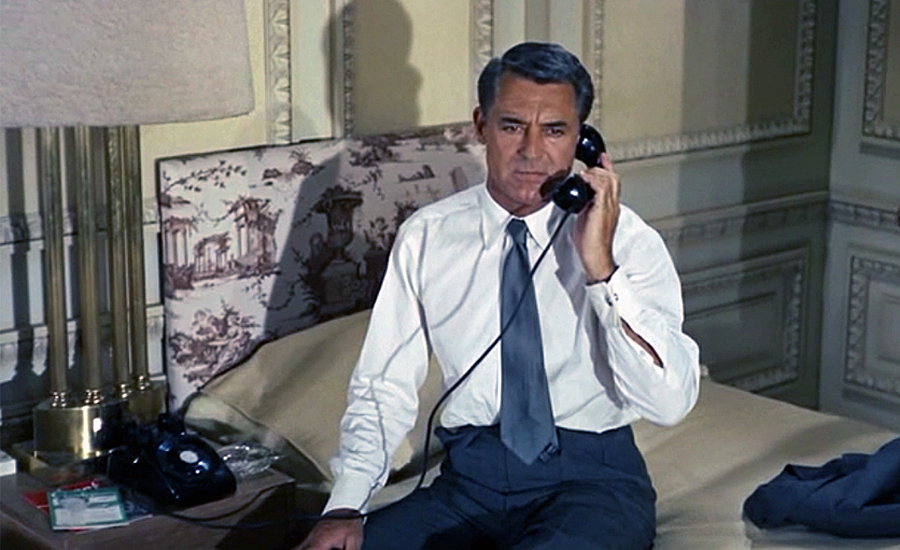
In a desperate attempt to extricate himself from this mess, Thornhill and his mother use trickery to enter Kaplan’s room at the Plaza Hotel, looking for whatever helpful info they can find about the mystery man. As they are snooping about through Kaplan’s effects, the telephone rings, and Thornhill is faced with a dilemma: Should he risk answering the telephone in hopes that he might learn something that way?

The telephone table from North by Northwest with a copy of Guideposts on it​He does answer the phone, and that’s where we come in: As Thornhill/Grant reaches for the receiver, there on the bedside table sits a copy of Guideposts (the August 1958 edition, to be more precise, with author A.J. Cronin on the cover). You have to watch carefully to spot it; blink and you’ll miss it. Just like one of Hitch’s own cameos.
In those days, Guideposts had an agreement with many hotel and motel chains to place copies of our monthly publication in hotel rooms, much as Gideons International does with its Bibles, so we simply don’t know whether that copy of Guideposts just happened to be in that room at the Plaza or if it was placed there by a set decorator. Either way, I’ll admit to having gotten quite a kick out of spotting it while watching the movie, which is a favorite of mine, and I like to think that Hitch had the magazine placed there intentionally.

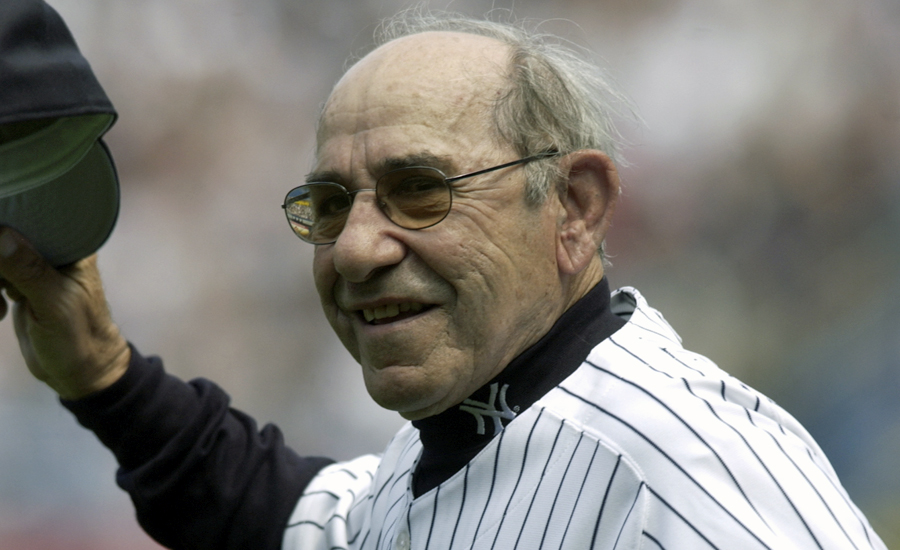
Guideposts Classics: Yogi Berra on Overcoming Negativity

Ever since I’ve been in baseball—and that’s been over 32 years now—people have had a lot of fun at my expense. Sportswriters, fans, opposing players, and even some of my teammates, have kidded me about the way I look, the way I run, the way I talk, and things I say.

Razzing players on the other team is part of baseball. So, when I was starting out in the minor leagues, the opposing players started hollering about how “ugly” I was.

After I began to catch for the New York Yankees, they called me Neanderthal Man. A writer wrote that my face looks like a “fallen soufflé.” They called me a “comicstrip character” because I liked to read comic books.

READ MORE: YOGI BERRA ON LEARNING TO FORGIVE

Others said I “didn’t look like a Yankee.” Well, I’m only five feet eight—not tall, slim and handsome like my onetime teammate, Joe DiMaggio. One sportswriter said my run is “a sort of swift, purposeful waddle.” Actually my legs are short for the length of my body, and I admit I’m knock-kneed.

I only finished the eighth grade, and I know my speech and grammar aren’t always the best. Sometimes my statements come out funny.

I guess I did say once that our team could score more runs if we weren’t making so many outs. And when they had a special night for me in St. Louis, my home town, I did thank everybody for “making this night necessary.” I also remember telling someone that a certain restaurant was no good because it’s always so crowded.

Every once in a while, someone will ask me, “Yogi, how do you keep going and doing so well while fans and players are always making fun of you? How do you keep from getting mad, nasty, resentful, rattled?”

Well, when I was getting started in baseball and they would holler stuff at me, I was trying too hard to prove I belonged in organized baseball to really take offense at it.

But one day later on, when I was more sure of myself, I did come close to “blowing my cool.” It was after I had moved up to the Newark, New Jersey, Bears, the Yankees’ farm team in the International League. One afternoon, some guy in the stands behind our dugout lit into me every, time I showed my face.

“Hey, King Kong, who let you out of your cage?” he yelled.

ENJOYING THIS STORY? SUBSCRIBE TO GUIDEPOSTS MAGAZINE

“Go back to the tomato patch!”

“Berra, ya bum, you couldn’t get a hit with a paddle.”

Why is it that guys like that always seem to have foghorn voices that can be heard all over the ball park?

Some of our own men in the dugout started needling me.

“Yogi, aren’t you going to go after him?” they said. And, you know, once in a while a player will go right up in the stands after a fan, especially in the minors, if he just can’t take any more.

I wasn’t saying anything, but I was really burning. I was tense and gritting my teeth. I peeked around the corner of the dugout to try to pick that fellow out in the crowd.

Then all of a sudden a quiet voice seemed to speak to me, and I recognized that voice. It was the voice of Father Charles Koester, a priest at my old neighborhood parish of St. Ambrose in St. Louis, who is also auxiliary bishop there. Father Koester is a great baseball fan who has been a valuable adviser to me all my life.

Now I seemed to hear him saying, “What are you going to accomplish by trying to shut that man up or punching him in the nose? You’ll just start trouble and get yourself all riled up. You’re paid to get hits and call pitches, aren’t you—not to fight with people! Calm down and do your job!”

So I just made myself cool off. The next time up at bat I did get a hit, and we ended up winning the game.

After that day I was never again tempted to go after anyone who was being insulting to me, whether it was a fan, a player on the other team or a sportswriter getting some good copy by poking fun at me.

I just adopted the attitude that what people say about me, well, that’s their opinion. I have to satisfy myself with what I’m doing.

It’s the same in life as it is in playing ball: If you let something get under your skin, you’ll never get the job done. As Father Koester would say, “Never let negative things that others say keep you from doing your best. And if your best isn’t good enough today, remember, you’ll come up to bat again tomorrow!”

Did you enjoy this story? Subscribe to Guideposts magazine.

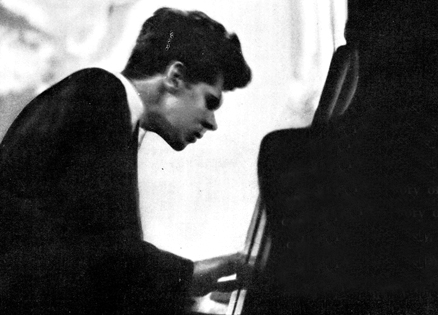
Guideposts Classics: Van Cliburn on True Success

At Christmas in 1942, the present that most fascinated me was a child’s picture history of the world. In this book of magic, faraway places, I viewed with wonder the Parthenon of Greece. India’s Taj Mahal, Westminster Abbey, the Tower of London, Versailles and the Washington Monument.

But the one picture that especially attracted me was the 16th Century original of the magnificent Cathedral of St. Basil in Moscow. I was awed by the different colors, the seven towers, each of the onion-top varieties differing in its spectrum and height, reaching upward, pleading, toward the sky.

And as a child of seven—unaware of politics, race, or creed—I begged: “Mommy, Daddy, please take me there someday.”

Like all parents they answered: “Maybe so, sonny.”

Sixteen years later, I stood with an interpreter in front of the National Historical Museum in Moscow, looking directly across Red Square at the Cathedral of St. Basil. I was still a little giddy from the response of the Russian people to my victory in the Tchaikovsky competition. It all seemed unreal.

Back in my hotel room there were several hundred letters from Soviet citizens. Most of them used such words and phrases as, “God bless you,” and “God be with you,” and “Keep your spiritual values.” On our Easter Sunday I went to one of their churches. It was packed.

All of this made me pause, and wonder at the strange geographic path that had led me from America to Moscow. And with the sudden and spectacular acclaim still echoing in my ears because I had won a contest, I had to ask myself: What is success?

At that moment I didn’t have the answer. Abruptly, I realized there was another path, an invisible one to the outside world, which I had also been following, and its importance gave me pause at this moment of excitement. My mind traveled backward, remembering…

Upon arrival in Russia I had telephoned my parents from Moscow to our home in Kilgore, Texas, and asked them to pray for me. Later, I learned that the ministers had asked the whole town to pray for me.

My parents did not pray for me to win; in their minds winning isn’t always the best thing. They prayed that God’s will be done.

From the time I can remember they have always taught me: “Everyone has to work. No one can sit on the tracks and pray. That won’t stop the train.”

They’re nice, uncomplicated people, with no false pride, or false modesty either. When I’m good they tell me how good, and when I’m bad they do not hesitate to tell me how horrible I am.

They have always been direct: Just before I was to give my second public concert, when I was six, I ran into a tree and knocked out a front tooth. Two were already missing. I begged my mother:

“I can’t play without any teeth.”

“Just don’t smile,” she said. “The rest will be done by your hands—and God.”

Their best text, which became mine, is, In all thy ways acknowledge Him, and He shall direct thy paths. That’s Proverbs, 3:6.

My mother was skilled enough to be a concert pianist. Her parents vetoed the idea, so she became a teacher. She still is. She has 45 pupils. I was her student for 14 years, starting at three. I’m always hoping she’ll quit. When I suggest it, she or my father will say: “But we have our own lives to live.”

My father, who’s now a district sales manager for the Magnolia Petroleum Company, dreamed of being a doctor when he was young. No money.

He dreamed I’d be a doctor-missionary. When I told him I wanted to be a pianist, without any hesitation he built a studio for me in the garage, with two pianos. There were two in the house for mother.

They never pressed me to play. Mother played so beautifully that all she had to do was start, and I’d come running and join her. Whenever I practiced they’d stop everything, and be the audience. There was no higher encouragement.

Before I could walk they carried me to church. When I was old enough they let me sing with them in the choir. My mother is still the church organist. They live with the conviction that the business of life is to serve God first, and thereby they can serve men best.

Before I came to New York they explained in great detail all the pitfalls, heartaches, and uncertainties of the music world. But they also sent me off with the security and love to weather them.

At Juilliard my teacher, Rosina Lhevinne, and the dean, Dr. Mark Schubart, urged me to try for the Leventritt Award, a much coveted prize because it gives the winner a performance with the New York Philharmonic Orchestra.

I won it. That season I was given 30 concerts to play. The next season the number dropped to 20, and the third to hardly any. My mother broke her back and I rushed home to be near her, and to coach her pupils. It was then that Rosina Lhevinne urged me to go to Moscow for the International Tchaikovsky competition.

I was at my lowest professional ebb: I had run up some sizeable debts, which my parents knew nothing about. The danger then was not to let fear overwhelm me. It was not a great danger. The brick of my life is music, but the mortar is faith.

And how is my faith related to music? I have big hands. They can span 12 notes. With them I can practice day in and day out endlessly, but when I walk out on a stage, I’m never sure I’m going to play correctly—without faith.

With the sudden acclaim in Moscow, I should have been ecstatic, for the fragrance of fame and fortune is sweet. But I wasn’t.

Even if I could measure it, and I couldn’t, the whole thing was frightening. When I arrived back in America, the reporters at the airport asked:

“What do you think of your success?”

There was only one answer: “This isn’t success. It’s sensation.”

All I saw ahead then was the desperate need to pray for the strength to continue whatever was meant for me. But inside I yearned for peace of mind. And I knew that did not come without a closeness to God.

He was with me along the invisible path, from the beginning. And He is with me now, under the push and pressure of material success, when I have to hide in order to find the privacy to practice.

A closeness to God is the only real immortality. It is the only real success too.

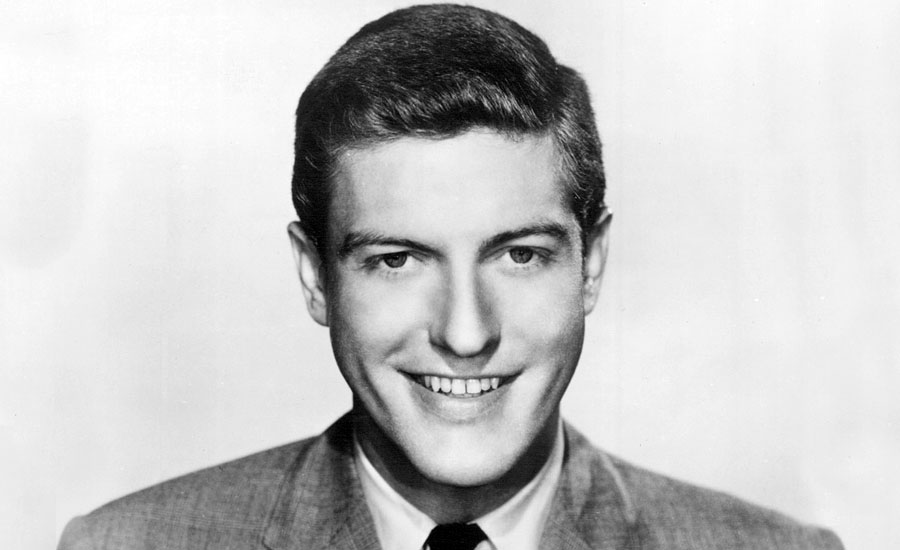
Guideposts Classics: The Book Dick Van Dyke Lives By

The other day I was talking with a teenager who goes to the church where I’m an elder. “How often do you read your Bible?” I asked him.

“Frankly, Mr. Van Dyke,” he said, giving me kind of a funny look, “I never read it.” Then he continued, “Oh, I should, I suppose, but to tell you the truth the Bible scares me.”

“Scares you?” I echoed. “What do you mean?”

“Well,” he said, “it’s written in that old-fashioned way. And it’s all about old men in long white beards. And it’s so negative. Thou shalt not do this, thou shalt not do that. No, the Bible may be a great book and all that, but nobody reads it. Nobody my age, anyway.”

Now I don’t know whether this pessimistic statement is right or not, but I do know this: a lot of people—old as well as young—never open a Bible because they let their preconceptions scare them off.

Take the objections my young friend had: the writing is old-fashioned, he said. Well, I suppose that’s true, if you’re talking about the King James Version. After all, it was written more than 300 years ago. But the Bible has been translated many times before and since.

J. B. Phillips’ rendering of the New Testament, done within the last 20 years, is one of my personal favorites: it’s as contemporary in style as a current best-seller.

And his idea that the Bible is full of bearded old men: think about that one for a moment. How old was David when he went out against Goliath armed with nothing but a sling? Fourteen? Fifteen? How old was Samson when he astonished his countrymen with feats of strength? Seventeen? Eighteen?

The New Testament too: remember the young men who wanted Jesus to heal their sick friend? When they found themselves blocked by a crowd, they climbed up on the roof, broke a hole in the ceiling and lowered their friend’s bed with a rope. Who but teenagers would have thought of that?

And as for the notion that the Bible is full of negatives, that’s mostly nonsense too. The Bible is a handbook for living. And so it does contain rules—rules hammered out over the centuries on the anvil of human experience.

There’s tragedy, sure, and violence and all the great clashing human emotions: courage and cowardice, greed and selflessness, hatred, jealousy, pride, anger … all the ingredients that go into any great love story or great action story.

And out of these ingredients the men who wrote the Bible drew conclusions about what works and what doesn’t work in human affairs. That’s why the Bible, far from being something to run from, is a book to live by.

Anyone who does try to live by the Bible sooner or later comes across a text that seems designed especially for him. For me it’s that tremendous question in Matthew 16:26: What does it profit a man if be gain the whole world but lose his own soul?

Actors are often faced with this dilemma because they do in a sense “gain the whole world” when success comes to them, but in the process they risk losing their own souls, their own hard core of personal values, as perhaps no other group does.

That’s why I repeat those words to myself just about every day of my life.

But it’s not enough just to find a relevant quote, latch onto that, and let the rest go. I believe the whole Bible is important to each of us, and that from its daily reading a certain priceless and otherwise unobtainable something enters our lives.

If I had to say what it is in my case, I think I’d say that Bible-reading gives me a sense of God working in history, gradually unfolding a plan for His most complex creation—mankind. And, of course, as I read I try to measure myself against the outlines of that plan and see where I fit.

This is an amazing thing at all times, but especially when problems come our way. I’m thinking of some times in my life, for instance, when I was broke and jobless. Like the day I arrived in New York City in a beat-up station wagon with a wife, two small kids, no job and exactly four dollars in my pocket.

Or the time when a supper club act that a friend and I worked up laid such an egg that the management not only threw us out without pay but even towed our car out of their parking lot to make sure we left.

I don’t mean that on these occasions I rushed home and read the Bible furiously. But I do mean that my familiarity with God’s word and my acceptance of His plan for my life kept me from ever really hitting the panic button.

In other words, I believe that in reading the Bible a kind of invisible ingredient had seeped into my life—and will seep into anybody’s—which makes the rough spots less bumpy.

Perhaps it’s a sense of proportion, of the smallness of our own little disappointments, of being part of a picture so big that we can never see more than a fraction of it.

Whatever it is, it’s something I would like to share with the anxious, fear-ridden people of our age, and especially the young ones. To my friend who was “scared” of the Bible, I make three suggestions.

The first: get your own Bible. One you can take on trips and leave on your bedside table. One you can mark up if you feel like it, underlining passages that speak to you, making notes in the margins.

The second: make an effort to discard all your preconceptions and stereotyped ideas about the Bible before you open it. This includes all your hazy childhood recollections, all your stained-glass over-simplifications, all your dim resentful memories of droning preachers.

Just try to wipe the slate clean and start fresh, as if you had just dropped in from Mars and found a book you had never seen or heard of before. If you can do this, the Bible will have tremendous impact for you.

And the third: find a friend, or friends, who will make this voyage of exploration with you. I find it helps to have someone with whom to compare notes, someone who will throw the ball back.

Eventually I hope this young man will want to join our church Bible class where, with a trained teacher, we go deeper than any of us could alone. But at first I think it’s more fun and meaningful just to experiment and compare reactions with a friend.

The Bible scary? On the contrary. The Bible takes the scare out of living and puts purpose, joy and faith in its place.

Read more Guideposts Classics!

Guideposts Classics: Tennessee Ernie Ford Honors His Father

When I was a kid our family had a rough time financially. As they say down in Bristol, Tennessee, where I grew up, we just “never seemed to get a horn that blowed.”

Dad was in the postal service. He started out with a rural horse and buggy route, then graduated to town and walked his route for 17 years, most of which were pretty lean.

Yet we kids never thought of ourselves as poor, because my dad had a faith so geared to appreciation and joy that we thought we were pretty near on top of the world. If he couldn’t give us things, he gave us what was a sight better, practical lessons in how to live.

Celebrating Guideposts' 75th AnniversaryFirst off he’d tell us: “Learn to look around you, see and appreciate the bounty of God.” He was talking about the world God made without any help from us. Ever since, I’ve always figured that an atheist was a guy who’d never been deer huntin’, or blackberryin’ or pea pickin’.

Because there’s a terrific lot of beauty around and a lot else to appreciate that’s for free … things we couldn’t make and that we had nothing to do with putting there. Seeing this beauty and the free gifts of the earth and sky put joy in our hearts–and then we had to share that too.

One of Dad’s favorite illustrations was to remind us of the fact that we had liberty and the guys down in the town jail didn’t. Also, that we had a lot of free music in us, pretty good music, too, because we practiced both at home and in the church choir.

Then on frequent occasions we would all go down to the jail, Dad, us boys, Mother, too, and we’d stand in the hall and sing–folk songs, ballads, hymns, (a lot of hymns)–because Dad thought they were the best for cheering people up.

At other times we would load up our old car with baskets of things from our own garden and our neighbors’ gardens, plus fruit and stuff my mother had canned, plus game we’d bagged out hunting. Then we’d drive to the edge of town where the less fortunate people lived.

After we unloaded our baskets, we’d sing for them.

One man, who had been in the jail on one of our hymn singing nights, came ‘round to see Dad when he got out. He allowed as how he was a vagrant, a bum, a petty thief, and a drinking man when he could afford it. But he’d been attracted by the robust good cheer of our hymns.

“That I liked,” he admitted, “but this regular religion stuff cramps your style. It keeps you from having any fun!”

“Don’t you believe it,” roared my dad. He was six-feet-two, slender, and his enthusiasm for living had a way of vibrating in his voice. When it did, he seemed eight feet tall.

“Why, man, God has given us all these things to enjoy! We’re supposed to enjoy ‘em. You go over-doin’ things, though, and you’re bound to get sick, or a hangover. But you use a little of the common sense God gave you, along with His other gifts, and you won’t wear a long face. Religion is a real happy thing!”

It sure was a load off that guy’s mind. And he proved it was true, too, because he settled down in our town to work, and he joined the church. He had a lot of fun, too.

Dad never tried to make us “good” through fear. “You’ll have to be good through love, or ‘twont go more’n skin deep,” he said.

Our church life was really happy too. We prayed and sang and listened to Bible readings and sermons with great fervor. And then we had socials, dances, ‘possum hunts, hay rides, and we did all this with great fervor, too.

I came by hymn singing just naturally, the same way I came by my faith. I grew up with it. My folks made it a part of everything we did every day, and that made it personal and practical as well as natural.

I married my wife, Betty, during World War II when I was a bombardier in the Air Force. When the war was over we were back in Bristol, and me with no job in sight. We decided to try California, still with no job.

It wasn’t easy for a while, but neither of us lost faith in God. Nor did I lose faith in myself. I seemed to have a voice, a talent, but I had to appreciate where the talent came from, to be grateful for it, to share it–and that’s the way it worked out.

Betty and I have two sons now: Jeff, eight, and Brion, five. Life moves so fast these days that it takes some doing to get the boys out where they see God’s bounty natural-like, instead of processed and packaged at the super-market.

But it’s got to be that way every so often if they’re to get that direct, personal feeling about it. So we have a place at Clear Lake where there’s lots of fish, and a ranch nearby where we raise cattle and watch things grow.

Not so long ago Brion gave good evidence that he’s getting that personal feeling. He was received, in a baptismal ceremony, into the First Methodist Church of North Hollywood, our present church home. The whole event impressed him, including the certificate he received giving date, church name, minister and other particulars.

Reporting it later he said: “I didn’t cry. I stood up there real good. The minister put water on my head and, oh …” suddenly his face lit up and he produced his certificate. “Look, I got a letter from Jesus.”

So far I haven’t been able to lure my dad to Hollywood; his roots in Tennessee go too deep. He’s retired now after 39 years in the postal service, and has even more time to hunt and fish.

He isn’t much interested in the money I’m making, or how many of the guest stars on my television show I call by their first name. But he wants to know, have I been to the lake? How is the farm?

What he’s really asking is, has “gettin’ me a horn that blowed” made me forget what I learned from him back there in Tennessee?

And I can honestly answer, no. For what he taught me has made it all possible.

For more inspiring stories, subscribe to Guideposts magazine.

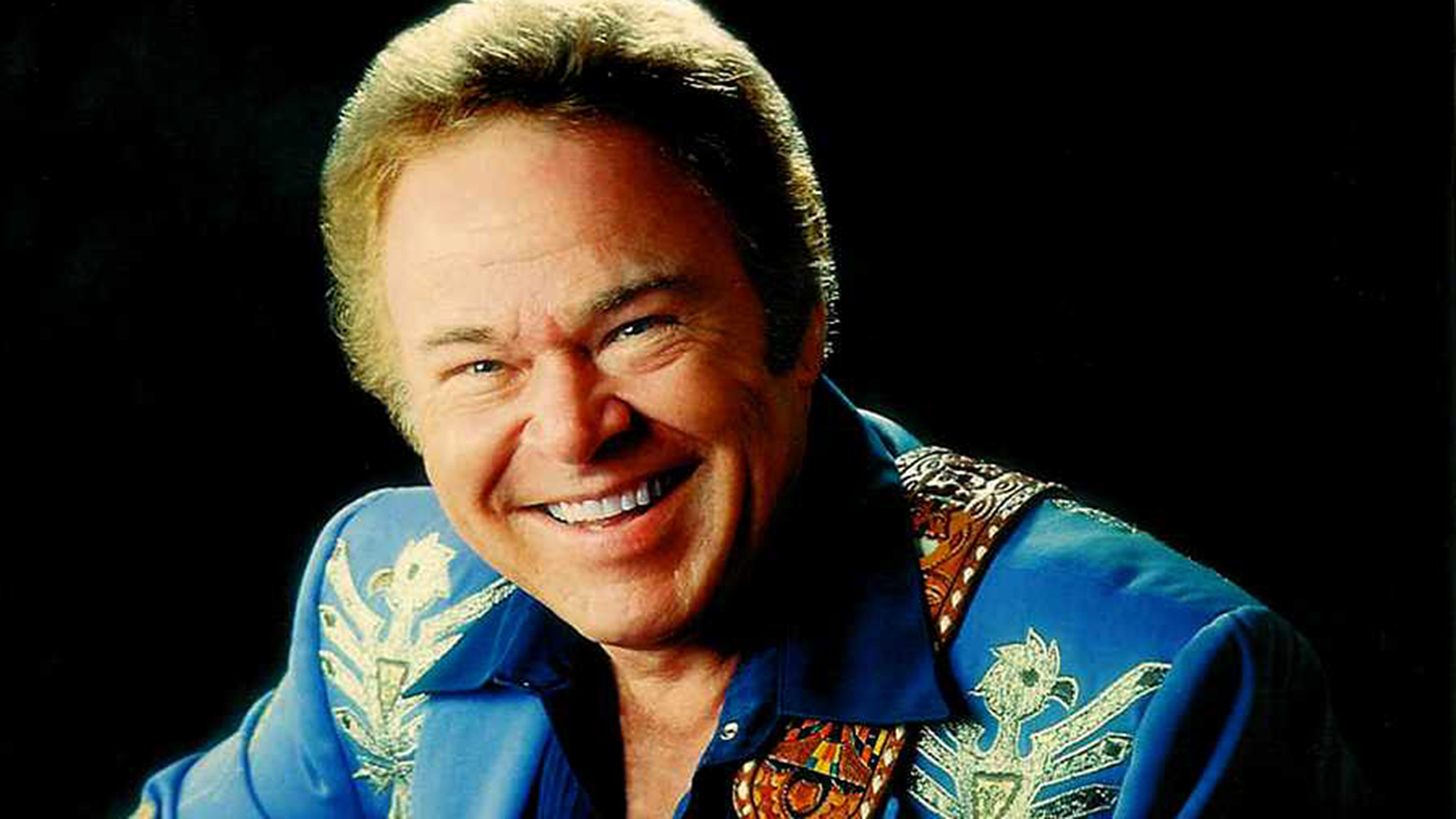
Guideposts Classics: Roy Clark on Recognizing God’s Gifts

People are always saying how important it is to believe in yourself if you’re going to get anywhere or accomplish anything. And maybe they’re right. But I’ve learned one more thing: Before you can really believe in yourself, you have to believe in Something much bigger than yourself.

I found that out one terrifying but wonderful night in a town in Arkansas named Conway. My life hasn’t been the same since.

To get the story straight, I have to go back about 16 years to the time when my wife Barbara and I were living in Maryland. I was playing small local clubs there, struggling along, yet refusing to give up on a boyhood dream to make it as a singer.

ENJOYING THIS STORY? SUBSCRIBE TO GUIDEPOSTS MAGAZINE

Ever since I was 16 and won a national banjo-playing contest, which included a trip to the Grand Ole Opry in Nashville, being a successful country-music performer was my one goal. But in 1960, at nearly 30 years of age, it really began to bother me that nobody had the foggiest idea who Roy Clark was.

Celebrating Guideposts' 75th AnniversaryOne Sunday during this time Barbara and I visited a nearby church. We felt very much at home there, so much so that we filled out a card expressing interest in joining. We’d both been brought up in churches. Now that we’d been married a couple of years, we wanted to get back to hearing God’s word.

A few days after our church visit, a minister came to our home and talked with Barbara. I was out at the time.

“And what does your husband do?” the preacher asked.

“Roy sings,” Barbara said.

“Where does he sing?” he asked.

“Wherever he can,” Barbara told him. “Sometimes on radio programs. Sometimes in supper clubs.”

A long silence followed. “Well,” the preacher said finally, “that’s just not right, you know. I’m afraid your husband will have to change jobs if you plan on joining our church.”

Barbara was speechless. Nothing more was said, and finally the minister left.

When I got home later, I found Barbara really torn up. She was crying and all confused.

READ MORE: JOHNNY CASH ON OVERCOMING ADDICTION

“Oh, Roy,” she sobbed, after explaining what happened. “I just don’t understand it. We both try to live right. I know how much you want to be a singer. I can’t see anything wrong with that.”

I put my arms around her and smoothed her hair. “I don’t understand either, honey.” I said angrily.

God had always been a part of my life, starting back when my father held me on his knee and read me Bible stories. But if this was what religion required… I’ll forget about the church and everything connected with it, I thought. I’ve got everything I need to make it on my own.

That scene provided the final push needed to drive Barbara and me from the East Coast. I was sure a change of place would bring me closer to my dream.

But out West, more disappointment awaited. In Las Vegas, where we stayed for several months, nobody seemed to notice that I was even alive. I played some small clubs, as I had back East, but I was always turned down for bigger things.

Los Angeles would be better, I thought. I was now thinking of recording, maybe even doing some television work.

A friend and his wife invited us to move in with them in their L.A. apartment. But even that turned sour. The landlady, who had rented the apartment to two people, didn’t cotton to the idea of twice that number staying there.

And my late hours, spent unsuccessfully trying to get record-industry people to listen to me, didn’t suit her either. One morning she spotted me coming home as the milkman was making his rounds. Soon after that she served notice; Barbara and I were to be out the following day.

By this time we barely had a nickel to our name. Fortunately Barbara’s mother came through and wired us some money. Just enough, we decided, to make it back to Maryland.

After piling all our belongings into a battered old Chevy, we went to a grocery store around the corner to do some last-minute shopping for the trip. Just as I reached into my pocket to pay for our supplies, Barbara slumped to the floor in front of the cash register.

I bent over her, terribly alarmed. “What’s the matter, honey?” I asked.

“I’ve got this pain,” Barbara said, holding her side. “The pain’s been coming and going the last few days,” she said.

We went quickly to a neighborhood clinic. The doctor there said it definitely was not appendicitis. He wanted to see Barbara again in the morning. In the meantime, he gave her a bottle of pills for the pain.

READ MORE: TENNESSEE ERNIE FORD HONORS HIS FATHER

Later, Barbara insisted we keep to our schedule and take off immediately for the East. Pretty discouraged about everything by now, I didn’t put up too big an argument. “But what about the doctor?” I said. “He wants to see you again.”

“I’m fine,” Barbara assured me, swallowing a pain pill. “Really, I am.”

So, climbing into the Chevy, we began our 3000-mile trip back home. The more we drove, the more depressed I became. It was quite plain no one wanted me.

Brooding as the miles went by, I told myself that I just wasn’t cut out to be a singer. Once home, I would give up my dream and look for something else to do. For the first time in my life, I had completely lost faith in myself.

Since our funds were so low, we couldn’t afford to stop anywhere. Late one night, after driving across Texas and part of Arkansas, I suddenly jerked my head up. Dog-tired, I had nearly fallen asleep. I knew I couldn’t go another mile without some rest.

“Barbara,” I said, “do you think you can take the wheel for a spell?” I looked over at her. I’d been so wrapped up in thoughts of my dead-end career that I hadn’t taken much notice of Barbara during the trip.

Glancing down, I saw the bottle of pain pills lying on the seat beside her, nearly empty. But still Barbara refused to say anything was the matter.

“I’ll try to drive,” she said finally.

READ MORE: LORETTA LYNN ON A MOTHER’S LOVE

As soon as we swapped seats, I was out like a light. Ten minutes later, however, Barbara nudged me awake. It was nearly two a.m.

“I can’t go on,” she cried out in agony. “Something’s terribly wrong!”

Leaping out of the car, I ran around to the driver’s side. I floored the old Chevy and searched for a light–any light–along the deserted highway. Would anything be open at this hour? I had no idea. My heart raced wildly; I didn’t even know where we were.

Finally I spotted an all-night gas station and there was directed to the nearest hospital, 20 miles away in Conway, Arkansas. Incredibly, when we arrived at the hospital, a surgeon was still on duty. Dr. Fred Gordy was his name.

After examining Barbara, he told me that she was bleeding internally. “It looks very serious,” he said. “I’ll need your permission to operate.”

I stared at Doctor Gordy. Middle-aged, he had kind, compassionate eyes and an unmistakable air of competence.

“Whatever you say, Doc,” I said.

Everything was happening so fast it all seemed like a nightmare. I went to an empty waiting room and slumped down in a chair, exhausted, confused and terribly frightened. Here I was in a strange town, far from home. I had hardly any money, didn’t know anyone, couldn’t call anyone.

The person I loved more than anyone in the world was desperately ill, maybe dying. Never in all my days had I felt so alone, so afraid, so helpless. So crazily did my mind begin to spin that before I knew it I found myself praying.

“Lord,” I said, “being a successful entertainer doesn’t seem so important to me now. I love Barbara … she means more to me than anything. She’s all I really care about. Please help her.”

The prayer sounded so peculiar coming from me, the big, thick-headed, obstinate guy who thought he had left God back there in Maryland.

Then a strange thing happened in that little Arkansas hospital’s waiting room. On the heels of my desperate prayer, a surge of warmth flooded my body, a feeling I’d never experienced before. It was like warm hands on cold flesh.

No longer did I feel alone in the room. Someone was there with me–a caring Presence.

READ MORE: MINNIE PEARL ON RECOGNIZING GOD’S GIFTS

Then came a Voice, a comforting Voice, and to this day I swear it was God’s. “Barbara’s going to be all right,” the Voice said. “Just wait and see. Trust … believe…”

And with that I knew she was going to be okay.

Just as the sun came peeping through the waiting room window, Doctor Gordy came back from the operating room.

“Mr. Clark,” he said, “your wife had a tubular pregnancy. We almost lost her in there. I don’t know how she made it, but she did.”

Tears tumbled down my face, tears of relief and gratitude.

Looking at Doctor Gordy, I saw that he appeared almost as tired as I felt. I wanted to hug the guy.

“Thanks, Doc,” I said, pumping his hand. “Thanks a lot.”

A nurse found me a motel room where I slept till noon. Barbara remained in intensive care for a couple more days, but the worst was over. Soon she was transferred to another room with, of all people, a preacher’s wife.

Because of what had happened in Maryland, Barbara was a little doubtful about this. But I’d experienced so many fantastic things in the past few days that to me it seemed just another one of God’s wonderful workings.

READ MORE: ANDY GRIFFITH ON GOD’S GRACE

And I was right. When the woman’s husband visited, and met us, we all got to talking about what the Maryland preacher had told Barbara. The Arkansas man said that he wouldn’t say anything against another minister.

However, he did tell us something that was the freshest breath of air I’d felt in a long time. “It’s God’s church, not any one person’s,” he said. “Only He can say what is right and what is wrong.”

When he said that, Barbara looked over at me, smiled and squeezed my hand.

Later, on the road once again, heading for Maryland with a beautiful, healthy, Barbara beside me, I thought about those words–what is right and what is wrong.

Doing right, I realized now, was following God and really listening to Him–not to one’s own blind ambition. That was the way to make it as a singer or as anything else–to put Him first.

I had turned my back on God temporarily, but God had never turned His back on me. Not in Maryland, not in Vegas, not in L.A., not in that hospital waiting room. It had taken a life-and-death situation to show me how very real and how very caring He is.

But that happens sometimes. It’s when we’re down at our lowest, I’ve found, that He makes Himself so known.

Through the years I’ve come to understand that whatever talent I have–to sing, to entertain–is God-given. I have faith in myself as a performer, sure. But only because I have faith in Someone Whose performance is always far greater than the human mind can even begin to comprehend–God Himself.

For more inspiring stories, subscribe to Guideposts magazine.

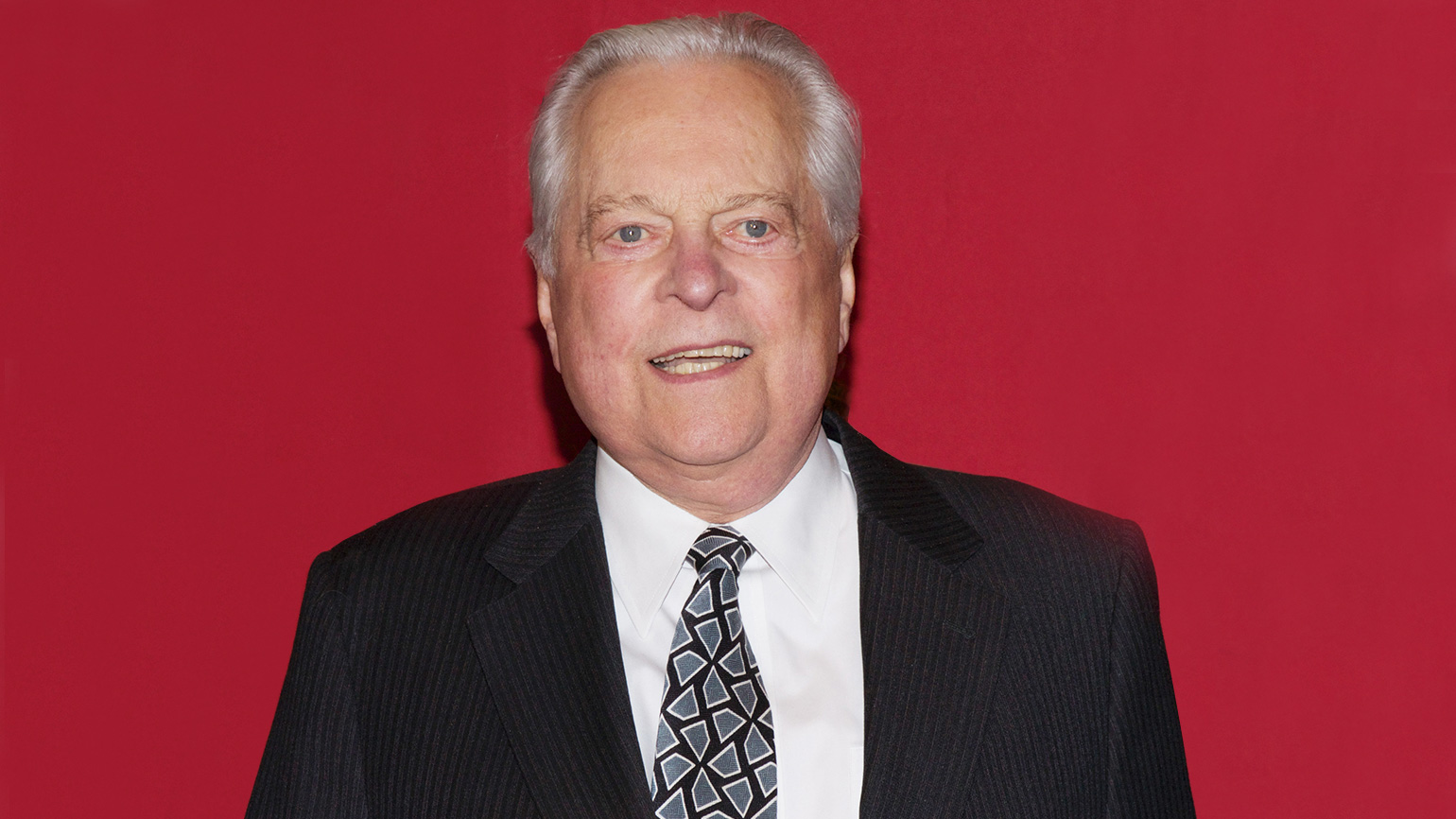
Guideposts Classics: Robert Osborne on Finding Inspiration at the Movies

Viewers of Turner Classic Movies, where I’m known for my introductions to classic films, often ask me when I became such a film fanatic. It’s hard to answer. I honestly don’t remember a time when I wasn’t thinking about the movies.

Of course, in the time and place I grew up–Colfax, Washington, in the 1940s and ’50s–everyone lived for the movies. It’s often hard for people who didn’t grow up in a place like Colfax, population 2,700, to understand just how central the town movie house was to the life of the community in those years.

The Rose Theater was Colfax’s only movie house, except for a few brief months in summer when the Roxy opened up down the street from it to accommodate the inrush of seasonal farm workers.

BROWSE OUR SELECTION OF BOOKS ON POSITIVE THINKING

Whether I stepped through its doors from the blazing heat of a summer Saturday or on a chilly night in autumn with my mom and dad, the Rose wasn’t just another building on Main Street. It was a doorway into another dimension.

The Rose was where I first saw Fred Astaire dance; where Clark Gable rescued Vivien Leigh from a burning Atlanta in Gone With the Wind; where Humphrey Bogart got the better of the Nazis in Casablanca; and where Gary Cooper stared down the bad guys in High Noon.

But thanks to the newsreels that played before each feature, the Rose was also where I saw the look in President Roosevelt’s eye when he singled out December 7, 1941, as a day that would live in infamy; where I saw the Queen Mary steaming into New York Harbor; and Allied troops marching victorious through the streets of Paris. From the wildest heights of fantasy to the darkest of realities, it all happened on that big white screen at the Rose.

READ MORE: MARY ASTOR ON THE GIFT OF FAITH

Not that the screen was ever white for long. The lights never came up (that’s why ushers always carried flashlights) and the action never stopped. Admission was only 25 cents. For that, you got the world.

The summer I turned 12, I landed my dream job: working at the Rose. I changed the posters in the glass cases out front and toted a box of plastic letters up a stepladder to change the titles on the marquee.

That was more work than it might sound like because in those days the bill switched three times a week. The big studios cranked out films like hotcakes, and it was the job of small-town movie houses like the Rose to show them all.

After a year in charge of the marquee, I was bumped up to ushering by the Rose’s owner, Mr. Weskel. I spent my next two years with a flashlight in hand, escorting people to their seats and cleaning up at the end of the day when the lights finally came on.

READ MORE: JIMMY DURANTE’S FOUR GIFTS OF FAITH

That second part of the job was a lot easier than it is today because back then there was no concession stand, so no spilled popcorn or soda to worry about. After all, people didn’t come to the movies to eat. Or to talk! Television hadn’t yet ruined people’s manners in this regard.

And, of course, there were no cell phones ringing. The theater was almost a sacred place. No one would have thought of profaning it with food and chitchat.

When I turned 15, I made it to the top of the ladder: ticket taker. Ticket takers had it pretty good in a number of ways. There was more responsibility (we had to make sure all of the ushers were doing their jobs), and we got double pay if every seat was filled on a Saturday night.

But more than watching the movies, it was the audience’s reaction that made me realize how important the movies were. Beyond entertaining and educating, they inspired.

READ MORE: JAMES STEWART ON ‘IT’S A WONDERFUL LIFE’

Throughout my young years in Colfax, the movie house was second only to church as a place to get your bearings–to find the strength to live, no matter what life threw at you, to set your moral compass.

When war broke out in 1941, all across the country we saw the first chilling images of Japanese bombs exploding above Pearl Harbor in newsreels in our hometown movie houses.

But in those same movie houses just a few months later, we watched Mrs. Miniver, starring Greer Garson and Walter Pidgeon: a film about a British family coping with the realities of life in wartime.

With bombs falling on their country every day, the Minivers somehow carried on. Life, with all its little everyday problems and joys, continued. Franklin D. Roosevelt himself credited the film with showing Americans that the outbreak of war didn’t mean that it was the end of the world.

Like the Minivers over in England, we too could make it through. The movie even came up in one of our church sermons about how Colfax could face the challenges ahead.

READ MORE: ALFRED HITCHCOCK ON THE GREATEST GIFT OF ALL

Courage, loyalty, perseverance. It was at the Rose that I learned what all those classic qualities really meant, and more besides. Maybe that’s why I love my job at Turner Classic Movies as much as I do.

For me, the movies I introduce each night aren’t just wonderful entertainment. They’re old friends. Friends that did more than just show me, as a young boy in Colfax, what the world was like. They showed me how best to live in it.

Movies That Inspire
Robert Osborne shares his go-to list of timeless classics:

Mrs. Miniver: An English family shows courage in the midst of wartime.

Sounder: A beautiful dog story and a timeless portrait of grace under hardship

I Remember Mama: Irene Dunne stars in one of the most touching family movies of all time.

Field of Dreams: Shows the importance of dreams and goals

To Kill a Mockingbird: Gregory Peck gives a magnificant performance as Atticus Finch, a good and honest man who stands up for justice.

The Miracle Worker: A portrait of how people can make miracles happen here on earth

It’s a Wonderful Life: A heavenly classic about George Bailey’s guardian angel and the preciousness of life

The Song of Bernadette: A timeless story of the power of faith and a young peasant girl in 1858 France

Ben-Hur: A sweeping inspirational epic about Imperial Rome in the time of Christ

Stars in My Crown: A great but little-known jewel that you will love, about the trials of a small-town minister

The Bishop’s Wife: Cary Grant plays Dudley, an angel who comes down to earth, in this uplifting classic.

Lassie Come Home: A testament to what love and determination can accomplish

Did you enjoy this story? Subscribe to Guideposts magazine.

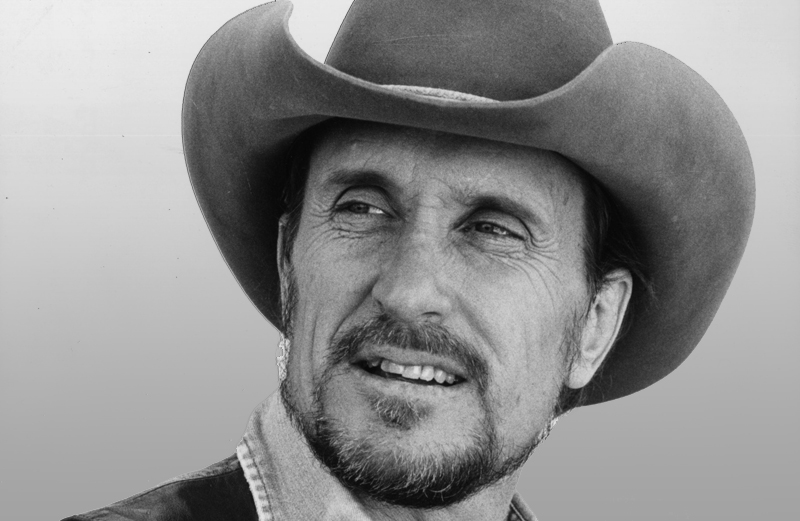
Guideposts Classics: Robert Duvall on Faith and Inspiration

I’ve been an actor all my working life, and learning a part has always meant more than just memorizing my lines.

I immerse myself in the character I am to play. I find out everything I can about who he is, the world he comes from, his dreams, his fears, his passion, his humanity. I try to transform myself.

A remarkable thing can happen in this process. Many times I discover something new about myself. Sometimes it is a discovery that changes my life.

In my current movie, which I also wrote and directed, I play a troubled preacher who calls himself The Apostle. For years I have wanted to make this film. It’s been a labor of love, and it began in 1962 when I prepared to play a character from the rural South in an off-Broadway play.

To research the role I traveled to Hughes, Ark. Wandering the streets of the sleepy Delta town, hanging out in the coffee shop and the post office, I hoped to learn something about my character from the way a man tipped his hat or drawled the directions to the local hotel.

But what I never expected to find was something that would change how I looked at religion.

One Sunday as I strolled down the main drag I noticed people flocking to a simple white clapboard building, the local Pentecostal church. All sorts of folks, young and old, were going inside, where I could hear the clink of tambourines, the rap of a snare drum and organ music rising.

Might as well check this out, I thought. I slipped in and sat in back.

I grew up in a churchgoing Navy family. During World War II we lived in Annapolis, Md., while Dad commanded a destroyer escort in the North Atlantic, playing a deadly game of cat and mouse with German U-boats.

Occasionally Mom woke up in the middle of the night with the overwhelming urge to pray for him. One morning at the breakfast table she told us of the trouble she had sensed Dad was in.

Later we learned he had narrowly escaped being blown sky-high by a German torpedo during the night.

READ MORE: DEAN JONES ON GOD’S PEACE

So I knew about the inner life of the Spirit, but I had never seen such an extraordinary outward expression of faith as I witnessed in that Pentecostal church. I had never seen church like that.

People could barely contain the joy of their faith. Their faces were alive with it, imbued. Folks were on their feet, singing praise and clapping, shouting to God! The air crackled with the Spirit.

It was nearly impossible to be a mere observer. I wanted to sing and shout with them. I couldn’t explain it, but I knew the people in that church had a gift, a story to share. Somehow, someday, I would tell that story.

Soon after, my career boomed. I started working in movies, dozens of them, from To Kill a Mockingbird to The Godfather. I was fortunate to get some excellent roles. I wrote and directed a couple of films.

Yet my interest in Pentecostalism never waned, incubating until I could figure out what to do with it. Then in 1981 I was cast as an evangelical preacher in a movie called The Kingdom.

Again I immersed myself in my role. I made trips to small country churches all over the heartland, seeking out the incredible power of expressed faith I had felt in Hughes, soaking up all I could.

But after months of preparation the film was canceled. I wondered what I would do with all I had learned.

In 1983 I won an Oscar for my portrayal of a down-and-out country singer who finds salvation in the film Tender Mercies. After I was named Best Actor I expected the offers to flood in. But my telephone was surprisingly quiet. There was a lull in my usually busy schedule.

READ MORE: CLIFF ROBERTSON ON PERSEVERANCE

I went home to Virginia, where my parents had retired and where I live when I’m not shooting a movie. My father had died and Mom was ailing. My two brothers and I were trying to figure out what would be best for her, and I needed to be there.

I kept thinking of my mother’s faith and how it had sustained her all the years Dad was at sea, how it had sustained all of us, how she prayed for me when I went off to New York to study acting.

I was not a tortured artist from a troubled family; I had strong parents and a solid childhood. It seemed like only yesterday when we kids were fishing soft-shell crabs out of the bay, laughing and one-upping each other.

One day I sat at the desk in my father’s wood-paneled den. Studying the walls, I was struck by his innate modesty.

A rear admiral in the Navy, he had no plaques or medals displayed, none of his citations or awards for bravery. Everyone knew he was a hero. His career had spoken for itself. He believed in his country.

I sat and wondered what I would be remembered for. Looking around my father’s study and suddenly sensing the unyielding passage of time, I felt I needed to do something that had real meaning for me, before it was too late. Something I believed in.

I took out a legal pad and began writing a story, the one I had wanted to write for many years.

A story of a preacher. A good man but a flawed one—flawed as we all are. Called by God at the age of 12, he becomes a respected minister with a rousing gift for charismatic preaching. But his family is torn apart by marital infidelity.

In a dreadful moment of jealous rage he injures a man and runs. His flight becomes a journey toward a redeemed faith, a return to God’s saving grace.

Assuming a new identity, he starts a church deep in the Louisiana bayou. Again his gift for preaching sweeps up a congregation, returning faith to a town where it had lagged, but his own redemption can come only when he faces the truth of his transgressions.

What was most important to me was to make a movie where Christianity was treated on its own terms, with the respect it deserves. Hollywood usually shows preachers as hucksters and hypocrites, and I was sick and tired of that.

I wanted to show the joy and vitality I had seen with my own eyes and felt in my heart and in my life, the sheer, extraordinary excitement of faith. I especially wanted to capture the rich flavor, the infectious cadences and rhythm of good, down-home, no-holds-barred preaching.

READ MORE: KARL MALDEN ON FINDING PEACE

The story seemed to flow from me. I wrote everywhere, in airports and hotels, on set between scenes, even in meetings. But writing a screenplay is one thing. Getting it produced is something else altogether.

I took my script to Hollywood producers, and was met with the same response: “Bob, religion is not a subject our audiences want to watch.” I disagreed. Why wouldn’t audiences want to watch a movie about something that is foremost in so many people’s lives?

I kept gathering material for the film and reworking the script. Near my house in Virginia I met an astounding 93-year-old preacher named Isham Williams. “If I was any younger I’d make that movie with you,” he declared.

I was even more impressed when preachers I met said I could use anything I wanted from their sermons. No squabbles about copyright or screen credit. James Robison, one of the greatest, gave me free run. I adapted one of his most powerful sermons for the penultimate scene.

I called the film The Apostle—what my protagonist, Sonny, calls himself when he sets up his new church. In my research I was drawn several times to Memphis.

Once, I attended a conference of believers, where I overheard the phrase I used when Sonny prays: “I always call you Jesus, and you always call me Sonny.”

I wasn’t getting anywhere with Hollywood, yet my work on the movie filled my soul. One Sunday in New York I visited six churches, ending up at Harlem’s vast Abyssinian Baptist Church.

There in a packed congregation before a huge choir, when we all began to sing “What a Friend We Have in Jesus,” I found myself connected to the Lord in a way I had never felt before, deep within me.

Yes, I thought, we’re all kin through Jesus. Not just what we read about him in the Bible, but who he is. That was the secret to powerful faith, the power I wanted to convey in my movie.

READ MORE: ANDY GRIFFITH ON GOD’S GRACE

I told anybody who would listen, “Even if I can’t get some big money from a studio, I’ve got to make this movie.”

The next thing I knew my accountant called me up and said, “I know this is an important project for you, Bob. I’ve been poring over your finances and you’ve finally gotten to the point where you can afford to spend a chunk of your money.”

He is a very conservative accountant, so I knew I was getting the green light!

In the end, that’s what I did. Some of my Pentecostal friends tell me my urgings were the Holy Spirit’s doing. I’m inclined to agree with them. In an amazingly swift seven-week period we filmed The Apostle, all on location in Louisiana.

The things I worried about never came to pass. Generators didn’t break down, the weather was good, people showed up on time, no one got sick.

I’m proud of the film. Many of the parts are played by real people and real preachers, not professional actors, because true faith is something that’s hard to duplicate.

I think some viewers might be shocked—pleasantly so, I hope—to hear Jesus’ name mentioned so often, or startled by the unironic tone of the church scenes and worship services. They might be surprised to see blacks and whites worshiping together as equals even in the deepest rural South.

Mostly, I hope they will be moved—moved the way I was when I happened upon that small church in Hughes, Ark., and with no warning something awakened within me that had always been there, dormant and untouched until that day. It was the greatest discovery I ever made.

For more inspiring stories, subscribe to Guideposts magazine.

Guideposts Classics: Reba McEntire on Embracing God’s Gifts

It was a beautiful spring morning when Mama and I set off from our ranch in Oklahoma for Nashville, where I was going to audition for a recording contract. I was 20 years old, well-prepared vocally, ready to take a chance on the dream of a lifetime.

But as the hillsides rolled by, resplendent with the whites and pinks of dogwood and redbud blossoms, I felt a creeping uneasiness. The closer we got to the country music capital, the more I tried to prolong the trip, making Mama detour for some sightseeing, then for a snack, then for anything I could think of.

Finally I yelled, “Stop!” and Mama pulled the big blue Ford into a Dairy Queen on the side of the highway and we went inside.

As I toyed with my mountain of ice cream, I didn’t have to explain I was scared. Mama knew me too well. “Reba Nell,” she said, adding the Nell for gentle emphasis, “we can turn around right now and go on back home if that’s what you want, and I’ll understand. The music business is not for everyone.”

I looked at Mama across the melting swirl of my sundae. She wasn’t pushing me. But when she was my age, Mama would have given just about anything to have had the opportunity I was getting a chance at now. I wondered if that was what was confusing me.

We’d always had a special bond. Maybe it was because of my singing. Music had gone way back in Mama’s life. But right out of high school she had to take a teaching job, working in a two-room schoolhouse. Then she married, worked as an assistant to the school superintendent, and did all the bookkeeping on our ranch while raising four kids.

Mama and I were middle kids, both the third of four children. Being a middle kid, I was always looking for attention. I was a tomboy, doing everything my older brother, Pake, did. “Anything you can do I can do better!” was our sibling motto, whether it was throwing rocks and doing chin-ups, or riding horses and roping. I was out to be the best, to get the attention. Then I learned to sing.

I remember in the second grade, my music teacher, pretty Mrs. Kanton, helped me learn “My Favorite Things” from The Sound of Music. When I went home and sang it for Mama, her eyes met mine and just sort of glowed. It tickled me to think I could make Mama react like that, and to hear adults say that I was gifted.

That’s what my grandmother—Mama’s mother and my namesake—used to say when I was growing up. But she called it a special gift, a gift from God. I was almost as close to her as I was to Mama. Grandma used to take me fishing at a pond on her place.

We never did catch much, but we liked to throw in our lines and sit on the pond dam while Grandma told stories, mostly from the Bible. She told me about David, Moses and Daniel, and the special gifts that God had given them, like courage and leadership and prophecy. In fact, David was a songwriter.

I probably learned as much of my Bible going fishing with Grandma as I did in Sunday school. She taught me gospel songs and hymns so I could sing to her. “Reba,” she’d say, “God gives all of us our own special gifts, and he’s given you yours for a reason. Now you have to learn to use it.”

The cherry was sliding down the whipped cream peak on my sundae. I looked outside at the glowing Dairy Queen cone rotating slowly, almost as if it were sitting on a record turntable. Mama was nursing a cup of coffee and watching the traffic flash by. She was not about to rush me.

We’d spent many an hour on the road together. Grandpap and Daddy were champion steer ropers. Summers we’d all go with Daddy on the rodeo circuit.

We had a two-horse trailer that was so heavy all four of us kids had to stand on the back of it so Daddy could pull the nose up and hitch it to the Ford. Then we’d pile into the backseat and take off for rodeos in Wyoming and Colorado.

We’d play road games, like counting mile markers or Volkswagens. We’d see who could spot the most out-of-state license plates.

Then someone struck up a song and everybody joined in. Mama coached. She kept us on pitch and taught us how to harmonize. If the lyrics got lost in the jumble, she announced, “Okay, stop. Reba Nell, enunciate. Now go ahead.” One word would do it. That was the schoolteacher coming out in her.

When we got older, Pake, my younger sister, Susie, and I formed a country-and-western band at Kiowa High School. We called ourselves the Singing McEntires. We practiced in the living room while Mama was in the kitchen frying potatoes.

I remember one day we were singing harmonies and things got a little messed up. I was on Susie’s part or Susie was on Pake’s—we couldn’t tell—but Pake got really aggravated and started bossing us around.

Quick enough, Mama marched in, spatula in hand. “All right,” she said, “sing it.”

We sang it.

“Susie, you’re on Reba’s part,” she said, pointing with her spatula. “Now, just sing the song.” We sang it.

“That sounds better. Sing it again.” We sang it again.

“That’s perfect. Now do it once more.” Then she walked back into the kitchen. That was Mama.

Across the Formica tabletop I caught Mama glancing at her watch. I couldn’t stall much longer. My ice cream had turned to soup.

After my voice had matured into a real singer’s instrument, I started performing at rodeos. I loved singing to the big crowds. I’d listen to my favorite country music stars, like Loretta Lynn and Dolly Parton, and go out there and try to sound just like them and get all that attention.

Then one day Mama took me aside for a quiet talk that would turn out to be one of the most important conversations we ever had.

“Reba Nell,” she said, “you have a beautiful voice all your own. If people want to hear Dolly or Loretta sing, they’ll buy their albums. But now you’ve got to find your own style. Sing what you feel, sing from your own heart, and you’ll discover the voice God intended for you. That’s what people will really come to hear.”

She was right. After our talk people in the music business started taking a real look at me, and that’s why we were now sitting here in this Dairy Queen outside Nashville.

I looked up at Mama. She was fishing in her purse for the keys to the Ford. “Reba,” she said, pulling them out, “I’m serious about turning back. But if you get that record deal, I’ll be very proud of you. If you don’t—I’ll be just as proud.”

Then she reached over and gave me a tight hug, and suddenly I remembered the glow in her eyes when I sang “My Favorite Things.”

I knew what that glow had meant. All Mama wanted—all any mother wants for her child—was for me to be myself. And she’d seen what I could be. She didn’t have to say that if I signed a record deal she’d be living out her dreams a little bit through me. I understood that now and I was proud. Suddenly I wanted to get to Nashville as quick as we could.

And I’ve been making records ever since, using those gifts that Grandma talked about and Mama helped me find. The gifts God provides to make each of us unique.

For more inspiring stories, subscribe to Guideposts magazine.