Embrace God's truth with our new book, The Lies that Bind

Guideposts Classics: Ray Bolger on God’s Gifts

When I was a little boy growing up in the old Irish section of Boston, it never occurred to me that some day I would find myself skipping down a yellow-brick road with a Cowardly Lion, a Tin Woodman and a little girl, searching for a brain, for courage, for a heart and a home. Let me tell you how it came about.

There was never much money in our family; my father worked at a variety of jobs. And Mother was in very poor health, but she took time to scrub our souls as well as our faces. She lifted our eyes above the grimy streets and the shrieking elevated trains to beautiful things, by taking us to the ballet, the Boston symphony, art museums, and, most of all, by giving us books.

Celebrating Guideposts' 75th AnniversaryMy favorite was L. Frank Baum’s The Wizard of Oz.

“This book has a marvelous philosophy, Raymond,” Mother said. “It tells how we all need wisdom, love, courage and a home. The trouble is,” she added softly, “God has given each of us these gifts, but we don’t believe it. And so we roam the world searching for them when we have them within us all the time. Remember what the Bible says: ‘The kingdom of God is within you.’ [Luke 17:21] Keep those words with you always, Raymond.”

I wasn’t quite sure then just what Mother meant. But I did love the colorful Oz books, especially that Scarecrow. He seemed such a genial character. I always imagined him dancing. And I loved to dance myself. When I got my first job in a bank. I managed to go to ballet school on the side, paying for my lessons by acting as bookkeeper for the director.

But then my mother died, and my whole world seemed to collapse around me. Still in my teens, I had no real home anymore. On top of this, I lost my job.

I remember trudging along one cold, gray afternoon wondering what lay ahead. I came finally to the cathedral I had attended ever since I was christened there. The church was empty, and for a long time I knelt there in the quiet, praying.

READ MORE: WALTER BRENNAN ON PERSEVERANCE

Light flickered from the candles on the altar, and I thought of Mother and the home we once had. And I remembered her words about God’s true gifts being within us. What were mine? Certainly not any real talent for business. But then suddenly words from one of the Psalms came to me as if written in letters of fire: “Let them praise His name with dancing, making melody to him…” (Psalm 149:3, RSV) And it seemed to me, as I looked deep inside myself, that this was the road God wanted me to travel.

Not long afterward I joined a traveling repertory company, selling vacuum cleaners on the side to earn enough money to buy my costumes. In a few years I had put my own act together, playing four or five shows a day.

Rewards came, though not financial ones. I learned that if I gave love in my acting and dancing it was returned in kind from those on the other side of the footlights. And I believe God often led me to the right place at the right time, as when I met Gwen Rickard in 1926. She had come from Montana to Los Angeles’ Orpheum Theater, where I was appearing, to sell some songs. We were married three years later, and she has been my inspiration ever since.

Then came roles on Broadway, and in the mid-1930s I began making movies. In 1937 I was under contract to MGM when I heard they were going to produce The Wizard of Oz.

My heart leaped. But the casting director said he wanted me to play the Tin Woodman.

“Buddy Ebsen will play the Scarecrow,” he said.

“But I’m not a rigid tin performer,” I protested. “I’m fluid, I’m a dancer.”

“No, we think you should be the Tin Man.”

My heart sank. MGM had several ways of enforcing discipline; if you got too rebellious they could suspend you without pay. So strong was the feeling within me, however, that I should play the Scarecrow that I couldn’t give up. I fought the hardest fight in my life. Eventually, Buddy Ebsen said he’d just as soon play the Tin Woodman. Later that part was taken by Jack Haley. And I became the Scarecrow.

READ MORE: SHIRLEY TEMPLE’S HAPPIEST MOMENT

The making of The Wizard was expensive and chaotic. Ten scriptwriters and four directors worked in relays on it. But despite the harried atmosphere with such back-and-forthing as “Why does she sing ‘Over the Rainbow’ in a barnyard? Take that song out of the picture.” the filming was completed in 10 months and premiered in October 1939.

Reviews were mixed, with some important critics saying things like “a stinkeroo,” “displays no trace of imagination, good taste or ingenuity” and “weighs like a pound of fruitcake soaking wet.”

But that didn’t bother me. No matter what reviewers said, I felt it was a good picture, the kind my mother would have approved of. Later, many of the reviewers had to eat their words. During the war years that followed the film’s opening, the song “Over the Rainbow” expressed a nation’s longing for future peace. And “We’re Off to See the Wizard” became the theme of RAF pilots flying into battle.

The rest of the story of the yellow-brick road is written in the hearts of all those who have seen the film. Now an American institution, it has become one of the most enduring and best-loved movies ever made and is shown on television every year. For me it’s always a reminder of the wisdom from the Bible that my mother pointed out to me: The kingdom of God is indeed inside all of us. if we’ll only seek and find it there.

READ MORE: 13 THINGS YOU MIGHT NOT KNOW ABOUT ‘THE WIZARD OF OZ

For more inspiring stories, subscribe to Guideposts magazine.

RELATED VIDEOS

Guideposts Classics: Pat Boone on the Question That Matters

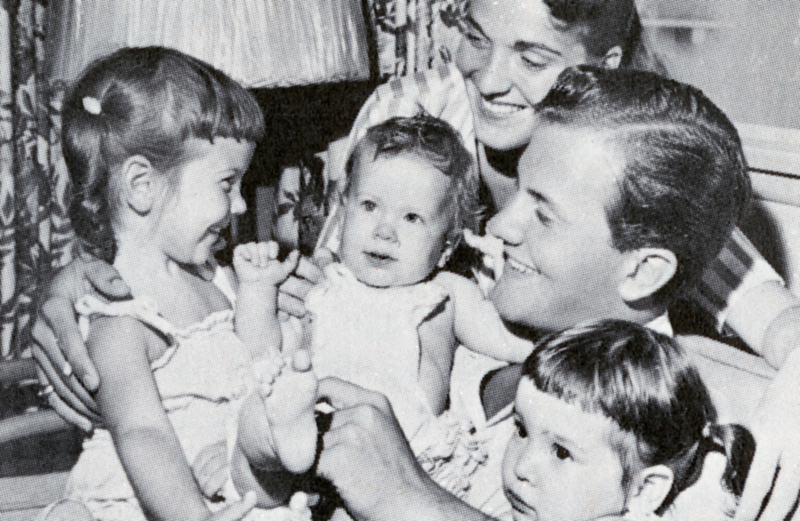
Whenever I mention that I go to church during the week and twice on Sundays, even preach at times if I’m asked to, it always seems to come out as if I’m some sort of a goody-goody. Or as if I say it because it would help my career.

Neither is true.

What I do, what I believe, are derived from these people: my mother, who was a registered nurse, and my father, now a building contractor in Nashville, Tennessee. They’re steady, decent, believing, basic people, who gave their four children a steady, decent, believing, basic outlook.

When we were kids we didn’t have a car. So we’d drive to church in my father’s little pick-up truck. He’s a deacon and Sunday school teacher at the church.

It always looked kind of funny pulling up in front of the church in a truck with “Boone Construction Co.,” painted on it. But such things brought us all close together. We always did things as a family, the six of us, playing or praying.

I have a kind of second father too. Mack Craig. When I first met Mack, he was the principal of David Lipscomb High School in Nashville, Tennessee, as well as a teacher working then for his Ph.D. He had his own family to take care of too.

Skinny as a rail, mostly because he seldom took time to eat, he was always moving at a fast trot to keep everyone around him happy.

Whenever I was worried about something or had a decision to make, I’d take a walk with him or call at his house or even wake him at the awfullest hours. And he’d always say:

“Forget what it means to you personally, or what you can gain by it, or have to give up, or what someone else might think of it. Just ask yourself: ‘Is it right?’”

Since we met I have always tried to apply that yardstick to whatever I do.

It isn’t always easy.

Like the question of joining a high school fraternity. To presume an air of exclusiveness, some frats discriminated against boys because of their poverty or beliefs or race. My parents disapproved of that, but when I pledged, intending to join a frat, they didn’t try to stop me.

Something else did: the question that has come to light my life when facing any perplexity: Is it right?

When you look at life from that perspective, the decision isn’t hard, and you always feel relieved.

Singing was one of those things.

If the truth be known, it was really my appetite that got me into singing. Starting when I was about ten, my mother used to take me to sing at prayer meetings and other services. Then the ladies asked me to sing at their luncheons and club socials.

They wanted free entertainment and I wanted a free meal. They told their husbands about it and pretty soon I was singing—and eating—at Kiwanis and Rotary too.

Then came the opportunity to sing with a good, local dance band, something I’d never done before. But singing with a dance band meant late hours, being around drinking. Troubled, I got Mack Craig out of bed at some horrible hour in the morning, and we talked about it.

Mack said: “Suppose there are temptations. Of course there will be in singing, as in everything. But there’s nothing wrong with being a singer if you handle yourself properly.”

But instead of the dance band job, he went out and helped get me my first radio show: “Youth On Parade,” over the local station. It featured high school kids. I was the master of ceremonies and sang a little too.

We did it for two years, my senior year in high school and freshman year in college. No pay at all, but it was great.

While in college I married Shirley Foley, a wonderful girl. She’s the daughter of Red Foley, the TV star of “Country Music Jubilee,” and we were high school sweethearts.

We both transferred to North Texas State College in Denton, Texas, and with marriage, eating became a definite problem. I needed a real paying job. I got one as a TV entertainer in Fort Worth, and continued in college.

Following an appearance on “Ted Mack’s Original Amateur Hour,” Randy Wood, the president of Dot Records, asked me to come to Chicago to make a recording of “Two Hearts.” I hesitated a little. If the impossible happened—a hit record—everything might go haywire.

I was making $44.50 a week on TV and radio, which wasn’t much, but enough to pay our way. Besides, our first daughter, Cheryl Lynn, was already here and our second, Linda Lee, was on the way.

Was it right to leave the security my family had then on the slim chance of a hit record? And what about my schooling?

My father and Shirley felt I should take that chance—so did Mack Craig. Shirley said she was sure I’d finish school whether the record was a hit or not.

It was. And then I was asked to move to New York. That was a much bigger step than Chicago. But I could attend Columbia, something I wanted to do. Everything seemed to fall into place when Arthur Godfrey invited me to be on his show any time school permitted.

Then came the offer to make a movie, Bernadine. The picture was to start last January, which meant I would have had to drop out of school before the term ended.

But that presented a problem. A lot of kids I know, and a lot of others who wrote me, said that if I could work and go to school full time, they could too. But if I dropped out before the term ended just for money, wouldn’t I be letting them down?

The movie people said it would cost an awful lot of money to postpone the picture. What was right?

I finished the term, but agreed to skip the following term in order to make the movie, which means graduating next January instead of last June.

We all usually know what wrong is. I’m not sure we all know as often what right is. Mostly right is determined for me by what the Bible says it is, and how my parents and Mack Craig and other people I admire and respect live it.

Like them, I always ask myself about anything I do:

Will it violate my conscience?

Will it have a bad effect on others?

Will it have a good effect on others?

I’m not always sure about these things but I try to be.

My co-managers, Jack Spina and Randy Wood, also ask these questions about any place I’m requested to perform in, or any song I’m asked to sing. Sometimes it costs us.

When we were offered a song to record once called “Roll With Me Henry,” we all knew it was going to be a sure hit. But the lyrics seemed suggestive. So we didn’t record it. Another singer did, under a different title and with changed lyrics, and it sold over a million records.

Before we got the TV show we liked we were offered many. One came from a cigarette sponsor. I don’t smoke, and it would be hypocrisy to ask others, especially teen-agers, to smoke. I couldn’t feel honest about it, that’s all. So I asked the sponsor:

“Suppose I went before the camera, and said: ‘I don’t smoke. I don’t advise you to smoke, but if you’re going to smoke, smoke this brand’.”

They laughed, and then said: “Why, that’s a new approach. Maybe we ought to try it.”

They were getting serious, so we cut it off quickly.

What all this means is that we try to act the way we believe, publicly as well as privately. Randy Wood is a Methodist. Jack Spina is a Catholic. Mort Lindsey, our orchestra leader, is a Christian Scientist.

When we’re out of town, we all get up on Sundays and go our separate ways. We go to different churches, but we go.

Singing, of course, has made many nice things possible. But it’s still a means, not an end. After I am graduated from Columbia, I’m taking a vacation from school to fill certain commitments, including my television show, and then possibly return to school for my Master’s degree.

After that I’ll make up my mind. I might want to be a teacher, or an educational TV producer, or a minister. I don’t know how long this singing will last.

No matter how long it lasts, it’s given me a greater responsibility than most men my age; not just to my family, but to the many who look to young singers as their example.

I owe them a lot, if not everything. The only way I can repay them is to make a day-to-day reality of the question that lights my life: “Is it right?”

For more inspiring stories, subscribe to Guideposts magazine.

Guideposts Classics: Neil Hamilton on Asking for Prayer

I knew exactly where and how I would kill myself. Not far from Hollywood in the mountains above Santa Monica, there was an old abandoned quarry. Many times, on hikes, I had peered shudderingly over the rim. If a man stepped off that cliff, his body might never be found.

Looking back now, more than 20 years later, what I had in mind that day seems madness. But at the time there seemed to be a kind of insane logic in it. I had fallen from the very top of the Hollywood ladder, in the palmy days of the movie industry—with my five-servant home, the second largest swimming pool in California and six secretaries to handle my fan mail—to the level of a man who haunts the second-hand stores to clothe his family. I was hopelessly in debt, and as for earning money, not only was I unable to land leading roles any more: it had been a long time since I’d had a role of any kind. Only my life insurance could supply the needs of my family. If my death would give them food and shelter, so be it.

As a Catholic who at one time had planned to join the priesthood, self-destruction should never have entered my mind. I should have turned instinctively to prayer. But the truth was, I had prayed, frantically, urgently. I had bombarded heaven with demands for help. Nothing had happened. Now I had no words left, no faith, no hope. I felt abandoned, empty, useless, prayed out.

My sorry state was my own fault. For one thing, I had made some unwise financial moves. For another, through arrogance and impatience, I had alienated some important people in the film industry.

In the Hollywood of those days, even the hint of failure was enough to send an actor’s stock spiraling down. Mine had reached rock bottom. I wasn’t even an actor any more; I was working as a kind of errand boy for an actor’s agent. Salary: $50 a week, just enough to prolong the agony of unpaid bills and overdue rent, not only for me but for my wonderful, patient, uncomplaining wife.

But the basic reason for my disintegration as an actor and provider, I am certain, was my drift away from my faith. Success in Hollywood brought me into contact with all sorts of sophisticates and skeptics. I read the books they recommended. I listened when they proclaimed that God was a myth. I began to go to Mass when I felt like it—or skip it if I didn’t. I suppose that unconsciously I felt I was doing pretty well on my own. Religion? I could take it or leave it.

When things got tough, of course, I tried to swing back. I began to yell for help. When there was no answer, I decided that if God did exist, He wanted no part of me. He was blocking me out, wasn’t He, turning a deaf ear?

I did not know, that afternoon as I hurried toward death, that God’s mercy and love had never for a moment been withdrawn from me. As I made my way toward the quarry, I found that the road I had planned to take was blocked by excavations. So I took another road, a bit longer, that would take me to the same place.

Along the way, I saw a flight of stone steps I had never noticed before. Without meaning to, without reason, I ascended them. I came to a door I had never seen before. I rang the bell. No answer. I rang again, not even wondering why I was doing so. The door opened and there stood a familiar, friendly figure, Father Benjamin Bowling, a priest I knew slightly.

“Why, Neil,” he said, “how nice to see you. Come in. What are you up to?”

And I said, feeling like a man in a dream, “I’m on my way to kill myself.”

Father Bowling showed neither shock nor surprise. “Tell me,” he said cheerfully, “what do you think of our new club for the students?”

I stared around, bewildered. It was, Father explained, a place where Catholic students at nearby UCLA could come for recreation, friendship, spiritual guidance—a kind of haven from the pressures of college.

Father showed me around as if I had been a casual guest, and I followed him as if I’d been struck dumb. But before long I was telling my whole miserable story.

“Father heard me out, then said: “I know how you feel. Failure can be a crushing experience for a man. I came close to it with this club. At first I thought I would never raise the money, and then there were so many construction problems I feared the place would never be built. That’s why I appealed to St. John Bosco. Suddenly everything began to go right. The club is more his doing than mine, I’m sure. I’ve dedicated the chapel to him.”

“St. John Bosco?” I repeated. The name was only vaguely familiar.

“This time last century,” he said, “Father Bosco was working his head off in Turin, Italy, trying to provide housing and education for poor city children. Well, I was trying to do something for young people too, but failing miserably at it, so I asked Don Bosco to help. He must have or we wouldn’t be here now.”

“I suppose,” I conceded.

From my long-ago Sunday school days, I knew that just as friends request each other’s prayers, so we can request the prayers of saints. We can ask the saint to intercede for us by including our prayers with his to the Almighty, although it is God, of course, who answers the prayer. I knew this, as I say, but it was a long time since I had thought of it.

Father Bowling went on: “I feel that Don Bosco is the best friend I’ve ever had. From what you tell me, you need a friend with a little more faith than you can muster right now, Neil. Why not let Don Bosco be that friend? He may already be. You know, sometimes we choose our friends and sometimes they choose us. Ask Don Bosco to join you in your prayers for a job.”

I shrugged. “I’m prayed out, Father. I have no more words.”

“Then try these words.” Father smiled and handed me a tiny booklet. “The prayers in this booklet are a novena recommended by Don Bosco, and they’re all written out for you. All you have to do is read them, read them from your heart. Don Bosco will say them with you.”

I said I would try it, that I would try anything.

I made the novena, nine days of intensive prayer, representing the nine days the Apostles spent in prayer between Ascension Thursday and Pentecost Sunday, when the Holy Spirit descended upon them. As a spiritual exercise, novena prayers go back to the earliest Christian years, some of them composed by saints on their own search for God’s help.

On the ninth day of prayer, as I was shaving, I heard a voice inside me say clearly and distinctly as though someone had spoken in my ear, “Get in touch with Dan Kelly at Universal today.” I was so startled that I almost dropped my razor. I told myself that my imagination was playing tricks on me, and went on with my shaving. Again the inner voice spoke, neither louder nor more commanding than the first time. And it spoke the same words.

Now if there were one person in Hollywood who would never help Neil Hamilton it was Dan Kelly. He was one of the people I had treated with contempt and arrogance when I was securely perched—so I thought—at the top of the tree. Now he was head casting man at Universal. I knew I had about as much chance of getting in to see him as of jumping over the moon.

But when I told my wife of this extraordinary happening she said quietly, “You’d better call him.”

In fear and trembling I called his office. His secretary said she thought she could slip me in to see Dan. When I finally stood there and tried to apologize for my past actions he brushed my apologies aside. There was a job, a part he thought I might fit.

From that moment it was as if a whole series of locked and bolted doors had swung open. And they have kept opening ever since.

As Father Bowling felt about his club, I now feel about my return to work, my return to life, my return, above all, to God. Don Bosco is the best friend I’ve ever had; the friend, I now believe, who chose me on my walk to death and made the journey with me back to life. The goal of all friendship is for each to draw the other closer to God, and Don Bosco, already with God, achieved precisely that for me.

This is the message I try to bring now to other defeated and desperate people: “Don’t despair, don’t give up. No matter what it seems like, you are not alone. There are more friends around us than human eyes can see.”

For more inspiring stories, subscribe to Guideposts magazine.

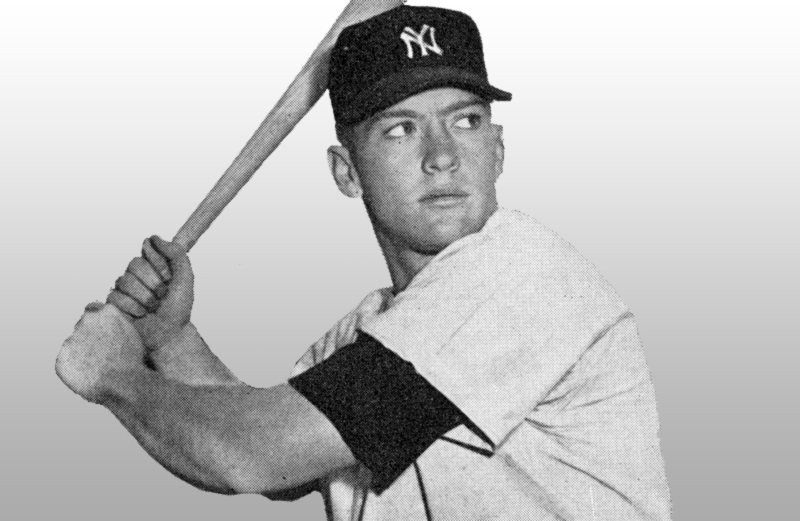
Guideposts Classics: Mickey Mantle Honors His Father

Last April 17th I knocked a baseball out of Griffith Stadium in Washington, D.C. I’ll not try and kid anybody by saying I didn’t realize it was a long home run.

My teammates beat my back black and blue and “atta boyed” me all over the place. They compared the drive with ones slugged by Babe Ruth, Lou Gehrig, Ted Williams, Joe DiMaggio and big people like that.

My folks back home in Commerce, Oklahoma, soon heard about it. When Mama telephoned that night, I gabbed first with her, then with my wife Merlyn, my three brothers, kid sister, and the neighbors who happened to drop in.

Frankly, I liked all these goings on, and there was no sleep in me that night. So I tuned in several sports programs, and they were talking about my homer. Then one announcer made me cry.

He mentioned my dad, Elven Charles “Mutt” Mantle.

This broadcaster recalled how my Dad taught me to hit both lefty and righty at the age of five, and how he raised me to become a professional ball player. What he didn’t tell was how Dad tried to teach me to be a Big Leaguer off the diamond as well as on it.

While he was alive, I was Dad’s life. Now, making good for Dad is my life. I guess that sounds a little strange, and maybe it is. Perhaps it may also sound strange that I still talk to “Mutt” Mantle, my father. That night in my hotel room I asked him:

“How about it? They say it went 565 feet.”

Dad liked it but he wasn’t satisfied. Now, don’t get sore at him. He was just that way; he always demanded that I do better.

“It should have gone 600 feet,” he said … inside me.

“Okay, okay, give me time,” I said, and I’m sure he grinned.

I recalled when Dad drove me back home from Joplin, Mo., after I completed my first full year in the Class C Western Association. That was in September of 1950, and I was feeling pretty good for an 18-year-old. I batted .383, was plenty swelled up about it, and so began fishing for a compliment.

“How about that .383 average, huh?”

Dad never took his eyes off the road. “You should have hit .400,” he said. And I thought I saw him grin just a little then too.

Demanding better than good was Dad’s way of telling me there’s always a bigger Umpire than the man in blue on the field, and He’s the real judge of what you do. My father tried to model my baseball techniques from the start as a writer works on a novel, or a composer on a symphony.

I was named Mickey Charles; Mickey after Mickey Cochrane, the great Philadelphia Athletics catcher, and Charles after my grandfather. Dad and Grandpa both played sandlot baseball.

According to Mama I was in the cradle when Dad asked her to make a baseball hat for me. When I was five he had her cut down his baseball pants and sew together my first uniform. He labored practically all his short life as a lead and zinc miner.

Anyway, I was five when he began teaching me how to switch-hit. Dad was a left-hander; Grandpa, a righthander. Every day after work they’d start a five-hour batting session.

Both would toss tennis balls at me in our front yard as hard as they could. I’d bat right-handed against Dad, and switch to left-handed against Grandpa. A grounder or pop-up was an out. A drive off the side of the house was a double, off the roof a triple, a homer when I hit over the house or somebody’s window.

I’m probably the only kid around who made his old man proud of him by breaking windows.

Dad hammered baseball into me for recreation, sure. But it was more than that. He was teaching me confidence by having unlimited faith in me. Dad was 35 and I was 15 when we played week-ends for the Spavinaw, Oklahoma, team. He pitched and I played shortstop.

Those games are the most cherished of my life. Bigger than any World Series. Why? Because we played together, and I watched Dad’s faith in action.

He was never angry. He was always patient. He was unhappy when anybody made an error, even on the opposing team. He didn’t try to outshine everybody else. He just tried to shine in himself.

In high school he wasn’t happy about my playing basketball and football too. During a scrimmage one afternoon I got a kick in the left shin. I hardly noticed it, though I did limp home.

The next morning my leg was twice its normal size and discolored. There was no x-ray equipment in Commerce, so Dad borrowed the money, and got me to a specialist in Picher, Oklahoma. On the way I could see him sort of whispering to himself. He was praying.

The doctor diagnosed my trouble as osteomyelitis, a bad bone disease.

Dad borrowed up to his neck and hustled me to a clinic in Oklahoma City. There was even talk the leg would have to be amputated. When I thought it would make me give up baseball I almost went crazy. More for Dad’s sake than mine. But Mama, Dad and Grandpa all hung on. They made me hang on.

Know what saved that leg?

Prayer and penicillin.

When I got to recovering real good, I began swinging a sledgehammer at odd jobs and worked in the lead and zinc mines with Dad to put on weight and muscle. In a little over a year, I added eight inches and 40 pounds. One day in 1949, on the day I was graduated from high school, Dad said to me:

“Get me a few hits for a graduation present.”

I sure tried, and I got him a single, double, and a homer.

Dad didn’t tell me that a New York Yankee scout named Tom Greenwade was out there watching. After the game, I was signed first to the Independence, Kansas team, then to Joplin, both Yankee farm clubs. During the 1951 spring training season, I was brought up for a try-out with the Yankees!

Here was the chance to show everything Dad taught me. But how my teeth rattled! And how hard it was to control my anger. If I’d go without base hits for several days, I’d smash my knuckles against the concrete wall in the dugout, or hurt my toes kicking the water cooler. And after the game I’d ask Dad:

“What’s the matter with me? What do I do wrong?”

“Bottle up your anger, boy,” he’d say. “Let your bat do the talking for you.”

That’s the way he always was. Gentle and patient.

I started the season as a right fielder for the Yankees. I’d flash sometimes, more often I fizzled. Then in a double-header at Boston I struck out five times in a row.

I cried like a baby. “Put someone in my place who can hit the ball,” I blubbered to Manager Stengel.

Soon after this I was shipped back to Kansas City for more “seasoning.”

“I guess I don’t have it as a Big Leaguer,” I told Dad when I met him in Kansas City. “I belong in the minors.”

First he whispered silently to himself, and then he said: “Mickey, things get tough at times and you must learn to take it. If that’s all the guts you got, you don’t belong in baseball.”

His face was white and drawn. Dad had cancer, but I didn’t know it.

He left. I stayed. I did some whispering too. On my knees. And I dug in. I got to hitting again. Before the season was out Mr. Stengel brought me back to the Yankees.

Seeing me start in the World Series was probably the proudest moment of Dad’s life. In the second game I fell chasing a fly, ripped the ligaments in my right knee, and had to sit out the Series in a hospital bed. But it was all right. Dad was with me. He left a sick bed to see the Series.

“My back is acting up,” he alibied, “but now I have to watch that knee of yours.”

Then a doctor in the hospital told me Dad had cancer.

I guess I really woke up after Dad died. I mean I really got his message. Not because I had the responsibility and became the head of the family, looking after my mother and brothers and sister, and my wife. I guess I woke up to what he meant to teach me all the time.

And I thank the Lord for Dad even though He did take him away at the age of 40.

There’s been a Micky Mantle, Jr. around since last May. He doesn’t know it, but he owns a ball, bat, and glove. It’s all right with me if some more little Mantles come along in the future.

And some day I’m going to build a baseball park in Commerce, free to all, for every kid in town. It will be named Mutt Mantle Field, a sort of shrine for my father, who is still teaching me how to be a Big Leaguer—in the real sense.

Read more Guideposts Classics!

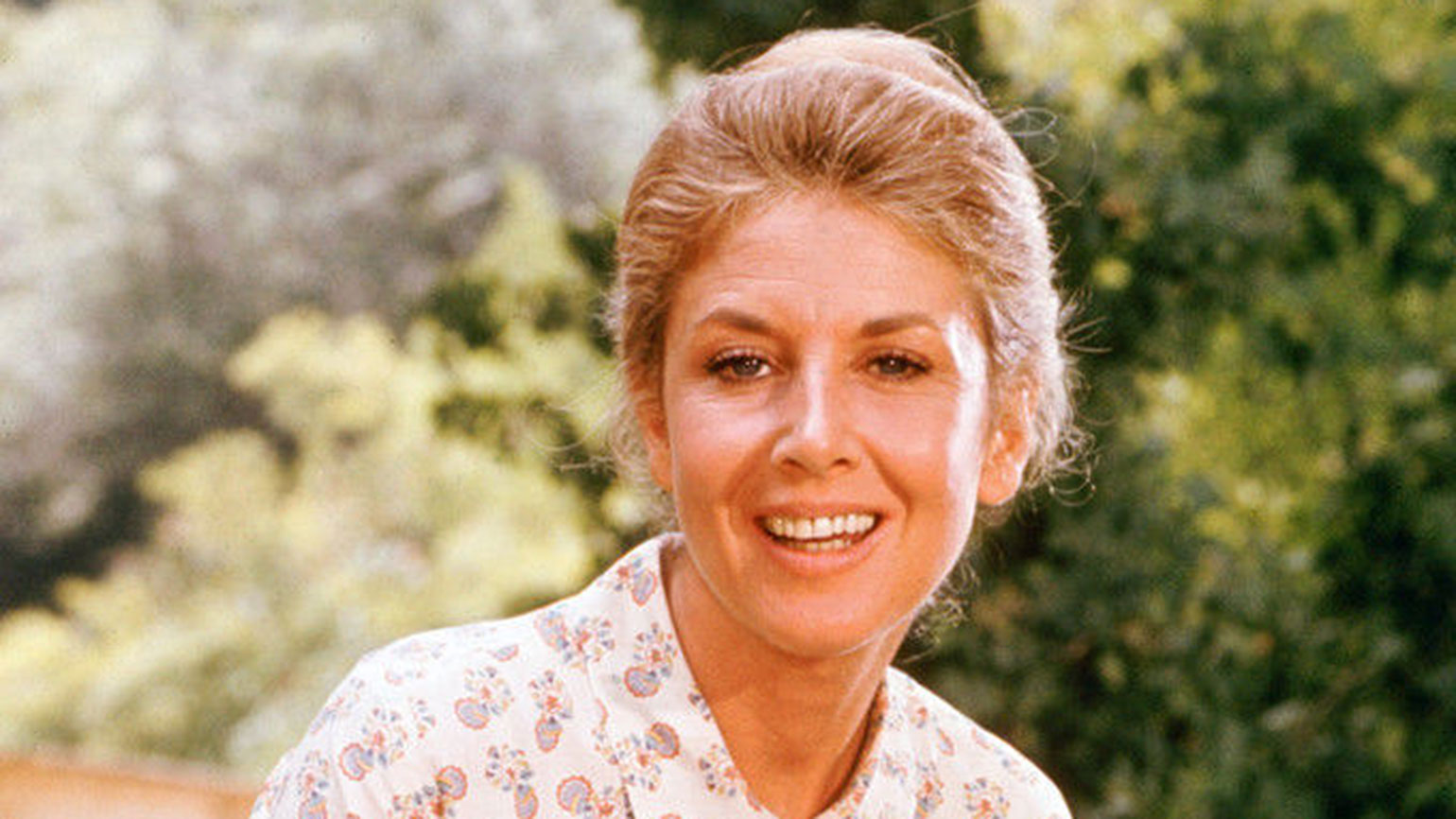
Guideposts Classics: Michael Learned on Prayer

People often ask me if in real life I’m anything like Olivia Walton, the character I portray in the television series The Waltons. Well, we do have some things in common, Olivia and I. I’ve lived on a farm, as she does. And, like her, I’m used to big, tightly knit families.

When I was growing up I was the oldest of six daughters, and now I’m the mother of a brood that includes three teen-aged boys, a tankful of fish, a bird, four cats and three dogs.

But while Olivia’s spiritual strength—a strength that surely binds the Walton clan together—is inborn and comes easily to her, my own is the result of much groping, and there are times when I envy Olivia the serenity and assurance that her religion gives her.

Take the matter of prayer, for example, surely a basic thing in religion, perhaps the most basic of all. For people like Olivia, prayer seems to be as natural as breathing. In good times or bad they turn confidently toward God, walking across a solid bridge of faith. But not everyone is so fortunate.

For some people, prayer can be full of doubts and question marks. Are we really getting through to Someone when we pray? Is every prayer really heard? How can we know whether or not it’s being answered? For a long time I wondered about such things myself.

I’m pretty sure that as a child I got off on the wrong foot where prayer is concerned. Nobody was at fault. It was just happenstance.

We Learned children lived on a 21-acre farm in Connecticut where we had a goat named Rebecca, pigs, rabbits and chickens. It was a wonderful place to grow up, in many ways not unlike Walton’s Mountain.

Directly behind our farm was a Catholic seminary. It was supposed to be off limits for us kids, but one Sunday morning, dressed in jeans as usual, my sister Gretl and I climbed over the stone wall separating our property from the seminary.

Curious as cats, we wandered around the grounds until a kindly looking priest spotted us. “May I help you?” he asked.

“We were just looking around,” I said shyly. “We live over there.”

The priest smiled at the two little blond girls standing barefoot before him. “Why don’t you come in and see where we live.”

Our family wasn’t Catholic, but I was intrigued by the seminary tour Father Coffey gave us. We met other priests, too, and almost every Sunday after that, one of my sisters and I would go visit there.

Most of the things kind, old Father Coffey told us Learned girls are forgotten now. But one thing he said made a deep impression. “God,” he assured us earnestly, “answers all prayers.”

This was welcome news to me, because I had been praying fervently that my parents would give me a new bicycle. I wanted that bike desperately, and when Father Coffey told us that all prayers are answered, I knew—I was just positive—that I’d get my bike.

In fact, as I climbed back over the wall that day, I could visualize a chrome-plated red Schwinn, complete with a basket on the front, already sitting in our driveway.

But the bike never came. Instead, my parents gave one to my sister Dorit. All I got, I remember vividly, was a pair of new shoes.

I was crushed. How could this have happened? Wasn’t God supposed to give me what I asked for? From that moment on, as a child, I think I tended to equate prayer with disappointment and to regard it with doubt and hesitancy.

This attitude was reinforced a few years later when a new job for my father took our family from Connecticut to Europe. We hadn’t lived there very long before I began to be passionately interested in ballet.

My one ambition now was to become a ballerina, and all day I’d dance through the house praying fervent prayers. Eventually an audition was arranged for me in England with the famous Sadler’s Wells ballet company.

While waiting for some word, I kept reminding God of my aching desire. “You know how much I want this,” I told Him.

But, to my despair, word came that the ballet company didn’t want me. I was too tall, they said, and besides my feet were flat. Again I was heartbroken, but more than that, confused. If prayer as heartfelt as mine produced only negative results, something must be wrong somewhere.

Resignedly I accepted an alternative–drama school. And gradually, although it was difficult at first, I began to forget all about being a dancer. I discovered a whole new fascinating world—the world of the theater. In drama school, moreover, I met Peter Donat, the man who later became my husband.

By this time the thought surely should have crossed my mind that an apparently negative response to prayer can be a form of guidance. But I was too busy with the demanding task of building a stage career. It was not a spectacular one, but I found it exciting and satisfying.

By 1972 I was acting regularly with a San Francisco theatrical company. I had been with them for several years and was content with my work. But there were personal difficulties in my life that I could not seem to resolve, and deep inside I was miserable.

Once again I called out to my dim concept of God for help, and once again there seemed to be no answer. Then in the spring of that year my agent urged me to go to Los Angeles and look into television work.

The idea did not appeal to me. I flinched from the thought of leaving my three sons and my home in the most beautiful city in America to enter a new and highly competitive field where I had little experience.

But my agent was persistent and persuasive, and so finally—still praying for relief from my problems—I went to Hollywood and made several screen tests, including one for the role of a rural housewife in an upcoming CBS television series.

A month later, my agent called me again. “Michael,” he said, “they want you for The Waltons. You remember–it’s the show about a family living in the hills of West Virginia during the Depression. You’ll be the mother, and shooting starts immediately.”

My emotions were mixed, at best. The professional side of me was pleased, but the personal side wasn’t. Ahead of me I saw the daily grind of a television series, the loneliness and dislocation of being away from my family…and I wasn’t too sure that I could relate to this fictional Olivia Walton anyway.

She seemed so serene, so settled, so secure in her faith, whereas I…

As things turned out, all my fears were groundless. Almost from the very first day of filming, I found in the cast and crew of The Waltons warm and loving new friends, another close family to give me all the support and comfort I needed.

That first year was full of endless excitement: the tremendous success of the show, the unexpected Emmy that came my way. But something else excited me even more, and that was the evolving character of Olivia Walton herself.

It was very strange. An actress is supposed to “interpret” or “bring to life” a fictional character, not be influenced by one. And yet I found myself being profoundly influenced by Olivia Walton.

Like me, she often faced personal problems. Her problems were not exactly like mine, and yet I found myself admiring the way she was able to handle setbacks and difficulties through a strong and simple faith in God.

In show after show Olivia revealed to me—as indeed she keeps on doing—a basic truth that had eluded me for years—the truth that, as old Father Coffey said, God can and will answer prayers, in His own way and in His own time, not in ours.

Perhaps His answer to prayer is sometimes simply, “No,” as in the case of the bicycle that I’m sure now I didn’t need as much as my sister did. Perhaps it’s a negative that leads one in a new and better direction, as it did in my turning from ballet to the theater.

Perhaps it consists in meeting a new person (yes, even a fictional one) whose life and character make such an impact that your own life is changed.

Sometimes I am astonished at the change in myself. In my kitchen the other day, when I heard on the radio that an airliner with its landing gear stuck was circling the Los Angeles airport, I did what Olivia would have done. I knelt down on the kitchen floor and prayed for the safety of those people.

The plane finally landed safely. No one was hurt. Did my small prayers help? I know what Olivia would say. She would say that a Higher Power watches over us all–and that somehow prayer enables this Power to carry out the best designs for us.

Trusting. That’s what Father Coffey meant by prayer and that’s what Olivia Walton lives her life by. It’s taken time, but I’ve come to see that all prayers are answered–if one discovers first that prayer is acceptance and trust; it’s releasing doubt, and relying completely, in the end, on God’s ultimate wisdom.

For more inspiring stories, subscribe to Guideposts magazine.

Guideposts Classics: Mel Blanc on the Most Important Voice

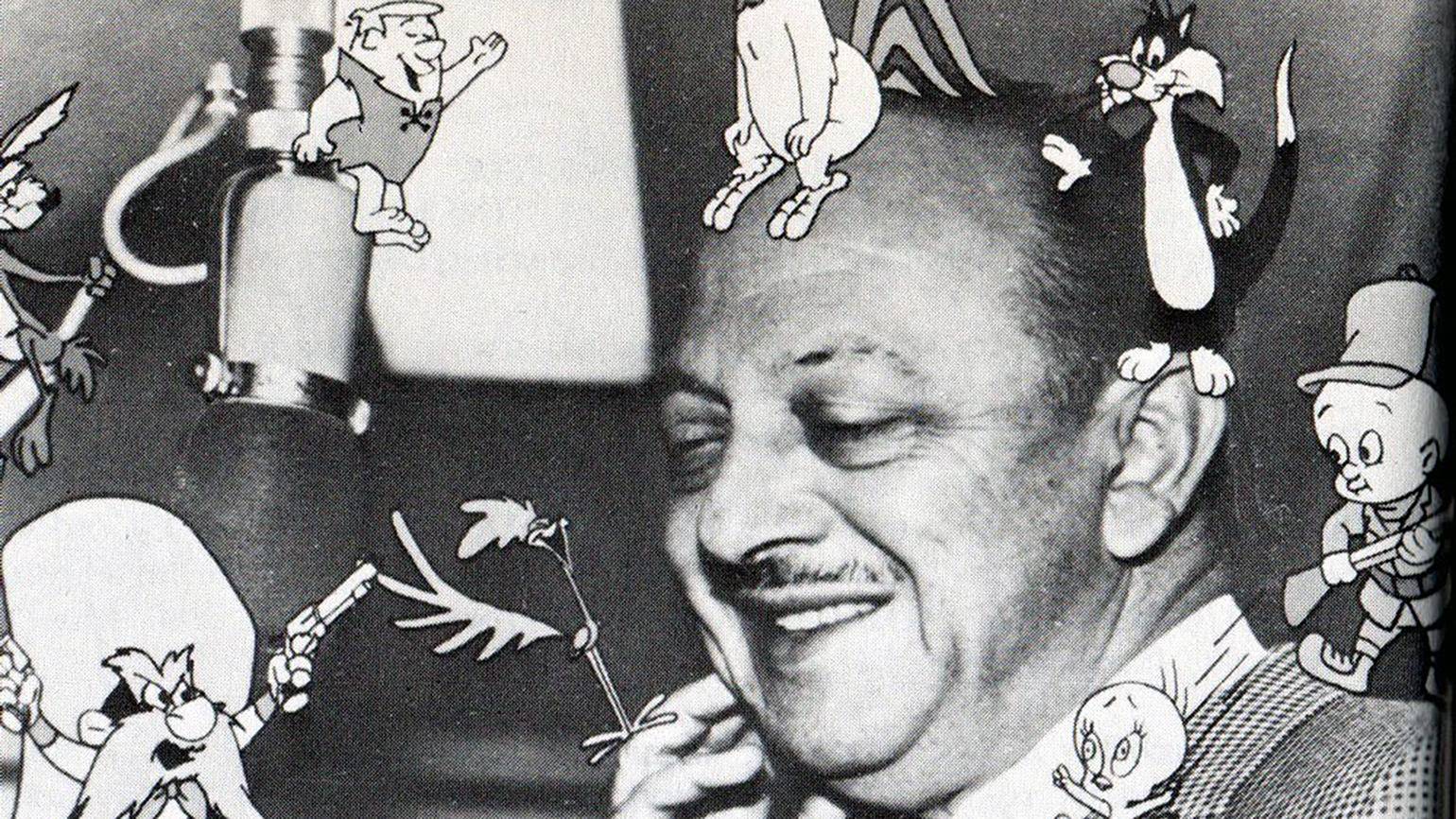
In Hollywood, they tell me, I’m known as “the man of a thousand voices.” Like most Hollywood labels, this is an exaggeration, but where voices are concerned I do have quite a few. When you hear Barney Rubble’s gravelly tones in The Flintstones on television, that’s me.

Such cartoon characters as Bugs Bunny, Daffy Duck, Woody Woodpecker, Porky Pig, Sylvester Cat and Tweedy are all close friends of mine for the very good reason that they have to borrow my vocal chords before they can say anything.

It’s one of those slightly zany jobs that are good fun, pay well and bring other people innocent pleasure, and I wouldn’t change it for the world.

But a few years back the man of a thousand voices found himself listening to one small voice that he had never paid much attention to before. The voice was inside him.

I believe this same small voice is inside every one of us, but we’re too busy or preoccupied or self-satisfied to listen. Sometimes it takes a terrific jolt, and the silence that follows that kind of jolt, before the voice can make itself heard.

In my case, the jolt was nearly fatal. One night as I was hugging a curve in my little sports car, an automobile coming the other way went out of control. There was a head-on collision at a combined speed of about 90 miles per hour.

When they pried what was left of me out of the wreckage and rushed me to the hospital, they found that the only bone in my body that wasn’t broken was my left arm.

When I finally came out of the fog of anesthesia, back to a world of pain, the first thing I saw was Jack Benny sitting by my bed, looking miserable. I had worked with Jack for years; we were close friends.

I summoned all my strength and whispered, “I’m going to make it, Jack.” He said, “You’ll have to make it, because I can’t do my show without you.” I was too weak even to try to reply, but he saw the glitter of tears in my eyes, and knew that I understood.

In the weeks that followed, I think I survived chiefly on the power of prayer—other people’s prayers. I had never realized how much goodwill my cartoon characters had built up for me.

Hundreds of letters came from all over the world with prayers for my recovery. They came from Catholics, Protestants, Jews—even from Buddhists and Mohammedans. Children sent cards and coins and their favorite toys.

It was like being supported and sustained by a great flood tide of affection, of concern, of love. I’m convinced that it helped my shattered body begin to slowly heal itself. I also think it enveloped me in a kind of serenity that made it possible for me to hear a small, quiet, inner voice.

This voice did not speak to me in words; it was more like a sudden awareness of truths that had been around me all the time, truths that I had been too impatient and too self-centered to see.

For example, I had always taken my talent for voice characterizations pretty much for granted. After all, I had been using it for fun ever since grammar school, and professionally since 1938 when I signed a contract with Warner Brothers to do multiple voices on ‘Bugs Bunny’ cartoons.

But now I began to realize that talent is a gift, a gift that can be withdrawn at any time, an unmerited gift that can be repaid only by a sense of constant, humble gratitude to the Giver.

Another awareness was of a quiet but mighty undercurrent of justice that runs through human affairs. I began to see that the universe really is an echo chamber, where sooner or later the thoughts you have and the deeds you do are reflected back to you.

For example, some years before my accident, a friend of mine named Harry Lange had a heart attack while playing the part of Pancho in “The Cisco Kid.”

I offered to fill in for him for quite a long time—26 weeks, I think it was—and so during this period the studio was able to keep on sending his pay check to his wife.

Now, suddenly, the tables were turned; I was the one who was incapacitated. But like an echo, out of the past came an offer from Shep Menkin, a talented friend of mine: “Let me do your voices while you’re laid up; I’ll make sure that your family gets the money.”

As it turned out, I didn’t have to take Shep up on his offer.

For a whole year I remained immobilized in a full cast, but thanks to the devotion of my family, and the ingenuity of my wife who turned our home into a combined sanitarium and recording studio, I was able to make the sound tracks that kept 125 people at Warner’s working full-time.

I learned, too, during the long, slow period of recovery that pain is a solvent for all sorts of negative things. Antagonisms, for example.

There was one associate of mine whom I’d never liked; I thought him arrogant and conceited, and I’m afraid I showed my dislike rather plainly.

But when I met him again during my convalescence, my inner voice whispered to me that the main thing wrong with this man was that he was reacting to the hostility in me. So I told him frankly that I had misjudged him, that I was sorry, and that I hoped we could be friends.

His first reaction was one of amazement. His next reaction was one of warmth and self-accusation. Thus I learned that it is really quite easy to turn an enemy into a friend.

But the most valuable single thing that my inner voice taught me was the importance of expressing affection.

I don’t think that before my accident I was any more remiss than most people in this regard. But lying there in my cast, I recalled how my efforts in the past to tell people that I was grateful for their friendship, or to thank them for caring about me, seemed hopelessly inadequate.

And so I began to make a deliberate effort to set this right. To Jack Benny I said, “I want you to know how much I admire and appreciate and love you. I want you to know how much your friendship means to me. I’m grateful that my life has been spared so that I can tell you these things.”

I expressed such feelings to other people too. Maybe they were a little startled, or even momentarily embarrassed. But every time, I’d feel a surge of warmth and closeness that strengthened the bond between us.

Today I walk with a cane, but that’s a minor matter to a man who has spent a year in a cast. I go on participating, invisibly, in a lot of activity designed to bring joy and happiness to youngsters and young-oldsters.

Sometimes I’m the chirp of the pet dinosaur in the Flintstone Family, sometimes I’m the hiccough of a Disney cat. But believe me, I’m a happy hiccough and a cheerful chirp, because I’ve discovered that the more you express affection, the more you have to express, and the more comes back to you.

You don’t have to wait until you’re at death’s door to learn this, you know. Anyone can be a man or a woman of a thousand voices too. Because there are at least a thousand ways to say, “I love you”… and all of them are good.

For more inspiring stories, subscribe to Guideposts magazine.

Guideposts Classics: Marlee Matlin on Embracing God’s Gifts

All I wanted as a kid in Morton Grove, Illinois, was to be like everyone else. But I wasn’t. I’d lost virtually all my hearing at 18 months of age, after a bout of roseola. My parents were determined not to let my deafness hold me back, though. They got advice from a psychologist at Northwestern University’s clinic for the deaf, and I started speech classes at the age of three, lip-reading and sign language at five.

Mom found a synagogue with services that were both spoken and signed. I loved going to temple and being with other people who “spoke” the same language I did. There in God’s house, I felt like I really belonged.

Nowhere else did I feel truly a part of everything that went on, not even at home. I’d see my older brothers singing along with the radio, but I couldn’t hear the music without the volume cranked up so high it would have blown out the windows.

I wanted to talk on the phone with my grandmother, but I couldn’t make out a word she said. It was hard for me to follow stuff on TV, except cop shows, where there was little dialogue and lots of action. I loved cop shows.

At school there were interpreters, teachers who knew sign language. Even without them, I could read lips and speak well enough to get along with most of the other students. But I got tired of sticking up for myself with the kids who laughed at the way I talked, and of being the only one my age who signed.

Sometimes when I got home I’d be so frustrated I’d rip out my hearing aids and throw them across the room. (The technician who fixed them claimed I set a record for repairs.) “I hate asking for help. Why can’t I do all the things everyone else does? It’s not fair!”

“We all have some things we just can’t do,” Mom would patiently tell me. “But God gives us other gifts that more than make up for that.”

What was my gift then, the thing that I was really good at? At services I’d ask God to help me find it. But before I did, I found something else just as wondrous. A new girl my age came to temple one day. A girl I noticed was signing. I went right up to her. “Hi, I’m Marlee,” I finger-spelled my name.

“I’m Liz,” she replied. “I’m deaf.”

“Me too!” I was so excited my fingers flew. “I think we should be best friends.”

For a second, she was too surprised to respond. Then she nodded and broke into a big smile. Our friendship was sealed from that moment on.

Then the summer I was seven I discovered it—the gift Mom had talked about. One afternoon at day camp the counselors showed me a stage and said, “If you want, you can get up there and perform.” I must have looked puzzled because they explained, “We’re going to teach your group a song. The other girls will sing the words, and you can sign them.”

I will never forget being on that stage at summer camp, signing my heart out to the beat of the music, and seeing all those people looking back at me, smiling and clapping. This is it! a voice deep inside told me. This is where you belong! The rush I got was like that incredible sense of connection I got in temple, when I felt closest to everything and everyone else in God’s world.

At home I’d stand in front of the bathroom mirror and make believe an entire audience was looking back at me. Then I’d pretend to be a camp counselor, a teacher, a mother, a cop like on TV. I would playact for hours … until my brothers complained, “Marlee’s hogging the bathroom again!”

That fall Mom took me to the newly opened Center on Deafness, where the psychologist from Northwestern directed children’s theater programs. The day we visited, they were putting together a musical, The Wizard of Oz, which I knew from television, so I asked, “Who’s Dorothy?” The director told me they didn’t have a girl for the part yet. I didn’t hesitate. “How about me?”

That was the first of many roles I played in their productions over the years. By third grade my friend Liz too had become a regular at the Center. Onstage, it seemed the usual barriers to communication fell away and I had a direct connection with the people watching, like a conversation that went deeper than words.

“You have a real gift for reaching the audience,” the director remarked one day when I was 12. I hadn’t thought of a gift being something I could share; that struck me because I had been studying for my bat mitzvah, the Jewish girl’s coming-of-age ceremony, and learning about my place in the greater community of God’s world. Could acting be what I was meant to do?

“That’s not very practical,” some of my relatives tried to dissuade me. I would have let them too, if not for one evening in 1977 when my friends and I performed at a benefit for the Center. I couldn’t believe who came up to me afterward. The Fonz from the TV show Happy Days. Cool! He shook my hand. “I’m Henry Winkler,” he said. “You were great. I hope you keep acting.”

I couldn’t help myself. “Do you think I can work in Hollywood someday, like you?” I asked.

He didn’t have any trouble understanding me. He looked me right in the eye and said, “You can be whatever you want to be.” He even asked me to keep in touch and to look him up any time I was in Los Angeles.

In high school, though, I got caught up in being a teenager and put acting aside. I did stay in touch with Henry, but Hollywood seemed so far away compared to the immediate excitement of cars, parties, boys. For once, my deafness didn’t get in the way of the things that mattered to the other kids—I could drive, dance, and yes, I’ll admit it, flirt.

I reveled in being just like everyone else. After graduation I studied criminal justice at a local junior college (maybe it was all those cop shows I’d watched growing up), but I dropped out when I found out being deaf drastically limited my career options in law enforcement.

The spring of 1985 my brothers told me about auditions for a Chicago production of Children of a Lesser God, an award-winning play with a number of deaf characters. I hesitated. After all, as I said to Liz, I hadn’t been onstage in years. “What are you waiting for?” she exclaimed. “You love to act! Try out!”

As soon as I stepped onstage for my audition, I felt right at home. I won a supporting role in the play. Things happened fast after that. Movie producers cast me in the lead role in the film version. There I was, a 19-year-old who had never lived away from home, starring in a Hollywood movie and moving to New York City to pursue an acting career.

At the same time, I found my first serious boyfriend. No wonder I was overwhelmed. Fortunately I also found a skilled interpreter, Jack Jason, a graduate student in film and the son of deaf parents, who stuck with me through all the interviews after the movie premiered in the autumn of 1986.

Never did I imagine that six months after my twenty-first birthday I would be accepting the Academy Award for Best Actress. Afterward I made sure to stop by and see my old friend Henry Winkler. He opened his front door, and I just held up the golden statue, my own personal sign language for “Thank you for encouraging me to follow my dreams.”

I should have been on top of the world. Instead, I nearly got crushed in a maelstrom of negativity. Did I truly deserve the award, critics asked, or was it a sympathy vote? One magazine dismissed me as a one-hit wonder. People in the movie business predicted I’d never work again. It was true, opportunities didn’t open up for me as I had hoped.

So many times I was told, “You’re a wonderful actress. But you’re deaf. What else is there for you, really?” I started to wonder myself. I could have handled it if I tried out for roles and got turned down, but I wasn’t even considered to begin with … all because I was deaf. Just like when I was a kid, I felt left out of a world I longed to be part of.

And just like back then, I was too proud to ask for help. My parents and Liz could tell I was unhappy and visited from Chicago often. They’d already given me so much support, I was afraid to let them down. I didn’t want to burden Jack, my only real friend in New York, who worked hard enough as my interpreter. Worst of all, my relationship with my boyfriend was falling apart.

I felt as if I were falling apart too. Don’t I belong in acting? Can something that feels so right be all wrong for me? I kept asking myself.

From inside me, a voice spoke, a voice I heard clearly. The same voice that had introduced me to the joy of connecting with an audience way back in summer camp. This time I knew who it had to be. Only God could reach past the anger and frustration and pain and answer the questions deep in my soul. If you aren’t happy with your life, change it. If the roles aren’t coming to you, go to them. Make the most of what you’ve been given.

I made a break with everything that had been dragging me down, including my unhealthy relationship with my boyfriend. I decided to start over in Los Angeles, where the movie and TV studios were. Surely there would be more roles for me there. Luckily Jack, eager to find more opportunities in film, joined me.

“Marlee, where are you staying?” my old friend Henry asked when I told him I was in town. “A hotel on—” He didn’t let me finish. “Forget it. Stacey and I have plenty of room. You’re staying with us.”

“Only until I find my own place,” I said. “A weekend, tops.”

I ended up living with the Winklers for two years. I needed that time to grow up. To see that turning away help from the ones who cared for me most, like Liz and Jack, Stacey and Henry, was like turning away God, who also wanted the best for me. To learn that really connecting with people, deaf and hearing, onstage and off, meant both opening up to them and being open to what they had to share with me.

I stuck with acting, finding small parts in a few movies. Then in 1991, at 26, I landed the starring role in the television series Reasonable Doubts. Much as I enjoyed playing a fully drawn character whose deafness was only part of who she was, the best thing about the show for me was meeting the love of my life.

When you shoot on location on the streets of L.A., police officers are there to direct traffic. One day on the set I noticed a cute new man in blue. Really cute. There was just something about him. I asked one of the other cops who he was. “Name’s Kevin Grandalski.”

“Is he single?”

He sure was. From our first date, we clicked. My fascination with cops, his ability to sign (he’d learned in order to fulfill his language requirement in college). Not to mention the healthy balance he brought to my life—Kevin’s athletic to my artistic, shy to my outgoing, laid-back to my intense. When he proposed, I exclaimed right along with the voice inside me, “Yes!”

The first people we broke the news to, besides our parents, were Henry and Stacey. “You’re having the wedding here,” Stacey announced. On August 29, 1993, on the Fonz’s front lawn, with my family and Liz and Jack looking on, Kevin and I were married.

All I’d wanted as a little girl trying to come to terms with my deafness was to be like everyone else. I feel so blessed to have ended up exactly where I belong—being me, an actress, wife and mom, guided through my deepest struggles by the one voice I always hear.

For more inspiring stories, subscribe to Guideposts magazine.

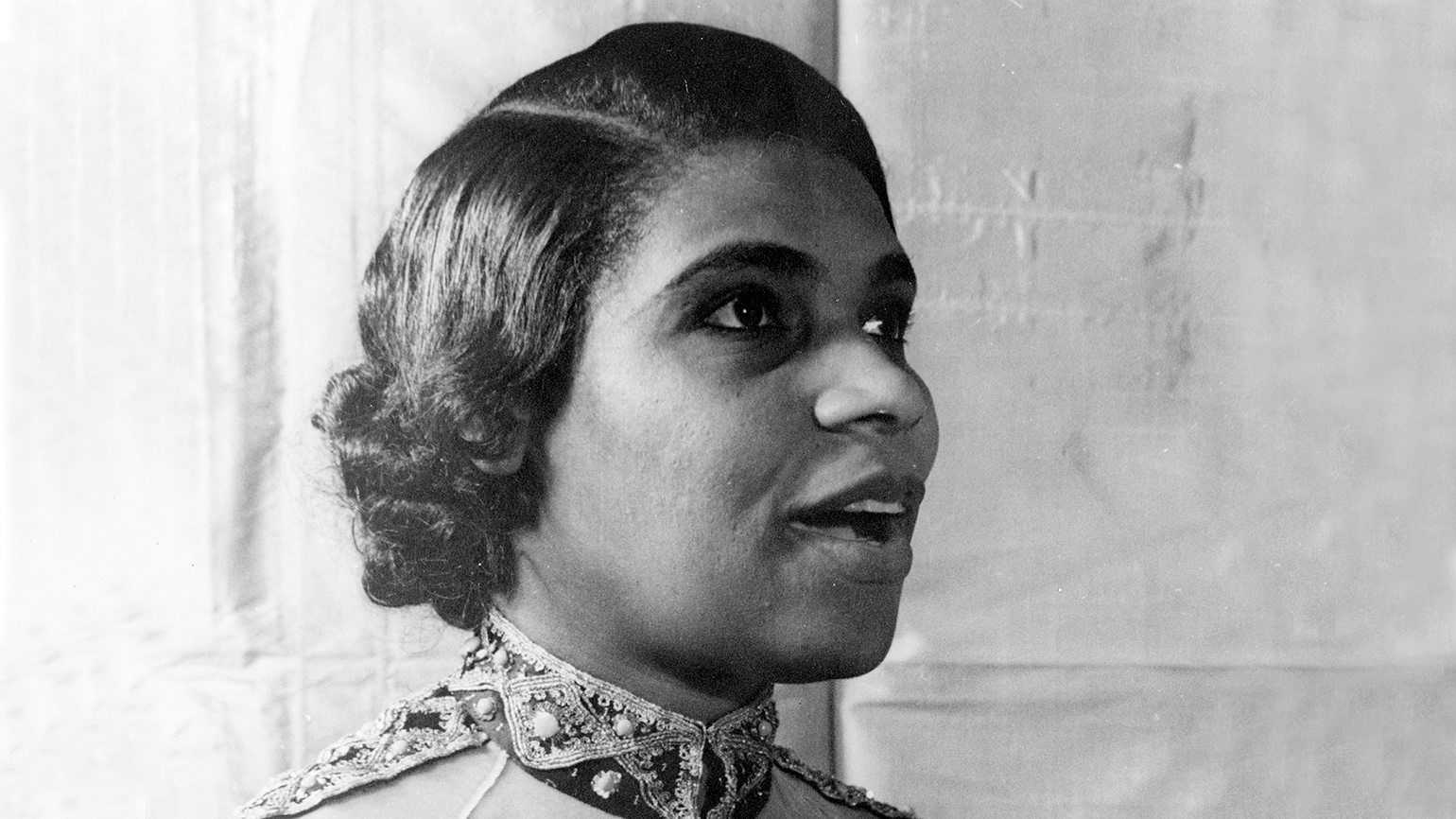
Guideposts Classics: Marian Anderson on the Power of Faith

Failure and frustration are in the unwritten pages of everyone’s record. I have had my share of them. But if my mother’s gentle hands were not there to guide me, perhaps my life in music would have ended long ago.

The faith my mother taught me is my foundation. It is the only ground on which I stand. With it I have a freedom in life I could not have in any other way. Whatever is in my voice, my faith has put it there.

Her presence runs through everything I ever wanted to be. The particular religion a child echoes is an accident of birth. But I was converted to my mother’s faith and patient understanding long before I could define either.

We were poor folk. But there was a wealth in our poverty, a wealth of music, and love and faith. My two sisters, Alice and Ethel, and I were all in the church choir—the junior, not the senior one. There is still a vivid memory of our mother and father, their faces shining with pride, watching us from the front pews. And when I was six I was once fortunate enough to be selected to step out in front of the choir and sing “The Lord Is My Shepherd.”

It was a Baptist Church we attended in Philadelphia. But my mother taught us early that the form of one’s faith is less important than what’s in one’s heart.

“When you come to Him,” she said, “He never asks what you are.”

We children never heard her complain about her lot; or criticize those who offended her. One of her guiding precepts has always been: “Never abuse those who abuse you. Bear them no malice, and theirs will disappear.”

My sisters still attend the Baptist Church in Philadelphia. It is a church and a congregation I hold most fondly in my heart for many reasons. These were the people who, years ago, pooled their pennies into what they grandly called “The Fund for Marian Anderson’s Future,” a gesture of love and confidence impossible to forget in a lifetime. When I come to Philadelphia, I always try to see some of these people who have been so important to me, and though it seldom is possible these days, I love to sing in their choir.

My father died when I was twelve, and my mother’s burden became heavier. Before she became a housewife, and the mother of three daughters, she was a schoolteacher. Now she became a father to us as well as a mother and earned our whole livelihood by taking in washing. It was terribly difficult for her, I know, but she would not even hear of any of us children leaving school for work.

During these years I began to have my first opportunity to earn a little money by singing. Almost entirely they were Sunday evening concerts for the church, or for the YWCA and the YMCA. At these affairs I could sing, perhaps, two or three songs, and my fee was a very grand 50 cents, or once in a great while, $1.00. Sometimes I would dash to four or five of these concerts in one evening.

Many people were kind to me: teachers who took no fees, those who urged me forward when I was discouraged. Gradually I began to sing with glee clubs and churches in other cities. After one minor effort in Harlem, a group of well-meaning people hastily sponsored me for a concert in Town Hall in New York.

It seemed at once incredible and wonderful. But I wasn’t ready: indeed, I was far from it either in experience or maturity. On the exciting night of my first real concert I was told Town Hall was sold out. While waiting in dazed delight to go on, my sponsor said there would be a slight delay. I waited five, ten, fifteen minutes. Then peeked through the curtain.

The house was half empty! I died inside. But when the curtain went up I sang my heart out. And when the concert was over, I knew I had failed. The critics next day agreed with me, but what they said was really not so important. I was shattered because within me I felt I had let down all those people who had had faith and confidence in me. It seemed irrevocable.

“I’d better forget all about singing, and do something else,” I told my mother.

“Why don’t you think about it a little, and pray a lot, first?” she cautioned.

She had taught me to make my own decisions when I could, and pray for the right ones when I could not. But I did not heed her now. I refused a few offers to sing at other concerts. I avoided my music teacher. For a whole year I brooded in silence. My mother suffered because I was not expressing myself in the only way I knew happiness. But she knew I had to find my own way back alone. From time to time she just prodded me, gently:

“Have you prayed, Marian? Have you prayed?”

No, I hadn’t. Nothing would help. I embraced my grief. It was sufficient. But in those tearful hours there slowly came the thought that there is a time when even the most self-sufficient cannot find enough strength to stand alone. Then, one prays with a fervor one never had before. From my torment I prayed with the sure knowledge there was Someone to Whom I could pour out the greatest need of my heart and soul. It did not matter if He answered. It was enough to pray.

Slowly I came out of my despair. My mind began to clear. No one was to blame for my failure. Self-pity left me. In a burst of exuberance I told my mother:

“I want to study again. I want to be the best, and be loved by everyone, and be perfect in everything.”

“That’s a wonderful goal,” she chided. “But our dear Lord walked this earth as the most perfect of all beings, yet not everybody loved Him.”

Subdued, I decided to return to my music to seek humbleness before perfection.

One day I came home from my teacher unaware that I was humming. It was the first music I had uttered at home in a whole year. My mother heard it, and she rushed to meet me, and put her arms around me and kissed me. It was her way of saying:

“Your prayers have been answered, and mine have too.”

For a brief moment we stood there silently. Then my mother defined the sweet spell of our gratitude:

“Prayer begins where human capacity ends,” she said.

The golden echo of that moment has always been with me through the years of struggle that followed. Today I am blessed with an active career, and the worldly goods that come with it. If sometimes I do not hear the echo and listen only to the applause, my mother reminds me quickly of what should come first:

“Grace must always come before greatness,” she says.

For more inspiring stories, subscribe to Guideposts magazine.

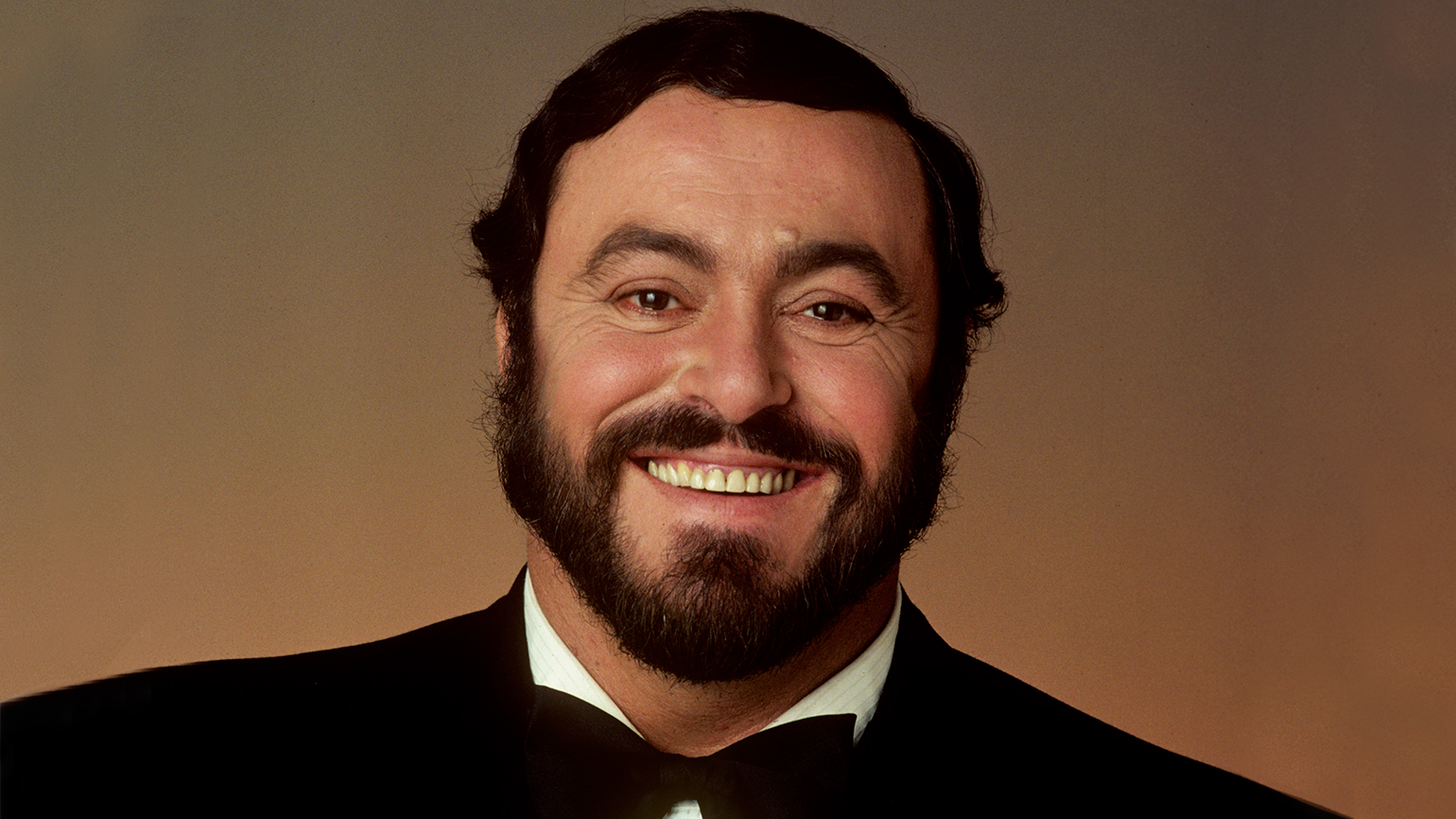
Guideposts Classics: Luciano Pavarotti on Making the Most of God’s Gifts

When I was a boy, my father was a baker and my mother worked in a cigar factory. My father introduced me to the wonders of song. Our house was filled with recordings of the great tenors—Caruso, Gigli, Pertile, Schipa, Bjoerling, Tucker, all of them.

When I was growing up, either the record player in our apartment was going full blast or Father and I were singing. He had a fine tenor voice; still has. He was the church soloist and sang in all music productions in Modena, our hometown, a small city in Italy’s Po Valley. In Modena, everybody sang. We had our own opera house. Imagine! A 1,200-seat opera house in a town of 100,000 people.

Mother loved my singing. “Your voice touches me whenever you sing,” she’d say. But she thought I should become an athletic instructor because I was so good at soccer—or at least an accountant.

My father urged me to develop my voice. “But you will have to study very hard, Luciano,” he said, “practice harder, and then maybe…”

I sang two songs for Arrigo Pola, a teacher and professional tenor in Modena. He agreed to teach me without fees because he found some qualities in my voice which he thought should be developed. I also enrolled in a teachers college. On graduating I again asked my father, “Shall I be a teacher or a singer?”

“Luciano,” my father said, “if you try to sit on two chairs, you will fall between them. For life, you must choose one chair.”

I chose one. It took seven years of study, hard work, frustration, rejection before I made my first professional appearance. It took another seven to reach the Metropolitan Opera.

I was blessed with a good voice by God. I think it pleased Him that I decided to devote myself to it. And now I think whether it’s laying bricks, driving a straight nail, writing a book, whatever we choose we should give ourselves to it. Commitment, that’s the key. Choose one chair.

For more inspiring stories, subscribe to Guideposts magazine.

Guideposts Classics: Loretta Young on the Power of Love

Every once in a while when you greet a friend casually, and expect a conventional reply, you catch the truth instead.

It happened to me recently when I recognized on my motion picture set a man I hadn’t seen for a long time.

I said, “We’ve missed seeing you around. How’ve you been?”

“Well, I’m fine now,” he replied; then after a moment’s hesitation he blurted out, “but last year I died.” Dick Williams meant to be believed. “You may think it’s a fantastic story,” he said. “But I can prove every word of it.”

Up to a point it wasn’t fantastic at all. If anything, too heartbreakingly usual. What had once been simply an enthusiastic taste for strong drink became an obsession with Dick. He also had a malicious contempt for anyone with a dark skin.

Frankly, he admitted he had done nothing to curb his intemperance nor his intolerance until, at last, as he put it: “My life deteriorated into common drunkenness. My wife left me. No dough. No job. And I was running out of friends… the way you do.”

One couple who stuck by him, who realized how grim things had become, offered him their house as shelter while they were away on vacation. It was in that house that Dick “died.”

When his friends returned, they found him cold on the floor, and a physician made the official pronouncement.

Dick had caught pneumonia there alone; his head too fuzzy, his body too weak, even to know it. So that seemed to be the end of his life story.

But at the mortuary a new undertaker was entrusted with the job of preparing him for a poor man’s funeral.

Dick laughed, “Lucky for me he was a beginner. When it came to the embalming fluid, he got scared and went to get a more experienced man to watch him. When they came back, my eyes were moving.”

His next stop was the “dead room” of a large hospital, the place where hopeless cases await the end. But once again the end didn’t come.

The doctors, convinced now that something might yet be done, decided on a complicated method of administering oxygen. They made a frantic search for three nurses to undertake the constant care. Among the already overburdened staff there simply were not three available for that steady vigil.

Now, at the twelfth hour, it looked as though Dick Williams’ luck was out.

It was the Motion Picture Relief Association that finally located the nurses and, said Dick, “It was those three women who not only saved, but renewed, my life.”

READ MORE: JUNE LOCKHART ON WHERE TO PRAY

His first conscious impression was of an ebony face bending close to his own. For fifty long hours those Black nurses worked tirelessly, patiently, lovingly, to give him back his life. And, in the end, Dick said, “If they were out of my sight, I felt lost, insecure. I cried for them.

“In my rebirth I didn’t just learn tolerance. I learned real, honest, brotherly love.”

Dick found a job, a very humble job, when he was well enough. He had an objective. He wanted to buy each of those women a watch, the fancy kind with second hands and things that nurses dote on. Today they have their watches but, said Dick, “I doubt if they’ll ever know what they really did for me.”

Dick truly began to be “born again,” as we are each told we must be. “I don’t drink any more. I’m working. When I make a friend, any friend, I’m grateful. I think I’m the luckiest guy alive,” he said.

“I find myself doing what, for the old me, would have been the oddest things. For example, wandering into churches, any church that’s open, at odd hours of the day and night. Sometimes I pray. Sometimes I just sit quiet and feel the peace of it.”

The glow of light that lingered with me was not beamed from the story of his remarkable physical recovery. It was, instead, the idea that love had set him free. Really free.

Suppose those nurses had done their work grudgingly? Or simply dutifully? Would that have wrought the “miracle”? Somehow Dick Williams didn’t think so…and neither do I.

Probably they felt they had done a small thing, something in the line of duty. Yet here their goodness was, like a shining pebble dropped in a big pond, sending forth ever widening ripples.

READ MORE: ROSALIND RUSSELL ON FAITH AND HEROISM

It made me realize that our acts must be measured by how lovingly we do them.

I have a friend, a sparkling, talented girl, whom my sisters and I have known since our school days. We thought of her then as the “one most likely to succeed.” Today she is married, has a house full of children, a parrot, a canary, three dogs, and a very nice husband with a very limited income.

Her hands and her head seem so full of household cares that sometimes I have been guilty of feeling sorry that all that talent was “wasted.”

The other day while her brood was in school, she came to tea and together we reminisced over the dreams we had woven as youngsters. “I didn’t come even close, did I?” she asked laughing. “I was going to set the world on fire. And every once in a while, of course, I dream still. Particularly on Sundays.”

“Why Sunday?” I asked.

“Do you know what it’s like to get a big family ready for Mass on time and all clean at once?”

Then she added thoughtfully, “But when my resentment tries to creep in, when my patience is thin or my tasks seem pretty meager and monotonous, then I do think of the Holy Family and what They went through and the example They have given us, and I go pretty humbly about my business.

“Getting my brood ready for Mass may be a long way from those brilliant dreams. But I am honestly happy to have a chance to hand out a hundred cups of water each day to my youngsters. And I wouldn’t change places with anybody.”

My friend was referring to Matthew 10:42 which we often quoted between us. She has achieved success far beyond many of the worldly people I know, for she is humbly living a life of loving helpfulness.

Humility, I find, is the gateway to so many hearts and has succeeded in tearing down walls no amount of reason and logic could budge. When humility has its perfect way with us, it moves mountains. Then we are willing to put man’s desires and will in the background and let God take over.

READ MORE: MARY ASTOR ON THE GIFT OF FAITH

Recently I realized, much to my surprise, for I have been doing it unconsciously, that every night just before I go to sleep I repeat the same little prayer of my childhood, with my same childhood faith and trust.

Me, a grown-up woman, a Hollywood actress, a mother, a wife, saying just before I closed my eyes, “And please, dear God, make me a good girl.”

Momentarily I was upset. One reads so much of complexes these days that simplicity is regarded as suspect. Could I be trying, subconsciously, to escape the responsibility for carrying an adult burden in an adult world? So I checked with my mother.

“Mother,” I asked. “Is there any special prayer that you say every night before you go to sleep?”

My mother, a wise servant of God, serving Him so faithfully and well for so many years, thought a minute and then said, “Yes, there is. I say, ‘Give me a happy death and please, dear God, make me a good girl.’”

In the simplicity of that prayer, in that childlike attitude of the heart, lie, I am convinced, some of our biggest answers.

For more inspiring stories, subscribe to Guideposts magazine.

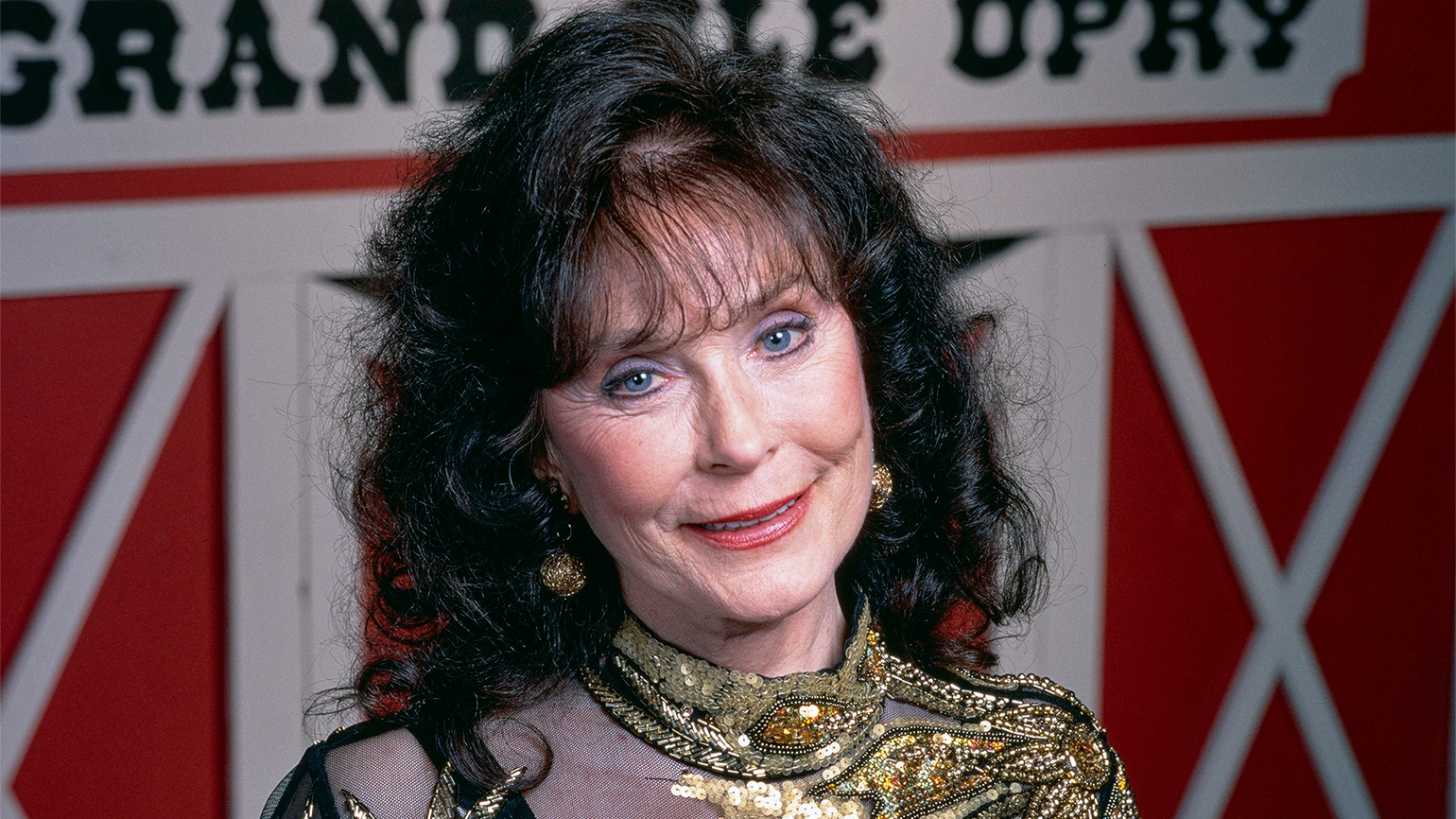
Guideposts Classics: Loretta Lynn on Family, Faith and Loss

If I’m anything in this world, I’m a wife and mother. I do enjoy my performing and musical career, but it’s my family that means most. We had six kids, and my husband and I have a special, mystical bond with each of them. That bond is the only way I can explain what happened with me and my boy Jack.

The strange story started with my mystery illness on a summer Sunday a few years back. I’d done a concert at the Kansas City Opera, the last stop on the tour. We were on the bus heading home for Tennessee when out of the blue I started feeling bad and went to lie down.

Early the next morning, my friend Lorene Allen woke up with the feeling she should check on me, and it was a good thing she did: I was having trouble breathing. The bus had pulled into a truck stop in Illinois, and Lorene got off, hollering, “Call an ambulance!”

At the emergency room they thought I was already dead, but the doctors didn’t give up. They worked till I started breathing again, then admitted me to intensive care.

I hardly remember anything in intensive care until the fourth day. My husband, Doolittle, had come up from Tennessee to tell me what had to be told. “I got news, Loretta, and it’s bad,” he said. “Jack’s dead.”

And it was like I died all over again. There’s no pain on this earth like losing a child.

Jack was different from my other kids in one way. The others all wanted to follow me in their own singing careers. But Jack’s main interest was farming. He had the same love I do for planting and doing with my hands.

Jack, who’d married a pretty little girl named Barbara, had a girl and a boy—and had a new little redheaded baby girl named Jenny. They lived on Barbara’s grandmother’s farm just up the road from our ranch, so Jack was over at our place often, helping out with the planting or in the stables.

To this day I believe the moment I collapsed on that bus was the moment my boy died. And when Jack died, a piece of me left with him.

On the Sunday I got sick, Jack had been visiting campers on our ranch. By the time he was ready to saddle up and ride home, it was dusk, so he decided to take the shorter way back and ford the river. But there’d been heavy rains and Duck River was swollen. Jack and his horse never did make it across.

They didn’t find my boy for three days after he drowned.

Little things came back to me, like the honeybees when Jack was just a tyke. Back then we lived in Washington State in a house that was real tiny. It had two bedrooms and the bathroom was back outside. I mean country. Jack was 2 then, and Betty, our oldest, was 3. Those kids loved to play outside.

The man we rented the house from had honeybees. Well, those kids were fascinated, and so Betty took a stick and stirred up those doggone bees. I was in the kitchen when I heard the commotion. And here comes those two little kids across the yard, lickety-split, hollerin’ and cryin’. Jack’s little legs weren’t long enough to get moving right. So he got stung up the worst. Thing is, I felt those stings worse than Jack did.

If, 30 years later, I could still smart from those bees, how could I ever get past the sting of knowing my boy had suffered and died all by himself?

I tried hard to remember the good times, how Jack was no trouble growing up. He did good in school. He liked football, but baseball was his favorite. He was big and strong and happy. Just like his daddy. The spittin’ image. In fact, in some ways, he and his daddy were too much alike. Sometimes they’d just butt heads.

I couldn’t help but remember the bad times, too, like when Jack got older and began drinking too much. When I tried to talk to him about it, he said, “Momma, I just drink till it stops hurtin’.” It made things real hard for him and for the people who loved him.

Finally I just had to leave Jack and his alcohol problem in the hands of God. That’s where I’d learned to leave problems ever since I was little, going to a Baptist church in the Appalachian Mountains of Kentucky. And I do believe God was watching Jack carefully, because his life changed. For one thing, he met Barbara. But it was more than that.

Shortly before he died, Jack had a doctor’s appointment in Nashville and I drove in with him. On the way, I remarked that he seemed different and happier. His eyes sparkled and he said, “Momma, I’ve quit drinking. I’ve been sober for nine months and I’m never gonna have another drink.” That was part of my pain. Things were going so good for Jack. He was just starting to live. How could he be gone?

They flew me back to a hospital in Nashville. The doctors said I couldn’t get up to go to Jack’s funeral, but I did. But it wasn’t me who was there, really. I went through the service in a haze.

Even after I got out of the hospital, it was like I wasn’t living my life, just going through the motions. The one conscious thing I did do was reach for my Bible. It was like a life preserver floating in the water.

As I said, I grew up going to a little Baptist church. We didn’t have a proper church in Butcher Hollow, but my daddy’s first cousin preached in the little one-room schoolhouse that my great-grandfather built. We all went, and we all were raised on the Bible, and I’ve always carried one with me everywhere I went.

So after Jack died, when I was reaching for answers it made sense to reach for my Bible. Only then did I realize that although I’d read it, I hadn’t really searched it, asking the hard questions and listening to the answers. So I started searching.

One verse that stood out for me was, “You are not your own, you were bought with a price.” If I’m not my own, it’s pretty clear my kids aren’t mine, either; they’re God’s. Or put another way, children are loaned to us; they really belong to God.

So if Jack was God’s, was God looking out for him?

As I thought about these things, I became more certain than ever that Jack was in God’s care, and gradually I began to find more proof of that. I began to remember things that had passed over me before, like the minister, Elzie Banks, who told a strange story at Jack’s funeral.

He was a pleasant-looking man from a little church there in Waverly, Tennessee, and he told how, about nine months before Jack died, he’d been out on a sick call. Waverly isn’t that big, and there aren’t many roads to choose from, but he got lost. When he drove over Duck River, he knew for sure he’d taken a wrong turn and he’d better ask directions. So he pulled up at a little house and went to the door.

It was Jack who opened that door and invited him in for coffee. As the two of them sat talking, Jack told the pastor he’d been raised in a church and baptized, but he’d been away for a while.

When it came time for the pastor to leave, he said, “Let’s pray, Jack.”

And Jack said, “I don’t know how.”

So the pastor prayed, and Jack prayed after him.

Looking back, I know what the meaning of the minister’s story was. It was no coincidence that Jack had stopped drinking when he did. Although that minister thought he’d taken a wrong turn and he was lost, he was right where God sent him to be. God was looking after his boy Jack in ways that I never could.

It’s been around five years now since Jack died. And I’ll tell you something: The bond I have with him is still as strong as the bond I have with my living children. Anyone who knows me will tell you that Jack’s death has changed my life, and the biggest way is this: My dreams are not here on earth anymore. Why spend precious time running around chasing after money or fame when we’re not going to be here that long? A blink of an eye and we’re gone.

There are wonderful things here, all right. There’s Doo, and our family, and there’s music and flowers, lots of things that I love. Things are pretty good these days. My girl Betty’s married and runs a real nice country place in Conover, Wisconsin. Sissy’s got a band of her own now, and my boy Ernest Ray and the twins, Patsy and Peggy, are playing and singing with me. I’m working on albums with some wonderful folks, and planning a gospel album myself.

But my biggest dream is living with God and what happens when we get there. The time we’re gonna have! Whether you’re ill or crippled or have emotional problems, you’ll be whole there. Momma and Daddy and Patsy Cline and Jack…the parts of me that have been missing won’t be missing anymore. And best of all, we’ll see God, who we really belong to, face-to-face.

The Bible tells us to store up our treasure in heaven, “for where your treasure is, there will your heart be also.” When the time comes for me to cross that ol’ river myself, don’t fret too much for me. It’ll be an easy trip—’cause you see, I’ve sent my heart on ahead.

For more inspiring stories, subscribe to Guideposts magazine.
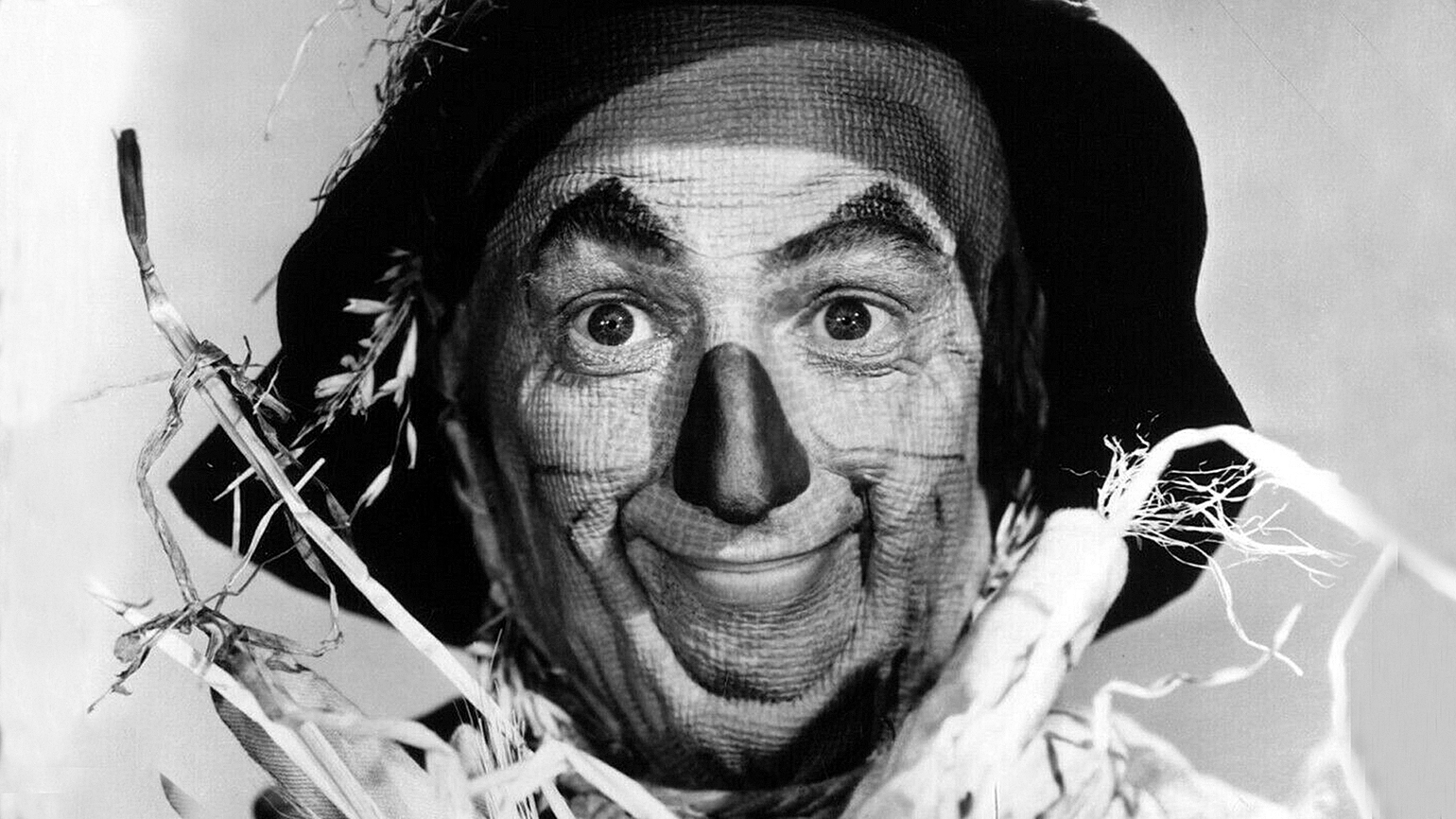
Guideposts Classics: Leslie Uggams on Lending a Helping Hand

Intermission at a recent concert of mine in California. I was touching up my makeup and hair when someone delivered a note to me in my dressing room. “I’m out here watching you tonight, and I couldn’t be prouder.” Signed, Mrs. Nehrens.

Mrs. Nehrens​In an instant I was whisked back more than 40 years to the Professional Children’s School in New York. There was my math teacher, Mrs. Nehrens, her smile brighter than a spotlight and her voice like a trumpet in a jazz band. You had to listen. Still, my mind wandered sometimes—especially during geometry, which I couldn’t make heads nor tails of—and I’d cut up. I loved to do my imitation of Johnny Ray crooning “Cry.” It brought down the house at the Apollo. Mrs. Nehrens was not amused.

“Leslie,” she said, “this is not a stage. This is a place of serious study.”

BROWSE OUR SELECTION OF BOOKS ON POSITIVE THINKING

Professional Children’s was a private school for young performers. In the hallway before homeroom you’d catch a ballerina sewing ribbons on her toe shoes or a violinist studying a score. It was understood that sometimes we had to dart out for auditions and rehearsals. I’d already been excused to sing on Milton Berle’s show and Arthur Godfrey’s. But there was no skipping out on academics. We had to keep up with our schoolwork.

Algebra had been a breeze. But geometry? I couldn’t figure out the difference between an equilateral triangle and an isosceles triangle—or were they the same thing? Many times Mrs. Nehrens stayed late with me after school. She guided me through the theorems and proofs and equations. One summer she even tutored me. She didn’t want me to flunk out.

We never would have been able to afford the school if it weren’t for Aunt Eloise. She was a performer too. She’d been one of the Blackbirds of 1928 on Broadway and sang in Porgy and Bess. “You’ll go to Professional Children’s,” she announced.

“We don’t have the money for that,” my mom replied. She’d quit her job to accompany me on auditions and rehearsals, and Dad had already taken on two other jobs in addition to his regular work as an elevator operator to make up the difference.

“I’ll help out,” Aunt Eloise said.

We lived in Washington Heights in upper Manhattan, and I sang at St. James Presbyterian Church on 141st Street. Our choir director was always urging me to blend in better. “Don’t be so loud, Leslie,” she said. Well, I didn’t want to hold back. There was no hiding my talent under a bushel. “This little light of mine, I’m gonna let it shine,” I sang out. The Lord himself seemed to be doing a good job of letting that happen.

Until I turned 12. I wasn’t a cute kid anymore, but a gangly adolescent. Work dried up. I still took singing lessons and dance classes, but that was all the performing I did besides my doo-wopping in the hallway at school.

The biggest blow came that fall. One day Mom sat me down and said, “Leslie, I have some bad news. We can’t afford tuition at Professional Children’s anymore.”

“What about Aunt Eloise?” I asked.

“Work has been slow for her too,” Mom said. “It won’t be so bad. You can go to George Washington right here in the neighborhood. A lot of your friends are there.”

“But how will I be able to go on auditions? How will I get my career going again?”

Mom shook her head. In that instant I saw that light of mine go out. I would never step onstage again. All I could imagine ahead were years of drudgery. Had all the performing I’d done as a youngster been just a fluke?

Both of my grandfathers were ministers, and I was used to hearing their graces before dinner, prayers that went on and on until our food was cold. That night I got down on my knees and started praying like they prayed.

“Dear Father God, I am so grateful for all you’ve given me: Mom and Dad and Aunt Eloise. And my singing voice and my acting. You’re going to have to help me, God, because I want to keep going to this school that helps me do all that…”

But the first day of school I was trudging up the hill to George Washington, not shooting downtown on the subway to Professional Children’s.

That afternoon I sat at the kitchen table, staring at my homework. The phone rang, and I didn’t bother to answer it. I didn’t want to talk to anyone. “Yes, yes,” I heard my mother say. “Thank you so much. We can never repay you for this.”

Mom came into the kitchen, tears in her eyes.

“That was Mrs. Nehrens,” she said. Why was my old teacher calling us? “She called this morning and wanted to know why you weren’t in school,” Mom continued. “I told her we couldn’t afford Professional Children’s anymore. Well, she just found a scholarship for you from the Presbyterian Church. It will cover your tuition for the rest of the school year.”

I jumped up and gave Mom a huge hug. And back at Professional Children’s, I gave Mrs. Nehrens a hug too.

That year turned out to be an important one for me. I landed a spot on the TV show Name That Tune and won twenty-five thousand dollars. Record producer and songster Mitch Miller heard me do “The Lord’s Prayer” on the show and signed me to Columbia Records. Later, I was a regular on Mitch’s popular sing-along TV show. And that eventually led to Broadway.

So when I read Mrs. Nehrens’s note in my dressing room, I knew I had a huge debt of gratitude to repay. I stepped back onstage and announced, “Folks, I want you to meet the lady who made it possible for me to get where I am today.” I had the crew shine the spotlight on Mrs. Nehrens, because as I discovered more than 40 years ago, nobody’s light can shine all on its own. It takes help from people like my old math teacher. “Thank you, Mrs. Nehrens,” I said. “Take a bow.”

She deserved it. She taught me a lot more than just geometry.

For more inspiring stories, subscribe to Guideposts magazine.