

Embrace God's truth with our new book, The Lies that Bind

Guideposts Classics: Carol Burnett on Secret Kindness

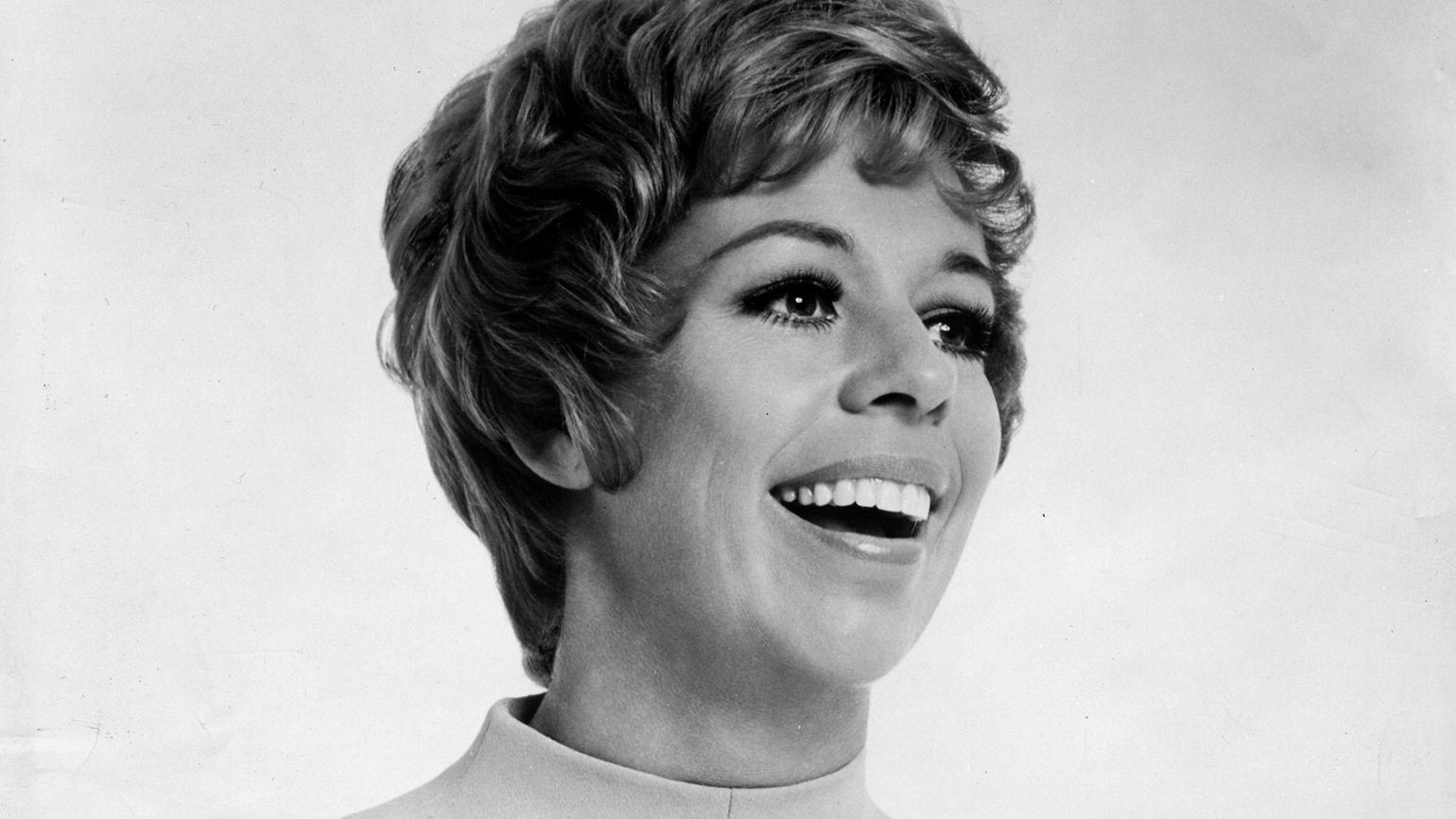
My career—TV, stage, movies, all of it—was founded on a strange event that was to be a deep mystery to me for years. Only after my life had changed drastically did I begin to solve the puzzle I was confronted with one long-ago June evening in California.

In those days I was one of a group of stage-struck drama-school students at UCLA, living on hopes and dreams and not much else.

As school ended, one of our professors was leaving for a vacation in Europe. He had a house near San Diego, and a bon voyage party was planned. It was suggested that some of us drama students might drive down and entertain his supper guests with scenes from musical comedies.

READ MORE: STEVE ALLEN ON THE VALUE OF GRATITUDE

Nine of us agreed to go. One of the boys and I had rehearsed a scene from Annie Get Your Gun, I remember, and that was our part of the program. Everything went well. The guests seemed to enjoy our singing, and we enjoyed it, too.

After our performance, supper was announced. I was standing at the buffet when a man I had never seen before spoke to me pleasantly. He said he had admired our performance. Then he asked me what I intended to do with my life.

I told him that I hoped to go to New York some day and make a career for myself on the stage. When he asked what was stopping me, I told him truthfully that I barely had enough money to get back to Los Angeles, let alone New York.

I might have added, but didn’t, that at times my grandmother, my mother, my sister and I had been on welfare. The man smiled and said that he would be happy to lend me the money to go to New York. A thousand dollars, he added, should be enough to get me started.

Well, in those days I was pretty innocent, but not that innocent. So I refused his offer politely. He went away, but in a few moments he was back with a pleasant-faced lady whom he introduced as his wife. Then he made his offer all over again.

He was quite serious, he said. There were only three conditions. First, if I did meet with success, I was to repay the loan without interest in five years. Next, I was never to reveal his identity to anyone.

Finally, if I accepted his offer, I was eventually to pass the kindness along, to help some other person in similar circumstances when I was able to do so.

FOR MORE INSPIRING STORIES, SUBSCRIBE TO GUIDEPOSTS!

He told me to think it over and telephone him when I got back to Los Angeles. He added that he was prepared to make a similar offer to my partner in the scene from Annie Get Your Gun, and he gave me his telephone number.

The next day, half convinced I had dreamed the whole thing, I called the number. I was told that if I had decided to accept the conditions, I could drive down on Monday morning and pick up my check.

Still unbelieving, I told my mother and grandmother. Their reaction, not surprisingly, was to urge me strongly not to have anything to do with my mysterious benefactor.

But somehow I was convinced that the man was sincere, and I believed, furthermore, that the good Lord was giving me, Carol Burnett, a strong and unmistakable push. I was supposed to accept the offer. I was being guided. And if I didn’t go, I would regret it for the rest of my life.

At sun-up on Monday morning my partner and I were on the road. We drove for three hours. At nine o’clock, we were at the man’s office. We had to wait perhaps half an hour—and believe me, that was the longest half hour of my life! But finally we were ushered in.

Our friend was crisp, serious, business-like. He reminded us of the conditions, especially the one about not revealing his identity. Then he had his secretary bring in the checks. I watched as he signed them. I had never seen so many beautiful zeros in my life.

We tried to thank him, but he just smiled and ushered us out. When we came to the car, still dazed, we realized we didn’t have enough gasoline to get back to Los Angeles—and not enough cash to buy any.

We had to go to a bank, present one of the $1,000 checks, then wait while the astonished bank officials telephoned our friend’s office to make sure that we weren’t a pair of international forgers. But finally they did cash it for us.

Back in Los Angeles, I wasted no time. I spent a little of the money on a visit to the dentist where I had two teeth filled and one extracted—I hadn’t been able to afford a dentist for years. Then, with my family’s anxious admonitions ringing in my ears, I headed for New York.

In all of that vast city I knew just one soul, a girl named Eleanore Ebe. I called her up and found that she was staying at the Rehearsal Club, where in those days young theatrical hopefuls could find room and board for $18 a week.

So I moved in with Ellie, and settled down to the long grind of finding work on the New York stage.

It was the old story. No experience? Then no work. But how can you get experience if you can’t get work? My funds got lower and lower. I went to work as a hat check girl in a restaurant.

READ MORE: ED SULLIVAN ON THE POWER OF PRAYER

Unfortunately, it catered mostly to ladies who had no desire or reason to check their hats. Still, I managed to make about $30 a week from tips—enough to get by.

My grandmother wrote me sternly that if I hadn’t found a job on the stage by Christmas I had better come home. So I redoubled my visits to theatrical agencies. Finally one agent said wearily. “Why don’t you put on your own show? Maybe then you’d stop bothering us!”

That sparked an idea. Back at the Rehearsal Club I talked to all my jobless friends. If we were really bursting with talent, as we were sure we were, why not hire a hall, send out invitations to all the agents and critics in town, and put on our own revue?

Everyone agreed that it was a great idea. We started chipping in 50 cents apiece each night for a fund to hire the hall. Talented youngsters took on the task of creating scenery, writing music and lyrics, doing the choreography.

When our first act was ready, we performed it for the board of directors of the Club who then gave us some additional help. When the “Rehearsal Club Revue” finally opened and ran for three nights, it seemed to us that everyone in New York show business was in the audience.

The day after it closed, three agents called me with offers of jobs. From that point on, the magic doors swung open and I was on my way.

I reported all my progress to my benefactor back on the West Coast, but I heard very little from him. He continued to insist upon his anonymity. He showed no desire to share any spotlights, take any credit.

Five years to the day after I accepted his loan, I paid him back, and since then I’ve kept my pledge never to reveal his identity.

He never told me his reasons for helping me in the manner he did, but as the years have gone by I’ve been able to unravel the mystery of this man, at least to my own satisfaction, and in the process I’ve discovered a powerful spiritual principle to use in my own life.

I stumbled upon the key clue one day when I was glancing through a copy of the recently published Living Bible. I had turned to the sixth chapter of Matthew because I wanted to see how the Lord’s Prayer had been translated.

Suddenly, some verses seemed to leap out of the page: “When you give a gift to a beggar, don’t shout about it as the hypocrites do…When you do a kindness to someone, do it secretly…And your Father Who knows all secrets will reward you…” (Matthew 6:2-4)

Do it secretly, the passage read, and at once I thought of my secretive friend. From that moment, what he had done and how he had done it began to make sense.

I began to see that when he made his offer to me, my benefactor had employed the spiritual principle of giving-in-secret-without-seeking-credit. He had done it partly to be kind, of course, but also because he knew that great dividends flow back to anyone who is wise enough to practice this kind of giving.

I believe that, as the Bible says, there is a great liberating force in not trying to take credit for one’s good deeds. It tames the ego. It moves us away from petty vanity—and I’m convinced that the further we move away from ourselves, the closer we come to God.

So that’s the story of how my career began. I shall always be grateful to my anonymous friend. With pride I repaid his loan, and with pride I have kept his name secret. As for his stipulation about passing the kindness along to others—well, that’s my secret!

For more inspiring stories, subscribe to Guideposts magazine.
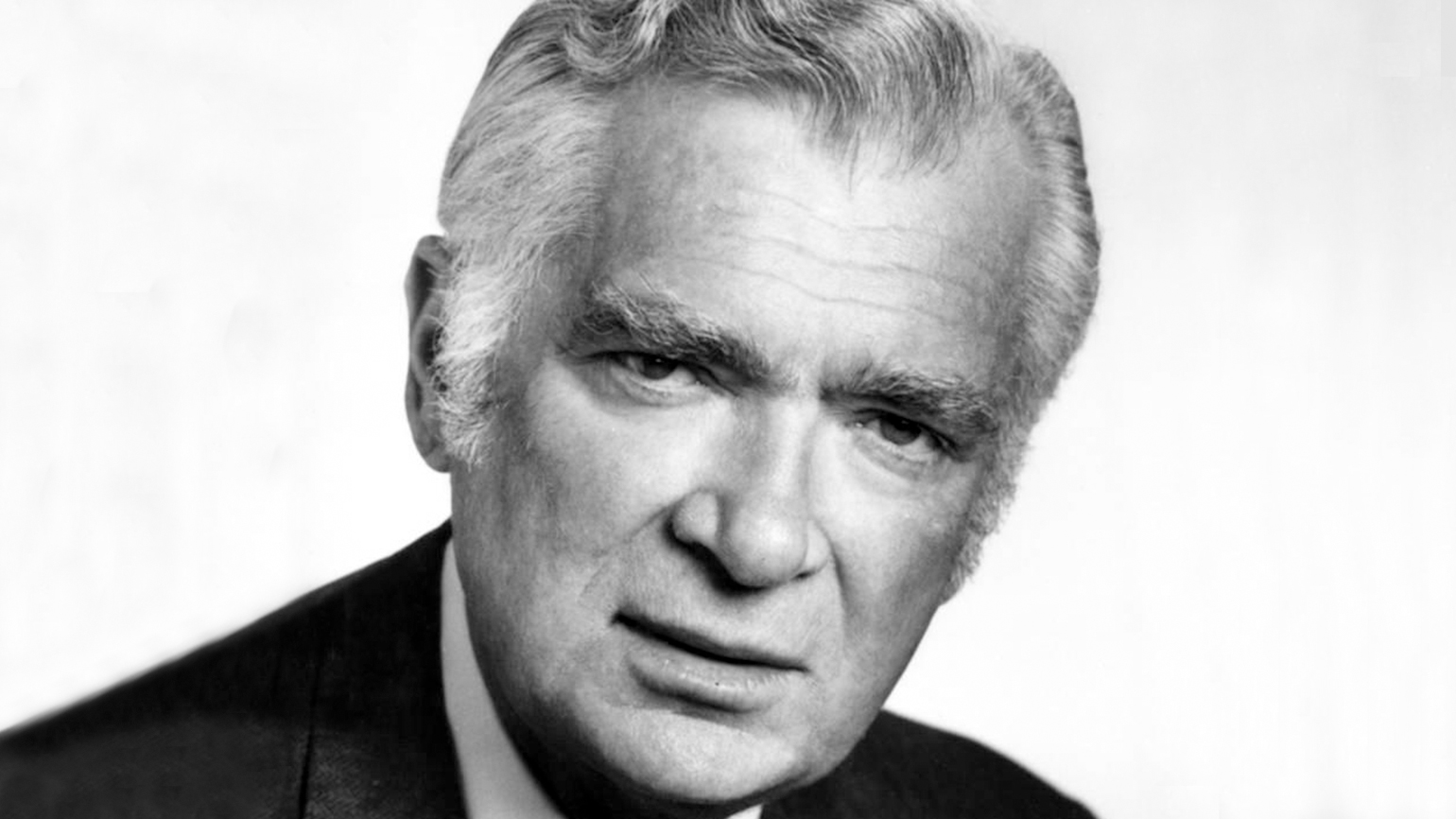
Guideposts Classics: Buddy Ebsen on Prayer on New Year’s Eve

The year 1945 was fading fast as my wife Nancy and I trudged home that evening in mid-Manhattan. Nancy had met me at a Broadway theater, where I had been rehearsing for my role in a revival of Show Boat. With heads lowered against the swirling snow we headed back to our apartment.

Traffic sounds were muffled in that special hush which snow lends to harsh city streets. Nancy’s boots crunched beside mine as we walked in silence, both lost in the kind of thoughts that the year’s end brings.

It was a poignant time for us, as it was, I’m sure, for most people during the early post-World War II days when we all seemed to be finding our way again. In my case I was trying to pick up the pieces of a career interrupted three years earlier, when I had volunteered for Coast Guard service.

Serving aboard a ship in the forlorn reaches of the northern Pacific was a far cry from the singing and dancing I had been doing most of my life. And now, beginning all over again found me wondering what the future held.

With war memories still churning within me, I felt unsettled, uneasy. Tap dancing on a stage didn’t seem to make sense anymore.

I shook my head and squinted as wind whipped snow into my eyes. A clock in a jewelry-store window indicated 11:30 p.m.

We had no plans for a New Year’s Eve celebration. However, I did feel hungry. “Why don’t we get a bite to eat before we go home?” I said, taking Nancy’s arm.

My wife looked up over the muffler covering her face and nodded. A short distance ahead on 54th Street was a little place called Al & Dick’s Steak House, where we had often dined. We quickened our steps, but when we reached the restaurant door, it was locked.

Nancy and I glanced at each other in disappointment. But then behind the curtained plate-glass window I could see shadows of people moving. I knocked on the door. It opened a bit and Al Green, one of the owners, peered out. A former pugilist with a broken nose, Al broke into a grin.

“Hey, Buddy, Nancy, c’mon in,” and he swung the door back.

BROWSE OUR SELECTION OF POSITIVE THINKING BOOKS

It turned out that he and his partner, Dick, had invited all of their employees and spouses to a private New Year’s Eve gathering. “Join us,” urged Al, “you’re part of the family.”

And so we stepped into the warmth of the restaurant where couples laughed and chatted and loaded their plates with food from a mammoth buffet. Somewhere a piano tinkled. Nancy and I sat at a table and soon found ourselves caught up in the friendly atmosphere.

Suddenly, a hush fell over the restaurant.

I glanced at my watch; almost midnight. Soon the revelry would begin, I thought, expecting to see horns and noisemakers distributed. Instead, Al Green stepped to the center of the room and stood there as others settled at tables or against the wall.

“It’s a tradition,” whispered one of his waiters, leaning over to us. “He does this every New Year’s Eve.”

As the big wall clock’s hands lifted straight up, Al began to sing without accompaniment.

I was surprised by his rich, resonant voice; it didn’t seem to go with his cauliflower ear and broken nose.

Our Father, Which art in Heaven, he sang, hallowed be Thy Name…

I was transfixed. Al, a Jew, was singing to the Father of us all.

…Thy kingdom come… he sang.

READ MORE: ANDY GRIFFITH ON GOD’S GRACE

I was taken back to the little white-frame church in Belleville, Illinois, where I first learned this prayer.

…Thy will be done in earth, as it is in Heaven… Give us this day our daily bread… And forgive us our debts, as we forgive our debtors…

In a rush my thoughts turned back to my growing-up days in Orlando, Florida; to the dancing school my father ran; to our minister telling me after a school play that I must go into show business; to my sister Vilma and me whirling to “Tea for Two,” dancing our way across the country in shows and movies in those innocent-seeming years before the world was torn apart.

And lead us not into temptation; but deliver us from evil…

“Peace, dear Lord…” I silently prayed for the conciliation of all nations.

…For Thine is the kingdom, and the power, and the glory, forever…

Al’s voice rose powerfully; his words rang with conviction; and then, as the last firm note drifted away, Al lowered his head and sang the last word as a benediction:

Amen.

Tears streamed down my face. Without taking my eyes off Al Green, I said to Nancy, “Never let me lose faith in God, in myself, or in people.”

From outside I could hear the noise of a city gone wild with celebration, but inside the restaurant there was a deep silence. It lasted only a moment, a moment in which I seemed to hear the noise and feel the confusion of the past three years.

READ MORE: DONNA REED ON FAITH IN HARD TIMES

And then, as I came back to the present, back to a restaurant on 54th Street in New York City, the war seemed to fade. I felt calm, reassured. I felt God’s serenity.

When it was time for us to leave, Nancy and I put on our coats, and amid hearty good wishes from Al, Dick and our “family,” we walked out to the street.

The snow had stopped. Everything was still, frosted with a neon iridescence. Tall buildings soared above us like church spires. The stars were like tiny sapphires winking in the deep blue.

“Happy New Year,” I said to my wife.

“Yes, Happy New Year!” she said in reply as we stepped out confidently into a new year and a new world and a new beginning…

For more inspiring stories, subscribe to Guideposts magazine.
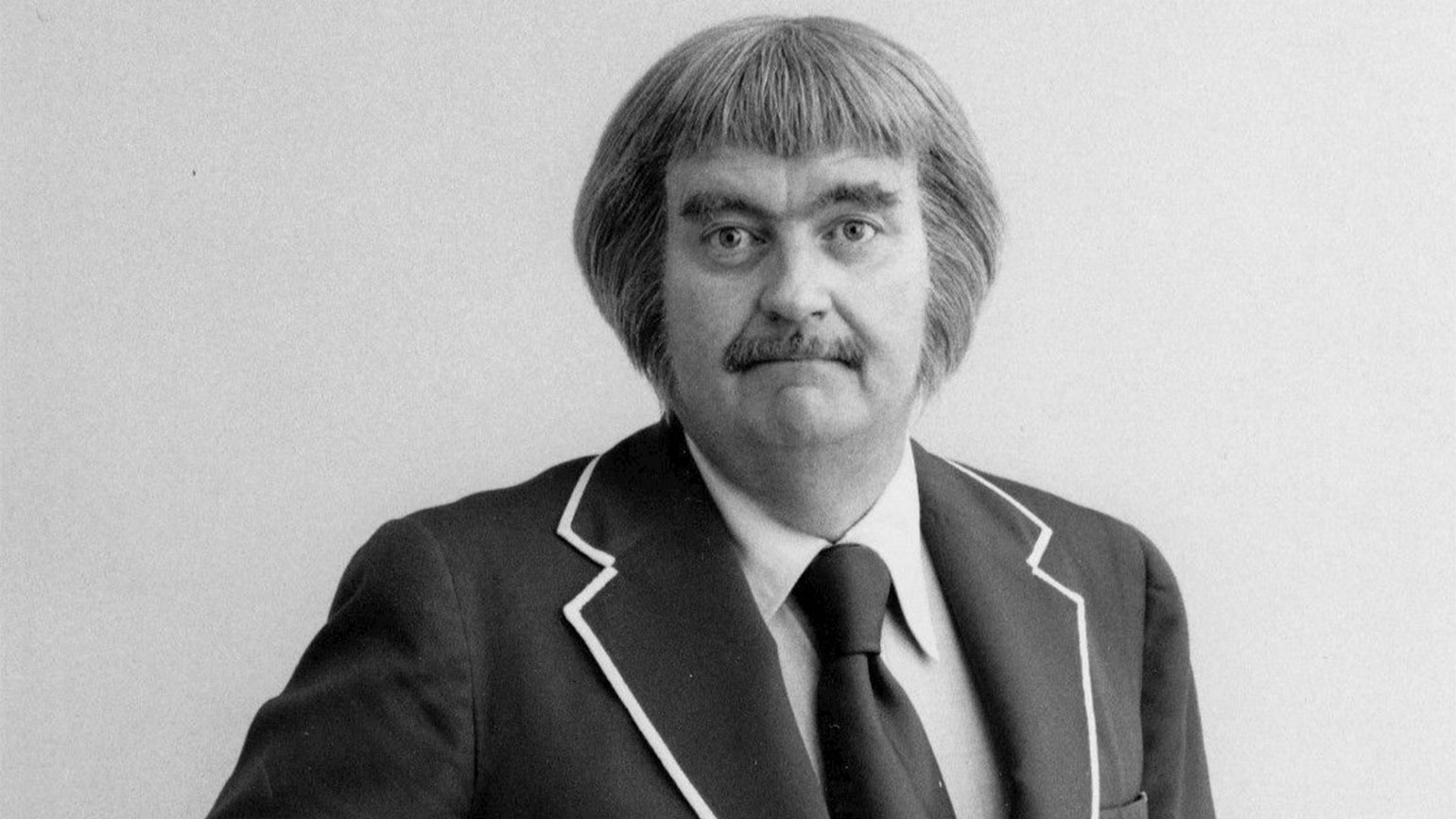
Guideposts Classics: Bob Keeshan on Sharing

Once upon a Christmas several years ago, when our children were quite small, my father came to visit with his grandchildren and to present them with their gifts. Almost as an afterthought, he reached into his pocket and brought out a handful of penny balloons.

Much to our surprise our three small ones abandoned their many impressive toys and spent the rest of the day with those penny balloons.

It occurred to me that evening that a rule I had been applying to entertaining children on television also applied to raising my own children at home. The rule was the rule of simplicity.

Jackie Gleason, the great showman, once said: “Never use one elephant when you can get two.” When “Captain Kangaroo” first went into production back in 1955, I placed a sign on the office wall reminding the staff, “Never use two elephants when one is enough.”

Simplicity. Too much adornment obscures the message.

So there it was with the toy balloons, the message of simplicity. My wife, Jeanne, and I, like most parents, have been concerned with the establishment of values for our youngsters, but how difficult it is to show these values in a world of material distractions.

But if it is difficult to be a parent in today’s world, it is even more difficult to be a child.

Take the matter of today’s toys. When I was young an airplane was two ice cream sticks tied together. Did it look like an airplane? Not unless I wanted it to. That is the point. I had to bring some imagination, something of myself to the objects of my play to make them what I wanted them to be.

Today the toy plane looks real in every detail, the door opens, the stewardess steps out and waves. What can a child bring to such a toy in the way of imagination? It’s all there for him, the spectator. No wonder he tires of it shortly after he receives it.

It is often difficult for a youngster to find a place to play a game of ball in this modern world. When we were kids we didn’t care if we had 8 or 18 guys for a baseball game. Any corner lot would do as a playing field. The uniform was not important, nor was the length of the baseline.

Today everything has to be organized. You have to have the uniform, the playing field is regulation and there is a grownup at first base to tell you if yon got there before the ball.

“Hey, Pop, cut it out.” That was half the fun of baseball, the argument at first base. How do you think a boy learns compromise and fair play? Not with his father making all the decisions!

READ MORE: FRED ROGERS ON DIVINE GUIDANCE

I know you can’t turn the world around and go backward. Times change; life gets more complicated. But that doesn’t stop me from stressing on my television show the simple values: faith in God, saying “please” and “thank you,” being a good neighbor and sharing what you have with others.

One such story I have told several times on TV is called “Stone Soup.” It goes something like this:

Three soldiers were walking home after a long, bitter war had ravaged the countryside. They came to a small village and, being quite hungry, asked for food.

But the village people were afraid of the strangers. “We’re sorry but we ourselves don’t have enough to eat,” one man told them.

“Yes, and the harvest was very bad,” said another.

It was the same throughout the whole community. No one had anything to give them. Food seemed nonexistent.

“This is a very bad situation,” one of the soldiers said to several of the villagers. “We’ll have to make some stone soup.”

“Stone soup!” The people showed surprise–and interest. “What in the world is that?”

“First of all,” said the soldiers, “we need a big iron pot.”

Two men brought back the largest pot they could find. Then a fire was built in the village square; it took over a dozen pails of water to fill the huge pot.

“Now, for the special ingredient,” said one soldier, and he placed a flat, smooth stone at the bottom of the pot.

As the water began to heat, the people gathered around the pot with great curiosity.

“Of course, any soup needs a little salt and pepper,” said one of the soldiers. Two children disappeared and soon returned with some salt and pepper.

READ MORE: MIKE DOUGLAS ON EMBRACING PRAYER

“It sure smells good,” said the soldiers as they stirred the water. “It’s too bad we don’t have a few carrots. Carrots really add something to stone soup.”

A woman slipped away to her home, then returned with some carrots for the soup.

“Oh, that’s great,” said the soldiers as they cut up the carrots. “Now if only there was just a bit of cabbage, but of course we don’t have any, do we?”

Another woman thought she might find a cabbage. She returned with three.

The tasty aroma from the boiling pot was now obvious to everyone. Several other villagers disappeared to get a piece of beef, potatoes, goat’s milk, some barley.

At last, the soup was ready. “But we can’t eat without tables and chairs, can we?” asked the soldiers. Large tables were set up in the square. Torches were lit. Soon there was music and laughter and joyful shouts from the children. Bread, cider, pastry surprisingly appeared. It was a sumptuous feast.

As the villagers ate and drank with the three soldiers, distrust vanished. For the first time since hostilities had begun years before, the people in this community found something to be happy about: rediscovered friendships, new ideas for rebuilding the village, dreams and hopes for the future.

The soldiers were given warm beds to sleep in that night, plus food and gifts the next day as they continued their journey. “Thank you for showing us how to make stone soup,” were the farewell cries.

A simple little parable, but full of great truth. For when we give unselfishly of ourselves to those about us, something magical always takes place, something even more amazing than turning stones to bread. Hearts of stone are transformed into hearts of kindness and love.

Did you enjoy this story? Subscribe to Guideposts magazine.

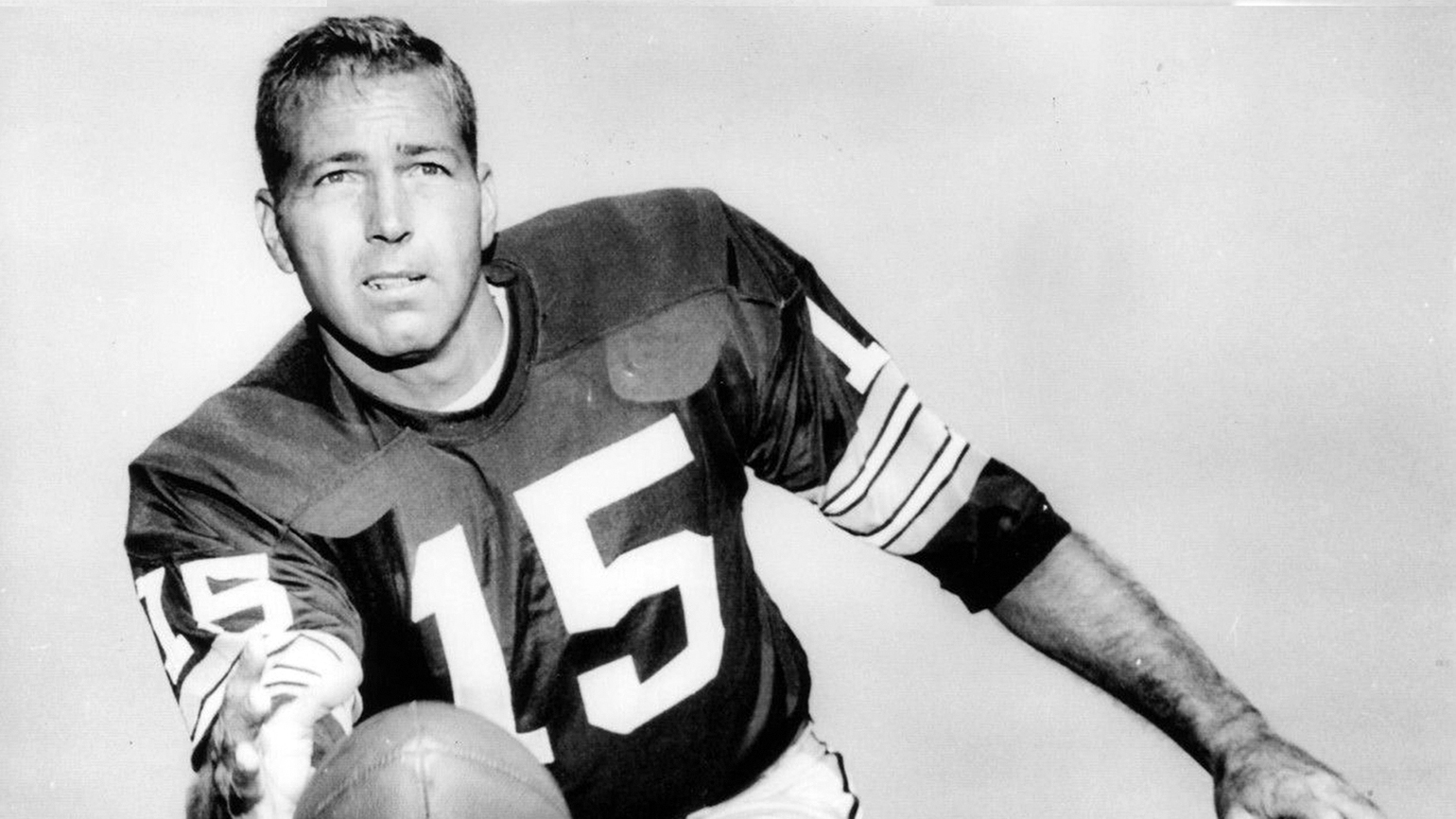
Guideposts Classics: Bart Starr on the Importance of Confidence

This is the story of how a small city in Wisconsin—and a team of football players—were hit by lightning. The lightning I’m referring to is Vincent Lombardi, a stocky Italian-American whom many consider the best football coach in the world. The city happened to be the town where I live, Green Bay, where the Packers come from.

In case you are not a sports’ fan, the Green Bay Packers are a professional football team. They are one of the fabled teams of the game with a history of excellence going back to 1919. In that post-World War I year the first players trotted out on the gridiron wearing jerseys that said “Packers” on them, and this was for the nearby meat packing plant which put up the money for the jerseys. The Packers won 10 games out of 11 that season and started on their way towards making themselves one of the resounding stories of sports.

When my wife, Cherry, and I came up from the University of Alabama in 1956, all eager and dazzled by the prospects of my being quarterback on so illustrious a team, the Green Bay Packers had fallen upon some dismal days.

My first year in Green Bay we lost twice as many games as we won, and in 1957 we lost three times as many. In pro ball, records like those are something you don’t joke about. Winning with us is a serious business, our bread and butter.

Pro football is a sport—and a clean one—but it is very much a moneymaking venture. Not winning, therefore, is like not selling the product you’ve manufactured. It’s a science, too, involving hundreds of plays, intricate formations both for offense and defense.

For a player like me, who wanted to be in pro ball more than anything else in the world, the season of 1958 was frightening. In all that long “history of excellence” the Packers’ ‘58 season was absolutely the bottom. Out of 12 games on our schedule, we tied one game and won—just one. Ten losses: sheer disaster.

In December our coach resigned. The danger signals were up for me and I knew it. I hadn’t exactly sparkled out there on the field.

And then the lightning struck!

We were a squeamish group who gathered to meet our new coach and general manager that day in 1959.

“Gentlemen,” Coach Lombardi said that day, “we’re going to have a football team. We are going to win some games. Do you know why? Because you are going to have confidence in me and my system. By being alert you are going to make fewer mistakes than your opponents. By working harder you are going to out-execute, out-block, out-tackle every team that comes your way.”

As the coach talked, you could see the guys straightening up to take a closer look at this intense man.

“But first of all,” he went on, “you are going to prepare yourself up here.” He put his finger to his temple. “You can’t win if you’re not ready to win mentally. Therefore, I expect you to think about only three things while you are part of this organization: your family, your religion and the Green Bay Packers.”

I for one walked out of that meeting feeling 10 feet tall—and I hadn’t played a lick for him!

All of us caught his enthusiasm. Just as he said we would, we started working harder on the field.

I know I worked harder too. It reminded me of the summer I was waiting for my try-out with the Packers. Cherry’s folks had a big yard around their house and there I set up a large A-frame. Day in, day out, from morning to night I threw passes into the opening of the A-frame. High, low, on the run, standing still, I worked away at those passes from every conceivable motion and angle. I believe that that total concentration helped get me the job. And that same spirit of hard work was reignited by Coach Lombardi.

We started our preseason games. The tempo rose. Suddenly we won a game and our spirits soared. They kept on soaring. By the end of the 1959 season, we had won seven out of 12 games with virtually the same players who had lost 10 games the year before. In 1960 we won a Division title, then in 1961 a World title, and after that the sky always seemed to be our limit.

How had Coach Lombardi accomplished these things?

You can say, of course, that he did it with his particular genius. But that’s not an explanation. Having played for him for nine seasons, I think I have reason to say that his “genius” consists of some very simple things. These are ideas available to all of us and useful in any undertaking if we but have the mental toughness to weld them together into a way of living.

Coach Lombardi doesn’t make a secret of those principles. Wherever he is they come out in the way he lives his own life and in the way he thinks. We get plenty of his thoughts. Not only verbally, but in writing. Every week he tacks up fragments of home-grown advice on the locker room bulletin board.

At the start of the training season this year we found this typewritten notice, “Fatigue makes cowards of us all. High physical condition is vital to victory.”

This was supplanted the next week by, “The harder a man works, the harder it is to surrender;” followed by, “Pride is what causes a winning team’s performance.” And so it went week after week.

I can never forget, nor will I ever stop being grateful for, what Coach Lombardi did for me. As I look back to that first question mark of a year under him, I am quite sure he had never seen a three-year veteran who knew less than I did. But he was a patient teacher and he brought out something in me that changed my career and my life. Confidence.

Mind you, I was always sure of my talent. I never really doubted that I could play good football, but I lacked the kind of confidence that Coach Lombardi himself had, the kind that oozes out to others. A quarterback is in a position of command; it is he who calls the plays. He must be alert and ready to adjust to the sudden and the unexpected. He has got to have a high boiling point because opponents are going to try to rattle him and he’s going to get a lot of whacking around.

Coach Lombardi started building my confidence by first giving me the enthusiasm to work harder, the way I had done with the A-frame. He spent a lot of time just talking to me, examining the “hows” and “whys” of the game. Then he began to bear down on my thinking.

“Treat mistakes with a vengeance!” he’d pound at me. “Don’t brood over them, profit from them. If you think about mistakes, you’ll make more mistakes. Just come back wiser and harder.”

Through it all, the coach repeated his theory that winning is a habit. “It’s contagious,” he’d say, “and so is losing.”

Coach Lombardi won’t permit losing thoughts. He contends that pro football has reached a point of such sophistication, that the opposing forces are now in such complicated balance, that on any given afternoon any team can defeat any other. To him there are only two or three plays in a game that decide who wins or loses and if you are not ready for them at all times, you’re in serious trouble.

Last year we won the Western Division championship even before we had played our last game with the Los Angeles Rams. We were riding high and jubilant. But Coach Lombardi was not. He worried about the last game, even though it didn’t affect our league standing. He didn’t want us to get out of the winning habit—and we didn’t that day!

“If you give anything less than the best of yourselves today,” he said to us before the game that Sunday, “you’re not just cheating yourselves, or the team, or the millions of fans who are expecting a top-grade Packer performance. No, beyond all others, you are cheating your Maker, the God who gave you your special talent for ball-playing. Such waste is the worst cheating of all.”

This was strong and unusual stuff from him and though you may think it a corny, God-in-the-locker-room tactic, you wouldn’t think that for long if you really knew Vincent Lombardi. He is a sincere and believing man who goes to church every day of the week, who seldom talks in religious tones, but whose religion is as natural and as integral a part of him as are the prayers we say together before and after every Packer game.

Those prayers are something else I have learned from Coach Lombardi’s example. After the week’s preparations are over, after the sweat of the practice field and after the groggy hours examining movies and of note-making and of drawing diagrams, after all these things have been completed, the Lord’s Prayer said in unison becomes a unifying force pulling all our efforts together. And I have yet to come up from my knees without feeling personally that we were going to do all the things that Coach Lombardi had prepared us to do.

For more inspiring stories, subscribe to Guideposts magazine.
Guideposts Classics: Ann-Margret on Placing Her Trust in God

Opening night. The audience takes their seats. The makeup artist applies a few finishing touches on me before I go out onstage. Think I’m not nervous? A bit fearful? Even after 50 years as a performer I still get the jitters. What if I forget a lyric? What if I miss a cue? What if I trip during a dance number? A million things could go wrong. I take a deep breath. Trust, I remind myself. Trust that everything will be all right, no matter what goes wrong.

I first learned the meaning of that word as a little girl growing up in Sweden. It was during World War II and Daddy went off to build us a life in America. He would send for us soon. I cried every night at first because I was so afraid without him. I’m sure my mother was too. But her faith got her through. “You can trust God. He will always be here with us, even when Daddy is not,” she told me. And sure enough, five years later, we were reunited with Daddy in New York City.

Faith and trust? You can’t be in show business, or any business, without them. I was discovered at age 18 by the legendary George Burns. I made my film debut in Pocketful of Miracles and shared a marquee with Elvis Presley in Viva Las Vegas. I was very honored to receive two Academy Award nominations. But there were plenty of tough periods in my career. Sometimes all I had going for me was trust.

Especially during my biggest struggle, after a live performance in September 1972. The opening number of my show in Lake Tahoe, Nevada, called for me to be lowered slowly onto the stage by a descending platform. The first six performances went off without a hitch. But as I stepped onto the platform for the seventh show, I felt it begin to wobble. Something’s wrong. Then the platform tipped, throwing me headfirst into space. All I remember was staring two stories down at the stage hurtling up at me.

I woke up three days later in the hospital. My jaw was shattered. I had five facial fractures, a broken elbow and a gash down my left leg. My jaw was wired shut; my arm was in a sling. Would I ever perform again? Trust, I heard. Trust in God. I vowed that I’d make it back to the stage in time to perform at the Las Vegas Hilton on November 28. Nobody thought it was possible, but each day I got a little stronger, trusting I would make a full recovery. I wanted to show that I was back to normal. I realized the only way to do that was if I did my stage show again—soon.

Then came dress rehearsal. The finale of the Hilton show required me to climb high atop a giant drum and fall backward into the arms of awaiting dancers. A blind fall. The thought of it made me shudder.

“Why don’t we just eliminate this part?” the director suggested.

“No way,” I said. I had to face my fears. I emerged from behind the curtain to thunderous applause from my family sitting in the first row. The rehearsal went well. Then came the big finale. I felt fear rising inside me. Still, the dance steps came automatically. Before I knew it I was standing high above the stage. At my cue I took a deep breath. Closing my eyes, I fell backward into the air.

The memory of my last fall came back in a rush of panic and fear. Trust. It was the only thing I could do. Trust. In that instant, plunging through the air, helpless, a kind of freedom took over, a liberation from fear. I was in God’s hands and it felt beautiful.

In the 33 years since that rehearsal the lesson has never left me. When trust removes fear, faith flows in.

For more inspiring stories, subscribe to Guideposts magazine.

Guideposts Classics: Amy Grant on Giving Back at Thanksgiving

I’m a Thanksgiving baby. At 2:00 a.m. on November 25, 1960, just a few hours after Thanksgiving dinner, my mom went into labor and had me, the fourth daughter. Some years my birthday actually falls on Thanksgiving Day itself, which makes the day feel more significant…a reminder to be thankful for being alive. And I do have so much for which to be thankful. My family is at the top of the list.

I cannot remember a Thanksgiving meal that I did not share with my family. For a time in my life, we had five generations of our family alive, celebrating the holidays together. Then for many years it was my mom and dad, my three sisters and our husbands, 17 grandchildren, along with a few spouses and two great-grandchildren.

Add in extended family and friends and you start to get the picture of the planning and preparation that went into our gatherings.

MORE FROM AMY GRANT: GRANDMOTHER ZELL’S CHEESE GRITS

I can remember being a teenager and appreciating the good meal, but mostly wanting to eat and run, to go be with my friends. I see that same look in some of the kids’ eyes now, but not mine. I’m right where I want to be…sharing these moments and remembering years past.

One moment of our holiday that I especially loved was hearing some thoughts from my dad’s tender heart. Before we began filling our plates, all of us gathered in one room and held hand in an extended circle. Then before he led us in a prayer, he always said a few words to the family about the importance of Thanksgiving.

Life lessons are learned in bits and pieces over time. And like a puzzle that slowly comes together, we eventually become who we are.

My parents have always taught us by example the importance of giving back. I learned a kid version of this lesson early on. Every summer our family drove 13 and a half hours to Sarasota, Florida, for a week or so of fun in the sun. The year that I was nine was no different.

We arrived at the beach. We dug our bathing suits out of our bags. At some point, my mom gave me my vacation spending cash (a whopping one dollar…of course, it was 1970.) I had a pretty good idea where that money was going.

Sarasota had a five-and-dime store called Klauck’s, located on the shopping circle of St. Armand’s Key. Klauck’s sold Sea-Monkeys, which were all the rage in the summer of 1970. First thing Monday morning, my plan was to buy some.

Almost every Sunday of my childhood my family went to church. Vacations were no exception. We would put on our Sunday clothes and drive to a nearby church and file in. On this particular summer Sunday, after the sermon, the collection plate was passed around.

MORE FROM AMY GRANT: A LAST LIFE LESSON FROM A MAN OF FAITH

As it moved slowly toward our row, I thought about those four quarters in my pocket. Even as a child I had been taught to give back to God. It only made sense, since everything we had was a gift from him anyway. That was just a natural cycle of receiving—giving back.

So, I knew one of those quarters was headed for the offering plate. That would drastically alter my vacation budget. I might not have enough money to buy the Sea-Monkeys. The plate got to me. I dug down, fished out twenty-five cents and dropped it in. Tough decision, but it felt right.

When the service was over, we went back to the place where we were staying, changed into our swimsuits and went out to the swimming pool. At some point, I got up on the diving board and looked down at the drain. Something next to it was shining on the bottom of the pool.

I took a deep breath, dove down and felt around until I got it. Guess what I found? A shiny new quarter.

Don’t get me wrong. I didn’t come away from the deep end of the pool with the idea that every time you give something away, God’s supposed to give it right back to you.

The fact was, it felt good putting that quarter in the collection plate, every bit as good as it did buying the Sea-Monkeys at Klauck’s later that week. But somehow, finding that quarter the way I did, I was reminded that giving and receiving are somehow connected.

MORE FROM AMY GRANT: FAITH IN A TIME OF LONELINESS

Years ago, my niece Caroline decided to get married over the Thanksgiving holiday weekend. Everyone, including the groom’s family, was coming to town. Caroline was the first of the grandkids to get married, so Thanksgiving was going to be an even bigger celebration than usual.

There was some serious cooking to do. Fine by me. The kitchen is my home inside my home, from the pots and pans that have cooked up so many years of family meals, to the little olive green recipe box holding my grandmother’s cherished family recipes.

My husband Vince and I were responsible for several of the dishes, including the mashed potatoes. It’s hard to estimate how many mashed potatoes 75 people can eat. But, I thought 40 pounds would be about right.

Have you ever washed, peeled, cooked and mashed 40 pounds of potatoes? By 3:00 a.m. Vince and I were tired and delirious (though I must admit I was enjoying the middle-of-the-night uninterrupted conversation with my husband).

You know what? The next day, there was so much food, the potatoes barely got touched. We had enough potatoes to spackle an entire wall. I imagined building pueblos with all that starchy mess. Oh, well.

Somebody in the family suggested loading up the pans and taking them down to the Nashville Mission. I hoped that somebody down there had a big appetite for potatoes. I guess I’ll never know, but it did feel good to share the bounty of our table with other people in our town who needed it.

I think that sometimes we can over-think giving. It should be as natural as breathing. You have. You give. You receive. You share.

I’ve had another reason to be grateful. I’d been given the opportunity to host a show on NBC called Three Wishes. Each week we got to grant wishes for deserving people all across America, all kinds of wishes, many of them asked on behalf of a friend or a loved one.

I never really pictured myself as the host of a television show. But a show that’s all about giving, one that helps dreams come true for different people every week, well that’s an opportunity I couldn’t pass up. And I’ll tell you the truth. The one who has received the greatest gift from this work is me.

I’ve realized that any act of generosity, large or small, truly makes a difference, becomes a strand of hope woven permanently into the fabric of life.

When you give something, you become a part of something bigger than yourself. And both the person who’s giving and the person who’s receiving feel equally blessed. That’s a beautiful cycle if you ask me. One that’s worth celebrating all year.

Thanksgiving Day is a good day to recommit our energies to giving thanks and just giving.

For more inspiring stories, subscribe to Guideposts magazine.

Guideposts Classics: Marla Gibbs on Stepping Out in Faith

In recent years I have had two very good roles on television: Florence, the wisecracking maid on the series The Jeffersons, and Mary, the mother who holds things together on 227. But 17 years ago, in 1972 when I was just getting started in theater work, I thought I’d never make it as an actress. For that matter, I couldn’t even hold my life together or afford a home of my own.

Back then I had about as much self-confidence as a chicken in a fox’s den. I was recovering from surgery and had been off work for six months from my lob as a United Airlines reservations agent. I’d had some bit parts in local theater groups, but those came and went, not leading to anything bigger.

Worse, as a single mother with three youngsters, I had no place to live. My children were staying with their father while I recuperated in an aunt’s apartment. Lying in bed, staring hopelessly at the wall, I didn’t know what to do or where to turn.

Then one Sunday morning I idly flipped on the television set, and there were actor Robert Young and his wife talking about their faith. I sat right up in bed. As I watched, they told how they had turned to God for guidance in everything. They also talked of their church, which taught that God wants only the best for us, and that if we pray, believing, He hears and will answer.

Can it be true? I wondered.

When I was able to get up and about, I went to that church Robert Young attended. What I heard there made sense; the preacher said that with God we had the ability to focus our thoughts on the good, thus drawing good to us, and the strength to change our lives as quickly as we change our minds.

He also spoke about something my mother had often talked about: stepping out on faith. When God leads you to do the seemingly impossible or to do what appears to make no sense, the preacher said, the worst thing you can do is shake your head and say, “No way, Lord. It won’t work.” That shows no confidence in God, which translates to no confidence in yourself.

As the preacher said, we can’t see down that road, but the Lord can. And if we confidently take that first step, He’ll show us the next and the next, until we reach our goal.

But when I faced that first step, it was scary. After I went back to work part-time with the airline, I started looking for an apartment. The ones I saw were either too expensive, or I couldn’t see raising my daughter, Angela, and sons, Jordan and Dorian, in them.

Then a little voice within me spoke, and I recognized it as God speaking through His Holy Spirit: You don’t want an apartment, Marla. You need a house.

Before, I would’ve just rolled my eyes and dismissed the thought. Where would I even get a down payment? But then, as I thought about it, I remembered that my mother had left the children a little money. Also, I had a mite, and there was the United Airlines credit union.

It wasn’t much…but now I wondered: Shouldn’t I try that first step?

With shaking knees, I headed to a real-estate office. Strange, though—as I did, new confidence was building within me. And when the real-estate agent asked what kind of house I had in mind, I found myself boldly describing one with enough bedrooms for the children and a garden to raise vegetables to help with the food bills.

However, after seeing several houses, my confidence was badly shaken, I found two that were almost right (except neither had a garden), but just when I was about to make an offer, someone else swooped them up, pulling the rug out from under me.

I remembered the minister saying, “When one door closes, a better one opens.” Well, I wasn’t going to just sit staring at the closed one. So I got up and trudged on. Even if my shoes wore out, I decided, my faith wouldn’t.

One of those steps brought me to another real-estate agent. When I arrived at her office, she was on the phone. While waiting, I noticed on her desk a box of photographs of homes. I began leafing through it.

Suddenly, one of the cards was like electricity in my hands. It showed two small houses on one lot. The price seemed to be within my range.

The lady hung up the phone and looked at the card. “That’s out in Inglewood; I’ll take you there.”

When we pulled up in front, I could almost hear that door opening. The two little pale-green stucco houses with tile roofs seemed perfect.

We walked through them. The little one in back would be ideal for Angela to share with one of her girlfriends. The bigger one would have plenty of room for my sons and me.

But when we stepped outside, I caught my breath. There was what the other houses lacked—a large garden of strawberries, zucchini, squash, eggplant and greens. And over the garage, what should I see but a basketball hoop, just the thing for Jordan and his playmates.

The owner, an elderly woman, was excited too. “I just know this place is for you,” she said. “In fact, I’m going to move right away to a house I bought in Anaheim You can move in now.”

“Well, we’ll be in soon,” I said with a laugh.

I had to scrape up $3,000 for a down payment and get a mortgage. Common sense argued that a mortgage for a single mother working part-time was doubtful. But there was enough God-given self-confidence in me by now that I didn’t listen to common sense.

So I walked on. The children gladly lent their money to me. And I had no trouble with the credit union. It was the mortgage that threw me.

After applying to the Federal Housing Administration, I put my need into my church’s prayer box so that everybody in the congregation would lift it up. Even so, I was on pins and needles. After some weeks the real-estate agent said she expected to have an answer in the mail that Friday. If it didn’t arrive till Saturday, she would be in her office Sunday. That afternoon, following church, I had taken the children to Hamburger Hamlet on Wilshire Boulevard. After ordering, I went to the phone booth.

“I hate to tell you, Marla,” said the real-estate lady, “but they turned you down—didn’t think you could handle it.”

I sank against the booth, stunned.

“We do have some recourse,” she suggested.

“What’s that?” I quavered.

“You can appeal in a letter.”

Soon as I got back to my aunt’s place, I started the letter. I don’t think Martin Luther King Jr. worked any harder on his “mountaintop” speech. I went on for three pages telling how I could raise my children in those houses, how the basketball hoop would let me keep an eye on the boys, how the garden would help our budget. Don’t worry about me losing the place, I emphasized; I would fight like a tiger to keep it.

I posted the appeal and continued to put my request in our congregation’s prayer box. For hadn’t the Lord said, “Where two or three are gathered in My name, there will I be also”?

Then several days later the real-estate agent called. “Marla, I can’t believe it,” she cried out. “Your loan application came back approved!

“Thank You, Lord!”

Far more important than getting the house, however, was my new self-confidence. Later, when I began filling small parts in television productions, that self-confidence showed. I’d always done my best to play the role as I thought the director wanted, but now I found myself freer to interpret it. I was more natural, more me.

Then I was called to play a bit as the maid in the first episode of The Jeffersons. In that show, I met the Jefferson family and asked if they honestly and truly lived in such a luxurious high-rise apartment. Mrs. Jefferson answered, “Yes, indeed.”

“How come we overcame,” I asked, “and no one told me?”

It brought down the house and I was invited back again and again until I became a regular.

I believe that when God put us on this earth, He gave us a good dose of self-confidence to make it through life. Trouble is, we drift away from Him and lose it. Best way I know to get it back is to step out on faith with Him. It can be scary at first. But I know that each time I take that step, God takes two big ones for me.

For more inspiring stories, subscribe to Guideposts magazine.

Guideposts Classics: Diane Sawyer on Daring to Dream Big

Many of us, I think, can look back and recall certain specific moments in our lives that take on greater importance the longer we live. “The past has a different pattern,” T.S. Eliot wrote, when viewed from each of our changing perspectives.

For me, one of those moments occurred when I was 17 years old. I was a high school senior in Louisville, Kentucky, representing my state in the 1963 America’s Junior Miss competition in Mobile, Alabama. Along with the other young contestants, I was doing my best to hold up under the grueling week-long schedule of interviews, agonies over hair that curled or wouldn’t, photo sessions, nervous jitters and rehearsals. In the midst of it all, there was one person who stood at the center-at least my psychological center-someone I viewed as an island in an ocean of anxiety.

She was one of the judges. A well-known writer. A woman whose sea-gray eyes fixed on you with laser penetration, whose words were always deliberate. She felt the right words could make all the difference. Her name was Catherine Marshall.

From the first moment I met Catherine Marshall, I was aware that she was holding me-indeed all of us-to a more exacting standard. While other pageant judges asked questions about favorite hobbies and social pitfalls, she sought to challenge. She felt even 17-year-old girls-perhaps especially 17-year-old girls-should be made to examine their ambitions and relate them to their values.

During the rehearsal on the last day of the pageant, the afternoon before it would all end, several of us were waiting backstage when a pageant official said Catherine Marshall wanted to speak with us. We gathered around. Most of us were expecting a last-minute pep talk or the ritual good luck wish, or at most an exhortation to be good citizens, but we were surprised.

She fixed her eyes upon us. “You have set goals for yourselves. I have heard some of them. But I don’t think you have set them high enough. You have talent and intelligence and a chance. I think you should take those goals and expand them. Think of tl1e most you could do with your lives. Make what you do matter. Above all, dream big.”

It was not so much an instruction as a dare. I felt stunned, like a small animal fixed on bright lights. This woman I admired so much was disappointed in us-not by what we were but by how little we aspired to be.

I won the America’s Junior Miss contest that year. In the fall I entered Wellesley College, where my sister, Linda, was beginning her junior year. I graduated in 1967 with a BA degree in English and a complete lack of inspiration about what I should do with it.

I went to my father, a lawyer and later a judge in Louisville’s Jefferson County Court. “But what is it that you enjoy doing most?” he asked.

“Writing,” I replied slowly. “I like the power of the word. And working with people. And being in touch with what’s happening in the world.”

He thought for a moment. “Did you ever consider television?”

I hadn’t.

At that time there were few if any women journalists on television in our part of the country. The idea of being a pioneer in the field sounded like dreaming big. So that’s how I came to get up my nerve, put on my very best Mary Tyler Moore girl journalist outfit, and go out to convince the news director at Louisville’s WLKY-1Vto let me have a chance. He gave it to me-and for the next two and a half years, I worked as a combination weather and news reorter.

Eventually, though, I began to feel restless. I’d lie awake at night feeling that something wasn’t right. I’d wait for the revelation, the sign pointing in the direction of the Big Dream. What I didn’t realize is what Catherine Marshall undoubtedly knew all along-that the dream is not the destination but the journey.

I was still working at WLKY when, in 1969, my father was killed in an auto crash. His death-coupled with my urge to make a change-spurred me in the search for a different job and also seemed to kindle my interest in the world of government, law and politics. I racked my brain. I put out feelers. And then one of my father’s associates said, “What about Washington?”

Several months later, in the autumn of 1970, I said good-bye to my mother and Linda and to the good folks at WLKY and boarded a plane for Washington, D.C. Now, I know this may sound incredibly naive, but when the plane landed at National Airport, I got off with a very firm idea of where I wanted to work. At the White House. True, in the eyes of official Washington I might be right off the equivalent of the turnip truck, but working in the White House was exactly what I had in mind!

Thanks to a few kind words of recommendation from a friend of my father’s, I was able to obtain an interview with Ron Ziegler, the White House press secretary, and I was hired.

Those were heady days. The Press Office, located in the West Wing of the White House, was the hub for information flowing between the White House and the media. I worked hard and I worked long and loved every part of it. Then came Watergate.

In the summer of 1974 the President resigned. Immediately I was appointed to his transition team in San Clemente, California.

My assignment on the West Coast was supposed to last only six months. But a few days after my arrival the President made a request that I was totally unprepared for. He asked me to consider staying on in San Clemente-along with several other writers and aides-to assist him in researching and writing his memoirs. I had to make a choice, and a choice that I knew would have consequences.

“Career suicide,” mumbled some of my friends.

But I had worked for this man and he had been good to me. Now he was asking me for something that I was in a position to give. I have never regretted the decision. I stayed.

One day in the long exile, Catherine Marshall and her husband, Leonard LeSourd, called to say they were nearby. They came for a visit, and once again I felt the searching gaze and, implicit in it, the words, “What is next?” Again I came to appreciate the immense power of someone who is unafraid to hold other people to a standard. And again I realized the way a single uncompromising question can force reexamination of a life.

Today, after three years as co-anchor on the CBS Morning News, I’m co-editor of CBS’s 60 Minutes television newsmagazine. We work at a breakneck pace with long hours and constant travel thrown in. I keep a suitcase packed at all times so that I can be ready to fly out on assignment at a moment’s notice.

My New York apartment, which I see far too little of these days, has become my refuge, the place where I’m free to pad about in jeans and a sweatshirt-no makeup, no contact lenses, no hairspray. Sometimes I unwind by playing the piano. Or I relax by doing something simple but satisfying-baking a pan of muffins or cleaning out an old junk drawer. These are the times of silent reassessment.

When I go out into the world again—and who knows where I’ll be flying next?—! can almost hear a wonderful woman prodding me with her fiery challenge to stretch further and, no matter how big the dream, to dream a little bigger still. God, she seems to be saying, can forgive failure, but not failing to try.

Greetings from Small-Town America: Round Top, Texas

From the time I tagged along with Daddy to flea markets, I’ve adored antiques. Yesterday’s treasures ground us in what’s lasting and true.

Then I heard about a fabulous antiques venue: the tiny Texas town of Round Top. Antiques dealer and show promoter Emma Lee Turney invited the best dealers to show off their American Country antiques for one week in October 1968. Some 6,000 vintage devotees flocked there.

In 1995, I went to see what all the fuss was about. The B&Bs were booked, but I found a little cottage on a ranch. The rancher’s wife insisted I check out Royers Round Top Café. Bud “The Pieman” Royer led me to a crowded table. “Hold on to your forks after dinner,” one lady said. “The best is yet to come—the pie!”

Bud’s son Jona­than and daughter-in-law, Jamie-Len, run the café now. His daughter, Tara, opened Royers Pie Haven in a tin-roof house adorned with quirky art and pie tins. “Folks show up in Round Top with a wrestling in their soul,” Tara says. “They lean in and listen to the whispers of God’s gifts on their lives.”

Highway 237, a two-lane country road, was packed with vendor tents. I hadn’t gone four yards when I spotted a brown-and-yellow terrier teapot. Majolica! I’d only seen the European china in magazines.

Two tents down, a seen-better-days farm table called to me. I felt a kinship with its battered top and carved initials. “Chips and dents are where the story is,” the vendor said.

I rubbed shoulders with shoppers who snagged folk art, salt-glazed stoneware, turquoise and silver rings. I loved it all so much, I returned five years ago.

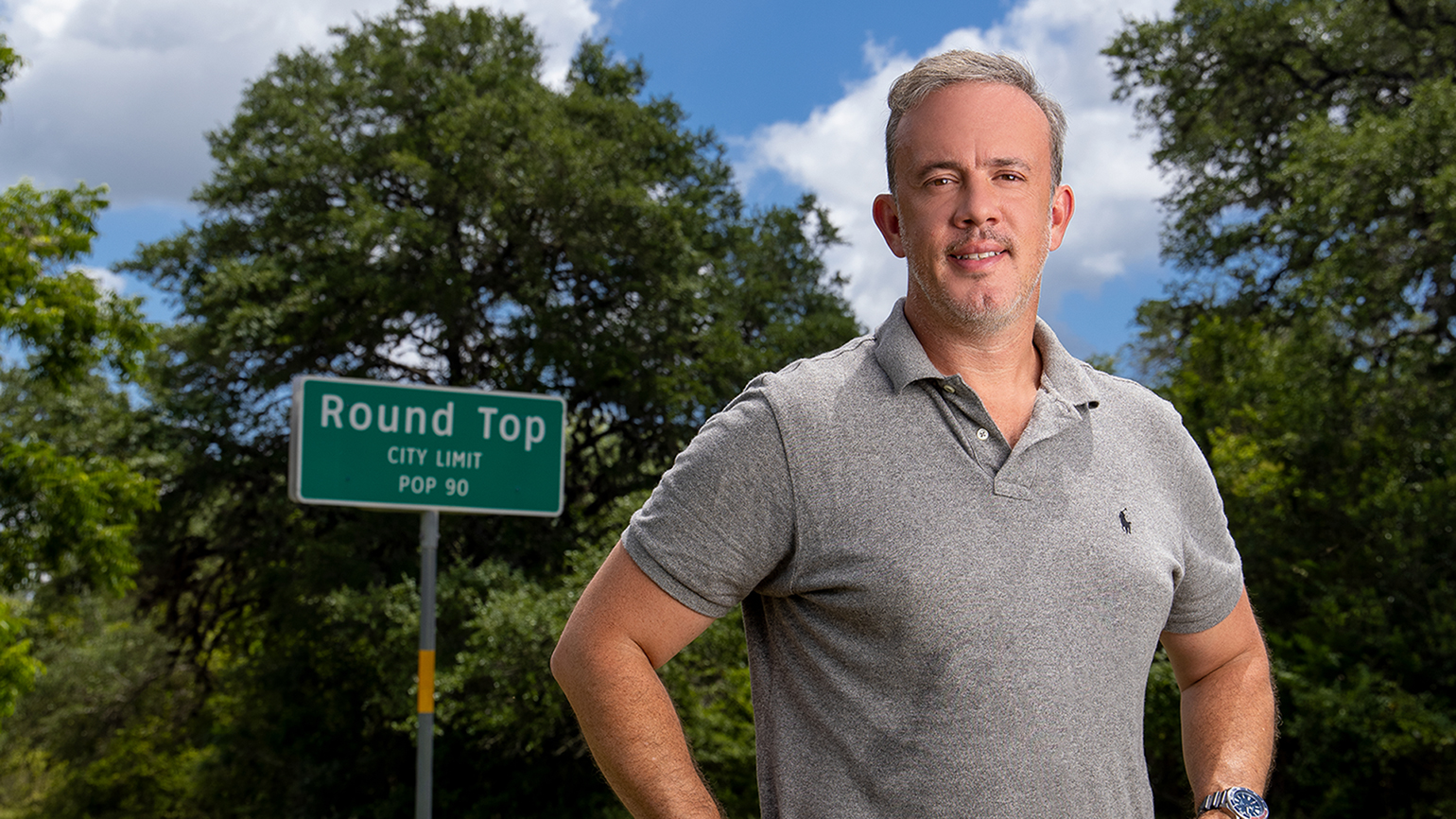
Emma Lee Turney died this year, but she lived to see her idea become a global attraction, with thousands of antiques vendors. And to witness Round Top elect a 40-year-old mayor, Mark Massey, whose campaign slogan was Keep Round Top, Round Top. “People come here to reboot and leave with a second chance,” he says. The sign welcoming visitors says Round Top’s population is 90, but attendance during Antiques Week in April and October swells to 90,000.

“The whole world comes here twice a year,” says Jolie Sikes, who with her sister, Amie, owns the Junk Gypsy vintage store. Their eclectic array of old advertising memorabilia, cowboy boots and vintage jewelry took my breath away.

“This here’s a sanctuary of the world’s finest junk,” Amie told me with a Texas-size grin. I’d come for vintage finds. But something swelled in my spirit that couldn’t be stowed in a suitcase: the assurance that there’s nothing that can’t be repurposed for greater glory.

The magic of Round Top includes me. Ninety-one people can’t be wrong!

For more inspiring stories, subscribe to Guideposts magazine.

Greetings From Small-Town America: Poteau, Oklahoma

I couldn’t have asked for a better childhood, growing up in Poteau, Oklahoma, a town of 8,000 near the Arkansas border. Dad was a state representative; Mom was a high school teacher; my maternal grandfather, Sherman Floyd, was the high school principal, football coach and a city councilman; and my maternal grandmother, Linda Floyd, taught first grade. Most everyone in town knew my family.

In a state filled with Native American place names (Oklahoma comes from the Choctaw words for “red people”), Poteau is French for “post.” French explorers established trading posts in the area in the early eighteenth century.

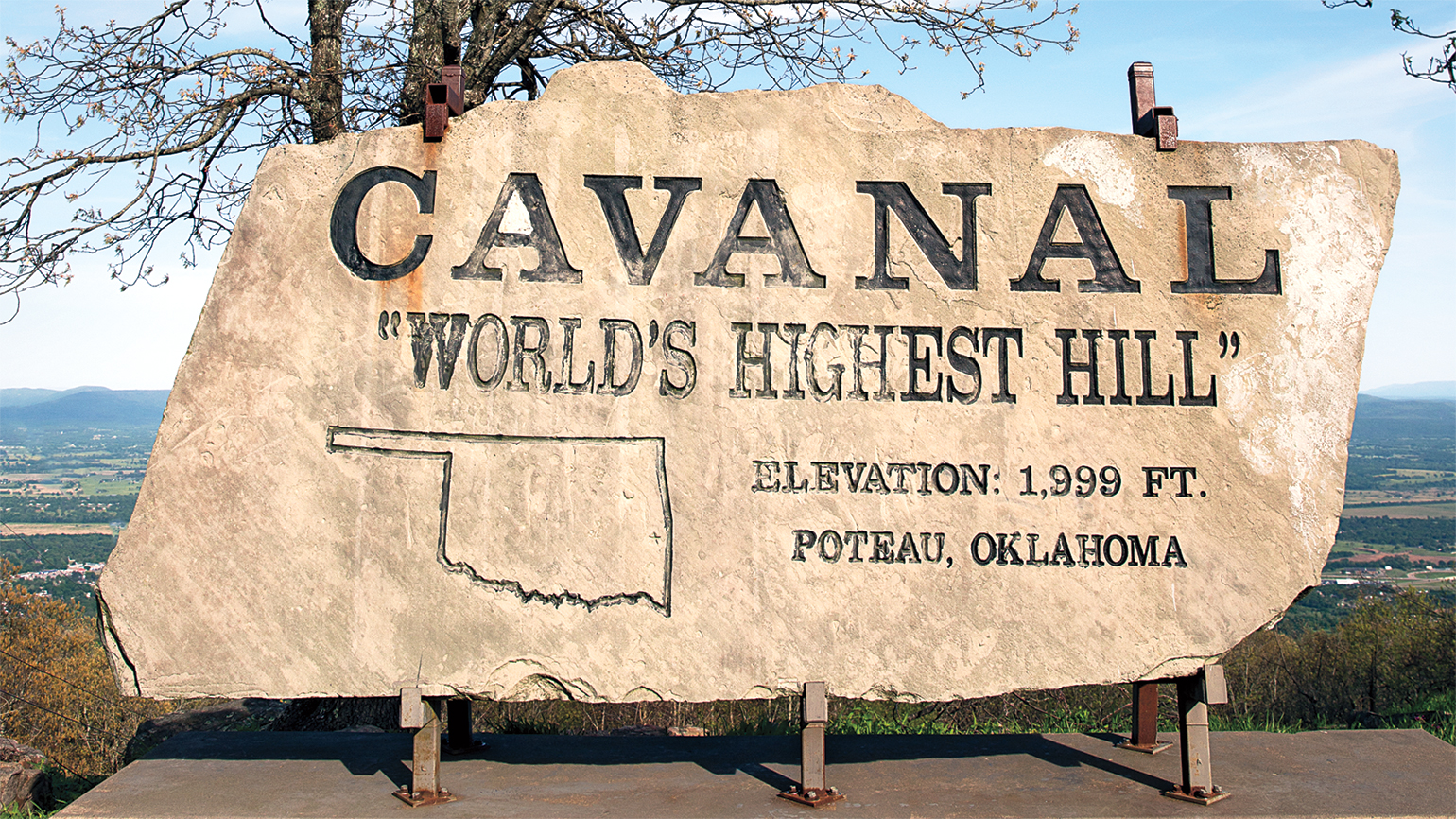
Poteau’s topography differs from typical Oklahoma plains. I spent my boyhood exploring Cavanal, dubbed the world’s tallest hill (elevation: 1,999 feet). I’m a country boy at heart, and nothing brings me closer to God than being in nature. The view from the hill of valley-nestled Poteau is breathtaking!

Another great way to get close to God is at Green Country Cowboy Church. Its motto? “Come as you are.” Jeans, boots and cowboy hats are welcome. The rustic sanctuary features beamed ceilings, and a steel horse trough was once a baptismal font. Pastor and founder Victor Sweet says, “We want people to know they don’t have to clean up or change their clothes, literally and metaphorically, in order to come to God.”

One of my favorite places to eat is Warehouse Willy’s. The steak house owner, Terry Williamson, a former highway patrol officer, couldn’t shake his love for restaurants after working at the Chicken Hut in high school.

“Some people thought I was crazy for giving up a state job,” he says. “When I said I wanted to open a restaurant in an abandoned building in a dying downtown district 25 years ago, they really thought I was crazy.” Warehouse Willy’s sparked the revitalization of historic Poteau. Now colorful shops are housed in buildings erected by early pioneers.

You’ll find more ancient history 25 miles away, at Spiro Mounds Archaeological Center, on 150 acres along the Arkansas River. Grade-school field trips taught me about the Spiro people, who lived there from about 800 to 1450 A.D. They led the Mississippians, a Native American culture that flourished in the Midwest and Southeast.

Agricultural communities featured large earthen mounds, and extensive trade networks crossed much of what became the United States. “The Mississippian leaders presided over a confederation of more than 60 tribes, 30 language groups and over three million people,” says the center’s executive director Dennis Peterson, who has studied the Spiro for decades.

Our family moved to the state capital for Dad’s job after I graduated high school, but I’ll always consider myself a son of Poteau. Come see what a wonderful place it is!

For more inspiring stories, subscribe to Guideposts magazine.

Greetings from Small-Town America: Monroeville, Alabama

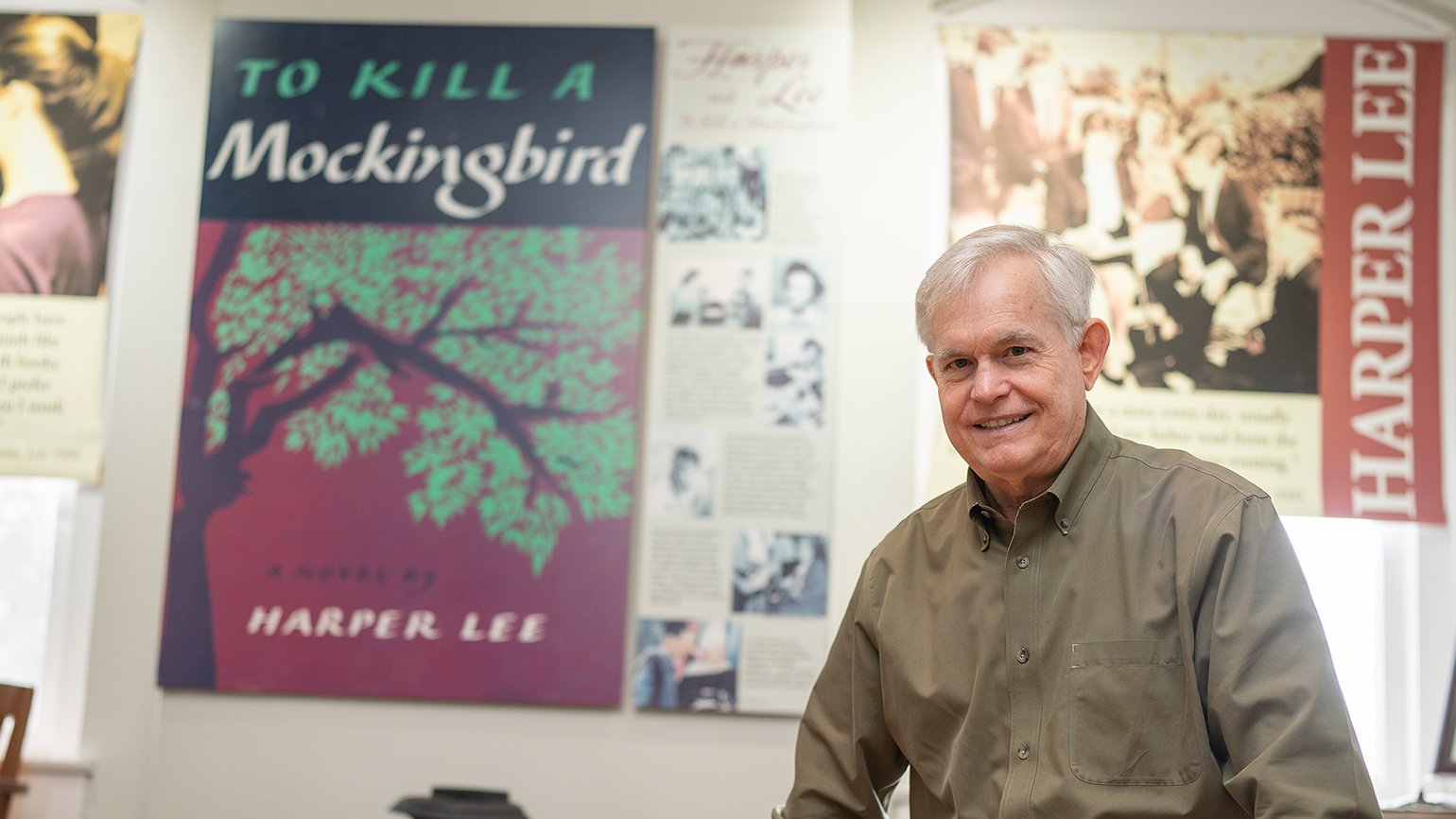
I’ve lived in Alabama and loved books my entire life. As an English teacher, I showed my students the joys of literature, including To Kill a Mockingbird, by Alabama’s own Harper Lee. Somehow, though, I’d never visited Lee’s hometown of Monroeville (population: 5,900), known as the state’s literary capital.

Lee modeled the book’s setting on Monroeville. A reproduction of its courtroom appears in the 1962 film. Today the old courthouse is a museum. Standing inside, I could imagine Gregory Peck, as lawyer Atticus Finch, the father of protagonist Scout, trying to clear the name of an innocent Black man before an all-white jury. Local historian Rabun Williams pointed out the courtroom’s unusual feature: The person testifying sat in front of the judicial bench, with their back to the judge.

Outside is Scout’s neighborhood: Sets for the annual spring production of To Kill a Mockingbird, starring the townspeople, stay up year-round. Director Carly Jo Martens played Scout at the age of 10. “I love seeing what my neighbors bring to the roles,” she says. “They really get to know and understand these characters on a deep level.”

I met World War II veteran George Thomas Jones, who still writes a column for The Monroe Journal. The 99-year-old was a contemporary of both Lee and writer Truman Capote, her friend and neighbor. We talked about Nelle (Lee’s first name) and her father, for whom Jones used to caddy as a teen.

Back then, the town churches had weeklong summer revivals. Each day, his church, First Baptist, would hold one service at night and one at 10 a.m. “Every store on the town square closed from ten to eleven to show reverence,” he says.

Monroeville still has faith at its core. Charles Andrews, the first Black mayor, is a deacon at Antioch Baptist Church #3. “My father passed when I was five,” he says. “The men in the church mentored me.” Andrews returned to town after years as a state trooper and ran for office. “I prayed, ‘Lord, if this is for me, please give me the knowledge and wisdom to make the right decisions to benefit this community,’” he recalls.

There’s much more about Monroeville to love. The library was once the LaSalle Hotel, where Gregory Peck stayed while researching his role. Outdoor sculptures and murals by area artists beckon. After a stroll, why not refuel with Southern catfish or barbecue? David’s Catfish House and Big D’s Butts ’N Stuff are just a short hop from downtown.

At Cole’s, a coffee and ice cream shop, I chatted with resident Stephanie Rogers. “In To Kill a Mockingbird, Miss Nelle says that ‘neighbors bring food with death and flowers with sickness and little things in between,’” she told me. “I love that line because it is still so very much a part of our lives today.”

For more inspiring stories, subscribe to Guideposts magazine.