Embrace God's truth with our new book, The Lies that Bind

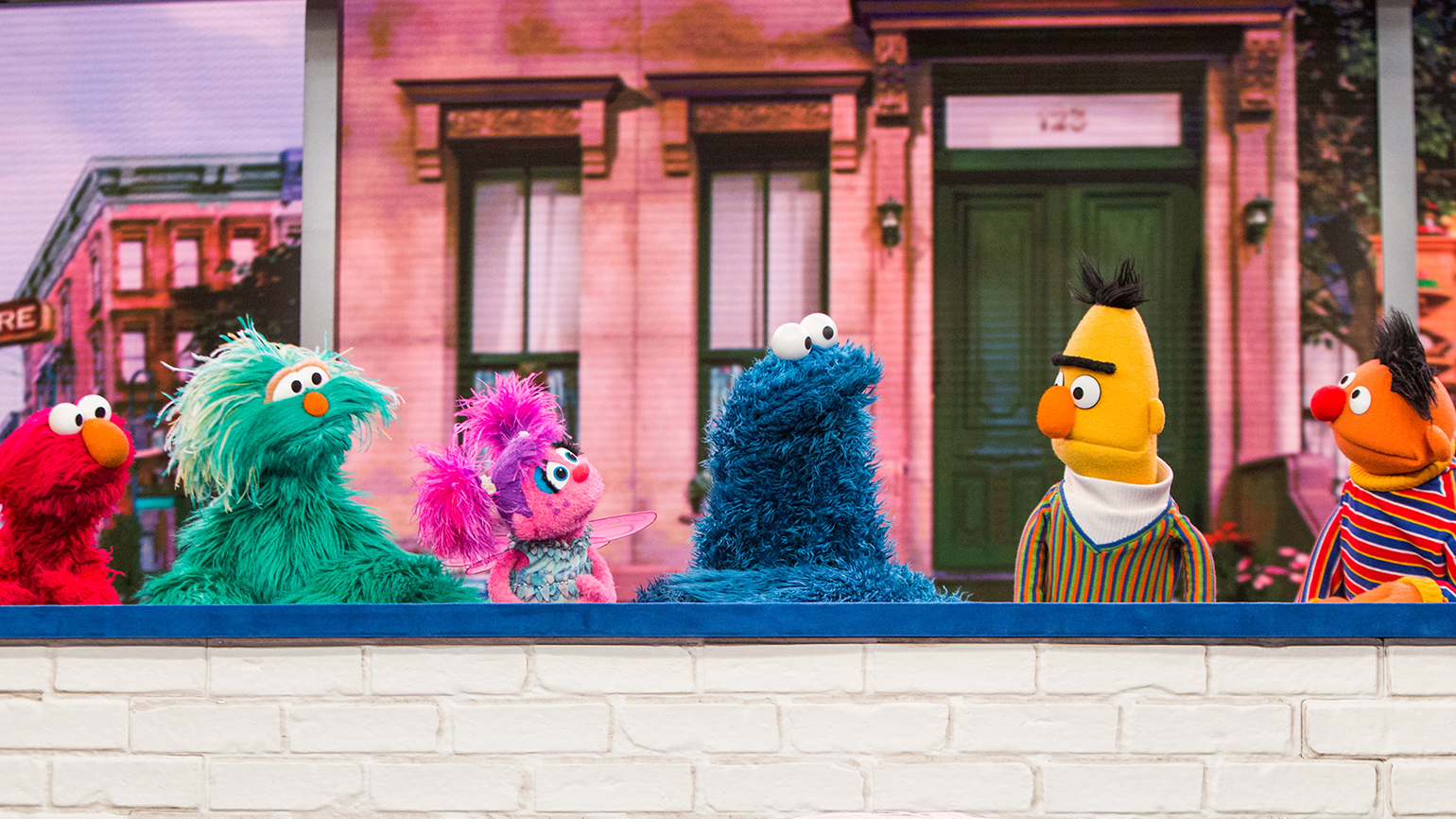
10 Fun Facts from 50 Years of ‘Sesame Street’

On November 10, 1969, a pioneering new approach to children’s programming was born when Sesame Street, the beloved show that for 50 years has both entertained and educated young children (and many not-so-young ones), made its debut on PBS.

According to Joan Ganz Cooney, co-creator of the program, she first discussed using television to educate young children in 1966 during a small dinner party at her Manhattan apartment. Lloyd Morrisett, then an executive at the Carnegie Corporation, was in attendance, and after exchanging ideas over dinner, he and Ganz Cooney would go on to create the pioneering and influential show.

To celebrate the show’s golden anniversary, here are some fun facts about this beloved program.

1. The show wasn’t originally to be called Sesame Street, but when it was learned that the original title—123 Avenue B—was an existing address in New York City, the name was changed.

2. Big Bird is without a doubt aptly named: He stands a towering 8 feet 2 inches.

3. The Count, Sesame Street’s numbers-loving (and definitely not scary) vampire, is probably unimpressed by the show’s 50th anniversary. After all, he turned 1,832,671 on October 9, 2019.

4. During the first season of the show, Oscar the Grouch was not green, but orange (however, his disposition was no sunnier than in later seasons).

5. Elmo once donned a suit and tie to appear before Congress—specifically, the Education Appropriations Subcommittee—where he spoke in favor of increased spending on musical instruments for school programs.

6. Bert’s pal, Ernie, enjoyed a brief stint as a pop music star. His 1970 single, Rubber Duckie, made it to no. 16 on Billboard’s singles chart.

7. To date, four First Ladies—Barbara Bush, Laura Bush, Hillary Clinton and Michelle Obama—have appeared on Sesame Street.

8. In 1976, perhaps inspired by the nation’s Bicentennial celebration, Big Bird ran for President.

9. Actor James Earl Jones was the first celebrity to appear on Sesame Street. A bonus fun fact: Actor Burt Lancaster made his television debut in the show’s first season.

10. Cookie Monster is the show’s only monster who has five fingers (the others all have just four).

Happy anniversary, Sesame Streethere’s to the next 50 years!

10 Easter Eggs from Around the World

Decorating Easter eggs is a tradition for many families today, but it’s a custom that originated a far back as the 13th century. Many cultures developed their unique decorating styles and Easter customs over the years. Check out some traditional Easter egg artwork from Italy, Russia, Ukraine and more along with some fun facts about each country’s traditions involving eggs. We hope these beautiful designs inspire your Easter egg designs. Enjoy!

READ MORE: The Easter Story in 14 Bible Passages

100-Year-Old Woman Gets Her ‘Wish of a Lifetime’

Ruby Holt had done many things in her century on earth. The mother of four spent her years working on a farm and raising her family in rural, land-locked Tennessee. But for her 101st birthday, there was one thing Holt wanted to do more than anything else: see the ocean for the first time.

She had never found the time or the money to travel, and now the wheelchair-bound Holt was living in an assisted living facility. “I’ve heard people talk about it and how wonderful it was and wanted to see it, but I never had the opportunity to do so,” she said.

The odds of making the 400-mile trip to the Gulf of Mexico at her age seemed slim, until the earth angels at her facility contacted the Wish of a Lifetime organization about Holt’s wish. The non-profit organization specifically for seniors sent Holt on an all-expense-paid trip to the Gulf of Mexico to see the ocean, equipped with a motorized wheelchair with heavy-duty tires so she could easily roll over the sand.

Watch the heartwarming video below:

Encourage Positive Thinking In Others

With so many people in the world telling us we can’t succeed, we need to hear people telling us we can.

I remember my high school English teacher telling me not to apply to Cornell University because they wouldn’t accept me and even if they did I wouldn’t be able to do the work. (It’s funny that I’m a writer now).

I almost didn’t apply but a few days later I saw Ivan Foldfarb, a former teacher, in the hallway and asked him about Cornell. He said, “If you get in, then you go. You can do it.” His words made all the difference. I applied, was accepted and majored in Lacrosse.

Too often we think it’s our role to inject a dose of “reality” into someone’s life. We think it’s our job to protect people from the pain of failure and defeat. We think we must point out how bad the economy is and how horrible the job market is and how the sky is falling. We think that dreams were meant for others.

I say there are enough pessimists and “realists” in the world. The world doesn’t need more negativity and impossible thinkers. The world needs more optimists, encouragers, and inspirers.

The world needs more people to speak into the hearts of others and say “I believe in you.” “Follow your passion and live your purpose.” “If you have the desire then you also have the power to make it happen.” “Keep working hard.” “You’re improving and getting better. Keep it up.” “The economy is tough but you can still grow your business.” “The job market is not great but I believe you’ll find the right job for you.” “We’ve hit a lot of obstacles but we’ll get the project finished.” “Even if you fail it will lead to something even better.” “You’re learning and growing.”

When it comes to encouragement I know that every one of us loves working for and with people who bring out the best in us. We love being around people who uplift us and make us feel great.

And while we’ll always remember the negative people who told us we couldn’t accomplish something, we will always cherish and hold a special place in our heart for those who encouraged us.

Today I want to encourage you to be an encourager. So often the difference between success and failure is belief. And so often that belief is instilled in us by someone who encouraged us.

Today decide to be that person who instills a positive belief in someone who needs to hear your encouraging words. Uplift someone who is feeling down. Fuel your team with your positive energy. Rally others to focus on what is possible rather than what seems impossible.

Share encouragement. It matters and we all need it.

Download your FREE positive thinking ebook!

Encouragement for Those in Tough Times

“Mom, may I have this old camera?” Gabe asks. He’s holding a digital camera that Lonny and I used a few years ago. It wasn’t a very good camera, and we upgraded soon after purchase. Today Gabe found it on the bottom shelf of Lonny’s bedroom cabinet – behind the plastic tub of Play dough toys he’d been rooting around for.

“I don’t know if it works,” I say. “Wait until Daddy’s home. He can change the batteries and see.”

Gabe agrees, and a few hours later, hands curled around the camera, he meets Lonny at the door.

“Can we get this working?” he asks.

And soon they’re hunkered over the dining room table.

Later in the evening I’m standing at basin of dishes when I hear a tumble of voices from the schoolroom.

“Look at me,” Sam says. “I was so small.”

I wipe my hands and follow the voices. Lonny and the three boys are jumbled on the sofa. The camera is working and they’re looking through pictures on the long forgotten disk.

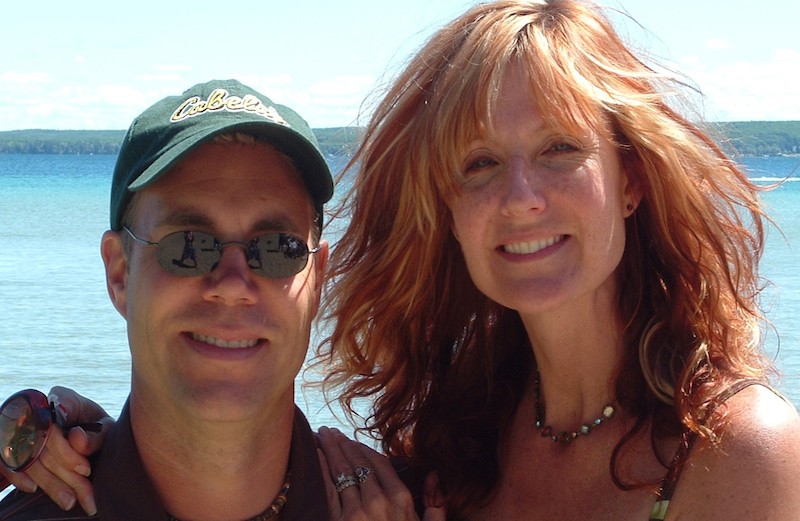
Shawnelle and her husband Lonny with the sun on their shoulders“Look, Shawnelle,” Lonny says. “Pictures from the lake.”

I take the camera in my hands and peer at the screen. The pictures are from seven years ago. Lonny and I are standing close, backs to the lake’s variegated blues.

We’re smiling and my hair is blowing in the breeze. The sun is on our shoulders. Our five sons were somewhere near us, and we’re completely carefree.

I didn’t know that soon, that fall, we’d have struggles with two of our sons.

But I stood that day, kissed by summer and endless good things. I stood, in what I thought was seamless joy, having no idea of what was coming around the bend.

Oh, I wish that I could whisper to that unknowing, smiling, unsuspecting me.

I wish I could pull that mama aside and speak in tones of compassion. I’d hold her hand and share from the heart. Here is what I’d say:

Things will be tough. But you have a Savior who will understand your struggle. He’ll speak through His Word. He’ll speak into your life. He’ll encourage you. And His voice will be your sustaining grace.

Your relationship with your husband, in God’s goodness, will grow. You’ll love and understand and support one another in new ways. The struggles will stretch to the foundation of your marriage but the Lord will meet you there and will build you strong.

The Lord will also bring others to help you. To pray with you. To extend empathy and support and wisdom. His provision will be sufficient. His provision will be sweet.

Your trust in the Lord will grow. You’ll begin to understand His love for your children. You’ll cling to the truth that He will go with your children wherever they go. And slowly, in time, you’ll open your fist and release to Him what you hold most dear.

I hand the camera back to Lonny and the boys laugh as he continues to move through the pictures. I sidle in next to them and join the fun. There’s a shot of Gabe as a toddler. His hair is whiter than the sand. There’s one of Logan and Grant, giving a gun show, flexing pre-teen muscles on arms that are tanned brown.

And there’s one of the seven of us. Isaiah is a baby in a floppy sun hat and the bigger boys are making funny faces. The smile on my face comes straight from the heart.

There’s one more thing, I think, that I’d share with that mama in the photo:

Laugh when you can. Remember how to smile. Take the time to let the sun rest on your shoulders.

These things are sustaining graces.

And you’re going to be okay.

Encourage and Be Encouraged!

I pressed my best suit and starched a white shirt. Held up each and every one of my ties, trying to decide which one looked the most professional. It was the night before my first day at my new job. Not just any job. A job at the White House. I was full of nervous energy.

When I tried to read, my mind kept wandering. I thought back to all of the experiences and the people who had helped me get to this point. College professors. Friends from graduate school. Mostly though, I thought about the people from my hometown. I thought about Madison Park.

I was raised by my grandparents—Mama and Daddy, as I called them—in Madison Park, a town founded by freed slaves on the edge of Montgomery, Alabama. In 1880, John Motley, Sr., my great-great-grandfather, joined a group of freedmen as they stood on the ground that would become Madison Park and pledged to build a community where people could thrive. Daddy built almost half of the black churches in Montgomery, including Union Chapel AME Zion Church in Madison Park.

Some kids had paper routes after school let out. I had a people route. Almost every day when I was growing up, I would go around the neighborhood and visit with each of the people who had made an investment in my life. Especially my tutors.

When I was in first grade, Mama got a letter from my teacher explaining that I was being demoted from the Rabbit reading group to the Turtle reading group. Even though she and Daddy didn’t have much formal education, Mama would have none of it. She immediately called my Aunt Shine. The next Sunday in church, Aunt Shine stood up and made a plea to the congregation.

“Brothers and sisters, we have a serious problem,” she said. “Eric Motley has been moved from the Rabbit to the Turtle reading section at his school. Eric needs to practice reading, and he doesn’t have many books at home. If you have any books you’ve finished reading, please drop them off at the Motleys’.” I was mortified. and yet that afternoon, reading material started arriving on the porch. Books, old magazines, volume “L” of the Encyclopaedia Britannica. Even some poetry.

That wasn’t enough for four retired teachers who lived in Madison Park: Aunt Shine, Aunt Prince Ella, Mrs. Carrie Madison Seay and Mrs. Frankie Lee Winston. They came by the house every afternoon, two by two, to tutor me. They didn’t stop at reading, either. They helped with math, science, history—you name it. Eventually, they expanded their efforts to all the kids in the neighborhood. For a few years, about 60 of us would gather at the church every afternoon for tutoring.

My Rabbit status was restored, and I excelled in school. But the efforts of my neighbors were far from over. They weren’t content for me just to be a Rabbit. They had their eyes on a bigger prize. College.

In my teen years, my afterschool routine changed. At 4 p.m., when I got off the bus, Mama would greet me with a cup of hot tea and cookies and we would chat about our day. Then I’d change into working clothes—worn khaki pants and a hand-me-down denim shirt—to do my chores.

Next was my favorite part of the afternoon: my people route. I’d say hello to the McCarters, who lived across the street. They had 10 kids, but Mrs. McCarter always set aside an extra slice of pie or scoop of ice cream for me. I’d holler at the other kids on my way through the neighborhood—Regina Gibbs, the Simon and Henderson boys—before visiting with my tutors.

Aunt Prince Ella would wait on me to walk with her to gather eggs from her chickens. If Mrs. Seay’s clothes were on the line outside, I’d take them down and help her fold them. Aunt Shine would talk to me about history and politics. Mrs. Bertha Winston became my speech coach. She would drive me to our church so I wouldn’t be distracted by the comings and goings in the neighborhood. We’d park under a big oak tree, and she would give me a list of words to recite. Mama and Daddy couldn’t afford many books, but Mrs. Winston taught me that if I memorized the passages that spoke to me the most, they would always be with me.

My tutors weren’t the only people on my route. I always had a steady supply of odd jobs to complete after school. When I was done visiting with my tutors, I would mow lawns, trim shrubs, pick blackberries and weed gardens. Anything for a few bucks.

My neighbors could have easily done the work themselves. They hired me to help build my college fund. I would have much preferred if they’d just given me the money. Mama and Daddy insisted that I earn every penny.

I worked along my people route until dinnertime. Dinner, like breakfast, was a full cooked meal. Usually Mama made okra, peas and some sort of delicious main course like meatloaf or pork chops. Before eating, Daddy would ask, “Eric, do you have a couple of lines you want to give us?” Then I’d stand at the end of the table and recite a few lines from a poet I loved, often someone Mrs. Winston had introduced me to. Over the years, I covered a wide range of poets, from Shakespeare to Langston Hughes. Then Daddy would pray over our meal, saying, “For these blessings, we give you thanks. And make us ever mindful of those who have not. Amen.” To this day, I still say this prayer before eating.

My favorite times with Daddy, though, were the Sunday mornings we spent on Little Joe Simon’s back porch. At eight o’clock, the men of Madison Park would congregate at Little Joe’s for a haircut before church. We would sit under the magnolia trees and drink coffee while catching up on what was happening. I loved when Little Joe cut my hair. More than that, I loved being a part of something, witnessing so many people come together. It was the most important stop on my Sunday people route.

The tutors, the neighbors, the odd jobs, everyone who came together on my behalf—they all helped get me to college. I received a full scholarship to Samford University, about 90 miles away from Madison Park. After graduating college, I went even further, all the way to Scotland, for graduate school in international relations.

Now I was headed for the White House, where I would serve as a special assistant to President George W. Bush. I closed the book I’d been trying to read and checked the clock. It was 10 p.m. Even with my clothes laid out and my briefcase packed, I couldn’t sleep. The phone rang. I checked the caller ID. Montgomery, Alabama. I picked up. It was Mrs. Bertha Winston.

“I hope I didn’t wake you, Eric,” she said. “I just couldn’t sleep. I wanted to tell you how proud we all are of you. Tomorrow, you go in there and work! When you go into that White House, remember you’re taking Madison Park with you.”

I thanked Mrs. Winston and hung up, feeling peace wash over me as I remembered that this job, this opportunity to work in a place of influence, was more than mine alone. Even though I was far from the family and friends who had shaped me, they would always be a part of everything I accomplished.

The next day, I walked into the White House with pride, wearing the red-and-blue striped tie that Daddy had worn to my high school graduation.

I worked in the White House for four years. I was ready for a new opportunity at that point, but a good friend unintentionally sowed doubts in my mind. “Don’t leave the White House!” he said. “If you do, you’ll no longer be Eric Motley from the White House!”

That was true, but I wondered how I’d given him the impression that my identity was only of value in relation to the White House. Wasn’t being Eric Motley from Madison Park good enough?

One of the odd jobs I did around Madison Park was picking blackberries. I was picking them one day when one of Mama’s friends, Miss Daisy, appeared. I chatted with her to be polite, just small talk about the weather and her health. She didn’t reciprocate.

“You mustn’t pay attention to me or to anyone when you’re working the work before you,” she said. “You have to be totally involved in what you’re doing and consumed with what’s before you.”

Her advice reminded me of a prayer I’d once delivered to a church in Montgomery: “Help us to know ourselves more fully and wholly; help us to never forget whence we have come.” God answered my prayer and reminded me where I came from. I listened to the advice of Miss Daisy over the advice of my good friend. I knew that the work before me no longer included my job at the White House. It was time to move on.

I’m now an executive vice president at the Aspen Institute, a nonprofit leadership think tank, and my management strategy comes from the wisdom of the people I grew up with. I seek to encourage rather than criticize, to build up rather than tear down. Every day I rise before the sun, as Mama taught me to do, and I remember that even though she and Daddy have passed, as have so many of my friends and mentors from home, I carry the spirit, principles and values of Madison Park with me.

For more inspiring stories, subscribe to Guideposts magazine.

Editors’ Picks: Advent Candles and Holders Perfect for the Advent Season

As we prepare our hearts and minds for Christmas Day during Advent season, we celebrate this time of anticipation with rich traditions. The use of candles during Advent is a long-standing tradition that holds special meaning.

The four candles, representing the four weeks of Advent, are each lit on one of the four Sundays leading up to Christmas. Three of the candles are purple, symbolizing hope, love and peace while one is pink to symbolize joy.

Prepare your home for this upcoming Advent season with this selection of candles—and holders—that we’ve gathered just for you!

Every editorial product is independently selected, though we may be compensated or receive an affiliate commission if you buy something through our links. Ratings and prices are accurate and items are in stock as of time of publication.

Love Peace Hope and Joy Candles $15.49

Advent Candles
Advent Candles

The centerpiece of your Advent display deserves a set of hand-dipped candles, printed with the words of the season: Love, Peace, Hope and Joy. This set of 10” candles contain three purple and one pink candle. You might want to pick up a second set to light, as they’re almost too pretty to burn! Buy at Amazon.com

Gold Advent Candle Wreath Ring $14.99

Gold Advent Candle Wreath Ring
Advent Candles

Whether you’re looking for a starting point to build your own Advent wreath, or just going for a more minimal look—you can’t go wrong with this gold Advent wreath ring. You’ll be happy to know this Advent candle holder has been made in the United States, and the whole thing has been tested for fire resistance. Buy at Amazon.com

Traditional Christmas Advent Wreath $26.99

Traditional Christmas Advent Wreath
Advent Candles

Flowers, pine cones, bows, balls and studs…oh my! This wreath is beautiful, and to top it off—it ships in a gift box (hint, hint!). This wreath measures 12” round, and makes an excellent centerpiece to your Advent table. It’s the wreath and the ring…all in one! Or maybe you’d prefer silver instead of gold? Check it out! Buy at Amazon.com

Flameless LED Advent Candle Set $24.95

Flameless Advent candles
Advent Candles

Want to celebrate the Advent season, but worried about dripping wax—or maybe forgetting to blow the candles out? This flameless LED Advent candle set checks all the boxes. Each candle uses 2 AA batteries and comes with three purple and one pink candle. The bases are designed to fit in all the popular taper candle holders and wreaths. Best of all—you can use them again year after year! Buy at Amazon.com

Modern Ceramic Advent Ring $36.99

Ceramic Advent ring
Advent Candles

Maybe you’re looking for something a bit more contemporary? This Modern Ceramic Advent Ring likely fits the bill. It’s strikingly simple, but holds endless opportunities to decorate it, and make it your own! The choice is yours, keep it simple—or stylize it to fit your Advent décor! Buy at Amazon.com

Easy and Relaxing Gifts to Make for the Holidays

Homemade holiday gifts are such treasures to give and receive. And when the making itself is relaxing and satisfying, the gifting is that much more joyful.

What makes a relaxing craft? To me, one that meets three criteria:

–It must involve materials that are pleasing to handle and work with.
–It must be easy yet require enough of my attention to let me get “lost” in it.
–I must be able to complete it in a short period of time.

Often, I’ll bake gifts for my neighbors and friends. Last year, I made loaves of chocolate-y, decadent babka for my friends. I loved baking them, but just as much, I loved packing them up for gifting—wrapping each loaf in cellophane and tying it with a cheerful ribbon. Now that was relaxing.

So this year, I’m thinking about easy, low-stress gift ideas that will satisfy my desire to stay calm and joy-filled throughout the holiday season. Here are some possibilities I’m playing with.

Mason Jar Kits
A lidded Mason jar (or Ball jar, or any jar!) is a gift-maker’s blank canvas, ready to decorate with glued-on autumn leaves, small seashells, cloth or paint. But it’s also a terrific vessel to fill with the makings of a DIY moment for the recipient of your gift. Line up a row of clean, dry jars and fill them with layered, pre-measured ingredients for granola, brownies, soup, potpourri or even salad dressing (minus the liquid). Attach a card with instructions on how to finish and enjoy, and know that your loved one will have the gift of a relaxing activity of their own.

Dot Painting
A smooth stone, a tile or a found piece of wood can be your launch pad for a relaxing and beautiful piece of art your friends and family will love to receive. Pick up some paints in your favorite colors, and purchase a set of “dotting tools” from a craft store (you can get a good set for $10 or even less). Paint a solid color as a backdrop and then use the tools to make patterns—stars, circles, swirls, smaller dots inside larger ones or anything your imagination illuminates for you.

String Art
Sometimes, the most “relaxing” activity is the one that gives us the chance to smack something with a hammer. String art is an easy way to scratch that itch. A piece of wood, a pile of flat-topped nails and some colorful cross-stitch floss or other thin yarn are all that’s needed for this pleasing craft.

Tap your nails into the wood just so they’re secure—you can outline your gift recipient’s initial, or make a heart like this sweet example. Then tap nails around the border of your wood, and start looping your string or yarn around each nail, either all in one color, or in a multi-colored pattern of your choosing. Before long, you’ll see your shape in the middle of a colorful background that you got to chill out while making.

What are some relaxing crafts you’re making as holiday gifts this year?

Dreams Come True with Hope and Faith

There are some unforgettable dreams so strange or so beautiful you find them difficult to share with others. But one dream I must tell about, for I believe it was from God.

Some years ago when I was living in Portland, Oregon, I dreamed I was a famous musician. A young reporter from New York came to interview me. She was beautiful, with lustrous auburn hair and warm, friendly eyes with crinkly laugh lines.

I awoke with my heart pounding. Though I doubted I would ever be famous, I felt certain that God had shown me the woman I would marry. I called her my Dream Princess.

Marriage, however, seemed distant. Even though I was 39, I still hadn’t made much of my life. My ambition was to become a published writer. I had written stories, plays, poems and books, but none had seen print. To support myself, I worked for an auto dealership, washing and selling cars. In my spare time I refereed at school athletic events.

Because I firmly believed the promise that God would guide me, I decided to move to New York City. That’s where the publishers are. Friends and most of my nine brothers and sisters ridiculed me. “You need contacts, Joe,” warned one. “The city will eat you up,” said another, laughing. “You’ll be glad to come back to Portland.”

My answer was to buy a one-way Amtrak ticket to New York. In late June 1991, I boarded the train after saying goodbye to my sister, brother-in-law and nephew. One of my two suitcases held all the books, stories, plays and poems I had written, along with $400.

On July 4, I arrived in bustling Penn Station. I set down my suitcases to check the hotel address. When I leaned over to pick them up, the one with my manuscripts and money was gone! Astonished and dumbfounded, I found a policeman. All he could recommend was to file a report. “Welcome to New York,” someone said, snickering. All I had left was $100 in my wallet. I checked into a hotel and started looking for work. A few days later, on an evening stroll, I was mugged. I lost my cash and ID. I couldn’t believe it. Twice in one week! “You gotta be careful,” advised the hotel clerk, shrugging his shoulders.

Meanwhile, no publisher was hiring. I searched for any kind of job, but it seemed hopeless. I felt I was at least becoming streetwise, until I went to the restroom in Grand Central Station. Once again I was mugged. This time I was slammed against the wall, and a shiny blade was pressed against my stomach before my assailant fled. Penniless, I went to Traveler’s Aid. They advised me to call my family. No way, I vowed. I couldn’t face the “I told you so’s.” With no place to live, I joined New York’s homeless and hungry. The aroma wafting from restaurants tied my stomach in knots. I stared hungrily at half-eaten food in street-corner trash baskets.

Someone said that the Church of St. Agnes near Grand Central Station had a drop-in center where some 400 people gathered to eat every night. I felt fortunate to join them, but I didn’t feel right sleeping there. It was still summer, so I slept in doorways and on park benches. Sometimes I rode the subway or walked the streets all night. I soon learned to wrap myself in newspapers and lie on top of cardboard to stave off the night chill. But finding a job without a home address or identification was hopeless. That was the worst of it—feeling useless, not having anywhere to be, getting awakened by footsteps of lucky people hurrying to work.

Sometimes I thought of my Dream Princess, but now she too seemed a fading illusion. Desolate days blended into a gray emptiness. Some evenings found me in an all-night McDonald’s near Times Square, writing my thoughts in a notebook. Occasionally the manager let me sleep in the closed-off upstairs section.

Fall was coming on and one cold night I trudged through Herald Square. Despite the crowd, I felt alone. Sick at heart, I looked up into the murky sky and wondered if God had forgotten me. I thought of the Psalms my mom had had me memorize, in which the psalmist continually expressed his faith even in the grimmest circumstances. Leaning against an iron fence, I sighed: “Thank you, Lord, thank you for taking care of me today. Thank you for what you are going to do for me tomorrow. For whatever comes into my life, I thank you.”

I had no idea he was going to answer so quickly. Within a few days I was assigned a bed two nights a week in a shelter in Astoria, Queens.

As I signed in at the table, a young woman walked in from the kitchen. I looked up and my heart skipped a beat. There was my Dream Princess! I stared at her lustrous auburn hair. She had friendly eyes and there was a glow about her face as she walked across the room. My hands trembled and I began composing a love song in my mind.

Haltingly I struck up a conversation. Her name was Carol Ann Perkins. She was a volunteer worker in her mid 40s. She was polite and we talked a bit about my writing aspirations; then she left. But before she was out the door I had finished her song in my mind. A few days later I went to another shelter, at the Community United Methodist Church in Jackson Heights, where I had come to know the pastor, the Reverend Austin H. Armitstead. He gave me a typewriter and I typed out the song about my Dream Princess.

Meeting Carol Ann sparked a positive change in my life. I found a part-time job refereeing high school and college athletic events. My self-confidence grew.

Three weeks after meeting Carol Ann, I was again a guest at the shelter where she was a volunteer. Having saved a little money, I asked her out to lunch. For a moment I was afraid she was going to turn me down. Then, smiling, she hesitantly said yes. We went to a Roy Rogers and over hamburgers fell into easy conversation. I could see there was hurt in her eyes, and I cautiously drew her out. She said she had just ended a relationship with someone and then quickly changed the subject. We parted as friends, but that was all.

Even so, I excitedly phoned my mother about finding my Dream Princess. She said she would pray for her. I asked Carol Ann out again, and this time I brought her a single red rose. For the next four months our relationship continued over lunches, but always on a casual, friendly basis, and obviously not going anywhere. I, of course, was head over heels in love but didn’t want to push myself.

“Oh, Father,” I prayed, “this is the girl you showed me in my dream, but she doesn’t seem interested in me at all. What should I do?” It turned out I didn’t have to do anything. A few days later I discovered a new Carol Ann. I sensed a special warmth in her green eyes, and when she placed her hand on mine as we talked, I was ecstatic.

Later I learned that a friend of hers was making a pilgrimage to the Shrine of Our Lady of Guadalupe in Mexico. Carol Ann had given her a prayer petition to take, asking for “someone who is kind and gentle, good and loving and only has eyes for me.” It was then she realized that the one courting her was all of those things.

On February 12, 1992, I got down on one knee and with a red rose in hand asked Carol Ann to marry me. Our wedding was officiated by pastor Armitstead and Bishop Douglas L. Trees. A friend, Frank Scafuri, sang “Dreamer, I Wanna Be With You,” the song he and I composed from the words I wrote after I first saw Carol Ann.

Since then we have made beautiful music together, and every week my Dream Princess still receives a single red rose from me. Carol Ann and I are both working and we volunteer at the two church shelters where I once slept.

Every so often someone down and out looks at me with pain-filled eyes and asks, “How can you possibly understand what I’m going through?” I sit down with him, put my arm around his shoulders and explain I know exactly what he’s going through. I tell him God gives each of us a dream. And if we follow his will, pray and hold on to our faith even through the darkest times, our dreams will come true. Then I tell him about Carol Ann.

Do You Focus on the Positive or the Negative?

Do you know people who, when faced with a decision that has both advantages and drawbacks, tend to focus almost exclusively on the potential negative outcomes? Do you feel that sometimes, you are that kind of pessimistic decision-maker?

Neuroscientists at MIT have been exploring a previously under-studied region of the brain that could be connected to this type of pessimistic tendency. These researchers have identified the “caudate nucleus” as the region responsible for generating negative emotions. The findings, which were published in August, could help mental health professionals better understand and treat emotional challenges including depression and anxiety.

The type of decision-making I described above is called “approach-avoidance” deciding. When presented with a choice that includes both negative and positive possible outcomes, our emotional tendencies appear on full display. If we have generally optimistic outlooks, we will be drawn to the positive outcomes of the decision. If we tend toward pessimism, however, we will put a lot of weight on the negative possibilities.

The MIT researchers presented an “approach-avoidance” scenario to laboratory animals, offering them juice but pairing that reward with a puff of air that the animals didn’t like. When the scientists stimulated the caudate nucleus region of the brain during the experiment, the animals declined the reward even when the puff of air was lessened or even removed altogether.

These findings suggest that excessive activity in the caudate nucleus causes the brain to devalue rewards and increase focus on negative outcomes.

It’s not hard to recognize the implications this emerging brain science could have for emotional health. After all, understanding the brain chemistry behind negative thought patterns is a necessary aspect of developing new strategies for encouraging positive ones.

How do you navigate “approach-avoidance” decisions? What do you do to balance the weight you give to potential negative and positive outcomes?

Do Unto Others

When I woke up last week, I looked out the window and saw nothing but white–the entire yard was blanketed with snow and ice. It wasn’t a surprise; the newscasters had been forecasting the winter storm for days.

I groaned, anticipating the struggle of clearing my long walkways to the street, both front and back. The weather had been very mild until that day, but now winter was here in all its glory.

In years past I had jumped into the task at hand, shoveling myself out without too much effort, but this year the task seemed enormous. The older I get, the harder the job becomes. It had been getting harder and harder every year since I’d had back surgery a few years ago. I was dreading the task before me.

I fixed myself some breakfast and lingered over the second cup of coffee, postponing the dreaded exercise as long as possible. I knew I’d have to get to work soon or the mail carrier would have trouble getting to my front porch where my mailbox is.

Then I heard a noise in the backyard. When I looked out the window again, I was surprised to see my young neighbor shoveling my walkway. I couldn’t believe my eyes. Although I knew those neighbors well, we didn’t spend much time together. I waved at them when I saw them walking their dogs several times each day, and I chatted with the wife at times when we saw each other in the yard, but other than that, we didn’t socialize. They are much younger than me.

Quickly, I fixed a cup of hot chocolate and took it downstairs to the back door.

When I opened the door, Gary stopped his work and gratefully accepted the hot cup I extended to him. I tried to thank him, but he said it was nothing. Nothing! It was a miracle for me.

When he finished his hot chocolate, he went right back to work, finishing a wide path to the street. Now I’d be able to get the garbage can out for the trash truck to pick up the next day.

Then he went around to the front and repeated his labors, making a path for my mail delivery. Shoveling wasn’t an easy job because on top of the snow was a solid sheet of ice, making the walkways and streets treacherous. But that didn’t stop Gary; he worked hard until the job was finished.

Then I saw him go to the house on the other side of his own, where another elderly widow lived, and repeat his efforts. And when it was all finished, he got in his car and drove to work. His wife Cathy also left for her job.

What could I do to repay their kindness? I decided to make a big pot of soup for their supper. All day I peeled and chopped vegetables and browned beef to stew. When it was finished in the afternoon, I felt good. Cathy would not have to fix a meal when she came home from work, and hot soup would hit the spot on such a cold day.

But the street between our houses was still very icy, and I am not too steady on my feet. I was afraid I would not be able to deliver my offering to them safely. So when I saw Cathy come home, I called and told her I had some soup for them. When she came over to pick up the soup, she seemed as grateful as I felt when I saw her husband shoveling my walkways. It was a small thing I had done–much smaller in my mind than the gigantic blessing they had given me.

After Cathy left, I started thinking of what else I could do to help others in difficult times. I saw the mail truck come slipping and sliding down the street. The temperature had plummeted to the teens and immediately I felt sorry for the mail carrier, having to deliver mail and walking on icy sidewalks in the freezing cold. Again I fixed a cup of hot chocolate and presented it to him as he handed me my mail. He was surprised, but very grateful.

For the rest of the week, I met him with a cup of hot chocolate when he delivered my mail, and he said to me, “You are a blessing.” His words warmed my whole spirit.

It wasn’t much to do, but it seemed like a lot to that young mail carrier.

Now I am constantly looking for ways to make others happy, especially those people we take for granted every day. Gary had started a chain reaction in my soul. By helping me out without being asked, he sparked a similar feeling within me.

Who knows who the mail carrier will help along his way? It’s really a kind of miracle, don’t you think?

I don’t know who else will come along who might appreciate a helping hand, but at least now I am consciously aware of those I meet. In fact, it gives me joy to watch for opportunities to help someone else, especially someone I might not have even noticed in the past. Because of my age and health, there are always some things I’m not able to do, but often enough I can do something to lift another’s spirit.

Doomscrolling: What It Is and How to Stop

Have you noticed yourself spending more time scrolling through your phone? Were you bombarded with troubling headlines, upsetting posts, and bad news? If you did, chances are it didn’t make you feel any better. In fact, it probably made you feel worse. You’re not alone. This bad scrolling habit now has a name: doomscrolling.

What is Doomscrolling?

The phenomenon of doomscrolling, sometimes called doomsurfing, is so common, Merriam-Webster added the terms to the dictionary. The meaning: “The tendency to continue to surf or scroll through bad news, even though that news is saddening, disheartening, or depressing.”

Though the terms originated in 2018, they became much more popular during Covid-19, as people constantly scrolled through news articles and social media posts to learn more about the pandemic.

Man doomscrolling on his phone while at the park

Effects of Doomscrolling

According to Healthline, doomscrolling can have many negative effects, including:

  • disrupted sleep
  • increased anxiety
  • increased depression
  • feelings of loneliness

The effects of doomscrolling don’t just happen as we do it. We can walk away from our phones and still feel uneasy, unrested and less hopeful about the world.

How to Stop Doomscrolling

Luckily there are practical steps we can take to walk away from the phone and live our lives with more positivity and hope. Doing this will help us balance our time on the phone and use it for staying informed instead of doomscrolling all day.

Check out these five simple tips for breaking the cycle of doomscrolling:

Man looking at his watch so he stops doomscrolling on his phone

1. Set a timer for yourself

Spending less time on your phone is the best way to minimize your doomscrolling. However, just putting your phone down to focus on something else isn’t always the best technique. You might need to answer a text or email and soon find yourself back on social media apps like Facebook, Twitter and Instagram.

A more effective option is to set a timer. If you want to check out what your friends are doing on social media, put a timer on your phone for 10 minutes. When it goes off, close out the app. There is even a function on some phones to limit how often you can have a certain app open. Set a low limit for the apps you use most often and soon you’ll break the habit of endless scrolling.

business woman doomscrolling on her phone while she drinks coffee

2. Make note of when you doomscroll

Do you find yourself reaching for your phone in the morning while you drink coffee? Or maybe during your lunch break or to unwind after work? Chances are you probably do your doomscrolling at the same time every day.

Make note of when you find yourself endlessly scrolling and instead fill that time with a non-phone related activity. Spend your morning listening to music or sitting by your window and watching birds and other animals. Use your lunch break to go on a walk or do some easy exercises. Relax after work with a cozy mystery book or a devotional to help you reflect on your day.

Woman laughing at something funny on her phone to avoid doomscrolling

3. Use your phone to lift your spirits. 

Instead of letting your phone bring your spirits down, use it as a tool to lift your spirits. Facetime or text with a friend or family member you haven’t connected with in a while. Make a note to follow websites or social media pages that share stories focused on positivity and hopefulness – like Guideposts.org!

Listen to an audiobook or a podcast to unwind after a long day or learn something new. Abide, a Christian meditation and prayer app, is a great way to bring yourself relaxation and spiritual peace.

Girl facetiming with her family to avoid doomscrolling

4. Check in with friends and family. 

Often you may doomscroll without realizing it. You might be thinking, just one more post, just one more article… and before you know it, you’ve been scrolling for too long and you’re in a terrible mood. This is why it’s important to check in with your friends and family, to make sure they aren’t spending too much time reading negative media. You can ask them to do the same for you!

Plan activities or days where you spend time together without constantly checking your phones – whether hiking outside, walking through the park, or staying in to play board games or watch a movie. Focus on your time together.

READ MORE: 7 Ways to Create the Habit of Family Prayer

Woman reading a book before bed to avoid doomscrolling

5. Don’t look at your phone before bed 

One of the prime times to doomscroll is in the evenings, particularly right before bed. We often spend this time scrolling through our phone and getting more anxious, instead of using this time to reflect on our day and relax. It can make the process of winding down for bed take even longer. Alter your bedtime habits to something more positive. It can be an opportune time to check in with God, whether through prayer, meditation, a devotional or reading your favorite nighttime Bible passages.

Woman singing and listening to music to avoid doomscrolling

6. Replace doomscrolling with a positive habit

Keep in mind that there are dozens of other things you could be doing besides scrolling through your phone and getting upset. Committing to a new positive habit can be a great way to detach yourself from the phone and feel better about your life. Here are some fun and relaxing positive habits you can start when you feel yourself reaching for the phone:

  • Start journaling. Make the experience even more positive by writing in a daily gratitude journal.
  • Spend time outside. Go for a daily walk or invite your friends to a weekly picnic at a nearby park.
  • Put on some music and sing. Find a favorite song you haven’t listened to in years and see if you remember all the words.
  • Learn something new. Instead of focusing on negative news, pick out the subject that interests you— history, art, science, or spirituality. Find a podcast or online publication that cover the topics and dive in!

READ MORE ABOUT POSITIVE HABITS: