Embrace God's truth with our new book, The Lies that Bind

Prayer Shawls Comfort Grieving Military Families

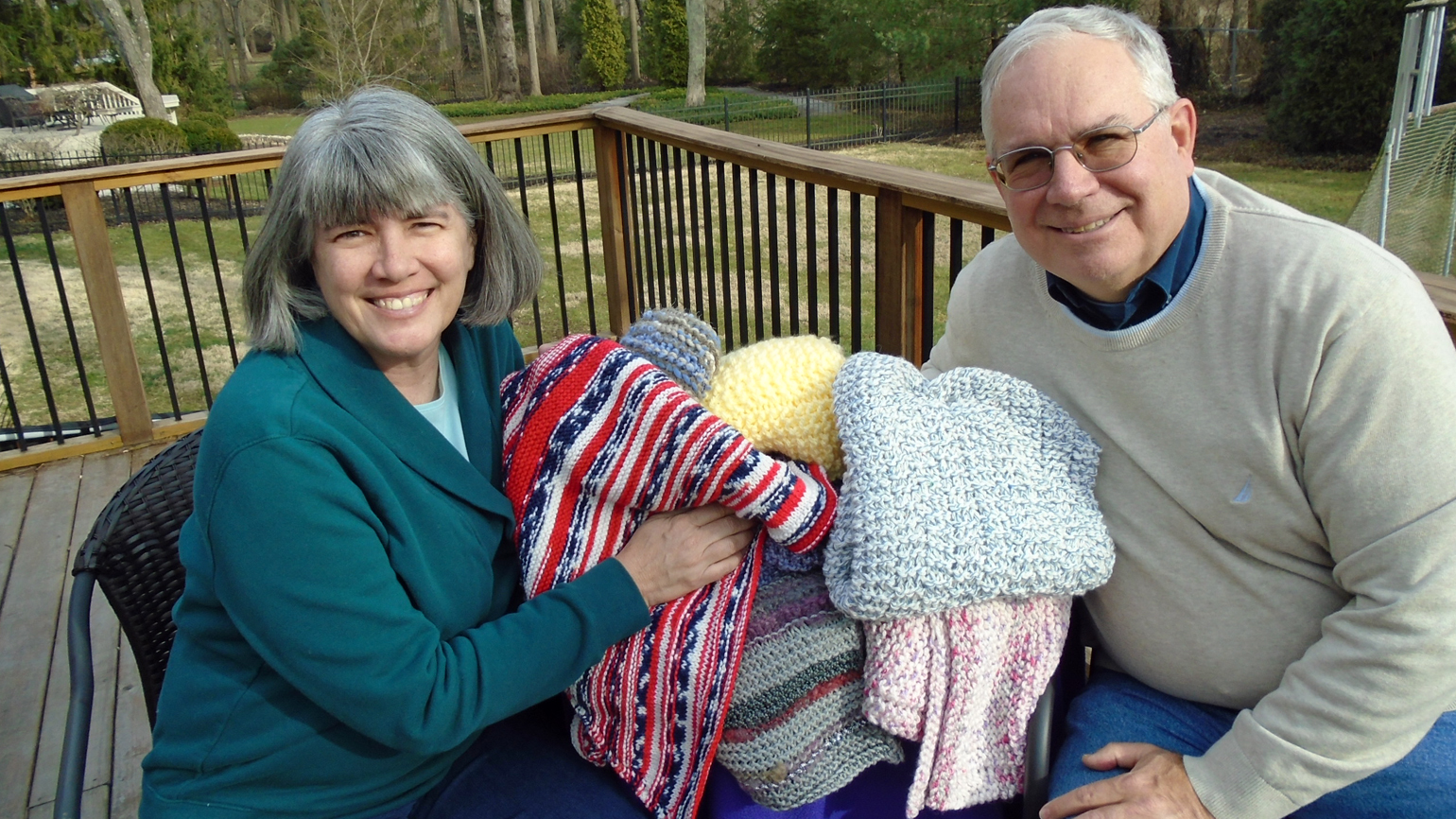
Robin Lambert has knit an astonishing number of prayer shawls in the last two decades. “I’d say that I’m in the 2,500-plus range at this point,” she says. “Nowadays I make about three shawls every two weeks.”

There’s no vacation from knitting for Robin. She works on the shawls in the car, after dinner, on vacation cruises—pretty much anywhere. But she stays motivated by her mission. Along with her husband Vince, Robin runs Prayer Shawls 4 Fallen Soldiers, a national ministry that matches volunteer knitters with families grieving the loss of a loved one in the military. The knitters (and sometimes crocheters) craft a custom shawl, pray over it during the entire process, write a personal note and then ensure that it is delivered to those in need.

“The shawl offers comfort and support and also reminds the family that their sacrifice is acknowledged and appreciated,” says Robin.

Originally started by Cozette Haggerty in 2006, while her daughter was serving in Iraq, the group has delivered an estimated 8,352 shawls to almost every state in the country. The Alabama-based Lamberts, who took over operations in 2014, are constantly updating the database of volunteers, who currently number about 250. “About 50 percent are church groups and the others are individuals,” she says.

This ministry follows the model set by Janet Severi Bristow and Victoria Galo, two graduates of the 1997 Women’s Leadership Institute at the Hartford Seminary in Connecticut. In the past 21 years, these two powerhouses have helped hundreds of prayer shawl ministries spring up around the country. In addition, they maintain a robust website with patterns, prayers and many other resources.

The Lamberts maintain a website with basic information about the military-focused program, including a link for people to request shawls. “Still, finding the families and offering them the shawls usually requires a little detective work,” says Robin. “We get the Pentagon’s casualty list for the Army and then we can try to trace a soldier to a geographic area; then we find the funeral home and send them a fax letting them know we will make a shawl for the family. Or sometimes we read a blurb in a newspaper and that will give us a hint on how to track down the family.”

The ministry also provides shawls to the Friends of the Fallen, a volunteer group that attends the “dignified transfer” of deceased military service members at Delaware’s Dover Air Force Base. “These volunteers tell us that the families are so grateful,” says Robin. “They love that it is a handmade gift by an American who cares about them and their family.

Family members sometimes make specific requests. “One year orange was the hot color or maybe somebody wants blue for their son’s eyes,” says Robin. “Others are feeling patriotic and want camouflage or red,white and blue. We pass along all requests, but we can’t promise anything.”

Usually, though, the volunteers will do everything they can to accommodate the hurting loved ones. “They may shop for two weeks to get the right yarn. One church group in Alabama made one in black and gold, the Army’s colors, for a grieving mother. Now, they keep a few shawls in the colors of all the service branches. They think it is important to have them on hand.”

One of the most elaborate prayer shawl is likely the crochet Gold Star shawl; the pattern was developed by a nurse volunteer in Illinois. “There’s a lot of detailed work to get the star just right in the middle and the red border just perfect. She says it takes her three months to complete one.”

The Lamberts volunteer for a variety of different causes. “But the prayer shawls are the only thing we’ve ever done where the recipients want to receive the shawls and the knitters want to make them. You don’t have to beg anybody. It is so cool to be a part of this ministry.”

Robin adds that the volunteers also seem to think the hard work is worth it. “First of all, we get beautiful thank you letters,” says Robin. “A grandmother in Illinois wrote: ‘The shawl remains on the back of my couch and I do find comfort in it.’ Recently, a mother called and left a message. She said that she has not slept since she lost her son, but now that she has her shawl, she wraps herself up in it and can finally sleep through the night.”

To learn how you can become a volunteer or to request a Prayer Shawl for the family or loved one of a fallen soldier, please visit https://ps4fs.org.

The Gold Star Prayer Shawl, designed by Cheryl Scallon of Tinley Park, Il., is often given to families of fallen soldiers at Delaware’s Dover Air Force Base.

Prayers for an Elderly Mom

My 92-year-old mom has had a good life. She still lives at home. She has a caregiver who comes in several days a week and looks after her—the way Mom looked after us over the years. She does the crossword puzzle. She reads books. And she’s surrounded by family.

Things aren’t perfect. She’s got a hip that gives her a lot of pain and a bad shoulder too. She doesn’t play tennis anymore, and she doesn’t play much bridge. Sometimes she’ll mutter, “Oh Lordy, Lordy, Lordy,” when something hurts. But she doesn’t complain.

God blessed her with a sunny temperament, and it has served her well. She’s also very unsentimental. We were talking the other day about death–hardly a month goes by when she doesn’t hear about some good friend who has passed on.

“I’m not afraid of death,” she says. That’s the sort of thing you would expect from a woman who taught Sunday school for more than a few years. But she doesn’t like the idea of lingering in bad health for a long while. I could see the concern in her eyes.

I suddenly remembered something the wife of the minister who baptized me said years ago. At that time she was well into her eighties and spry, but a realist too, like my mom.

“I pray for a direct flight,” she said.

I told Mom the story and then added, “That’s what I can do for you, Mom. I can pray that whenever the time comes, you, too, should have a direct flight.”

“That sounds just right,” she said.

No one knows what the future holds, at least no one here on earth and the idea of life without Mom is inconceivable, but indeed I pray that when the time comes, may it be a direct flight.

In the meanwhile, she does pretty well on those crossword puzzles.

A Ray of Hope for a Military Mom

I’m a rainy-day sort of girl. I love sitting inside or even on a porch, watching the life-giving rain pour down. But one year, even I was sick and tired of a series of gray, wet days. Our son was stationed eight hours away from home, and it seemed like every other leave was cancelled for some reason or another.

I had out my Bible, but I wasn’t finding the words comforting. I didn’t want to read about God, I wanted Him to show up. I wanted Him to break through and show up in a big way.

Read More: Giving Veterans a Reason to Smile

The rain slackened and quit, so I moved to the back porch—sick and tired of being stuck inside. As I sat there, the clouds parted and a perfect shaft of sunlight poured through, bathing me in golden warmth. Perched in that glow, I felt like God had parted the clouds just for me.

I was reminded that He’s still here, no matter how the storms of life rage around me. That ray of sunlight melted my discouragement and replaced it with hope. I would see my son soon, and in the meantime, God was still God, and He was taking care of us both.
The postscript to this story is later that afternoon our son showed up with an unexpected few days off. God does hear the cries of our hearts and is there when we need Him.

A Husband’s Healing Prayer

I watched my wife, Rebecca, open her gift that Christmas. She dug through the tissue paper and uncovered the small sign lying inside the box. She picked it up and read the words aloud: “Prayer changes things.” She looked at me and I nodded. “Let’s hope it does,” I replied. I was a minister. I was all about prayer. Never, though, had I been tested like this.

That past spring Rebecca had gotten sick. Just the flu, we’d thought. She’d be back to her old self in a week or so. Instead, she just got worse. This was more than just the flu. But the doctors couldn’t nail it down. Her symptoms kept changing. Dizziness. Nausea. And headaches. Terrible headaches. Then the headaches disappeared, only to be replaced by muscle and joint pain.

Worst of all were the days I’d see her sitting with a vacant stare. Rebecca called it a “brain fog.” She forgot simple things and couldn’t think clearly. She became chronically exhausted. Eventually she had to quit her job. I knew the doctors were trying, but I couldn’t help feeling frustrated. Why couldn’t they help her?

Finally one ventured a diagnosis. “I believe you have fibromyalgia,” he told her. “And possibly chronic fatigue syndrome along with it.” The pain, headaches, cognitive impairment, muscle and joint stiffness were all symptoms of fibromyalgia. “We’re not really sure what causes it,” he said. As for the chronic fatigue syndrome, that would explain her exhaustion. Neither condition was usually fatal but there was no known cure.

Except prayer, maybe, I thought. That’s why Rebecca got the sign for Christmas. When the weather warmed, I planted it in our garden. Every time we left the house, every time we pulled into the driveway, we were greeted with that message of hope.

Not that I needed the reminder; I’d been praying like crazy for my wife ever since she first got sick. But sometimes my prayers sounded empty and desperate. I said the same things over and over and got the same results as if I were praying to a void.

And Rebecca got worse. I took a leave of absence from my job. Now I could clean, grocery shop, do laundry. “I wish I could help,” she told me, “but I’m just not up to it. I feel like every bit of strength I have is slipping away.”

Just like my faith, I thought. I tried to shove that out of my mind. What was a minister without faith? And yet when I would see that sign in the garden, promising me that prayer would work wonders, I felt betrayed. The more I prayed, the worse Rebecca got.

For 13 frustrating years the situation went on. I took a job as an account manager for an insurance company. We needed the income, and it was less demanding than being a pastor. I have to admit that the work was a welcome break. But every night on the drive home, a cloud would come over me. I knew what was waiting. Rebecca would be in bed or lying on the sofa. “Been there all day?” I’d ask. She’d nod.

Some days were a little better than others. But on those rare occasions, she would often overextend herself. She’d do a load of laundry or try to vacuum and feel like she’d been run over by a truck. And that’s how I felt inside. Run over. Crushed. Frustrated. Powerless.

One day I let all my feelings show, for the first time telling Rebecca of the despair that was eating away at me. “I’ll get better,” she said. “I will! We just need to keep hope alive, to keep faith alive.”

The words were like a knife in my heart. I’d been hoping. I’d been praying. So hard. For years now. Only to be met with stony silence in response. “Why?” I asked her. “Hope hurts.”

This was not the woman I married. Why was God taking her away? Rebecca became completely bedridden. She couldn’t speak in more than a whisper. She could barely lift a fork. Soon she would be on a feeding tube.

One day while driving home from work I thought about what was ahead. I’d have to feed Rebecca, wash her, change her clothes and bedding. There wouldn’t be any “How was your day?” conversation. I knew how her day had gone. She’d spent all day in bed. And in that room I felt more like a nurse than a husband.

I pulled into the drive. There it was, that sign from so many years ago: “Prayer changes things.” I stopped and put the car into park. I hadn’t even noticed that sign in a long, long time. I opened the door, got out and stomped into the garden. I bent over and yanked the sign out of the ground and tossed it into the bushes.

I went inside and up to the bedroom. “Rebecca,” I told her, “I don’t know if I can take it anymore. I don’t know what to do. I don’t trust God anymore. If I don’t believe God can help you, what do I believe?” I slumped down on the edge of the bed and looked into my wife’s eyes.

All day, I thought, all day she lies here and waits for me to come home. And all I have to offer is my own pain. “I’m sorry, Rebecca,” I whispered, laying my head on her chest. I can only imagine the effort it took for her to raise her hand and stroke my cheek.

We talked things out that night and came to the conclusion that I should find a full-time home health aide for Rebecca. I hated to admit it, but I could no longer care for my wife.

At least I had more time now. I went to church, and to a Bible study group. I don’t know, maybe I was just going through the motions. I wanted to believe. To feel that deep down inside there was a part of me that still wanted to hope. No matter how much it hurt.

One night our group was studying the Book of Job. “Let’s do a little role-playing,” the leader said. “Randall, why don’t you be Job?”

I started slowly, reciting the litany of what Job had lost: house, servants, camels, sheep, crops, children. Everything destroyed or killed. As I went on, something took over in me. I clenched my fists and stood. “What are you doing to us, Lord?” I wanted to scream and shout. “What have we done to deserve this? Who are you to punish us?”

It may have been just role-playing, but to me the rage was real. It burned like a fire in my heart. Yes, I was angry, but angry at a God I still believed in.

In 1999 a ministry colleague invited me back on staff, part-time, which was good because I’d just been downsized out of my job at the insurance company. I took him up on the offer. I might as well get on with my life. After all, my wife was only going to get worse and worse, until…

One day when I went to the bedroom to check on Rebecca, she motioned for me to lean in close. “I don’t know if I’m going to make it,” she whispered. “Sometimes I don’t know whether to tell you hello or goodbye.”

I felt my face flush with shame. Shame at what I’d been thinking, shame that someone with so little strength was strong enough to face death. I was the weak one. I couldn’t accept Rebecca’s death. I squeezed her hand. “All through this, you’ve made me feel loved,” she said. “You suffered because you love me.”

Lord, I prayed in confusion, do I deserve any of this, the good or the bad?

In February, our home health aide called me. “I went to wake Rebecca,” she blurted out, “but she wouldn’t move. She’s breathing, but unresponsive!” I phoned the doctor. “Monitor her for the rest of the day and through the night. If she’s still in this state tomorrow morning, or if she gets worse, get her to the ER.”

Was this how it would all end? Suddenly, in my mind’s eye I saw the sign I’d once planted in the garden. “Prayer changes things.”

Lord, this is the last time I’m going to ask you to heal my wife. If it’s not to be, well, then that’s your will. Help me please to accept it. I will do anything you ask. The only thing I know anymore is that I can’t change things myself.

I fell into a fitful sleep. When I woke, I heard a voice. “Take her to the hospital,” the voice said. “Trust me. She will eat again, and she will be healed. Take her now. Trust me.” You might say that it was my imagination, or a dream, but I know it wasn’t. I heard that voice. I’d never been so sure of anything in my life.

I went to check on Rebecca. Her eyes were rolled back and her arms flailed. I called 911. The ambulance rushed her to the hospital. “She’s in a coma,” the doctor told me after examining her. For three agonizing days I sat by her bed, remembering that voice and trusting in its promise.

The third night—it was February 11, 2005—I heard a rustling of sheets. I looked up. Rebecca was moving! Her eyes opened. She turned her head toward me. She opened her mouth, and I heard her strong, even voice, something I hadn’t heard in years. “I’m hungry,” she said. I jumped up out of my seat, not knowing whether to laugh or cry, and threw my arms around her.

Within a few weeks she was back on solid food—bread, vegetables, meat, all the things she’d gone so long without. There’d been no change in treatment, no new medication, nothing different. She simply started getting better, her body repairing itself with each passing day. The doctors tried to explain it. I didn’t.

Before long Rebecca was back on her feet walking short distances. I walked with her every morning, our hands intertwined, the intimacy returning, deeper and fuller than ever. Soon we were walking a mile, then two. One beautiful spring day we were walking up the drive. I stopped and went to get that old sign. I wiped it off and pushed it into the soft earth. “Prayer changes things.”

Yes. Yes, it does.

Did you enjoy this story? Subscribe to Guideposts magazine.

7 Prayers for Mom

I asked the moms among my friends on Facebook, “Imagine you were to overhear your child praying for you. What would you most love to hear him or her praying?”

I thought their answers might offer some helpful ways to pray for Mom this Mother’s Day weekend. And I was right. Judging from their answers, here are seven great ways to pray for your mom:

1. To be an example
My friend Debbie, whose children are grown, says she would still most like their prayers for her “to be a godly example to others as I draw closer to Him each day.”

2. For patience
My friend Cindy says she’d like to hear, “Please God, give Mom patience. She loves us, but we sometimes drive her a little bonkers.”

3. Grace in the mess
My niece, Elissa, said she’d like prayer “that I would know they love me even when I feel like I’m messing up.”

Read More: Inspiring Mothers of the Bible

4. Wisdom, strength and joy
Robin, a writer friend, showed her writing chops in her answer. She said she covets a prayer like this: “Lord, give her the wisdom to know what You want her to do, the strength to do it and joy in her journey.”

5. Rest
My friend Sonya replied to my hypothetical scenario: “This actually happened to me. Sawyer was asked in Sunday school to write out his biggest prayer. He wrote,

‘God thank you for my mommy and please give her some rest.’”

Sonya isn’t the only mom who needs a break, a nap, or a little R&R. My friend Jenn said her daughter sometimes prays, “Dear God, please help the baby sleep through the night tonight,” adding, “Seriously, when she prays this, that baby always sleeps perfectly! When I pray it, God teaches me perseverance instead.”

6. To love God
Another writer friend, Crystal, says “probably the thing I wish for most is prayer that I would love God with all my heart, soul, and mind, like Jesus said in Matthew 22:37.”

7. To grow in Christ-likeness
Many of my friends, such as Connie and Jeanette, said they’d like their children to pray for them to become more like Jesus.

Several, of course, cited more specific requests they would like their children to make on their behalf—for healing or freedom from worry. The list could go on. But the seven prayers above would make a great start, and part of a fine Mother’s Day gift for anyone.

6 Prayers for a New Grandchild

Our first grandchild was born this summer, Silas Hamlin. What a delight. Even better: he only lives half a block away. We are close at hand to lend a hand. And then to bring him home to his loving parents when he’s done with us.

As I was holding him in my arms the other evening, I thought to myself, “What prayers could this child use? What are my deepest wishes for him?”

Rick and his grandson SilasMay he always know he’s loved. I pray he grows up knowing and feeling so loved that he takes it for granted, as I did. You don’t even wonder about it—not until you’re all grown up and then you look back and say, “Wow, what a gift that was.” The gift that helps us understand and accept God’s enduring love.

Give this child endless curiosity. At just a couple of months I can see it already. The way Silas gazes up at sky when he’s in his stroller, the peering look he gives his parents, an exploring finger wrapped around one of my fingers. May that curiosity serve him well as he discovers the wonders of God’s world.

Guide this grandchild through the best of friends. He’s got wonderful parents who will teach him much and have already established a happy household, but there comes a time when any kid looks to his peers for models of behavior—especially in their teen years. Great friends with good values keep them on the right track (how true that was for his father, our son Tim). Bring the right friends into Silas’s life.

Uphold this child in a faith community. We couldn’t have raised our own children without the help of our church, with other parents teaching Sunday school, with a family togetherness every Sunday morning, with worship and praise and Bible readings. Sometimes on a Sunday, I’d see them fidgeting in church and think, “They haven’t heard a word.” And then to my surprise, they’d ask a question inspired by a sermon that I thought went right over their heads. You can’t really second-guess God.

Help me be the grandparent my grandchild needs. I’m in complete awe—and much humbled—when I think of all that my parents did as grandparents. The trips they took each grandchild on, the gifts they gave at Christmas and birthdays, the listening ear they always offered. Help me be as generous and kind as they always were. No wonder our children always ran into their open arms.

Let Silas know hope. As Carl Sandburg once said, and others have said, “A baby is God’s opinion that the world should go on.” It’s easy to become discouraged at some of the dire news in the world and the pessimistic hopes for the future. But to believe in God is to believe in hope. To live by it. Silas, my hopes are always with you. Amen.

Prayer Power: Never Be Bored Again

The line at the pharmacy window snaked around the corner. I groaned. I pulled out my smartphone, thinking I could check my emails, but there was no reception. I groaned again.

My wife and I needed some prescriptions filled before a trip, and we were already running late. (She was in the car, which was all packed.) I settled in for a long wait. Fortunately, I have a strategy for such times: I pray.

Many people think prayer is boring. I used to think so myself. But I’ve come to realize that prayer can actually be an antidote to boredom. In fact, prayer makes it possible for us to never be bored again. Try this three-pronged strategy:

Pray for those you love

The prescriptions were for my wife, who had recently suffered a severe injury. So I prayed for her—for healing, pain relief, comfort and more. Next I prayed for my children and their spouses, then for my five grandchildren. I continued, naming my siblings, siblings-in-law and their families before mentioning the needs I knew of for my church family and my friends. I prayed the blessing of Aaron for all: “Bless them and keep them; make your face shine on them and be gracious to them; turn your face toward them and give them peace” (based on Numbers 6:24–26 NIV).

Give thanks for the good things surrounding you

By that point, I’d made my way to the front of the line. The prescriptions weren’t ready. More waiting. I proceeded to the next step in my anti-boredom strategy: offering gratitude. I gave thanks for the medicines I was waiting for as well as for the array of remedies on the pharmacy shelves, many of which weren’t available to previous generations. I gave thanks for the skilled people serving customers like me and for the air conditioning. (I live in the desert, and it was August!) I thanked God for health insurance. For electricity. I even thanked him for the many medicines I saw that I didn’t need, doing my best to “[give] thanks to God the Father for everything, in the name of our Lord Jesus Christ” (Ephesians 5:20 NIV).

Ask for everything you need

My wife and I had a long drive ahead, and we needed to keep an appointment at our destination. I wasn’t bored, but I wanted the wait to be over, so I prayed for that. I even looked at the pharmacists working to fill my wife’s prescriptions, asking God to hurry them along. I also prayed for safety on the road and a timely arrival, and for a few other things that came to mind. As often happens, I felt my peace and patience increasing as I followed the scriptural command: “Do not be anxious about anything, but in every situation, by prayer and petition, with thanksgiving, present your requests to God. And the peace of God, which transcends all understanding, will guard your hearts and your minds in Christ Jesus” (Philippians 4:6–7 NIV).

I soon heard a pharmacist call, “Hostetler.” I stepped to the register, paid for the prescriptions and headed to my car with a light heart. I might have suffered a little impatience, but I hadn’t been bored at all.

For more inspiring stories, subscribe to Guideposts magazine.

What Prayer Can Do: Our Viewfinder

In 2011, I was in the Air Force, serving my fifth deployment in Afghanistan. I was the navigator on a crew that was flying reconnaissance missions, using radar and cameras to record the locations of roadside bombs and improvised explosive devices. We flew above the main transportation routes that our supply trucks used. After we’d pinpointed the locations of bombs, they could be detonated safely.

One week that fall, a cyclone (what we’d call a hurricane back home) created a thick cloud cover over the whole country. The conditions created a huge problem for us. Although our radar could penetrate the clouds, our cameras could not. Without that footage, how helpful could we be to troops on the ground?

The copilot and I prayed together before our flight took off.

“God, will you part the clouds for us?” I asked. “The way you did the Red Sea in the Bible?”

Our C-130 flew toward the area we were supposed to record. Visibility hovered near zero because of all the clouds. Maybe it will get better closer to the target, I thought. But 10 seconds away, I could still barely see the ground below us, much less any explosive devices hidden in culverts or buried in the dirt.

Soon the plane was directly above our target area. We would have to make do with whatever the camera could somehow detect through the cloud cover. That hardly seemed enough when there were lives at stake.

We turned on the camera. Right before our eyes, the clouds began to part, like curtains being pulled back to reveal the exact spot we needed to see.

“God’s doing it,” the copilot murmured.

That’s what it felt like. Over and over on that recon flight, the clouds would part at just the right moment for us to capture the images we needed.

Our crew located more bombs that day than we ever had before in a single mission. The analysts on the ground couldn’t believe the footage we’d recorded.

The copilot and I made sure to tell them who was really responsible.

For more inspiring stories, subscribe to Guideposts magazine.

Prayer Power: The Garden of Prayer

It’s that time of year again—when people of all ages set up their window boxes and tramp out to their gardens. They turn the soil, poke a seed into the hole and cover it up. They water. They wait. They weed. All for the anticipated delight of a shoot, then a stalk, next a leaf and a bloom. Beauty bursts forth from the hum­blest of efforts, bringing nourishing vegetables and fragrant flowers.

How delightful. And how like another process: prayer.

Jesus put it like this: “When you pray, go into your room, close the door and pray to your Father, who is unseen. Then your Father, who sees what is done in secret, will reward you” (Matthew 6:6 NIV). With each step, Jesus sends his fol­lowers farther and deeper into solitude— much like the farmers and gardeners who till the earth, turning over the soil before burying a seed: Go. Enter your room. Shut the door. Pray.

When we pray, we push into secret, sometimes dark, places. We plant our prayers in hope, trusting in a myste­rious process, much of which passes unseen—by us, at least.

Our Father sees all, however, and he decides the day, hour, minute and moment when beauty will at last blossom forth and a garden of delights will grace the once-barren places we have planted.

Jesus did not suggest that we should never pray with others. He did not prohibit public prayers or group prayers. After all, he promised his followers that “if two of you on earth agree about anything they ask for, it will be done for them by my Father in heaven” (Matthew 18:19 NIV).

But Jesus contrasted sincere, private prayer with prayer that’s offered to impress or show off, and he pre­scribed secret prayer for the rewards it brings. He said, “Your Father, who sees what is done in secret, will reward you.”

Notice what Jesus didn’t say: “Maybe your Father will reward you.” He said, “Your Father…will reward you.” And your reward won’t be mere ego strokes or a round of applause. Your reward will come from the Father—from his bounty, creativity, wisdom and love.

Andrew Murray, author of the classic With Christ in the School of Prayer, wrote: “Jesus assures us that secret prayer cannot be fruitless: Its blessing will show itself in our life. We have but in secret, alone with God, to entrust our life before men to him; he will reward us openly; he will see to it that the answer to prayer be made manifest in his blessing upon us…. Trust him for it; depend upon him: Prayer to the Father cannot be vain; he will reward you openly.”

Jesus’ own life displayed the ample fruits of private prayer. His victory over temptation, the multiplying of the loaves and fishes, his healing of lepers and casting out of demons, his walking on water and raising of the dead all flowed from Jesus’ life of private prayer.

These are the scale and scope of the beautiful rewards that our Father, who sees what we plant in secret— even in darkness—will cause to spring up in our lives, like radiant blossoms in a sunlit garden.

For more inspiring stories, subscribe to Guideposts magazine.

How to Let God Fill Up Your Spiritual Tank

One New Year’s Day during the Tournament of Roses parade, a beautiful float suddenly sputtered and quit. Out of gas. The whole parade was held up. Who did the float belong to? The Standard Oil Company. Even with vast oil resources, its truck ran out of fuel that day.

It’s the same for us. Though we have access to God’s power, we don’t always avail ourselves of it, and we run out of gas. One way to refuel is to take time to be alone with Him in prayer.

But competing for our time is work, family, children, relationships. Even errands and housework. And how about social media? In a recent article on uswitch.com, a study showed the average adult spent an average of three hours a day on social media in 2020—up from 90 minutes a day in 2012. And Americans spend 58 minutes a day on Facebook—325 hours a year!

Reading these numbers put things into perspective for me. Unless we deliberately set time aside to share our thoughts, concerns and prayers with God, it might not happen. And if it does, it’s often sporadic or in times of need.

Prayer is about connecting to our Creator, the reason for our existence. We can glean from His presence the path to take. We can be guided by His light in times of darkness. Prayer fills us with love. It teaches us to love as God loves us, to serve in the spirit of Jesus and to endure in times of troubles. 

Author C.S. Lewis wrote, “God designed the human machine to run on Himself. He Himself is the fuel our spirits were designed to burn, or the food our spirit were designed to feed on. There is no other.”

In this fast-paced world, we all need time by ourselves to think, reflect, rest and replenish. But time alone with God is the foundation for our spiritual development and source of strength.

Author Henri Nouwen wrote, “Solitude begins with a time and place for God, and Him alone. If we really believe not only that God exists, but that He is actively present in our lives—healing, teaching and guiding—we need to set aside a time and space to give Him our undivided attention.”

When we make time and give Him that undivided attention, as author A.W. Tozer noted, “the surrounding noises begin to fade out of your heart . . . until a sense of God’s presence has enveloped you.”

Hospitals as Holy Places—Prayers and the Process of Healing

In the last two weeks I have received more prayers than I could possibly count. I’m grateful for that. And yet, I forget them all at the same time.

Quick update: I am still in the hospital, feeling MUCH better. Off the supplemental oxygen, finished with the antibiotics, declaring near-victory over a massive lung infection. With delight I update friends and loved ones through texts, emails, phone calls.

I just noticed something though. When people ask how I am, I praise the doctors, nurses, the excellent care at the hospital, the meds. I forget to credit all those prayers.

It made me reflect on what Paul says in the Bible, “Give thanks in all circumstances; for this is God’s will for you in Christ Jesus” (I Thessalonians 5:18). Yes, give thanks. Even when you’re fighting for your life in a hospital. But don’t forget how the Healer works.

Every prayer being said is like a cleansing spray, a shot in the arm, a new pill, a purging through the IV. God works through our prayers, just as much as God works through the nurses, doctors, techs and aids.

Frankly though, I get a little embarrassed when I consider all those people praying for me, pausing to think of me, remembering me, placing me in front of God, praising God for me. It’s hard to take in and completely humbling.

And that’s right. When we meet our Maker with humility we are in a good, creative, welcome place. How should we respond? There’s only one choice: With gratitude deep at our core. Gratitude to be—at least for this moment—the center of someone’s attention. We’re never not at the center of God’s.

There is healing power in thanksgiving. A spiritual corrective for that false sense of self that wants to hide from the love and the compassion and the caring the world is offering. To give thanks is to open yourself up to receive. With open arms. To know how much you matter…to God. And to others.

The other night as the nurse was fretting around my bed, helping me feel comfortable, getting me something I couldn’t reach, it dawned on me that she is one of God’s angels. No wings, no halo. But she—and so many others like her—is a vessel of the divine.

Hospitals are holy places. You don’t necessarily want to go to one. You don’t want to be so sick you need one. But when you’re there, you’re part of the huge heavenly process of healing.

I give thanks for that. And for every prayer said for me. Thanks.

Guideposts Classics: Eddie Rickenbacker on Helping Others

There are a lot of things concerning the human mind and soul that we don’t know much about. We get glimpses of them when in times of danger or suffering we cross a little way over the line of ordinary thought.

As I roared down the last stretch in an automobile race years ago, I felt that I could control that machine with my mind, that I could hold it together with my mind, and that, if it finally collapsed, I could run it with my mind.

If I had said such a thing then, the boys would have called me crazy. Even now I can’t explain it. But I believe that if you think disaster you will get it. Brood about death, and you hasten your demise. Think with confidence and faith, and life becomes more secure, more fraught with action, richer in achievement.

Perhaps such things as the control of mind over matter and the transmission of thought waves are tied up together, part of something so big we haven’t grasped it yet. It’s part of us and part of the Something that is looking after us.

It’s one of the things that makes me believe in personal protection and in life after death. I have difficulty putting it into words.

A strange thing happened to me some years ago. I was flying to Chicago. It was a Sunday afternoon in the middle of December, and the weather was miserable. There was a lot of ice. We suddenly lost the radio beam.

For a long time we cruised back and forth trying to pick it up. Fog was all around us. We were lost, off the beam, and flying blind. Our two-way radio went out, and we had lost all communication with the world. For seven hours we flew—where, we didn’t know.

Darkness was coming on. Then, suddenly, we saw a break in the murk. The pilot brought the ship down to within one hundred feet, and we saw lights go flashing by on a four-lane highway. We followed it for some distance.

Then we saw a red glow away off to the right, headed for it, and saw a river gleaming. We flew up that river, and out of the six-thirty dusk of winter I saw the Toledo-Edison sign flashing. Skimming the roofs, we circled and landed at the airport. We had just enough gas left for 11 minutes of flight.

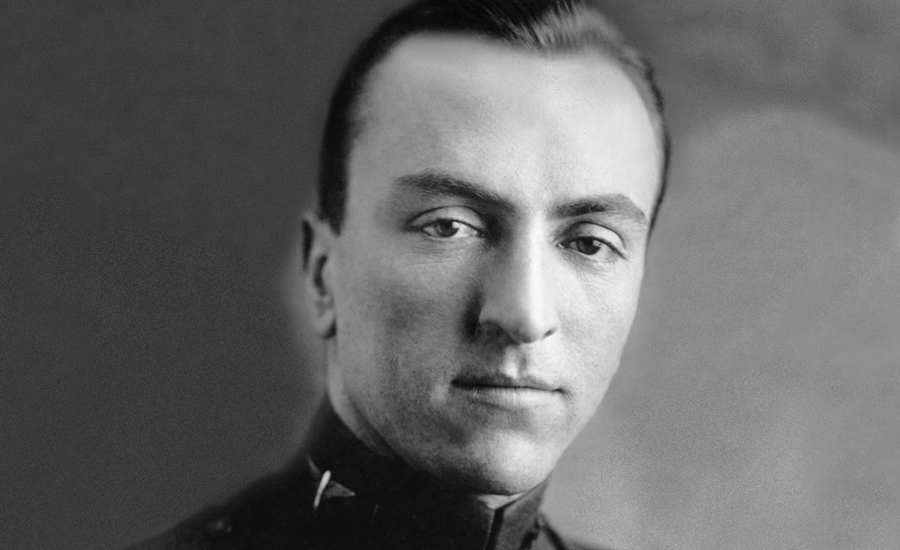
Eddie Rickenbacker
      As seen in the inaugural
issue of
Guideposts,
November 1945

We had flown blind, without a beam, but we were on a beam, just the same. I like to think it was the “Big Radio” that kept us going—the Thing that keeps all of us flying safely through the fog and night, toward some mysterious and important goal.

The “Big Radio” is a two-way job. You’ve got to keep tuned with It, and you have to talk back. I believe in prayer. I learned to pray as a kid at my mother’s knee.

One day in France, during World War I, with only one magneto on my Newport biplane functioning, I was attacked by three German Albatross planes. I came out of a dive so fast that the terrific pressure collapsed my right-hand upper wing. No matter what I tried, I couldn’t come out of that whirl of death.

I often wish I could think as fast under normal conditions as I did during that drop. While I fought the controls and tried to get the engine going, I prayed: “Oh, God,” I said, “help me get out of this.”

As a last desperate act, I threw my weight to the left-hand side over the cockpit and jammed the controls, then jammed the engine wide open. The thing suddenly sputtered and vibrated violently, and the plane sailed away, on her one good wing, for France. I held it like that all the way home.

This escape and others I have had were not the result of any super-ability or super-knowledge on my part. I wouldn’t be alive if I had to depend on that. I realized then, as I headed for France on one wing, that there had to be Something else.

I had seen others die—brighter and more able than I. I knew there was a Power. I believe in calling upon It for help.

I am not such an egotist as to believe that God has spared me because I am I. I believe there is work for me to do and I am spared to do it, just as you are. If I die tomorrow, I do not fear the prospect at all.

On a rainy night in February, 1941, I had the worst accident of my life. As I look back on the agonizing days in the hospital that followed I realize there was a reason behind it all. It was a test and a preparation for what was to follow.

In the four months I lay in that hospital I did more thinking about life and death than I had ever done before. Twenty-one months later I was adrift in an open lifeboat with seven other starving men, most of them so young they needed the strength and understanding of a man who had been down in the valley of the shadow, who had suffered and made sense out of his suffering.

To those men I was able to bring the distilled essence of the religious philosophy I had developed while in the hospital.

Once while there I almost died from a throat hemorrhage.

“Here,” I said, “is death.”

Then it dawned upon me in a flash that the easiest thing in the world is to die; the hardest is to live. Dying was a sensuous pleasure; living was a grim task. In that moment I chose to live. I knew from experience that abandonment to death was a sin. I wasn’t quitting. I had work to do, others to serve.

Many things came to me. I realized I wasn’t afraid to die, because I had lived so much, in good ways and bad, that I no longer felt the youthful pang of not having lived at all. I knew only the sorrow of being unable any more to help other people.

And when I finally came around, I saw life and death and the meaning of the Golden Rule more clearly than I had ever known.

I had taken that clarity with me to the rubber raft in the South Pacific after our plane crashed. Throughout those 21 days of blistering sun and nights of ghastly chill, I never lost faith, and I felt that we were adrift for a purpose. I saw life had no meaning except in terms of helping others.

I think man instinctively does not interest himself in others. He does it only by an act of will, when he sees that “I am my brother’s keeper” and “Do unto others” are the essence of all truth.

My experiences and the suffering through which I passed have taught me that faith in God is the answer to life.

For more inspiring stories, subscribe to Guideposts magazine.