Embrace God's truth with our new book, The Lies that Bind

Workshop Blues?

I’ve had a very lonely week around here but I’ll get to that in a minute. First, tell me the truth: Have you ever dreamed of writing your own inspirational story and getting it published in GUIDEPOSTS? I know the answer is yes because people tell me all the time that they have a great GUIDEPOSTS story. Which is true. I think everyone has a GUIDEPOSTS story somewhere in his or her life.

On that theory we run a writers workshop contest every other year where we pick 15 people out of thousands of readers who enter to come for a week to a funky old mansion on the Long Island Sound in Rye, New York, and teach them everything we know about good inspirational storytelling and writing for GUIDEPOSTS.

Those that take to the process become part of our workshopper network, our eyes and ears around the country. If it weren’t for workshoppers tracking down stories for us month after month, we’d have a hard time publishing the magazine. And through the years we’ve even discovered a few notable writers: Sue Monk Kidd was a workshopper as was Marion Bond West and Jamie Buckingham.

So why am I lonely? This is the workshop week and most of the editors are up at Wainwright House in Rye, teaching the workshop—Rick, Amy, Colleen, Jim and others. I’m here in the office holding down the fort, so it’s been very quiet (generally I like company when I’m holding down forts) and I’ve been thinking about my own experience as a workshopper way back when.

Every editor who comes to GUIDEPOSTS is required to attend the workshop in order to be fully schooled in our approach to inspirational stories. It was my first week on the job, actually, a remarkably immersive week of learning before I even settled into my office, and I found myself both incredibly excited and at the same time wondering what I’d gotten myself into. But the intense amount of attention that was focused on the process of writing was amazing.

As were the teachers and speakers—Van Varner, John and Elizabeth Sherrill, Dick Schneider, Marjorie Holmes, Mary Ann O’Roark, Marion Bond West, Sue Monk Kidd—even Norman and Ruth Peale, who joined us for dinner one night. Before my time there was Arthur Gordon, Len LeSourd, and Catherine Marshall, going all the way back to 1967 (I was barely in middle school then) and the first workshop.

It’s not just that the workshop teaches people how to be good writers; it hands down storytelling traditions that have been at the heart of GUIDEPOSTS since its very beginning nearly 63 years ago. It is our legacy, and so many blessed and gifted people have contributed to it. Every two years the workshop helps propagate that legacy.

By the way, John and Tib Sherrill are still the stars of the week. Or should I say co-stars, since every writer who comes is a star.

I started out saying everyone has a GUIDEPOSTS story. That includes you. Why wait another two years till the next workshop to tell it to us? You can submit a story today. Hey, I could use a little company this week.

Edward Grinnan is Editor-in-Chief and Vice President of GUIDEPOSTS Publications.

Words of Wisdom from Eleanor Roosevelt

Therefore, as God’s chosen people, holy and dearly loved, clothe yourselves with compassion, kindness, humility, gentleness and patience. (Colossians 3:12, NIV)

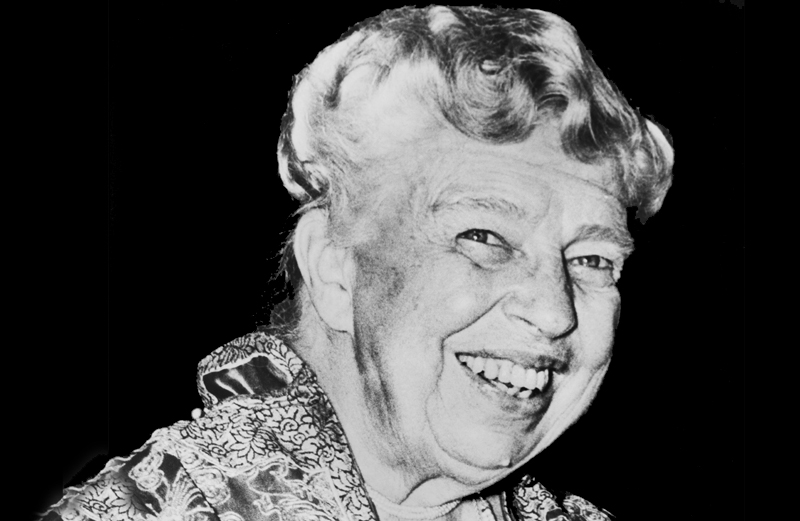
While researching for a book assignment about leadership, I spent several hours studying the life of Eleanor Roosevelt. Sure, I knew a bit about her from a history class in high school, but I had no idea just how amazing she was or how much her words would impact me.

It’s no wonder Eleanor Roosevelt has been called the most revered woman of her generation. She made a difference every place she ever dwelled. She not only gave birth to six children, but also served as a dynamic political helpmate to her husband Franklin Delano Roosevelt.

Eleanor Roosevelt literally transformed the role of First Lady, holding press conferences, traveling to all parts of the country, giving lectures and radio broadcasts and expressing her opinions in a daily syndicated newspaper column called, “My Day.” You might say, she was a spitfire, a woman on a mission, a servant to mankind, a loving wife and mother, and a role model for all women.

Knowing of her accomplishments, it was very interesting to discover Mrs. Roosevelt was a very shy, very plain and very awkward child. It wasn’t until she began attending a distinguished school in England that she developed self-confidence, realizing that her inner beauty and fortitude would make a way for her.

During that self-discovery phase, she wrote these words of wisdom: “…no matter how plain a woman may be if truth & loyalty are stamped upon her face, all will be attracted to her….”

If only we all understood that truth and actually believed it.

For years, society has told us that if we’re not beautiful–like the cover girls on magazines–then we will not be successful, and that we’ll never truly have a place in this world. Many women feel they don’t fit in simply because they don’t fit into a size 6 suit. Many of us have bought the lie, and some are still buying that lie.

In fact, just this week I noticed a new trend on Facebook called “The Beautiful Woman Challenge,” where someone challenges a friend to post five pictures that make her feel beautiful. Seems like an easy task, yet I’ve read comments from some who refuse to accept the challenge, such as one that absolutely broke my heart.

The woman wrote: “Sorry, I will not be participating in this challenge because I don’t feel beautiful in any photo.” Instead of posting a picture of herself on her wedding day, or when she was pregnant with her daughter, or at a family reunion surrounded by all of her loved ones, she chose to boycott the challenge because of “a lack of beauty.”

I so wanted to reach out to her and say, “You are beautiful. You are exactly who God created you to be. You are a wonderful wife and mother. You make a difference in your corner of the world.” I pray that maybe she’ll read this blog.

Ladies, it’s time we realize our worth, knowing that it’s not determined by a number on the bathroom scales or the amount of “likes” we receive on our new profile picture.

It’s time we focus on our assets and not our flaws. And, like Eleanor Roosevelt, it’s time we celebrate who we are, overcome our lack of confidence, and change our world.

It’s not what’s on the outside that makes us worthy, lovely and attractive. That kind of beauty is fleeting. It’s that loyalty, truth, and love on the inside that draws people to us. In other words, it’s the Jesus in us that makes us irresistible.

And, when we finally get to a place where we believe that we matter, that we’re valuable, that we’re beautiful in our own way, then we will be able to fulfill our divine destinies.

So, if you’re feeling plain, unworthy, unattractive and unnoticed–give yourself a makeover from the inside out. Ask God, the master makeover artist, to develop the fruits of the spirit within you, so that you might become so lovely on the inside that it spills out onto everyone you encounter.

Pretty soon, you’ll be confident and irresistible. And, like Eleanor Roosevelt, you’ll make a difference every place you go!

I leave you with this challenge. At least once every day, look at yourself in the mirror and boldly say, “You are beautiful. Girl, you glow from the inside out, and you are going to accomplish big things for God.”

Why You Shouldn’t Regret Missed Opportunities

When I look back over my life, I can see where I’ve missed out on some God-given opportunities. Maybe you are saying the same thing. If so, I want to encourage you: Don’t live in regret. Don’t let lost opportunities make you feel disappointed and discouraged. God is bigger than your lost opportunities. He can still get you where you need to go in life.

Have you ever used one of those GPS directional systems in your car? You set the location where you want to go, and the GPS calculates the best route. You can be driving along and get distracted and completely miss the street where the GPS instructed you to turn, but that doesn’t mean you’ll never reach your destination. That GPS system will instantly recalculate the route, based on your present location. God works in a similar way. He is constantly giving us direction, speaking to our hearts, leading us by granting peace or unrest in our spirit, but even when we miss His instructions—and we all do from time to time—He will recalculate our route and get us back where we need to be.

I love what the Apostle Paul said: “This one thing I do; forgetting those things which are behind, I reach forth to the things which are before me.” He was saying that we must turn our thoughts toward the present and future and keep looking for the new opportunities in our paths. Be prepared, because God is ready to fulfill the dreams and desires He’s placed within your heart. He loves to restore opportunities that once seemed lost forever. And sometimes He brings those opportunities back in ways we haven’t considered or weren’t looking for. It may not always be the way we thought; but if you’ll stay open, God will bless you beyond your wildest dreams.

One Christmas several years ago, I was longing to do something special for God. I began thinking of all the women in shelters and homes around the city and I felt a strong desire to make some Christmas baskets, filling them full of perfume and toiletries, and taking them to a women’s shelter. I was excited about my idea and I searched through the yellow pages to find a nearby shelter. When I dialed the number, a woman answered, and I immediately began sharing my heart, telling her what I wanted to do, and how I hoped to make the women at the shelter feel special. But rather than getting excited with me and giving me the information I needed, she began to grill me with questions. She said, “This is a private facility and the women need to remain anonymous.” Then she asked, “Have you been abused? Do you know somebody who has been abused? Do you need help, are you looking for help?”

“No,” I said. “I just want to brighten the day for some women.” She went on and on as though she hadn’t even heard me, apparently thinking that I was trying to disguise some abuse that I had suffered. Finally I ended the conversation and hung up the phone in frustration. I thought to myself, I’ll call back tomorrow and speak to someone else. But as life would have it, I became busy with family holiday projects, and before I knew it, the holidays were whizzing by and I had missed the opportunity.

A few days after the holidays had ended, I was praying when I thought about the Christmas baskets and the opportunity I had allowed to slip away. I told God that I felt I had lost my determination and had let those women down somehow. I asked Him to present another opportunity to me and I promised that this time I would see it through.

Several months went by, and then one day I received a telephone call from The Bridge, a women’s shelter in Houston similar to the one I had contacted. A woman named Jackie was on the other end of the phone line. “Hi, Victoria, I’m the director of The Bridge,” she told me, “and I attend Lakewood Church. I want to invite you to speak at my Women of Distinction Awards program. It’s a benefit for the women’s shelter.” She told me about the event and who would be there—city leaders, business leaders, and others. Clearly she was so happy and proud of this event. As she was speaking, I thought about those Christmas baskets I had wanted to make for the women’s shelter several months earlier, as well as the prayer. I was honored by her request, and I immediately said yes. When I hung up the phone, I thought, Oh, God, those Christmas baskets would have been so much easier! Couldn’t I have just started there? At the time I didn’t have experience speaking in front of large audiences. I had butterflies in my stomach just thinking about it! But, even though I was nervous about the speaking engagement, I felt this was the opportunity I had prayed for.

I worked so hard to prepare my presentation and rehearsed what I would say, practicing over and over in my mind. After the event, I felt I had done the best I could and I was happy about what I had accomplished and what I had experienced that day. Following my speech, I was elated when several of the attendees congratulated me, telling me how inspiring my talk had been to them. Later I was told that a professional athlete and his wife were so moved by my presentation that they made a large donation to the shelter. I was so encouraged.

It took faith and work, but it was marvelous to see how God brought back an opportunity I had missed.

I know God can do something similar for you. Everyone has missed opportunities to do something good, to help somebody, or even to go to the next level in our career. For one reason or another, we’ve allowed that opportunity to slip through our fingers. But let bygones be bygones; don’t get trapped in the past. Don’t allow yourself to focus on the things you’ve missed or could have done better. Allow Him to bring back any opportunities that you may have missed.

Joel’s sister, Lisa, and her husband, Kevin, tried for years to have children, but Lisa was not able to conceive. She went through all the fertility treatments and even several surgeries, but still no baby. Finally the doctor told Lisa there was nothing more he could do; they weren’t going to be able to have children. Lisa and Kevin were devastated. It looked like their dreams had died, but God always has a plan. One day out of the blue Lisa received a call from Nancy Alcorn of Mercy Ministries, a home for at-risk young women based in Nashville.

“Lisa, I normally wouldn’t do this,” Nancy said, “but we have a young woman who is about to give birth to twin girls, and we were wondering if you and Kevin might be interested in adopting them.”

Lisa and Kevin had not yet considered adoption since they were still hoping to have children naturally, but suddenly Lisa’s interest was piqued.

“There’s only one problem,” Nancy said. “I know you and Kevin have most of the qualifications that the birth mother wants for the adoptive parents, but she also has a stipulation that her babies should be placed in a family with twins in their background.”

Nancy had no idea that Kevin had a twin sister, and as soon as she said that, something inside Lisa’s heart confirmed this was a “God opportunity.” A few months later, Lisa and Kevin adopted those twin baby girls, and then three years later, they adopted another “Mercy” baby boy.

God gave Lisa and Kevin three children they could not have had naturally. Their hearts were open for what God wanted to do in their lives even though it wasn’t the way they first anticipated. God gave them another opportunity to be the parents they desired to be. They could have just as easily given up and closed their minds, but they didn’t. They remained open and God brought back that opportunity in a different way. Lisa will tell you, “These children came straight from my heart. I couldn’t have had better children!”

I believe God is saying to us today, “I can restore the years that you’ve lost.” Things may not have gone your way in the past and you think your dreams have died, but God has new opportunities in front of you. He wants the rest of your life to be better than ever.

Why She Talked About Her Father’s Past in the Miss America Pageant

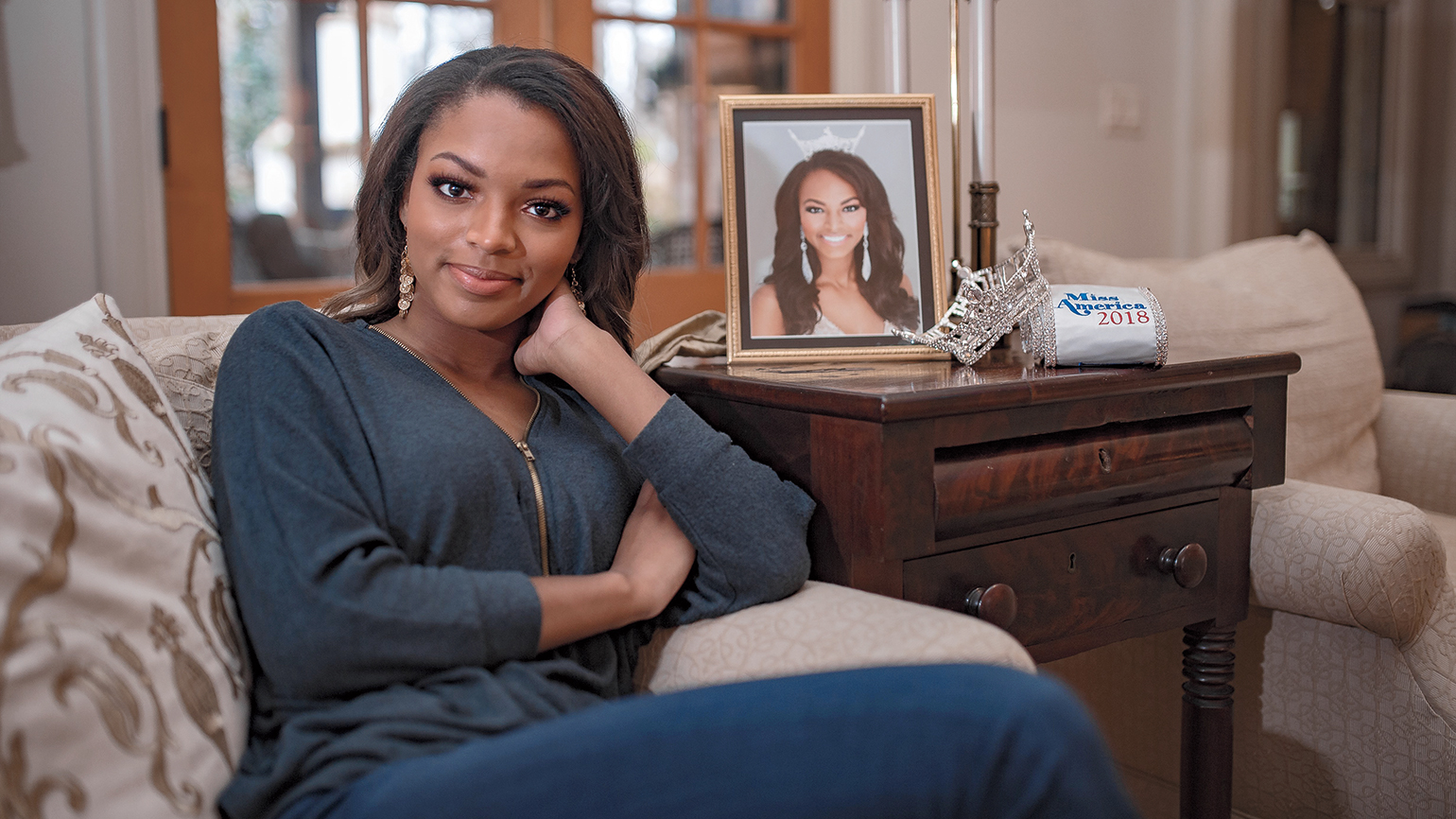
I stood in front of a panel for my interview for a Miss Mississippi preliminary pageant, trying not to let my nervousness show. The judges were taking a long time to look over my paperwork. What kinds of questions would they ask?

Most people think that pageants are about beauty, and they are—but not just outer beauty. Each contestant also picks a platform: a cause to bring awareness to and volunteer for, to help her community.

My platform was about the importance of giving blood. I truly believed that blood donors were everyday heroes. I donated every 56 days, as often as you’re allowed, and was eager for an opportunity to encourage others to give blood.

I went over my platform points in my head, thinking about my father. He’d talked a lot about beauty—inner beauty—when I was little. If I had a bad attitude, Daddy would say, “Asya, God doesn’t like ugly. Pretty is as pretty does.” He told me that the best way to turn an ugly attitude into a beautiful one was by doing good.

I learned a lot about charity, compassion and community from my father. He’d been in the Army, and he was committed to serving others. When I was 10, he took in a friend’s troubled son, as well as a family struggling financially. It was as if our farm in Booneville became a haven for the down and out. Growing up as one of eight children, I was used to living with a crowd. Even with so many folks around, Daddy still made me feel special. Every day as I left for school, he called to me from our wraparound porch, “Have a good day, Asya! Love you!” And he was always there waiting for me when I got home.

I liked making Daddy happy, but we were both a little headstrong. I signed up for my first pageant when I was seven, and he tried to talk me out of it. He worried that pageants would teach me to seek gratification from others rather than God. But I was outgoing and loved any chance to shine. I put my foot down, and Daddy gave in. He couldn’t help but pamper me.

Still, he made sure that all of us kids knew what was important. He took us to Burning Bush Church of God in Christ whenever the doors were open. Daddy was big on quoting Scripture. One of his favorite verses was Galatians 6:10: Therefore, whenever we have the opportunity, we should do good to everyone— especially to those in the family of faith. Little did I know that trying to do good would be Daddy’s downfall.

“Asya,” said one of the judges, looking up from my paperwork, “it says here that your father is incarcerated. Can you tell us more about that?”

I flashed back to the day I came home from school and Daddy wasn’t waiting on the porch. Instead, our house was surrounded by strange cars—government vehicles. I was not quite 11 years old, and I was so scared. Where was Daddy? Later I learned that the boy who lived with us had robbed a woman. No one was hurt, but there were drugs involved. Daddy had tried to help him undo the crime and paid a heavy price.

Life since Daddy’s arrest hadn’t been easy. We missed him so much. After he went to prison, Mama did everything in her power to keep things normal. My older brothers and sisters had grown up and moved out. But my younger sisters, who were only five and two, kept asking why Daddy was gone and when he would come back. Frankly, we didn’t have many details to give them.

I was used to having slumber parties almost every weekend. Then my friends’ parents began making excuses for why their daughters couldn’t spend time with me. I was so naive, I didn’t understand what was happening.

Until one day, Mama said, “Asya, these girls’ parents aren’t going to let them come over.”

“Why not?” I asked.

“Because of your dad.”

“He’s not a bad person!” I said. “Why don’t people see that?”

The difficulties weren’t just emotional. After Daddy was convicted, the government seized his property. They took our tractor and farm equipment, his truck and the old cars that he used to work on. Everything in his name—gone. Without Daddy contributing, Mama lost our farmhouse. We sold everything we could and moved into a smaller place.

I struggled with my self-worth and closed myself off, praying for answers about why this happened. Maybe God is teaching me to be independent and grateful, I thought. My parents had given me everything I wanted when I was little. After Daddy’s incarceration, we couldn’t afford those extras anymore.

The one extra I allowed myself was pageants. I picked them up again in high school. Sometimes it meant wearing a used dress, doing my own hair or borrowing the entrance fee from my grandmother. I loved competing as much as I had when I was seven. It helped me forget everything I’d lost— my friends, my home, my daddy. Onstage none of that mattered. I was Asya Branch—a strong, confident young woman. And it was my chance to shine.

In private, I was still Daddy’s girl. I sent him letters and pictures. He loved hearing about my pageant experiences, and I wanted to make him proud.

I was out of practice with pageants, but to my surprise I started winning. In twelfth grade, I competed in local pageants, collecting titles that would later open the door to compete for Miss Mississippi. I wore dresses bought on major markdown because stores were getting rid of the last season’s inventory, and I had to work multiple jobs to pay for everything. It was worth it. I was finding my confidence again.

But there was always one item in the paperwork that gave me pause. How has the world you come from shaped your dreams and aspirations?

That was where I’d written that my father was incarcerated and, in a way, our whole family was serving a sentence. Now the judge was asking the question I’d dreaded: “Can you tell us about your dad?”

I felt my whole body tense up. “Yes, he’s in prison, but he’s a good man,” I said. “He leads a prayer group and Bible study. My father is connecting people to God and the Word. That’s something that a lot of people in prison need.” I told the panel that more than 50,000 children in Mississippi struggle with the incarceration of a parent. “I’m not the only one.” The judge, rather than recoil, gave me a gentle smile.

Right after the pageant winners were announced—I was one of them—that judge took me aside. “Don’t you see?” she said. “Helping children of incarcerated parents—that’s your platform.”

I was shocked. Did a pageant organization, a program that looks for the best of the best, really want me to speak publicly about something that most people tried to hide?

Then I thought about the section on platforms in the pageant rules. A contestant’s platform is supposed to be something she feels passionate about. Aside from God, nothing meant more to me than my family, my father.

I remembered that verse from Galatians Daddy liked to quote. Whenever we have the opportunity, we should do good to everyone. Maybe if I spoke about my experience openly, it would help other children of incarcerated parents feel less alone.

I decided to move forward with my new platform, Empowering Children of Incarcerated Parents. In June 2018, I became Miss Mississippi. What I’d worried would be a liability turned out to be a strength. Next I would compete in Miss America and share my story with the country.

I was hesitant to tell Daddy. He had often told me, “Asya, I’m so sorry for what I’ve put you through.” I didn’t want to make him feel worse by talking about our family’s struggles in such a public way.

A few weeks before Miss America, I went to see Daddy. The warden helped arrange a private visit. Daddy didn’t even know. I didn’t want every media outlet in the state taking photos of Miss Mississippi visiting her incarcerated father, using Daddy as a spectacle.

After Daddy got over the surprise of seeing me, he asked, “Are you ready?”

“I think so,” I said.

“You go knock ’em dead!”

“Are you sure you’re okay with my platform?” I asked. It’s not every day that a Miss America contestant has a father in prison, and I’d heard that some reporters had already tried to interview Daddy.

“Asya, I’m happy that you’re using your influence to better the lives of others,” he said. “Don’t worry about the media. I can hold my own.”

On the night of the Miss America pageant, the warden let Daddy watch. The other inmates were excited to cheer me on. They were more upset than I was when I didn’t win. Daddy was so proud, I might as well have won.

As Miss Mississippi, I’ve kept my promise to empower children of incarcerated parents. I work with a prison ministry program called Day1. Their initiative, Love Letters, allows mothers in jail to send weekly letters to their children. We supply the stationery and stamps, and have funded more than 300 letters between mothers and their children. I also write to each inmate’s child to encourage them. I tell them that I personally know how hard their circumstances are but that they can do anything they put their minds to.

Daddy is scheduled to be released in 2022. He has been incarcerated for half my life, and I mourn the time we’ve lost. But I remind myself that God is the Great Redeemer. Only he could have transformed the hardest thing I’ve ever been through into an opportunity to do good and let my inner beauty shine.

For more inspiring stories, subscribe to Guideposts magazine.

Why It’s Beautiful to Serve God Quietly

It is beautiful to serve the Lord in ways no one else sees.

I ran into a longtime friend recently, and asked about her new job. I rejoiced that she is doing amazing things for God. It pretty much made my day.

The next day I was kind of sad. I wasn’t sure why, so I sat with the feeling for a while, accepting it, before I probed further. Eventually I concluded that I kind of wished God asked me to do big things, too.

It’s okay that He doesn’t. I mean, I often struggle with small burdens. But still: I would like to do big things for God.

I pondered that for a while, knowing that feelings aren’t facts. I steered clear of judging myself, since I wasn’t sure how much of my feelings were yearning for God (good) or envy (bad). I prayed a bit. Then a small thought came to me, like a gift: I don’t know how big the things I do for the Lord are in His eyes. I only know how they appear in mine.

Most of us are needed—and in fact very needed!—to fight everyday battles and be witnesses to the everyday presence of Christ in the world. Most of us are asked to represent Jesus in the world without headlines or fanfare. We are asked to be His hands and His words and His love in innumerable quiet ways. We are to model thoughtfulness and generosity and forgiveness to such an extent that others think wish they had whatever it is we have.

That’s not a small task. It’s a vital one.

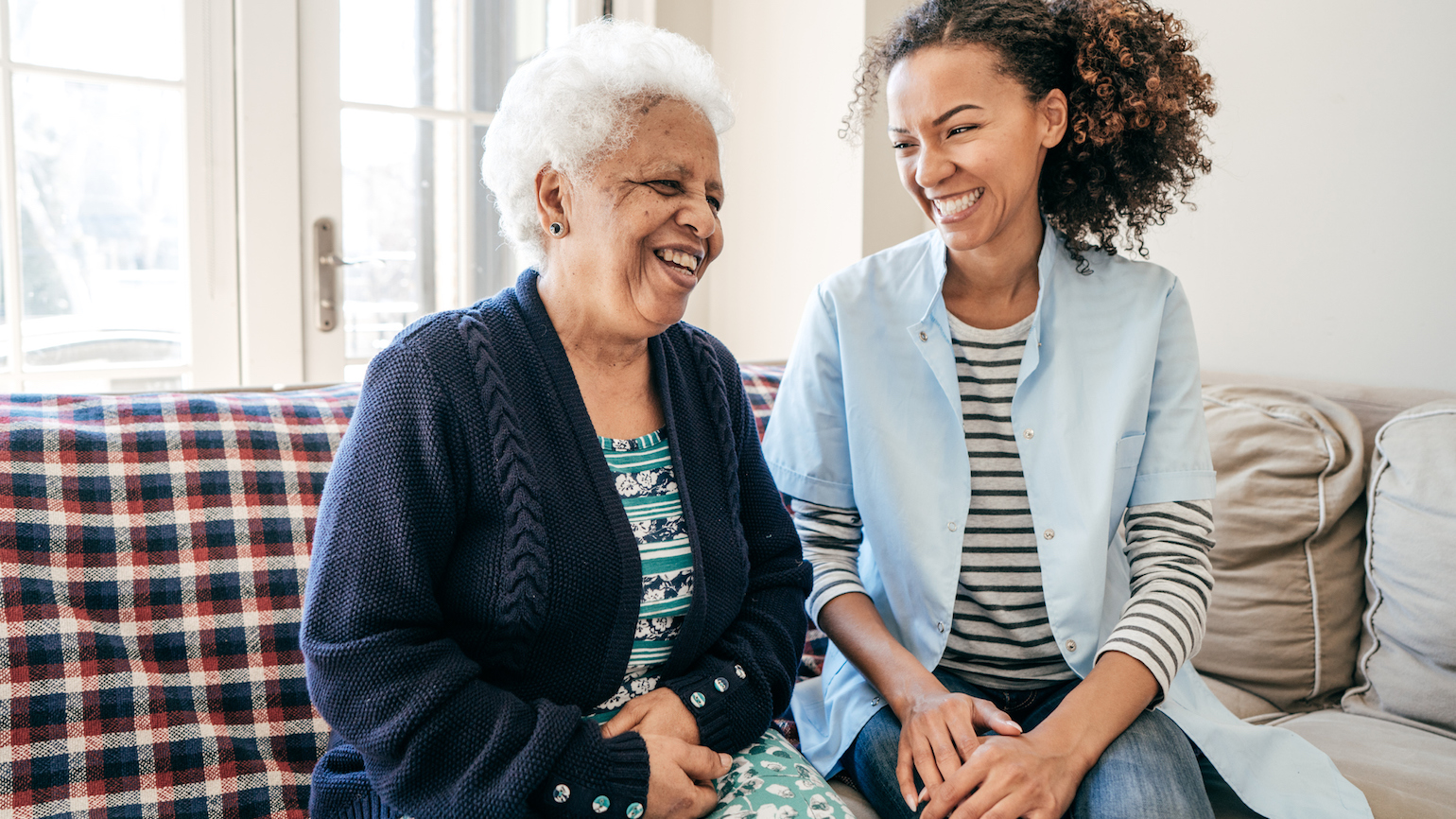
The truth is that it is a beautiful thing to serve the Lord as a professional who cares for others, and it is beautiful to serve the Lord in ways no one else sees. God knows what we do quietly, without fanfare. He sees that we honor Him even when no one is looking. In His eyes, it’s entirely possible that what we see as little may not be small at all.

Why Encouragement Matters So Much

A video of a tearful young man bursting with joy, pride and gratitude during his drive-thru high school graduation recently went viral. Dontrail Spencer of Nashville was filmed leaning out the passenger window, clutching his diploma and screaming out the names of his teachers and administrators who waved to him from the sidewalk and who had helped him along the way.

“I graduated!” he shouted exuberantly from the car as he slowly passed them. “I graduated!” Dontrail crossed the finished line of his high school education because he had people in his corner encouraging him to keep his eyes on the prize and to push through the hard days.

None of us can get through life without encouragement—especially from a parent, best friend, schoolteacher, counselor or spiritual leader. Their support keeps us going and believing in ourselves. When someone gives you encouragement, you are given the courage to do something important. You are made stronger.

Even pastors like myself need words of encouragement. Back in March, I was in my fifth week as the transitional pastor for a Florida church when the pandemic forced us to close the building for worship. With social distancing, it’s been difficult to build relationships with many of the church members.

I don’t remember meeting Grace, a member who had been very sick and in the hospital. But one morning I received an email from her:

Hi Pastor Pablo,
Thank you and all involved for keeping our church moving forward. It makes me sad that our building a relationship (even if it is interim) has been so limited. I truly do find you inspirational. And I enjoy your Wednesday prayers! I am thankful for my church family. I am grateful to be a child of God! Love, Grace

A few days later I received a call that she had gone home to be with the Lord. Grace was nearing the end of her life, but she took time to encourage me. Every time I read her email, I’m blessed by her words. When we encourage one another—everybody wins. Be generous in your encouragement. We all need it. Some now more than ever.

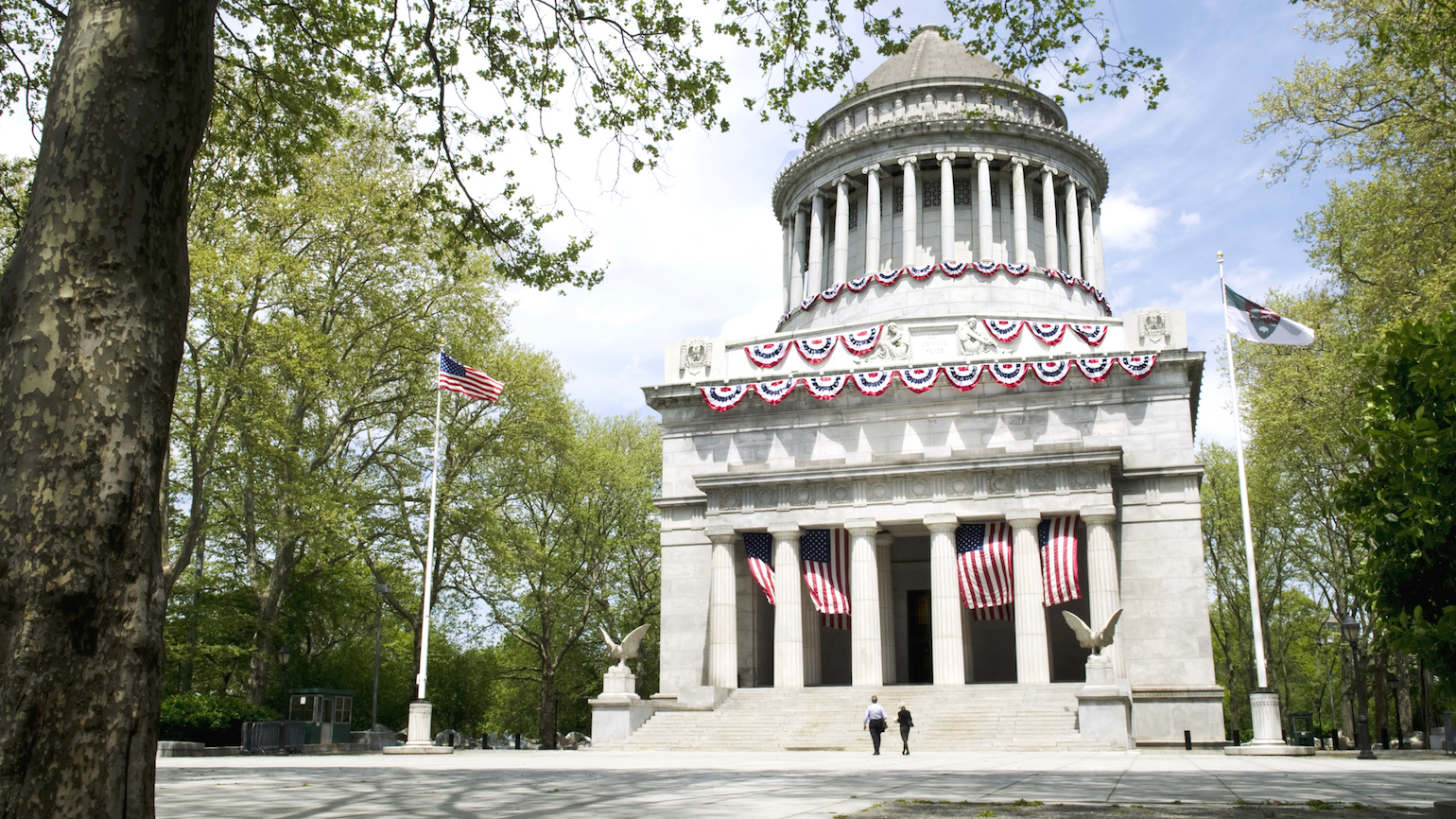
Who’s Buried in Grant’s Tomb?

You probably remember that old riddle from school days, “Who’s buried in Grant’s Tomb?” The right answer would be Ulysses S. Grant and his widow Julia (and their dog apparently).

More particularly they’re not really buried there, they’re “entombed” as a friend of mine reminded me recently on Facebook. Above ground in matching sarcophagi, not buried.

But the whole reason the memorial is on a hill overlooking the Hudson River has to do very much with the answer to that age-old question.

For years I’ve driven by it, but last Sunday as my wife Carol and I were walking from church to our favorite supermarket down by the river, we stopped and lingered.

I was struck by the words on the exterior: “Let us have peace.” What a profound message for a nation still struggling to recover from the devastation of the Civil War. What a poignant message for our own time. “Let there be peace.”

Grant died in 1885. Almost immediately the mayor of New York advocated that his remains be housed in a memorial in the city. As you can imagine there were advocates who felt he should be elsewhere. Like Washington, D.C.

No, his wife Julia said. She preferred having him buried–or rather entombed–in New York, closer to her home. She wanted to be able to visit him regularly.

Julia’s wishes prevailed. On April 27, 1897, on what would have been Grant’s 75th birthday, the white-marble monument was opened to great fanfare. And it was for years a popular destination for the carriage trade.

Still the question remains: why wasn’t Grant buried in one of the nation’s military cemeteries? Wouldn’t that be more appropriate for a much-decorated hero, a West Point graduate, a former president?

Once again, go back to the riddle. Who’s buried in Grant’s tomb? The husband and wife. That was Grant’s dying wish that he rest in eternity next to his wife. Impossible in a military cemetery.

When Julia died in 1902 she was entombed next to him, Grant’s last wishes finally granted. And their message to the world? “Let there be peace.”

Where Is The Goodness of God on Good Friday?

Sitting through a Good Friday Service and listening to the excruciating story of the crucifixion is difficult. The story of the cross is packed with drama, betrayal, injustice, pain and suffering. But if we look closely, we can still uncover the goodness of God.

Scripture teaches us that Jesus gave up His life long before anyone took it. Love was the motivating factor—nothing less or more. He said, “…no one takes it away from Me, but I lay it down on My own accord.” Our salvation is more important to Him than His own life; that is the goodness of God.

In this story, we also see the goodness of God in his choice to become human for us. Because of this choice, He can identify with our pain and suffering. When we turn to God with our own afflictions, our compassionate Lord understands our plight because of what He underwent on the cross. As we draw closer to the cross, we discover that the healing of our own hurts is linked to His wounds.

In the story of the cross, we also discover the message of hope. When one of the two men who hung next to Jesus comes to terms with his own guilt, he asks that Jesus remember him when He comes into His kingdom. Jesus offers these redeeming words, “Today you will be with Me in paradise.” This is the goodness of God in action. When we are spiritually at our lowest, we have a merciful and graceful God who wipes away all our sins, faults and mistakes to make us whole.

Lastly, the goodness of God is revealed when death does not constrain Him—He rises on the third day. There is no revitalization without Good Friday. Just like in our lives, there is no victory without struggle, no salvation without sacrifice and no resurrection without the cross. Let us bear witness to the goodness of God on Good Friday and every day.

When She Was Angry at God, She Remembered Her Mother’s Lesson

I sat in my parents’ den—in my mama’s old chair—watching my dad wrestling with my almost-two-year-old twins. He would playfully toss one away from him, and then the other would come around and attack him from behind, giggling. It was impossible not to smile. But I was still confused and angry about the string of events that had brought us here. God had some explaining to do!

Less than two years earlier, against my better judgment and without my doctor’s knowledge, I’d come down to Alabama, where my parents lived, to produce and direct a show that my production company had been commissioned to perform. I was 32 weeks pregnant with the twins, but one thing I’ve learned working in the theater is that when opportunity knocks, you answer.

My husband, Paul, and I already had two other kids, one-year-old Layna and five-year-old Ethan, and they came with us. We drove straight from our home in Columbus, Ohio. All the while, I was reassuring Paul that it would just be a short visit. I’d do the gig, Mama and Daddy would have a chance to bond with their grandkids, and then we’d go home.

I was in this very spot—in the den—when my water broke. Six hours later, the twins arrived for their surprise birthday. Immediately they were whisked off to the NICU, where they stayed for the next 14 days. Paul had to get back to work, and Ethan needed to get back to school. Even after being released from the hospital, the preemies were too fragile to handle the eight-hour drive to Ohio, so I stayed at my parents’ house with them and little Layna.

It was a rough separation. I was running on empty. Up all hours to feed the newborns while trying to maintain some sense of normalcy, making calls back and forth to Paul (“How was work?”) and Ethan (“How was school?”). At least my parents were able to lend a hand. Mama had been a third-grade teacher, and nobody was better with kids than she was. She never missed a chance at a teachable moment, passing along a life lesson, no matter how young you were.

Ultimately Paul and I decided to live permanently in Alabama. It seemed the best solution. There was the promise of good work for my production company, Paul would get a new job, and we’d stay with my parents for a month or two until we were able to find our own house.

I wish! Paul had to take a significant pay cut at his new job. The golden opportunity for my production company collapsed, and we didn’t have the means to buy a new house or even rent one. There we were—all six of us—stuck at my parents’ place. Where was God now?

Then Mama collapsed. She’d had heart problems, but nothing could have prepared us for what happened early one Tuesday morning. She woke up not feeling well. Daddy went out to warm up the car to take her to the hospital. He left her in the kitchen. The next thing I knew, he was calling to me. Mama was slumped over in a chair, unconscious. I called 911. The paramedics rushed in and worked on her, desperate to revive her. They thought they could hear a heartbeat, but it was just her pacemaker. She was gone.

I had to do all those things you do when a loved one dies: comfort my father, call my sister, let the church know, post something on social media, make the funeral arrangements, contact Mama’s friends, find musicians to play for the service, make sure it was a funeral that would have made Mama proud. I might have looked as if I had everything together, but inside I was a mess.

And angry. Angry at God, angry that we’d been uprooted, angry that our kids had to have a front-row seat to this tragedy. I couldn’t understand why so much of what we’d planned for our family had fallen apart: the move, the jobs, the loss. I’d often heard people quote the Bible and say, “All things work together for good to them that love God.” How was any of this working for anybody’s good?

I rehashed this for the hundredth time, sitting there in Mama’s chair and watching our toddlers play with my dad. And then all at once, I heard her say, “This is a dot, Danita.”

I flashed back to a particular afternoon in high school when I was upset—I’d been passed over for a part in a school play. I drove over to Mama’s school and found her in the classroom. I unloaded all my teenage angst. It wasn’t fair. I should have gotten the part. Why me?

“It’s just a dot, Danita,” she said.

“What do you mean?”

She pulled a sheet of paper out of her desk drawer, a worksheet with numbered dots all over it. “What is this?” she said, sounding just like the teacher she was.

“It’s dot-to-dot,” I said, wondering what she was getting at.

“What’s it a picture of?” she asked.

“I don’t know.” I couldn’t make sense of the dots. They seemed strewn all over the page in no apparent shape.

“That’s how life is,” she said. “God places things in our lives, and sometimes they seem confusing or out of order. Most of the time, we have no idea why things happen the way they do.”

“So…we’re the dots?”

“No, we’re the pencil,” my mother said, handing me one. “The pencil never knows what the dots make up—it just goes from one dot to the next. But God sees the big picture.”

I stood there and began to connect the dots. In no time at all, the lines had come together to reveal a fish. What I couldn’t see before had become clear.

Now, in my parents’ den, I reconsidered what we had been through. Maybe it did make sense. If I just connected the dots.

My water breaking here led to us being surrounded by family to help us take care of our premature twins, which convinced us to move back home, where I got to spend precious time with my mother during the last year of her life—and happened to be exactly where I was needed when she died. Dots, all of them. Everything that had seemed so random—even cruel—as it happened had come to create a larger picture, leading to this moment: my father laughing for the first time in weeks as he wrestled with his grandchildren, healing from his grief.

Right there in my mother’s chair, I stopped viewing all these events as blips of tragedy. I needed to trust God to reveal the beautiful bigger picture. All things could work together in our life for good, dot to dot.

For more inspiring stories, subscribe to Guideposts magazine.
When God Speaks to Us in Unexpected Ways

It was one of the first stories I ever worked on as an editor at Guideposts. A waitress walking home late at night hears someone following her. Thieves? Troublemakers? No matter how fast she went, she couldn’t outrun them. It was then she heard a voice: “Eat the chicken!”

What? Why? She had a bag of leftover chicken from that night’s serving. But why eat it now? She was running for her life. Still, she opened the sack and the smell of the meat attracted a pair of dogs who safely accompanied her home. Eat the chicken? It was just the right message.

Over the years we’ve featured countless stories that illustrate how God can speak to us in the most unexpected ways. Here are just a few examples.

Wherever you go, provisions will follow.
Marty Via and his wife and two kids lived in Ohio where he worked in construction until an accident halted his career. His pastor gave him a job helping out at a benevolence mission and suggested that maybe he had a calling to the ministry.

That didn’t seem right to Marty. But as he was praying, a town he’d never heard of came to him. Waycross, Georgia. His wife got the same message. His kids did too. As outlandish as it seemed, they emptied their house, rented a moving van and drove 18 hours straight to Waycross.

What on earth were they supposed to do there? It hardly seemed alluring, a smattering of empty storefronts and rundown houses. As hard as they looked, neither Marty nor his wife Dale could find jobs there. Nothing. Waycross? What was God thinking? It seemed like a dead end.

One sweltering summer night—no air conditioning in their cheap rental—Marty woke up at 3:00 and prayed for guidance. It came to him. He would start a benevolence mission here, providing food and clothes to the needy. The names of the local pastors and congregations came to him. He found a new purpose and calling. In a place he’d never heard of before. Waycross.

Look to Scripture for understanding.
Sue Likkel had such terrible pain in her foot she had to hobble around on crutches. Couldn’t run errands, couldn’t help out at home.

The doctor said it was a broken toe and then, even more worrisome, a nerve that ran from her spine down to her leg. Months went by. She felt so helpless she stopped praying, the fear of what was happening to her body taking over her life.

One night she cried out to God and the message came: “My child. Get up.” She got up from bed, puzzled. The next morning, she called the doctor’s office. The nurse who answered urged her to look for healing power in the Bible.

Sue turned to Scripture, and her eye landed on one verse: “Don’t be afraid. Just believe, and she will be healed” (Luke 8:50). The she glanced up the page saw the startling words, “My child, get up!” the message God had given her.

That was turnaround moment. At once the pain disappeared. The doctor was as startled as she was. She was healed.

Trust yourself.
God gave us all unique gifts. To use them we need to trust ourselves.

Coila Evans dreamed of being an artist. She loved to sketch and paint from the youngest age, but her dreams seemed dashed when the Dallas high school for visual arts didn’t grant her acceptance.

She became a hair colorist and massage therapist instead, work she greatly enjoyed. Still, there was that voice that she couldn’t ignore. She was meant to be an artist.

She picked up her brushes and began to paint again, selling a few things here and there. Then she read of an artist residency sponsored by a gallery in New York. She yearned to apply. If she could only get enough money to fly there and stay for a while.

“Paint 50 paints in 50 days.” That was the message and she followed it enthusiastically, rigorously day after day, selling her work, getting more attention.

Until she came to painting number 32. She was stuck. Was her dream silly? Did she have any talent at all? Had that voice just been a phantom calling? Was it time to quit?

No, because quitting on art would mean quitting on God. She finished the 50 paintings, sold them all and her dream trip came through.

Trust yourself. Give up your fears. Become who you were always meant to be. Even if you haven’t heard an unexpected voice.

When God Closes the Loop

Content provided by World Vision.

I walked into the kitchen one day to find my 3-year-old daughter, Lucy, intently “reading” a child picture folder from a recent Team World Vision race like she was reading the morning newspaper. My 8-year-old daughter, Sydney, walked in and started talking to her about one of our sponsored kids, and they began getting excited about sponsoring another child. We were sponsoring four already, and I thought, “Man, these kids are adding up!”

But God had another thought for me. He wanted to show me something about connections, how deep his love is for children around the world, and how ordinary folks, like my two young daughters, can be God’s answer to a farmer’s prayers in Kenya. So we said yes to yet another child and got a packet containing a photograph of a girl named Anita in Kenya. Sydney went crazy, writing her a long letter and drawing a portrait of Anita to send with it.

John Huddle at an ultra marathon in South Africa with Anita.Soon after that, I ran an ultramarathon in South Africa with Team World Vision. Following the race, I went to Kenya to meet Anita and her family. You never know what kind of connection you’re going to have or not have, but we pulled up to Anita’s house, and the whole village was there to welcome me. It was so special. They put this glittery sash around my neck and Anita’s neck.

I met Anita’s father, Abraham — a farmer barely making it. I love people — I love talking to them and hearing their stories. Abraham’s first question was, “Where does the sun sit in the sky over your city?” As a farmer, he was looking for a way to connect.

Then we walked his farm. I can recognize corn or soybeans, but I didn’t recognize millet, and I accidentally tore some up. When I asked if he took his crops into a market, he said, “No, I don’t take any food to market — that’s the food my family lives on.” It hit me: I had wasted food he depends on for his family. The amazing thing was that he didn’t get angry. He embraced me. His spirit that day was so awesome.

I went with them on their walk for water, which was downhill nearly two miles over rocky terrain. I couldn’t believe that their water source was a river — the water was filthy, filled with snakes and bugs. But Anita filled her jerry can and was chugging that water. Truthfully, I wouldn’t have even washed my car with that water. On the walk back, I carried a full jerry can. It took us over twice as long to get back, and I was drenched in sweat.

Abraham said to me, “It’s an answer to prayer for my family that you are our daughter’s sponsor.” I felt like God was closing the loop, saying to them, “You are loved.” I felt so connected to Abraham and Anita. But it was time to go. Three minutes before we left, Anita gave me a letter she’d written for my daughter. Just as Sydney had drawn Anita, Anita had now drawn a portrait of Sydney. When I got home, that letter was the last gift I handed to Sydney, and she wept because she was so excited.

We feel like our family needs to be making a difference in other people’s lives and filling them up with God’s love. I see in my family a desire to connect with other people. Globalization gives us cheaper labor, but maybe through it, God is also giving us a chance to use what he’s given us and connect families.

I’m pumped for my kids. There’s this temptation in our culture to create a bubble and protect kids from seeing poverty and hard things. I don’t want to do that. I want them to know the world and know real people with real faces in other areas of the world who are poor. We have the opportunity to make an impact on their lives, and they have an opportunity to make an impact on our lives, and it’s all possible through World Vision and our staff in the field.

John Huddle lives in California and is the West Coast director for Team World Vision. He and his wife have four children and five sponsored children. Team World Vision will host Anita and several other children at churches in the U.S. in November.

When Fear Became Faith

It started innocently enough. When news of the global coronavirus pandemic rocked my small-town West Virginia world, uncertainty began to choreograph everything. Prior to my retirement a few years before, I’d managed a hospital-wide infection prevention and control program, so I understood the threats to the world as we knew it.

Armed with a passion to “do something,” I stormed heaven. It didn’t matter if they were my loved ones or people I’d never met, I prayed the same head-to-toe infection prevention prayer over them that I once used for my patients. One night I stayed awake until 5:00 a.m., reminding God of the special vulnerabilities of certain family and friends. I finally drifted off to sleep, only to be awakened two hours later. In a dream, I’d been visiting a friend. Sitting six feet apart in her family room, we were both garbed in yellow isolation gowns, N95 masks, and protective gloves. As I pontificated every conceivable “what if,” my friend’s eyes grew wider and wilder.

I had told myself that I wasn’t a worrier; I was simply a “concerner.” But I was no different than the shoppers at Kroger who hoarded toilet paper. I’d called it prayer, but I’d managed my personal anxiety by trying to fix everyone in my path. My well-meaning petitions had escalated into unadulterated awfulizing.

Fear had me in its unrelenting grip. But things began to change when I happened upon a livestreamed sermon. With a diagnosis of cancer, the speaker had been in the battle of his life before news of a novel virus hit the media. This guy isn’t talking from a hammock with a glass of lemonade in his hand, I thought. These truths are from the trenches.

I found myself listening ever so closely. Here’s what I learned:

God is with us in the in-between places of life. Instead of hiding under a blanket in the confines of his bedroom, this guy, who had undergone chemo, as well as major surgery, and was likely immunocompromised, was holding out for hope. “The pandemic hasn’t taken God by surprise at all,” he said. “None of our troubles ever do.” His promise? God would be with every last one of us in the waiting.

Put your wisdom to work for you. I didn’t need to forget my years of nursing and infectious disease experience; that would be akin to tossing the baby out with the bathwater. Knowledge and wisdom come from God, the speaker said. And fear as well. The healthy form of fear would guide us in the precautionary measures we needed to take. “The key isn’t to not have fear,” he said. “But rather to not let fear have us.”

View even this pandemic as an adventure. Admittedly, this tactic seemed a bit far-fetched. But then I understood that he was referring to an adventure of the heart and spirit. It reminded me of when, as a pre-teen, I was diagnosed with a condition that threatened every area of my life. But my mother had refused to allow it to rule my days—or my dreams. Whether we were boarding a bus to a medical facility or waiting with a room of fellow sufferers, Mom smiled at strangers and celebrated life. She taught me the power of living in the moment, even when the future was hazy. Faith, hope and love guided us then. It would guide me now.

Reach out to others. I asked God to help me be a help in a new, better way. Instead of trying to control every possible outcome, I followed the advice of my friend, Wanda, who in an email prayer said, “Lord, right now we need people, less ‘to-dos,’ and You.” My first step was to tuck a message in the mailbox of a once estranged neighbor. Holed up in her home, this woman’s perceived wrong no longer stared me in the face every day. I began to see her with the eyes of my heart, and gave her the benefit of the doubt.

From the confines of my cabin, I also sent encouraging notes to overwhelmed healthcare workers I’d once worked with and to former patients living with chronic illnesses. With their newfound alone times, these long-ago friends craved connection every bit as much as I did. As I dispatched both emails and snail mail with the promise of God’s unfailing love, I learned something all but forgotten in the frenzy. A timeless truth from 1 John 4:18: “Perfect loves drives out fear.” Social distancing, yes. But never heart or spirit distancing!

Place your trust in a changeless God. The coronavirus pandemic has shown us all that there are times when we alone are simply not enough. That included me—despite all the letters after my name that christened me as a so-called expert. I needed the help and guidance of my caring, all-knowing Heavenly Father who would never leave or forsake me. Through the twists and turns of my whole life, I had never escaped His watchful care. I might not understand everything about the pandemic, but He is still by my side. Even in this. Yes, especially in this.