

Embrace God's truth with our new book, The Lies that Bind

Morning Trails

I keep the most curious little book beside my desk. It’s no bigger than a notebook, 127 pages long. It appeared on the discard table here at Guideposts ages ago (the table where the vast majority of review book copies sent to us end up; you know what’s a great tragedy? the schlock quality of most Christian publishing in this country). I don’t even know how the book turned up here. It’s not new, not a review copy. It was published in 1974 by a woman no one’s heard of.

The book is called On Morning Trails by Ruth C. Ikerman. As far as I can tell it’s a compilation of short devotional writings by a woman who lived many years ago in Southern California and who once attended a Guideposts writers’ conference. Inside the front cover is a handwritten inscription from Ruth to Jim McDermott, a former Guideposts editor who retired before I came to work here. I suppose this book once belonged to Jim and he left it behind when he cleaned out his office.

I picked up the book for two reasons. First, the front cover is illustrated with an etching of what is clearly a California oak tree backlit by strong sun. Second, Ruth’s brief author biography inside the back cover says she lived in Redlands, a former hub of Southern California’s orange-growing Inland Empire now mostly swallowed by the subdivisions’ relentless march to the desert.

I’ll look at anything with California hovering about it, and I was especially drawn by the Redlands connection because Redlands is on the way from Los Angeles to the San Bernardino Mountains, where Kate and I climbed 12,000-foot Mt. San Gorgonio a few months before our daughter Frances was born. That was a magical trip, and Kate and I bought celebratory chocolate-banana milkshakes at a Baskin Robbins in Redlands on our way home. Such are the wisps of memory that inform seemingly random choices.

For months Ruth’s little book sat face-up on my bookshelf. I liked looking at that picture of the oak when I arrived at the office each morning. I thought briefly of Redlands, of the mountain, of milkshakes, of Kate, and then I got to work.

A few months ago, feeling terrible as I always do about my meager prayer life, I decided to try carving out 15 minutes each workday simply to sit in silence at my desk, either staring out my westward-facing window or with eyes closed. My goal was to listen. I realized most of my prayers are nonstop chatter—God, do this for me, God, make that trouble go away, God, God, God, me, me, me. What I didn’t do much of was listen. What would God say if I managed to shut my inner trap for once and be quiet?

That last question I can’t answer yet because I’ve only managed to pray like this about half the time and I’m still waiting to hear God’s unmistakable voice. Either God doesn’t think much of my experiment, or I’m not listening very well, or, most likely, God speaks more slowly than I’m accustomed to and in ways—in a language, really—I’m not yet adept at understanding.

However, these hard-won oases of prayer (hard-won because I have to fight my own laziness and inertia and achieve them) are delightful anyway, for one simple reason: Ruth C. Ikerman. Early on I decided I needed some sort of prompt at the start my prayer. On impulse I pulled Ruth’s book from the shelf and leafed through it. It appeared perfect, each devotional no more than one or two short pages long, preceded by a Bible verse, concluded with a prayer. No, the writing wasn’t scintillating. But the words held something else. They were heartfelt. And for some reason they were always exactly what I needed to hear.

Each devotional (Ruth calls them meditations) is structured around the daily morning walks Ruth took with her husband Larry in the foothills near their home. Some stray detail spied on the trail—a bird flying up to catch an insect, a lizard scuttling beneath a rock, a dusting of snow one cold California winter, mountain lion tracks—prompts a quiet but profound observation about God’s work in the world.

I’m lulled at first by the California imagery. By the end I’m usually convicted by Ruth’s tiny but unyielding lessons. To Ruth life is like these daily walks in the dry California foothills. We trod familiar paths each day. If we’re not careful we can be lulled into forgetting that God is present even in the barest patches of our brittle, barren lives. Look around, Ruth says, take notice. The birds, the trees, the dustings of snow, the changes in weather that seem so remote—it is through these commonplace things that God speaks in a subtle, powerful language.

Today’s meditation, called The Bird in the Yucca, ends with a simple injunction to follow God as faithfully and unerringly as birds who live by sharp, darting instinct. Of course these days I often think my problem is not so much following God as figuring out where God is leading. I’m willing to go anywhere but when I listen for orders I seem to hear nothing.

And yet perhaps Ruth has an answer here, too. Perhaps the search for God’s voice is itself the obedience God demands. Perhaps our souls—or mine anyway—are still too weak to bear the full burden of God’s plans all at once. Perhaps it’s a mercy God’s voice comes so softly and gradually. The book is called On Morning Trails. The day is just beginning. There is time—God’s slow, perfect time—to learn the answers we’re so impatient for now.

I wonder, readers, how do you discern God’s voice in all the clutter of daily life? Even in prayer, even reading Scripture, messages can seem contradictory or hard to understand. How do you sort through it all? Where’s your morning trail, and what do you find that’s true there?
Missy’s Book of Inspiration and Determination

“If we are worrying about tomorrow, we can’t live for today.”

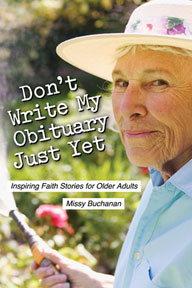
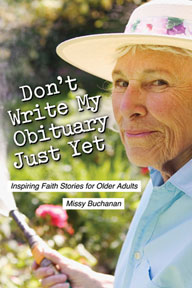
That’s 90-year-old Louise’s advice in Missy Buchanan’s book Don’t Write My Obituary Just Yet.

A wonderful collection of tales about 70- to 100-year-olds written for the same age group, these stories are little slices of life that encourage and inspire older adults.Don't Write My Obituary Just Yet

Missy told me what she’s learned from all the elders she spoke to. “God’s words comfort. Faith brings comfort in uncertainty. It refocuses our mind. It brings hope instead of fear.”

I loved that each person’s vignette ends with both a Bible passage and a prayer which sums up and enhances the person’s story.

Former second-grade teacher Ginny’s story is a great example. She has gone through years of medical problems and heartaches. But through it all, 81-year-old Ginny keeps praising God’s faithfulness.

“She is grateful for knowledgeable doctors and medical procedures that have saved her life. She delights in her granddaughter’s latest accomplishments. Every day she hugs other seniors and encourages them to count their blessings in spite of their afflictions.”

Attached to this particular story is a Bible passage about Job (James 5:11), that man of great endurance. His story is a perfect complement to Ginny’s. The prayer at the end is about perseverance through faith in God.

This book is formatted in such a delightful way. I loved experiencing each person’s remarkable overcoming of everyday problems, each with inspiring determination and faith. I think you will enjoy it too.

Meet the Beekeeping Couple Transforming Vacant Lots

Who they are: Detroit natives Timothy Paule and Nicole Lindsey founded Detroit Hives, a nonprofit that buys vacant properties in the city to transform into bee farms. (With more than 90,000 vacant lots, there’s a lot to work with!) The duo is focused on improving the Motor City’s “left behind” communities and educating people about apiology (the study of bees). Their motto: “Work hard, stay bumble!”

What they do: They transformed an abandoned lot into their first urban bee farm in 2017. “We hope that our work beautifies communities and cultivates and improves the environment as well,” Timothy says. They also educate the community about the importance of honeybees. One third of the food we eat depends on pollination.

Why they do it: Timothy got interested in honey and honeybees because of a cough he couldn’t shake. He was sick for months, until a store owner in nearby Ferndale recommended local raw honey for its medicinal properties. Soon Timothy’s cough was gone.

He researched beekeeping, and his partner, Nicole, suggested they bring it to Detroit. “We had wanted to do something with the vacant lots that would uplift the community,” says Timothy. Abandoned properties often become illegal dumping grounds, contributing to an overgrowth of allergens—not to mention urban blight.

How they do it: Timothy and Nicole took classes to become certified beekeepers. They bought their first vacant lot for $340, with the aid of the Detroit Land Bank Authority community partnership program. From there, they built three hives and vegetable garden plots. “Beekeeping has allowed me to understand that everything and everyone has a purpose in their environment,” Timothy says. “It’s taught me to be a good steward of our surroundings.”

In addition to making and selling honey, Detroit Hives spreads awareness about bees through public tours of the farm. For out-of-towners, they even offer a bee farm tour through Airbnb. “We have people from France, Canada—all over the world,” Timothy says. “They learn about honeybee hives and the medicinal value of local honey.”

He and Nicole also speak at schools. Some students are afraid of bees at first, but “we talk to them about how everyone has a place in the hive, from the queen to the worker bees and drone bees,” Timothy says. “The students find it intriguing that each honeybee has a unique job.”

How you can do it: Everyone can prevent urban blight and help save the bees. Post a no dumping sign in vacant lots in your neighborhood, and file a complaint with your municipality. Picking up the phone shows that you care. Some people even buy abandoned lots adjacent to their homes and repurpose them for gardens. Avoid using pesticides and herbicides, and plant bee-friendly flowers such as mint, sage and raspberries. These plants help bees thrive.

For more inspiring stories, subscribe to Guideposts magazine.

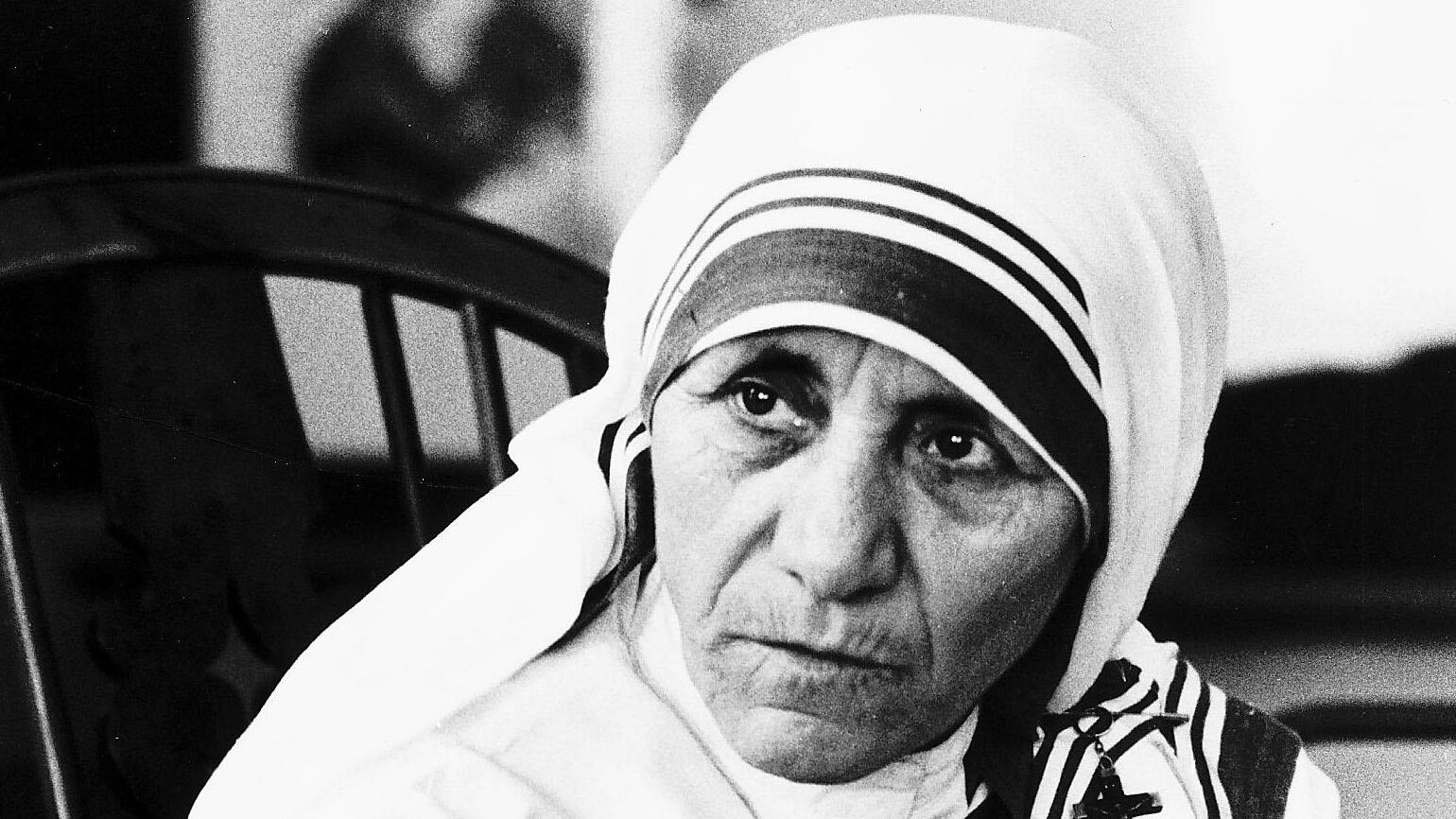
Meeting Mother Teresa Led Him to a Life of Service

In 1990, Hal Donaldson was 23 years old, fresh out of college and found himself in Calcutta, India, where he was ghost writing a book for a couple feeding hungry children. They told him there was someone they wanted him to interview. A friend who was helping them in their endeavors. It was Mother Teresa.

“She was so humble,” Donaldson says about the Roman Catholic saint famed for feeding the hungry in India. “She wasn’t wearing shoes and her ankles were swollen. She sat down with me and was very polite.”

After their interview, Mother Teresa had a question for him: “What are you doing to help the poor?” Says Donaldson: “It wasn’t accusative. She was just asking me a simple and fair question.” He told her the truth. He was young and had just gotten his degree in journalism. He wasn’t focused on helping others. With a smile on her face, Mother Teresa said, “Everyone can do something.”

Those words struck a deep chord with Donaldson. They forced him to face some hard truths about himself.

Donaldson grew up in the San Francisco Bay-area. When he was 12 years old, his parents were hit by a drunk driver; his father died, and his mother was seriously injured. To make ends meet, they went on welfare. “I experienced the shame of poverty,” Donaldson says. “I had holes in my shoes and clothes. When you’re teased in school for being poor or walking into supermarkets with food stamps, you feel less than. And you just try to escape that.”

He managed to do just that. Donaldson got into college, earned a degree, and turned his focus to making money for himself. “I went through a period where I was self-centered,” he said. “I was just trying to claw my way out of insignificance. The problem is, in trying to escape that life, it’s easy to neglect others along the way. I was the guy that would see a homeless person and cross the street, so I didn’t have to confront him. My focus was on climbing to the top instead of helping those trying to climb with me.”

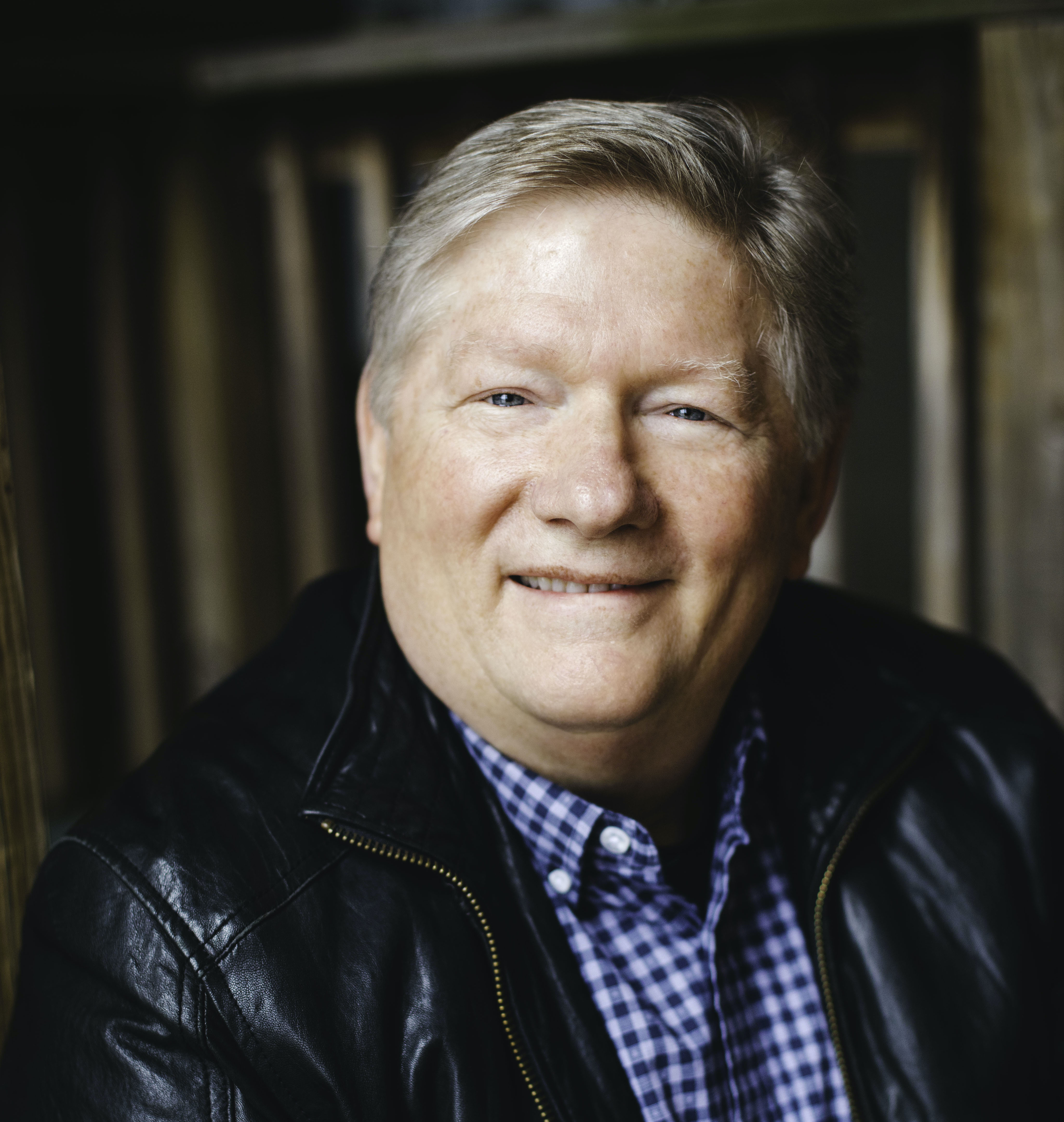
Hal Donaldson is changing lives with hope.

Donaldson returned home from India with a changed perspective. He knew he needed to do something to help his fellow man. But what? That’s when he says God gave him an idea. He packed up his car and hit the road. He traveled to eight cities in America and stayed on the streets for three nights in each of them. He spent that time talking with the people he encountered. People who were homeless, people who had turned to prostitution, those struggling with addiction. He listened to their stories. “My heart broke,” he says. “I knew I could no longer just live for myself.”

Inspired by Mother Teresa’s words and the stories he’d heard across America, Donaldson loaded a pick-up truck with $300 worth of groceries. He drove around Northern California handing them out to anyone who looked like they needed help. As word got around about his endeavors, his operation grew bigger. “It grew from a pick-up truck to a box truck to a semi-truck to warehouses,” he said. In 1994, Donaldson created the nonprofit organization, Convoy for Hope.

Today, Convoy of Hope works with communities across America and around the world—from India to South Africa, Bulgaria to Nicaragua. Their work focuses on feeding children, women’s empowerment, helping farmers and disaster services. The organization’s work has been vital during the Covid-19 pandemic. “We’d set a goal of delivering 10 million meals,” Donaldson says. “We were really astonished by the response. We passed that goal in a matter of weeks. As of now, we’ve passed out 200 million meals.”

Donaldson says the response from people helped by Convoy of Hope is powerful. “People said we’ve shown them there was still good,” he says. “That we’ve given them hope.” But perhaps even more profound was the response from people who joined their operation, driven by their need to help others. “People said they didn’t know what to do, but then they heard about us,” Donaldson says. “We underestimate what we can accomplish. I experienced poverty but I experienced kindness. It can transform lives. God wants to help the poor and He’s looking for people who are willing.”

To learn more about Hal Donaldson’s story, check out his two latest books: Disruptive Compassion: Becoming the Revolutionary You Were Born to Be and Your Next 24 Hours: One Day of Kindness Can Change Everything.

Max Lucado’s Lesson in Faith

I first noticed the tremor 10 years ago. My thumb started quivering. Insistently, nervously, mysteriously. As if my thumb lived on a caffeine drip. With a mind of its own. Almost immediately, I assumed the worst.

My father had died from amyotrophic lateral sclerosis, or ALS. Am I going to go like he did? I wondered. Is this the first symptom? I combed my hair, and my thumb quivered. When I was putting on the golf course, guess what couldn’t settle down? If I raised my left hand to make a point in a sermon, all I could see was a twitchy thumb.

Dad had been an oil field mechanic. He was used to depending on his hands. One day, he squeezed a screwdriver and noticed something shaky. He diagnosed himself and actually informed the doctor that he had ALS. A certain death sentence. He went into a long slow decline. At the time, I was about to serve as a minister in Brazil and worried sick about him. Dad didn’t want me to stay home. He sent a letter and underlined the key words: “I have no fear of death or eternity.”

You would think that I would have the same sort of confident faith. That I too would be able to lean on the promises of God. “The Lord is with you,” the book of Judges tells us. “In all things God works for the good,” Paul wrote in his letter to the Romans. “In this world, you will have trouble. But take heart! I have overcome the world,” Jesus says in the Gospel of John.

And yet I put off seeing a doctor about my thumb for a long time. The idea of going was just too scary.

Finally I made an appointment to meet with a neurologist. I entered his office full of dread. The doctor asked me to walk, checked my balance, tapped my knee with a hammer and hammered me with questions. After each one, I thought, This is it. He’s going to deliver the death sentence.

At last the doctor said, “No need to worry.”

“No treatment?”

“Nope.”

“There’s no need for a wheelchair?”

“Nope. The tremor in your thumb is nothing to worry about. I promise.”

I walked out of there and got in the car to drive home. While stopped at a traffic light, I noticed my left hand on the steering wheel. Can you guess what my thumb was doing? Shaking.

For the first time, I had the opportunity to look at the tremor differently. I could ponder the problem, or I could remember the promise. I could choose anxiety, or I could choose hope. I opted for hope. As corny as this might sound, I actually talked to my thumb.

“You’re not getting any more of my attention,” I said to it firmly. “The doctor made me a promise. You are harmless.” From that moment on, each time I noticed my thumb misbehaving, I thought of the promise that the doctor had made me.

My doctor’s promise is reliable. Fear has to take a hike. So it is with the promises of God. Unlike my thumb, those words are unshakable. His promises are better than a lifetime warranty. They will one day carry me into God’s presence.

I spent an hour recently in the office of a cemetery director, pondering over just what death will mean. I looked at a map of all the possible sites for a grave. All of a sudden, I had an idea. “You’ll think I’m crazy,” I said, “but is it possible to record a message for my tombstone? A sort of voice mail from the grave.”

“I’ll check,” he said.

He got back to me a couple of days later. “A recorded message can be encased in the grave marker. It can be played by pressing a button.”

I wrote something down, but I haven’t recorded it yet. Perhaps I can test it with you first. Engraved on the granite stone will be this invitation: “Press for a word from Max.” And then you’ll hear me say, “Thanks for coming by. Sorry you missed me. I’m not here. I’m home. Finally home.”

Shaky thumb and all.

For more inspiring stories, subscribe to Guideposts magazine.

Mary’s Home, Taken on Faith

Hello everyone from Rhodes, Greece, where we detoured because of the general strike gripping the country. We’ll double back to Athens tomorrow. I am trying to finish this before we leave the dock and move out of wireless range … and in time to get down to dinner with the wonderful Guideposts group. Did you know they like to feed you on cruise ships?

Guideposts group visit Grecian columns

Later I wandered the ancient quarter of Rhodes, where there are many churches and fortifications built by the Knights of St. John. So much history is interwoven here … the Greeks, the Romans, early and medieval Christians and the Ottomans. It is almost too staggering to take in.

But yesterday at Ephesus was even more amazing and inspiring. At first I was put off by the sheer number of visitors to the ancient site but then reminded myself that in its day Ephesus was a teeming city of a quarter million; only fifteen percent is currently excavated.

That status as a city is exactly why Paul journeyed here and preached, why he undertook the danger and rigors of such a quest. It was awe-inspiring to stand on the spot at the amphitheater where the Apostle himself stood to preach the Good News.

But perhaps the most moving of all was a visit to the house where Mary is believed to have spent her final days. A simple stone structure from the first century A.D. on a hillside overlooking olive groves and a whitewashed village below. A good and peaceful place, humble but lovely.

The home where Mary is believed to have spent her final days, in GreeceIt is not known for certain that this was Mary’s home. The only confirmation comes from the divine visions of a deeply devout paraplegic woman who described the site from the bed that she never left.
Unlike Ephesus, whose history is quite well-documented, Mary’s home has to be accepted by the heart and taken on faith. Which I think is as it should be. It is surely a place of serenity where one can quite easily believe that the mother of Christ would be at peace.

There’s the dinner bell. More from Athens, then Israel.

P.S. Want to see more of my photos from Rhodes and Ephesus? Take a look at this slide show.

Mary Oliver’s Instructions for Living

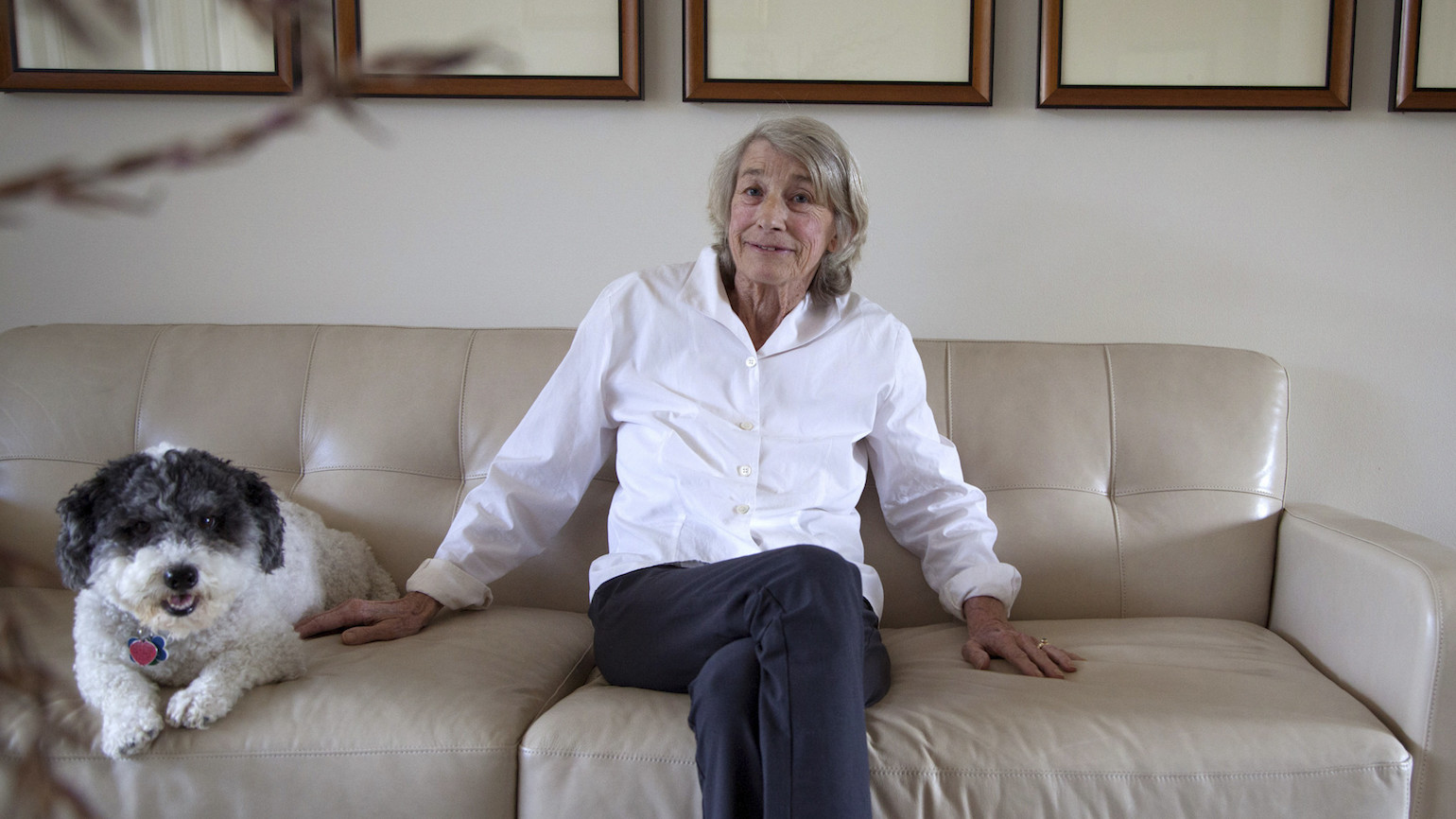
Mary Oliver’s “instructions for living a life” were straightforward, if not simple. In one of her hallmark brief, stunning poems, she gave three directions: “Pay attention. Be astonished. Tell about it.”

The Pulitzer Prize-winning poet, who died January 17 at age 83, can certainly be said to have lived a life. She spent more than 40 years in the small town of Provincetown, Massachusetts, on outer Cape Cod, which is rich in both fishermen and artists. She found solace in the wild natural habitats that surround the hamlet, and her treasure trove of accessible, vibrant poems call us to follow her into the mysterious outdoors, equipped with her instructions for living a life.

Pay Attention
Oliver’s ability to notice the world around her with curiosity and awe is perhaps her most inspiring legacy. In her poem “Angels,” she writes:

“You might see an angel anytime
and anywhere. Of course you have
to open your eyes to a kind of
second level, but it’s not really
hard.”

For her, it wasn’t hard, and she seemed to abide on a sort of “second level.” Her ease with and cultivation of the skill of paying attention can inspire each of us profoundly. And it is a skill. As she writes in “The Moths:”

“If you notice anything,
It leads you to notice
more
and more.”

Be Astonished
In her poem, “When Death Comes,” Oliver writes:

“When it’s over, I want to say
all my life
I was a bride married to amazement.”

From her youngest years, Oliver was awed by nature, never able to learn enough, observe enough or be sufficiently overcome by its unending cycles of birth, death and renewal. This sense of astonishment vibrates throughout her body of work, perhaps most famously in the final lines of “Wild Geese:”

“Whoever you are, no matter how lonely,
the world offers itself to your imagination,
calls to you like the wild geese, harsh and exciting
over and over announcing your place
in the family of things.”

Tell About It
In her hundreds of poems, Oliver brought us into her world and then sent us back into our own, tasked with noticing it in all its stunning, complex detail. One of her most oft-quoted lines, from the poem, “A Summer Day,” asks:

“Tell me, what is it you plan to do
with your one wild and precious life?”

In her view, life was always awe-inspiring, but it was not always beautiful or easy. Nature often rescued her from her fears and anxieties—all of which she shared with us in her tellings.

My favorite Mary Oliver poem is, “I Worried.” Mourning her loss these past days, I’ve been imagining its final stanza as a fitting and beautiful description of her exit from this life:

“Finally I saw that worrying had come to nothing.
And gave it up. And took my old body
and went out into the morning,
and sang.”

Martin Luther King’s Favorite Hymn

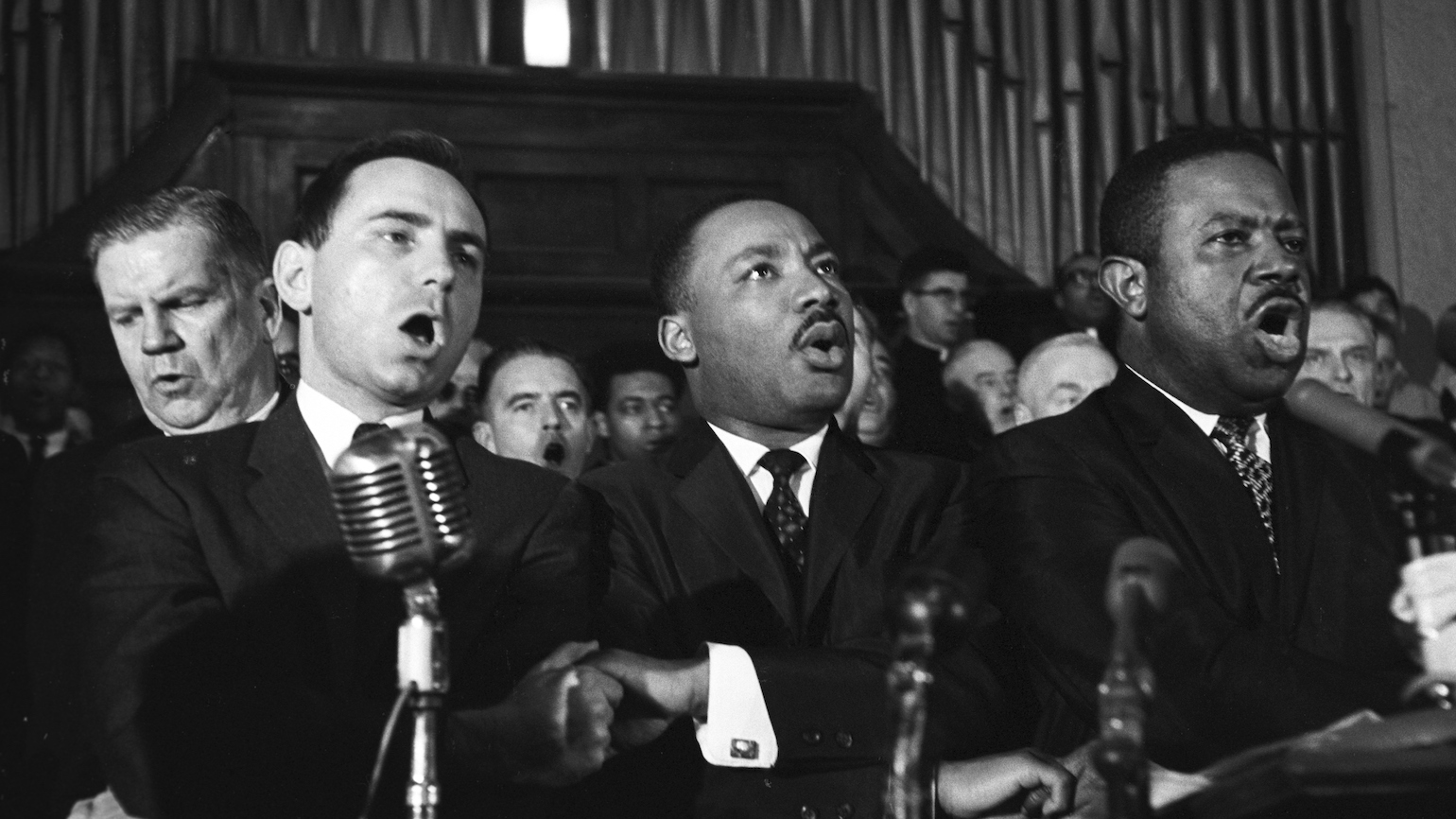
Ever prayed a song, letting the text and the music work through your soul? One of my favorites for that very purpose is the hymn that was evidently Martin Luther King Jr.’s favorite, “Precious Lord.”

People often talk about how important surrender is to the spiritual life, letting things go, trusting God. I find that hard to do just with words. Singing a prayer really helps.

Take a look at that first line, “Precious Lord, take my hand/Lead me on, let me stand/I’m tired, I’m weak, I’m worn…” The music helps me do just that, admitting that I can’t do it all on my own.

The inimitable Thomas A. Dorsey (no, not Tommy Dorsey of dance band fame) evidently wrote the song in 1932 after the death of his wife and child in childbirth. Talk about devastation. What could be worse?

I have never suffered like that, but at those times when I’ve felt very much alone, on the outs with myself, it has been such comfort to sing Dorsey’s tune.

Years ago Dorsey told about his inspiration for writing it in the documentary Say Amen, Somebody, a film I vividly remember seeing when it first came out, tears running down my wife’s cheeks as we listened to the music.

Martin Luther King suffered terribly—more than I can begin to imagine—in his all too brief life. And yet he never gave up. I don’t doubt his faith has helped me. I suspect that this song was one of his tools.

“Through the storm, through the night/Lead me on to the light/Take my hand, precious Lord, lead me home.” Let it be true.

Martin Luther King, Jr. on ‘Infinite Hope’

“We must accept finite disappointment, but never lose infinite hope.”

Martin Luther King, Jr. spoke these words in a Washington, D.C., address in February 1968, just two months before he was assassinated in Memphis. They echo across the decades and endure as one of the most positive messages of the great civil rights leader’s legacy—that the challenges that weigh us down today should never dissuade us from imagining a better, more just, and more love-filled future.

I was taught—and I believe—that no feeling can last forever. Disappointment, sadness, embarrassment, excitement, relaxation, joy—not one of those emotional states, for better or worse, can be sustained indefinitely.

But could hope be the single exception to that rule? Dr. King thought so, and the impact of that belief continues to reverberate, even a half century after his death.

In his personal and public life, he endured many disappointments. Dr. King encouraged that we “accept” those challenges even as we hold onto the hope that makes his message so relevant. A disappointment or setback can put any of us in danger of giving up on our goals, hopes and dreams, whether for ourselves or for the world. Accepting that setback is simply part of the road toward what he famously called “the promised land” frees us to process our failures in a larger context of progress, connection and above all, hope.

So is hope in fact “infinite?” The poet Emily Dickinson said as much in her famous verse:

Hope is the thing with feathers
That perches in the soul,
And sings the tune without the words,
And never stops at all

There are so many ways to remember and honor Martin Luther King, Jr. Among them is taking today to reflect on this question—what do you hope for, infinitely?

Madeleine L’Engle’s ‘Relentless Faith’

The writer Madeleine L’Engle has been a source of inspiration and fascination for people of faith since she burst onto the literary scene with her fantastical children’s book A Wrinkle in Time in 1962.

She may be best known for her children’s fantasy books, but L’Engle was a prolific writer, publishing more than 60 books in her lifetime, including adult fiction, nonfiction and poetry.

In a new book, A Light So Lovely: The Spiritual Legacy of Madeleine L’Engle, writer Sarah Arthur explores how L’Engle’s faith affected her writing and how her philosophies continue to inform the faith of her fans.

Guideposts.org: What drew you to writing about Madeleine L’Engle?

It fascinated me that someone who was a Newbery Medal winner for the greatest contribution to children’s literature (for A Wrinkle in Time in 1963) could also write openly about her Christian journey. She toured the country speaking at places like the Library of Congress but also spoke at evangelical schools like Wheaton College, my alma mater. Somehow, she straddled both of those worlds.

Guideposts.org: What might readers who only know her through [A Wrinkle in Time] be surprised by about her life and other writings?

Madeleine didn’t publish the sequel to A Wrinkle in Time for a full decade, with other sequels spread out over many decades. She simply had other things to say through her memoirs (The Crosswicks Journals) and through books like Walking on Water: Reflections on Faith and Art. In fact, many readers come to her work through her nonfiction rather than through her children’s fiction.

Guideposts.org: You describe L’Engle as someone who was “called” to write. Can you expand on what you mean by this “calling”? Do you relate to this experience as a writer yourself?

Madeleine was unique in her generation because she refused, as a wife and mother, to see writing as “just a hobby.” For her it began in childhood in the 1920s with an intense drive to become a published author—even to become famous. And then when she turned to Christian faith she viewed that drive in holy terms: God had given her the spiritual vocation of writing. In her books like Walking on Water, generations of artists and writers like myself have found confirmation of what we sensed already: we were made by God to do this. Just as others are called to be pastors or missionaries, we are called to write for God’s glory.

Guideposts.org: What are some of the biggest misconceptions about Madeleine L’Engle—the woman and the writer? What surprised you most in your research?

A Wrinkle in Time has been one of the most banned books in the history of children’s literature—usually by detractors who misunderstand or disapprove of Madeleine’s religious expression. While in person she was larger than life, an imposing figure with a direct, confident way of speaking, underneath that demeanor was a woman who was deeply hurt and bewildered by the censorship. That surprised me. She was also relentless and didn’t give up doing what she felt God had called her to do.

Read Madeleine L’Engel’s inspiring Guideposts story.

Guideposts.org: The book is subtitled “The Spiritual Legacy of Madeleine L’Engle.” You spend a great deal of time in the text digging through other’s perceptions of her religion (or lack thereof). In your opinion, what is her spiritual legacy?

I interviewed dozens of people who knew her or were significantly influenced by her. A theme that came up over and over was their experience of reading or encountering Madeleine in their moment of spiritual crisis. Some couldn’t figure out how to hold science and faith together. Some were questioning the truth of the Bible. Others, because of their religious upbringing, didn’t think they could be both a Christian and an artist. Yet, at just the right moment, something Madeleine wrote or said encouraged them to hang onto faith even in the midst of doubt. She’s become a kind of patron saint for the wavering, the wounded, and the wondering.

Guideposts.org: You include several examples of people sharing how L’Engle saved their faith. What do you think it was about her writing and life that made such a lasting impact on people?

Madeleine wasn’t afraid to wonder or doubt, wasn’t afraid to claim a faith that goes “beyond provable fact.” She also wasn’t afraid to be angry at God when her loved ones were suffering—a theme that resounds in books like Two-Part Invention about her marriage to Hugh Franklin (who played Dr. Charles Tyler on the soap opera All My Children) and his death to cancer in 1986. “Some days I hold onto faith by my fingernails,” she would often say. And this raw honesty helped people who were deeply hurting.

A Light So Lovely is available wherever books are sold.

Loss and the Nearness of God

Loss. It can be tragic. It can be immediate. It can be prolonged. It can be anticipated. It can cause a small twist in life’s road or it can lead to a dramatic redirection. Loss. It is a part of living.

Grandpa Peale wrote, “There is no bright or easy philosophy that will shield a person from the necessity of meeting sorrow’s cold, hard weight at some point in life. So, we must be prepared to meet it when it comes” (from his booklet What to Do When….How to Handle Life’s Difficulties).

As I have mentioned, I work as a clinical social worker in the crisis intervention unit at a hospital. It is essentially an ER for mental health issues. We, as clinicians, also work with patients in the ER, ICU and other areas of the hospital in which people face the ultimate loss, the death of a loved one.

Whether the death comes after an extended illness or a tragic accident, pain, shock, sorrow and emotional confusion are present and will continue to rear their heads as time moves on. We have all experienced loss in one form or another and we have witnessed others experience loss. No path of mourning is the same.

The uniqueness of each of us as individuals makes the process of healing unique too, but what we do know is that similar emotions will be felt. I believe this is what Grandpa meant when he said, “We must be prepared to meet it when [sorrow’s cold, hard weight] comes” to us.

Loss does not always mean death. It can be the loss of a relationship–familial, intimate or friendship. The loss of a job, integrity, status, hope, financial security or mental or physical capability.

Loss is one of the heaviest crosses we must bear in this life and with each loss, we have the opportunity to grow in insight and fortitude in order to face the next one with a stronger foundation.

My fraternal grandfather died when my father was 11 years old. Grandfather Allen served in World War I and developed tuberculosis as a result of exposure to war gases.

My father spoke of his father as a hero. He told us how Grandfather Allen, despite his respiratory limitations, would play catch with him in their backyard in Scarsdale, New York. Simple, yet deeply meaningful father-son moments that my father carried with him throughout his life.

He lost his father, and a lifetime of memory making and relationship building with him. Painful beyond words, in my opinion. Yet, because of this great loss, my father always understood the preciousness of every day and the joy of being a parent to his six children. This was a gift to each of us Allen children.

Joy from loss? Well, I believe my father took the magnitude of his loss and put it into joyful living. Not easy, but possible.

Loss is a part of the human experience. Some of us are hit more harshly than others, but we all must face, at various points in our lives, the challenge of it.

Grandpa Peale, in his writings, went on to say, “In times of grief and sorrow, remember this: Your agony is not permanent.” God is with us in our grief, and his kindness and sympathy are always ours, he noted. “When you feel utterly crushed by the tragedy and sorrow of life, feel God’s kindly presence renewing you. God is near; be at peace.”

These words are helpful to me. Simple, real, and relevant. I am so grateful to the Guideposts Foundation for providing Grandpa’s writings to millions of people around the world who are facing every kind of loss life has to offer.

Thank you to all who support the distribution of these materials and booklets to every corner of the world. You are caring for people in ways for which my grandparents would be so grateful. Thank you.

Leymah Gbowee and the Hard Work of Faith

I was thrilled by today’s announcement that Leymah Gbowee has been made one of the winners of the Nobel Peace Prize.

In 2003 in Liberia she led thousands of women in protests against the war that killed 250,000 people. Dressed in white, as though “in sackcloth and ashes,” the women sat with placards at the fish market in Monrovia, praying for peace through sweltering heat and pouring rain. Sustained by faith, they did not give up.

Leymah’s just published memoir, Mighty Be Our Powers, reminds me of what hard work such faith can be. Unflinchingly honest, she is unafraid of acknowledging her failings. She writes frankly about the abusive relationships she had with men, the loneliness she suffered separated from her children while she was fighting for peace. Time and again she cries out to God. At a very low moment during negotiations with the warlords, when nothing was being accomplished, she prayed, “You fooled me, God!” Haven’t we all felt that way?

The whole idea of the campaign came from a dream she had. Gather the women to pray for peace, said a voice. Like Moses, she figured the job was for someone else. She didn’t feel worthy. After all, she was living with a man who was married to another woman. “If God was going to speak to someone in Liberia, it wouldn’t be to me!” she thought. God, she found, can use all kinds of people, even the most imperfect ones. Like us.

Even more compelling is to read about how her faith helped her when she was in an abusive relationship. At one moment, when working with refugees from Sierra Leone, she remembers a song she sang at church: Count your blessings, name them one by one, and it will surprise you what the Lord hath done.

“Compared with these women I had many blessings. Yes, I lived in an abusive relationship, but I had two healthy children, a warm bed, a roof over my head. The understanding put a boundary on my own pain,” she writes. Her healing was a long struggle, but when things were at their worst, she never stopped praying.

“Many years ago, I crouched in despair,” she writes, “dressed in a torn nightgown, in the bathroom of the apartment I shared, and opened my Bible. ‘God,’ I said, ‘give me a verse.’

“This is what I read: O thou afflicted, tossed with tempest and not comforted, behold, I will lay thy stones with fair colors, and lay thy foundations with sapphires…

“I saw it as a promise—and it was. It all came true.”

Leymah’s story is part of the PBS series Women, War & Peace, starting October 11. The segment about Liberia, “Pray the Devil Back to Hell” airs on October 18.

Read Leymah’s Guideposts story.