I looked out my living room window at the proud little Norway spruce, still safe in its pail, standing out there in our front yard, where it would ultimately make its new home. “You’re gonna be a beauty,” I said. It was January 1960, and I was looking forward to planting our tabletop Christmas tree in the ground come spring. “That’s the one,” I’d said at the gardening store, pointing to a nicely shaped live evergreen, its roots wrapped in burlap. “You’re destined for greatness.” We’d decorated the tree and surrounded it with presents for our two young sons, Mitchell and Thomas. Now I felt almost as if I had three babies to watch grow up.
That spring the tree took root—and grew along with our family. Two more sons came along, Floyd and Kenneth. They loved the tree, climbing its sturdy branches and chasing the squirrels who had settled in it. “Four boys and a tree” pretty much described our family entertainment. As the years passed we craned our necks to see the regal point up top—10, 20, 30 feet in the air.
Each December we used a ladder to hang big multicolored outdoor lights from the branches as best we could. Then we would go inside to warm up and watch the New York City Rockefeller Center Christmas Tree Lighting Ceremony on TV. I always marked the event on my calendar and tried to coordinate decorating our own front yard prizewinner on the very same day. I loved seeing all the people press in around the tree that was chosen from thousands to be the most famous Christmas tree in the world.
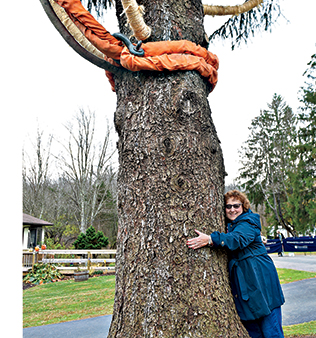
Carol Schultz hugs her Norway spruce
prior to its journey to NYC
From our TV room we clapped and cheered along with the live audience when the tree lights were switched on. It was a joy that never dimmed.
One year, while watching the credits roll, I thought of my own tree. If only that could be our tree up there on the plaza stage, a throng of people from around the world celebrating its glory, golden angels lining the entryway to the breathtaking vision. In 2000, I found out how to nominate a tree for consideration. I wrote to the committee and enclosed a photo that hardly did our tree justice. Maybe someday, I thought when I put the letter in the mail.
I almost forgot my Christmas wish until a neighbor came over last summer.
“A guy from Rockefeller Center stopped by. You weren’t home, so he left his card for you. Says he likes your tree.”
The next day I got a knock on my door from the guy. It was Erik Pauze, the master gardener. “Can we talk about your Norway spruce?”he asked.
We strolled under the shade of the tree.
“My crew and I would like to come visit once a week and fertilize the tree, keep an eye on it,” he said. And so they did, until my Christmas wish was a sealed deal. My tree, my little Norway spruce, now 77 feet tall by expert measurement, was chosen to be the Rockefeller Center Christmas tree of 2019!
In October the workers placed a sprinkler on top of the tree to soften the branches so they could bend. Then they wrapped the branches one by one with rope to make the tree easier to bundle.
In November the crew came back to cut the tree down. It was a big to-do in our little town—our neighbors and all the elementary school kids gathered around to watch. Once the crew sawed through the spruce’s mighty trunk, a crane lifted it onto a flatbed truck for its journey to New York City. My family and I all stood on its huge stump for a photo.
Instead of watching the tree lighting ceremony on TV last year, there I was in Rockefeller Plaza as a bona fide VIP.
“You made it!” I cried to my tree.
It was cold and rainy, but when the switch was flipped, all of New York City seemed to light up with me. The crowd roared, and I felt connected by Christmas to millions of people all over the world.
Our tree left Rockefeller Plaza on January 7, but her work was not done. The wood from it was milled, treated and turned into lumber used to build homes for Habitat for Humanity. Joy spread from my home to so many others.
And now it’s time for me to run out to the gardening store and pick this year’s tree. I know she will be a beauty.
When I was in college I took a course in religion that changed my life. It was an introductory survey of some of the most heralded Christian theologians both ancient and modern: Augustine, Aquinas and Luther on to Buber (actually Jewish), Barth and Tillich.
Not your everyday household names, but people whose thoughts about faith and belief were to me less about argumentative treatises and more about beauty, poetry, honesty and the courage to simply just “be” in the presence of God.
My professor, Bill Thomas, purchased copies of a volume of Karl Barth’s Church Dogmatics out of his own pocket and distributed them free of charge to his class of students, who were puzzled by his unique generosity. I knew there was something special there and I was hooked.
Yet my life headed out in many different directions after that course, and I didn’t keep up as much with those specific thinkers. Still, most of these extraordinary books have stuck with me after all these years, both in spirit and in print. When Dr. Thomas said, “The more you invest in these books, the more they will pay off,” he was right.
Now I’m excited to recommend something that can help just about anyone make their way into some of the most important books to read in conjunction with the Bible. 25 Books Every Christian Should Read: A Guide to the Essential Spiritual Classics offers work that shapes our faith, including Reflections of Divine Love (Showings) by Julian of Norwich, The Imitation of Christ by Thomas á Kempis, Institutes of the Christian Religion by John Calvin, The Pilgrim’s Progress by John Bunyan, Orthodoxy by G.K. Chesterton and Mere Christianity by C.S. Lewis. Each chapter highlights one book, offering historical background, an explanation of the book’s significance, and a brief reading to get you started.
I would encourage you to get a copy, sample a few of these writings, go find one of them as a whole, and dig in. Happy reading.
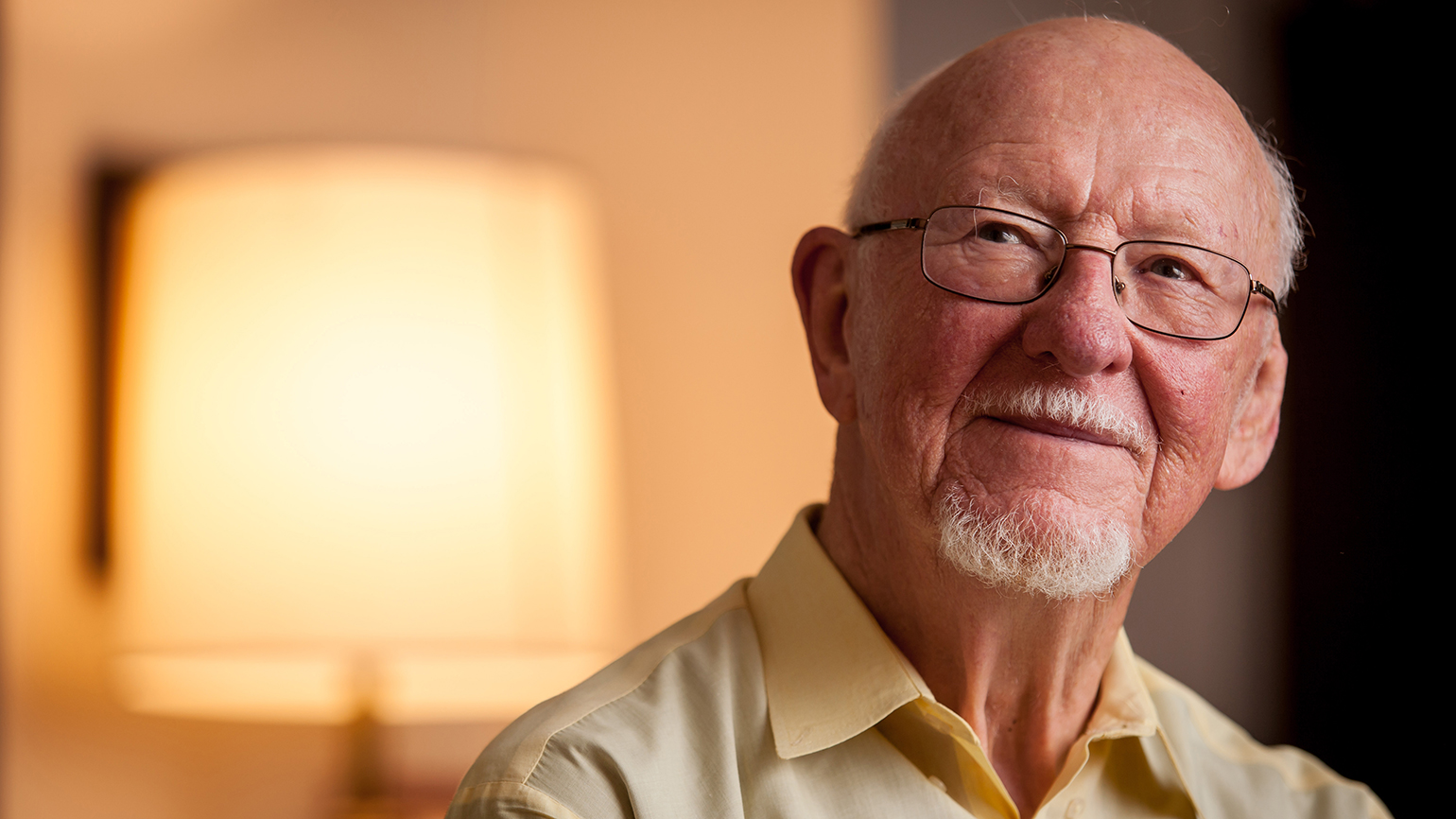
John Sherrill, one of Guideposts’ seminal editors and writers, died on December 2, 2017, at age 94. A man of passionate faith, he contributed to Daily Guideposts and was the author and editor behind hundreds of Guideposts stories. He and his wife, Elizabeth Sherrill, were an unparalleled writing team. They wrote with Pastor David Wilkerson the huge bestseller The Cross and the Switchblade and produced Corrie ten Boom’s spiritual classic The Hiding Place.
John came to Guideposts as an associate editor in 1952. He’d grown up in Kentucky, the son of a theologian. He joined the Army in World War II and was soon plunged into combat in the Allied invasion of Italy. For many years he didn’t talk about his wartime experience, hoping to put it behind him, but in 2014 he published a story in Guideposts shedding light on the moral injury and guilt from which he suffered for years.
That was so like John, always honest, always seeking to grow in faith, always ready to tell a life-changing story, whether it was his own or someone else’s.
He had an inborn knack for meeting people, turning strangers into friends. Elizabeth tells an amusing story about a recent family reunion when John mentioned something about Gladys. “Gladys?” everybody wondered. “Who was Gladys?” “Don’t you remember Gladys at the supermarket?” John said. “The one with three children, the oldest who is going to college. She works at the checkout.”
John and Elizabeth loved to travel and wherever they stopped, they’d drop by the local newspapers’ office to find story leads. As they often emphasized in the many writing seminars they taught, “Look for a good story first. You’ll undoubtedly find that there is a faith element to it.”
When Guideposts launched its Writers Workshops in 1967, John and Elizabeth were crucial teachers and led those workshops and many others over the decades. He often stressed the importance of vivid scenes and dramatic storytelling and was a guide and inspiration for many as they launched their writing careers.
John and Tibby—as he always called her—met on the high seas. The war was over and both of them were traveling to Switzerland to continue their university studies. It was love at first sight and the two were in wed in December of 1947.
They had three children, Elizabeth, John Scott and Donn. When the children were still young the family spent a year living in Africa and another year living in South America—once again, John and Tibby on the lookout for good stories.
Usually the books they wrote were under someone else’s byline but in 1964 John had his own story about the charismatic faith movement published in the book They Speak With Other Tongues. As he later described it, he’d been assigned to write a story about prayer and then he became part of the story when he experienced personally the healing power of prayer.
To the end John was dedicated to praying for others. For the past eight years he and Tibby lived in a retirement community in Hingham, Massachusetts. First thing in the morning he would get up and walk down the corridors praying for his neighbors as he passed their doors.
This December the family was planning to gather in Massachusetts—the three children, spouses, grandchildren and great-grandchildren—to celebrate John and Tibby’s 70th wedding anniversary. There will indeed be a celebration on the weekend as planned but instead of an anniversary party, it will be a memorial for John.
John will be fondly remembered by all who had the pleasure of reading him, meeting him, hearing him, praying with him. Godspeed.
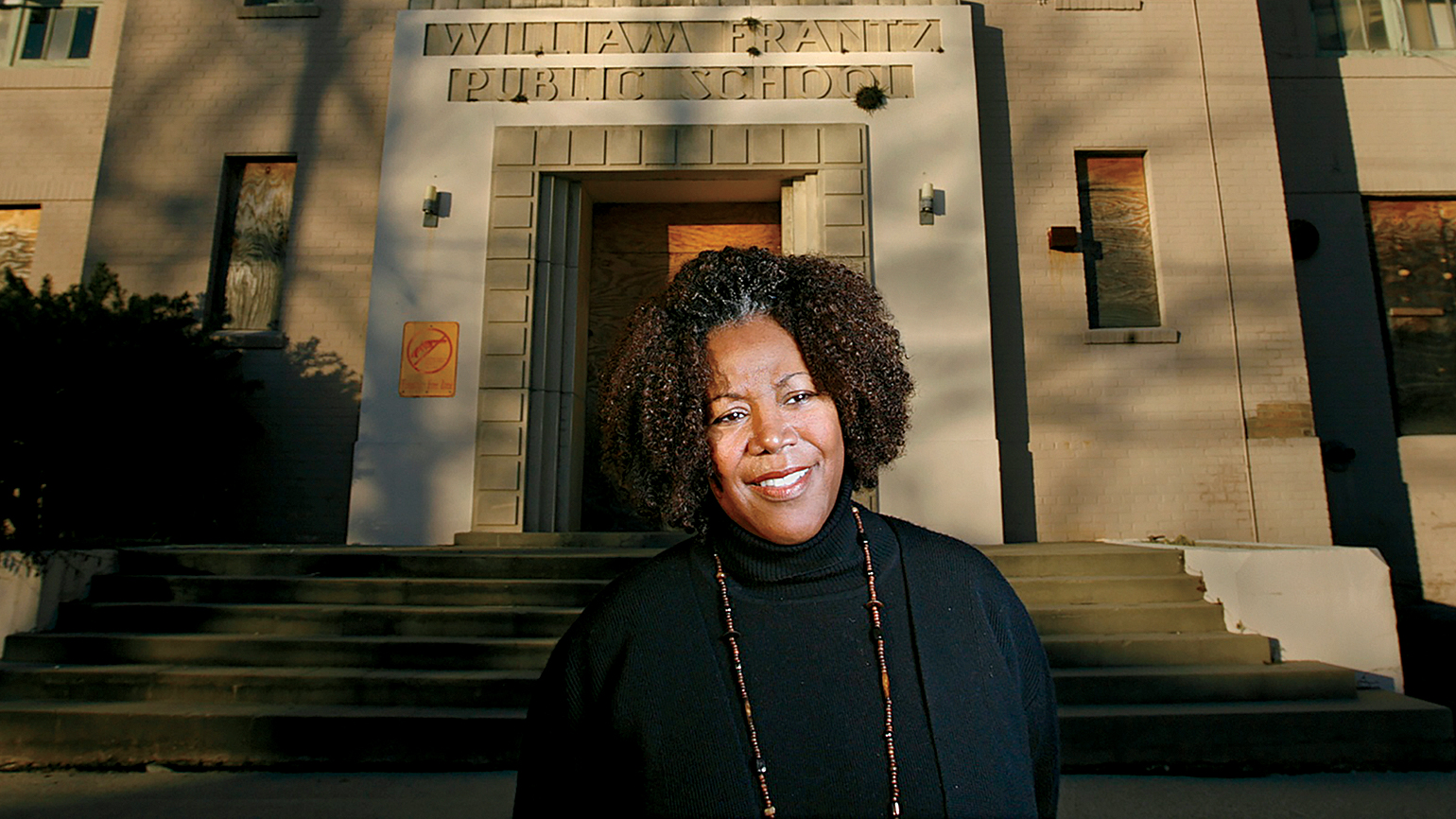
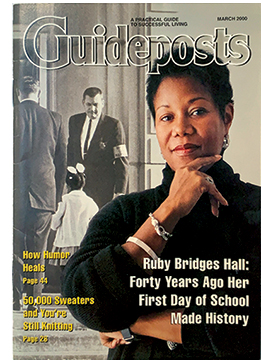
Take another look at the magazine cover to the right. The little girl on the left is me in November 1960, walking up the steps of William Frantz Public School in New Orleans, the first black student at the formerly all-white elementary school. That’s me now, on the right, married, a mother of four.
Under federal court order, New Orleans public schools were finally forced to desegregate. In the spring of 1960, I took a test, along with other black kindergartners in the city, to see who would go to an integrated school come September. That summer, my parents learned I’d passed the test and had been selected to start first grade at William Frantz Public School.
Forty years separate those pictures. Forty years that brought incredible change in our country, forged in the crucible of the civil rights movement and the battle to end segregation. Forty years that changed me as well.
I was born in Mississippi in 1954, the oldest child of Abon and Lucille Bridges. That year, the United States Supreme Court handed down its landmark decision ordering the integration of public schools. Not that I knew anything about school at the time. What I knew and loved was growing up on the farm my paternal grandparents sharecropped.
It was a very hard life, though, and my parents heard there were better opportunities in the city. We moved to New Orleans, where my father found work as a service station attendant, and my mother took night jobs to help support our growing family.
As seen on the cover of the March
2000 issue of Guideposts
As I got a bit older, my job was to keep an eye on my younger brothers and sister, which wasn’t too difficult. Except for church and the long walk to the all-black school where I went to kindergarten, our world didn’t extend beyond our block. But that was about to change.
My mother was all for it. My father wasn’t. “We’re just asking for trouble,” he said. He thought things weren’t going to change, that blacks and whites would never be treated as equals. Mama thought I would have an opportunity to get a better education if I went to the new school—and a chance for a good job later in life. My parents argued about it and prayed about it. Eventually my mother convinced my father that, despite the risks, they had to take this step forward, not just for their own children but for all black children.
A federal judge decreed that Monday, November 14, 1960, would be the day black children in New Orleans would go to school with white children. There were six of us chosen to integrate the city’s public school system. Two decided to stay in their old schools. The other three were assigned to McDonogh. I would be going to William Frantz alone.
The morning of November 14, federal marshals drove my mother and me the five blocks to William Frantz. In the car, one of the men explained that when we arrived at the school, two marshals would walk in front of us and two behind, so we’d be protected on both sides.
That reminded me of what Mama had taught us about God, that he is always there to protect us. “Ruby Nell,” she said as we pulled up to my new school, “don’t be afraid. There might be some people upset outside, but I’ll be with you.”
Sure enough, people shouted and shook their fists when we got out of the car, but to me it wasn’t any noisier than Mardi Gras. I held my mother’s hand and followed the marshals through the crowd, up the steps into the school.
We spent that whole day sitting in the principal’s office. Through the window, I saw white parents pointing at us and yelling, then rushing their children out of the school. In the uproar, I never got to my classroom. The marshals drove my mother and me to school again the next day. I tried not to pay attention to the mob. Someone had a black doll in a coffin, and that scared me more than the nasty things people screamed at us.
A young white woman met us inside the building. She smiled at me. “Good morning, Ruby Nell,” she said, just like Mama except with what I later learned was a Boston accent. “Welcome. I’m your new teacher, Mrs. Henry.” She seemed nice, but I wasn’t sure how to feel about her. I’d never been taught by a white teacher before.
Mrs. Henry took my mother and me to her second-floor classroom. All the desks were empty, and she asked me to choose a seat. I picked one up front, and Mrs. Henry started teaching me the letters of the alphabet.
The next morning, my mother told me she couldn’t go to school with me. She had to work and look after my brothers and sister. “The marshals will take good care of you, Ruby Nell,” Mama assured me. “Remember, if you get afraid, say your prayers. You can pray to God anytime, anywhere. He will always hear you.”
That was how I started praying on the way to school. The things people yelled at me didn’t seem to touch me. Prayer was my protection. After walking up the steps past the angry crowd, though, I was glad to see Mrs. Henry. She gave me a hug, and she sat right by my side instead of at the big teacher’s desk in the front of the room. Day after day, it was just Mrs. Henry and me, working on my lessons.
Militant segregationists, as the news called them, took to the streets in protest, and riots erupted all over the city. My parents shielded me as best they could, but I knew problems had come to our family because I was going to the white school. My father was fired from his job. The white owners of a grocery store told us not to shop there anymore. Even my grandparents in Mississippi suffered. The owner of the land they’d sharecropped for 25 years said everyone knew it was their granddaughter causing trouble in New Orleans, and asked them to move.
At the same time, there were a few white families who braved the protests and kept their children in school. But they weren’t in my class, so I didn’t see them. People from around the country who’d heard about me on the news sent letters and donations. A neighbor gave my father a job painting houses. Other folks babysat for us, watched our house to keep away troublemakers, even walked behind the marshals’ car on my way to school. My family couldn’t have made it without our friends’ and neighbors’ help.
And me, I couldn’t have gotten through that year without Mrs. Henry. Sitting next to her in our classroom, just the two of us, I was able to forget the world outside. She made school fun. We did everything together. I couldn’t go out in the schoolyard for recess, so right in that room we played games and for exercise did jumping jacks to music.
I remember her explaining integration to me and why some people were against it. “It’s not easy for people to change once they’ve gotten used to living a certain way,” Mrs. Henry said. “Some of them don’t know any better, and they’re afraid. But not everyone is like that.”
Even though I was only six, I understood what she meant. The people I passed every morning as I walked up the school steps were full of hate. They were white, yet so was my teacher, who couldn’t have been more different from them. She was one of the most loving people I’d ever known. The greatest lesson I learned that year in Mrs. Henry’s class was the lesson Martin Luther King Jr. tried to teach us all. Never judge people by the color of their skin. God makes each of us unique in ways that go much deeper.
From her window, Mrs. Henry always watched me walk into the school. One morning when I got to our classroom, she said she’d been surprised to see me talk to the mob. “I saw your lips moving,” she said, “but I couldn’t make out what you were saying to those people.”
“I wasn’t talking to them,” I told her. “I was praying for them.” Usually I prayed in the car on the way to school, but that day I’d forgotten until I was in the crowd. Please be with me, I’d asked God, and be with those people too. Forgive them because they don’t know what they’re doing.
“Ruby Nell, you are truly someone special,” Mrs. Henry whispered, giving me an even bigger hug than usual. She had this look on her face like my mother would get when I’d done something to make her proud.
Another person who helped me was Dr. Robert Coles, a child psychiatrist who happened to see me being escorted through the crowd outside my school. Dr. Coles volunteered to work with me through this ordeal. Soon he was coming to our house every week to talk with me about how I was doing in school.
Really, I was doing fine. I was always with people who wanted the best for me: my family, my friends and—in school—my teacher. The more time I spent with Mrs. Henry, the more I grew to love her. I wanted to be like her. Soon, without realizing it, I had picked up her Boston accent.
Neither of us missed a single day of school that year. The crowd outside dwindled to just a few protestors, and before I knew it, it was June. For me, first grade ended much more quietly than it began. I said good-bye to Mrs. Henry, fully expecting her to be my teacher again in the fall.
But when I went back to school in September, everything was different. There were no marshals, no protestors. There were other kids—even some other black students—in my second-grade class. And Mrs. Henry was gone. I was devastated. Years later, I found out she hadn’t been invited to return to William Frantz, and she and her husband had moved back to Boston. It was almost as if that first year of school integration had never happened. No one talked about it. Everyone seemed to have put that difficult time behind them.
After a while, I did the same. I finished grade school at William Frantz and graduated from an integrated high school, went to business school and studied travel and tourism. For 15 years I worked as a travel agent. Eventually I married and threw myself into raising four sons in the city I grew up in.
I didn’t give much thought to the events of my childhood until my youngest brother died in 1993. For a time, I looked after his daughters. They happened to be students at William Frantz, and when I took them there every morning, I was literally walking into my past, into the same school that I’d helped integrate years earlier.
I began volunteering three days a week at William Frantz, working as a liaison between parents and the school. Still, I had the feeling God had brought me back in touch with my past for something beyond that. I struggled with it for a while. Finally I got on my knees and prayed, Lord, whatever it is I’m supposed to be doing, you’ll have to show me.
Not long after that, a reporter called the school. Psychiatrist Robert Coles had written a children’s book, The Story of Ruby Bridges; now everyone wanted to know what had happened to the little girl in the famous Norman Rockwell painting that had appeared in Look magazine. No one expected to find me back at William Frantz. Dr. Coles had often written about me, but this was the first book intended for children. To me, it was God’s way of keeping my story alive until I was able to tell it myself.
One of the best parts of the story is that I was finally reunited with my favorite teacher, Barbara Henry. She reached me through the publisher of Dr. Coles’s book, and in 1995 we saw each other in person for the first time in more than three decades. The second she laid eyes on me, she cried, “Ruby Nell!” No one had called me that since I was a little girl. Then we were hugging each other, just like we used to every morning in first grade.
I didn’t realize how much I had picked up from Mrs. Henry (I still have a hard time calling her anything else)—not only her Boston accent but her mannerisms too, such as how she tilts her head and gestures with her hands when she talks. She showed me a tiny, dog-eared photo of me with my front teeth missing that she’d kept all these years. “I used to look at that picture and wonder how you were,” she said. “I told my kids about you so often, you were like a part of my family.”
We have stayed a part of each other’s lives ever since. It turns out that because of what I went through on the front lines of the battle for school integration, people recognize my name and are eager to hear what I have to say about racism and education today. I speak to groups around the country, and when I visit schools, Mrs. Henry often comes with me. We tell kids our story and talk about the lessons of the past and how we can still learn from them today—especially that every child is a unique human being fashioned by God.
I tell them another important thing I learned in first grade is that schools can be a place to bring people together—kids of all races and backgrounds. That’s the work I focus on now, connecting our children through their schools. It’s my way of continuing what God set in motion 40 years ago when he led me up the steps of William Frantz Public School and into a new world with my teacher, Mrs. Henry—a world that under his protection has reached far beyond just the two of us in that classroom.
For more inspiring stories, subscribe to Guidepostsmagazine.
This story originally appeared in the June 1985 issue of Guideposts.
I got my greetings from President Roosevelt in 1942, He invited me to join his fighting force. At the time I was a rodeo rider and cowboy. I gladly accepted Franklin D.’s invite, figuring that in his army I might get paid better,
I reported to Camp Roberts in California, where I went through 19 weeks of basic training and graduated as an Army rifleman. I was 31 years old.
Taking a “delayed route” to my next assignment, I hitched up to Oregon for one last rodeo, The rodeo announcer, the great Able Lefton, made a big deal out of me. “Here’s a genuine G.I. rodeo rider. What a patriot!” The whole crowd stood and cheered me. As I sat on a terrible bucking horse, a woman draped a U.S. flag over my shoulders. The gate opened and the horse flew out. A picture in next day’s paper showed me and the flag hitting terra firma. Bucked off. So much for the great rodeo soldier.
Next stop was Camp Meade in Maryland for more infantry training. Then to England, where I was assigned to Company K, 115th Battalion of the 29th Division. The 29th was an assault division, and every day we assaulted the southwest coast of England. Practicing. We lived in tents. Was it ever wet!
We knew we were about to open a Second Front, but we didn’t know when or where. Meanwhile German bombers and Stukas attacked us all the time.
I was scared, sure, but I also felt that my fate was out of my hands. It was in the hands of superiors. They ordered and instructed and disciplined me every minute of every day. As a cowboy I’d had to be self-reliant. That sounds nice, but it’s often a headache, For a change I had somebody else always telling me my next step. Part of me bristled, but a bigger part of me was relieved.
On the night of June 5th, 1944, I was handed real ammunition and real grenades for the first time. I knew the real thing was about to happen.
On the open deck of a troopship I rode in darkness, out into the English Channel. All I could think of was German submarines and mines. No one talked much. The sea was rough. Allied bombers droned back and forth from France.
My regiment wasn’t in the very first Normandy assault wave. During the morning of June 6th we sat at sea, while Navy destroyers fired thousands of shells at the mainland. A horrible racket. In the late morning I finally scurried down a rope ladder, then jumped into a heaving landing craft.
In the flat-bottomed L.C. we all kept tow. Many got sick. Rumor spread that the L.C. pilots were all from Father Flanagan’s Boys Town. I still don’t know if this rumor was true, but at the time it made me feel better.
When the L.C. ramp let down, the war really began for me. I jumped into the water expecting it to be shallow, but it came up to my chin. Thrashing to shore I lost my rifle and helmet.
By the time I was on the sand of Omaha Beach I’d lost my squad. I tried to burrow in, like a mole, thinking, Where’s Sergeant? Where’s Lieutenant?
Both of them were already killed, though I didn’t know it then. Just about witless, I grabbed the helmet and rifle of a guy lying dead beside me. Here on Omaha Beach there were already a thousand men killed.
Bunkered German 88 guns and machine guns poured fire on us. An American officer scampered by in a crouch, ordering me to “get going up that bluff, Private!”
I moved slowly ahead, and met up with a few guys from my squad. They were glad to see me. I was quite a bit older. And wiser … or so they thought. Crawling, I led them toward a German machine-gun nest.
By nightfall we were on the top of the bluff. The Germans had fallen back, though not far. Their rear artillery was still in place, blasting at us.
Chaos reigned all through the night. For the next few days, in fact, we couldn’t find a command post, although one officer did come along and promote me from buck private to buck sergeant.
Otherwise, my squad and I were on our own. We didn’t sleep for two or three weeks, didn’t bathe, lived on what German food we could find. The Normandy countryside was a nightmare: hedges, dikes, sunken roads and flooded fields. I never knew where the Germans would be and I got few specific orders. Find Germans and fight them. That was the basic idea.
I felt so alone. That was the worst thing. In England I’d felt part of a huge fighting force, presided over by all sorts of knowledgeable brass. But no more. Just ten of us pinned against a stone wall God knew where. No pillars of strength to lean on now. Where do you turn for strength so far from home?
I had no answer to this question. I kept fighting as hard as I could. By now we’d fought our way to the outskirts of St. Lô, France. It was early July and the summer heat had set in. One hot day, near the village of St. Claire, our company was pinned down in a flax field. My squad got awfully thirsty. I said I’d go for water. I ran underneath the fire, scrambled over a dike, and then was fairly safe.
Catching my breath below the dike, I saw a big old roan horse, just standing in the grass 20 feet away. I guessed he was a German draft horse, because the Germans still used horses to tow artillery.
I walked up to the horse. He was gentle and just looked at me. I made a bridle out of my G.I. belt and then mounted the old fellow. A ways on I found two five-gallon G.I. cans and with another belt slung them over the roan’s shoulders. I was glad to be on a horse again. I rode to a farmhouse, filled the cans from a well, gave the horse a drink.
On my way back, a grizzled guy ran up to me. He was wiry and short, wearing oversized fatigues and a helmet that dwarfed him. He carried no gun. All in all he looked a little looney to me.
“Hey, Tex.” he said. “I hear you’re a cowboy. Can I ask you a few questions?”
Questions? I looked for officer’s stripes. None. So I said, “Got no time for questions, mister. My men are thirsty.”
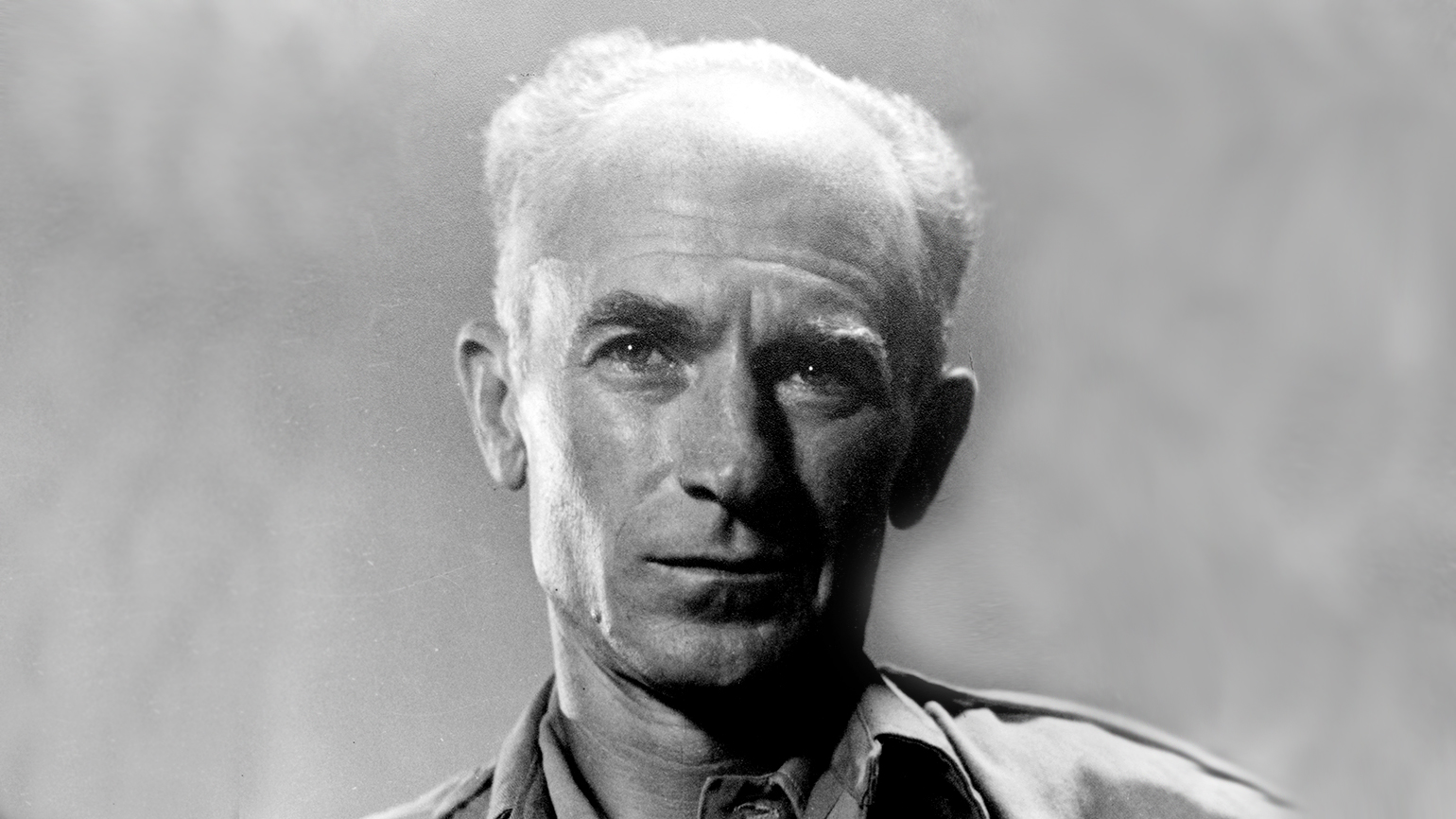
I left the man behind and got water to my squad. By now a smoky dusk had fallen and the artillery had let up. As our company set up defenses for the night a fellow infantryman said to me, “Did you hear that Ernie Pyle is here?”
“Well, you ought to. For us infantrymen he’s the best friend we’ve got”
With nightfall the German 88s let loose again, and our guns answered back. I took cover in a German-dug foxhole, crouching with my rifle. And out of the darkness I saw the grizzled guy running, this time carrying a box and a notebook. He jumped right into my foxhole.
“Hello again, Tex.” he said. “I’m Ernie Pyle, Got time for questions now?”
“I guess so. But it’s awful dangerous out here, mister.”
“Don’t worry about me, you should’ve seen Sicily,” he said gruffly. “So where’s your horse, the one you were on this afternoon?”
“On a boat for England if he’s got any sense.”
“Pretty wild here.”
“You bet it is.”
A tree stood above us, stripped bare by shellfire. Between rounds Ernie Pyle asked me about civilian life. I told about rodeo riding and wrangling. He wanted more specifics. I told about driving cattle down in winter storms. Hunting elk in the hills. Ernie jotted down my answers. He got to asking me about the war.
“I’m fighting hard, Mr. Pyle. but it’s hell out here. At times, when the big guns get whaling away, when snipers start poppin’ from the hedges, I just want to fold my tent.”
“You’re not alone. Tex. I’ve met guys all along the front who feel that way.”
“That may be true. but it ain’t very comforting.”
“But a lot of those boys fight off that pitiful feeling,” Ernie said. “When they get down, they think of home, but they don’t pine for comforts and safety and all that. They think of the trials they’ve endured … the values that’ve held them up. Take a West Virginia boy I saw yesterday, an infantryman like you. He always carries a little chunk of coal in his pocket. He’s a miner, from a family that’s always mined, and when he gets battle depression he reaches into his pocket and clenches that bit of coal. Then he says to himself, ‘If I can take the mines, I can take this.’
“War or no war, Tex, struggles never let up. You keep the good ones in mind. You’re a cowboy. Just think of what you’ve lived through.”
I mulled Ernie’s words. Ever since boyhood, growing up in a shack on the Colorado plain, I’d been tested by endless chores, bitter winters, and, later on, by the ornery animals and trail bosses of cowboy life. What got me through? My mother’s guiding hand, mainly. She’d planted faith and decent habits in me. Always said that you’d know strength and goodness as long as you heed God’s will. And now Ernie had taken my ma’s wisdom and turned it into a soldier’s lesson: To find strength in battle you take hold of strength you’ve known at home … and of the faith that underlies it.
Ernie and I kept talking. I wanted to pry more wisdom out of him, but just then a German shell landed nearly in our laps. Our bones rattled and a ton of dirt showered onto us. We struggled out of the foxhole. Ernie had lost his helmet. As we ran for better cover, he said. “Maybe I’ll see you again, Tex. And, hey, my typewriter is buried in that hole. If you ever dig it out, it’s yours.”
That’s the last time I saw Ernie. The next day I did dig out his field typewriter, but he’d left our area. I entrusted the typewriter to a guy in Ordnance and went back to battle.
I can’t say Ernie’s advice made me invincible. In fact, a week later I was badly wounded at St. Lô and was sent to England for six months. When I returned to the front, though, during the infamous Battle of the Bulge, I kept my nerves by keeping in mind those times when I’d struggled through some bad times. I’d think of a rugged ride I’d weathered, a bull I’d stayed on. I lasted the war and won two bronze stars for bravery in battle.
As you probably know, Ernie Pyle was killed on April 18, 1945, by Japanese gunfire in the Okinawa campaign. The end of the war was near and I thank God Ernie was around for most of the fight. He made us fighting men known to the folks back home, and he made us known to ourselves.
Gain strength by keeping in mind the strong things you’ve done—and where you got the strength in the first place. Ernie’s lesson is 41 years old for me, but I still live by it.
For more inspiring stories, subscribe to Guidepostsmagazine.
Betty Kilby Fisher Baldwin
There I was, coming up on my sixty-second birthday. God had helped bring me to a good stage in my life. I’d retired from my career as an executive. I had raised four children and was helping raise two of my nine grandchildren. And I thought I’d made peace with the past.
Then I received an e-mail from a stranger:
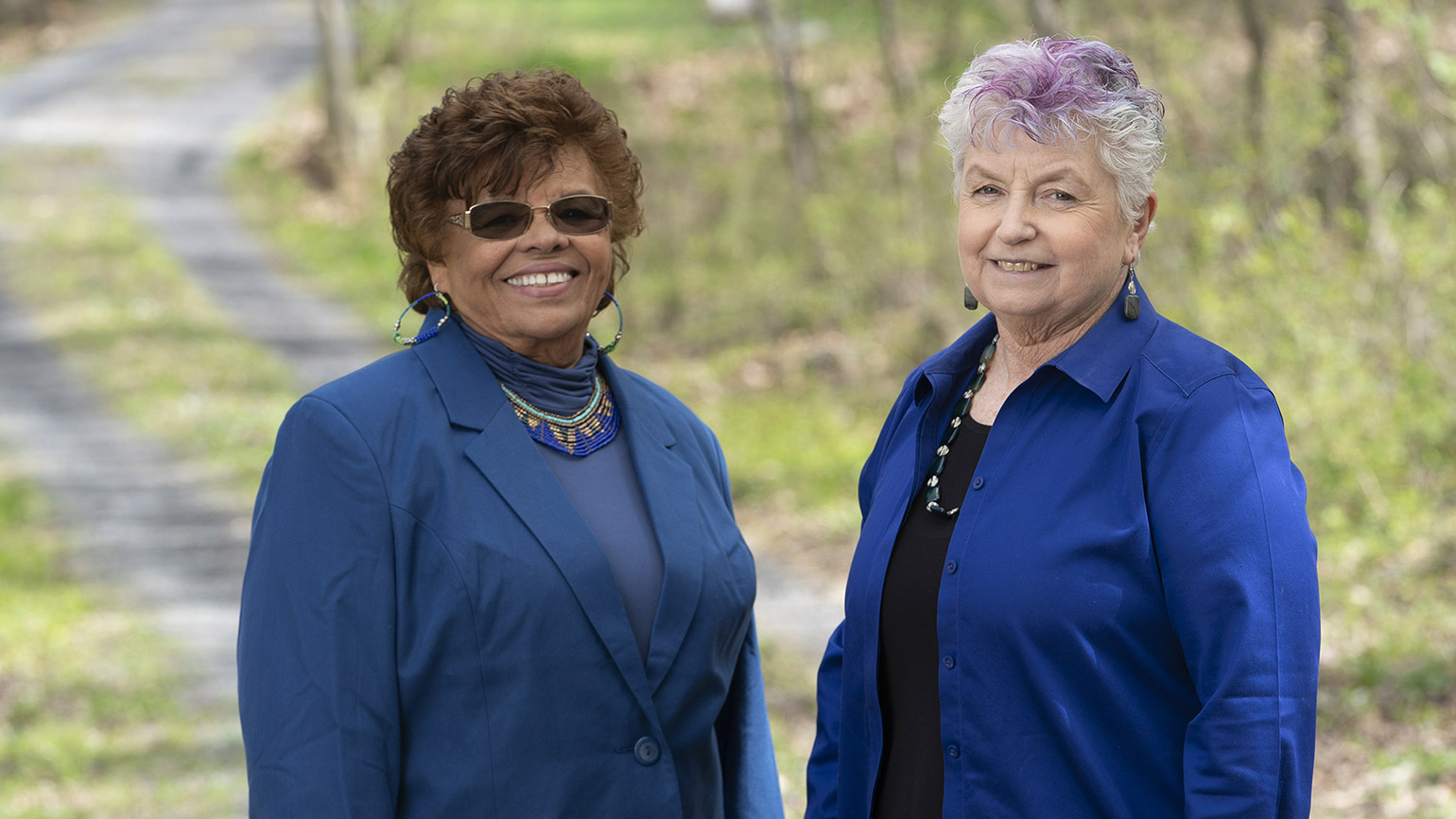
My name is Phoebe Kilby, and I am white. My father grew up in Rappahannock County, Virginia, near where your father grew up. I have been doing some research on my family. I suspect that our families had some kind of relationship in the past.
What did that mean?
There was a follow-up e-mail too. Phoebe—whose last name was the same as my maiden name—said she had been doing genealogical research and discovered that her ancestors might have enslaved my ancestors.
White slave owners often fathered children with the African-American women they owned. It was possible that Phoebe and I were not just connected but related.
“I feel shame that my family once owned slaves and by that very fact traumatized and mistreated them,” she wrote. “Someone in the Kilby family needs to apologize for this injustice, and perhaps that person should be me.”
Those e-mails stirred the past up again, stirred up a storm of feelings inside me too.
Let me tell you my story. Maybe then you’ll understand why Phoebe’s words felt like a message from God.
Wind the clock back to 1958, the year my name appeared on a lawsuit filed by the NAACP against the school district of Warren County, Virginia. I was 13 years old and one of 22 African- American children seeking the right to attend the whites-only schools where I lived. At that time, Black students had to leave the county to get an education beyond seventh grade.
The school district and even the governor fought us. Finally a judge ordered the district to comply with the landmark 1954 Supreme Court decision outlawing school segregation.
The NAACP gave me and other students nonviolence training and told us we were soldiers in God’s army, fighting for justice. I was proud to be part of such a historic struggle for equality.
My faith began to erode in the face of vicious opposition from white students and their parents. Before we had even set foot in school, someone shot at the windows of my family’s house. The day we arrived, grown-ups lined the streets and threatened to kill us.
Other students called us despicable names. Threw spitballs at us. When I asked the teacher for help, I got in trouble.
My daddy, James Wilson Kilby, was a man of strong conviction and even stronger faith. He was a driving force behind the lawsuit. He also insisted that our family join hands and pray for our enemies each night before dinner. “Jesus commanded us to pray for those who persecute us,” he told us.
I made sure never to sit next to Daddy. If I wasn’t holding his hand, he wouldn’t know I wasn’t praying for those white students.
Everything culminated one day in 1963, my senior year, when I gambled on taking a shortcut to class by walking alone through the auditorium. We Black students had learned the hard way that it was always safer to travel in larger numbers.
A group of boys found me. They grabbed me, pinned me down and raped me.
I couldn’t tell Daddy because he’d go to the authorities, and then it would be the testimony of one Black girl versus a group of white boys. Our family would be destroyed.
I became cripplingly depressed. I stopped eating. I wound up in the hospital.
An orderly who went to our church came to offer comfort. I told him I wanted to die. He asked how long until I graduated. A few months, I said.
“God gave you a big job,” he said. “You did good. It’s almost over. The best part of your life is just ahead of you.”
For decades after that, my spiritual life ricocheted between those two extremes: resisting Daddy’s prayer for the people who oppressed us and holding on to those words spoken by that orderly, who was like an angel to me.
I graduated, went to college and found work in corporate America. I rose to become an executive at American Airlines. I did everything with a determination to prove that I was better than the hateful names I had been called in school.
I wrote a book about my family’s civil rights struggle, entitled Wit, Will & Walls. I gave talks at schools and historical societies. My book was made into a short documentary.
Phoebe’s e-mail took me right back to my childhood dinner table. Here was a hand held out by a white person apologizing for injustice against people like me.
All my life, I believed God had helped me overcome challenges, succeed and become a voice speaking out against racism. Was I prepared to take this outstretched hand?
“I hope to hear that you are interested in conversing with me,” Phoebe wrote.
Something told me I had to say yes.
Phoebe Kilby
My childhood was the opposite of Betty’s. I grew up in Baltimore. My father was a doctor, and our family was financially comfortable.
There is no other way to say this: My father was a racist. He had separate waiting rooms for whites and nonwhites, and he made frequent disparaging remarks about Black people. His mother said similar things. My mother’s side of the family was not like that, thank goodness. But my mother did not challenge my father’s attitudes. I didn’t either. I assumed what my father said was true.
Baltimore City public schools integrated in 1954, so when I was ready to go to school, my parents enrolled me in an all-white private school. That backfired because the teachers were broadminded and sympathetic to the civil rights movement. They assigned books by Black authors, which I had to hide at home to avoid trouble.
By the time I graduated, I knew my father’s attitudes and a lot of things were wrong. For a long time, I thought knowing that was enough.
I married, and my husband and I moved to the Shenandoah Valley in Virginia, near where ancestors on my father’s side had lived. I got a job at a small Christian college called Eastern Mennonite University. EMU had a program called Coming to the Table, which encourages descendants of enslaved people and descendants of enslavers to connect.
The program was started by a man named Will Hairston, whose ancestors had been one of the largest slave-owning families in Virginia.
Inspired by Coming to the Table, I researched local archives and census records. I learned not only that my ancestors had owned slaves near Warren County but that descendants of those enslaved people still lived in the area. That’s how I found Betty. Were she and I connected—maybe even related—through the horrors of slavery?
“There’s only one way to find out,” Will Hairston said. “You are going to have to contact her.”
I wasn’t ready for that! I wrestled with my reluctance. Finally I ran out of excuses. On January 15, 2007—Martin Luther King Jr. Day—I e-mailed Betty.
There was no reply.
You’ve offended her, I told myself. Why would she want to talk to you?
With Will’s encouragement, I sent a follow-up e-mail explaining more about myself and my reasons for reaching out.
Betty’s reply came a few hours later. The subject line of her e-mail: “Hello Cousin.”
Betty I had been having computer trouble. By the time I saw Phoebe’s first e-mail, the second one was in my in-box too. I did not hesitate to reply.
The timing “could have only been God,” I wrote. “We are the key to healing. Meeting you today is so awesome…. I have always known that my family were descendants of slaves, but I couldn’t open that door.”
My words expressed more certainty than I felt. I think God was guiding my fingers as I typed. In fact, opening that door—taking Phoebe’s outstretched hand—felt scary. Was I ready to confront this issue I had worked so hard to put behind me?
I lived in Texas, but I was coming to Virginia for a screening of the documentary about my book. I invited Phoebe to meet. “I thank God for bringing you into my life,” I wrote.
Phoebe Betty and I met at a restaurant in Front Royal, Virginia. Any fears I had evaporated when I met Betty. She is a positive, can-do person. She gave me a hug. She introduced me to other members of her family at the restaurant, including her two grown daughters.
At the documentary screening the next day at a church, Betty introduced me to the mostly African-American audience and quoted Martin Luther King Jr.’s dream that one day “the sons of former slaves and the sons of former slave owners will be able to sit down together at the table of brotherhood.”
The audience erupted in applause.
Encouraged, I invited Betty to a Coming to the Table workshop, where we could deepen our friendship and learn more about how our families were connected.
Betty Many of my fears also melted away when I met Phoebe. She had done her homework. She listened as much as she talked.
I agreed to attend the Coming to the Table workshop. Phoebe and I were among 15 participants. We learned about restorative justice and discussed how it might overcome trauma and achieve reconciliation.
There was an activity called Breaking Cycles of Violence—a series of steps designed to help people talk about traumatic incidents and move toward healing.
The minute the activity started, I knew I was in trouble. I had to talk about the horrible things that had happened to me as a child. Feelings I had spent a lifetime burying rose up and overwhelmed me. Suddenly I was weeping uncontrollably.
The Black members of our group surrounded me and held me. For a long time, I couldn’t stop crying.
At last, the room fell silent. I can’t say I miraculously gained a spirit of forgiveness and reconciliation. But something inside me shifted. I knew God was with me, even in my worst experiences. I could take Phoebe’s hand and trust that God would be with both of us.
Phoebe Seeing Betty break down made me realize there is a difference between learning and experiencing. No amount of knowledge could take the place of Betty’s lived experience of racism.
I had benefited from racism. My father inherited wealth generated in part by the labor of enslaved people. He inherited racist attitudes that he passed on to me. I went to a school that excluded Black children and benefited from social networks and advantages Betty never had.
It was up to me to turn my knowledge and feelings into action.
Betty and I committed to helping Coming to the Table expand its reach. I used some of my inheritance to set up a college scholarship fund for people like Betty, whose families had been scarred by slavery.
Though we live hundreds of miles apart, Betty and I talk on the phone, appear together at events and try to meet as often as we can. We wrote a book together, published this year, entitled Cousins: Connected Through Slavery. Proceeds go to the scholarship fund. I know the truth about myself and my family. Truth is the starting point for healing.
Betty I also grew up with hateful feelings in my heart, though for different reasons. Racism wounds everyone, perpetrators and victims.
I believe God brought Phoebe and me together. He knew the healing each of us needed. He knew that together we could help others heal. That’s why we’re sharing our story.
For more inspiring stories, subscribe to Guidepostsmagazine.
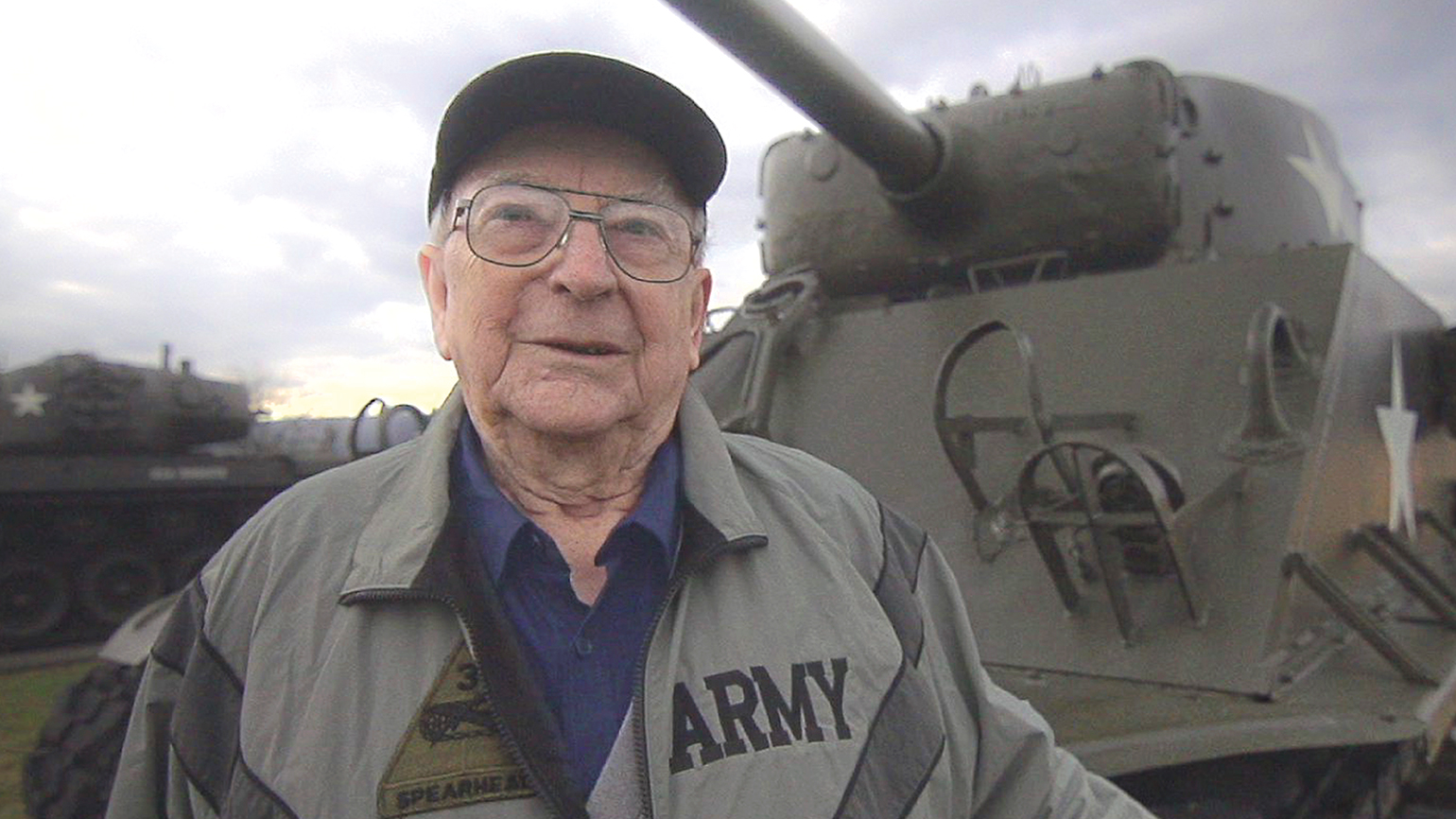
It was March 2013. I’d come here to heal the wounds of a long-ago war, revisiting the city of my nightmares to meet Gustav Schaefer, hoping he might answer a question that haunted me still. I stood with my back to Cologne Cathedral, scanning the crowd for anyone old enough. I couldn’t find Gustav. Had he changed his mind?
Sixty-eight years before, in 1945, I was a tank gunner in the Third Armored Division when we rumbled into Cologne, a city spanning the Rhine. We were nicknamed Spearhead—a title we’d earned. My crew was among the first to battle its way into Germany. We froze our tails off during the Battle of the Bulge.
I suppose we handled ourselves well, which is why we got a Pershing tank, the U.S. Army’s answer to the more heavily armed and armored German Panther and Tiger. We had one of only 20 in the entire European Theater. It was presented to us like an award, but it was a curse. As the heaviest tank, we were always first in line, first around the corner, first over the hill. It skinned our nerves raw, but what could you do? Someone had to go first.
Cologne was particularly dangerous. American bombs had created a labyrinth of blocked streets and ambush points. We worried about German tanks and watched for bazooka teams in the buildings. People think tanks are safe, but that’s an illusion. If your tank gets penetrated, all that armor around you turns into shrapnel. The ammo and fuel you’re sitting on can erupt into a volcano of fire. We particularly feared the German Panzerfaust, a bazooka round that turned to boiling metal when it hit, burning through tank armor and spraying molten steel inside.
All you could do was shoot first and hope to get them before they got you. That and pray. I never really learned to pray. Instead, I just talked to God—asking that we make it through each city block, make it to nightfall. Touching the Bible in my breast pocket. As we neared the cathedral square that day in 1945, I knew German tanks were waiting. I would be meeting Gustav for the first time, though I didn’t know it was him, not then. All I saw was a German tank peeking out from behind a building. When we pulled up to the intersection, it spotted us and backed into an alley. Suddenly, a black blur crossed my gunner’s scope. It was low, with gray camouflage. An Opel sedan.
“Staff car!” my tank commander yelled, and I fired. Our officers had told us anything on wheels was German military. Orange machine gun tracers chased the car down the street. The Opel turned toward the hidden tank, and a stream of green tracers—the German tank’s machine gun—crossed our orange ones.
The Opel slowed to a stop. I dismissed it. My concern was the tank. I fired again and again into the building that sheltered it. The building leaned backward like a dazed boxer, then collapsed, burying the tank. We crossed the intersection and passed the Opel. I saw no camouflage, no official markings or insignia—just a black car covered with dust. Medics huddled around the exploded windows, treating someone beside the passenger door. I glimpsed curly brown hair. A woman. Who was she? A Nazi fanatic? We’d encountered those. Some general’s mistress? Whoever she was, we left her behind and continued patrolling the area.
An hour later, my crew and I outdueled another tank, a Panther, in the cathedral square. An Army cameraman who had been following us that afternoon got it on film and cut a newsreel, making us the most famous tank crew in the European Theater. I never saw the newsreel during the war. I’ve been told it was called the greatest tank duel in history. But not the greatest day in my life.
I went home, married and got a job managing a cinder block factory. I tried to forget that day, the worry that I’d fired on a civilian. We won, I told myself. That was the important thing.
But in 1996, when I was 72, Cologne came back. A war buddy told me he’d seen our duel with the Panther in a documentary called Scenes of War. I ordered a copy. After all those years, part of me was curious to relive the battle.
I slipped the VHS into the machine and hit play. There was the four-way intersection. I expected to see the confrontation with the Panther, but instead, the Opel swerved into view. I watched in horror as tracers from the Pershing’s machine gun—my machine gun—puffed dust from the car’s trunk, a sign of a hit. I didn’t see the driver, but medics clustered around a young woman who spilled from the passenger door. They pulled up her sweater, probed her wounds and gave up. They covered her with a jacket.
I prayed it wasn’t me who had fired the shot that had killed her. Yet I’d watched just that. I didn’t want her to die, but she did. On every viewing.
I searched for the woman’s identity. With the help of a German journalist friend, I discovered she wasn’t some officer’s mistress or a fanatic; she was Katharina Esser, a 26-year-old grocery employee. Friends called her Kathi. Her boss, Michael Delling, had offered to drive her to safety, and I found out he’d been killed as well.
I never imagined that in my eighties I would fear the dark, but now I lay awake, afraid to sleep. When I did, I dreamed of stumbling on Kathi’s body in the blighted streets of Cologne. During the day, I sat listless and depressed. I couldn’t share my terrible thoughts with my wife, Melba. She was in the grip of Alzheimer’s and, after 61 years of marriage, couldn’t remember my name. I’d promised Melba I would never put her in a nursing home, but her care consumed what little energy I had. To be there for her, I knew I had to fix myself somehow.
The VA psychiatrist had diagnosed my demons as post-traumatic stress disorder and prescribed antidepressants and anti-anxiety pills. The medications masked my pain but couldn’t erase my guilt. This wasn’t some dusty memory from 1945. This guilt was fresh, taking root the moment I’d seen Kathi’s face on my TV screen. It was a moral injury, an injury to my soul. I tried going to group therapy for veterans, but I was embarrassed at the idea of venting my sorrows to these younger men, mostly Vietnam vets, whose pain was so raw.
In a last-ditch attempt to find answers to the questions that tormented me, I acquired the original uncut footage from the National Archives. I played the film in slow motion, tracking the movements of the infantrymen from frame to frame, looking for clues to prove someone else fired the fatal shot. I remembered that stream of green tracers and hoped the German gunner—the one I’d brought the building down on—had seen what happened.
Had he even survived? My journalist friend unearthed evidence he was alive. I arranged a meeting, wondering if he was as haunted as I was about Kathi. Now here I was in Cologne, looking for my old enemy. At last, I saw him—a small man neatly dressed in a tie and black jacket, his nervous eyes sheltered behind transition lenses. I stretched out my hand and smiled. I leaned close and said, “The war is over. We can be friends now.”
“Ja. Ja,” he replied.
We retired to a hotel and sipped beer, speaking through a translator. I’d never met a German soldier before, but Gustav had experience with Americans. After Cologne, he’d spent the rest of the war as a POW, serving food to GIs. Upon release, he returned to his childhood farm in Northern Germany and worked driving bulldozers. Retired and a widower, he enjoyed touring foreign cities on Google Earth. As the conversation eased, we found common ground—in humor.
“Did your tank have a bathroom?” I asked. “They forgot to put one in mine.”
“Yes, we did,” Gustav retorted. “Empty shells!”
He told me about his tight-knit farm family. How the Nazis took his Jewish neighbors and rampaged through his village. Gustav hadn’t wanted to be in Cologne any more than I had. After his tank got buried in bricks, he and one crewman surrendered. The others kept fighting; he never saw them again.
Finally, I found the courage to say it: “I still see her in my dreams…the woman in the car.” I didn’t have to explain. Gustav had seen the footage too. Ever since, he’d had nightmares in which he was trapped in his tank, watching Kathi bleed to death. He’d never talked about it either. “Who would understand?”
The next morning, we walked to the intersection. It was time to confront the past. New buildings made it difficult to get oriented, but when we arrived, we knew we were at the right spot. Standing there, I confessed. “It happened so fast, and I was afraid.”
Gustav nodded. That’s why he’d fired too, he admitted. He’d thought the car was American until the shattered vehicle stopped in front of him and he saw his doomed countrymen.
Stunned, I looked at the street. It had been crossfire. Could we both bear responsibility?
They never should have been there, Gustav continued. They drove right into a battle. If they’d holed up in a basement, they would have survived. “It’s war,” he said. “It’s in the nature of it. It can’t be undone.”
He was right. None of us should’ve been there. Not me, not Gustav, not Kathi Esser. Not any of the others who died in that terrible and terrifying war.
The graves lay nearby, at St. Gereon’s Basilica. First, Gustav and I each laid a yellow rose before a cross labeled MICHAEL JOHANNES DELLING, 1905–1945. Then we found a common plot marked THE UNKNOWN DEAD, where we’d been told Kathi Esser was buried because she’d been found without her ID papers. The vase at the foot of the triangular eave with the cross was empty. Gustav slid a yellow rose into the vase, but as I leaned forward to do the same, I teetered. My former enemy reached out and kept me from falling.
Instead of wishing to forget, we swore to remember…and something within me let go. By facing my fears, I found peace, there at my enemy’s side. By accepting my role in something I could not prevent, I found forgiveness. I still dream of Kathi, but dreams and nightmares are different things. I’ve since met her family—gracious people who offered forgiveness. Sleep comes more easily now. I talk to God. I feel the comfort only he can give.
Gustav became my war buddy—from the other side. We exchanged Christmas cards and spoke on Skype. There were times I saw him on my computer, this little man surrounded by atlases, and thought how I might have killed him. Thank God I didn’t. The first time we met, we were encased in steel, peering through our sights, seeing each other only as war machines. The second time, we met as ourselves, unarmored, as two human beings.
Gustav is gone now, but each year on March 6, the day we truly became friends, I arrange for two yellow roses to be placed on Kathi Esser’s grave, one from each of us. Last year, I put them there myself, and I plan to go again. Some things must be remembered.
For more inspiring stories, subscribe to Guidepostsmagazine.
My husband and I wandered the lush tropical gardens of San Diego’s Bahia Resort Hotel. We came to a large pool. A wet nose popped out of the water and a harbor seal climbed up onto a rock to greet us. “Look!” I gasped, delighted.
“Her name is Gracie,” Dan said, reading a plaque by the fence that enclosed the pool. A moment later, another seal swam past, nudging Gracie’s hind flippers with his snout. “And that must be Billy,” he added.
Gracie dove back into the water and chased after Billy. We watched, entranced, as they raced around the pool, swishing and somersaulting.
Dan had come to San Diego on business. We lived in landlocked Idaho, and I’d tagged along to enjoy a week by the ocean.
The next day Dan went off to his meetings. I found myself back at the seals’ pool. Gracie and Billy were lounging on a large rock, napping in the morning sunshine. I snapped a few pictures, then read a sign that gave more information about the seals. I was surprised to learn that Gracie had a severe visual impairment and Billy was blind.
“Here Gracie, Gracie.” My head perked up at the sound of the soft voice. So did Gracie’s. It was breakfast time. Smelt, mackerel and squid were on the menu. “Come on, Gracie,” her attendant encouraged. She rolled off the rock, swam toward him and lifted her head to snatch the fish. But at the last second, she dove under and swam away. I laughed. She was playing! Finally, she could resist no longer. Billy joined in. I found a shady spot on the grass and spent hours watching them cavort in the pool, nosing large red and blue balls. They moved easily and gracefully, their lack of sight seeming to be no hindrance at all.
Over dinner that evening I couldn’t stop talking about Gracie and Billy.
Dan smiled. “You’re falling in love with them, aren’t you?” It was true. I’d always had a soft spot for animals, but I was drawn to these seals in some deeper way I didn’t quite understand. I visited them every day during our trip, captivated.
Even when we returned home to Idaho, I couldn’t stop thinking about the seals. I often looked at their photos on my phone. I went online to learn more. Gracie was believed to have been abandoned by her mother as a pup. She was found, frightened and hungry, drifting near the Southern California shore by a group of children. She was nursed back to health, but because of her near-blindness she could not be returned to the ocean. A special home was made for her at the resort.
Billy was thought to have suffered a head injury in stormy Alaska waters, which caused him to lose his sight. He too couldn’t return to the sea. He needed someone to teach him to catch fish and survive in a world of darkness. “Someone like Gracie,” I whispered to myself, marveling at how Gracie’s loss had become Billy’s lifeline. And now they were there for each other, a friendship only God could have orchestrated.
In time, I got caught up again in the busyness of my own life—writing children’s books, attending church, staying in touch with my three college-age children. Gracie and Billy slipped further back in my memory, their photos buried on my phone. Nearly two years went by.
In spring 2019, I started feeling achy, like I was coming down with the flu. Within days my vision deteriorated. One morning, when I looked at my daughter, her face appeared blurry. I went to an ophthalmologist who specialized in complex eye disorders. His diagnosis: A raging autoimmune reaction was causing severe inflammation throughout my body, damaging my eyes.
“I’ve never seen a case this severe, certainly not in both eyes,” he said. He monitored my eyes daily. I brought a packed bag to each appointment in case I needed to be flown to Salt Lake City for emergency treatment.
My eyes had to be kept dilated and protected from sunlight. I couldn’t go outside, other than to the doctor. I sat in my bedroom with the shades drawn, unable to read or even watch television. I was terrified. What if I lost my sight completely? How would I possibly manage? I didn’t know anyone who was blind.
Then I remembered. The seals.
Gracie and Billy lived in darkness. Yet they had adapted and were able to enjoy a beautiful life. I’d been puzzled by why I’d felt so drawn to these two creatures. I hadn’t understood why it felt like more than a chance encounter. Until now. Their lives showed me a way forward. I needed to trust that God would be there for me, just as he was for Gracie and Billy.
Focus on what you can do, I told myself. I remembered Billy’s enthusiasm as he barked for his breakfast and how Gracie had made a game out of eating her fish. When had I taken the time to truly enjoy what I ate? Rummaging in the pantry and fridge, I discovered I knew my kitchen pretty well with limited sight. I scrambled eggs, sliced cheese and toasted cinnamon bread. Comfort food. I savored the flavors, textures, smells.
What else? I thought of the seals diving and swimming around their pool. Exercise. That was something I could do. I climbed up and down the stairs and jogged laps around the living room every morning. Late in the evenings, after the sun had set, Dan guided me through the park near our home.
The cooking and exercise helped. Still, the days home alone were long, and I got bored and restless. Gracie and Billy had filled their hours with play. They had rings and balls. After I mentioned this to my daughter, a college sophomore, she brought me adult coloring books and markers. It didn’t matter that I colored outside the lines and had trouble distinguishing the hues. The simple activity filled a void and kept me occupied during that difficult summer.
I might not have been thriving, but I was adapting. My body was healing, my eyesight was gradually improving and I was starting to believe that I was going to be okay after all, just like the seals. Gracie and Billy had given me hope.
Eventually most of my eyesight was restored. I hope to return to San Diego someday so I can thank two inspiring friends that God put in my life long before I knew I would need them.
People happily strike up conversations about their kids, their jobs, their vacations. But change the topic to religion? and Things get awkward fast.
Why is it so hard to talk about faith? Is there a way to approach this vital, intimate subject with honesty and integrity at a time when religion, like so much else, has become a cause of division in our nation?
Yes, says Neil Tomba, senior pastor of Northwest Bible Church in Dallas, Texas.
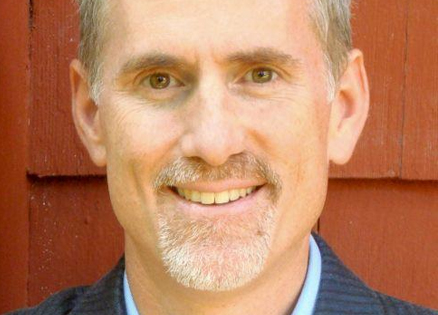
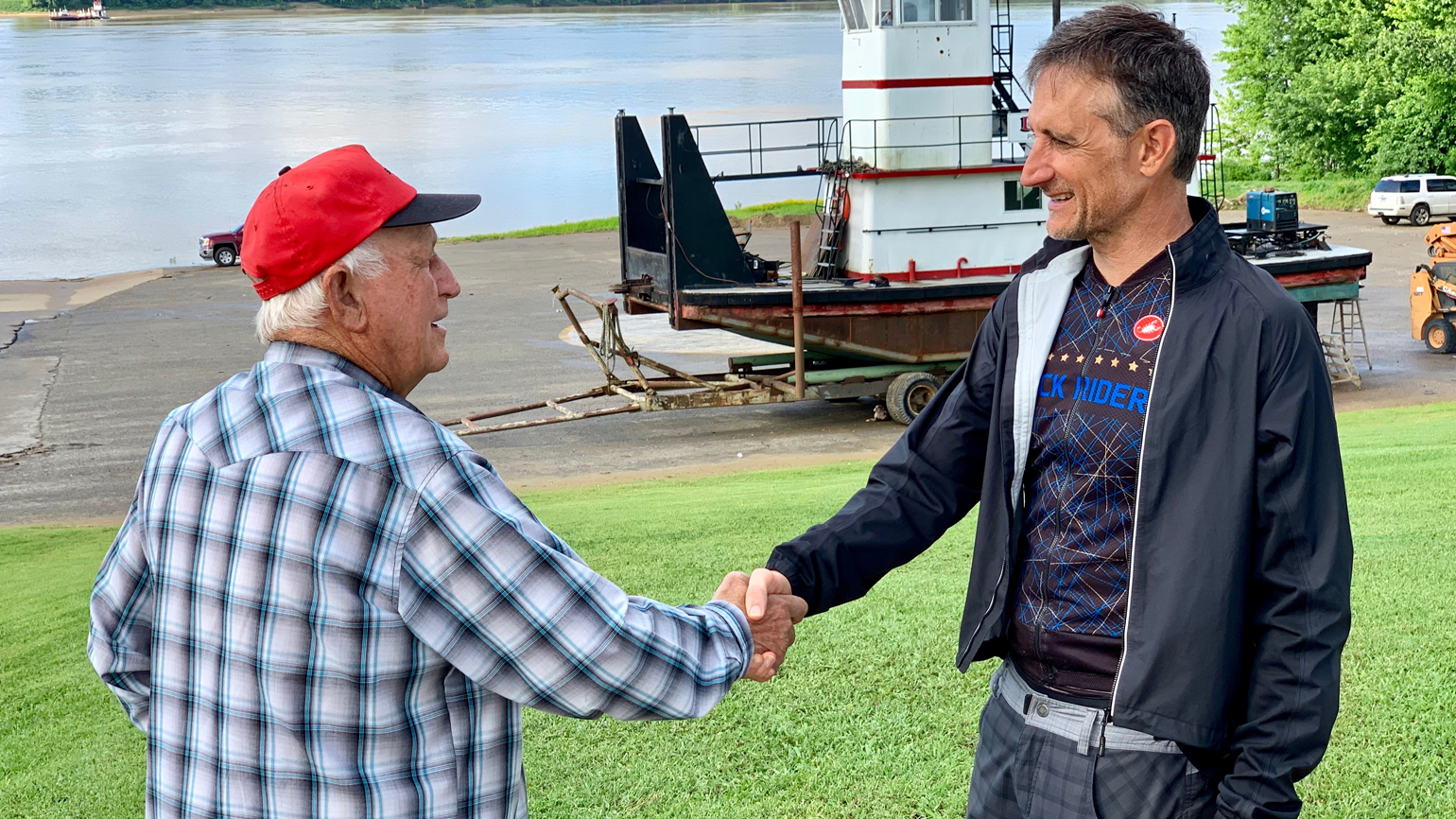
Tomba (above, right) should know. In 2019, he rode a bicycle across the United States from California to Maryland for the express purpose of talking about faith to as many strangers as possible about faith. An avid cyclist, Tomba had long dreamed of such a ride. He decided to make it happen after a survey at his church revealed that most members seldom talked to strangers about their faith. This year, Tomba published a book about the ride called The Listening Road: One Man’s Ride Across America to Start Conversations about God; the book outlines his life-changing experiences on the 33-day trip.
Whether in a city or on a farm, the first thing Tomba said to people he encountered on the road was: “I’m doing a cross-country bike tour and listening to people about what matters most.” Then he asked questions and listened for moments of common ground.
“I wanted to model something,” Tomba said.“I didn’t use the word evangelism,” Tomba said. “I’m not against it but people have so many stereotypes about what that is. My goal is to end a conversation [about faith with a stranger] knowing I could have a second conversation with that person.”
Tomba said that in an ideal world, people from all religious backgrounds would feel free to share their beliefs and hopes without fear of offending or being rejected. Christians feel particularly conflicted about this issue, he said, because Jesus commanded his followers to spread the good news—regardless of whether people want to hear it.
So, how do you share your faith in a polarized world?
Tomba’s counterintuitive answer: Stop talking.
“I never felt the need to make sure someone hears a three-point message they can agree with. I don’t think I have to seal the deal…It’s not about being right or having the answer but coming alongside someone.”
Humility and open-mindedness created opportunities to connect, Tomba said. “I would say to people, ‘We are here to be kind, curious and respectful.’ People would say, ‘I don’t have time.’ And then once they started talking, they would say, ‘Do you have time for one more story?’”
Stories inevitably led to deeper layers where religious questions no longer seemed out of place.
Chatting with a woman at a convenience store, Tomba said he noticed an edge in her voice when she mentioned that her grandfather was a preacher. Tomba asked how she felt about religious issues herself.
“You want the honest truth?” the woman said. “I’m angry at God. My son worked the late-night shift. He was coming home and a semi hit him and he died.”
Tomba realized that whatever the woman knew about religion, it wasn’t enough to help her with her grief. “I cried with her and prayed with her,” he said. Then he shared the story of Jesus at Lazarus’ tomb.
“There’s a part of that story that says Jesus wept and he was angry,” Tomba told the woman. “I stopped right there. Her eyes got really big and she said, ‘I never thought about that before.’ It was almost like she saw Jesus in a new way. Not plastic Jesus. You could see there was this comfort moment knowing Jesus cared about people dying.”
Talking to pair of grizzled motorcycle riders a few days after Memorial Day, Tomba learned that one of them had lost his father in a military plane crash. The rider suddenly said, “I want you to pray for my struggles in faith and for our safety today. Thanks for talking to me. This was a divine appointment.”
“Sometimes it’s enough just to point to God,” Tomba said. “You become fluent about the hope in your heart.”
Tomba’s emphasis on listening and looking for points of common ground is echoed by noted evangelist Dave Gibson, senior director of missions and evangelism at Grace Church in Minneapolis and director of the Go Movement, a worldwide evangelism initiative.
Gibson said Jesus himself models such an approach. “Jesus saw the multitudes and was moved to compassion. We need to enter into someone’s life,” Gibson said. “Be a good listener. People want to be listened to and want to know someone cares about them. The book of James says, ‘Be slow to speak, quick to listen.’ Talk in terms of other people’s interest. Build a bridge from your heart to another life.”
Gibson said he once talked to a man on an airplane who devoted much of the conversation to denouncing religious people as hypocrites who cause of most of the world’s problems.
Gibson’s response: “Jeff, I can’t totally disagree with you. You and Jesus have a lot in common.”
Gibson told the man that he too had grown up disillusioned with organized religion. “I said, ‘Jesus’ sharpest rebuke was to the Pharisees. He didn’t win a popularity contest with religious leaders. He came with love and compassion and healed people, fed the poor, cast out demons and died on the cross.”
Gibson said the man “looked at me and said, ‘Dave, I like you. Normally, if a person talks to me about religion, I punch them in the mouth. I guess I don’t have as much of a problem with Jesus as with organized religion.”
“That’s a great place to start,” Gibson said.
“We have to get over the idea that we have to totally agree with each other or we hate each other,” Gibson said, summing up his approach. “I don’t find arguing is a good point at all. I try to be winsome. Try to point it back to Jesus and be respectful…Words are necessary but not the first thing. Words fall on deaf ears if there isn’t that life to back it up.”
Human progress has benefited greatly from ordinary people who dared to dream and be different. Yet many of us have shattered, deferred, abandoned and unfulfilled dreams—and we mistakenly believe that we are not capable, worthy or destined to live them out. We may think that we lack the resources, education and talent to follow through. This is when dreams can die.
Author and speaker Les Brown writes, “The graveyard is the richest place on earth because it is here that you will find all the hopes and dreams that were never fulfilled, the books that were never written, the songs that were never sung, the inventions that were never shared, the cures that were never discovered, all because someone was too afraid to take that first step, keep with the problem, or determined to carry out their dream.”
We have thousands of reasons for not living out our dreams, many of them real. But in the end, letting those dreams die only leads to regret.
I recently heard about a mother who was 28 years old when her husband walked out and never came back. She had five children ranging from ten to two years old. On that day she made herself a promise that her present condition would not determine her life, that one day she would travel the world.
She took a can and began saving a dollar a day. With each day, difficult as it was, she deposited a dollar in that can, hidden in a closet. Once a can was filled with dollar bills, she got another one. For years the struggling mom saved until the youngest child graduated from high school. When all the children were out of the house, she took the money and bought herself a ticket on a ship and began sailing the world.
Ask yourself today, what dream big or small do I want to achieve? Start living it out, taking small steps. Your situation and circumstances may be unfavorable, but with consistent effort and determination, you can realize your dream.
I don’t know of any commandment from Jesus that’s harder to follow than His command to love your enemies. How can I do that?
“You have heard that it was said, ‘You shall love your neighbor and hate your enemy.’ But I say to you, Love your enemies and pray for those who persecute you, so that you may be sons of your Father who is in heaven…” (Matthew 5:43).
I was recently reading a new book by the columnist Arthur C. Brooks, president of the American Enterprise Institute, with the title Love Your Enemies. It’s not the sort of book I usually go for. I figured it’d be drier than dust and as polemical as an op-ed.
In fact, Brooks offered a very helpful example of how to put Jesus’ words into practice. He described getting an email from someone who read one of his books. “Dear Professor Brooks,” it began, “you are a fraud.” And then went on for some 5000 words, “criticizing in vitriolic detail every chapter in the book and informing me of my numerous inadequacies as a researcher and person.”
Brooks was flummoxed for a moment. How to respond? There seemed to be three possibilities: Ignore the guy. Insult him. Or destroy him by picking out his own errors and throwing them back at him.
Brooks, to his credit, chose a fourth way, a way that impressed me. Of course he felt insulted and attacked. But somehow he also had to acknowledge that the man had actually read the whole book. And that made him grateful.
So instead of answering screed for screed he replied—in measured tone—that though the man had hated his book, it took Brooks a lot of time and work to write it, and therefore he appreciated the time and attention the man had given to it. (Note to self: he didn’t grovel or apologize.)
What came back 15 minutes later was an email that totally surprised him. Something very friendly in tone, cordial, even the suggestion that they get together sometime and talk over dinner. From enemy to friend in a matter of minutes.
How to love your enemies? Respond to them as real people. We can all disagree but we are indeed all God’s children. Loving your enemies means making an effort to understand them.
Why did Jesus ask us to do such a thing? Because it’s an avenue for growth. I have discovered that the people who get me all riled up aren’t necessarily across the world or country. They might be sitting in the next pew.
Who better to start praying for? If I desire to be understood, shouldn’t I try to understand them?
To buy a copy of Rick’s latest book, Prayer Works, click here.
Who can forget the 1980 Winter Olympics in Lake Placid? The United States men’s hockey team, made up of unpaid college kids, beat the heavily favored Soviet Union’s team, made up of professionals labeled as amateurs, in a thrilling final 4-3.
Americans were glued to their seats, watching on TV and cheering the young men who were facing the greatest challenge of their playing careers. The win is still considered one of the biggest upsets in sports history and garnered the team a gold medal. It was called the “Miracle on Ice.”
Who doesn’t love an underdog? In some ways, it may remind us of ourselves. When we think of an underdog in the Bible, David against Goliath comes to mind. But another favorite is the four lepers. The Arameans, enemies of Israel, lay siege to the capital of Samaria, causing a famine. The people in the city had no food and no way out. But the four lepers were outcasts and had to live outside the city gates in accordance to the religious law.
As they sat at the entrance of the city, they decided to act in faith and walk with hope into the enemy camp where they would either be fed or killed. When the lepers arrived, no one was there. The Arameans mistakenly thought they had heard armies hired by the King of Israel coming to attack them. So they quickly fled, abandoning everything.
You can imagine the shock and surprise on the faces of the lepers. The men walked through the empty camp and began to eat, drink wine and take the silver and gold. But they realized the resources and good news weren’t just for them. So they returned to the city and told the king what had happened. Due to their faith and hope, others were also blessed.
Faith dares us to believe what we can’t easily see. It empowers us to trust that God will decide our outcome. Faith and hope together help us get through the most difficult circumstances and troubles in life. Bishop Michael Curry in his book, Love Is The Way: Holding on to Hope in Troubling Times, writes, “Hope comes along, and puts wind in our sails of faith. Hope is the energy that keeps us going when the gravity of reality would otherwise defeat us.”
When we face huge odds in life, doing nothing is not the answer. Why not let our faith and hope help us step into the unknown, trusting the outcome to God? This is what the four lepers did. When our backs are against the wall, we can either give up or act with courage. When we act with faith and hope, we discover God’s goodness on the other side. We learn that all along God was working on our behalf and making a way where we thought there was none.