

Embrace God's truth with our new book, The Lies that Bind

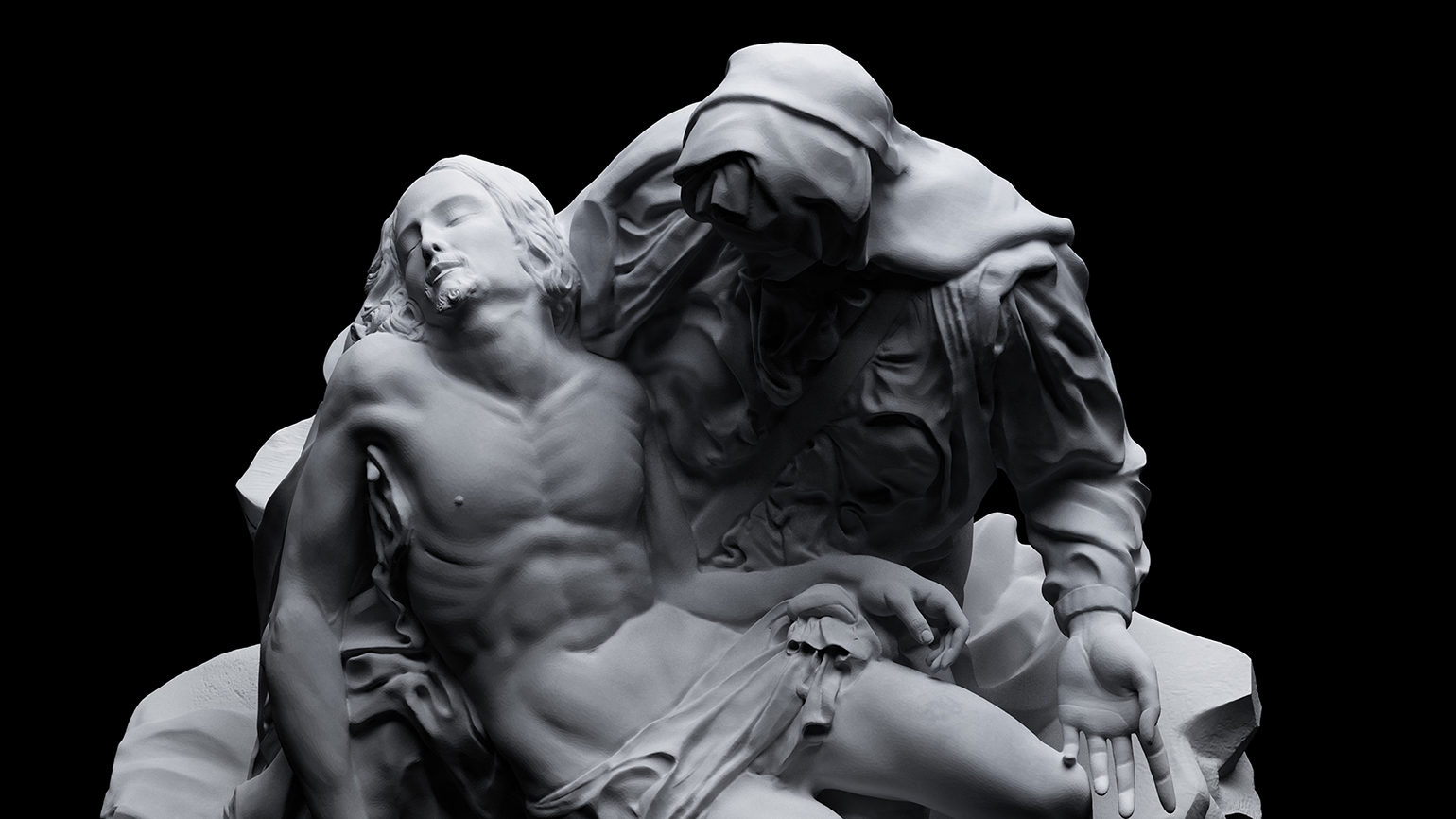
A Grieving Mother Finds Comfort in the Face of Jesus

It is spring—the world around me slowly reawakening, blushing with early blooming azaleas—but I don’t feel its promise. As I drive through my neighborhood on my way to perform in my church’s Easter production, I feel only the darkness that has been hovering over me for weeks, that has threatened to overwhelm me every spring since I lost my six-year-old son, Jeremy.

It was spring when he died, hit by a car as he was riding his bike just a few blocks from home. Six years have passed, and most of the time I am able to drive down the street where he was killed and not think about what happened. But now I can’t help remembering how the sunlight filtered through the unfurling leaves that afternoon in 1992 when Jeremy left our house on his bicycle, zipping down the driveway for what would be the last time.

I shake my head, as if I can dispel the memories crowding my mind, and try to focus on the evening’s performance, the final one, in which I will play Mary at the foot of the cross, singing a song of mourning for her dead son.

Several months ago, the director of the Easter production had come to me and asked if I would play the part. She knew about Jeremy, and she’d said with great tenderness, “I know it will be very hard for you, but you can do it. The Lord will use you.” There was no pressure—I could have said no. But I had prayed so many times for the Lord to help me make sense of my grief, to turn it into his glory. How could I refuse?

So far I have managed to get through the weeks of rehearsals and the two performances before this one. I cannot sing without crying. I cannot even think of the song without tears, but I have managed. Still, the pain of my loss, renewed each year around the anniversary of my son’s death, is more intense than ever. I haven’t felt the slightest whisper of the joy I know Easter is supposed to bring.

Just get through tonight, I tell myself as I pull into the church parking lot, and then it will be over. You won’t have to relive your suffering again.

Inside the building, I change into my costume, a simple robe and a blue veil. Backstage, I mentally rehearse my song. As always, when I reach the words “Is this the boy I raised?”* I falter, thinking not of Mary’s son but of my own. And I see not Jesus’ face but a freckled reflection of my son’s. My Jeremy.

The ache goes so deep, it is all I can do not to cry out. I close my eyes, weary from thinking of things I’ve trained myself not to dwell upon. Oh, Lord, I pray, I have cried long enough for Jeremy. Tonight let me cry for you.

But as soon as I take my place on stage, past and present collide in my head, relentless.

The actor playing Jesus kneels before a whipping post. As a soldier scourges him, he flinches, then moans in pain.

“Jeremy’s been in an accident,” my husband tells me and leads me to a waiting police car.

A sneering Roman forces the crown of thorns onto his head. Blood trickles down his cheek. Moments later, Jesus looks directly into my eyes as he strains to carry the heavy wooden cross on his back. I reach toward him, desperate to stop his suffering.

I hear my husband pray, “We gave him to you when he was born, Lord, and he is yours now.” I want to scream, “But this was not what we meant. Please, Lord, not this!”

The sound of the hammer as it drives spikes through Jesus’ hands and feet makes me shudder.

A solemn-faced nurse stands in the doorway of the waiting room. “The doctors have been trying to revive him for so long. They will have to stop soon. There’s nothing more we can do.”

Jesus hangs from the cross and stares down at me, his eyes burning with agony. A soldier hurls water at him, mocking his pain. I cannot look; neither can I turn away. He cries out, “Why have you forsaken me?” The torment in his voice echoes in my soul.

Then when he is still, his body is brought down from the cross. I rest his head on my arms and remove the thorny crown. Gently I wipe the blood away from his eyes, peacefully closed now.

“I want to see him,” I tell the doctor. We are led down a corridor to the room where Jeremy lies on a stainless-steel table, wearing the blue shorts he changed into just a few hours earlier.

When my son was born, I remember counting his fingers and toes, touching his face and examining it for the tiniest likeness to anyone else in our family. As he lies there, cold and still, I do the same, trying to memorize the shape of each finger, the softness of his blond curls. I trace the curve of his upper lip, the pale shell of his ear, knowing this one touch will have to last me for the rest of my life. I don’t want to forget a single precious detail.

At the foot of the cross, I begin my song. I stroke Jesus’ hair and hold his hand against my cheek, as I know Mary would have. In sorrow, in mourning, I sing, “Is this the boy I raised?”

The words float from my lips. I look down at the one I cradle in my arms and, as always, I weep. But this time they are tears of release. My grief has let go, and I think, Oh, Jesus, thank you…

For tonight it is his face alone I see. And I see in it how much he is with me, even in my suffering. Especially in my suffering. In reliving it, I have been drawn closer to him because once, long ago, he lived it too.

At the end of the production, when the choir sings in celebration of the Resurrection, I step back onstage and join in. “Hallelujah!” My voice lifts, as does my heart.

It is spring. As I drive through my neighborhood, I see that everything around me is transformed, warmed by the sun, graced with the green of budding trees, and I remember my son…not so much the pain of losing him but the joy of loving him. For the world is tinged with hope, the Lord’s true promise of spring.

*From Mary’s Song by Dallas Holm, 1979. Reprinted by permission of Brentwood Benson Music.

For more inspiring stories, subscribe to Guideposts magazine.
A Farmer Mentors the Next Generation

I’d practiced my talk for weeks. Agonized over my words. What stories from my life as a farmer in central North Dakota were most likely to inspire hope in an audience of farmers just starting out? Was there any hope for them? Their young faces looked so eager, so hopeful.

It takes a lot of courage to embark on life as a family farmer these days. Success is far from guaranteed, no matter where you live. Land is expensive. Banks are reluctant to lend to new farmers. The farm economy favors large growers.

That’s why I agreed to address this audience convened by a North Dakota nonprofit organization called the Foundation for Agricultural and Rural Resources Management and Sustainability (FARRMS). The foundation supports sustainable agriculture and strengthens local food systems through farmer education, peer support and microlending.

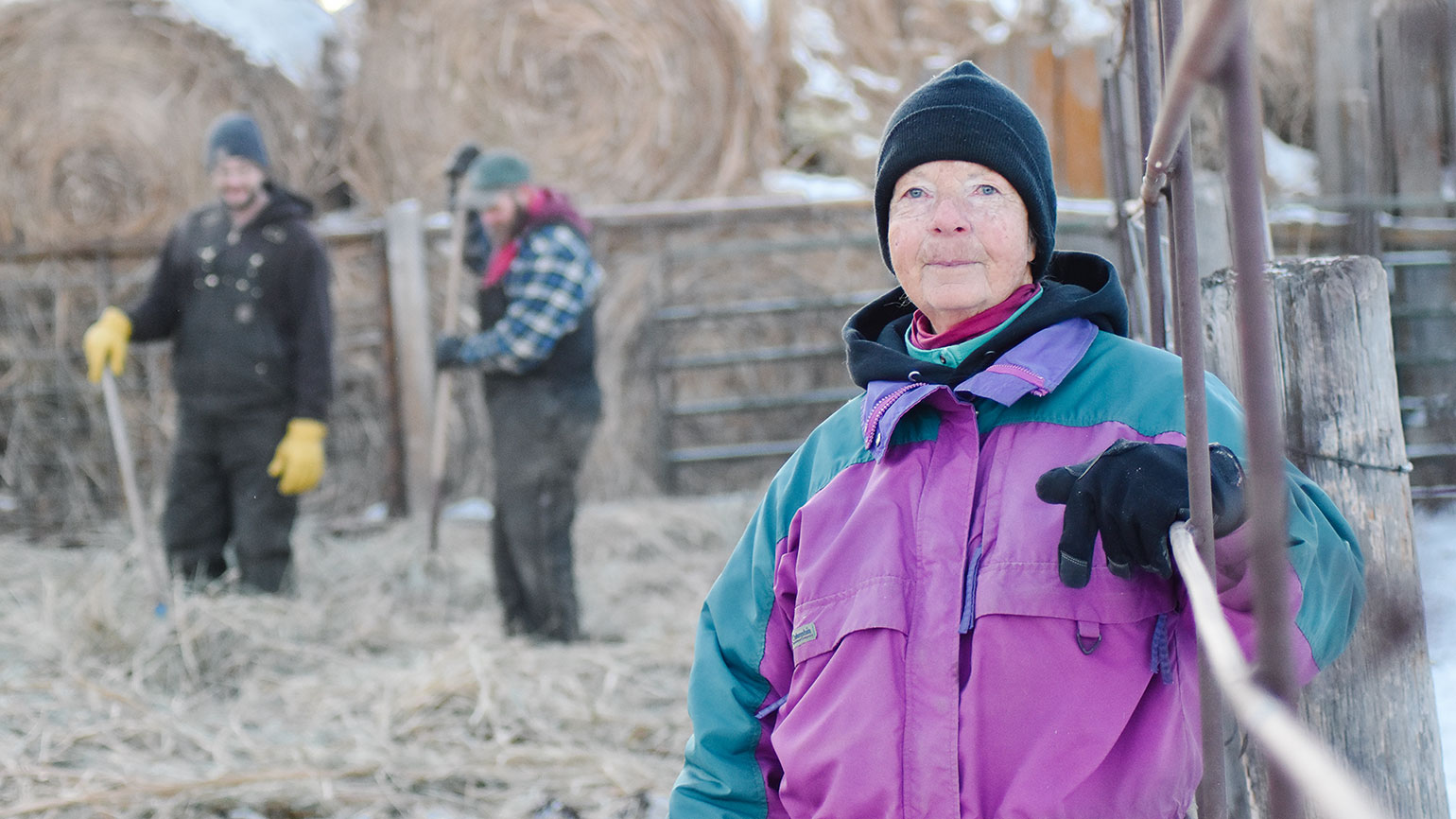
I’m almost 70 years old. I’ve been a farmer all my life. I’m not a natural public speaker. I’m most comfortable on my 468-acre cattle ranch. Most of my days are a quiet routine of farming and prayer. Often I talk to God more than I talk to other people.

I’m a widow. My beloved husband, John, my partner in life and farming, died of cancer nearly a decade ago. Since then, I’ve kept the farm going by myself. The organizer of the speaking event insisted I had lots to offer an audience of young people.

“Tell them how you and your husband got established and improved the soil,” she said. “Encourage them.”

What encouragement could I offer? The world had been very different when John and I started farming. What could I say to these fledgling farmers that would really make a difference?

A voice sounded in my head. Hope, Raylene. Tell them your story. Share your hope.

Was my story hopeful? Would it be relevant to these young people? The talk I’d prepared was based mostly on my own experience as a farmer. I had to trust that was enough.

I took a deep breath and began, trying to sound more confident than I actually felt. “My husband, John, and I started farming 30 years ago,” I said. “We floundered at first. We could barely afford equipment, and not many lenders would lend money to untested beginners. Our first decade, we almost went belly-up. Some days I didn’t even have money to buy a can of soup or a stamp to mail a letter.”

Heads nodded.

This was not a church gathering, and I didn’t want to intrude on anyone’s individual faith. So I left unspoken the spiritual part of my story as a beginning farmer. But that didn’t mean God wasn’t my foundation. For John and me, farming had been a calling from God.

Every day, I hiked to the top of a grass-covered hill overlooking the farm. I called it my Prayer Hill. There I poured out my heart to God. My prayer, my dream, never changed: “Make our farm a garden, Lord! Make it a place of healing, peace and prosperity. Your prosperity! Make it the place you want it to be.” And I prayed to be surrounded by other farmers who saw God at work on their farms.

I hoped that silent wellspring of hope would imbue my words as I told the audience my story. Recounting how John and I had built the farm, gradually climbing out of the worst of our money woes and learning to raise a herd of cattle using natural methods, I grew increasingly confident that God had answered my prayers in ways that would help other farmers. Perhaps this widow in her sixties had something to offer these young ones after all.

I continued my story, explaining how John and I kept the farm going by respecting the land and doing our best to make wise use of what we had. John used a team of draft horses to bring feed to the cattle in winter because the horses could plow through snow and we took our commitment to natural farming methods seriously. Instead of growing grain, we planted alfalfa, a perennial forage for cattle that also improves the health of the soil.

We grew a big garden for food and planted trees in a shelterbelt, not only to ward off winter winds but also to give birds and other wildlife places to live. I wrote articles for farm magazines to supplement our income. Family members generously gave us gifts of cattle and cash. Over the years, by the skin of our teeth, we built a self-sustaining farm.

I had long wanted to pay forward the help that God had given John and me. I prayed for ways to help beginning farmers in any way I could. That is what led me to accept the invitation to speak to that group of young people at the FARRMS meeting.

We older farmers have an obligation to help lift up the generation coming in. We have a wealth of experience and wisdom to offer. Depending on our financial circumstances, we also have resources. Over the years, God has answered my prayers to be of service by bringing mentoring opportunities or chances to share gifts of cash and cattle with beginners.

One of the most daunting obstacles faced by beginning farmers and ranchers is finding affordable land. Much of America’s farmland is in the hands of large owners. Available land is often expensive. Young farmers struggle to qualify for financing.

Older farmers like me are in a position to help because we have land.

Nonprofit organizations have begun to address this problem by pairing young farmers with farmers who are approaching retirement. One organization, Nebraska’s Center for Rural Affairs (cfra.org), has compiled a state-by-state database that can potentially link aspiring farmers with landowners.

The center also helps established farmers take advantage of tax breaks that are offered to those who rent or share their land and equipment with young farmers.

Sometimes the younger farmer takes over the farm when the older farmer retires. The farm survives, and a new farmer has hope for the future.

I have begun forming my own partnerships with young farmers. My neighbors, young ranchers named Tony Sommer and Sam Rau, have become what I call my farm cooperators. They run a small herd of cattle on pasture that I own. Instead of paying pasture fees, they rebuild fences. This summer, they will harvest my hay on a share arrangement.

Months after my FARRMS talk, I sat on Prayer Hill. It was a late summer evening, and I was worrying about Tony and Sam. Our cooperation has helped all of us survive. But some of Tony’s and Sam’s most pressing needs seemed insurmountable. Like so many family farmers, they were running up against hard limits.

The sun was setting, and hope too felt distant.

Yes, I thought, John and I succeeded against the odds. But the odds are even longer now. I didn’t know what to pray. “Father” was all I managed to say.

And God answered. Look around you! a voice said. What do you see?

I looked around. Flowing down from Prayer Hill, carpeting the farm, was a lush, green growth of alfalfa, thicker than in most years. Below me, a dense forest of volunteer trees (those that come up on their own) in a meadow broadened the shelterbelt of trees framing the farmyard. That meadow had been bare when John and I came to the farm.

Though I couldn’t see them from where I sat, I knew more than 100 young pines filled a distant part of the shelterbelt. I had planted them by hand after John died.

This summer, yellow-blossomed sweet clover grew up spontaneously on Prayer Hill. All around me, monarch and painted lady butterflies flitted from plant to plant. Past the hill, fat cows grazed in a paddock. A pheasant called from some hidden place in the field. A hawk soared above.

I recalled my prayer from long ago, for a farm that was a garden, a place of peace. Here it was!

If God had answered my long-ago prayer so richly for my husband and me, surely I could trust him to care for my neighbors Tony and Sam.

And for those young farmers I spoke to at FARRMS.

And for all those who grow the food we eat or call the land their home.

The nonprofit organizations, the mentoring, the cooperative arrangements like mine with Tony and Sam—all are vitally important and a source of hope.

God is my ultimate source of hope. I will pray that every beginner, every dreamer, is blessed by the God who makes all things grow.

For more inspiring stories, subscribe to Guideposts magazine.
A Dream Helped a Wrongfully Convicted Prisoner Remain Hopeful

The night I had the dream began like most nights—with me lying awake on my prison cot, each excruciating detail of my arrest and sentencing running through my head. It had been years since I’d been convicted for a crime I did not commit, but the entire ordeal was still fresh in my mind. As soon as I lay down in my cell to try to sleep, the replay would begin. This particular night started out no differently….

August 1984. It happened so early that the sun hadn’t yet risen. Violent pounding on the front door woke me. I stumbled toward it, half-awake. I opened the door, instantly blinded by flashlight beams. “Step outside, Mr. Bloodsworth!” someone shouted. What on earth? My eyes ached as they adjusted to the light. I was surrounded by a group of police officers with guns drawn and pointed at me. “You’re under arrest for the murder of Dawn Hamilton.”

A nine-year-old girl’s brutalized body had been found in the woods behind a mall. Authorities received an anonymous phone call from someone who said I matched the police sketch of the man spotted near the scene of the crime.

I looked nothing like this sketch. The suspect was described as more than six-foot-five, skinny, with curly blond hair and a bushy mustache. I was a six-foot, 200-pound, clean-shaven former Marine who had bright red hair and no prior arrests. But those things didn’t seem to matter. Neither did the fact that no physical evidence linked me to the crime scene. In court, five people testified that it was me that they’d seen. They were sure I had murdered that poor little girl.

When the judge read the verdict in March 1985 and the handcuffs snapped closed around my wrists, I was in shock. The word guilty was like a punch to the gut. At 24 years old, I had been sentenced to death. What made it all worse was that I knew it wasn’t just me who’d been wronged. Dawn Hamilton’s family members hadn’t gotten the justice they deserved. The real perpetrator was out there somewhere and could still hurt others. It made me sick. None of it felt real. This was a mistake, and someone would realize it—wouldn’t they? But weeks turned into months, and months into years, and no one had….

These were the kinds of thoughts that visited me in prison every night, making it hard for me to sleep. I tossed and turned in my bunk. I don’t know when I fell asleep, but suddenly I was dreaming.

In my dream, the door to my cell swung open. In walked a man. He was someone I knew of but had never met before. Why is he so familiar? Then it hit me. It was Pete Rozelle, the then–commissioner of the National Football League. He walked toward me and stood next to my bunk. Without saying a word, he reached into his pocket and pulled out a small object. He took my hand and placed the object—cool, shimmering, heavy—in it. A ring, similar to the kind that football players get when they win the Super Bowl but of a slightly different design.

“This is for you,” Mr. Rozelle said. “This is your Super Bowl.”

“I don’t understand,” I said. He just smiled. Then I woke up.

What a strange dream, I thought, blinking up at the ceiling of my cell. I couldn’t make sense of it. I didn’t even follow football! But the bizarre dream left me strangely hopeful. Hope is a rare commodity in prison, especially on death row, so I clung to the dream, even though I didn’t fully understand it.

It gave me extra motivation to continue working on my appeal. I couldn’t fathom how an innocent man could be locked up and sentenced on such flimsy circumstantial evidence. That was a big part of my defense when the case went back to trial. My death penalty was overturned, but I still faced two life sentences—a life behind bars.

I tried to make the best of it. Once off death row, I was given more liberties. I became a prison librarian. I helped other prisoners find books and spent a lot of time reading. I’d been locked up for four years when I came across a book about advancements in DNA testing. In 1992, the prosecution finally agreed to test the evidence from the case. At this point, my quest felt naive, but I still had hope.

Then my mom, who’d been a source of strength for me throughout my time in prison, passed away. I was allowed to attend the wake for five minutes in handcuffs and shackles, flanked by two armed guards. I felt more trapped than ever. Yet even then in the back of my mind was that dream. If my Super Bowl was meant to be a victory for me—my freedom—then was it on its way?

I had no idea what lay just around the corner. The DNA evidence was in, and I was granted a retrial. On my day in court, I knew that this was the moment I’d been waiting for. Sure enough, my DNA was not a match for any of the DNA found at the scene. Hearing those words aloud, I was so overcome with emotion that I nearly collapsed. Finally the world saw what I’d always known: I was innocent.

On June 28, 1993, after eight years, 10 months and 19 days, I walked out of the prison gates a free man. I was the first U.S. death row prisoner to be cleared by DNA evidence. I was granted a full pardon.

The DNA from the crime scene was eventually matched to the true culprit, a man named Kimberly Ruffner. He was already serving time for assault…in the same prison I’d been housed. I actually knew him. I’d helped him check out books from the library. How could he look me in the eye, knowing I was being punished for the horrific crime he committed?

It was one of the things that I struggled with as I adjusted to life back on the outside. My family wanted everything to go back to normal, but I wasn’t even sure I knew what normal was anymore. I’d spent nearly a decade behind bars. I was a different man from the one who’d been arrested all those years ago.

Since my release, I’ve devoted my life to helping others in similar situations. I work with the Innocence Project, a nonprofit organization that helps exonerate wrongfully convicted people. I found purpose speaking at Innocence Project events, making the case for changes in legislation. Later I also became the executive director for Witness to Innocence—an organization comprised of death row exonerees—to help end capital punishment.

In the quiet moments shortly after I was freed, memories from behind bars haunted me. I still had trouble sleeping. I was painfully restless if I had free time. I couldn’t find anything to ease my mind. One weekend, I had no speaking engagements or meetings. I was filled with dread at the thought of 48 hours with nothing but my own thoughts to occupy me. My girlfriend at the time was working on handmade bracelets for her friends and family, so I offered to help. Over the next week, I made some 50 bracelets. The work soothed my mind and soul.

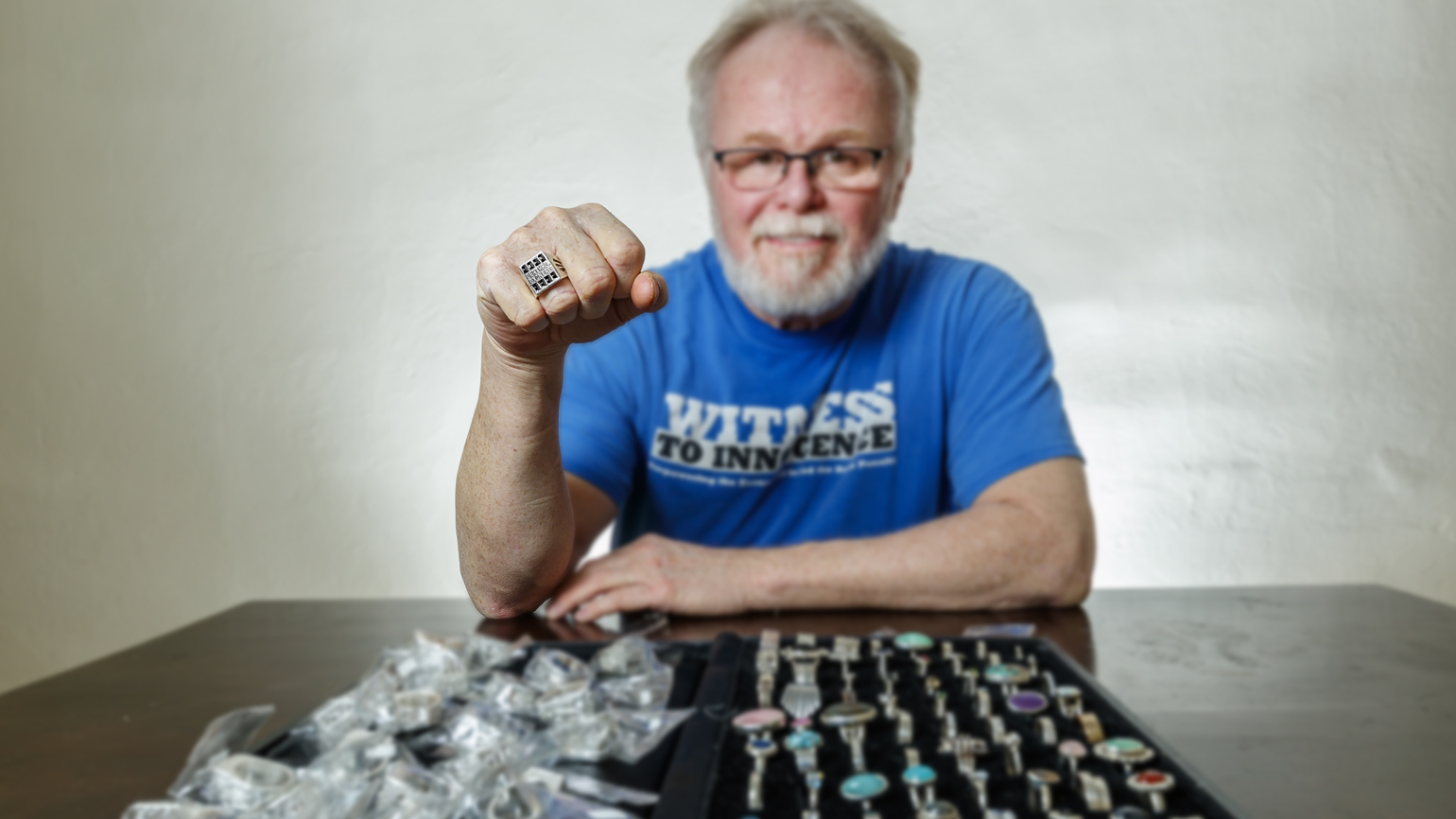
Eventually, I moved on to making rings. I went online and learned how to make simple metal bands out of spare quarters. Eager to learn more, I enrolled in jewelry-making classes at a local college. One of the assignments was to design a ring of our own. I sat down with a piece of paper and a pen and sketched feverishly. It felt as if the ring drew itself. I could not believe what I’d created. The sketch was not of just any ring. It was the ring! The one Mr. Rozelle had handed me in my dream all those years ago.

It resembled a Super Bowl ring but, instead of a team logo, featured an empty cell with the doors wide open. Above the doors was the word Exoneree. The sketch included a teardrop, representing the wrongful conviction, and three drops of blood—small rubies—signifying the past, present and future. The final product was cast in 28 grams of silver.

When I first slipped the ring on my finger, peace washed over me. Here was my reminder of what I’d gone through. A reminder that my fight had been worth it. That even though sometimes it might feel as if I’d walked away with nothing in return for those stolen years, I was in fact victorious. I’d come out the other side with my freedom. I’d wear the ring proudly to remind myself of my victory. Just as NFL players wear their rings to remind them of theirs.

From that original master, I’ve cast more than 230 exoneree rings. I give them, free of charge, to people like me. To innocent men and women who have had to pay for someone else’s crime and left prison scarred, with nothing to show for it. My ultimate goal is to give a ring to every exoneree. I want them to have the gift that my strange dream gave me all those years ago: hope.

Adding in a Little Goodness This Lent

Lent is almost here and I’ve been thinking a lot about what to give up this year. There are just so many things I could banish from my life for six weeks! Chocolate, that’s an obvious one. Diet coke, another no brainer. TV. Shopping. Even sarcasm, as one Guideposts author gave up for Lent.

I needed some inspiration to help narrow down my many, many choices. So I did a little digging online and searched for what people typically give up for Lent. Not surprisingly, chocolate, coffee and social media came up a lot.

In the middle of my research, I came across an old article from Time magazine about Pope Francis, who encouraged Christians to give up indifference for Lent 2015. The article included this quote from John Chrysostom:

“No act of virtue can be great if it is not followed by advantage for others. So, no matter how much time you spend fasting, no matter how much you sleep on a hard floor and eat ashes and sigh continually, if you do no good to others, you do nothing great.”

Well, that really got me thinking! Maybe, I thought, I could do something during Lent that would bring good to others.

So I’ve decided that, in addition to giving something up like candy or caffeine, I’m also going to do one good thing for another person (strangers included) for every day of Lent. That could include a random act of kindness or praying for a grumpy person on the subway or writing a thank-you note to someone who really deserves it.

I’ll pick a new person for each of the 40 days of Lent. I’m hoping this little exercise will make me more aware of others and more loving. I’ll report back on my progress throughout Lent.

What about you? What are you giving up–or adding in!–this Lenten season?

A Collection of Lou Dean Stories

A Lesson Learned from a Faithful Dog

Every year, Lou welcomed people from a local youth group to her acre on Blue Mountain in northwest Colorado where she lived with many animals. She would gather everyone around the campfire, where she shared the many lessons of love, patience, and tolerance that her animals taught her.

One July evening, during one of the campfire gatherings, a young man claimed one of Lou’s dogs, Keeper, tried biting him. Lou knew that Keeper would only growl or react to someone if they were taunting her, but rather than question the young man, Lou apologized and put the dog in time-out.

The following summer, the boy returned to Lou’s barn, inclined with a confession that would become another lesson taught by one of Lou’s angels, Keeper.

Did She See an Angel at Work?

For five months, Lou was the only female laborer on a pipeline job. Working with an all-male crew, she was conditioned to the jokes. So when the men laughed at her fear of rattlesnakes, she brushed it off.

One afternoon, after most of the workmen had finished and gone home, Lou panicked when she encountered a rattlesnake inside a ditch. The engineer she was working with suggested she take a break to recollect and catch her breath.

She wandered off to a spot where she fell to her knees and prayed. After asking the Lord to help her get through the remaining two weeks of the job, she heard someone approaching. It was a mysterious young man who not only comforted her with words, but continued doing small miracles for her on the job.

She Found Comfort in Counting Blessings

After traveling far through a snowstorm to meet with a specialist regarding her inflammation problems, Lou had grown frustrated. She sat in a crowded hotel dining area, eating her complimentary breakfast, when a young man sat at her table. Lou tried her best to avoid small talk, but later felt guilty for cutting him off.

She asked the young man about his writing after noticing the spiral notebook he pulled out of his backpack. He explained to her that he was working on a smile list for his mom who was battling lung cancer. He was listing blessings that would bring his mom comfort from afar. The list, one entry in particular, enlightened Lou who realized meeting the young man was much more than a simple encounter.

She Wove a Perfect Web

Lou was going through a hard time adjusting to life without her son, who moved two thousand miles away to work in North Carolina. She tried her best to remain busy by going through her usual chores on the farm and spending time with her animals.

One day, she went to get dog food out of the tack room, a storeroom in the back of the house, when she noticed a spider building her web on the top corner of the doorway. She grabbed the hoe and quickly tore the web down. The spider returned the following morning and the morning after that, remaining persistent. Lou eventually gave up and grew to admire the spider’s progress the days that followed.

Little did she know, the spider would teach her a special lesson in strength and courage that she would be able to apply to her life.

Mama’s Angel Soup

Lou and her three siblings spent most of their lives learning how to handle their mother’s alcoholism-the mood swings, unpredictable behavior and countless departures and returns. She grew angry with Mama and cut all communication, letting five years pass before writing or calling her again.

It wasn’t until she had a child of her own, when she realized anger wasn’t something she wanted to teach her son. She nervously gave Mama a call and asked if she’d like her to visit. Mama, who continued to struggle with alcoholism, suggested going to church together, a get-together Lou looked forward to doing.

Upon entering Mama’s house, the smell of homemade soup brought Lou back to happier times, when she would cook her famous ‘Angel Soup’ in the kitchen at the old family farm.

Lou learned something about her mother that afternoon, a lesson she carries within her heart, even all these years later.

The Dream That Answered Her Prayer

When Mama passed away, Lou struggled to grieve without feeling angry or confused. She had no words planned for the service honoring her mother, whose addiction had continuously taken her away from her husband and kids. She and her brother, David, planned to scatter Mama’s ashes along the Arkansas River, where the best memories of her were held.

Lou wanted to feel anything but bitterness when thinking of her mom, but she needed God’s help. She fell asleep that night and dreamt of Mama as an innocent, happy child playing by the creek. After waking, she began going through Mama’s belongings and found a box containing books and papers, some of which taught her things about Mama she never knew. These items, along with her dream, gave Lou exactly what she needed, just in time for Mama’s service.

From Caterpillar to Butterfly

Every aspect of Lou’s life was changing and she was having a hard time adjusting to it all. Her brother, Phillip, left home to join the Air Force, her dad moved to Purcell, Oklahoma after remarrying and selling the family farm, taking Lou away from all of her friends. She was angry at her dad for making them move, angry at her brother for leaving, and even angry at God for ignoring all her prayers to stop all these changes from happening.

Lou’s grandma and her little terrier, Shorty, seemed like the only bright aspects of her life. Thankfully, Grandma also lived in Purcell so Lou and Shorty visited her often. During one of their visits, Grandma pointed out a caterpillar clinging to a leaf among the bushes. Throughout the days that followed, they kept up with the caterpillar until it became a bright, yellow butterfly.

The butterfly taught Lou a big lesson that summer, one that brought her a better understanding and acceptance of her new life.

A Child’s Act of Kindness

A sweet moment between two little boys happened during church this past Sunday morning. The little guy in front of us (who had just recently started walking) had inched down the pew until he was at the end.

I noticed that his attention was fixed on a little boy (probably five or six years old) across the aisle. Well, to be precise, his attention was fixed on the package of fruit snacks that the boy was eating.

And then as the pastor made announcements in the background, that toddler was off, walking with unsteady steps to the pew across from us.

The little boy with the fruit snacks noticed him and reached into the package to dig out a fruit snack. It took him several tries. But by the time the toddler made it across the aisle, a fruit snack was waiting.

READ MORE: GOD’S WORDS OF LOVE

Both of them were smiling as the littlest one popped the treat in his mouth and started back to his mama—and many of us in the congregation were smiling as well. But what stood out to me was that the young boy with the fruit snacks had given away his last one. The bag was empty. Such pure and precious kindness.

The moment brought tears to my eyes as I thought about how children are often the best teachers. Our society has never needed kindness more—the kind where we love like Jesus and love each other in spite of our differences. I couldn’t help but think how different our world might be if we were willing to put others first just like that little boy with the bag of fruit snacks.

God says it best:

And be kind to one another, tenderhearted, forgiving one another, even as God in Christ forgave you. (Ephesians 4:32)

Be kindly affectioned one to another with brotherly love; in honour preferring one another. (Romans 12:10)

A new commandment I give to you, that you love one another; as I have loved you, that you also love one another. (John 13:34)

Let’s share some kindness today. It might even cause those around us to smile!

A Calming Reminder of God’s Presence During Challenging Times

I live in New York City, an epicenter of the Coronavirus outbreak. My family and I have a lot to worry about. We are sheltering at home. School is closed. Businesses are closed. The city’s normally unruly streets are eerily quiet. Thousands of miles away, my mom is similarly locked down in an assisted living facility in California. My wife Kate’s mom is in the same situation in Seattle.

One thing that helps keep me calm is a memory. It’s something that happened just a few weeks ago, back when I still rode the subway to work and Kate and I still held out hope that we’d get to take the kids on a long-planned , long-looked-forward-to trip to London. That feels like another lifetime.

I was riding home on the subway, already anxious about the Coronavirus’s steady advance toward New York. I was reading, trying to focus on something besides worry. Just before the doors closed at the 14th Street station, a man stepped aboard and said in a loud voice, “ Good afternoon, everyone, pardon the interruption.”

I didn’t look up from my book. Homeless or mentally unstable p eople board the subway all the time and loudly tell their stories before asking for money. New Yorkers tune it all out.

Beautiful chords began playing on a guitar. “I just want to wish everyone a blessed day,” the new passenger said before launching into a soaring rendition of Michael W. Smith’s praise song “Open the Eyes of My Heart.”

His voice rang out in the hushed car: “Open the eyes of my heart, Lord. Open the eyes of my heart. I want to see you.” And then the chorus, even louder: “ To see y ou high and lifted up, shining in the light of your glory. Pour out y our power and love as we sing holy, holy, holy.”

The train neared the next stop and the singer lingered on those last words , repeating them over and over: “Holy, holy, holy.”

I lowered my book, closed my eyes and rested my forehead on my hand clutching the bar in front of me. I wanted to cry. All of my anxiety evaporated in that song, swept away by those words: “Holy, holy, holy.”

The train stopped. “Blessings to you all,” the singer called out. “God loves you, have a great day.” He stepped off and disappeared into the crowd.

Now, at home, when I feel myself starting to freak out, I play that song. I remember that moment of unexpected grace. And I remember something that is true no matter how bad things feel : God is here. God is at work even if we’re too anxious to see it.

Open the eyes of your heart. Trust me, you’ll see.

A Boy’s Big Dream Comes True

While at the National Religious Broadcasters Convention recently, one of the speakers told a story that was such a beautiful example of faith that I asked if I could share it with you. That speaker, Sam Haskell, graciously agreed.

Years ago when Sam was nine, a television commercial snagged his attention. Procter & Gamble had launched an ad campaign with “the Cheer Man,” a character who visited neighborhoods around the country. If he rang your doorbell and you had a box of Cheer (or even something like “Cheer” written on a piece of paper), you’d receive ten dollars.

Sam was convinced the Cheer Man would come to his home in Armory, Mississippi. Many parents would have squashed his idea as impossible, but his mom helped him prepare for that visit.

Young Sam made a three-foot by four-foot sign with the Cheer logo and hung it in his bedroom. He was ready, and he told his classmates and everyone he talked to that the Cheer Man was coming to his house. People laughed at him, but his mom kept encouraging him to dream. Sam told the scoffers, “He’s coming!”

Time went by and the ad was no longer on television. Sam stored the sign in his closet—but he still believed. The Cheer Man was coming to 405 South Third Street.

Read More: She Picked Up her Horn and a Passion Was Reborn

The next summer when Sam was ten, he went to a neighborhood birthday party. While they were playing football on the lawn, they heard what sounded like someone shouting through a megaphone. As the noise got closer, they saw it was a car with a loudspeaker on the roof—and a man was yelling, “Cheer! Cheer! Cheer . . . is here!”

Sam watched in awe. The car was still several blocks away, but he knew in his heart that it was going to his house. Sam ran home, grabbed his sign, and rushed back outside holding it over his head. His heart pounded in excitement.

And then, just as he’d dreamed, the Cheer Man stopped in front of his house, walked up to Sam, and said, “You get the ten dollars.”

Sam’s mom had a huge smile on her face. His dad—who’d made fun of him for his dream—stood there in shock. He just had to ask a question to the Cheer Man. “Out of all the tiny towns in Mississippi, how did you end up coming here?”

The Cheer Man replied that the names of every registered voter had been entered in a computer. It picked two random addresses in every county in every state. And one of them just happened to be 405 South Third Street in Armory, Mississippi.

Young Sam learned a valuable lesson that day about believing in a dream. He discovered that anything is possible. That knowledge paved the way for Sam Haskell’s future as a television executive and producer in Hollywood. In 2007, TV Guide named him one of the 25 Most Innovative and Influential People in Television over the last quarter century.

And it all started with the Cheer Man and a mother who encouraged his dreams.

9 Things You Should Know About the Reformation

On Oct. 31, 1517, a little-known German monk altered the course of history in a way that continues to shape the modern world. This year on the same date, the world’s 560 million Protestants will mark the anniversary of what came to be known as the Reformation. Here are nine things to know about the Protestant Reformation and why it is still relevant a half a millennium later.

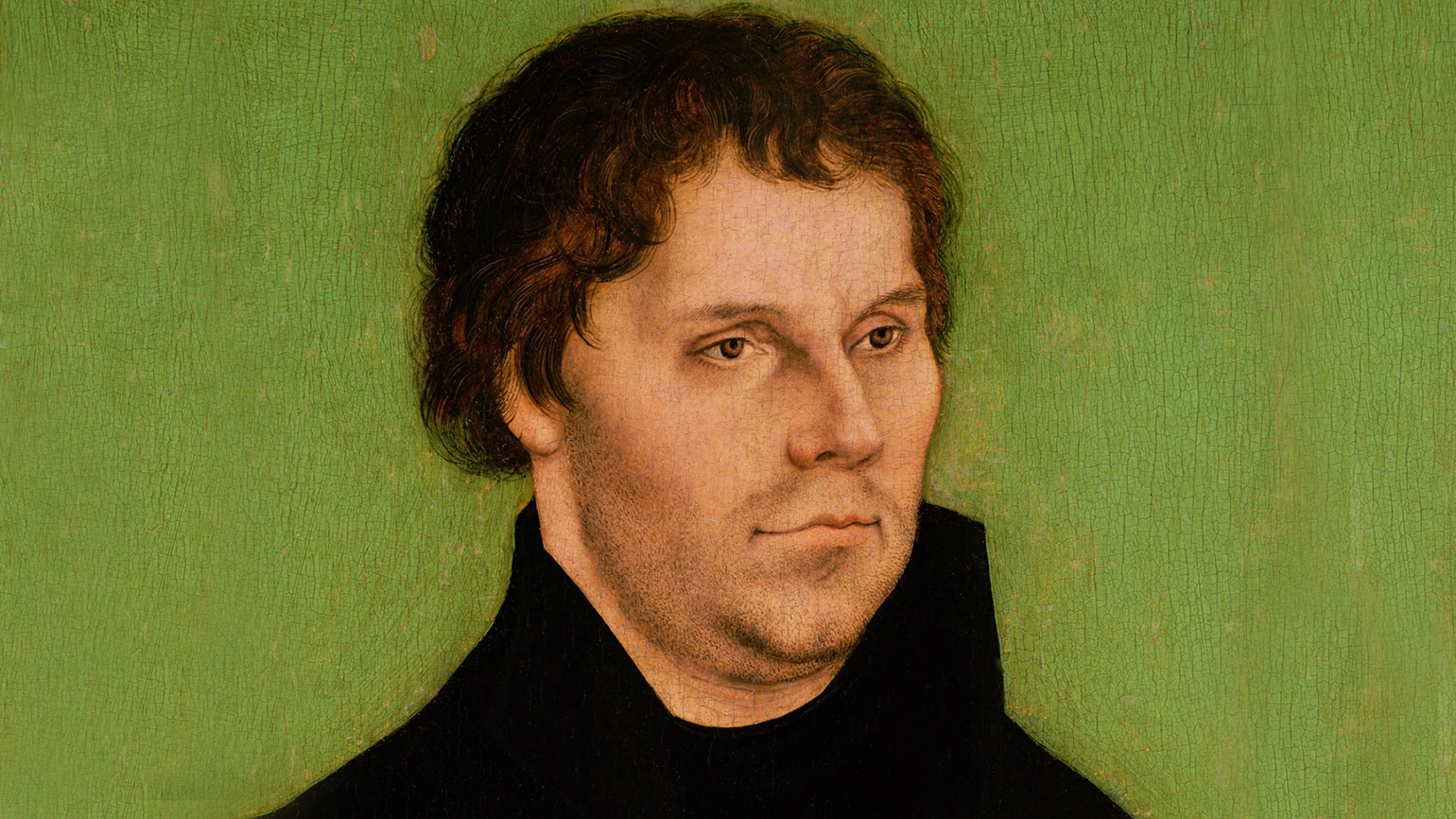
1. Martin Luther, born in Germany in 1483, was the man behind the Reformation. As a learned monk, Luther was angered by corruption in the Catholic Church, particularly by the sale of “indulgences”—the remission of sins that supposedly let the purchaser into heaven. The money was to be used for the renovation of St. Peter’s Basilica in Rome, the seat of Pope Leo X. “Why,” Luther asked, “does not the pope, whose wealth today is greater than the wealth of the richest Crassus, build the basilica of St. Peter with his own money rather than with the money of poor believers?”

2. On Oct. 31, 1517, legend holds that Luther nailed his “95 Theses”—list of grievances against the Church—to the door of the church at Wittenberg Castle. The first two theses formed the main foundation of the Reformation—that the Bible, not the clergy, is the sole authority on matters of faith—what Luther called “sola scriptura”—and that faith alone—“sola fide”—and not good deeds, assure salvation.

3. To use a modern phrase, the “95 Theses” went viral, thanks to what was then a new invention—the printing press. One year later, Pope Leo X ruled Luther’s teachings were “scandalous and offensive to pious ears.” He gave Luther 120 days to repent and recant. Luther refused.

4. On Jan. 3, 1521, Pope Leo X excommunicated Martin Luther from the Catholic Church. The Holy Roman Emperor, Charles V, declared the former monk an outlaw whose writings must be burned. Luther went into hiding and, for the next ten years, worked on translating the New Testament from Latin, the tongue of the learned, into German, the tongue of average people. Thanks to the printing press, Luther’s Bible was widely published in 1534.

5. Throughout the 1520s, the Reformation spread beyond Germany to other countries. In most places, Protestants were considered heretics—there were civil wars, persecution, torture and brutal death sentences for many Protestant leaders and believers. But Luther’s ideas had taken hold.

6. By the mid-1500s, reformers like John Calvin and John Knox developed them further. One of Calvin’s ideas was “pre-destination”—that all things, including whether or not someone will receive eternal salvation, are pre-determined by God. Calvinism became the foundation of the Presbyterian, Congregational and Reformed churches, among others. Today, about 37 percent of the world’s 2.2 billion Christians are members of a Protestant denomination.

7. There is a darker side to Reformation history. Luther wrote and spoke frequently and with great passion against the Jews. Some of his works were used by the Nazis to justify their persecution of the Jews. The Nazis saw the Third Reich as the fulfillment of Luther’s Reformation, but other German Protestants abhorred the Nazi’s mix of Christianity and nationalism. German theologian Dietrich Bonhoeffer said of Nazi Germany, “Luther’s words are everywhere, but twisted from truth into self-deception.” Bonhoeffer was executed by the Nazis as a conspirator one month before the end of World War II.

8. If Luther returned today, he would get a surprise—not all Protestants agree with his seminal ideas of “sola scripture” and “sola fide.” In August, the Pew Research Center found that about half of American Protestants say both good deeds and faith are needed to get into heaven. The same amount say Christians need the guidance of church leaders in addition to the Bible. The numbers are about the same in Europe. And this year, in a ceremony in Luther’s Wittenberg, Protestant and Catholic leaders reconciled over Luther’s main breaking point from Catholicism—that salvation comes by faith alone, and not through good works.

9. Five hundred years after Luther wrote his “95 Theses,” its impact is still felt, even beyond religion. Luther’s emphasis on scripture advanced universal literacy, and his emphasis on the individual paved the way for the Enlightenment and its democratic ideals. But his single greatest impact was on faith.

Martin Marty, the religion scholar and theologian, said of Luther, “I have a hard time picturing several aspects of the modern world without Luther. Take, for example, the prominence of the gospel of forgiveness. Though others championed this doctrine as well, Luther was fiery hot. That emphasis, though maybe not with the same heat, still characterizes half a billion people called Anglican, Lutheran, Baptist, Evangelical, and the like. That is the longest shadow Luther casts today.”

7 Things Christmas Teaches Us About Hope


For Emily Dickinson, hope is the thing with feathers. In my world, hope is the thing with tinsel. And it can easily be found within classic Christmas stories of hope.

Like most people, Christmas evokes all kinds of emotions for me. There is grief of loved ones lost during Christmases past and holiday stress about how handle difficult relationships at family get-togethers. There is anxiety when I add yet another item to my ever-expanding holiday to-do list. And there is the sense of wonder when I drive through town and gaze up at all the lights and wreaths reminding me to hold on to the magical feeling I felt as a young girl on Christmas morning.

Most of all, though, Christmas inspires hope. The symbols and stories surrounding the birth of Jesus whisper into my ear, “Don’t give up. Keep going.” Here are just a few of the ways Christmas teaches me lessons of hope and fills me with optimism.

The wise men in silhouette pointing to the north star in a christmas story of hope

1) Follow the North Star

An epiphany refers to a sudden realization about the meaning of something. It usually feels inspired – from an intuitive place that is charged with wisdom. For Christians, the Epiphany is associated with the visit of the Wise Men to Jesus. They were guided by the Star of Bethlehem that heralded the newborn king of the Jews. The Epiphany teaches us to trust our North Star, the voice inside of us that is guided by the Spirit and will direct us to goodness and truth. The story of the Magi inspires hope that if we follow our epiphanies, we will, like the Wise Men, arrive at the place we were meant to be.

2) Believe

If you watch the Macy’s Parade on Thanksgiving morning, you’ll see the unmistakable backdrop with the word “Believe.” Christmas is about believing in things that defy logic: the Son of God being born to a virgin in a stable filled with farm animals. This holy season prompts us to become childlike in our faith: to think with our hearts rather than our brains, to embrace a world beyond our own, trusting that God is with us every day. Christmas inspires faith – in God and in His goodness, truth, and beauty that are very real but not always visible.

READ MORE: 8 Christmas Bible Verses to Inspire Love and Peace

A mother and son looking up at Christmas lights with hopeful expressions

3) Say Yes

Perhaps the greatest story of courage ever told was Mary’s three-word response to the angel Gabriel when he explained to her that she would bear the Son of God. “Let it be,” she said, “I am the handmaid of the Lord.” With great humility, she opens herself to God’s will and submits to His plan, even though she knows none of the details. By uttering her Fiat (Latin for “Let it be”) she initiates the Christmas story and the arrival of God into human history. Mary’s response also generates hope for all believers – that by saying yes to God we participate in the Christian story and find meaning that sustains us.

An angel Christmas ornament gives us hope

4) Talk to Your Angels

The angel Gabriel may not appear to us as vividly as he did to Mary, but we are all surrounded by angels that we can call on for guidance and assistance whenever we need it. Like an inspired GPS system, they help navigate the way, getting us from Point A to Point B, if we choose to access their help. Christmas reminds us of the active presence of angels in our lives. They sit at the top of decorated trees as beacons of hope sending the message that we are not alone.

5) Embrace Your Royalty

Purple or violet has traditionally been the color of Advent. It symbolizes an anticipation of the coming King, as well as royalty and nobility. The first candle of the Advent Wreath is the Candle of Hope, representing the arrival of something new and profound. Advent teaches us to anticipate the good things that we can’t see and to remember the presence of the royal King in our lives, who bestows upon us gifts beyond measure. As sons and daughters of the King, we are part of the royal family. We can embrace our nobility and wear purple year-round.

READ MORE: 10 Interesting Advent Facts to Get You in the Holiday Spirit

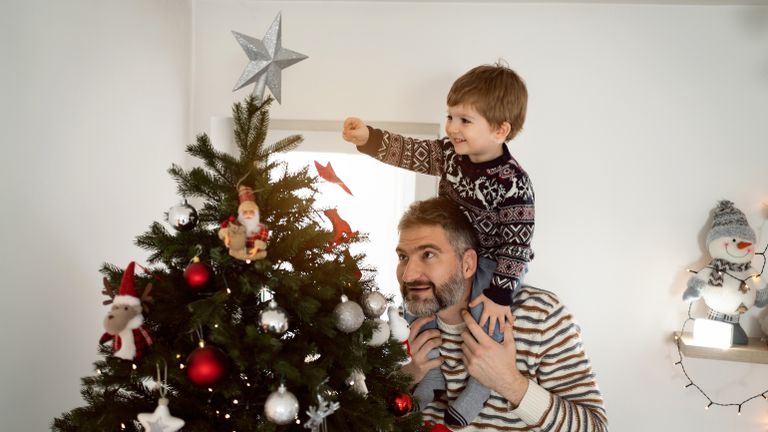
A father and son decorating a Christmas tree and looking hopeful

6) Consider the Evergreen

Evergreens decorate our homes and churches during Christmas, reminding us of the promise of everlasting life and our ability to weather hardship. The evergreen remains unchanged through the seasons, inspiring a message of hope to persevere through adversity. The Christmas tree is a symbol of Christ, the miracle of Christmas, and God’s gift of life. The green boughs on a Christmas wreath or a garland point us the perennially freshness of life — that even when we feel as though our world is growing stale, there is always an element of newness and rebirth.

7) Persist in Darkness

Light shines brightest in darkness. That’s the heart of the Christmas story, an overriding message of hope that is articulated beautifully in the lyrics of “O Holy Night”: “O holy night, the stars are brightly shining, It is the night of our dear Savior’s birth.” God didn’t come into our world at high noon. He entered our lives in darkness — showing us the way to light, guiding us towards love, and demonstrating how to overcome shadows and blackness.  Christmas teaches us that even when things seem dark, we can trust the everlasting light.

7 Lessons Learned from Hurricane Harvey

I cried numerous times watching the images of the devastation left behind from Hurricane Harvey. My heart was broken for friends whose homes were under water, for friends who were trapped in stifling apartments with no electricity or water and only a couple days of food left. Stories of strangers and loss of life moved me to tears again and again.

Yet in the midst of tragedy that is beyond words to describe, moments of beauty arose… moments that made me want to stand up and cheer. People driving in from states far away, hauling their boats to help rescue those who were stranded. First responders, weary beyond words, who kept going and going and going. Businesses and churches that opened their doors and hearts. Volunteers who helped shoulder the burden, who dispensed food, hugs, love and encouragement to evacuees. Even moments where songs and worship drifted throughout a shelter and into the hearts of the hurting.

That made me think about some things:

1. I’m not as grateful as I thought I was. When was the last time I thanked God that there was water for a shower or for the hot food on my table? When was the last time I thanked Him for the shoes on my feet and for a change of clean dry clothes?

2. Stuff doesn’t matter as much as we think it does. The images are so sad of neighborhoods with the damaged contents of homes piled mountain-high next to the curb. But talk to the homeowners, and the comments are, “My family is all safe.”

3. God’s grace is there when we need it—and it’s always on time. Not before. Not after. But just as we need it.

4. From posts by friends in the Houston area who were deeply impacted by the hurricane and flood waters, I was reminded that humor lightens any situation. It helps us and other people.

5. The courage and grace of friends who were deep in the pit of hard times shows that God has given us a resilient spirit and strength for the moment.

6. I was reminded that neighbor helping neighbor, stranger helping stranger is a beautiful thing.

7. And I was reminded that we need to be compassionate and to give. To help in any way we can—whether it’s hands-on help, offering refuge for an evacuee family or digging deep in our pockets for financial contributions.

My heart continues to hurt for those affected by the hurricane and floodwaters. But I’m grateful for the lessons that can be learned—even in the midst of a tragedy.

6 Women Who Inspire Us Today

They are missionaries, political activists, diarists, First Ladies, actresses, and rulers. Although the trajectories of their lives vary greatly, they all inspire us today.

These strong women—who continue to inspire others by their example— have made the world a better place with their perseverance, wisdom and compassion. Here are the six lessons I learned from each one.

Perseverance

Born Agnes Gonxha Bojaxhiu in Skopje, Macedonia, Mother Teresa (1910 – 1997) taught at St. Mary’s High School, in Calcutta, India, but was compelled to do something about the suffering and poverty outside the convent. In 1950 she founded The Missionaries of Charity, a religious order that continues to serve the poorest of the poor across the world today. In September 2016, she was canonized a saint by Pope Francis. Although her dedication to the poor is inspiring, it’s her persistence through years of doubt, as recorded in her private journals, that inspired me the most. Despite a painful dark night of the soul, she continued to serve God and believe in His goodness. In doing so, she models for me how to persevere through darkness and doubt.

Transforming Struggle

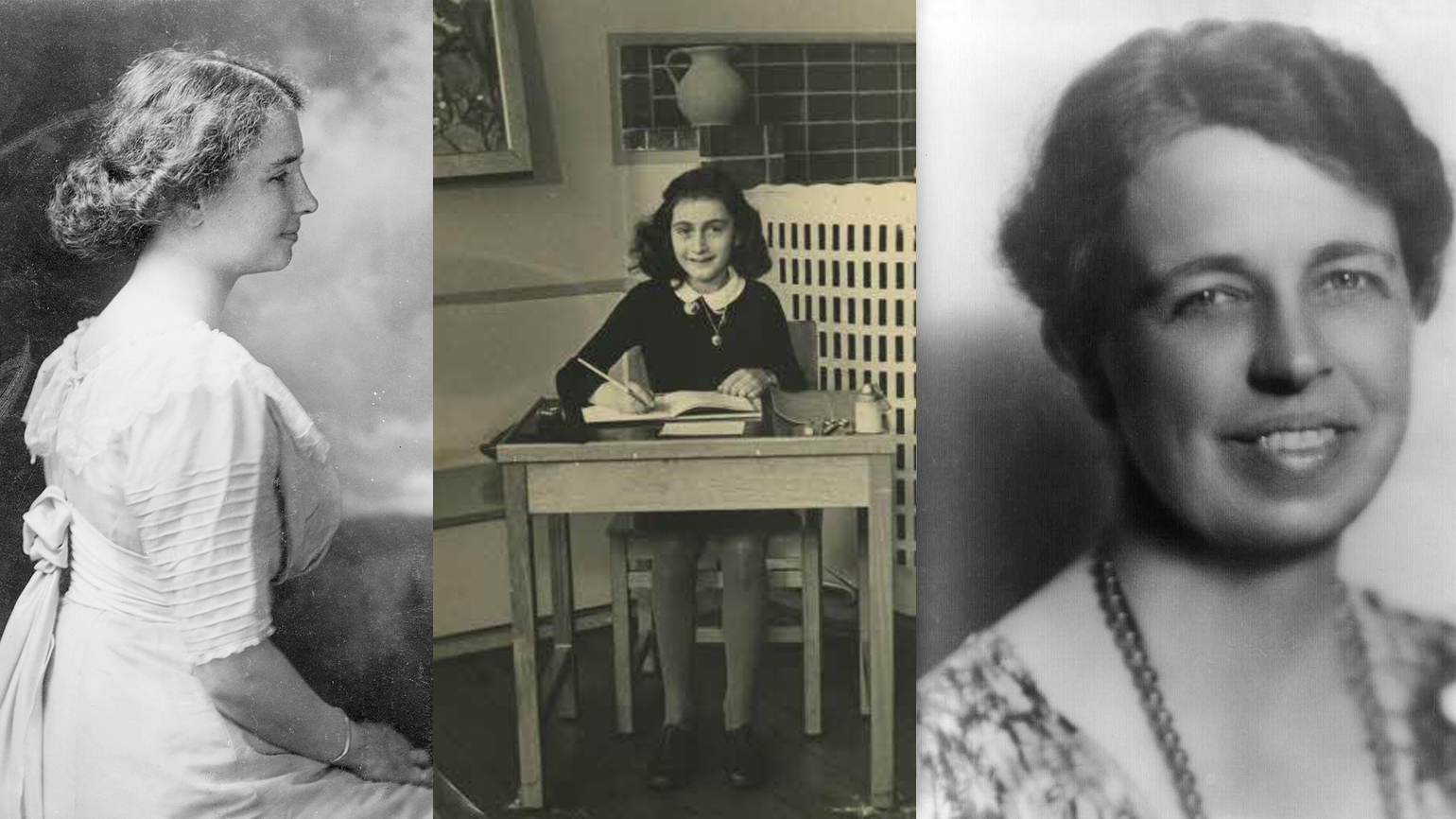
A deaf-blind author and political activist from West Tuscumbia, Alabama, Helen Keller (1880 – 1968) provides a powerful example of a woman persevering through two major disabilities to achieve a meaningful life. “We could never learn to be brave and patient if there were only joy in the world,” she said. Keller teaches persons battling chronic symptoms and other frustrations how to learn from pain and transform struggle into fortitude. Her contagious attitude of hope and optimism inspires me to use my suffering to become a better and wiser person, to transcend my pain into service of others.

Lead with Love

In The Diary of a Young Girl, Anne Frank (1929 – 1945) documented her life in hiding from 1942 to 1944 during the German occupation of the Netherlands. It was translated from its original Dutch version and first published in 1952. Since then, it has been translated into over 60 languages. The book is not only a fascinating and inspiring read about surviving against all odds by a young, courageous spirit, it provides a lens into the human condition and explores the nature of compassion. Against the backdrop of World War II and the tragedy of the holocaust, Anne offers a personal narrative about the search for identity and the difficulties in her family relationships. She is a role model of integrity, strength, and hope for me—that even in the most tragic of circumstances, you can lead with love.

Facing Trials with Grace

“Do one thing every day that scares you,” wrote Eleanor Roosevelt (1884 – 1962). She had a lot to choose from, as her life was full of challenges. At a young age, Eleanor lost both of her parents and brother, and later was saddled with a slew of difficulties, including her husband’s affair and her controlling mother-in-law. As the longest serving First Lady of the United States from 1933 to 1945, she was also one of the most public, often delivering Franklin’s speeches, holding press conferences and appearing at campaign events, especially after he was paralyzed in 1921. An outspoken force in the White House, Eleanor used all fingers of the media—radio, magazines, newspapers—to disseminate her opinions on certain issues, especially concerning civil rights and the role of women in the workplace. Her obituary in The New York Times called her “the object of almost universal respect.” Eleanor inspires me to bravely tackle issues that matter to me, and to navigate through life’s trials and hardships with gracefulness and tenacity.

Take Risks

“If you obey all the rules, you miss all the fun,” Katharine Hepburn (1907 – 2003) once said. Refusing to conform to society’s expectations of women, this Connecticut native paved the way for other women to be assertive, athletic, and even wear trousers. Portraying strong-willed women in Hollywood, and living an unconventional lifestyle off the screen, Katharine’s progressive way earned her a reputation as the 20th century modern woman and a cultural icon. She inspires women, young and old, to be themselves and to push the boundaries. As a person who craves safety and security, this Academy Award-winning actress prompts me to color outside the lines and find a vitality within me that comes with taking risks.

Pursue Your Passion

A list of powerful women would be incomplete without Cleopatra (69 – 30 BC). A formidable force to be reckoned with, Cleopatra was the last active ruler of Egypt’s Ptolemaic dynasty. While most people think of her for her beauty, she may have been more renowned for her intellect. She spoke a dozen languages, was a medical author and a diplomat. After Cleopatra connected with Mark Antony, he relied on her for military aid during his invasions. She personally led several dozen Egyptian warships into the battle alongside his fleet, but was ultimately defeated. She is long-admired for her sass, bravery, smarts, and tenacity. This Egyptian leader motivates me to take charge of my life and pursue my passion with determination, confidence, and courage.