Embrace God's truth with our new book, The Lies that Bind

5 Unusual Questions Jesus Asked His Followers

“Jesus is the answer” goes the old saying, but I notice as I read the gospels how often Jesus challenges His followers by asking them pointed questions. Here are just a few from the Gospel of Mark.

1) “Who touched me?
A woman who has suffered for 12 years with an untreatable flow of blood is certain that if she just touches Jesus’s clothes, she will be healed. In the midst of the crowd Jesus feels her touch, and power leaves Him. “Who touched me?” He asks.

2) “Who is my mother? Who are my brothers?”
Everybody is trying to call Jesus’ attention to His relatives. It gives Him the chance to ask the question, “Who is My mother? Who are My brothers?” We are all given that chance. “Whoever does God’s will is My brother, sister and mother,” He says.

To buy a copy of Rick’s latest book, Prayer Works, click here.

3) “Can the wedding guests fast while the bridegroom is with them?”
The Pharisees are trying to back Jesus into a corner. Shouldn’t He be fasting? Shouldn’t His followers do the same? He spins their thinking around, comparing His followers to wedding guests at a celebration where He is the groom.

4) “How much bread do you have?”
In the Gospel of Mark Jesus performs the miracle of the loaves and fishes twice. Even the second time around the disciples look down at their supplies in bewilderment. “How much bread do you have?” Jesus asks them. “Seven loaves,” they say. Seven loaves? It turns out to be more than enough to feed thousands.

5) “What do you want me to do for you?”
A blind beggar named Bartimaeus hears Jesus and calls out more than once, even when urged to be silent, “Jesus, Son of David, show me mercy.” “What do you want me to do for you?” Jesus asks. “I want to see,” he says. “Go, your faith has healed you,” Jesus says. At once the man was able to see.

How would I answer that last question? How would you?

5 Laws of Life from Financial Expert John Templeton

I’d heard of investment wizard and philanthropist John Templeton (1912-2008). I was aware of the Templeton Growth Fund, and I remember putting a few bucks in it years ago to save for our kids’ college education and how grateful I was to see that money grow.

What I wasn’t aware of was what a spiritual luminary Templeton was. Not only did he know a lot about making investments grow but also how the spirit could grow too. He had the courage to put what he’d learned in a book on Discovering the Laws of Life (with an introduction by Norman Vincent Peale).

I have room to only share a few of these laws–there are 40 of them–but I would heartily encourage you to dip deeper into the book and discover its rewards for yourself.

1) An attitude of gratitude creates blessings
Templeton encourages his readers to put into practice a regular dose of positive thinking. He says we have a choice: go around complaining or change. “Practice waking up each day with an expectation of good, with a wonderful feeling of thanksgiving for life itself. Your days will grow better and better,” he writes.

2) You fear what you do not understand
The future can be terrifying, filling us with anxieties and fears. We start imagining the worst. “However,” as Templeton says, “by approaching life without fear, things tend to work out for the best.”

3) Who gossips to you will also gossip about you
It’s easy enough to dismiss gossips as people who give us vital information. But think of what damage they do–to others and to you. Templeton suggests cutting short a gossip’s tale by evaluating people by their actions, not the stories told about them.

4) No one knows what he can do until he tries
Facing obstacles in your path? Accept them. “Instead of trying to change the obstacle, it is much easier to go around, go over or go under whatever stands between you and the realization of your goal.” I suspect Templeton is describing himself, a man who began his investing in the depths of the Depression when everything seemed hopeless. He had vision and pursued it.

5) “Pray without ceasing” (1Thessalonians 5:17)
Templeton knew the power of the prayer “Thy will be done,” and how important it is in an active prayer life. “By communicating with God on a regular basis,” he writes, “we receive His guidance and the power to understand and do His will.” Not surprising for a businessman who started all his meetings with prayer.

5 Biblical Ways to Celebrate Lent


Lent is coming soon. Ash Wednesday is on February 22. Usually, I give up something for those 40 days—remembering how Jesus fasted in the wilderness. But now I’m thinking, “Haven’t we given up enough already with this pandemic?” It feels like I’ve been doing Lent since March 2020! It left me wondering: how do we celebrate Lent in a new way?

It was a minister friend who set me straight. “Practicing Lent doesn’t have to be all about giving up,” he said. “You might want to take on something instead.” Not giving up but taking on? I liked that idea.

For inspiration, I looked at the Bible. Specifically the account of Jesus’ 40 days in the wilderness. I wanted to know if there was a way to celebrate Lent more biblically. Here is what I found:

Woman praying at home to celebrate lent

1)  Be Led By the Spirit 

As the gospel puts it, “Then Jesus was led by the Spirit into the wilderness to be tempted by the devil” (Matthew 4:1). How often do I allow myself to simply follow the Spirit’s leading? I’m more likely to get wrapped up in to-do lists of my own making.

What if I make following this leading a spiritual goal of my Lenten journey? To listen intently for the Spirit’s voice and not to simply shrug it off, saying, “Geez, I’m too busy for that.” To honor and, more importantly, follow its lead. Here are three ways to open yourself up to God’s voice and celebrate Lent in a deeper way:

  • Talk first – begin yours conversation with God by reaching out through prayer or meditation
  • Get rid of distractions – sit somewhere quiet where you can be alone for a few minutes
  • Start small – ask for God’s help in your day to day life and soon you will recognize His voice

READ MORE: Create an Action Plan to Do Great Things This Lent

Woman sitting and overlooking mountains to celebrate lent

2)  Learn In the Wilderness

Jesus didn’t go into the wilderness for the fun/misery of it. He needed to prepare for His ministry. He needed to grow. My wilderness experiences are things I run away from. The anxieties that crowd my mind, worries that fill it.

But maybe there’s another way to think of them. Maybe a wilderness time—like what we’ve suffered from during the pandemic—is also an opportunity to refocus, recharge, grow. Don’t turn away from those wilderness moments and you will find your Lent celebrations more meaningful.

READ MORE: 10 Ways to Observe a Green Lent

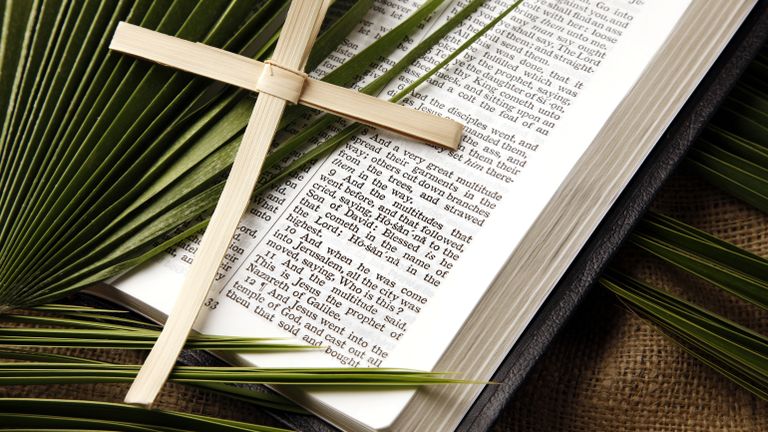
Palm cross on an open Bible showing how to celebrate lent

3)  Turn to Lenten Scripture

When Jesus was tempted by the devil, He fought back using Scripture. Asked to turn the stones into loaves of bread, Jesus answered, “It is written, ‘One does not live by bread alone but by every word that comes from the mouth of God.’” (Matthew 4:4).

There’s another good way to observe Lent. To immerse myself in Scripture. Every morning during breakfast, instead of looking at my cellphone, I turn to the Psalms and a chapter from one of the Gospels. The cellphone can wait. The good news can’t. Here are three Bible verses about Lent to get your Lent celebrations started:

  • Humble yourselves, therefore, under the mighty hand of God so that at the proper time he may exalt you. (1Peter 5:6)
  • Therefore let no one pass judgment on you in questions of food and drink, or with regard to a festival or a new moon or a Sabbath. These are a shadow of the things to come, but the substance belongs to Christ. (Colossians 2:16-17)
  • Therefore do not worry, saying, ‘What shall we eat?’ or ‘What shall we drink?’ …your Heavenly Father knows what you need. (Matthew 6:31-32)

READ MORE: 7 Lent Bible Verses for Reflection and Guidance

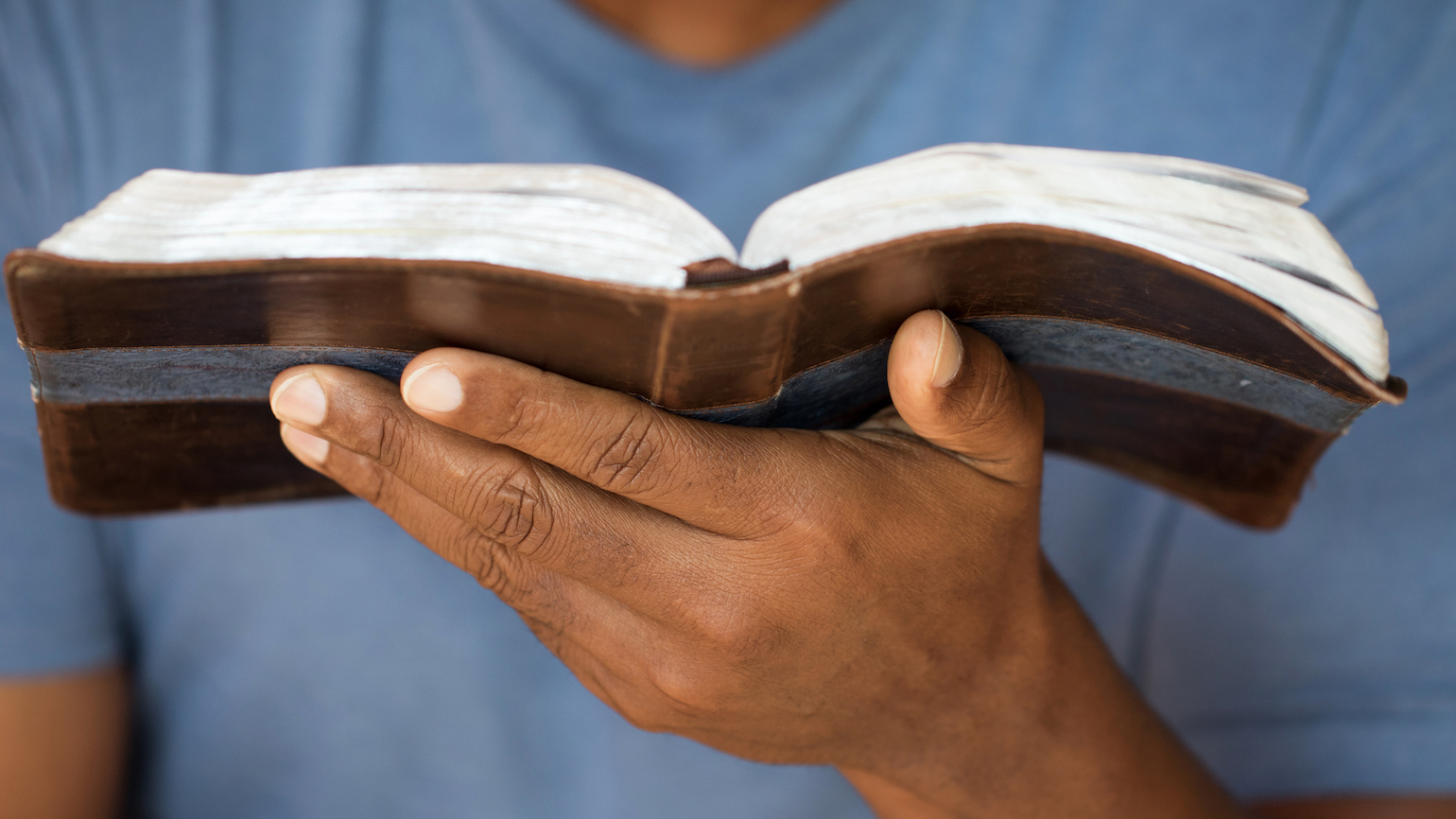
Man reading the Bible about how to celebrate lent

4)  Focus On the Commandments

In the final battle, when the devil offered Jesus all the kingdoms of the world, if He would only worship Satan. “Jesus said, ‘Away with you, Satan!’ For it is written, ‘Worship the Lord your God and serve only Him.’” (Matthew 4:10).

Too often I read the commandments and other spiritual prescriptions in the Bible, forgetting what power they have. Look how they changed the whole scenario in the wilderness. What can the commandments teach us and how can we make them a part of our Lenten celebrations?

READ MORE: 20 Beautiful Lent Quotes to Inspire You

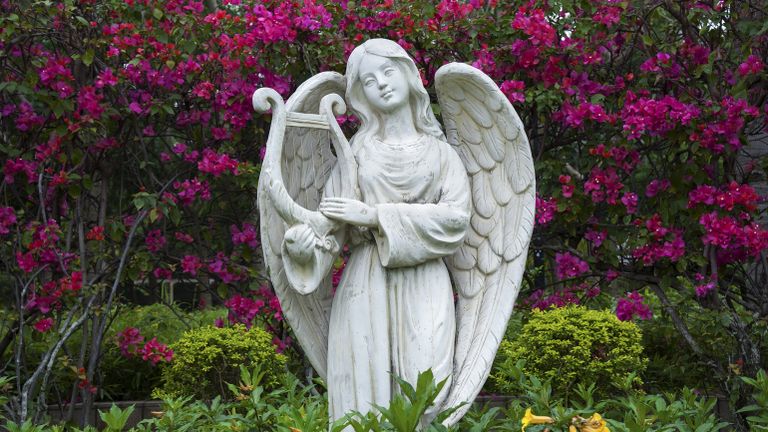
Angel statue in a garden during Lent

5)  Accept What the Angels Offer This Lent

According to the Bible, when Jesus went out into the wilderness, “He was with the wild animals, and angels attended him” (Mark 1:12-13). Those angels of God’s mercy are simply waiting for us. Look to them. Open your heart to them. They can appear at the most unexpected of times. No matter how you choose to celebrate Lent, keep an eye out for them.

READ MORE ABOUT LENT:

4 Keys to Thinking Positive About Your Resolutions

It’s three weeks into the New Year, about the time most of us hit a bump in the road to keeping our resolutions. Do you need some positive motivation to stick with yours? Check out our newest blog, where three Guideposts.org readers are sharing their struggles and successes with their New Year’s resolutions.

I’ve been following Debbie, Carm and Robin for inspiration. Their posts highlight some keys to thinking positive about—and achieving—the change you want to make in your own life, whatever it may be.

Start with awareness. For Robin, whose resolution is listen more attentively, the first step was to take note of when she wasn’t paying attention. Try that with the habit you want to change. Under what circumstances do you tend to veer off track? When you’re tired? Bored? Stressed? Trying to do too much? I bet, like Robin, you’ll notice some definite patterns. Once you pinpoint your trouble spots, you can come up with ways to combat them.

Plan ahead a little. Debbie’s goal is to sit down with her husband and kids for regular family dinners. With four kids and tons of activities, no wonder she feels overwhelmed making dinner after a long workday. She’s realized she needs to think ahead—plan several nights of dinners so she can do all the grocery shopping in one trip, and maybe even cook double batches of family favorites to freeze now and enjoy later. Be like Debbie and map out how you’ll stick with your resolution the next three days (or go for the whole week!). Put your plan on your to-do list, calendar, PDA, whatever reminder works for you.

Don’t let a slip-up make you give up. Carm is trying to stay on track with the good health and spiritual habits she started in 2009 to battle breast cancer. She’s lost more than 60 pounds so far with Weight Watchers and exercise. Last week she blogged about succumbing to temptation and eating some of the not-so-healthy food in the lunchroom at work. A slip-up, sure, but she didn’t beat herself up over it or say, “I’ll never stick to my resolution, I might as well give up now.” Instead, she noted the progress she’d made (she had smaller portions) and what she still has to work on (end-of-the-workday munchies). What a positive attitude! Way to go, Carm!

Ask for help. Debbie posted on Facebook about her resolution. Carm’s husband’s health issues were getting her down until she asked family, friends, coworkers and church members for prayers and for practical help. Robin let her husband and a few close friends in on her plans. I loved what Robin wrote this week: “I should know better than to think I have to do this by myself; God always sends help.” Tell someone else about the change you’re making so they can help hold you accountable. You can even return the favor and do the same for them.

4 Keys to Experience Wonder from Mystic John O’Donohue

The poet and philosopher John O’Donohue passed away in 2008, but his teachings and writings continue to guide the spiritual lives of people worldwide.

Born and raised in Connemara, Ireland, O’Donohue joined the priesthood when he was 18 and went on to get a Ph.D. in philosophical theology. In 1997, his first book Anam Cara catapulted him to intellectual stardom. He left the priesthood, but continued to be a spiritual leader through his writing and speaking.

O’Donohue devoted his life to pursuing and sharing spiritual enlightenment. His sudden death at the age of 52 shocked his followers. A new book, Walking in Wonder, collects several of O’Donohue’s conversations with Irish radio host, John Quinn, and features his thoughts, poetry and writing on finding wonder in the spiritual life.

Here are four key practices, O’Donohue identifies as being essential to opening the door to wonder:

1. Practice Absence and Presence

O’Donohue was fascinated by the concepts of absence and presence. Rather than seeing these two things as opposites, O’Donohue saw them as sisters. “The opposite of presence is not absence, but vacancy,” he said in a lecture included in Walking in Wonder called “Towards a Philosophy of Absence.” He believed that on earth, absence serves to remind humans of separation from God. Presence, on the other hand, he theorized, draws us closer to God.

He saw the practice of being present as essential for experiencing God. “When we experience real presence, we break through to that which is latently in us, that is eternal,” O’Donohue said.

Put another way, “If you really live your life to the full, you are activating the presence of God.”

2. Open Your Imagination

How does one begin to press into absence and presence? O’Donohue points to imagination as a crucial practice for opening up to these experiences.

“Real presence is the heart of the incarnation and it is also the heart of the Eucharist,” O’Donohue said. “This is where imagination works so beautifully with the absence and emptiness of life. It always tries to find a shape of words or music or color or stone that will in some way incarnate new presence to fill the absence.”

He identified imagination as the “threshold” to wonder. O’Donohue suggested the path to wonder required freeing imagination from the confines of childhood and fiction.

“Where the imagination is alive,” he said, “wonder is completely alive.”

Read a collection of John O’Donohue’s most inspiring quotes.

3. Practice Silence

O’Donohue’s study of Celtic spirituality revealed to him how fully Western busyness and noise deprived people of access to spirituality and wonder. He advised practicing silence as a way to grow closer to God.

Many people see silence as synonymous with loneliness and solitude. O’Donohue disagreed, arguing that spiritual silence is actually “the silence of intimacy.” In fact, he saw silence as an important building block for relationships.

“You can only relate to someone if you somehow have the courage and the need to inhabit your own solitude,” he said. “You can only relate out of your separateness.”

4. Experience the Joy of Memory

O’Donohue believed technological advancements were robbing people of the joy of memory, which he saw as a great source of wonder.

“You can actually go back within yourself to great things that happened to you and enjoy them and allow them to shelter and bless you again,” he said of the power of memory.

O’Donohue worried that in our attempts to distance ourselves from painful memories we robbed ourselves of the joy of our lives. He connected memory to the practice of being present.

“Memory keeps presence alive,” he wrote. “[It is] always bringing out of what seemed to be absent new forms of presence.”

Walking in Wonder: Eternal Wisdom for a Modern World is available wherever books are sold.

3 Questions: Michael Todd

Michael Todd is the lead pastor of Transformation Church in Tulsa, Oklahoma, and author of Crazy Faith: It’s Only Crazy Until It Happens. He aspires to reach people with the Gospel presented in a relevant and innovative way. He has more than 100 million views on his YouTube channels and pastors some 5,000 people in person and over 10,000 people online.

What is “crazy faith”?
One thing that everybody seems like they’ve lost is faith. Faith in people, in themselves and in God. Believing God for the impossible is what he wants every one of his children to do. My kids believe what their mother and I say. They believe we have great things planned for them. If I as an earthly father, just figuring this out, can do those things, how much more for our Heavenly Father?

Crazy faith is trusting in something that you can’t explicitly prove. Our generation believes in Google more than God. Yet the God who parted seas, who made the sun stand still, who gave Abraham and Sarah a baby in old age, is the same God in our lives today.

People may say, “That doesn’t really make sense.” I look at our faith heroes in the Bible. How crazy it would seem for Noah to go out every day to build an ark and gather his family to do it. And it’s never rained. That’s crazy faith. But it was only crazy until it started raining. Or, like I say, it’s only crazy until it happens. Things that people feel are crazy now will one day be the things that people account as faith.

What helps us see God move in our lives?
The Bible is one of the main ways that God speaks to us. It’s the only book that you read it and it reads you. When you allow the Word of God to get inside you, it increases your faith.

I can’t tell you how many times I’ve been going through a situation and I’m just reading the Old Testament, New Testament, Psalms, and God speaks to me through his Word and it changes my situation and allows me to start walking in crazy faith. It allows me to forgive.

Forgiving is crazy faith. It’s not just huge miracles. Crazy faith allows me to give generously to somebody who I don’t even think needs what I have. But when God says give to them, I obey. Crazy faith is hearing from God through his Word or in prayer, then obeying what he’s saying.

How can someone hold on to their faith even as things are falling apart around them?
We all go through seasons that feel as if our life is falling apart, whether relationally, spiritually, emotionally. Our faith gets us through. Thomas said, “If I don’t see Jesus for myself, if I don’t feel the nail prints in his hands and in his side, I’m not going to believe.”

I think Thomas is like all of us. He was in a bad spot, and his faith was fading. The beautiful thing is, even though he doubted, he was allowed to be around the community that believed. That’s why community is important when your life is falling apart. As soon as Jesus walked in, he didn’t address every­body else. He addressed Thomas and said, “Here are my hands. Here is my side.”

If you continue to wait on the Lord, if you are weary, stay in a place of community that can help you anchor yourself. At some point, Christ is going to show up and give you the opportunity for your faith to be restored.

For more inspiring stories, subscribe to Guideposts magazine.

3 Questions: Mark Batterson

Mark Batterson is the lead pastor of National Community Church, in Washington, D.C. NCC also operates Ebenezers Coffeehouse, the Miracle Theatre and the DC Dream Center, which has served more than 60,000 meals to those in need during the pandemic. The best-selling author’s latest book is Win the Day: 7 Daily Habits to Help You Stress Less & Accomplish More.Celeste McCauley, Editor

1. How are our daily habits connected to our spiritual well-being?

Everything boils down to habits. Our lives are this jumble of habits: conscious and subconscious, good and bad. Over time, those habits end up being who you become. Our habits help us persevere through obstacles and stay focused on our God-given assignments.

I like to focus on the following: Flip the script—bury your past and change your signature story. Kiss the wave—the obstacle is not the enemy but the way. Eat the frog—the one thing you like to do least is what you feel best about afterward. Fly the kite—how you do anything is how you do everything. Cut the rope—take the right risks to chart a new course. Wind the clock—time is measured in minutes, but life is measured in moments. Seed the clouds—sow today what you want to see tomor­row.

Give these actions enough days in a row and they have the power to change your physical, mental and spiritual health.

2. What’s powerful about prayer?

Prayer is the difference be­tween the best we can do and the best God can do. It’s the difference between letting things happen and making things happen. It’s the way we write history before it happens. I think you’ve got to pray as if it all depends on God and work as if it all depends on you. Prayer is the catalyst at the beginning of a journey.

A bold prayer is praying a prayer you’ve prayed a hundred times that hasn’t been answered yet but one you feel as if you need to keep praying and believing. It’s hard not to give up on things that you’ve prayed for that haven’t been answered in the way you want. That’s where I think you have to acknowledge it’s not about outlining our agenda to God but about God outlining his agenda to us. Someday we will thank God for the prayers he didn’t answer maybe as much as the ones that he did.

3. Why is it important to learn to forgive?

A nail in my tire creates a slow leak; if I don’t deal with it, I’m eventually going to end up with a flat tire. I think unforgiveness is a slow leak in our soul, on our spirit. When we have a hard time forgiving someone, it really doesn’t hurt that person. It ultimately causes the greatest damage to us.

I have a Deuteronomy 29:29 file folder, named for the verse that says the revealed things belong to us, the secret things belong to God. It means there is not going to be a solution to every problem. There’s not going to be an answer to every question. There’s not going to be reconciliation to every breach that all of us are prone to.

When I experience things that feel unforgivable, all I can do is put it in that file and trust God in the process. In years to come, I’ll have some revelations about what I put in that folder. I’ll think, Okay, I see this differently now.

For more inspiring stories, subscribe to Guideposts magazine.

3 Questions: DeVon Franklin

New York Times best-selling author DeVon Franklin is president of Franklin Entertainment, which has produced blockbuster inspirational films Breakthrough and Miracles From Heaven. DeVon lost his dad at a young age and credits the women in his family for shaping him into a man of strong faith. He features a multigenerational conversation with them in his Audible Original book It Takes a Woman.

How did a community of faith help you growing up? I was nine years old when my dad passed of alcohol addiction that led to a heart attack. I was in my most formative years, with more cards stacked against me than for me. Here was my mom raising three boys on her own.

“The village” as I call them—my grandmother and her seven sisters—selflessly came together to help my mom raise my two brothers and me. The role of prayer has been integral from the beginning. There was a lot of praying—days when my mother didn’t know how she was going to provide food or pay the rent.

The life I’m living now is a direct answer to her prayers and the prayers of the women in my family. If not for them, I don’t know where I’d be. They taught us to express ourselves and speak with confidence—not hide our light under a bushel. Right now we need community and connection more than ever. In a time where there’s a lot of division, it is a key to overcoming and withstanding whatever may come our way.

What’s crucial to remember about God’s timing? There’s a lot of things that happen in certain periods of time that only God can control. We have to be open to how God wants to do things in the way that only he can. The same year my aunt Ida married my uncle Pastor D. J. Williams, they started an independent ministry in East Oakland, California.

That ministry, called Wings of Love, became our family church and helped save all of our family’s lives. That happening the year my father died was a lifeline. We were active in the church; we felt ownership of the church. We would not only go to church every Sabbath but have Bible study during the week, sing songs and read Scripture on Friday night. We would listen to gospel music while getting ready for school in the morning.

My mother was very much of the mindset “as for me and my house we’re going to serve the Lord,” and I’m grateful for that.

You lost your dad 35 years ago and still talk about it. Why is it important to continue to express our grief? We all go through tragedies and challenges. Being open and honest about what I’ve been through is a way to help others find healing. Doing this project, talking with my mom and aunts about what they were experiencing during this time, was a way to heal.

Being honest and transparent about what I’ve gone through helped me build a stronger community because a lot of people out there—families—have been impacted by alcoholism. They’ve connected to my story and found help. For me, that’s one of the main reasons to continue to be open and transparent.

Sometimes we don’t want to go back, but when I allowed myself to, I began to realize this is why I’m created: because I want to inspire people and help them live their best life.

For more inspiring stories, subscribe to Guideposts magazine.

21-Year-Old Man with Down Syndrome Builds a Million-Dollar Empire

In 2016, John Cronin was facing a tough decision, as many high school seniors do, about what to do after graduation. Cronin, who has Down syndrome, wanted to start a business with his dad, Mark Cronin, but wasn’t sure what kind of business they’d run. His initial idea was a food truck, but they quickly turned it down because neither of them knew how to cook. John then came up with the idea of turning his love of socks with fun designs into a business.

“John’s Crazy Socks” was launched on December 9, 2016, and became an immediate success. In just over a year the Cronins have shipped more than 42,000 orders and brought in $1.7 million in revenue. Due to the initial high demand, Mark would buy and resell socks from Kmart. John and Mark now source their socks from several manufacturers around the world and John has even started designing his own socks, which will be manufactured in the U.S.

What makes this company so special are the 4 principles the Cronins stand by. The first is their commitment to hiring people with disabilities. The second is giving back. They donate 5% of their earnings to the Special Olympics, a program from which John has benefited greatly. The third is their wide range of sock choices which includes over 1,200 pairs of fun, crazy themed socks including valentine’s socks, awareness socks, and music themed socks, among others. The fourth principle is gratitude. Every package is paired with a hand written thank you note from John. The personal touch is a form of gratitude John aims to express to his customers.

“I love my business. I want to keep it this way. I want to keep growing. I’m so inspired by my dad and I want to work with him,” John said in an interview with MONEY.

John hopes to continue inspiring others with his company’s success.

Given time, opportunity, and support, people with disabilities can achieve their dreams. “It is possible,” John told TODAY.

20 Years After 9/11, How One Truth Remains

Recently I’ve been doing media interviews making people aware of our incredible 20th anniversary collection of 9/11 stories, which you can find here.

Invariably interviewers ask what I remember most about that day in New York City. So much, of course, that in a way I’m still processing it years later. I remember the phone on my desk ringing right after the towers were struck and thinking it might be my wife Julee up in the Berkshires with the dogs, or my sister, Mary Lou, back in Michigan, or our Carmel, New York, headquarters 60 miles upstate checking on the Manhattan-based staff. But it was a woman I didn’t know from Kansas, and she said, “I’m seeing all these terrible things on TV, and I just wanted to know if everyone at Guideposts was all right. I’m praying for you.”

I don’t think many magazine editors in this city got a similar call. But they don’t have the kind of readers we do. That call was a pinprick of light in a darkening day.

We’d just put December Guideposts to bed, an inspiring, upbeat, holiday issue as you would expect. We had Christopher Radko, the ornament designer, on the cover and were about to ship it to the printer when the terrorists struck that morning. We knew immediately we could not publish that issue of Guideposts as is. It would seem as if we were publishing from another planet.

We started gathering stories almost immediately, with editors going out into the streets and interviewing people, looking for Guideposts stories, looking for whatever good, whatever hope could be found in a city in shock and mourning. Nearly 3,000 people dead, including hundreds of first responders. It was too much to bear. Yet there was good. There was selflessness and courage and resilience and compassion. People coming together. There was God at work even amidst unspeakable tragedy.

In the years since we have continued to gather stories of that infamous day, including one in our current issue about the heroes on Flight 93, which crashed in Shanksville, Pennsylvania, before it could reach its target in D.C.  While 20 years is indeed a kind of milestone, for those of us in New York who lived through that day, each year is its own distinct anniversary. We will never forget.

I remember gazing in disbelief from our midtown office windows at the twin spires of smoke bleeding into the flawless sky 60 blocks downtown, a 10-minute subway ride. They mimicked the numerals of the day’s date in a kind of ungodly symmetry. One of our editors, a volunteer EMT who was a member of the city’s emergency response team, left immediately. We didn’t see her again for two weeks.

Eventually, after the collapse, I went down to the street and stood along Madison Avenue watching the stunned, ash-covered procession staggering uptown fleeing the smoke and fire and debris, some still clutching their battered briefcases. All they did that day was go to work. Deli employees were handing out bottled water. We were all praying as sirens wailed above the city.

New Yorkers are accustomed to sirens, even inured to them, but all morning I heard them racing downtown, the overlapping doppler effect coming in waves. It was the soundtrack to that day. And it haunts me still to think how many men and women in those screaming vehicles racing to danger would not come back.

But what I remember most about that week is Monday, September 10th. It was an impeccable late-summer day like its twin to follow. We started the week with Prayer Fellowship, a 50-year tradition at Guideposts where we respond to readers’ requests for prayer. Later I took an editor out for a birthday lunch, and we bemoaned the fact that the restaurant had run out of our favorite dish, as if that was all we could possibly object to on such a perfect, consummately innocent day.

Later I made plane reservations for a business trip the next week, not imagining that we would soon never see commercial airliners and air travel itself in the same light. I picked up dinner on the way home—probably pizza—and called Julee and the dogs rusticating in the Berkshires (yes, I talk to my dogs on the phone). I caught the last half of Monday Night Football, Giants versus the Broncos. Then I went to bed. It could not have been a day that I had less to worry about. It could not have been a day that I could have conceivably imagined would cleave history and that the world—and all our lives—were about to change forever.

We are not given knowledge of the future. I could not have known that night that in less than 12 hours nothing would ever be the same again, apart from one thing: the eternal presence of a loving God. I do not ask why He didn’t stop the planes or hold up the towers. I only know that the one certainty about the future that I am allowed to know is that God will be waiting to comfort us, to reassure us, to strengthen us and to lead us forward. For me, that is the lesson of September 11thabove all else.

Our stories about that day 20 years ago are convincing proof that God is always present even when it seems as if evil has prevailed. I urge you to visit our powerful and uplifting September 11th content—stories, videos, slide shows. And do let me know what you remember about September 11, 2001, by emailing me here.

15 Quotes About Light That Follows Darkness

I recently had one of those no-good-horrible weeks that pop up every now and then (usually in January when you realize your no-candy New Year’s Resolution is not so easy to keep!). My week started out iffy on Monday and got progressively worse. I told one of my friends about it. “You know what they say,” he said. “After the darkness comes the dawn.” Was he right? Can we find light in the darkness?

The following day, as I rode the subway to work, I thought about that line. And how so many people have written about the dawn that follows the darkness. I always come across quotes about that theme when doing research for Mysterious Ways magazine. I should compile all those quotes, I thought.

When I got into work, I promptly forgot all about the idea. Until lunchtime. I was reading about U.S. Olympic figure skater Nathan Chen, who was seriously injured after the 2016 U.S. Figure Skating Championships. “I went into a deep, dark hole,” he said of his long recovery process. “Nothing makes you stronger than crawling out of that darkness.”

Well, there was my reminder! I did a little digging and found some more quotes about the light that follows darkness, the beauty in tough times and the miracles that appear after storms. Here are some of my favorites. Please share your own favorite quotes about finding light in the darkness below!

  1. “In order for the light to shine so brightly, the darkness must be present.” –Francis Bacon
  2. “Weeping may endure for a night, But joy comes in the morning.” –Psalm 30:5
  3. “Maybe you have to know the darkness before you can appreciate the light.” –Madeleine L’Engle
  4. “We have to start viewing not just the good stuff as the miracle, but also the bad stuff that gets you to the miracle. The whole thing is a gift.” –Mastin Kipp
  5. “No one is as capable of gratitude as one who has emerged from the kingdom of the night.” –Elie Wiesel
  6. “There is something infinitely healing in the repeated refrains of nature—the assurance that dawn comes after night, and spring after winter.” –Rachel Carson
  7. “Sailors have an expression about the weather: they say the weather is a great bluffer. I guess the same is true of our human society—things can look dark, then a break shows in the clouds, and all is changed.” –E.B. White
  8. “God is the light shining in the midst of darkness, not to deny that there is darkness in the world but to reassure us that we do not have to be afraid of the darkness because darkness will always yield to light.” –Harold S. Kushner
  9. “There is no glimpse of light without walking the path.” –Peace Pilgrim
  10. “It is by going down into the abyss that we recover the treasures of life.” –Joseph Campbell
  11. “Though my soul may set in darkness, it will rise in perfect light; I have loved the stars too fondly to be fearful of the night.” –Sarah Williams
  12. “The dawn is not distant, nor is the night starless; love is eternal.” –Henry Wadsworth Longfellow
  13. “No winter lasts forever; no spring skips its turn.” –Hal Borland
  14. “In my deepest wound I saw your glory, and it dazzled me.” –Saint Augustine
  15. “Hope is being able to see that there is light despite all the darkness.” –Desmond Tutu

10 Inspiring Articles and Books by Elizabeth Sherrill

Elizabeth “Tibby” Sherrill is the author of more than 30 books and a long-time writer and editor for Guideposts. For 70 years, her stories on faith, traveling the world, and dealing with depression have been a beacon of light for our community. Check out some of our favorite stories by Tibby—and let her words warm your heart.

  1. A Lesson while Moving

I stood looking out the kitchen window wondering how John and I could ever leave this house. We’d lived here for 50 years. There under the maple tree was the garden patch where we grew tomatoes that never ripened. There was the stump of the cedar we cut down to make room for our daughter’s wedding reception… There was no doubt in my mind, with both of us in our eighties, that we were making the right decision to move from New York to Massachusetts, where we’d be near family. Why was it so much easier to make up your mind than to make up your emotions?

See how moving led to spiritual growth that Tibby hadn’t anticipated.

  1. The Story of “Silent Night”

I put the letter on the windowsill and looked across the swirling gray water of the Salzach River to the distant Alps. The Salzach takes a horseshoe loop at Oberndorf, and where the river curves, a church used to stand. High water had eaten away its foundations, and eventually the building was torn down. But I wanted to tell our friend about that vanished church. Because there too, one Christmas Eve, the organ had been silent…

Read Tibby’s account of the inspiring true story of the popular Christmas carol.

  1. A Letter on Depression

My own struggle with depression has not “disappeared,” though it’s never come back in such an incapacitating form. That dull gray mist still settles over me from time to time, obscuring light and meaning, making it hard to smile, impossible to get the smile down inside. But the grayness no longer terrifies me, and I think there are three reasons for this.

Read Tibby’s response to a query regarding her fight against depression.

  1. An Angel Named Maria

“There was a baby born here two weeks ago that no one knows what to do with,” the doctor said into the telephone. He went on to explain that the infant was a vegetable: a hydrocephalic without sight or hearing or any human potential. The mother had disappeared from the hospital after seeing it and the state had no provision for handicapped children under the age of six.

“It will never live that long,” the doctor’s voice continued hastily. “At the outside it might live six months. Meanwhile there is the problem of care…”

“Bring us the baby,” answered the voice at the other end of the line. It belonged to Sister Marie Patrice, the nun in charge of the day-nursery which the Sisters of Mercy ran for working mothers in and around Charlotte, North Carolina.

See Tibby’s story on visiting the day nursery and her encounter with an angel named Maria.

  1. Antoni Gaudi’s Vision

It rises like a many-peaked mountain from the heart of the city. Caverns on its steep slopes hold Bible scenes. Birds, plants, frogs and insects inhabit this landscape too. It’s the Basilica de la Sagrada Familia—the Church of the Holy Family—in Barcelona, Spain. And it’s one of Europe’s biggest tourist attractions. I stood in a long line, clutching my ticket, waiting in the hot sun to be admitted. When I was inside at last, the heat and the wait were forgotten. The vast interior pulsed with light in a thousand shades. With each step, breathtaking vistas opened, immense columns branching like trees in an otherworldly forest. All of it based on the vision of an astonishing genius, Antoni Gaudí.

Learn about Tibby’s visit to the remarkable church and the story behind it.

  1. A Visit from Guardian Angels

I lingered, puzzling over the carving. There was nothing unusual about the depiction of the compasses; medieval stonemasons often chiseled symbols of their trade as a kind of signature in stone. Nothing unusual, either, about a decorative wreath of roses. What surprised me were the faces of the angels. Instead of the solemn and majestic features conventional for portrayals of these mighty messengers of God, these were children.

The slender brochure I’d picked up at the castle identified this building as “Ruprecht’s Palace”—all that remained of it— “built in 1400 for Prince Ruprecht III to celebrate his election as King of Germany.” Nothing about the carving above the entrance. Footsore and shivering I stayed there, but was unable to walk away, as though those silent angels had something to tell me.

See the meaning of the stone carved angels and the message they had for Tibby.

  1. Finding Forgiveness

As he entered the lobby of the Miyako Hotel in Kyoto, Japan, a small, erect man of 72, I felt myself stiffen. I had requested this interview because I wanted to hear for myself how it was that this one-time Shintoist had become a Christian. Walk over to him, I told myself. Hold out your hand. But my muscles had gone suddenly rigid. This is the man, those tensed muscles told me, who led the Japanese planes over Pearl Harbor. Three young sailors from my hometown had died in that attack. It was now 1974, more than 30 years later. But in my emotions, it was still December 7, 1941…

Read about Tibby’s life-changing interaction with Mitsuo Fuchida.

  1. Lessons from Abraham Lincoln

It was the picture over the door, when I turned to leave with my new library card, that stopped me. It was a photograph, this one black-and-white: a tall, thin man with his hand on a table and with the saddest, most pain-filled face I’d ever seen. The gold letters on the frame said Abraham Lincoln. It couldn’t be! Lincoln, my brave hero, who won every wrestling match? The ragged boy who told such funny stories that crowds would gather to listen? They’d put the wrong name on the photograph. But of course, it was Lincoln, and over time that portrait made him more important to me than ever.

Learn how Tibby shared an unexpected connection with her childhood hero.

  1. Surprised by Grace and 101 Moments of Prayer

Want to read more Elizabeth Sherrill? Surprised by Grace will help you understand how to completely trust God in the toughest times of your life, how to recognize your dependence on Him, and how to allow Him to light your way. The book features touching stories about Tibby’s family and close relationships, from her unhappy childhood to John’s surprising marriage proposal. Travel with her to fascinating places across the United States and Europe. Find out how she overcame her poor self-image after a stunning encounter with her Creator.

Get your copy of Surprised by Grace now and receive a free copy of 101 Moments of Prayer, a collection of Tibby’s devotionals.