Embrace God's truth with our new book, The Lies that Bind

Pray for the Spirit of Collaboration

God has given each of you a gift from his great variety of spiritual gifts. Use them well to serve one another. (1 Peter 4:10)

I have worked and served with many gifted people. When people are mission-minded, there is a spirit of collaboration. When there is true collaboration, people bring their gifts, lives are changed and God is pleased.

I was invited by a colleague and friend to attend a meeting with a group of spiritual leaders whose sole purpose is to alleviate suffering and bring hope to the people Jesus talks about in Matthew 25: the hungry, the naked, the orphans. Jesus said when we visit and care for “the least of these,” it is like visiting and caring for him.

This group of collaborators wanted to pool resources to bring the hope of Jesus to both children and adults through music, prayer, inspiring booklets, movies, Bible curriculums and comedy. We heard testimonies of people whose lives have been transformed because others were willing to share their gifts.

When I left the meeting to return home, I couldn’t help but cry out to God and ask him to show me how prayer can serve others in a greater way. My prayer point is for all of us to pray and ask God to give us the spirit of collaboration—that is, to see how your gift can be used to do more with others than you can do alone. Also ask God to help you get over the fear of not being recognized individually and be content knowing that you have contributed to the whole. Are you up for the challenge?

God bless you!

Pray for Personal Growth

Being confident of this very thing, that He who has begun a good work in you will complete it until the day of Jesus Christ. (Philippians 1:6)

Recently I had a meeting with the staff of OurPrayer, who work day in and day out training volunteers for all of the prayer requests that we receive. As a team, we work together to provide the best possible service to those who look to us for prayer. We give special attention to posting on Facebook and requesting prayer and seeking further engagement with fans and volunteers.

As a result, our volunteers have prayed for more than 1 million people. That is amazing and we thank God for this great opportunity. We have reached a milestone. It is easy to get comfortable and rest in what we have accomplished, but we choose not to see that as an option.

With the idea of always getting better, I decided to ask the staff to think about their own personal growth. How are they planning to challenge themselves over the next year? What do they want to accomplish? I found some inspiring and motivating team-building quotes that seem to resonate. I asked each member of the team to choose one that would help them grow. They each rose to the challenge and chose a quote that seemed to spark a new fire in them, and we had great discussions around their personal growth goals.

Personal growth allows us to expand our knowledge, skills and relationships with others. It is goal-oriented. It is not something that others require of us, but what we require of ourselves. It is looking at where we are currently and deciding where we want to be one year from now or five years from now. God has begun something good in us, but it is not complete. We must continue working each day and each year to reach higher.

Do you have a personal growth goal? A spiritual goal, a relationship goal or a financial goal? Maybe it is to increase your prayer time with God. Whatever it may be, prayer will help you achieve it.

God bless you!

Pray for Blessings from Disappointment

This summer has been an eventful one for my family—and not in a good way. A ruptured water line. Unexpected (and unwelcome) expenses. Delayed income. Goodbyes. Sickness. Even death.

On the upside, the run of bad news has given me an opportunity to revive a prayer practice I had neglected. I call it “turnaround” praying.

Most of us, when misfortune occurs, pray for relief or deliverance. That is natural, and it’s a good way to pray.

After all, the psalmist David prayed, “Please, God, rescue me! Come quickly, Lord, and help me” (Psalm 70:1, NLT). And “Please, Lord, rescue me! Come quickly, Lord, and help me” (Psalm 40:13, NLT).

Strengthen Your Faith with Free eBooks on Prayer, Bible Study and More

I pray those kinds of prayers a lot. But sometimes I have the presence of mind—and the faith—to pray differently.

I may start with prayers like those, but I continue in my praying to say something like, “God, turn this whole situation around. Where there is now confusion, bring understanding. Where now there is only pain and suffering, turn it into an occasion for amazement and joy and bring glory to Your name!”

At such times, I remember the patriarch Joseph, who was sold into slavery by his own brothers—a hopeless situation if there ever was one (see Genesis 37). But God turned things around and made Joseph the means by which many lives—including his brothers’ lives—were saved.

I remember Moses, whose murderous rage sent him into exile (see Exodus 2). But there he found not only a wife and family, but also a calling, one that turned him from a fugitive into a deliverer of his people.

I remember also Mary and Martha, whose brother Lazarus fell ill and died—a situation that must have seemed pretty final (see John 11). But they appealed to Jesus, who turned things around for them in a dramatic way, calling Lazarus out of his own tomb and back into his sisters’ arms.

“Turnaround” prayers do more than ask God to fix something, they ask Him to turn a situation on its head and bring beauty from ashes, blessing from disappointment, glory from gloom.

So try it. Don’t just ask God to heal you, ask Him to turn your affliction around and make it an occasion for rejoicing. Don’t simply request relief, ask for a 180-degree reversal of the situation, one that will bring glory to God.

Don’t merely pray for a solution to a problem, pray for a story to tell your grandchildren. Pray “turnaround prayers” and see if your faith and God’s faithfulness combine to do something special in answer to your prayers.

Prayer Warrior

I felt like God had abandoned me.

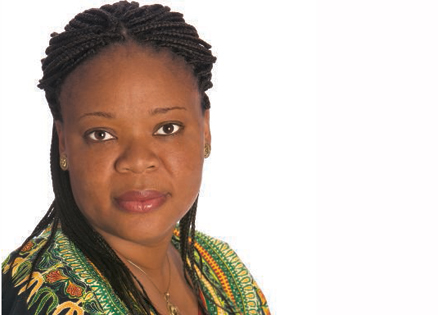
I was hundreds of miles away from my home, the West African nation of Liberia. I was camped outside a hotel with a few other Liberian women in Accra, the capital city of Ghana, a luxury hotel where we Liberians could never afford to stay.

Inside were polished tile floors, columned entryways, a crystal-clear swimming pool and—this was why we were there—a plush conference hall hosting peace talks between Liberia’s military dictatorship and the armed rebels who, for 14 years, had turned my country into a bloody battleground.

You’d think the prospect of peace would fill me and all Liberians with hope. But that morning, a hot July day in 2003, I’d run out of hope. The peace talks were failing. Liberia was in flames. Did God care what was happening to my country? I did not think so. I felt worse than hopeless if that is possible.

Together with the women outside the hotel, plus thousands more back in Liberia, I was part of the reason these peace talks were even happening. I was the head of an activist movement called Women of Liberia Mass Action for Peace.

We had started small several years ago, almost by accident. And yet we grew large and strong because the women of Liberia were tired of being terrorized by soldiers and watching their children conscripted into rebel armies. They were tired of the fear that had gripped our country ever since a military strongman named Charles Taylor started his armed rebellion in 1989, setting off a deadly civil war. More than 200,000 Liberians were dead. More than one million were in refugee camps.

The women of Liberia began protesting this war, gathering on the grounds of a fish market in our capital city of Monrovia to pray and sing for peace and wave signs at Taylor’s motorcade as it passed on its way to the presidential palace. Taylor ignored us for many weeks.

Eventually, however, our numbers grew too great and he was forced to grant us an audience. We demanded he enter peace talks. To our astonishment he agreed. We raised money and a few of us followed him to Ghana, where the international community hosted the talks on neutral ground. We thought we had won a great victory.

We were wrong. And that terrible morning, almost eight weeks after the talks began, I felt like giving up. I had awakened earlier in the tiny two-bedroom house where I was staying with seven other women from Monrovia, along with my four children, my mother, my brother, my sister and her daughter—all accompanying me because Liberia was so dangerous. I was tired of living in this cramped poverty while I knew those rebel warlords were waking up in luxury rooms with views of the ocean.

I felt like a fool. The peace talks dragged on not because the issues were complex, as I at first assumed. No, these strongmen never intended to make peace.

One day after the talks began, Charles Taylor was indicted for war crimes by an international tribunal. He fled back to Liberia, leaving his henchmen to negotiate for him. Sensing weakness, the rebels ordered their forces to attack the Liberian capital, hoping to overthrow Taylor before any peace agreement could be imposed. Each day these hypocrites pretended to negotiate for peace even as they phoned their commanders back in Liberia to order more attacks.

That morning I did not put on my white T-shirt with our movement’s logo, our uniform. White was for peace, and I knew peace was not coming. I avoided our picket line outside the hotel and headed to the office of a peace organi­zation in Accra to check e-mail and read news headlines on a computer.

“Toothless bulldogs,” I’d heard one journalist call us. Perhaps he was right. The rebels certainly didn’t take us seriously. We couldn’t even get along ourselves.

Our women, worn out from waiting, were dividing along ethnic lines just like the men inside the negotiating hall. Some had even begun meeting with rebel leaders they favored, pushing for their tribal group to dominate when Taylor’s government collapsed. The movement was falling apart.

I sat in front of the computer feeling sick. How could I have been so wrong about all of this? Years earlier I had felt what I thought was an overwhelming call from God to quit my job as a church social worker in Monrovia to start a women’s peace movement.

I had been involved with peace activists already, in part because some of the people I counseled were young—not even teenagers!—child soldiers from the civil war. Now looking back, I suddenly saw how foolish I had been to think a handful of women could stop a civil war by praying, wearing
white T-shirts, singing songs and holding signs. I’d actually believed those passages in the Bible about the last being first, blessed are the meek.

You fooled me, God, I thought bitterly as I clicked to the Yahoo! news website. All the work we had done, forging a partnership with Liberia’s large Muslim community, fanning out to churches and mosques all over the country to recruit women, slowly growing our protests and suddenly standing—actually, sitting on the floor since we refused their offer of chairs—at the presidential palace, demanding peace from Charles Taylor himself. All for nothing.

Why had I worked myself up giving statements to journalists? Been shuttled back and forth between these rebels here in Ghana? Befriended the head of negotiations, a for­mer army general and pres­ident of Nigeria named Abdusalami Abubakar? Did I flatter myself that we were becoming important?

My thoughts stopped. A headline leapt out: “Mortar Bombs Hit U.S. Embassy in Liberia.” I clicked. A video showed total chaos, smoke and flames, men running with dead children in their arms. More than 60 people just outside the embassy compound killed. I stared at the video. And I felt my anger rise. It rose until it was all I could feel. I leaped up and ran straight to our picket line.

“Gather as many women as you can,” I told a fellow leader, a woman named Sugars. She and the others looked at me strangely—maybe because I hadn’t been there that morning. Or because my anger burned hotter than fire.

“We’re going inside now.” I put on a white T-shirt and marched into the hotel. The others followed, unsure what was happening. We reached the corridor outside the negotiating hall.

“We are sitting right here.” I sat down on the polished tile floor. The others sat in a row beside me, a few dozen, blocking the doors to the hall. More women came, lining one wall, then another. The hall grew hot and crowded. We made a sea of white T-shirts. It looked like more than 100 women. Still more came.

Suddenly a voice sounded on the public address system. “Distinguished ladies and gentlemen, the peace hall has been seized by General Leymah and her troops!” Immediately, security guards rushed into the corridor.

“Who is the leader of this group?” one of them called out.

“Here am I,” I said, rising to my feet.

“You are obstructing justice.” Behind me the door to the negotiating hall flew open and a crowd of men peered out.

I opened my mouth to reply—but I couldn’t. Had that guard really said justice? Was he—was any man in this hotel—lecturing the women of Liberia about justice? I unwound my head wrap and said in a low voice, “I will make it very easy for you to arrest me.”

In West Africa it is a curse for a man to see a mother naked. I began to remove my shirt. “Madame, no!” It was Abdusalami Abubakar, standing at the door to the hall. “Leymah, do not do this.”

“General Abubakar, these women and I are not moving one inch until those men in there promise to take these peace talks seriously,” I said.

There was commotion behind the general. One of the warlords pushed forward to step over the women blocking his way. The women pushed him back. He grew enraged and lifted his leg to kick them.

“I dare you,” said General Abubakar. There was a moment of silence. “If you were a real man,” the general said, “you wouldn’t be killing your people. But because you are not a real man, that is why these women will treat you like boys. I dare you to leave this hall until we have negotiated a peace with these women.”

I grew so emotional at that moment I cannot tell you exactly how the rest of that day unfolded. The men did return to the negotiating table. We women did finally unblock the corridor. And two weeks later, those warlords signed a comprehensive peace treaty that pushed Charles Taylor from power and established a transitional government with the promise of free elections two years later.

What I most remember from that day were the general’s words: These women will treat you like boys. Suddenly I understood why I had lost hope. And I knew what strengthened me to storm that hotel corridor was not simply anger.

It was faith—faith I’d lost the moment I doubted that God really, truly is on the side of the weak. It took the general’s words to remind me why our movement would succeed.

As women, as refugees, as survivors of war, our weakness was our strength. Who is stronger than a mother protecting her children? Who knows better than a wife when her husband is behaving like a child? What man, what gun, can withstand a prayerful woman who is ready to stand up—or should I say, sit down—for what she believes in?

You might like to know who was elected president of Liberia in November 2005: a Harvard-educated economist and former United Nations official. Her name is Ellen Johnson-Sirleaf, the first-ever female head of state in Africa. Also the first mother. And the first grandmother. She has done a terrific job so far. As you can guess, I am not surprised.

Download your FREE ebook, A Prayer for Every Need, by Dr. Norman Vincent Peale

Prayers for Jennifer Hudson

As I write this on Saturday morning I am still reeling from the news of the murders of American Idol star and Academy Award-winning actress Jennifer Hudson’s mother and brother in Chicago yesterday. The news is particularly saddening to us at GUIDEPOSTS as Jennifer is our cover story in the current issue.

Who could have imagined such a tragedy earlier this fall when we photographed and interviewed Jennifer in her hometown of Chicago? She was a wonderful person to work with—upbeat, energized, exciting and surprisingly even-keeled for someone to whom success and fame had come so young. She spoke movingly of her extraordinarily close relationship with her family and that is what we focused her story on, as you will learn when you read it. Her family nurtured her great talents and sustained her during difficult times. It is almost inconceivable to imagine the burden she is now carrying. In the aftermath of the double murder her seven-year-old nephew Julian King is missing.

We know that Jennifer is a woman of great faith and what she needs now most is our prayers. Post yours below and we’ll be sure to pass them on.

Tues. 10/28
My message to Jennifer:

I am devastated to learn of the news I dreaded when I wrote this blog—the loss of your young nephew, Julian, in the wake of the deaths of your mother and brother. There is no greater tragedy than the loss of a child. When I was just about Julian’s age my older brother, Bobby, 12, disappeared and after a long, heartbreaking police seach his body was eventually found. The event changed my family forever but scars do heal, with time, faith and prayer. Nothing sustained my family more than being lifted in prayer by others. Be assured that for everyone who has posted a prayer here on our site, there are thousands more praying for and with you.—Edward

Edward Grinnan is Editor-in-Chief and Vice President of GUIDEPOSTS Publications.

Prayers for Elizabeth Sherrill

Elizabeth Sherrill–or Tibby as she is affectionately known–is a powerhouse in publishing. This month she and her late husband John are being presented the Lifetime Achievement Award of the Evangelical Christian Publishers Association.

She plans to attend the awards celebration on May 1 in Washington, D.C.

John died in December at age 94. It’s hard to imagine how she’s managing without him. The two were not only husband and wife for nearly 70 years but they were each other’s first editor.

“You can imagine how much that tests a relationship,” Tibby said. “And yet we made it work.” It certainly is one key to their success.

Their writing career almost seemed to happen by accident. After World War II, where John fought in the front lines, they studied together in Switzerland. Returning to New York, John got the only job he could find: a part-time writing job for a little magazine called Guideposts.

Tibby soon became a contributor herself.

One day at a Guideposts editorial meeting they heard about a minister who was reaching out to the gang members of New York. David Wilkerson. First there was one article, then two in the magazine. Then the book The Cross and the Switchblade, an international bestseller.

After that they wrote about Brother Andrew in God’s Smuggler and how he spread the Word in places where owning a Bible was deeply suspect.

They chronicled the charismatic movement in their book They Speak With Other Tongues, which celebrates its 50th anniversary this year.

Originally that book was going to be a third-person account. “John ruined all that,” she says with characteristic candor and deprecation, “by getting the gifts of the Spirit himself.” The book became a deeply personal story for both.

In The Hiding Place they brought the heroics of Corrie ten Boom to light, showing how she and her sister Betsie saved many victims from the Holocaust in their Dutch watch shop before being arrested by the Nazis.

“It was when Corrie was talking about Betsie,” Tibby says, “that I knew we had a story. Betsie was the one with faith, the one who always trusted while Corrie struggled.” The two ended up in a German concentration camp where Betsie died. Corrie survived to tell their story.

I asked Tibby how it’s been these last few months without John. “Every day,” she said, “I wake up knowing he is with Jesus and that I will be with him someday myself.”

She recently had surgery on her right eye from a blot clot and had to keep her head down for a week. “I’ve gotten to know the pattern in my carpet very well,” she said wryly.

She asked for prayers. Traveling mercies for the trip to Washington and prayers for her eye. She hopes to recover full sight in it, but at age 90, she also was glad to tell me that “you can still drive a car with sight in just one eye.”

Prayers for Tibby and John and a lifetime of achievement. Not only for the books they wrote but the writing and editing gifts that turned that little magazine into a spiritual powerhouse.

5 Steps to Stop Procrastinating

Five ways to help you get things done with the help of God’s Word.

1. Start with Prayer.
A good prayer to begin the day is “God, You have given me life, strength, will, and this day in which to use them. Help me remember that the hours come from You so that I do not return Your gift empty.”

2. How to find God’s time.
Make a habit of saying: “This one thing I do” (Philippians 3:13). Because Paul looked to God’s guidance for every action, he perceived his life not as a clutter of conflicting demands but as a unity.

READ MORE: PRAYER AND PROCRASTINATION

3. Set up your never file.
Take a fresh look at the things you’ve been putting off. Ask God if you are truly intended to do them. If God shows you that something does not “belong to your peace,” commit it crisply to your never file.

4. Use the appointment approach.
The procrastinator’s favorite word is sometime. The easiest and quickest cure is to do it right now, which we cannot always do. Most of the enterprises have to wait for the future. But make sure it’s a definite future: at four o’clock this afternoon on Tuesday.

5. Keep asking for God’s help.
If you slip back into the old pattern, pray: “God, make me more aware of what matters most so that my life may come into harmony with Your times and seasons.”

Prayer for a Cold Day

Dear God,

It’s cold outside and I’m tired of it.

I know I shouldn’t complain. I am very fortunate. I live in a house with good heating. When I turn on my faucet I get steaming hot water. I take a hot shower. At night I sleep under a warm quilt. When I go out I bundle up with gloves, scarf, wool hat and a parka. For all that I am extremely grateful, Lord.

But then the wind blows into my face, my nose drips, my cheeks burn, the cold rises up through my soles. My toes are frozen. My fingers, even in their gloves, don’t want to move.

Help me, Lord, see the beauty of it. The ice on the river is beautiful, the sun sparkles on icicles hanging from eaves. There is majesty in the power of the wind, the snow, the hail. “He gives snow like wool; he scatters frost like ashes. He casts forth his ice like morsels. Who can stand before his cold?” the psalmist said. (Psalm 147:16-17)

Forgive me, Lord, if I get tired of it. I feel like my body is never going to thaw out. I look at pictures of warm places and feel only envy. I want to go for a long walk or run outside to praise you… but change my mind because of the cold.

Summer will come, and I fear then that I will complain about the heat, forgetting winter. But for now, could you warm my heart a little? After all, the psalmist also added, “He sends forth his word, and melts them” (Psalm 147:18). I wouldn’t mind a little melting.

Until then, let me praise you at all times, in the warm and the cold, in the thick and thin, when I’m irritated and when I’m glad. Let me be glad.

Even in this cold. Amen.

Sign up for 21 Days of Prayer Tips from Rick Hamlin, launching this Saturday.

Pray Daily Affirmations

Most of us pray when we are in need, which is a good thing. The Bible says to pray at such times.

But praying only (or mostly) when we are worried, fearful, sad or stressed can be dangerous. We may soon come to see ourselves as worried, fearful, sad or stressed people. It can color our opinions of ourselves and add to the negative feedback we so often get from the world around us and from the forces that oppose us.

That is why a habit of praying daily affirmations can be so instructive and constructive. Prayers of affirmation are one way of obeying the scriptural command to focus on “whatever is true, whatever is noble, whatever is right, whatever is pure, whatever is lovely, whatever is admirable . . . excellent or praiseworthy” (Philippians 4:8, NIV).

The best daily prayer of affirmation is one that counters the lies you tend to believe about yourself instead of trusting what God has said about you. It may be something like this:

Lord God, my King,

please open my eyes so I may know the truth that sets me free.

I am loved by You.

I am accepted by You.

I am a new creation.

I am a child of God and an heir of Your kingdom.

I am Your masterpiece.

I am a citizen of heaven.

I am chosen of God, holy and dearly loved.

I am a child of light and not darkness.

I am part of a chosen people, a royal priesthood, a holy nation, a special family that belongs to God.

I share the divine nature.

I have the mind of Christ.

I am complete in Christ.

I am called to be free.

I possess the fruit of the Spirit, which is love, joy, peace, forbearance, kindness, goodness, faithfulness, gentleness and self-control.

I am Yours and You are mine,

in Jesus’ name, amen.

(Scripture references: John 8:32, John 3:16, Romans 15:7, 2 Corinthians 5:17, Romans 8:14-17, Ephesians 2:10, Philippians 3:20, 1 Thessalonians 1:4, 1 Thessalonians 5:5, 1 Peter 2:9-10, 2 Peter 1:4, 1 Corinthians 2:16, Colossians 2:10, Galatians 5:13, Galatians 5:22-23, Song of Solomon 6:3).

When we pray these God-breathed words each day, we are sure to be transformed by the renewing of the mind (Romans 12:2). Feel free to adopt and adapt the words above. Print them and place them where you can recite them daily. Soon they will be implanted in your memory, take root in your heart and bear fruit in your life.

Give Thanks for 3 Things a Day

I was at my wit’s end.

For the first time in my life, I was depressed. Not just down. Not just discouraged. Depressed.

It had been coming for months, and it was to last for months to come, though eventually I did climb out of that strange, dark place. But I didn’t do it alone.

Weekly sessions with a good counselor helped. So did some overdue changes in diet and exercise, as well as an adrenal fatigue supplement and a low daily dose of an anti-depressant. I’m convinced the biggest contributor to my recovery, however, was prayer.

Sure, sure, sure. You probably expected me to say that. But seriously. God is my salvation from depression, and prayer was a daily means of grace to me.

Some days my praying was fairly unintelligible and often repetitive (along the lines of, “Lord, have mercy; please have mercy”). But even more important than all my cries for relief were my nightly prayers of thanks–after I determined never to lay my head on my pillow without recording in my journal at least three prayers of thanks.

Sometimes I gave thanks for simple things:

Abba, thank you for the hummingbird I watched just moments ago, and for the sparrow that nearly lit on my lap. Thank you for the beauty and functionality of your Creation.

Sometimes I gave thanks on special occasions:

Abba, THANK YOU! for my wife of 31 years, and this day on which we celebrate our anniversary. Thank you for all you’ve given me through her, all you’ve taught me through her, all the ways you’ve changed me through her, and all the blessings that are mine because of her, chief among them being, of course, herself.

And some were for fairly ordinary blessings:

Thank you, Lord, for all your kindness to me: for a day of health and work and time with family. Thank you that I so often get to see my children and grandchildren. Thank you that I get to sleep in comfort tonight and preach your word tomorrow.

Day by day, however, by giving thanks for just three things, I found my focus shifting from all that seemed to be “wrong” in my life to all the things that were right and good and even wonderful.

Be inspired each day with Daily Guideposts 2019

This is not to minimize the reality and seriousness of depression. It can be debilitating and even life threatening; I’m not suggesting that “cheer up” is a meaningful prescription for overcoming it (remember, my recovery included counseling, medication, diet, exercise, and more).

But praying gratefully was nonetheless key in overcoming my depression.

“Giving thanks,” wrote E. M. Bounds, “is the very life of prayer. It is its fragrance and music, its poetry and its crown.” And it is both vaccine and antidote to depression, discouragement, bitterness and resentment.

Have you tried anything like this? Is gratitude a key part of your prayer life? What does saying “thank you” do for you?

Adapted The Red Letter Prayer Life (Shiloh Run Press, April 2015)

On Hope and a Prayer, He Fulfilled His Dream

I’m a fairly logical thinker, a left-brain kind of guy. Maybe that’s why I decided to be an architect. When it comes to making precise designs and detailed sketches, I depend on my rational brain.

But architects have another side too. A creative side. A quirky side, even. What’s life without a little fun? Everybody needs an outlet.

Ask my wife, Robin, and our sons–they’re used to me by now. Back when I first met Robin, I painted her bedroom lilac and her bathroom pink, her favorite colors. I even did some stenciling–my own take on courtship. Robin says that’s when she fell in love with me.

Then as our sons, Alex, Austin and Dain, were growing up, there were plenty of opportunities for creativity. The foam igloos and icebergs for their vacation bible school pageant? Those oversized cakes and candies for the display at high school grad night? All Richard Burrow originals.

A few years ago, though, right around the time my sons went off to college, the economy tanked. At work, the creative projects I loved–custom home and office designs–were suddenly scarce.

I felt inundated by the more routine, cookie-cutter tasks of my profession, like checking for buildingcode violations or evaluating construction claims. I enjoy my work, but where was that spark?

I included something new in my prayers. A plea for a project that would challenge my imagination and renew the passion of my youth. Something, well, quirky.

“Don’t worry,” Robin said. “I’m sure something exciting is on its way.” Robin knew me better than anyone and I suspected I was in her prayers.

New Year’s Day 2011, I tuned in to the Tournament of Roses Parade. I looked forward to it every year. It’s the Super Bowl of parades as far as I’m concerned.

I plopped onto the couch, but the beautiful and colorful floats didn’t relax me at all. Instead, they reminded me of something I’d forgotten. A dream I once had. My dream of having a float I designed in the Rose Parade.

That dream first bloomed back in the 1980s, when I was an architecture student at Cal Poly Pomona. I’d been walking between classes when a bright red flyer on a bulletin board caught my eye. Help design, construct, and decorate the Cal Poly Rose Parade float.

That sounded totally awesome! I went to the meeting and jumped right in.

Each year, the parade has a new theme. That year’s was A Salute to the Volunteer. I imagined a band of animals playing a musical salute: a giraffe on bass, an elephant on sax, a monkey banging the drums. I stayed up late working on sketches and submitted two designs, certain that one would win.

A couple of months later, though, the Cal Poly float club called to say that my ideas had been rejected. I was disappointed, but I tried not to dwell on it. After graduation, I landed a good job at an architecture firm. I got married and started a family. My Rose Parade dream became a lost dream.

Maybe the parade is exactly what I need, I thought now. I remembered how much fun I’d had working on my float designs. So what if they were rejected? Was I going to let that beat me? My left brain and right brain argued for a minute. The right brain won.

That night, I checked online. I still had time to make the late-January submission deadline for the 2012 Cal Poly float. I went to my drafting table and stayed up late exploring possibilities.

How about a fire department made of animals? The firefighters could all be mice, working to get a cat out of trouble. That fit the theme, Just Imagine. My own imagination was on overdrive. I felt like my old self again.

“What are you working on?” Robin asked. “It’s late.”

“Drawing a float for the Rose Parade,” I said.

“Good for you, honey,” she said. She knew I had been involved with the Rose Float club during college. “Maybe that’s the answer to our prayers.”

Our prayers. I knew it. Robin had been praying too. I completed three drawings and submitted them. Months went by. Finally I called the student office. “Check the website,” said a young girl. I logged in, stared at the winning design. Rejected again.

I was devastated, yes, but strangely grateful too. The nights I’d spent on those designs were some of my happiest in years. The work had made me more patient with the less imaginative things I had to do.

Maybe my Rose Parade dream wasn’t just a quirky side project. Maybe it really was an answer to prayer. Lord, I asked, I need your guidance on this one. I don’t think I want to let go yet.

I checked out some other float websites. Cal Poly wasn’t the only game in town. Why not submit elsewhere for next year? I found five groups that interested me. No duplicate drawings allowed. I would need five unique concepts by January.

That gives me 10 months, I thought. If God meant me to, I’d pull it off. It would be a sign. The next morning, I awoke from a vivid dream, grabbed a notebook off my bedside table and started sketching: a telescope with a huge eyeball at the end. What does that mean? I wondered.

For months, inspiration jumped out at me from everywhere–the hose connected to the showerhead, the medieval scene on a billboard I passed on my way to work. At Dain’s wedding, his bride wore an octopus pendant that inspired a sketch.

The more I worked, the more my excitement grew. The left brain and the right were totally in sync now. I had no time to worry about rejection.

I sent in five designs just in time for the deadline. Each sketch had cost me hours of toil. I’d put my heart into them.

The theme, inspired by Dr. Seuss, was Oh, the Places You’ll Go. I didn’t know where my designs would go, but I realized by now that winning wasn’t the most important part. The work was a creative adventure, a reward in itself. A blessing.

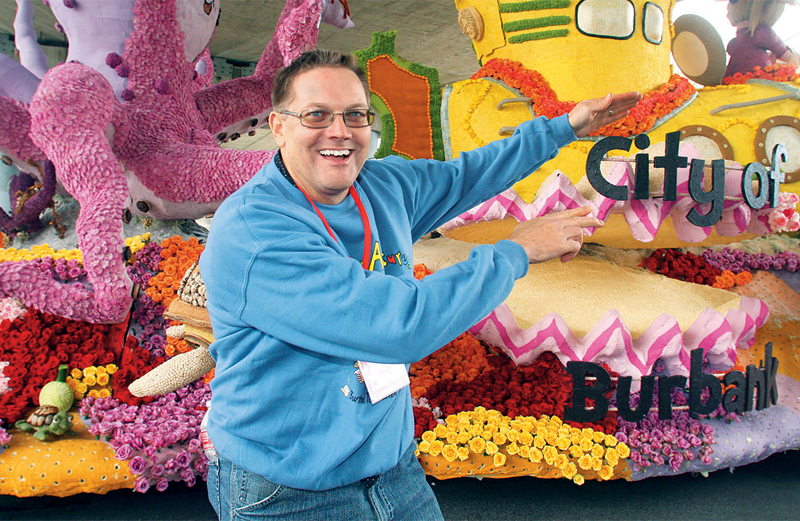
One day, I got a message from a number I didn’t recognize. “This is the Burbank Rose Parade committee,” said the voice, “calling about your drawing, ‘Deep Sea Adventures,’ which has been chosen for our 2013 float. We–” I couldn’t listen to the rest. It was really happening! I called Robin immediately.

“I’m so proud of you,” she said. “This is even better than your pink bathroom!”

The next 10 months were a frenzy of excitement. The “Deep Sea Adventures” float would feature my design, a girl piloting a submarine led by seahorses, and a friendly octopus. The telescope and eyeball from my dream turned into the sub’s periscope.

I sent in precise scale drawings of the float, not something every float designer does. (Thank you, left brain!) I exchanged phone calls and e-mails with committee members about mechanical features, the ideal color scheme, and which materials to use on the float.

So many decisions! My favorite detail: The suction cups on the octopus’s tentacles were portobello mushrooms. Every float is composed entirely of organic materials.

On New Year’s Day 2013, my whole family drove to Pasadena to watch the parade. At 8:00 A.M., the floats began to wind their way through the streets. Suddenly, there was our float–the design I’d carried around inside my head all these months, the dream I’d buried within myself all those years.

“Deep Sea Adventures” turned out great. The judges thought so too–Burbank took home the Fantasy Trophy. Robin squeezed my hand.

“Richard,” she said. “It’s…beautiful.”

I knew what she meant, not in my left brain or my right but in my heart. There is beauty in dreams made true and in prayers answered.

Download your FREE ebook, A Prayer for Every Need, by Dr. Norman Vincent Peale.

Minimize Regrets–Maximize Moments

Nobody plans on living or ending life with regret. When we are young we don’t sit down and make a list of all the regrets we will have toward the end of our lives.

No matter how many times our parents counsel us what to do or not do, we do it our way.

The fact is that we create our lives as we live them. My friend Jackie likes to says, “I only want to regret the thing I did, not the things that I didn’t do.” But all of us have some regret because it comes with living.

One of life’s challenges is to make the most of our life and minimize our regrets. We will not be able to live a regret-free life, but we can seek wisdom in prayer to make good decisions in how best to live.

We don’t want to come to the end of this year regretting that we didn’t spend enough time with our spouse, children or grandchild because we didn’t make it a priority.

We didn’t attend family gatherings because our business was more important. We said no to great opportunities due to the fear of failing. We didn’t take more risks because playing it safe was more comfortable.

M. Craig Barnes in his book, Body & Soul: Reclaiming the Heidelberg Catechism, tells the story of a 90-year old man sitting in a small room in the assisted living wing of the Ten Oaks Retirement Center.

He writes, “It’s a nicely appointed facility with hunter green carpet, dark-stained doors, and a lobby that looks the Marriott. Prints of seashores adorn the walls. It’s a lovely place, but it doesn’t look like home.

“And behind the resident’s door, life is not so elegant. The old man’s room has a bed, a sink, a chair with frayed arms from home, a dresser bearing family photographs, and an oxygen tank. A television is perched on the wall. This is now his world.

“Every day he remembers the days he wasted. There was always another report to write, another deal to make, another rung of the ladder to climb at work.

“He thinks about the piano recitals he missed, the soccer games he only heard about where his daughter scored the winning goal, and the wife he loved who died too soon.

“He used to tell himself that he was working hard in order to be a good provider, but he doesn’t buy that anymore. These days he lives mostly with regret about missed opportunities.

“But now that he is at last void of distractions, he has learned to pray again. He prays mostly for the children he dearly loves who learned from him how to work hard.”

Let us not wait until the end of the year or the end of life to look inward and pray for discernment and wisdom on how best to live our lives. We must ask ourselves hard and tough questions. Am I making the most of moments with loved ones? Is my life making a difference? Or is it all about me?

The author of the letter of James in the New Testament, writes, “But if any of you lacks wisdom, you should pray to God, who will give it to you; God gives generously and graciously to all.”

Prayer: Lord, teach us how short our life is, so that we may become wise in the way we live and love.