Hi, y’all, I’m just back from friendly Greenville, South Carolina, where I got to spend time with a great group of GUIDEPOSTS fans at Faith Night, held at Fluor Field, home of the Greenville Drive, a minor league baseball team in the Boston Red Sox farm system.
All summer we’ve been on a quest to find the most inspirational fan in the “Upland,” as natives call it. We received some incredibly moving stories from Drive fans and GUIDEPOSTS readers alike and, after much consideration, we narrowed it down to three terrific stories.
Tuesday night—a gorgeous night for a ballgame—GUIDEPOSTS hosted 200 or so guests at a picnic at Fluor Field, many attending with their local churches. Everyone entering the park received copies of the three stories and a ballot to vote on which story was most inspiring. In the middle of the sixth inning the votes were counted and the lucky winner announced.
Why a baseball game? I happen to think sports, at their best, have incredible potential for inspiration, especially baseball (ever watch Field Of Dreams or The Natural?).
I’ve said it before—if God is a fan of any sport, it’s baseball. For me, there is nothing like a warm summer’s night, the lush green of the diamond vivid under the lights, the thwack of a fastball in the catcher’s mitt, the sharp crack of single up the middle, the perfect trajectory of a ball arcing into the night sky.
Baseball is the only sporting event that (for the most part) relaxes me. At other games, I’m usually tense and anxiety-ridden and prone to outbursts.
Greenville has a beautiful little jewel of a facility, scale-modeled almost exactly on Boston’s legendary Fenway Park (“Green Monster” and all), where these kids dream of someday playing. Fluor Field is a little taste of that dream, a foretelling of possibility, a glimpse of a greater tomorrow.
So who won our most inspirational fan contest? Unlike sports, there was no definitive outcome. All three finalists were deserving, and the winner was chosen by the slimmest of margins by Drive fans. Her name is Jean Dickson. Jean wrote about her amazing son Cliff, who was born with cerebral palsy but has gone on to do great things (including pitch a no-hitter in Little League) through determination, faith, optimism and sheer guts. I got to meet Cliff and he is a real rock star. Congratulations to his mom from everyone at GUIDEPOSTS and the Greenville Drive.
My admiration goes out to Mary Anne Terminato, who wrote a lyrical story about her father’s giveaway blueberry patch, and Marti Stevens, who told the incredible saga of her husband’s miraculous recovery from a severe brain injury while Marti was nine months pregnant with their daughter Amy. Amy, now a nursing student, accompanied Marti to the game (good luck on that test on Thursday, Amy).
Click below to read all three stories and see a picture of the winner. And don’t forget—inspire us! Tell us your story. I know you have one.
Photo: Cliff with his mom and stepdad by Heidi Heilbrunn
Photos in gallery: Greenville Drive picnic; JDew from the Greenville Drive organization and Edward Grinnan announce winner Jean Dickson; Jean Dickson with her son Clifton and husband; Rosemary Calderalo from GP Development Office with two GP supporters, Charlton Hall (left) and Steve Berwager (right) who live near Greenville, SC; Other finalists were Mary Anne Terminato and Marti Stevens (in blue top).
It’s a classic story that plays out in our everyday lives. Martha invites Jesus into her home and quickly busies herself as the hostess, while her sister Mary sits at Jesus’s feet, listening to His every word. To Martha’s increasing annoyance.
Here she is, getting together a meal, cooking, cleaning, making the place pleasant, and her sister Mary isn’t lifting a finger. Finally, she complains to the Lord, “Do you not care that my sister has left me to do all the work by myself? Tell her to help me.”
And how does Jesus respond? “Martha, Martha, you are worried and distracted by many things; there is need of only one thing. Mary has chosen the better part, which will not be taken away from her.” (Luke 10:41-42)
Whenever I hear it, I identify with Martha. After all, doesn’t somebody need to do the work? How would anything get done without us Marthas? But then I have to listen closer to what Jesus is saying.
Where does your mind go when you’re doing all the work? Maybe it’s not just the busy work Martha is doing, it’s what she’s thinking. She’s distracted. She’s worrying. She could overhear Jesus while she’s working, but she’s not because her head is in another place. She is full of judgmental thoughts—I do this all the time—and no doubt, self-congratulation.
What do you say to God about it? We’ve got to give Martha a lot of credit or else this story wouldn’t be in the Bible. What does she do? She doesn’t simply fume. She speaks up. She tells God how she feels. This is what prayer is for. To be frank with God. To open up. To say what’s on our minds.
Can you listen to God’s response? Jesus hears her concerns. Jesus understands. Jesus listens. And he goes one step further, he offers insights into Martha’s quandary. It’s not about the work. It’s about what’s going on in her head. Her worries, her distracted mind. Martha could have heard Jesus while she worked. But her busy mind wouldn’t let her.
What is “the better part?” How often do we get an opportunity like this? To hear Jesus talking in our own home. How do we know how to listen? We have to let go of our Martha side for a moment and hold on to that Mary side. Stop, let go, give up our self-identification and listen.
What lasts forever? It’s not our worries that last. After all, one worry will be displaced by another worry and another and another. There is no end to them. That devilish cycle. But being silent in God’s presence. That’s the chance of a lifetime. And lasts your whole life long. As you do it, again and again and again, every day in prayer. That’s why the Psalmist said, “Even silence is praise.” (And why I wrote a book with that title.)
The coronavirus pandemic has impacted almost every aspect of normal life. From family celebrations to funerals, vacations to employment, and doctor’s appointments to daily walks. According to a recent poll from the Kaiser Family Foundation, 45% of adults in the United States said their mental health had decreased because of the consequences of coronavirus.
It’s understandable to be struggling with increased anxiety right now. But know that you’re not alone, and you are not helpless. We scoured the Guideposts.org archives for the best advice on fighting anxiety and finding inner calm. Here are some of our favorites:
We’ve collected some quotes from Dr. Norman Vincent Peale, Guideposts founder and the author of The Power of Positive Thinking, about how to banish anxiety.
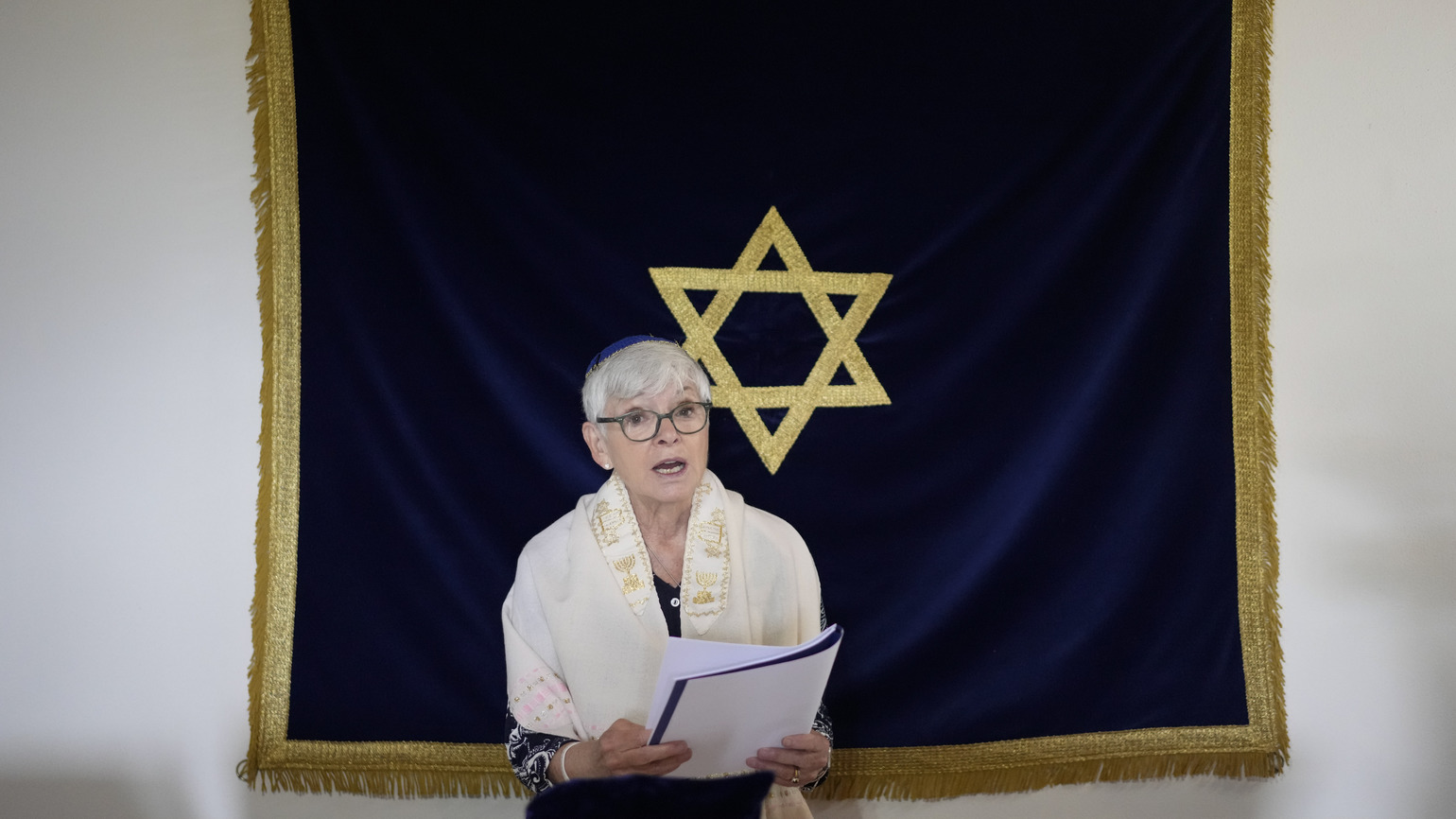
Rabbi Barbara Aiello sat in a rocking chair by the window in her house in Serrastretta, Italy. In the distance, she could see mountains and the surrounding fields and trees, but not much else. The town was in the middle of the countryside in the Calabria region of Southern Italy. The house she had been living in for the past year had been in her family for 440 years. Yet right now, she felt only a tenuous connection to Serrastretta, the place her father was born. More than anything, she felt isolated. And she was no closer to fulfilling a promise she had made to her father almost 30 years before.
It was 1975. Barbara was visiting Serrastretta with her father, Antonio Abramo Aiello. “I wanted to see it, because he talked about it all the time,” she said. “The air, the mountain water, the mushrooms, the tomatoes… He said it was a paradise. And it really is.” In fact, Barbara felt an immediate connection to the town. A thought flashed into her mind. I will live here one day.
As father and daughter walked through the ancient streets, taking in the beautiful architecture and lush Calabrian landscape, they were struck by something that was missing: a synagogue.
Serrastretta was founded during the Inquisition by Jewish refugee families, Barbara’s family being one of the original founders. However, as people left Italy or were forced to convert to Catholicism—and often to hide their Jewish traditions—the town drifted away from its Jewish roots.
Antonio and Barbara were walking through the city he used to call home as a child, when he turned to his daughter. “You need to do something so that the people here can understand where they came from,” he said, “and understand what a treasure the Jewish religion is. You must bring it back to life from its dormant state.”
Barbara was 28 at the time and living in Pittsburgh, Pennsylvania. She had no idea how she could reconnect the people of this town with their Jewish heritage.
In Pittsburgh, the Aiello family had only a faint link to their Jewish faith. “Growing up, we had only a marginal connection with a synagogue,” she said. “Many observances in the Jewish religion, like Shabbat on Friday night and lighting the candles, were just done at home. We were Bnei Anusim, people who had been forced to convert and hide their Jewish roots. And that would define my father until the war ended in Europe.” Then something happened that would change Antonio’s life forever.
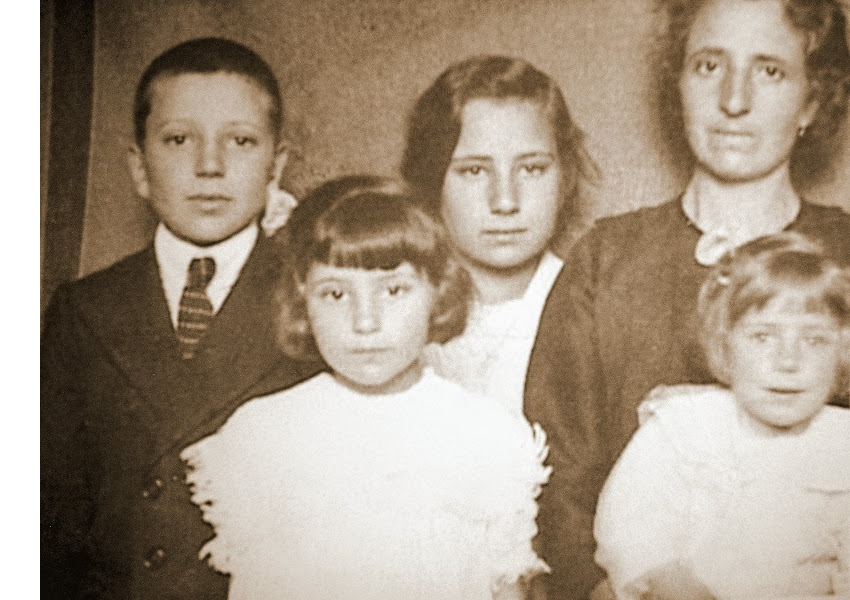
Barbara’s father with his mother and sisters (photo courtesy Barbara Aiello)
During WWII, Antonio worked for the Jewish resistance in Northern Italy. Because he spoke French, German and Italian, he helped coordinate the resistance movements in those countries via radio. He was behind enemy lines on D-Day. And he was with the American Army when they liberated the Buchenwald concentration camp.
Barbara recalls her father talking about opening a barn structure in the camp to find 900 men, teenagers, and young boys inside. Most of them were dead. The soldiers did their best to save the others. They were not always successful. “My father told me that several boys died in his arms,” Barbara said.
As Antonio and the other soldiers gave the survivors food and water and bound their wounds, they noticed the survivors kept trying to hand them small objects. A small button, a ball of string, a pen that had been smuggled into the camp. Antonio realized they were gifts of gratitude. “At first my father didn’t want to accept these things,” Barbara said. “But then he realized it was a way of them affirming what was almost totally lost: their dignity. To be able to accept a gift from someone who had nothing left but their dignity… That really changed my father’s life.”
Antonio understood the importance of holding onto your culture— no matter what. He passed this idea down to Barbara. So, in Serrastretta, when her father asked her to bring the Jewish heritage back to his hometown, she did what any daughter would do. “Okay, Daddy,” she said. “I promise.” She still had no idea how she would do it.
Years passed. Barbara got a master’s degree in psychology and created a successful puppetry program called “The Kids on the Block” to help children understand and appreciate differences and disabilities. She got married and started a family. Then she became more involved in her Jewish faith after the birth of her daughter. The family did Shabbat every night, attended Hebrew school, and her daughter had a bat mitzvah. Barbara was given the chance to become a Hebrew school teacher. She enjoyed her work and began to see it as more than a side job. She realized it might be her life’s calling.
One day, the rabbi of her Hebrew school asked if she had ever considered becoming a rabbi. She told him she thought she was too old now. “You are 42?” he said. “How are you going to feel when you’re 52 and you still haven’t done it?” Barbara knew he was right. She enrolled in rabbinical school. She was the oldest in her class; the other students called her “Rabbi Mama.” In June 1999, she was ordained as a rabbi— six months before her 52nd birthday.
Barbara worked for five years as a rabbi in the US. She loved her job, yet she knew she had unfinished business in Italy. Though her father had died in 1980, she still felt a spiritual pull to fulfill the promise she had made to him to reconnect the town of Serrastretta with its Jewish roots.
“In Hebrew we say there’s a little light in the soul,” she said. “A neshama, a little flame that is always burning there. It provides light and guidance, but it also provides a bit of an irritation, saying, ‘You need to do something.’”
In 2004, she heard about an opportunity to work as a rabbi in Milan. Because she spoke Italian, she was the perfect fit. She was divorced and her daughter was grown, so now was the perfect time for a big life change. She moved to Milan, becoming the first female rabbi in Italy. She worked at the synagogue there for two years. One day, a couple approached her about performing a wedding ceremony. The man was Jewish, the woman was Italian-American. They told her they had started a foundation to affirm and support interfaith marriages and families. Barbara jumped at the chance and told them about her hopes for Serrastretta. The couple was thrilled to hear her story and gave her a small grant to finally start a synagogue in her father’s hometown.
However, moving to Serrastretta and connecting with the people there would prove to be a bigger challenge than Barbara imagined. She did not know how to approach people and ask about their Jewish roots.
“It’s a real challenge because there are many people who have no documentation of a Jewish matrilineal line,” she said. “None of the traditional information that someone might have to present themselves to be part of a Jewish community.” Barbara started talking with people in the town and asking them questions about their background.
“Do you think your family is Jewish?” she would ask. People would almost always respond, “no.”
As she tried her hardest to keep her promise, Barbara also dealt with loneliness. Remote Serrastretta was a far cry from her childhood in Pittsburgh, or her years in bustling Milan. Though it was beautiful— the very paradise her father had told her about—Serrastretta didn’t feel like home.
“Sometimes I called my daughter in Tennessee to complain about how isolated I felt,” Barbara said. “One day, she said, ‘Mom, you signed up to be a pioneer. It goes with the territory.’ I knew she was right.” If Barbara was going to be the first female rabbi in Italy and truly bring the Jewish faith back to this small town, she needed to get out and pioneer.
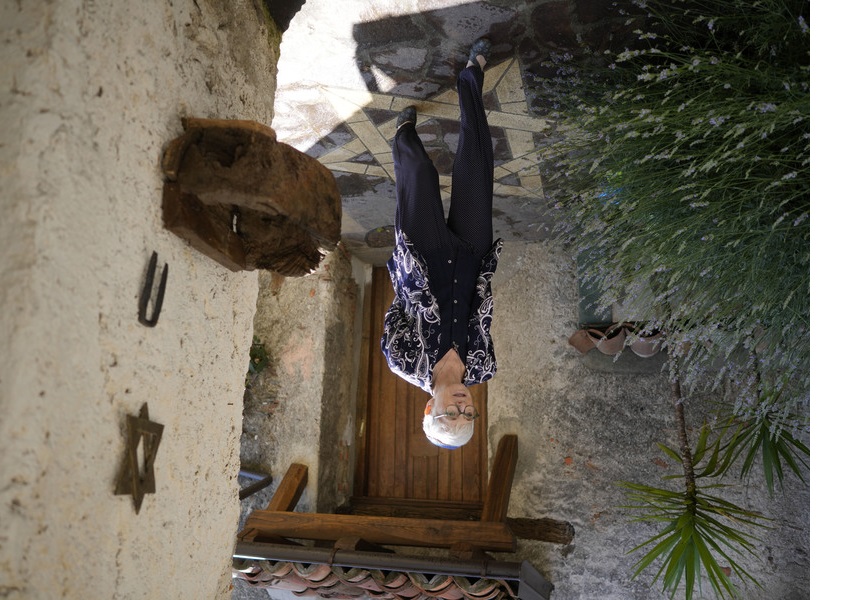
Barbara in the courtyard of the synagogue (AP Photo/Andrew Medichini)
Barbara thought about her father, a man who was not afraid to be an eccentric pioneer himself. Back in the ‘50s, he was a vegetarian, when few people even knew what that was. He would walk nine miles a day, rain or shine, hot or cold. When it got very cold out, her father would put on green tights and march through the freezing snow. Barbara remembers fellow students talking about the man who “walked around town dressed like Peter Pan.” She always pretended she had no idea who they were talking about. Her father couldn’t be dissuaded from his time outside. “He always said that we are our best spiritual selves when we are outdoors,” Barbara said.
So, Barbara started going for walks. “I walk every day, no matter what,” she said. “It is nourishing to one’s soul. People got used to seeing me early in the morning. I made a lot of friends that way.”
One of those friends was Samuel, a local man who lived with his mother who had Alzheimer’s. Sometimes when his mother would walk through town, she lost her way. Barbara and others in the friendly neighborhood often helped guide her back home to her son. When his mother died, Samuel invited Barbara to her funeral.
Barbara arrived at a familiar scene. All the mirrors and television sets in the home were covered in white sheets. There were low chairs set up for people to sit on. On a table near the door were cut up hard-boiled eggs for guests to eat when they came in. Barbara recognized all these things. They were Jewish mourning traditions. She asked Samuel if he knew the things he did for the funeral were Jewish. He had no idea. “Someone in the family once said we might be Jewish,” he told her. “But I always just assumed these were our family’s traditions.”
The encounter was an enlightening moment for Barbara. She realized she had simply been asking the wrong questions. After that day, she changed the way she asked people about their background. “What do you do when a baby is born? What do you do in the kitchen? What do you do for weddings?” Barbara would ask. So many people she spoke to were surprised to learn their traditions had Jewish roots. They tied a red string on a new baby’s crib because that is what the Jewish mystics would do. They did not ever eat meat and dairy in the same meal because it was kosher. They learned the strange dialect they traditionally spoke to bless a wedding had many Hebrew words. “There was no one who had a foot in both worlds, Hebrew and Italian, to let people know what they were actually saying,” said Barbara. That’s where she came in.
Barbara has found happiness in Italy (photo courtesy Barbara Aiello)
Since then, Barbara has taught many people in Serrastretta—and all over Italy—about their Jewish heritage. Some are just curious to learn more about their past, others have since drawn closer to the Jewish faith and even attend the synagogue. “People come to the synagogue to discover their Jewish roots,” she said. “Some people are very involved in the Christian religion and are happy to know why some of their traditions are so different from the typical Italian way of doing things. We are open and welcoming to anyone who wants to just come and see, or join us, or learn a little bit about it.”
Barbara has also strengthened her ties with other religious leaders in Serrastretta. She has a strong relationship with the town’s Catholic priest and Evangelical pastor (both of whom have Jewish roots and were excited to learn about them from Barbara). They all worked together to teach a class about dealing with depression from a Biblical perspective. The priest and pastor covered the New Testament, Barbara handled the Old Testament. They officiate interfaith weddings together. “We try to be leaders in the community,” she said.
During the pandemic, the synagogue was not able to hold a socially-distanced Hannukah service because it was too small. So, the priest opened the Catholic church, which was much larger, to the Jewish worshippers. The town held a beautiful Hannukah celebration; many Catholics came to watch. When Russia invaded Ukraine in early 2022, Serrastretta opened its doors to refugees, many of whom are Jewish.
Serrastretta has embraced the synagogue and Rabbi Barbara’s work. She says now the synagogue is full on Saturdays. She also says that every person that has approached her saying they wanted to know if they had Jewish roots has found them. She knows that is not a coincidence.
“I believe that in addition to physical DNA, we have emotional DNA,” she said. “I believe that we are imprinted with tradition, emotion, compassion, back through our ancestral line. Everyone wants and needs a spiritual connection to the God of their understanding.”
Barbara’s spiritual work has also helped her feel more spiritually at rest in Serrastretta. She continues to help people learn more about the Jewish religion through various avenues like surname research and even puppetry. Though her work is not done, she knows she is keeping her promise to her father. “I really feel like God directed me here,” she said. “I feel like I belong here.”
Nowadays, Barbara begins her day with a cup of Italian coffee in her rocking chair, looking out her window at the mountains. This is where she says her prayers every morning. She has recently added Psalm 121 to them. I lift up my eyes to the mountains— where does my help come from? My help comes from the Lord, the Maker of heaven and earth. He will not let your foot slip— he who watches over you will not slumber… She is where she is meant to be. She knows God is there in Serrastretta with her.
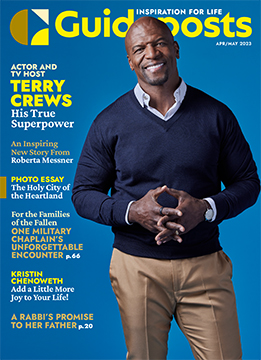
If you’ve seen me on television—on America’s Got Talent, Brooklyn Nine-Nine or Everybody Hates Chris, for example—or in movies such as The Expendables, you know I’m known for my big muscles and alpha swagger. Yeah, I bought into that hype too. Sure, the image allowed me to support my wife, Rebecca, and our five kids in style. But it went deeper—and darker.
What I couldn’t let anyone—even myself—see was that inside I felt inadequate and vulnerable, like the seven-year-old boy I used to be. A boy who was desperate for his parents to stop fighting, desperate for his father’s love.
I grew up in Flint, Michigan, the middle child of three. One of my earliest memories was of seeing my father, drunk, knock my mother to the floor. This happened regularly. Even so, I was considered lucky by neighborhood standards because my father was around and didn’t beat us kids. He was a foreman at the GM plant, a hard worker and a good provider.
As seen in the April-May 2023 issue of Guideposts; photo: Larsen&Talbert
My mother would say things to lay him low. She liked to scream about what a sinner he was. She was a devoted churchgoer, and she took us kids for hours-long services and Bible school. But her church was as dysfunctional as her marriage.
The pastor didn’t preach about God’s love and grace. Instead, he preyed on his congregants’ shame about their weaknesses and their fear of hellfire. What I learned was that you didn’t ever cross God. His wrath and judgment came quickly. I wanted to hide from God. He was even scarier than my earthly father.
Still, I loved my dad and yearned for him to love me. What boy doesn’t? I would watch him get ready for work. I’d try to make conversation about how he shined his shoes (he had served in the Army and still dressed with military crispness) or whatever else I could think of, but he’d give clipped answers, as if to say, “Leave me alone.”
After finishing his shift at the plant, he’d go to the American Legion hall and drink, come home, fight with my mom, yell at us kids or just sit in his chair in a stupor.
One Friday night when I was in second grade, my dad stomped into the living room, put on some sad soul music and slumped in his chair. He looked so pitiful sitting there all alone, listening to Bobby Womack. My heart ached for him. I tiptoed over, put my arms on his broad shoulders, leaned in and gave him a kiss on the cheek.
He turned and stared at me in shock, as if my love was the last thing he wanted. I backed away so fast, I almost tripped. I decided then and there that I could never let myself be vulnerable again, as if I had discovered the key to my survival. Not that I knew the word vulnerable but the message was unmistakable to me: “Squash your feelings. Get tough or get eaten alive.”
Getting tough meant getting bigger. I loved art. I would sit at the kitchen table and draw superheroes with bulging muscles. I dreamed of becoming strong and powerful like that.
There was a community rec center down the street from Flint Academy, the magnet school I got into in seventh grade because of my artistic talent. At 13, I discovered the gym in the rec center’s basement. I lifted weights every day. I liked being able to control something in my life, even if it was just the way my body looked.
I could make myself look fearsome. Muscles were my superpower. Somehow, I knew my father would go too far one day, and I would need to be strong enough to take him out. No boy should have to grow up thinking like that, but at the time, I didn’t know any different. It was my reality.
I threw myself into sports. My muscles served me well, especially on the football field. Being an athlete also got me a pass from the gangs in the neighborhood. I entered Western Michigan University on a partial-tuition art scholarship. I made the football team as a walk-on.
It was there, in Kalamazoo, Michigan, that I met Rebecca King. A friend from my dorm invited me to go to church with him and his girlfriend. I was leery, given my experiences at my mom’s church. But this place had a totally different vibe, starting with the music.
Then I saw the piano player. I felt drawn to her in a way I couldn’t explain. After the service, my friend introduced us. Rebecca was a single mom with a baby. She had her own apartment, worked in a hair salon and played piano on the side. She was way more mature than I was. Still, she gave me a chance.
I had no idea what a healthy relationship was, but I knew I needed to be with Rebecca. On one of our first dates, I told her, “I don’t know where this is going to go, but I want you to know I’m willing.” It wasn’t something I planned—I never would’ve planned to open up like that. It just came out. We got married a year later, in July 1989, and started a family.
I spent seven years as a journeyman player in the NFL, a lonely existence that reinforced I could never show fear or weakness. Vulnerability and pro football don’t exactly mix. My career dictated where our family lived. I thought as husband and father I should dictate what we did. The one thing Rebecca insisted on was raising our kids in the church. In every city, she’d find a church for our family to go to. And I’d go. For her and the kids.
A year after I left pro football, we were living in an extended-stay hotel in Los Angeles, broke, mainly because I was a big spender and wouldn’t listen to Rebecca, who was frugal. (“The borrower is servant to the lender,” she’d say, quoting Proverbs.)
I got a job as a security guard on movie sets. People in the business told me I belonged in front of a camera. With Rebecca’s encouragement, I auditioned for a new reality show, Battle Dome, and landed my first TV role.
We finally had enough money to fly back to Flint for Christmas. One night, Rebecca and I let my parents babysit while we went out to dinner. My dad promised not to drink around the kids, and I decided to trust him. Big mistake. My parents got into one of their epic fights, my dad punching my mom and knocking one of her teeth sideways. My sister-in-law called and said my mom and our kids had fled to my aunt’s house.
That terrible moment I fantasized about as a kid had finally come. I broke every speed limit between the restaurant and my aunt’s. I dropped Rebecca off and rushed to my childhood home. I burst in and found my dad in the kitchen. “What the hell do you want?” he snarled.
“I’m grown now,” I told him. “And you will never lay hands on my mother again.”
Then I punched my father in the face. Hard. Years of anger were bound up in that fist.
All the impotent rage I’d felt as a child came pouring out. I hit him again and again. Finally I was spent. I stared at my father, lying on the floor, whimpering.
I’d dreamed of this moment, how good it would feel once I showed how strong and powerful I was. How I was in control now. But all I felt was empty. Hollow. My dad wasn’t the only one crying. I bawled like a baby, full of shame and remorse. I’d never felt so vulnerable than at that moment, worse than when my dad had shunned me all those years before.
We went back to L.A., and I went right back to being the alpha male with my wife and kids. I never raised my hand to them, but I tried to control them just the same. Like buying my kids the toys they wanted, then using that as leverage to lay down the law. If that didn’t work, I’d lash out verbally.
Or like the time I traded in Rebecca’s car and got her a brand-new Escalade after I got a lead role on Everybody Hates Chris. It had rims, tinted windows and everything. She didn’t want a new car, let alone something that flashy. I wanted my wife to have this status symbol because it would make me look like a big shot. I told myself I was being generous, but really, I was trying to earn Rebecca’s love with gifts. Deep down, I didn’t believe I was worthy of her love or anyone else’s—especially not God’s. I’d sit in church hoping he didn’t notice me.
The more success I had, the more bad-tempered and controlling I got, fearing it would evaporate any minute. Rebecca begged me to tell her what was going on, but I kept it all inside, all my fear and confusion, until the feelings were like a dam about to burst.
One day in February 2010, I was on location in New York City. Rebecca was home in L.A. We were arguing on the phone, and I finally broke down and told her everything I’d tried to keep hidden, emotions I didn’t even understand why I was having. Primal fears of vulnerability and loss of control that my muscles could no longer conceal.
“I love you, Terry, but if you don’t get help, I don’t see us working this out,” she said, then hung up.
I needed guidance. I picked up the phone and did something the younger me would never have considered. I called my pastor. We’d been going to Faith Community, led by Jim and Marguerite Reeve, for a while. I still thought of church as something I did only for my wife and kids. Yet somehow I knew I could trust Dr. Jim Reeve with the darkest parts of myself, as if I were being led to him.
I told him everything I’d told Rebecca, my darkest secrets, the muck of my soul. Jim listened. Then he said, “Terry, I can’t promise you you’re going to get your wife and your family back, but I can tell you that you need to get better for you.”
I had thought you did good things to avoid punishment and earn approval. Now here was a man I respected telling me to be a better person simply for the sake of being a better person. It wasn’t about what others thought of me. It was about what I thought of me. Like a burst of light, that simple wisdom changed my life.
That and a lot of therapy. Therapy helped me understand that words can hit as hard as fists, and I’d hurt my family deeply with my words and toxic behavior. I went to Rebecca at last and said, “I want to start over. I want to change.” I got on my knees. “I’m sorry. I had it all wrong.” Then, humbly and sincerely, I asked her for forgiveness.
For most of my life, something like that would have been an unbearable humiliation. Now I work every day to become a better husband and father. Rebecca and I talk to Jim and Marguerite Reeve often. We call them our spiritual parents. They’ve shown us that a loving marriage starts with God at the center.
I have discovered strength in vulnerability, for who was stronger and yet more vulnerable than Jesus, who loved the poor and weak and defied the Pharisees. Who sacrificed his earthly life so we could live with him in heaven. What requires more vulnerability than to forgive and be forgiven? Well, I’m working on that.
In the meantime, I remember that love conquers fear—always—and that to be a man means accepting myself, weaknesses and all. That’s my true superpower.
For more inspiring stories, subscribe to Guidepostsmagazine.
“The cyclone derives its powers from a calm center. So does a person.”—Norman Vincent Peale
On May 31, my grandpa, Norman Vincent Peale, would have been 120 years old. Though he lived a very long and fulfilling life, I know he would love to still be here. There is so much of today’s world that he would embrace, especially the myriad of ways to share and spread the message of God’s love and grace with millions more people. My grandma, Ruth Stafford Peale, would be right there with him, capitalizing on his creativity and using her tenacity and ingenuity to enrich the lives of others through new modes of communication. Despite the ever-expanding world, they would keep their message simple, yet powerful, timely and timeless. They were very good at doing that.
What I also know Grandpa would continue to embrace is the natural world around him—the simplicity and the power of its beauty. Grandma and Grandpa spent as many weekends as they could at their home on Quaker Hill in Pawling, New York, where the landscape was filled with interesting trees, especially one of Grandpa’s favorites, the Japanese maple. They spent time during those weekends in Pawling working, but I also have very strong memories of them taking drives to see the beauty of the seasons.
In the springtime, he and Grandma, often with my parents, would drive up to Sharon, Connecticut, the back way, to admire the lush greens of the trees and the lawns and to take in the beauty of the lilacs at so many of the stately homes. In the summertime, they would make their way to Quaker Lake, where they, in their country clothes, would sit, side by side in the shade, taking in the glimmer of the sun on the lake, the shimmering of the trees, and the breeze through the pines. In the fall, they would take in the vibrant, changing leaves as they drove around Quaker Hill. And in the winter, they enjoyed the purity and the glistening of the blankets of snow that graced their property.
Grandma and Grandpa took the time to observe and be present in the seasons and the fruits of each, even the harshness of a storm, for in each they saw the workings of God. And as Grandpa said, “The more you lose yourself in something bigger than yourself, the more energy you will have.” They were restored by taking in the simple, yet powerful, natural world. And they needed every ounce of energy possible to accomplish all they did.
I often think about Grandma and Grandpa’s mission of giving inspiration to others though God’s word, their own stories and the stories of others. Their mission was simple, yet deeply powerful, just as our natural world is. Simple in how our seasons repeat themselves, yet powerful in how they can present themselves, through their beauty and their destruction. The seasons are timely (with the possible exception of this spring’s arrival), and the blooming blossoms, the peaked mountains, the changing leaves and the scents of each season are timeless, much like Grandma and Grandpa’s message. We all count on our natural world to do its thing, just as so many of us count on the presence of God and His grace each and every day throughout the seasons.
I have never wondered why Grandma and Grandpa Peale took such pleasure in their seasonal drives, as I always knew there was something sacred and reverent about them. The respect they had for the simple, yet powerful, natural world was evident, as was their deep respect for the timely and timeless message from God: That we are all loved and valued in His eyes. We are a part of God’s natural world so He speaks to us, too, when He says, “Let the heavens rejoice, let the earth be glad; let the sea resound, and all that is in it. Let the fields be jubilant, and everything in them; let all the trees of the forest sing for joy.” (Psalm 96:11-12)
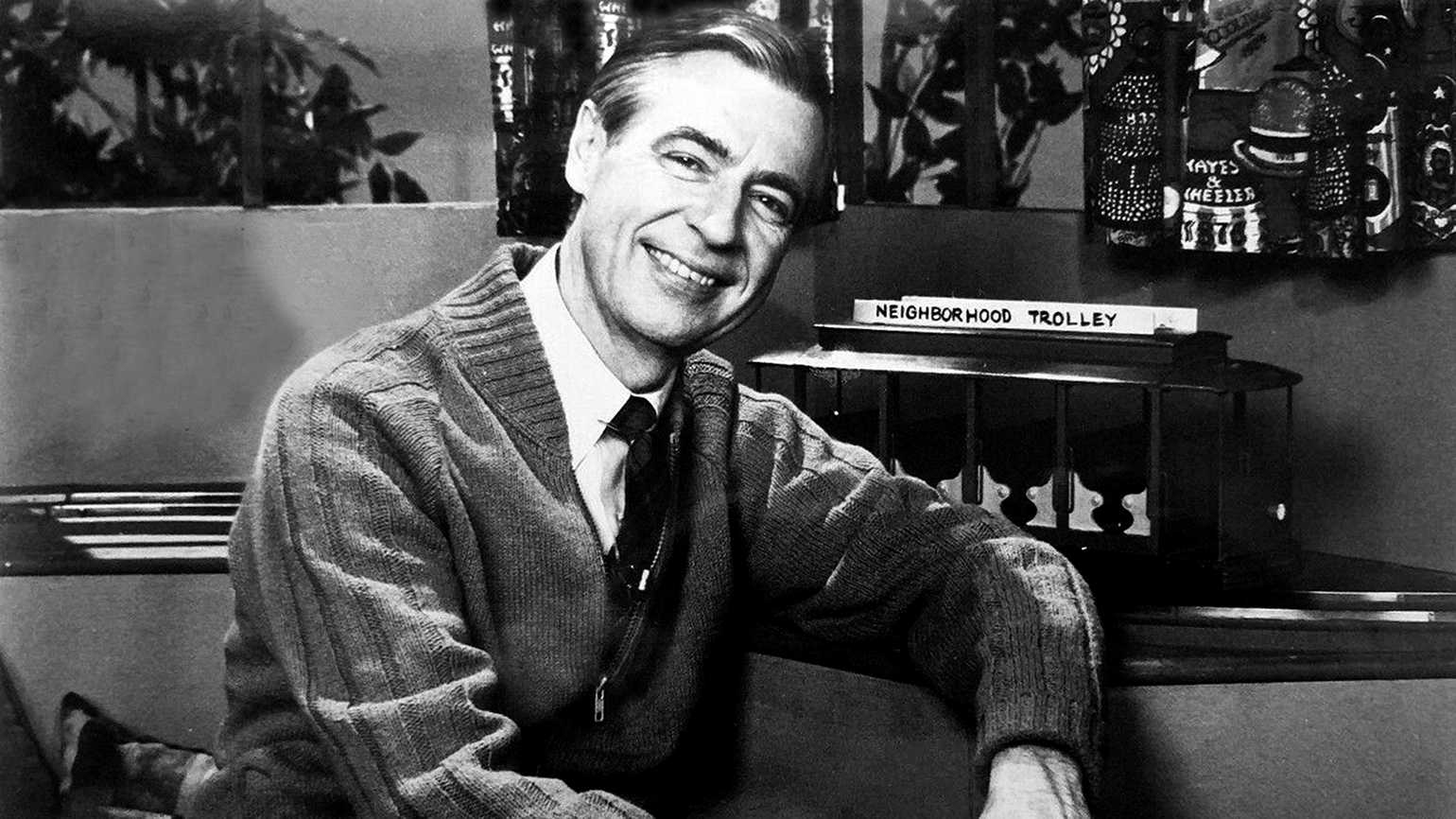
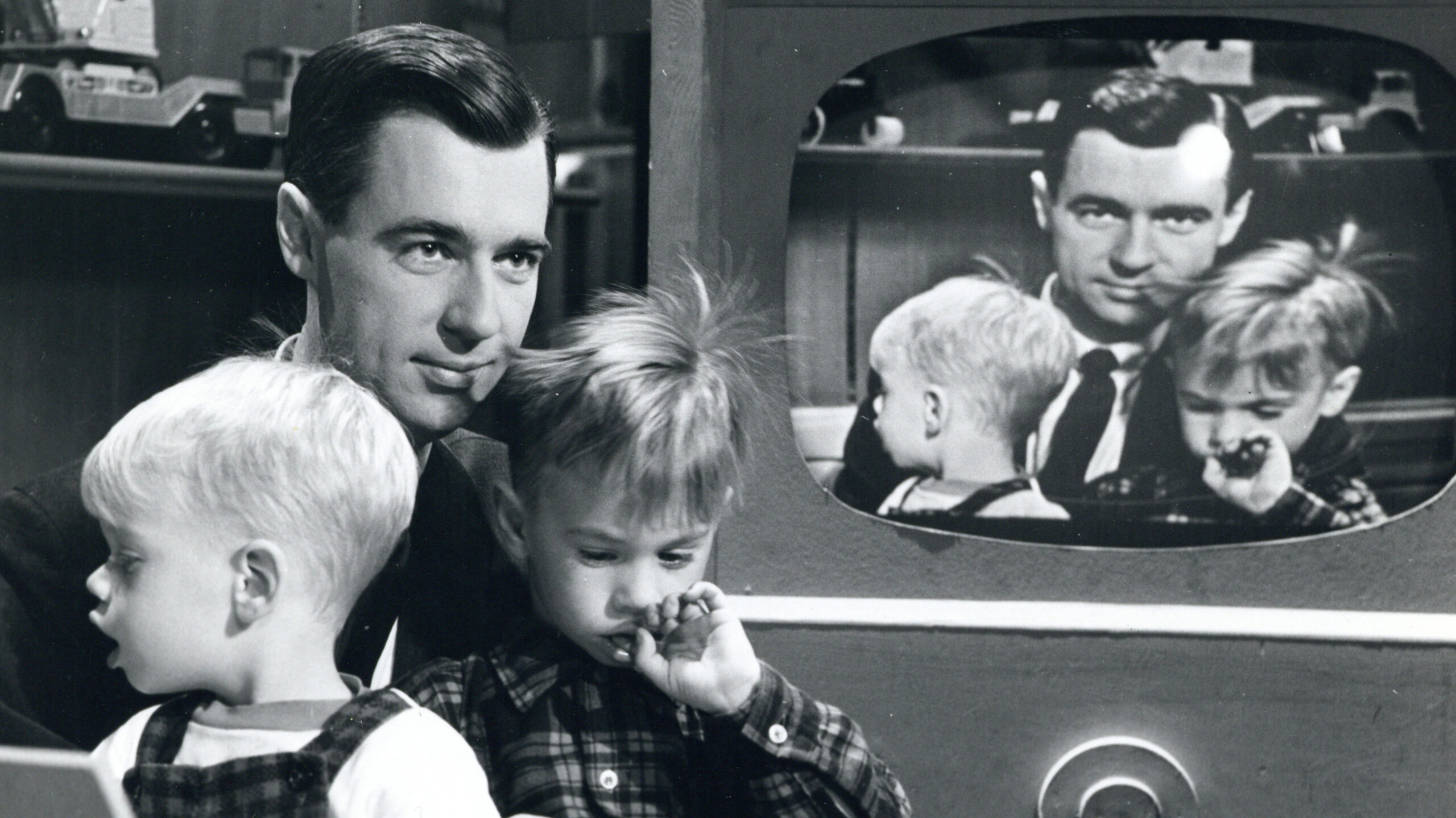
Mister Rogers was more than a talented puppeteer, television host and devout Christian. He was also a vital voice when it came to protecting funding for public television.
When President Richard Nixon proposed cutting the federal budget for public television in 1969, Rogers—whose show Mister Rogers’ Neighborhood had only recently been syndicated nationally—traveled to Washington D.C. and gave a passionate speech to Congress about the importance of his program, explaining how it helped children navigate their emotions in a healthy way.
“I give an expression of care every day to each child, to help him realize that he is unique,” Rogers explained to the Senate Subcommittee on Communication.“I end the program by saying, ‘You’ve made this day a special day, by just your being you. There’s no person in the whole world like you, and I like you, just the way you are,’”
Doing this, Rogers went on to say in his signature calm voice, provided “a great service for mental health” by making “it clear that feelings are mentionable and manageable.”
Speaking to an initially combatant group, Rogers won over the senators questioning him in a matter of minutes. At the end of his testimony, Senator John Pastore of Rhode Island said he had goosebumps and declared, “Looks like you just earned the $20 million.”
The funding that Rogers ensured allowed his show to run until 2001, touching the lives of millions of children and teaching them about kindness and love through play.
“As human beings, our job in life is to help people realize how rare and valuable each one of us really is,” he said, “that each of us has something that no one else has—or ever will have—something inside that is unique to all time.”
Maxwell King’s book The Good Neighbor: The Life and Work of Fred Rogersis the first full length biography of the man behind Mister Rogers’ Neighborhood. It’s a deep, honest dive into the history and values that shaped one of the most beloved figures in television history.
In this excerpt, King explores the backstory of a powerful and game-changing moment that changed the national perception of children with disabilities.
Behind the Scenes in the Neighborhood
In 1975, Jeffrey Erlanger, a five-year-old boy from Madison, Wisconsin, confined to a wheelchair, asked his parents, Howard and Pam, if he could meet Mister Rogers rather than going to Disneyland. It was the family’s own version of “Make-A-Wish,” proposed on the eve of major surgery to fuse Jeff’s spine. When asked in an interview why Jeff chose Fred Rogers, Howard and Pam explained that their son “always said that Mister Rogers told him that he was special and that he was just fine the way he was, and it gave him confidence and it made him feel good, and Mister Rogers just seemed to love him.”
Jeff and his sister, Lisa, both watched the Neighborhood so often that they knew all the words to Fred Rogers’s songs. Pam and Howard Erlanger wrote a letter to the television star about Jeff’s desire to meet him, and they got a handwritten answer that led to a breakfast meeting at a hotel in Milwaukee, where Fred Rogers was visiting to promote the local PBS station. Later they continued to correspond; Mister Rogers wrote to say how glad he was that Jeff’s surgery had gone well.
The years passed, and even if the growing Jeff didn’t watch the Neighborhood quite as often as he had when he was younger, he kept a place in his heart for Mister Rogers. Then in 1980, Fred Rogers decided he wanted to have a child in a wheelchair on the show for a theme week on all things mechanical and electrical:
“He remembered Jeff, and he told his staff to get Jeff. The staff said, ‘There’re handicapped kids in Pittsburgh. We don’t have to fly somebody here from Wisconsin and go through all that. We could just go down the block.’ No. Fred insisted it had to be Jeff,” recalled Pam and Howard Erlanger.
Reasonably enough, the staff at the Neighborhood thought the family lived in Milwaukee, not in Madison. And Fred Rogers remembered them as the Ehrlingers. When they couldn’t be located, Rogers instructed the staff to put the project on hold. But in cleaning out some files, the Neighborhood’s staff found letters from the Erlangers about their older daughter, Lisa, not Jeff. Lisa was worried about the fact that in her mind, the show “didn’t have any strong female role models.”
Rogers had written to say that the Neighborhood was made of modules, and some of the segments dated from the 1960s; he was trying to remedy the situation. In fact, a song from a very early show included these lyrics: “My daddy’s strong and drives a car and my mom’s pretty and cooks.” For all his humanistic impulses, Fred Rogers was also a man of his times.
Once the Erlanger family had been located, they were all flown to Pittsburgh for the taping. Jeff was now a preternaturally intelligent ten-year-old. When asked if there was any special preparation for Jeff, his mother, Pam, said: “Absolutely not. The first time Jeff heard anything about what was going to happen was when we arrived on the set a few minutes before they started rolling the cameras. At that point Fred said to him, ‘Jeff, I’m just going to ask you some questions, and then we’ll sing a song together.’ He did say, ‘Remember, we’re talking to very young children so don’t use any words that are too big.’”
Jeff Erlanger didn’t quite heed Mister Rogers words. In one of the Neighborhood’s most memorable broadcasts in 1981, Mister Rogers asks Jeff straightforwardly about the mechanics of his wheelchair, and how he wound up in it. The young boy explains his medical condition (resulting from a spinal tumor) in sophisticated detail, including even his urinary functions.
Mister Rogers listens intently and says simply: “Your parents must be very proud of you.”
This was the Zen of Fred Rogers’s radical acceptance: There was no topic he wouldn’t address on air, no matter how difficult. “We don’t fudge things,” he said once when asked about the sources of the show’s popularity. “People long to be in touch with honesty.”
Producer Margy Whitmer recalls Jeff Erlanger’s appearance on the Neighborhood: “It was one of the most stunning moments. . . . Here’s this child who has multiple disabilities, and Fred said, ‘Talk to me about that wheelchair. Talk to me about what’s wrong with you.’ And this extraordinary kid talked about it in a matter-of-fact way. Fred . . . presented it to kids watching the show, as ‘this is just the way he is.’”
Jeff’s parents felt completely comfortable allowing their son to speak this way on television because, as Howard Erlanger explained: “In our own way, we felt totally analogous to how the kids felt, that Fred Rogers was part of our family, that he was just a regular person. And we saw that everything that happened on the show was very warm and nurturing and supporting, so whatever it was that Jeff was going to do was going to be nurturing and supporting. There was no risk whatsoever that there could be anything that would be embarrassing or that we would be unhappy.
“We just felt totally comfortable, like we were going to a relative’s for an evening.”
Jeff Erlanger and Fred Rogers didn’t meet again until nearly twenty years later, when Fred Rogers was being inducted into the Television Hall of Fame in 1999. When Jeff rolls onstage to surprise him, Rogers runs up to the stage and hugs him as if they are the only two people in the auditorium. “On behalf of millions of children and grown-ups,” says Jeff to Fred Rogers, “It’s you I like.”
Tennessee was the only home I’d ever known. I never imagined leaving. But my wife and I were planning a move to Michigan to be closer to our grandchildren, and I was packing up my vendor stall at my very last Tennessee craft show. I was sure I could sell my carvings elsewhere, and nothing was more important to me than my family. But it will be hard to leave home, I thought, and called to mind the little wooden cabin in the Smoky Mountains where I grew up. I closed my eyes and could see the front porch and the henhouse, the red spruces and bluebells growing on the riverbanks.
A voice interrupted my daydream. “Young man, could you tell me where you got these beautiful paintings?”
“These aren’t paintings, ma’am,” I explained to the elderly woman in a wheelchair. “They’re carvings that are tinted on natural, white marble. That’s why the colors are so vibrant.”
My answer seemed to please her. “My name is Katherine Ashworth,” she said. “May I hold one if I promise not to break it?”
“The only way you will break this is with a hammer, Mrs. Ashworth,” I said, handing her a bird carving.
She traced the outlines of the picture with her finger. “Do you think you could carve an English cottage?”
“I’m positive I could,” I said. “Do you have a photograph I can work from?”
“I only have my memories,” she said. “But perhaps together we could come up with a sketch?” I’d never worked from just a memory. Not even from one of my own. I wasn’t sure I could do it.
A young man came over and leaned down to speak to her. “Ready to leave?” he said. “We must be home by six.”
Mrs. Ashworth smiled. “They call the place where I live a home,” she said. “We residents call it assisted living. The house I’d like you to draw is the cottage in England where I grew up. If you decide to help, here is my address. There’s no need to call first. I’m always there.”
I was worried. “That cottage was her home,” I said to my wife, Arbutis, that night. “I’m sure she can describe every detail. I just don’t want to disappoint her.”
“Doug, if it’s at all possible, you should carve her that cottage.”
The very next afternoon I drove to the assisted living center with a sketch pad and pencils. I signed in as a visitor of Katherine Ashworth. The woman at the front desk was surprised. Apparently, Mrs. Ashworth didn’t get many visitors.
Her room was beautiful, full of paintings and photographs of pastoral scenes, flower gardens and animals. “They remind me of my childhood. Many of the flowers grew around the cottage I want you to carve.”
I took out my sketch pad. Mrs. Ashworth closed her eyes. “It had a thatched roof,” she began, “with a fieldstone chimney…”
I started sketching. “What brought you to the United States?” I couldn’t help asking.
“I married an American soldier during World War II,” she said. “William and I met just before the invasion of Normandy.” Her voice sounded younger as the memories rose in her mind. “Many American soldiers were billeted in the homes of English farmers like my father. William came to stay with us on the first of May, 1944. I was 20 years old. He was so handsome in his uniform, and I fell in love almost immediately!”
Mrs. Ashworth told me about the day William left to return to his unit after they’d spent only the month of May together. “He was wounded storming Omaha Beach that June. Grievously so. I went to visit him in the hospital and prayed every day he would get better.”
Our conversation turned back to the thatched cottage. She described the different wildflowers that surrounded it, the wooden fence beside it, the wooden doors and red brick.
She might as well be describing heaven, I thought, listening intently to her words.
“I’m so sorry,” Mrs. Ashworth said. “I do chatter on sometimes.”
“Not at all,” I said. “There’s such life in your stories.” I showed her what I’d come up with on my pad. “Does this sketch resemble your cottage?”
She examined my work, took my pencil and adjusted the position of the chimney. “There,” she said. “It’s perfect.” I couldn’t wait to get to work.
When the carving was completed, I brought it to her in her room, along with a small standing frame. I found her sitting by the window wrapped in a blanket and handed her the carving. “This is so much more than I hoped for,” she said, tracing the outlines on the marble. “You have a God-given talent. What do I owe you?”
We found the perfect spot to display her carving, right next to her bed where she could see it before she closed her eyes at night. I spent the rest of the afternoon with my new friend. When I signed out at the front desk, the receptionist thanked me for my visit. “It means a lot to her, I’m sure,” she said. “Mrs. Ashworth stays to herself most of the time.”
I decided that was going to change. Although I would soon be leaving Tennessee, I could enjoy Mrs. Ashworth’s company until then. I returned to the assisted living center the following week to see her.
“I’m sorry, Mr. Clark,” said the lady at the desk. “Mrs. Ashworth passed away in her sleep just two days ago.” She pulled something out of a drawer. “We thought you might like to keep this.”
I returned to my car with the carving and sat for a long time, tracing the lines of the thatched roof, the stone chimney and the wildflowers. Memories were our ties to heaven on earth, ties that were as strong and unbreakable as the marble in my hands. I had no doubt that when Mrs. Ashworth entered the pearly gates, this cottage was waiting for her, its wildflowers all in bloom. Just as my own Smoky Mountain cabin would be waiting for me in my one true home.
For more angelic stories, subscribe to Angels on Earth magazine.
I write poems for a living. Yes, poems. I run a performance-writing project called Poem Store. Basically it’s me, an antique typewriter and a sign (Poem Store. Your Subject, Your Price). I set up at outdoor markets, private events and schools, and spend the day writing poems for customers. I write love poems for tongue-tied guys. Poems for birthday celebrations. New Year’s resolutions. Commemorations of new love, new babies and new jobs. I’ve written poems for children, retirees and newlyweds. It’s incredible to know that my poems have an impact. Customers often cry when I read a poem aloud. Some return every week. Words are powerful, mysterious things. But not even I knew how powerful.
One Saturday morning, a man approached me at the farmers’ market in Arcata, California, the small coastal town where I started Poem Store several years ago. Arcata was once a thriving logging town. Now most of the timber companies have pulled out, replaced by a state university and a small but vocal community of environmentalists fighting to preserve the iconic redwood forests blanketing the hillsides. I wasn’t an activist but I did love the redwoods. That’s one reason I lived in Arcata. I am devoted to this planet we call home.
The man at the farmers’ market was unassuming. He had gray hair and a trim gray mustache, and he wore slacks and a Hawaiian-patterned golf shirt. He eyed me skeptically. I have long, unruly hair, several tattoos and a fondness for vintage flower-print dresses.
“What are you doing?” the man asked.
“I write poems for people,” I said. “You tell me a subject and I write you a poem. Pay whatever you want.”
“Hmm,” he said. “Okay. How about ‘being underwater’?”
“Being underwater is one of my favorite things!” I said. I thought for a moment and then typed out a poem about how “all the force of the world” lies in the “unknown place” deep under the sea.
The man’s face brightened as I read the poem aloud. “It’s perfect,” he said. He gave me five dollars, took a card with my contact information and stepped aside for my next customer, a little girl celebrating her birthday.
A few days later I got an e-mail from the man in the Hawaiian shirt. He introduced himself as Neal and said his hobby was scuba diving—hence the subject of his poem.
“I’d like to ask for another poem,” he wrote. “My beloved wife, Wendy, recently died of cancer. I’d like a poem I can read when my kids and I scatter her ashes at sea. I’m having a hard time finding something special enough. I’m going to send you a commemorative book about Wendy the kids and I put together. I trust you’ll find the right thing to say.”
I took a deep breath. I’d gotten all kinds of requests at Poem Store but never one so sad and heartfelt. I told Neal of course I’d write him a poem.
Neal mailed me the book. I spent several days reading it and meditating on what to write. At last I e-mailed him: “The poem is done. I’d like to present it in person.”
Neal suggested we meet for dinner. It was only then that I happened to notice the automatic signature at the end of his e-mail: “Neal D. Ewald, Vice President and General Manager, Green Diamond Resource Company.”
I froze. Green Diamond was one of the most controversial timber companies still doing business in northern California. Just recently, environmentalists had staged treetop sit-ins to protest the company’s plans to log and build houses on a prime 7,500-acre parcel of redwood forest near Arcata called the McKay Tract.
I was not a protester. But I definitely opposed destruction of old-growth groves like the McKay Tract. I knew those trees. You could see them in the distance from the highway south of town. They were majestic, often wreathed in fog, which gave them an otherworldly appearance.
Driving to meet Neal at the restaurant, I wondered what he would be like. I had no idea what to say to a flinty timber baron determined to chop down the trees I loved. And yet I already felt close to him after reading his family’s book and seeing what a loving man he was.
Neal wasn’t flinty. To my surprise, we hit it off immediately. I told him I’d noticed his e-mail signature and was curious about his work.
“You know the timber business?” he said.
“Well, I love the redwoods,” I said. “And I’ve heard of the McKay Tract.”
Neal’s expression hardened.
“But I haven’t formed an opinion,” I quickly added. “I’m open to all sides.”
Neal thought a moment. “Your openness is refreshing,” he said. “I’m going to be leading a tour of some of Green Diamond’s holdings soon for investors and community officials. I’d like to invite you along. You can decide for yourself whether the activists are right about us.”
I agreed to come, more out of politeness than anything else. Then I changed the subject to Wendy and the conversation bloomed. Neal’s caring heart expressed itself in everything he said about his late wife.
After dinner, we stepped outside and I read Neal the poem. I’d written of Wendy’s devotion to her family, her “patience in the face of mystery and misfortune.” I commemorated her “grace and acceptance,” her determination to live as if “everything is a gift.” I signed it, “By Jacqueline Suskin, with honor and thanks.”
I looked up to see Neal weeping.
“It’s perfect,” he said.
We stood in silence for a while. Then Neal gave me directions for the upcoming company tour and we said goodbye. Getting into his truck, he gave me a hug. I knew then we would always be friends.
Still, I was nervous driving to the tour. I’d done my best to prepare, researching the McKay Tract and the protests against Green Diamond. I even ran into an activist I knew nicknamed Farmer and asked if he had any questions for Neal. He didn’t. He said he wasn’t interested in compromise.
The tour began at a Green Diamond lumber mill. The sight of all those towering piles of redwood logs made me sick to my stomach. Yet I was curious.
Neal introduced me excitedly to the group, a bunch of men in suits and logging gear. I was the youngest person there and definitely stood out in my vintage blouse and jeans. Neal told me to ask as many questions as I liked. So I did, especially once we began walking through the redwoods. Green Diamond, it turned out, knew where every owl nest was on its property, where the salmon spawned and which trees could be cut without harming endangered species.
“Our goal is to harvest trees sustainably,” Neal said. “I wish I could make the activists understand that. We’ve made so many changes over the years, always seeking to run our business profitably but also protecting the health of the forest.”
Following the tour, I still had questions. Neal and I met for lunch later in the week—and then continued to meet many more times, sometimes for a meal, sometimes for walks in the woods, often with books to share and notebooks to fill with our collaborative ideas on sustainable harvesting. At first I couldn’t figure out why Neal made so much time for me.
Gradually I realized he was learning as much from me as I was from him. He had lots of questions too. He listened attentively when I described the forest as more than a resource—as a place where all of life was interconnected and where people could find spiritual solace in the trees. He kept asking what more Green Diamond could do to be a responsible steward.
He opened up to me about the ache he felt for Wendy. About his frustration that he was viewed as a villain. The more we talked, the more I saw that our friendship and wide-ranging conversations were steadily guiding Neal toward something far more radical than any treetop sit-in.
“This guy Farmer you talk to sometimes,” Neal said one day. “Can you give him a message for me? Tell him I’m not as opposed to preserving the McKay Tract as he thinks I am. I would love to compromise. Tell him to give me ideas I can actually say yes to, rather than outrageous demands that would harm my business.”
He smiled at me. “Talking to you has helped me put that into words.”
Farmer eventually reached out to Neal. They didn’t become friends, but they did exchange ideas. And then more people joined the conversation—activists from another local environmental group, some county officials and an organization called the Trust for Public Land, which teams up with communities to help preserve parks, farmland and open space.
In 2014, Green Diamond canceled its plans to log and develop the McKay Tract and sold 1,000 acres of lush redwood forest to the county, to be preserved as public parkland.
Now the whole community would see the Neal Ewald I’d gotten to know.
Of course, I’d already seen just how much trees mean to him. Especially one particular tree. One day he invited me to go hiking in a coastal forest near his house. We stopped at a large, very lovely tree and he showed me a plaque he’d made himself and tacked to the trunk. On the plaque was a poem, written by Neal:
“Wendy S. Ewald
1961–2008
Tell me that you love me
Please don’t ever leave me
I cannot live without you.”
Maybe our friendship gave Neal the nudge he needed to express his love in words—and in deeds. But I like to think it was the woods too. The divine presence in nature. That presence is a mysterious, powerful thing.
This story first appeared in the April 2016 issue of Guidepostsmagazine.
I’d made the drive to visit my sister, Mandi, so many times, I could practically do it on autopilot. That gave me plenty of time to think about all she was going through. Mandi was 34, with two young children, and had been diagnosed with metastatic breast cancer. It wasn’t fair.
I turned at the edge of town, barely glancing at the landscape around me. There wasn’t much to see this time of year. The once colorful leaves had all fallen from the trees, leaving them black and bare. It was a troubling reflection of what Mandi was going through, the joyful things in her life dropping away one by one.
“Are we almost there, Grandma?”
I glanced into the rearview mirror. I’d nearly forgotten my young granddaughter was in the car with me. She’d been sitting quietly in her car seat, watching the scenery go by.
I needed to focus on something more positive, at least for her sake. “Thank you, God, for this beautiful day,” I said, trying to sound cheerful. Calling it beautiful was a stretch with the brown grass and dead trees. But at least it wasn’t raining.
“I see a pretty blue sky,” Jocelyn said. “And the yellow sun. And the chocolate trees!”
“Chocolate trees?”
“Yes,” Jocelyn said. She seemed surprised I didn’t know exactly what she meant. “When the trees don’t have their leaves on them, they look like chocolate.”
In spite of myself, I laughed a little at that. Chocolate? I thought. Well, she’s not wrong. They are a deep brown, like dark chocolate. More importantly, when I thought about them that way, the trees no longer looked so sad and hopeless.
I was still thinking about those trees when we got to Mandi’s, so I told her about it as soon as we walked in the door.
“I love that!” Mandi said, a glimmer of light in her eyes. Jocelyn bounced on Mandi’s bed, and Mandi gave her a weak smile. I listened as Mandi and Jocelyn made up a story about a princess who lived in a forest made of chocolate trees. Jocelyn’s laughter warmed my heart, but I could tell Mandi needed to rest. When Jocelyn left the room, Mandi continued peering out the window.
“Looking at the trees?” I guessed.
Mandi laughed. “I was,” she admitted. “I was thinking about how some people see something bare and ugly out there, but our Jocelyn sees chocolate trees. We should all be like that, shouldn’t we? We should learn to look for the chocolate.”
“It would certainly make the world a lot sweeter,” I said.
A few months later, I drove Mandi home from her chemotherapy treatment. She’d fallen asleep in the passenger seat. Good, I thought. Sleep will help keep her strength up. About an hour from home, snow started to fall. Ugh. Just what I needed, I thought, gripping the steering wheel tighter. Snow would make the roads more slippery and might make it harder for Mandi to walk from the car to the house.
I sensed movement beside me. Mandi had woken up. She turned her head slightly to look out the window. “Awww,” she said softly. “Look. God put marshmallow cream on Jocelyn’s chocolate trees.”
Amazing. I hadn’t even tried to look for beauty in the snow while Mandi, exhausted and sick, saw marshmallow cream. Mandi had said we should all be like Jocelyn, but my sister was actually doing it. What for me was a funny story had become a life philosophy for Mandi.
Mandi passed away the following April. In heaven, she no longer has to look hard to find beauty around her. Here on Earth, I ask God to help me be more like her, to find joy in the dark times, and never miss a chocolate tree.
For more angelic stories, subscribe to Angels on Earth magazine.
There’s a story told of two 1st-century Jewish sages, Hillel and Shamai, who disagreed about how Hanukkah candles should be lit. According to the Talmud, the detailed record of Jewish law, Hillel advocated that on the first of Hanukkah’s eight nights, one candle should be lit. The next night, two candles should be lit, and the pattern should continue until on the final night, all eight candles blaze.
Shamai disagreed. Citing a biblical tradition of offering sacrifices in decreasing numbers on successive days, he advocated lighting eight candles the first night of Hanukkah, seven on the second and a single candle on the final night.
Shamai’s justification for his approach was based on the historical event in which the Hanukkah story is set—the defeat of the Assyrian Greeks by a group of Jews known as the Maccabees. He argued that we should mark the memory of how the Greeks were defeated and forced to leave the holy Temple in Jerusalem by gradually taming the flames just as the invading army was diminished.
Hillel’s approach was different. To him, increasing the lights each night represents the spark that ignited and then grew within the Maccabees, inspiring them to confront the Greeks and recover their holy space (the word “Hanukkah” means “rededication” in Hebrew). Through their strength and courage, Hillel’s argument went, the Jewish people created and rededicated their Temple. We should celebrate their growth, not the vanquishing of their enemy.
Hillel won the argument, and his ascending candle-lighting remains traditional for Jews who celebrate Hanukkah to this day. To me, his reasoning is profoundly moving. Light should build, not diminish. We should look within ourselves and to each other for the strength and courage to create the lives we want, to be the kind of people we want to be.
And the only way to see ourselves and others clearly, in my view, is in the light. When we have more light, our positive paths are better illuminated. We can see where we’ve been, and move forward together. We can literally, cast the world in a positive light, building and growing within the flickering brightness of each new day.