Embrace God's truth with our new book, The Lies that Bind

How Faith Transcends Language Barriers

I wasn’t planning to write a blog this week. But not because I forgot to.

That’s a joke, by the way, if you haven’t been keeping up with my recent blogs on memory issues.

It’s just that I’m taking a few days off back in New York to catch up on things in anticipation for the fall and possibly spending more time in the city if this hyper-contagious Delta variant doesn’t derail the recovery. I’m vaccinated, but I’m still wearing a mask indoors and being careful. I feel like I dodged a bullet, and now I have to worry about the ricochet.

Today I had a person come to the apartment to help with the cleaning. It’s a service we’ve used a few times during these pandemic months while we were in Massachusetts. Amazing how dusty a small city apartment can get when no one is living in it regularly, and there’s a lot of construction on the block.

She introduced herself as Maria, and it soon became apparent that she spoke little English and with a heavy Russian accent. We were both masked, not that that should make any difference, but it felt as if it did. How would I explain to her what we needed done? I planned to be away for a few hours at a dentist appointment.

Technology—so often a nemesis—came to the rescue. She would speak a question into her iPhone in Russian and by virtue of an app, probably Google Translate (isn’t everything Google?) her question would be verbalized in English. As in, “Where are the laundry facilities?” I would say the answer—”the basement, take the north elevator”—and it would be translated into Russian. I watched, fascinated, as the Cyrillic letters magically appeared on her screen. I didn’t know I could speak Russian. Well, sort of.

I was about leave her to it when I noticed a small silver cross on a chain around her neck. I said, “Thank you and God bless you, Maria.” The Russian words appeared on her screen, but I don’t think she needed the translation. She smiled and said, “You, too,” in English.

Amazing how small the world is these days and how faith brings us closer. After months of relative isolation, I felt a little more connected to it. As I said, I wasn’t planning to produce a blog, but I had to tell you about this.

How a Ruffed Grouse Became This Grieving Husband’s Best Friend

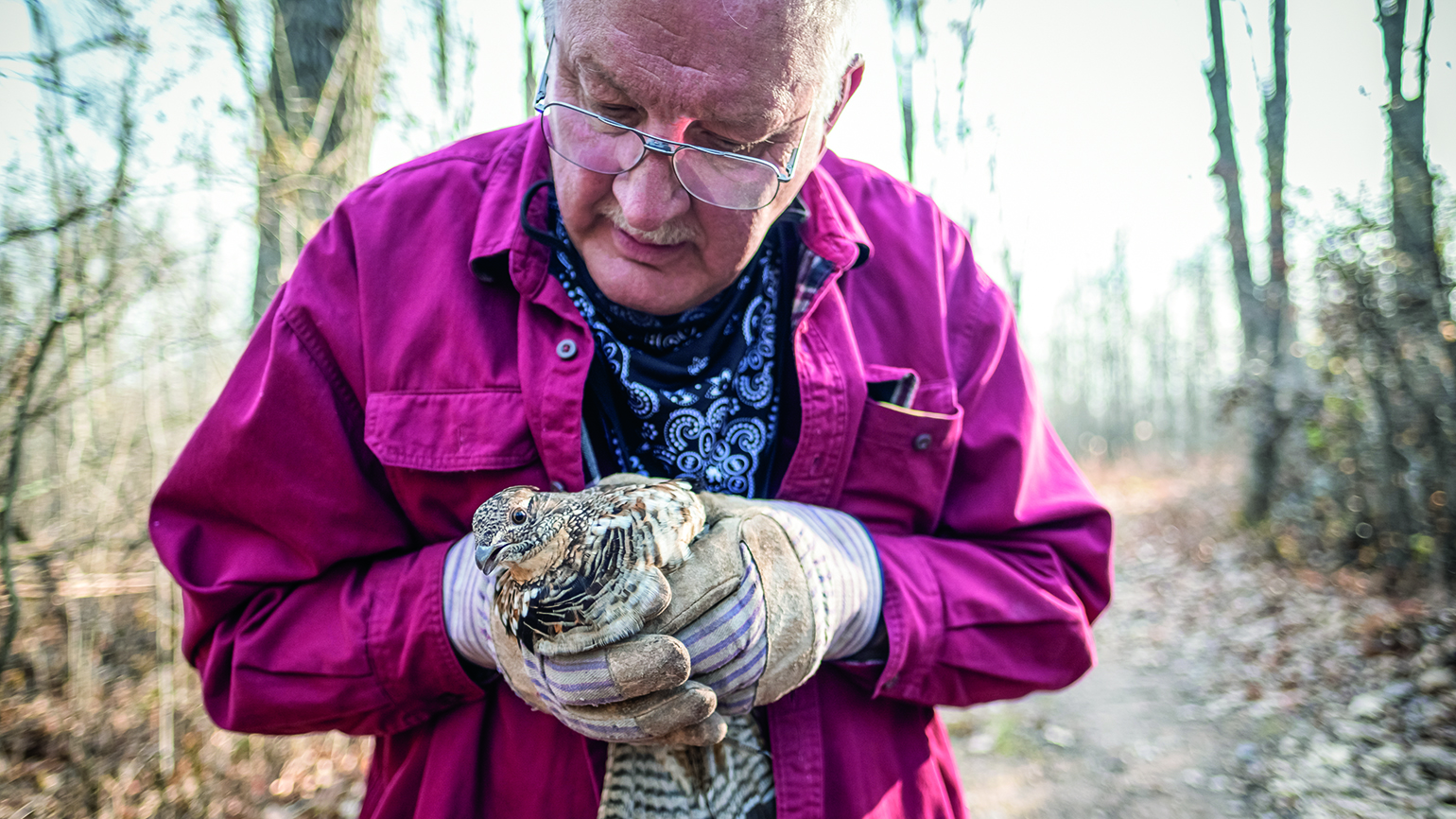
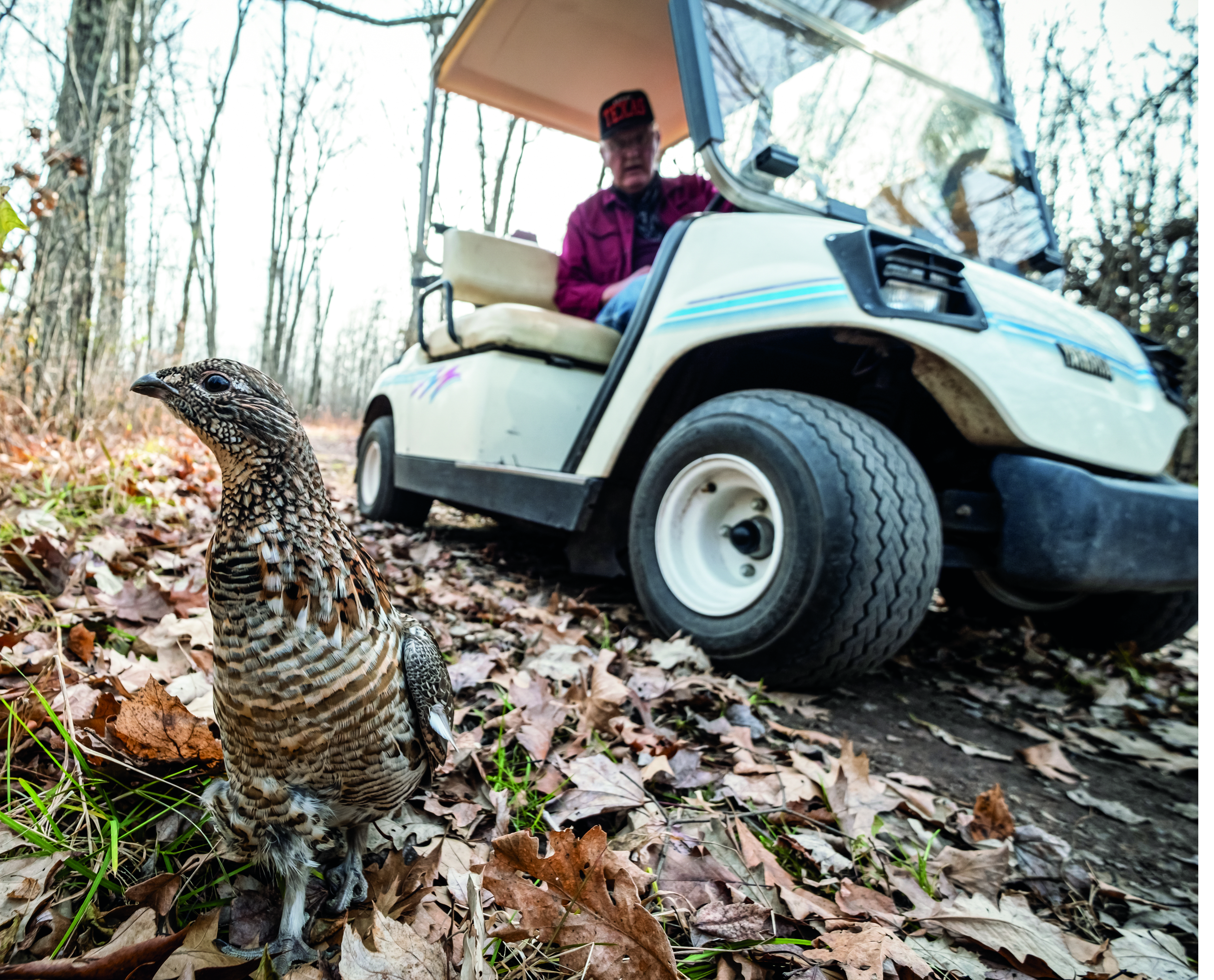
This may sound odd, but I’m best friends with a bird. Not a pet bird either. Lulabelle is a ruffed grouse, a native game bird that’s related to pheasants and partridges. Lulu is bigger than a pigeon, with a short crest on her head, a long fan-shaped tail and the most beautiful gold, beige and dark brown feathers. I used to hunt ruffed grouse, but I quit for good after I met Lulabelle.

I’ll never forget that spring day in 2017. I was on my tractor, smoothing out a trail on our wooded land, when a grouse showed up. She parked herself on the ground right in front of the tractor and chirped. Wouldn’t budge. Not even when I revved the engine. I hopped off the tractor.

“Shoo,” I said, waving my hands. “Get out of my way.” But that bird wouldn’t listen. “Are you crazy? Why won’t you move?” The grouse just gave me a beady brown-eyed stare and chirped some more. Finally she scuttled off the trail.

Back at the house, I told my wife, Jeanne, what had happened. We both laughed. Critters of all kinds—rabbits, squirrels, deer—live on our 42 acres, so we have plenty of animal stories. But a pushy grouse was a new one. I wasn’t 100 percent sure if this bird was female, but I theorized that maybe she’d been protecting a nest when she stood up to my tractor.

A few days later I rode out in my golf cart. Not too far down the trail, there she was. I got out of the cart and walked slowly toward her. She didn’t seem to mind. Step by step, I drew closer. She looked at me and made a funny call: quirt, quirt, quirt.

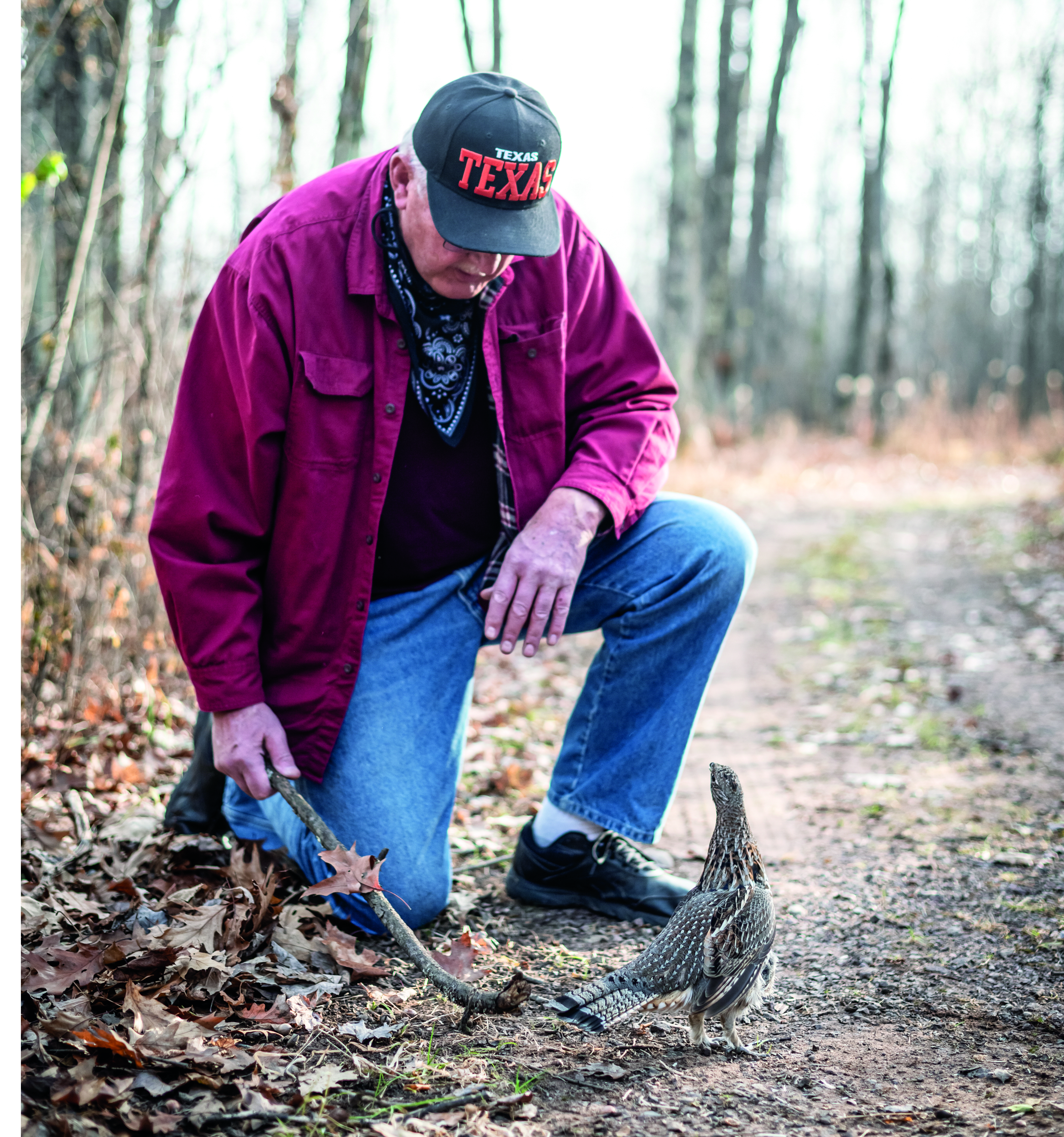
“Well, well,” I said, taking off my cap and squatting next to her. “You’re quite the bird.” I held the cap out to her. She pecked at it. Then she ruffled her collar of dark feathers and kept quirting. When she fixed those brown eyes on me, I saw something I never expected from a wild bird—trust.

“Hi, Lulabelle,” I said, settling on a name. “Nice to meet you.” She fluttered her wings and sealed the deal with a quirt.

From then on, we were buddies. Whenever I’d go out in the cart, I’d stop and call for Lulabelle. More often than not, she’d skitter out from the trees and run up to me, hopping onto the floorboard.

“How are you today, Lulu?” I’d ask while she untied one of my shoelaces. “Are you having a good week?” She would chirp back and peck on my pant leg. From there, she usually jumped onto the seat next to me, then atop the seat back. While I talked, she’d flit onto the steering wheel and stay a few minutes before fluttering back to the ground. For fun, we played with my cap. She never tired of pecking at it. Sometimes her quirts turned into soft trills that reminded me of a cat’s purr.

Nothing bothered that grouse. If Jeanne came along, Lulabelle didn’t mind. In fact, she cozied up to Jeanne. Crowds didn’t rattle her either. Every summer, our two daughters and their families camp in a clearing in our woods. Boy, were they surprised when a wild grouse welcomed them that year! One evening, Lulabelle jumped into my son-in-law’s lap while he was reading by the campfire. Another time she moseyed into their camper and perched on the couch for a while.

Winter passed, and Lulu survived to greet me the following spring. I was happy to see her again. That summer, though, Jeanne got sick and spent a month in the hospital. The doctors diagnosed her with congestive heart failure and pulmonary hypertension. They said she had only a few months left. I asked God to help me stay strong for Jeanne, even though my own heart broke into a million pieces.

Jeanne wanted to be home, so I arranged for hospice care. She was so weak, she mostly lay on the couch. The one thing we could do together was visit Lulabelle. Two or three times a day, I wrapped Jeanne in blankets and rigged her oxygen tank to the cart. Not far down the trail, Lulabelle would greet us—quirt, quirt, quirt. Without fail, she’d hop aboard the cart.

“Hi, Lulu,” Jeanne would whisper, holding out her hand. Lulabelle would lightly peck her fingers. She seemed to sense that Jeanne’s time was drawing near. Lulu’s company calmed and soothed Jeanne, and her pain ebbed. Every day, I thanked God for that ruffed grouse.

Jeanne died in December of 2018. Grief hit me so hard, I didn’t want to go on either. We’d been married nearly 50 years. Jeanne could read my mind. I could finish her sentences. Without her, I could barely drag myself out of bed in the morning. Or sit down at the kitchen table for coffee.

Finally, after months, I forced myself go for a ride in the golf cart. Quirt, quirt, quirt! Memories of Jeanne holding her hand out to the grouse flooded back. I broke down. You’d think a big man like me, crying and carrying on, would scare off a wild bird. Not Lulu. Calm as could be, she cocked her little head and laid those bright brown eyes on me. Her trust broke me wide open.

“Oh, Lulu,” I sobbed, resting my head against the steering wheel. “I can’t go on without Jeanne. It just hurts too much.” Then I blubbered on and told the grouse things I would never tell another person. I’d been taught that a man never cries or shows any weakness. You hold yourself strong and carry your burdens alone. Only this time, I couldn’t.

Lulu purred, keeping her eyes fixed on me. I’m here, she seemed to say. Let it all out.

Day after day I got in my cart and headed for the woods to meet up with Lulabelle. I talked. She listened and purred. I unloaded everything. She never flinched. Little by little, my heart began to heal. God hadn’t left me comfortless. He’d brought me Lulu. Maybe I could survive.

A year after Jeanne’s death, winter weather set in again. I stopped going out in my cart. But I had come out the other side of my grief—thanks to Lulabelle.

Spring came around, and I wondered if my feathered friend had survived another harsh Minnesota winter. One day I went to check on her. Branches crackled one by one in the breeze as I stepped off the cart.

“Lulu!” I called out. “Lulu! Here, Lulabelle…”

Then a familiar quirt sounded from the trees. I turned to see a burst of white-tipped brown wings flutter onto the trail. Leaning down, I gathered her gently in my hands.

“Oh, Lulabelle,” I said. “You’re still here.”

The grouse purred and lightly pecked at my fingers. I was glad to still have my best friend, the one who’d helped me weather the darkest, coldest season of my life. I know Lulu will leave me too one day, but I’ll be okay. God always sends the right helper at the right time. One of mine just happened to have feathers and beady brown eyes.

For inspiring animal-themed devotions, subscribe to All God’s Creatures magazine.

How a Nightlight Illuminated Their Christmas

Christmas was just days away, and the charming ceramic Christmas tree nightlight I had ordered for Maya, our six-year-old granddaughter, still hadn’t arrived in the mail. “I ordered it on December sixth,” I grumbled to my husband, Neil. “What could be the holdup?”

The news was full of stories about empty store shelves and supply-chain delays, but the nightlight was made in Vermont and we live right across the state line in northern New York. I doubted the world was experiencing a run on nightlights. The package had to be lost in the mail.

I counted on Christmas to be a haven of peace and good cheer for our extended family. We’d come through the pandemic intact, but like everyone else, we were stressed and stretched thin. The children felt it too, and the little ceramic Christmas tree would have lit Maya’s room in a reassuring glow. I called the company.

“I’m sorry,” the customer service representative said when I gave her my order number. “There’s something odd here, and we’ll have to investigate. You’ll get a call back within 24 hours.” Like that would ever happen.

Yet, the next day, my phone rang. “For some reason,” said the service rep, “your package sat in a Pennsylvania post office for several days. After that, we can’t track it, so I’m marking it lost. We’ll overnight a new one.”

Not even Santa could have offered better customer service. As promised, the nightlight arrived, and it was just as adorable as I’d hoped. Maya would love it.

The next day, I was talking on the phone with her nine-year-old brother, Chase. “What are you hoping to get for Christmas?” I asked. He rattled off several toys. “And a new nightlight. I love nightlights.”

How could I not have known that? Now it was too late to order another one. I couldn’t even dash out to the store because I was at high risk for Covid. I hung up with Chase, imagining his disappointment when he saw his sister’s gift.

The doorbell rang, and Neil came back inside with a package in his hand. “Did you order something I don’t know about?” I shook my head and opened it. The lost nightlight!

I called the company and explained why I should be charged twice. “Consider the extra nightlight our gift to you and your family,” the rep said. “And have a very merry Christmas!”

I knew that a lost nightlight was the least of God’s concerns during a tough holiday season. Yet, the Giver of all good gifts had made sure a pair of mail-order ceramic trees would cast a reassuring glow over our Christmas. A light for all the nights and days to come.

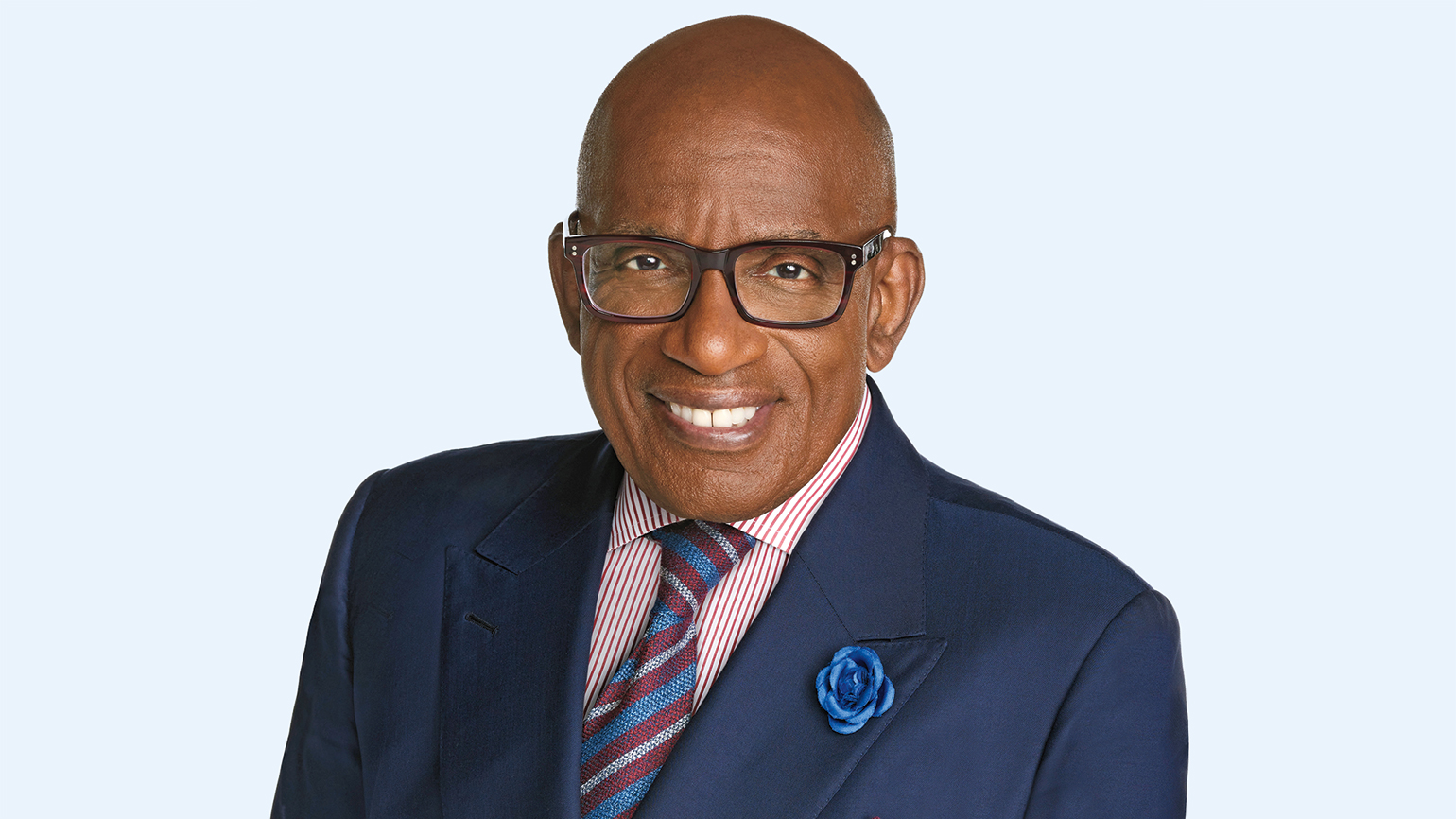
How Al Roker Learned There Are No Limits to Love

It might sound strange, considering I make my living on television and have been the weatherman and cohost on the Today show for 29 years, but in my personal life, I shy away from the spotlight. I’d much rather celebrate someone else, make a big deal out of their birthday instead of my own.

Which is why I tried my best to dissuade my wife, Deborah Roberts, from throwing a party for my birthday last August. But I knew I couldn’t stop her. It was a milestone birthday, after all—my seventieth.

The truth was, I was feeling a little melancholy about turning 70. My dad never made it to this age. He passed away at 69. Dad was my role model and inspiration for being a good husband and father. I was the oldest of six kids, and three of my siblings were adopted. Mom and Dad brought foster children into our home too. Sometimes people would ask why they’d taken on raising so many children, and Dad would say simply, “There are no limits to how much you can love.”

He was similarly openhearted when it came to expressing his feelings, which wasn’t typical of men of his generation. He would cry and laugh unabashedly, and he hugged and kissed us kids often. We always knew we were loved. Me, I laughed easily, but otherwise, I tended to show my emotions less than Dad did.

It was kind of disconcerting knowing that I would soon surpass how long my dad had been on earth. Especially because I too almost didn’t make it to 70.

The first signs that something was wrong came in the fall of 2022, in early November. I hadn’t been feeling great. Deborah, who’s an ABC News correspondent and coanchor of 20/20, had to go to Europe for an assignment. I kissed her goodbye and told her I’d be fine. Later I walked up the stairs to our bedroom, which is on the top floor of our brownstone, and I got really winded. I looked at my Apple watch, and it said my heart rate was 164. Even with vigorous exercise, it’s gotten to maybe 160, max. I wasn’t sure what to make of it. Then I woke up in the middle of the night with severe abdominal pain.

My internist ran scans, which showed I had blood clots in my lungs. Further tests turned up another blood clot, in my leg. My doctor said, “We’ve got to admit you to the hospital.” I called Deborah, who’d just landed in Europe. She turned around and came right back to New York to be at my side.

I was being treated with blood thinners when doctors discovered I was bleeding internally. They had to do a delicate balancing act, giving me enough of the anticoagulants to dissolve the clots while trying to determine what was causing the bleeding.

Two weeks later, we still didn’t have any definitive answers, but things had stabilized enough so that Deborah and I asked if I could go home for Thanksgiving. The answer was yes—the hospital would release me Thanksgiving afternoon, as long as I followed up with my internist the day after.

For the first time in 27 years, I missed hosting the Macy’s Thanksgiving Day Parade. That morning, I turned on the TV in my hospital room to channel 4 and watched the parade like everyone else. It felt like a throwback to my childhood because that’s how we used to watch it, on channel 4 here in New York. It was fun to get a whole other sense of the parade and what a great broadcast it really is. It was even better getting to have Thanksgiving dinner at home later with my family.

Everything looked okay at my appointment with my internist the next morning. But that afternoon, I felt faint and had to be rushed by ambulance back to the hospital. It turned out, I was bleeding internally again.

By then I’d had so many tests and scans, and none of them had revealed the cause of the bleeding. The medical team said they needed to do exploratory surgery to pinpoint the problem and fix it. They thought it would take a couple of hours.

My family converged on the hospital: Deborah, of course. My younger daughter, Leila, who’d flown in from Paris, where she lives. My older daughter, Courtney. My brother Chris, who manages a public hospital in the Bronx, and my sister who’s a nurse. Knowing that they would be advocating for me and praying for me allowed me to go into the operating room feeling positive.

The surgery ended up taking almost eight hours. The medical team got in there and found a perforation in my duodenum, the part of the small intestine that connects to the stomach. That tear had been causing the bleeding. They repaired it and resectioned my colon. They took out my gallbladder, which was inflamed. I lost a lot of blood, and for a while, it was touch and go.

I didn’t know the situation was so serious, not then. I didn’t know how close I came to dying. I didn’t know Deborah and the girls were crying in the hallway. While I was in the surgical ICU after the operation, Deborah shielded me from all that. She was the one who talked to the medical team at length, who heard all the frightening details. It was an act of love. And because of it, I was able to put all my energy into recuperating. If I had really known how bad off I was, I’m not sure I could have kept up my positive attitude.

That’s not to say I didn’t have a few “woe is me” moments. In the surgical ICU, they want you to get up and start walking as soon as you can. From your bed to the door and back. Then to the nurses’ station. Every day, you go a little farther. One day, I was making my way slowly—very slowly—down the hall, and I got frustrated that I hadn’t progressed enough to go home and back to the job I love. As I passed other patients’ rooms, it occurred to me that there were folks in this ICU who weren’t able to get up and walk, who didn’t have anybody visiting them. Don’t take your blessings for granted, I reminded myself. Not everyone has so many people showing up for them.

People like my coworkers Hoda Kotb and Savannah Guthrie, who’ve also become my good friends. Hoda came to see me so often, I think folks thought she was a member of the hospital staff. When Savannah visited, she said some lovely prayers for my healing and recovery.

My pastor from St. James Episcopal Church, where my youngest, my son, Nick, served as an acolyte, came a number of days. She brought communion, and we prayed together.

And my kids were there for me, of course. Part of me didn’t like the idea of my children, no matter how grown, seeing me so weak and vulnerable. But I made peace with it when I saw how they each brought their own best self to bolster me.

Leila is fiercely loyal to our family. Like her mom, she ran interference with the medical team and protected me from anything that might have been distressing.

Nick, who was away at college, visited and made me laugh as only he can, with his great sense of humor. He’s serious about his faith, though, and he told me that he and his mom were praying for me.

Courtney is a chef and recipe developer. She promised that when I got home, she would come over on weekends and make nourishing meals to help me rebuild my strength. She had a wonderful surprise for me. “I’m pregnant,” she told me one day at the hospital, her eyes shining. “Our baby’s due next July.”

She and her husband had struggled a bit with infertility, a struggle I was familiar with—Deborah and I did IVF twice to have our kids. It was so gratifying for me to know that the circle of life would continue.

Finally, the day we’d been waiting for came. On December 8, I was released from the hospital. The following Monday morning, I called in to the Today show via video to give an update on my health and to thank viewers for their well wishes and prayers. Then Deborah and I went to a follow-up doctor’s appointment. We’d just gotten home when someone rang the doorbell.

“I wonder who that is?” I said.

I opened the door and couldn’t believe my eyes. There was a crowd filling the sidewalk in front of our house, spilling partway down the block. The entire Today team was here—the anchors, producers, crew and security staff, all of them decked out in Santa hats.

I had never really gotten emotional during the whole medical ordeal and my time in the hospital. I hadn’t cried. But seeing my work family gathered on my doorstep—I totally lost it. I was a lot like my dad in that respect after all.

My coworkers belted out “Jingle Bells,” and I couldn’t resist a little joke. “It’s impressive you did that without a prompter.”

I told everyone that I’d missed them so much and that I was so grateful for all their love and support.

Then they broke into a unique rendition of another holiday classic, “Al Be Home for Christmas.”

That’s when I found myself telling my Today show family something my dad might have said: “I love you all, more than you’ll ever know.”

That moment kicked off something for me. The next few weeks, when I wasn’t resting or doing physical therapy to get my strength back, I wrote notes thanking folks for their prayers and positive thoughts. We got a fair amount of mail from viewers, and I tried to answer everyone.

My health scare reminded me that life is an ephemeral gift that we’ve been given by God, and we need to appreciate and honor it. So I spent a lot of time talking to people too, telling them how I feel about them. The people I care about, the people I love, I want to make sure they know. I’ve been more intentional about that, even after I made a full recovery and returned to the Today show.

In the end, that’s why I realized something: It wasn’t that I couldn’t stop Deborah from doing something big for my seventieth birthday, but that I shouldn’t. The party wasn’t just about celebrating me. It was also about celebrating the people who love me and letting them know how much I love them.

Still, nothing could have prepared me for the surprise party Deborah threw. It was on a Saturday night a week and a half before my actual birthday, so I truly was surprised. She had gathered 150 of my friends and family together at a venue in the city and got an incredible band to play, one of my all-time favorites: Earth, Wind & Fire. It was epic.

I took Deborah in my arms and held her close as we danced. It’s true what my dad said: There are no limits to love. I felt it all around me.

Al’s latest role on the Today show is Chief Motivation Officer of the new Start TODAY app, which has tools, support, daily guided workouts and walks, meal plans and more for a consistent whole-body approach to healthy living. Find out more here.

For more inspiring stories, subscribe to Guideposts magazine.

How a Boy Turned His Dream of Training Comfort Rabbits into a Reality

The sun peeks over the treetops, casting a glow inside Caleb Smith’s tent at 6:30 in the morning. The Mississippi River gently laps against the houseboat moored on the sandy bank near the site where he and his friends like to camp out when the weather is nice. A gentle nudge from the edge of his sleeping bag lets the 16-year-old Eagle Scout know he isn’t the only one awake.

“Morning, Huck,” he says, stroking the soft blue-gray Flemish rabbit emerging from where he had burrowed. Huckleberry’s nose twitches as he stretches. Caleb pulls on a hooded sweatshirt over his Peacebunny Island T-shirt.

The large bunny nudges his nose under the teen’s arm.

“I know, buddy. Big day ahead. The start of another Best Summer Ever.”

Another ball of fur hops out from behind Caleb’s backpack, a rescued dwarf Hotot rabbit.

“Good morning, Tator Tot.”

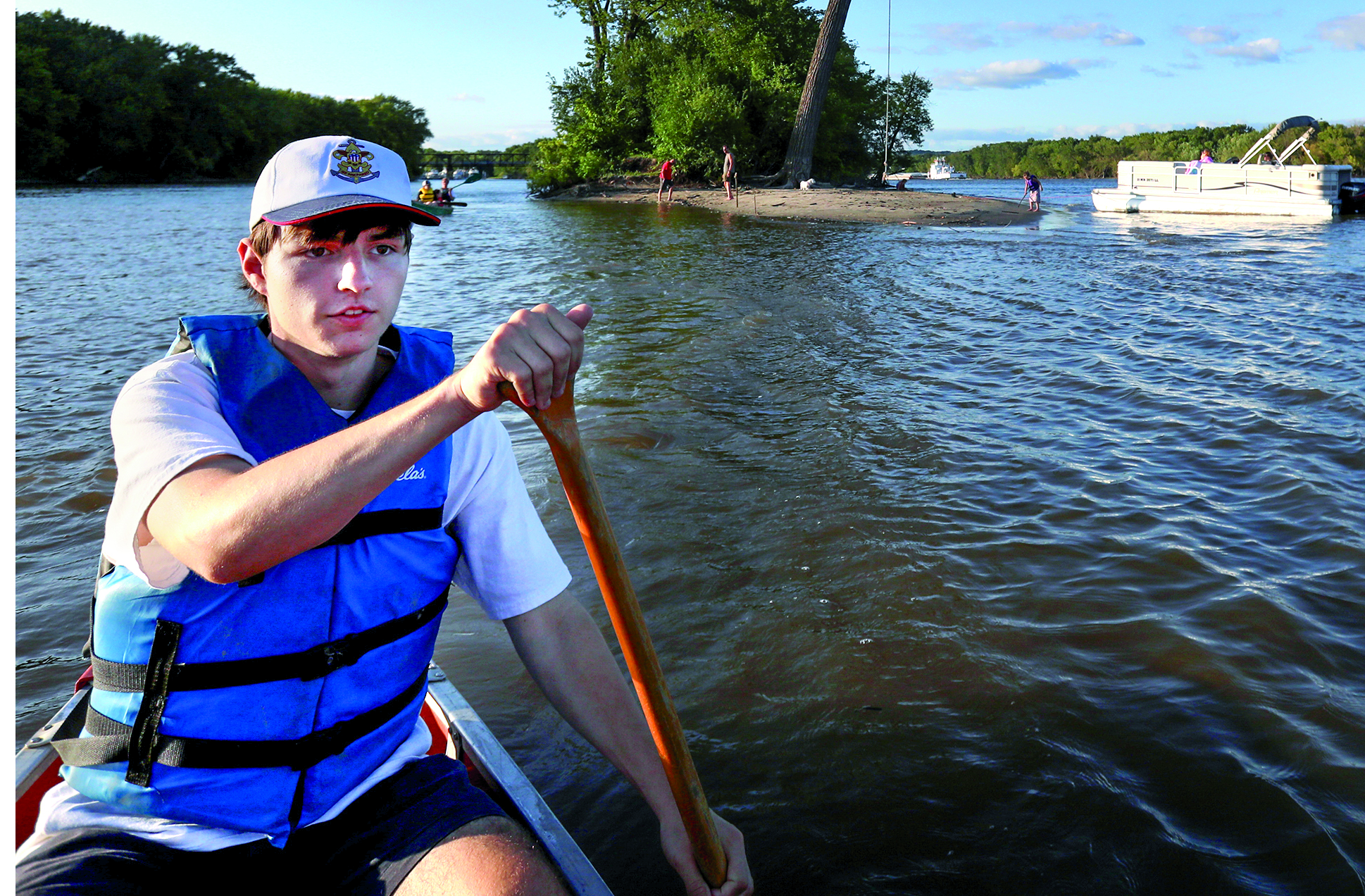
Caleb unzips his tent and breathes in the brisk morning air. The sand is cool on his bare feet as he walks to the houseboat, carrying his bedding under one arm, his backpack slung over his shoulder. The two bunnies nibble on tender shoots that cover the knoll. Of all the bunnies that live at Peacebunny Cottage—situated on a sprawling farm just outside of Minneapolis—Tator Tot and Huck love coming out here to Peacebunny Island the most. The private 22-acre island nestled in the Mississippi National River and Recreation Area, just south of Saint Paul, belongs to Caleb, who uses the sustainable sanctuary to train comfort rabbits.

When Caleb was eight, he adopted his first bunny, Snickers, an older Dutch rabbit. They were inseparable. But Snickers died less than a year later, and Caleb was heartbroken. He eventually went online looking for another rabbit and was shocked to see hundreds available, abandoned after Easter. He put on his church suit and made a presentation to his parents about rescuing more rabbits. “It really bothered me that people couldn’t commit to a rabbit’s 10-year life span,” he says. “So I took in as many as I could.” There wasn’t room at his family’s house in the suburbs for them all. Luckily, a farm family nearby let Caleb keep his rabbits in their barn, now known as Peacebunny Cottage.

By the time he was 11, Caleb knew he wanted his rabbits to not only live out their lives in a happy place but also help others. He spent the next few years taking boating lessons and investing money he’d won in an entrepreneurship contest to buy a houseboat and several canoes. At 14, he discovered an uninhabited island on the Mississippi and convinced the owners to let him camp there for a few months so he could see how his bunnies liked roaming the land. It was the perfect spot to train comfort rabbits—quiet, safe, free of land predators. After securing an investor to help him buy the island, Caleb needed to raise funds for the rabbits’ care plus a mortgage, so the Peacebunny Foundation began to sell rabbit merchandise, request donations and host educational activities at the cottage. One hundred percent of the 2021 royalties from his memoir, Peacebunny Island: The Extraordinary Journey of a Boy and His Comfort Rabbits, and How They’re Teaching Us About Hope and Kindness, made the plan sustainable.

Now Caleb’s rabbits are fostered for short stays by people who need some extra love; many are families with children on the autism spectrum or with other health challenges. Peacebunny Units visit senior centers, provide the ministry of presence at children’s memorials, bring comfort to survivors of school violence. “They are God’s rabbits,” he says. “As their guardian, I believe he nudges me where to bring them.”

Other programs Caleb offers include Little Vet classes for kids; Pasture Buddies, where people can volunteer to watch over bunnies; Rabbit Garden Play Date, which is exactly what it sounds like; and Bunny Boot Camp, training on caring for rabbits (find out more at peacebunnyisland.com). These activities happen at the cottage, where all the rabbits live. Caleb and his team use the houseboat to take rabbits to Peacebunny Island, where they’re trained to sit calmly with people, be petted and snuggled, and not wander off. Sometimes Scout troops will visit the island to watch the rabbits. It’s also a great place for Caleb to just get away and take in the beauty of the river.

Jacob, one of his fellow Eagle Scouts, emerges from his tent, making sure the embers of last night’s campfire are completely out. Their pal Kaden packs up the hammocks.

Spotting his mom Stephanie’s bright orange canoe in the distance, Caleb knows they have less than 30 minutes to finish up. The boys have permits to drive the houseboat, but they still need an adult on board.

By 9:30 A.M. the boat is back at the marina where it’s kept.

“Hi, Peacebunnies!” comes a young girl’s voice from near the dock. She runs over and squeals with delight, bending down to nuzzle Huck with her nose. “Who is the cutest bunny ever?”

“We have a Bunny Boot Camp this afternoon,” Stephanie tells her. “We’d love to see your family at the cottage.”

They make a pit stop at home, where Caleb showers and changes out of his clothes. It was nice to spend the first few days of summer on the island, but he has work to do.

With a picnic lunch—and carrots for Huck and Tator Tot—in the car, they head to the farm, where Caleb’s dad is already tending to the rabbits in Peacebunny Cottage. On the 20-minute ride, Caleb looks over the week’s schedule. “Five day cares, two libraries, a team to the veterans home, a birthday party, plus the senior home crew and the detention center. Fence repair and science camp.”

Soon visitors arrive at Peacebunny Cottage, a foster family ready to take their rabbit home, along with a few weeks’ supply of food.

“I’m excited you get to help care for this furry friend over the full two months,” Caleb says to the family’s son, who’s eight, the same age he was when he got Snickers.

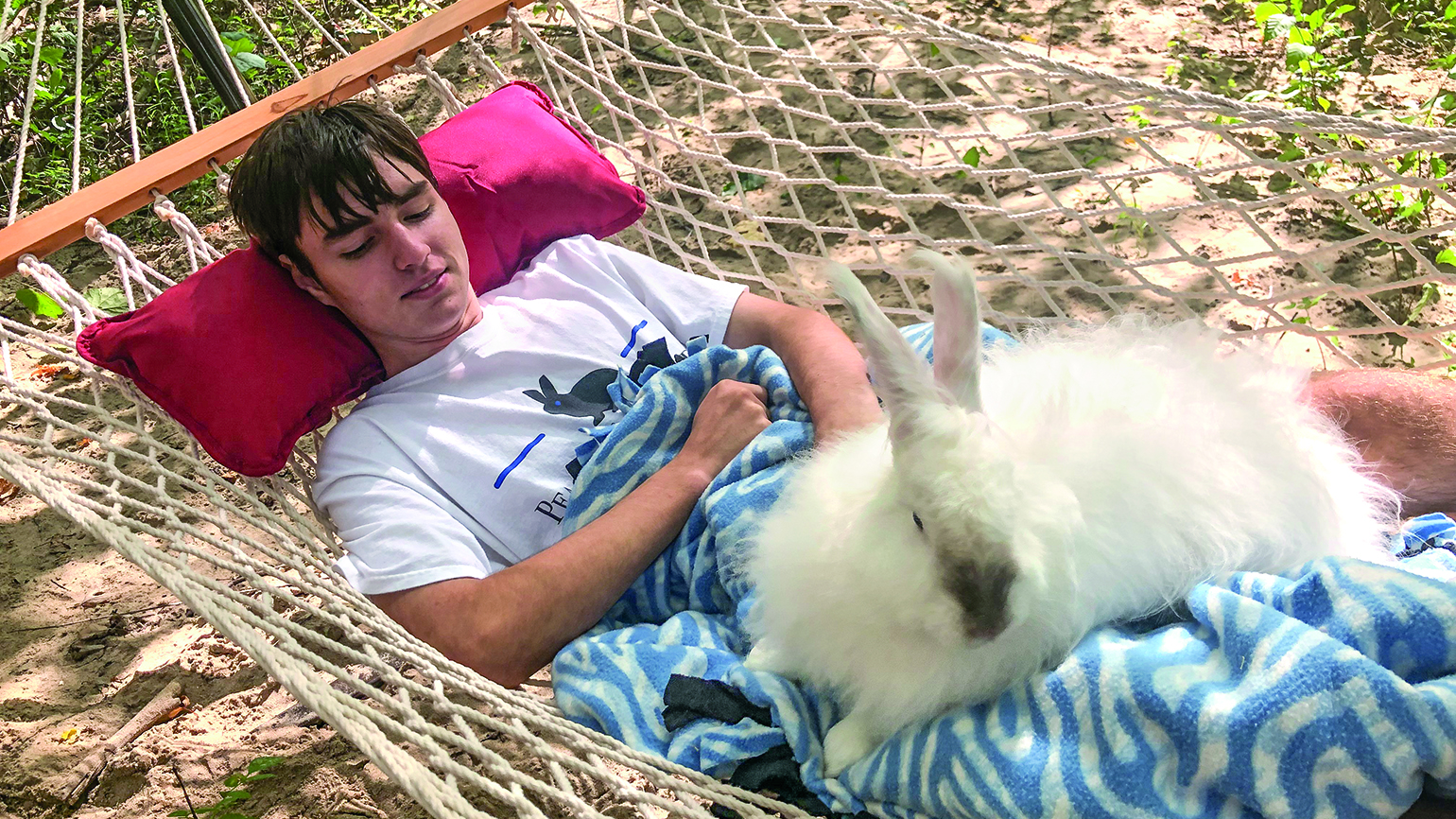
When Bunny Boot Camp is over, Caleb takes a break in the hammock. Oreo, a Mini Rex with velvety fur, stretches out on top of him. Soon family and friends will be arriving for Pasture Buddies, held every Sunday evening. Dozens of bunnies munch on clover and wildflowers in the grassy fields while Caleb and his friends play catch. Other guests enjoy the warm glow of the sunset while one of them plays the guitar. After the bunnies are returned inside, guests are invited to gather around the firepits for a Bible devotion, singing and sharing.

As dusk falls, Caleb says goodnight to the bunnies.

“It is a lot of work,” says Caleb, who still can’t believe he’s guardian to hundreds of rabbits. “But bunnies bring so much joy into the lives of others—and into mine as well.”

Huckleberry, always near Caleb, twitches his ears one way, then another. He agrees wholeheartedly.

For daily animal devotions, subscribe to All God’s Creatures magazine.

Her New Teaching Partner Taught Her to Be Open to Change

Another long, frustrating day teaching high school English via Zoom. I peeled my sticky legs off the faux leather chair in the cramped back room of my house. Well, I got through it. Late August, only two weeks into the semester, and I was ready to pack it in. After 27 years in education, I didn’t need this aggravation.

I pulled up my work email. There was a message from a woman whose name I didn’t recognize: Gigi Shepherd. Was she a new teacher’s aide? “Please tell me how I can join your classes.” I don’t think so. I’d never done any co-teaching. And I certainly wasn’t interested in doing it now with some interloper. Online education was enough of a struggle. Technology was definitely not my strength.

I’d started feeling burned out the year before, during the 2019–20 school year. The expectations kept growing. Many of my teacher friends had retired, leaving me feeling isolated. Then Covid hit. Our district switched to remote learning. Running a virtual classroom was a grind. The one thing I’d still relished about teaching was having a lively exchange of ideas with my students.

No more. Day after day, I spoke into my computer screen with feigned cheerfulness, staring at an array of tiny boxes, only a few showing students’ faces. For privacy reasons, we couldn’t require the kids to turn on their cameras. What passed for dialogue was the occasional terse comment typed in the chat window.

The email from this Gigi woman had to be a mistake. If I have to take on one more thing… Before I could muster the energy to finish the thought, the principal called. She explained that Ms. Shepherd required the passcode that would grant her admittance to my Zoom space.

“It’s good news!” the principal said. “Our district is utilizing substitute teachers’ skills by placing them with full-time educators. It means more help for you.”

“Can’t you put her in another classroom?” I said. “I’m just fine alone.”

“The assignments have been made,” she said. “This will be a good arrangement—trust me.”

Trust. Something else I’d struggled with lately. I told my husband, my friends, even strangers, that I trusted Jesus to guide my life. And I did…when things were going well. But deep down, I knew I’d become less tolerant of change. When things didn’t go as I wanted, I surrendered to worry and second-guessing. Was this what happened with age? Life feels flat–you lose your enthusiasm; work is just a job, not a joy; you get stuck in your ways.

Now here I was, being asked to show some flexibility. I couldn’t exactly say no to the school principal.

That evening, I emailed the interloper, as I’d come to think of her, with directions for joining us online. “Can you at least make sure she’s good with computers?” I asked God as I hit the Send button.

The next morning, my screen was filled with the image of Gigi’s husband, Paul, looming over her as he helped her sign on. Great, that prayer isn’t going to be answered, I thought.

Gigi looked to be about my age. I put her on the spot, asking her to teach a lesson supporting the students’ emotional needs. Without missing a beat, she extolled the virtues of mindfulness. I couldn’t get past the sound of her voice: breathy, sweet yet deliberate, like a grade school teacher.

To my surprise, the students perked up as Gigi led them in a discussion on ways to stay connected. “Remember—even when we’re apart physically from friends and family, we needn’t feel alone.” She was so reassuring.

My teaching style was different. I was encouraging, yes, but louder, more direct, more of a coach than a cheerleader. “C’mon, students!” I’d exhort. “You can do this homework! Seriously. Get it done!”

Gigi was all about heartfelt affirmations and careful listening. And the students responded. In the days that followed, the kids still didn’t speak much, but they filled the chat window with comments that showed they were engaged in what was going on in class.

“Beautiful,” Gigi would coo after a student shared a thought, drawing out her syllables like water burbling in a brook. “Bravo!” she’d offer another time. “I applaud your efforts.”

Her kind words weren’t reserved for students. “I really like the way you express yourself, Lori,” she told me one day after classes. “What a wonderful lesson,” she often said before we signed off. I couldn’t help but be skeptical of her relentless positivity.

“Is anyone really that nice and enthusiastic all the time?” I asked my husband one evening. “Is it some sort of act? She’s got this whispery, doting delivery.” Even as I was talking, I realized how petty I sounded.

“Well, does she connect with the teenagers?” David asked.

“Yes, she does,” I said, grudgingly.

“Then it seems as if whatever she’s doing is working,” he said. “There’s nothing wrong with being sweet.”

This was why I didn’t want to team-teach. I had my own way of doing things. I didn’t need someone making me feel inadequate.

September came, and I found myself settling into a routine. There was an intimacy to online teaching with Gigi because our “classroom” was basically a live stream of our homes. I caught glimpses of her husband and two sons passing through the house. Her German shepherd and my Bernese Mountain dog made appearances. We traded big-dog stories. The students delighted in these diversions and began to turn on their own cameras, sharing more of their lives.

After school, Gigi and I got to know each other better. She’d studied French in college and taught English and French for 12 years before becoming a stay-at-home mom when her sons, Dylan and Jack, were born. When Dylan’s high school French teacher had gone on maternity leave, Gigi had agreed, with her son’s support, to sub for her. She’d been subbing for the past six years.

We talked about our mutual love of movies, food, singing, dancing, family and faith. I shared my grief at losing my mother a few years ago. As the weeks went by, Gigi showed a more serious side too, talking about significant challenges she’d faced in her younger years and how the love of family and friends had gotten her through. “I learned to put my trust in God,” she said.

There was that word again: trust. Only now I understood. Gigi’s ebullient spirit wasn’t some Pollyannaish denial of problems. It was a determination to be grateful, to celebrate life, to choose joy. Not just to talk about faith but to live it. Maybe that was the real reason I’d felt threatened by her. She reminded me of the person I’d been before letting worry and stress grind me down. The person I aspired to be again.

One night, I asked Jesus for direction. “Am I now so brittle and insecure that I can’t just ‘be’ with someone new you’ve brought to my life?”

“Slow down,” I heard him say. “Listen. Speak with kindness. Receive from Gigi. It’s okay to admit you have more to learn.”

Buoyed by Gigi’s presence, I tried to take a more positive tone with students. I used affirmations and meant them. I even practiced speaking more calmly and smoothly—almost the Gigi coo of comfort.

Sometimes Gigi asked me for advice. It was gratifying to think that I could be a help for her too. I looked forward to seeing her each morning, to the rapport we had teaching, to our afterschool chats. She wasn’t an interloper. We were a team.

At the beginning of October, in creative writing class, I shared with the students an essay I’d crafted as a model for an upcoming assignment. They were to write about an object or experience that was meaningful to them. As they followed along onscreen, I read aloud my story of being 14 and desperately wanting my mother to buy me a pair of trendy hip-huggers. She’d resisted because she thought they were too risqué.

I read the final paragraph: “I wish I could ask my mom now about how she managed to stay true to her instincts even though she realized I’d be upset. Her small act took courage….” I choked up and couldn’t go on.

Gigi deftly took the baton from me. “Students,” she said in her gentle voice, “Mrs. Uebersax has given you a great gift. She has opened up and shared a true story beautifully written from her heart.”

I stared at her face on the screen, marveling at her understanding and compassion.

“Now she’s giving you the opportunity to look inside yourselves and write your own story that has meaning and truth,” Gigi continued. “I know some of you have had hard times during this Covid year. But won’t you try to connect with yourselves and with us by expressing yourself through your writing?”

For a moment, no one said a word. It felt like a sacred silence.

In mid-October, Gigi and I finally arranged to meet at a park. I was blind-date nervous. Would our carefully forged online bond feel the same in person?

After a quick, awkward hug, we sat in lawn chairs eight feet apart, Gigi’s long hair whipping in the wind. Her face glowed as she savored a chocolate croissant I’d brought her. “I just want to be quiet for a moment and take it in,” she said.

Then she played a samba song on her phone, and we danced a bit, swaying to the rhythm. I felt delightfully young, the pressures and worries of the past year lifted.

“I’m so glad we were teamed up together,” Gigi said. “You feel like my soul sister.”

As usual, she’d said it better than I could have. But I didn’t mind. It wasn’t a competition. No matter how the school year unfolded, I knew I would be grateful to share every day with my trusted colleague Gigi, the wonderful new friend God knew I needed even before I did.

For more inspiring stories, subscribe to Guideposts magazine.

Her Faith Was Strengthened by a Friend’s Courage in Coping with ALS

“Hello, may I speak to Tonya May?”

I didn’t recognize the voice on the phone. Must be a telemarketer. They even used my maiden name, and I’d been married for more than a decade.

“Tonya, this is Jen Haas from Highland High School.”

I thought for a second, then remembered. Jen and I had been members of our school’s chorale more than 20 years earlier.

Jen went on, “I don’t know if you remember me, but recently I was diagnosed with ALS. I have three to five years to live. I’m reaching out to people I need to make things right with before I die. I feel terrible about what happened between us.”

Before I could respond, Jen hurried through the memory of a time when she had called me a racial slur at school. She apologized profusely. “I hope you can forgive me.”

I was momentarily speechless. “I appreciate you telling me and apologizing, Jen,” I said. “But honestly, I have no memory of that incident. Of course I forgive you. I hope you’ll forgive yourself.”

I didn’t know much about the degenerative neurological disease ALS. But I knew enough to feel nothing but compassion for this woman struggling to come to terms with a grim diagnosis. I couldn’t simply say a polite goodbye and hang up.

“Jen, do you believe in Jesus?” I blurted out.

My heart skipped a beat. I am a committed believer, and God has been at the center of my life ever since I was a child. But back then, I was not one of those people who goes around sharing my faith with strangers. I had no idea where those words had even come from.

“I do believe in God,” Jen answered, sounding hesitant but not offended. “But I don’t go to church much. Maybe I should.”

I felt a wave of relief. I asked some questions about ALS, and Jen told me how she would progressively lose the ability to walk, move, eat and even talk. She was married with three kids in middle school and high school.

“I’m afraid for my kids,” she said. “And my husband. I feel as if I have no future.”

“Don’t say that!” I said.

The same boldness about sharing my faith came over me, and I told Jen that God loved her. Recently at church, a discernment exercise had shown me that I had the gift of strong faith—unquestioning belief in God’s sovereign and even miraculous power.

God can do amazing things,” I told Jen. “He can heal. He can comfort. I want you to have hope for your future.”

“Do you think God would heal me?” Jen asked.

“I know he would.”

That’s how my friendship with Jen began. We talked on the phone for a while longer, and I promised I would visit her soon. She lived about 40 minutes away.

I had high hopes for that first visit. I wanted to share not only my faith with Jen but my confidence that God would be able to heal her. I wanted her not to despair.

“You really believe God can heal me?” she asked. Jen was in her bed, the place where she was already spending much of the day, though she could still get up and walk for short distances.

“Absolutely I believe. The Bible says all things are possible for the one who believes,” I said.

Jen and I spent the afternoon talking about God and faith. She said she wanted to believe but found it hard to understand why God would allow something as cruel as ALS to exist.

“That’s a tough one,” I said. “Let’s pray about it. I have a strong feeling God is going to come through for you.”

Back home, I typed out some of my favorite Scriptures about faith, God’s power and healing. I printed them in a large, pretty font and took them to Jen the next time I visited.

“You can put these on your wall,” I said. “They’ll be there for you when you’re feeling down.” Jen asked me to tape them above her bed.

For a while, it seemed as if God was answering my prayers for Jen. After we had spent several afternoons together, she posted on Facebook: “Even though I had no earthly reason to believe it and my body continued to worsen, I’ve thanked God in advance for healing me and making me whole again…. And just FYI, in the last few days I’ve been able to move my legs more than I have in ages, and I rolled onto my back by myself, which was previously impossible.”

There it was—Jen’s healing was beginning! She had started reading the Bible, listening to sermons and speaking more openly about her growing faith.

God knew what he was doing when he prompted Jen to call me out of the blue that first time.

And yet—the hopeful moment of regained strength was followed by a sudden reversal that left Jen even weaker than before. Her husband began feeding her. She stopped getting out of bed. Each time I visited, speaking became harder for her.

A few years after that initial phone call, I arrived at Jen’s house one day to find a whiteboard in her room covered with letters of the alphabet. Jen communicated by nodding when I pointed to a letter until together we formed a word. It took an hour to talk through a few topics.

I kept praying for Jen. I waited for the healing I had encouraged her to believe in.

Months, then years, went by. Jen’s condition steadily worsened. Doubt crept into my mind. Had I steered my friend wrong? She asked hard questions, and I had to admit I didn’t always have answers.

Jen’s husband died after a long struggle with his own health problems. Jen moved in with her parents. Her kids graduated high school. Her mom worked overtime caring for Jen and Jen’s ailing father.

I struggled to make sense of all of this. Where was the miracle? Where was God doing all things for the one who believes? I dreaded the moment Jen told me her faith was fading.

Yet, as time went on, I noticed something. If Jen experienced doubt, she sure didn’t show it. If anything, she became more confident and grateful. She spoke openly about God’s presence in her life.

She got a special computer that enabled her to communicate by moving her eyes across a digital keyboard. She sent emails and launched a blog. Her kids started families of their own. She enrolled in an online program for creative writing.

Doctors had told her she had five years to live. Nearly a decade later, she was still going.

One day, I checked Jen’s blog and saw she had written about our friendship. She told how she had called me to make amends shortly after her diagnosis. “After speaking with Tonya, I learned that she not only didn’t remember the incident but was a Christian. She showed me, through Bible verses, how God had not left me. I felt so alone without my Lord. But he was with me all along. My spirit was renewed!”

Jen wrote those words almost 10 years after I first told her I believed God was going to do great things for her. In the next paragraph, she showed how God had already done it.

She wrote that she had learned not to say, “I have ALS,” but instead, “‘I’m living with ALS.’ That phrase implies that I’m living not with ALS but alongside it. ALS doesn’t define me, because I walk in divine health.”

Healing had come not to Jen’s body but to her soul.

When Jen first called me, I saw an opportunity to share my faith with a friend in need. God had something richer in mind.

Through our connection, Jen and I discovered the true meaning of healing—spiritual healing that goes beyond the mere improvement of physical symptoms.

Our friendship has changed my life—and faith. God does indeed do all things for the one who believes. Sometimes in ways you’d never expect.

For more inspiring stories, subscribe to Guideposts magazine.

Her Autistic Son’s Magical Trip on the Polar Express

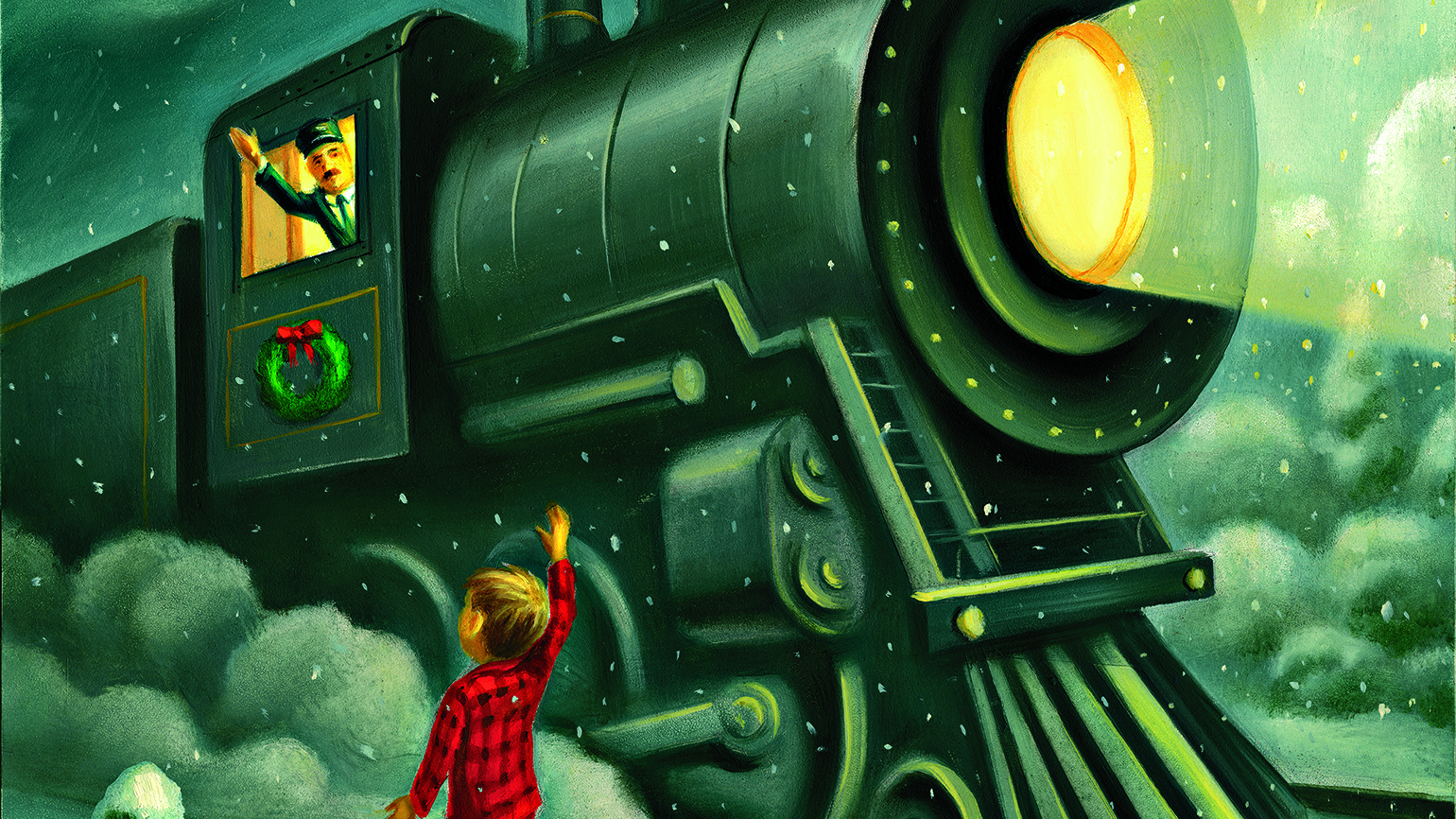
“Look at this,” I said to my husband, Lloyd, handing him my phone. “The Grand Canyon Railway and Hotel in Flagstaff has a real-life Polar Express train.” When he pressed “Play,” the ad burst to life with a train whistle.

Our 18-year-old son, Ty, ran into the room and grabbed the phone from his dad. Ty stared at the screen, a huge smile forming on his face.

“Do you want to ride the Polar Express?” Lloyd asked.

Ty nodded.

From the moment he was born, Ty was different. He never cried, not even to eat or have his diaper changed. Tests showed damage to his frontal lobe. He was diagnosed with autism.

We took Ty to one therapist after another, trying to find someone who could help us. I quit my job to stay home with him. The meltdowns started in his toddler years. Ty couldn’t speak and struggled to communicate. He threw himself down and banged his head on the floor in frustration. I would try to hold him, to protect him. But Ty didn’t understand. He fought back. He was three years old when he headbutted me in the face and broke my nose.

One of our doctors encouraged us to put Ty in a home for children with severe disabilities. “I’m sorry, but he will never be able to do anything for himself,” the doctor said. “It would be best for everyone if you institutionalized him.”

That wasn’t something Lloyd and I were willing to even consider.

In 2009 we moved to Arizona for Lloyd’s job. I worried what the change would mean for Ty. When we met his new teacher, I explained about his outbursts. She’d worked with students like Ty before, and their parents. She taught us how to recognize when Ty was getting agitated and what to do.

When I saw the signs of an impending meltdown, I stood directly in front of him without touching him, spoke softly and slowly moved him away from whatever was upsetting him. It worked wonders. Within just a few months, Ty’s violent meltdowns had decreased dramatically.

That same year, my mom gave Ty a picture book for Christmas, The Polar Express. I’d never seen him connect with something so strongly. I read the “choo-choo book” to him multiple times a day.

“Choo-choo!” he’d cry excitedly.

Since Ty said only a few words, I treasured each one.

They’d made The Polar Express into an animated movie, starring Tom Hanks as the conductor. We’d bought Ty the DVD. He loved the song “Hot Chocolate” and hummed it even when it wasn’t playing. He learned to recognize Tom Hanks’s voice in other movies. He watched The Polar Express so often, we wore out the DVD and had to replace it. When we got Ty a service dog—a shepherd mix—they watched The Polar Express together. Ty’s interest hadn’t waned to this day. So when I saw the Polar Express ad on my phone, I just knew we had to go to Flagstaff to see the train in real life.

We booked the holiday trip many months in advance. I planned everything down to the letter, even purchasing matching pajamas for Ty and his service dog. Ty was so excited that we had to make a calendar to count down the days.

The drive was long, but when we checked into our hotel room, a surprise awaited. Ty was thrilled to see that our window looked out over the railroad tracks.

This is going to be the best trip ever, I thought.

We ate in the hotel restaurant, then we went out to the train platform.

“All aboard!” the conductor called out as the Polar Express pulled in.

Ty stiffened. He was reacting to the loud noise and bright lights. Before I could do anything, Ty dropped to the ground, put his hands over his ears and screamed. People backed away and stared.

I hadn’t seen a meltdown coming.

Ty banged his head on the ground. His service dog moved toward him, but I wanted to handle this on my own.

Lloyd held the dog as I tried to talk to Ty. He swatted me away, then pulled off his shoes and threw them.

“Ty, can you do this?” I said softly. “Can you get on?”

Eventually he calmed down and we moved toward the train. But there were people in line ahead of us. We’d have to wait a little longer.

Ty dropped to the ground again. Instead of deflecting him from the source of his frustration, I tried to coax him up. I knew how much he wanted to do this. I was sure that if we could just get him on the train, everything would be okay.

When it was our turn, the staff tried to help, offering to use the wheelchair lift to get Ty on. I could hear his dog whimpering behind me. With a jolt, I saw tears streaming down Ty’s cheeks.

I’d only seen my son cry actual tears one other time in his life, when he’d said goodbye to his grandpa before we moved to Arizona. I’d pushed Ty too hard.

“Do you need to go back to the room?” I asked him.

Ty threw himself at me and hugged me tight. I looked at Lloyd and shook my head. “It’s time to go.”

I handed Ty to Lloyd and walked ahead of them toward the room. I didn’t want Ty to see me crying. I felt like a terrible mother. I should have taken cues from Ty instead of pushing him to do something that was too much for him.

That night, as I was reading The Polar Express to Ty, someone knocked on the door. It was the train conductor. He asked if he could come in and talk to Ty. My son’s face lit up.

“I’m really sorry you couldn’t get on the train,” the conductor said. “But I have something special for you.”

He handed Ty his pocket watch, a replica of the one in the movie. I’d never seen Ty so happy.

The next day, the railway invited us to come back, free of charge. They made some accommodations, giving us a private train car with softer music and dimmer lights. With a rare dusting of snow on the ground, Ty boarded the train with his service dog. I watched in awe as he interacted with the conductor and with Santa. He’d gotten his dream trip on the Polar Express.

We all had.

Everyday Greatness: Caring for Fatherless Kids by Taking Them Fishing

WHO HE IS William Dunn is the founder of Take a Kid Fishing, Inc., a nonprofit organization in Lakeland, Florida, that mentors underprivileged and fatherless kids through the sport of fishing. A dozen years ago, William noticed his six-year-old neighbor, Camran, seemed angry. He’d storm out of the house, shouting at his mom. One day, William saw the boy outside and started a conversation. Camran shared that his dad wasn’t in his life.

William asked Camran’s mom for permission to take him fishing. Camran was “hooked” from that first trip. The two fished together several times a week, and William saw positive changes in Camran’s behavior. “That’s when I realized that God was calling me to help fatherless kids,” he says. Soon William was teaching Camran’s friends and other kids in the neighborhood to fish.

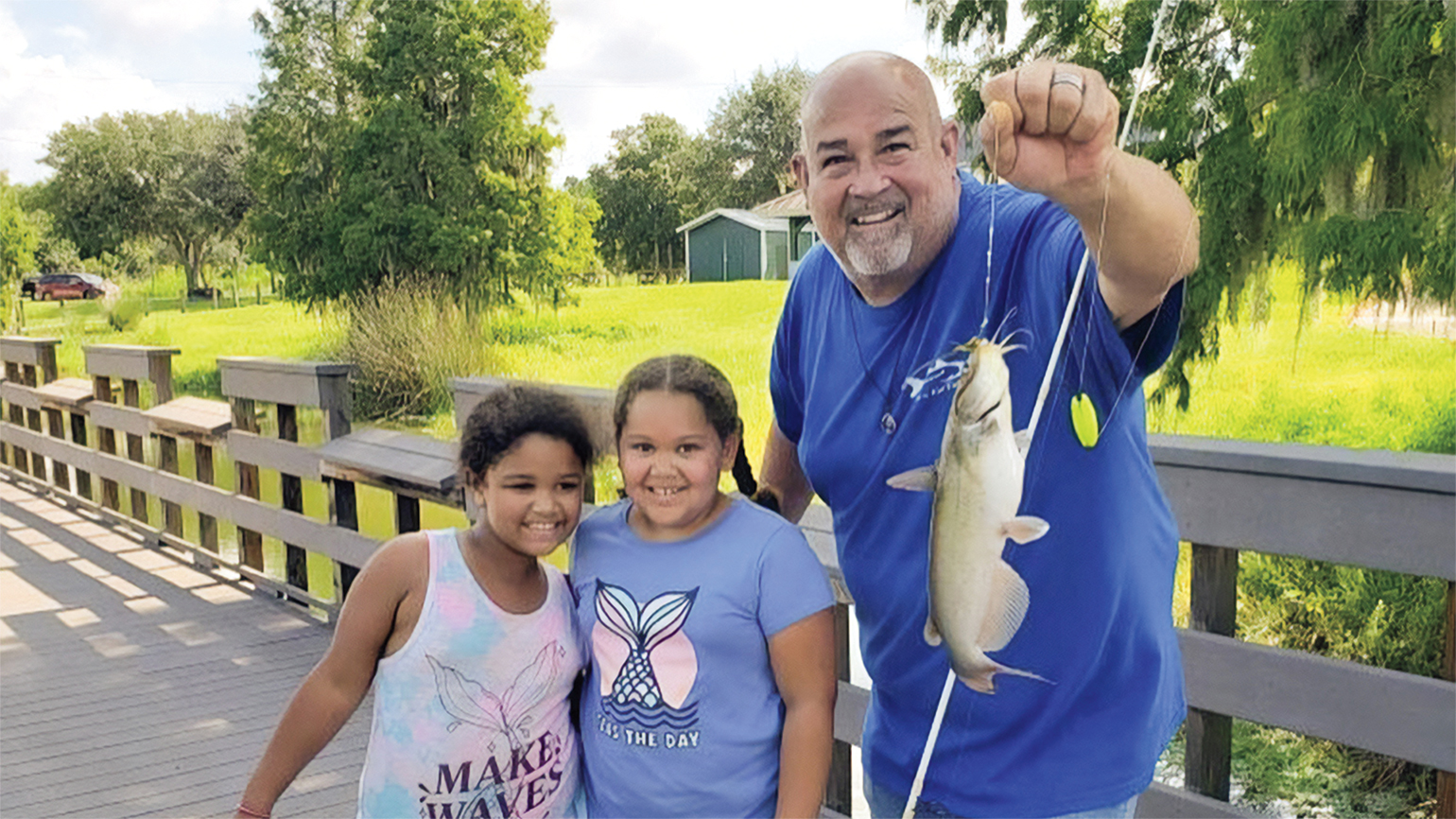
WHAT HE DOES During the week, William works as a tire salesman. On weekends, he and a few other volunteers, mostly people from his church, take 20 to 25 kids out fishing on a charter boat. William reaches out to local foster homes and group homes to invite the kids to spend the day on the water. Many have never been fishing or even on a boat, so William—or Big Will, as the kids call him—starts by teaching the basics. Then come the life lessons that fishing offers: patience, teamwork and the simple joy of relaxing in the outdoors. Take a Kid Fishing, Inc., has taken more than 600 fishing trips with almost 2,000 kids who don’t have a father in their lives.

WHY HE DOES IT William grew up in Miami in a rough area. His dad ran a lobster business in the Florida Keys, and William helped with it. He and his dad had a great relationship. Fishing was a huge part of that. “Fishing was so peaceful,” William says. “It was like an escape.”

He wants to share his love of fishing with kids who don’t have a father to take them. “I just want to show them that I care about them, that I’m there for them,” he says. Because many kids go on multiple trips, William is able to build relationships with them. He and Camran, now 20, still regularly fish together, and Camran sees Big Will as a father figure.

HOW HE DOES IT When William explained his mission to the captain of the Double Eagle, a charter boat in Clearwater, the captain offered him a great deal. Take a Kid Fishing, Inc., pays only $25 per kid to spend the day on the boat. Many kids opt to catch and release, but on a recent trip with kids from a group home, they kept the fish and enjoyed some delicious fish tacos that night.

Take a Kid Fishing, Inc., has corporate sponsors, including Planet Fitness and L. L. Bean, which has donated rods, reels and clothing. William welcomes donations from individuals too. “My church, the Family Worship Center of Lakeland, has really come alongside me in this ministry,” he says. “Anything we need, they help.”

HOW YOU CAN DO IT Take a Kid Fishing, Inc., has a huge impact, but it started because William wanted to help one kid. Do you know a child who might benefit from your friendship? Introduce them to fishing or another hobby you enjoy. The activity doesn’t matter as much as your presence in their lives. For more information, visit takffl.com.

For more inspiring stories, subscribe to Guideposts magazine.

Hanukkah: The Long Reach of a Small Light

Two young teenagers, David and Rebecca, hide from the Nazis in the darkness of a ruined cellar beneath the Warsaw Ghetto. One night, David returns from a scavenging trip with some badly needed supplies, plus a surprise—a single Hanukkah candle and a match.

So begins “The Power of Light,” a short story by the Polish-born Jewish writer Isaac Bashevis Singer. To me, the story is a road map of the positive—and lasting—power of light.

In the story, David kindles the candle, and the pair blinks at the squalor it reveals in their hiding place. They also see each other for the first time in weeks, and note the strength that survives in their eyes. Warmed and awakened by the light, David and Rebecca summon the courage to make their move toward safety.

“That glimmer of light, surrounded by so many shadows, seemed to say without words: Evil has not yet taken complete dominion. A spark of hope is still left,” writes Singer.

The story unfolds as the teens use the darkness of the world around them to their advantage, slipping out of the Ghetto and then out of Warsaw into the forest where Jewish partisans welcome them into their fold. Months later, they board a boat and, after evading Nazi bombs and submarines, arrive in Israel, where they grow up, marry each other and build a life. One night, as their son plays the Hanukkah game of dreidel by the cheerful light of the holiday candles, they tell a stranger (the story’s narrator) their story.

Rebecca looks up from her delicious-smelling frying pan, saying, “If it had not been for that little candle David brought to our hiding place, we wouldn’t be here today. That glimmer of light awakened in us a hope and strength we didn’t know we had.”

The lesson of this story has stayed with me for years: that even the smallest lights can have a long reach—across miles, across years, across generations. As I light my family’s menorah for Hanukkah this week, I will wonder: what courage might this flickering candle kindle? What life path might be illuminated in its reflection?

Guideposts.org Wins National Award

Guideposts.org has won a MIN 2017 Editorial and Design award! The website won in the Design category, for best Website Redesign.

The website was redesigned this year with users in mind—to help site visitors find the original, inspirational content they want easily, whether it’s inspirational stories or celebrity interviews or faith and prayer.

The new Guideposts.org homepage features several lead stories, where users can enjoy original interviews with celebrities like Kristin Chenoweth and Devon Franklin. And authors like Jen Hatmaker and Debbie Macomber as well as practical advice for positive living.

Featured prominently on the new site are inspirational stories, and special content our readers love, like their favorite recipes and stories about beloved pets.

The redesign of the site was also an opportunity to launch new features to meet the needs of users, who often submit prayer requests.

One of these features is the new Help for Every Need section. The section offers prayers, devotions, and Bible verses specifically designed to meet the needs of users, whether they are coping with anxiety, or looking for hope or healing.

The new site also includes some content from beloved Guideposts devotional books like, Daily Guideposts and Mornings with Jesus.

In addition to the website, Guideposts maintains a vibrant digital community with the Guideposts Facebook page, which has more than 450,000 followers and the OurPrayer Facebook page with more than 1.6 million followers.

About Guideposts:

Guideposts is a non-profit organization that inspires the world to believe anything is possible with hope, faith and prayer. Through magazines, books, prayer networks and robust outreach programs, Guideposts reaches people in their time of need, with timely and timeless messages of hope, reassurance and faith. For more information on Guideposts, please visit www.guideposts.org and follow Guideposts on Twitter, and Instagram.

Guideposts Classics: Robert Cummings on Honesty

I think the grimmest moment of my life came one day when I took a long look at myself and found I didn’t know who I was because all my working life I had been playing one masquerade after another. And I don’t mean the roles I had on stage or screen. I mean the series of impersonations I had palmed off as me.

For the first five years of my acting career, I, Charles Clarence Robert Orville Cummings, of Joplin, Missouri, was an Englishman named Blade Stanhope Conway. Then, literally overnight, I transformed myself into a drawling Texan. After that, I passed myself off as the heir to a mythical mining fortune. I remember those headlines yet: “Joplin, Mo., Kid Becomes Millionaire.”

And how did all this come about?

It was simple. I told the first lie. The others followed almost automatically. And yet that first lie seemed so excusable, so plausible at the time.

Back in the early thirties I gave up college and dreams of being an aeronautical engineer when the Depression, plus my Dad’s ill health, practically put me in the bread lines. My college roommate persuaded me that if I were going to starve, I might as well do it gracefully—as an actor in New York.

In 1931, Broadway was surviving by importing risk-free British plays that had already been hits in London. There was a great demand for British actors. Hunger can be the mother of invention. I decided to become British.

This necessitated cashing my one asset, a small insurance policy, making a cut-rate, round trip to England, and spending my allotted 29 days in the British Isles feverishly acquiring a British accent, British clothes from underwear to umbrella, and mailing my own advance publicity from Southampton to New York the day I sailed for home.

On arrival, Mr. Blade Stanhope Conway, that “young English actor-author not interested in money but desiring experience in the American theatre” was snatched past the breadlines and given a part in a play.

Dishonest, of course. But I took my role as gay deceiver lightly. I tried not to think of what my father would say. My dad, besides being a very fine doctor, had a tremendous respect for the truth. He had always assured me that “the innermost becomes the outermost; if you have a tricky personality, sooner or later it will show in your face.”

I remembered this sometimes. But whenever I did, I would look at Blade Stanhope Conway’s bank book and feel comforted.

Thus I went right on weaving my skeins of deceit, trying to remember my lines off-stage as well as on, until one fine day, four years later, I was caught in my own trap. I couldn’t get a job because I was “British.” I tried New York. I tried Hollywood. The Depression was over, and with it the need for British actors.

My Hollywood agent finally told me the bitter truth. “My boy,” he said, “we’ve got to drop you.”

I was in despair. My father was dead, now; my mother was living in Hollywood; I took my agent to see her. I resurrected my American passport, carefully concealed all these years. I tried valiantly to recover my Missouri twang. “I’m not English,” I kept saying in a decidedly British accent. “I’m Ameddican!”

“Amazing,” said my agent, finally convinced that I was none other than C. C. R. O. Cummings of Joplin, Missouri. And I knew an hour of relief. But only an hour. Then my agent called in high excitement. “Forget that Joplin bit, kid,” he said. “As of tomorrow morning, you’re from Texas.”

It was, he informed me, a very good part, but it had to be the real thing, a genuine Texan. And the director, King Vidor, was a Texan himself. I had had 29 days to transform myself into an Englishman. In 14 hours, working all night long, I shed my ancient British lineage and broad A, and acquired a hard-working family, a ranch in San Angelo, Texas, plus a toothpick and a slow drawl.

It worked. And so began my second masquerade.

As time passed, I developed a great admiration for King Vidor, and lived in constant fear that he would find me out. My conscience gnawed me every time he said, “The greatest assets an actor can have are kindness and honesty, particularly honesty. You can’t trick the camera; it sees right into your soul.”

Or I would feel that he was talking straight at me when he repeated his favorite quotation from Thackeray: “The world is a looking glass and gives back to every man the reflection of his own face.”

I’d try to console myself with the thought that I wasn’t hurting anybody but myself. The trouble was, I didn’t know just how true that was.

Then came the agonizing hour one day when I sat beside King Vidor to view the daily rushes of the kid from Texas. Suddenly onto the screen flashed a test made of Blade Stanhope Conway for The Lives of the Bengal Lancers.

“Amazing,” said Mr. Vidor, “how do you do it? And which one is you?”

“Neither,” I said shamefacedly. But I stayed a Texan because the publicity was out. And pretty soon, there I was again, caught in my own web. My range was limited. I could play only Southern parts. The burden of deceit was getting heavier.

Meanwhile, my mother had started going to church and attending religious lectures. Now and then I would go with her. My private life at that point wasn’t very satisfactory; it was, in a way, a reflection of my own confusion. A shadow, a fantasy, a chameleon can’t have a very real life. There wasn’t any real me for whom it could happen. This much I began to understand.

Finally one day I walked into the studio publicity office and announced: “I want to be me even if it wrecks my career.” Then I told them my story.

I walked out feeling much better. I thought I was free. But I wasn’t. Not too long after that I heard that I was going to be dropped by that studio. It jolted me right back into my old pattern of deception.

Immediately I thought of some worthless papers in an old trunk Mother had sent out from Joplin, title to half a mountain my father had bought in Goldfield, Nevada. “There’s gold there too,” Mother had said, “but I don’t think they’ve found a way to get the gold out.”

Well, I decided that it would be much better publicity to quit as a millionaire than to be dropped as an actor. So I purposely let hints fall in all the right places. The results were headlines: “Joplin, Mo., Kid Becomes Millionaire.”

Suddenly, I was horrified. It seemed as if the deceptions were now in the driver’s seat. How had it happened? Why had I done it?

It was at about this time that my mother began studying for the ministry. The more she learned, the more she talked about it, and the more I learned too. I began to see what had been happening to me.

The innermost had indeed become the outermost. My outer world was reflecting my own guilts and fears. I didn’t believe in myself any more, or in my talent, because I had constantly rejected the me that God created.

It didn’t seem to make any difference whether you started with a Little White Lie or a Big Black One. You were actually starting an unholy stream of errors that multiplied until they weighed you down mentally, physically, spiritually. That was what I had done.

The studio did drop me, despite my mythical millions, before I could quit, but when I went to a new studio, I walked right into the publicity department and said: “This time I tell it straight. I’m now Bob Cummings, no phony accent, no phony millions, and I stand or fall on that. I’ve spent too many years of my life walking a tightrope of twisted truth. Here’s where I cut the rope.”

The greatest things in my life have come to me since that moment. Some of my biggest pictures, my experience in the Air Force, my marriage to Mary, our five children, the Bob Cummings TV show giving me a chance to produce and direct as well as act, all these, plus peace of mind, have come to me since I began to try to uncover the real me, the individuality that God gave me.

I believe now, with all my heart, that we are all part of a Master Plan. There is no such thing as isolation. Anything I do to help you, helps me. Anything I do to hurt you, hurts me. If I deceive you, I deceive myself.

This is the truth that simplified my life. This is the truth that set me free.

For more inspiring stories, subscribe to Guideposts magazine.