Embrace God's truth with our new book, The Lies that Bind

A Prayer for Today

As editor of 60 Days of Prayer Magazine, I am always on the look-out for uplifting prayers to feature each month. While in the Guideposts archive, I came across this beautiful prayer with historical significance. Over fifty years ago, as astronaut Frank Borman soared around the moon in Apollo 8, he spoke these words which were transmitted to earth and heard by millions around the globe on Christmas Eve, 1968. Its sentiment still holds true today. May we pray for peace and unity on earth.

Give us, o God, the vision
which can see Thy love
in the world
in spite of human failure.

Give us the faith
to trust Thy goodness
in spite of our ignorance
and weakness.

Give us the knowledge
that we may continue to pray
with understanding hearts

And show us what each one of us
can do to set forward
the coming of the day
of universal peace.

A Prayer for the Streets

We called it Black Thursday.

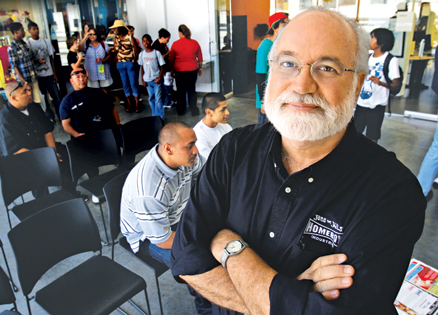
A group of us gathered in my office on a warm spring morning last year at Homeboy Industries, a gang-intervention program started nearly two decades ago in a tiny East Los Angeles church.

Crowding the walls was evidence of our work—photos of gang members who’d turned their lives around, drawings and paintings by kids from the projects, even a proclamation from one of East L.A.’s most notorious street gangs thanking us for our “efforts to make our lives and our community better.” Outside my office we saw gang members coming off the street for job training, counseling, maybe to apply to work in the bakery and café we run, or to have their tattoos removed by volunteer doctors.

The street was desolate, a neglected corner next to a bus storage depot less than half a mile from the Los Angeles Men’s Central Jail. Inside, though, everything hummed with life, with prayers and warm greetings, sometimes with tears of joy.

Except today we were meeting to practically shut the whole operation down. The recession had hit hard and much of our funding had dried up. We’d cobbled together the payroll money for the past few months but now the well was dry. We had more than 300 employees, most of them former gang members, counseling addicts, answering phones and teaching classes. They’d all have to go. The senior staff would be laid off. I would be laid off, and I’d helped found the place. We talked all morning about what to do.

We were desperate for another solution but there seemed to be only one course of action.

Finally we stopped for lunch. “We’ll break the bad news this afternoon,” I said. Silently I gave one last frantic prayer for help.

When I returned, word had already spread. The parking lot, sidewalk and lobby were mobbed. Huge guys covered in tattoos were sobbing. Homeboy Industries is the largest gang-intervention program in the country and the only operation of its kind in Los Angeles, America’s gang capital. For these guys it was a lifeline. And I was taking it away.

Worse, I blamed myself. We’d recently built a new headquarters that let us bring all of our programs under one roof. It was paid for but I hadn’t anticipated the increase in costs our expansion would generate. The number of gang members, or “homies,” as they call themselves, coming to us had quadrupled to 12,000 per year. (There are an estimated 100,000 gang members in the L.A. area.) I walked through that swarm of homies in a miserable daze.

I thought about all the kids who’d come to us over the years broken down and brokenhearted. That’s the real reason kids join gangs. They’re not natural-born criminals. They’re just out of options—no jobs in sight, dysfunctional schools and families, no sense of belonging in society. Yet these kids had taught me so much—more, it sometimes seemed, than I’d ever taught them.

I remembered one year in particular, when I was as depressed and anxious as I was that Black Thursday afternoon. It was 1992, six years after I’d been assigned as pastor of Delores Mission Church in East Los Angeles. Delores Mission was the poorest parish in all of L.A., basically two sprawling public-housing projects right next door to each other. The projects were home to eight different warring gangs.

Even though I was a middle-class white guy who spoke little Spanish, dealing with those gangs became a major part of my ministry. Mothers and grandmothers in my parish were distraught at the constant shootings, stabbings and drug dealing going on every day right outside their doors. They hated the violence but they loved their children. Maybe, they reasoned, if we made our church a place of love and refuge and helped these kids find jobs and mentors they’d leave the gang life. By fits and starts we put together a program that placed kids in local jobs and taught them basic life skills. We even bought them suits for interviews. We started our own businesses and we hired homies to run them.

I wasn’t smart enough to let it all take its own time. Instead I tried to solve the gang problem single-handedly. I never slept. Late at night I’d get on my bicycle and pedal through the projects. If I saw homies with guns drawn I confronted them. I escorted kids to their doors. I pleaded with gang members to leave the life and come to us for counseling. I shooed away drug dealers and even tried to broker truces between rival gangs. The truces were worse than useless. Gangs never fight about anything real. It’s all turf and posturing and desperate efforts to mask despair and fear.

As a Jesuit I was mandated to take a long retreat that year. I spent 30 days in silent prayer and realized that all of my efforts had come to little. The housing projects were more torn up by violence than ever. I was burned out. I returned wondering if I’d ever find a way to make a difference.

That’s when I met Pedro, a young guy addicted to crack. Every time I saw him in the projects I offered to get him into rehab. “I’m okay, G,” he’d say and slink off. (The homies call me “Father G” or just “G.”) One day, to my total surprise, Pedro said yes.

I drove him to a rehab center north of L.A. A month later his younger brother, Jovan, also a gang member, committed suicide. I picked Pedro up from rehab for the funeral. I had no idea what to say but Pedro launched into conversation the minute he got in the car. “It’s a trip, G,” he said. “I had this dream last night and you were in it.”

Pedro said he and I were standing in a large, empty, pitch-black room when suddenly I lifted up a flashlight and turned it on, illuminating a light switch on the wall. I didn’t speak, didn’t move, just held the beam steady. “All of a sudden,” said Pedro, “I realized I was the only one who could flip that switch. You couldn’t do it. I had to do it. So I walked over there and I took a breath and I flipped it on. And the room got light.” He paused and I saw he was crying. “And, G,” he choked out, “I realized that the light…is better…than the darkness.”

That was all. We didn’t say much more. After the funeral Pedro returned to rehab. His story, though, flipped a switch in my own mind. I realized what I’d been doing wrong—I’d been going around trying to turn on lights for everyone in the projects when in fact all I could do was aim the flashlight. I couldn’t save those kids. Only God could save them. My job was simply to point the way.

My work changed after that. No more bike patrols. No more brokering truces. I focused more on Homeboy Industries and made it clear to kids that I was ready to work with them only when they were ready to work with us. We sometimes joke that our motto (“Nothing stops a bullet like a job”) should be changed to “You just can’t disappoint us enough.” But that doesn’t mean we let kids off the hook. If they slack off or drift back into the life, we send them packing. We pray hard they’ll come back. But in the end that’s their decision.

The day after the layoffs I arrived at the office to find the place as noisy and busy as ever. “We’re still working,” the staff told me. “Maybe you’ll be able to pay us someday.” Pretty much everyone showed up, including Pedro, who’s a case manager.

Homies went to Dodger Stadium to collect donations from fans lining up for games. They took to the streets to sell copies of a book I’d recently written. They called newspapers and television stations and soon the place was swarming with reporters. “Your terrific press person, Melissa, called us,” a television cameraman told me. He meant a homegirl who works in the tattoo-removal clinic and had never spoken to the media before in her life.

Donations trickled in, then snowballed. In a few months we’d raised $3.5 million. Los Angeles County gave us $1.3 million to serve kids on probation. It’s still not enough. Our businesses, staffed almost entirely by homies, are self-sustaining. But the rest of what we do is slow, expensive work. So far we’ve managed to put about a hundred people back on the payroll.

I have no idea what we’ll do come June, when the county contract runs out. Still, I don’t despair. God brought us this far and he’ll carry us along. I may be shining the flashlight and the homies may be flipping the switch. But it’s God who provides the illumination. On Black Thursday and every day.

Download your FREE ebook, A Prayer for Every Need, by Norman Vincent Peale.

A Prayer for Lost Things

Do you ever lose things? In the last week or so I seem to have become the absent-minded professor with a specialty in missing objects.

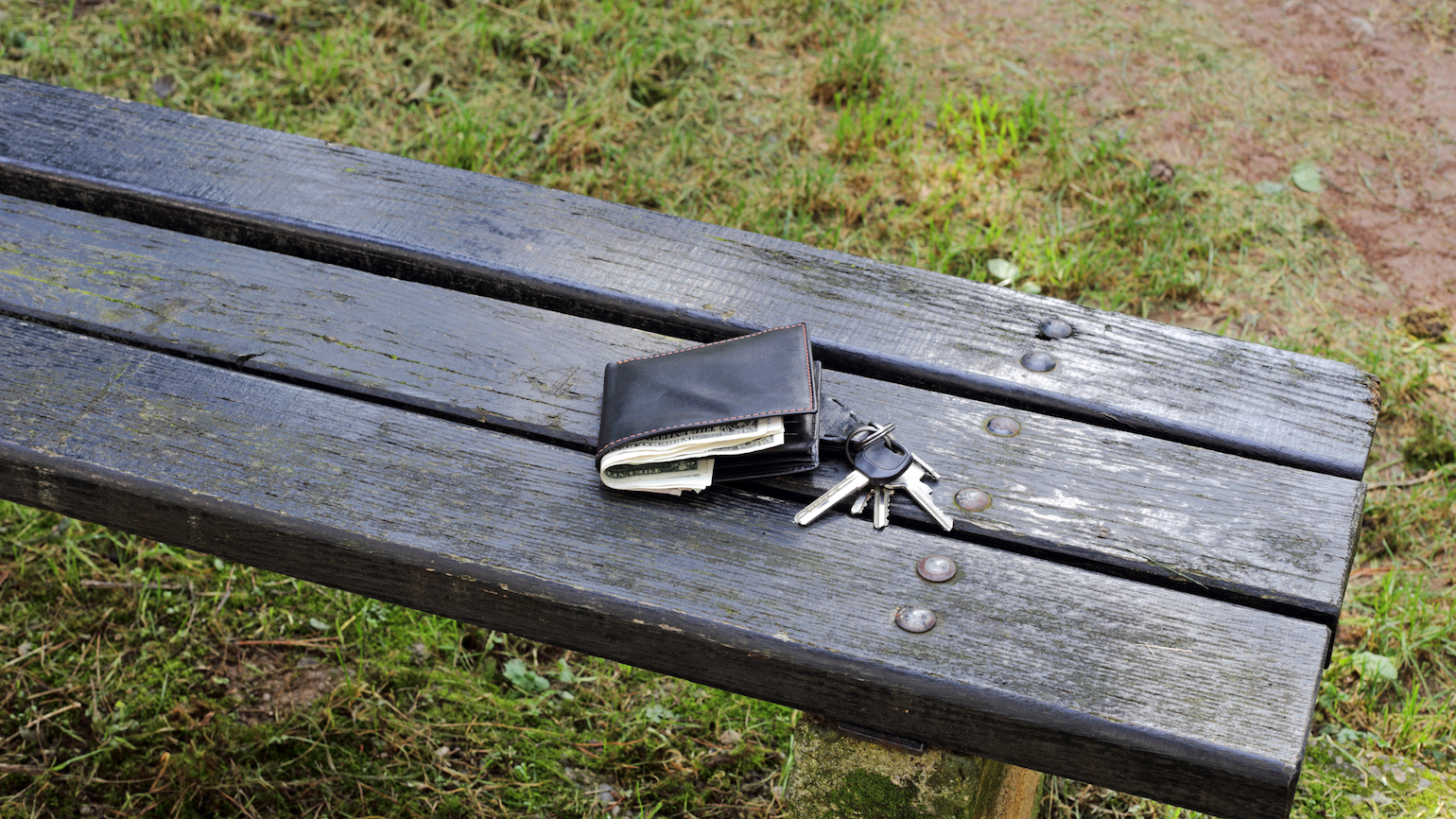
At first it was my passkey to the gym, then it was my money clip, then it was the keys to our home. “Do you think we’ll have get our locks changed?” I asked my wife.

“They’ll show up,” she said confidently.

“But I’ve checked EVERYWHERE,” I said. “I’ve gone through all my pockets. Checked through all my drawers.” Guess what? Turned out they were in the one drawer I didn’t check.

As for the money clip and the missing money…that really baffled me. Had someone stolen it from me? Had I been pick-pocketed? Had it fallen out somewhere?

It was only when I was doing the laundry and taking my pants out of the washing machine that I noticed a lump in the front right pocket. I put my hand in. Ah-ha. The missing clip with the three twenties.

“I would have never suspected you of money laundering,” said a lawyer friend wryly.

I’ve now given myself three tips for dealing with Lost Things:

1) Take a breather and a good look. Ask yourself, “Where was I today?” Search high and low. But also do a search in your head. Then…

2) Trust. Like my wife says, lost things have a way of turning up. Just wait and trust. Heck that’s good advice for lots of things.

3) Rejoice. Remember Jesus’s parable about the woman and the lost coin? She looked everywhere for it. When she found it she invited all her friends over to celebrate. What was lost was found.

Let me add my prayers to yours for anything that’s lost. And a few prayers for rejoicing over all that is found, including any absent-minded-professor types discovering they’re not losing their minds.

Just their keys.

A Prayer for 9/11

Lord, take me where you want me to go.
Let me meet who you want me to meet.
Tell me what you want me to say,
And keep me out of your way.

It’s not my prayer. It’s a prayer that came from the Franciscan priest Father Mychal Judge, who was killed on 9/11 at the World Trade Center when he was ministering to a fallen firefighter.

Mychal Judge was a chaplain for the New York City Fire Department. His church, St. Francis of Assisi, was right across the street from the fire station Engine 1, Ladder 24 on West 31st Street, not far from our Guideposts editorial offices. He had printed the words of the prayer on a card to hand out to anyone who needed them.

On September 10, 2001, he called his fellow NYFD chaplain Everett Wabst of Staten Island for some more prayer cards. Father Mychal had run out of them. Wabst was driving into New York with the cards when he heard of the attack. Soon he learned about Father Mychal’s tragic death.

For the next 48 hours, Wabst counseled firefighters, survivors and first responders. And he used the prayer that came from one of the disaster’s first victims. They’re words that work any day of the year, but they seem particularly poignant for this day.

Lord, take me where you want me to go.
Let me meet who you want me to meet.
Tell me what you want me to say,
And keep me out of your way.

For more inspiring stories, subscribe to Guideposts magazine.

A Prayer and a Wish

At noon each Wednesday, I used to walk from the dental office where I worked to my friend Bonnie’s house nearby. There, we met for prayer. Through the months, I saw many of our prayers answered, but I also discovered the power of a wish.

A dear friend, who had been rejected for a position in her church, began to resent the one who had been chosen for it. I watched sadly as envy ate at my friend. I silently wished she would stop finding fault and take an honest look at herself.

Within a week, she called and said, “I’ve decided to get rid of my bitter attitude. Please remind me if I start to say anything negative about that person.” I thought, that’s like an answer to prayer…only I didn’t pray!

Later, my new daughter-in-law JoAnn said she would never be baptized. I couldn’t say anything without sounding like a meddling mother-in-law, but I often wished she would change her mind. I’m sure I would have prayed about it after awhile, but before I could, she announced that she wanted to be baptized.

My fulfilled wishes reminded me of God’s message to Isaiah, “Before they call, I will answer” (Isaiah 65:24).

God knows our wishes—what we hope for—before we even realize we should pray for them. Since I discovered what can happen when I wish something good for someone, wishing has become fun for me.

Throughout my day, as I see a need, I offer wishes for others like good thoughts blown their way. The rest I leave to God. He understands and answers.

A Lawyer Puts His Faith into Practice in Uganda

Two weeks. That’s all it was going to be. I was here in Uganda on a mission trip as part of the global justice project at Pepperdine University Law School, where I teach. We’d spend our January semester break helping out some kids who had been stuck in a juvenile detention home, waiting for their day in court. We’d offer legal counsel, prepare briefs to be sent to the judge, do some sightseeing and go home. That seemed like enough of a commitment for someone with my hectic schedule.

My colleague Jay Milbrandt had been urging me to get involved in the global justice program, but I’d put him off. Not only did I have classes to teach but I’m also associate dean of student life, and there was always something coming up. What little free time I had went to teaching Bible classes with my wife at our church or coaching one of our three kids’ soccer teams. Of course I cared about justice, cared very deeply. Justice is the soul of the law. My job was to teach that to my students, not give legal advice in Africa. “Later,” I told Jay.

Then last fall Jay and I went to the annual conference of the Christian Legal Society. Three days of talks and seminars culminated in a closing dinner with Bob Goff, one of the nation’s top litigators, giving the keynote address. Bob’s well over six feet and he towered over the podium, his voice booming as if he were addressing a closing argument to a jury in a murder trial.

“We have a moral, faith-based duty to see that justice is done for the least of us!” Bob talked about the pro bono work he was doing for kids in Third World countries, seeking to protect them from abuses like forced labor and prostitution. Lately he’d been focusing on Uganda where the judiciary was overworked and understaffed, often unable to process the cases of kids who were arrested, some of them with little or no evidence against them. He challenged us to use our legal skills for the poor and oppressed, especially the most vulnerable—the world’s youth.

“Our God is a God of justice,” he declared, then added, “and he’s nuts about kids.”

That final line got me. Something inside me clicked. You could help here, I told myself. Go overseas and use your legal training. It would be a good experience. And a good way to live out your faith. I leaned over and said to Jay, “We’re going to Africa.”

The two of us accosted Bob and asked what we could do. He told us about a children’s prison he’d visited in rural Uganda where children were stuck sometimes for years, their cases unheard, and sometimes used as forced labor. All they needed were a few volunteer lawyers to prepare summary briefs for them so a judge would agree to hear and process their cases. What if a group of us from Pepperdine went there? Bob could put us in touch with the right people.

And so it happened that three months later we were on a plane to Uganda. I had no idea what to expect. I’d been a lawyer for almost 20 years and had clerked for a judge, worked for a large firm and in private practice. I was used to spending months on depositions, but Bob said we could interview the children and learn their cases in a matter of days. All we needed to do was prepare a paragraph-long summary for each child. That would be enough for the judge. A two-week trip, that’s all it was going to be. I could handle it, then be back to my busy schedule at Pepperdine.

We landed in Kampala and drove north to the dusty town of Masindi. We met with a judge and got a list of the 22 cases we’d handle. Finally we were at the remand house, where the children were being held, answering Bob Goff’s call to faith and action. There was no guard or fence around the place, just a few teenagers milling about. Where could anyone escape to, way out here in the bush?

The boys’ hall, where 18 boys lived, was a one-room concrete warehouse. No lights, no screens against malarial mosquitoes, no running water, no electricity, no closets for their clothes, no beds, no privacy whatsoever. Just foam pads and a few ragged blankets. I thought about Bob’s final line, the clincher. How would these kids ever know God was nuts about them?

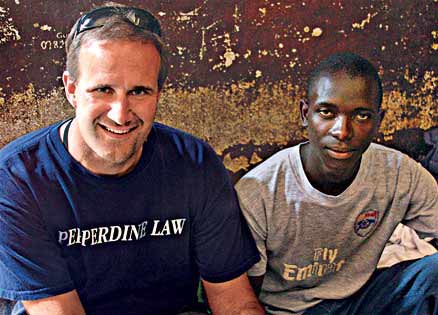
The four of us divided into two groups to interview the kids. “Who can translate into English for these lawyers?” the judge asked. Two young men stepped forward, brothers named Joseph and Henry.

Our group got Henry. A short, slim 16-year-old dressed in sweatpants, a T-shirt and flip-flops, he was bright and deferential, always addressing me as “sir.” We sat down in lawn chairs under a tree. I opened my laptop. What had this sweet boy supposedly done to land here? Steal food for his family?

“Which case is yours?” I asked. He looked over my shoulder and pointed to the screen, “That one…and that one.” I caught my breath. An accused double murderer? I would get to his cases later. First I wanted to clear some of the simple ones.

With each interview I began to see how flimsy the cases were. Some would have been thrown out of court for lack of evidence. I became more and more disturbed the more I found out. I discovered that the matron in charge had unlawfully hired the boys out to local farmers to do forced labor, which was perhaps why their cases had languished so long. One of the boys being forced to work had died of an apparent asthma attack, a heartbreaking miscarriage of justice.

Henry was an excellent assistant, often anticipating our questions. Because of his intelligence and leadership he’d been made the head boy, or “prime minister” as they called him at the house. During a break I gave him my business card and let him listen to my iPod. “What’s the name of that song, sir?” he’d asked. “‘Livin’ on a Prayer’ by Bon Jovi.”

“Ah, a Christian song,” he said. Not exactly, I thought, but the explanation would be too long to go into. Prayer was important to the children. Henry told me they’d prayed after Bob and one of his colleagues had visited them in the fall, asking God to bring the men back to hear their stories and help them. And here we were, an answer to boys’ prayers halfway around the world.

When it came time to interview Henry I sat him down in the lawn chair. “Tell me exactly why you are a prisoner here.”

He and his brother were charged along with others for the murder of a herdsman in their village. They didn’t do it. They couldn’t have. The man was killed between eight and nine in the morning when both were at school. Henry’s teacher confirmed that. But they’d been stuck in this remand house for a year and a half, their education interrupted, their futures on hold indefinitely, perhaps forever, for a case that should have been dismissed in a court of law if it were heard.

The second murder? Because of his position of leadership at the house, Henry was charged along with the matron in the death of the boy who’d died of asthma, something he was hardly responsible for.

The interviews continued. Each night our team stayed up late to write up summaries from our notes, then we went back for more. During one break I took out my phone and showed it to Henry. “This is better than mine, sir,” he said.

“Yours?” I asked. He pulled out his from a pocket. As head boy he was entitled to it. He pointed to the business card I’d given him earlier. Was the phone number on it the number for my cell? No, I said, that was my phone at work. He gestured to my cell again. “What is the number for this, sir?” he said.

I was caught off guard. In an instant I knew that how I answered his question would largely determine what kind of journey I was on. Was I just a do-gooder passing through or someone willing to become personally invested in the life of a 16-year-old Ugandan prisoner? In doing justice where justice was not always done? Was I called to this place because God had moved me or was I just doing something to ease my conscience?

“Of course you can have my number, Henry. I could not have done this work without you and I promise to help you as best I can, through the law and through prayer.” In turn Henry gave me his number. “Thank you, sir.” The deal was sealed. I was in this for the long haul.

I have been back to Uganda three times since that trip in 2010. Henry and Joseph were released, the case against them for the death of the herdsman dismissed. As for the charge against Henry in connection with the boy who died of asthma, I’m working at having it struck from his record when I go back to Uganda this fall. Both boys have since been enrolled in the boarding school Bob Goff started in Uganda, the Restore Leadership Academy. They’re doing great.

Henry calls me on my cell once a week. He always asks, “How’s America?” He asks about my work, my family. He tells me about his school, his family. We discuss the cases of those in the remand house, who’s gone to court and what was decided. This January I’ll head back to Uganda. I’m taking my family with me. I’ll be working with the Ugandan judiciary as part of a six-month sabbatical, and my wife and kids will be working to educate children in the remand home. Did I say two weeks? Did I say I’m as nuts about these kids as God is?

Download your FREE ebook, True Inspirational Stories: 9 Real Life Stories of Hope & Faith.

A 3-Word Prayer to Help You See the Big Picture

Maybe you’ve heard, but prayer changes things. Prayer changes people. Prayer will change you. 

One prayer that will have an immense and lasting effect on you, especially if used daily, is just three words. And it’s based on a memorable event in ancient times.

The incident happened at a time when the Arameans were at war with Israel, and the king of Aram had a gripe with God’s prophet, Elisha, for repeatedly warning Israel’s king about Aram’s movements and actions. So the king of Aram sent an army to capture Elisha. They arrived at Dothan, where Elisha was staying, and surrounded the city at night.

Early the next morning, Elisha’s servant went outside and saw that they were surrounded by a vast array of horses and chariots.

“Oh no, my lord! What shall we do?” the servant asked.

“Don’t be afraid,” the prophet answered. “Those who are with us are more than those who are with them.”

And Elisha prayed, “Open his eyes, Lord, so that he may see.” Then the Lord opened the servant’s eyes, and he looked and saw the hills full of horses and chariots of fire all around Elisha (2 Kings 6:16-18, NIV).

God not only delivered Elisha and his servant that day; He delivered the entire Aramean force to the king of Israel and sent them home without the loss of a single life (see 2 Kings 6:19-23).

The prophet’s servant lacked the full picture. He looked, but he didn’t see. He needed his eyes opened to the spiritual realities that changed the whole picture.

We need that sometimes too. Sometimes? All the time. Every day.

So why not pray the prayer of Elisha for yourself? “Open my eyes.” To the truth. To the spiritual battle you face. To the God who is for you. To the right decision to make, the right direction to take, maybe the path you need to forsake.

Just three words. But they can turn fear into opportunity, disappointment into blessing, despair into hope and defeat into victory.

9 Bible Prayers to Help Make the Best Decision

Life throws so many decisions at us, and with the pandemic, we’re even faced with some we’ve never made before. Do I keep my kids in school? Is it safe to travel? Can I safely socially distance at an upcoming event? Can I plan anything more than 24 hours in advance?

All these decisions can be overwhelming and stressful, even making us feel inadequate at a time when we need calm and confidence.

But the Bible says, “If you need wisdom, ask our generous God, and He will give it to you. He will not rebuke you for asking” (James 1:5, NLT). So, here are nine Bible prayers for wisdom—whether you’re worried about social distancing boundaries, a financial matter, a job change, a relationship or a business move:

1) Lord, Your Word says that “the Lord gives wisdom; from His mouth come knowledge and understanding” (Proverbs 2:6 NIV). You know my need for wisdom, knowledge and understanding straight from You. Please meet my need.

2) Father, I want to do as Your Word says: “Be wise in the way you act toward outsiders; make the most of every opportunity. Let your conversation be always full of grace, seasoned with salt, so that you may know how to answer everyone” (Colossians 4:5-6 NIV). I know I don’t have to have all the answers, but I do want to be wise and full of grace in all I do and all I say. Help me and guide me, please.

3) God, as Your Word says, “Even fools are thought wise if they keep silent, and discerning if they hold their tongues” (Proverbs 17:28 NIV). Help me to know who to listen to, what to ignore and when to hold my tongue.

4) Lord God, I want to be among those who “know the mystery of God, namely, Christ, in whom are hidden all the treasures of wisdom and knowledge” (Colossians 2:2-3, NIV). Draw me closer and closer to You, through Christ Jesus, and reveal to me, in me and through me those treasures of wisdom and knowledge, that I may walk in wisdom and not stumble in every decision I face.

5) As the Bible says, Lord, “the one who gets wisdom loves life; the one who cherishes understanding will soon prosper” (Proverbs 19:8 NIV). Please shower wisdom and understanding on me in every decision I face.

6) God, since the Bible says, “To the person who pleases Him, God gives wisdom, knowledge and happiness” (Ecclesiastes 2:26 NIV), let me please You today and every day, and supply the wisdom, knowledge and happiness I seek.

7) Father, according to Your Word, the Bible, “the wisdom that comes from heaven is first of all pure; then peace-loving, considerate, submissive, full of mercy and good fruit, impartial and sincere” (James 3:17 NIV). In every decision I face, let my choices reflect that heavenly wisdom; in every path I must choose, show me those that will produce pure, peace-loving, considerate and submissive results, “full of mercy and good fruit, impartial and sincere.”

8) Heavenly Father, I know that “Fools give full vent to their rage, but the wise bring calm in the end” (Proverbs 29:11 NIV). Grant me the wisdom to see which decisions of mine will bring calm in my life and the lives of others.

9) God, I do believe the Bible when it says, “Blessed are those who find wisdom, those who gain understanding” (Proverbs 3:13 NIV). Let my life—and especially the choices I make today—reflect Your wisdom and bring about the blessing of which Your Word speaks.

Next time you are facing yet another stressful decision, I hope one of these prayers will bring you guidance and comfort.

7 Reasons to Start Journaling

Journaling is the perfect activity when the weather turns cold and unforgiving. Curling up with a pen and notebook can help you record your favorite memories, get more in touch with your emotions and set goals for the New Year. But did you know journaling can also bring you closer to God?

Here are seven ways journaling can enhance your spiritual life, based on my book, Heaven on Earth: A Guided Journal for Creating Your Own Divine Paradise.

1. Writing allows you to go deeper into your subconscious.
Often the thoughts that emerge on the page are not those everyday thoughts, the same old notions that your brain regurgitates and dissects over and over. Journaling is like digging for buried treasure. The ideas and insights you get while journaling are jewels that come straight from Spirit, from that deeper part of yourself that is connected to God and an eternal wisdom.

This wisdom helps you discover solutions to persistent problems, or unearth the foundations of negative beliefs or self-sabotaging actions. When you journal you are mining for gold.

2. In our hectic modern world, journaling can help you block out the noise.
Setting aside even 15 minutes a day, or 30 minutes a week, to quietly journal gets you in the habit of consciously removing yourself from the hustle and bustle of life. Daily or weekly journaling forces you to adopt a quiet, meditative state on a regular basis.

There is a stillness and calmness that comes when you go inside and put pen to paper. And once you begin training your mind to be still, that stillness will last with you long after you close your journal. It is in this quiet, meditative state where we can most easily hear, sense and recognize God’s guidance. When we can clearly access God, we can follow the guidance of Spirit.

3. Your journal is an ideal place to communicate directly with God.
Just as a prayer may be thought, spoken aloud or even sung, so can a prayer be written down. Is there something weighing heavily on your heart? Someone you need help forgiving? Someone you want forgiveness from? Are you looking for a job or a partner? Or maybe God brought just the right person or opportunity into your life, and you want to say thank you.

Your journal is the perfect place to pray to God, thank God for answered prayers, and ask God for patience and insight when a prayer is not answered.

4. Winter can make us feel isolated, and journaling creates a connection.
One of the ways we stay close to Spirit is by getting out of the house, which allows us to see God in the wonder and beauty of nature and in the faces of friends and family. But during those winter months early in the year when the holidays are over and the snow sets in, we tend to hunker down.

Even getting to church can become difficult when the weather doesn’t cooperate. We can feel isolated, and even start to feel isolated from God. Journaling about your faith and your prayers can help your heart warm to Spirit even when it’s cold outside.

5. Journaling can serve not only as a record of your life, but as a record of your faith.
Jot down the moments when your faith grew to a new level. The moments when you doubted. The moments when God sent you a special sign, or you received a sign from a loved one who has passed.

Look back at old prayers that were answered beyond your wildest dreams, as well as some of the unanswered prayers that you might realize, in hindsight, weren’t really in your best interest. Or how about those prayers that were answered in unexpected ways? Old journals allow us to see our lives from a God’s-eye-view and map our spiritual growth.

6. Checking in with yourself when you sit down to journal will help you stay more present in your daily life.
Journaling will ground you in the moment and get you in touch with your emotions and the events of day-to-day existence. God wants us to savor our lives, not rush through them. How can we learn all the lessons and feel all the joy God intended for us if we are not present?

Journaling the contents of your heart and mind on a daily or weekly basis forces you to be aware of what is happening in your life. Then you can decide what is working, and what isn’t, and ask God to help you set goals and make changes.

7. Journaling encourages a sense of gratitude.
God wants us to recognize all the blessings in our lives, even as we strive to do more and be more. Expressing gratitude by writing down your blessings will make you realize just how many blessings you experience every day. In fact, you might need a bigger journal!

Gratitude not only makes you happier, it brings you closer to God because you suddenly sense just how much God loves you. Seeing how many blessings you experience, written down in black and white, will inspire you to help and be kinder to others. There are people who desperately need your assistance, whether it’s donating money to a charity, donating some TLC to loved ones or just donating a smile to a stranger on the street. God wants us to be of service to each other, and God is counting on your joy and gratitude spilling out to bless the world around you.

7 Prayers of Release

I once practiced a simple prayer exercise with friends to release the pain we had suffered together. We imagined writing down on a sheet of paper all the hurtful words and actions others had aimed at us. Then, in our minds’ eyes, we folded that page into a tiny paper boat such as a child might make. Then we lowered that boat onto the surface of a stream and watched the current carry away all that had been said and done against us. It was a helpful exercise, a prayer of release.

Some things are easier than others to let go, of course. Some things require great effort—and prayer—before we can be free of them. But that “paper sailboat” exercise can be adapted to any number of situations, such as the following:

1) Prayer to release anger, resentment and bitterness
God, hear me and answer me. You know I am troubled by thoughts and feelings of anger, resentment and bitterness. You also know why. And You know how deep the hurt goes and how long I have lived with it. But I don’t want to live with it any longer. I don’t want to be an angry, resentful and bitter person. With Your help, I release my anger into Your hands. I surrender my resentment. I let go of my bitterness. Help me to keep letting go and release these toxic emotions as often as they try to return.

2) Prayer to release a loved one
Lord God, I release ______ into your care. You know all my love and concern for (him/her). I know that You share that love and concern, so I release (him/her) into Your hands. Help me to find healthy and helpful ways to love and care and pray for (him/her), even as I learn to trust You to see all I cannot see and do what I cannot do.

3) Prayer to release fear
Father, I give my fear to You. I have been crippled and poisoned by fear for too long. I reject it. I release it. I choose faith instead of fear, believing in Your good plans for me. I choose love instead of fear, trusting that Your “perfect love” will cast out all fear (1 John 4:18). I choose Your light and truth instead of fear, accepting Your Word, which says I “need not fear terror that stalks in the night, the arrow that flies in the day, plague that strikes in the darkness, or calamity that destroys at noon,” because you are with me (Psalm 91:5-6, ISV).

4) Prayer to release the illusion of control
Mighty God, for too long I have wanted to be in control, tried to be in control and cherished the illusion that I am in control. I release myself and my illusions into Your hands. By Your grace, I surrender my need to feel in control, and embrace the truth that You are in control and that I can control only my inner life and not my outward circumstances—and certainly not other people. Grant me the serenity to accept the things I cannot control, courage to change the few things I can (my thoughts and actions) and wisdom to know the difference.

5) Prayer to release an attitude of victimhood
Lord, with Your help, I release all the negative thoughts, feelings and impressions that lead to an attitude of victimhood in my life. I turn from it. I refuse to be a victim any longer. I choose to rely and live on the truth of Your Word that says I am more than a conqueror (Romans 8:37) rather than a victim, through the One who loves me and gave Himself for me. Let me live a victorious life from this moment on instead of entertaining any thoughts of victimhood.

6) Prayer to release dependency
Father, I repent and renounce and release the dependency by which I’ve lived until now. Whatever the roots—self-doubt, self-hatred, self-loathing, etc.—I release the sense that I need anything or anyone but You and Your truth to get me through the day and through this life. Remind me, moment by moment, that my God will meet all my needs according to the riches of his glory in Christ Jesus (Philippians 4:19).

7) Prayer to release shame
God, Your Word says there is “no condemnation for those who are in Christ Jesus, because through Christ Jesus the law of the Spirit who gives life has set [me] free” (Romans 8:1, NIV). I agree with Your Word and so release all the shame I have felt because of the lies I’ve believed about myself. I choose to believe what You say about me and not what others say—not even what I have said about myself. I accept that I am Your “work of art,” “created in Christ Jesus to do good works” (Ephesians 2:10, NIV) and trust You to help me, moment by moment, to live in that reality.

If it helps, any of these prayers can be written (mentally or physically) on a little paper sailboat that is then released onto the surface of a flowing stream—an exercise that can be repeated as needed, until release becomes reality.

7 Prayers for First Responders

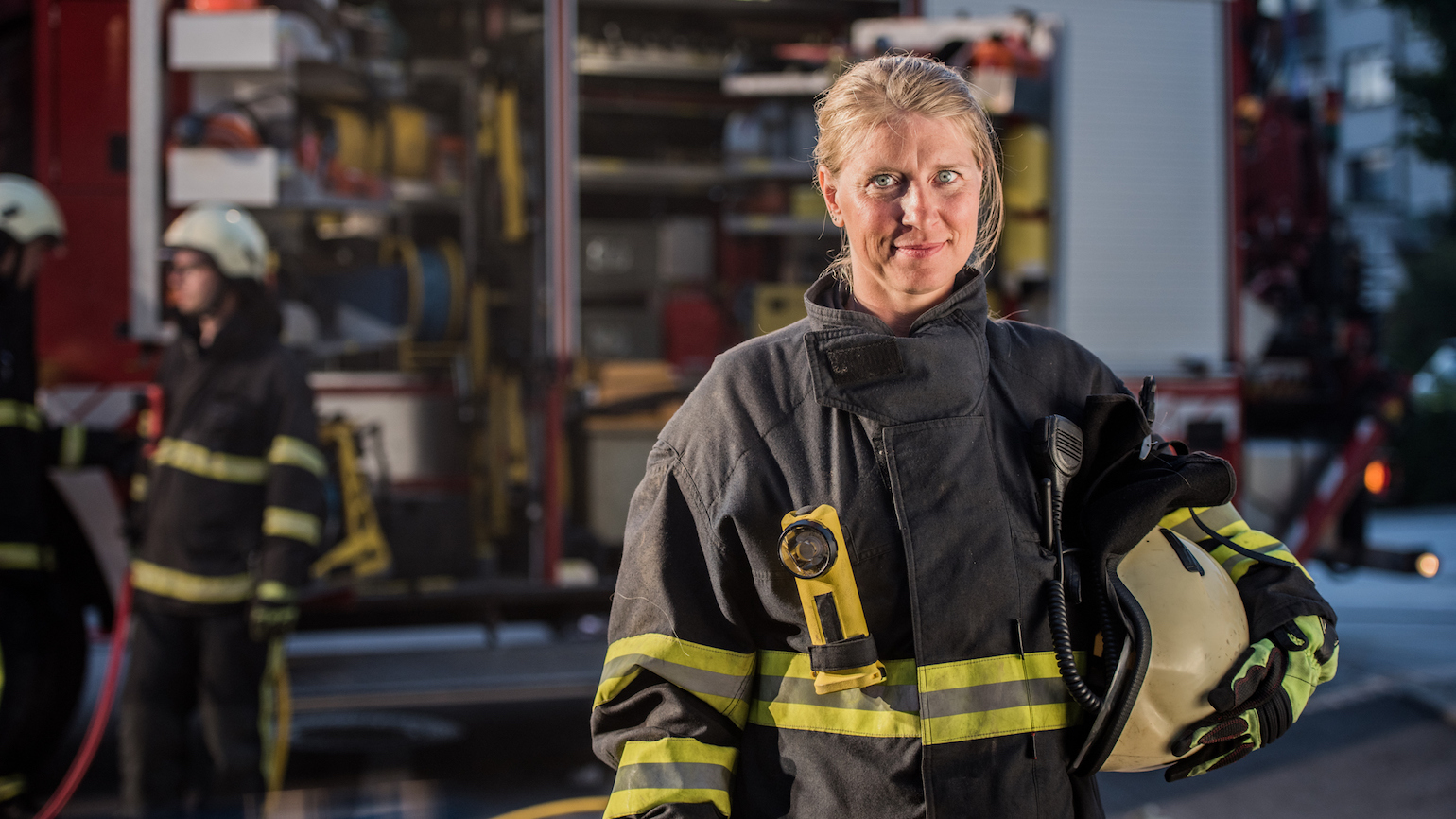
They rush in when tragedy strikes—whether it’s a shooting, fire, flood, terrorist attack or something else. They’re called “first responders” because they are trained and equipped to react quickly and effectively in the most urgent and dangerous situations.

Many of us give little thought to the police, firefighters and emergency medical personnel who place themselves in danger on a regular basis. Until we need them, of course. But whether tragedy strikes near us or not, we can play a valuable part by holding up first responders in prayer. Here are seven ways to pray for first responders:

1. Thank God for those who bravely risk their lives for others.

Lord God, thank You for the courageous men and women who have chosen such difficult and dangerous jobs—police, fire, EMTs and others. Thank You for their sacrifices and service. Thank You for their hard work in training and preparing. Help them to feel the respect and gratitude of their communities, in Jesus’ name, amen.

2. Pray for the training and preparation they undergo.

Lord, in the rigors of training and the demands of waiting and preparation first responders go through, please sustain and strengthen them. Go before them and prepare the way; guard their going out and their coming in (Psalm 121:8). Make them sharp as they train and prepare, and give them supernatural calm and recall when they must apply their training, in Jesus’ name, amen.

3. Pray for their safety as they do their jobs.

Father God, keep our first responders safe in every situation. Give Your angels charge concerning them, to guard them in all their ways (Psalm 91:11). Show Yourself strong on their behalf and be their refuge and fortress in times of danger. Hide them in the shadow of Your wings and cover them with your feathers; let Your faithfulness be their shield and rampart (see Psalm 91:14-16).

4. Pray for them to be wise in the discharge of their duties.

God, Your word says that anyone who lacks wisdom should ask You, and You will provide it. I ask for discernment on behalf of first responders, who frequently face complex situations and must make snap decisions. Give them wisdom from You, Lord, and help them in their moment of need to make timely and wise decisions, in Jesus’ name, amen.

5. Pray against panic and fatigue.

Lord God, as You commanded Joshua, so grant that first responders everywhere may “Be strong and courageous…not be afraid…not be discouraged.” Help them to know that You will be with them wherever they go (Joshua 1:9, NIV). “Strengthen the hands that are weak and the knees that are feeble, and make straight paths for [their] feet” (Hebrews 12:12, NASB); focus their minds and hearts and steel them against panic and fatigue, in Jesus’ name, amen.

6. Pray for the family and loved ones of first responders.

Lord, have mercy on those who must wait, trust and hope every time a first responder goes into action. They are all too aware of the dangers their loved ones face. Please, as Your word promises, keep them in perfect peace; steady their minds and help them to trust in You (Isaiah 26:3), in Jesus’ name, amen.

7. Pray for the emotional protection and recovery of first responders.

Gracious God, You know that first responders ride an emotional roller coaster and even when their efforts are successful, the things they see and do take a heavy toll emotionally. Please guard their hearts and minds. Restore their mental and emotional resources when they have been depleted. And let them not become weary in their good work (Galatians 6:9), in Jesus’ name, amen.

These prayers are just a start, of course. But they can make a huge difference in the lives of those who make a huge difference in the lives of others.

7 Prayers Against Darkness

My youngest grandchildren—ages three and five—are afraid of the dark. They find the glow of a nightlight comforting when they climb into bed and lay down their heads.

I’m not so different, myself. I don’t use a nightlight, but I do find a little light comforting amid the darkness and misery that seems to surround us and assail us these days, from news of wildfires, hurricanes, and floods to shootings and other corrupt and hateful behaviors. When it gets to be too much, as it often does, I turn to prayer—and, in particular to these prayers.

The first is a lighthearted verse I’ve prayed sometimes with my children and grandchildren, especially at this time of year when trick-or-treaters and pranksters roam. It’s a traditional Scottish prayer:

From ghoulies and ghosties
And long-leggedy beasties
And things that go bump in the night,
Good Lord, deliver us!

I’ll sometimes incorporate the words of the prophet Isaiah, quoted in Matthew’s Gospel, into a hopeful prayer to counter darkness and death:

Thank you, God, that “the people who live in darkness
have seen a great light,
and for those living in the land of the shadow of death,
a light has dawned….[for] the kingdom of heaven has come near” (from Matthew 4:15-16, CSB).

The prayer Jesus taught His disciples includes a wonderful prayer against the forces of darkness, both within and without:

Lead us not into temptation, but deliver us from evil (Matthew 6:13, ESV).

And Zechariah’s prayer, from Luke’s Gospel:

Dawn from on high…visit us
to shine on those who live in darkness
and the shadow of death,
to guide our feet into the way of peace (Luke 1:78, CSB).

This prayer is drawn from Jesus’ words in the Gospel of John:

Jesus, You are the light of the world; fulfill Your promise that anyone who follows You will never walk in the darkness but will have the light of life (John 8:12, NIV).

Paul’s words from the letter to the Romans provide a prayer against the deeds of darkness:

The night is nearly over, and the day is near; so let us discard the deeds of darkness and put on the armor of light. Let us walk with decency, as in the daytime: not in carousing and drunkenness; not in sexual impurity and promiscuity; not in quarreling and jealousy. [Grant that we may] put on the Lord Jesus Christ, and [not] make plans to gratify the desires of the flesh (Romans 13:12-14, NIV).

Finally, I have committed this prayer, based on Paul’s words in Ephesians, to memory, so that I can pray it often when darkness seems to surround and abound:

Let me be strengthened by You, Lord and by Your vast strength. Grant that I may put on the full armor of God so that I can stand against the schemes of the devil, knowing that my struggle is not against flesh and blood, but against the rulers, against the authorities, against the cosmic powers of this darkness, against evil, spiritual forces in the heavens. For this reason, help me to take up the full armor of God, so that I may be able to resist in the evil day, and having prepared everything, to take my stand. Let me stand, therefore, with truth like a belt around my waist, righteousness like armor on my chest, and my feet sandaled with readiness for the gospel of peace. In every situation, let me take up the shield of faith with which I can extinguish all the flaming arrows of the evil one, taking also the helmet of salvation and the sword of the Spirit—which is the word of God. Amen (based on Ephesians 6:10-17, NIV).

These seven powerful prayers are just a beginning, of course. But I recommend them, and even suggest memorizing them, if possible, so they can be called upon in every situation, at a moment’s notice, “with all perseverance,” as the apostle wrote (Ephesians 6:18, NIV).