Embrace God's truth with our new book, The Lies that Bind

What’s the Meaning of Advent?

I’m a runner. A very sloooooow runner. And I don’t run very far. Most mornings I consider it an achievement to make it up and around the park and back home again. A little over three miles.

All sorts of thoughts go through my head when I run: “This is too hard. It’s too cold out today. Here comes that hill. I hate going up a hill. I wish I could walk it instead of run…”

Truth to tell, such thoughts aren’t very helpful. Instead I try to focus on some of the good things that are coming up: “We’ve got those flights booked to California. That should be really fun. We’ll get to see the family, the kids…”

Somehow looking forward is a spark that puts more energy in my step. Seeing what there is to hope for. That’s what Advent is all about.

I used to think that the word “Advent” meant “waiting.” After all, it was the period of waiting for Christmas, waiting to celebrate Jesus’ birth in Bethlehem. Waiting till we got to open the presents, waiting till the tree went up.

But Advent doesn’t mean waiting at all. It means “coming.” The coming of Jesus into our lives, the coming of Christmas into our hearts, the coming of love on the earth.

I think all those signs that say how many shopping days left till Christmas have got it wrong. They’re looking backwards, counting off the days that have passed (and urging us to shop until we drop).

Instead, look at every glittering light and sprig of holly as a sign of what’s to come. Not what’s here just yet, but what’s to come. What we pray for in hope. What makes some of the tough things we do and the challenges we face worthwhile.

JESUS IS COMING. He’s here. That’s the good news. But He’s always coming to make the world better.

Happy Advent. Remember, the best is yet to come.

What Miracles Moved You This Year?

The holiday season is here, and I’ve already been given one of the best Chanukah gifts I could have received–the news that Mysterious Ways magazine is reaching 130,000 subscribers.

The staff has poured their heart and soul into this little publication that could and it’s great to see the response.

We’ve received some great feedback from readers about what they love (and don’t love) about the magazine. I’m especially curious to know what you think are the best stories we’ve shared with you this year. Which story dropped your jaw to the floor?

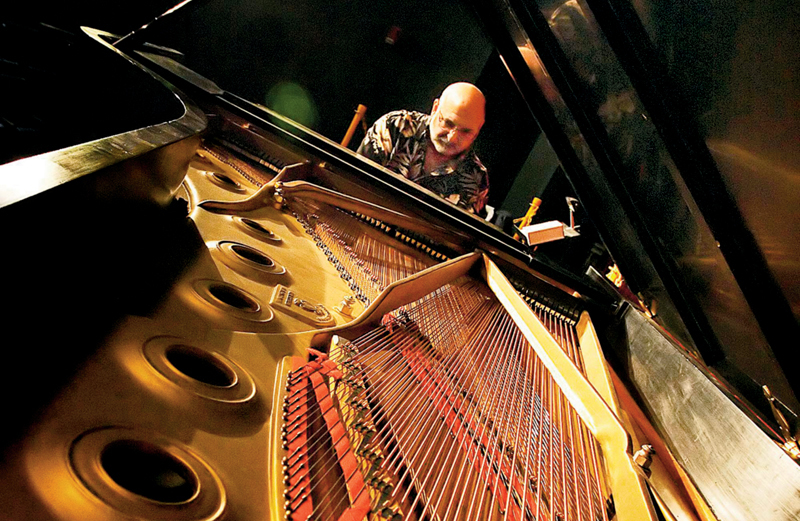
The Joys of Christmas from Guideposts.Was it trucker David Fredericksen’s daring rescue on Interstate 10? The lightning strike that transformed Dr. Tony Cicoria into a gifted pianist?

How about the fateful decision made by Jack Aydin that changed the course of the young immigrant’s life? Maybe it was the glow in the night that led sailor Stuart Reininger safely to shore? Of all the stories that touched your heart this year, tell us your favorite!

I’ll provide a little incentive. One person who writes in their favorite story in the comments section below, selected at random, will receive a free Joys of Christmas 2014 special edition of Guideposts. This great Christmas gift (shameless plug) always sells out fast and is already on backorder.

Also, for the author or subject of the story that ends up with the most mentions, we’ll send a special gift. Winners all around!

So write in your favorite stories below (it’s okay if you have more than one). We can’t wait to find out which Mysterious Ways ends up on top!

What Made You a Believer?

About a year ago, on vacation in Iceland, I found myself in a bar engaged in conversation with, well, a bit of a nut. Intensely political, rambling on about the various conspiracies he believed had been carried out by the United States government, he declared that the moon landings were clearly faked.

“But it’s easy to prove you’re wrong,” I said. “There are objects left behind on the moon. Landers. Flags. Footprints. Ranging equipment. Rovers.”

The man laughed loudly. “You think that man drive little car on moon? Hahahaha…”

Some people won’t believe anything. No matter what evidence exists.

It’s easier to understand why someone wouldn’t have faith in a Higher Power. There is no tangible, undeniable proof of God’s existence (not everyone believes the Bible came from Mount Sinai). But that doesn’t mean there isn’t evidence. It may be hard to imagine the Red Sea parting, or Jesus walking on water, but we do witness miracles every day. In Mysterious Ways, we share these experiences with the world.

It’s not just the words of a minister or some sentences in the Bible that have convinced so many people to have faith. Chances are it was a moment when each individual saw something, felt something, experienced something they couldn’t just explain away as random coincidence. Something as unlikely as an astronaut driving a little car on the moon—and just as real.

I’ve told my own stories before. How I met my wife, and the moment I knew she was the one, on our first date. How my dad and my aunt were comforted after my grandparents passed away. Taken individually, you might call any of these moments coincidence, weird synchronicities bound to happen in a world with myriad connections being made every day. But together these tiny threads knit a fabric. Objects left behind that we recognize as part of something bigger. It becomes harder to laugh at the idea that some force beyond our understanding is behind their creation.

What moments have made you a believer? Even you skeptics out there—is there a memory of yours that will always leave you wondering? We’re finishing work on our December/January issue, and looking for more true stories to share in 2014. Send us yours! We’re always in awe of what is possible.

What I Lost, and Found, on a New Jersey Beach

This year for Labor Day weekend, I headed to Asbury Park, New Jersey, for some sun and fun on the beach. Saturday was absolutely gorgeous, and the ocean was as calm as a bathtub. On Sunday, however, the skies were overcast, and waves churned viciously against the shore. Yellow flags warned swimmers of a riptide. The lifeguards made sure everyone stayed close.

I always like when the ocean gets rolling a bit—a great time to ride some waves. So I ignored the warnings—it wasn’t a red flag, after all—and decided to dive in. I was boardless, so I bodysurfed. For a while I was having a great time. Then one wave changed everything.

I knew before it took me that I was in trouble. As the water was sucked up into the curl of the wave, I was pulled under. It felt like I’d been tossed into a washing machine. Next thing I knew, I slammed down into the sandy bottom.

Salt water shot up my nose and down my throat. I pushed off the bottom as hard as I could and scrambled to my feet, popping to the surface as the whitewater passed. The whole tumble had only lasted a few seconds. Somehow, I was unhurt, but dazed. Enough bodysurfing for one day, I thought, and headed back to my beach chair to dry off.

That’s when I realized something was missing. My wedding band.

Instantly, I thought of all those “lost ring” stories featured in Mysterious Ways columns over the years. Like “Dorothy’s Ring,” “Mom’s Ring” or my previous blog post about a lost high school graduation ring. The news is constantly filled with one story after another recounting unlikely ring recoveries.

So I ran back into the water, hoping against all odds that I could find it. But the waves were too rough, the water too murky. I dragged my feet across the bottom and grasped random handfuls of sand, but all I came up with were mussel shells and seaweed.

It was gone. A tiny platinum band, without any identifying inscription, was now buried somewhere at sea. Even if an honest person were to find it—days, weeks, years later—they’d have no idea who it belonged to.

I trudged back to my beach chair, head hung in shame. My wife could see how upset I was. We hadn’t even reached our two-month anniversary, and already I’d lost the ring she’d placed on my finger on our wedding day. I could barely look her in the eye. “I’ll go back in again,” I said. “I’ll find it. I will.”

“Look at me,” my wife said, grabbing my ringless hand. My eyes met hers. “It’s OK,” she said. “Don’t get back in that water. It’s too rough. I’d much rather lose the ring than lose you.”

It would be a perfect Mysterious Ways ending to say that later that day, a seagull opened its beak and dropped the lost ring onto my lap. Alas, that didn’t happen. Maybe some kind person with a metal detector will one day find it, return home, Google search “platinum wedding ring, Asbury Park” and find this blog post. But even if that never happpens—in that moment, holding my wife’s hand, I was reminded of two very important things. One, I have an incredible, loving, understanding wife. And two, while the force of the ocean waves slipped that ring off my finger, a greater force made sure a ring was the only thing I lost.

Anybody else lose their wedding ring? Did you find it? How? Did you experience something miraculous this Labor Day weekend? (I’m not counting fried Oreos.) Send us your story or leave a comment below.

What Happens If You Look for a Miracle?

The most beloved piece of clothing in my wardrobe this summer was a black-and-white, polka-dot dress I found on a sales rack for $20. I look for any and every excuse to wear it. Not just because it’s cute. I also love telling people how it only cost the price of about two burrito bowls from Chipotle (I tend to look at prices in terms of Chipotle burrito bowls!).

One morning, I was wearing the dress, and I bumped into one of my co-workers in the elevator going up to the office. She too was wearing a polka-dot dress.

“Look we match,” I told her. “Don’t you just love polka dots?”

I left the office around lunchtime to go to a doctor’s appointment. On the way there, I saw someone in the subway station wearing polka dots. Then another person. How funny, I thought. The women of New York must’ve all gotten a “wear polka-dots memo”!

After my appointment, I headed back to work. Again, I saw someone else in polka dots. Then another. The pattern was everywhere!

Perhaps 10% of the women in New York were suddenly inspired to wear polka dots that day. But, more likely, I was more aware of them after running into my co-worker.

It’s the same with God’s wonders too, I think. You can go through life, missing the wonders right in front of you. But, if you look for miracles, you’ll see them all around. Just as abundant as polka dots!

What Do the Dreams of the Departed Tell Us?

My grandfather Jacques was a man of few words. A sharp dresser who always wore pressed khakis, a polo shirt and a gold chain. He’d sweep me into his arms, his Ralph Lauren Polo cologne so strong, it made my eyes tear. “Hello, my grand­daughter,” he’d say, his deep voice overlaid with a vague European ac­cent. As if he was from everywhere but nowhere in particular, which was kind of true.

Grandpa was a Holocaust survivor. At 14, he was sent to the Blechham­mer labor camp, near Kozle, Poland. He later survived a 200-mile Nazi death march and concentration camps Gross-Rosen and Buchen­wald, where he shared Barrack 66 with Elie Wiesel. Following liberation by the U.S. Army, he went to an or­phanage at the Rothschild Mansion in Versailles, France. Two years later, he moved to America. He served in the Korean War, settled in California and raised a family of five. Grandpa rarely talked about the horrors he saw, though I knew he carried the pain with him. When he died in 2016, at 88, I found myself questioning—was Grandpa Jacques finally at peace?

Three days after he died, I got an answer. I had a dream, if you could call it that. It was so much more. I saw myself walking toward a Jewish mourning candle (which in real life had been lit that night), until I felt compelled to turn around. There was Grandpa, walking toward me. The last time I’d seen him, at Thanksgiving, he’d been weary and withdrawn. In the dream, he was beaming at me. His hair was still white, but he couldn’t have been more than 60, his face lineless, luminous. He wore a pink polo shirt with a gold chain peeking out. I could smell the Polo cologne. Smiling, he said, “I’m good.”

Read more: How to Interpret Dreams About Deceased Loved Ones

The dream was so unlike anything I’d ever experienced that the power of it has never left me. I assumed it was a rare occurrence, a coping mechanism. But then I came across story after story of others who had dreamed of their deceased loved ones in the days after their death. Like Mysterious Ways reader Billie Wilson. Her husband, Buddy, passed away in 2007. At the time he died, Buddy had been visually impaired and needed a walker.

Three days after he died, Billie had a dream. She saw Buddy in the doorway of her bedroom. He stood without a walker and wore a bright shirt. Like Grandpa Jacques, he was recognizable but spry. Full of life. Even his bald head shone. He spoke just three words: “Everything looks fine.” From those words, Billie came to under­stand that Buddy wasn’t just okay. God had restored his sight.

Billie’s dream was so similar to mine that I couldn’t help but wonder— are the dreams of the deceased more than a figment of our grieving imaginations? Could the dead be showing up in our dreams for a rea­son? And, if so, does their radiant appearance hold some clue to what awaits us in the afterlife?

I took my questions to neuroscien­tist Patrick McNamara, author of Dreams and Visions and associate professor of neurology at Boston University’s School of Medicine. Dr. McNamara studies dreams from a scientific and spiritual perspective. He says the type of dreams Billie and I experienced are actually quite common. They have a name— visitation dreams—and are dreams in which the deceased appears to give a message to the dreamer.

“Most people seem to have visita­tion dreams after they’ve lost some­one they love,” Dr. McNamara says. “Nobody knows why. But [the dreamer] feels comforted, as if they’ve communicated beyond the grave.”

There isn’t much formal research into the phenomenon, but visitation dreams have been documented across cultures and throughout his­tory, Dr. McNamara says. From anecdotal reports, a number of common patterns emerge. The dreams, for in­stance, tend to conclude with a short message of reassurance, such as “Don’t worry” or “I’m okay.” This mes­sage can be spoken or communicat­ed telepathically. The most distinctive quality? Visitation dreams don’t feel like dreams. They’re vivid sensory ex­periences, more real than real.

Read more: He Started to Give Thanks After This Traumatic Experience

“Most dreams, if we remember them, we think, How strange or fun­ny,” Dr. McNamara says. “But with a visitation dream, the dreamer feels as if they’ve really interacted with the person. Sometimes they can smell their perfume, feel their hug or hear the tone of their voice. They wake up without a doubt that it was a true meeting with that person. It’s an in­credibly moving experience.”

So does that mean the dead actu­ally visit us in our dreams? Not quite, says Laura Harris Smith, a pastor and author of Seeing the Voice of God. When the deceased come to us in our sleep, it’s God doing the talking.

“I don’t believe that the dead are actually visiting us,” Smith says. “It is a gift from God to relay information using a face we trust. And some­times it’s that deceased person that we need information about.”

Smith recalls the visitation dream her great-nephew had. He was in elementary school when his father died. The boy’s older siblings found closure. But he struggled to process his grief. He wondered where his father really was now. One morning, he bounded up to the breakfast table. “I saw Daddy last night in a dream,” he said. “He told me he was okay.” His family didn’t know what to make of it.

But they couldn’t dispute the boy’s change. He had finally found peace. He was happy again. But why might one person in a family get a visitation dream and not everyone else? It’s not necessarily God playing favorites, Smith says. “Perhaps the person needs further proof so they can move on,” she says. “And God often gives one person the dream and another the interpretation, so that we need one another and don’t become an island.”

What’s most striking is that the visitation dreams often leave the dreamer, like Smith’s great-nephew, somehow changed. That reveals a great deal not only about the supernatural quality of the dream but the one giving it. “God is leaning toward us in these dreams and giving us a revelation of peace,” Smith says. “That shows he’s a loving father.” Tom Barkey, Ph.D., lead pastor at Church of Grace in Yorba Linda, California, agrees.

Read more: Her Grandpa Jacques Sent a Message from Beyond

He’s heard many accounts of visitation dreams from parishioners over the past 40 years. Most frequently, he says, they occur within five days of a loved one’s death. “I’ve talked to quite a few people who had this question in their heads: Is my relative okay?” Dr. Barkey says. “These dreams come from God’s love so you don’t have to worry about your loved one.” The physical appearance of the deceased in these dreams, especially for those who last saw their loved ones in poor health, is also of great comfort to the dreamer.

According to Dr. McNamara, the dead often appear vigorous. My grandfather seemed decades younger than the last time I’d seen him, the picture of health. For good reason, Dr. Barkey notes. Perhaps I saw my grandfather in his heavenly body. “I think you had a peek into heaven,” Dr. Barkey says.

“Paul writes in Corinthians that our old body passes away and we’re given a new one. There’s no sickness in heaven. I think you saw your grandfather in his glory.”That doesn’t necessarily mean we are all younger in heaven. The fact that I saw Grandpa Jacques in his sixties might just be because that was the age most recognizable to me, Dr. Barkey says. Grandpa could’ve appeared to his brother, for instance, as a teenager. “Some say when we get to heaven we’ll be 33 because that’s the age Jesus died on the cross,” Dr. Barkey says. “But people who’ve had near-death experiences have seen children and adults. We will all be different ages. But we won’t be marred by this world.”

Like my grandfather, who appeared aged yet ageless. Free of trauma or pain. Maybe visitation dreams reveal how our loved ones will be restored. How we too will be one day. Fully ourselves. Or, as Grandpa Jacques put it, “good.”

What Does It Mean to Dream About a Deceased Loved One?

Having trouble getting a good night’s sleep? Download Abide for Christian sleep meditations that use calming techniques and Scripture verses framed in calming stories to lull you into a peaceful slumber.

Dr. Joshua Black will never forget the first dream he had about his father shortly after he passed. In it, his dad stood on the other side of the room, looking healthy and peaceful. Dr. Black called out to his father, “I love you. I’m going to miss you.”

Dr. Black isn’t alone in his experience. His study published in the journal Dreaming found that 86 percent of participants dreamed of loved ones after they’d recently passed. For Dr. Black, this first dream was followed by a series of vivid dreams of his father. They affected him so deeply that they inspired him to pursue a Ph.D. in such dreams, which he calls grief dreams. He’s gone on to become one of the foremost experts in this emerging field. We sat down with him to learn more about the psychology behind these powerful dreams and what the experiences mean for the dreamer.

What are the characteristics of a grief dream?

A grief dream is any kind of dream you’ve had after the loss of a loved one. It can be a sym­bolic dream reflecting your emo­tions surrounding the loss. For example, you’re feeling over­whelmed by grief, so you dream something collapses on you, re­flecting that crushing feeling. Or, it can be a dream in which the deceased is mentioned, perhaps by an angel or a hospital worker. Or you can dream that the de­ceased is present—this type of dream interests people the most, and it’s where I’ve focused a lot of my academic research.

What forms do the grief dreams in which the deceased are present commonly take?

I’ve found seven common types of these dreams. There are rationali­zation dreams, in which the dreamer tries to understand why the de­ceased appears to be alive and pres­ent, and others in which the dreamer helps their loved one cross over into the afterlife. Sometimes the dreamer sees the deceased as sick or dead. Similar in tone is the type of dream in which the deceased expresses dis­approval of the dreamer. There are also separation dreams, in which the deceased and the dreamer are kept apart by a physical obstacle, such as a wall. The most positive dreams are the ones in which the deceased offers comfort through words or ac­tions, or dreams in which the dream­er sees them, healthy and happy.

Learn more about how to interpret dreams of deceased loved ones. 

Do people have more negative grief dreams or positive ones?

Dream research has shown that when people have dreams in general, they have more negative dreams than positive ones. That’s simply because of daily stress, which gets incorpo­rated. After trauma, research shows these dreams tend to become even more negative. So you’d think that grief dreams would follow this pattern and that people would have more negative grief dreams than positive ones. But that doesn’t seem to be the case. When the deceased appear in dreams, they tend to be positive. In one of my studies, about 90 per­cent of people reported having at least one positive dream of the deceased, as opposed to 44 per­cent who had at least one negative. It points to something different going on with these types of dreams. They’re a very special experience. Many people I’ve spoken with have told me these dreams also feel different from an average dream—they’re more vivid.

So what does it mean if you’re one of the people who has a negative grief dream?

Negative grief dreams don’t mean you had a negative relationship with the person who’s passed. They are often a reflection of the distress the dreamer is experiencing after losing someone.This is especially true if you’re sup­pressing your emotions about the death of a loved one, which isn’t un­common. I did that after my dad passed. In this case, the negative dream can help you work through feelings you’ve been avoiding in your waking life.

Why are these dreams important?

Remembering your grief dreams can provide an opportunity to reflect on and work through your grief in a new way. For instance, my father died very suddenly, and my dreams gave me a chance to say goodbye to him. Some dreams allow the bereaved to continue to feel bonded with the deceased, which can be helpful after a loss. Grief dreams can also lead people to place more value on their dreams in general. Dreams can provide a new tool to understand ourselves. I believe that the more we understand about ourselves, the more we can love ourselves and in turn love God.

What are some of the most surprising things you’ve learned about grief dreams during your research?

First off, how common they are. In a sample of bereaved partners and spouses, 86 percent had a dream of the deceased. But even more than that, how common they are after all kinds of loss. And of course, I was fascinated to discover that people experienced grief dreams before knowing their loved one had passed.

What do grief dreams of spouses look like?

They generally fall into one of the larger dream categories I mentioned earlier, such as the dreamer being comforted by their deceased loved one. For example, one woman told me that her husband came to her in a dream and told her not to worry about him, because he was with Jesus and no longer suffering from Alzheim­er’s disease. Interestingly, it’s also common for a deceased spouse to appear in a dream and approve of their partner remarrying. There’s a lot of love and positivity in these dreams.

How common are pregnancy loss dreams?

One of my studies found that 58 per­cent of people who’d lost a pregnan­cy had a grief dream—both mothers and their partners. These parents have never met their child but none­theless dream about the baby lost. The child can appear in these dreams as a newborn in their arms, as a tod­dler saying, “I love you,” or even as a teenager saying, “It wasn’t your fault.”

How about the dreams that people have of deceased pets?

My study found that 76 percent of people whose pets had passed had dreams about them. Of course, the major difference is that the animal doesn’t generally talk. These dreams tend to reflect the pet’s life and what they and the dreamer used to enjoy doing together. So, for instance, the dream might include taking a dog to a favorite dog park or petting a be­loved cat.

Do young children have bereavement dreams?

A lot of people forget that children can have these kinds of dreams. Even young children who don’t yet fully understand death—but are nonetheless trying to—have these dreams. It’s important to ask our chil­dren and the kids we serve if they’re having these dreams. Sometimes the dreams will start years after the person the child is grieving has passed away. One woman told me that she began dreaming of her deceased father when she was 13. She’d never actually met him because he had died before she was born. But she formed a bond with him through these dreams that sustained her as she continued to grow up. He’d give her fatherly advice in these dreams.

You mentioned grief dreams before knowledge of the loss. Can you explain what these are and why they might occur?

Yes. Some people have grief dreams before they are notified that their loved ones have passed. Usually, in these dreams, a loved one comes to them and says goodbye, often in a very positive way. Sometimes the dreamer knew the person was unwell, and other times they did not. I can’t explain it. I think in this case, there’s an invisible tie between these two people. They’re connected somehow.

In your opinion, how are these dreams spiritual?

Interestingly, people of all religions and varying levels of faith experience grief dreams. Some think these dreams are unhealthy or that they have a negative spiritual component, but my research has shown the healing powers of these dreams. And when I prayed on it, a few verses from Matthew 12 stuck in my mind. It’s the story of the Pharisees telling Jesus his healing powers are from Satan and Jesus responds that if his powers were from Satan, his king­dom would not survive. One of the main questions I get is, “Do you believe that this is a visi­tation?” And I can’t determine that. No one can.

How do you know if a dream experience is from God?

This is a tough one, and I don’t really have an answer for it. I do know that these dreams can make people hap­pier and improve their faith, so per­haps they are gifts from God. Also, the meaning of a dream comes from the ability of the dream­er to make sense of the imagery. Therefore, how we interpret our dreams is the cornerstone to know­ing if the dream comes from God.

Any tips on how to better understand grief dreams?

Personally, I found dream journaling and studying what the Bible has to say about dreams to be really helpful tools in understanding my dreams. To understand dreams, you first have to understand your own dream lan­guage and symbols. I always tell people to start with the emotions in the dream and con­nect them to waking life. Then work from there to connect the symbols to waking life.

For more information on grief dreams, visit Dr. Black’s website or listen to his Grief Dreams podcast.


What a Colorful World

Last week I was on the hunt for “Secret Spaces,” or spiritual places off the beaten path, to include in our next issue of Mysterious Ways magazine. While searching, I came across something that I just had to share with you. A wonder that’ll definitely brighten up your lunch break.

Take a look at Lake Hillier in Western Australia. It’s a pink lake. Yes, pink… like bright Barbie pink!

I couldn’t stop looking at photos of Lake Hillier, sure my eyes were deceiving me. But it does in fact exist. And you can even swim in it. While the unique color is a bit of a mystery, scientists believe it has something to do with the lake’s bacteria.

After I finished obsessing over Lake Hillier, I continued my search and came across these Rainbow Eucalyptus trees.

I’m constantly surprised by God’s wonders. Every time I think I’ve seen it all, He knocks my socks off with a pink lake. Or rainbow trees.

And a world more beautiful than I could ever imagine, just like the plans He has in store for us.

When was the last time God’s wonder took your breath away? Share your story below!

We’re All Miracle Chasers

This week, subscribers began receiving the April/May 2014 issue of Mysterious Ways. Those are poppies on the cover. No, we’re not covering the Afghan opium trade, but we did choose the photo for a reason.

Notice the viewpoint–it’s a sight most of us would never see, unless we lay flat in a field of poppies and wedged our head somehow underneath a thatch of them.

In the photo, these flowers appear larger than life, scraping the clouds themselves. It’s a reminder that beautiful, wonderful, miraculous things exist right under our feet–we just have to look at them differently.

That’s what the three women in our article “Miracle Chasers” discovered. Joan, Katie and Meb were three busy moms who didn’t have time to go lie down in poppy fields. But when they got together for coffee on a sunny afternoon, they got to talking, and in the course of their conversation discovered that each of them had been touched by experiences they could only explain as miracles. What they did next was embark on a journey to discover more miracles in the world and define their meaning, a mission they write about in their book, The Miracle Chase.

We loved their book because their story is a lot like ours. I’ve written time and time again about the miracles I’ve discovered in my own life. Our Associate Editor, Diana Aydin, has a blog uncovering the miracles she discovers on her lunch break. Our Assistant Editor, Dan Kessel, has contributed many a “Mysterious Monday” to Facebook about his miraculous encounters. At Mysterious Ways we all know there is more to this world than what we see every day. And the stories you’ve told us have only helped prove that.

So enjoy this month’s issue. Pass it along to your friends when you’re done. Or better yet, give a gift subscription. Help us chase down more miracles to share with the world. It will help everyone change their point of view.

Watch and Pray

A photograph sometimes can only be captured in an instant—the animal moves, the light is gone or the moment is over. In a previous blog I wrote about chasing the light and how quickly the light for a shot can change and be gone in an instant.

Yes, there are some shots I miss, and they come back to haunt me. Even so, I always try to be prepared and ready. This particular day, while at my second home—the State Botanical Garden of Georgia, I was sitting patiently, waiting to photograph chipmunks at their normal hotspot. Hearing a rustling in the leaves, I focused my camera in the direction of the sound. I was watching and alert.

In an instant, a squirrel jumped on the base of a tree, but I was watching. The moment is fleeting, so I took several shots. My focus may be off or I may change my composition if there is enough time. More shots are helpful.

Watch and pray so that you will not fall into temptation. The spirit is willing, but the flesh is weak. (Matthew 26:41, NIV)

I was alert and waiting for the moment, but are we alert watching and praying so we won’t fall into temptation?

Was Kate Middleton Destined to Marry a Prince?

The Duke and Duchess of Cambridge, aka Prince William and Kate Middleton, are Britain’s most beloved couple. There was a time, however, when royal watchers doubted the second-in-line to the throne would ever propose to his longtime girlfriend. The press nicknamed her Waity Katie. But what none of them knew—and what she would never forget—is that her future as William’s betrothed had been foretold.

In 1995, Kate was a 13-year-old student at St. Andrew’s School in Buckhold, England. A gifted young actress, she snagged a role as a maiden in her school’s production of Murder in the Red Barn, penned by one of her teachers. In a video of the performance, Kate is onstage, dressed in white with flowers in her hair. A seer in mismatched clothes approaches and takes her hand.

“This is a most lucky hand!” he says.

“Lucky?” Kate’s character says.

“Soon you shall meet a handsome man, a rich gentleman,” the seer says. Will the man fall in love with her?

The seer assures her that he will. The man in question will even whisk her away to London and marry her.

In the next scene, a tall, blond character appears on stage and, sure enough, proposes. (The heir to the throne, mind you, is blond and an impressive six foot three, slated to become the tallest English monarch in centuries.) “Yes, oh yes, dear William!” Kate exclaims.

Sixteen years later, Kate and the other William were wed. A fairy tale—or at least a school play—come true.

Was a Flea Market Find a Sign for the Future?

Father’s Day morning and I was up at the crack of dawn, on the hunt for antiques at a crowded flea market in Long Beach, California. I’m not a morning person. But my 70-year-old dad specifically requested we go there. Back in Delaware, he ran an antiques business with Mom. He’d heard about the Long Beach flea market from one of his antiquing buddies. “We have to get there early,” he told me. “Before all the good stuff is gone.”

I had moved to Los Angeles seven years before to pursue acting and writing. I’m an only child. My parents visited often. I knew they wished I lived closer. Still, they were always so supportive of my challenging career choice. I wanted to do something special for Dad that Father’s Day. I’d planned a weekend full of activities, culminating in dinner and a show at an invitation-only club in Hollywood. But Dad only wanted one thing: to go antiquing.

I trailed behind him sleepily, feeling as if I were at the Grand Bazaar in Istanbul. The market was in a huge parking lot with tents as far as the eye could see. Vendors hawked their wares—furniture, glass, china, jewelry, books, hats, you name it. Dad schmoozed with the vendors, snapping up good buys. I browsed a table of kitchen knickknacks. A pretty peach teapot. Some 1950s canisters like the ones Mom had.

On the edge of another table, something else caught my eye. A tiny tin with a logo of strawberries. And two words at the bottom: Dover, Del.

Dover, Delaware. A city 30 minutes from my hometown. How funny to see such a familiar name on a tin can some 3,000 miles away. I examined it closely. Above the city and state, it said Richardson & Robbins.

“Hey, Dad,” I said. “Look at this. Do you know anything about Richardson & Robbins?”

Dad turned the tin over in his hands. “Seems like an old cannery,” he said. “Probably closed a long time ago. Imagine finding this tin all the way out here on the West Coast.” He paused and looked at me, a twinkle in his bright blue eyes.

“Maybe it means you’re meant to be in Delaware!” he said.

I had to laugh. Dad was always teasing me about moving home. We got the tin, Dad’s treat. A few days later my parents headed back east. I put the tin in my china cabinet. I’d occasionally find my eyes drawn to it, especially during tough times. A reminder of Dad. That I wasn’t alone.

The tin sat there for three years, until Mom’s health took a turn for the worse. I moved back East to be closer, the tin from Dover tucked safely in my suitcase. It was difficult to put my career on hold, but it turned out to be a good decision. Nine months later, Dad died of a heart attack. Mom couldn’t bear the idea of living alone. We bought a house in northern Delaware and moved in together. The tin from Dover went up on our bookshelf.

In 2005, Mom passed away. I found myself at a crossroads. I didn’t know what to do next. Move back to California? Stay in Delaware? Pursue acting? Maybe writing? I felt so lost and alone without Mom and Dad.

That’s when my life took a turn. By a series of unbelievable coincidences, I got back in touch with my high school boyfriend, Kenny. I’d always wondered if he was the true love of my life. We hadn’t seen each other in 35 years. And then, one night, we ended up on the phone for hours. He asked me to meet him for lunch. I was over the moon. Nervous too. Was this a sign of what God wanted next for me? Was I even supposed to stay in Delaware? I couldn’t be sure. Until Kenny called to discuss the details of our date.

“How about we meet at my office?” Kenny said.

“Sounds great,” I said. “Where do you work?”

“Dover,” he said. “In the old Richardson & Robbins building. Do you know it?”

I met Kenny in the building’s lobby for our lunch date. The date that told me I wouldn’t be alone anymore, that my life was headed in a wonderful new direction. One I could’ve never imagined. Though, maybe Dad had sensed it all along.