Embrace God's truth with our new book, The Lies that Bind

The Transcendent Power of Music

Music has always been a part of spirituality. Before literacy was widespread, religious texts from all faith backgrounds were often sung, sometimes in languages that the congregation didn’t even understand. Like Gregorian chanting, a style inspired by earlier forms of spiritual songs. It was sung in Latin, which in no way diminished its power to transport people.

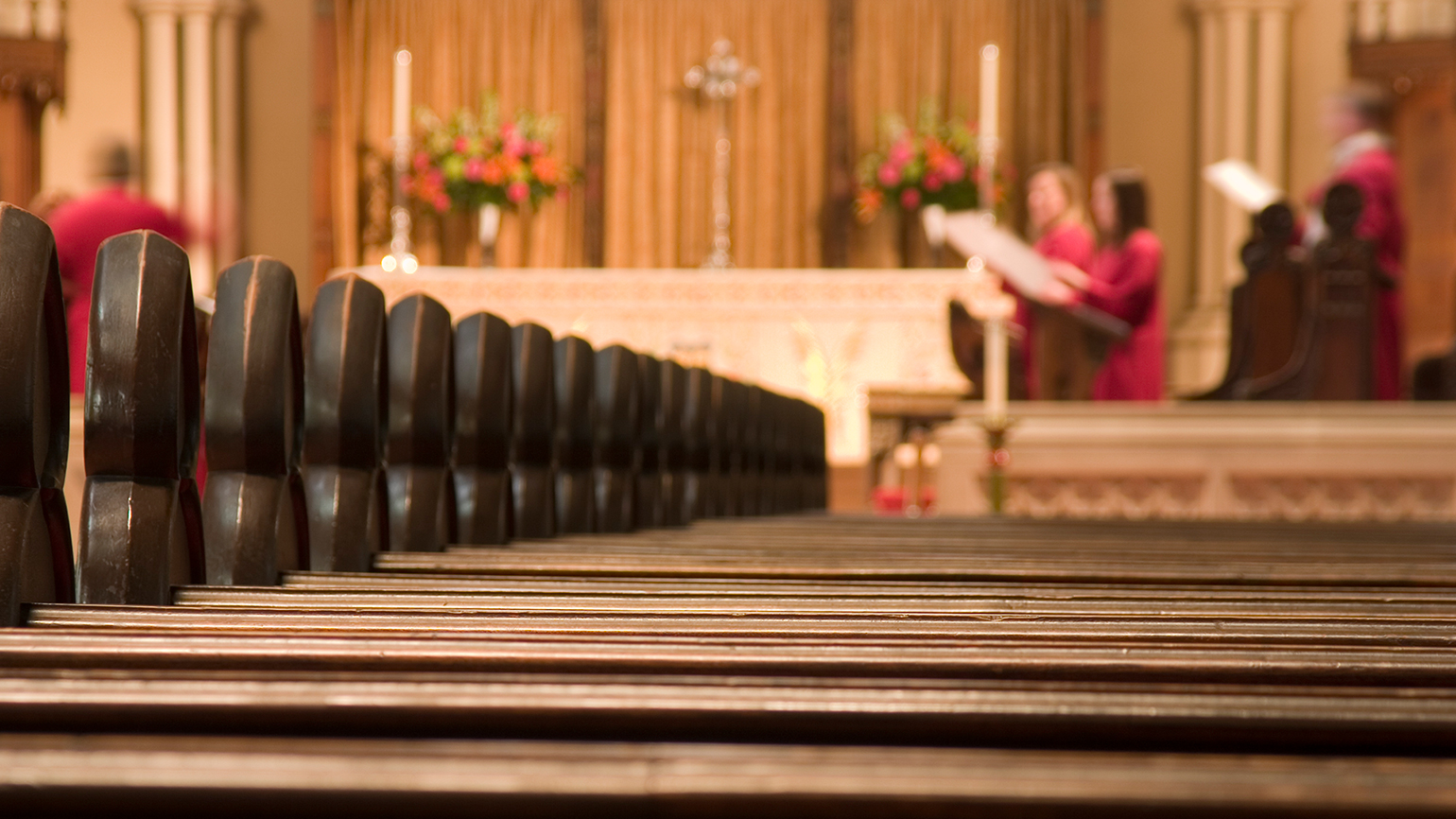
From the beginning of Catholicism up until the 20th century, this form of acapella sacred song was routinely recited in churches across Europe. Cathedral architecture even evolved specifically to amplify the otherworldly music, with cavernous ceilings and arching walls designed to reverberate and carry the acoustics to the farthest corners of the church. The feeling imparted by the music, of solemnity, meditative thought, and divinity, transcended the bounds of language.

Now, science backs up the feelings that churchgoers have experienced for centuries. Research shows that listening to Gregorian chanting generates alpha brain waves—the same brain waves emitted when the body is in a calm and reflective state. This is because the chants are intertwined with music, encouraging the listener to unconsciously hone in on the structure of the rhythms. The effect is often a state synonymous with deep prayer and meditation.

Hear a Gregorian chant by listening to the clip below. How does it make you feel?

The Tip That Changed Chris Pratt’s Life

The next time you go out to eat, take a close look at your server—he or she might just be the next box-office superhero. In the late nineties, Guardians of the Galaxy star Chris Pratt was scraping by on tips at the Bubba Gump Shrimp Co. in Maui and living in a van by the beach. In Vanity Fair, Chris revealed the startling way he went from Hawaiian beach bum to Hollywood leading man….

A high school wrestling and theater star, Chris saw his life change dramatically after his family fell on hard times. Aimless after graduating and with few job prospects, Chris jumped at a buddy’s offer to fly him out to Hawaii.

Chris lost himself in paradise. He shared the van and a tent with five others, spending his days waiting tables and his nights in a haze of drugs and alcohol. He and his friends weren’t even 21—they’d stand outside a grocery store and get legal adults to buy beer for them.

BROWSE OUR SELECTION OF BOOKS ABOUT ANGELS AND MIRACLES

One afternoon, Chris was waiting outside the store when a stranger approached. The man, a native Hawaiian in his forties, introduced himself as Henry. “He asked what I was doing that night,” Chris recalled. “‘You going to party?’ he asked. ‘Drink and do drugs?’ I was like, ‘I hope so.’”

Chris asked why Henry was asking. God told him to, Henry replied.

“He should have made me nervous, but he didn’t.” Instead of partying, Chris followed the man to church. From that moment forward, there was no turning back. “I surprised my friends by declaring that I was going to change my life.”

Chris cleaned up his act and took on extra shifts at the restaurant. On one of those shifts, he waited on a Holly­wood actress. Liking Chris’s look and attitude, she offered him a part in her directorial film debut.

As for the stranger who gave the onetime server his most valuable tip? Chris never saw “Henry” again.

The Surprising Saga of the Chained Prince

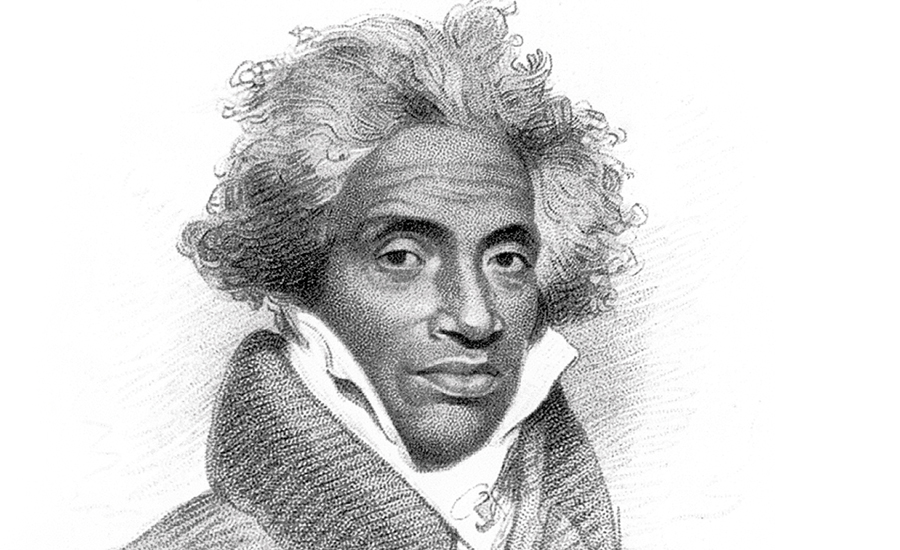
In 1781, deep in the interior of West Africa, in the town of Timbo, lived a 19-year-old prince, Abdul Rahman Ibrahima. He was a scholar and a warrior, the favored son of King Sori. He’d studied math, geography and Arabic in Timbuktu so he could read the Koran, committing long passages to memory. As a soldier he had recently won an important battle for his father, bringing peace to the realm.

Meanwhile on the coast an Irish doctor, John Cox, left his ship to go hunting. He got separated from his party and wandered further and further inland. By the time Ibrahima’s people found him, he had collapsed, sick from the bite of a poisonous worm. He was brought to King Sori who investigated the wound and urged him to stay until he recovered, offering him a house and a nurse.

Dr. Cox stayed for six months in Timbo, befriending Ibrahima. He even taught him a little English. Finally well enough to travel, Dr. Cox bid the young prince good-bye, the two assuming they’d never see each other again. King Sori gave Cox a new set of clothes, some gold for expenses and 15 warriors to protect him as he made his way back to the coast.

In Timbo, Ibrahima continued to thrive under his father’s favor and was given greater command in his father’s army. In 1788, at age 26, he led his troops into battle and was captured. He pleaded with his captors to ransom him, claiming he would be worth more than 100 head of cattle and a man’s weight in gold, but they opted to sell him to slave traders for a mere pittance—gunpowder, muskets, tobacco and rum.

Like this article? Sign up for “Your Weekly Inspiration”, a weekly newsletter of Inspirational stories of hope and faith – Click Here.

The prince was clapped in chains and shipped to America. There he was taken up the Mississippi River to Natchez and sold to Thomas Foster, a tobacco farmer his own age.

Even after months of humiliation and a hellish journey crammed in a slave ship where he couldn’t stand upright, Ibrahima remembered who he was and who his father was. He explained to his master that he was a prince and that his father would pay untold amounts for his freedom. Whether Foster believed him or not, he needed a slave for his farm. His only concession was to give Ibrahima the name Prince. But Ibrahima hated the name. It was a mockery.

While enslaved, Ibrahima married an enslaved woman named Isabella and they had children. The couple marketed their own produce in town and even kept profits for themselves. But Ibrahima was not free. He was certain he would never see his homeland again.

Ibrahima yearned for home and liberty and attempted to run away. He came back and worked as Foster’s slave for decades, but as Terry Alford’s excellent biography, Prince Among Slaves, notes, he was never seen smiling.

Ibrahima had no time to read or study and he wasn’t allowed books anyway. And yet he never forgot who he was in Timbo, and was seen tracing Arabic characters in the sand when there was a break in the work—a word or two of sacred verses, recalling his study of the Koran.

Then one day in 1807, Ibrahima was sent to town to sell some produce. A white man on horseback approached him. Ibrahima offered him sweet potatoes. The man on horseback studied Ibrahima’s face with his one good eye. “Where are you from?” he asked.

“From Africa,” Ibrahima answered.

“You came from Timbo?” the white man asked. Yes, he came from Timbo. Yes, his name was Ibrahima. And did he know whom he was speaking to? Yes, he knew very well; it was Dr. Cox, the Irishman who had stayed with his family, recovering from his illness, who had even taught him some English.

Twenty-six years after they first encountered each other, 5,500 miles away, the two happened to meet in a dusty Mississippi town—the prince and the man who owed his very survival to the prince’s father.

Dr. Cox hastened to meet Thomas Foster and did all he could to buy Ibrahima’s freedom, offering huge sums, money he could ill afford to part with. He’d been in a couple of shipwrecks, emigrated to the United States, practiced medicine on the frontier, lost money in bad investments and come to Mississippi to start over.

No matter what he offered, Foster would not accept it. He needed Ibrahima—now his overseer—too much. Foster said he couldn’t do without him. Dr. Cox died before he could buy Ibrahima’s freedom.

So how did his story come to light? Why is his name not lost to memory, just another of the millions of enslaved people brought to America? Others claimed to have noble backgrounds and their stories died with them. Such is the horrific nature of slavery—it robs people of their identity.

Fortunately, Dr. Cox’s efforts brought Ibrahima’s plight to the attention of abolitionists and the United States government. Secretary of State Henry Clay, an enslaver himself, was moved by the story of Dr. Cox and Ibrahima, and finally bought Ibrahima’s freedom.

By then Ibrahima was an old man, although hardly broken in spirit. In 1828 he launched a lecture tour across the country, trying to raise money for his children’s freedom, and the following year, he returned to Africa, to the new country of Liberia, founded as a home for once-enslaved Americans who had become free.

Tragically, Ibrahima never made it back to his home in Timbo. He passed away only months after his return to the continent. However, more than a century later, his legacy and his unlikely encounters with Dr. Cox live on in his descendants.

Dr. Artemus Gaye, Ibrahima’s seventh-great grandson, left Liberia after that country’s civil war and is now a professor of ethics at Garrett-Evangelical Theological Seminary in Illinois. He only recently learned of his princely ancestor, when he began digging into his genealogy.

“The story sounded impossible,” Dr. Gaye said to me. “For anyone to escape the evil of slavery was a tremendous struggle. Ibrahima could have been another one of the forgotten, erased from history. Instead, here I am, to tell his story and carry on his name.”

Download your FREE ebook, Mysterious Ways: 9 Inspiring Stories that Show Evidence of God’s Love and God’s Grace.


The Star That Saved Christmas

I’m a CSI, a crime-scene investigator, for Los Angeles County and it’s a 24-hour-a-day, 365-day-a-year job. Even on Christmas Eve. I went to bed that night hoping to sleep until morning, when my three daughters would rush in, giddy and impatient to open their gifts. But at midnight the phone rang. “We need you at a crime scene,” the dispatcher said.

There had been a home burglary in a poor area of the city. “It can’t wait until the morning,” the deputy at the scene told me when I called for details. “You’ll understand when you get here.”

I drove to the location. The deputy met me at the door. “Try and be quiet; their kids are sleeping,” he said, leading me inside.

A man and woman were holding each other in the dimly lit hallway, their eyes red from crying. I walked into the living room. Now I understood. Lying on its side was a skinny Christmas tree, nothing but carpet where Christmas presents should have been. “We saved all year for those gifts,” the man said to me. “If there’s anything you can do…”

Determined, I dusted everything in the house for fingerprints. There was no chance of solving the case without them. By tomorrow the stolen goods would be history. But the thief had been thorough; everything had been wiped. “I’m sorry,” I said to the couple, dismayed. But what could I do? I headed for the door.

Suddenly, a golden glint shined right into my eyes, too bright to ignore. What’s that? I wondered.

I swung the front door out of the way and looked behind it. On the floor was a gold star tree topper. But it wouldn’t have rolled out of sight. Maybe the burglar had touched it.

I dusted it and developed the most complete, full fingerprint I’d ever seen. At the station, I ran it against our records. The identified suspect lived around the corner from the victims. I called the deputy with the information, then drove back over to the family’s home.

I pulled up at the same time the deputy did. The suspect was cuffed in the back of the police car. The deputy grinned and popped the trunk, full of the stolen gifts. “We got our man,” he said.

Yes, we did. But not without a little help from a star—behind a door, in dim light—that shone just for me.

The Spiritual Importance of Honeybees

Honeybees are an integral part of our natural world. They pollinate the majority of our crops and trees, giving us the food we eat and the air we breathe. But bees also hold a spiritual significance for humanity. They are present in religious life, from the Bible to monasteries. What is it about these tiny insects that connects them to the divine?

Bees in the Bible

Bees are mentioned multiple times in the Bible. Bees in a swarm are often viewed as a prophetic occurrence. In the story of Samson, bees appear in the carcass of a lion he kills, symbolizing a victorious triumph over evil. In the Book of Judges, Deborah was a prophetess who spoke the words of God. Deborah’s Jewish name, Devorah, translates to “bee.”

Honey in the Bible

Honey is referenced in the Bible over 60 times and is usually synonymous with purity and abundance. Exodus 3:17 describes the Promised Land for the Israelites as “a land flowing with milk and honey.” Proverbs 24:13 states “Eat honey, my son, for it is good; honey from the comb is sweet to your taste.” And in the Gospel of Luke, when Jesus appears to his disciples after the Resurrection, they give him a piece of fish and a honeycomb to eat.

Monastic Bees

Beehives are an important part of most monasteries. The bees pollinate the monastery’s gardens and crops and the monks sell the honey to visitors. The structure of a monastery is sometimes compared to the structure of a beehive – a community that works together with each member having its specific purpose. Thomas de Cantimpre, a Flemish monk, wrote that “both the unity and the virgin purity of the bees should serve as an example to the monks. Stillness should fall upon the convent in the evening, as it does upon the hive.”

Patron Saint of Beekeeping

St. Ambrose is the patron saint of beekeepers. According to legend, his father saw a swarm of bees land on his mouth when he was an infant. They brought him honey and did not sting him. His father took it as a sign from God that his son would grow up to be a great orator. St. Ambrose did in fact become an important preacher and was often described as a “honey-tongued doctor.”

Holy Beeswax

Beeswax is considered to be a holy substance. In monasteries with hives, monks used the beeswax to create candles for their services. According to historian Bee Wilson, this made the bee significant for early Christians, writing “the bee was a sacred being because it made sacred wax; and wax was holy because the bee was holy.” The bees were associated with candles and the holy light they provided. “In Christian worship,” she writes, “the flame of the candle represented Christ, the light of the world; the wick represented his soul; and the wax was his spotless body.”

Bees’ Divine Work

The very work that bees do – pollinating the land and helping the plants and crops grow – has been compared to holy work. A Byzantine farming book from the 10-century called Geoponika shows us the importance of bees: “The bee is the wisest and cleverest of all animals and the closest to man in intelligence; its works is truly divine and of the greatest use to mankind.” St. Francis de Sales viewed the bee’s work as pure, writing that “the bee collects honey from flowers in such a way as to do the least damage or destruction to them, and he leaves them whole, undamaged and fresh, just as he found them.” Reverend L. L. Langstroth, a father of modern day beekeeping, said “the Creator may be seen in all the works of his hands; but in few more directly than in the wise economy of the Honey-Bee.”

READ MORE: A Buddhist Monk’s Mysterious Dreams Lead to a Divine Calling: Beekeeping

The Soul: An Exploration of Characteristics and Existence

Humans have long theorized that we are more than the purely physical. Ancient Indian philosophers called our spiritual aspect atman. The Greeks called it psyche; the Romans, anima. But they’re just different words for what we would refer to as the soul.

The Bible explicitly references souls as our spiritual selves. In the First Epistle of Peter, Jesus is called the overseer of our souls. When the creation of man is described in Genesis, the text says that God formed man out of dust and dirt, and then he “breathed into his nostrils the breath of life; and man became a living soul.”

“In my view, the soul can actually be decoupled from the body,” says Joshua Farris, a professor of theology of science at Missional University and author of the book The Soul of Theological Anthropology.

According to Dr. Farris, when the Bible mentions the “soul” or the “spirit,” it’s using a literary device known as synecdoche, meaning a part is being used to refer to the whole. The soul is a part of the person, but it’s also the person. The language infers the meaning of the concept itself. “So, a person could exist disembodied because of the soul,” says Dr. Farris. Like we might in heaven.

But if the Bible refers to the soul as a separate entity, where is it located? What are its characteristics? Can these questions even be answered at all?

The ancient Egyptians believed that the soul could be found in the heart. Leonardo da Vinci thought it was located in the optic chiasm, near the third ventricle of the brain. The philosopher René Descartes’s writings place the soul in the brain’s pineal gland.

In 1907, a Massachusetts doctor tried to gain a better understanding of the soul through an attempt to quantify it.

In a now-infamous study, Duncan MacDougall devised an experiment to determine the weight of the human soul. The idea was that if the soul had a physical presence, there would be a difference in the weight of someone’s body before and after death. That difference would be the weight of the soul. To test this hypothesis, Dr. MacDougall constructed a bed fitted with a set of beam scales. Terminally ill patients who agreed to take part in the experiment would lie in this bed during their final moments.

MacDougall was meticulous in his MacDougall records, weighing his patients constantly during the process. He even attempted to factor for the fluid losses that typically take place during death. His conclusion was that the human soul weighed three-fourths of an ounce, or 21 grams. And while his findings have since been debunked, it’s still the first recorded effort of science trying to quantify the soul.

In the 115 years since Dr. MacDougall’s experiment, science’s search has continued. Many scientists are of the opinion that what some might consider the soul is the product of the chemical reactions and electrical pulses of our brains.

Sir John Eccles, the 20th-century Nobel Prize–winning Australian neuroscientist, disagreed. Acclaimed for his research into the central nervous system and synaptic transmission, the process in which the brain’s neurons send and receive messages, Eccles would go on to propose a different theory. While he agreed that the brain and the soul were connected via the cerebral cortex, he believed that it was the soul that influenced the brain. That all mental processes, including thoughts, memories and emotions, originated in the soul but were expressed as physical mechanisms in the brain.

While he was never able to find concrete proof to substantiate this theory, it was one he pursued all the way up until his death in 1997.

“I maintain that the human mystery is incredibly demeaned by scientific reductionism, with its claim in promissory materialism to account eventually for all of the spiritual world in terms of patterns of neuronal activity,” he wrote in his 1989 book, Evolution of the Brain: Creation of the Self. “We have to recognize that we are spiritual beings with souls existing in a spiritual world as well as material beings with bodies and brains existing in a material world.”

Some scientists believe that as we learn more about quantum mechanics, we’ll eventually discover the soul among quantum particles. Others insist that as technology improves, we’ll be able to see the soul in the electromagnetic waves that our brains generate.

“I don’t know if there’s ever going to be an empirical test that would demonstrate the soul’s existence,” Dr. Farris says. “There’s something about the nature of the soul and even the nature of consciousness that we can only ever arrive at indirectly.”

So what is the soul, and where is it? These are the questions science must keep asking, because that’s what science does. But we must also acknowledge that we may never uncover a scientific answer. Maybe we’re not meant to. At least, not in this life.

The Smile Sent from Heaven

That smile. If only I could see that smile again…

The colorless walls of the hospital waiting room closed in on me as I watched the minute hand creep around the clock. Three hours down. Two more to go. Oh Lord, this is torture, I thought.

I leaned forward on the stiff couch in the corner of the room and leafed through the dog-eared, coffee-stained magazines that littered a table. Desperate for a distraction. Anything to take my mind off my husband, Myles, undergoing his third heart surgery in less than two years.

But it wasn’t just Myles. Another loved one haunted my thoughts. I flashed back to the day six years ago when our daughter Linda’s life came to a tragic, inevitable end.

I had been in a hospital just like this one. Those same suffocating beige walls closing in on me. The soulless beeping of the heart monitors in the ICU. And Linda lying there helpless, a swelling the size of a tennis ball on the back of her head. Clumps of dried blood still clinging to her scalp.

The official cause of death was head trauma, but Myles and I knew the truth. She had passed out and fallen down the stairs, drunk before breakfast.

If I closed my eyes, if I pushed my memory, I could still see Linda as a happy girl. She had a smile that could make the grumpiest person smile too, like the sun bursting through the clouds. It was hard to pinpoint exactly when that smile began to disappear.

Linda started drinking in high school, maybe to fit in, maybe out of boredom or insecurity, maybe because of me and my history. I’d never know. She dropped out of college and went to rehab. One year later, she was carrying a thermos of vodka to work, “just in case.” No recovery program—not even some time in prison—was enough to divert her from that dark, descending path she was on.

If anyone could understand where that path led, it was me. I knew those depths all too well. I’d been sober since Linda was a baby, but I’d never hid my alcoholism from her. I told her what it was like and how I’d struggled until she was born. She’d even gone to AA meetings with me.

But my salvation was not hers. The program just didn’t take. By age 40, Linda’s liver was failing, and I’d stopped keeping count of the number of blood transfusions she’d had, the number of detoxes and rehabs.

“Mama, I’m gonna get clean,” Linda promised me a year before she died. “You wait and see. I’m going to be happy again.”

I hugged her tight. “Okay, baby girl,” I whispered, wishing I could believe her, wishing I could give her the desire to stop drinking.

The call I’d long dreaded finally came. Linda was in a coma. “There’s too much alcohol in her system,” the doctor said. “We couldn’t operate even if it would help….”

My beautiful, troubled daughter. Gone forever at age 45.

I stood up from the waiting-room couch and began pacing, as if I could walk away from my memories. I twisted my hands together, wringing them. Out of the corner of my eye, I noticed a smaller room connected to the waiting area.

I wandered toward it and found myself in a cramped, stuffy nook with even more magazines. One stood out. It practically shone—a bright yellow cover featuring lemon pie, my favorite dessert. “Spring Is Coming,” the headline proclaimed, though sunny days were months away.

I took a closer look. An issue of Southern Living magazine from five years before. But it looked brand-new! No creases, no stains, no wear at all, apparently.

It was so strangely well preserved that I couldn’t resist flipping through, pausing now and again to peruse a recipe. I found an article about Foley, Alabama, a city close to where Linda once lived.

All at once time stopped; the waiting room walls receded. It was just me and the magazine in my hands. I stared at an unmistakable image. There, on page 32, in one of the photos from around town, was a young woman, beaming as if lit from within.

That smile. Those eyes, so full of life. Of love. Linda. She looked happy. Joyous. Free from the pain that clouded her life. I held the magazine to my chest, dazed, yet comforted.

Myles got through his surgery just fine. I contacted Southern Living. They had never gotten Linda’s name. They weren’t sure when the photo was taken, or what the circumstances were. They couldn’t explain how a mint copy would show up after six years in a hospital waiting room.

They did, however, send me a copy of the photograph. Every time I look at it, I take it as a reminder of the healing that awaits us all.

Download your FREE ebook, Mysterious Ways: 9 Inspiring Stories that Show Evidence of God’s Love and God’s Grace.

These Butterflies Brought Comfort from Beyond

Anne Bardsley from St. Petersburg, Florida

It would be my first day back at work since Mom’s funeral. In the stillness of my car, I was overcome with grief. I missed her so much. I slowed to a stop at an empty intersection. I couldn’t help but long for a way to know that she was at peace. No sooner had the thought entered my mind than I felt something touch my cheek. It was warm and soft, like a gentle hand laid against my face to comfort me. Then, just like that, it was gone. “Mom, was that you?” I said out loud. Instantly, I felt foolish. I’d probably just imagined it. I kept driving.

But when I turned a corner, I was suddenly enveloped in a flurry of white. Hundreds of butterflies circled my car, a blizzard of fluttering wings. I smiled and watched in complete awe until they dispersed and moved on. My question had been answered. Ten years later, I was at my son Michael’s wedding rehearsal. Michael and my mom had been close. “I wish Mom could be here with us,” I said to my husband. Then I noticed something up by Michael and his fiancée. A white butterfly, hovering in the space between them.

Luann Tennant Coyne from Naperville, Illinois

I sat on my deck, looking at the memorial garden I had planted for my baby granddaughter, Eliana. She’d recently died from a genetic condition at just two months old. Devastated, my daughter Liz and her husband, Chris, had joined a family trip to a lake house to start processing their grief. Liz waded into the lake one day and took a moment of silence to grieve Eliana. Just then, two monarch butterflies made their way across the water and circled her head for several minutes. On the beach, two more monarch butterflies were with Chris, fluttering around his head. My other daughter, Shannon, saw the whole thing. “Mom, it was Eliana,” she told me. “I just know it.”

Now it was summertime, and Eliana’s memorial garden was in full bloom. It was so beautiful, I had to take some photographs to send to Liz and Chris. I snapped a few shots of the flowers.

Afterward I looked through the photos and saw something that made me catch my breath. A single monarch butterfly had managed to find its way into every picture.

Julie Sobolik from Tucson, Arizona

After my father died, I flew back home to Arizona to arrange his funeral and organize the house. Mom had died 17 years before, and Dad hadn’t changed a thing since. So in a strange way, revisiting all their belongings felt like losing Mom all over again. There was a lot to sort through, on top of organizing a full military funeral for Dad, a veteran, and planning a memorial service for the family to attend afterward.

My friend Kathy came over to help me clean up Mom’s old garden, which had become totally overgrown. “This was Mom’s favorite spot,” I said to Kathy as we stood underneath a willow tree in the back corner of the yard. Mom had planted it herself. As good as I felt to be home, I was overwhelmed. I wished my mom could be there to help me plan the kind of ceremony my dad deserved.

I noticed something. “Kathy, look,” I said. A single white butterfly was flitting around my head. It circled me for several minutes.

I heard a clear voice that seemed to float in the air, following the butterfly’s path. “I’m so glad you’re here,” it said. A voice I’d recognize anywhere, giving me the support I needed, even from heaven. Mom’s voice.

The Science of Spirituality

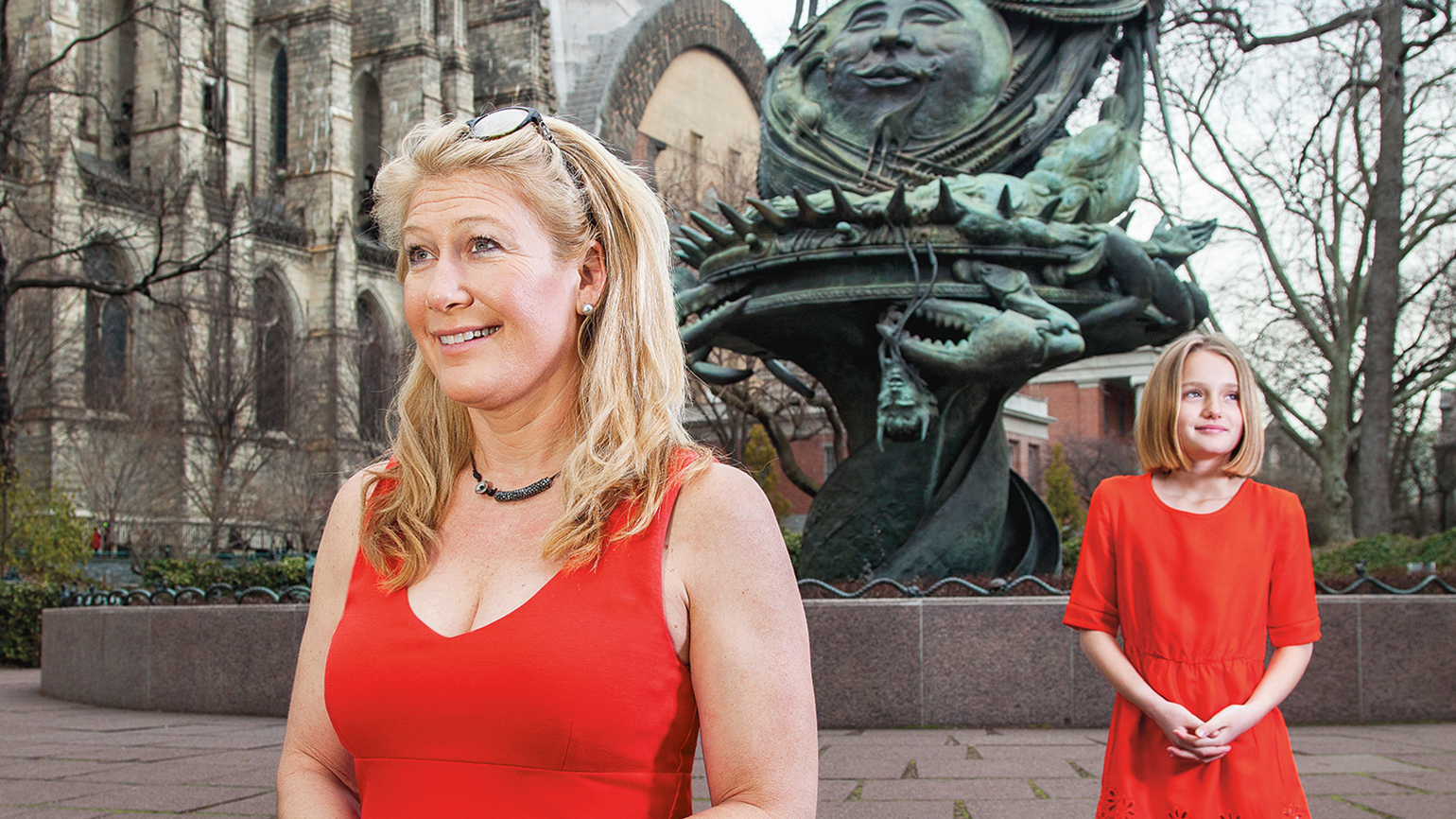
Psychologist Lisa Miller, best-selling author of The Spiritual Child: The New Science on Parenting for Health and Lifelong Thriving and founder of Columbia University’s Spirituality & Mind Body Institute, has devoted her career to examining the influence of spirituality on our physical and mental development. On June 7, 2017, at 2 p.m. ET, Dr. Miller will participate in a Facebook Live event on the Mysterious Ways Facebook page. We hope you’ll join us then. In the meantime, we invite you to submit questions for Dr. Miller to mw@guideposts.org; we’ll include as many reader-submitted questions as we can during the live event.

How did you end up studying the science of faith?
I grew up in a Jewish family in the Midwest, a region that’s overtly spiritual. As a child, I remember being aware of this grand symphony of life. When I studied to be a psychologist, I kept waiting for people to talk about spirituality. No one said a word. Then I started working with clients and it became obvious that many children suffering trauma or depression recovered because they had a deeply spiritual understanding of reality. Without it, clients would never reach real wholeness. Psychological treatments and models of childhood development that were silent on spirituality made no sense to me. I decided to investigate.

What’s the most fascinating thing your research has revealed?
We are born spiritual. This is most clearly shown in twin studies, which look at twins raised together and apart to determine which traits are innate or socialized—what we’re born with versus what we learn. The capacity through which we experience spiritual life is inherited. On average, our spirituality is about one third innate, two thirds socialized. Spirituality comes via different channels—some people are inquiring, some are intuitive, some see the synchronicities in life—but the capacity is in our genetics. At the same time, how we are raised has an enormous impact. It tells two thirds the story of our spiritual life as adults.

BROWSE OUR SELECTION OF BOOKS ABOUT MIRACLES

This innate spirituality—do we lose it over time?
Children are knowers. So are adults. But the child is uncensored. I can go to a grocery store and be greeted sourly by a clerk for 10 years. Then the first day I show up with a baby, the whole place lights up. That’s because the baby looks onto each soul with pure love. They’re as happy to see the checkout clerk as their own grandmother. They’re born with spiritual instincts and understandings and hold on to them, unless we build walls inside of them.

My son, Isaiah, is adopted. Since he was a baby, I’ve told him how my husband and I prayed for him. When Isaiah was four, he asked, “What about the woman who gave me up?” Before I could answer, he said, “Oh, I know! God whispered in her ear and said you were crying for me.” I’d never told Isaiah that. He knew.

Do children have more mystical experiences than adults?
Both children and adults have very meaningful mystical experiences. But children don’t push away those moments of wonder. I call it a child’s “special knowing,” a natural spirituality that hasn’t yet been socialized. Children also have vivid dreams. Some dreams are prophetic. Others tell of where they are in their path. A child will often feel connected to an ancestor who’s passed.

One 3-year-old told her mother about a woman who kept her company in the playpen. An imaginary friend, her mom assumed. Then her daughter spotted an old photo. “That’s the woman who comes to play with me,” she told her mother. It was a great-grandmother the child had never met.

How can you foster a child’s natural spirituality?
As parents, we always have to come back to the spiritual core. For example, if your son gets mad at your daughter, you can say, “God made you brother and sister so you can take care of each other.” Ask your kids about their dreams. When they come to you with a mystical experience, say, “Wow, I’m so grateful you told me that.”

What about teens?
Spirituality has always flourished with coming-of-age. Nearly every tradition on earth has honored adolescence as a time of spiritual quest, whether it’s with a confirmation, a Lakota sun dance or a Bat Mitzvah. The teen awakes to questions. They can feel moments of magnificence and have glimpses of the divine. But they struggle to figure out the meaning of life. The best thing we can do is take this painful developmental process seriously. New brain material continues to grow from puberty up to the early 20s. So the way we handle our inner life as a teen can stay with us into adulthood. It literally crafts the brain.

How does a “spiritual brain” look?
Functional MRIs show that, in a resting state, the brain activity of people with developed spirituality resembled that of a meditating monk. A sustained spiritual life is also associated with cortical thickness. A thick cortex correlates with high IQ, a thin cortex with Alzheimer’s or depression. Our 2014 study showed adults with a sus­tained spiritual life had thickness in the parietal, occipital and precuneus regions of the brain, the same areas where you see thinness in those with recurring depression. Those regions of thickness have to do with orienta­tion, perception and reflection.

Children with spirituality are 60 percent less likely to be depressed as teens, 40 percent less likely to engage in drug use and 80 percent less likely to engage in some risky behaviors. Cortical thickness was observed in study participants who said “spirituality is personally important,” regardless of their specific religious traditions.

Does this mean we walk into church and our brains get thicker?
It can be very helpful to go to a place of worship, but what science says is most helpful is cultivating the deep inner spiritual heart—a personal relationship with God. That’s where all the health benefits and thriving come from. A place of worship can help us cultivate the spiritual heart, as can family or nature.

What about other health benefits?
Study after study says we’re healthier if we have a strong spiritual core. We live longer, we get sick less and we’re less likely to become addicted. Our biological rhythms are more fluid. We have a more harmonious regulation of the stress hormone cortisol. Even our genes encode in a healthier way. Telomeres, the little wraparounds at the bottom of our genes, gradually get shorter with wear, tear and stress. But research shows that people with a contemplative life have a preservation of telomeres, rather than a shortening, suggesting that spirituality is one pathway to longevity.

How do the effects of spirituality compare to, say, changing our diet?
The health benefits of a spiritual life outweigh the health benefits of not eating fat or sugar. Spirituality posi­tively affects physical health, mental health, quality of relationships—even your GPA in college. I don’t know of anything I could eat that would do so much!

Have you seen these outcomes with your patients?
I had one patient, a 13-year-old. Her father had been robbed and mur­dered. Her whole world had been taken away. After six months of traditional psychotherapy, we weren’t getting where we needed to go. Then one day, she came bouncing in and said, “I met the nicest boy at school. He was so polite, so kind. But I haven’t told you the best part. Guess what his name was?” It was an unusual one—the same name as her father. I asked her what she thought it meant. She said, “My father sent him. He’s looking after me.” She made steady progress after that.

Can we regain our childlike spirituality?
Absolutely. If we decide to be totally present. Delight in moments of awe and wonder. See people. The most irritating person on the bus is there for a reason. When there’s a tug at your heart or you have an intuitive surge, grab it—it’s a porthole to spiritual perception.

You can start with an old rusty prayer that awakens the child within you. Walk in nature or read poetry from your childhood. Draw a peaceful presence inside yourself, whether through prayer or meditation, and open a discussion with your higher power, even if it feels awkward. Ask to renew that deep relationship with God. That’s the source of all health, thriving and resilience.

The Science of Premonitions

I was frustrated. I’d been angry and irritable all day, but I couldn’t figure out why. It was my first semester of college in Massachusetts. Classes were going well. I was making friends. Still I couldn’t get out of my dark mood. I retreated to my dorm room and contemplated calling my mother in California. Before I could, the phone rang. It was Mom. “I’m having the worst day,” she said. She was frustrated, angry, irritable. And it hit me. I wasn’t upset because of anything in my life. I’d been feeling my mom’s feelings…from 3,000 miles away!

That experience fascinated me. But I labeled it a bizarre mother-daughter moment. Recently, however, I came across a story sent in by Mysterious Ways reader Diana McCulloch. “I believe I have a God-given ability to discern when something is wrong with one of my sons,” she wrote. Intrigued, I gave Diana a call. She recounted a story about her youngest son. She was watching television one night with her husband. Around 11 o’clock, she doubled over in pain. Stomach cramps. Strange because she hadn’t eaten anything out of the ordinary. The next morning, Diana called to check on her son, who was in recovery from drug addiction. That’s when she discovered he’d had a relapse the night before and ended up in the hospital. His stomach had been pumped. At 11 p.m.

“I knew, without any question,” Diana told me, “that I’d felt his pain.”

I got off the phone with Diana, stunned. Sure, sharing in the suffering of others is a hallmark of many of the world’s religious traditions. So it’s not completely surprising that many spiritual people are also empathetic. But is it really possible to experience another’s pain as if it’s your own? And if “sympathy pains” actually exist, what’s the point?

Most of the evidence for sympathy pain is anecdotal. Its most famous expression, couvade syndrome (i.e., husbands who pick up the pregnancy pains of their wives), is widely scoffed at. Then there’s the religious phenomenon of stigmata, or bearing Christ’s crucifixion marks on one’s body. Many saints have reportedly experienced them. Padre Pio, an Italian friar, most famously. A vision in a chapel left him with nail wounds in his hands and feet. The markings, which never healed, left him better able to understand Jesus’ pain, as well as that of others.

While cases like Padre Pio’s are rare, research from the University of Birmingham indicates it is possible to feel another’s pain beyond just sympathy. In 2009, psychologist Stuart Derbyshire had 123 undergraduates look at videos and photographs of people in pain. All the participants reported an emotional response to what they saw. About 30 percent, though, also felt physical symptoms, like stabbing sensations. MRIs confirmed they weren’t just imagining it—the images actually triggered the parts of the brain that process physical pain.

So could it be that some of us have a special ability to take on the suffering of others? Or do we all have the capacity to feel another’s pain? I took my questions to Dr. Joel Salinas, a neurologist at Harvard Medical School and the Massachusetts General Hospital and author of Mirror Touch. Synesthesia is a neurological condition that causes senses to get mixed and matched in the brain. Dr. Salinas has many forms of the condition, including mirror-touch synesthesia—he feels sensations he observes but in mirror opposites. “If I saw someone hit their right thumb, I would feel it in my left thumb,” he says. While scientists are still studying mirror-touch synesthesia, evidence suggests that empathy may be at the root of it.

“When those of us with mirror-touch synesthesia perceive touch or pain in someone else, our brains automatically try to recreate it vividly—based on past experience and context—as if it were literally happening in our own bodies,” Dr. Salinas says. “Our perceptions of our bodies and theirs might overlap. The boundary between self and other becomes blurred. That ‘shared body perception’ is thought to be tied to the same parts of the nervous system that are responsible for empathy.”

Although mirror-touch synesthesia affects just two out of every 100 people, “the brain’s mirroring system linked to empathy is present in everyone,” he says.

“People with mirror-touch synesthesia fall on the extreme end of the spectrum—they can pick up on information that’s hard to notice yet still perceivable,” Dr. Salinas says. “But we all have the hardware and software for that extreme type of empathy.”

That might explain how even complete strangers are able to pick up on each other’s pain. Take the experience of my Mysterious Ways colleague Kathi Rota. Years ago, Kathi visited an ashram in India. There she met a married couple. The husband was talkative. The wife was withdrawn, distracted. As they chatted, Kathi felt a sharp pain in her lower back. It disappeared the moment the couple walked away. The next day, Kathi learned the woman was battling pancreatic cancer.

But how are people able to experience one another’s distress across long distances? “We have 100 billion neurons and 100 trillion connections in our brain, constantly taking in information often below our conscious awareness,” Dr. Salinas says. “There’s always a possibility that there’s something going on outside the realm of what science can explore.”

That’s something Dr. Larry Dossey contemplates in his book One Mind. Dr. Dossey argues there’s a higher consciousness, or One Mind, that we are all able to tap into. He points to the story of identical twins Marta and Sylvia Landa. In 1976, Marta burned her hand on an iron and got a blister. At the same time, miles away, Sylvia also developed a blister—in the same shape and spot on her hand as Marta’s.

Dr. Dossey refers to these episodes of extreme sympathy pain as “telesomatic experiences.” He hypothesizes they’re a necessary part of the human experience, often driven by deep emotional bonds. They reveal we’re connected in ways that transcend physical barriers, even distance and time. “The common pathway in all One Mind moments is the experience of a hyperreal level of awareness, connection, intimacy and communion with a greater whole, however conceived…all of which is marinated in an experience of intense love,” Dr. Dossey writes.

That love appears to be at the heart of sympathy pain. Caterina Mako, the director of spiritual care and pastoral education at Catholic Health Services of New York, agrees that there’s a deeper spiritual dimension at work.

“There seems to be an intense love and connectedness within the relationship of those experiencing it,” she says. “The intensity of that connection is an example of God’s love for us.”

I thought back to Diana’s experience with her son, Kathi’s with a stranger and my own with my mom. Perhaps they weren’t moments of mere intuition or empathy, but a reflection of a greater love running through humanity. A glimpse at how connected we all truly are.

The Science of Coincidences

Almost everyone has experienced a chance encounter, benefitted from a series of seemingly miraculous events, noticed recurring themes in life, even had an occasion of “mental telegraphy” (a term coined by Mark Twain that I blogged about a couple weeks ago.

The proof is in the stories that flood into my office at Mysterious Ways. But from a scientific standpoint, the mainstream view has always been that these incredible stories are just coincidences and not anything more meaningful.

Given the world’s population, all manner of things, however improbable, are still technically possible. Skeptics of higher power call this “the law of large numbers.”

But a new, interdisciplinary field, appropriately called “coincidence studies,” is beginning to take shape. Rather than simply using mathematics and probability to explain away such incidents as meaningless, these studies view coincidences as a multi-faceted phenomenon to be approached from many different angles.

Its figurehead, Dr. Bernard Beitman, professor of psychiatry at the University of Virginia, outlined the goals and parameters of this new field in a highly readable article (even for non- scientists) published in Psychiatric Annals:

“Many people, especially people with scientific training, dismiss coincidences as simply a matter of chance: accidents or anomalies generated by randomness. This dismissal, however, assumes that coincidences are inherently meaningless or insignificant. Without supporting evidence, this assumption is hardly scientific.”

A skeptic assumes that a chance event is only meaningful because people want them to be meaningful–end of story. According to Dr. Beitman, the question of why we desire to find meaning in coincidences and how we’re able to identify them is something that’s worth further study.

After all, moments of serendipity are far from inconsequential—they’ve led to many famous discoveries and scientific breakthroughs. Dr. Beitman quotes Louis Pasteur: “Chance favors the prepared mind.”

According to Dr. Beitman, it’s possible that the very search for meaning has an effect on the reality we perceive:

“From [a] Newtonian perspective the world around us functions like a clock, with its rules and regularities unconnected to the mind of the scientist. However, in his theory of relativity, Einstein showed us that the position and speed of the observer influences measurement outcomes… As in quantum physics, the act of observation brings the potential coincidence into reality.”

Dr. Bietman is not going so far as to say that Mark Twain could control his moments of mental telegraphy, but Twain’s belief in his in abilities had something to do with the high frequency of strange coincidences in his life.

The most interesting aspect of this burgeoning field of study is the category of coincidence Dr. Beitman calls “simulpathity,” feeling someone else’s distress—even at a distance, even without knowing the circumstances behind that distress. Dr. Beitman freely acknowledges that simulpathity suggests some people “are more closely bonded than scientific thought holds possible.”

Can science really learn to take “coincidence” seriously? Perhaps it could use more case studies to investigate. We’ll have to send Dr. Beitman a subscription to Mysterious Ways. In the meantime, keep sharing your true experiences with us!

The Room That Wouldn’t Burn

That night I left the newspaper office where I work and headed to the site of two dilapidated houses that stood waiting for our volunteer fire department to set them ablaze. I planned to write a story about a training exercise called a “controlled burn,” where firefighters practice battling a fire. I got to the site just in time.

One of the firefighters struck a match and lit some kindling. The first house, the smaller one, caught fire immediately. Flames licked at the night sky. The fire raged with such fury that the house was engulfed within minutes.

The second house was so close to the first that it too caught fire, just like they’d planned. “Wait till all five rooms are going,” one of the lead firefighters shouted, “then we move in.”

Sheets of orange-blue flames shot through one room after another. But as the fire reached the threshold of the last room, it stopped its advance. For 15 minutes we watched, and that whole time, the fire did not enter that room.

“I don’t know what’s going on,” the lead firefighter said, “but we’re gonna help this along a little.” He took a can of gasoline and sloshed some through a window and onto the floor of the unburned room.

Nothing.

The fire continued to rage, but unbelievably that room remained untouched. After 15 more minutes, the firefighters decided to take a closer look. “Over there,” one said, pointing to the wall in the room where a lone picture hung. “Look!”

“Let’s get it out,” shouted another. Someone grabbed a long pole, stuck it into the room and snagged the picture off the wall. Slowly and carefully it was pulled out of the house.

I went to get a closer look. When I leaned over and touched the frame, it was completely cool.

Someone shouted. I whirled around to look at the house. A huge fireball exploded in the final room. Now the whole structure was ablaze.

I turned back to the picture. It was a painting of Christ.