Embrace God's truth with our new book, The Lies that Bind

Saved from the Storm

Today’s guest blogger is Mysterious Ways assistant editor Daniel Kessel.

This winter has brought more intense weather than we’ve seen in years. By now, most of us have spent a snowbound day or two at home. What keeps me warm are the stories of those who have come together to help those in the cold.

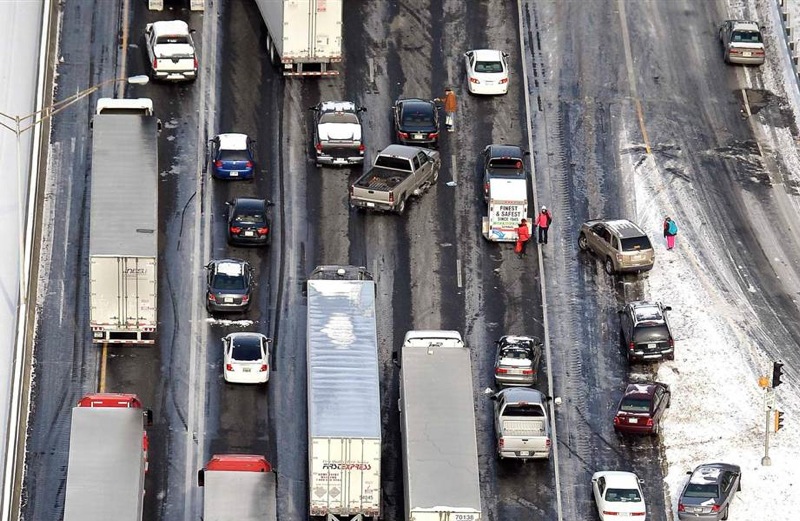
A few weeks ago, in Atlanta, when snowstorm Leon caused drastic traffic jams throughout the city, resident Michelle Sollicito created a Facebook page called SnowedOutAtlanta, which connected thousands of stranded drivers with those in a position to provide assistance.

One SnowedOutAtlanta story stood out. Katie Horne had spent 12 hours in the car when she used the page to send an SOS: “I’m eight months pregnant and have my 3-year-old with me,” she wrote. “Is anyone on the road and might happen to have any food or some water?”

Meanwhile, 25-year-old Craig Catalfu had sent out a message of his own–an offer to help. “Anyone in the Smyrna area stuck or need a ride let me know….” He knew his all-wheel truck could handle the snowy roads better than other vehicles.

Other visitors to the page quickly pointed Craig in Katie’s direction. The two connected, and around 2 a.m., Craig navigated to Katie’s exact location and led her back to her home in Marietta, keeping a careful pace of 10 miles per hour back to the neighborhood. Katie and her child walked safely through the front door around 5 a.m.

Not a moment too soon. As soon as Katie walked through her front door, she began to feel Braxton Hicks contractions–a warning sign that her body was dehydrated. Thanks to Craig, she was out of harm’s way.

“I had never met Craig or any of these people who kept posting messages saying they were praying for me,” Katie told NBC.

Her story is just one more instance of how technology has allowed people to reach out and help one another at exactly the right time. As Editor-in-Chief Edward Grinnan wrote after Superstorm Sandy, we have “an unshakeable faith that we are watched over and protected, that the worst that we can imagine is nothing compared to the good that God brings.”

That’s a good thing to remember as more storms roll our way. The power may go out, but there’s a stockpile of compassion and love out there to get us through.

How have you, and your community, been weathering the blizzards this winter? Share your stories with us.

Photo credit: NBCNews.com

Saved by the Good Book

Body armor. Advanced combat helmets. Steel cladding. These things keep our soldiers safe. You might find it odd, then, to suggest that a book could serve as a shield.

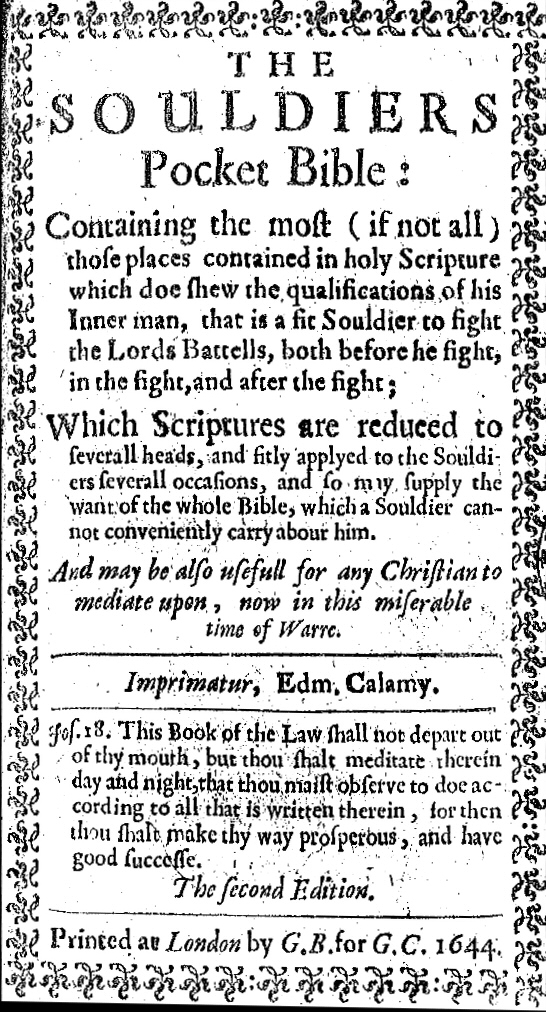
Marksmen have demonstrated that a hardcover tome can’t stop anything more powerful than a .22 caliber. Yet soldiers have experienced the lifesaving power of “bulletproof Bibles” on the battlefield as far back as the First English Civil War, in 1643, when a young Parliamentarian escaped a battle unscathed only to find a lead slug wedged in the 16-page pamphlet of Bible verses in his vest pocket.

The Good Book has saved lives in warfare—and Mysterious Ways has the pictures to prove it…

Saved by the Father’s Warmth

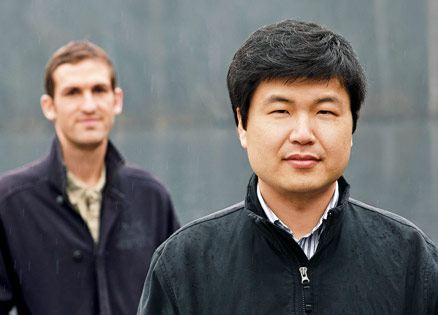
The frozen, snow-covered lake sparkled under my feet in the bright noonday sun. It was the first Saturday in March, still cold enough in Michigan for a coat and gloves even for a short walk. I’d learned to love the rugged Midwest winters during my four years at seminary, one of many adjustments from where I grew up in South Korea.

My eyes traced my footsteps back across the ice, to the trees, then to the retreat center on the bluff, where I’d started my hike and had been staying since the evening before. Other than the caretaker, Robert, and his wife, I had the old farmhouse to myself.

I’d come here to study the Bible, pray and draw closer to God, to better understand his will for my life. So much was happening in the next few months, graduation, returning home to my parents and fiancée, the start of my ministry.

Where would my faith journey take me? I wanted to be prepared. But I couldn’t relax. The isolation was unnerving. Where was God?

That morning I’d sat in my room and read my favorite Psalms. Heavenly Father, hear my prayer, I said after each one. There was no still small voice, only a distant creaking sound. I couldn’t just sit there. I had to do something. A little after 12:30 P.M. I decided to hike across the hardened lake to a trail.

I was close to the other side when I reached a large tangle of impassable branches. There was no alternative; I’d have to turn around. Disappointed, I took a step. Crack!

I plunged into the water neck deep. Instinctively my hands grabbed onto the ice. “HELP!” I screamed. “HELP!!!!” Cold stabbed every inch of my body.

I stretched my arms as far as I could, frantically kicking my legs to try to scramble back on top of the ice. A large piece broke off instantly. I lunged to keep hold of it, arms flailing. But my weight pushed it below the surface.

I dog-paddled a foot or two to the still-intact ice sheet and held on with just the tips of my gloves. I didn’t dare put any more pressure on it for fear it would break.

“Heavenly Father! Help me!” I pleaded. I opened my mouth, sucking my breath deep into my lungs then pushed it out as hard as I could. “HEL-L-L-LP!!!” The only response was the sound of the branches creaking in the wind.

There was no one around to hear my cries. Robert and his wife had gone out. I remembered my reading of the Psalms—He knows my every thought. I tried not to panic. God will deliver me.

I couldn’t feel my feet. My mind was in a fog. I looked to the shore. Only 100 feet away. Do something, I told myself. I raised a gloved hand and smashed it through a section of ice. I could break a trail to land. Lord, give me strength.

I shifted the chunk that split off behind me, then broke off another piece, steered it out of the way and pulled myself to the next section. I tried to keep kicking, but my legs felt so heavy, like anchors pulling me down.

“Somebody help,” I cried. The words came out as a kind of wheeze.

I slammed my fist against the ice again. The glove caught on a jagged edge and tore off. My hand was as red as a strawberry. I couldn’t break a trail anymore. It took all my strength to keep from slipping underwater.

My whole body was growing numb. I remembered reading that people could freeze to death in 45 minutes. I glanced up at the sun. It was just starting its descent. Was it 1:00 P.M. yet? How much longer could I last?

My coat seemed to weigh 500 pounds. Take…it…off, my brain told me. I’d be lighter, able to pull myself out of the water onto the ice. I let go of the ice and reached for the zipper. I sank like a stone. My head throbbed. I can’t breathe!

One desperate kick and I burst out of the water, fighting for air. I clawed the ice and hung on. I looked up at the retreat center, this place where I’d come to commune with God.

He was the only one who knew I was out here. I’d dedicated my life to serving him. Given sermons on the power of prayer. Trusted that he’d always be there for me. Now the one time I needed him most… Please God! I only have a few minutes left.

I thought of my parents and fiancée in Korea. Would I ever see them again? My heart ached with sorrow. I felt so alone. Forgotten. I wanted to cry, but no tears would come. I couldn’t move, couldn’t feel a thing.

I gazed helplessly at the shore. I faded in and out of consciousness. It’s over. No one was coming to rescue me. My eyes closed. I forced them open. I felt the oddest sensation, not a voice, more like an insistent internal message: Make a noise, like an animal.

I opened my mouth and howled like a wolf. My tongue was so swollen I could barely make a sound. Why had God abandoned me? Was I that insignificant to him?

Everything around me was hazy. Soon I’d slip beneath the surface for the last time. Father God, I give you my spirit. Would he hear me even now?

What was that sound? Someone shouting? A man coming to me carrying a sled. I recognized his face. Robert, the caretaker from the retreat center. Someone had heard me. But it was too late. I was sinking, drowning. Everything went black.

I awoke groggy and disoriented. There was a nurse beside me. “Haengso! My name is Emily. You’re at South Bend Memorial. You’re going to be okay.” I looked around. I wondered how long I’d been here.

“It’s six,” she said. “Still Saturday. Everybody is going to be very glad to see you. You know a person can only last in freezing water for forty-five minutes. You must’ve been in the water that long.”

Friends and faculty from seminary came to visit me. “It’s incredible you survived,” they said. “When you got to the hospital your temperature was only eighty degrees. You’re lucky to be alive.”

I was grateful to have survived, but that’s what it seemed like to me, simply dumb luck. It couldn’t fill the emptiness inside of me. I needed to know my life mattered to God. If he’d been with me in the icy water wouldn’t I have sensed it?

The next afternoon I was released. A friend drove me back to the retreat center so I could retrieve my car. Robert answered the door. “Boy, am I glad to see you,” he said. “My wife and I have been praying for you.”

“Thank you for rescuing me,” I said. “They say I’m lucky to be here.”

Robert looked puzzled. “Luck? It wasn’t luck. It was a miracle. We’d just gotten back to the house at one forty-five when I heard a grunting sound. I looked and saw you out on the ice. I ran and got a rope and sled and made my way out to you. But I could only hold you. It was another twenty-five minutes before the paramedics got you out of the water.”

I’d been in freezing water for over 80 minutes! Far longer than humanly possible. I was stunned and a little ashamed. How could I have ever doubted?

I’d come to the retreat center wanting to be closer to my heavenly Father, wanting to feel his love for me. When I fell through the ice, he drew me into his arms and held me close. The warmth of his love, that was what saved me.

Download your FREE ebook, The Power of Hope: 7 Inspirational Stories of People Rediscovering Faith, Hope and Love.

Roadside Rescue

Night driving made me nervous. I usually left it to my husband. Just before my sister’s anniversary party, though, Bob was called away by one of his parishioners. A pastor’s emergency. I couldn’t miss the party, so I took our 18-month-old granddaughter, whom we were babysitting, and went without him.

I’ll just make sure to leave while it’s still light out, I thought. But I lost track of time showing the baby off to everyone. Before I knew it, it was nine o’clock. I said goodbye, buckled my sleepy granddaughter into her car seat and took off.

Willeo Road is notorious here for its tight curves, tracing the path of the Chattahoochee River. More than a few drivers have taken a turn too fast and met a tragic end in the water. But it was the shortest way home.

I kept my eyes on the winding road, my high beams barely penetrating the darkness. We’ll be home soon, I told myself, gripping the wheel.

There was a sharp bend ahead. I must have been going faster than I thought. The van slid, tires shuddering beneath me. I panicked and slammed on the brakes. The van fishtailed. I fought the wheel but it was no use. I’m going off the road…

“Oh God, help me!” I cried.

Oof. A jarring stop. The seatbelt dug into me. It took a minute to get my bearings. We’d hit an embankment. I stared at the thick tangle of trees hugging the edge of the road. If it wasn’t for that embankment, we would’ve crashed right into them.

I could see my granddaughter in the rearview mirror, still snug and secure. I took a deep breath, reversed and then eased back onto the road.

At home I told Bob what happened. He pulled me close. “Around nine I had this strong urge to pray for your safety,” he said. “Now I know why. ” The next day, we went back to Willeo Road. Bob was curious to see where he’d almost lost us.

“There!” I shouted. Our van’s skid marks were clearly visible, veering off toward the trees. Beyond them, now that it was daylight, I could see a steep drop… and the fast-flowing Chattahoochee. No embankment. Nothing to stop anyone from going over the edge.

Download your FREE ebook, Mysterious Ways: 9 Inspiring Stories that Show Evidence of God’s Love and God’s Grace.

Ricardo Sanchez: Did Prayers Heal His Son?

My wife, Jennette, had dropped me off at the Atlanta airport that day to catch a flight to Jacksonville, Florida. I had my guitar with me and my gig bag. I’m a composer and singer, and I had a show that night. Back then, just eight years ago—it seems like eons—there wasn’t any Wi-Fi on the plane, so I would be out of touch en route. No problem. Jennette was used to being in charge at home. We had three boys. The youngest, Micah, was at summer camp, and the older two, Josiah and Ricardo, were swimming at a friend’s house.

Ricardo Sanchez as seen on the cover of the Nov 2017 issue of GuidepostsWe’d had an awesome family vacation the week before, out on the central California coast, where Jennette’s parents lived. The highlight had been the sea lions. We’d spent hours watching them dart among the waves, leaping and plunging into the breakers. “I’d love to swim like that,” Josiah, age nine, had said, mimicking their fearless diving. Josiah was pretty fearless himself. Tall for his age, athletic. I could see him growing up to be a great basketball player.

Community Newsletter

Get More Inspiration Delivered to Your Inbox


I felt mighty blessed as a parent and a musician, doing what I loved, writing and performing praise songs and raising a family. I’d just written a new song, “It’s Not Over.” The words said a lot about how I felt. “I know it’s dark just before the dawn…. So look to the sky—help is on the way…. When God is in it, there is no limit.” We can never be sure of the big picture. We can only live in faith and trust.

How true those words would prove to be that day.

As soon as the plane landed in Jacksonville, I checked my phone. I had a couple dozen messages. What’s up with that? I thought. The calls were from Jennette, our pastor and another friend. Standing in the aisle, I listened to Jennette first and heard the words that no parent ever wants to hear: “There’s been an accident…at the pool…. Josiah. He’s hurt…. I’m rushing to get there…. Don’t know yet…” Her words came in panicked bursts.

I grabbed my stuff from the overhead and called her back. I was in a daze, moving down the aisle. “We’re at urgent care in Flowery Branch,” Jennette said. “It’s bad…. They’re looking at the X-rays…. He can hardly move…. It’s his neck, his spine. Broken…” Evidently, Josiah had dived into the pool headfirst, just like those sea lions that had fascinated him, fearless. It was the shallow end. He’d hit his head on the bottom.

He could still stand when Jennette got to him, but he was woozy, disoriented, crying in pain. She rushed him to the nearest urgent care. There he was surrounded by doctors and nurses while his condition worsened.

I didn’t know what to do. Cancel the gig—that was a no-brainer. I had to fly back to Atlanta immediately, had to be with Josiah and Jennette and our family. I was like a zombie at the terminal, tears streaming down my face, my phone glued to my ear. What if my son dies? The first thing I did was buy a pair of sunglasses. If people saw me like this, they might not even let me on the plane.

Then I checked with Delta. The next flight back to Atlanta was in four hours. Four hours! All I could do was wait and pray. And keep checking with Jennette.

The X-rays were worse than anyone could have imagined. Josiah had injured his spinal cord at the C3, C4, C5 and C6 vertebrae, near the base of his neck. He was being airlifted from urgent care and taken to Scottish Rite hospital in downtown Atlanta.

“They wouldn’t let me go with him,” Jennette told me as a friend drove her to Scottish Rite. “He was crying. ‘Please don’t leave me, Mom,’ he said. He’s so scared.”

Me too. I was a basket case. I maneuvered my way between a row of seats at the terminal, dropped my bag and guitar and lay facedown on the floor. I’d never felt so hopeless. I’d never prayed so hard. My son could end up in a wheelchair for the rest of his life—if he survived—and there was nothing I could do. The words from that song I’d written careened through my mind: “It’s not over, it’s not finished. / It’s not ending. It’s only the beginning. / When God is in it, all things are new….” If only I could believe that.

The phone kept buzzing with people wanting to help. A friend was trying to charter a private plane that would fly me home. In the meanwhile, I booked myself on the Delta flight. I’d take whatever came first.

I called my parents in Arizona. They were shocked. “You’re such good people,” they said. “Why would God do this to you?” I couldn’t answer them.

I ended up on the Delta flight and, again, couldn’t check my phone. My son could be dead, and I wouldn’t know. I could only check in with God. I felt as if I were in some sort of cosmic waiting room, hiding behind the dark glasses, clinging to hope.

Friends picked me up at the airport and sped me to Scottish Rite. I rushed to the ER and hugged Jennette. She introduced me to the neurosurgeon, Dr. Brahma. He seemed excellent. But there was so much that could go wrong, that had gone wrong. Jennette and I held hands and prayed.

Then something amazing happened. Jennette’s mom, out in California, happened to be at a party with friends when she got the news. One of the guests was a prominent neurosurgeon. He got in touch with Dr. Brahma and the staff at Scottish Rite. They sent him a copy of the X-rays and the CT scan they’d just done. First we got a call from him—in the middle of our prayers—and he reassured us that our son would be fine. A doctor we didn’t even know, two thousand miles away. But he was so confident.

Then Dr. Brahma came out from the examination room, a look of wonder on his face. “I don’t know how to explain this. In all my years here, I’ve never seen anything like it. I compared the X-rays from urgent care with the results of the CT scan we just took. They don’t match up.” “What does that mean?” I asked.

“Your son broke his neck, but his spinal cord isn’t damaged. The injury is still very serious. We’ll need to do surgery, but he’s probably going to be okay.”

Jennette and I looked at each other in amazement. “How do you explain it?”

Dr. Brahma paused. Finally he said, “There is no explanation. I’m a Muslim and you’re both Christians. Just keep doing what you’re doing.” He must have heard us praying. “Just keep doing what you’re doing,” he repeated. “Don’t stop.”

We prayed continuously, most of that night and the next day, when Josiah had the surgery. Initially Dr. Brahma thought it was going to take eight hours, but it went much faster. He also said that our son would have to do physical therapy for six months when he got out of the hospital. But once Josiah got home, he was bounding around as usual. He didn’t even need a day of physical therapy.

Today Josiah is the scrappy, fearless athletic kid he was before. He’s six-foot-five and a star on the high school basketball team. What he went through when he was nine, though, will always be with him, like the scar that runs across his back. A few months after the accident, I heard Josiah sobbing in his bedroom. I went in to check on him. “Baby, what’s the matter?” I asked.

“Dad,” he said, “I almost died.”

I sat down next to him on his bed, rubbed his back, looking for just the right words. My fingers touched his scar. I paused. “Josiah,” I said, “never again will this scar remind you of death. Let it remind you of how God pulled you out of death.”

That song of mine, “It’s Not Over,” was released after the accident. It’s become one of my most successful compositions, sung at churches all over and recorded by other artists. But that’s not the most amazing thing. Before I’d shared the song with anyone, two friends visited us.

They’d each had a dream the night of the accident, both of them the same dream. One of them described it: “We both saw a boy fall into a pool. He was drowning. Then an angel appeared and picked him up from the bottom and lifted him out. ‘It’s not over,’ the angel said.”

It’s not over. It never is, not when God is in it. All things are new.

Editor’s Note: Ricardo’s newest album is Taste + See, a collection of songs written or co-written by him and recorded live at San Antonio’s Cornerstone Church. “I can’t wait for people to hear this album and know the heart behind the music,” he says. “Taste and see because God is good.”

For more inspiring stories, subscribe to Guideposts magazine.

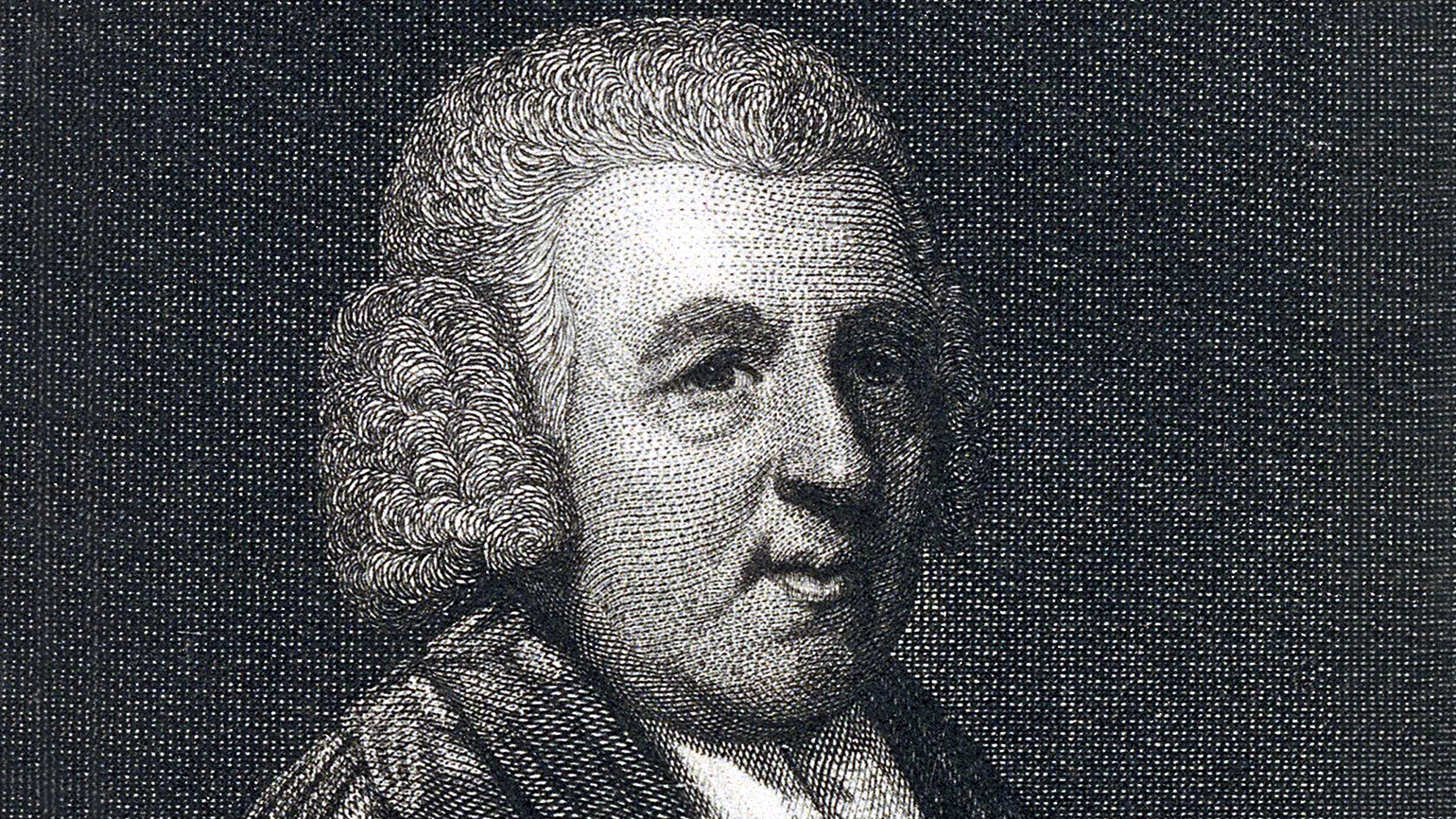
Rev. John Newton, the Pastor Who Wrote ‘Amazing Grace’

John Newton was at one time master of a slave ship, cargoing captives from Africa to the Carolina coast. One night his ship was overtaken by a gale. The terrified Newton vowed that if God would get him safely ashore, he would dedicate his life to religion.

Almost as soon as the vow was uttered, the power and control of his ship increased. Newton’s deliverance through a storm that chalked up many wrecks that night was a miracle. Ashore, he refused payment for his living cargo and set about to fulfill his vow.

A few years later he was ordained a clergyman. He became an intimate friend of the poet, William Cowper, and they wrote hymns together—Cowper 68, and Newton 280. Among Newton’s most popular are “Amazing Grace” and “How Sweet the Name of Jesus Sounds.”

The grave stone of John Newton at the Church of St. Peter and Paul in Olney, England

On his tombstone is written:

John Newton, clerk
Once an infidel and libertine
A servant of slaves in Africa
Was, by the rich mercy of our Lord
And Savior, Jesus Christ,
Preserved, restored and pardoned,
And appointed to preach the faith
He had long labored to destroy.

Reunited for a Reason

I was excited to interview for a position at a nearby cancer center as part of my graduate program in social work. But my academic advisor had other plans. She sent me to an interview at a major medical center downtown—an hour-and-a-half away! How would I have enough time for my family and classes with a commute that long? It seemed pointless to go.

“Just check it out,” she said. So I braved the traffic—which was worse than I expected—parked and waited in the lobby.

My mind wandered to the only time I’d ever been to that hospital. It was several years before when my brother Woody’s fiancée, Stacey, underwent two kidney transplants. She’d been so strong. Through her surgeries and dialysis, Woody stayed by her side.

Two years after her last transplant, Woody died unexpectedly. We were all heartbroken. I rarely saw Stacey after that.

“Meg,” I heard someone say. I thought maybe it was the receptionist calling me for my interview. I looked up.

It was Stacey!

I flung my arms around her. “It’s so good to see you!” I said.

Stacey explained she was there for a checkup—doctors feared her body was rejecting her kidney. I could tell she was hurting but she was as brave as I’d remembered. We embraced once more before I left. Stacey smiled broadly. “It’s amazing to see you,” she said. “Good luck on your interview.”

The position turned out not to be what I was looking for. But back home, I got an email from Stacey.

“I want you to know that I think about Woody every day,” she said. “And when I came to the hospital today it really hit me that he wouldn’t be by my side. I think Woody knew that too. That’s why he sent me his little sister.”

Resurrected by a Hallelujah

November 11, 2012, is a day Belinda Leal will never forget: the day her mother, Evangelina Garza, died. What happened next has left the doctors and nurses at McAllen Medical Center in south Texas baffled. But to Belinda and Evangelina—now very much alive—the explanation for the events that unfolded is quite clear…

Evangelina: The first thing I heard that day was Onesimo’s voice. “Do you want to go out to breakfast?” my husband asked from the foot of the bed. I sat up and rubbed my eyes. I’m 71, and have diabetes, and I don’t get moving as fast as I used to.

“Give me a little time,” I said, yawning. The morning sun was peeking through the blinds. I remembered that it was Veterans Day. My daughter Belinda and granddaughters Alex and Amy would be visiting us later. If only all of my five children and their families could live so close!

My girls and I had such good times together. Not long ago they took me to see Il Divo, Belinda’s favorite singing group, in concert. I loved it!

What was that song of theirs I liked so much? “Hallelujah.” I hummed it while I showered and got dressed. Hallelujah! The word ran through my mind, but suddenly my mind seemed to run away.

I sat on the bed. A red, shiny apple sat on my nightstand—in case my blood sugar got low. It was the last thing I saw before everything went dark.

Belinda: That morning, Alex and I pulled up at Amy’s house. Dad’s car was there. Odd. I didn’t expect to see my parents until later. Dad stood on the lawn. He looked pale. Frightened. Amy ran outside. “Thank God you’re here,” she said.

“Where’s Grandma?” I asked.

“ She collapsed,” Amy said. “Grandpa found her and gave her CPR, but she didn’t respond. The EMTs are rushing her to the hospital. Grandpa’s a wreck.”

“Let’s go,” I said, my voice quavering. “I’ll drive us to the hospital.”

Evangelina: Dark. Everything dark, silent. I felt a sensation. Like floating, but also like being pulled. As if I was being picked up and taken somewhere not in this world. Then a light, a golden light. It filled the space below my feet, glowed all around, lifting me up. It was like nothing I had experienced before, nothing at all, yet I wasn’t scared.

Belinda: I will not be afraid, I thought, speeding down the freeway. I will trust in God. I left the car near the emergency room and we hurried inside. A group of doctors and nurses were waiting.

“Evangelina Garza, how is she?” I sputtered. The doctors looked somber. “We did everything we could,” one said, “but she’s passed away.”

I couldn’t breathe. I thought I would faint. Finally a cry escaped my throat. “How can it be?” She can’t be dead. She can’t. In a daze I followed the doctor into the trauma room. He pulled back a curtain. Mom. She was so pale, so white, she seemed to vanish into the crisp hospital sheets.

Wires and tubes came from her arms and chest. The ventilator was still on, but the monitor beside her showed flat lines, no heartbeat, no brain activity. I’d seen enough medical shows to know what that meant.

But how could my mother be dead? How could she just be gone from this earth? She’d been dancing and singing at a concert just a while back. How? How?

“When she got here, she was already gone,” the doctor said.

Evangelina: I wasn’t alone, in this golden place. There was a man, maybe in his forties. He was with a woman, a little younger than him. Dad? Mom? They’d both died many years ago, Dad at age 74 and Mom at 78. But here they were, Dad so strong, so handsome. And Mom so beautiful.

“How can I be seeing you, when you’ve been dead all these years?” I asked. My parents said nothing. No, not nothing. Their faces were filled with love, with that golden light. I tried to touch them, to hold them, but a wind kicked up, fast and strong, swirling all around.

Belinda: I never got to say goodbye. I was sobbing uncontrollably. I staggered down the hall, leaning on the wall, past the gurneys and wheelchairs and carts. She was so pale…. I found a desk and chair, sat down and closed my eyes.

A sudden urge gripped me. Talk to God. She’s the rock, the glue that binds this family, my soul cried out. God, please, don’t take her. She’s not done yet.

Evangelina: It was a whirlwind, made of flowers—all kinds and colors: red roses, yellow daisies, orange tulips, purple violets….Too many to count. A rainbow of blooms, spinning in the air, swirling so fast that everything blended together. More beautiful than anything I could ever imagine on earth.

“God, where am I?” I said aloud. No answer. All at once the golden light, the light I understood to be the pure essence of love, dissolved below me. I saw myself in a hospital bed, my eyes closed.

Belinda: A voice cut through my shock and disbelief. Was that Alex calling me down the hall? Her words made no sense. “Mom, come quick! Grandma is moving!” I ran back to Mom’s room, that terrible, stark room.

“Look,” Amy said. Mom moved her right foot. My eyes shot to the monitor. The lines, were they moving too?

I pulled the doctor in. “Muscle spasms are normal immediately after death,” he muttered. He held Mom’s wrist like an afterthought. “It doesn’t mean…” He suddenly got real quiet. Switched hands. Frowned at the monitor. “There is something,” he said, clearing his throat. “It’s a very faint pulse.”

I was too confused to cry, too stunned for joy, caught between relief and fear. My sisters Thelma and Leslie and my brother, Homer, arrived, and the whole family huddled close while the doctors consulted. They monitored Mom for six hours, then they took her to the ICU.

“I must warn you,” the neurologist said, “she went at least thirty minutes without a heartbeat and oxygen. The brain starts to die after just a few minutes of oxygen deprivation. She’s technically alive, but whether she ever wakes up is another matter.”

Evangelina: Seeing my body in the bed…now I knew. God, how do I get back? I asked. I was being pulled again, up, away from my body, the whirlwind of blooms picking up speed. No, I wasn’t ready to go! My daughters. My son. Onesimo. How could I get back? Which way was home?

Belinda: Please, Mom, come back, I prayed. For three days, my father, my daughters, my siblings and I stayed by Mom’s side. She was on heavy sedation while the doctors ran tests. The wait was too much. I needed answers. I needed to know if Mom was still Mom.

“Please,” I begged the doctor, “tell me, what do you know?”

“I don’t know anything,” he responded. “At least, I can’t explain it.” They had found no damage to Mom’s brain. No damage to her heart or other organs. No signs of a stroke or an aneurysm. Everything was normal. She was even able to breathe on her own now, so they had taken her off the ventilator.

“It’s hard for me to say, but it’s a miracle.” Then why wasn’t she awake?

Alex approached the bed. She placed her iPhone on her grandmother’s shoulder. What on earth is she doing? I wondered.

Evangelina: This time the swirling was in my ears, somewhere far away. It became a sound, a melody. I knew that song! Spanish lyrics I could just make out. “Un desamparado se salvó, / Por causa de una buena acción, / Y hoy nadie lo repudia, Aleluya. / Aleluya, Aleluya….”

Il Divo’s “Hallelujah.” I struggled to move toward the sound, somehow.

Belinda: Aleluya, Aleluya… “Remember, Grandma, when you saw the concert?” Alex whispered. “Please, wake up.” I wiped away my tears. Mom had been so happy that day. Her grandchildren gave her so much joy. Would she ever see them again? We listened together until the music faded out.

“Mom, look!” Alex gasped. Her grandmother’s eyelids fluttered, then flew open. We all converged on her bedside, too stunned to speak. Mom broke the silence. “Gold…” she murmured. “You’re all covered in gold. Like heaven.”

Evangelina: Onesimo brought me home on November 16. We finally shared that breakfast he’d suggested. I told him all that I had seen. He nodded and held my hand tight.

I know it’s hard to believe. I can hardly believe it myself. But I know God sees us and blesses us every day. And the hospital’s trauma room report is clear. On the first page, written in a doctor’s hand and signed with his name, is the word Deceased and the exact time of my death.

Download your FREE ebook, Mysterious Ways: 9 Inspiring Stories that Show Evidence of God's Love and God's Grace


Remembering Tragedy and Miracles on 9/11

On September 11, 2001, I was a sophomore in college at New York University. I awoke that morning to my roommate standing beside my bed. “A plane just hit the World Trade Center,” he said. Still groggy from sleep, I watched the television with bleary eyes. At first we all thought it was an accident. My mother called to tell me it was no excuse to skip class that day. Then we watched in horror as the second plane hit. My mother called back. “Do not go to class,” she said, her voice shaking.

My roommates and I rushed outside our building to Union Square, where we confronted a scene I’d never seen before and hope to never see again. The street was filled with people all staring in the same direction, at that horrific billowing column of smoke.

When the towers collapsed, people collapsed in the street, the emotions too heavy to stand. But others gathered around to embrace them and help them up. As the first survivors began to appear from downtown, ash still clinging to their clothes, strangers rushed to offer them water, offer them their cell phones to make calls. My roommates and I bought up bottles of water and whatever other supplies we could to donate to the rescue effort. In Washington Square that evening, with the spotlights of the rescue effots lighting up the night sky just blocks away, hundreds gathered with candles to hold a vigil for the victims.

It had been mere hours since the attack, and Ground Zero was still burning. But already, people were working hard at healing. For those who lost loved ones, the process still continues 11 years later.

It can be hard to see God in the face of a tragedy like this. Why couldn’t he stop the attacks? Why couldn’t he save just one more life? But the miracles abound. We’ve shared some of these September 11 stories in Guideposts. The ones who made it out alive, despite tremendous odds. The rescue workers who became heroes that day. The ways in which the families of the victims found tremendous, surprising means of comfort. The fact that despite terror hitting us so close to home, we managed to go on. The scars stay with us… but scars are simply new skin, strengthening us for our next scrape.

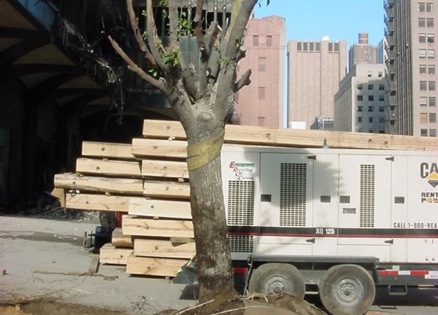
New York City Department of Parks & Recreation via DNAinfo.com

But the roots took hold. The limbs regrew. Slowly, leaves began to sprout again. In December 2011, the tree was replanted by the memorial. Now 30 feet tall, it bloomed with white blossoms for the first time this spring.

We’ve all grown since September 11, 2001. We’ve all been healed, in different ways. We were burned, scarred, uprooted, but 11 years later, so many of us find ourselves in bloom again. And that’s the miracle.

You can read the stories of survivors, and their families, at this link. Please share with us your own stories about how you’ve healed, or changed for the better, since that day in September.

Photo credits: New York City Department of Parks & Recreation via DNAinfo.com (top); Mark Lennihan, AP via TimesUnion.com

For more inspiring stories, subscribe to Guideposts magazine.

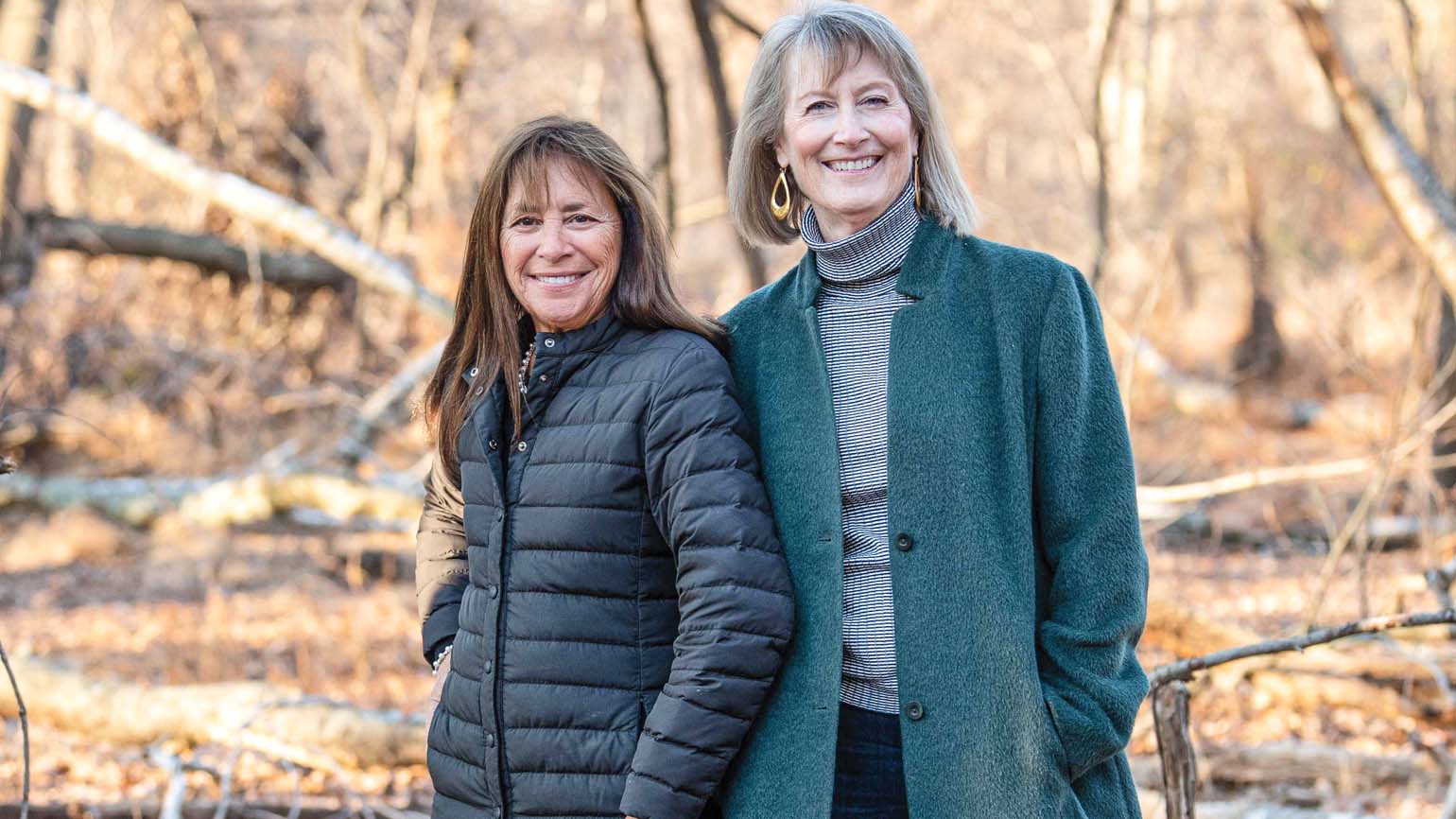
Q&A with Miracle Authors Joan Hill and Katie Mahon

A casual get-together set Joan Hill and Katie Mahon on a 20-year journey of discovery into miracles. Along the way, they published their first book, The Miracle Chase, in 2010.

In the years since, hundreds of people who’ve experienced miracles of their own have confided in Joan and Katie. It made these two women wonder, Why do so many people keep these stories to themselves? And what do these miracles tell us about God when we view them all together? We spoke with them about their findings and their most recent book, The Miracle Collectors: Uncovering Stories of Wonder, Joy and Mystery, to find out more.

What’s your definition of a miracle?

KM: We see miracles as signs of divine intervention that create a beneficial connection between God and humankind. They can be everything from seeing a cardinal to big thunderbolt experiences. Miracles are signs for the person who recognizes them as divinely meant for them.

When you were touring for your first book, you noticed that people came up to you after your readings to tell you their own stories. Did this tell you anything about the importance of sharing miracle stories?

JH: What we noticed was that the ripple effect of a miracle is important. The event touches us, and we touch others by sharing our stories. That allows us to find connection with others.

KM: Yes. Sharing miracles also helps us find meaning in them. Saying it out loud is a way to hear it anew. Also, the person hearing the story might offer a new perspective.

Why don’t more people discuss their own divine encounters and miracle stories?

JH: We did a survey on the reasons people don’t talk about their miracle stories. The number one reason was that they were afraid of people not believing them, of looking foolish.

KM: But when you share one of these stories with others, you give them permission to do the same.

JH: Sometimes miracles happen when people are going through a difficult time, so they keep these stories to themselves. But once they release them and share them, it opens them up to other experiences.

How else can people open themselves up to more miracles?

JH: The first step is about becoming aware. Often we go through life thinking we understand what we’re seeing, but we’re not looking at the whole picture. There’s a graphic that I like to use in miracle presentations. It’s a truck that’s run off the road and fallen onto a little shelf of rock below. It seems remarkable, until you see the next picture of the same scene pulled back. A massive canyon extends hundreds of feet below the shelf. Now it goes from amazing to miraculous. Changing our perception, and looking at things we see all the time in a new light, is the beginning of welcoming more miracles into our lives.

KM: It takes practice, and living in the moment. If I didn’t keep a gratitude journal, I would forget some amazing things. And you think, How would you even forget that? But we do.

People sometimes forget or don’t recognize miracles in their lives?

KM:Yes. We can get too caught up in day-to-day responsibilities and forget to step back and marvel. Or we dismiss miracles because we can’t accept that God would single us out.

We met a woman who had been on 2009’s Miracle on the Hudson flight, where the engines failed and the pilot landed the plane on the Hudson River, saving everyone on board. But the woman shrugged off the experience. Six weeks later, she read about a much smaller plane crash in which everyone on board was killed. “This is what normally happens,” she told her husband. It was then that she realized her life had been saved by God. She changed her workaholic ways to spend more time with her family and in volunteer work.

Are there instances in which we can be a miracle in someone’s life?

KM: Yes! The traditional idea of miracles is us asking God to say yes to us in some way. But in being a miracle for someone else, we say yes to God. We have opportunities to be God’s conduit. This can look like choosing to call to check in on someone who is having a hard time, even though it might feel uncomfortable. Or being supportive and helping a friend who is sick or has lost their job.

JH: It can even be with a stranger. It’s being the right person at the right time.

What did your experiences show you about people who want miracles—who pray for them, even—and don’t get them?

KM: I struggle with this one. Prayer is powerful. But I was a perfect example of someone who didn’t pray for a miracle and got one. As a college freshman, I was saved from a suspicious man who was following me by a hotel bellman who pulled me aside at just the right moment. Fifteen years later, I saw the man who followed me on the news. It was the serial killer Ted Bundy. I was grateful for the miracle that saved me. But I never prayed for it. It just happened.

It’s hard to reconcile with stories of people who pray for miracles and don’t get them. I think what this tells us is that God operates outside of the time and space that we occupy. And so, while it’s important to ask, I don’t believe that our prayers are always answered in ways we can understand or accept.

JH: Often the miracle we get isn’t the one we pray for because God’s perspective is far beyond our understanding. We see only the side of the tapestry that we have in front of us. And we may well be looking at the back of the tapestry, not the front. Miracles are a glimpse into God at work. The amazing part is how much remains a divine mystery.

Praying for Spring

Just another dreary March day, I thought, looking out the kitchen window. Not a bit of color. No hint that spring might arrive soon. And it had been a long, long winter.

My husband, Raymond, was sitting at the table in his wheelchair while I cleaned up after our breakfast. “Are you the lady who’s keeping me here?” Raymond asked in a testy voice from behind me. “I want to go home.”

I turned from the window and walked over to him. “You are home, honey,” I said, patting his shoulder.

This may have been the toughest year of our 62-year marriage. Raymond had grown so feeble he could no longer walk, and it took all of my strength to help him in and out of the wheelchair.

What was even harder, though, was his worsening dementia. Time and again he’d ask me who I was or where he was. It exhausted me physically and emotionally. I’d prayed a lot about our situation, but lately I felt as though God weren’t really listening. He seemed just out of reach. I’m at my wit’s end, Lord, I prayed. Please give me a sign of spring to show me you hear my prayers…something.

I finished the dishes and wheeled Raymond into the living room. He liked to sit in the soft ruby-colored chair by the picture window and watch our neighbors go about their day. I settled him in the chair before I opened up the drapes completely.

Suddenly his eyes lit up. I turned to look through the crack in the curtain to see what had caught his attention. A robin sitting in the branches of the tree, a respite of red against the grayness. Maybe God was listening. Then I pulled open the drapes.

That’s when I saw it. There on the lawn with its patches of grimy snow were hundreds of robins. It was a blanket of red from our driveway all the way down to the street!

Download your FREE ebook, A Prayer for Every Need, by Dr. Norman Vincent Peale

Philip Yancey: The Triumph Over Suffering

Philip Yancey is a journalist and bestselling author of books like Where Is God When It Hurts?, Disappointment with God, and The Question That Never Goes Away. He’s been writing about the mystery of suffering for more than 30 years, a topic he discussed in the April/May 2017 issue of Mysterious Ways magazine. Editor Diana Aydin spoke to Yancey about what he’s learned in his explorations of human suffering.

Your father died of polio when you were a baby. Did that spark your interest in the mystery of suffering?

Looking back, I’m sure that played a role. But the quest for answers really came when I was a young journalist. Again and again, people who’d suffered would tell me, “The worst part of all was when people would visit me in the hospital and come up with these contradictory explanations for suffering: ‘God’s punishing you.’ ‘No, no, no, it’s not God, it’s the Devil.’ ‘No, it’s God, but he’s not punishing you, he’s chosen you to be an example.’”

I didn’t know what to say to them in response! That’s really what started me on the intellectual question. To make sense of this thing we all experience at some point.

Why is suffering a part of life?

The writers of the Bible really did not perceive this world as God’s ideal. They perceived it as a very good world that had been spoiled. We have been given good, strong wood that can build a house. But a bad person or a tornado can take that same wood and turn it into a weapon. We live on that kind of planet.

Take humanity. There are beautiful examples of altruism, but there’s also the presence of evil. So we live in kind of that mixed world.

Where is God when we suffer? Is he ignoring us?

It’s really easy to think when something bad happens, “Well, God is punishing me.” But we have a really clear picture of how God feels about those who are going through hard times. All you have to do is follow Jesus around to see how he handles people going through suffering—a widow who lost her only son, a person with leprosy, a woman with a very shameful condition, a blind person.

He was always on the side of the one who suffers and responded with compassion and healing. That is the brightest clue we have to how God feels about us when we go through pain. God is on our side. I wish sometimes God would be more overt, more direct. But for whatever reason—and Jesus suffered this too—God lets the rules of this world play out.

There’s that lovely and mysterious passage in Hebrews that says Jesus learned obedience through the things he suffered. Because he went through that, we now have an advocate, a representative, who knows what it’s like down here.

Why is God sometimes silent when we suffer?

C.S. Lewis wrote about that when his wife died. That it was like God had slammed the door shut and double bolted the door. I think part of it is just the isolation and loneliness of grief and pain itself. Part of it is what we’re experiencing ourselves and it’s easy to project that onto God.

Another important part of it is that God often makes his presence known through a community of people around us—God uses people to show love when he seems not to.

READ MORE: WHY ME, GOD? THE MYSTERY OF SUFFERING

Some people seem to suffer more than others. Why?

Why does a tornado hit this house but not the house right next to it? The Bible doesn’t give an answer. It turns the attention from the “why” question to “Now what? What are you going to do?” That was the message of Job. Are you going to trust God even though you don’t have any reason to? Or are you going to turn bitter and turn away from God?

There are some things going on that we just don’t know. But we do have that promise that God is a loving and compassionate God, the God of all comfort. We have a strong sign of what that looks like in Jesus. And hopefully we have people around us who show that same comforting love.

What’s the best way to comfort someone who’s suffering?

In the Book of Job, when Job’s friends saw his suffering at first, they tore their clothes, sat down in anguish and, for seven days and seven nights, didn’t say a word. That’s what really helped him. It’s when they opened their mouths that the problems started!

I think we should do what Jesus did. He didn’t give platitudes. He just said, “I’m really sorry, how can I help?” and kind of let the person suffering decide where the conversation would go. It’s one time we should hold our tongue, unless we’re asked for really specific advice and, even then, be really, really careful.

Is it true that God won’t give you more than you can handle?

I would never tell someone that God won’t put on you more than you can bear. Some people break. It’s important to create a safe place to get it out, to express your needs, to get out your feelings about God. About two thirds of the Psalms are of lament or complaint. Again and again they say, “God, I’m upset with this world. I’m upset that good people are punished, bad people prosper. It’s not right.”

I think it’s really significant that God included many prayers in the Psalms that express complaints against God. So I say if you have those feelings, get them out.

How can we trust God to bring us through the other side of our pain?

One example I like to give involves my wife, Janet. She’s pretty prompt. If she’s supposed to pick me up at 5 o’clock and still doesn’t show by 5:30, I don’t think, “Oh there goes my irresponsible wife again! I can’t count on her for anything.” Instead I think, “There’s something going on that’s causing Janet to be delayed.” I know who she is, I know her character.

If we get to know God and believe God, then when something bad happens, my first response isn’t, “God let me down again.” There are things going on that I have no idea about. If we learn to trust God, it doesn’t mean that bad things aren’t going to happen to us. But they won’t pull the rug completely out from under us.

We know this isn’t God sticking pins in us. God is on our side. My job is to trust, appeal for help to those around me and ask God to show me how something good can come out of it.

What good can come out of suffering?

There’s an opportunity that pain gives us. It forces us to concentrate on what matters most. I would say pain is like a hearing aid. When it happens, it’s up to us to tune in and use our suffering as an opportunity for growth, for helping others, for any way to redeem it. That doesn’t take it away, but it can help redeem it.

Paul’s life was full of suffering: prison, a shipwreck, a snake bite, torture. And yet he said, “I look back on all these things God worked for good in my life.” He goes on to say that nothing can separate us from the truth of God’s love, not space or time or even death. He doesn’t pretend that this is an ideal world, but he does give hope.

What do you say to those of us who ask, “Why me?”

I say, ‘I don’t know, but here’s what I do know: God is on your side.’ I’m not sure it would really help us if we did have an answer. In a sense, you can figure out a lot of the whys behind a tragedy, like an airplane that crashes—the landing gear collapsed. But does it help the people who lost a loved one? Do they feel better if it was a mechanical failure rather than a human failure? I don’t think so.

Suffering isn’t a mathematical puzzle that will be solved. It’s messy, and it’s important to think it through, but when it hits you, you just can’t be prepared. Rational answers aren’t going to do it for you. I don’t think that answering the question of why will give the satisfaction we think it might. The real issue is, ‘What can be somehow redeemed from it?’ That’s the question we should be asking.