Embrace God's truth with our new book, The Lies that Bind

Remembering Tragedy and Miracles on 9/11

On September 11, 2001, I was a sophomore in college at New York University. I awoke that morning to my roommate standing beside my bed. “A plane just hit the World Trade Center,” he said. Still groggy from sleep, I watched the television with bleary eyes. At first we all thought it was an accident. My mother called to tell me it was no excuse to skip class that day. Then we watched in horror as the second plane hit. My mother called back. “Do not go to class,” she said, her voice shaking.

My roommates and I rushed outside our building to Union Square, where we confronted a scene I’d never seen before and hope to never see again. The street was filled with people all staring in the same direction, at that horrific billowing column of smoke.

When the towers collapsed, people collapsed in the street, the emotions too heavy to stand. But others gathered around to embrace them and help them up. As the first survivors began to appear from downtown, ash still clinging to their clothes, strangers rushed to offer them water, offer them their cell phones to make calls. My roommates and I bought up bottles of water and whatever other supplies we could to donate to the rescue effort. In Washington Square that evening, with the spotlights of the rescue effots lighting up the night sky just blocks away, hundreds gathered with candles to hold a vigil for the victims.

It had been mere hours since the attack, and Ground Zero was still burning. But already, people were working hard at healing. For those who lost loved ones, the process still continues 11 years later.

It can be hard to see God in the face of a tragedy like this. Why couldn’t he stop the attacks? Why couldn’t he save just one more life? But the miracles abound. We’ve shared some of these September 11 stories in Guideposts. The ones who made it out alive, despite tremendous odds. The rescue workers who became heroes that day. The ways in which the families of the victims found tremendous, surprising means of comfort. The fact that despite terror hitting us so close to home, we managed to go on. The scars stay with us… but scars are simply new skin, strengthening us for our next scrape.

New York City Department of Parks & Recreation via DNAinfo.com

But the roots took hold. The limbs regrew. Slowly, leaves began to sprout again. In December 2011, the tree was replanted by the memorial. Now 30 feet tall, it bloomed with white blossoms for the first time this spring.

We’ve all grown since September 11, 2001. We’ve all been healed, in different ways. We were burned, scarred, uprooted, but 11 years later, so many of us find ourselves in bloom again. And that’s the miracle.

You can read the stories of survivors, and their families, at this link. Please share with us your own stories about how you’ve healed, or changed for the better, since that day in September.

Photo credits: New York City Department of Parks & Recreation via DNAinfo.com (top); Mark Lennihan, AP via TimesUnion.com

For more inspiring stories, subscribe to Guideposts magazine.

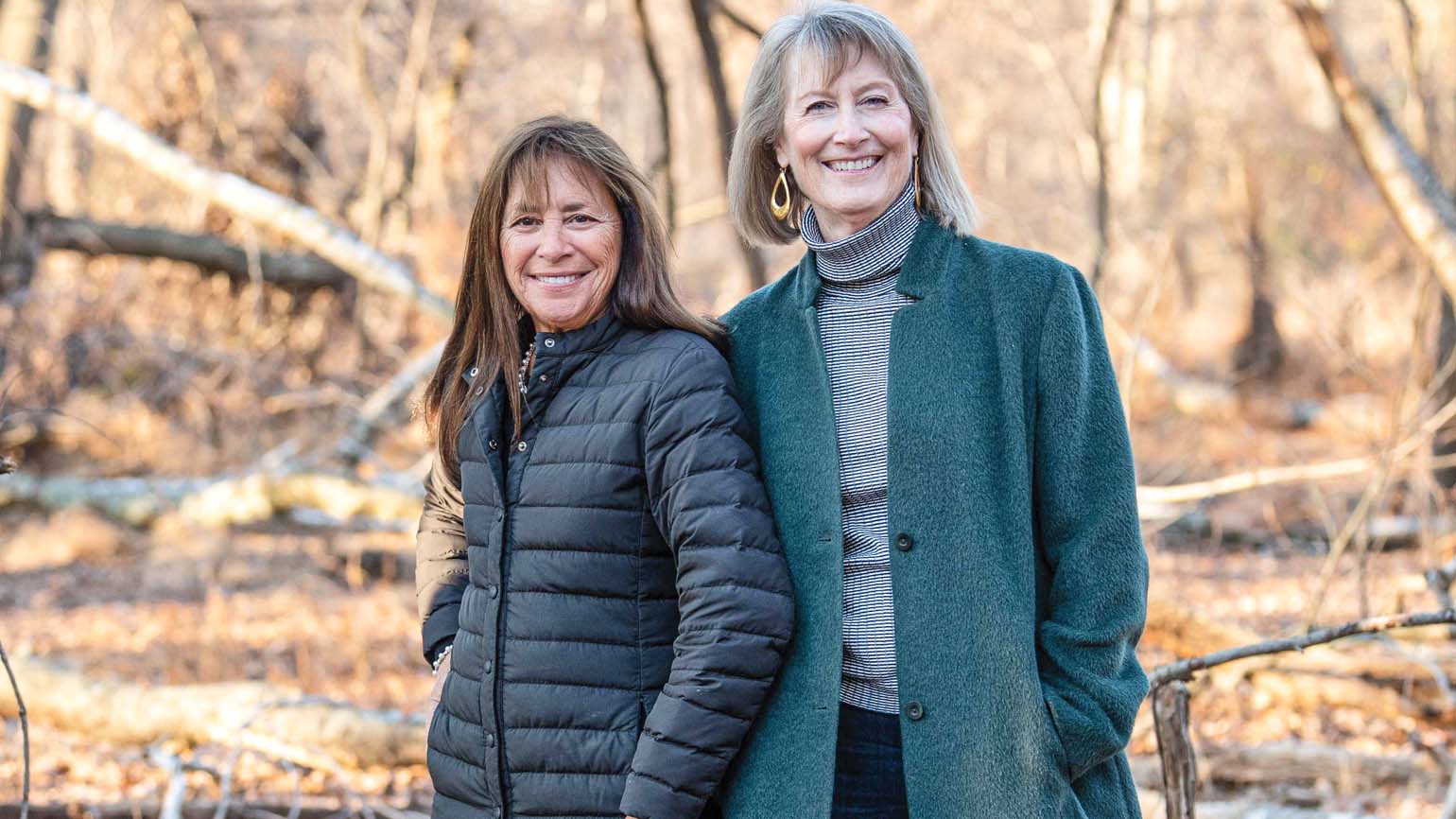
Q&A with Miracle Authors Joan Hill and Katie Mahon

A casual get-together set Joan Hill and Katie Mahon on a 20-year journey of discovery into miracles. Along the way, they published their first book, The Miracle Chase, in 2010.

In the years since, hundreds of people who’ve experienced miracles of their own have confided in Joan and Katie. It made these two women wonder, Why do so many people keep these stories to themselves? And what do these miracles tell us about God when we view them all together? We spoke with them about their findings and their most recent book, The Miracle Collectors: Uncovering Stories of Wonder, Joy and Mystery, to find out more.

What’s your definition of a miracle?

KM: We see miracles as signs of divine intervention that create a beneficial connection between God and humankind. They can be everything from seeing a cardinal to big thunderbolt experiences. Miracles are signs for the person who recognizes them as divinely meant for them.

When you were touring for your first book, you noticed that people came up to you after your readings to tell you their own stories. Did this tell you anything about the importance of sharing miracle stories?

JH: What we noticed was that the ripple effect of a miracle is important. The event touches us, and we touch others by sharing our stories. That allows us to find connection with others.

KM: Yes. Sharing miracles also helps us find meaning in them. Saying it out loud is a way to hear it anew. Also, the person hearing the story might offer a new perspective.

Why don’t more people discuss their own divine encounters and miracle stories?

JH: We did a survey on the reasons people don’t talk about their miracle stories. The number one reason was that they were afraid of people not believing them, of looking foolish.

KM: But when you share one of these stories with others, you give them permission to do the same.

JH: Sometimes miracles happen when people are going through a difficult time, so they keep these stories to themselves. But once they release them and share them, it opens them up to other experiences.

How else can people open themselves up to more miracles?

JH: The first step is about becoming aware. Often we go through life thinking we understand what we’re seeing, but we’re not looking at the whole picture. There’s a graphic that I like to use in miracle presentations. It’s a truck that’s run off the road and fallen onto a little shelf of rock below. It seems remarkable, until you see the next picture of the same scene pulled back. A massive canyon extends hundreds of feet below the shelf. Now it goes from amazing to miraculous. Changing our perception, and looking at things we see all the time in a new light, is the beginning of welcoming more miracles into our lives.

KM: It takes practice, and living in the moment. If I didn’t keep a gratitude journal, I would forget some amazing things. And you think, How would you even forget that? But we do.

People sometimes forget or don’t recognize miracles in their lives?

KM:Yes. We can get too caught up in day-to-day responsibilities and forget to step back and marvel. Or we dismiss miracles because we can’t accept that God would single us out.

We met a woman who had been on 2009’s Miracle on the Hudson flight, where the engines failed and the pilot landed the plane on the Hudson River, saving everyone on board. But the woman shrugged off the experience. Six weeks later, she read about a much smaller plane crash in which everyone on board was killed. “This is what normally happens,” she told her husband. It was then that she realized her life had been saved by God. She changed her workaholic ways to spend more time with her family and in volunteer work.

Are there instances in which we can be a miracle in someone’s life?

KM: Yes! The traditional idea of miracles is us asking God to say yes to us in some way. But in being a miracle for someone else, we say yes to God. We have opportunities to be God’s conduit. This can look like choosing to call to check in on someone who is having a hard time, even though it might feel uncomfortable. Or being supportive and helping a friend who is sick or has lost their job.

JH: It can even be with a stranger. It’s being the right person at the right time.

What did your experiences show you about people who want miracles—who pray for them, even—and don’t get them?

KM: I struggle with this one. Prayer is powerful. But I was a perfect example of someone who didn’t pray for a miracle and got one. As a college freshman, I was saved from a suspicious man who was following me by a hotel bellman who pulled me aside at just the right moment. Fifteen years later, I saw the man who followed me on the news. It was the serial killer Ted Bundy. I was grateful for the miracle that saved me. But I never prayed for it. It just happened.

It’s hard to reconcile with stories of people who pray for miracles and don’t get them. I think what this tells us is that God operates outside of the time and space that we occupy. And so, while it’s important to ask, I don’t believe that our prayers are always answered in ways we can understand or accept.

JH: Often the miracle we get isn’t the one we pray for because God’s perspective is far beyond our understanding. We see only the side of the tapestry that we have in front of us. And we may well be looking at the back of the tapestry, not the front. Miracles are a glimpse into God at work. The amazing part is how much remains a divine mystery.

Praying for Spring

Just another dreary March day, I thought, looking out the kitchen window. Not a bit of color. No hint that spring might arrive soon. And it had been a long, long winter.

My husband, Raymond, was sitting at the table in his wheelchair while I cleaned up after our breakfast. “Are you the lady who’s keeping me here?” Raymond asked in a testy voice from behind me. “I want to go home.”

I turned from the window and walked over to him. “You are home, honey,” I said, patting his shoulder.

This may have been the toughest year of our 62-year marriage. Raymond had grown so feeble he could no longer walk, and it took all of my strength to help him in and out of the wheelchair.

What was even harder, though, was his worsening dementia. Time and again he’d ask me who I was or where he was. It exhausted me physically and emotionally. I’d prayed a lot about our situation, but lately I felt as though God weren’t really listening. He seemed just out of reach. I’m at my wit’s end, Lord, I prayed. Please give me a sign of spring to show me you hear my prayers…something.

I finished the dishes and wheeled Raymond into the living room. He liked to sit in the soft ruby-colored chair by the picture window and watch our neighbors go about their day. I settled him in the chair before I opened up the drapes completely.

Suddenly his eyes lit up. I turned to look through the crack in the curtain to see what had caught his attention. A robin sitting in the branches of the tree, a respite of red against the grayness. Maybe God was listening. Then I pulled open the drapes.

That’s when I saw it. There on the lawn with its patches of grimy snow were hundreds of robins. It was a blanket of red from our driveway all the way down to the street!

Download your FREE ebook, A Prayer for Every Need, by Dr. Norman Vincent Peale

Philip Yancey: The Triumph Over Suffering

Philip Yancey is a journalist and bestselling author of books like Where Is God When It Hurts?, Disappointment with God, and The Question That Never Goes Away. He’s been writing about the mystery of suffering for more than 30 years, a topic he discussed in the April/May 2017 issue of Mysterious Ways magazine. Editor Diana Aydin spoke to Yancey about what he’s learned in his explorations of human suffering.

Your father died of polio when you were a baby. Did that spark your interest in the mystery of suffering?

Looking back, I’m sure that played a role. But the quest for answers really came when I was a young journalist. Again and again, people who’d suffered would tell me, “The worst part of all was when people would visit me in the hospital and come up with these contradictory explanations for suffering: ‘God’s punishing you.’ ‘No, no, no, it’s not God, it’s the Devil.’ ‘No, it’s God, but he’s not punishing you, he’s chosen you to be an example.’”

I didn’t know what to say to them in response! That’s really what started me on the intellectual question. To make sense of this thing we all experience at some point.

Why is suffering a part of life?

The writers of the Bible really did not perceive this world as God’s ideal. They perceived it as a very good world that had been spoiled. We have been given good, strong wood that can build a house. But a bad person or a tornado can take that same wood and turn it into a weapon. We live on that kind of planet.

Take humanity. There are beautiful examples of altruism, but there’s also the presence of evil. So we live in kind of that mixed world.

Where is God when we suffer? Is he ignoring us?

It’s really easy to think when something bad happens, “Well, God is punishing me.” But we have a really clear picture of how God feels about those who are going through hard times. All you have to do is follow Jesus around to see how he handles people going through suffering—a widow who lost her only son, a person with leprosy, a woman with a very shameful condition, a blind person.

He was always on the side of the one who suffers and responded with compassion and healing. That is the brightest clue we have to how God feels about us when we go through pain. God is on our side. I wish sometimes God would be more overt, more direct. But for whatever reason—and Jesus suffered this too—God lets the rules of this world play out.

There’s that lovely and mysterious passage in Hebrews that says Jesus learned obedience through the things he suffered. Because he went through that, we now have an advocate, a representative, who knows what it’s like down here.

Why is God sometimes silent when we suffer?

C.S. Lewis wrote about that when his wife died. That it was like God had slammed the door shut and double bolted the door. I think part of it is just the isolation and loneliness of grief and pain itself. Part of it is what we’re experiencing ourselves and it’s easy to project that onto God.

Another important part of it is that God often makes his presence known through a community of people around us—God uses people to show love when he seems not to.

READ MORE: WHY ME, GOD? THE MYSTERY OF SUFFERING

Some people seem to suffer more than others. Why?

Why does a tornado hit this house but not the house right next to it? The Bible doesn’t give an answer. It turns the attention from the “why” question to “Now what? What are you going to do?” That was the message of Job. Are you going to trust God even though you don’t have any reason to? Or are you going to turn bitter and turn away from God?

There are some things going on that we just don’t know. But we do have that promise that God is a loving and compassionate God, the God of all comfort. We have a strong sign of what that looks like in Jesus. And hopefully we have people around us who show that same comforting love.

What’s the best way to comfort someone who’s suffering?

In the Book of Job, when Job’s friends saw his suffering at first, they tore their clothes, sat down in anguish and, for seven days and seven nights, didn’t say a word. That’s what really helped him. It’s when they opened their mouths that the problems started!

I think we should do what Jesus did. He didn’t give platitudes. He just said, “I’m really sorry, how can I help?” and kind of let the person suffering decide where the conversation would go. It’s one time we should hold our tongue, unless we’re asked for really specific advice and, even then, be really, really careful.

Is it true that God won’t give you more than you can handle?

I would never tell someone that God won’t put on you more than you can bear. Some people break. It’s important to create a safe place to get it out, to express your needs, to get out your feelings about God. About two thirds of the Psalms are of lament or complaint. Again and again they say, “God, I’m upset with this world. I’m upset that good people are punished, bad people prosper. It’s not right.”

I think it’s really significant that God included many prayers in the Psalms that express complaints against God. So I say if you have those feelings, get them out.

How can we trust God to bring us through the other side of our pain?

One example I like to give involves my wife, Janet. She’s pretty prompt. If she’s supposed to pick me up at 5 o’clock and still doesn’t show by 5:30, I don’t think, “Oh there goes my irresponsible wife again! I can’t count on her for anything.” Instead I think, “There’s something going on that’s causing Janet to be delayed.” I know who she is, I know her character.

If we get to know God and believe God, then when something bad happens, my first response isn’t, “God let me down again.” There are things going on that I have no idea about. If we learn to trust God, it doesn’t mean that bad things aren’t going to happen to us. But they won’t pull the rug completely out from under us.

We know this isn’t God sticking pins in us. God is on our side. My job is to trust, appeal for help to those around me and ask God to show me how something good can come out of it.

What good can come out of suffering?

There’s an opportunity that pain gives us. It forces us to concentrate on what matters most. I would say pain is like a hearing aid. When it happens, it’s up to us to tune in and use our suffering as an opportunity for growth, for helping others, for any way to redeem it. That doesn’t take it away, but it can help redeem it.

Paul’s life was full of suffering: prison, a shipwreck, a snake bite, torture. And yet he said, “I look back on all these things God worked for good in my life.” He goes on to say that nothing can separate us from the truth of God’s love, not space or time or even death. He doesn’t pretend that this is an ideal world, but he does give hope.

What do you say to those of us who ask, “Why me?”

I say, ‘I don’t know, but here’s what I do know: God is on your side.’ I’m not sure it would really help us if we did have an answer. In a sense, you can figure out a lot of the whys behind a tragedy, like an airplane that crashes—the landing gear collapsed. But does it help the people who lost a loved one? Do they feel better if it was a mechanical failure rather than a human failure? I don’t think so.

Suffering isn’t a mathematical puzzle that will be solved. It’s messy, and it’s important to think it through, but when it hits you, you just can’t be prepared. Rational answers aren’t going to do it for you. I don’t think that answering the question of why will give the satisfaction we think it might. The real issue is, ‘What can be somehow redeemed from it?’ That’s the question we should be asking.

On Rosh Hashanah, Remembering that God Is in Control

Wednesday night marks the beginning of the Jewish New Year, the holiday known as Rosh Hashanah. According to Jewish tradition, this marks the 5772nd birthday of the world.

On this day, the Hebrew Scriptures tell us that God opens the Book of Life and writes down what fate will befall us in the year to follow.

However, it is not until 10 days later, on the holiday of Yom Kippur, that the book is sealed. Therefore, tonight and the ten days that follow are meant to be a time of reflection and repentance for our sins, misdeeds and broken promises.

One lesson imparted upon us by the holiday is that we are not perfect, and never will be, but we can all be worthy of God’s love and forgiveness.

Guideposts contributor Rhoda Blecker wrote a story a few years back about the unorthodox way she learned this important lesson:

“Every year at the High Holidays, we’re asked to reflect on our lives during the past year so that we can resolve to do better in the coming one. As I walked toward the synagogue for the first Rosh Hashanah service, it was hard not to think about all the medical and dental problems we’d had to deal with in the past twelve months. If there was anything I wanted to leave behind, it would have to be the messiness and chaos. I wanted a perfect next year.

I didn’t think I was being unrealistic. Yes, I was going to services without my husband, Keith, who’d had two teeth extracted that morning, but that was the last of the old year, after all, not the start of the new year. There was still a chance everything could be wonderful.

Ushers were handing out the special prayer books for the High Holiday services as we entered the sanctuary. I took a book without looking at it and found a seat with some other women. We chatted until the rabbi began speaking.

Then I looked at the prayer book I’d been handed. A large white label was pasted at the top of its cover.

‘The cover of this book is upside down,’ it read.

For a moment I was just startled. Then I began to laugh. The book was not put together right, but it still had all the prayers in it, and it was being useful, just like all the other books.

And I accepted that the next year would be what it would be.”

Rhoda’s life may have been upside down at times, and with all her family’s medical and dental issues, she certainly couldn’t be blamed for dwelling on the imperfections and problems in her life. But with a misprinted prayer book, she was reminded that God has a purpose for everyone. In the coming year, she’d just have to wait and discover what hers would be. Did she pick the book up by chance? Or was it meant just for her?

On this Rosh Hashanah, whether you’re Jewish or not, take the time to apologize to those you have wronged. And remember that however upside down you may feel, there’s always a way forward.

As we Jews say, “L’Shana Tova.” Happy New Year.

Do you have a Mysterious Ways story to share? Send it to mw@guideposts.org.

One Week in Heaven

I’ve been a neurosurgeon for more than 20 years. Over that time, I’ve heard a lot about angels.

Angels who have shown up in patients’ recovery rooms after a rough surgery, angels who come in dreams to comfort friends of a patient, and angels who visit mourning relatives. Angels who always seem extraordinarily real to the people who see them.

Such people cite convincing details about their angel’s appearance, so the angels don’t seem vague or imaginary at all.

I listened to these stories with sympathy. Neurosurgeons deal with the brain, the single most complex, and least understood, organ in the body. Operating on the brain can be highly traumatic both for patients and their loved ones. So I’d nod my head and say that such blessed events could happen.

Not that I believed any of these angels were real.

The brain is a fantastically efficient machine—efficient enough that if traumatized by illness or surgery, it can actually fool itself into getting better by generating healing imagery. Imagery like a guardian angel, complete with white robes and wings and whatever else a patient might find most comforting.

When patients experienced angelic visitations like this, they were simply benefiting from the marvelously efficient mechanisms that the brain possesses that allow it to automatically soothe and heal itself.

Of course, I never said any of this to my patients. These kinds of experiences can be hugely helpful. It was not my place to burst the bubble of a patient who wanted to believe in angels. If it helped a patient get better, then she could believe in anything she wanted.

So you can imagine my surprise when, during the week beginning the tenth of November 2008, I encountered my own guardian angel.

I awoke in my wife Holley’s and my Lynchburg, Virginia, house an hour earlier than usual, with a nasty backache. Thinking it was left over from the low-grade flu that Holley, our younger son, Bond, and I had been suffering from all week, I tiptoed down to the bathroom and ran a hot tub.

The hot water only made the pain worse. It spread to my head. I managed to get myself back to bed. I flopped facedown beside Holley, and she woke up and asked me what was wrong. A little later Bond awoke and came in as well. Hearing that I had a headache, he reached out and massaged my temples gently.

I screamed in agony. Holley wanted to call an ambulance, but I told her the pain would go away on its own. “Trust me,” I said. “I’m a doctor.”

Holley left me to rest quietly for a while and got Bond ready for school. She stayed out of the room for an hour and a half so as not to wake me. When she finally came back in, she found me lying rigid on the bed, my jaw jutting forward, my eyes rolled back in my head. I was having a full grand mal seizure.

Holley called for an ambulance, and 45 minutes later I was wheeled into Lynchburg General Hospital, where I’d worked for years. By that afternoon, I’d slid deep into a coma: one from which I would not recover for another seven days.

My doctors discovered that I’d contracted a disease, very rare in adults, called bacterial meningitis. Millions of E. coli bacteria had invaded my brain and spinal cord, and were literally eating my cortex—the outermost portion of the brain, and the part responsible for nearly everything that makes us human.

Thought, logic, emotion…it all comes from the cortex. By that Monday afternoon, mine was completely shut down with very, very little likelihood of it working ever again. My chances of survival were small. My chances of surviving as anything more than a vegetable essentially nonexistent.

Family and friends gathered at the hospital, and over the next seven days they kept a vigil at my bedside, praying for my recovery. For the first few days my doctors tried to stay hopeful. By day five, none of them believed I stood a chance of surviving.

So on day seven, they met with Holley and gave her the news that no doctor ever wants to have to deliver.

It was time to take me off life support—to let me die.

Just a room away, I lay in the position I had lain in all week—a ventilator tube down my throat, my face slack, my hands and feet beginning to curl up like leaves as my circulation gradually ebbed away from my limbs. Bond, inconsolable, sat by me, holding my hand.

My eyes popped open. Looking around me like a newborn, I took in a world that everyone believed I had left behind forever.

It took months for me to fully recover physically. I lost almost 20 pounds during my week in a coma, and my brain—miraculously unscathed despite the weeklong bacterial attack—had to work hard to find its bearings again in the physical world.

But the physical recovery was the easy part. There was something else that had to heal as well in the wake of my recovery. I guess you could call it my belief system.

I now believe in angels. Not in some abstract way, but in the same way that I “believe” my car is sitting in my driveway, in the same way that I “believe” that I love my family.

In other words, I don’t really “believe” in angels at all. I quite simply know they are real. During my seven days in a coma, I journeyed to a world above this one: a world indescribably vibrant, vivid, and—most importantly—real.

When I entered this world, the first thing—the first person—that I saw was a beautiful young woman. She had long golden-brown hair, deep-blue eyes, a simple dress of powder blue and indigo and pastel-orange peach. I realized we were riding on the wing of a butterfly!

In fact millions of butterflies surrounded us, vast fluttering waves of them, dipping down and coming back up around us again. It was a river of life and color, moving through the air.

As we floated along together above a landscape of staggering beauty—of trees and clouds and waterfalls—she spoke to me in a language beyond words. And what she told me was, in essence, the same thing that the “imaginary” angels had told all those patients of mine over the years.

That I was loved. That I was safe. That I would always, always be taken care of.

Today, I’m still a surgeon, and still a man of science. I still believe the brain is a staggeringly sophisticated machine, capable of the most extraordinary feats, both when well and when under attack by illness.

But today, when a patient tells me that he or she has been visited by an angel, I no longer marvel at how clever the brain is in creating such realistic illusions.

Angels, I now know, are not illusions at all. I know, because I learned it from my own angel. An angel with blue eyes, who I met on the wing of a butterfly.

Download your FREE ebook, Angel Gifts: Inspiring Stories and Angel Crafts to Nurture Your Creativity


One Soldier’s Amazing Survival Story

Today I read the most incredible story. It comes from the Daily Express, a newspaper in the UK. And it concerns a British soldier, deployed in Afghanistan. The newspaper called what happened to him a coincidence. But it seems to me that something more was at work…

Nineteen-year-old Glenn Hockton was stationed in the Helmand province of southwestern Afghanistan. The province is one of the most dangerous places in the country—notorious producing the world’s largest supply of opium and for being one of the last Taliban strongholds.

One day, Glenn was on patrol when he felt the rosary beads he wore around his neck slip off. He tried to catch them, but they fell to the dusty ground. He bent down and reached to grab them. At that moment, he saw an object loosely covered with dirt, embedded in the ground at his feet.

A land mine.

Glenn did as he was trained. He didn’t move. He called for help. For 45 minutes, he stayed still until his fellow soldiers were able to defuse the explosive.

Was it a coincidence the beads slipped from his neck at that moment, in that place? Maybe.

But there’s more…

Glenn was not a religious man. He brought the beads to Afghanistan because of a story his mother had told him, about his great-grandfather.

His great-grandfather, Sunny, fought in World War II. He was held as a POW by the Nazis, and forced to march away from the advancing Allied forces. While marching, he caught sight of something on the ground in front of him. He stopped walking, and bent over to pick it up.

Just then, a shell exploded in front of Sunny, missing him by a hair.

The object he stopped to pick up? A rosary.

Glenn and Sunny, both saved in wartime, both saved the same way? Now that’s more than coincidence.

Not all of us have stories as dramatic as Glenn’s, but many of us have experienced moments that are too incredible to be only “coincidence.” In next week’s blog, I’ll share a few stories from my own family. Please keep sending me your stories at mw@guideposts.com.

One Rabbi’s Passover Blessing

I had a lot on my mind that sweltering summer day I set out on the 100-mile drive to Minneapolis, where my wife, Caryl, was undergoing treatments after a mastectomy. How would she respond? I worried. Would she beat breast cancer?

Halfway there the air conditioner in my car conked out. Is this a bad sign?

There was a garden center down the road. Might as well get out of the heat for a few minutes, I thought. Maybe I could pick up a plant for Caryl’s room.

I walked into the store and immediately spotted a foot-high lemon tree. It was in full bloom and already had one tiny lemon, about half an inch long, hanging from its branches. The saying “Make lemonade from lemons” popped into my mind. I sat on a bench next to the tree, letting the cool air wash over me. Please, God, I prayed, make good come from Caryl’s illness.

I returned to my car carrying the little lemon tree.

Caryl loved it. “It’s beautiful,” she said. “Thank you.”

Over the next several months, Caryl battled through chemotherapy—seven difficult treatments—and we watched that lone lemon grow, first to the size of a ping-pong ball then even bigger. The day the lemon reached full size we got wonderful news. Caryl was cancer-free!

By April, the time of Passover, the lemon was ripe. “Want to harvest it for our Seder meal tonight?” I asked my wife.

She nodded. “I would like that very much.”

So I plucked the bright yellow fruit from the tree and gave it to Caryl. She squeezed out the juice, mixing it with water and a little sugar. At our Seder celebration that night, we drank the lemonade together in a toast to our future good health. Like the more traditional Passover foods on the table—horseradish to symbolize the bitterness of slavery, parsley to represent new life—the lemonade reminded us that no matter how hard our struggles may seem, God always gives us hope that better things are to come.

They have: Thirteen years later Caryl remains strong and healthy. And that’s the very best sign.

One Family’s Christmas Miracle

It was almost Christmas of 1985—my wife Elba and I had been married for four years, and our daughter Christine was three and a half years old. Our second child, Paul, had just been born a month earlier. He was a seven-month preemie with significant urological problems and an essentially non-functioning kidney. When his condition was diagnosed during the fifth month of Elba’s pregnancy, he was given a 50 percent chance of survival. Doctors monitored his condition in his mother’s womb until there was no other choice but for Elba to be induced into labor.

On the day he was born, Elba was told to hold Paul in her arms for a few minutes before he was taken to the NICU—neonatal intensive care unit. Every visit to the NICU challenged our faith and deepened our love for our son. The daily updates from doctors ranged from good news to not so good.

Whenever we entered the room, we had to wear hospital gowns and wash our hands. The sounds from the equipment in the NICU were alarming and frightening. Paul was inside an incubator with large holes on the side so doctors and nurses could reach in and care for him. It was also the only way we could touch his tiny hands.

We spent Thanksgiving at the hospital as the days in the NICU turned into weeks. When the calendar turned to December we began to wonder if we would also spend another holiday there. All we wanted for Christmas was Paul to get well and come home. Friends, strangers and loved ones prayed along with us for a Christmas miracle.

One evening I walked into the NICU and noticed the incubator next to Paul’s was now empty. I turned to the nurse. She didn’t say a word, but her mood was somber. My heart dropped to my stomach. Would the same thing happen to our son? We kept praying, hoping for a miracle as doctors and NICU nurses worked and cared for him around the clock. Although there was no immediate cure for his condition, they did a procedure that would allow him to be medically stable until further surgeries could resolve the situation.

One morning the doctors came to see us and gave us the news we had been praying for: Paul could come home for Christmas. On a cold December day we walked out of the hospital with a five-pound, handsome baby boy. The Christmas spirit of hope and joy filled our home and hearts. It was and remains the most memorable Christmas in our family and a constant reminder to never lose hope.

Of Healing and Miracles: When Nurses Make a Difference

Nurses are a special breed of caregivers; they are at our sides when we are at our most vulnerable and play a vital role in restoring us to health. Here are some of our favorite Mysterious Ways stories about nurses who help to facilitate healing, both medical and miraculous.

A Nurse’s Comforting Words
She was a nervous wreck as she awaited surgery on her ruptured disk, but a caring nurse comforted her in a way she could never have expected.

This Nurse’s Nightmare Saved a Life
Her unsettling dream didn’t make any sense, until she got to work that night. Then the lessons it taught her proved to be life-saving ones.

With God’s Help and a Caregiver at His Side, He Was Given a Second Chance at Life
The doctors feared he had lost all his higher brain functions, but God—and one dedicated caregiver—knew otherwise.

A Heaven-Sent Caregiver for the World’s Best Nurse
After devoting her life to caring for others, her mother deserved special treatment in her final years. But where would they find just the right caregiver?

A Nurse and a Bible Verse Helped Him to Fully Heal
A burn victim questions whether he deserves the prayers and support he’s received, but a few choice words of Scripture from the lips of a kindly nurse open his eyes.

Nashville Dreams

After worship services one Sunday night, I stepped outside and heard someone strumming his guitar and singing on the church patio. Man, he’s really good, I thought. It made me think about my own dreams of being a musician. I’d been writing songs since I was eleven years old. My goal was to write a song that would be recorded. But in thirty-five years, it never happened.

Truth be told, I wasn’t really sure how to make it happen. You can send your song to a place like Nashville, Tennessee, and hope someone likes it, but after years without a response, you tend to wonder if anybody has listened to it. It’s a little like playing Ping-Pong by yourself.

After the man’s performance, I walked up to him and struck up a conversation. I said that I had heard good things about the kind of guitar he was playing. He said that he wanted another, but didn’t know where to buy one. “I know a great guitar shop around here,” I told him.

The next day I took him to the shop. While we were looking at guitars, I asked him if he ever collaborated with other songwriters, and he suggested that we write a song together. Two days later we met, and made some headway on a nice song.

That’s when he dropped the bombshell. He told me that he was just about to sign with a record label. “This song we just wrote could very well be on my first album,” he said.

His album did come out and, yes, I was credited with co-writing a song. I now have a relationship with a publisher who listens to all my songs. People congratulate me and call it an accomplishment. But I know better. It’s a miracle.

Download your FREE ebook, Mysterious Ways: 9 Inspiring Stories that Show Evidence of God’s Love and God’s Grace

5 Mystical Moments in the Bible

“I’d be surprised if anything mystical ever happened to me,” we might say. Save that for the really holy folk. But when I consider some of the mystical moments that happened to people in the Bible, they seemed to be just as surprised as any of us would be. Take a look.

1) Moses encounters the burning bush.
Moses is there in the wilderness tending his father-in-law’s flock and God appears to him and speaks from a burning bush. God identifies Himself, saying, “I am who I am.” He has a job for Moses. To lead the Israelites out of Egypt.

Moses is sure that God has chosen the wrong guy. He asks for proof. Why trust a burning bush? God turns Moses’ staff into a snake. His hand is made leprous then healed again. Even then Moses feels inadequate. And yet ultimately does as he’s called to do—with the mystical moments only multiplying (the parting of the Red Sea, manna in the wilderness, the seven plagues, etc.).

2) Jeremiah is given God’s words.
Jeremiah is another reluctant prophet. “I do not know how to speak,” he says when called by God, “for I am only a boy.” Then God puts out His hand and touches Jeremiah’s mouth. “Now I have put my words in your mouth,” God says.

Prophetic words, profound ones, holy writ we still read. Public speaking can be a big fear for many of us. Would that we could trust, like Jeremiah, for God to put the words in our mouths!

3) Jonah is swallowed by the whale.
Jonah was so resistant to doing what God wanted him to do that he got swallowed by a giant fish and sent to Ninevah, exactly where he didn’t want to go. He learned his lesson, though. When he arrived, he did God’s bidding.

God changed him, turned him around, and that can be a key to any mystical experience.

4) Jesus appears to His disciples on the road to Emmaus.
The Resurrection had come about and later that day Jesus walks with two of His disciples as they’re headed to a village called Emmaus.

They talk with Him. It’s a seven-mile journey. They discuss all the things that had happened to Jesus, how He was crucified and died and how the tomb was empty, all the while never recognizing their Lord. Arriving at Emmaus, they ask Jesus to stay with them. Only then, when He is breaking the bread and blessing it, do they know who He is. And in an instant He vanishes.

Sometimes the power of a mystical moment can’t be felt until it is over.

5) Peter is released from prison.
The Apostle Peter is thrown into prison. He is bound with chains and sleeping between two soldiers. Other guards are at the prison door, keeping watch over him. How is he ever going to escape?

Then an angel appears and a light shines in the cell. Peter is awakened, the chains fall off his wrists. He is told to fasten his belt, put on his sandals and leave. He hardly realizes what’s happening to him—he thinks it’s a vision—but does as he’s told. He passes the guards, the gate to the city opens. He is free. What happened to him took him totally by surprise.

Makes me think there are moments out there, ready to take us all by surprise and lead us to places we would never expect to go, doing God’s work.

Editor’s Note: In the original version of this post, Peter’s release from prison was said to have happened to Paul. We regret the error.