Embrace God's truth with our new book, The Lies that Bind

Mysterious Ways: A Letter-Perfect Gift for a Cancer Patient

My husband’s leukemia—which we’d hoped was in remission—was back. Russ had undergone chemotherapy immediately after his diagnosis 11 months earlier and done so well. We’d even been making plans for a getaway. Now he had to go back on chemo. If only I had a sign—something—to assure me that God was still with us.

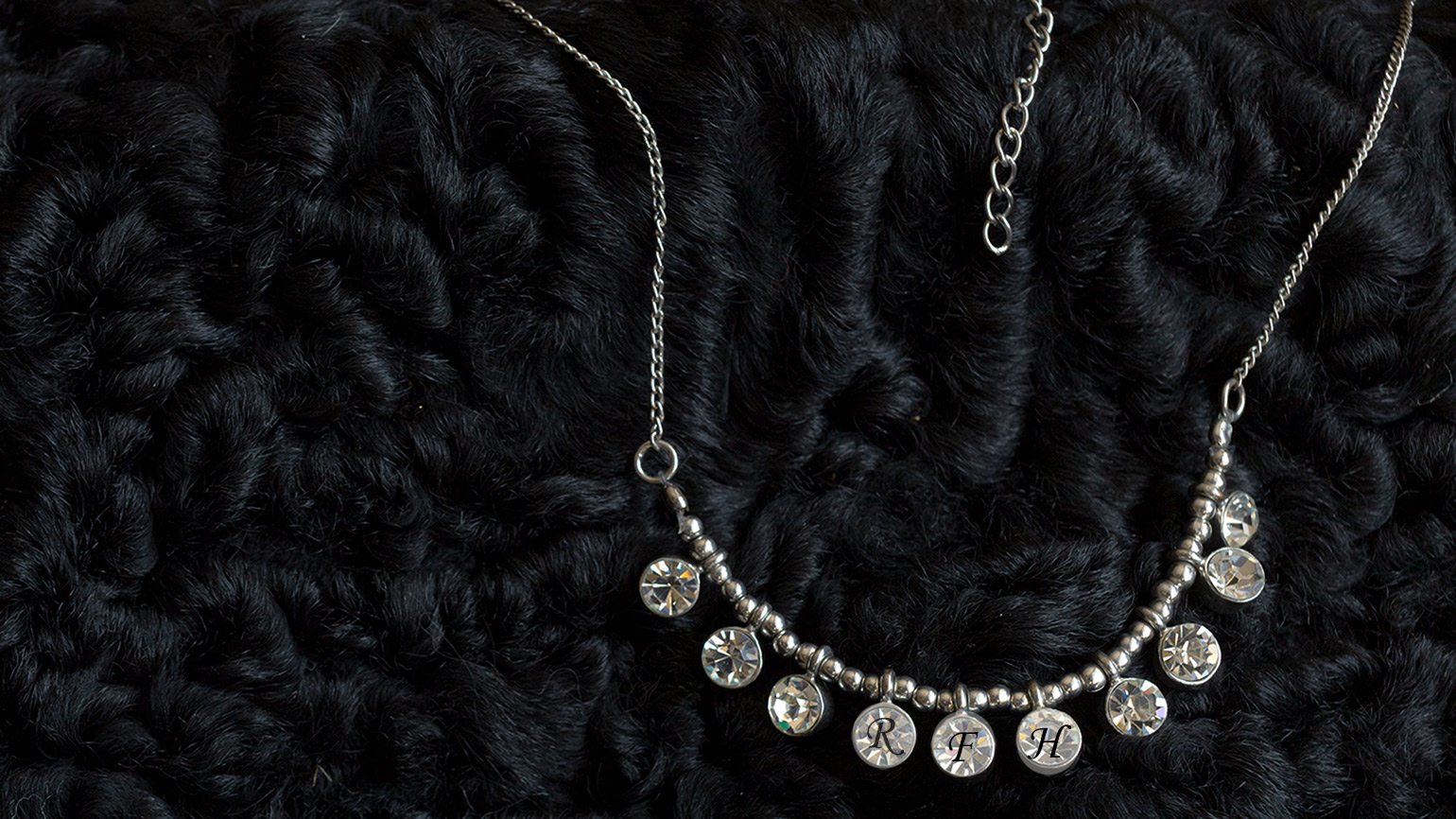
Brrring! The phone rang. I worried it was the doctor, but it turned out to be my friend Roberta. She’d found a necklace at a vintage boutique. Knowing my penchant for anything monogrammed with an R, my first initial, she couldn’t resist. “I’m leav­ing it in a gold box on your wel­come mat, Rita,” she said.

“That’s so sweet,” I said but then changed the subject. Roberta was a nurse. She didn’t yet know about Russ’s relapse, and I wanted to get her advice.

“How’s his appetite? Energy?” Roberta asked. “How often is the chemo?” She reassured me about Russ’s course of treatment.

We got off the phone. Not five minutes later, Roberta called back. “I don’t think that necklace was for you after all, Rita. I can’t shake the feeling it’s R for Russ.

That’s strange, I thought. Russ wasn’t big on jewelry. But Roberta was adamant.

She dropped off the necklace that afternoon. I showed it to Russ. “Love the R,” he said, admiring the gold initial encased in a delicate glass bead with matching trim. Then he looked closer. “Check out these other beads!” he said.

I could see that two of them also had a letter on them. There was an H, like our last name, Hodges. It was the other one that gave me pause. F.

Russ’s middle name wasn’t common knowledge. It had always been a bone of contention in his family. You see, when he was born, his mother named him Russell Franklin Hodges, in honor of Presi­dent Franklin Delano Roosevelt. But Russ’s father, who was no fan of FDR, crossed out the name on the birth certificate.

The ink made it through most of the letters but not the F. So Russ’s middle name ended up simply as F. There’s no way Roberta could have known that. Yet here it was, a necklace with Russ’s initials: R.F.H.

A sign meant for us. Right down to the letter.

Mysterious Ways: A Hug from Heaven

My friend, Loretta, was dying of stomach cancer. She had undergone a debilitating round of chemo that hadn’t worked. But she was so brave, even in the face of death. That didn’t surprise me. She was the friend who’d comforted me two years earlier, after my 21-year-old daughter, Nancy, was killed by a drunk driver.

I’d never gotten over the pain of being unable to say goodbye to my daughter. As I thought of Loretta going to heaven, I wondered if she could give Nancy a message. But what would I say? Nancy knew we loved her. To say how much we missed her would make her sad. Maybe when Loretta’s in heaven, she can just give Nancy a hug for me.

It was a crazy notion. How would I even know if Loretta could fulfill my request? It seemed inappropriate to even ask. I waited and waited, hemmed and hawed, unsure of how to even bring it up. Finally, I phoned Loretta and asked, “Can I come over?”

I could tell from Loretta’s voice that she was glad I’d offered. “Yes, please do,” she said. “I’m having a good day today.”

I saw Loretta through the storm door when I arrived, and was shocked by how thin and feeble she was. “Come on in,” she said. As I made my way to the living room, I began to have second thoughts. It would be in poor taste to ask for such a favor, I decided.

Before I could say a word, Loretta turned to me. “I have something to tell you,” she blurted, as if unable to keep a secret. “I don’t want to upset you, but I’m going to see Nancy.”

I took her hand gently and smiled. ”Give her a hug for me?”

“I will,” Loretta promised.

One night a few weeks later, I had the oddest dream. A young woman, dressed in blue, was walking in the countryside. She turned to face me. Nancy! That’s when I woke up. But in the darkness of the bedroom, I felt something grip my body–gently, but firm. A bear hug that warmed me from head to toe.

In the morning I got a call that Loretta had passed away in her sleep. Only then did I understand what had happened in my bed that night.

Loretta did what she promised, that didn’t surprise me. Feeling Nancy hug me back? That did. The Lord knew how much I needed it. A feeling to give me comfort until I’m able to embrace Loretta and Nancy again.

Mysterious Ways: A Commuter’s Answered Prayer

Gas. Brake. Gas. Brake. My foot was starting to cramp from switching between the pedals. Typical for prime rush hour.

My office was 30 miles from home. Before my first day, I’d mapped several routes. I discovered that no matter when I left or which route I took, my commute ended up the same—a total nightmare. Aggressive drivers, bumper-to-bumper traffic, construction delays. Evenings were the worst. After a long day at work, I wanted to relax, not inch along the highway while car horns blared.

I’d taken to praying during my drive. I asked God for traveling mercies—the tranquility to stay calm and alert on the road, and safe passage both ways. Still, month after month of the horrendous commute was wearing me down. I was stressed, having trouble sleeping and quick to anger. I couldn’t go on like this.

Traffic was picking up…finally. Seeing signs for the mall, I let out a sigh of relief. The mall meant I was halfway home. It was a high-end mall, with designer boutiques and specialty stores. Though I couldn’t afford to shop there, it had become a landmark I looked forward to.

As I passed it today, I said another prayer, different from my usual. More specific and fervent. “Please, God,” I whispered, “I want a shorter commute. I don’t want to have to drive farther than this mall ever again.”

A few days later, my supervisor pulled me aside. The company was dissolving my department. I was being let go, effective immediately. I cleared out my desk, trying not to feel bitter. If this was God’s way of answering my prayer, I didn’t like it. But the horrible commute was over.

While I looked for a new permanent position, I gave my résumé to a temp agency. The recruiter had no idea when there would be an opening for someone with my skill set. “I’ll call you if something comes up,” he said. It felt like a brush-off to me.

Imagine my surprise when the recruiter called the next Monday. He had a 12-week position. Good pay. Good company. Of course, I accepted. I had just one question. “I don’t know where the company is located,” I said. “Can you give me directions?” “It’s easy to find,” he said. “You know the mall? The high-end one right off the highway?”

“Yes.”

“The office is just across the street.”

For more inspiring stories, subscribe to Guideposts magazine.

Mysterious Ways: 19 Unexpected Blessings

I’d had a long day of teaching psychology. All I wanted to do now that I was home was go in, have dinner with my wife and unwind. But something blocked my front door. A large UPS box, addressed to me. Odd, I didn’t order anything. The label said it came from the American Bible Society.

I hefted the box through the door. “Honey, you know anything about this?” She didn’t. I cut it open. Well, no surprise—Bibles. A bunch of them. But no bill, no indication of who had ordered them.

The mystery nagged at me even as my wife and I caught each other up on our day. I told her about handing out the midterm grades. After 25 years at the Community College of Southern Nevada, I still enjoyed seeing those nervous looks on my students’ faces disappear when they discovered they’d passed.

Many of them struggled, either financially or academically; some were on their “second acts” in life. One, a woman in her late thirties, looked absolutely panic-stricken awaiting her grade—afterward, she couldn’t contain her joy. “Thank you, Jesus!” she cried out, loud enough to draw laughter from the other students.

“Thank you, Jesus” was the wife of a pastor who’d moved to a rough neighborhood in Las Vegas to plant a church. She was in her first semester in the nursing program, hoping to get a job to help with her family’s finances.

The next day, I spied the student in the cafeteria. I pulled up a chair and mentioned my odd delivery. “I don’t know what I’m going to do with all those Bibles,” I said. The woman’s eyes lit up the way they had when she’d learned her midterm grade.

“My husband and I are trying to start a Bible study, but we can’t afford Bibles for our new members and folks don’t have money to spare,” she said.

“How many do you need?” I asked.

“Nineteen,” she said.

It would be weeks before an acquaintance finally confessed that she’d “been impressed” to donate the Bibles to me, convinced I’d know who to give them to. Why she’d sent 19—exactly 19—she couldn’t quite explain.

Mysterious Holiday Blessings

​Edward Grinnan, Editorial Director
Edward with his mom and his wife, JuleeChristmas 1999, my family took the festivities to Mom, since her Alzheimer’s had gotten so bad. On the car ride over to her care facility, I asked my wife, “Does Mom even know it’s Christmas?” It’d been a while since I’d last seen my feisty, independent mom. She’d barely talked the past few months. We arrived at Mom’s and helped her open her gifts.

She paid attention to just one. A “12 Days of Christmas” pop-up book from my cousin. Mom turned to the first page and, to our great surprise, began to read. The words were a bit off—three French hens turned into three French houses—but she kept going. She faltered at Day 10.

I jumped in to help her finish. Mom sat up straight in her wheelchair, her eyes flashing. “Are you going to let me do this by myself?” she snapped. For a minute, I saw my mom again. Right then, we all knew it was Christmas.

READ MORE: THE FIREHOUSE CHRISTMAS MIRACLE

Susan Downs, Contributing Editor
On December 19, 1984, our soon-to-be adopted baby girl, Kimberly, was scheduled to arrive at JFK Airport from South Korea. I woke up a bundle of nerves. My husband and I had encountered one obstacle after another in the adoption process. Some days I wondered if we were really meant to be Kimberly’s parents.

I opened my devotional book, hoping to find peace. I was a contributor to the book and the devotional for the day happened to be one I’d written almost two years earlier, long before we ever considered adoption. It described a newspaper account of a family who welcomed a long-awaited child from Asia at the airport—just as my husband and I were about to do! Nerves gone! I couldn’t wait for Kimberly’s first Christmas with us.

Adam Hunter, Managing Editor
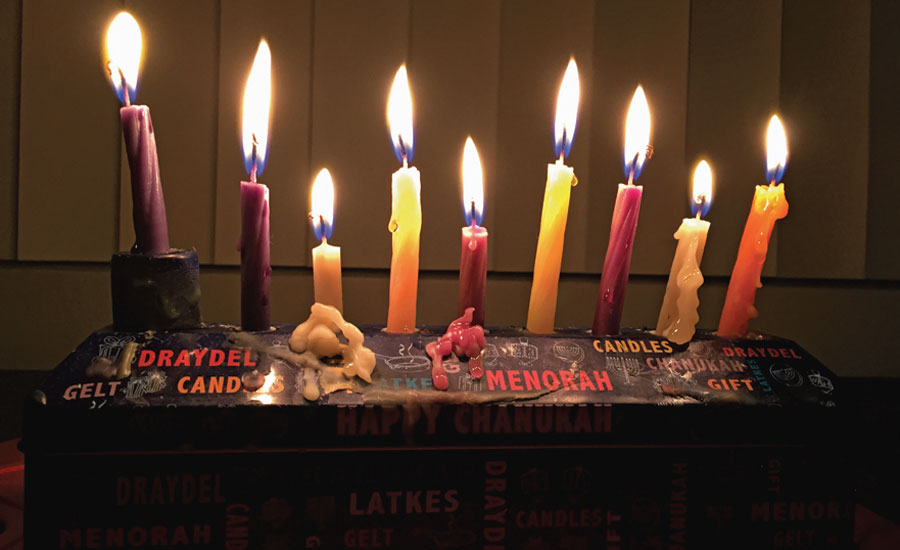
The first night of Hanukkah, my fiancée and I had no menorah to light. I went to the address I’d found of a Judaica shop. It was now a gym. No menorahs, just muscle heads. Dejected, I headed for the subway. Soft light spilling from the windows of a Jewish women’s college caught my eye. Inside were tables filled with lit menorahs.

“Happy Hanukkah!” said a student standing outside. I asked if she knew where I might find a menorah. “Ours are all lit, but they sell them at the pharmacy on the corner,” she told me.

I ran into the pharmacy. Searched fruitlessly. Then, to my surprise, the student walked in and spoke to a stock boy. “The Jewish Christmas tree thing? Aisle ten,” he answered.

The student spotted me. “Thought you still might need some help.”

In the back we found a solitary menorah. My fiancée and I lit it that night. My brother-in-law uses it today. A small miracle, to help us celebrate a big one.

READ MORE: THE MIRACLE OF THE MISSING MALTESE TERRIER

Diana Aydin, Editor
Young Diana, kicking up her heels’Twas a few days before Christmas. I was one and a half. My sisters were asleep and I was sitting with my parents by the Christmas tree. “What do you want from Santa this year?” my dad asked my mom. She didn’t have to think too hard. I’d been born with a dislocated hip, and for the first year of my life I’d worn a cast from my knees to my waist. The cast had come off in October, but I still hadn’t taken those first steps.

“I just want Diana to walk,” my mom said. At those words, I got up from my mom’s lap and walked over to my dad. It was, as my mom reminds me every December, her favorite Christmas gift.

Rick Hamlin, Senior Contributing Editor
Last September, I spent two weeks in the hospital with a serious lung infection. Singing was my passion. After the illness, though, my voice was not tuneful at all. I’d promised our readers I’d sing a song a day during Advent. That seemed unlikely now.

At home, while I recovered, I sat at the piano every day to practice “Immanuel,” by Michael Card, a song that the composer Alisa Bair and I planned to record in November, but my voice was still scratchy and hollow. It finally came time for Alisa and me to meet. She played a few chords on the piano. I opened my mouth, expecting to croak like a frog. But no. It was as if my voice had walked back into the room. I could sing again!

My Mysterious New Year’s Dream

A somewhat belated Happy New Year to you all. Mine had a very strange beginning, practically from the moment I opened my eyes on January 1. Maybe it’s something my friends at Mysterious Ways magazine can help me with. I’ll explain in a minute.

First I want to talk about Guideposts and the year ahead. In the nearly 70 years since Norman Vincent Peale and his wife, Ruth, founded the company, Guideposts has tried to give the world something it hungers for—hope and comfort and inspiration. Our customers have always been our partners in this endeavor through the stories they share in our magazines and books and on social media.

I like to say that Dr. Peale invented user-generated content. In fact, the first time I heard that phrase at a conference way back in the digital Stone Age, I had to laugh: “Oh, you mean real people telling true stories about what’s important in their lives.” I got a funny look for that comment but I was right. Dr. Peale was definitely onto something when he and Ruth started the magazine, and they fought through many obstacles to make it successful. They knew that people wanted to hear stories about how faith works in other people’s lives.

You are our partners in another very important way as well: prayer. OurPrayer, Guideposts’ prayer outreach, received more than a million prayer requests last year. Once upon a time the editors would sit down every Monday morning and rifle through a pile of cards and letters and find a few to read aloud before praying for all who had written in requesting prayer. We still do. But now most prayer requests come through the OurPrayer Facebook page and other digital platforms, and each and every one is read and prayed for by thousands of volunteers all around the world. The sun never sets on Guideposts and OurPrayer, thanks to you.

Digital technology hasn’t changed people fundamentally. But it has accelerated and expanded the way we inspire one another and form social groups. We can share enormous amounts of information with someone on the other side of the world in real time. You can inspire and give hope to people anywhere and at any time. The opportunities to find new and more exciting ways to pray and share stories are boundless. After all, every Guideposts story has a prayer and every prayer has a story.

We want to think big this year because the world is becoming a smaller place. There are more than 2 billion Internet users on the planet and that number is only going up, as 8 new people start using the Internet every second. More than 2 billion people who are already, at least theoretically, connected.

Yet people still love their books and their magazines and that’s still what we do best in products like Daily Guideposts, our annual devotional book, and Angels on Earth magazine. Our new magazine, Mysterious Ways, is showing great promise. You should check it out. Which reminds me, I promised to tell you the strange start my year got off to.

Right before my large, hungry golden retriever nudged me awake early New Year’s morning I was having an intense dream. The only thing I can remember from the dream is the word Dartmouth, a small college in New England I’ve never been to. I’ve never known anyone who went there. There was absolutely no reason on earth I should be dreaming about it. And yet I retained that one vivid image of the Dartmouth logo.

I threw on some clothes, leashed up Millie and hit the street. I turned the corner and nearly collided with two young men who I was fairly certain hadn’t been to bed yet. They practically fell on Millie, wishing her a happy new year and rubbing her all over, which makes her very happy and energized and a bit hard to control on a city sidewalk. I looked more closely at them while they mauled my dog. They were both wearing Dartmouth sweatshirts.

I went home and complained to Julee while I fed Millie. “I hate it when something that inexplicable seems so absurd. I’ve never seen anyone in New York wearing Dartmouth swag. Why would I have a prophetic dream about something so meaningless?”

“Maybe God’s messing with you,” Julee said.

I gave her a look. Not in a bad way, she explained, but as a reminder that there are so many unexpected things in this world, so many mysteries and wonders. So many possibilities.

“Don’t think you have to understand everything,” she said. “That wouldn’t be any fun.”

It was a good way to start the year 2014, I decided. A hint that there was more to come that I wasn’t quite ready to understand yet. And that’s fine. That just means that anything is possible.

My Mentor’s Gift

I sat at my home computer, scrolling through Facebook posts. A photo of a friend’s grinning granddaughter, a video of someone else’s new puppy, an announcement about another friend’s new job. Usually I take pleasure from other people’s joy, but that day it stung. I’d been laid off after 14 years as an office manager for a company I loved. At 43, I’d need to start all over. I should have been looking at jobs instead of Facebook, but I was down in the dumps.

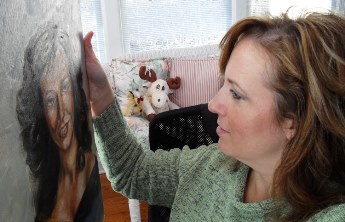
Shawn with the portrait that lifted her spirits.
Shawn with the portrait that lifted her spirits

“What would Irene say?” I kept asking myself. She was my first mentor at my first job, in a dress shop back when I was a senior in high school. Irene was much older, more of a grandmother than a co-worker. I was an awkward teenager, but she never made me feel that way. She had an only son, Steve, that she kept trying to set me up with. While that didn’t happen, she still treated me like family. For Christmas, she even gave me a vintage red sweater set that her husband had picked up for her in Italy while he was stationed there.

One time, I’d gone to work after picking up my senior pictures. I didn’t think I was photogenic, but Irene loved the photos. She explained that she was taking art lessons, and her instructor had asked each student to paint a portrait. Irene asked if she could use my photo as a model. Of course I agreed.

I never saw that portrait. While I was at college, the dress shop closed and I couldn’t track her down.

A little red notification popped up on my Facebook page. A message. I opened it up. Bente Bernstein? I didn’t know anyone by that name. Probably spam. I was about to close it when it hit me. Bernstein—Irene’s last name.

“I’m Irene’s daughter-in-law,” Bente wrote. “My husband Steve thinks you’re the one Irene often spoke about. She passed away recently, and while we were cleaning out her attic, we found something that you might like to have…”

Bente and I met a few days later. I gave her Irene’s sweater set—still in great condition and perfect for Irene’s granddaughter—and she gave me the portrait. Irene had painted me with loving detail, transforming my awkward school picture into a work of art. It wasn’t how I remembered myself. But it was how Irene saw me—beautiful, young, full of promise.

Now that lifted my spirits. I was ready to stop scrolling Facebook, and start looking for a new job.

My Family’s Own Mysterious Ways

I’ve written about and edited the Mysterious Ways stories of so many people these past few years, but the ones that have impacted me the most are the ones I’ve heard from my own family.

My grandparents Morey and Rita, “Pop” and “Nana,” were both dynamic, powerful presences in my family. Every year they took me, my mom, dad, sister, my aunt, my uncle and my two cousins on summer vacations throughout the world: a Mediterranean cruise, a tour across Italy and the Amalfi coast, a house on Nantucket island to name a few.

Their generous, gregarious natures endeared them to everyone they met. They lived in northern New Jersey, we lived an hour away, and my aunt lived in Boston, but we all saw and spoke to each other often. About the only family disagreements we ever had were about whether the Red Sox or the Yankees were the best baseball team (I, of course, sided with Pop rooting on the Yankees). “Miss you,” we’d say to each other on the phone, even if it had only been a week since we’d seen them.

When Nana got sick and passed away, there was a gaping hole left in our lives. I remember standing at the gravesite, staring at the ground where she was laid to rest, and thinking it impossible that someone who had been so vibrant, so full of life and joy even a few short months ago could now, so suddenly, no longer be with us.

In Jewish tradition, the tombstone isn’t placed at the grave until a year later. My dad and my aunt struggled to come up with a message to write on it. What words could possibly sum up what we were all feeling? They finally chose two simple words: “Miss You.”

The evening my dad and aunt chose the message, my dad, my mom, and my older sister went for Chinese food. At the end of the meal, the check came along with three fortune cookies. Dad chose one and opened it. Just one of your run-of-the-mill fortunes. Then he turned it over. Along with some lucky numbers was a Chinese word, with the English translation:

“Miss You.”

Those words comforted all of us. The message we wanted to send to Nana, seemed to have already been received.

It was a little over a year later that Pop too, passed away, shortly after his 90th birthday. We wished that he also could send us some message. But weeks passed, and we hadn’t gotten one.

One day, late that summer, my aunt, uncle, and my cousins went to a Red Sox/Yankees game, the first baseball game they’d all been to since Pop died. When they sat down, my aunt noticed that the family of die-hard Red Sox fans who usually sat in the row in front of them wasn’t there. Instead, it was four guys. Three of them wore Red Sox caps, so she knew they were rooting for the right team. One guy though, had a different cap on. She couldn’t see what it was.

Around the fourth inning, my aunt saw the fourth guy turn around. And she looked at his hat. Stitched onto the front was an oval patch with three letters inside. MBH. Pop’s initials.

My aunt didn’t ask the man what it stood for. She knew what it meant to her, and that was enough. Pop wouldn’t have missed a Red Sox/Yankees game when he was alive. And she was sure that he wasn’t missing one now.

I don’t doubt that these things were placed in our way for us to find. We found them when we needed comfort the most. And that happens more often than you would think. Maybe you’ve even had an experience like that yourself. I’d love to hear your story. Please share it with us at mw@guideposts.org.

Must Miracles Defy Science?

As an editor for Mysterious Ways, I have to consider whether or not a story about a miracle is authentic. A recent article from The New Yorker gave me an occasion to think about what’s involved in that judgment.

Just because something may have a rational, scientific explanation, does that mean it’s not miraculous?

In “At the Vatican, a Search for Cancer’s Miracle Cure,” writer Sam Apple discusses advances in immunotherapy presented during a conference for cancer researchers held at the Vatican. Immunotherapy is a form of treatment that uses non-deadly diseases to stimulate the body’s natural defense systems to combat cancer—and based on what scientists now know about this mechanism, it was likely the cause of some famous “miracle healings.”

Apple cites the example of Ann O’Neil. In 1952, four-year-old Ann was dying from acute lymphatic leukemia. A nun at St. Agnes Hospital proposed something to Ann’s mother—perhaps the late founder of her order, Elizabeth Seton, could intervene.

Read More: How One Woman Fights Cancer with Humor

During her lifetime, Sister Elizabeth had cured a nun of pancreatic cancer. A small piece of cloth that had touched Sister Elizabeth’s remains was attached to Ann’s nightgown, and for nine days everyone prayed. Ann’s cancer went in remission and never came back. Eight years later, after a thorough investigation by the Vatican, this event was determined to be an authentic miracle. They found no explanation for Ann’s healing, and Elizabeth Seton became the first American-born saint.

Over half a century later, according to Apple’s New Yorker story, we know what happened. Ann came down with a severe case of chicken pox just before she started getting better. It’s likely that her immune response to the virus also knocked out the cancer. “For me, that’s endogenous immunotherapy. Without any proof at all, it’s almost certain that’s what happened,” Chi Van Dang, the director of the Abramson Cancer Center at the University of Pennsylvania, told Apple.

How do we respond to this explanation of what happened to Ann O’Neil? We could dismiss her healing as something caused by her immune response. However, that explanation falls short. It’s not unusual for a kid to get chicken pox, but Ann O’Neil got it at just the right time. Isn’t that a miracle?

Read More: 10 Things About Miracles

Maybe, when evaluating miracles, the emphasis is placed too much on the who and the how. What, where, when and why are just as important, as are any number of other factors. We know—indeed, hope—that science will uncover the world’s most confounding secrets.

If we insist on a narrow definition of the miraculous—that it be scientifically impossible—we might run out of miracles and be missing the point.

Ann O’ Neil’s life was saved and lots of people were inspired. That’s more than enough for me to call it a miracle. God doesn’t need to break the laws of nature to intervene in our lives—the ways the laws of nature benefit us are often miraculous enough.

Do miracles have to defy scientific explanation? Share your thoughts with us.

Mr. Thanksgiving

Thanksgiving eve, Bob Vogelbaugh, owner of a small grocery store in Moline, Illinois, was bagging Rose Hanson’s purchases. “Hey, there’s no turkey here,” Bob said. “My family’s all grown,” Rose said. “Why bother with dinner? It’s just me now.”

That got Bob wondering. Were there other folks in the same boat as Rose? He asked other customers that day about their holiday plans. “My kids have moved away.” “It’s too far to travel just for dinner.” “Why go to all the trouble?”

Closing up, Bob took note of an old table and some folding chairs in his storeroom. I bet that table would seat eight, he thought. He scratched his plans to go to a family reunion (his mom was disappointed, but she understood) and called his customers. First, Rose. “I’m inviting you to Thanksgiving dinner,” he said. “Does this mean I have to buy all my groceries from you?” she teased. Bob laughed. “It’s just dinner! Come by the shop at six and bring your favorite dish. I’ll supply the bird.”

The next night, Rose and a half-dozen others gathered for green beans, mashed potatoes, turkey and pumpkin pie. “It was like the first Thanksgiving: people from different backgrounds getting together to share their blessings,” Bob said. “And a great meal.”

Today, Bob’s annual Thanksgiving potluck has grown into a buffet extravaganza that overflows the food court at a local mall. Dinner is served free of charge to anyone who shows up.

Weeks ahead of time Bob collects donations, rounds up volunteers and books buses (provided free by the transit authority) for the diners unable to drive. On the big day, he wakes up at 5 a.m. and heads to the mall to put up decorations. He checks in with the 400 volunteers preparing the salad, rolls and side dishes, and arranges for the delivery of the 2,000 pounds of turkey he’s ordered. At 2:30 p.m., buses pull up to the mall, carrying hungry folks from four counties in Illinois and even a few from as far as Iowa.

Vicki Baker, Bob’s right hand for the day, directs volunteers, who pass out plates piled with food. “As for dessert,” Bob says, “it’s every man for himself. People show up with a half-dozen pumpkin pies, stacks of angel food cakes. We always have enough for everyone.”

Bob makes his way from table to table, saying hi to newcomers and regulars alike. “I know the ladies who bring the best pies,” he says. “And one family still comes back to do all the dishes!”

The dinner costs about $9,000 in turkey, stuffing and fixin’s. “We have a couple of large donors,” Bob says. The third-grade class at nearby C.R. Hanna Elementary School raised more than $1,800 one year. “Mostly, we get letters with a few crumpled bills in them. The people always say they wish they could give more—those are the ones that really get me!”

After the last turkey is carved, Bob sits down with a slice of pumpkin pie and surveys the contented diners. What is Bob most grateful for, you might ask? “I don’t believe the man upstairs meant for us to be alone at Thanksgiving,” Bob says. “He gave me the chance to help bring all these people together for the day. That’s what I’m most grateful for.”

Read more inspiring stories!

Mothers and Miracles

An Army private during World War II, stationed in the South Pacific, hears the voice of his mother thousands of miles away in Baltimore, telling him to duck just seconds before a bullet whizzes over his head. At that precise moment, his mother, at the hospital recovering from brain cancer, sits up and yells, “Duck, James!”

A boy whose mother died when he was a toddler is visited often in his dreams by a woman with curly brown hair and blue eyes. She comforts him. The boy has no memory of his mother and no photos of her. Until, as an adult, he sees a picture. An image identical to the woman in his dreams.

A struggling young woman is visited in the middle of the night by her deceased mother, who tugs at her ankle and warns her to break up with the guy she’s seeing.

By themselves, each story is extraordinary, baffling even. Except in Mysterious Ways, where each can be found and where they’re almost routine. Nearly every issue, it seems, features a story of someone seeing or hearing their mother from miles away or across the heavenly divide. Maybe it’s because my mother died five years ago and I know how comforting it would be to be visited by her. Maybe it’s my need to try to understand the workings of the universe. But these stories stay with me and leave me wondering: Is it only in Mysterious Ways that mothers appear so often and so miraculously? Are these dreams, visions and visitations real? Or simply a product of the imagination—voices and images stored in our memory, then summoned into consciousness? And why exactly would God choose to employ mothers in these mystical endeavors anyway?

My search for answers led me first to David Kessler. He’s a renowned grief expert and the author of Visions, Trips and Crowded Rooms: Who and What You See Before You Die. In his research, Kessler has talked to thousands of people, many of whom have been visited by deceased friends and loved ones. He noticed a trend.

“The person who visits the most is your mother,” he says. It’s not even close. At the time when we most need comfort—whether in grief or near death—it’s mothers who answer the call. Hospice workers concur. According to one nurse quoted in a 2019 Atlantic article, “everyone is calling for ‘Mommy’ or ‘Mama’ with the last breath.” The reason, Kessler says, is simple.

“Mothers are the strongest and first connection we make in life,” he says. “That stays with us forever.”

Judith Orloff, a psychiatrist and author of The Empath’s Survival Guide, agrees. She’s documented case after case of mothers who come to their child’s rescue because of a seemingly inexplicable bond. Take the patient of Dr. Orloff who suddenly experienced intense stomach pains, only to find out later that her son—away at college—had appendicitis.

“Mothers have a sixth sense about their kids because of their strong connection genetically, emotionally and by virtue of carrying the child in their womb for nine months,” Dr. Orloff says. “Adopted mothers can also feel this connection on a soul level, and their intuition can reach out to save their children too.”

Research supports that mothers hold a special place in our consciousness. A 2016 Stanford University School of Medicine study found that children’s brains responded positively to their mothers’ voices in audio clips less than a second long. During MRIs, these recordings lit up parts of the children’s brains related to emotion, reward processing, facial recognition and social functioning.

“We know that hearing [their] mother’s voice can be an important source of emotional comfort to children,” Daniel Abrams, a neurobiologist and the lead author of the study, said. “Here we’re showing the biological circuitry underlying that.”

When people hear or see their mothers, though, are they experiencing an actual person or are the voices and images generated from within the mind? Here opinions differ. Ann Shinn, a psychiatrist at Harvard Medical School, said research indicates that those who hear voices—and don’t suffer from an apparent mental illness—are hearing thoughts audibly that their brains simply don’t recognize as their own. Researchers at Durham University in England also theorize that there are people who are born with more sensitive neural pathways and, as a result, are primed to make sense of the world through sounds and voices, more so than most people. It’s believed that this group comprises five to 15 percent of the population. And one percent of people may frequently hear voices without having a mental illness.

Scientists, of course, also ascribe the phenomenon of seeing people to a trick of the mind. But Kessler, based on thousands of firsthand observations with those who are dying or grieving, firmly believes that these voices and visions are very much real. He notes the profound difference between a patient experiencing a hallucination or dementia and a patient relating a conversation they had with their deceased mother.

“When you witness someone who is dying talking with their deceased mother, they can later tell you with complete accuracy how long the conversation lasted. And if they’re interrupted, the conversation will pick up exactly where it left off,” he says. “When someone is having a hallucination, the sense of time passing is all over the place, just like the words they use to describe it. It’s a completely different experience.”

But the question remains: Why would God employ mothers, both living and deceased, to act and appear miraculously to their children?

Mothers often show up in dreams because they are so important in our lives,” Dr. Orloff says. “They’re often associated with miracles because their guidance travels far and will help their children in the midst of various challenges.”

According to Charity Virkler Kayembe, co-author of Hearing God Through Your Dreams, God may have specific reasons for employing mothers in dreams and visions. He often uses symbols that we’re familiar with or emotionally connected to in order to get our attention.

“One important reason God would use mothers in dreams and visions is because most of us believe strongly in their great love for us,” Dr. Kayembe says. “We trust that they selflessly care for us and have our best interests at heart. So if we hear our mother’s voice directing us on the battlefield, we don’t question it.”

After all, Jesus’ own mother was synonymous with ultimate comfort and love, and she continues to appear throughout the world to those in need. Perhaps in the case of the dying, mothers show up miraculously in order to soothe their children, to prepare them for the journey ahead. Hence the many stories about deathbed visitations from mothers that Kessler has documented.

“There’s a part of me that’s become more courageous and more mature to say, ‘Not only should I find the courage to share these stories, but it’s actually a disservice letting you believe your grandfather or grandmother, who was a very sane person, became crazy in his or her last moment of life,’” Kessler says. “I have a responsibility to say, ‘This is a common phenomenon. I can’t explain it.’”

But it wasn’t until Kessler experienced the comfort of his own mother from beyond the grave that he became fully convinced. When Kessler was just 13, his mother died in a hospital in New Orleans. It was a devastating blow, made all the more so because of a shooting outside the hospital. Kessler and his father were unable to cross the police tape to visit her one final time before she died.

It was then that Kessler decided to devote his life to studying grief and dying. Years later, in 1987, Kessler’s father was dying and struggling to come to terms with his final days. Kessler, even with all his knowledge, had no words to comfort him.

Then, one day, his father greeted him with a big smile. “Your mother was just here,” his father said. “She said everything would be okay and we’re all going to be together again.”

In late 2005, Kessler was in New Orleans to give a talk. The city had recently been devastated by Hurricane Katrina. He found himself outside the hospital where his mother had died, the building shuttered by the storm’s fury. Kessler hadn’t been inside since he was that 13-year-old. Now he felt compelled to find closure there. He asked a security guard if he could go inside. The guard escorted him down the darkened hallways, past wires hanging from the ceiling, tiles ripped from the floors by floodwaters, broken glass everywhere. They made it to the ICU and, inside the doorway, Kessler turned, remembering that his mother’s bed had been the second on the left. There in the dark, above where his mother had died, Kessler noticed the call light. It was blinking green.

“Green means the patient is being seen,” Kessler says. “Forty-two years after she died, my mother was there looking after me.”

More than Mere Coincidence

I want to share with you some research we’ve done at Guideposts recently, but first I’d like to tell you a story I heard from a friend the other day.

He was pushing his son in a swing that hangs from a tall old oak tree in their back yard. All the while their Golden Retriever lay quietly in the grass watching, his head bobbing back and forth as if he were a spectator at a tennis match. The boy squealed with excitement, my friend pushed harder and the swing arced higher and higher.

Suddenly the dog leapt up, trotted purposefully over to the swing and sat down. My friend had to stop swinging his son to avoid the dog. He tried to shoo him away but the dog was quite stubborn, almost insistent. Then my friend heard a faint cracking sound. He looked up. Far above, the screws that held the swing to the tree branch had torn almost completely loose. One more push and his son might have…

“Every day I pray that my boy is protected,” he told me. “That day I saw protection in action. It sent a tingle down my spine.”

Me too. I love this story and not just because I love Golden Retrievers (Hi, Millie!). It is a perfect example of a Mysterious Ways story, the monthly feature Guideposts magazine readers have always said they turn to first and can never get enough of.

Now you can get even more. As I’ve been telling you recently, we’ve launched Mysterious Ways magazine devoted exclusively to those stories that send a tingle down your spine, stories that prove what our hearts know: Everything happens for a reason. We may not always understand that reason, but we know a loving hand can touch any moment of our lives in wondrous and reassuring ways. In ways unexpected. In ways that are more than mere coincidence.

These amazing accounts are glimpses into a larger plan at work in our lives.

We just finished up our fifth issue and have been asking customers what they think. In particular, we’ve been trying to gauge response to our covers. Overall, readers love the magazine. We’ve gotten incredibly positive feedback. And readers have given us some great direction for future covers. I can’t tell you how incredibly grateful we are for the response we are getting. Given the current media environment, maybe the most mysterious way of all is a successful magazine launch. Just the other day Time Inc. announced it was selling off most of its magazine group, including People. We plan to hang on to Mysterious Ways.

But we need your help. Click here if you’d like to try a free issue. And if you have your own Mysterious Ways story, please share it with us. Enjoy your long weekend, if you get one.