Embrace God's truth with our new book, The Lies that Bind

My Mentor’s Gift

I sat at my home computer, scrolling through Facebook posts. A photo of a friend’s grinning granddaughter, a video of someone else’s new puppy, an announcement about another friend’s new job. Usually I take pleasure from other people’s joy, but that day it stung. I’d been laid off after 14 years as an office manager for a company I loved. At 43, I’d need to start all over. I should have been looking at jobs instead of Facebook, but I was down in the dumps.

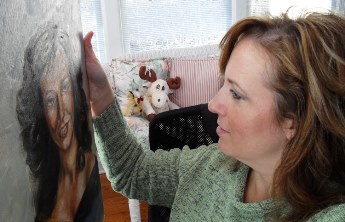
Shawn with the portrait that lifted her spirits.
Shawn with the portrait that lifted her spirits

“What would Irene say?” I kept asking myself. She was my first mentor at my first job, in a dress shop back when I was a senior in high school. Irene was much older, more of a grandmother than a co-worker. I was an awkward teenager, but she never made me feel that way. She had an only son, Steve, that she kept trying to set me up with. While that didn’t happen, she still treated me like family. For Christmas, she even gave me a vintage red sweater set that her husband had picked up for her in Italy while he was stationed there.

One time, I’d gone to work after picking up my senior pictures. I didn’t think I was photogenic, but Irene loved the photos. She explained that she was taking art lessons, and her instructor had asked each student to paint a portrait. Irene asked if she could use my photo as a model. Of course I agreed.

I never saw that portrait. While I was at college, the dress shop closed and I couldn’t track her down.

A little red notification popped up on my Facebook page. A message. I opened it up. Bente Bernstein? I didn’t know anyone by that name. Probably spam. I was about to close it when it hit me. Bernstein—Irene’s last name.

“I’m Irene’s daughter-in-law,” Bente wrote. “My husband Steve thinks you’re the one Irene often spoke about. She passed away recently, and while we were cleaning out her attic, we found something that you might like to have…”

Bente and I met a few days later. I gave her Irene’s sweater set—still in great condition and perfect for Irene’s granddaughter—and she gave me the portrait. Irene had painted me with loving detail, transforming my awkward school picture into a work of art. It wasn’t how I remembered myself. But it was how Irene saw me—beautiful, young, full of promise.

Now that lifted my spirits. I was ready to stop scrolling Facebook, and start looking for a new job.

My Family’s Own Mysterious Ways

I’ve written about and edited the Mysterious Ways stories of so many people these past few years, but the ones that have impacted me the most are the ones I’ve heard from my own family.

My grandparents Morey and Rita, “Pop” and “Nana,” were both dynamic, powerful presences in my family. Every year they took me, my mom, dad, sister, my aunt, my uncle and my two cousins on summer vacations throughout the world: a Mediterranean cruise, a tour across Italy and the Amalfi coast, a house on Nantucket island to name a few.

Their generous, gregarious natures endeared them to everyone they met. They lived in northern New Jersey, we lived an hour away, and my aunt lived in Boston, but we all saw and spoke to each other often. About the only family disagreements we ever had were about whether the Red Sox or the Yankees were the best baseball team (I, of course, sided with Pop rooting on the Yankees). “Miss you,” we’d say to each other on the phone, even if it had only been a week since we’d seen them.

When Nana got sick and passed away, there was a gaping hole left in our lives. I remember standing at the gravesite, staring at the ground where she was laid to rest, and thinking it impossible that someone who had been so vibrant, so full of life and joy even a few short months ago could now, so suddenly, no longer be with us.

In Jewish tradition, the tombstone isn’t placed at the grave until a year later. My dad and my aunt struggled to come up with a message to write on it. What words could possibly sum up what we were all feeling? They finally chose two simple words: “Miss You.”

The evening my dad and aunt chose the message, my dad, my mom, and my older sister went for Chinese food. At the end of the meal, the check came along with three fortune cookies. Dad chose one and opened it. Just one of your run-of-the-mill fortunes. Then he turned it over. Along with some lucky numbers was a Chinese word, with the English translation:

“Miss You.”

Those words comforted all of us. The message we wanted to send to Nana, seemed to have already been received.

It was a little over a year later that Pop too, passed away, shortly after his 90th birthday. We wished that he also could send us some message. But weeks passed, and we hadn’t gotten one.

One day, late that summer, my aunt, uncle, and my cousins went to a Red Sox/Yankees game, the first baseball game they’d all been to since Pop died. When they sat down, my aunt noticed that the family of die-hard Red Sox fans who usually sat in the row in front of them wasn’t there. Instead, it was four guys. Three of them wore Red Sox caps, so she knew they were rooting for the right team. One guy though, had a different cap on. She couldn’t see what it was.

Around the fourth inning, my aunt saw the fourth guy turn around. And she looked at his hat. Stitched onto the front was an oval patch with three letters inside. MBH. Pop’s initials.

My aunt didn’t ask the man what it stood for. She knew what it meant to her, and that was enough. Pop wouldn’t have missed a Red Sox/Yankees game when he was alive. And she was sure that he wasn’t missing one now.

I don’t doubt that these things were placed in our way for us to find. We found them when we needed comfort the most. And that happens more often than you would think. Maybe you’ve even had an experience like that yourself. I’d love to hear your story. Please share it with us at mw@guideposts.org.

Must Miracles Defy Science?

As an editor for Mysterious Ways, I have to consider whether or not a story about a miracle is authentic. A recent article from The New Yorker gave me an occasion to think about what’s involved in that judgment.

Just because something may have a rational, scientific explanation, does that mean it’s not miraculous?

In “At the Vatican, a Search for Cancer’s Miracle Cure,” writer Sam Apple discusses advances in immunotherapy presented during a conference for cancer researchers held at the Vatican. Immunotherapy is a form of treatment that uses non-deadly diseases to stimulate the body’s natural defense systems to combat cancer—and based on what scientists now know about this mechanism, it was likely the cause of some famous “miracle healings.”

Apple cites the example of Ann O’Neil. In 1952, four-year-old Ann was dying from acute lymphatic leukemia. A nun at St. Agnes Hospital proposed something to Ann’s mother—perhaps the late founder of her order, Elizabeth Seton, could intervene.

Read More: How One Woman Fights Cancer with Humor

During her lifetime, Sister Elizabeth had cured a nun of pancreatic cancer. A small piece of cloth that had touched Sister Elizabeth’s remains was attached to Ann’s nightgown, and for nine days everyone prayed. Ann’s cancer went in remission and never came back. Eight years later, after a thorough investigation by the Vatican, this event was determined to be an authentic miracle. They found no explanation for Ann’s healing, and Elizabeth Seton became the first American-born saint.

Over half a century later, according to Apple’s New Yorker story, we know what happened. Ann came down with a severe case of chicken pox just before she started getting better. It’s likely that her immune response to the virus also knocked out the cancer. “For me, that’s endogenous immunotherapy. Without any proof at all, it’s almost certain that’s what happened,” Chi Van Dang, the director of the Abramson Cancer Center at the University of Pennsylvania, told Apple.

How do we respond to this explanation of what happened to Ann O’Neil? We could dismiss her healing as something caused by her immune response. However, that explanation falls short. It’s not unusual for a kid to get chicken pox, but Ann O’Neil got it at just the right time. Isn’t that a miracle?

Read More: 10 Things About Miracles

Maybe, when evaluating miracles, the emphasis is placed too much on the who and the how. What, where, when and why are just as important, as are any number of other factors. We know—indeed, hope—that science will uncover the world’s most confounding secrets.

If we insist on a narrow definition of the miraculous—that it be scientifically impossible—we might run out of miracles and be missing the point.

Ann O’ Neil’s life was saved and lots of people were inspired. That’s more than enough for me to call it a miracle. God doesn’t need to break the laws of nature to intervene in our lives—the ways the laws of nature benefit us are often miraculous enough.

Do miracles have to defy scientific explanation? Share your thoughts with us.

Mr. Thanksgiving

Thanksgiving eve, Bob Vogelbaugh, owner of a small grocery store in Moline, Illinois, was bagging Rose Hanson’s purchases. “Hey, there’s no turkey here,” Bob said. “My family’s all grown,” Rose said. “Why bother with dinner? It’s just me now.”

That got Bob wondering. Were there other folks in the same boat as Rose? He asked other customers that day about their holiday plans. “My kids have moved away.” “It’s too far to travel just for dinner.” “Why go to all the trouble?”

Closing up, Bob took note of an old table and some folding chairs in his storeroom. I bet that table would seat eight, he thought. He scratched his plans to go to a family reunion (his mom was disappointed, but she understood) and called his customers. First, Rose. “I’m inviting you to Thanksgiving dinner,” he said. “Does this mean I have to buy all my groceries from you?” she teased. Bob laughed. “It’s just dinner! Come by the shop at six and bring your favorite dish. I’ll supply the bird.”

The next night, Rose and a half-dozen others gathered for green beans, mashed potatoes, turkey and pumpkin pie. “It was like the first Thanksgiving: people from different backgrounds getting together to share their blessings,” Bob said. “And a great meal.”

Today, Bob’s annual Thanksgiving potluck has grown into a buffet extravaganza that overflows the food court at a local mall. Dinner is served free of charge to anyone who shows up.

Weeks ahead of time Bob collects donations, rounds up volunteers and books buses (provided free by the transit authority) for the diners unable to drive. On the big day, he wakes up at 5 a.m. and heads to the mall to put up decorations. He checks in with the 400 volunteers preparing the salad, rolls and side dishes, and arranges for the delivery of the 2,000 pounds of turkey he’s ordered. At 2:30 p.m., buses pull up to the mall, carrying hungry folks from four counties in Illinois and even a few from as far as Iowa.

Vicki Baker, Bob’s right hand for the day, directs volunteers, who pass out plates piled with food. “As for dessert,” Bob says, “it’s every man for himself. People show up with a half-dozen pumpkin pies, stacks of angel food cakes. We always have enough for everyone.”

Bob makes his way from table to table, saying hi to newcomers and regulars alike. “I know the ladies who bring the best pies,” he says. “And one family still comes back to do all the dishes!”

The dinner costs about $9,000 in turkey, stuffing and fixin’s. “We have a couple of large donors,” Bob says. The third-grade class at nearby C.R. Hanna Elementary School raised more than $1,800 one year. “Mostly, we get letters with a few crumpled bills in them. The people always say they wish they could give more—those are the ones that really get me!”

After the last turkey is carved, Bob sits down with a slice of pumpkin pie and surveys the contented diners. What is Bob most grateful for, you might ask? “I don’t believe the man upstairs meant for us to be alone at Thanksgiving,” Bob says. “He gave me the chance to help bring all these people together for the day. That’s what I’m most grateful for.”

Read more inspiring stories!

Mothers and Miracles

An Army private during World War II, stationed in the South Pacific, hears the voice of his mother thousands of miles away in Baltimore, telling him to duck just seconds before a bullet whizzes over his head. At that precise moment, his mother, at the hospital recovering from brain cancer, sits up and yells, “Duck, James!”

A boy whose mother died when he was a toddler is visited often in his dreams by a woman with curly brown hair and blue eyes. She comforts him. The boy has no memory of his mother and no photos of her. Until, as an adult, he sees a picture. An image identical to the woman in his dreams.

A struggling young woman is visited in the middle of the night by her deceased mother, who tugs at her ankle and warns her to break up with the guy she’s seeing.

By themselves, each story is extraordinary, baffling even. Except in Mysterious Ways, where each can be found and where they’re almost routine. Nearly every issue, it seems, features a story of someone seeing or hearing their mother from miles away or across the heavenly divide. Maybe it’s because my mother died five years ago and I know how comforting it would be to be visited by her. Maybe it’s my need to try to understand the workings of the universe. But these stories stay with me and leave me wondering: Is it only in Mysterious Ways that mothers appear so often and so miraculously? Are these dreams, visions and visitations real? Or simply a product of the imagination—voices and images stored in our memory, then summoned into consciousness? And why exactly would God choose to employ mothers in these mystical endeavors anyway?

My search for answers led me first to David Kessler. He’s a renowned grief expert and the author of Visions, Trips and Crowded Rooms: Who and What You See Before You Die. In his research, Kessler has talked to thousands of people, many of whom have been visited by deceased friends and loved ones. He noticed a trend.

“The person who visits the most is your mother,” he says. It’s not even close. At the time when we most need comfort—whether in grief or near death—it’s mothers who answer the call. Hospice workers concur. According to one nurse quoted in a 2019 Atlantic article, “everyone is calling for ‘Mommy’ or ‘Mama’ with the last breath.” The reason, Kessler says, is simple.

“Mothers are the strongest and first connection we make in life,” he says. “That stays with us forever.”

Judith Orloff, a psychiatrist and author of The Empath’s Survival Guide, agrees. She’s documented case after case of mothers who come to their child’s rescue because of a seemingly inexplicable bond. Take the patient of Dr. Orloff who suddenly experienced intense stomach pains, only to find out later that her son—away at college—had appendicitis.

“Mothers have a sixth sense about their kids because of their strong connection genetically, emotionally and by virtue of carrying the child in their womb for nine months,” Dr. Orloff says. “Adopted mothers can also feel this connection on a soul level, and their intuition can reach out to save their children too.”

Research supports that mothers hold a special place in our consciousness. A 2016 Stanford University School of Medicine study found that children’s brains responded positively to their mothers’ voices in audio clips less than a second long. During MRIs, these recordings lit up parts of the children’s brains related to emotion, reward processing, facial recognition and social functioning.

“We know that hearing [their] mother’s voice can be an important source of emotional comfort to children,” Daniel Abrams, a neurobiologist and the lead author of the study, said. “Here we’re showing the biological circuitry underlying that.”

When people hear or see their mothers, though, are they experiencing an actual person or are the voices and images generated from within the mind? Here opinions differ. Ann Shinn, a psychiatrist at Harvard Medical School, said research indicates that those who hear voices—and don’t suffer from an apparent mental illness—are hearing thoughts audibly that their brains simply don’t recognize as their own. Researchers at Durham University in England also theorize that there are people who are born with more sensitive neural pathways and, as a result, are primed to make sense of the world through sounds and voices, more so than most people. It’s believed that this group comprises five to 15 percent of the population. And one percent of people may frequently hear voices without having a mental illness.

Scientists, of course, also ascribe the phenomenon of seeing people to a trick of the mind. But Kessler, based on thousands of firsthand observations with those who are dying or grieving, firmly believes that these voices and visions are very much real. He notes the profound difference between a patient experiencing a hallucination or dementia and a patient relating a conversation they had with their deceased mother.

“When you witness someone who is dying talking with their deceased mother, they can later tell you with complete accuracy how long the conversation lasted. And if they’re interrupted, the conversation will pick up exactly where it left off,” he says. “When someone is having a hallucination, the sense of time passing is all over the place, just like the words they use to describe it. It’s a completely different experience.”

But the question remains: Why would God employ mothers, both living and deceased, to act and appear miraculously to their children?

Mothers often show up in dreams because they are so important in our lives,” Dr. Orloff says. “They’re often associated with miracles because their guidance travels far and will help their children in the midst of various challenges.”

According to Charity Virkler Kayembe, co-author of Hearing God Through Your Dreams, God may have specific reasons for employing mothers in dreams and visions. He often uses symbols that we’re familiar with or emotionally connected to in order to get our attention.

“One important reason God would use mothers in dreams and visions is because most of us believe strongly in their great love for us,” Dr. Kayembe says. “We trust that they selflessly care for us and have our best interests at heart. So if we hear our mother’s voice directing us on the battlefield, we don’t question it.”

After all, Jesus’ own mother was synonymous with ultimate comfort and love, and she continues to appear throughout the world to those in need. Perhaps in the case of the dying, mothers show up miraculously in order to soothe their children, to prepare them for the journey ahead. Hence the many stories about deathbed visitations from mothers that Kessler has documented.

“There’s a part of me that’s become more courageous and more mature to say, ‘Not only should I find the courage to share these stories, but it’s actually a disservice letting you believe your grandfather or grandmother, who was a very sane person, became crazy in his or her last moment of life,’” Kessler says. “I have a responsibility to say, ‘This is a common phenomenon. I can’t explain it.’”

But it wasn’t until Kessler experienced the comfort of his own mother from beyond the grave that he became fully convinced. When Kessler was just 13, his mother died in a hospital in New Orleans. It was a devastating blow, made all the more so because of a shooting outside the hospital. Kessler and his father were unable to cross the police tape to visit her one final time before she died.

It was then that Kessler decided to devote his life to studying grief and dying. Years later, in 1987, Kessler’s father was dying and struggling to come to terms with his final days. Kessler, even with all his knowledge, had no words to comfort him.

Then, one day, his father greeted him with a big smile. “Your mother was just here,” his father said. “She said everything would be okay and we’re all going to be together again.”

In late 2005, Kessler was in New Orleans to give a talk. The city had recently been devastated by Hurricane Katrina. He found himself outside the hospital where his mother had died, the building shuttered by the storm’s fury. Kessler hadn’t been inside since he was that 13-year-old. Now he felt compelled to find closure there. He asked a security guard if he could go inside. The guard escorted him down the darkened hallways, past wires hanging from the ceiling, tiles ripped from the floors by floodwaters, broken glass everywhere. They made it to the ICU and, inside the doorway, Kessler turned, remembering that his mother’s bed had been the second on the left. There in the dark, above where his mother had died, Kessler noticed the call light. It was blinking green.

“Green means the patient is being seen,” Kessler says. “Forty-two years after she died, my mother was there looking after me.”


More than Mere Coincidence

I want to share with you some research we’ve done at Guideposts recently, but first I’d like to tell you a story I heard from a friend the other day.

He was pushing his son in a swing that hangs from a tall old oak tree in their back yard. All the while their Golden Retriever lay quietly in the grass watching, his head bobbing back and forth as if he were a spectator at a tennis match. The boy squealed with excitement, my friend pushed harder and the swing arced higher and higher.

Suddenly the dog leapt up, trotted purposefully over to the swing and sat down. My friend had to stop swinging his son to avoid the dog. He tried to shoo him away but the dog was quite stubborn, almost insistent. Then my friend heard a faint cracking sound. He looked up. Far above, the screws that held the swing to the tree branch had torn almost completely loose. One more push and his son might have…

“Every day I pray that my boy is protected,” he told me. “That day I saw protection in action. It sent a tingle down my spine.”

Me too. I love this story and not just because I love Golden Retrievers (Hi, Millie!). It is a perfect example of a Mysterious Ways story, the monthly feature Guideposts magazine readers have always said they turn to first and can never get enough of.

Now you can get even more. As I’ve been telling you recently, we’ve launched Mysterious Ways magazine devoted exclusively to those stories that send a tingle down your spine, stories that prove what our hearts know: Everything happens for a reason. We may not always understand that reason, but we know a loving hand can touch any moment of our lives in wondrous and reassuring ways. In ways unexpected. In ways that are more than mere coincidence.

These amazing accounts are glimpses into a larger plan at work in our lives.

We just finished up our fifth issue and have been asking customers what they think. In particular, we’ve been trying to gauge response to our covers. Overall, readers love the magazine. We’ve gotten incredibly positive feedback. And readers have given us some great direction for future covers. I can’t tell you how incredibly grateful we are for the response we are getting. Given the current media environment, maybe the most mysterious way of all is a successful magazine launch. Just the other day Time Inc. announced it was selling off most of its magazine group, including People. We plan to hang on to Mysterious Ways.

But we need your help. Click here if you’d like to try a free issue. And if you have your own Mysterious Ways story, please share it with us. Enjoy your long weekend, if you get one.

Mom’s Last Promise

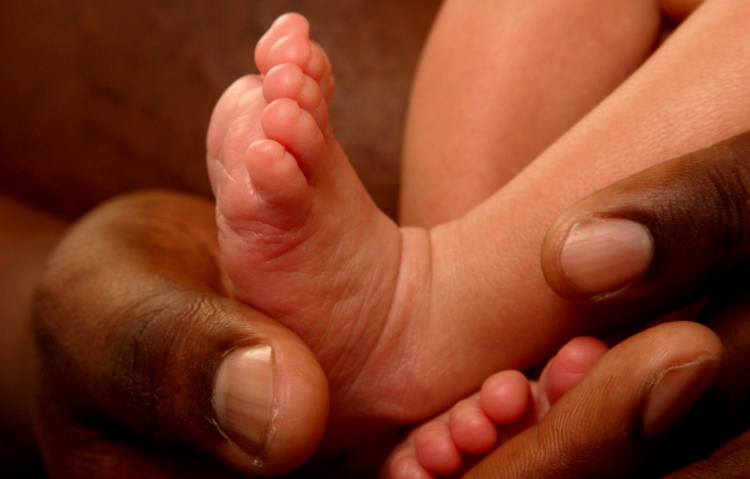
I stared up at the ceiling from my rock-hard bed in the hospital maternity ward. Two hours earlier, I’d given birth to Markeise, my beautiful baby boy. I should’ve felt elated. And yet, something—someone—was missing. Minnie, my mom.

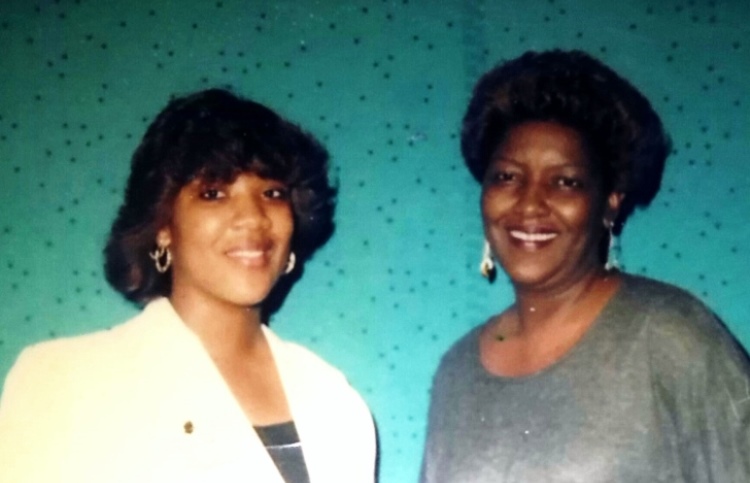
Lachesha and Minnie

For as long as I could remember, I’d called her by her first name. Minnie had me when she was only a teen, and we were close enough in age that we acted more like best friends than mother and daughter—“thick as thieves,” my grandmother often said. Even after I got married, we talked on the phone every day, went shoe shopping on the weekends, cracked up over the same jokes.

Community Newsletter

Get More Inspiration Delivered to Your Inbox


Minnie was diagnosed with uterine cancer during my first trimester. “Don’t you worry, darling,” she said. “I’ll be there for the baby’s birth. Wouldn’t miss it for the world. I promise.”

I believed her. Minnie loved being a grandmother more than anything else. She’d been at the hospital when my first two children were born, snapping photos and making a fuss. When I gave birth to my daughter, she’d hollered, “It’s a girl! It’s a girl!” in the waiting room until one of the nurses asked her to quiet down.

I thought we told each other everything. But Minnie never let on how serious her cancer was—she didn’t want to worry me so early on in my pregnancy. She started chemo too late. Within three months, she was gone.

I stopped staring at the ceiling and pulled out Minnie’s photo from my overnight bag. I positioned it by my bed, hoping to feel her presence. But I didn’t. She’d never meet her grandson. Never stare into his big, brown eyes, so much like her own.

A nurse walked into my room. “How are you doing?” she said.

I wiped my eyes and forced a smile. “Just hormones.”

The nurse shuffled over to the dry erase board opposite my bed and pulled a marker from her pocket. She scribbled the name of the on-call doctor, the one who would be taking care of Markeise until we were ready to go home.

Only after she left did I notice what she’d written, in all capital letters.

MINNIE.

Miraculous Monarchs

Around this time every year, millions and millions of Monarch butterflies are arriving in Mexico for the winter. They can’t survive the approaching cold in the north, so they fly south for warmer temperatures and a food source.

Monarchs from central and eastern Canada and those east of the Rocky Mountains make this journey while Monarchs west of the Continental Divide migrate to California.

Imagine something weighing less than 1/5 of a penny flying up to 2500 miles! It is amazing these tiny creatures can fly such long distances, but the miracle is they know where they are going, having never been there before!

I wrote a few weeks back about the disposition of chipmunks, but Monarchs win the award. It is obvious to see the Lord’s hand in the making of these amazing creatures.

What is more amazing is to understand the life cycle of the Monarchs. Only the 4th generation of Monarchs make the journey to Mexico. In February and March, the Monarchs that spent the winter in Mexico come out of the hibernation, mate, fly north, lay eggs then die.

The 1st generation is born! They start as an egg, caterpillar, chrysalis then turn into a butterfly. All Monarch butterflies, except the 4th generation, only live 6-8 weeks–from the time the egg is laid until it finishes its lifetime as a butterfly.

Around May and June, the 2nd generation is born, and the life cycle repeats itself. In July and August, the 3rd generation is born, and the life cycle repeats itself again.

But in September and October, the 4th generation is born and they do not die after 6-8 weeks. These are the butterflies that migrate to Mexico. Their lifespan is 6 to 8 months until the whole process starts over again!

What tickles me is seeing how the scientific world is baffled by how the Monarch butterflies find the trees in Mexico when it is something God so masterly orchestrated. I read words like: “researchers remain perplexed,” it is a “great mystery,” “no one knows.”

I may not exactly know how, but I know who….God!

Location: The State Botanical Garden of Georgia, Athens, Georgia

Miracles Are for Everyone

There’s something I’ve always wondered about miracles: Does everyone get one? Or just perfect people? You know, like saints or mystics from the twelfth century. Surely St. Augustine was more prone to the miraculous than someone like me, right?

The other night, though, put everything in perspective for me. I was on my way to dinner with my friend and former coworker Lisa. Her birthday was coming up, so after work I picked up vanilla and chocolate cupcakes, each packaged in a separate plastic container.

I walked to the train station, brown paper bag of treats in hand. The wind was blowing like crazy and I was trying to push my way past the crowd of commuters. In all the commotion, I dropped the cupcakes on the floor of the station. The bag ripped, and one of the cupcake containers tumbled out. The cupcakes weren’t ruined… just a little smushed. It was silly, but I beat myself up over it. How could I have been so clumsy?

And then I remembered something that made me smile. You see, this wasn’t the first time I’d made a mess of Lisa’s birthday cake. Two years earlier, when Lisa and I worked together, I was in charge of getting her birthday cake for a little celebration at our office. Lisa’s the kind of person who remembers everyone’s birthday and scours the store for just the right greeting card. One year, she baked three different pies for my birthday. She’s like the Martha Stewart of New Jersey. So I wanted to do something special, find a cake she’d never forget. I went to a famous bakery in New York and ordered this giant, cannoli-filled chocolate cake. Pastel roses. Fluffy whipped cream. Fancy script icing writing. It was beautiful.

It was also extremely heavy. I’m just under 5 feet tall, with the strength of a squirrel. So my sister, Priscilla, suggested I put the cake box in a large shopping bag with handles. We tipped the box over on its side to fit the bag and I carried it to work on my shoulder. Of course, when I opened the up box at work, the cake was completely ruined. A jagged line ran down it like a scar. The side looked like it had melted off. My co-workers teased me to no end about it.

It didn’t matter, though, how ugly that cannoli-filled mess looked; it tasted absolutely delicious! We gobbled it up. In fact, it almost tasted better smushed.

Maybe that’s how it is with miracles. We are all scarred and flawed. We fall over and over again. And even so, God continues to bless us with these amazingly sweet moments. If anything, his wonder seems to touch us more when we’re at our lowest–when we’re sick, all alone, running out of options. He takes us at our most smushed and works his wonder in us and through us.

Miracles have nothing to do with how wonderful we are and everything to do with how wonderful God is. Miracles are for everyone–we just have to be open to them.

I met Lisa for dinner that windy night and handed over the ripped paper bag of cupcakes, a little sheepish. She just smiled and laughed it off. Sure, it wasn’t the perfect dessert. But at this point, it was practically a birthday tradition!

Have you ever experienced a miracle at your most “smushed”? Share your story below, or email me at mw@guideposts.org!

Miracle on Maui

Daylight was just spreading across the horizon. My best friend, Jennifer, and I stood on the beach, gazing out at the ocean. It was our last day on Maui—we had a plane to catch in a few hours. But I was glad we’d gotten up early for one last breathtaking view, a visit to a mysterious spot I’d heard about from our hotel’s cultural advisor, Clifford, the night before. A place called Makalua-puna Point.

“I don’t want to leave,” Jennifer said. I didn’t either. Hawaii felt like heaven. Even more than I’d imagined it would when Maui’s tourism board invited me to visit and write about my experiences. It was the best assignment a freelance travel writer could ask for, a business trip that didn’t feel like business.

Jennifer was here for a different reason. She’d just lost her other best friend—Bandit, her black Labrador retriever. I still remembered the day she got him as a puppy, back when the two of us were in high school. A little bundle of fur with oversized paws. We three grew up together.

I couldn’t visit Jennifer without expecting her big black dog to come bounding up to me, wagging his tail for all he was worth. I knew how heartbroken she was to lose him. “I wasn’t even with him when he died,” Jennifer had told me over the phone. “I was at work when it happened. I didn’t get to say goodbye.”

Find Hope, Inspiration, and More in our Free eBooks

I’d read that Maui was known for its healing properties. Jennifer needed that, so I’d invited her along. We’d spent the last week exploring all the island had to offer. We hiked to the top of Haleakala¯ Crater, a red-orange dustbowl formed from the collapsing peak of a volcano. We spent an afternoon stand-up paddleboarding at Olowalu Beach. We rappelled down a 50-foot waterfall in the rain forest off the Hana Highway and then got massages at the Grand Wailea Hotel’s Spa Grande.

The trip wasn’t all adventure. Jennifer and I prayed together in the meditation garden at a Lumeria Maui retreat. We met on the beach late at night to see the ocean glimmer in the moonlight and the waves roll up on shore. One day we trekked deep into the Hawaiian wilderness at Iao Valley State Park.

Exotic plants carpeted the ground and ancient rocks towered overhead. The bright-green Iao Needle soared 1,200 feet into the cobalt sky. The foot trails and hidden streams were so beautiful we just had to stop and take it all in.

“This really is paradise,” Jennifer said. “It feels like we’re the only people in the world,” I agreed.

It was the kind of place that compels you to give thanks to God— or sing. “Oh Lord, my God, when I in awesome wonder…” My voice echoed off the rocks. “Then sings my soul, my savior God, to thee, how great thou art!”

We thought we had seen everything there was to see. Our predawn walk to Makalua-puna hadn’t been on the schedule. We expected to spend the morning packing our bags before we headed to the airport. But the night before, over sushi and sashimi, Clifford had told a captivating story.

“The hotel was originally planned to sit right on the beach,” he said. “But the Hawaiians protested that this spot was sacred. We believe it to be a vortex, a place where souls go before birth and after death. The ocean is like a womb.”

I wanted to know more. Clifford described a ritual Hawaiians performed in the early morning. “It’s a ceremony where you cast your burdens into the ocean,” he said. “All the things that are weighing you down, keeping you from moving forward. You drown those in the water and come out like new.”

That’s exactly what Jennifer needs, I thought, though I didn’t say it. We’d been so busy, she hadn’t had time to dwell on Bandit’s loss. But I could tell she was struggling with the thought that he was gone. Even though we had a long plane ride the next day, we agreed to meet Clifford in the lobby of the hotel at 5:00 a.m.

In the morning we took a golf cart down to the beach. “It’s time,” said Clifford.

Jennifer and I waded into the ocean. We dipped ourselves in the calm waves, letting them wash away any negative emotions we’d brought with us. Then we walked back onto the beach and Clifford led us in a chant. “E ala e ka la¯ i ka hikina…” Words, he’d explained, about the rising sun. The sun brings life to the earth and lets us do all the things God meant for us to do.

The sun broke over the horizon, sparkling on the water. We dried ourselves off in a nearby gazebo. “I really do feel lighter,” I said. “There is one more thing,” Clifford said. “Keep a lookout for a messenger. A butterfly, a bird, a ladybug—any creature that lingers with you a little longer than you’d expect. That’s a sign that your prayers have been heard.”

This being Hawaii, wildlife was everywhere—colorful birds flitting among the coconut palms, crabs digging in the sand on the beach, butterflies fluttering among the flowers, geckos sunning themselves on rocks. Who could say if any of them had a special interest in us?

“What’s that?” I said. There was a rustling in the woods just beyond the gazebo. I saw something dark, something big. I grabbed Jennifer’s arm. The bushes parted. Out from the darkness bounded a big, black…Labrador?

He loped right up to Jennifer and stood outside the gazebo, wagging his tail. We both held our breath, too surprised to speak. The dog seemed to contemplate us. He gazed steadily at Jennifer for a moment, then turned and disappeared into the woods.

“Did you see that?” I said. “It’s Bandit!” She cried. We screamed and laughed, cried and hugged together.

The Case of the Missing Cell Phone

Cell phones can be a pain in the neck. Whenever I seem to need mine, I can never find it. And this was one of those times, standing by my SUV shivering and wet.

It was whitetail hunting season—a day my three buddies and I had been anticipating for months.

We parked our SUVs on a private, rural lot just after dawn and hiked two miles—lugging rifles and backpacks filled with food, water, flashlights, extra clothing, twoway radios and, yes, cell phones—into the Pennsylvania State Game Lands wilderness.

The weather was overcast and chilly, but we were determined to get us some deer.

We weren’t in the woods but an hour before we lost our will for the hunt. The wind started, and then the rain. Oh, did it pour!

The four of us huddled like soaked dogs under a stand of hemlocks before we gave up and slogged an hour back down the now-muddy mountain we had climbed.

Now, hunching under the raised hatch of my SUV, I stripped off my wet clothing and quickly changed into dry clothes. From force of habit I reached into my backpack for my cell phone. I felt around. Nothing there. I checked and double-checked.

I knew that I had packed it before we headed out. Somehow, the phone must have fallen out of my bag at the spot where we had hunkered down in the woods, near the hemlock trees.

“I have two options,” I told my friends. “One, I can forget the phone. Even if I hiked back to the stand of hemlocks and found it, it would probably be ruined by now.

“But I’m a stubborn guy. I can hike back up the mountain, in this pouring rain, and scrounge around in the brush trying to find it. I’m leaning toward option two.”

My friend Bill thought I was crazy but insisted for safety’s sake that he come along.

Back up the mountain Bill and I went. What had been a rocky path was now a muddy stream. Rain pelted us. Our feet slipped.

“You know,” Bill said, “this isn’t the brightest thing we’ve ever done.”

At last we reached the hemlocks. We looked everywhere. No phone.

Light was fading. Time to give up and head home. Down the mountain we went, the only sound the squishing of our boots in the mud.

Then from somewhere I thought I heard a voice. I immediately turned to Bill. “Did you hear someone?” I asked.

“No,” he said, keeping his head down, trying not to slip.

I heard the sound again.

“Bill?” I said. “Yeah, I heard something,” he admitted. It sounded like it came from somewhere up the mountain. We peered through the trees and the rain.

“There!” I said. “Up on that ridge!” Bill’s eyes followed where I was pointing.

A man was up there, waving his arms frantically. He was headed toward us, slipping and sliding. “Help!” he yelled. “Please help!”

We stood there. What kind of nut would be out here in the rain—well, other than us?

The man eventually reached us. He looked to be in his mid-twenties. “Please help me,” he said, panting. “I came up here with a friend. I can’t find him, and I don’t know how to get back to where we parked.” He told us his name was Tim.

I looked the young man up and down. His clothes were soaking wet. Not insulated or waterproof. Totally inadequate. He had an empty thermos. No food. He had a cell phone, but it was dead.

“Come with us. We’ll get you out of here,” I said.

The three of us started down the trail, Bill and I helping him as best we could.

“Are you sure we’re going the right way?” Tim asked.

“Just trust us,” I said.

It was clear that Tim was disoriented. He couldn’t even tell us his friend’s name. We tried to keep him talking, so that he wouldn’t pass out on the trail.

By the time we reached my SUV about 45 minutes later, Tim was shivering uncontrollably. We helped him into the backseat. Bill gave him some almonds from his snack pack and coffee from his thermos. I started the car, cranked the heat up and we wrapped him in a dry blanket.

Tim mentioned a general store he and his friend had passed on their way to the wilderness. I knew where it was. On the way there, a vehicle pulled up behind us and flashed his lights. For a second, I thought it was the cops. The driver got out. I rolled down the window.

“Are you Tim?” he asked.

I pointed to the backseat. “That’s Tim,” I said.

The driver said he had Tim’s friend in his truck. He’d found him in about the same condition that we found Tim.

Tim stumbled out of my SUV and into the truck. Bill and I drove on home.

On the way, we had a serious talk.

“Do you know the danger he was in,” I asked. “What would have happened if we hadn’t been up there and he had heard our voices?”

And then it hit us both—we would never have been up there to rescue him if not for my silly phone.

“I guess there was a good reason I lost it after all,” I said. Together we offered a prayer of thanks.

But I hadn’t lost it. Back home I finished unloading my backpack. That cell phone was right where I had put it.

Download your FREE ebook, Mysterious Ways: 9 Inspiring Stories that Show Evidence of God’s Love and God’s Grace

Miracle at the Front Door

Here in the Midwest, we’re used to frigid winters, but that morning seemed colder than usual.

Maybe it was because my husband wasn’t sleeping next to me. He had gone out of town on a long trip. It was just me looking after our three daughters. We lived out in the country—no neighbors within shouting distance, and I felt vulnerable. At night I made sure to lock the doors and I prayed God would watch over us.

I’d woken up shivering, with a pounding headache. It was really cold, even for our 170-year-old house. Did our furnace break down? I went downstairs to check. That’s when I saw that the front door was wide open! I shut it and cranked up the thermostat. I’m positive I locked that door last night. Did someone break in? I dashed upstairs. The girls were safe in their beds. I looked around. Nothing was missing.

My teeth chattering, I waited for the furnace to kick in. It didn’t. The draft from the door must have blown the pilot light out. I didn’t know how to relight it. My husband usually took care of things like that. Why did he have to be gone for so long? I called the girls down to breakfast, turning on the oven and shoving the kitchen table near it for warmth.

Once I got the kids off to school and I got to work, I phoned a furnace repairman. “I’ll take a look as soon as I can and call you,” he said.

I got a call back a few hours later. “Your furnace has a leak,” the repairman said, in a tone that seemed to imply more than just a minor problem.

“How soon can you fix it?” I asked, dreading another freezing night.

“Ma’am, you don’t understand,” he said. “Your furnace is leaking carbon monoxide. That’s the type of thing you see on the news, where an entire family dies in their sleep. I’ll install a new furnace tomorrow. Until then, you’ll need to stay somewhere else.”

Immediately I thought of the front door. If it hadn’t somehow gotten open to let the fresh air in…

That breath of fresh air saved our lives—and it made an impression on my husband too. When he got home, he promised never to leave us for so long again.

Find more true Mysterious Ways! Download your free ebook, Mysterious Ways: 9 Inspiring Stories that Show Evidence of God’s Love and God’s Grace.