
Embrace God's truth with our new book, The Lies that Bind

Is It Possible to Feel Sympathy Pains?

I was frustrated. I’d been angry and irritable all day, but I couldn’t figure out why. It was my first semester of college in Massachusetts. Classes were going well. I was making friends. Still I couldn’t get out of my dark mood. I retreated to my dorm room and contemplated calling my mother in California. Before I could, the phone rang. It was Mom. “I’m having the worst day,” she said. She was frustrated, angry, irritable. And it hit me. I wasn’t upset because of anything in my life. I’d been feeling my mom’s feelings…from 3,000 miles away!

That experience fascinated me. But I labeled it a bizarre mother-daughter moment. Recently, however, I came across a story sent in by Mysterious Ways reader Diana McCulloch. “I believe I have a God-given ability to discern when something is wrong with one of my sons,” she wrote. Intrigued, I gave Diana a call. She recounted a story about her youngest son. She was watching television one night with her husband. Around 11 o’clock, she doubled over in pain. Stomach cramps. Strange because she hadn’t eaten anything out of the ordinary. The next morning, Diana called to check on her son, who was in recovery from drug addiction. That’s when she discovered he’d had a relapse the night before and ended up in the hospital. His stomach had been pumped. At 11 p.m.

“I knew, without any question,” Diana told me, “that I’d felt his pain.”

I got off the phone with Diana, stunned. Sure, sharing in the suffering of others is a hallmark of many of the world’s religious traditions. So it’s not completely surprising that many spiritual people are also empathetic. But is it really possible to experience another’s pain as if it’s your own? And if “sympathy pains” actually exist, what’s the point?

Most of the evidence for sympathy pain is anecdotal. Its most famous expression, couvade syndrome (i.e., husbands who pick up the pregnancy pains of their wives), is widely scoffed at. Then there’s the religious phenomenon of stigmata, or bearing Christ’s crucifixion marks on one’s body. Many saints have reportedly experienced them. Padre Pio, an Italian friar, most famously. A vision in a chapel left him with nail wounds in his hands and feet. The markings, which never healed, left him better able to understand Jesus’ pain, as well as that of others.

While cases like Padre Pio’s are rare, research from the University of Birmingham indicates it is possible to feel another’s pain beyond just sympathy. In 2009, psychologist Stuart Derbyshire had 123 undergraduates look at videos and photographs of people in pain. All the participants reported an emotional response to what they saw. About 30 percent, though, also felt physical symptoms, like stabbing sensations. MRIs confirmed they weren’t just imagining it—the images actually triggered the parts of the brain that process physical pain.

So could it be that some of us have a special ability to take on the suffering of others? Or do we all have the capacity to feel another’s pain? I took my questions to Dr. Joel Salinas, a neurologist at Harvard Medical School and the Massachusetts General Hospital and author of Mirror Touch. Synesthesia is a neurological condition that causes senses to get mixed and matched in the brain. Dr. Salinas has many forms of the condition, including mirror-touch synesthesia—he feels sensations he observes but in mirror opposites. “If I saw someone hit their right thumb, I would feel it in my left thumb,” he says. While scientists are still studying mirror-touch synesthesia, evidence suggests that empathy may be at the root of it.

“When those of us with mirror-touch synesthesia perceive touch or pain in someone else, our brains automatically try to recreate it vividly—based on past experience and context—as if it were literally happening in our own bodies,” Dr. Salinas says. “Our perceptions of our bodies and theirs might overlap. The boundary between self and other becomes blurred. That ‘shared body perception’ is thought to be tied to the same parts of the nervous system that are responsible for empathy.”

Although mirror-touch synesthesia affects just two out of every 100 people, “the brain’s mirroring system linked to empathy is present in everyone,” he says.

“People with mirror-touch synesthesia fall on the extreme end of the spectrum—they can pick up on information that’s hard to notice yet still perceivable,” Dr. Salinas says. “But we all have the hardware and software for that extreme type of empathy.”

That might explain how even complete strangers are able to pick up on each other’s pain. Take the experience of my Mysterious Ways colleague Kathi Rota. Years ago, Kathi visited an ashram in India. There she met a married couple. The husband was talkative. The wife was withdrawn, distracted. As they chatted, Kathi felt a sharp pain in her lower back. It disappeared the moment the couple walked away. The next day, Kathi learned the woman was battling pancreatic cancer.

But how are people able to experience one another’s distress across long distances? “We have 100 billion neurons and 100 trillion connections in our brain, constantly taking in information often below our conscious awareness,” Dr. Salinas says. “There’s always a possibility that there’s something going on outside the realm of what science can explore.”

That’s something Dr. Larry Dossey contemplates in his book One Mind. Dr. Dossey argues there’s a higher consciousness, or One Mind, that we are all able to tap into. He points to the story of identical twins Marta and Sylvia Landa. In 1976, Marta burned her hand on an iron and got a blister. At the same time, miles away, Sylvia also developed a blister—in the same shape and spot on her hand as Marta’s.

Dr. Dossey refers to these episodes of extreme sympathy pain as “telesomatic experiences.” He hypothesizes they’re a necessary part of the human experience, often driven by deep emotional bonds. They reveal we’re connected in ways that transcend physical barriers, even distance and time. “The common pathway in all One Mind moments is the experience of a hyperreal level of awareness, connection, intimacy and communion with a greater whole, however conceived…all of which is marinated in an experience of intense love,” Dr. Dossey writes.

That love appears to be at the heart of sympathy pain. Caterina Mako, the director of spiritual care and pastoral education at Catholic Health Services of New York, agrees that there’s a deeper spiritual dimension at work.

“There seems to be an intense love and connectedness within the relationship of those experiencing it,” she says. “The intensity of that connection is an example of God’s love for us.”

I thought back to Diana’s experience with her son, Kathi’s with a stranger and my own with my mom. Perhaps they weren’t moments of mere intuition or empathy, but a reflection of a greater love running through humanity. A glimpse at how connected we all truly are.
Is Insomnia Trying to Tell Us Something?

Having trouble getting a good night’s sleep? Download Abide for Christian sleep meditations that use calming techniques and Scripture verses framed in calming stories to lull you into a peaceful slumber.

It’s in the health news a lot these days:  Sleep is a major problem for Americans. We don’t get enough. We don’t take enough naps. We don’t have enough time to wind-down before going to bed.

Much of what happens during sleep remains a mystery. Dreams, for example. Some scientists and psychologists dismiss them as meaningless. Others, in the tradition of Sigmund Freud (like Dr. Judith Orloff of our recent Dream Chat), believe they shed great meaning on our waking lives.

I struggle a lot with sleep. Some nights, I do everything “right”–wind-down, meditate, dim the lights, read, etc.–but still, it escapes me.

So I’m trying to change how I think about insomnia. What if, instead of being stressed about not sleeping, I could see those fitful, waking hours as restorative and meaningful as eight hours of uninterrupted bliss? Could occasional insomnia be good for the soul?

Click here to subscribe to Mysterious Ways

In the Huffington Post, sleep physician David Cunnington of the Melbourne Sleep Disorders Center says that before the advent of artificial light, such late night awakenings were viewed as normal and healthy:

“Historically if you read about how human sleep has been described over thousands of years, it has been described as three to four hours of deeper sleep after the sun goes down followed by a period of being awake. That period of being awake in fact could last a couple of hours and was then followed by dozing through the remainder of the night until the sun came up.”

For Robert Moss, author of The Secret History of Dreaming, this ancient way of sleeping helped with creativity and imagination–and what I would call spiritual life:

“The interval between first sleep and second sleep is characterized by elevated levels of prolactin, a pituitary hormone best known for helping hens to brood contentedly above their eggs for long periods… the night watch can produce benign states of altered consciousness not unlike meditation.”

The French called this period dorveille, “widely regarded as an excellent time to birth new ideas,” Moss continues.

I’m not going to radically reinvent my sleep schedule–I’d end up falling asleep at my desk. But I do want to change how I think about those moments of interrupted slumber.

Our readers send us stories all the time about receiving divine inspiration or messages in the middle of the night (Ralph Ackley and Patricia Joseph-Lyle come to mind).

Maybe insomnia is due to more than just anxiety. Maybe something or someone is trying to break through and reach us.

What kind of message or inspiration have you felt in the middle of the night?

Intuition, an Act of Faith

I am not a scientist, but I am convinced that the greater your empathy and the higher your spiritual development, the more intuitive experiences you will have, until such things become so ordinary that you hardly notice them anymore. No longer rare and dramatic, they fall like soft rain into our lives, brushing aside all logical consciousness.

Yet for many people, our intuitions and precognitions are anything but normal. They usually concern danger either to us or to those we love. Your daughter is in trouble, and you wake up, having seen it in a dream! Your husband has been shot in a distant war, and you feel the bullet enter your own body. You needn’t wait for the confirming telegram. We are hooked into life by the mystery of love, as we ourselves are love, our very atoms formed of love, and why should it be otherwise when our very thoughts would merge in love?

Once, while working quietly at my desk, I felt my heart jump, torn by a pain so searing I thought it had split in two. I almost fainted. A moment later, I was able to breathe again. Had I had a heart attack? I seemed all right. Should I see a doctor? Reaching out mentally, searching, I came to a man I loved who lived on another continent. Had he been hurt? When I managed to reach him a few days later, I discovered he’d had a heart attack at that time. So intimately were we connected that I think I simultaneously experienced his pain.

….

We are islands joined beneath the sea, but the wind is also ruffling the shimmering green tips of the trees that rise up high above our loamy shore, making it hard sometimes to read the signals at our roots.

Watch Sophy’s videos on the book!

Read Sophy’s Guideposts.org blog!

In the Midst of Dementia, A Miraculous Moment of Clarity

I sat across from my 84-year-old mother at the Mexican restaurant we often went to after her doctor appointments, watching her try to hide her confusion as she looked at the menu.

“Mama, you always get the chicken quesadilla,” I said. “Why don’t you order that?”

“Yes, I was just thinking that, honey,” she said, trying her best to sound decisive.

My heart broke for her. My well-read, intelligent mother, who worked crossword puzzles upside down and conquered cryptoquotes, could no longer understand a menu she’d read countless times before.

I’d worked in a nursing home so I knew all too well the ravages of dementia. But nothing could have prepared me to see my mother go through it. One day, Mama might forget where she kept her silverware; the next, a little piece of who she was would be lost.

I felt like I’d lost myself too. I couldn’t remember the last time I’d taken a nap, read a book or gone on a date with my husband, Chris, without interruption. From the moment I woke up until I drifted off to sleep, I walked a tightrope of work, home and attending to every aspect of Mama’s life. I juggled the grocery shopping, the bill paying and the caregivers who came to her home. I set up her meds and took her to doctor appointments. It was hard work, made harder with the knowledge that with each passing day, she was slipping further from me and there was nothing I could do about it.

One afternoon, I brought Mama some groceries. She sat in her living room armchair, staring bleakly into space. “I can’t hear God’s voice in my heart anymore,” she said. “He’s forgotten all about me.”

Her words, so unlike her, stopped me in my tracks. Mama had devoted her whole life to God. She’d visited missionaries overseas and had been deeply involved in church. Whenever someone in our community was going through something, they’d ask her to pray for them. And, of course, she prayed for me, often out loud. I missed Mama’s prayers so much!

“That’s not true, Mama,” I told her. “You might forget things, but God would never forget you.”

If only I could convince myself. As Mama’s dementia progressed, I wondered how God could allow a faithful follower to go through such suffering. Her speech became garbled; she forgot more words than she remembered. Eventually, she could no longer put together a coherent sentence.

Where was God’s presence in all this? His comfort and reassurance that Mama—and I—had always depended on? Was Mama right? Had God forgotten her?

Stephanie and her mother

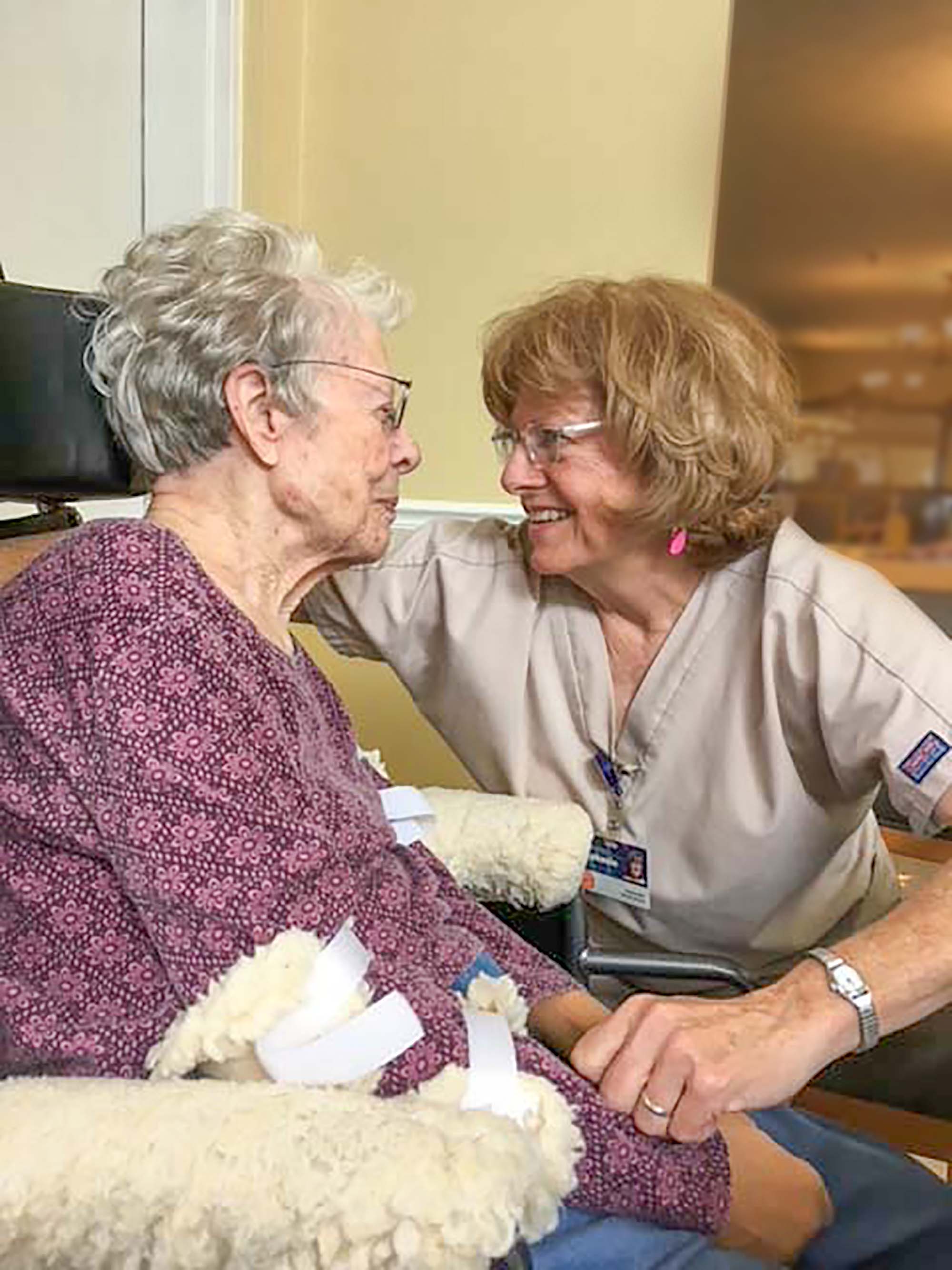
One evening, Chris and I stopped by Mama’s house before going out to a rare dinner. One of her caregivers was there. Mama’s face was radiant. When her caregiver went to another room, she approached me confidently. “I want to have a conversation with you,” she said. “Just the two of us.” She took my hand and led me to her room. I thought I might be dreaming. We sat down on the bed. She told me I’d been a wonderful daughter, and I told her she’d been a wonderful mother. We talked about her life and her countless blessings. Our conversation went on for about 15 minutes. Mama’s speech was coherent, and her old mannerisms, like moving her hands when she spoke, had returned. There was something profoundly renewed about her. She flowed from one sentence to another with ease, completely present. This was no dream! Finally, she bowed her head and said a prayer out loud for me. Then she stared into my eyes for a moment before she spoke.

“God’s been with me this whole time, honey,” she said. “He’s been present, even in this. He’s going to come soon and take me home to heaven. No one should worry about me, because I’ll be at peace.”

“I’ve missed you so much!” I told her, giving in to my tears.

“I’ve missed me too,” she said before taking me in her arms. We hugged for what seemed like forever.

Mama never spoke coherently again. Still, that miraculous moment of clarity bolstered me through three more years of caring for Mama until she passed. For in that moment, I understood in the deepest reaches of my soul that God never forgets us.

Inspired to Found Garden of Angels

I’ve always thought that people who play the lotto are wasting their money. I mean, there are so many worthy causes where that money could be better spent. The Garden of Angels charity that I started in 1996, for instance, which provide abandoned infants who don’t survive with a proper and respectful burial.

For eight years I’d barely kept it going by having car washes, bake sales and other fund-raisers. Even then I couldn’t always cover the expenses.

At any rate, I couldn’t help raising an eyebrow when my husband, Steve, handed me a $20 bill at his office one day last fall and asked me to buy some lottery tickets. Of course I protested. We could put that money toward Garden of Angels.

ENJOYING THIS STORY? SUBSCRIBE TO GUIDEPOSTS MAGAZINE!

“Please, Hon, I have this feeling,” Steve pleaded. Steve didn’t normally play the lotto. I stopped at a convenience store and bought the tickets, then went home and tossed them on the dresser. I didn’t think much of the purchase. Money was pretty tight for us.

Still, I was grateful for all God had given me. Eight years earlier I had been seeking a new direction in my life and praying for guidance. I wanted to help people.

I was considering volunteering at the local hospital. They needed people to rock newborns. The greatest moments of my life were holding each of my three children after their births.

Then one evening I heard a shocking story on the news. A duffel bag had been hurled from a speeding car on the freeway. Inside was a baby boy—a nameless child who had died on impact just hours after birth.

Lord, what kind of society have we become that someone could throw a baby out the window like a cigarette butt. What would happen to that child? Would society discard him the way his parents had?

The next morning I called the police and was eventually connected to a woman named Gilda at the coroner’s office. “We wait to see if anyone claims the body. If no one comes forward, he’ll be cremated and his ashes stored for three years.” Gilda sighed. “After that, he’ll be buried in a mass grave in the county cemetery.”

I couldn’t bear the thought of that baby lying forgotten somewhere, having never known any tenderness. “If no one claims this child, I would like to. He didn’t deserve what happened to him in life. He deserves some dignity in death.”

Gilda told me I’d have to wait until the investigation was completed in 30 days. But two weeks later she told me about another abandoned infant, strangled by its own umbilical cord. “How often does this happen?” I asked Gilda.

“In this county we get about 10 cases a year,” she said. Just in this one county? I agreed to take the second infant as well.

The 30 days ended and Gilda called to say I could claim the babies. “You know, we’ve had a two-year-old girl here for some time whose body washed up on a beach. She’s about to be cremated. I was wonderin … would you care for her too?”

“Can I call you back?” I put the phone down and stood there in the sunlight, my heart pounding. I was alone in the house, yet I felt as if a presence were standing there with me, asking, “Would you care for these children?” I don’t know if I can do this, Lord. It breaks my heart just thinking about these babies. I will need your help.

I called Gilda. “I’ll take them. All of them. And, please, call me if there are more.”

I went to the Desert Lawn cemetery and picked out a set of plots. In August 1996 we buried the first three children at the Garden of Angels. Today there are more than 70 children resting there, both a good and a terrible thing. Good that they are at peace, terrible that they died before having a chance to really live.

I wrap each child in a handmade quilt and place stuffed animals in the casket. But before that, I rock each baby in my arms and pray.

The hardest child for me to lay in the garden was Jacob. On January 1, 2001, California passed a law called Safe Arms for Newborns, which allows a mother to leave a baby up to three days old at designated spots like hospitals or firehouses, without fear of prosecution.

I’d helped get the law on the books, thinking it would mean babies wouldn’t be left to die. I was wrong. Many desperate mothers didn’t know about the law. I stood over Jacob’s grave, grief-stricken, asking God if there would be an end to the sadness.

A few weeks later I received a letter from a woman who had adopted a boy whose mother had left him at a safe haven. He’d been born the same day Jacob was buried. I knew then God was still with the Garden of Angels. I will always trust you, I promised.

Strange sometimes how God works. Remember those lotto tickets? Well, I never did check them. Good thing Steve did. I was shopping when he called. “Honey, our lives are about to change.” The $27 million dollars we won ($9 million after taxes) has changed my life.

The Garden of Angels will continue for years to come—though I pray there is no longer a need for it. We plan to give away college scholarships in honor of each child in the garden. That way their legacies will continue long beyond their too-short lives.

Yes, God has helped me care for these children. But it also feels, in a way, like they have cared for me.

Did you enjoy this story? Subscribe to Guideposts magazine.

Inspired by God’s Canvas

Today’s guest blogger is Mysterious Ways assistant editor Daniel Kessel.

Four days into the month and February has already shown itself to be just as chilly and snowy as January. Each morning I strap on my gloves and dream of a return trip to sunny San Diego–or at least a dry city sidewalk.

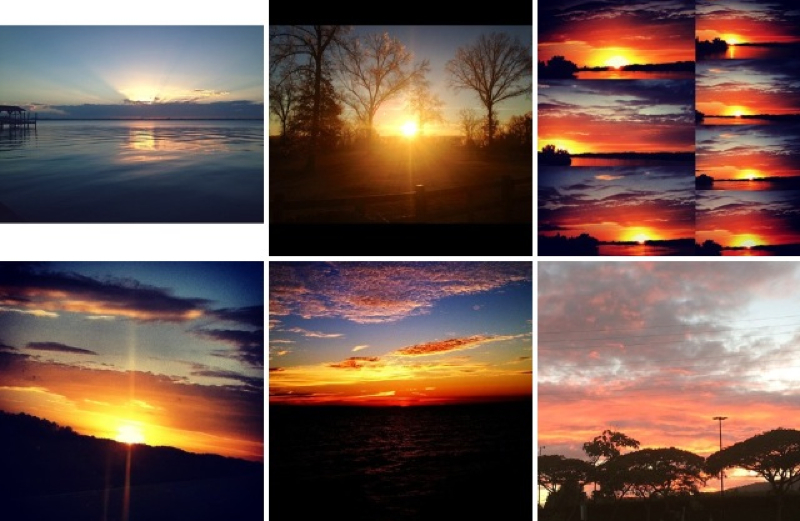
Last week, though, a photograph on the Mysterious Ways Instagram feed warmed me up. Someone had posted a vivid red-orange sky over a sun-drenched beach–exactly the kind of picture I needed to see. As I glanced at the photo’s comments, one of the hashtags jumped out at me: #godscanvas.

“God’s canvas?” I had to know more. I clicked on the tag, and a grid of stunning photographs filled my screen. Photos of the sun and the colorful morning sky. Fascinating cloud patterns, like the one we later shared on Facebook. Each photo was tagged with #godscanvas, and each one, to my eye, a kind of miracle.

So far, more than 12,000 photographs carry the #godscanvas hashtag on Instagram. When was the last time you looked up and marveled at the sky? Maybe you don’t live near a tropical beach. Maybe it’s foggy outside or, yes, snowing. But you never know what you’ll see when you take a moment to look up.

Why not take a #godscanvas photo of your own today? Share your finds with Mysterious Ways! We’d love to see #godscanvas from your perspective.

Inexplicable Encounters Led to Oscar-Nominated “War Horse”

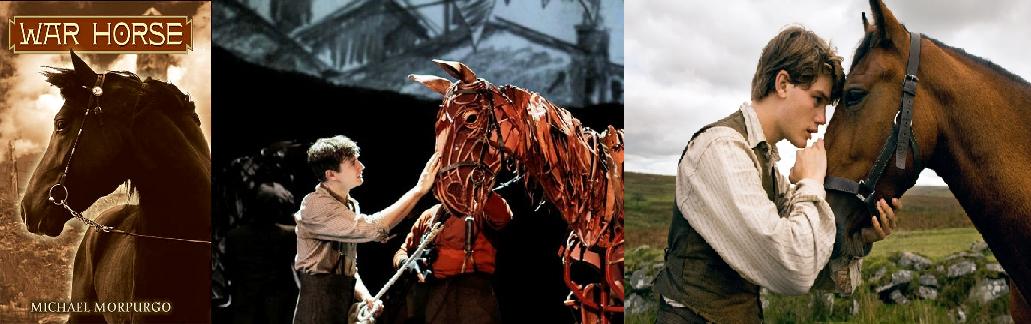
Oscar nominations were announced this week, and one of the nods for Best Picture went to War Horse, a movie based on the book written by British author Michael Morpurgo. Michael’s story behind the story of War Horse was featured in the December 2011 issue of Guideposts.

Michael’s tale is definitely a case of incredible timing resulting in a most fortunate outcome. Hopelessly stuck on finding a way to make an old World War I veteran’s story come to life, Michael witnessed a wonderful moment between a shy boy and one of the horses on his farm in Devon. That moment inspired Michael as he wrote the book.

Community Newsletter

Get More Inspiration Delivered to Your Inbox


“The book came out of a chance encounter. Everything about this story of War Horse did,” Michael says. “Initially it was that chance encounter. But then the book was out there and it didn’t do well. Then, 30 years later, the National Theater in London was looking to make a play using the genius of some puppets they had discovered called Handspring Puppets, from South Africa. They wanted the puppets to be center stage, so they needed a story in which an animal had the main part. The director, Tom Morris, searched for a couple years and couldn’t find anything at all. When he came home one weekend, his mother says to him, ‘Tom, you should read this book I just read called War Horse, it’s a story of a horse in the first World War.’ So he read it. Two weeks later I’m up in London meeting with him about the play they’re going to make.”

The play, staged first in London and then at Lincoln Center in New York, took home the Tony Award for Best Play in 2011.

“The lovely thing is, my father, who was an actor, in 1966 acted on the very same stage in Lincoln Center. His name was Tony. I feel his spirit must be walking the boards every night,” Michael says.

War Horse

War Horse is a story about the horrors of war and its devastating effects on the innocent. That’s a story that needs to be told, and it seems to me that Michael got a little help telling it—through a series of extraordinary “chance” encounters.

I interviewed Michael and edited his story for Guideposts, and he’s a great guy. His Farms for City Children program touches on two things he cares deeply about: the welfare of children and the humane treatment of animals. That’s why I’m definitely pulling for War Horse to win the Academy Award.

Hmm … does Michael have an uncle named Oscar?

Do you have a Mysterious Ways story to share? We can’t give you a golden statuette, but the best stories may be published in Guideposts magazine and on our website. Send your stories to mw@guideposts.org.

Inexplicable Coincidence on a Hawaiian Beach

“They were in the right place at the right time”… how often do we hear about the incredible ways two people’s lives intersect—resulting in extraordinary rescues, star-crossed romances or unexpected reunions?

An article I recently read in The Boston Globe showed me yet again that despite astronomical odds, the most wonderful connections are happening in our world everyday. In the tropical paradise of Hawaii, a family vacation and a surfing lesson led to an astonishing meeting between two men who shared a common bond…

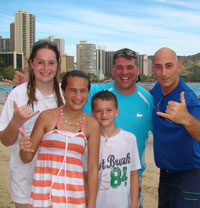
Waikiki Beach wasn’t on their vacation itinerary, but Rick Hill, his fiancée, Maureen, and their three children—in Hawaii for a sunny week away from their Lunenburg, Massachusetts, home—decided to make a quick stop.

Joe Parker, who grew up in Leominster, Massachusetts, but moved to Hawaii years ago to escape a troubled past, wasn’t supposed to be on the beach that day, either. He was an event planner for a resort and was arranging a last-minute surfing lesson for a client.

Maureen was about to take a photo of Rick and the kids when Joe happened by. He kindly offered to take a picture of the entire family.

As Joe lined up the shot, he listened to the family speak to one another. Joe was certain he recognized their accent—a distinctive derivative of the Bostonian “pah-ked the cah in Hah-vahd yahd” drawl spoken in his old neighborhood.

Instead of saying, “Say cheese,” Joe smiled and said, “Say Leominster!”
Leominster was the next town over from Lunenburg. The family and Joe got to talking. A few names were thrown around. “You know a Dickie Halligan?” Joe asked.

“Know him? That’s my father!” Rick said.

Joe lowered his sunglasses and squinted at Rick, stunned. “He’s my father too.”

According to The Globe, Joe had grown up in foster care and had a painful childhood, running away from home at age 15. He had been told as a child that Dickie Halligan was his uncle. He only discovered the truth when he was 21, after responding to an ad Dickie had placed in the local paper searching for him.

Dickie revealed then that Joe had a half-brother. But Joe and Rick never met.

Until now, on a Hawaiian beach, 6,000 miles away from where they grew up.

Joe and Rick spent the rest of the week together. Joe turned 38 on Easter Sunday and celebrated with his long-lost family.

“We lost 38 years of each other, which is a shame,” Joe told The Globe. “But we are both grateful that this happened and that we get this chance in life to bond.”

What unlikely reunions have you been led to? Let us know in the comments below or by sending your story to mw@guideposts.org.

Inexplicable Coincidence: Dog Saves Family from Fire

Pit bulls get a bad rap. They’re often viewed as violent, unpredicatble and poorly behaved, even though there is nothing to indicate they’re different from any other dog breed. Call it dog prejudice, if you will. One bad apple, and all the rest get called rotten.

But at least one pit bull can genuinely be called a hero this week.

On Monday night, Danna Smith of Huntington, West Virginia, was getting some much-needed sleep. The single mother had recently spent time in the hospital, and was responsible for raising her three children, who each have varying degrees of autism.

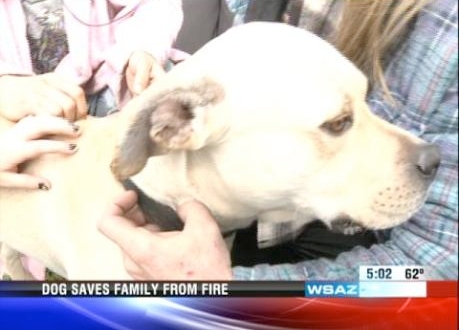
At 5:00 a.m., Danna was awakened by loud barking and vicious growling. A pit bull was clawing and scratching at her sheets, nipping at her legs. Was she under attack?

Danna bolted upright in bed. No, the dog wasn’t attacking her, she realized. The room smelled strongly of smoke. There was a fire—and the pit bull was trying to wake her up.

“The alarms didn’t go off; nothing went off,” Danna told WSAZ news. “He’s what went off.”

The pit’s quick actions allowed Danna and her family to escape to safety in the nick of time.

According to WSAZ news, Danna’s landlord expressly forbid dogs from the property. So the pit bull wasn’t Danna’s pet. His name was Ghost, and he belonged to Danna’s boyfriend. He was only staying over that night to help care for the children as Danna recovered from her hospital stay. Ghost normally wouldn’t even be there.

The fire itself, likely caused by faulty wiring, started in an upstairs bedroom, the room of 7-year-old Josiah. But Josiah was the only member of the household not there that night—he was away at an autism treatment center. “If he was there, he wouldn’t be alive right now,” Danna told Fox 11 News.

Was it only the dog who saved the day? Danna thinks Ghost got a little help.

“It’s the good Lord up above, the Father almighty,” she says.

Do you have a “Right Place, Right Time” story? Were you somewhere you didn’t think you were supposed to be, only to discover there was an unexpected reason for it? Or do you have an animal story to share—a dog or some other pet who mysteriously saved the day? Tell us your story. We love to read them and share them with our Guideposts fans!

How Years of Chronic Pain Tested Her Faith

A 54-year-old woman with encephalitis goes into remission after touching the tombstone of Charlene Richard, known as the Little Cajun Saint, in Louisiana. An 11-year-old in central Texas with an inoperable brain tumor is prayed for by her community, and an MRI soon after shows the impossible: The tumor has disappeared. A 70-year-old blind woman gets spinal surgery after a fall—and wakes up with her vision inexplicably restored. I read stories like that and can’t help but ask myself, Why not me? Where’s my healing?

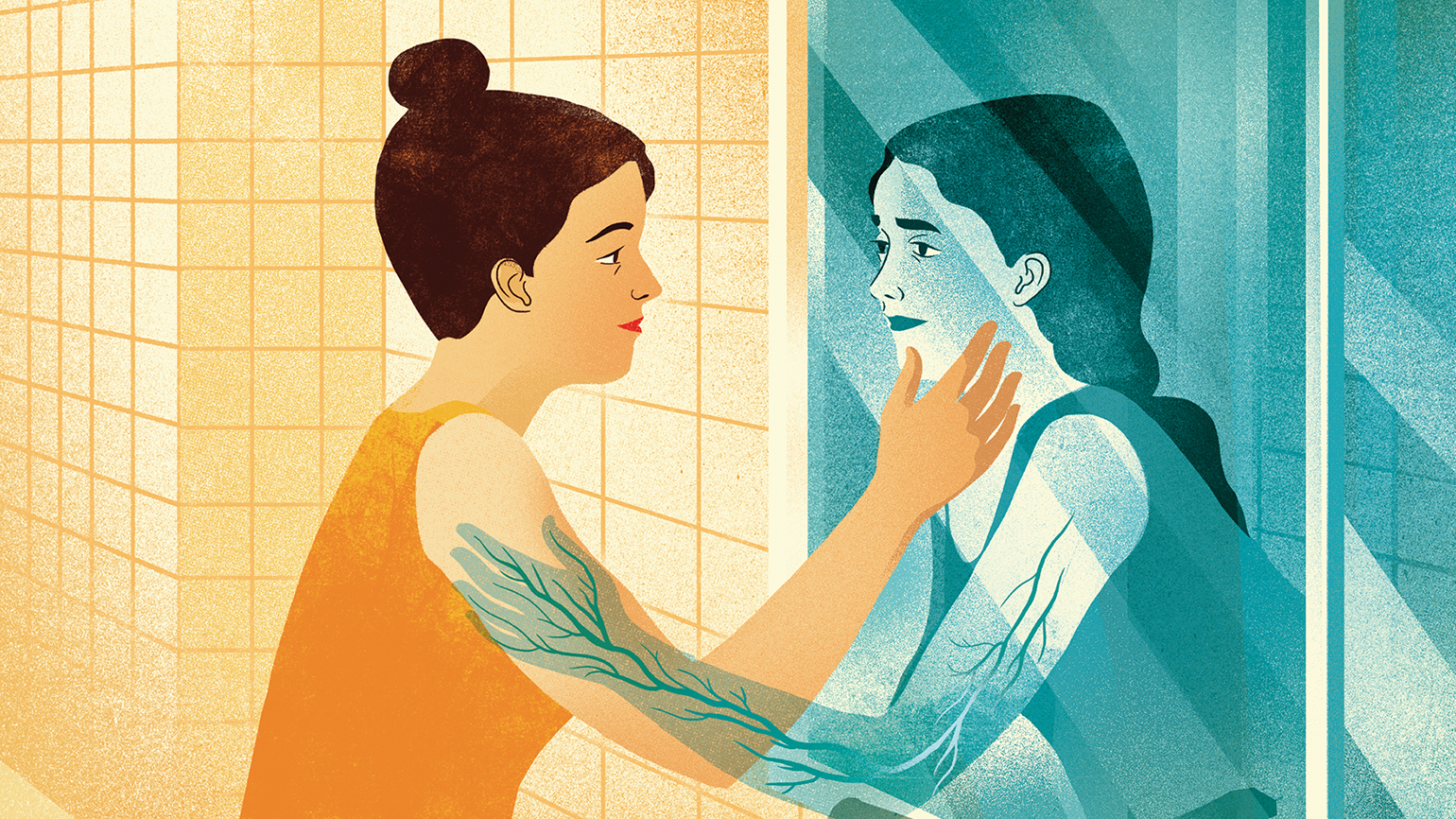
I was born with neurofibromatosis, a rare genetic disease that causes tumors to grow on the nerves throughout my body. Starting when I was age 15, the pain from the tumors became unbearable. It felt as if there were hot coals behind my eyes, on my face and inside my mouth. The masses temporarily paralyzed different nerves in my face, causing my eyes to droop and my cheeks to sag. Most tumors eventually had to be surgically removed. Some of the nerve damage was irreversible—to this day, I can’t move my left eyebrow or wink. As bad as the pain was, the fear of disfigurement was worse. As a young woman, I would stare into the mirror in utter misery. Who would ever ask me out on a date? What man would ever fall in love with me?

Around the time the tumors started causing me pain, we lived across the street from a woman named Mrs. Hatten. She said the Lord would heal me if I just prayed hard enough. She’d put her hand over my head and say some words. Nothing happened. Other neighbors would bring presents and tell me, “We’re praying that God will heal you. You know he can do that.”

As the years went by and I remained uncured, guilt started to creep in. Maybe there was something spiritually wrong with me. I’d always believed in God and felt strong in my faith. I went to church regularly and prayed fervently that God would cure me. But it wasn’t working, so maybe I didn’t believe enough. After all, a kid who’d had cancer visited our church and explained to the congregation how he’d been healed by prayer when the doctors said they couldn’t do anything. He was cured, just like the stories in the Bible—all those people healed by Jesus. Maybe that kid had the kind of strength in his faith that I lacked.

I turned to Scripture for answers, and when I read in Psalm 139 about how God formed us, how he “knit me together in my mother’s womb,” I came to what seemed like the logical conclusion: God must have somehow wanted me to have this terrible thing. He could have stopped it, but he didn’t. Yet I never stopped believing. After all, some good had come from all those trips back and forth to the hospital, all those surgeries and all the doctors and nurses who treated me. I decided to become a nurse myself. I wanted to help other people who were suffering. I learned how to relieve their pain, even if mine persisted.

In church, when we sang the old hymn “I Love to Tell the Story,” I would think, Okay, maybe this is my story: Because of my disease, I feel compassion for others. I can better help people who are suffering because I can empathize and reach out to them.

Once, a nurse I worked with at the VA hospital in Huntington invited me to her church to hear a guest speaker, a man who had evidently healed hundreds of people. “We’ve been talking about healing in our Bible study,” she said. “I’m beginning to see that it’s a matter of faith.” As if that were news to me. Still, I was hopeful.

I went to the service and found a seat near the front of the sanctuary. Folks all around me were speaking out about the miraculous healings they had received, everything from relief from shortness of breath to the reversal of paralysis. A cleansing fire had filled their bodies. Some said they knew they were healed the moment they arrived. One guy walked forward and tossed his pack of Marlboros into a trash can, claiming he was freed of the urge to smoke cigarettes for the rest of his life. Just then the guest healer approached me and placed a hand on my head. “What brings you here, ma’am?”

“I have tumors inside my head. I’ve had them all my life. The pain is unbearable.”

“Do you have faith that God wants to heal you tonight?”

“I do,” I said, never surer of anything in my life. The healer asked God for “the healing virtue to be manifested,” then slapped my forehead and tilted me backward. “Thank you, Jesus,” I prayed over and over again. “I know you have the power to heal every tumor cell in my body, and I ask you to do that.” After a long while, I stood upright—as stiff as a statue—and knew from a place deep within me that nothing had really changed. My tumors were still there.

After that experience, I began to think maybe it was because I was a nurse and knew too much about the origins of diseases, all the science behind them, that I could never really have the simple, trusting faith of some of my patients. Like the man who had esophageal cancer. It was so bad that I knew he wouldn’t live past Christmas. He could hardly swallow as it was. Still I asked, “What do you want for Christmas?”

“All I want is to be able to eat a Baby Ruth candy bar,” he said. How could I tell him it would never happen? To my amazement, however, it actually did. Despite what the doctors said, despite what I knew, the patient got better and did eat that candy bar he longed for.

Then, in my fifties, I got another terrible diagnosis. Breast cancer. It shouldn’t have come as a surprise—it was in my genes. My mother had died of breast cancer. But getting it still hit me hard. My mind reeled as I thought of everything that likely lay ahead: treatment, chemo, radiation. When I told my friend Wanda, she immediately invited me to a healing service. But this time, I didn’t want to go. I was too angry. Why had God done this to me? Hadn’t I already suffered enough?

Wanda was insistent. She was convinced that God wanted to heal me of the cancer. Reluctantly, I went with her. At the church service, she prayed for me desperately and held me in her arms. This time something did happen. My chest filled with fire. I felt some sort of divine touch. The minister called from the pulpit, “There is a woman here tonight who is being healed from cancer in her breast.” I don’t know why this experience felt so different. I wasn’t praying any harder. If anything, I had just given up.

And yet, as tests later confirmed, I was indeed healed. I needed no treatment. The cancer was gone. I struggled to make sense of it. I asked my friend Jim, a minister, why would I be healed of one ailment and not another? Why would I be released from one disease and still suffer painfully from another? I mentioned all the biblical research I’d done—all of God’s miracles—at which point Jim reminded me of the apostle Paul. “Think of everything that Paul did. Think of how he spread the faith. And all the while he suffered from some terrible condition—a thorn in the flesh, as he called it,” Jim said. “Why hadn’t God healed him? We don’t know.”

I flashed back to a conversation I’d had with one of my longtime doctors. A man of great faith. “Look at your own life,” he’d said. “Look at what you’ve gone through.” Many times we’d prayed together in his office for healing, healing that never came. “But you were stronger in your faith when you were at your worst physically,” he said. “God was such a source of comfort to you. You used to echo the words of the hymnist who wrote, ‘It is well with my soul.’” I smiled at the thought, glad to have been reminded. During my darkest times, I did used to say that. It still rang true.

My condition remains today, but I’m relatively pain-free, thanks to countless surgeries and changes in my medication. How long will that respite last? It is a mystery. What will I do if the pain returns? I have no answer for that either. What I do know, undoubtedly, is the boundlessness of God’s love. I accept his will and his help, and he cares for me in every situation. He always has and always will. And with that knowledge, it is well with my soul.

How Two Stories Spoke to You

There’s nothing quite like reading a story and really identifying with the narrator, finding facets of your own journey reflected back at you. Not only do you get the chance to see how someone else handles challenges similar to the ones you face. You also get that much-needed reminder that you’re not alone in this world, even during hard times.

We’ve written before about how Mysterious Ways can make a difference in our readers’ lives. We sift through hundreds of ideas and submissions before finally settling on the exact contents of each issue, and time after time we receive letters from readers telling us how a story we’ve published reached them just when they needed it.

Like Donna M. Grass of Broomfield, Colorado. She could hardly believe it when she read “One Last Gift” in our February/March issue. It’s the story of Beverly Waters, who received a piece of “junk mail” that turned out to be a gift from her late husband. Donna could relate all too well:

“As I read Beverly’s story, I smiled. Memories came flooding back. Two and a half months after my husband Robert’s death, the military honor guard and a host of friends helped celebrate Robert’s life with the burial of his ashes and a luncheon. That night I sat alone at home, sadly going through the sympathy cards and other mail which had arrived that day.

“I received one loving card from friends along with a $100 bill. They instructed me to use the money for something I could use while memorializing Robert.

“I reached the end of my condolence messages, and my heart almost stopped when I noticed a piece of mailnormally classified as ‘junk’from the Danbury Mint. It had been mixed in with the other cards. ‘Robert, tell Donna that she means the world to you,’ the card read. There was an offer for a sterling silver heart pendant, emblazoned with a dozen red rubies and tiny diamonds, along with an inscription on the back: ‘Donna, I loved you then, I love you still, I always have, I always will. Robert.’”

Donna knew exactly what to do with the money her friends had just sent. The cost of the pendant? $99.

Shirley J. Storey of Rogue River, Oregon, wrote in to say how much she could identify with Loraine Standish, whose story “The Smile Sent from Heavenwas in our October/November 2014 issue. Like Loraine, Shirley’s beloved daughter suffered from lifelong alcoholism:

Michele's beautiful smile.“My daughter Michele also had a beautiful smile. When she was in her 20s, she got hooked on alcohol. After several years of alcohol abuse, she quit drinking. She became completely devoted to the Bible and even attended church with me and my second husband, Mark.

“Eight years later, though, the alcohol got hold of her again, and for the next few years we didn’t know where she was or what she was doing. We prayed for her constantly. I feared receiving a phone call out of the blue or a knock at the door, letting me know she had died.

“Michele did get clean one more time, but not for long. She resumed drinking, and this time there was no coming back. One night, I finally got that dreaded phone call: Michele was gone. She was only 40 years old.

“The Sunday after her death we were in church. During worship I remembered her being beside me, praising the Lord. The Lord immediately gave me a vision: Michele standing before him, her eyes open, her hands raised, praising him. I thank and praise him so much for that final vision, recognizing that she finally reached her place of healing–in heaven.”

Has one of our articles ever touched you in a personal way? Send us a letter! We’d love to hear your story.

How to Talk About Miracles

Doctors are trained to handle pretty much any medical question posed by a patient. “Which course of treatment do you recommend?” “Will it hurt?” “What’s the recovery process like?”

But what happens when patients start talking about something a little less concrete–like miracles? That’s when things can get tricky, especially if the doctor doesn’t believe in the miraculous.

Luckily, a medical team at the Johns Hopkins Kimmel Cancer Center has come up with a handy mnemonic tool–called AMEN (Affirm, Meet, Educate, No matter what)–to help doctors better handle discussions about miracles. After all, hospitals are no strangers to the miraculous. God’s wonder certainly seems to reach us most when we’re at our lowest. And spirituality can play a significant role in a patient’s recovery process.

AMEN is a four-step process. It starts by affirming the beliefs of a patient; then meeting the patient or their family where they are–including, sometimes, in prayer; then educating patients as a medical provider; then, no matter what, assuring patients of a commitment to them.

“I use the AMEN mnemonic pretty much every day,” Dr. Thomas Smith, director of palliative medicine at Johns Hopkins, told Time. “Maybe my patients need more miracles than other doctors’ patients, but it is a common occurrence and an underlying theme in many people’s lives.”

That got me thinking: Maybe the AMEN method shouldn’t be limited to doctors. I have a feeling it can work wonders for us non-medical folks too. After all, don’t we all need a reminder to stay open-minded to miracles, especially in our encounters with others?

When a friend asks for advice and mentions miracles, it’s easy to look for a more practical solution and secretly think the worst. But maybe we can take a different approach. Acknowledge the need for a miracle, meet together in prayer, explore all options for a solution and stay supportive… no matter what. A prescription for hope.

So the next time someone tells me they’re wishing, praying, searching for a miracle? I’m going to answer with a resounding AMEN!

How do you talk miracles with others? Share your story below!