Embrace God's truth with our new book, The Lies that Bind

How to Interpret Your Dreams Biblically

Dreams are some of the most mysterious forces humans can experience. The Bible contains several famous stories of God communicating through dreams. Not sure what your dreams mean? Here are some tips for interpreting your dreams biblically.

1. Listen

The first step to interpreting a dream is to be receptive before the dream even occurs. Job 33 says, “For God speaks in one way, and in two, though man does not perceive it. In a dream, in a vision of the night…” Be willing to listen and open to whatever dreams may come your way.

2. Acknowledge God’s presence

In Genesis 28, Jacob had a dream about angels climbing and descending a ladder that reached to heaven. How did Jacob respond to the dream? Genesis 28:16 says, “When Jacob awoke from his sleep, he thought, ‘Surely the Lord is in this place, and I was not aware of it.’”

If you have a dream and aren’t sure what it means, a good first step is to thank the Lord for giving you this dream and acknowledge a divine presence.

3. Write it down

If you’ve had a dream and aren’t sure what it means, try writing it down. In Habakkuk 2, God instructed the Israelites to “write down the revelation and make it plain on the tablets.” Similarly, in Daniel 7, after Daniel had a dream he “wrote down the dream; he recorded a complete account of the matters.”

4. Ask

There are numerous instances in the Bible where people went to others for advice on interpreting a dream. The Pharaoh asked Joseph and Nebuchadnezzar asked Daniel. A wise friend or mentor can offer insights into your dream that you might overlook.

5. Look for symbols

The dreams recorded in the Bible often feature symbols. Here a few of the most common:

  • Weather – Daniel interpreted a dream about a tree being cut down as foreshadowing of Nebuchadnezzar’s fall from rule.
  • Numbers – Pharaoh dreamed of seven cows and seven heads of grain. The number seven in both cases represented seven years. Similarly, when the Pharaoh’s cupbearer and baker dreamed, the number three represented three days.
  • Food – In Judges 7, Gideon overheard a man telling a companion about a dream of a loaf of barley. The crumbling of the cake was interpreted to mean the crumbling of the army Gideon was fighting. Animals – Daniel of four beasts who were interpreted to represent four kingdoms.

God can speak powerfully through dreams. Through prayer, understanding biblical references and discernment, you can learn to interpret your dreams and understand more clearly how God is working in your life.

Having trouble getting a good night’s sleep? Download Abide for Christian sleep meditations that use calming techniques and Scripture verses framed in calming stories to lull you into a peaceful slumber.

How to Interpret Dreams About Deceased Loved Ones

Sometimes when you’re looking for a story, other stories find you. That’s what happened to me a few months ago. I was working on a story for the August/September 2018 issue of Mysterious Ways, about my grandpa Jacques and how he appeared to me one night in a dream, shortly after he died in 2016 at the age of 88.

My grandpa Jacques was always intriguing to me growing up. He wore heavy cologne, had a thick European accent and a deep, booming voice. He had a strange tattoo on his arm, too. It was drawn with thick lines. A rose. I later discovered that it covered something more sinister. A series of numbers. You see, Grandpa was a Holocaust survivor, and without his determination and fierce will to live, I wouldn’t be here. Sometimes, when life gets hard, I think of Grandpa. His strength and resilience continue to inspire me every day.

At 14, Grandpa was sent to the Blechhammer death camp along with his grandmother, mother, and younger brother and sister. Grandpa and his brother, Bernard, were the only two to make it past the entry gates alive. He later survived a 200-mile death march through Eastern Europe in January, wearing nothing but pajamas and without proper shoes. After he was liberated, the first thing he did when he was strong enough to leave the camp was to travel to the neighboring town and have his photo taken—to show that he was a person, and a survivor. There’s a photo of him from that day—gaunt, but smiling, still wearing the Nazi-issued striped death camp pajamas and beret—that he brought with him when he immigrated to the U.S.

Grandpa eventually settled in California, where he married and raised five children. I grew up in Los Angeles in a home that showed signs of Grandpa’s new beginnings. Framed in our kitchen were the menus that Grandpa and Uncle Bernard saved from the ship they took to the U.S. Over our mantle hung matching gold and silver pocket watches—the first thing Grandpa’s uncle and his friend, who had immigrated to the U.S. before the war, bought in New York City with their first paychecks. That uncle later sponsored Grandpa, making it possible for him to come to America. Those watches signified new opportunities. Starting over. A deliberately chosen future.

Read More: How to Interpret Dreams About Deceased Loved Ones

Grandpa’s success story was the backdrop of our childhood. But he never discussed the horrors he went through in the camps. Not with his kids, and definitely not with us grandkids, though it was clear that the trauma followed him his whole life.

As I researched the story, I couldn’t help but think about my Grandpa Jacques. Was he truly at peace? I typed in “Jacques Ribons photo” into the search bar. A bunch of results came up. One of them was a link to a story on Huffington Post, a spotlight of an artist’s work—painted portraits of survivors.

The artist herself, who goes by the name Lydia Emily, was a survivor of violent assaults, debilitating disease, and countless hardships. She’d found solace in painting portraits that showcased the strength of the human spirit. I scrolled through her beautiful paintings until two side-by-side portraits stopped me in my tracks. There, on the web page, were two paintings of Grandpa: One, of him smiling boldly as a boy wearing a death camp uniform, and one of him in his eighties.

Read More: He Started to Give Thanks After This Traumatic Experience

Tears filled my eyes as I realized that Grandpa Jacques is more than just an inspiration to me. His spirit lives on to remind others that thriving after unspeakable tragedy is possible. I looked closer at the second painting. Grandpa looked just the way I remember him last. Just like he did in my dream. Smiling, his wispy white hair ringing his head like a halo, his piercing blue eyes fixed on the viewer. Happy. Resilient. Peaceful. In that moment, I knew Grandpa had led me to that portrait. To show me again what he’d told me in my dream: That he is, indeed, at peace.

How to Decipher Your Most Puzzling Dreams

Ever have a weird dream you just can’t shake? I’m a college student and intern at Mysterious Ways, and despite taking numerous psych classes, I’d never given my dreams much thought. Until a brown envelope landed on my desk one afternoon.

The envelope appeared last summer. One of my job responsibilities is looking through manuscripts sent in from readers across the country. This particular envelope caught my eye because it was lumpy and not the typical manila color. A compact disc and folded letter fell out. Something was written on the face of the CD in black marker:

Charles Edward Carver
Date: 7/08/2017

People still use CDs? I thought to myself. I unfolded the accompanying letter. The CD had been recorded at a cancer center in Winston-Salem, North Carolina, where Charles was a patient. “I’m sending you my true life story,” he wrote. “I pray that it will give hope and inspiration to others.…”

I debated whether to listen to the CD right away. I had a lot of envelopes to open plus the online submissions to go through. In the end, curiosity got the better of me. I popped the CD into my computer. First, I heard a woman’s voice. A nurse, I assumed. “We’re going to talk about your story today,” she said.

“Yes,” a deeper voice with a soft Southern accent broke in. Charles, presumably.

“I was born in Holden, West Virginia,” he said. “My mother lived in a coal mining camp with my father. My father was a veteran of World War II. He was plagued by a lot of problems….”

Charles’s voice was weary. He paused every now and then, as if to catch his breath and collect his thoughts. It was clear cancer had taken its toll. The recording was 24 minutes, 58 seconds long. I didn’t think I could listen to the whole thing. But two minutes in, I was hooked. Charles talked about his dad, a coal miner in Appalachia and an alcoholic. Charles’s mother, Helen, gave birth to four children, then had two miscarriages. Eventually Charles’s aunt took Helen to see a specialist at a hospital in Huntington. That’s when Helen learned two things. One, she had cervical cancer. Two, she was three months pregnant with Charles.

“My aunt, who relayed this story to me later in my life, said a glow came over my mother when she heard the news,” Charles said. “My mother smiled and said, ‘God is going to allow me to have this child.’”

Against her doctor’s orders, Helen refused treatment until after delivery. The cancer went into remission, and Charles was born healthy. Less than two years later, though, Helen’s cancer returned and she died. Charles would never know her. Or most of his family. His father was unable to care for the five young children. They went into foster care. When Charles was eight, he was adopted, along with his sister, by another miner named Mr. Carver.

“Mr. Carver was more like a grandfather, being 57 years of age,” Charles said on the CD. “He was loving and caring.” His wife, though, was a different story. She was verbally and physically abusive.

“Growing up, knowing they weren’t my parents, it was hard,” Charles went on. “But something amazing happened when Mrs. Carver would go on her tangents. When I went to sleep, I would dream of a lady who never touched the ground, dressed in a flowing chiffon gown.…”

Charles talked more about his childhood, then his career as a truck driver and his diagnosis of Stage 4 prostate cancer at the age of 49, six years before. The CD stopped. I stared at my computer, longing for more. What happened to Charles at Mr. Carver’s? What about the woman who never touched the ground? I left work that day and tried to put the story out of my mind. But at home or in class, I couldn’t stop thinking about Charles Carver’s CD and his dream of the woman in the chiffon gown. I had to know what happened. At work the following week, I listened to the CD again. Then I dialed the phone number listed on Charles’s letter. After a few rings, a man picked up. The same deep, weary voice.

“This is Charles Edward Carver,” he said.

“Hi, Mr. Carver,” I said. “I’m calling about your story.”

Charles chatted away like we were old friends catching up. He told me all about growing up in the coal camps of West Virginia. “Everybody knew who did what and who worked for whom,” Charles said with a chuckle. “One time when I was a teenager, I was in love with this girl. It took less than a day for someone to tell her parents!”

I asked Charles to fill in some of the holes in the story. “Mr. Carver was a loving man—he never raised his hand or voice in anger,” he told me.

“What about the dream?” I said.

The dreams were vivid, he said, like sensory overload. They always took place amid lush, green hills. A soothing tune would drift through the dream, like a movie soundtrack. And, there before him, Charles would see a woman in a chiffon gown. Her smile made her glow. With her arms outstretched, she’d call for him: “Eddy!” A nickname only a few people knew.

“The woman had curly brown hair and deep blue eyes,” Charles said. “I felt like I knew her voice too.”

Charles would go toward the woman. But he always woke up before they reached each other. By the time he was 11 or 12, the dreams stopped. Whenever life got hard, though, Charles would think back to the dream. And the woman in the chiffon gown, whose feet never touched the ground.

“I always wondered who she was,” Charles said. He paused a moment. “Well, one day, when I was 16 years old, busing tables at a steakhouse in Madison, West Virginia, in walked my brother Roger.”

Charles and Roger had been split up after their mother’s death. Roger, eight years older, stayed in foster care until he was 18, then went to work in the coal mines. He knew the Carvers had adopted his younger siblings and would pass by their house on his way to work to wave to Charles. But they’d never spoken. Not until that day at the steakhouse.

“I’m going to trim up the family cemetery for Memorial Day,” Roger told Charles. “I could use your help.”

Eager for a connection to his past and to his big brother, Charles agreed. They traveled to the family cemetery in Hell’s Creek, a place Charles had never been. They mowed the lawn, then Roger pointed to a gravesite. “That’s where your mother is buried,” he told Charles. The grave had a granite headstone, engraved with Helen’s dates of birth and death.

“At the top of the stone was an oval case,” Charles told me. “It opened to reveal a picture inside. My mother as a young lady.”

I could make out the muffled sound of Charles crying on the other end of the line. He had never seen a photo of Helen before, he told me. Never known she had curly brown hair. Or deep blue eyes.

“I don’t know how long I stood at the grave that day,” Charles said. “But I couldn’t stop looking at the photo. She was the woman. The woman who came to me in my dreams when I was just a boy. The woman in the chiffon gown.”

Charles went on to tell me about his wife, to whom he’d been married for more than 30 years. How they had never had kids of their own but were parents themselves to eight foster kids. How his siblings, with whom he’d eventually reconnected, had all died of cancer. How he didn’t have much longer to live himself. He had only one story left to share with the world.

“That day in the cemetery was God’s way of giving me peace,” Charles said. “Cancer robs, it steals. But there’s so much in this life that’s beautiful. The love a mother has for her child? That, it seems to me, is everything.”


How This Portrait of Jesus Saved Their Lives

I awoke, startled. Who were these people crowded in my bedroom? What were they doing there?

“Lois.” It was my mother, hovering anxiously near my bed. “It’s a flash flood,” she said. “The kitchen has already flooded.” She was holding a box of soda crackers—what I’d later learn was the only thing she’d managed to grab in her rush to escape the rising water.

June 4, 1940. I was 12 years old. It had started raining earlier that day, a sudden and unrelenting downpour on our little town of Homer, Nebraska. By that afternoon, our basement had flooded, spoiling the canned applesauce, pickles and chokecherry jelly we stored there. It had happened once or twice before, so we weren’t overly concerned. We hoped that would be it. But that was just the beginning.

My mother explained what had happened. As I’d slept, the nearby creek had overflowed. A wall of water had rushed down our street, leaving no time for anyone to get to higher ground. As the only two-story house in the neighborhood, ours was the best place to seek refuge.

The electricity had short-circuited, so all we could do was sit in the dark and wait. My eyes slowly adjusted to the dim room. I made out the faces huddled around me. My mother, father and 10-year-old brother, Paul. Mr. and Mrs. Kelly were also there, with their two young boys, Billy and Bobby. They’d just rented the small house next door. The boys were frightened, crying. So was Mrs. Kelly. “Everything’s gone,” she gasped. “Everything.”

“Everything.”

Our elderly neighbors the Eickhorsts were there too. Mrs. Eickhorst was in her wheelchair. Her husband must’ve somehow carried her in her chair up the stairs. Her gnarled hands clutched at the afghan that covered her knees. She was quiet, trembling.

I slipped out of bed and hurried over to the window. By the light of the moon, I could see that the street had disappeared, swallowed up by the muddy, churning floodwater. Giant elm trees, uprooted by the current, rushed past our house, smashing everything in their path. I watched, horrified, as cars, furniture, even plumbing fixtures floated by.

Paul joined me, his face pressing against the glass, his eyes wide with terror at the steadily rising water.

The town’s fire siren started to wail from atop the one-room jailhouse. Then, over the commotion, came the sound of glass shattering downstairs. It made everyone jump.

Father ran into the hall to investigate, and I followed. From the top of the stairs, we saw the flood water rushing in through a broken window. The living room was filling up!

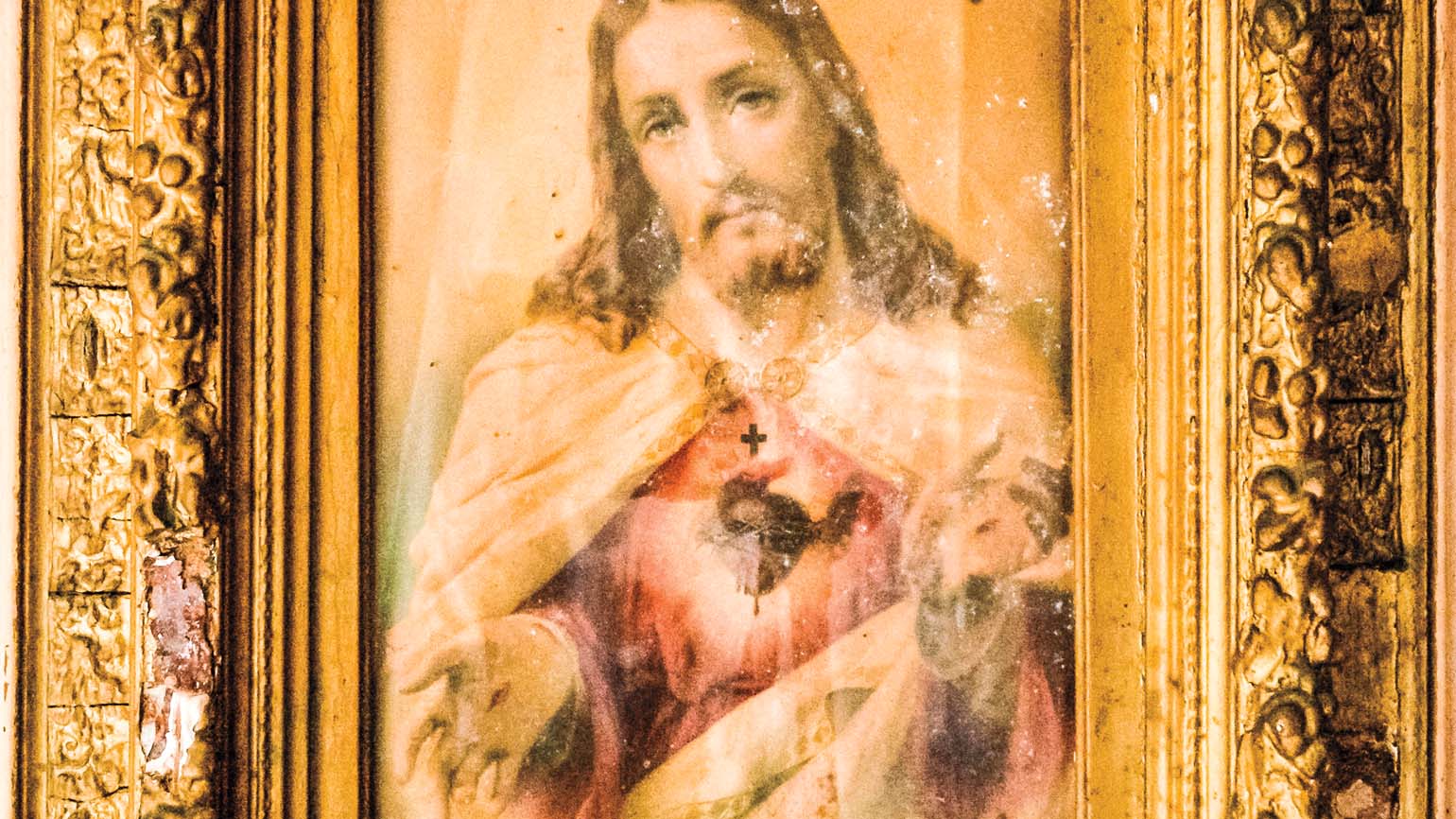
I turned my eyes to the picture of Jesus on the wall halfway up the stairs. Years before, my mother had hung it there. “So he’ll be the last person we think of before we go to bed,” she said.

Please protect us, I prayed.

We retreated to my bedroom to wait. The night dragged on. In the darkness, the water climbed the stairs. Father began to explore our small attic space right above my bedroom. We might be forced up there, and he knew not all of us would fit. Then what? How high would the water go?

Dear Jesus, don’t let it come to that.

Morning broke and the rain finally stopped. We peeked out of the bedroom to survey the damage. We could just see the first floor, which was entirely destroyed. But incredibly, our house had stayed on its foundation. We stayed upstairs until we heard shouting outside—a man in a rowboat was there to take all 10 of us to higher ground.

My father and Mr. Kelly carried Mrs. Eickhorst across the living room to the waiting boat, wading through the dank water. They returned for the rest of us. Carefully we made our way down the stairs. I glanced at the picture of Jesus and caught my breath. The flood water, which had started to recede, left its mark on the wallpaper. It was easy to see how high it had risen. The water line stopped just below that picture. It was as if Christ had said to the rising water, “Here I stand. Come no farther.”

Eighty-one years later, I look back on that night, and I know that there was one more presence in my bedroom as the 10 of us huddled together, fearing for our lives. The One who had heard my prayers and held fast against the flood.

How This Mysterious Visitor Changed a Farmer’s Outlook on Life

Snowflakes were the last thing Tom Barry wanted to see. It was already late and he still had more than half a field of corn to harvest. Snow would slow him down more than anything. It would not only make the corn harder to pick but also make hauling it away nearly impossible.

Why this? he thought to himself. Why now? For the first time since his father had died, he felt the careful control he’d worked so hard to maintain slip away.

His dad had always been his rock. Growing up in a large family with limited means, he had learned at a young age how to carry his own weight—a lesson he passed on to his children. Tom had inherited not only his dad’s work ethic but also a place at the family farm in Pisgah, Iowa. After graduating from college with a degree in agronomy, he returned to the farm to work there full-time. As his father aged, Tom slowly began to take over more and more of the responsibilities. Still, his dad had always been by his side to offer him advice.

In fact, he was even out in the fields feeding the cattle the day before he had heart surgery. “See you tomorrow,” he said that evening, adding as usual, “Good Lord willin’ and the devil don’t care!” He never left the hospital. Tom’s father passed away at age 73 following complications from surgery. Now, Tom glanced back up at the sky hopefully, but the flakes continued to fall. I have to finish this harvest, he thought. But he wasn’t sure how.

The family was devastated when Tom’s father died. There were so many decisions to make regarding the daily running of the farm. Tom didn’t truly appreciate how much his father did until he was gone. His mother and siblings did what they could, and his wife and kids were there to help with chores and some of the fieldwork, but most of the responsibilities fell to Tom. They sold a few of the cows, until the herd was a manageable size. They also got rid of some of the machinery, mostly the equipment that needed two people to operate. Life went on.

Against all odds, the crop that year was good. Tom was impressed by the yield, but when it was time to get out the combine and harvest, Tom missed his dad more than ever. Running the combine had always been his job. Tom would haul the been crop in and do odd jobs, but it had always been his dad in the driver’s seat. It felt weird taking his place. But Tom had to. His son helped when he could, but between college courses and a part-time job, he wasn’t always able to.

Combining and unloading by himself was a slow process, which was why Tom was out so late. Now the snow that dusted the half-harvested field was just going to make a painstaking task even more painful.

“What do you want from me, God?” he asked the darkened sky.

He didn’t know what to do. He desperately wished he could turn around and ask his father what he thought. But Tom couldn’t stand here wishing any longer. The snow was still coming down, and it would only get worse from here on out. He decided to finish filling the wagon before calling it quits for the night.

Tom worked as quickly as he could. As he was making the last round, something fluttered up in front of him. A little bird—a sparrow, perhaps—that had been nesting in the standing corn. He’d scared it up with the combine. That wasn’t unusual. Birds always flew away when it came close.

But instead of flying away from the lights and mechanical clanks and groans of the combine, this sparrow swooped in front of the combine’s window once, twice, three times before alighting on the combine’s railing. Though it was still snowing and the wind was picking up, that little bird sat perched there, keeping Tom company as he continued to combine the field.

Look at me, it seemed to say. If I can handle this, so can you.

As Tom came to the end of the field, the sparrow looked at him one last time before taking off into the snowy night. Tom sat there, the combine’s engine still running.

What was that? he asked himself. A sign from Dad? Or just a weird coincidence?

Tom still doesn’t know for sure. What he does know is after that night his outlook was changed for the better. “I realized I had been working with God to take care of his land and the animals that I love so much. And just like the heavenly Father, my dad was working with me too as I carried on the tradition of our forefathers.”

The years have passed by quickly, as everyone says they do. Tom has slowed down some, but like his old combine, he’s still chugging along. His son has stepped up to help with most of the fieldwork, as Tom did for his dad.

Life goes on. Things change. But Tom looks to the future, secure in the knowledge that there’s someone looking out for him.

How This Long-Lost Book Brought Divine Comfort

I stood in my office, surrounded by books. They were everywhere! Piled on my desk, stacked in cardboard boxes on the floor… There had to be hundreds of them. I had no idea that the children’s book drive I’d organized at work would be so successful, and I hoped I hadn’t taken on too much too soon.

Of course, I shouldn’t have been surprised. My coworkers were kind, caring people. I’d experienced that kindness firsthand a few years ago, after my cancer diagnosis.

One morning, while getting ready for work, I’d found a lump in my breast. I scheduled an appointment with the doctor immediately. Cancer ran in my family, and I wasn’t going to take any chances. A mammogram found six tumors. I had Stage III breast cancer.

When I broke the news at the office, everyone offered their love and support. Especially Kathy. She pulled me aside. “Anything you need,” she said, “please don’t hesitate to ask. I don’t want you to feel alone during this.”

Kathy was true to her word. When chemo left me too drained to cook, Kathy organized a potluck and brought ready-made meals to my house. When the lifesaving radiation compromised my immune system, Kathy’s daughter sewed me a cloth face mask to wear to my doctor appointments—pink, for breast cancer. Kathy and I grew closer, and on the days when I was well enough to go into the office, we’d stop by each other’s desks to talk.

During one of our chats, I learned why Kathy knew exactly what I needed. Her mother had also had cancer. “She died when I was young,” she said. “I still miss her every day.”

I tried to reassure her that mother-daughter love endures even death, that her mother was always with her in spirit. But I knew words would never be enough. I wished there was something I could do to return even a fraction of the comfort Kathy had given to me, but how? Only the Lord could bring Kathy the peace she needed, and I prayed for that every day. It gave me something else to focus on.

After 13 rounds of chemo, I was healing from my surgeries, wrapping up the radiation treatments and able to go into work more often. I found my energy finally returning. Before I’d gotten sick, I’d loved to organize company fundraisers and community outreach. Now I was feeling up to it again.

That’s how the book drive came about. There were little free libraries all over town, drop-off points where people could give away books to those who needed them. I wanted to stock them with children’s books. And though I was overjoyed by the number of donations from my co-workers and their friends and families, sorting through the books was overwhelming. As I was moving some of them off my chair to take a breather, Shane, the building’s maintenance man, entered my office carrying even more books.

“Look!” he said, holding up a Harry Potter book. “Doesn’t Kathy love this series?”

“She does, and we’ve already gotten a few copies of it.”

“Why don’t I put this one on her desk then?” he said. “As a little gift.”

I agreed. Caught up in going through box after box of books, I forgot all about it. Until the next day, when Kathy tracked me down, tears in her eyes. “Lori, did you leave this on my desk?” she asked, clutching the copy of Harry Potter.

“Shane found it in the donations. We thought you’d like it. Why? Is something wrong?”

Kathy opened the book to the title page, holding it out for me to see. There was a handwritten inscription: “To Donna, Love Sarah, Happy Birthday.” There was a heart drawn next to it.

“This is my mother’s handwriting!” Kathy said. “Donna and Sarah are my sisters. Sarah was too young to sign the book herself, so Mom did it for her.”

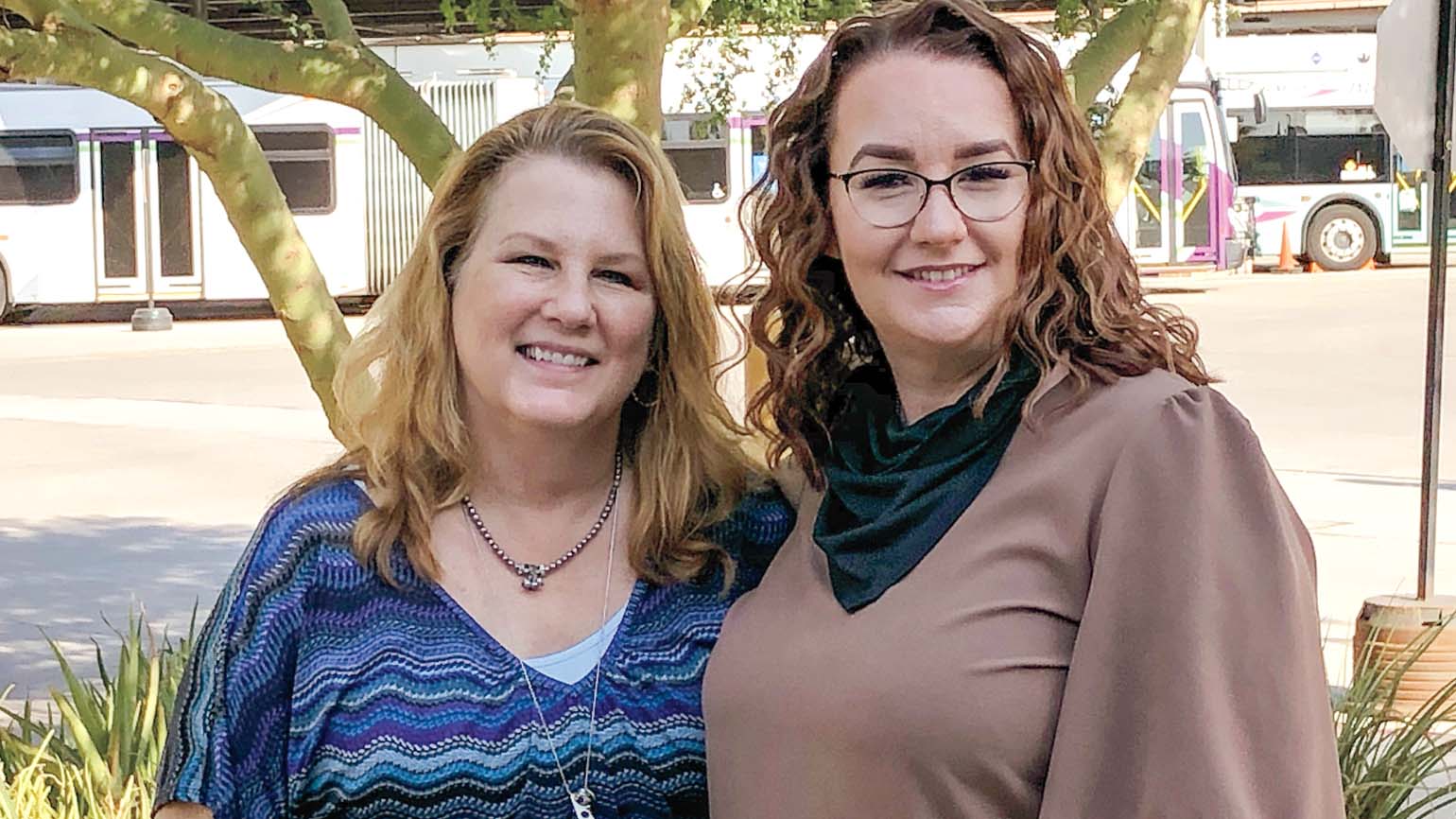
Kathy went on to explain that the book was one of the last gifts her mom had given. The three sisters had cherished the handwriting in it. Over the years, the book had been misplaced. None of them knew what had happened to it. Yet somehow, here it was. Out of hundreds of books donated from countless households in and around Phoenix, Arizona, this long-lost treasure had made it back into the right hands. Offering peace to the woman who’d comforted me through my journey. Reminding us both that there is no journey we travel alone.

How This Heaven-Sent Sentence Gave Her Comfort

It was midafternoon, and I was already curled up on the couch in the living room with no plans to move. The day before, I’d had to put down my beloved dog, Ben. I’d spent the rest of the day in a haze, agonizing over my decision. Ben had been 12 years old, with rapidly declining health, and his veterinarian had assured me I’d made the humane choice. But was it? Had I really done the right thing?

On the other side of the room, my husband, Jon, was helping our six-year-old son, Gus, with his homework.

“Which of these worksheets should we have him do first?” he asked me.

“I don’t know. Just pick one,” I said, distracted.

Our older sons, Ted and Lou, played together, chatting happily. My stepson, Oliver, was in his bedroom. With four boys, the house was never quiet. Still, it felt so empty now without Ben.

Before Ben became the family dog, he’d been all mine. In 2008, I went through a difficult breakup. I had just bought my first home and found myself in the perfect situation to finally have my own dog.

I went to my local Humane Society. I walked past rows of kennels, filled with dogs of all shapes and sizes. Some pushed their noses against the bars, tails wagging. Others hung back, scared.

One dog in particular caught my eye. A big black dog. He looked like a Lab mix and was shy and sweet. He was so massive that I was sure he must have some wolf in him too. As soon as his large, golden brown eyes caught mine, I knew we were meant to be together. I signed the adoption papers and took him home that same day. I named him Ben.

Life together was an adjustment for both of us. Ben was a nervous dog. He wasn’t yet fully housebroken. When I left him alone for any length of time, I was certain to find a mess waiting for me when I came back. He chewed up my couch and shredded the pillows. I tried to crate-train him, but he escaped every time and wreaked havoc. Like an unruly, furry Houdini.

As Ben’s training improved, so did my life. I married Jon. I had my first son. Then my second. Then my third. Ben was the best big brother. He was patient and kind, tolerating high-pitched screeching and little hands pulling at his ears with a steadily wagging tail. My family felt complete.

Eventually I noticed that Ben was slowing down. He played less and grew tired quickly. His tail still wagged whenever I invited him to snuggle, but he could no longer make his way onto the couch. Ben seemed to get progressively more confused, walking into rooms and then seeming to forget where he was. When he started having episodes of shaking and problems with his balance, I knew something was seriously wrong.

I took him to the vet. He confirmed what I already feared. Ben was suffering from age-related neurological problems. He was in pain, and his quality of life was no longer good. The best thing to do would be to put him to sleep.

I stroked Ben’s soft black fur as he closed his eyes for the last time. Holding his head in my lap, I was fraught with uncertainty over the decision I had made.

“Do you believe in God?” I asked the vet as I gazed at Ben.

“Yes.”

“And do you think dogs go to heaven?”

“Of course,” he said sincerely.

I cried all the way home and had a sleepless night. Now I sat on the couch, trying in vain to get comfortable. I looked over to Gus, hard at work on his worksheet. It had been so hard to explain to him and his brothers that Ben wouldn’t be coming home again. For the youngest ones, this had been their first experience with death.

Still, kids are resilient. My boys might have been sad, but I was demolished. I wasn’t sure my heart would ever heal.

“Beth,” said Jon, “could you come over here? You have to see this.”

Sighing, I got up from the couch. “What is it?” I asked. Jon pointed at Gus’s homework.

Each worksheet had the same premise. There was a jumble of six words on each page. Gus had to cut out the words and arrange them into a sentence, then glue them into place. Only one correct sentence was possible.

I stared at the words Gus had carefully strung together: We love our big black dog.

How This Fateful Encounter Became a Lesson in Forgiveness

The envelope immediately caught my attention as I opened the day’s mail. The stamp revealed it had been sent from a state prison. I’d been a pastor here at the Church of the Master for 22 years. Not many letters came to me from prisoners.

Curious, I opened it. A few postage stamps spilled out onto my desk. I pulled out the letter, handwritten on notebook paper. “I came to your church 14 years ago, asking for food and money,” it began. “I told the preacher my house had burned down, but that was a lie.”

I knew exactly who this was. How dare he write me after all these years! Had his conscience finally gotten the better of him? Or was he trying to pull some other con? He had no idea the pain his deceit had caused me and my wife, Jeannie. The anger had festered inside me ever since. I’d relived that day in my mind countless times.

It had been raining hard since early morning that Sunday, and there was a flood warning in effect. It was the kind of day when everyone avoided going out unless it was important. So when I met the man outside my office and heard his story of losing his home and needing assistance, it didn’t set off any alarm bells. He seemed as if he really needed my help. His clothes were drenched. The service had just ended, though I hadn’t seen him in the crowd. “Anything you can do, I’d be obliged,” he said. “It’s my little girl I’m most concerned about. If we just had some money for food…”

My heart went out to him. I had three young children myself. “I’ll ask the deacons to approve an emergency gift,” I told him. “But I’ll need to call them, then bring you the money.”

“I don’t know how to thank you,” the man said. He told me the name of the motel he and his family were staying in and the room number, then went to wait for me there. Jeannie had already gone home to prepare lunch, so I gave her a call to let her know what I was doing and that I’d be a bit late. Then I called the deacons to approve an emergency gift of $100 and picked up some sandwiches for the hungry family. By the time I met the man in front of his motel room, nearly 45 minutes had passed. I handed him the food and cash, along with my business card in case he wanted to reach me. I said goodbye and hurried to the car to drive home. I hoped Jeannie and the kids had eaten lunch without me.

When I pulled into the driveway, I was startled to see Jeannie sitting on the front porch, crying, completely soaked and streaked with mud. She held out her arms to me, and I ran to embrace her. “What happened?” I asked.

“I almost drowned,” she said, her words coming out in sobs. She went on to explain what had happened.

Near our house is a drainage ditch with a culvert that runs under a wide driveway before it empties out on the other side. When it rains, the ditch turns into a rushing stream. After I’d called, Jeannie had postponed lunch until my return. She went out onto the back porch to see if the drainage ditch was at risk of overflowing and noticed a little boy riding his bicycle in the street.

“Next thing I knew, he’d fallen into the ditch,” she said. “The water covered his head.”

“How awful!” I said, holding her close.

“I ran to him,” she continued. “I caught one of his hands and was able to pull him out, but then I fell in myself. I grabbed the top of the culvert, but the water was so strong, I could barely hold on. It was rushing over my face, and I couldn’t breathe. I thought I was going to die. Then I had this strong feeling that I should let go. All I could do was trust God to protect me. I relaxed my hands, and the water pulled me through the culvert, under the driveway, and out the other side. I was able to climb onto the grass. A neighbor was there to help me and to get the boy back to his family. Ted, I’m so glad you’re home!”

“Thank God you’re alive,” I said.

“And you saved the boy’s life! But I’m so sorry you went through that—it should’ve been me out there instead.”

“It’s okay,” Jeannie said. “You were helping someone too.”

She was right, and it was the only thing I clung to in the hours and days that followed, when I was racked with guilt for not being there for Jeannie.

The Indianapolis newspaper published a front-page photo and story of the rescue, calling Jeannie a hero. The Reverend Norman Vincent Peale even read it on his national radio show. I was so proud of Jeannie’s bravery, but she couldn’t forget the fear she’d felt. “I keep flashing back to my head under the water, to thinking I wouldn’t make it,” she said. “It was terrifying.”

I tried to console her, but my words did little to comfort her, which saddened me. I was her husband, and I wanted to be her protector.

A few days after the incident, I got a call from the manager of a pizza parlor. “I need you to pay your bill,” he said. “A man came in and ordered a pizza. He said he was your son and that you would come in to pay. He gave me your business card.”

My throat went dry. What a crook! What kind of person steals from a church? I felt foolish for being so gullible. I explained the situation to the manager, letting him know that, unfortunately, we’d both been conned. When I hung up, I was overcome with anger. Gone was the comfort of knowing I’d been absent for a good reason. This man’s lies had caused me to miss being there for Jeannie. It was why she had been the one to go in after the boy instead of me, why she’d nearly drowned and was so traumatized as a result. In my mind, I held the man responsible. I thought of him anytime someone came to the church asking for help. Every time there was a storm and I caught Jeannie nervously looking out the windows.

For 14 years, I had carried that guilt and anger inside of me, and now he was confessing. From prison, no less. I continued reading. “Please forgive me,” he wrote.

“I’m sending these stamps as a down payment on what I owe. I wish I could say why I picked out your church. It wasn’t personal. I’ve done a lot of bad things in my life. I’m sincerely sorry.”

Slowly I read the words again. It hit me that I really didn’t know this man at all. I didn’t understand the circumstances of his life. In my mind, I went over the details of that day again. How he was the reason I wasn’t there. Jeannie seeing the boy on the bike. Running to his rescue instead of me.

I should have been the one in her place. And yet…the reason Jeannie had gone out to the porch was because I wasn’t there. If I had been at home, the five of us would have all been having our lunch, sitting in the dining room, on the other side of the house. No one would have seen the boy. He almost surely would have drowned.

All those years I’d been so caught up in my anger at the man who’d lied to me that I’d been blind to the fact that our fateful encounter had allowed Jeannie to be right where God needed her to be. A tragedy was averted. Yes, it had been stressful for Jeannie. But the alternative? My plan? It would have been far worse.

The man asking my forgiveness knew nothing of this, of course. How God had used even his deceit for good. The bitterness I’d harbored toward him was gone, replaced by a grace I knew wasn’t my doing. I found a pen and writing pad.

“Dear sir,” I began. “Thank you for your letter. There’s something I’m long overdue in sharing with you….”

How the Transfiguration of Jesus Reminds Us of God’s Glory

Whenever I think about the Transfiguration, my mind travels back to the fifth- and sixth-grade Sunday school class I once coached to act it out for the congregation. The task seemed nearly impossible.

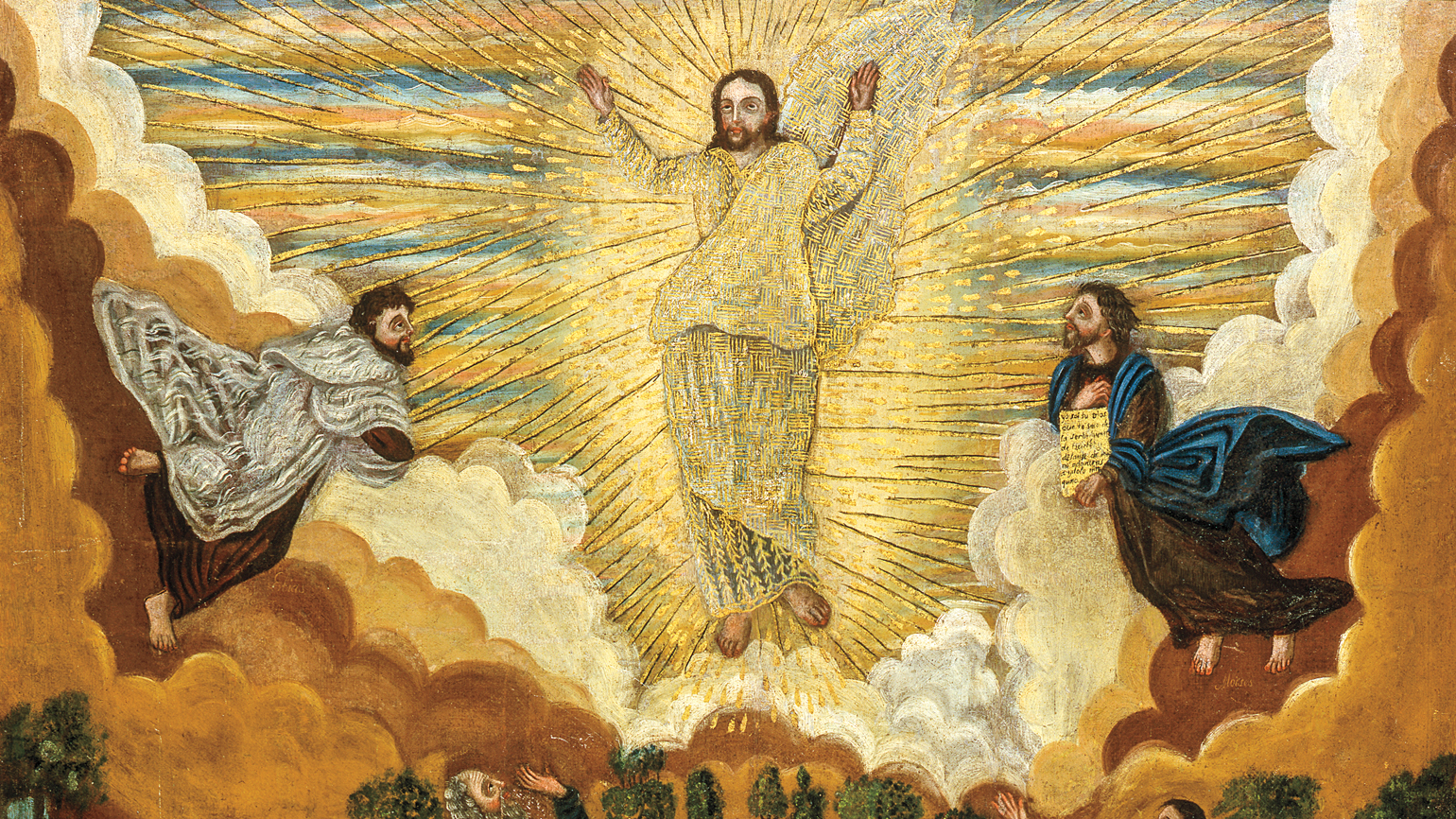
Why? Because this particular Bible story is filled with intangible elements. Jesus ascended from a mountaintop before three of his disciples and was transformed, his face shining like the sun, his clothes a dazzling white. The prophets Moses and Elijah appeared beside him, an even brighter cloud overshadowing all. A voice proclaimed, “This is my Son, the Beloved; with him I am well pleased; listen to him!”

Afterward, the three disciples—Peter, James and John—wanted to build something on the spot to commemorate the extraordinary event. Jesus turned them down. Then he told them not to speak of what they’d seen until after he died.

In the Sunday school class, I read the passage aloud, hoping to be inspired myself, then looked at the thoughtful young faces, pondering what they’d just heard.

“Isn’t it about God being light?” asked one. “Let’s use flashlights to act it out.”

“It’s on a mountaintop. What about building a mountaintop out of a cardboard box?” suggested another.

Like the disciples, our first reaction was to try to make sense of this miracle. To break it down into understandable bits. But it’s best looked at as a whole, wondrous encounter. In fact, it’s exactly its inexplicability—its heavenly, almost unrelatable nature—that makes the Transfiguration stick out in the three Gospel accounts in which it appears. Until this point, Jesus, the Teacher, or Rabbi, as his disciples called him, had preached using the most down to-earth language and relatable stories. He described a shepherd in search of a lost sheep, a woman looking for a lost coin, a father reuniting with a lost son. His listeners lived close to the land, and that’s what Jesus referred to most—the harvest, grain ripening, a tree without figs. When he did something miraculous, such as feeding 5,000 with only five loaves and two fish, his followers saw the evidence. Twelve baskets held leftovers. It wasn’t just their imagination. More than enough bread and fish had multiplied from almost nothing. The miracles were credible because they were tangible.

Not the Transfiguration. In the Gospel of Matthew, right before it happened, Peter had correctly answered who Jesus was. “You are the Christ,” Peter said. Then Jesus explained that he would be rejected by the elders, chief priests and scribes. He would be killed, then rise from the dead three days later. Peter objected, earning Jesus’ sharp rebuke: “Get behind me, Satan!” Perhaps that’s why Jesus orchestrated the Transfiguration—without it, his death and Resurrection would be too much to take in. As if to say, “I’m going to show the three of you something pretty outrageous, and I want you to watch. Not only will you see me as you’ve never seen me before, but you’ll hear something too. You’ll want to reflect on what it means for a long time.”

It’s important to note that the disciples who witnessed this divine moment were ordinary people. They were not scholars, not wealthy, not nobility; they were common laborers, fisher folk, men who used their hands to make a living. No one would have sought them out to behold a visionary experience. A reminder that God can appear to any one of us.

That it all happens on top of a mountain is also significant. Moses went to a mountaintop to hear God and receive the 10 Commandments. Jesus delivered mountainside teachings collectively known as the Sermon on the Mount. Mountains were holy places, where God’s word was heard. When Moses and Elijah—the prophet who made his exit from earth riding a chariot into the sky—appeared beside Jesus in the Transfiguration, there is a hint of Jesus’ own assumption to heaven.

At the time of the disciples’ vision, Jesus was very much earthbound. God in human form, exhorting his followers with words and actions. Yet, for a fleeting instant, he was transformed in blinding light. We call it the Transfiguration because of the change that came over Jesus, but I would argue he’s not the only one changed. The disciples were changed too. So are we.

When I revisit this story, I think of that class and what the experience taught me. With our flashlights, cardboard mountaintops and a kid speaking in a low, affected manner into the loudspeaker as the voice of God, we got the point across. God is not only light, but he speaks. He reveals himself to us—sometimes in weird, mystical visions—when we are ready to ascend our spiritual mountaintops.

I can imagine Peter, James and John rubbing their eyes after the Transfiguration, wondering if it had really happened. Jesus was back on earth and in his usual clothing. Everything was as before. Or was it? The group descended the mountain, and Jesus gave final instructions: “Tell no one about the vision until after the Son of Man has been raised from the dead.”

Mystery can be hard to take in. I find the mystery of Jesus’ death and Resurrection very hard to comprehend. But the Transfiguration is a reminder: Don’t overthink. Just experience the wonder of God. Reflect on that moment a bit. Take this chance to become transformed. There is time later to share what you’ve seen.

How the Olympics Reunited Separated Sisters

Jennifer Bricker’s life had a difficult start. Born without legs, her parents, Romanian immigrants, gave her up for adoption because they couldn’t afford her medical care.

But Jennifer’s adoptive family made sure her disability was never a factor in her life. “Can’t is a four-letter word we don’t use in this house,” her mother always told her.

At six years old, Jennifer became obsessed with gymnastics, and her adoptive family encouraged her at every turn. Her idols became the “Magnificent 7,” the 1996 U.S. Olympic gymnastics squad.

Watching the Olympics on TV, Jennifer immediately was drawn to one of the American gymnasts, Dominique Moceanu. The commentators mentioned she had a Romanian background. “Like me,” Jennifer said.

Moceanu. Jennifer’s mother knew that last name. It was the last name of Jennifer’s birth parents. What a strange coincidence, that her daughter should latch on to her, above all the other gymnasts.

Then the camera panned over to show Dominique’s parents react to their daughter’s performance. When the commentator said their names, Jennifer’s mother gasped. They were Jennifer’s birth parents.

Dominique won a gold medal as part of the team competition, and Jennifer was thrilled. But her parents decided to wait until she was older to tell her about her famous sister.

Jennifer made the Junior Olympic team as a power tumbler and went on to win state titles in high school competitions. Dominique remained her inspiration. On Jennifer’s 16th birthday, she finally asked her parents about her birth family. That’s when they told her: Her idol was also her biological sister.

Jennifer first tried to get in touch with her biological parents. But her biological father ignored her calls. It took nearly four years for Jennifer to reach out to Dominique in a letter. “I feel that I have one chance to show you and prove to you that I’m not some crazy person…” she wrote.

Dominique’s parents had never told her or her sister Christina about the child they gave up for adoption. But Dominique didn’t doubt Jennifer’s story. Now the sisters are busy making up for lost time. “It’s so much fun every time the three of us get together,” Jennifer told ABC News.

Jennifer is now a professional acrobat and aerialist; she’s even performed on tour with Britney Spears. Dominique, meanwhile, recently made headlines with her new book, Off Balance, in which she tells the story of meeting Jennifer, as well as the fraught relationship she’s had with her parents and the sport of gymnastics.

You could say gymnastic ability runs in the familybut it’s incredible how the sport helped bring these sisters together in such a neat way. A reminder that all our tumbles and twists are part of life’s floor routine… expertly planned to get us that gold medal in the end.

Please keep sending your true stories to us! Our new Mysterious Ways magazine gives us so many more opportunities to share them.

How the Miracles of Holy Week Fortified His Faith

I look forward to Holy Week with a mixture of dread and wonder. The dread because I know that as I listen to the biblical account read in church, I’ll have to relive the horrors of the crucifixion. The wonder because there are these miraculous signs that point to Jesus’ divinity and how he knew all along how things would turn out.

On Palm Sunday in our church, the gospel account is reenacted by members of the congregation. You can be there in your pew and suddenly discover that the friend sitting next to you is playing the role of Peter or Mary Magdalene or even Jesus. The familiar story comes alive.

READ MORE: 8 Prayers for Holy Week

Before entering Jerusalem, Jesus sends two of his disciples into the village of Bethany, where he has told them they will find a colt. They were to untie it and bring it back to him. If anyone asks them why they’re doing that, they are to say, “The Lord needs it and will send it back here immediately.”

Did those disciples ever ask themselves, “How does he know we’ll find a colt?” or “What if someone accuses us of stealing it?” In fact, they do find a colt in the street, tied near a door.

When bystanders accost them, asking what they’re doing, they say exactly what Jesus told them to say. And it works. It’s as though Jesus is training the disciples to trust him in the small matters so they will be able to trust him regarding the wonders to come.

The disciples throw their cloaks onto the colt, and Jesus sits on it. On his way into the city, the people throw their cloaks down on the ground or spread leafy branches cut from the fields. “Hosanna!” they cry, just as we do in church, waving palms to honor this new King.

READ MORE: Palm Sunday in the Bible: 15 Palm Sunday Scriptures

But what does this King have to offer his people? A second miracle tells us: That same busy week, Jesus passes a fig tree that has borne no fruit. He addresses the tree—as though it might hear him: “May no one ever eat fruit from you again.” By the next day, the fig tree has withered and died. What does it all mean to his followers? Jesus is illustrating the power of prayer. “So I tell you,” he says, “whatever you ask for in prayer, believe that you have received it, and it will be yours” (Mark 11:24). Believe that you have received it. What an astounding promise to come from a king.

Later that week, when an unnamed woman pours an alabaster jar of expensive ointment over Jesus’ head, there is a muttering of disapproval. What a waste. The ointment could have been sold and the money given to the poor. (I find myself having the same thought.) But Jesus says the woman has done a good thing, preparing his body for burial ahead of time. Though he is young and his ministry only beginning, his response assures us that the Son of God already knows what is to come. A close listener in the crowd might get the hint as well.

You can feel Jesus’ exasperation with the disciples, who don’t get it. At the same time, you can also see Jesus’ compassion for them.

READ MORE: A Devotion for Holy Week

On Maundy Thursday, Jesus sends two of his disciples into the city. He has told them they would meet a man carrying a jar of water and should follow him to a house where they would be led to an upper room. The room would be furnished and ready for the Last Supper. And so even this setting is found by way of another of Jesus’ mystical revelations.

During the Last Supper, Jesus tells Peter, the most committed of his followers, that he will deny him three times before the cock crows at sunrise on Good Friday. Peter passionately swears that he won’t. And fails. Jesus didn’t have a spy among the group; his Father had shown him every detail of the Easter story. Jesus is preparing his disciples just as Scripture is preparing us. Like I say, I hear the story with a combination of dread and wonder.

Good Friday is a three-hour service at our church, and it is always the hardest for me to sit through. The betrayal, the desertion, it is all there for us to witness, including Jesus’ own trepidation. He prays in the Garden for the cup of suffering to be taken from him. And only after that honest, all-too-human outburst can he come to any acceptance: “Not my will, but yours be done.”

READ MORE: Why Is Good Friday So Important?

As Jesus had foreseen, none of his disciples has stuck with him to the end. They aren’t there on the hill at Calvary when he is crucified. Afraid, no doubt, of what would happen to them. It can only have added to Jesus’ sense of abandonment, not just by his followers but by God. There, on the cross, Jesus utters the opening verse of Psalm 22: “My God, my God, why have you forsaken me?” As he spoke those words, he would also have known how that psalm moves into verses of praise: “My soul shall live for him….”“him….”

It all does end triumphantly, with the Resurrection. We celebrate the first stirrings of it on Easter Eve, Saturday night melting into early Sunday morning. Near midnight, the lights of our church all come up, revealing a sanctuary filled with fragrant lilies and cherry blossoms. The choir bursts out with a “Hallelujah!”

A few years ago, after a particularly rigorous week of worship, I came away with an astounding feeling of transcendence. Nothing could harm me. Earlier in the week, we had sung the spiritual “Were You There When They Crucified My Lord?” I had been there with my fellow parishioners. And I knew what it was to experience the miracle of the empty tomb, because I had been prepared for it, just as Jesus had.

READ MORE ABOUT HOLY WEEK:

How Simone Weil Ignited Her Faith

Has a visit to church ever changed your life? Countless such visits have influenced my faith, whether gazing at the windows of Chartres Cathedral or sitting in a small country chapel.

Imagine what it would be like to be a brilliant philosopher—from a French family of prominent intellectuals, including a brother who was a renowned mathematician—whose political convictions lead you to labor alongside factory workers and fight against fascism in the Spanish Civil War. Then, in your late twenties, you wander into a shrine in the Italian town of Assisi, where Saint Francis had his own mystical experiences. Falling to your knees, you are transported.

This was the spiritual trajectory of Simone Weil (1909–1943). First came her call to service. Then came her call to faith. It’s the opposite of what we usually expect from deeply spiritual people—and it makes her faith journey all the more fascinating to explore.

When Weil’s life was tragically cut short by tuberculosis in the middle of World War II, she was barely known. Yet her transcendent writings have since come to light, raising the philosopher, activist and mystic to the status of an unofficial modern saint.

A quick glance at some of her thoughts and maxims is enough to know the depths of her heart and soul: “Everything beautiful has a mark of eternity.” “Absolutely unmixed attention is prayer.” “Love is not consolation, it is light.” “Compassion directed to oneself is humility.” “We must not wish for the disappearance of any of our troubles, but grace to transform them.”

Born into an agnostic family of Jewish heritage in 1909, Weil faced her own troubles right from the start. Like many saints of old, she was plagued by fragile health. She had a near-fatal attack of appendicitis as a child and endured frequent excruciating headaches throughout her life. Still, in solidarity with society’s less fortunate, she would push herself by eating sparingly, forgoing sleep and working herself to exhaustion.

Even as a youngster, she refused to eat any sugar during World War I, choosing to suffer the same deprivation as soldiers in the trenches.

Twenty-five years later, during World War II, she wouldn’t take more than the rations of a citizen in occupied France. Though she might have been denying herself physically, she was feeding her soul.

Weil’s family was loving and supportive but practiced no specific belief. She was a stellar student at a French university, then became a philosophy teacher. All the while, she attended political demonstrations, which furthered her controversial reputation as an activist at the secondary schools where she taught. Her support for workers came from an altruistic concern for the poor. She needed to do more. She took a leave of absence from teaching to immerse herself more fully in the cause, working in factories to know the laborers’ lives firsthand. She didn’t just speak out about their suffering; she made sure she experienced it.

Her first glimmer of faith came on a trip to Portugal, where she had gone for more factory work. She witnessed an impoverished seaside village celebrating its patron saint, the wives of the fishermen carrying candles on a moonlit night, singing ancient hymns. “I have never heard anything so poignant,” she later wrote, “unless it were the song of the boatmen on the Volga.”

Next came that profound visit to Assisi. Ever since Saint Francis walked its narrow streets, the hilltop town has been a pilgrim destination, a so-called thin place where God feels near. But Weil’s visionary experience didn’t happen in the impressive fresco-lined basilica illustrating the life of Saint Francis or in the piazza where he famously relinquished his rich clothes to follow Jesus. Instead, it was in a Romanesque chapel within a church at the bottom of the hill where Francis and his followers would gather and pray.

“Something stronger than I was compelled me for the first time in my life to go down on my knees,” she would later say. A brilliant woman discovering something bigger than thought, bigger than life, bigger than herself. She was open to humbling herself before God, absorbing his wonders, igniting her faith.

Back in France, she spent ten days at a Benedictine abbey, attending services from Palm Sunday to Easter Tuesday. There she met an Englishman who recommended the seventeenth-century metaphysical poet George Herbert. She turned to his work. His poem “Love III” moved her deeply and spoke directly to her soul:

Love bade me welcome: yet my

soul drew back,

Guilty of dust and sin.

But quick-eyed Love, observing

me grow slack

From my first entrance in.…

How extraordinary to consider this woman with her superior intellect and training discovering that God is love. It became the only thing that made sense to her. In the years ahead, when France was overcome by the Nazis and Weil and her loved ones were in grave peril because of their Jewish heritage, she found solace and comfort in this love.

In 1942, she and her family escaped war-torn Europe and sailed to the United States, making their home in an apartment on Riverside Drive in New York City (not far from the church our family attends). But love was still calling her, moving her, pushing her. She wanted to do something to save the world from its turmoil. She could have stayed in the United States, where it was safe, but she was determined to help the Allied cause with her linguistic skills, fluent as she was in English and French. She wanted to go to England to work for the Free French, under the leadership of General Charles de Gaulle.

Risking her life, she once again crossed the U-boat–infested waters of the Atlantic, commenting that if the ship were hit and sunk, it would be a sort of baptism for her, a holy rite of passage.

She landed safely in England and immediately poured herself into the Allied cause, working to exhaustion as usual.

Alas, Weil wasn’t able to help for long. At a time when effective antibiotics for tuberculosis were just beyond the medical horizon, TB was destroying her lungs, and she had to take refuge in a sanatorium, where she died at age 34. So young, but a life so deeply lived. I think of her as a saint for our times, engaged in the world in all its complexity while being open to the mystical experiences, thriving on God’s love.