Embrace God's truth with our new book, The Lies that Bind

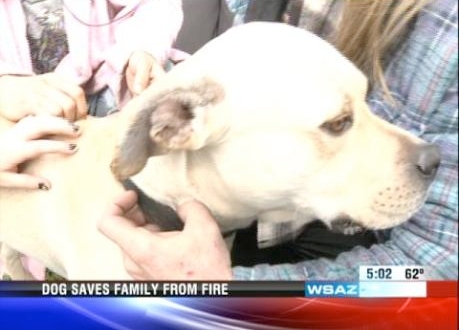
Inexplicable Coincidence: Dog Saves Family from Fire

Pit bulls get a bad rap. They’re often viewed as violent, unpredicatble and poorly behaved, even though there is nothing to indicate they’re different from any other dog breed. Call it dog prejudice, if you will. One bad apple, and all the rest get called rotten.

But at least one pit bull can genuinely be called a hero this week.

On Monday night, Danna Smith of Huntington, West Virginia, was getting some much-needed sleep. The single mother had recently spent time in the hospital, and was responsible for raising her three children, who each have varying degrees of autism.

At 5:00 a.m., Danna was awakened by loud barking and vicious growling. A pit bull was clawing and scratching at her sheets, nipping at her legs. Was she under attack?

Danna bolted upright in bed. No, the dog wasn’t attacking her, she realized. The room smelled strongly of smoke. There was a fire—and the pit bull was trying to wake her up.

“The alarms didn’t go off; nothing went off,” Danna told WSAZ news. “He’s what went off.”

The pit’s quick actions allowed Danna and her family to escape to safety in the nick of time.

According to WSAZ news, Danna’s landlord expressly forbid dogs from the property. So the pit bull wasn’t Danna’s pet. His name was Ghost, and he belonged to Danna’s boyfriend. He was only staying over that night to help care for the children as Danna recovered from her hospital stay. Ghost normally wouldn’t even be there.

The fire itself, likely caused by faulty wiring, started in an upstairs bedroom, the room of 7-year-old Josiah. But Josiah was the only member of the household not there that night—he was away at an autism treatment center. “If he was there, he wouldn’t be alive right now,” Danna told Fox 11 News.

Was it only the dog who saved the day? Danna thinks Ghost got a little help.

“It’s the good Lord up above, the Father almighty,” she says.

Do you have a “Right Place, Right Time” story? Were you somewhere you didn’t think you were supposed to be, only to discover there was an unexpected reason for it? Or do you have an animal story to share—a dog or some other pet who mysteriously saved the day? Tell us your story. We love to read them and share them with our Guideposts fans!

How Years of Chronic Pain Tested Her Faith

A 54-year-old woman with encephalitis goes into remission after touching the tombstone of Charlene Richard, known as the Little Cajun Saint, in Louisiana. An 11-year-old in central Texas with an inoperable brain tumor is prayed for by her community, and an MRI soon after shows the impossible: The tumor has disappeared. A 70-year-old blind woman gets spinal surgery after a fall—and wakes up with her vision inexplicably restored. I read stories like that and can’t help but ask myself, Why not me? Where’s my healing?

I was born with neurofibromatosis, a rare genetic disease that causes tumors to grow on the nerves throughout my body. Starting when I was age 15, the pain from the tumors became unbearable. It felt as if there were hot coals behind my eyes, on my face and inside my mouth. The masses temporarily paralyzed different nerves in my face, causing my eyes to droop and my cheeks to sag. Most tumors eventually had to be surgically removed. Some of the nerve damage was irreversible—to this day, I can’t move my left eyebrow or wink. As bad as the pain was, the fear of disfigurement was worse. As a young woman, I would stare into the mirror in utter misery. Who would ever ask me out on a date? What man would ever fall in love with me?

Around the time the tumors started causing me pain, we lived across the street from a woman named Mrs. Hatten. She said the Lord would heal me if I just prayed hard enough. She’d put her hand over my head and say some words. Nothing happened. Other neighbors would bring presents and tell me, “We’re praying that God will heal you. You know he can do that.”

As the years went by and I remained uncured, guilt started to creep in. Maybe there was something spiritually wrong with me. I’d always believed in God and felt strong in my faith. I went to church regularly and prayed fervently that God would cure me. But it wasn’t working, so maybe I didn’t believe enough. After all, a kid who’d had cancer visited our church and explained to the congregation how he’d been healed by prayer when the doctors said they couldn’t do anything. He was cured, just like the stories in the Bible—all those people healed by Jesus. Maybe that kid had the kind of strength in his faith that I lacked.

I turned to Scripture for answers, and when I read in Psalm 139 about how God formed us, how he “knit me together in my mother’s womb,” I came to what seemed like the logical conclusion: God must have somehow wanted me to have this terrible thing. He could have stopped it, but he didn’t. Yet I never stopped believing. After all, some good had come from all those trips back and forth to the hospital, all those surgeries and all the doctors and nurses who treated me. I decided to become a nurse myself. I wanted to help other people who were suffering. I learned how to relieve their pain, even if mine persisted.

In church, when we sang the old hymn “I Love to Tell the Story,” I would think, Okay, maybe this is my story: Because of my disease, I feel compassion for others. I can better help people who are suffering because I can empathize and reach out to them.

Once, a nurse I worked with at the VA hospital in Huntington invited me to her church to hear a guest speaker, a man who had evidently healed hundreds of people. “We’ve been talking about healing in our Bible study,” she said. “I’m beginning to see that it’s a matter of faith.” As if that were news to me. Still, I was hopeful.

I went to the service and found a seat near the front of the sanctuary. Folks all around me were speaking out about the miraculous healings they had received, everything from relief from shortness of breath to the reversal of paralysis. A cleansing fire had filled their bodies. Some said they knew they were healed the moment they arrived. One guy walked forward and tossed his pack of Marlboros into a trash can, claiming he was freed of the urge to smoke cigarettes for the rest of his life. Just then the guest healer approached me and placed a hand on my head. “What brings you here, ma’am?”

“I have tumors inside my head. I’ve had them all my life. The pain is unbearable.”

“Do you have faith that God wants to heal you tonight?”

“I do,” I said, never surer of anything in my life. The healer asked God for “the healing virtue to be manifested,” then slapped my forehead and tilted me backward. “Thank you, Jesus,” I prayed over and over again. “I know you have the power to heal every tumor cell in my body, and I ask you to do that.” After a long while, I stood upright—as stiff as a statue—and knew from a place deep within me that nothing had really changed. My tumors were still there.

After that experience, I began to think maybe it was because I was a nurse and knew too much about the origins of diseases, all the science behind them, that I could never really have the simple, trusting faith of some of my patients. Like the man who had esophageal cancer. It was so bad that I knew he wouldn’t live past Christmas. He could hardly swallow as it was. Still I asked, “What do you want for Christmas?”

“All I want is to be able to eat a Baby Ruth candy bar,” he said. How could I tell him it would never happen? To my amazement, however, it actually did. Despite what the doctors said, despite what I knew, the patient got better and did eat that candy bar he longed for.

Then, in my fifties, I got another terrible diagnosis. Breast cancer. It shouldn’t have come as a surprise—it was in my genes. My mother had died of breast cancer. But getting it still hit me hard. My mind reeled as I thought of everything that likely lay ahead: treatment, chemo, radiation. When I told my friend Wanda, she immediately invited me to a healing service. But this time, I didn’t want to go. I was too angry. Why had God done this to me? Hadn’t I already suffered enough?

Wanda was insistent. She was convinced that God wanted to heal me of the cancer. Reluctantly, I went with her. At the church service, she prayed for me desperately and held me in her arms. This time something did happen. My chest filled with fire. I felt some sort of divine touch. The minister called from the pulpit, “There is a woman here tonight who is being healed from cancer in her breast.” I don’t know why this experience felt so different. I wasn’t praying any harder. If anything, I had just given up.

And yet, as tests later confirmed, I was indeed healed. I needed no treatment. The cancer was gone. I struggled to make sense of it. I asked my friend Jim, a minister, why would I be healed of one ailment and not another? Why would I be released from one disease and still suffer painfully from another? I mentioned all the biblical research I’d done—all of God’s miracles—at which point Jim reminded me of the apostle Paul. “Think of everything that Paul did. Think of how he spread the faith. And all the while he suffered from some terrible condition—a thorn in the flesh, as he called it,” Jim said. “Why hadn’t God healed him? We don’t know.”

I flashed back to a conversation I’d had with one of my longtime doctors. A man of great faith. “Look at your own life,” he’d said. “Look at what you’ve gone through.” Many times we’d prayed together in his office for healing, healing that never came. “But you were stronger in your faith when you were at your worst physically,” he said. “God was such a source of comfort to you. You used to echo the words of the hymnist who wrote, ‘It is well with my soul.’” I smiled at the thought, glad to have been reminded. During my darkest times, I did used to say that. It still rang true.

My condition remains today, but I’m relatively pain-free, thanks to countless surgeries and changes in my medication. How long will that respite last? It is a mystery. What will I do if the pain returns? I have no answer for that either. What I do know, undoubtedly, is the boundlessness of God’s love. I accept his will and his help, and he cares for me in every situation. He always has and always will. And with that knowledge, it is well with my soul.

How Two Stories Spoke to You

There’s nothing quite like reading a story and really identifying with the narrator, finding facets of your own journey reflected back at you. Not only do you get the chance to see how someone else handles challenges similar to the ones you face. You also get that much-needed reminder that you’re not alone in this world, even during hard times.

We’ve written before about how Mysterious Ways can make a difference in our readers’ lives. We sift through hundreds of ideas and submissions before finally settling on the exact contents of each issue, and time after time we receive letters from readers telling us how a story we’ve published reached them just when they needed it.

Like Donna M. Grass of Broomfield, Colorado. She could hardly believe it when she read “One Last Gift” in our February/March issue. It’s the story of Beverly Waters, who received a piece of “junk mail” that turned out to be a gift from her late husband. Donna could relate all too well:

“As I read Beverly’s story, I smiled. Memories came flooding back. Two and a half months after my husband Robert’s death, the military honor guard and a host of friends helped celebrate Robert’s life with the burial of his ashes and a luncheon. That night I sat alone at home, sadly going through the sympathy cards and other mail which had arrived that day.

“I received one loving card from friends along with a $100 bill. They instructed me to use the money for something I could use while memorializing Robert.

“I reached the end of my condolence messages, and my heart almost stopped when I noticed a piece of mailnormally classified as ‘junk’from the Danbury Mint. It had been mixed in with the other cards. ‘Robert, tell Donna that she means the world to you,’ the card read. There was an offer for a sterling silver heart pendant, emblazoned with a dozen red rubies and tiny diamonds, along with an inscription on the back: ‘Donna, I loved you then, I love you still, I always have, I always will. Robert.’”

Donna knew exactly what to do with the money her friends had just sent. The cost of the pendant? $99.

Shirley J. Storey of Rogue River, Oregon, wrote in to say how much she could identify with Loraine Standish, whose story “The Smile Sent from Heavenwas in our October/November 2014 issue. Like Loraine, Shirley’s beloved daughter suffered from lifelong alcoholism:

Michele's beautiful smile.“My daughter Michele also had a beautiful smile. When she was in her 20s, she got hooked on alcohol. After several years of alcohol abuse, she quit drinking. She became completely devoted to the Bible and even attended church with me and my second husband, Mark.

“Eight years later, though, the alcohol got hold of her again, and for the next few years we didn’t know where she was or what she was doing. We prayed for her constantly. I feared receiving a phone call out of the blue or a knock at the door, letting me know she had died.

“Michele did get clean one more time, but not for long. She resumed drinking, and this time there was no coming back. One night, I finally got that dreaded phone call: Michele was gone. She was only 40 years old.

“The Sunday after her death we were in church. During worship I remembered her being beside me, praising the Lord. The Lord immediately gave me a vision: Michele standing before him, her eyes open, her hands raised, praising him. I thank and praise him so much for that final vision, recognizing that she finally reached her place of healing–in heaven.”

Has one of our articles ever touched you in a personal way? Send us a letter! We’d love to hear your story.

How to Talk About Miracles

Doctors are trained to handle pretty much any medical question posed by a patient. “Which course of treatment do you recommend?” “Will it hurt?” “What’s the recovery process like?”

But what happens when patients start talking about something a little less concrete–like miracles? That’s when things can get tricky, especially if the doctor doesn’t believe in the miraculous.

Luckily, a medical team at the Johns Hopkins Kimmel Cancer Center has come up with a handy mnemonic tool–called AMEN (Affirm, Meet, Educate, No matter what)–to help doctors better handle discussions about miracles. After all, hospitals are no strangers to the miraculous. God’s wonder certainly seems to reach us most when we’re at our lowest. And spirituality can play a significant role in a patient’s recovery process.

AMEN is a four-step process. It starts by affirming the beliefs of a patient; then meeting the patient or their family where they are–including, sometimes, in prayer; then educating patients as a medical provider; then, no matter what, assuring patients of a commitment to them.

“I use the AMEN mnemonic pretty much every day,” Dr. Thomas Smith, director of palliative medicine at Johns Hopkins, told Time. “Maybe my patients need more miracles than other doctors’ patients, but it is a common occurrence and an underlying theme in many people’s lives.”

That got me thinking: Maybe the AMEN method shouldn’t be limited to doctors. I have a feeling it can work wonders for us non-medical folks too. After all, don’t we all need a reminder to stay open-minded to miracles, especially in our encounters with others?

When a friend asks for advice and mentions miracles, it’s easy to look for a more practical solution and secretly think the worst. But maybe we can take a different approach. Acknowledge the need for a miracle, meet together in prayer, explore all options for a solution and stay supportive… no matter what. A prescription for hope.

So the next time someone tells me they’re wishing, praying, searching for a miracle? I’m going to answer with a resounding AMEN!

How do you talk miracles with others? Share your story below!

How to Recognize Miracles

It’s Day 2 of the “Miracle Chase Takeover Week”! In today’s post, the Miracle Chasers–authors Joan, Katie and Meb–share some tips and tricks for recognizing and accepting miracles. It’s all about minding those “Miracle Ps”….

Søren Kierkegaard wrote that a miracle is a sign only for those who recognize its significance. Miracles surround us; sometimes we just can’t see them. So the question facing each of us is this–how can we recognize miracles as they unfold in our lives?

Well, the answer might be as simple as minding the three “Miracle Ps”: Perception, Paradigm and Permission. Here’s what we mean by that:

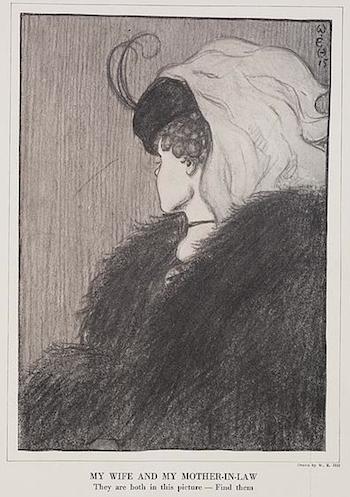
  • Drawing by W.E. Hill-My Wife and My Mother-in-Law-Library of CongressPerception is as important in miracles as it is in life. Remember the iconic illusion drawing by W.E. Hill of the old vs. young woman (pictured left)? Some of us see only the old woman, others see only the young; it takes effort to see them both within the same framework. Miracles are the same way.

    Some signs are easy to see and to share. Others are hard; they can be messy, recall a time of strife, fear or uncertainty.

    Willa Cather gives us a visceral description of how miracle signs are recognized with our “perceptions being made finer so…our eyes see and our ears can hear what there is about us always.”

  • Paradigm, or our personal view of how the world works, clouds our vision where we see only what we expect to see; sometimes blinding us to miracle moments with rationalizations and skepticism.

    Nazi refuge and author, Franz Werfel, in his 1943 Academy Award winning screenplay for The Song of Bernadette wrote, “For those who believe [in miracles], no explanation is necessary; for those who don’t believe, no explanation is possible.” Being aware of our personal perspective frees us to expand our interpretation of the cues and signs around us in new ways.

  • Permission to share our miracle stories happens when others share theirs. Providing a safe and non-judgmental environment allows the miracle conversation to reach a new level and as a result relationships and personal connectedness deepen. Take it from a book club that we spoke to about miracles.

    After we left, the miracle chatter continued–once they were given permission, people didn’t hold back. "We shed some tears, broke through some defenses and connected on a new plane,” the book club reported. “The miracle conversation led to empowerment and our conversation lingered…a deepening awareness and resilience of the human spirit. Unbelievable, except it was in my own living room!"

The cues are out there, all we need to do is open our minds to them, look beyond the expected and share the wonder with others as it happens.

Now that we know what miracles are and how to recognize them, tomorrow we’ll move on to classifying the different types of miracles. Stay tuned!

Have a question for the Miracle Chasers? Simply comment below!

You can read more about Joan, Katie and Meb and their incredible miracle journey in The Miracle Chase.

How to Read God’s Signs

Earlier this month, I asked your help in figuring out what makes something a sign from God and not just wishful thinking. I was blown away (as usual!) by your responses—including some stunning photos of visual signs you’ve received.

Of course, everyone had a slightly different take on messages from above. But there was a common theme that emerged from your answers…don’t overthink it!

Like the old adage for finding love—when you know, you know.

That practical advice really cleared things up for me. Maybe signs don’t require a ton of analysis or back-and-forth internal debate. But rather, an intuition or gut feeling that what you’ve experienced has come from God. And a leap of faith. Even if your sign doesn’t seem like a sign to anyone but you.

Check out this slideshow to see how your fellow readers answered the question “How can you spot a sign from God?” Plus, don’t forget to weigh in with your thoughts—and photos—below! –Diana Aydin

How to Interpret Your Dreams Biblically

Dreams are some of the most mysterious forces humans can experience. The Bible contains several famous stories of God communicating through dreams. Not sure what your dreams mean? Here are some tips for interpreting your dreams biblically.

1. Listen

The first step to interpreting a dream is to be receptive before the dream even occurs. Job 33 says, “For God speaks in one way, and in two, though man does not perceive it. In a dream, in a vision of the night…” Be willing to listen and open to whatever dreams may come your way.

2. Acknowledge God’s presence

In Genesis 28, Jacob had a dream about angels climbing and descending a ladder that reached to heaven. How did Jacob respond to the dream? Genesis 28:16 says, “When Jacob awoke from his sleep, he thought, ‘Surely the Lord is in this place, and I was not aware of it.’”

If you have a dream and aren’t sure what it means, a good first step is to thank the Lord for giving you this dream and acknowledge a divine presence.

3. Write it down

If you’ve had a dream and aren’t sure what it means, try writing it down. In Habakkuk 2, God instructed the Israelites to “write down the revelation and make it plain on the tablets.” Similarly, in Daniel 7, after Daniel had a dream he “wrote down the dream; he recorded a complete account of the matters.”

4. Ask

There are numerous instances in the Bible where people went to others for advice on interpreting a dream. The Pharaoh asked Joseph and Nebuchadnezzar asked Daniel. A wise friend or mentor can offer insights into your dream that you might overlook.

5. Look for symbols

The dreams recorded in the Bible often feature symbols. Here a few of the most common:

  • Weather – Daniel interpreted a dream about a tree being cut down as foreshadowing of Nebuchadnezzar’s fall from rule.
  • Numbers – Pharaoh dreamed of seven cows and seven heads of grain. The number seven in both cases represented seven years. Similarly, when the Pharaoh’s cupbearer and baker dreamed, the number three represented three days.
  • Food – In Judges 7, Gideon overheard a man telling a companion about a dream of a loaf of barley. The crumbling of the cake was interpreted to mean the crumbling of the army Gideon was fighting. Animals – Daniel of four beasts who were interpreted to represent four kingdoms.

God can speak powerfully through dreams. Through prayer, understanding biblical references and discernment, you can learn to interpret your dreams and understand more clearly how God is working in your life.

Having trouble getting a good night’s sleep? Download Abide for Christian sleep meditations that use calming techniques and Scripture verses framed in calming stories to lull you into a peaceful slumber.

How to Interpret Dreams About Deceased Loved Ones

Sometimes when you’re looking for a story, other stories find you. That’s what happened to me a few months ago. I was working on a story for the August/September 2018 issue of Mysterious Ways, about my grandpa Jacques and how he appeared to me one night in a dream, shortly after he died in 2016 at the age of 88.

My grandpa Jacques was always intriguing to me growing up. He wore heavy cologne, had a thick European accent and a deep, booming voice. He had a strange tattoo on his arm, too. It was drawn with thick lines. A rose. I later discovered that it covered something more sinister. A series of numbers. You see, Grandpa was a Holocaust survivor, and without his determination and fierce will to live, I wouldn’t be here. Sometimes, when life gets hard, I think of Grandpa. His strength and resilience continue to inspire me every day.

At 14, Grandpa was sent to the Blechhammer death camp along with his grandmother, mother, and younger brother and sister. Grandpa and his brother, Bernard, were the only two to make it past the entry gates alive. He later survived a 200-mile death march through Eastern Europe in January, wearing nothing but pajamas and without proper shoes. After he was liberated, the first thing he did when he was strong enough to leave the camp was to travel to the neighboring town and have his photo taken—to show that he was a person, and a survivor. There’s a photo of him from that day—gaunt, but smiling, still wearing the Nazi-issued striped death camp pajamas and beret—that he brought with him when he immigrated to the U.S.

Grandpa eventually settled in California, where he married and raised five children. I grew up in Los Angeles in a home that showed signs of Grandpa’s new beginnings. Framed in our kitchen were the menus that Grandpa and Uncle Bernard saved from the ship they took to the U.S. Over our mantle hung matching gold and silver pocket watches—the first thing Grandpa’s uncle and his friend, who had immigrated to the U.S. before the war, bought in New York City with their first paychecks. That uncle later sponsored Grandpa, making it possible for him to come to America. Those watches signified new opportunities. Starting over. A deliberately chosen future.

Read More: How to Interpret Dreams About Deceased Loved Ones

Grandpa’s success story was the backdrop of our childhood. But he never discussed the horrors he went through in the camps. Not with his kids, and definitely not with us grandkids, though it was clear that the trauma followed him his whole life.

As I researched the story, I couldn’t help but think about my Grandpa Jacques. Was he truly at peace? I typed in “Jacques Ribons photo” into the search bar. A bunch of results came up. One of them was a link to a story on Huffington Post, a spotlight of an artist’s work—painted portraits of survivors.

The artist herself, who goes by the name Lydia Emily, was a survivor of violent assaults, debilitating disease, and countless hardships. She’d found solace in painting portraits that showcased the strength of the human spirit. I scrolled through her beautiful paintings until two side-by-side portraits stopped me in my tracks. There, on the web page, were two paintings of Grandpa: One, of him smiling boldly as a boy wearing a death camp uniform, and one of him in his eighties.

Read More: He Started to Give Thanks After This Traumatic Experience

Tears filled my eyes as I realized that Grandpa Jacques is more than just an inspiration to me. His spirit lives on to remind others that thriving after unspeakable tragedy is possible. I looked closer at the second painting. Grandpa looked just the way I remember him last. Just like he did in my dream. Smiling, his wispy white hair ringing his head like a halo, his piercing blue eyes fixed on the viewer. Happy. Resilient. Peaceful. In that moment, I knew Grandpa had led me to that portrait. To show me again what he’d told me in my dream: That he is, indeed, at peace.

How to Decipher Your Most Puzzling Dreams

Ever have a weird dream you just can’t shake? I’m a college student and intern at Mysterious Ways, and despite taking numerous psych classes, I’d never given my dreams much thought. Until a brown envelope landed on my desk one afternoon.

The envelope appeared last summer. One of my job responsibilities is looking through manuscripts sent in from readers across the country. This particular envelope caught my eye because it was lumpy and not the typical manila color. A compact disc and folded letter fell out. Something was written on the face of the CD in black marker:

Charles Edward Carver
Date: 7/08/2017

People still use CDs? I thought to myself. I unfolded the accompanying letter. The CD had been recorded at a cancer center in Winston-Salem, North Carolina, where Charles was a patient. “I’m sending you my true life story,” he wrote. “I pray that it will give hope and inspiration to others.…”

I debated whether to listen to the CD right away. I had a lot of envelopes to open plus the online submissions to go through. In the end, curiosity got the better of me. I popped the CD into my computer. First, I heard a woman’s voice. A nurse, I assumed. “We’re going to talk about your story today,” she said.

“Yes,” a deeper voice with a soft Southern accent broke in. Charles, presumably.

“I was born in Holden, West Virginia,” he said. “My mother lived in a coal mining camp with my father. My father was a veteran of World War II. He was plagued by a lot of problems….”

Charles’s voice was weary. He paused every now and then, as if to catch his breath and collect his thoughts. It was clear cancer had taken its toll. The recording was 24 minutes, 58 seconds long. I didn’t think I could listen to the whole thing. But two minutes in, I was hooked. Charles talked about his dad, a coal miner in Appalachia and an alcoholic. Charles’s mother, Helen, gave birth to four children, then had two miscarriages. Eventually Charles’s aunt took Helen to see a specialist at a hospital in Huntington. That’s when Helen learned two things. One, she had cervical cancer. Two, she was three months pregnant with Charles.

“My aunt, who relayed this story to me later in my life, said a glow came over my mother when she heard the news,” Charles said. “My mother smiled and said, ‘God is going to allow me to have this child.’”

Against her doctor’s orders, Helen refused treatment until after delivery. The cancer went into remission, and Charles was born healthy. Less than two years later, though, Helen’s cancer returned and she died. Charles would never know her. Or most of his family. His father was unable to care for the five young children. They went into foster care. When Charles was eight, he was adopted, along with his sister, by another miner named Mr. Carver.

“Mr. Carver was more like a grandfather, being 57 years of age,” Charles said on the CD. “He was loving and caring.” His wife, though, was a different story. She was verbally and physically abusive.

“Growing up, knowing they weren’t my parents, it was hard,” Charles went on. “But something amazing happened when Mrs. Carver would go on her tangents. When I went to sleep, I would dream of a lady who never touched the ground, dressed in a flowing chiffon gown.…”

Charles talked more about his childhood, then his career as a truck driver and his diagnosis of Stage 4 prostate cancer at the age of 49, six years before. The CD stopped. I stared at my computer, longing for more. What happened to Charles at Mr. Carver’s? What about the woman who never touched the ground? I left work that day and tried to put the story out of my mind. But at home or in class, I couldn’t stop thinking about Charles Carver’s CD and his dream of the woman in the chiffon gown. I had to know what happened. At work the following week, I listened to the CD again. Then I dialed the phone number listed on Charles’s letter. After a few rings, a man picked up. The same deep, weary voice.

“This is Charles Edward Carver,” he said.

“Hi, Mr. Carver,” I said. “I’m calling about your story.”

Charles chatted away like we were old friends catching up. He told me all about growing up in the coal camps of West Virginia. “Everybody knew who did what and who worked for whom,” Charles said with a chuckle. “One time when I was a teenager, I was in love with this girl. It took less than a day for someone to tell her parents!”

I asked Charles to fill in some of the holes in the story. “Mr. Carver was a loving man—he never raised his hand or voice in anger,” he told me.

“What about the dream?” I said.

The dreams were vivid, he said, like sensory overload. They always took place amid lush, green hills. A soothing tune would drift through the dream, like a movie soundtrack. And, there before him, Charles would see a woman in a chiffon gown. Her smile made her glow. With her arms outstretched, she’d call for him: “Eddy!” A nickname only a few people knew.

“The woman had curly brown hair and deep blue eyes,” Charles said. “I felt like I knew her voice too.”

Charles would go toward the woman. But he always woke up before they reached each other. By the time he was 11 or 12, the dreams stopped. Whenever life got hard, though, Charles would think back to the dream. And the woman in the chiffon gown, whose feet never touched the ground.

“I always wondered who she was,” Charles said. He paused a moment. “Well, one day, when I was 16 years old, busing tables at a steakhouse in Madison, West Virginia, in walked my brother Roger.”

Charles and Roger had been split up after their mother’s death. Roger, eight years older, stayed in foster care until he was 18, then went to work in the coal mines. He knew the Carvers had adopted his younger siblings and would pass by their house on his way to work to wave to Charles. But they’d never spoken. Not until that day at the steakhouse.

“I’m going to trim up the family cemetery for Memorial Day,” Roger told Charles. “I could use your help.”

Eager for a connection to his past and to his big brother, Charles agreed. They traveled to the family cemetery in Hell’s Creek, a place Charles had never been. They mowed the lawn, then Roger pointed to a gravesite. “That’s where your mother is buried,” he told Charles. The grave had a granite headstone, engraved with Helen’s dates of birth and death.

“At the top of the stone was an oval case,” Charles told me. “It opened to reveal a picture inside. My mother as a young lady.”

I could make out the muffled sound of Charles crying on the other end of the line. He had never seen a photo of Helen before, he told me. Never known she had curly brown hair. Or deep blue eyes.

“I don’t know how long I stood at the grave that day,” Charles said. “But I couldn’t stop looking at the photo. She was the woman. The woman who came to me in my dreams when I was just a boy. The woman in the chiffon gown.”

Charles went on to tell me about his wife, to whom he’d been married for more than 30 years. How they had never had kids of their own but were parents themselves to eight foster kids. How his siblings, with whom he’d eventually reconnected, had all died of cancer. How he didn’t have much longer to live himself. He had only one story left to share with the world.

“That day in the cemetery was God’s way of giving me peace,” Charles said. “Cancer robs, it steals. But there’s so much in this life that’s beautiful. The love a mother has for her child? That, it seems to me, is everything.”


How This Portrait of Jesus Saved Their Lives

I awoke, startled. Who were these people crowded in my bedroom? What were they doing there?

“Lois.” It was my mother, hovering anxiously near my bed. “It’s a flash flood,” she said. “The kitchen has already flooded.” She was holding a box of soda crackers—what I’d later learn was the only thing she’d managed to grab in her rush to escape the rising water.

June 4, 1940. I was 12 years old. It had started raining earlier that day, a sudden and unrelenting downpour on our little town of Homer, Nebraska. By that afternoon, our basement had flooded, spoiling the canned applesauce, pickles and chokecherry jelly we stored there. It had happened once or twice before, so we weren’t overly concerned. We hoped that would be it. But that was just the beginning.

My mother explained what had happened. As I’d slept, the nearby creek had overflowed. A wall of water had rushed down our street, leaving no time for anyone to get to higher ground. As the only two-story house in the neighborhood, ours was the best place to seek refuge.

The electricity had short-circuited, so all we could do was sit in the dark and wait. My eyes slowly adjusted to the dim room. I made out the faces huddled around me. My mother, father and 10-year-old brother, Paul. Mr. and Mrs. Kelly were also there, with their two young boys, Billy and Bobby. They’d just rented the small house next door. The boys were frightened, crying. So was Mrs. Kelly. “Everything’s gone,” she gasped. “Everything.”

“Everything.”

Our elderly neighbors the Eickhorsts were there too. Mrs. Eickhorst was in her wheelchair. Her husband must’ve somehow carried her in her chair up the stairs. Her gnarled hands clutched at the afghan that covered her knees. She was quiet, trembling.

I slipped out of bed and hurried over to the window. By the light of the moon, I could see that the street had disappeared, swallowed up by the muddy, churning floodwater. Giant elm trees, uprooted by the current, rushed past our house, smashing everything in their path. I watched, horrified, as cars, furniture, even plumbing fixtures floated by.

Paul joined me, his face pressing against the glass, his eyes wide with terror at the steadily rising water.

The town’s fire siren started to wail from atop the one-room jailhouse. Then, over the commotion, came the sound of glass shattering downstairs. It made everyone jump.

Father ran into the hall to investigate, and I followed. From the top of the stairs, we saw the flood water rushing in through a broken window. The living room was filling up!

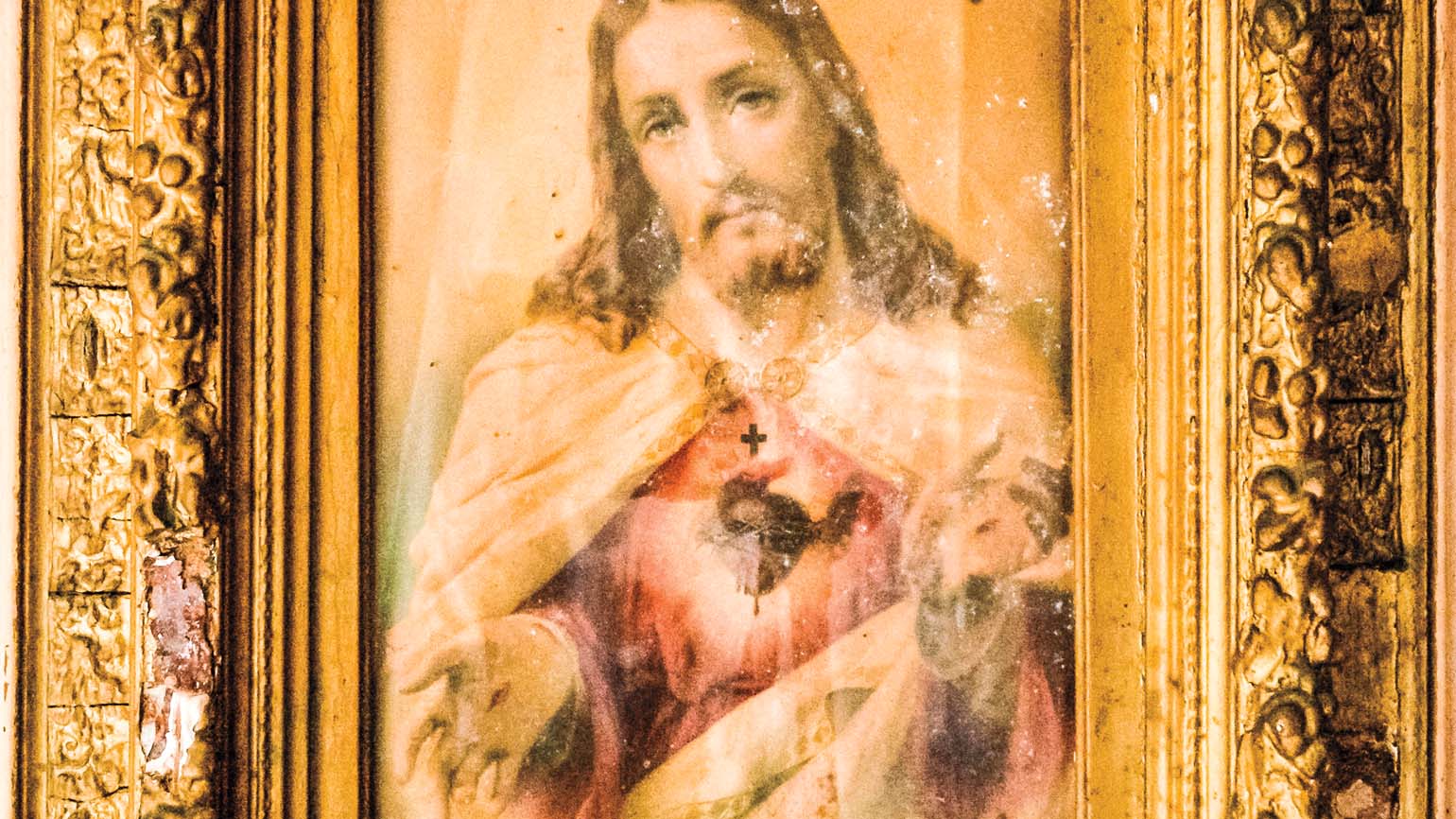
I turned my eyes to the picture of Jesus on the wall halfway up the stairs. Years before, my mother had hung it there. “So he’ll be the last person we think of before we go to bed,” she said.

Please protect us, I prayed.

We retreated to my bedroom to wait. The night dragged on. In the darkness, the water climbed the stairs. Father began to explore our small attic space right above my bedroom. We might be forced up there, and he knew not all of us would fit. Then what? How high would the water go?

Dear Jesus, don’t let it come to that.

Morning broke and the rain finally stopped. We peeked out of the bedroom to survey the damage. We could just see the first floor, which was entirely destroyed. But incredibly, our house had stayed on its foundation. We stayed upstairs until we heard shouting outside—a man in a rowboat was there to take all 10 of us to higher ground.

My father and Mr. Kelly carried Mrs. Eickhorst across the living room to the waiting boat, wading through the dank water. They returned for the rest of us. Carefully we made our way down the stairs. I glanced at the picture of Jesus and caught my breath. The flood water, which had started to recede, left its mark on the wallpaper. It was easy to see how high it had risen. The water line stopped just below that picture. It was as if Christ had said to the rising water, “Here I stand. Come no farther.”

Eighty-one years later, I look back on that night, and I know that there was one more presence in my bedroom as the 10 of us huddled together, fearing for our lives. The One who had heard my prayers and held fast against the flood.

How This Mysterious Visitor Changed a Farmer’s Outlook on Life

Snowflakes were the last thing Tom Barry wanted to see. It was already late and he still had more than half a field of corn to harvest. Snow would slow him down more than anything. It would not only make the corn harder to pick but also make hauling it away nearly impossible.

Why this? he thought to himself. Why now? For the first time since his father had died, he felt the careful control he’d worked so hard to maintain slip away.

His dad had always been his rock. Growing up in a large family with limited means, he had learned at a young age how to carry his own weight—a lesson he passed on to his children. Tom had inherited not only his dad’s work ethic but also a place at the family farm in Pisgah, Iowa. After graduating from college with a degree in agronomy, he returned to the farm to work there full-time. As his father aged, Tom slowly began to take over more and more of the responsibilities. Still, his dad had always been by his side to offer him advice.

In fact, he was even out in the fields feeding the cattle the day before he had heart surgery. “See you tomorrow,” he said that evening, adding as usual, “Good Lord willin’ and the devil don’t care!” He never left the hospital. Tom’s father passed away at age 73 following complications from surgery. Now, Tom glanced back up at the sky hopefully, but the flakes continued to fall. I have to finish this harvest, he thought. But he wasn’t sure how.

The family was devastated when Tom’s father died. There were so many decisions to make regarding the daily running of the farm. Tom didn’t truly appreciate how much his father did until he was gone. His mother and siblings did what they could, and his wife and kids were there to help with chores and some of the fieldwork, but most of the responsibilities fell to Tom. They sold a few of the cows, until the herd was a manageable size. They also got rid of some of the machinery, mostly the equipment that needed two people to operate. Life went on.

Against all odds, the crop that year was good. Tom was impressed by the yield, but when it was time to get out the combine and harvest, Tom missed his dad more than ever. Running the combine had always been his job. Tom would haul the been crop in and do odd jobs, but it had always been his dad in the driver’s seat. It felt weird taking his place. But Tom had to. His son helped when he could, but between college courses and a part-time job, he wasn’t always able to.

Combining and unloading by himself was a slow process, which was why Tom was out so late. Now the snow that dusted the half-harvested field was just going to make a painstaking task even more painful.

“What do you want from me, God?” he asked the darkened sky.

He didn’t know what to do. He desperately wished he could turn around and ask his father what he thought. But Tom couldn’t stand here wishing any longer. The snow was still coming down, and it would only get worse from here on out. He decided to finish filling the wagon before calling it quits for the night.

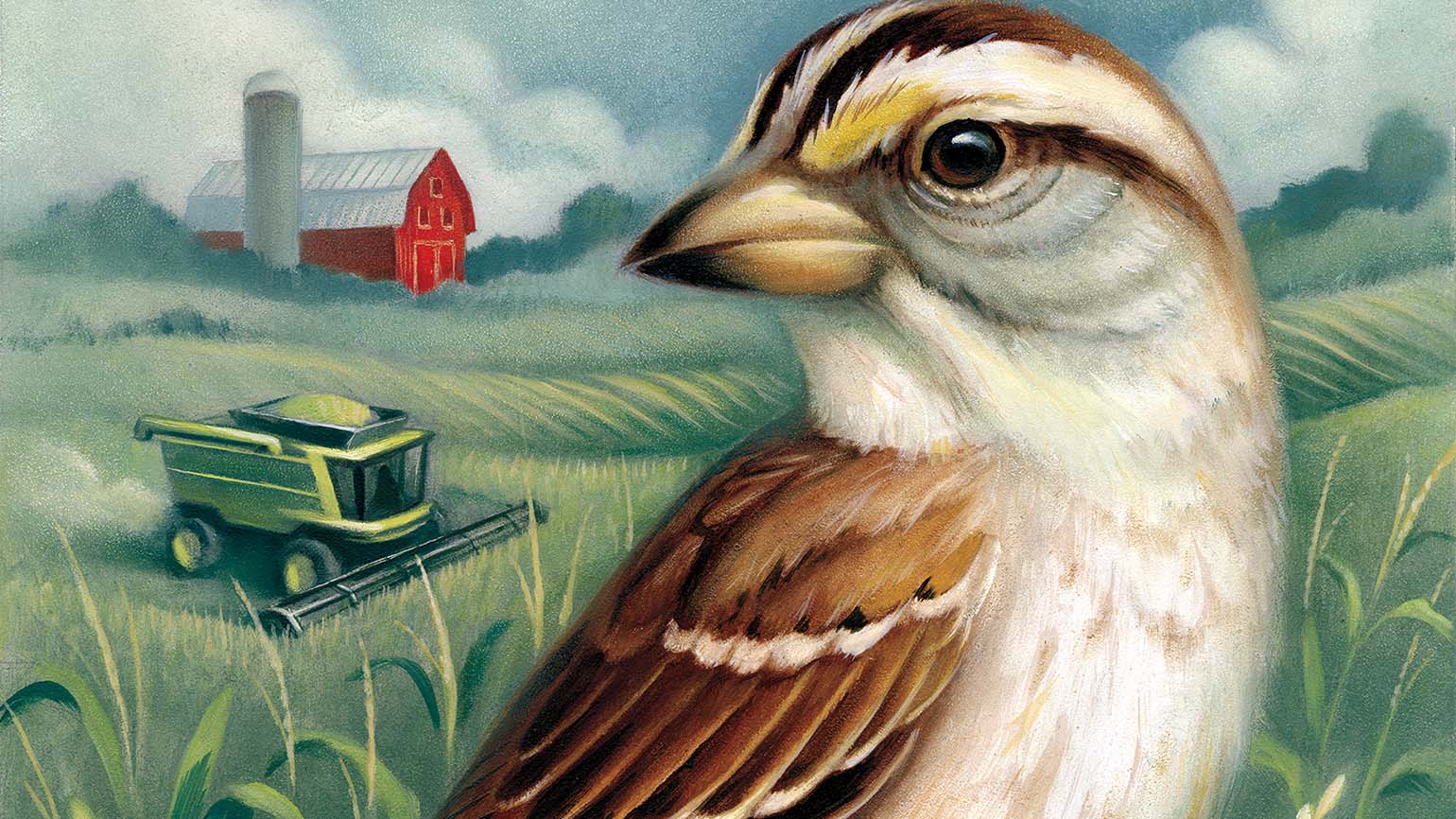
Tom worked as quickly as he could. As he was making the last round, something fluttered up in front of him. A little bird—a sparrow, perhaps—that had been nesting in the standing corn. He’d scared it up with the combine. That wasn’t unusual. Birds always flew away when it came close.

But instead of flying away from the lights and mechanical clanks and groans of the combine, this sparrow swooped in front of the combine’s window once, twice, three times before alighting on the combine’s railing. Though it was still snowing and the wind was picking up, that little bird sat perched there, keeping Tom company as he continued to combine the field.

Look at me, it seemed to say. If I can handle this, so can you.

As Tom came to the end of the field, the sparrow looked at him one last time before taking off into the snowy night. Tom sat there, the combine’s engine still running.

What was that? he asked himself. A sign from Dad? Or just a weird coincidence?

Tom still doesn’t know for sure. What he does know is after that night his outlook was changed for the better. “I realized I had been working with God to take care of his land and the animals that I love so much. And just like the heavenly Father, my dad was working with me too as I carried on the tradition of our forefathers.”

The years have passed by quickly, as everyone says they do. Tom has slowed down some, but like his old combine, he’s still chugging along. His son has stepped up to help with most of the fieldwork, as Tom did for his dad.

Life goes on. Things change. But Tom looks to the future, secure in the knowledge that there’s someone looking out for him.

How This Long-Lost Book Brought Divine Comfort

I stood in my office, surrounded by books. They were everywhere! Piled on my desk, stacked in cardboard boxes on the floor… There had to be hundreds of them. I had no idea that the children’s book drive I’d organized at work would be so successful, and I hoped I hadn’t taken on too much too soon.

Of course, I shouldn’t have been surprised. My coworkers were kind, caring people. I’d experienced that kindness firsthand a few years ago, after my cancer diagnosis.

One morning, while getting ready for work, I’d found a lump in my breast. I scheduled an appointment with the doctor immediately. Cancer ran in my family, and I wasn’t going to take any chances. A mammogram found six tumors. I had Stage III breast cancer.

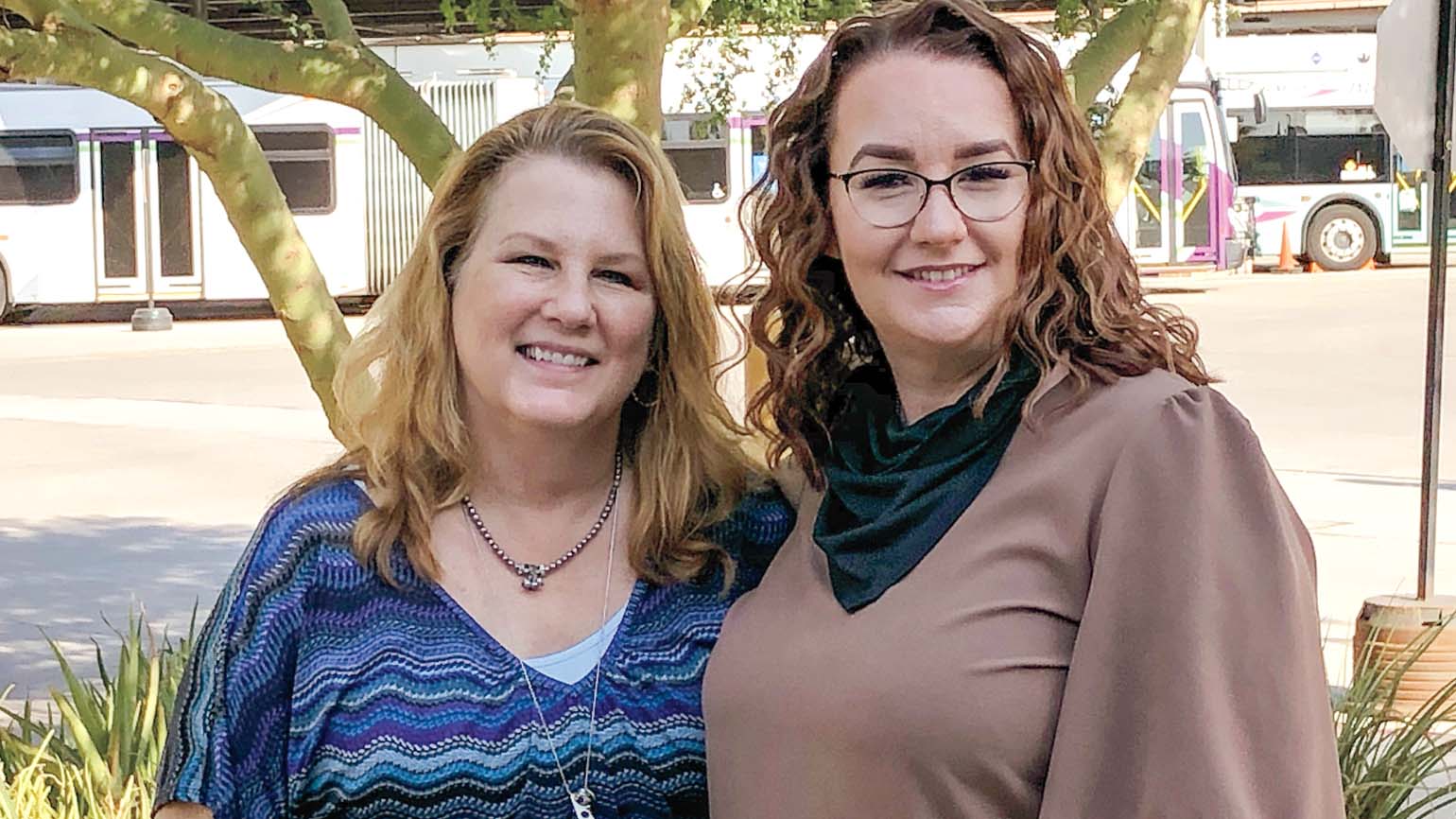
When I broke the news at the office, everyone offered their love and support. Especially Kathy. She pulled me aside. “Anything you need,” she said, “please don’t hesitate to ask. I don’t want you to feel alone during this.”

Kathy was true to her word. When chemo left me too drained to cook, Kathy organized a potluck and brought ready-made meals to my house. When the lifesaving radiation compromised my immune system, Kathy’s daughter sewed me a cloth face mask to wear to my doctor appointments—pink, for breast cancer. Kathy and I grew closer, and on the days when I was well enough to go into the office, we’d stop by each other’s desks to talk.

During one of our chats, I learned why Kathy knew exactly what I needed. Her mother had also had cancer. “She died when I was young,” she said. “I still miss her every day.”

I tried to reassure her that mother-daughter love endures even death, that her mother was always with her in spirit. But I knew words would never be enough. I wished there was something I could do to return even a fraction of the comfort Kathy had given to me, but how? Only the Lord could bring Kathy the peace she needed, and I prayed for that every day. It gave me something else to focus on.

After 13 rounds of chemo, I was healing from my surgeries, wrapping up the radiation treatments and able to go into work more often. I found my energy finally returning. Before I’d gotten sick, I’d loved to organize company fundraisers and community outreach. Now I was feeling up to it again.

That’s how the book drive came about. There were little free libraries all over town, drop-off points where people could give away books to those who needed them. I wanted to stock them with children’s books. And though I was overjoyed by the number of donations from my co-workers and their friends and families, sorting through the books was overwhelming. As I was moving some of them off my chair to take a breather, Shane, the building’s maintenance man, entered my office carrying even more books.

“Look!” he said, holding up a Harry Potter book. “Doesn’t Kathy love this series?”

“She does, and we’ve already gotten a few copies of it.”

“Why don’t I put this one on her desk then?” he said. “As a little gift.”

I agreed. Caught up in going through box after box of books, I forgot all about it. Until the next day, when Kathy tracked me down, tears in her eyes. “Lori, did you leave this on my desk?” she asked, clutching the copy of Harry Potter.

“Shane found it in the donations. We thought you’d like it. Why? Is something wrong?”

Kathy opened the book to the title page, holding it out for me to see. There was a handwritten inscription: “To Donna, Love Sarah, Happy Birthday.” There was a heart drawn next to it.

“This is my mother’s handwriting!” Kathy said. “Donna and Sarah are my sisters. Sarah was too young to sign the book herself, so Mom did it for her.”

Kathy went on to explain that the book was one of the last gifts her mom had given. The three sisters had cherished the handwriting in it. Over the years, the book had been misplaced. None of them knew what had happened to it. Yet somehow, here it was. Out of hundreds of books donated from countless households in and around Phoenix, Arizona, this long-lost treasure had made it back into the right hands. Offering peace to the woman who’d comforted me through my journey. Reminding us both that there is no journey we travel alone.