


Embrace God's truth with our new book, The Lies that Bind

How This Heaven-Sent Sentence Gave Her Comfort

It was midafternoon, and I was already curled up on the couch in the living room with no plans to move. The day before, I’d had to put down my beloved dog, Ben. I’d spent the rest of the day in a haze, agonizing over my decision. Ben had been 12 years old, with rapidly declining health, and his veterinarian had assured me I’d made the humane choice. But was it? Had I really done the right thing?

On the other side of the room, my husband, Jon, was helping our six-year-old son, Gus, with his homework.

“Which of these worksheets should we have him do first?” he asked me.

“I don’t know. Just pick one,” I said, distracted.

Our older sons, Ted and Lou, played together, chatting happily. My stepson, Oliver, was in his bedroom. With four boys, the house was never quiet. Still, it felt so empty now without Ben.

Before Ben became the family dog, he’d been all mine. In 2008, I went through a difficult breakup. I had just bought my first home and found myself in the perfect situation to finally have my own dog.

I went to my local Humane Society. I walked past rows of kennels, filled with dogs of all shapes and sizes. Some pushed their noses against the bars, tails wagging. Others hung back, scared.

One dog in particular caught my eye. A big black dog. He looked like a Lab mix and was shy and sweet. He was so massive that I was sure he must have some wolf in him too. As soon as his large, golden brown eyes caught mine, I knew we were meant to be together. I signed the adoption papers and took him home that same day. I named him Ben.

Life together was an adjustment for both of us. Ben was a nervous dog. He wasn’t yet fully housebroken. When I left him alone for any length of time, I was certain to find a mess waiting for me when I came back. He chewed up my couch and shredded the pillows. I tried to crate-train him, but he escaped every time and wreaked havoc. Like an unruly, furry Houdini.

As Ben’s training improved, so did my life. I married Jon. I had my first son. Then my second. Then my third. Ben was the best big brother. He was patient and kind, tolerating high-pitched screeching and little hands pulling at his ears with a steadily wagging tail. My family felt complete.

Eventually I noticed that Ben was slowing down. He played less and grew tired quickly. His tail still wagged whenever I invited him to snuggle, but he could no longer make his way onto the couch. Ben seemed to get progressively more confused, walking into rooms and then seeming to forget where he was. When he started having episodes of shaking and problems with his balance, I knew something was seriously wrong.

I took him to the vet. He confirmed what I already feared. Ben was suffering from age-related neurological problems. He was in pain, and his quality of life was no longer good. The best thing to do would be to put him to sleep.

I stroked Ben’s soft black fur as he closed his eyes for the last time. Holding his head in my lap, I was fraught with uncertainty over the decision I had made.

“Do you believe in God?” I asked the vet as I gazed at Ben.

“Yes.”

“And do you think dogs go to heaven?”

“Of course,” he said sincerely.

I cried all the way home and had a sleepless night. Now I sat on the couch, trying in vain to get comfortable. I looked over to Gus, hard at work on his worksheet. It had been so hard to explain to him and his brothers that Ben wouldn’t be coming home again. For the youngest ones, this had been their first experience with death.

Still, kids are resilient. My boys might have been sad, but I was demolished. I wasn’t sure my heart would ever heal.

“Beth,” said Jon, “could you come over here? You have to see this.”

Sighing, I got up from the couch. “What is it?” I asked. Jon pointed at Gus’s homework.

Each worksheet had the same premise. There was a jumble of six words on each page. Gus had to cut out the words and arrange them into a sentence, then glue them into place. Only one correct sentence was possible.

I stared at the words Gus had carefully strung together: We love our big black dog.
How This Fateful Encounter Became a Lesson in Forgiveness

The envelope immediately caught my attention as I opened the day’s mail. The stamp revealed it had been sent from a state prison. I’d been a pastor here at the Church of the Master for 22 years. Not many letters came to me from prisoners.

Curious, I opened it. A few postage stamps spilled out onto my desk. I pulled out the letter, handwritten on notebook paper. “I came to your church 14 years ago, asking for food and money,” it began. “I told the preacher my house had burned down, but that was a lie.”

I knew exactly who this was. How dare he write me after all these years! Had his conscience finally gotten the better of him? Or was he trying to pull some other con? He had no idea the pain his deceit had caused me and my wife, Jeannie. The anger had festered inside me ever since. I’d relived that day in my mind countless times.

It had been raining hard since early morning that Sunday, and there was a flood warning in effect. It was the kind of day when everyone avoided going out unless it was important. So when I met the man outside my office and heard his story of losing his home and needing assistance, it didn’t set off any alarm bells. He seemed as if he really needed my help. His clothes were drenched. The service had just ended, though I hadn’t seen him in the crowd. “Anything you can do, I’d be obliged,” he said. “It’s my little girl I’m most concerned about. If we just had some money for food…”

My heart went out to him. I had three young children myself. “I’ll ask the deacons to approve an emergency gift,” I told him. “But I’ll need to call them, then bring you the money.”

“I don’t know how to thank you,” the man said. He told me the name of the motel he and his family were staying in and the room number, then went to wait for me there. Jeannie had already gone home to prepare lunch, so I gave her a call to let her know what I was doing and that I’d be a bit late. Then I called the deacons to approve an emergency gift of $100 and picked up some sandwiches for the hungry family. By the time I met the man in front of his motel room, nearly 45 minutes had passed. I handed him the food and cash, along with my business card in case he wanted to reach me. I said goodbye and hurried to the car to drive home. I hoped Jeannie and the kids had eaten lunch without me.

When I pulled into the driveway, I was startled to see Jeannie sitting on the front porch, crying, completely soaked and streaked with mud. She held out her arms to me, and I ran to embrace her. “What happened?” I asked.

“I almost drowned,” she said, her words coming out in sobs. She went on to explain what had happened.

Near our house is a drainage ditch with a culvert that runs under a wide driveway before it empties out on the other side. When it rains, the ditch turns into a rushing stream. After I’d called, Jeannie had postponed lunch until my return. She went out onto the back porch to see if the drainage ditch was at risk of overflowing and noticed a little boy riding his bicycle in the street.

“Next thing I knew, he’d fallen into the ditch,” she said. “The water covered his head.”

“How awful!” I said, holding her close.

“I ran to him,” she continued. “I caught one of his hands and was able to pull him out, but then I fell in myself. I grabbed the top of the culvert, but the water was so strong, I could barely hold on. It was rushing over my face, and I couldn’t breathe. I thought I was going to die. Then I had this strong feeling that I should let go. All I could do was trust God to protect me. I relaxed my hands, and the water pulled me through the culvert, under the driveway, and out the other side. I was able to climb onto the grass. A neighbor was there to help me and to get the boy back to his family. Ted, I’m so glad you’re home!”

“Thank God you’re alive,” I said.

“And you saved the boy’s life! But I’m so sorry you went through that—it should’ve been me out there instead.”

“It’s okay,” Jeannie said. “You were helping someone too.”

She was right, and it was the only thing I clung to in the hours and days that followed, when I was racked with guilt for not being there for Jeannie.

The Indianapolis newspaper published a front-page photo and story of the rescue, calling Jeannie a hero. The Reverend Norman Vincent Peale even read it on his national radio show. I was so proud of Jeannie’s bravery, but she couldn’t forget the fear she’d felt. “I keep flashing back to my head under the water, to thinking I wouldn’t make it,” she said. “It was terrifying.”

I tried to console her, but my words did little to comfort her, which saddened me. I was her husband, and I wanted to be her protector.

A few days after the incident, I got a call from the manager of a pizza parlor. “I need you to pay your bill,” he said. “A man came in and ordered a pizza. He said he was your son and that you would come in to pay. He gave me your business card.”

My throat went dry. What a crook! What kind of person steals from a church? I felt foolish for being so gullible. I explained the situation to the manager, letting him know that, unfortunately, we’d both been conned. When I hung up, I was overcome with anger. Gone was the comfort of knowing I’d been absent for a good reason. This man’s lies had caused me to miss being there for Jeannie. It was why she had been the one to go in after the boy instead of me, why she’d nearly drowned and was so traumatized as a result. In my mind, I held the man responsible. I thought of him anytime someone came to the church asking for help. Every time there was a storm and I caught Jeannie nervously looking out the windows.

For 14 years, I had carried that guilt and anger inside of me, and now he was confessing. From prison, no less. I continued reading. “Please forgive me,” he wrote.

“I’m sending these stamps as a down payment on what I owe. I wish I could say why I picked out your church. It wasn’t personal. I’ve done a lot of bad things in my life. I’m sincerely sorry.”

Slowly I read the words again. It hit me that I really didn’t know this man at all. I didn’t understand the circumstances of his life. In my mind, I went over the details of that day again. How he was the reason I wasn’t there. Jeannie seeing the boy on the bike. Running to his rescue instead of me.

I should have been the one in her place. And yet…the reason Jeannie had gone out to the porch was because I wasn’t there. If I had been at home, the five of us would have all been having our lunch, sitting in the dining room, on the other side of the house. No one would have seen the boy. He almost surely would have drowned.

All those years I’d been so caught up in my anger at the man who’d lied to me that I’d been blind to the fact that our fateful encounter had allowed Jeannie to be right where God needed her to be. A tragedy was averted. Yes, it had been stressful for Jeannie. But the alternative? My plan? It would have been far worse.

The man asking my forgiveness knew nothing of this, of course. How God had used even his deceit for good. The bitterness I’d harbored toward him was gone, replaced by a grace I knew wasn’t my doing. I found a pen and writing pad.

“Dear sir,” I began. “Thank you for your letter. There’s something I’m long overdue in sharing with you….”

How the Transfiguration of Jesus Reminds Us of God’s Glory

Whenever I think about the Transfiguration, my mind travels back to the fifth- and sixth-grade Sunday school class I once coached to act it out for the congregation. The task seemed nearly impossible.

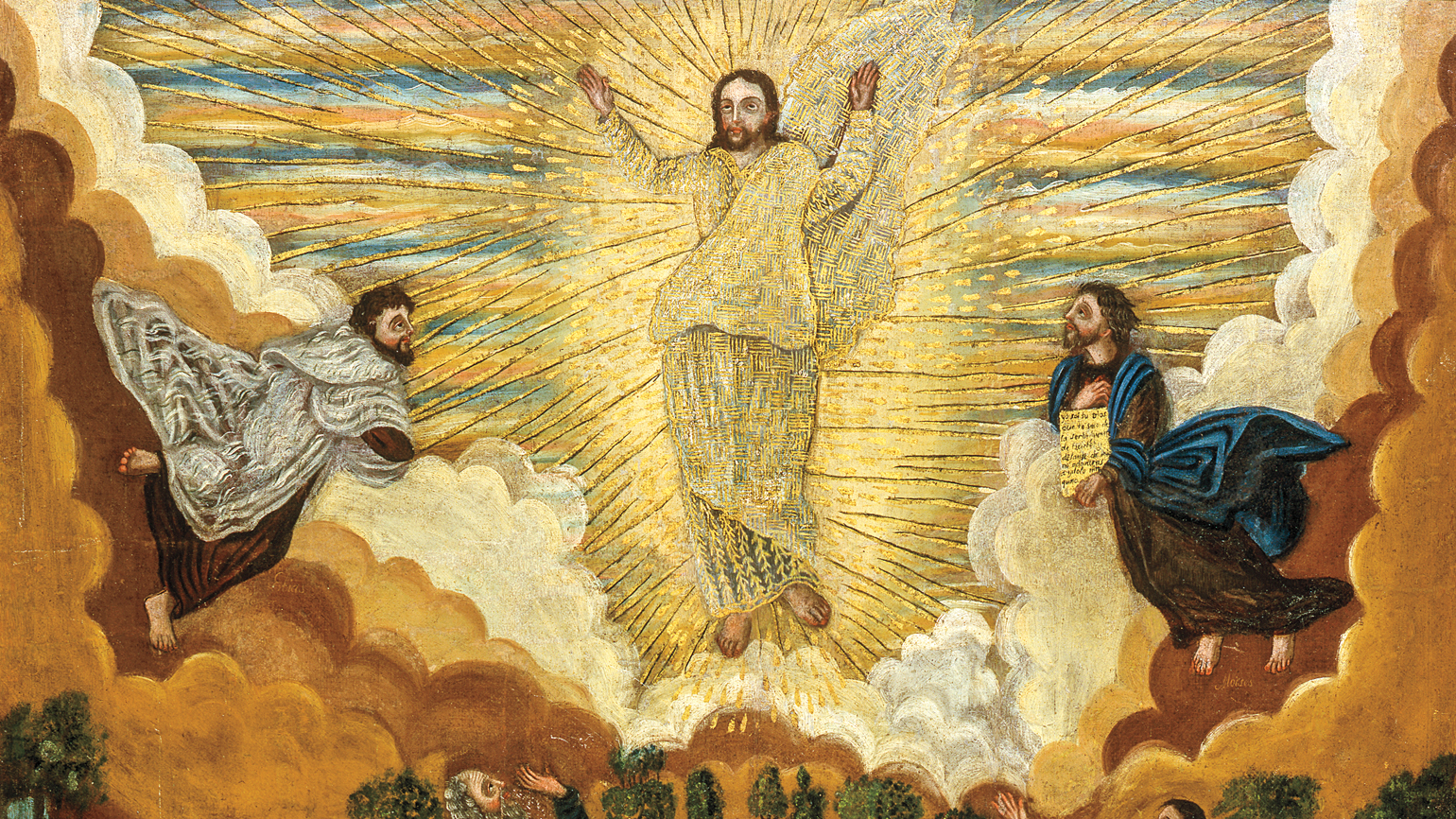
Why? Because this particular Bible story is filled with intangible elements. Jesus ascended from a mountaintop before three of his disciples and was transformed, his face shining like the sun, his clothes a dazzling white. The prophets Moses and Elijah appeared beside him, an even brighter cloud overshadowing all. A voice proclaimed, “This is my Son, the Beloved; with him I am well pleased; listen to him!”

Afterward, the three disciples—Peter, James and John—wanted to build something on the spot to commemorate the extraordinary event. Jesus turned them down. Then he told them not to speak of what they’d seen until after he died.

In the Sunday school class, I read the passage aloud, hoping to be inspired myself, then looked at the thoughtful young faces, pondering what they’d just heard.

“Isn’t it about God being light?” asked one. “Let’s use flashlights to act it out.”

“It’s on a mountaintop. What about building a mountaintop out of a cardboard box?” suggested another.

Like the disciples, our first reaction was to try to make sense of this miracle. To break it down into understandable bits. But it’s best looked at as a whole, wondrous encounter. In fact, it’s exactly its inexplicability—its heavenly, almost unrelatable nature—that makes the Transfiguration stick out in the three Gospel accounts in which it appears. Until this point, Jesus, the Teacher, or Rabbi, as his disciples called him, had preached using the most down to-earth language and relatable stories. He described a shepherd in search of a lost sheep, a woman looking for a lost coin, a father reuniting with a lost son. His listeners lived close to the land, and that’s what Jesus referred to most—the harvest, grain ripening, a tree without figs. When he did something miraculous, such as feeding 5,000 with only five loaves and two fish, his followers saw the evidence. Twelve baskets held leftovers. It wasn’t just their imagination. More than enough bread and fish had multiplied from almost nothing. The miracles were credible because they were tangible.

Not the Transfiguration. In the Gospel of Matthew, right before it happened, Peter had correctly answered who Jesus was. “You are the Christ,” Peter said. Then Jesus explained that he would be rejected by the elders, chief priests and scribes. He would be killed, then rise from the dead three days later. Peter objected, earning Jesus’ sharp rebuke: “Get behind me, Satan!” Perhaps that’s why Jesus orchestrated the Transfiguration—without it, his death and Resurrection would be too much to take in. As if to say, “I’m going to show the three of you something pretty outrageous, and I want you to watch. Not only will you see me as you’ve never seen me before, but you’ll hear something too. You’ll want to reflect on what it means for a long time.”

It’s important to note that the disciples who witnessed this divine moment were ordinary people. They were not scholars, not wealthy, not nobility; they were common laborers, fisher folk, men who used their hands to make a living. No one would have sought them out to behold a visionary experience. A reminder that God can appear to any one of us.

That it all happens on top of a mountain is also significant. Moses went to a mountaintop to hear God and receive the 10 Commandments. Jesus delivered mountainside teachings collectively known as the Sermon on the Mount. Mountains were holy places, where God’s word was heard. When Moses and Elijah—the prophet who made his exit from earth riding a chariot into the sky—appeared beside Jesus in the Transfiguration, there is a hint of Jesus’ own assumption to heaven.

At the time of the disciples’ vision, Jesus was very much earthbound. God in human form, exhorting his followers with words and actions. Yet, for a fleeting instant, he was transformed in blinding light. We call it the Transfiguration because of the change that came over Jesus, but I would argue he’s not the only one changed. The disciples were changed too. So are we.

When I revisit this story, I think of that class and what the experience taught me. With our flashlights, cardboard mountaintops and a kid speaking in a low, affected manner into the loudspeaker as the voice of God, we got the point across. God is not only light, but he speaks. He reveals himself to us—sometimes in weird, mystical visions—when we are ready to ascend our spiritual mountaintops.

I can imagine Peter, James and John rubbing their eyes after the Transfiguration, wondering if it had really happened. Jesus was back on earth and in his usual clothing. Everything was as before. Or was it? The group descended the mountain, and Jesus gave final instructions: “Tell no one about the vision until after the Son of Man has been raised from the dead.”

Mystery can be hard to take in. I find the mystery of Jesus’ death and Resurrection very hard to comprehend. But the Transfiguration is a reminder: Don’t overthink. Just experience the wonder of God. Reflect on that moment a bit. Take this chance to become transformed. There is time later to share what you’ve seen.

How the Olympics Reunited Separated Sisters

Jennifer Bricker’s life had a difficult start. Born without legs, her parents, Romanian immigrants, gave her up for adoption because they couldn’t afford her medical care.

But Jennifer’s adoptive family made sure her disability was never a factor in her life. “Can’t is a four-letter word we don’t use in this house,” her mother always told her.

At six years old, Jennifer became obsessed with gymnastics, and her adoptive family encouraged her at every turn. Her idols became the “Magnificent 7,” the 1996 U.S. Olympic gymnastics squad.

Watching the Olympics on TV, Jennifer immediately was drawn to one of the American gymnasts, Dominique Moceanu. The commentators mentioned she had a Romanian background. “Like me,” Jennifer said.

Moceanu. Jennifer’s mother knew that last name. It was the last name of Jennifer’s birth parents. What a strange coincidence, that her daughter should latch on to her, above all the other gymnasts.

Then the camera panned over to show Dominique’s parents react to their daughter’s performance. When the commentator said their names, Jennifer’s mother gasped. They were Jennifer’s birth parents.

Dominique won a gold medal as part of the team competition, and Jennifer was thrilled. But her parents decided to wait until she was older to tell her about her famous sister.

Jennifer made the Junior Olympic team as a power tumbler and went on to win state titles in high school competitions. Dominique remained her inspiration. On Jennifer’s 16th birthday, she finally asked her parents about her birth family. That’s when they told her: Her idol was also her biological sister.

Jennifer first tried to get in touch with her biological parents. But her biological father ignored her calls. It took nearly four years for Jennifer to reach out to Dominique in a letter. “I feel that I have one chance to show you and prove to you that I’m not some crazy person…” she wrote.

Dominique’s parents had never told her or her sister Christina about the child they gave up for adoption. But Dominique didn’t doubt Jennifer’s story. Now the sisters are busy making up for lost time. “It’s so much fun every time the three of us get together,” Jennifer told ABC News.

Jennifer is now a professional acrobat and aerialist; she’s even performed on tour with Britney Spears. Dominique, meanwhile, recently made headlines with her new book, Off Balance, in which she tells the story of meeting Jennifer, as well as the fraught relationship she’s had with her parents and the sport of gymnastics.

You could say gymnastic ability runs in the familybut it’s incredible how the sport helped bring these sisters together in such a neat way. A reminder that all our tumbles and twists are part of life’s floor routine… expertly planned to get us that gold medal in the end.

Please keep sending your true stories to us! Our new Mysterious Ways magazine gives us so many more opportunities to share them.

How the Miracles of Holy Week Fortified His Faith

I look forward to Holy Week with a mixture of dread and wonder. The dread because I know that as I listen to the biblical account read in church, I’ll have to relive the horrors of the crucifixion. The wonder because there are these miraculous signs that point to Jesus’ divinity and how he knew all along how things would turn out.

On Palm Sunday in our church, the gospel account is reenacted by members of the congregation. You can be there in your pew and suddenly discover that the friend sitting next to you is playing the role of Peter or Mary Magdalene or even Jesus. The familiar story comes alive.

READ MORE: 8 Prayers for Holy Week

Before entering Jerusalem, Jesus sends two of his disciples into the village of Bethany, where he has told them they will find a colt. They were to untie it and bring it back to him. If anyone asks them why they’re doing that, they are to say, “The Lord needs it and will send it back here immediately.”

Did those disciples ever ask themselves, “How does he know we’ll find a colt?” or “What if someone accuses us of stealing it?” In fact, they do find a colt in the street, tied near a door.

When bystanders accost them, asking what they’re doing, they say exactly what Jesus told them to say. And it works. It’s as though Jesus is training the disciples to trust him in the small matters so they will be able to trust him regarding the wonders to come.

The disciples throw their cloaks onto the colt, and Jesus sits on it. On his way into the city, the people throw their cloaks down on the ground or spread leafy branches cut from the fields. “Hosanna!” they cry, just as we do in church, waving palms to honor this new King.

READ MORE: Palm Sunday in the Bible: 15 Palm Sunday Scriptures

But what does this King have to offer his people? A second miracle tells us: That same busy week, Jesus passes a fig tree that has borne no fruit. He addresses the tree—as though it might hear him: “May no one ever eat fruit from you again.” By the next day, the fig tree has withered and died. What does it all mean to his followers? Jesus is illustrating the power of prayer. “So I tell you,” he says, “whatever you ask for in prayer, believe that you have received it, and it will be yours” (Mark 11:24). Believe that you have received it. What an astounding promise to come from a king.

Later that week, when an unnamed woman pours an alabaster jar of expensive ointment over Jesus’ head, there is a muttering of disapproval. What a waste. The ointment could have been sold and the money given to the poor. (I find myself having the same thought.) But Jesus says the woman has done a good thing, preparing his body for burial ahead of time. Though he is young and his ministry only beginning, his response assures us that the Son of God already knows what is to come. A close listener in the crowd might get the hint as well.

You can feel Jesus’ exasperation with the disciples, who don’t get it. At the same time, you can also see Jesus’ compassion for them.

READ MORE: A Devotion for Holy Week

On Maundy Thursday, Jesus sends two of his disciples into the city. He has told them they would meet a man carrying a jar of water and should follow him to a house where they would be led to an upper room. The room would be furnished and ready for the Last Supper. And so even this setting is found by way of another of Jesus’ mystical revelations.

During the Last Supper, Jesus tells Peter, the most committed of his followers, that he will deny him three times before the cock crows at sunrise on Good Friday. Peter passionately swears that he won’t. And fails. Jesus didn’t have a spy among the group; his Father had shown him every detail of the Easter story. Jesus is preparing his disciples just as Scripture is preparing us. Like I say, I hear the story with a combination of dread and wonder.

Good Friday is a three-hour service at our church, and it is always the hardest for me to sit through. The betrayal, the desertion, it is all there for us to witness, including Jesus’ own trepidation. He prays in the Garden for the cup of suffering to be taken from him. And only after that honest, all-too-human outburst can he come to any acceptance: “Not my will, but yours be done.”

READ MORE: Why Is Good Friday So Important?

As Jesus had foreseen, none of his disciples has stuck with him to the end. They aren’t there on the hill at Calvary when he is crucified. Afraid, no doubt, of what would happen to them. It can only have added to Jesus’ sense of abandonment, not just by his followers but by God. There, on the cross, Jesus utters the opening verse of Psalm 22: “My God, my God, why have you forsaken me?” As he spoke those words, he would also have known how that psalm moves into verses of praise: “My soul shall live for him….”“him….”

It all does end triumphantly, with the Resurrection. We celebrate the first stirrings of it on Easter Eve, Saturday night melting into early Sunday morning. Near midnight, the lights of our church all come up, revealing a sanctuary filled with fragrant lilies and cherry blossoms. The choir bursts out with a “Hallelujah!”

A few years ago, after a particularly rigorous week of worship, I came away with an astounding feeling of transcendence. Nothing could harm me. Earlier in the week, we had sung the spiritual “Were You There When They Crucified My Lord?” I had been there with my fellow parishioners. And I knew what it was to experience the miracle of the empty tomb, because I had been prepared for it, just as Jesus had.

READ MORE ABOUT HOLY WEEK:

How Simone Weil Ignited Her Faith

Has a visit to church ever changed your life? Countless such visits have influenced my faith, whether gazing at the windows of Chartres Cathedral or sitting in a small country chapel.

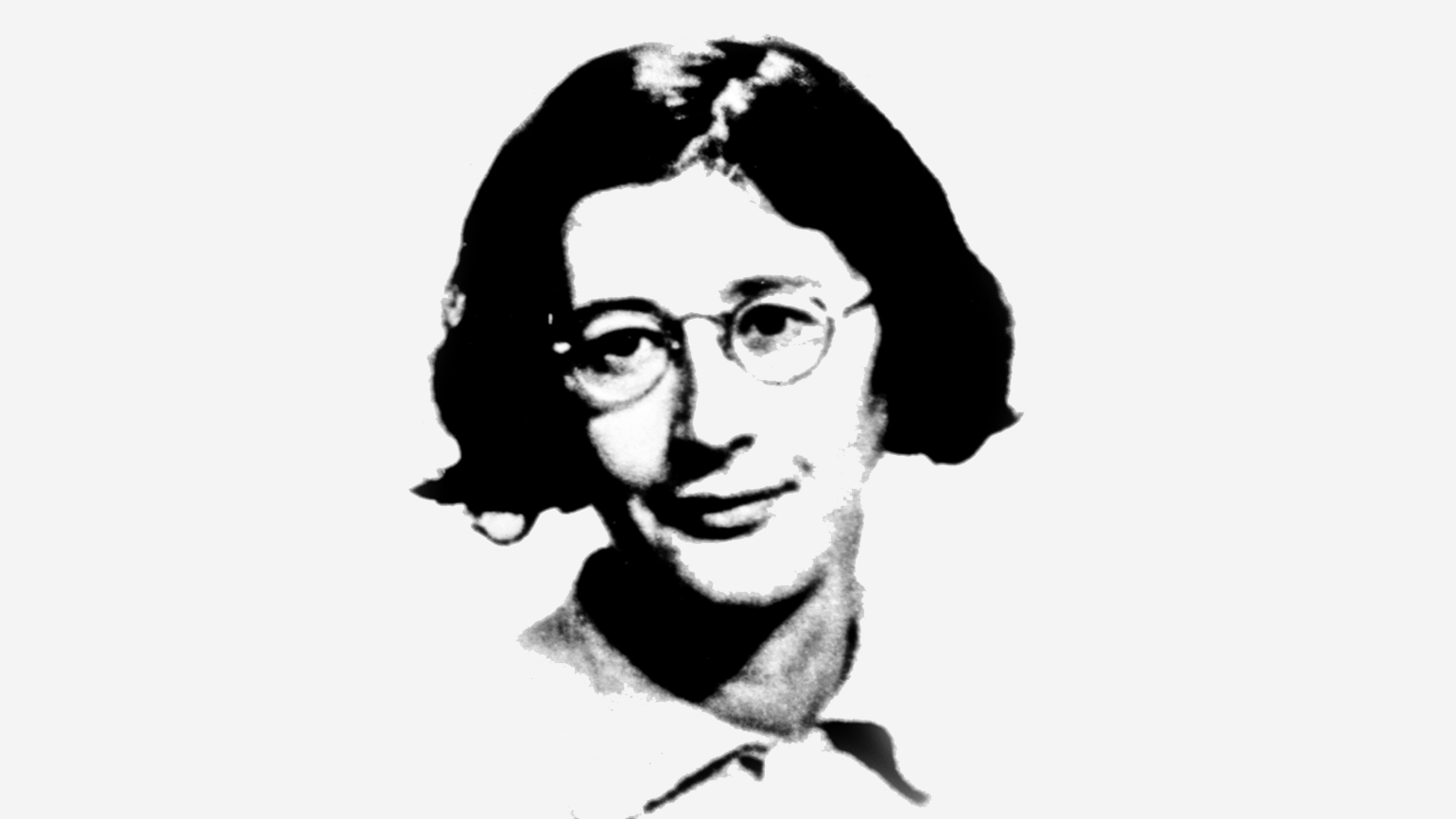
Imagine what it would be like to be a brilliant philosopher—from a French family of prominent intellectuals, including a brother who was a renowned mathematician—whose political convictions lead you to labor alongside factory workers and fight against fascism in the Spanish Civil War. Then, in your late twenties, you wander into a shrine in the Italian town of Assisi, where Saint Francis had his own mystical experiences. Falling to your knees, you are transported.

This was the spiritual trajectory of Simone Weil (1909–1943). First came her call to service. Then came her call to faith. It’s the opposite of what we usually expect from deeply spiritual people—and it makes her faith journey all the more fascinating to explore.

When Weil’s life was tragically cut short by tuberculosis in the middle of World War II, she was barely known. Yet her transcendent writings have since come to light, raising the philosopher, activist and mystic to the status of an unofficial modern saint.

A quick glance at some of her thoughts and maxims is enough to know the depths of her heart and soul: “Everything beautiful has a mark of eternity.” “Absolutely unmixed attention is prayer.” “Love is not consolation, it is light.” “Compassion directed to oneself is humility.” “We must not wish for the disappearance of any of our troubles, but grace to transform them.”

Born into an agnostic family of Jewish heritage in 1909, Weil faced her own troubles right from the start. Like many saints of old, she was plagued by fragile health. She had a near-fatal attack of appendicitis as a child and endured frequent excruciating headaches throughout her life. Still, in solidarity with society’s less fortunate, she would push herself by eating sparingly, forgoing sleep and working herself to exhaustion.

Even as a youngster, she refused to eat any sugar during World War I, choosing to suffer the same deprivation as soldiers in the trenches.

Twenty-five years later, during World War II, she wouldn’t take more than the rations of a citizen in occupied France. Though she might have been denying herself physically, she was feeding her soul.

Weil’s family was loving and supportive but practiced no specific belief. She was a stellar student at a French university, then became a philosophy teacher. All the while, she attended political demonstrations, which furthered her controversial reputation as an activist at the secondary schools where she taught. Her support for workers came from an altruistic concern for the poor. She needed to do more. She took a leave of absence from teaching to immerse herself more fully in the cause, working in factories to know the laborers’ lives firsthand. She didn’t just speak out about their suffering; she made sure she experienced it.

Her first glimmer of faith came on a trip to Portugal, where she had gone for more factory work. She witnessed an impoverished seaside village celebrating its patron saint, the wives of the fishermen carrying candles on a moonlit night, singing ancient hymns. “I have never heard anything so poignant,” she later wrote, “unless it were the song of the boatmen on the Volga.”

Next came that profound visit to Assisi. Ever since Saint Francis walked its narrow streets, the hilltop town has been a pilgrim destination, a so-called thin place where God feels near. But Weil’s visionary experience didn’t happen in the impressive fresco-lined basilica illustrating the life of Saint Francis or in the piazza where he famously relinquished his rich clothes to follow Jesus. Instead, it was in a Romanesque chapel within a church at the bottom of the hill where Francis and his followers would gather and pray.

“Something stronger than I was compelled me for the first time in my life to go down on my knees,” she would later say. A brilliant woman discovering something bigger than thought, bigger than life, bigger than herself. She was open to humbling herself before God, absorbing his wonders, igniting her faith.

Back in France, she spent ten days at a Benedictine abbey, attending services from Palm Sunday to Easter Tuesday. There she met an Englishman who recommended the seventeenth-century metaphysical poet George Herbert. She turned to his work. His poem “Love III” moved her deeply and spoke directly to her soul:

Love bade me welcome: yet my

soul drew back,

Guilty of dust and sin.

But quick-eyed Love, observing

me grow slack

From my first entrance in.…

How extraordinary to consider this woman with her superior intellect and training discovering that God is love. It became the only thing that made sense to her. In the years ahead, when France was overcome by the Nazis and Weil and her loved ones were in grave peril because of their Jewish heritage, she found solace and comfort in this love.

In 1942, she and her family escaped war-torn Europe and sailed to the United States, making their home in an apartment on Riverside Drive in New York City (not far from the church our family attends). But love was still calling her, moving her, pushing her. She wanted to do something to save the world from its turmoil. She could have stayed in the United States, where it was safe, but she was determined to help the Allied cause with her linguistic skills, fluent as she was in English and French. She wanted to go to England to work for the Free French, under the leadership of General Charles de Gaulle.

Risking her life, she once again crossed the U-boat–infested waters of the Atlantic, commenting that if the ship were hit and sunk, it would be a sort of baptism for her, a holy rite of passage.

She landed safely in England and immediately poured herself into the Allied cause, working to exhaustion as usual.

Alas, Weil wasn’t able to help for long. At a time when effective antibiotics for tuberculosis were just beyond the medical horizon, TB was destroying her lungs, and she had to take refuge in a sanatorium, where she died at age 34. So young, but a life so deeply lived. I think of her as a saint for our times, engaged in the world in all its complexity while being open to the mystical experiences, thriving on God’s love.


How Reconnecting with Nature Encourages Spiritual Growth

Every summer growing up in Richmond, Virginia, my family picked the wild blackberries that grew in the woods near our house. The summer I was 15 years old, I plucked a perfectly ripe berry off a bush. All at once, I was struck by a profound sense of wonder at the very perfection of that little fruit. I marveled at its seemingly miraculous ability to grow from the earth and nourish me. I experienced the startling awareness that everything around me was balanced and correct. Each aspect had a purpose: the sky, the trees, me, even this tiny blackberry I held in my hand. It was as if the world itself had suddenly come into divine focus. Then I heard my mom calling and the moment ended.

The experience left me with a persistent question: Why did that moment in the woods make me feel more connected to God than any other moment in my life?

I turned to Scripture. The Book of Genesis describes how God created the lands, the oceans, the vegetation and the wildlife before creating humans, as if he were setting the stage for us, the natural context of our existence. The Book of Job in particular focuses on how God’s power can be seen in every aspect of nature, from mighty storms to the morning dew. When Jesus needed to pray, he often retreated into nature. In the Book of Mark, Jesus went to the mountains. In the Book of Luke, he went to the hills. In the Book of Matthew, he went to a garden.

I also turned to mystics and theologians. In his poem “When I Was the Forest,” Meister Eckhart talks about returning to nature to feel God’s presence. Saint Francis of Assisi believed communing with animals could draw us closer to God.

Still, I wondered about modern cases, like mine, in which nature served as a connection to something more.

I spoke with Paul Marshall to get a better understanding of current revelatory moments in the natural world. Dr. Marshall studied natural sciences at the University of Cambridge and received his MA and Ph.D. in religious studies from Lancaster University. He’s dedicated his career to the study of extrovertive mystical experiences, or mystical experiences in nature.

Dr. Marshall has found that experiences like the one I had often leave the experiencer with a shift into a deeper center of self and a sense of divine presence or a higher power.

“Mystical experiences have been viewed as the purview of a few saints and other holy personages,” Dr. Marshall told me, “but it’s clear that they’re much more common than we think.” He pointed to a 2000 study out of the UK that polled people who’d had a mystical experience. Twenty-nine percent of the respondents reported their experience as “awareness of a sacred presence in nature.”

His research also revealed that these profound moments are experienced by people of all faith backgrounds, levels of belief and age—as if the natural world is a spiritual access point that God has made available for all.

Even if a person doesn’t have a dramatic shift in spiritual perspective, nature can still be the setting for important communion with God, giving us answers to life’s greatest challenges.

Nature held the answers that Colleen Messina, of Bozeman, Montana, urgently sought after her father was diagnosed with Alzheimer’s. Colleen felt she was losing her connection to him. Her father refused to discuss his condition, and she struggled to know how he was feeling.

“The person I loved most in the world was disappearing, and I couldn’t talk heart-to-heart with him anymore,” she told me.

Colleen and her father had always connected through hiking. She found a short hike they could do near their home. It led to the top of a hill where they paused to catch their breath and marvel at the sweeping views of the verdant valley below. Above them a hawk soared on a thermal. The sun warmed their shoulders.

“Looking all around me—the pines, the rocks, the big sky—I felt the full presence of the Holy Spirit and suddenly knew the words I needed to say.”

Colleen spoke softly to her father. “Daddy, how is your heart?”

“My heart is fine,” he answered, then smiled. “My home is my heart. I am at home.”

Colleen found emotional healing and spiritual reconnection on the hilltop that day.

Indeed, nature can be a place where people find healing of all kinds. According to a 2016 article by Time magazine, a series of studies in Japan showed that nature can be beneficial to our physical health as well. The Forest Agency of Japan even recommends that people take the time to walk in the woods for their health, a practice called shin-rin-yokurin-yoku, or “forest-bathing.” Studies , conducted by Qing Li, one of the world’s leading experts in forest bathing, found that the practice can lower our blood pressure and improve our immune system. Dr. Li’s research also shows that it can help ease depression, reduce anxiety and anger, and increase energy.

Yet what is it about nature, specifically, that lends itself to these experiences? Why couldn’t my revelation, or Colleen’s healing moment, have happened at home, at work or even at church?

According to Laurie Kehler, author of the book This Outside Life: Finding God in the Heart of Nature, we are manifestly part of God’s creation. Kehler has spent her life in the great outdoors and believes it is in this space that communion with God comes easiest.

“When we started, we started in a garden,” she said. “God designed nature to speak to us. That’s why we feel his presence so much there. That was the first way he communicated with us.”

She describes how nature is intel-ligently designed to elicit wonder, something that is vital to our faith.

“What I learned being 50 feet underwater scuba diving in Australia or being at the top of a mountain in Yosemite is that God did not have to do this,” she says. “He could have made all the fish gray and functional, but he didn’t. He could have made all the birds blue, and all sing the same song, but they don’t. He made them all amazingly varied in their colors and their habits. I see this creativity in nature as his love being poured out.”

It’s that sense of awe and wonder that leads to experiences like the one I had, says Dr. Marshall. The mountains, the sea, the forest and the night sky are all rich settings for mystical experiences. “They can take one out of oneself with the calming sounds, arresting fragrances and the quiet of mind that these settings can instill.”

With hectic schedules, fast-paced environments and people spending more time in front of screens, experiencing nature is more important than ever to renew our spirit and connect to the divine.

“In the short term, the experiences can help people through difficult periods in their lives,” says Dr. Marshall. “In the longer term, they can encourage a spiritual reorientation. They can increase sensitivity to social and environmental issues—the care of other living beings in general. It is important to recognize that the experiences are not ends in themselves but invitations to look deeper.” In other words, a vibrant pathway to spiritual growth, balance and harmony.

I was imbued by that feeling during my experience in the woods. I looked at that blackberry and felt a deep sense of wonder. My perspective on the world wasn’t so much changed as realigned. As if my soul had been awakened to the purest form of God’s love for us: the very world he created. God is too big, too wondrous, for us to fully understand, but that moment in the woods near my home helped me feel closer to him than I had ever felt. The feeling lingers still.

How Persistent Prayer Saved Her Beloved Dog

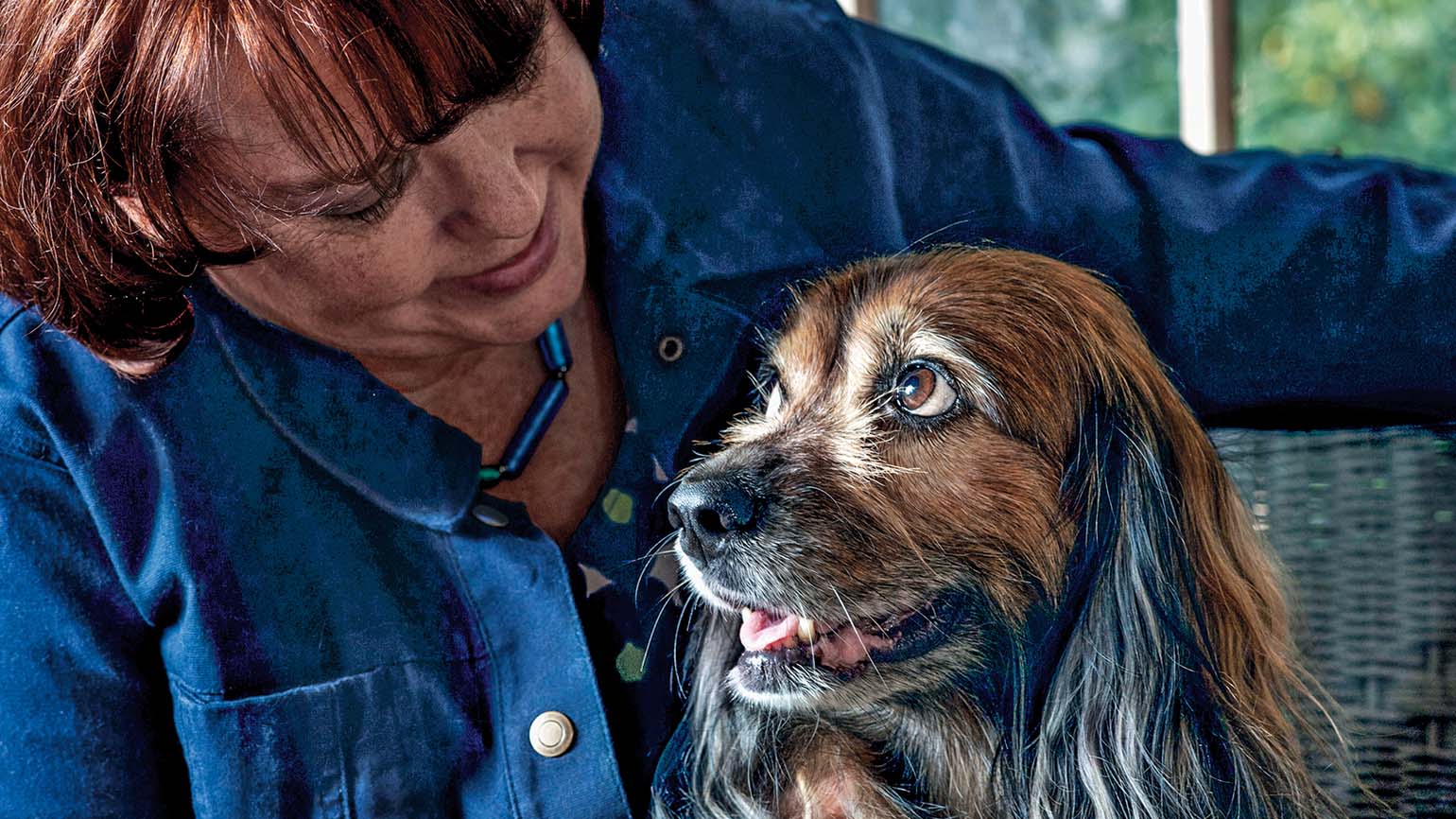
Sad brown eyes stared back at me from the wire cage in our living room. I poked my fingers through the holes, stroking the graying fur of my spaniel, Kelly. Eight weeks. That’s how long she’d be confined to this crate, if there was to be any chance of her recovering from the injury that left her unable to move her back legs. I looked up at the Christmas tree, still decorated from the holiday a few days before. We’d adopted Kelly from a rescue group on Christmas 12 years earlier, and it seemed especially cruel that she was failing at this time of year. The vet’s words replayed in my mind: “She might never walk again.”

“I’m praying for a miracle,” my daughter, Kate, said, huddled beside me on the floor, looking at Kelly. She and her husband, Aaron, were visiting us for the holidays.

“Kelly is 13,” I said. “Too old.”

“That doesn’t matter. You should pray for a miracle too.”

I knew it wasn’t going to happen. Don’t get me wrong, I believe in miracles, but we’d already received ours. Just a year earlier I’d prayed desperately as my husband, Mike, lay in the intensive care unit on a respirator. He’d been given only a 10 to 20 percent chance of survival. Yet he’d made it. How could I ask God for more?

Kelly’s ordeal started on Christmas Day. Mike and I were headed out for a family get-together. Before leaving, I hugged Kelly close and thanked God for our best gift ever. I tossed her a present from her stocking, a pink stuffed bunny. She snatched it in midair, then trotted over by the coffee table to happily unstuff it. A spry and active senior canine. Several hours later we were canine. back home. Kate had gotten there before us.

“Mom, I just let Kelly outside and she could barely get down the steps,” she told me. “Is she all right?”

“What? She was fine this morning,” I said.

I looked out the door at Kelly. She sat awkwardly in the snow. I called her name. She turned her head toward me but didn’t budge. I carried her inside and made her comfortable on a soft blanket. She probably just pulled a muscle while we were out, I thought.

The next morning, Mike and I took Kelly to the veterinarian. The vet knelt down beside her, listening with her stethoscope. She gently flexed Kelly’s legs and pressed along her back. “How did she injure herself?” she asked us.

“We’re not sure,” I said. “When we came home from Christmas brunch, we found her like this. Could it be a muscle strain?”

“No.” She helped Kelly to her feet. “Show me how she walks.”

I coaxed Kelly on the leash, but her back legs collapsed and she fell. My heart sank.

After a series of X-rays was taken, the vet came back.

“I’m afraid she’s ruptured several disks in her spine,” she said, pointing to one of the X-rays. “You can clearly see the bone fragments in the spinal fluid.”

“What does that mean?” I asked.

“You’re going to have to keep her as still as possible.”

We could do that. “For how long?”

“Eight weeks,” the vet answered. “For even a possibility of healing.”

“Possibility?”

“She might never walk again,” the vet said.

I’d followed the vet’s orders, keeping Kelly confined in a cage. No running in the yard or tromping with me through the neighborhood. No tagging at my heels around the house or pawing at my knee while I worked in my home office. No jumping up on the bed to snuggle beside Mike and me every night. It had been only a few days but there wasn’t any improvement. And now, watching her lower her head in the cage, I wondered if there ever would be.

“Come on, Mom, let’s let her sleep,” Kate said, standing up and helping me to my feet. I looked back at Kelly, my eyes filling. “Keep praying,” Kate reminded me.

Of course I’d been praying! But I was confused. How come God chose to heal some and not others? I’d cried out to God for healing before. For my dad when he’d suffered a heart attack at only 55. For our beloved golden retriever Brooks, after a cancer diagnosis. For friends bat-tling terminal illnesses. They hadn’t made it. There was no logic to miracles, not that I could comprehend. How was I to pin my faith on something so rare and tenuous?

Every day for a week, I watched Kelly in that crate. She lay so still. I set her food bowls next to her. When she had to go outside, I carried her, supporting her with a sling the way the vet showed me. I kept her on a short leash, so short she couldn’t even sniff around. “Sudden movement can cause worse damage,” the vet had said.

And every day after Kate went home, she called to check on Kelly—and me.

“I’m still praying for a miracle, Mom. You are too, right?”

Sweet Kate, trying to give me hope. But Kelly was as limp as that stuffed toy I’d given her for Christmas.

One night, near the end of the week, the house was quiet. I took Kelly out of her cage and carried her outside with the sling. She was old. She didn’t have the strength to beat this. She struggled to move her front legs. “No,” I said, circling her with my arms. “Be still.”

The words echoed in my heart: Be still. Be still. As if God were speaking to me. I closed my eyes and held Kelly close. Be still and know that I am God.

Was it Kelly who didn’t have the strength to beat this? Or was it me? I opened my eyes and looked up at the stars, at the heavens that stretched farther than I could see. The God who created a miracle of such vastness could surely heal a little injured dog.

Lord, Kelly is in bad shape. But I know you can heal her, if it is your will. I am trusting you to do what is best for her.

Kelly remained slumped in my embrace. Somehow, though, I felt an assurance that God was with me, no matter what happened, holding me as lovingly as I held her.

The next day, New Year’s Eve, was Kelly’s first follow-up appointment. The vet examined her. “Let her walk,” she said. “Let me see if there has been any change.” I supported Kelly with the sling. At first she drooped. Then she took a tentative step with her front paws. Then another. Her back legs followed. As she pulled ahead, the sling dropped. She was walking! Not just walking but trotting around the room. No sign of weakness. She scampered to the chair where Mike sat, to the door, then back to me.

”Should I stop her?” I asked.

“No,” the vet said. “I mean…I don’t know. I’ve never seen this happen so fast before.” She did a few more tests, gently manipulating Kelly’s legs. Then the vet looked up at us, her eyes soft. “I can’t explain this. The recovery was supposed to take eight weeks if it happened at all. It’s only been one week.”

I couldn’t wait to tell Kate…and not just about Kelly. I wanted to tell her that now I knew why she had kept urging me to pray: If we are still enough to let God in, we will see his miracles. We may not understand them, but we will see them everywhere, like the stars in the heavens.

How Nickels Became Divine Signs from Above

I was out on a walk,my eyes downcast, trying my eyes downcast, trying to sort through my thoughts. A few days ago, my husband, Russ, and I had lost our house of Russ, and I had lost our house of 28 years to California’s Camp Fire. We’d had to move into a hotel. It was all so hard to process.

An emergency phone call had alerted us early in the morning a few days prior. “Wildfire,” the robo-call repeated. “Evacuate immediately.” We sprang into action. Our next-door neighbor came over to check on us and helped Russ wrestle our four cats into carriers, while I tossed a few changes of clothes, blankets and the family photos hanging in the hall into a bag.

We dashed out to our car, following a caravan of our neighbors along winding back roads. We drove for hours until we were finally out of danger, but we couldn’t find a place to stay. That night, we had to sleep in the back seat of our Subaru, parked in a Walmart parking lot. The next morning, we drove three and a half hours to the nearest hotel that still had vacancy. Only later did we see photographs of the destruction. Our house had been consumed by the fire along with most of our neighborhood.

Our insurance was covering food and lodging until our claim went through and we found a new house. Still, I felt totally unmoored. Exhausted emotionally and physically. Grateful to be alive and safe, for sure, but lost. Not only had we lost our family home, our beloved fixer-upper into which we’d invested countless hours of sweat equity, but so much of our lives had disappeared overnight: family photo albums, my wedding dress, priceless memorabilia and heirlooms.

How are we going to rebuild after this? I thought, rounding a corner in the sidewalk on my walk back to the hotel. Is it even possible?

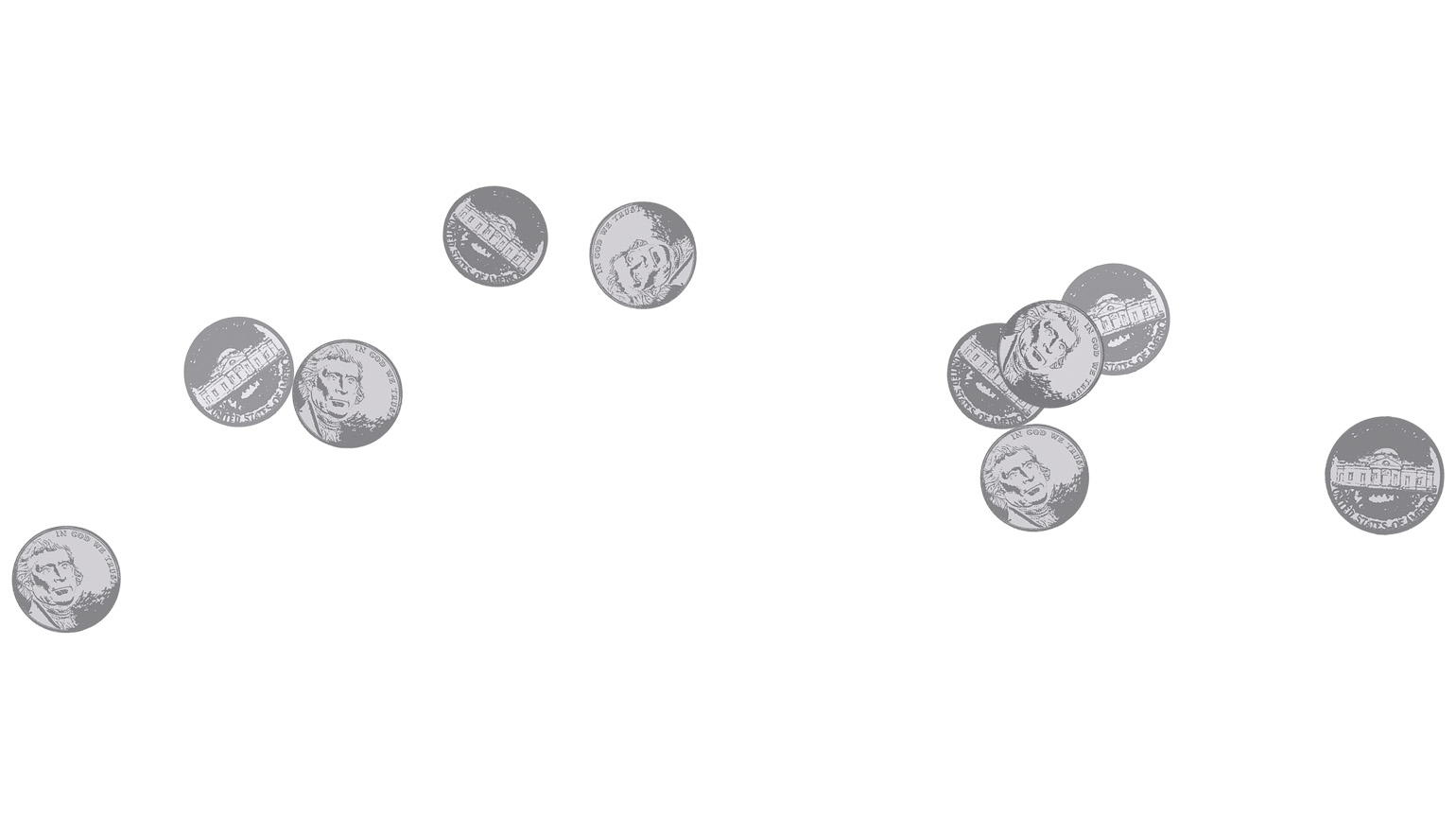
I noticed something up ahead. Something glimmering on the pavement. A pair of nickels, shining like precious jewels. I felt a flicker of joy and wonder, admiring the way the metal gleamed against the dull cement. They were just nickels, but they somehow felt special. I bent down and picked them up, slipping them into my pocket. Back in our room, I grabbed a paper coffee cup and set it on the desk, dropping the coins inside. If these were lucky coins, I could use all the luck I could get.

A few days later, I made a trip to the store to buy essentials. I wandered the aisles, not knowing what to buy first. The enormous task of replacing everything we’d lost overwhelmed me. I didn’t know if I could go through with the shopping trip. I felt panicky. I was about to run back to my car when I felt the urge to stop and turn my head to the right. I could hardly believe it—there on a shelf, right at eye level, was a nickel! Okay, maybe this is more than luck, I thought and put the nickel in my pocket. The panic went away and I finished shopping, feeling more buoyed.

I told myself the found nickels were probably just a coincidence. Then I found one next to my plate at a restaurant—on Thanksgiving, no less, when I was missing our house more than ever. A few weeks later, I found another in a grocery store while I was thinking about how much I missed our kitchen. It seemed that a nickel appeared whenever my spirits plummeted.

Our insurance claim was finally settled. We started to look for a new house right away, only to find that the market was incredibly tight. Hundreds of people and families in Northern California had lost their homes. All those lost homes reduced housing availability and drove up prices. The bidding was fierce. My daily routine became checking for new listings, calling real-estate agents, then traveling miles to tour homes. Sometimes the homes would be sold while we were on our way to see them. The time we spent living out of a hotel stretched from weeks into months.

And yet, whenever I reached my breaking point, I’d find another nickel. Nestled in the grass at the park. Peeking out from under the tire of my car in a parking lot. Once, my change for a quick lunch was given entirely in nickels. “I’m sorry,” the cashier said. “It’s all we have.”

It’s all I needed! I added the coins to my growing cache in the paper cup in the hotel room. It was practically full by now. When I didn’t feel as if I could spend another day browsing real estate listings, I’d glance at that cup and feel a surge of hope.

One day, I was sitting at the desk when my phone rang. It was a real-estate agent I’d been working with.

“I have a new listing,” she said. “In the area we discussed. Over an acre with a creek running behind it. Lots of mature trees—”

“When can we see it?”

A few hours later, Russ and I were following the agent down the driveway toward the house.

“What do you think?” she asked.

The house was obviously in need of repairs. A new coat of paint, for starters. But the trees surrounding the property were beautiful. They reminded me of the forested area we had lived in. The price was in our range. Had we finally found our new home at long last? Or was I just desperate to cast off hotel living?

I didn’t deliberate long. Because there, in the driveway, I spotted a flash of silver in the California sun. Two nickels, both heads up.

How Mysterious Ways Makes a Difference

Today’s guest blogger is Mysterious Ways assistant editor Daniel Kessel.

Since coming to work for Mysterious Ways magazine, I’ve picked up on Mysterious Moments everywhere. Sometimes one of these stories seems to speak directly to me. As it turns out, I’m not alone.

Check out two recent letters from subscribers who found Thomas Moore’s article, “In Search of an Inner Voice,” exactly when they needed it.

Caroline Stevenson of St. Georges, Manitoba, Canada, writes:

“This actually occurred to me this morning while reading your magazine.

It’d been a terrible year so far–my husband was in and out of the hospital, my daughter was struggling financially. Our hospital bills left us in no situation to help. To make matters worse, mice, squirrels and bugs had managed to find an entrance to our house!

Hoping to simplify our lives and prepare for a possible move, I emptied out all our closets and drawers, packed the clothing into plastic bags and put everything outside on the deck. I planned to go through each bag and keep only the essentials.

Instead, the bags stayed outside on the deck for weeks. I was too overwhelmed with all my life situations.

Today I woke up early, wondering what I should do. While having a quiet cup of coffee, I began to read Mysterious Ways. I came to one article called ‘An Inner Voice,’ by Thomas Moore. Oh Lord, I prayed, If only I could hear that inner voice. Then I began to read his list of how-to’s. The very first one was, ‘Clear the deck.’

The remaining suggestions were equally meaningful to our family. Maybe this is going to be a better year after all!”

From Hammond, Indiana, David DeLoera shares:

“I wanted to write some letters to friends I’ve corresponded with for the past 20 years. But my inner subconscious inkwell had run dry. There simply wasn’t a single inspirational thought or word that I could share. Their letters lay in a pile, unanswered.

Then the mail came. I tossed out most of the catalogs and advertising–then I saw a small magazine I had never seen before: Mysterious Ways–more than coincidence. ‘Yeah right,’ I said skeptically.

I opened the sample issue and turned to an article called ‘An Inner Voice,’ by Thomas Moore in Petersborough, New Hampshire. Petersborough? I gasped in astonishment. A flood of memories flashed through my mind’s eye.

September 1955, I was 15 years old and left home for the first time. I had a train ticket for the overnight trip to Petersborough, New Hampshire, where I was starting school at Saint Joseph’s Carmelite Seminary.

When the train stopped, me and another kid got off. His name was Foster, from Milwaukee. The van came to take us to the school, and Foster sat up front with the priest. Immediately they began conversing in Latin!

What a wonderful experience it was, the beauty of New Hampshire in the autumn. The chapel at Saint Joseph’s. Our teachers and studies and classmates.

Years later, someone sent me a copy of American Scholar. I found an article about a prominent Latin scholar at the Vatican by the name of Foster. My classmate! In the article he even described how it all began for him: ‘I got off the train from Milwaukee…’

Now I can write those letters–I have the inspiration right here in my hands. But first, a letter to you, Mysterious Ways. More than coincidence–right!”

How has one of our stories impacted you? Send us your letters! We love to hear how a story made a difference.

How Mysterious Tracks Gave Her Hope in a Snowstorm

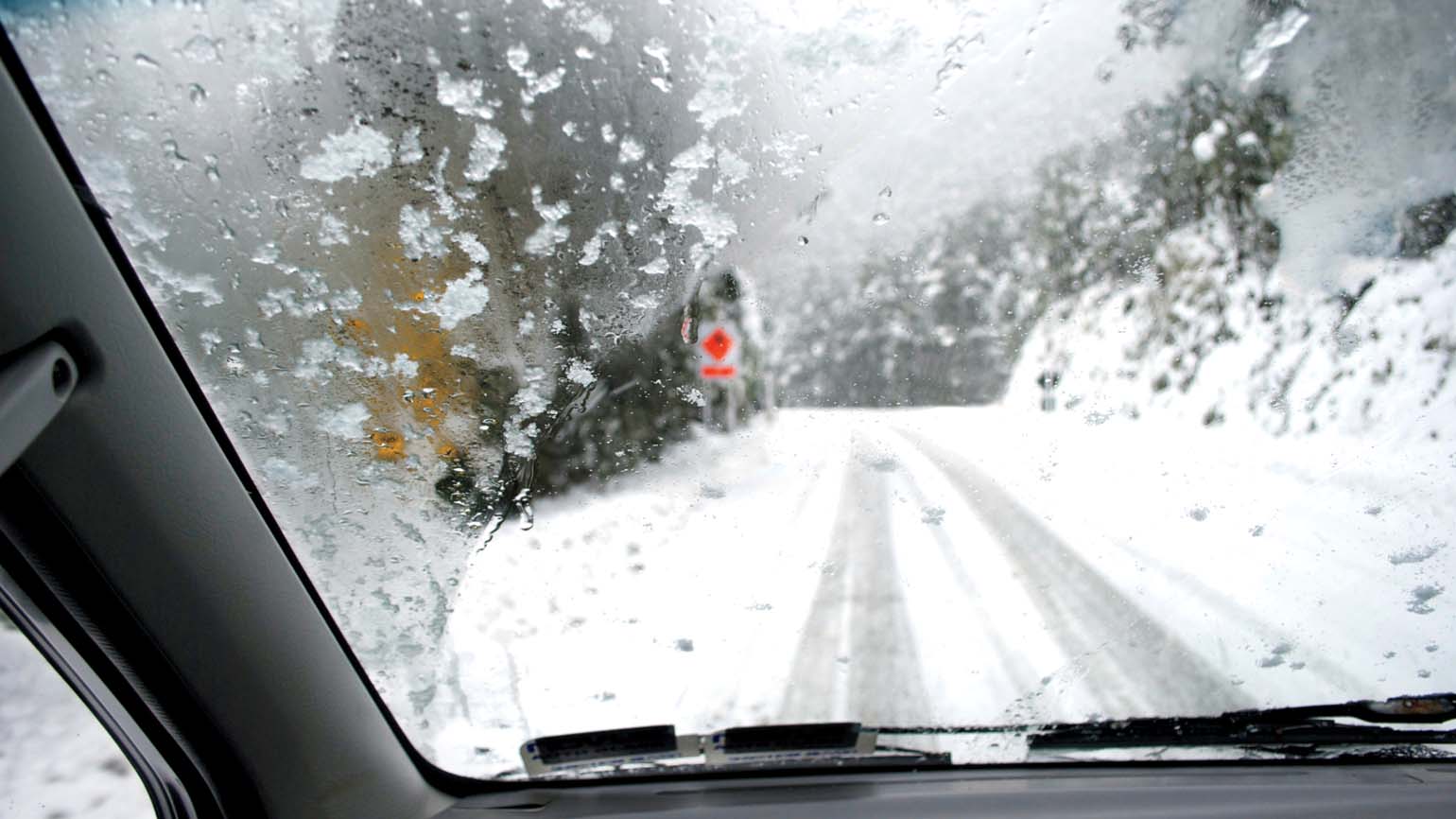
Thick snowflakes swirled around my windshield. Everything around me was blanketed in white. The light was fading as the sun set over the rocky peaks.

I was driving up a mountain pass on what was supposed to be a four-hour trip from Red River, New Mexico, to Durango, Colorado. I inched along on a winding, unfamiliar road in a snowstorm.

I was on my way to meet my boyfriend, who was visiting his family in Durango. He’d invited me to join them for the weekend. I was staying at a friend’s house in Red River. The fastest way to Durango from Red River would take me through this mountain road, but I was so excited about the weekend ahead that the route didn’t faze me. I left without checking the weather.

Thirty minutes into my drive, the snow had started. Gentle flurries at first. I thought about turning around. But it hardly looked threatening, so I continued.

Now I regretted that decision. But it was too late. The road was too narrow and icy for me to turn around. To my right was a sheer cliff face, and to the left, a sharp drop-off descending hundreds of feet. The snow was bad, getting worse. The only way out was forward, higher and higher into the mountains. The last bit of sunlight disappeared, and I couldn’t see anything beyond the few feet illuminated by my headlights. I panicked.

My cell phone had lost service as soon as I’d entered the mountain pass and remained at zero bars. I couldn’t call for help. I had some bottled water in the trunk. The clothes in my luggage. Maybe I could find a place to pull over and bundle up until morning. Would that be enough to keep me warm all night? How long would it take for someone to find me? If anyone ever would…

I gripped the wheel tighter. “Please, God, help me,” I whispered.

Then I noticed something. A pair of lights seemed to glow dimly through the snowstorm. I blinked hard, then peered ahead. There they were. Taillights! There was a car in front of me! At least someone was here with me. Focus on the lights, I told myself, not your fear.

I followed my guide for at least another half hour as we continued to ascend the mountain. Finally, I felt the road start to level out and then gradually descend. I lost sight of the taillights ahead of me. But the panic didn’t return. I could see the car’s tire tracks in my headlights. All I had to do was follow the tracks the rest of the way down the mountain. I drove slowly, keeping my wheels within the tracks every inch of the way. Soon I could see the lights of a town twinkling in the distance. The snow started to cover the tracks I was following. But both of us had made it.

At the base of the mountain, I spotted taillights. I wondered if it was my guide. If so, I wanted to thank him. But as I got closer, I saw it wasn’t a car. It was a snowplow. I pulled up beside it and rolled down my window. The driver of the plow did the same.

“Excuse me,” I said. “Did you see another car come down this road, ahead of me?”

The driver looked at me as if I was insane. “Lady,” he said, “I don’t know what you’re talking about. I’ve been working here at the base of the mountain for the past two or three hours. No one has gone up or come down that mountain but you.”

I didn’t correct him, but I knew differently. I hadn’t been alone on that mountain road that night.

How Mothers Can Comfort Us From Beyond

Mother’s Day—it is often a day of reunion, joy, and family connection. However, for some, it can be a difficult occasion to get through. Whether we’ve lost our mother, are not in contact with her, or perhaps, never even knew her, sometimes we get a sign that lets us know we are still connected. These seven profound stories highlighting the mother-child bond can inspire all of us, especially those missing their mothers today.

  1. One Last Surprise

Mama passed away in December 1997 at age 93. Two months later, on a cold gray February morning, four of us sisters gathered at our childhood home in Clarkesville, Georgia, to go through her things. It took hours to divide her treasures into orderly batches. We piled them on the beds, the dressers, even the window ledges. But we still hadn’t tackled Grandfather’s big black trunk. It was more than a hundred years old and sat at the very back of the closet.

The trunk’s hinges groaned as we raised the heavy lid. We pulled out old coats, prom dresses, baby sweaters, all things we remembered. An old, yellowed sheet was spread across the bottom of the trunk. Was there something beneath it? I pulled back the sheet. We all gasped.

See the last surprise Brenda’s mother had for her and her sisters.

  1. The Woman in His Dreams

The dreams were vivid, he said, like sensory overload. They always took place amid lush, green hills. A soothing tune would drift through the dream, like a movie soundtrack. And, there before him, Charles would see a woman in a chiffon gown. Her smile made her glow. With her arms outstretched, she’d call for him: “Eddy!” A nickname only a few people knew. “The woman had curly brown hair and deep blue eyes,” Charles said. “I felt like I knew her voice too.”

Charles would go toward the woman. But he always woke up before they reached each other. By the time he was 11 or 12, the dreams stopped. Whenever life got hard, though, Charles would think back to the dream. And the woman in the chiffon gown, whose feet never touched the ground. “I always wondered who she was,” Charles said.

Learn why the woman in Charles’s dreams was not so unfamiliar after all.

  1. A Tribute

It’s been three years, Mom, and your old neighbors still don’t understand your garden in Greenville: lush southern magnolia; evergreen gardenia; dirt brimming with native pollinators, snakes and bees. You made it an Eden. I’ve done my best to care for the plants and animals you left behind, but folks here think it’s overgrown, too wild. Then again, I’ve always felt safe in wild places…

Your family—Swedish immigrants who’d learned to coax wheat stalks from the earth—learned everything they could about South Carolina, but even to them, you were peculiar. Maybe because you always believed that nature didn’t just serve us, but was part of us.

Robert shares the important lessons he learned from his nature-loving mother.

  1. A Final Visit

Through years of ups and downs, all the insults and erratic behavior, I’d never been able to cut Mom off completely. I felt bad for her. I prayed for her. Asked God to heal her. But I’d finally found my breaking point… I’d already given her too many chances. I knew that she desperately needed help, but she needed to be the one to want to change. I couldn’t fix her. I needed to take care of my own family first.

I hadn’t communicated with Mom since that day. At least not until the experience I’d had the night before. I couldn’t shake the feeling that what I’d seen and felt was more than a dream.

See how Jackie’s vivid dream brought her healing.

  1. The Ceramic Bunny

I’d lost my mom, Anita, to ALS when I was 24 years old. Her diagnosis came out of nowhere. Her decline was rapid and brutal. She went from fine one day to slurring her words the next. Coughing, choking, muscle weakness and weight loss quickly followed. I’d watched my strong, selfless mother—a pillar of our church community—wither away. Now I feared some illness would take me away from my own children, just as ALS had taken her from me.

On the drive home, a sign caught my eye: GARAGE SALE TODAY. On a Thursday? I love garage sales and flea markets. You never know what you’ll find.

Learn how a garage sale find turned out to hold the very message Daryl needed.

  1. An Unexpected Gift

Mother lived with metastatic bone cancer for a little more than a year. At the end of her life, she was no longer conscious. Her wish was to be discharged to my cabin for hospice care. The night before, I moved all the furniture and cleaned the hardwood floor to prepare for the delivery of her medical equipment. I was honored to care for Mother in her last days but saddened knowing I’d soon lose her. As I cleaned, I prayed for the strength I knew I’d need to usher her from this life to the next.

The next morning, two burly guys lifted the sofa to move it, making room for the hospital bed. “What do we do with these, ma’am?” one asked. I looked over.

Read about Roberta’s final gift from her dying mother.