Embrace God's truth with our new book, The Lies that Bind

How a Heartbreaking Story Inspired Hope

On the surface, it was a simple, miraculous story that arrived in my mailbox this time last year. A little boy had fallen from a second floor window onto the concrete driveway below; his parents prayed by his hospital bed, told by doctors to prepare for the worst. Then the boy rose, mysteriously unbroken, despite x-rays taken moments earlier which had indicated otherwise. It was a miracle that happened decades ago, but one that Wes, the boy’s father, would never forget. Which is why he sent it to Mysterious Ways.

There’s a lot of behind-the-scenes work that goes into preparing every story for publication. The first thing we do is call up the authors and get the information they may have left out—those little details that provide context and help the reader better understand what the author experienced. I called Wes, and after we spoke for a while, I asked if I could speak with his son, Paul. The other editors and I wanted to include his perspective on what had happened to him when he was just a boy, hoping it could add a different point-of-view to the narrative.

Community Newsletter

Get More Inspiration Delivered to Your Inbox


That wasn’t possible, Wes said. I could hear the pain in his voice; he was reluctant to go on. Finally, he revealed what was missing from the story he sent us. He hadn’t spoken to Paul in years. His son struggled with alcoholism and had been in and out of Alcoholics Anonymous. Wes now helped raise Paul’s young daughter. He wasn’t even sure where his son was.

Read More: A Father’s Prayer for His Alcoholic Son

Yet, with all of his son’s struggles, Wes still held out hope that Paul could find healing. He’d seen it once before, against all odds, in that hospital room.

That became the story we told in Mysterious Ways. And it was the story that so deeply moved one of our readers, 77-year-old Sara Thomas of Alpharetta, Georgia.

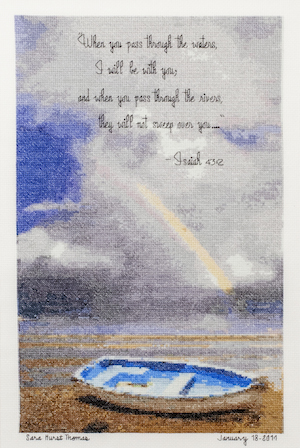
Sara lives in an assisted living facility. To pass the time, she’s an avid scrapbooker and cross-stitcher—and a reader of Mysterious Ways. Sara had been “drowning in negativity” when she picked up the June/July 2016 issue. Then she read Wes’s story. His experience and outlook resonated with her.

Turning the page, she saw the image we’d chosen for our “Comfort & Reassurance” section, a boat on a beach beneath a stormy sky, with a rainbow in the background. Inspiration struck—she was determined to do a cross-stitch that combined Wes’s favorite Bible verse, Isaiah 43:2, and the photo. She called to ask permission. “The storm clouds reminded me that into each life some rain must fall,” Sara said. The grains of sand made her think of the sands of time. “Like the patch of bright blue, better days are right behind the bad ones.”

Four and half months—and 63,000 stitches later—Sara sent us her masterpiece, which we forwarded to Wes.

“I read the letter from Sara and decided to give her a call and we spoke for awhile on the phone,” Wes wrote to us. “Isn’t it amazing how God works? He inspires a lady in Georgia, after reading my story, to create a cross-stitch just for me.” He hopes his story continues to touch others, including his son.

“Perhaps someone who subscribes to Mysterious Ways may read the story, show it to Paul—and who knows from that point, what God would choose to do in his life, once again.”

It’s not the first time our spirits have been lifted by the way our readers have responded to a story in our pages. We love to hear from you.

What story has inspired you to take action? Let us know.

How a Dream Reunited Two Cousins After Decades Apart

Is that you, Lynn? I blinked awake. I was lying in bed in my Texas home. Another dream. For months, I’d been plagued by vivid dreams—wood splitting, things coming apart, visions of my parents and now my cousin Lynn. She’d appeared to me in a flash, like a cameo in a TV sitcom. A beautiful teenager, how she looked when I last saw her. She smiled at me. Then I woke up.

Things had been hard since my husband left, and I knew some dreams were God’s way of helping me heal. But the dream about Lynn was puzzling. I hadn’t seen her in decades, and we’d never been particularly close. Her parents divorced when we were both in grade school. She’d moved from Ohio, where I lived, to California with her mother. As teens, we saw each other only at family gatherings.

Our lives had gone in different directions. I went off to college. Lynn got married a week after graduating high school. She was a mother of two before I even walked down the aisle. For years, everything I knew about my cousin had come from my mother and grandmother.

One morning, in my late twenties, I was watching my daughters play when the phone rang. It was Mom.

“It’s Lynn,” she said. “She’s been in a car accident. She’s in the hospital. They think she’ll live, but she’ll probably never walk again.”

My breath caught in my throat. I was living in Ohio with my husband and children. Our lives were peaceful. How awful that Lynn’s life had been upended in an instant!

That was the last major update I got about Lynn. Life got busy. I raised my children, got a job teaching, earned a master’s degree, wrote a book. Decades flew by. Our family relocated, eventually landing in Texas. Our daughters grew up, moved out and started families of their own. I was blessed with six grandchildren. I was ready to enjoy my golden years with my husband.

Then came a shock. My husband filed for divorce. Worse, after we’d signed the papers, I learned he’d been seeing somebody else.

I started having those vivid dreams as soon as he left. Though I couldn’t understand why, I felt like this vision of Lynn was calling me to reconnect with her. But where to start? I wasn’t sure what last name she was using now or where she lived. My parents and grandmother—my only connections to Lynn and her family—had long since passed.

Later that week, while rearranging some books in the den, I stumbled across an old school directory. I didn’t realize I still had this.

Lynn’s brother had gone to the same high school I did. When their parents got divorced and Lynn moved to California with their mom, he lived in Ohio with their dad. Was it possible he still lived at the address listed? I wrote him a letter. He called back with Lynn’s e-mail.

Dear Lynn, I typed. It’s been years, but I hope you’re doing well. I’ve been thinking a lot about you lately.

Lynn e-mailed me back. Hi Kathy, it’s great to hear from you. Mom and I are up in Michigan.…

It turned out that Lynn’s husband had divorced her after the accident, taking the children with him. She had lost the use of her legs and had minimal control over her arms. But she was so positive in the face of such hardship. She asked what I’d been up to, and I told her about my recent divorce.

Lynn and I e-mailed back and forth, filling each other in on the details of our lives. Eventually we talked on the phone.

“I work from home for an office that handles disability claims,” she said. “And thanks to the internet, I have friends from around the world.”

“Wow, that’s amazing, Lynn!”

My cousin was way ahead of me in the healing department. Her life hadn’t ended after her accident and divorce. She’d gone on to earn a master’s degree, regain custody of her children and make new friends. Was it possible that I too had something to look forward to?

I flew to Michigan to visit Lynn and her mother. Lynn and my aunt were full of stories about my parents when they were young. It was wonderful being around people who’d known me before I’d met my ex-husband and started my adult life. I felt so much less alone in the world.

I’m so happy I paid attention to that dream. Lynn and I remained good friends until her death a few years later. She was a remarkable woman. If I ever find myself discouraged, I picture Lynn and her grace and strength. And that vision gives me hope.

Did you enjoy this story? Subscribe to Mysterious Ways magazine.

How a Divine Voice Offered Guidance and Strength

“Mom, can we go down to the beach now?”

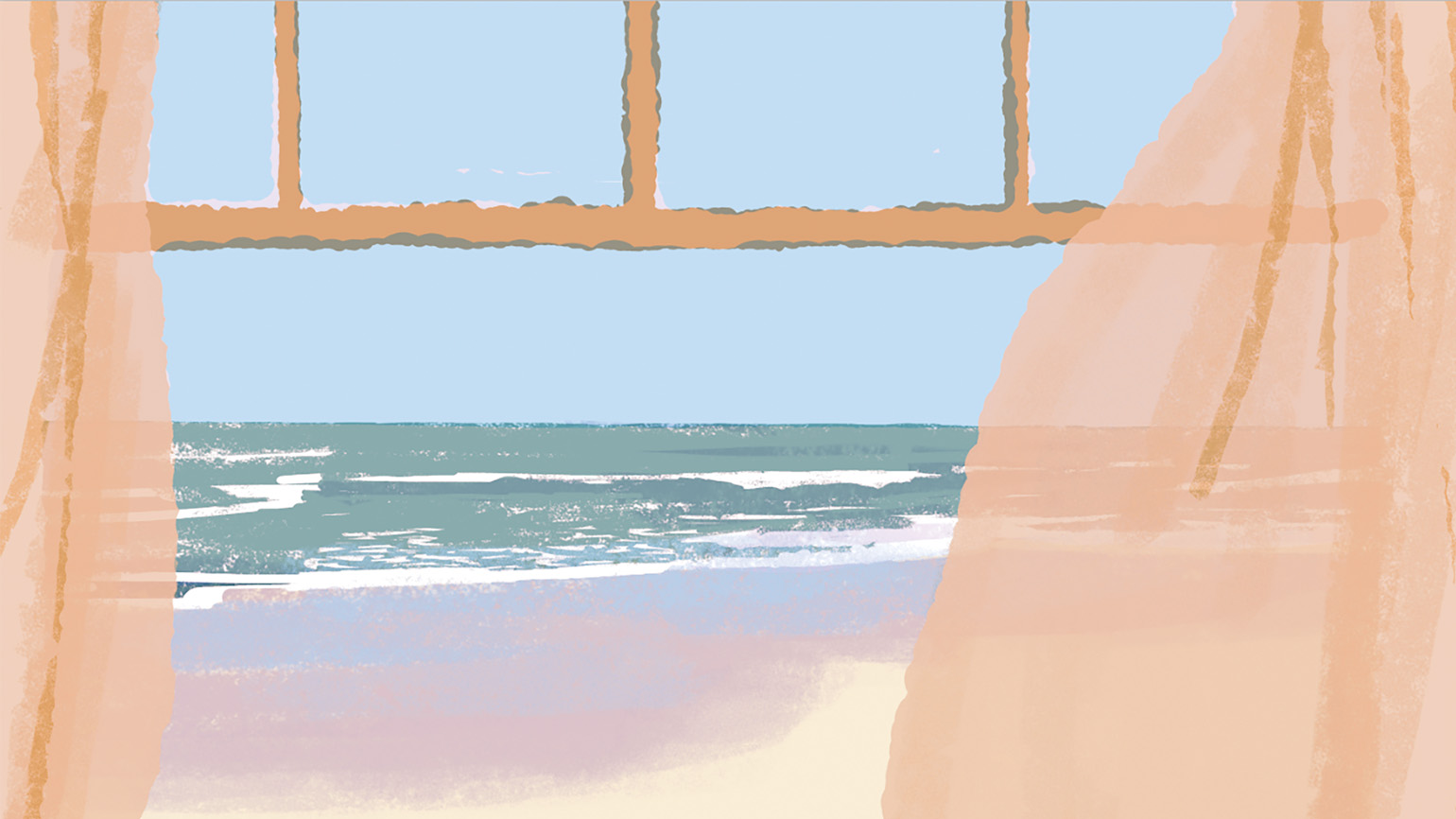
My 13-year-old son, Jesse, was holding his beach supplies. His 10-year-old twin sisters, Elizabeth and Emily, stood next to him, their eyes expectant. We were staying at a beach house that we vacationed at every summer. I didn’t feel up to going down to the beach. The weather was nice, and the kids weren’t going to go in the water. Jesse was old enough to chaperone. I decided I’d stay behind and sit by the window overlooking the shore to watch them.

“Stick together and be safe,” I told them. Smiling, they ran for the door.

With everyone gone, the house was quiet. I took a seat by the open window and watched the waves rolling up onto the beach and my children walking along the shore.

I tried to find some peace in the moment, to forget my troubles, but it was difficult. I was a single parent, recently divorced. I was overwhelmed with work, the kids, bills and errands. I felt like I was stretched thin, constantly playing catch-up and not living up to my full potential as a mom.

A light breeze made the curtains billow inward softly. The kids sat in the sand, soaking up the warm rays. God, am I strong enough to handle all of this? I wondered.

The sun washed over my face. I closed my eyes for what felt like a split second. Then I heard something. A voice, clear and loud.

“Where are your children?”

I sat right up in my chair, my heart pounding. The voice was audible, but it wasn’t male or female. Its tone was urgent, demanding.

“Where are your children?” the voice repeated.

I jumped up and looked out the window. I couldn’t see them, but that didn’t mean they were in any danger. They were probably just playing out of view behind the rocks. Still, I felt as if I had to go to the beach immediately.

I ran out of the house, down to the sand and over to the rocks, which were at the base of a cliff. I searched the area all over. No sign of them, not even their beach supplies.

Perhaps we’d just missed each other. It was possible they’d taken a different route back to the beach house, down a footpath between the houses that was out of view of the window where I’d been sitting. I turned to head back home when something caught my eye. A little boy, no more than eight years old, came out from behind the rocks, his face filled with fear.

“Please, can you help my friend?” he shouted.

The voice had told me I needed to find my kids, but how could I ignore this distressed little boy in front of me? I told him to lead the way. He took me back into the rocky area, closer to the cliff , and pointed up. I gasped in horror. Another little boy was clinging to the cliff face, at least 20 feet off the ground. He was stuck.

“Don’t move!” I called to him. I climbed up some of the rocks at the base of the cliff and got a little closer to him. His little arms were shaking under the strain of holding himself up. I positioned myself under him and held my arms out.

“Let go,” I shouted. “I’ll catch you.” The boy shook his head, his eyes closed. He was terrified. I wasn’t even certain I could do this. Would I be able to catch him and keep my footing without injuring us both? I didn’t have any other choice.

The boy’s foot slipped. His grasp on the cliff broke. He was falling. I braced for impact. Somehow my footing remained stable as he fell right into my arms. He was safe and completely unharmed, and so was I.

I dropped the two boys off at their beach house. I watched as they both ran inside, hopefully with a lesson learned about climbing in dangerous areas. With those kids safe, my mind immediately returned to my own—and the strange voice that had called out to me to find them. I was confused about what it all meant. Had it actually been real? Were my children okay? I hurried home to see if they’d returned.

I burst in the front door of the beach house and was welcomed by the familiar sound of my kids laughing in the living room. They all jumped up to greet me.

“There you are!” Jesse teased like a worried parent. “We took the foot-path back home, and you were gone. Where in the world have you been?”

I laughed and pulled him into a hug. My children had been safe all along, but that voice knew exactly where I needed to be and how to get me there fast. God reminded me that I was a good mom by trusting me to save a child in danger and, in doing so, showed me that I was stronger than I’d thought.

How a Divine Calling Brings Life Purpose

Have you ever felt called to a purpose? I remember the exact moment I knew I was meant to be a writer. I was in my fifth-grade computer lab. A friend and I had finished our assignment early. “Let’s write a story,” my friend said. It was as if a light had switched on. Not over my head. In my heart. I just knew this was what I was meant to do with my life. For years, I sensed there was something special about this moment. It was an inflection point. Recently I wondered—could what I experienced have been the tug of a divine calling?

Examples abound in the Bible. Time and again, God calls upon people to take action. As when God called on Jonah to travel to Nineveh.

Or how David was destined to become king. Or Esther being called to save the Jewish people. We can even find divine challenges in our history books. Florence Nightingale felt called by God to become a nurse. Sojourner Truth claimed a holy vision inspired her fight for abolition and women’s rights. These callings are more than messages from God. They are profound moments in which God shows us what we were put on this earth to do.

But are divine callings reserved for people destined for greatness—biblical figures, historical movers and shakers, visionaries and prophets—or are they something that normal people, people like me, can experience? Experts on the topic insist that divine callings are accessible to all of us. Gregg Levoy, author of Callings: Finding and Following an Authentic Life, says the first thing we need to understand is the difference between a calling and a job. “We often mix up these ideas,” he says. Though our job can be our calling—and is for many people—a calling can also be different. In his book, Levoy shares the story of a man who runs a coffee company but whose calling is abstract painting. The man continues his job and follows his calling simultaneously. For most of us, a career is a vital part of our life, but figuring out our divine calling is often different. “The big question we should be asking ourselves isn’t ‘What should I do?’” Levoy says. “We should be asking, ‘Who am I?’”

A divine calling can be experienced in many ways. It can come in the form of a sign, a dream, a vision, a message, a feeling or a combination of these things. The biggest indicator that you’ve experienced a divine calling is that it makes itself known. It is insistent, the way only God can be insistent, and will keep coming up if we ignore it. This is something that Levoy discovered in hundreds of interviews with people who had found their callings. “Callings will get our attention through different channels,” Levoy says. “They’ll pop up in our day-to-day, in a book we’re reading, in our conversations, even in our dreams. True callings won’t be ignored.” More than anything, though, Levoy’s interview subjects reported a feeling of certainty, of knowing. Their calling was something that felt right to them on a deep and intrinsic level.

Just as I felt that day in the computer lab. I couldn’t explain it. It was like an otherworldly awareness. This was also the case for Stephanie Wellington, a physician I spoke to, who works in the neonatal intensive care unit at North Central Bronx Hospital in New York, caring for premature and severely ill newborns. “It can be a hard place to work,” Dr. Wellington says, “but I simply couldn’t imagine being anything else. I just remembered a knowing.” In other words, her calling was a fact of her life.

However, just because a divine calling feels right doesn’t mean that heeding it comes without struggle. In fact, Levoy says, doubt and even fear are a natural part of the process. “If a call feels safe and easy, it might not be true,” Levoy says. “If it scares you, you might be getting close to something vital.” True callings can be overwhelming, inconvenient and difficult. They pull us out of our comfort zones and demand sacrifices. Levoy says a calling isn’t meant to lead you to your most comfortable and secure life. The process is meant to help you discover the deepest sense of who you are. “In following a calling, you must hold the tension between doubt and faith at the same time,” Levoy says. “Callings ask us to leave the familiar, but faith gives us the courage to do this.”

This balance between doubt and faith is a dynamic Dr. Wellington has experienced. Working in a hospital’s NICU can be draining, even to the point of emotional and spiritual exhaustion. Taking time to pray and meditate helps. “I will spend time to pray, to ask if this is what I’m supposed to be doing,” she says. “And I’m able to tap back into that energy, that higher feeling of doing what I’m supposed to do.”

Spiritually checking in also helped me. Becoming a writer required me to quit a stable job, move to a new state and start my life over. There were many lonely nights I spent in a new city, lying in bed in a tiny apartment, wondering if I was really doing the right thing. In those moments, when things were hard and I wanted nothing more than to call it quits, I’d reflect on that day in fifth grade. That intense feeling of knowing. It still resonated with me. I knew I had to continue.

Faith in God’s plan is especially important when the path to achieving a divine calling is long and indirect. Or when the calling doesn’t seem to make sense in the moment. Take Adam Peacocke, a preacher from Santa Rosa, California. After 15 years of preaching to the same congregation, Adam sensed he was being called away from the pulpit. “I felt what I can only call a burning in my heart,” he says. “And then God gave me a succinct and direct message. ‘Adam, I have a change for you.’” It seemed crazy. How could he better serve God than preaching? The call was so strong, though, he could not ignore it. “I knew God was asking me to take a risk,” Adam says. “And over the years, I’ve tried to learn to discern God’s will.” He resigned and turned his energies toward founding a nonprofit intended to facilitate communication and connection between all the churches in Sonoma County. It was hard work, and many of the pastors involved weren’t sure it could be sustainable; Adam had doubts too. Then the Sonoma County wildfires broke out. Using his resources and contacts, Adam brought together local pastors. Out of this grew a massive project to help those who had been displaced. Because of the work Adam had done before the wildfires, the community was prepared. “The initial journey felt messy, but I understand what God was saying to me now,” he says.

The fullness of God’s plan took a while to unfold for another pastor I spoke with, Pastor Dion Todd of Conway, South Carolina. During his twenties, Dion felt called to a life in ministry. After he completed Bible college and became ordained, however, he couldn’t secure a job in the field. Disappointed, he went into computers. Not exactly a calling. Still, he enjoyed it. Seventeen years in, his computer business went bust. His desire to work in ministry had never gone away; it just hadn’t felt like the right time to pursue it—until that moment, as if God were tapping him on the shoulder. He began the job search and found a posting for a creative arts pastor right in his town. They needed someone ordained who also had experience with computers. Dion now runs an online ministry through the church that connects with people who are homebound or have disabilities. “There’s no way I could do what we do today without the time I spent working in technology,” Dion says.

Having the courage and the faith to say yes to a divine calling doesn’t just help us—it helps the people around us as well. Dion’s calling brought him to a place where he could spiritually connect people through technology. Adam’s calling helped him aid his community during and after a devastating fire. Dr. Wellington’s calling has led her to care for many patients and their families. And my calling led me here, to tell their stories.

“At the end of the day, all callings really are service calls,” Levoy says. “They will expand your whole frame of reference in the world.” That’s because heeding a divine calling brings us to our life’s purpose and shows us that we are all a part of a bigger plan.

How a Devotional Brought Comfort after a Sudden Death

We’re working on our fourth issue of Mysterious Ways right now, and we’ve been encouraged by the great feedback we’ve received from our readers. It’s an awesome feeling to know our work is making a difference in people’s lives.

Planning an issue is tough. What stories do we choose? We make our best judgments based on our desire to provide variety and give our readers stories that speak to them. It’s that same way with Guideposts, Angels on Earth and our books, like Daily Guideposts and our new “Spirit Lifters” e-books.

An email I read this week from Maryanne Gaffney of Flanders, New Jersey, reminds me that while our Guideposts staff focuses on crafting the perfect issue, the perfect book, the perfect video to inspire our readers, there is always someone looking over our shoulder, gently guiding us—and it’s not just our editor-in-chief. Sometimes, what we publish is truly part of a greater plan:

“Every morning I read aloud to my husband the entry for the day from Daily Guideposts,” Maryanne wrote us. “But on Saturday, August 11, 2012, the morning didn’t progress as usual… My brother Billy, only 54, had a heart attack and there was nothing the paramedics and hospital staff could do. We lost him.

“Billy had been going through some tough years, tough times. We all hoped that things would start looking up for him. Instead, we all gathered at the hospital to say goodbye to our dear brother, father, son, uncle. Why?

“After a very long, emotional day we returned home. I asked my husband to please read the day’s Daily Guideposts entry to me before we headed to bed, if I could even sleep. He opened to the page and his eyes widened. The Bible verse for the day was: ‘This brother of yours was dead and is alive again; he was lost and is found.’ (Luke 15:32)

“I guess the good Lord took Billy into his arms and has bigger plans for him than we can imagine. That brought me such comfort, and I was even able to sleep a bit that night knowing he is safe and sound with no more worries.

“We have to keep loving even though our hearts are broken. We have to keep believing even though we don’t understand why these things happen. Billy, we love you, we miss you… until we meet again.”

Maryanne’s email isn’t the only time we’ve heard about a story that was read at just the right moment. I’m currently editing an article for our February Guideposts by Nancy Seymour, wife of the late Notre Dame college football star Jim Seymour. She also found a source of comfort after her husband’s death—inspired by a story she read in Guideposts.

Has a story in Mysterious Ways—or one of our other publications—seemed to speak directly to you just at the perfect moment? We’d love to hear about it. Share your experience with us.

How a Church Cat Brought Happiness and Comfort

It was noon on a Tuesday, and I was in church for the first time in a decade. A friend of mine was sick with cancer, and I wanted to pray for him. But as a lapsed Catholic, I felt self-conscious and out of place praying in the midst of other parishioners. So I’d waited until off-hours, when the church was bound to be empty. Now I was sitting alone in a pew, the rays of sunlight streaming through the stained glass windows. I bowed my head, closed my eyes and made the sign of the cross.

God, I know it’s been a while, God, but my friend is sick. If you could help him…

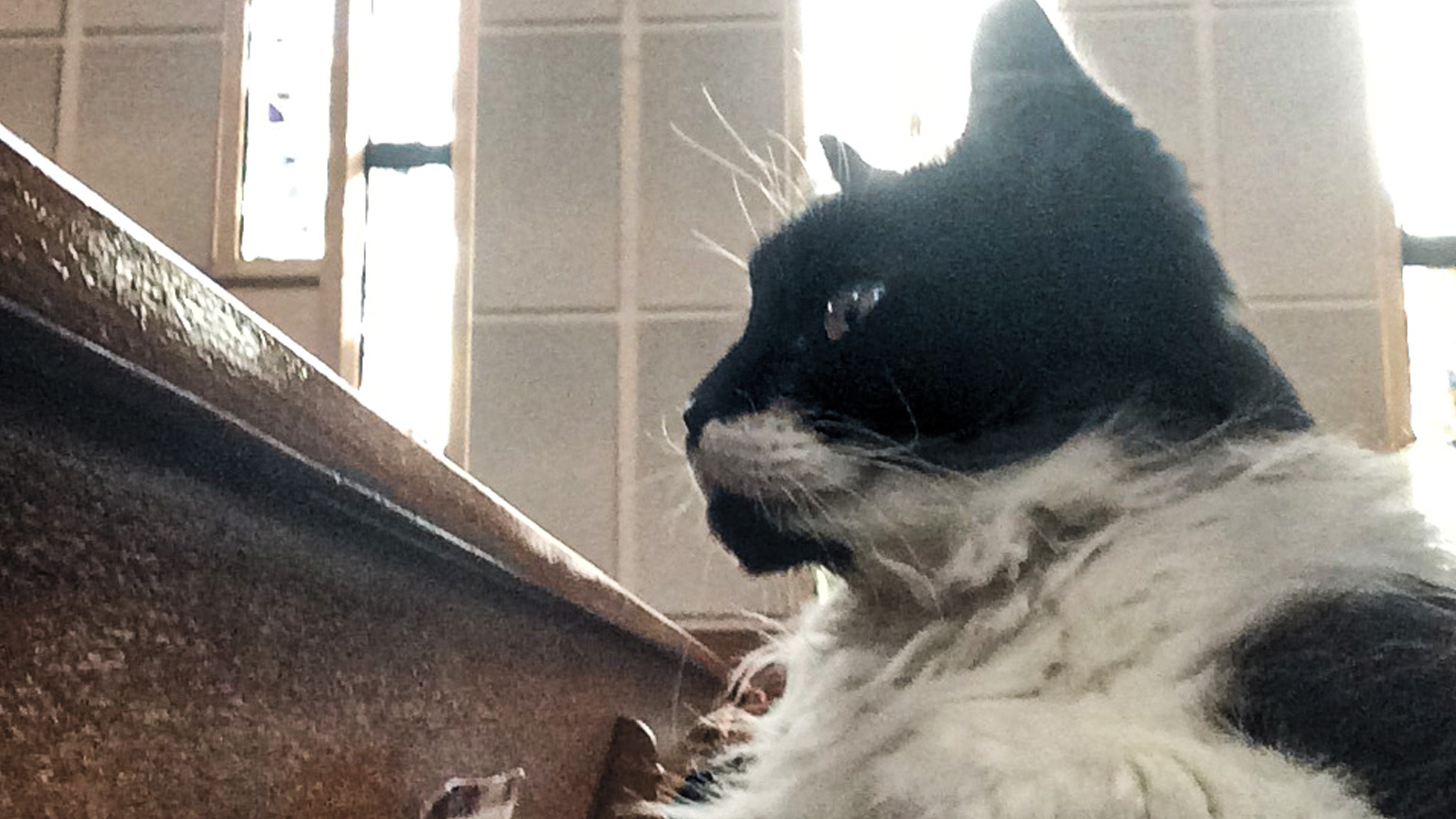
I felt something brush against my ankle. My eyes flew open. I looked down to see a flash of black and white disappear under the pew in front of me. A cat! She popped up several pews ahead of me and sprawled out in the main aisle, a patch of sunlight illuminating her fluffy fur.

Intrigued, I walked up to the cat and reached out my hand. She looked up at me with large green eyes and leaned into my touch, purring. She let me pet her for a few minutes. Then, as suddenly as she’d appeared, she got up and sauntered away, disappearing into the church’s shadows.

On my way out, I stopped by the rectory’s office. “There was a cat,” I said. “I don’t know how she got in…”

“Oh, that’s just Gracie,” said the secretary. “She belongs to the church. Helps keep mice out of the food pantry. She’s been here eight years now.”

I loved animals, but I lived in a cramped studio apartment that didn’t allow pets. So the next morning, I got up early and came back to pray, eager to visit with Gracie again. I sat down, and she hopped up on the pew beside me, purring. She made me feel at ease. As if I belonged here.

Over the next few months, Gracie and I forged a lovely prayer partnership. She would approach and politely wait to be invited into my pew and then onto my lap. She took naps while I prayed. Eventually, my friend’s condition improved and I didn’t need to go to church. But I kept it up.

As I sat and prayed with Gracie on my lap, the church regulars would stop and chat with me. They told me stories about Gracie. How she had been spotted during the holidays, curled up in the manger next to the Baby Jesus. How she sometimes drank holy water out of the baptismal font, as if it were her own giant water dish. Gracie made regular appearances during Mass and sat with various parishioners. She had many admirers.

There was a sweet man named Rob, who always talked about his cats, and an elderly woman I often saw praying by herself with Gracie curled up beside her. Her name was Peg.

One day, I walked into the church as usual and was approached by the custodian. “Just so you know, today is Gracie’s last day here at the church,” he said. “Her new owner’s coming to get her soon.”

There had been complaints from some of the parishioners with allergies, and the church thought it best to rehome Gracie. I was heartbroken…until I saw Peg walk through the door, cat carrier in hand. I was so relieved.

“Please stop by and see her whenever you’d like,” Peg told me, giving me her phone number and address. “I’d love the company too.”

I made a habit of dropping by Peg’s apartment every few weeks for lunch and to catch up with Gracie. I soon learned that Peg didn’t have any other friends or family. I was the only one who visited.

After a while, I could tell that Peg wasn’t doing well. Her apartment became increasingly dirty and cluttered. She grew confused and forgetful. I started checking in on her more often. I bought her groceries and drove her to doctor appointments. As she continued to decline, I called around to care facilities to check on availability. I suggested perhaps she should move into one, but Peg was adamant that she was fine.

I hoped she was right, but I gave her building manager my number just in case. A few months later, I got a call. Peg had fallen and broken her arm. After being assessed in the hospital, she was told by her doctors that she would no longer be able to live on her own. She was going to be appointed a public guardian and placed in an assisted care facility. The landlord would clean out her place, but someone had to adopt Gracie.

Immediately, I thought of Rob. Every time I saw him, he asked after Gracie. He missed her terribly, especially since he was grieving the recent death of one of his own cats. When I told Rob my concerns about Peg, we hatched a plan.

We met at Peg’s apartment. If I’d had any doubts about Peg being moved to a care home, they were quelled as soon as we stepped inside. The place was worse than I’d ever seen it, piled high with trash and debris. There was barely enough room for Gracie.

It took quite a bit of convincing to coax her into her carrier, but soon she was in Rob’s car, on the way to her new home.

The first time I went to visit Peg in the nursing home, I was pleasantly surprised to find that she was not only adjusting well but wearing makeup and making friends. Peg had been suffering from dementia and a mood disorder. Now, with the appropriate medications, she was like a whole new person.

Gracie was also thriving. Rob said she was as loving as ever. He sent me plenty of photos. She looked great—her coat was shining, her green eyes bright.

I still keep in touch with Peg and Rob. Recently, I called Peg to chat with her. The nurse informed me she was busy playing cards with friends and would have to get back to me. As I hung up, I couldn’t help but smile.

Peg was in good hands, happier than she’d been in years; I was back on my path with God; and Rob’s grief was soothed—all thanks to a sweet church cat named Gracie.

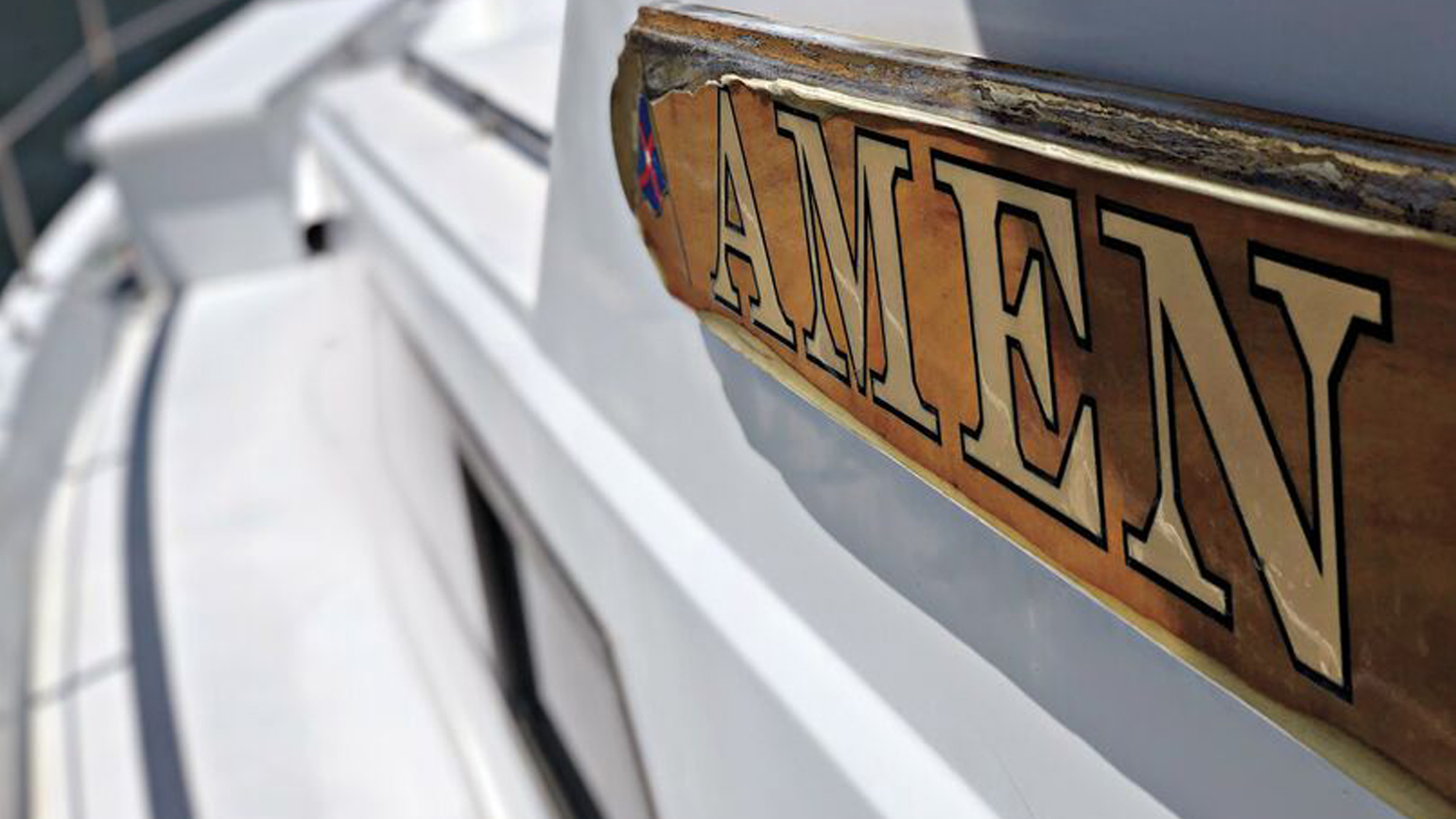
How a Boat Named ‘Amen’ Saved Their Lives

Thursday, April 18, 2019.

It was Senior Skip Day at Christ’s Church Academy in Jacksonville, Florida. A big deal for 17-year-old friends Heather Brown and Tyler Smith. They had been looking forward to this high school milestone all year. Along with six other seniors, they decided to spend the day at popular Vilano Beach, near St. Augustine. Spurred on by brilliant sunshine and temperatures in the eighties, the teens had planned a full day of swimming, sunbathing and beach volleyball. There was a High Hazard flag—a red flag warning beachgoers of “high surf and/or strong currents”—hoisted on the beach’s parking lot flagpole as the teens arrived, but they rushed past it.

TYLER: We drove to the beach in my buddy’s truck, pulling straight onto the sand. We saw the red flag but didn’t think much of it. We knew what it meant but, to be honest, felt pretty invincible. A warm breeze was blowing as we unloaded our folding chairs, sports equipment and grill. The beach seemed deserted. Wow, how lucky! I thought. We have the beach almost to ourselves. I saw no more than five people out there.

From our spot on the shore, we could see a lighthouse. It stood on an island across from the beach. The waters of the inlet between the beach and the lighthouse looked calm. Heather and I and two other friends decided to swim to it. Out in the water, however, we realized the inlet ran much faster and deeper than we’d thought. Our friends turned back. “Do you still want to go?” Heather asked.

The two of us were the strongest swimmers in the group. Turning back would make me look like a wimp. I hesitated just a minute before resuming my stroke. “Let’s go!” I said.

ERIC: That warm day in April, a few friends and I were cruising up the Atlantic coast in my secondhand, 53-foot Hatteras motor yacht. The day before, we’d left Delray Beach, Florida, for Brick, New Jersey. That’s where I live most of the year. The marina in Delray Beach, where I usually keep the boat, was under construction, so I had to bring the boat home with me—even though April is less than ideal for cruising up the East Coast. I had a few friends join me for the trip north.

Engine trouble had delayed our initial departure by a day and a half. Then high winds and rough seas kept us inland, slowing our pace and adding days of travel.

As we continued north, I checked the conditions again. They hadn’t improved. But I felt an inexplicable tug to head to the open ocean. Maybe we’d be able to make up for a little lost time. Two of my friends, both experienced sailors, advised against it. Normally I would’ve listened. That day I didn’t.

TYLER: Something was wrong. No matter which way Heather and I swam, the current overpowered us, pulling us farther and farther away from shore. We never reached the lighthouse. Pretty soon, it disappeared from view entirely. The beach looked like a thin strip of sand. Heather became eerily calm. “Tyler, what’s our plan?” she asked.

I had gotten us into this mess. I had to get us out. Scanning the horizon, I spotted some breaker rocks marked with a red buoy. “See that buoy?” I said, jerking my head toward it. “Let’s swim over there and hang onto that while we wait for help to come.”

ERIC: Out on the open ocean, the wind had changed. It was no longer hitting us dead-on. We were finally cruising at a nice clip!

I wasn’t sure how long our reprieve would last, so I decided to take the boat only two miles off shore before heading north. That way, we could turn quickly into the next inlet if the wind changed back. Normally, we’d go farther out, toward the Gulf Stream, to take advantage of the current, but that day I felt that it was better to be safe than sorry.

TYLER: The buoy came and went. The water ripped us right past it. I’d held it together when I lost sight of the lighthouse. Then the beach. But when the buoy disappeared from view, I started to lose hope. Heather and I were in dire trouble.

My legs ached. They were starting to cramp up. The waves crashed over us, filling our noses with water and making us sputter and choke. It wouldn’t be much longer until I couldn’t swim anymore. Desperate, Heather and I linked arms so that we wouldn’t get separated. We didn’t try to talk. It was all we could do just to keep our heads above water.

Three times, I heard a small plane buzz overhead. “We’re down here!” I screamed, but it was no use. The pilots couldn’t hear us and didn’t notice us down in the water. The sound faded away. I heard no boats, only the wind in my ears. I thought about my mom. It’s just the two of us. She’d already bought graduation announcements. She’d be devastated if I never made it home.

I’m not someone who prays. I’d been raised in religion but fallen away from it. Between going to church and Christian school, I felt as if it had been forced on me. And I had my doubts. I didn’t think God really cared. But at this point, it was all I had left. “Come on, God,” I hollered.

“If you’re really out there, send something to save us!”

ERIC: We’d traveled for half an hour without seeing another boat. Small craft advisories kept the little boats docked, and all the big fishing vessels were farther offshore.

We skimmed along with the canvas unzipped and the windows rolled up. We were relaxing on the bridge, basking in the sunshine, talking and listening to music.

TYLER: Heather saw it first. A boat, out on the horizon. It was far away, but it was real. We knew this was our last chance. Seized with muscle cramps, I couldn’t do anything. But Heather got a burst of energy. “Stay right here!” she said and took off swimming. “Help!” she screamed.

“Help! Help!”

ERIC: We all heard it. Despite our engine rumbling, our music playing and everyone talking—a strange noise. Was it a bird? The wind? Seconds later, my friend yelled, “There are people out there!”

People? Two miles offshore? How could that be? I followed his gaze and spotted two tiny black dots—human heads—that kept disappearing in the waves. We’d whizzed right past them.

We wheeled the boat around and pulled life jackets and lines from the ship’s lockers to toss out to them.

As we got closer, we saw they were barely keeping their heads above the water. We killed the engines to pull them aboard. Without the engines to keep us steady, the boat turned sideways in the waves, rocking hard from left to right, breaking glass and shifting furniture around. Once the two teens were pulled safely aboard, we saw they were freezing—white-lipped and shivering violently. Two of us covered them with towels and blankets while the rest of us did our best to secure the furniture and throw towels over the broken glass. We contacted the Coast Guard and restarted the engines.

TYLER: The men had pulled Heather up the ladder first, then me. I was dead weight. My legs were useless. I had to be lifted into the boat. Heather and I were gasping for air. Wrapped in blankets, we just stared at each other in awe.

ERIC: With the boat smoothly cutting through the water once more, it hit me. All those delays I’d resented so much? They weren’t taking us off track. They were course corrections, bringing us closer to Heather and Tyler.

TYLER: Once I’d caught my breath, I told Eric our story. How Heather and I had nearly lost hope. My desperate plea to God. Eric started to get choked up. With his voice full of emotion, he told us the name of the craft now bringing us to safety. My prayer that day had been answered by a boat named Amen.

Did you enjoy this story? Subscribe to Mysterious Ways magazine.

Hope for a Mysterious, Wonderful New Year

I want to wish you all a happy, healthy New Year. There were a lot of ups and downs in 2012, but at least for me, it was a momentous time in my life—the year I got married.

This New Year’s Eve, I had another wedding to attend, the marriage of my good friend Mickey. I haven’t been able to hang out with him much recently—he’s always traveling for work, and we don’t live that close. So I was excited to celebrate with him and his new bride.

The morning before the wedding, I was at my parents’ house, about to leave to do some last-minute errands. Walking out through the laundry room to the garage, I spied an audiocassette sitting on top of the dryer. Weird. The label said “Tape 2.” That was all.

Intrigued, I picked it up and brought it out to the car—yes, it still has a tape deck. I started the car, popped the cassette in and pulled out of the garage. The tape began to play.

After a few moments of muffled sounds, an occasional pluck of a guitar string and the shriek of microphone feedback, I heard three distinct voices. Me, my friend Andrew and… Mickey. We began to play a song. I strummed an out-of-tune guitar, Andrew drummed on what sounded like Tupperware containers, and Mickey sang some ridiculously funny little ditty that soon made us all break down in a fit of laughter.

I remembered that we used to play at being a rock band when we were younger—but I had no memory of recording the tape. Listening to it now, though, I had to smile. We’d all grown up a lot since then, but goofing around like that was what made our friendship so special. I missed those days. What were the chances I would randomly come across a tape of us on the day of Mickey’s wedding?

The recording suddenly cut out. Apparently, we had recorded over something else. A radio program. As the DJ spoke, I started to get the eeriest feeling.

“You’re listening to the WHTG-FM 106.3 New Year’s Eve top songs of 1997 countdown,” he said.

I wasn’t sure what it all meant. Was a recording made 15 years ago somehow a premonition that Mickey would get married on New Year’s? I don’t know. But it did make me smile, and made me nostalgic for those days long before marriage was even on any of our minds.

Did I mention Mickey is a DJ? For weddings and other events. That was how he met his wife, a dancer at a Bar Mitzvah he worked.

I asked my mom how the tape got on top of the dryer. She told me she had found it sitting on the windowsill in the kitchen and meant to put it away in a box in the garage. But on her way out, she got distracted by the laundry.

A coincidence? Sure. But one that tells me that 2013 will be another year of miracles, big and small, that will enrich our lives.

Happy New Year, everyone!

Have a story to share? Write a comment below or send us your manuscript.

Hope and Survival After the Storm

“I think God was somewhere else when the typhoon hit. God must be somewhere else or he forgot that there’s a planet called Earth.” —Rodrigo Duterte, Mayor of Davao City, Philippines

A crisis like the one going on right now in the Philippines can cause anyone to despair. Days after Supertyphoon Haiyan barreled through the region, survivors roam through debris of their former homes, searching for lost loved ones, for food, for any sign of hope.

I came home from work yesterday to find a shopping bag in the lobby of my apartment building, along with a handwritten note. One of my neighbors is booked on a flight to the Philippines this weekend and is collecting donations of over-the-counter medicines, something in very short supply in the ravaged nation. Seeing that moved me. While it’s natural to despair, there’s an equal or perhaps even more powerful response to tragedy—the impulse to help.

Reporter Atom Araullo risked his life to keep Philippines citizens updated throughout the storm, standing barefoot in water knee-deep while the wind swirled around him. For many, he was the lone figure providing any reliable news as the coastline was pummeled, as well as a symbol of resilience in the face of the storm.

Jonathan Fitzpatrick of Walsall, England, was working as an electrical engineer in the city of Ormoc when the typhoon hit. As his hotel began to crumble around him, Jonathan and his colleagues helped people escape to the safety of the reinforced stairwell and supplied bottles of water until it was finally safe to emerge. On his way to evacuate, Jonathan gave the last of his money to a survivor whose home had been destroyed.

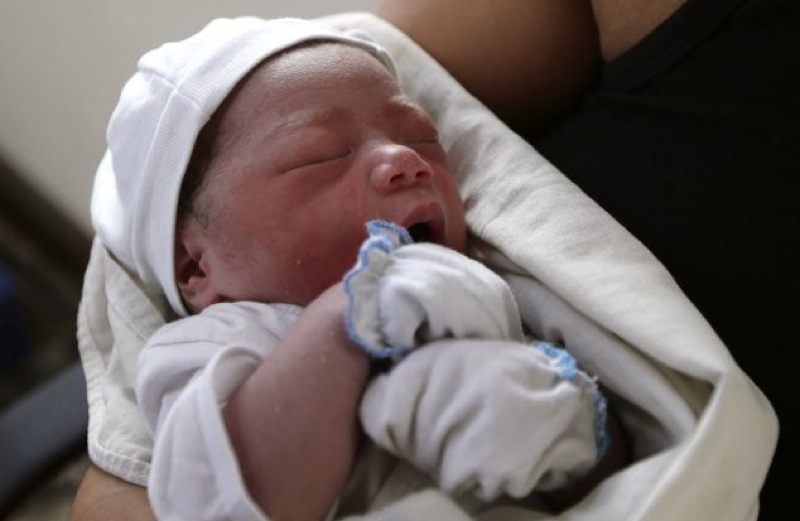
Emily Ortega had just watched her mother swept away by a massive wave, and she feared she’d be swept away too—along with the baby she carried inside of her. Nine months pregnant, she had to swim and cling to a post to survive. Somehow, her husband, Jobert, reached her. It was God’s will that he found her alive, Jobert told the Daily Mail. Emily went into labor Monday morning, and the couple walked several miles before they found a ride to the airport, which had been turned into a temporary medical facility. There she gave birth to a healthy girl, Bea Joy, named after Emily’s mother, Beatriz.

Even in a place as far away as central Kentucky, there were people moved to help the typhoon victims—long before Haiyan swept through. Twenty-seven years ago, Bobbie and Larry Womack felt called to start a mission, and they prayed to be led where they were needed. That place was Tacloban City in the Philippines, where they began food, Bible-study and back-to-school programs. When the typhoon hit, Tacloban bore the brunt of it. Back in Kentucky, their family desperately waited for any news of the couple’s survival. Larry and Bobbie hung on for dear life as floodwaters surged through for more than two hours. As soon as the waters subsided, however, they went back to work, helping other survivors, despite having lost everything themselves.

Was God somewhere else when the typhoon hit? Or was he working through those who rose up in the face of devastation?

I know I’ll be contributing to my neighbor’s shopping bag. Please consider your own donation to the victims of Supertyphoon Haiyan. Make a donation to the Red Cross. The money will help those who lost everything.

What moments have inspired you in times of tragedy and loss? Share your stories with us.

Photo credit: The AP, via Dailymail.co.uk

Holocaust Remembrance Day: An Unlikely Reunion

The esteemed national director of the Anti-Defamation League, Abraham Foxman, was talking to a group of students and researchers at the Yad Vashem Holocaust History Museum in Jerusalem, sharing what had happened to him as a five-year-old in Lithuania in the fall of 1945.

To the students, the incredible story may have sounded like a legend, a parable. After so much time and so many retellings, it may have even seemed that way to Abe too. Was he the only one left to remember what happened that fateful day?

It happened on Simchat Torah—an important Jewish holiday that commemorates God giving the Torah to Moses atop Mount Sinai.

In synagogues throughout the world, Jews remove the Sifrei Torah, the sacred Torah scrolls, from their place in the ark, lift them up high and parade them around, dancing and singing traditional songs until the early hours of the morning. But in 1945, for the few Jewish survivors of war-torn Vilna, it was hard to find any cause for celebration.

FOR MORE STORIES LIKE THIS, SUBSCRIBE TO MYSTERIOUS WAYS MAGAZINE

Abe was born in Poland, shortly after Hitler’s armies began sweeping through Eastern Europe. His family fled to Vilna. If any place would be safe for Jews, they hoped, surely it would be there.

Vilna was known as the “Jerusalem of Lithuania.” Before the war, more than 100,000 Jews lived there, 45 percent of the population. Vilna was home to more than a hundred synagogues, and at the center of Jewish life was the Great Shul, the city’s largest, with a congregation 5,000 strong.

The building was so magnificent, legend had it that Napoleon himself went speechless when he saw it.

Then the Nazi occupation began. Anti-Jewish laws set up the tragedy to come: thousands of Jews rounded up and executed in the forest outside the city; those who were spared this summary slaughter were crammed into two ghettos, to await deportation to the concentration camps.

Abe’s parents made a desperate, agonizing choice, a choice hard for anyone in Abraham Foxman’s audience to imagine. They left Abe in the care of his Catholic nanny, to be raised as her son, protected from being a Jew.

Miraculously, Abe’s parents survived and were reunited with their child, now a five-year-old. Abe didn’t recognize them and didn’t even know he was Jewish. In fact, he’d been instructed by his nanny to spit at Jews in order to avoid suspicion of being one himself.

Now Abe felt ashamed and confused about his heritage. Who were the Jewish people, to be so despised by those around them? His father took him to the synagogue, the Great Shul, on Simchat Torah, so he would know his own faith, so he would see the magnificence that had humbled even Napoleon.

READ MORE: THE MIRACLE OF BLOCK 11

But what they saw was a temple in ruins, the roof collapsed, the walls crumbled, the sanctuary looted. The two-tiered holy ark, ornately carved with gilded plants, animals and Jewish symbols, had been desecrated. Gone were the bronze and silver chandeliers that lit the shul. Most devastating, the sacred Torah scrolls had been stolen.

Where were the merchants, the scientists, the shopkeepers, the Talmud students, who had once joyously sung and danced beside the Torah? In their place was a ragged group of Jews—over 95 percent of the Jews of Vilna had perished in the Holocaust.

How could they celebrate without the Sifrei Torah? What was the holiday without the procession of Torahs—the living word of God—that inspired the Jews to dance and sing? After all that had happened, how could the Jewish people go on?

Out from the pitiful crowd, a young Russian approached Abe and his father, a soldier. “Is that your son?” the soldier asked.

“Yes, this is my boy,” Abe’s father answered.

Tears formed in the soldier’s eyes. He had been a rabbi back home, he said, before being conscripted into the Red Army to fight the Germans. After Germany fell, he had made his way west, passing through one decimated village after the other, looking for the vital Jewish communities that had once thrived.

“I traveled a very long way, and I didn’t come across a single living Jewish child,” he said. “But now I see your son.”

The boy, so young—the soldier figured he must have been born just as the Nazis began their murderous march across Europe. Somehow he had survived, and was here to celebrate Simchat Torah. At that moment, the soldier knew what to do about the missing Torah scrolls.

“If we cannot dance with the Torah, then please, may I dance with your son?” the soldier asked.

The soldier stooped down and hoisted the boy on his shoulders. “This is the Jewish flag!” the soldier shouted. One by one, people joined in, lifting the few other children high in the air, as if rising from the rubble and reaching up to God. The surviving Jews of Vilna paraded the children around the ruined shul like the Torah scrolls as they sang and danced.

The soldier and the boy spun around and around again to the happy melodies echoing off the broken walls; the ruins seemed to come back to life. Abe laughed and enjoyed the music, as if something that had been missing from his life came together all at once, a swelling of pride and emotion and gratitude. So this was what it was to be a Jew!

“When I came home, I told my mother, ‘Hey, I like the Jewish church,’” Abe told the crowd at Yad Vashem. For decades, he had been telling this story to remind others of how even in the worst of circumstances, when all seems lost, there is always reason to celebrate your faith, to raise your voice to God.

The crowd at Yad Vashem was silent when Abe finished speaking. Then one young man asked Abe a question. “Whatever happened to the soldier?”

“I never saw him again,”Abe answered as he always did, with a bit of melancholy in his voice.

One researcher who’d heard him wasn’t satisfied with that answer. There had to be someone, somewhere who was also there that day, she thought. Who might know who the soldier was, even if the man himself was long dead? Someone who could bear witness to what the young Abraham Foxman had experienced? She was determined to find out.

In her search, she discovered a song by a Toronto songwriter, “The Man from Vilna”: “We danced round and round in circles, as if the world had done no wrong,” the chorus went. “Though we had no Sifrei Torah to gather in our arms, in their place we held those children. The Jewish people would live on…”

Someone was retelling Abe’s story! Then she read a footnote to the lyrics. “Inspired by a true-life story, experienced and related by Rabbi Leo Goldman of Detroit, Michigan.”

Experienced. This rabbi wasn’t merely passing a story on in a sermon. He had actually been there!

The researcher passed the information on to Abe—how the songwriter had heard about Rabbi Goldman’s story. Could the rabbi still be alive?

Abe managed to track down the rabbi’s daughter, and they arranged to meet.

Her father was 91 years old, in a wheelchair and had difficulty speaking, the daughter explained. He’d become a rabbi in 1938, before he was conscripted by the Soviets. After the war he immigrated to the United States and served a synagogue in Detroit.

“Had he told you the story about that day in Vilna?” Abe asked.

“Yes,” she said. “Often.” He’d been in Vilna on Simchat Torah in 1945.

“Do you have a picture of your father?” Abe asked.

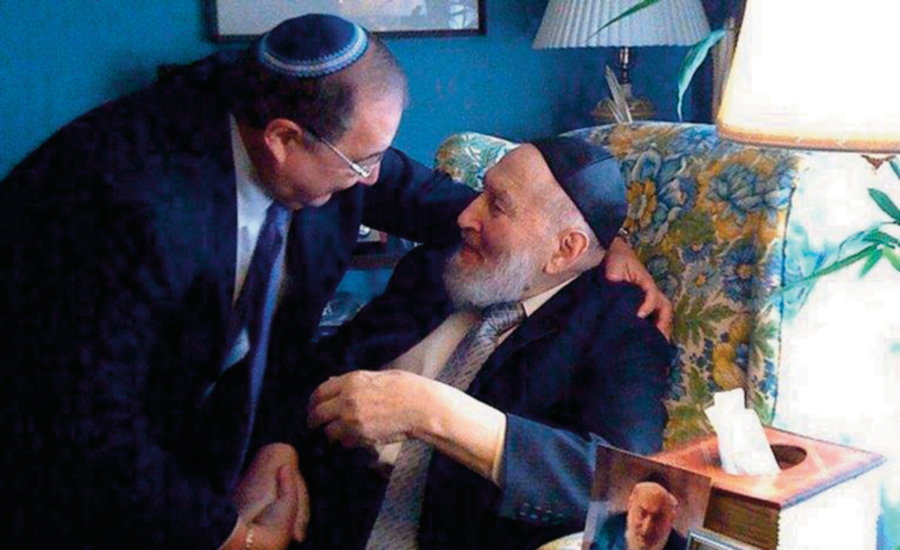
The woman pulled an old photograph from her purse. Her father in his army uniform. Abe was stunned, then overwhelmed. It was him. The soldier from Vilna. Even though Abe was only a boy at the time, the memory never faded.

Sixty-five years after their dance in the ruins of the Great Shul of Vilna, Abe and Leo were reunited. They celebrated in a synagogue again, this time with their children and grandchildren around them, the promise of that fall day in 1945 fulfilled, their faith as alive as ever, a reason for joy.

Holding on to Faith for Haiti

Leogane Plain, Haiti. Tuesday, January 12, 2010, almost 5:00 p.m.

My fourth day in Haiti with the Florida-based outreach group New Missions. We’d been up before sunrise visiting villages, handing out shoeboxes filled with toys, school supplies and other necessities. Now it was almost dinnertime. I sat in the New Missions dining room—a screened-in porch with rows of wooden tables and chairs.

There were about 40 of us on this trip, mostly high school students and some churchgoers from Orlando.

One of the students, Faith, had just met her sponsor child and we were getting to know the family. I captured as many moments as I could with my camera. It was only four days into my first-ever mission trip, but already I knew I’d never look at things the same way again.

Faith was about to sing for us when boom! A powerful primal force surged beneath our feet. The roof shook. The concrete floor rippled like it was made of water.

“What do we do?” Faith cried. I did the only thing I could. I held on to Faith. Literally. I grabbed her and ran outside. The force threw us to the ground. I desperately tried to shield Faith’s body with mine and began to pray.

I’m a reporter and anchor for News 13, a TV station in Orlando, but it wasn’t a story that brought me to Haiti. It was a billboard. Crazy, right? That’s what I would’ve thought a year ago if you’d told me I’d be going on a mission trip abroad.

I was committed to volunteering, but there was so much to do in my community. I didn’t need to go to another country. Then last fall I got a sense God wanted me to go farther to help people. I prayed, asked him for signs.

One day in December I was driving down Route 441 when a billboard jumped out at me: “Share a little Christmas with Haiti. shoeboxdrive.com.”

I didn’t know much about Haiti, though it was only 700 miles off the coast of Florida and some of my coworkers were from there. It looked like a group called New Missions was sending shoeboxes of supplies to Haitian children. That might be a good story to cover, I thought.

Reporting is my passion. I’ve known that since I was a girl growing up just outside the Bronx. My parents were handicapped. We didn’t have a lot, but they had an amazing faith.

Dad had type 1 diabetes and was in and out of the hospital. Still, one thing we always did together was watch Good Morning America. “That’s what I want to do,” I said, pointing to the TV one day when I was nine.

“You can do anything, if you put your mind to it!” Dad said. He died the next year. I held on to my dream and majored in broadcast journalism at Syracuse. When I landed an internship with Good Morning America freshman year, I knew Dad was looking on proudly from heaven.

I worked my way up from filing tapes to reporter then anchor at TV stations in New York. I loved telling people’s stories, feeling like I’d made a difference.

Still, three years ago I needed a change. Physically, I was tired of the cold so I moved to Florida, to News 13. Spiritually, I felt like my compass was off. God, I’m done doing things my way, I prayed. Show me where to go, what to do.

And show me, he did.

The morning after I saw that billboard, I was on Interstate 4. I reached down to turn on the radio when I heard God say loud and clear, “Look up.” I glanced up. Another billboard for New Missions! Just then, an announcement came on the radio…for that very same shoebox drive. Whoa.

I called New Missions. “Hi, I’m Christine Webb with News 13. I’m interested in doing a story on your shoebox drive for Haiti.”

“That’s great,” a woman said. “I’d be happy to help you set that up.”

I heard God’s voice again: “Ask her about mission trips.” I thought he was leading me to do a story, but I obeyed. “Do you know who I can speak to about mission trips?”

The woman laughed. “I’m the mission team coordinator. If you’re serious, there’s a trip in a couple of weeks.”

“I would love to go,” I said. This was wild. I didn’t even have a passport!

I talked with my boss. “I’d like some vacation time to go on a mission trip to Haiti. I’d love to take a camera.” She was all for it. She had a family member with an orphanage in Haiti. The plan was to take pictures and maybe do a story or two. I’d also try to send in blogs for our website. “Through my eyes I hope you get to see what life is really like in Haiti,” I wrote to viewers right before I left.

Saturday, January 9, our group landed in Port-au-Prince, Haiti’s capital. Then came a bumpy bus ride 25 miles west to the coastal Leogane Plain and the New Missions headquarters.

Parts of the Plain were lush and green, but right in front of me the ground was littered with trash. Children, barefoot, their clothes in tatters, played in garbage dumps. People piled into tap-tap buses. Chickens, dogs and goats ran wild.

I grew up poor, but I always had clothes on my back and shoes on my feet. I’d seen photos of Haiti, but to see the poorest country in the Western Hemisphere in person was jarring.

We pulled up to the New Missions compound, a cluster of simple buildings on the beach. I dropped my bags in my room and went straight to work.

Two open-air trucks carried us to the villages of the Plain. We handed out our shoeboxes, clothes and food. “Merci,” the children said. The only thing greater than their gratitude was their need. I wished I could do more.

The next few days we visited New Missions schools and churches. “It’s a miracle I’m here,” I told the group of how I was led to Haiti. “I want to help as much as I can.”

I’d heard one of the best ways to help was to sponsor a child. Faith was a sponsor. A monthly donation helped pay for food, education and medical care and gave a child a chance at a new life. I filled out the paperwork. Monday afternoon a girl, about 10, her hair tied with yellow ribbons, showed up.

“This is for you,” I said, handing her a toy lamb and a shoebox filled with goodies. She took the gifts, but there wasn’t even a flicker of a smile.

“Do you like to draw?” I asked. I point­ed to some paper and crayons. A few minutes later, she set a picture in front of me: a rainbow-colored ship, with “I love Jesus” written across the top. Suddenly I saw a smile as bright as her name, Miracle.

Tuesday we delivered more shoeboxes. Mid-morning we stopped at another New Missions elementary school, Brache-Milot. The principal, Milo, was wonderful, devoted to his students. “My sister,” he said, “thank you.”

I was still thinking about Milo and how I’d blog about him when we got back to the compound that afternoon. Faith’s sponsor child had finally arrived. Faith gave her some presents and was just about to sing for us.

Boom! That’s when everything started shaking—the roof, the chairs, the floor. I grabbed Faith and ran outside. Then came the eeriest sound…chh, chh, chh. Right in front of us, the ground zigzagged open like something out of a movie. The earth split in two.

Finally the tremors stopped. One of the trip leaders led us to the beach behind the compound. We did a headcount: 44 people, all safe. There was no cell phone service, but several people got a flurry of text messages on their phones: “Get out! Tsunami threat.”

We piled into the trucks and headed to higher ground, taking turns using our one satellite phone. The first person I reached was my boss. “I’m in Haiti,” I said. “There’s been an earthquake. Please tell my mom I’m okay.”

We spent the night in the trucks. By morning the tsunami threat was over; the tremors subsided enough for us to drive back to the compound. Entire villages looked like they’d crumbled, but the compound buildings, though damaged, were still standing.

Somehow we had a Wi-Fi signal. My reporter instinct kicked in. I couldn’t use my iPhone to call out, but I could film reports and e-mail them. I quickly shot reports about the quake and sent them to the station. If people at home saw the human face of this disaster, they’d want to help. All I wanted to do was tell other people’s stories. I never thought I’d be reporting my own story too.

Later that day, Tim DeTellis, president of New Missions, told us Port-au-Prince had been devastated. Thousands were feared dead. The roads weren’t safe and no planes were flying in. We’d need to be rescued. Our warehouse had flooded, but we dried what we could and delivered the supplies to nearby villages.

“Do you know where we are?” one of the men from our group asked me. We’d stopped by a decimated building.

“Um, no,” I said. “This is the school we were at just before the earthquake,” he said. The Brache-Milot School. The children had already left for the day when the quake hit. I hoped the teachers and the principal, Milo, had too.

Thursday morning as we were getting more supplies out of our warehouse, Milo showed up. He’d walked more than 10 miles. I was so relieved, I burst into tears. “I have lost everything,” he said. “My family. My house. My school. Please pray for me.”

Then he looked at me intently. “Please, my sister, don’t forget about me and don’t forget the people of Haiti.”

“I will never forget.” It was as much a promise to God as it was to my friend.

Friday morning U.S. Army special ops teams evacuated our group by helicopters. I felt guilty leaving so many desperate people. But our supplies were gone and I knew the best way to help now would be to return to the U.S. and keep telling their stories.

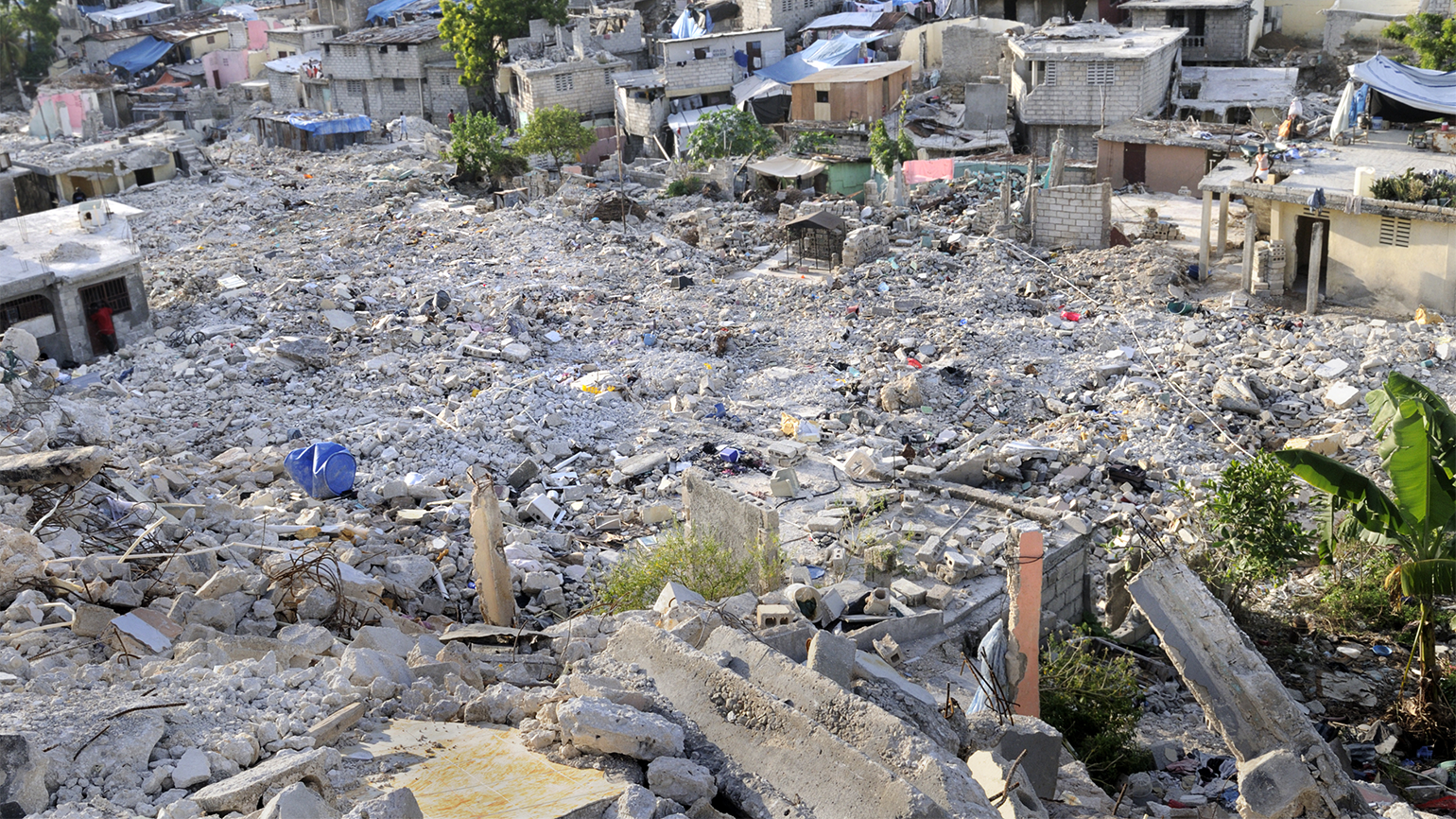
Back home, I learned Leogane was the epicenter of the quake. Over 200,000 people lost their lives. Another one million were left homeless. I found out I was the first U.S. reporter to send reports back to the States. My iPhone reports had been broadcast all over CNN.

Not a day goes by that I don’t think about those I met in Haiti—especially Milo and Miracle. I still haven’t heard from her. I’m holding onto faith and praying that she and her family are okay.

You might think surviving the earthquake really changed me. Actually, God was working on me long before that, showing me how all of our stories are connected, woven into a larger story of such complexity perhaps only he has the wisdom to understand it completely.

That doesn’t mean we shouldn’t try to help one another—near or far—and grow in our understanding. Maybe it was a story that brought me to Haiti after all.


His Strange Dream Became a Spiritual Connection

The phone rang late one night. It was my brother Kerry.

“Joe, Sammy’s plane was shot down during the air strike,” he said.

Sammy, our mutual friend, was a lieutenant colonel and fighter pilot with the Kuwait Air Force. Kerry quickly filled me in on the details. Sammy was alive, but he was being held prisoner. He’d been badly beaten. We didn’t know what would happen to him next or whether he’d even make it out.

At that point, I’d known Sammy for about 12 years. I met him through Kerry, who lived in Saudi Arabia and had friends all over the world. One summer, he invited Sammy to come with him to California when he returned home to visit. Sammy and I instantly hit it off. We’d both been in the Air Force and were familiar with the same fighters, specifically the A4 Skyhawk, which he flew. He was kind and easy to be around. Someone I was proud to call my friend.

I got off the phone with Kerry and switched on the news to try to get some more information. There weren’t any further updates, so I decided to go to bed. I tossed and turned for a while.

Eventually, I fell asleep. I had the strangest, most realistic dream. I was in a dark room. I innately knew I was viewing everything through Sammy’s eyes. There was a small window high up on the wall with a dim light hanging above it. I could just barely see the maroon porcelain-tiled walls. It was so cold in the room that my body convulsed with shivers.

And I felt intense pain in my hands. It radiated from the base of my thumbs and encircled my wrists. I was clinging to a green-and-white-striped blanket, and for some reason, it felt significant. A comfort amid the desolation.

I woke up the next morning with the dream still clear in my mind. It made sense to be dreaming about Sammy, but why all those tactile details? Sammy had been captured in the hot desert. In my worst imaginings I’d pictured him in a stifling concrete cell, not a cold room with tiled walls. I didn’t understand the significance of the striped blanket. Or the pain in my wrists.

I sat up in bed, pulled back the covers and winced. What in the world? My wrists were sore, as if the pain from the dream had traveled into real life. I jumped up and ran to the bathroom. Splashed cold water on my face. Ran it over my hands. The pain ebbed a bit, but it was definitely real. It was so acute that I had trouble holding things for five days.

The whole experience was so strange that I kept it to myself while we waited for news. Finally, about a month later, Kerry called. Sammy was being released! He called from the hospital once he’d had some rest, and I talked to him for a bit. Told him how happy I was that he was okay. He sounded tired but in good spirits. We stayed in touch throughout his recovery, but it was another two years before we saw each other again.

Sammy and his sister came to my family’s home for the holidays. It was a joyous reunion. Along with my daughters, Kathleen and Amy, I greeted them at the door with cheers and hugs. We all sat down in the kitchen to catch up. Eventually the conversation turned to Sammy’s imprisonment. I’d never intended to tell Sammy about my dream. I didn’t want to remind him of such a traumatic time in his life. But since the topic had come up, I felt compelled to share what had happened.

I told Sammy about the small window, the dimly lit walls, my wrists hurting and the white blanket with green stripes. I half expected Sammy to tell me I was crazy. But when I was done, he looked amazed. Then he talked about what happened during his imprisonment, sharing details that he’d never told anyone…

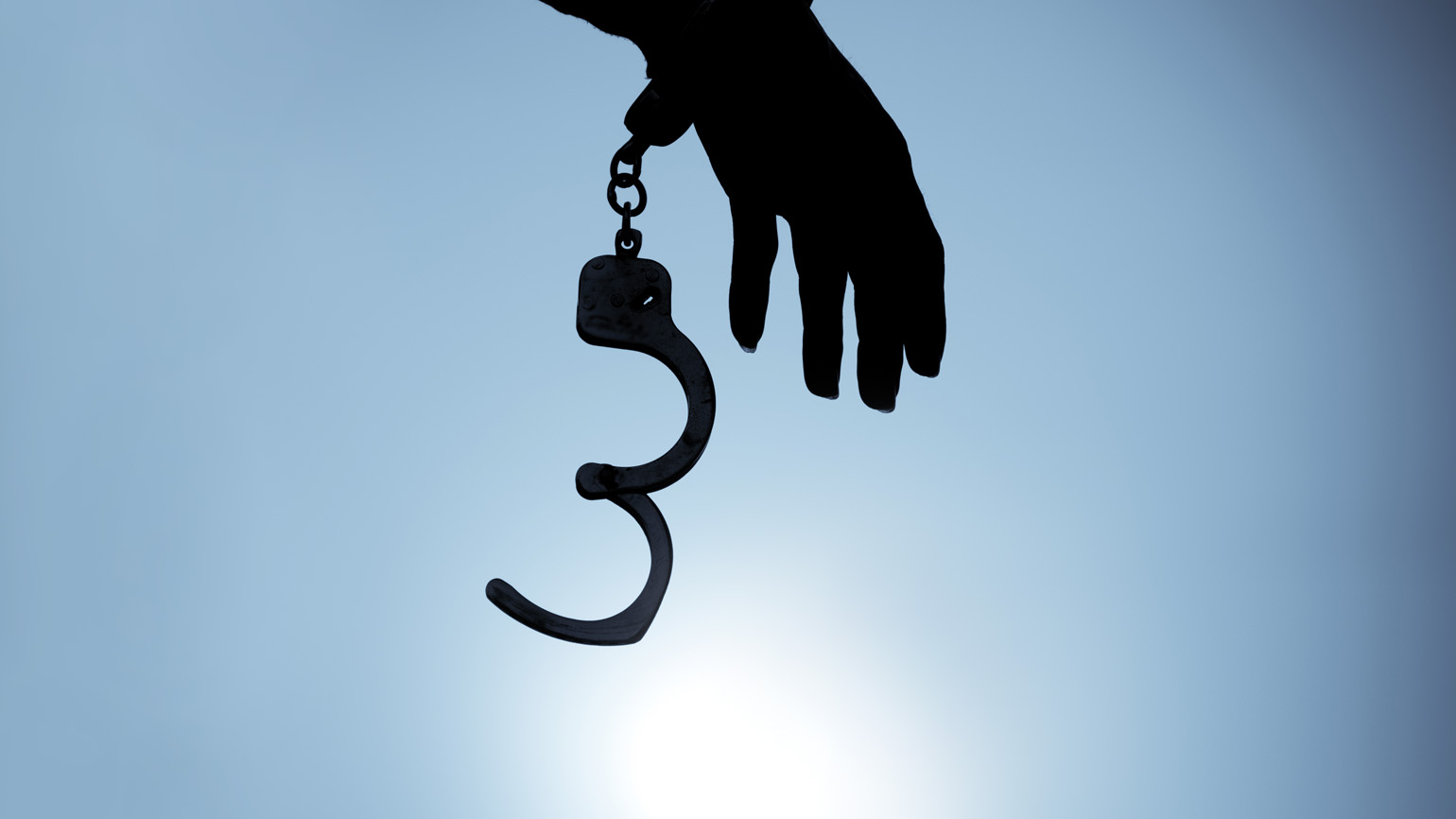
The room he was kept in had one small window high on the wall with a light hanging above it. It had maroon tile walls. His captors had cuffed his hands so tightly, his wrists were cut and caused him great pain. He pulled up his sleeves to show me the scars. The room had been dark and miserably cold. His only comfort was a thin blanket with green and white stripes.

We stared at each other in silence. Everything matched. From halfway around the world, I’d actually seen Sammy’s imprisonment. But how?

Sammy and I don’t have all the answers, but we both know that in the darkest time of his life, he wasn’t alone. The bonds of friendship truly are mysterious. And all of us are spiritually connected in ways that transcend earthly comprehension.