Embrace God's truth with our new book, The Lies that Bind

His Humorous and Mysterious Ways

My lunch hour was running a little bit long. I’d just gotten a new game on my phone—Jeopardy—and was in the middle of a heated round of questions. “The ’50s” was the category, 100 fake dollars on the line. Clearly, work had to wait. Impressing a digital Alex Trebek was far more important.

Then the answer popped up, waiting for me to provide the question:

“Norman Vincent Peale promoted the power of this.”

Oh boy. Of course I knew the right question: “What is Positive Thinking?” but I put the phone down. Obviously, somebody was telling me to get back to work.

If you chuckled a bit—and hopefully you did—you’ll recognize that Mysterious Ways stories don’t always have to be deadly serious. While we often feel a power greater than us enter our lives during a time of stress, tragedy, sorrow or crisis, there are also times when something unexpected tickles us and gets us to smile. Take for example, the first “His Humorous Ways” story in our premiere issue of Mysterious Ways. All Lynda Araoz wanted to do was see a moose during a hike with her son…

One of the worst things we do to ourselves is get tied in knots over unimportant or frivolous things, or build up stress and worry instead of being productive. When this happens, sometimes a laugh can get us back on track. Make us see things clearly. Gain some perspective. That’s what every “His Humorous Ways” story we publish in Mysterious Ways does.

We want to hear more of your funny stories. What sort of chance encounters, unexpected discoveries, mistaken identities, unlikely mix-ups or crazy misunderstandings has made you laugh along with the Big Guy Upstairs? What glimpses of his presence have made you lighten up and remember to take things less seriously? Share your “His Humorous Ways” stories with us, and share the laughter with your fellow readers.

I’ll end this post with a joke a Christian friend once told me.

Jesus and Satan were arguing about who was better on the computer. They had been going at it for days, and finally God stepped in. “I will test you on the computer for two hours,” he said. “At the end, I will judge who did a better job.”

So Satan and Jesus sat down and began typing. They wrote reports. They made spreadsheets. They created labels and cards. Charts and graphs. Did a little Photoshop. Even wrote some computer code.

Both were evenly matched. But just before their time was up, lightning flashed across the sky and the power went out. Satan said every curse word he could. Jesus just sighed.

When the electricity returned, Satan rebooted his computer. “It’s all gone! I lost everything!” he screamed. Meanwhile, Jesus started printing out all of his files.

“Wait!” Satan whined. “That’s not fair! How did I lose everything and he did not?”

God just shrugged. “Jesus saves.”

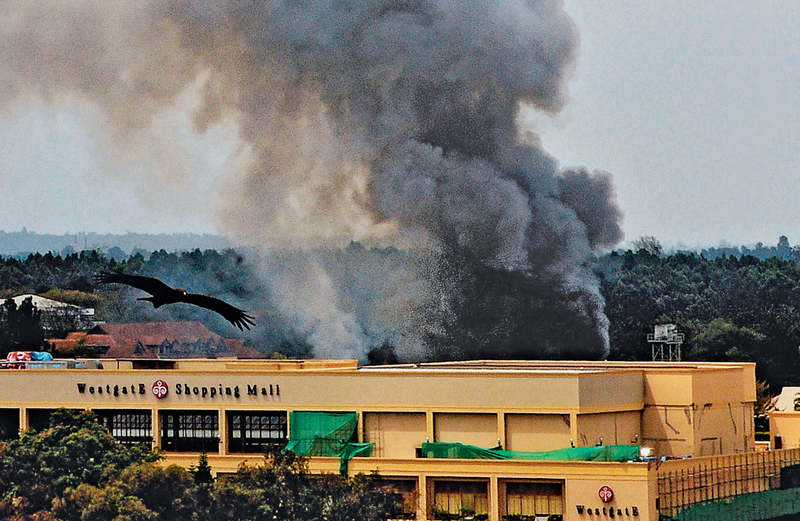
How I Survived the Nairobi Mall Terrorist Attack

You’ll feel better the more you can tell your story,” my therapist said. “It’s important after a trauma like this for you to process what happened.”

But this wasn’t getting any easier, no matter how many times I told her about the terrorist attack on Nairobi’s Westgate mall that day. Reliving it was painful, like picking shrapnel out of a wound. Would it always be this way?

My husband, Simon, and I almost never went to the mall. For 20 years–nearly our entire marriage–we’d run a safari company, taking tourists out into the African bush. Si was the guide. I did the administrative work.

I went with him whenever I could. Cooking over a fire. Sleeping under the stars. Our only neighbors lions and elephants, giraffes and zebras. The Kenya I love. There was no place on earth I’d rather be.

That Saturday, September 21, 2013, we had the day off. Just Si and me. Our two kids, Phoebe and Sebastian, were away at college.

“Let’s go to the mall,” Si said. We had it all planned. Sushi for lunch. Then a movie, Red II, with Bruce Willis playing a retired CIA officer who saves the world from terrorists.

We got there a little after noon and drove up a ramp to the roof of the parking garage on the third floor of the huge upscale shopping center. We parked and walked toward the mall entrance past a sea of cars and a crowd milling around a children’s cooking competition. Simon reached for the door.

Poppop- pop! From inside. Firecrackers? No, gunshots! Someone’s shooting! We ran. Maybe 20 of us. Across the parking lot to the ramp. I looked down at the level below. That’s when I saw the two men, firing AK-47s, mowing people down. Screams filled the air.

One of the terrorists dropped something. He bent down. Then he looked up and his eyes met mine. Someone yelled, just as the men pointed their rifles at us.

We ran again, to the opposite corner, across from the entrance, beside the now abandoned cooking competition. There was a fire-escape door there. But it was locked. We were trapped! Across the parking lot I could see the terrorists coming, methodically shooting anyone in their path, adults and children.

They wore button-down shirts and jeans. Black scarves around their faces. One took something from his backpack and hurled it at us. Grenade!

We threw ourselves to the ground and crawled for the nearest vehicles. Si wedged himself under a Range Rover. I squeezed under the car next to it, along with two other men, just as the grenade exploded. Two children, a boy and girl, stood next to the Range Rover, crying.

“Get under here. Now!” Si hissed at them. They quickly obeyed. I could see the terrorists’ boots. They were standing so close I could hear them breathing. If we made the slightest sound, we’d be killed.

My cell phone. I inched my fingers into my pants pocket and pulled out my phone. Put it on silent.

“Listen, people,” one of the terrorists said. “We are here to kill you.” He spoke in English, calmly, as if he were commenting on the weather.

Another explosion. I turned my head away from the blast. Car alarms blared. I heard a loud pop. Then a moan. I looked over to warn Si not to make any noise. His eyes were closed. Blood pooled from under him. Si! He needed me. But I didn’t dare move. He must be in such pain. Was he even breathing?

Please, God, don’t let Simon die! It was more a reflex than a conscious prayer.

I looked at my husband, lying there motionless. Hang on, Si. Don’t let go. Was this how the life we’d built together was going to end, in senseless slaughter in a mall parking lot? Simon and I felt proud and blessed to call ourselves Kenyan. Both of our families had lived here for three generations.

In the first years of our marriage we’d managed a 40,000-acre camp in the bush. No electricity. No running water. Things we discovered we could live without. What sustained us was the warmth and love of the people, the camp’s African staff.

I knew Kenya would always be our home. It was where we were destined to be. We’d stayed even after so many others had fled. Raised our children to appreciate the beauty and culture of this country.

Sebastian and Phoebe were still just kids, not ready to be on their own yet. They needed their parents–one of us, at least. I don’t care if it’s me or Si, I pleaded with God, but please let one of us live.

Except for the car alarms, there was an eerie stillness. For the first time since the attack had begun no one was screaming. Where were the attackers? I couldn’t see their boots anymore.

I looked more closely at Si. His eyes flickered open. “I love you,” he mouthed. I wanted to go to him. To hold him. To get help. Could I risk it?

I pulled out my phone. My right side was wedged against the man next to me. I could only use my left hand. I texted our friend Tom: Help we r hostages at westgate mall si shot.

Immediately he texted back. Just heard the news. What can I do? The terrorists. They were back. Yelling something I couldn’t make out. Firing their rifles.

Hurriedly I texted, We need security the men are still here we need army. I hit Send and shoved the phone back in my pocket. Instantly I felt it buzz. Worse, I heard it. What was I doing? Buzz. I turned the phone off.

More gunfire. A woman fell to the ground. “Help me,” she moaned. Boom! A massive fireball right in front of me. A terrorist had shot a propane canister from the cooking demonstration.

I couldn’t stop trembling. But Si…he wasn’t moving. His eyes were closed. Please, God, don’t let him bleed to death, I prayed. With every minute that passed, Si was slipping away. Where was Bruce Willis when you needed him? Why was no one coming to rescue us?

Again quiet fell. Were the terrorists toying with us? Just waiting, for whatever reason, to kill the rest of us? I fished out my phone and risked turning it on. It was 1:30 p.m. We’d been trapped here for an hour. Another text from Tom: Where in westgate are you?

On rooftop, I replied.

Ok understood. Ambulances, we are around the corner. A squad is in building engaging terrorists. Just need to wait it out.

Wait it out? People were seriously wounded. Dying. Si needed help now! The minutes crept by. A half hour. An hour. The terrorists were going back and forth between the mall and the parking lot. Hunting down anyone still among the living.

From the other side of the lot I heard gunfire. Closer now. Then a private security guard knelt down in the space between the cars, beside Simon and me, his face just inches from mine. “We’re getting you out of here,” he whispered.

I scrambled out from under the car. “My husband. He’s been shot.”

With a groan, Si rolled from under the Range Rover. Blood streamed from a nasty wound in his right arm. The guard had a first-aid kit. He put a tourniquet on the arm. “Can you stand up?” he asked. Si shook his head, his face ashen.

The guard turned to me. “I’m sorry, but you have to leave him. Ambulances are coming, but not until this area is more secure. Our orders are to get everyone out that we can now.”

I looked at Si. Through this entire ordeal we’d been there for each other. As in every challenge we’d faced in our marriage. Twenty-two years together. “I’ll go when he goes,” I said.

The guard gave us water, then left with the two children Si had protected and the men who’d huddled beside me.

Si’s gaze and mine locked in a kind of embrace. With fewer of us left on the roof, we were more of a target. I heard gunfire inside the mall. We needed to get out of the open, but Si was too weak to move, even with my aid. The only thing I could do was lie beside him and try to shield him from the sun. When the gunmen returned, we’d be killed.

That was all I could think about for 30 long minutes. Finally, ambulances raced up the ramp. My phone buzzed. A text from Phoebe: Mama don’t go to Westgate its bad there.

I didn’t want to worry her. We are fine, I texted.

I hit Send just as paramedics rushed up with a stretcher. They carried Si to the ambulance. I climbed in with him. We drove through the parking lot. It looked like a battlefield.

At last, the hospital! Si was rushed into surgery. I sat in the waiting room and called Phoebe. “There’s something I need to tell you….”

Si had been shot once, in the abdomen, but the bullet had fragmented and ripped through his body, leaving wounds in his arm and lower back. Over the next days, through six operations, he clung to life.

The news reported that more than 60 people had been killed, nearly 200 injured. I felt grateful to be alive, but still I grieved, for Si, for the others wounded and killed. For Kenya. I had nightmares that I was back at the mall, terrorists stalking me. That’s when a friend called, a psychologist.

“Tell me what happened,” she said.

It took time, more than a dozen sessions, but slowly, haltingly, I discovered she was right. The more I told my story, the less tormented I felt. With each telling I found friends, even strangers, reaching out, wanting to help. Praying for us, for the healing both Si and I needed.

Of course there are challenges, dangers, as there are anywhere. But I don’t live in fear. A year after the attack, Si and I are back doing what we love, taking tourists on safari, sharing the beauty and wonder of our country and its people. Our people. Kenyans all.

Download your FREE ebook, A Prayer for Every Need, by Dr. Norman Vincent Peale.

Her Unusual Dream Brought Comfort to a Pair of Worried Strangers

Sometimes the only way God could get through to people in the Bible was by speaking through their dreams. What’s amazing is that He could still be communicating this way today!

But how do you make sense of your dreams when the imagery is puzzling or random? Here are some tips for making sense of your most confusing dreams.

Community Newsletter

Get More Inspiration Delivered to Your Inbox


Acknowledge the Dream
First things first, acknowledge that the dream could be a message from God.

“It’s important to create a culture of receiving revelation,” says James W. Goll, a minister and best-selling author of Dream Language: The Prophetic Power of Dreams, Revelations and the Spirit of Wisdom. “Tell God that you acknowledge the dream and want to receive what he’s showing you. A lot of people just want to receive the answer to a dream, but they don’t acknowledge it. You need to believe that dreams are a way God still speaks.”

Write Things Down
The more dreams you record, the more you’ll find common themes, symbols and people who keep popping up night after night. Think of these commonalities as clues to unlocking your dreams.

Of course, dreams can disappear minutes after waking, so be sure to write them down right away. It may seem like a daunting task—especially if you need to get ready for work in the morning! But your dreams don’t have to be recorded with pen and paper. Some people find it easier to type notes on their cell phone in a notes app or even to email themselves. You’ll be amazed at what you remember as you write. Even if you start out with random sentences from the dream, the rest has a way of flowing out.

Don’t stress if you can’t remember every detail. God already knows the details you’ll retain from a dream. In fact, sometimes a few key things are all you’re meant to remember. Other information that slips through the cracks might just be a deposit from God that will resurface later (sometimes it might feel like déjà vu!).

Look for Biblical Symbolism
God is symbolically consistent throughout the Bible. He could be using certain objects, numbers or colors to communicate with you about a certain matter. You can take a look at our slideshow of common spiritual dream symbols here for insight. There are also several spiritual dictionaries available that can help you connect the dots. But it’s important to remember that dreams are unique. The symbol God uses to speak to you might not even show up in a dictionary.

“God’s language is personal to every individual,” says Joy Parrott, a minister and author of Parables in the Night Season. “He knows how we speak on a daily basis. He knows how we associate feelings towards things.”

Pay Attention to People
Sometimes God will place people in your dreams that you haven’t seen in years or that you don’t know that well. There’s a very good reason for that.

“Not everyone in your dreams is the actual character portrayed,” Parrott writes in Parables in the Night Season. “God will often use a person to represent someone else or to give you some insight to what He is saying to you.”

That’s why it can be useful to look up the meaning behind the name of the person who appears in your dream. That could be a clue to what the dream is actually about.

Ask for Guidance
God always gave confirmation to people in the Bible, especially after a dream. He won’t leave you hanging. So if you still don’t have answers to a dream after you’ve written it down or analyzed its symbols, there’s only one thing left to do—pray about it.

“Ask God to confirm your interpretation,” Goll says. “He’ll speak the message to you more than one time, through different ways, and maybe even through another person. He confirms things in twos or threes in the Bible, so he’ll do it the same with dreams. Maybe it won’t be the same dream, but the same essence or the same meaning.”

Has a puzzling dream ever changed your life? We’d love to hear your story and consider it for an upcoming issue of Mysterious Ways! Email us at MW@Guideposts.org.

Read More: Her Unusual Dream Brought Comfort to a Pair of Worried Strangers

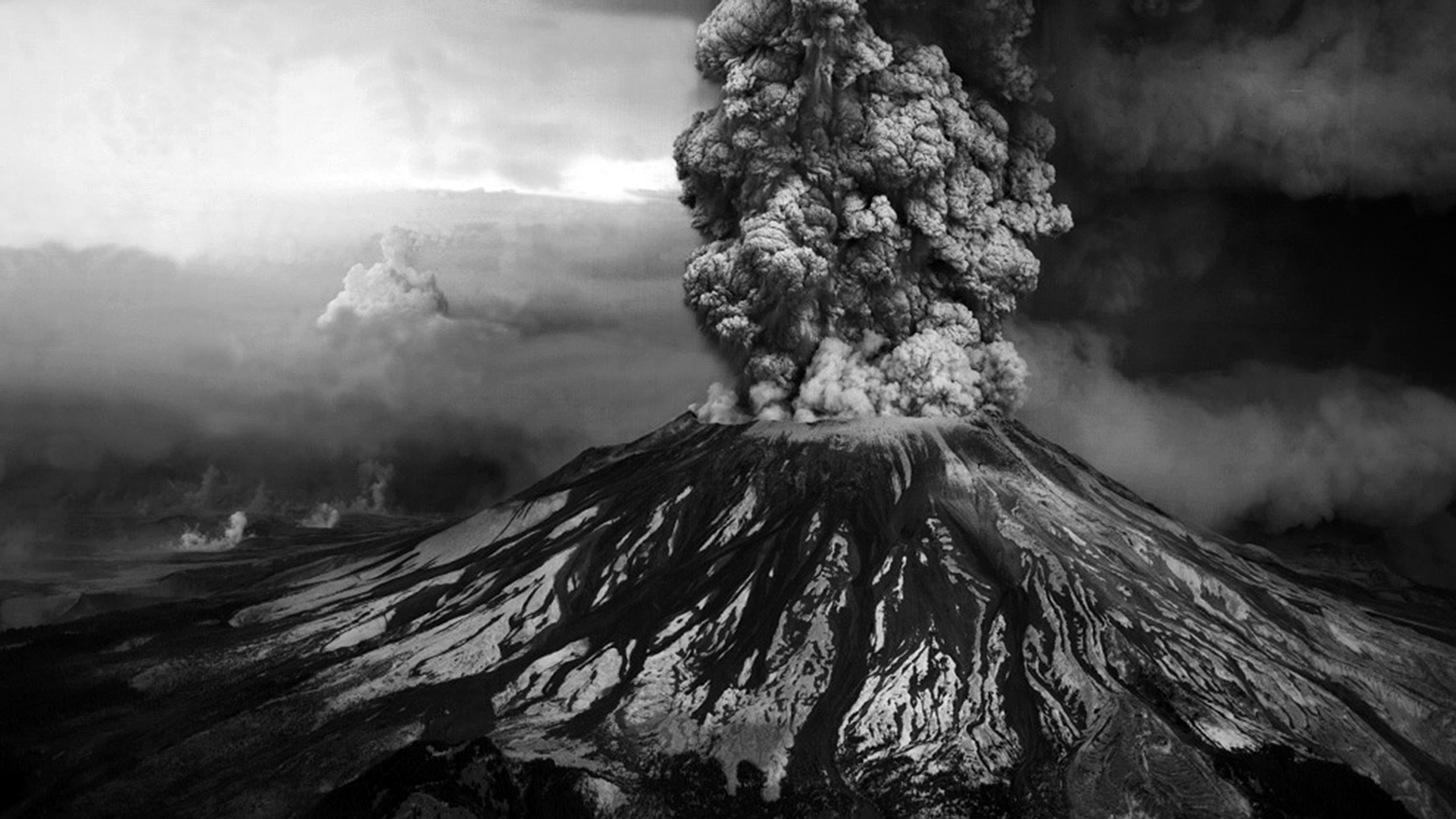
He Miraculously Survived the Eruption of Mount St. Helens

A strong foreboding suddenly awakened me during the night, The impression given me was unmistakable: The mountain will erupt today.

I peered at the clock; its luminescent face showed 3:00 a.m. Even so, I crawled out of bed, donned my climbing clothes, grabbed my camera gear and slipped out into the cool darkness to my TV news car. It was Sunday morning, May 18, 1980.

Like a sixth sense, strong and urgent, such prophetic nudges have come to me before during my 28 years. They have always turned out to be true; that’s why I felt there was no time to waste. I’m a photographer for KOMO-TV News in Seattle. And my home on Puget Sound is 150 miles from Mount St. Helens. I wanted to be there when it happened.

Ever since this mountain had begun quaking and snorting steam two months before, geologists, seismologists and news-media crews had clustered on the mountain to study and report on it. No one knew, of course, exactly what would happen. Or when.

But when black, ash-laden steam began spewing from a newly formed crater atop the 9677-foot peak, a large area around the mountain was barricaded even to property owners inside that circle. The circle was enlarged when a second crater blew open alongside the first. And even more alarm was expressed when the two craters melded into a single seething caldron a half mile wide.

Many lamented the black ash on Mount St. Helens’ snowy crown. She had once resembled Japan’s Mount Fuji in symmetry and beauty. Now her top was smudged and she didn’t look much like “The Lady,” as local residents called her.

But as the mountain continued to mutter, spasmodically belching steam and ash but otherwise remaining stable, apprehension turned into curiosity. People began to enjoy the novelty, and a carnival spirit grew. Volcano jokes and T-shirts imprinted “I survived the Mount St. Helens Eruption” blossomed.

For me, the volcano was a welcome change from the usual disaster stories I chased, such as shoot-outs, riots, exploding tank cars and burning buildings.

Part of my coverage of the possible eruption meant reporting on the seismologists’ warnings of mud slides, ash fallout and almost-odorless toxic gases that would result. One of the gases mentioned was carbon dioxide. Heavier than air, it could, they warned, settle into lungs, forcing out oxygen and causing suffocation.

Once, as we newsmen stood on the mountain’s north slope, a volcanologist said: “If she erupted right now, we’d all be dead within seconds.” He pointed to an area on the side of the mountain where sophisticated tiltmeters indicated it was bulging like a weak spot on an inner tube. If it did explode, he warned, there could be mud slides formed by earth, rock and melted snow. I envisioned lazy, cold mud slogging along.

Even so, few people expected the mountain to erupt. For the past several days she’d been so quiet we newsmen had had little to report.

But what would happen today? I wondered, as I raced down Interstate 5. I swung off the freeway onto picturesque 504, the Mount St. Helens highway that parallels the winding Toutle River. The area was familiar to me since I’d been covering the story for some time. I had also backpacked through it, as mountain climbing is one of my hobbies.

I decided the South Fork of the Toutie would provide the best view of the summit. So I turned onto a smaller road and slowed about a mile from the peak in a peaceful valley, a bit below and slightly to the west of the ominous bulge that had been pointed out by the volcanologist.

It was also inside the red danger zone that the U.S. Forestry personnel had evacuated. But at that time of the morning no one saw or stopped me. Besides, as a newsman, I felt responsible to record what I expected to happen.

I was searching for the ideal spot from which to shoot pictures when another instantaneous, unmistakable impression suddenly came: Stop here.

It turned out to be a perfect vantage point. I got out of the car, stretched and glanced at my wristwatch. It was 8:30 a.m. What a glorious morning!

Fresh. Clear. Clean. Quiet. Peaceful.

Mount St. Helens herself was silhouetted against a pale-yellow, cloudless sunrise. There was barely enough light yet to do more than merely outline the tall trees and zigzag logging roads that laced the area. All was green and serene, hushed and calm. What a relaxing place to be. The only sounds were bird calls and the rippling Toutle River alongside me.

I drank deeply of the fresh evergreen-scented air and stretched my arms to the luxuriant forest around me and the mountain looming above. This was where it was all at. This was the eternal where I could really sense God. How could anyone not see Him in these magnificent mountains that would stand forever, in these vast forests that had flourished for thousands of years? For real sustenance, I needed only to take off into the wilderness and return refreshed, with renewed mental strength.

Taking my 35mm camera, I aimed it at the mountain to take a few shots.

My breath caught.

An awesome, immense black plume suddenly rocketed from the peak! More angry-looking plumes joined it. As they billowed larger and larger they mushroomed together into furiously boiling clouds, roiling black, blue and yellow-rimmed, like an exploding atomic bomb.

I clicked off four shots of the awesomely beautiful and incredible sequence.

But I wasn’t ready for what happened next.

The side of the mountain moved. It was the bulging part the volcanologist had pointed out as dangerous. Slowly and majestically at first, like a slow-motion film, billions of tons of rock and earth began descending, then a portion of it cascaded faster and faster, heading … straight into the valley where I was!

I leaped into the car, whipped it around and raced back down the mountain road. Through the rearview mirror I saw a horrifying sight. Instead of a lazy mud slide, an immense 20-foot-high wall of what looked like steaming, wet cement was overtaking me like a speeding tidal wave! Churning with boulders and stumps, it charged madly, snapping giant trees like twigs, burying everything in its path.

Obviously I was to be its next victim!

I floored the accelerator and my car careened and bounced down the mountain road reaching 60, 70 miles per hour. Even so the tidal wave of molten mud loomed higher and higher in my rearview mirror. It was traveling nearly 150 miles per hour, and was 100 city blocks in size!

I had to find higher ground! Frantically I searched for a turn-off road. Oh! A logging road just ahead. I wrenched the wheel, careening onto it, and had reached a slight rise when the steaming, roaring wall caught up. It struck a little valley before me with a dull boom and the road ahead exploded into trees, rocks and earth skyrocketing 100 feet into the air.

I slammed to a stop, shifted into reverse and screeched backward. But the road behind me was gone, too.

I was caught on a tiny island surrounded by a raging torrent of hot ooze.

I’m used to danger as part of my job. But never before had I been so terrifyingly trapped.

I knew I was dead. The road was gone, the mountain was coming down on top of me!

I shot out of the car, grabbing my still camera and the TV sound camera, all 42 pounds of it, probably as a reflex action from my years as a newsman. I knew I had to get to higher ground! More slides could bury me at any moment. I was also in an area below the mountain where the heavier-than-air carbon dioxide gas could collect.

But to reach higher ground meant crossing 200 feet of still-flowing mud that followed the main slide wall.

I had no other choice. Tentatively. I stepped into it. It was like quicksand, but my foot found bottom. Holding my cameras high above my head, I waded into the mire. Surprisingly, it was merely warm: it had to have been boiling when it started traveling down the snow-covered terrain.

As the muck reached my knees and then my waist, it took every ounce of my strength to keep slogging one foot before the other. Fighting my way through the sludge, I finally reached the other side and started up a hill. But when I’d walked only a few feet, I was completely exhausted, and staggered, gasping for breath.

What’s the matter with me? I thought. I’m not this winded after my daily four-mile jogging or even when climbing a mountain.

Carbon dioxide must be settling in my lungs, forcing oxygen out!

The thought kept me from slumping down to rest.

Only five or ten minutes had passed since the mountain first began erupting. Now it started getting dark. Heavy, dense clouds of volcanic ash blackened the sky, leaving only one light spot on the horizon. It was what remained of the sun, burning through the murk.

Well, I’ve had it, I thought. So I might as well shoot it.

Turning on the sound camera, I tried to describe what was going on because I thought these would be my last words, and perhaps someone would find the camera. The ash, now falling like fine grit. was so thick I struggled for every breath. It took superhuman effort to sob out the words between frantic, chest-heaving gasps.

“Dear God! Whoever finds this … I can’t see—it’s too dark. I’ve left the car behind … I’m walking toward the only light I can see—on top of a ridge. I can hear the mountain behind me rumbling. I never thought I’d really believe this or say this, but at this moment … I honest to God believe I’m dead …

“There’s really no … no way to truly describe these feelings … The ash is in my eyes … It’s getting very hard to breathe … It hurts to talk … it hurt, hurts to breathe … It burns my eyes.”

I tried using my shirt for a mask, but it made things even worse. About 15 minutes had passed since I’d seen the first angry plume through my viewfinder, and now it had turned completely dark, as if a pitch-black blanket had come down over everything.

Gritty, sandy ash pelted down on me. Roiling, volcanic clouds above were creating their own weather. Hot winds raged. Lightning flashed and cracked. Fires shot up where the bolts struck. Thunder cannonaded, and the ground heaved and shook.

I could hear Mount St. Helens still rumbling as she belched smoke and ash. She wouldn’t stop. She just wouldn’t stop.

It was like words I had heard from the Bible: “He opened the shaft of the bottomless pit, and from the shaft rose smoke like the smoke of a great furnace, and the sun and the air were darkened with the smoke from the shaft.” (Revelation 9:2, RSV)

It got darker and darker.

“Oh, dear God … God this is hell … I just can’t describe it—it’s pitch-black. Just pitch-black! This is hell on earth I’m walking through…”

I’d jogged every day. I’d scuba dived. I’d climbed mountains. I’d considered myself in excellent physical condition. But breathing gas and ash was beyond my endurance. Death was closing in.

“One step at a time—if I can just keep walking. God, if I can just breathe … It’s now totally pitch-black — I can’t see to keep on walking … I’ll just have to sit down here and wait it out.”

From scuba diving, I had learned to conserve air by staying motionless. So I spent the next hours in complete darkness, slumped still.

But my mind wouldn’t stay still.

No one knew where I was! Naturally I hadn’t phoned anyone that early in the morning to tell them I was leaving. I thought about my mother and dad and sister at our family home near Seattle, and about my friends.

Now ash was falling so fast I felt I’d soon be buried beneath it and no one would ever find me.

I grieved about never seeing my family and friends again. I wished for the chance to tell them how much they’d meant to me. If I could only, somehow, be given ten more minutes to drop in and let them know. Just ten minutes. Just ten minutes so I could tell them.

Then I thought about Sunshine, my glossy blue. green and yellow parrot. And Cornelius, my macaw, who shrieked each time a bicycler pedaled past his window. I thought about my pet Everglades rat snake and my lazy Burmese python I kept in terrariums in a corner of my apartment. I had always liked the patterns on their skins.

Who would take care of them all?

I thought of those with whom I’d worked, and attended church. I recalled that I sometimes hadn’t been too patient with what they said, did or believed. If I got uptight, I simply took off into the mountains and forests. The out-of-doors always relaxed me.

Now I wouldn’t come away from it alive …

And yet I felt God was somehow watching over me in spite of my circumstances. That thought was comforting, and soon I began to feel strangely relaxed sitting there. The falling ash was sort of lulling, and I thought to myself, I’ll just stay here.

Then that instantaneous, unmistakable impression came again: Get up and keep going!

How could I? I’d reached the end. I’d eaten nothing since the night before. I still carried the precious camera gear, although I’d lost some lenses from my vest pockets during my wanderings in the blackout. It was late afternoon now—eight or nine hours on a mountain that was still rumbling.

But I got up and walked some more.

Eventually the sky lightened somewhat so I was able to see some of my surroundings. And I couldn’t believe my eyes; what I was viewing was even more weird than the pitch-blackness!

It had been such a beautiful green valley. Meadows, elk, deer, wildlife of all kinds. Now it was gone. Instead I faced a bleak, ghastly landscape of bone-gray ash as far as I could see. Several inches of ash covered everything, stumps, trees, rocks. Not far away it had mounded over a deer’s body, silting even his protruding horns.

In the silence, everything looked, felt and smelled like death. I was the only living thing in sight. And I felt I wouldn’t be alive for long.

If by some miracle I was going to make it out of here at all, I knew that help had to come from outside of myself. From above. I knew I had reached the end.

My prayer wasn’t formal; it was pleading:

“God … It’s very, very hard to breathe in this … if only I could keep walking. If only I could do something. If only I could do something, You know … instead of just sitting here.”

Many hours passed, then as I sat there in the deathly silence, staring at the ashen desolation, a distant sound startled me, a faint thump-thump-thump. As it grew louder. I looked up with a pounding heart.

Helicopters! I watched them fly over, one by one.

But one by one they passed on by.

Naturally they couldn’t see me; I was covered with gray ash the same color as everything else. But wait! A fire would help them spot me. I slapped my pockets. How dumb. Some outdoorsman I was—no matches.

Maybe there was a flare in my TV news car! In all my wanderings I had tried to stay close to it. although climbing higher.

From within came a reserve of strength—and hope—to help me clamber back down the slope and wade through the muck again to the car. After scratching around inside, sure enough, I found a flare! I was thankful for the co-worker who’d put it there.

I recrossed the mire and climbed the hill again, setting up the flare just as another aircraft thump-thumped overhead.

It’d be so great to be rescued at last! Rescued! Rescued!

But that chopper, too, passed by. No one saw the flare.

And that was also understandable. The whole hillside as far as I could see was already dotted with fires—ignited by lightning bolts. My hope fizzled even faster than the flare.

Dear God … Oh, please! Please …

Just as the flare began to burn down, another instantaneous, unmistakable impression came: Use it to light three fires.

Of course; three fires, three shots, three anything is an international sign of distress.

So when the next thump-thump-thump came overhead, someone saw me—all because of my three fires.

A Coast Guard helicopter descended, and never had I seen such a welcome sight. As it neared the ground, however, the rotor blades whipped up such thick clouds of powdery ash that the pilot and crew could see neither me nor where to land.

So it rose up a ways and lowered a basket for me to get in. I tried to grab hold of the swinging basket. But the ash was suffocating and blinding. I couldn’t see the basket. The crew couldn’t see the ground, the basket or me.

The pilot made more passes. A smaller Army helicopter tried. Each result was the same. Failure.

I was totally frustrated. I’d been climbing and fighting the mountain all day, breathing gas and ash. There was just no strength left. I was absolutely exhausted. I’d never make it off the mountain after all.

But through my hazy mind, yet another instantaneous, unmistakable impression came: Go up the road a ways.

Sure enough—the road was a little wider ahead. It also was inundated by ash, of course, but it allowed the chopper to maneuver. I again found enough strength to struggle toward it.

To avoid as much as possible stirring up the talcum-powder ash, the crew let out 150 feet of steel cable with the basket dangling from it.

Even their being 150 feet high didn’t help much — the dust was still blinding. Trying to see and breathe in it was even worse than it had been during the previous hours of complete darkness.

Yet I knew … it’s now or never.

The basket bounced and bumped along the ground, disappearing in billows of dust. I held my breath and leaped into the thick, suffocating clouds, desperately groping for my only hope.

Then a miracle happened.

I grabbed the basket.

It lay on its side. I snatched hold of it with one hand, heaved the camera gear in with the other and was diving in when the chopper jerked up, slamming the heavy basket rim against my head.

Everything went black.

I regained consciousness to find myself swinging in the basket.

The helicopter was as high above me as a ten-story building. How thin that fragile cable looked! Would it support my 200 pounds, camera gear and basket? I peered down over the basket’s edge at the gray, rocky terrain flying past below. That was a mistake. I was nauseated when I was finally pulled up safely inside the aircraft, where I was treated for exposure, exhaustion and gas inhalation. I remember how fresh the oxygen smelled.

But I don’t remember much after that until I entered the hospital emergency room ten hours after my ordeal began, when the medics phoned my TV station with. “Hey—we have one of your photographers here.”

It was during my overnight stay in the hospital for observation that I learned Mount St. Helens was 1300 feet lower in elevation as a result of her blowing a cubic mile of earth off her top. The avalanche of mud that had charged by me had swept on down the Toutle River—clear into the mighty Columbia River where it filled the channel and blocked ship traffic.

I thought back over my experience. As my car careened down that mountain road, had I been a few feet ahead or a few feet behind, a little faster or a little slower, my life would’ve been gone.

I’d always thought of the outdoors as being safe and secure. But during those ten hours, I saw a mountain fall apart. I saw a forest disappear. It wiped away many of my set beliefs.

I saw that God is the only One Who is unmovable, unshakable, infallible. As the Bible says, He is our refuge and strength. And He was there with me in that desolation. I feel somehow that I’m being allowed to start over. I’ve always been a quiet person, keeping things to myself. Now I’m more willing to open up. to accept others’ ideas, to be a better listener, to be more thankful.

In fact, because of the eruption of Mount St. Helens, it seems God’s given me not only ten minutes more but many minutes more—whatever is in His master plan for me.

For more inspiring stories, subscribe to Guideposts magazine.

Almost Home for the Holidays

I was a college student in Illinois that Thanksgiving, and I couldn’t wait to get home to Massachusetts for the holidays. A friend’s mother offered me a lift as far as upstate New York, where my parents were going to pick me up.

Mrs. Case and I drove all through the chilly night. Just after sunrise on Thanksgiving morning, the engine quit and we rolled to a stop on a deserted highway somewhere in western New York.

Mrs. Case said calmly, “God doesn’t get you just halfway. Let’s pray, Richard.” After we prayed a little, she turned the key again. The engine coughed and started. The car lurched down the road. We barely made it to a garage at the next exit. I found the owner in back.

“Lucky you caught me,” he said. “We’re closed today. I just came in to clean up.” He checked the engine, then gave us a funny look. “Who pushed you in from the highway?” We told him no one. He shook his head. “That’s impossible,” he insisted. “A part is burned out and the engine can’t run without it.”

He didn’t have the part, and he told us no other shops were open that day. “I doubt anybody has it in stock anyway,” he said.

Seeing our stricken expressions, he said, “Won’t hurt to try, I suppose.” He went to make a call. In a few minutes, he was back. “My buddy’s shop is closed, but he just happened to be there doing some paperwork. Strange, huh? He’s got the part you need.”

Mrs. Case delivered me to where my parents were waiting with their car. At home in time for Thanksgiving dinner, I said a special thank you, because now I knew: God doesn’t get you just halfway.

Download your FREE ebook, Mysterious Ways: 9 Inspiring Stories that Show Evidence of God’s Love and God’s Grace.

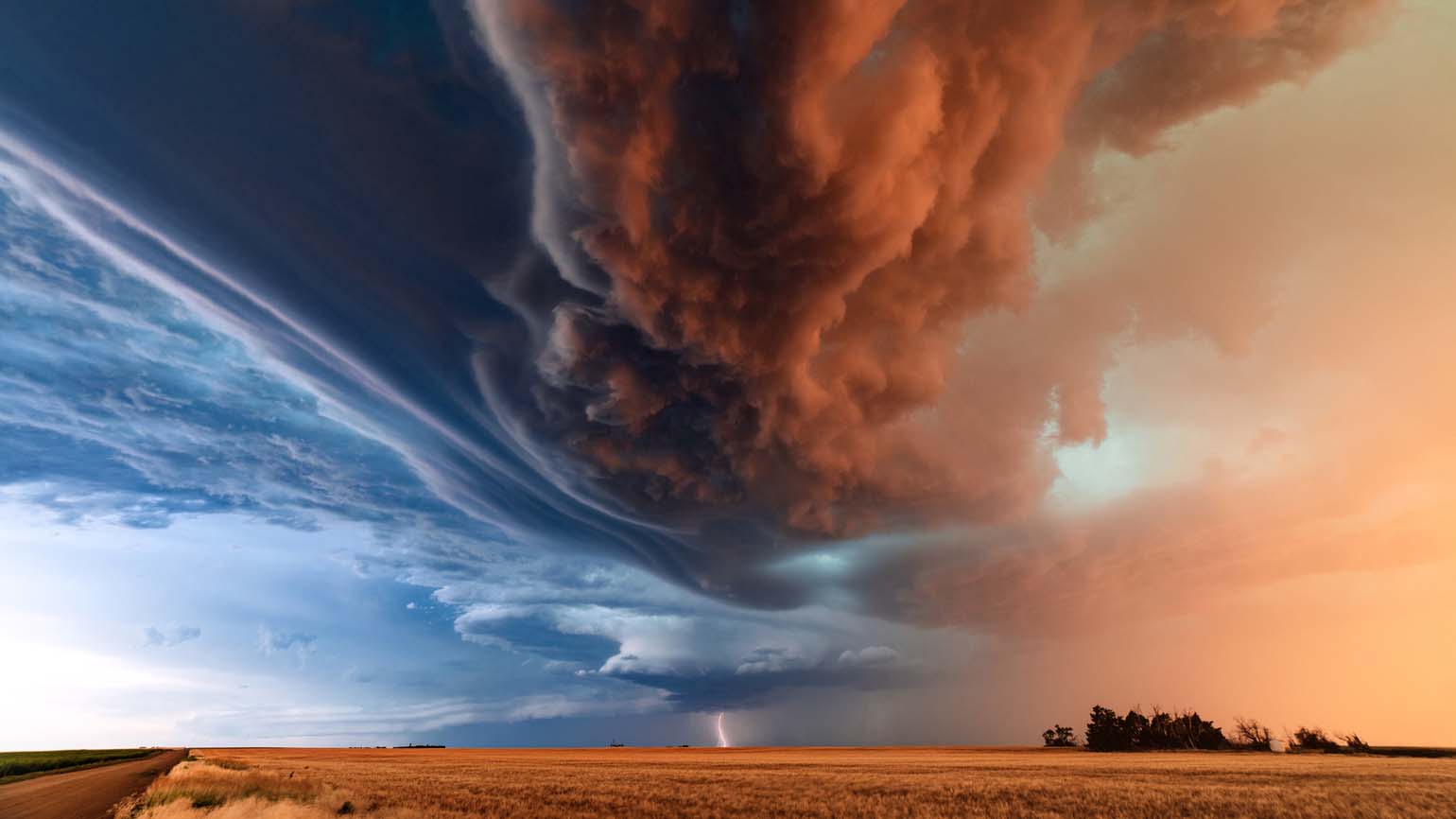
Heavenly Protection During Natural Disasters

Everyone has weathered storms in life, some more literal than others. The following stories are from people who found heavenly protection from natural disasters, deepening their faith in the process. Each true tale proves that God never leaves our side—whether the storm we’re experiencing is a challenging time, or an actual tornado.

Protected from a Tornado

“All teachers and students, please seek safety immediately,” the principal announced over the intercom. “Tornado drill.” The sky was dark, lightning flashed, thunder roared, hail pelted the roof. In the distance, sirens wailed. Teacher Nikki McCurtain knew this was no drill. But as she led her students to safety, she tried to draw on God’s strength. As she told the children to crouch down and cover their heads, Nikki started to pray…

Read about Nikki’s prayer here.

Saved from a Wildfire

Thunder boomed above Douglas Scott Clark’s head, so loud the ground reverberated under his feet. A flash of lightning bleached out the sky. Douglas was out in the Smokey Mountains, hunting with his dogs when the storm started. But he didn’t turn back. Instead, he continued on. Until he saw something that made him stop in his tracks. As Douglas watched, a bright, luminous sphere descended from the clouds. The phantom ball hovered a few inches above the ground, then moved around the mountain, leaving a trail of flames in its wake. And it was headed right for him!

Read Douglas’s story here.

Warned by a Voice

Like so many people in the Northeast, Nicole Notare would never forget hurricane Sandy, the superstorm that killed over a hundred people and left thousands more homeless. The damage was incredible. And, a week after the storm hit, Nicole was still cleaning up the damage down to her own property. While removing fallen braches from her car, she heard a voice. “Move,” it said.

At first, Nicole thought she was just hearing things. But then, it spoke again: “Move.” The voice was calm. Insistent. So Nicole listened.

Read Nicole’s story here.

Rescued from Ruins

Bang! Amy Molinaro woke and opened her eyes to… darkness. Unnatural darkness. No streetlight seeping between the blinds. Suddenly, something heavy and hard fell on her, pinning her against the mattress. The air was thick, suffocating. Was she dreaming? No. The crushing weight was all too real. She twisted left and right, but couldn’t get free. She was stuck.

Find out what happened to Amy here.

Calmed in a Storm

The tornado was fast approaching. Out driving on the highway, it was too late for Linda and her husband, Nick, to take shelter. Instead, they just pulled over. The sky darkened. The wind howled. Before they could brace themselves, the wind spun the car. Linda and Nick tried to get as low as they could. Glass shattered. When Linda glanced up, the dashboard was gone, ripped away by the wind. Only wires left, blue and red, dangling. Then she saw it. A flash of copper on the floor under the dashboard wires. A penny!

Read more about Linda’s penny here.

Heaven, Hell and ‘The Garden of Earthly Delights’

Around the year 1500, a middle-aged Dutch painter created a three-paneled artwork depicting the corruption, and ultimate downfall, of humankind. Dubbed “The Garden of Earthly Delights,” Hieronymus Bosch’s artwork shows the Garden of Eden, the sins of men on Earth, and a terrifying fate in purgatory. To see it, you’ll have to go to Museo del Prado in Madrid… or you can check it out online thanks to the New Yorker magazine and NTR, the Dutch public broadcasting service.

It’s hard to know where to look first, the painting is so rich with imagery—both beautiful and bizarre. Compare the cute, happy bunnies by Eve’s feet in the first panel, with the horrifying, humanoid rabbit in the last. The symbol for “Be fruitful and multiply” has transformed into a demonic torturer.

Garden of Earthly Delights by Hieronymus Bosch, Museo del Prado

Kind of makes you want to be good, doesn’t it? Even after more than 500 years, these brushstrokes still have the power to move our conscience and stir our soul. Take some time to explore the painting and discover what it means to you.

Has a work of art ever inspired your faith? Has your faith inspired you to create a work of art? Share the paintings, sculptures and other incredible creations that have influenced you!

Read more amazing stories! Click here to subscribe to Mysterious Ways

He Asked God How to Cope With His Devastating Parkinson’s Diagnosis

“You have Parkinson’s disease and progressive supranuclear palsy.”

With those words, my life was changed forever. I sat numbly on the examination table as my neurologist explained that, in addition to Parkinson’s, I had an incredibly rare, often fatal, form of palsy that also attacks the body’s motor systems.

“As the diseases run their course, you’ll lose your ability to walk and stay balanced,” she continued. “Eventually, even chewing becomes difficult…. I’m sorry, Mr. Roberson, but you’ve got about four to seven years to live.”

Everything she said after that was a blur. At 55, it felt as if my life was pretty much over. My dad had died of ALS in 2007. I watched him fight that disease for 11 years. He was the most faithful, God-fearing man I knew, and I could never understand why God let him die such a horrible death.

Now I was going to die in almost the same way.

At home, I headed to the hill behind my house, where I go when I want to talk to God. I drove there in a golf cart I’d bought a while back for my grandkids to play around with. When I got to the top of the hill, I sat there and prayed aloud. “What am I supposed to do, God?” I asked. “I’m not that old. I can’t work anymore. I can’t drive. I’m going to die just like my dad. How do I handle this?”

The air was still. As clear as day, I heard the words: “Build dollhouses.”

That could not be right. Was someone hiding in the bushes, playing tricks on me? It was the most ridiculous thing I’d ever heard. I worked for a phone company for 33 years, slowly climbing my way up to the position of sales manager. I knew how to fix stuff and keep an office running. I did not build dollhouses.

“You’ve got to be kidding me,” I said and turned the cart to drive back down the hill.

But what if that had been God’s voice? What if he was trying to tell me something and I misinterpreted the message? I turned back to make sure.

“Maybe I misunderstood, God,” I said. “I’m asking you for some direction. Please help.”

The same voice cut through the silence with resounding authority: “Build dollhouses.”

I’ve been a churchgoing man all of my life. Even after my dad died and my relationship with God became strained, I kept up with church. My wife and I raised our daughters in the church. I sat on church committees. I volunteered. I stayed faithful, no matter what, just as my dad taught me.

But I had never heard God talk to me like that. I wasn’t sure what to make of it.

I had an appointment with my neurologist the next day. “I’m thinking about building dollhouses,” I said, expecting her to laugh.

“That is an excellent idea,” she said. “You need something to keep your hands and your brain engaged. Depression is a real danger with Parkinson’s. Get yourself a kit on the way home and start today.”

Maybe it wasn’t as silly a concept as I’d originally thought. I bought a kit, much like the one I’d bought 15 years earlier for one of my daughters. I remembered thinking back then how boring it must be to build a dollhouse. As I settled in to start working, I didn’t feel much differently.

I fit the pieces together and fastened them with glue. The kit came with some items of furniture and whatnot, and I arranged them inside the finished house.

I called my wife in to take a look. I’d already told her about what happened on the hill.

“Nice,” she said. “You enjoyed it?”

“I’ll be honest with you,” I said. “I have no idea why I’m doing this. It just makes no sense!” I felt my hope slipping away. The neurologist’s warning about depression, it seemed, could easily become a reality.

My wife looked at the dollhouse. “Barry, honey, you’re doing this for the wrong reason,” she said. “You need to build this for someone. Why not give this one to Kate at church?”

She meant the little girl at our church who’d been diagnosed with cancer. I thought about presenting the dollhouse to Kate. Maybe her face would light up for at least a moment and she’d feel special.

“That’s a great idea,” I said.

I went back to work, painting the house and adding extra realistic details. I even painted Kate’s name on the little mailbox out front so it would look as if the house belonged to her.

Parkinson’s had already started to cause my limbs to shake. Sometimes I found it hard to concentrate or remember what I’d done five minutes before. But as I worked, I noticed something. My hands became sure and steady. My mind was focused. The next time I looked up from the work, it was already dinnertime. The day had flown by.

My wife drove me to Kate’s house to give her the dollhouse.

“You made this for me?” she said. “I get to keep it?”

I nodded. Her face lit up. “Oh, thank you, Mr. Barry! I love it!”

Instantly, any feelings of depression I had just melted away. I was indescribably happy to see that something I’d made had given this little girl joy. All I wanted was to get started on another dollhouse. I felt certain now that God would direct me to someone who needed it.

I got to work. This time, I went online and ordered extra pieces of furniture to make the house look even more realistic. Sure enough, by the time I was done, I knew where the dollhouse was going. Another sick child’s face lit up, and I felt convinced I’d found a calling.

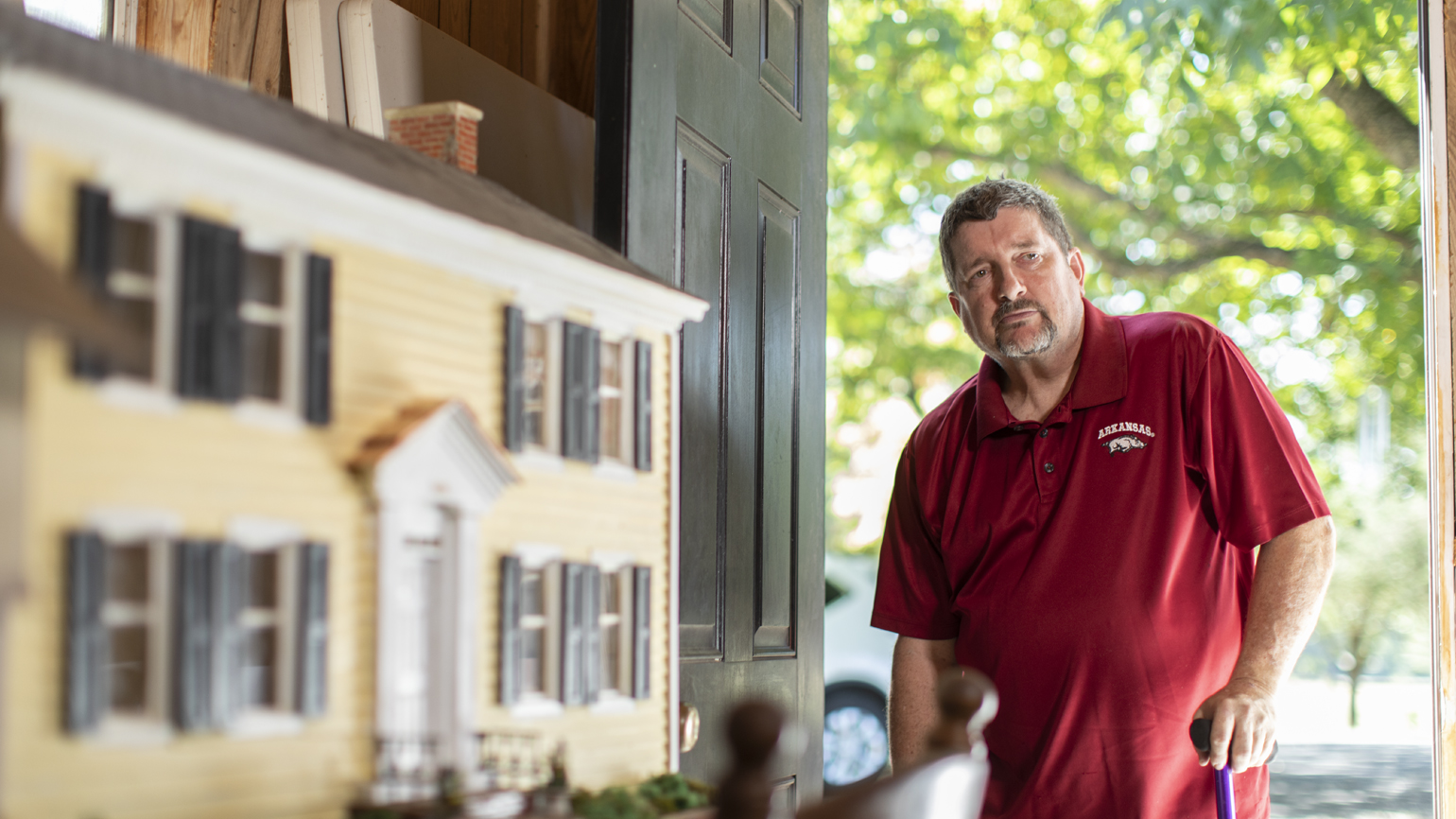
I’ve been building ever since. So far, I’ve made 130 miniature structures, including many dollhouses as well as gas stations, woodworking shops and baseball stadiums.

Requests keep rolling in. People find me through word of mouth or through my website or Facebook page. They tell me about a child in need, and I get to work. The materials can cost hundreds of dollars, but I never charge for my work. I prefer to give away the miniature structures to children, to people who have helped me or to those who are just in need of a special pick-me-up.

It’s been seven years since I started. Though my health has gotten worse, I’ve outlived my original diagnosis. I’ve broken bones 37 times by falling, and sometimes my limbs jerk uncontrollably, striking my face and body. But all of it disappears when I sit down to work on a dollhouse.

I think about my dad a lot these days. This whole experience has helped me better understand his faith and my own. When I think of him now, I remember the kind words people shared with me at his funeral. “Your dad is why I came to church. He visited folks and prayed with them, even when he himself was sick. He was an inspiration.”

You never know how God is going to work in your life. I never could’ve guessed that I’d be more fulfilled building dollhouses after my diagnosis than I ever was punching a clock at a nine-to-five. If there’s one thing I’ve learned, it’s not to be ashamed to answer God’s call, even if it’s to do something you never expected. He won’t lead you astray.

Did you enjoy this story? Subscribe to Mysterious Ways magazine.

How Building Dollhouses Helped One Man Cope with Parkinson’s Disease

Hearing God Through Your Dreams

Does God still speak to us in dreams today? Scripture points to the answer: yes. God’s never-changing character (Hebrews 13:8) means he continues to meet with us at night, as he did in the times of the Bible, because sometimes it’s the only time our minds are quiet enough to hear him. Just as Jesus spoke in parables, God uses our dreams to convey messages to us. But how can we figure out what he’s trying to tell us? We asked Charity Virkler Kayembe, who has a doctorate in biblical studies and is the author of Hearing God Through Your Dreams, to share what she’s learned.

How significant are dreams to God? Very! If we add up all the Scriptural references to dreams and visions, and all the interpretations and actions that people took because of dreams, it comes to a third of the Bible. In addition, many important events happened while our biblical heroes were sleeping. For instance, Solomon received his legendary gift of wisdom in a dream. And Joseph, the earthly father of Jesus, received instruction to take Mary as his wife in a dream. Because God values dreams and visions, we should too.

Why are some dreams literal, while most are symbolic? Some people, like creatives, visionaries—really right-brained people—have more literal dreams. But for 95 percent of us, our dreams are usually symbolic, speaking to us in a figurative language we need to learn to understand. Symbolic language does not make the dream any less valid or true. Remember Joseph’s dream in which the sun, moon and 11 stars were bowing before him and all of his family members immediately recognized what the symbols represented (Genesis 37:9–10)? Though the meaning was veiled in figurative expressions, it was a true message to Joseph from God.

Why does God allow deceased loved ones to appear in a dream? As I mentioned, most dreams are symbolic. Therefore every image we see in the dream—including people, living or deceased—is most likely symbolic. Hence, the first question we ask about this person is: What do they mean to us? What is the main characteristic we identify in them? We also consider the main action in the dream, as well as the main emotion. Did you feel peaceful or angry? Were you disappointed or grateful? Finally ask yourself, Where in my waking world am I experiencing this and feeling this way? Once we match up the emotions, we know what area of our waking life God is speaking to through our dream.

What if I don’t recognize anyone in the dream? Remember the principle that most dreams are symbolic and that the symbols are personal to the dreamer. The key may be in what the person in the dream looked like or their name. If you’re talking with them, how did you feel about it? Were you excited to talk with them? Were you anxious? Often it’s less about the people and more about the action going on in the dream. For example, let’s say you just got a new job in your waking life. That night, you have a dream in which you’re talking with people you don’t know yet you feel comfortable with them. God may be giving you peace about the new job you just accepted, reassuring you that you’re going to fit in just fine.

What does it mean if celebrities show up in our dreams? Even celebrities are symbolic! In fact, this helps you not rush to judgment and maybe disregard the dream as unreal. I’d recommend asking yourself these questions about that celebrity: What is the meaning of their name? What is their dominant personality trait? What are they known for? For example, one time I dreamed about Whitney Houston. I couldn’t figure out what she had to do with my life. But as I thought about it, I remembered I had been praying about whether I should go on a mission trip to Texas. Well, her last name was my answer. If I had not looked at her as a symbol, this dream would never have made sense.

Is every element or detail in a dream important to God? Some people have vivid dreams—pages of details you might be tempted to write down. Nobody wants any part of God’s revelation to fall to the ground! But often, if you try tofocus on all the details, you can become bogged down and confused and won’t be able to interpret the dream. What’s helpful is to keep summaries of our dreams, as Daniel did in the Bible. I usually write down just one or two paragraphs.

How will we know if we interpret the dream correctly? All interpretations belong to God, so ask him for guidance first. The interpretation also has to resonate in the dreamer’s heart—and then you’ll know you have the answer. Dreamwork is supposed to be fun! It shouldbe easy enough for a child to do. Ifwe want to get the right answers, we have to ask ourselves the right questions. So the right questions would be: What is the waking-world setting of the dream? That is, what were you thinking about and praying about before you fell asleep? What is the dream’s main action? What is the main emotion? When you overlay these actions and emotions upon your waking world, you are able to match up your dream with something that’s going on in your life right now. All of these secondary things—such as what a person or thing represents in the dream—will shift into focus at that point.

Does everyone dream at night? Sleep studies have proven that we all dream every night. The problem people may have is that they’re not remembering their dreams, but there are several things you can do to help with your dream recall. One thing you can do is to ask for dreams infaith before going to sleep. Just like Scripture tells us: “You do not have because you do not ask God” (James 4:2). You can pray, “Father God, thank you for speaking in dreams. I believe in dreams. In your Word, you promised to reveal yourself indreams and visions. Please make this a reality in my life.”

Are there any other ways we can show God that we want to remember our dreams? Yes. You can put a journal by your bed and leave it open to a blank page so that it’s ready to write in. This is a signal to our hearts that says, “When I have a dream, wake me up! I care about it. I want to remember it.” Another helpful tip is to let yourself awaken naturally. So many of us wake up to loud obnoxious alarm clocks, and that routine shatters our dream recall. But there are alternative devices we can use. For example, I have nature sounds as my alarm. They’re quiet and peaceful and the volume gradually increases, so I’m not jarred awake and I can easily remember my dreams.

Does the amount of sleep we get each night affect how well we recall our dreams? Definitely. When you fall asleep atnight and when you wake up in the morning, you’re experiencing alpha brain waves. It’s this prayerful, reflective, meditative state. You’re notreally sure if you’re awake or asleep, and the veil between the physical realm and spiritual realm is very thin.That’s also the brain wave state we’re in while we dream. Sleep studies using electrodes are able to read people’s brain waves and confirm this. When we reach REM (rapid eye movement) sleep cycle, science knows we are dreaming. The REM cycle happens every 90 minutes. So we will fall asleep and be in alpha, then go down to theta, which is as lower brain wave state, and then to the delta stage. Then we come back up to alpha and have a few more minutes of dream time. Every time we cycle back up to alpha, the period of dream time increases. So if you sleep for a full eight hours, that whole last hour is going to be almost all alpha-level dream-time sleep, full of revelation and messages for us from heaven.

Have You Ever Met a Miracle?

I’ve been thinking a lot about how people can be miracles to other people.

For instance, sometimes when I’m upset about something (like really, really upset), I happen to run into a woman named Esther who works in the same building as the Guideposts office. Whenever I see her, she dishes out wisdom that applies directly to whatever particular problem I’m facing. Sometimes unknowingly.

Like last Friday. I was annoyed about something. It had kept me up all night. I talked to God about it, but wasn’t sure how to handle the situation. Then I ran into Esther at work. I hadn’t seen her in a couple of weeks. She asked how my summer was going. We chatted a bit. And then, all of a sudden, she switched topics and gave me advice on exactly what was bothering me. I couldn’t believe it. I hadn’t even told her I was upset!

“Esther, every time I see you, you know just what to say,” I told her, dumbfounded. She just laughed, like it was no big deal.

But it was to me. I always expect God’s answers to come to me through a loud voice or some huge message written on a billboard. More often, though, God speaks to me through other people. Like Esther, who always seems to pop up out of the blue with a message that’s too “on the money” to ignore.

MIRACLES BIG AND SMALL

I guess you never really know what impact you might have on someone with just your words or how God is using you to change another person’s life. Esther is living, breathing proof to me that we can all be miracles to one another.

What about you? Have you ever “met a miracle”? Share your story below!

Happy Holy Week

Let me be frank. There are things about Holy Week that I dread. There’s some wonderful music, I love carrying palms on Palm Sunday (and seeing them pop up in people’s pockets around town), I love the celebration of the Last Supper on Thursday. But then there’s Good Friday. And it’s so sad.

Do you ever get that feeling? Not really wanting to stick around sadness, wishing it would go away, avoiding that phone call or that visit with someone who’s faced loss, wishing you could skip a certain funeral?

Down times can take the stuffing out of us. They can do that for me. I can understand only too well why Jesus prayed in the Garden of Gethsemane, “Let this cup of suffering be taken away from me.”

I think of the cowardice of the disciples, Peter denying his Lord three times before the cock crowed, the horror they must have felt watching the Crucifixion.

Interestingly enough, it’s the women who really stuck by till the bitter end, “Jesus’ mother and his mother’s sister, Mary the wife of Clopas and Mary Magdalene stood near the cross” according to the account in John.

And who are the ones who first see Jesus’ resurrected self on Easter morn? The women. Mary Magdalene thought he was the gardener at first. Then he says her name, “Mary.” He knows her. She knows him.

So this is what I remind myself at Holy Week. Be present. Be aware. Be patient. Be attentive. Even to the pain of it all. Being open to that allows us to see the bright, brilliant, dazzling, impossible-to-comprehend truth.

The Lord is risen, the Lord is risen indeed. It’s coming. Right around the corner.

Hands of Time

My dad was a very methodical man. Once he retired, every morning he’d get up, take a shower, prepare a breakfast of cereal and coffee, and then draw up his to-do list for the day. The house and the 11 acres of property it sat on needed constant upkeep.

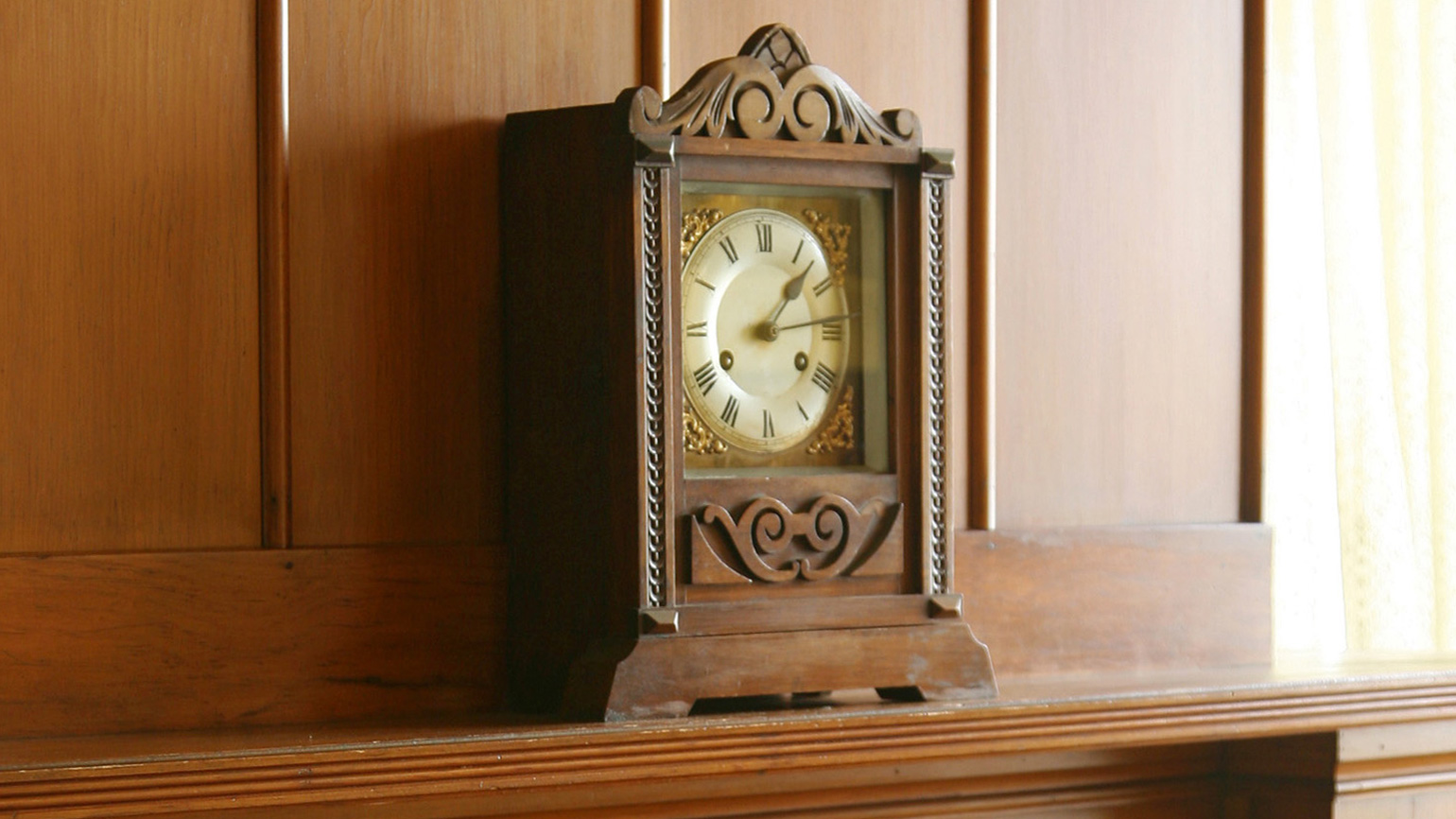
In the summer he planted and tended the garden (keeping the squirrels out was a constant battle). In the winter he made sure the pile of logs for the wood-burning stove never got too small. Even at daylight savings time, he’d make sure to reset every clock in the house, from the digital one on the microwave to the old mantle clock he’d bought Mom on their 15th anniversary.

Dad never let a task slip from his mind. If it was on his list, it got done.

In late October 2006, Dad was hospitalized with a serious illness. He passed away in mid-November. Mom and I walked through the house after the funeral in a daze. It always seemed like without Dad, this place would fall apart. What would we do now?

I looked at the clock. An hour ahead. Dad never had the chance to reset them from daylight savings time to standard time.

Together, Mom and I managed to fix every clock except for one—that anniversary chime. It was a challenge—the chimes needed to match perfectly with the numbers on the face of the clock or it would ring out the wrong number of chimes on the hour. Just as we began our attempt, we heard a loud pop and all the lights went out.

Great. I thought. This place is already falling apart without Dad.

It took the electric company about 40 minutes to come and hook us back up. We were in no mood to work on the clock. “Let’s just wait until tomorrow and try again,” I said to Mom.

The next morning—pop! The power went out again. Thankfully, the electric company responded in half the time it had taken them the night before. With the lights back on we started getting ready for the day. A loud, musical sound broke the silence.

The anniversary chime—now set to just the right time.

Dad may not be here anymore, I thought, but someone is still taking care of us.