Embrace God's truth with our new book, The Lies that Bind

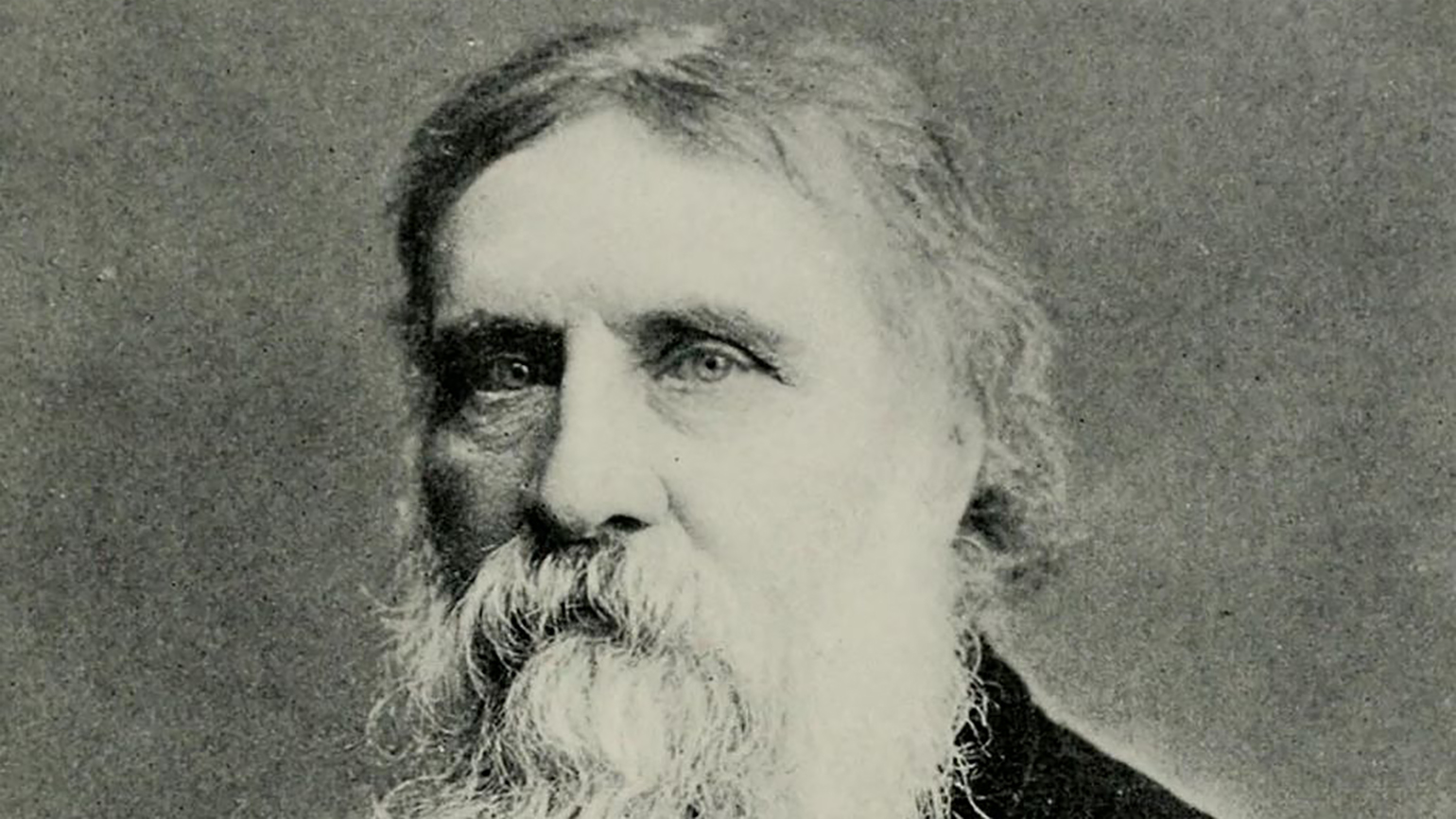
George MacDonald: The Fantasy Writer Who Shaped C.S. Lewis, J. R.R. Tolkien and Madeleine L’Engle

One nineteenth century man defined fantasy writing for a generation of writers. W.H. Auden called him “one of the most remarkable writers of the nineteenth century.” G.K. Chesterton said his writing “made a difference to my whole existence.” C.S. Lewis referred to him as his “master.” He was close friends with Mark Twain and Lewis Carroll. His name? George MacDonald.

MacDonald wrote prolifically during his life—publishing more than 50 books and numerous essays. His most well-known books Phantastes, The Princess and the Goblin and Lilith, were groundbreaking works that used the medium of fantasy to explore faith and the human condition.

Community Newsletter

Get More Inspiration Delivered to Your Inbox


His books did not sell particularly well while he was alive, but later writers preserved his literary style for future generations. Here are a few authors who credited MacDonald with influencing their work:

Lewis Carroll

Lewis Carroll, the creator of Alice in Wonderland, was a close friend of the MacDonald family. In 1863, Carroll brought MacDonald a draft of a story he was working on about a girl named Alice who fell down a hole and went on an adventure. MacDonald gave the story to his wife and children to read—they loved it. MacDonald advised Carroll to lengthen the story and encouraged him to publish it. Carroll was also a photographer and took pictures of many of MacDonald’s 11 children.

C.S. Lewis

MacDonald died before C.S. Lewis had heard of him, but had a direct impact on Lewis’ faith and work. Lewis referred to MacDonald as his story “master.” In particular, MacDonald’s book Phantaste, had a huge influence on Lewis’ faith. He wrote about the experience in his book, Surprised by Joy, “It is as if I were carried sleeping across the frontier, or as if I had died in the old country and could never remember how I came alive in the new.” Lewis admired MacDonald so much he put together a spiritual collection of MacDonald’s words called George MacDonald: An Anthology. Lewis wrote, “I have never written a book in which I did not quote from him.” Many readers came to know of MacDonald’s work because of Lewis.

J.R.R. Tolkien

Although he would later criticize MacDonald’s work for being too moralizing (something he also criticized in his own novel The Hobbit), scholars believe MacDonald influenced Tolkien’s stories. Tolkien enjoyed some of MacDonald’s fantasy stories when he was young and read The Princess and the Goblin to his children. Tolkien said that MacDonald’s goblins and talking trees may have had a “remote” influence on the ents and orcs that inhabit his Lord of the Rings series.

Madeleine L’Engle

Madeleine L’Engle’s seminal work A Wrinkle in Time follows in the steps of Lewis and MacDonald by using using the genre of fantasy to explore faith. She said MacDonald gave her “renewed strength during times of struggle.” L’Engle even wrote an essay about how his work influenced her view of God called “George MacDonald: Nourishment for a Private World.” She called MacDonald “the grandfather of us all–all of us who struggle to come to terms with truth through imagination.”

MacDonald was not well-known in his lifetime, but his faith and legacy live on in the generations of writers he inspired with his fantastical stories.

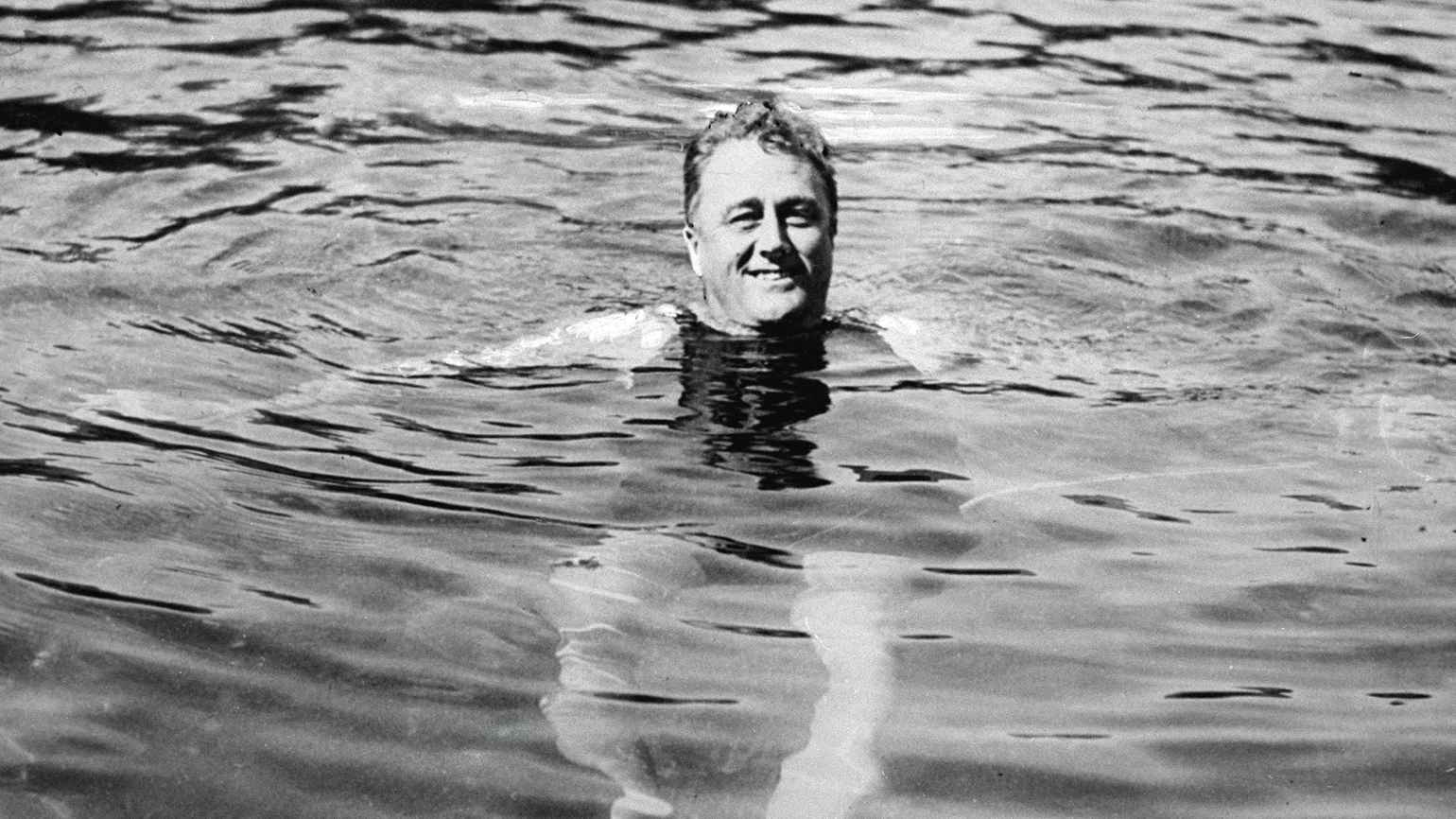
Franklin D. Roosevelt’s Healing Waters

George Foster Peabody was impatient to end his meeting. He was one of the richest men in the nation in 1923, a banker and philanthropist. The man in front of him was desperate to keep his 300-room inn afloat. He’d come from tiny Bullochville, in southwest Georgia, to New York City for a loan. But what did Peabody care about a down-on-its-luck resort in the middle of nowhere?

“One more thing,” the inn’s owner said. “There’s this boy. He has polio.” He told the story of Louis Joseph, whose family had brought him to swim at the inn’s naturally warmed pools for the past three summers.

“I can’t explain it,” the innkeeper said. “The boy uses two canes. But he’s walking.”

Peabody leaned forward, suddenly intrigued. “I have this friend,” he said. “This could be the news he’s been waiting for…”

The friend in question was Franklin Delano Roosevelt, a man whose name was synonymous with East Coast power and privilege. Harvard-educated, he’d served as a New York state senator and assistant secretary of the Navy in the Wilson administration. Men looked up to him. Women swooned over him. His distant cousin Teddy had been a popular president, and there seemed little doubt that Roosevelt would follow in his footsteps. He’d even been preparing a run for governor of New York.

Then the unthinkable happened.

In 1921, he went sailing with his wife, Eleanor, and their five children. A day capped by a long swim in the ocean. Roosevelt was 39, in the prime of his life. But the next morning, he woke to stabbing pains in his legs. By evening, he could no longer stand. Too weak to even grip a pencil. Completely dependent on Eleanor for his care. Polio—an incurable, paralyzing virus—was sweeping the country, infecting thousands of people. Often spread through untreated sewage, it was the scourge of lower- to middle-class families. Not someone of Roosevelt’s stature. Yet, after weeks of misdiagnoses, a doctor finally broke the news: Roosevelt would never walk again.

It was a devastating blow. There was no chance, it seemed, that the onetime state senator would hold political office again. “He felt as if God had betrayed him,” says Christine Wicker, a journalist and author of the recently published The Simple Faith of Franklin Delano Roosevelt. “He went into a deep, deep depression.”

Still, Roosevelt refused to believe he would never walk again. Securing his legs with steel braces, he dragged himself, hour after hour, along parallel bars, the pain excruciating. He tried ultraviolet light, massage therapy, electric currents. He worked his muscles in warm water and cold water. He consulted with the nation’s top doctors. There was no progress. With braces and crutches, he could take only a few steps before the pain overwhelmed him.

Even so, Roosevelt stayed in the public eye. In the summer of 1924, he agreed to make the nominating speech for Al Smith, the Democratic presidential candidate. With the help of his son and a crutch under each arm, Roosevelt approached the lectern, dragging one foot after the other, to the pity of the crowd. It was later that evening that he ran into George Peabody and learned about the miraculous pools of southwest Georgia.

That’s how Roosevelt found himself in Bullochville that October. His destination—the Meriwether Inn—was a three-story monstrosity. A money pit ever since its construction in the late 1800s. And no wonder. This was an area of struggling farmers, hardly a tourist draw. Roosevelt himself would have never come if not for the inn’s pools of mineral water, pumped from nearby Pine Mountain.

Inside the inn were two small rectangular pools, and outside another pool, unremarkable in every way. News of little Louis Joseph hadn’t yet spread. And so, when Roosevelt dipped his legs into the 88-degree water, he was practically alone. In the four-foot-deep pool, he was able to stand and even take steps. Instantly energized, he splashed about for hours, carefree. And he met Louis Joseph—living proof of the answer Roosevelt had been searching for.

Folks in Bullochville were abuzz about Roosevelt’s stay. An Atlanta newspaper published a story. The following April, when Roosevelt returned, he found himself in the company of a dozen other “polios,” as they were known. Roosevelt exercised with them daily, teaching them what he’d learned, cheering them on. There was no medical staff at the Meriwether. “We’ll be our own nurses and doctors,” Roosevelt said. As Wicker tells it, every time a new polio survivor arrived, Roosevelt personally welcomed them, bringing them to the pool and doing a formal evaluation of “how each of their muscles functioned, its strength and range of motion.” Visitors started calling him Dr. Roosevelt.

More polio survivors arrived each week. Thirty-one the first year, 50 the next year and 70 the year after that. Though Roosevelt’s own progress had stalled, he found himself returning to the dilapidated inn, staying for weeks, then months, at a time. His friends, even Eleanor, couldn’t understand the appeal. But Roosevelt felt at home there. He enjoyed mingling with the other survivors, the easy banter. Some of them were getting stronger, walking even. But his interest in them was becoming less about their physical struggles and more about who they were as people.

It was as if he were seeing the world through new eyes. In 1926, he bought the Meriwether Inn for $200,000, some two thirds of his net worth. Friends warned him against it, afraid he wasn’t focusing enough on himself or finding his way back into politics. Roosevelt ignored them. Not long afterward, he led a campaign to change the town’s name to the more appealing Warm Springs.

In 1927, Roosevelt spent half the year in Georgia. It wasn’t just the polio survivors he was warming to, though more than a dozen had found jobs at the Meriwether Inn. Roosevelt tooled about the countryside in his Ford Model A, stopping to talk to farmers, tradespeople and shopkeepers. He asked about their families, crop prices, the hardships they faced. “He was always the squire,” a resident recalled in the book The Squire of Warm Springs: FDR in Georgia, 1924 to 1945, by Theo Lippman. “But he was genuinely liked and seemed to like everybody.”

Folks would volunteer how they’d been out of work, how they wished for a better life for their children, how they worried about being unable to provide for themselves in old age. Many of the homes Roosevelt visited lacked electricity. The sagging economy was already hitting people hard.

Roosevelt never found the physical healing he’d sought in Warm Springs. He spent most of his time in a wheelchair. But he wasn’t the same man who’d arrived in 1924. In the three years since, he’d come to see polio as a test of his faith. He’d found a new strength in the enduring friendships he made with people he seemingly had little in common with.

Five years later, Roosevelt was elected president in a landslide. The country was hurting from the Great Depression. But Roosevelt was specially equipped for the job. He remembered the courage, the perseverance, of the folks he’d met in Warm Springs. Fear was their biggest obstacle, one he was all too familiar with. Many New Deal programs were a direct result of the time he’d spent in Georgia. The Tennessee Valley Authority to supply electricity throughout the South. The Social Security Administration to provide a safety net for the aged. The Civilian Conservation Corps to give the unemployed work and create parks, dams and roads. All of them needs Roosevelt had encountered while driving the Georgia countryside.

“The polios came to him, weakened, their spirits crushed…,” Wicker writes. “He had no cure. Just some water and his own faith.”

In the end, it wasn’t only Roosevelt, or those affected by polio, who found hope at the inn. The faith Roosevelt gained there strengthened an entire nation to get back on its feet. An unexpected healing from the healing waters of Warm Springs.

7 of the World’s Healing Waters

Finding the Perfect Greeting Card

Have you ever felt divinely led to buy the perfect greeting card or gift for someone?

That’s what happened to me back in March when I visited the Frick Collection, a museum in New York City. I stepped inside the Frick’s gift shop, hoping to find a greeting card for Roberta Messner, a frequent Guideposts contributor. There was a whole wall of cards and many, many options to choose from. But one card in the middle of it all seemed to be calling out to me.

It was square-shaped and had a photo of an antique clock on it. Apparently the clock was one of the many treasures on display at the museum, though I hadn’t seen it on my visit.

“That’s the card,” I thought. “Get it for Roberta.”

I purchased it, wrote a message inside and dropped it in the mail.

About a week later, I got an email from Roberta. “I ADORE MY CLOCK CARD!” the subject line read.

“It is so wonderful,” Roberta wrote in her email. “It reminds me of so many memories of my dad who was an antique clock dealer.”

An antique clock dealer? I couldn’t believe it. I had no idea Roberta’s dad was a clock dealer. Had I been divinely nudged to pick out that card for her?

What do you think? Share your thoughts below. Plus, don’t forget to share your own divine shopping stories in the comments or by emailing us at mw@guideposts.org!

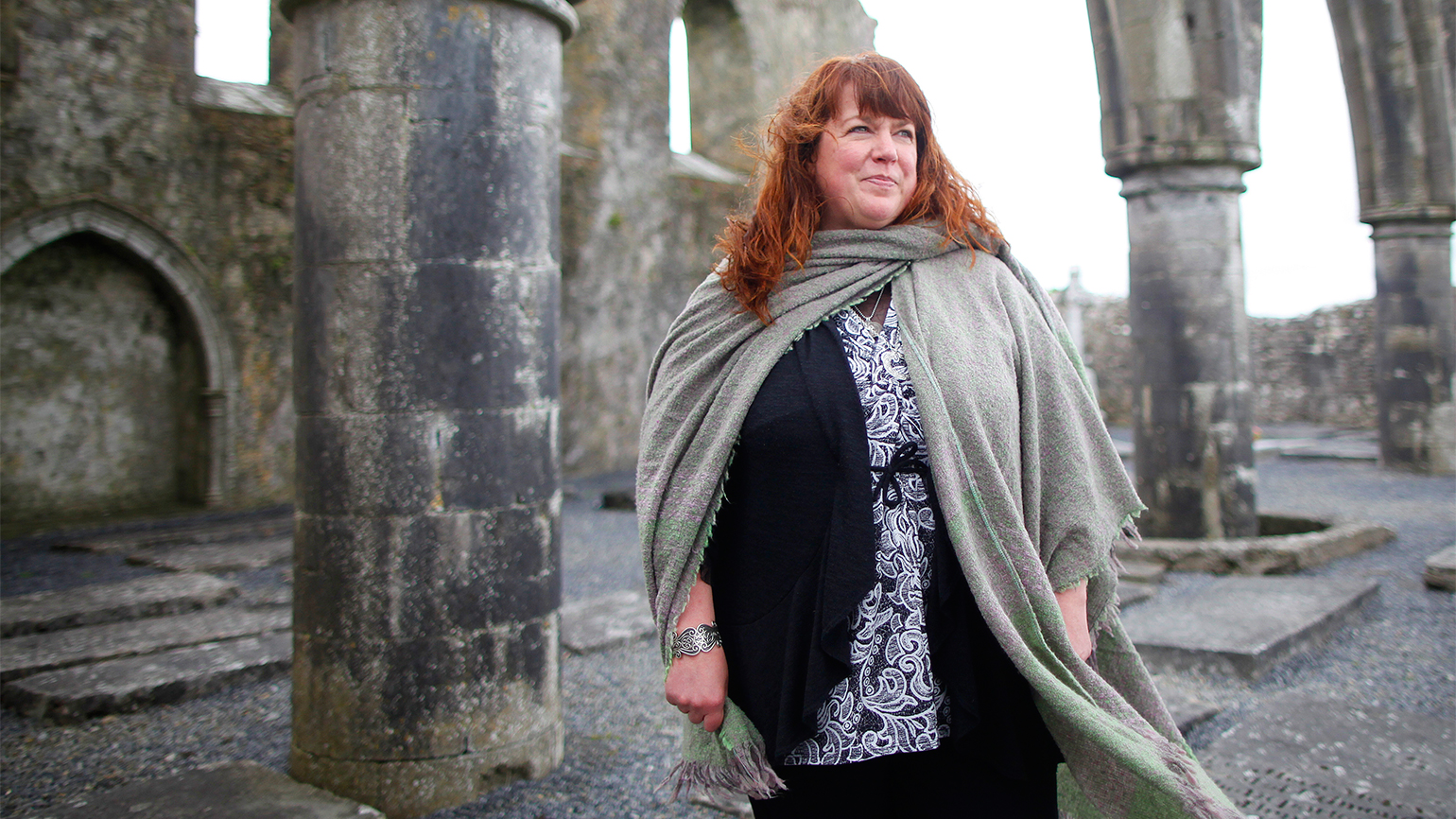
Finding the Mystic Within: A Conversation with Christine Valters Paintner

Poet, teacher and photographer Christine Valters Paintner is a modern-day mystic. She’s the author of 10 books, including the best-selling The Soul of a Pilgrim; abbess of the online retreat center Abbey of the Arts, at AbbeyOfTheArts.com; and a Benedic­tine oblate, a layperson affiliated with a monastic community. Five years ago, she and her husband sold all their possessions and moved from Seattle to Europe, eventually settling in Galway, on the western coast of Ireland, attracted by its monastic traditions and Celtic mysticism. We Skyped Paintner to find out more about her pilgrimage and how we can cultivate our own inner mystic.

What drew you to a life of monks and mysticism?

I’ve always had a contemplative heart, which means I’ve always been drawn to periods of silence and solitude, even though I grew up in New York City. When I was 21, I was diagnosed with rheumatoid arthritis, and I quickly became aware of the rush of life and the push to produce and keep your schedule as full as possible. I couldn’t ignore what my inner voice was tell ing me—my inner monk, if you will. I needed to find a gentler way.

Does everyone have an inner monk, just waiting to come out?

That desire for a different way of being in the world is often the first spark that brings people to our abbey. A long­ing for a way to live that’s not quite so hectic and allows time for savoring. A voice deep inside that knows the importance of rest. We don’t always have a name for that longing, but we all have it within us.

How can you take what a monk does and apply it to “normal” life?

At the heart of it is spiritual practice. For instance, an important monastic principle is radical hospitality, wel­coming the stranger in our midst. That can also mean welcoming the as­pects of ourselves that we pay less attention to—our secret yearnings and needs. We need to acknowledge them in our contemplative practice.

READ MORE FROM CHRISTINE VALTERS PAINTNER: HOW TO CHANNEL YOUR INNER MONK

Is that what it means to cultivate your inner monk?

The monk strives to glimpse the sacred in all things, in all people and in the self. We need to slow down enough to be able to receive those little shim­mering moments in which we can actually see beneath the surface of our everyday lives. Succeeding at that takes time, practice and commitment. That’s why we do it in community.

We have people come here to Ireland on pilgrimage from all over the world. We’ll have an afternoon when we do photography, which is another way of seeing things differently and paying attention. I talk about the difference between taking photos and receiving the gift of images that arrive to us in many ways.

That’s a lovely concept. How does it work?

The language of photography is quite aggressive. It’s all about shooting or capturing or taking. I encourage people to look for whatever is calling their attention. The camera becomes a lens into how you might see a bit more deeply. It’s whatever has your attention for that moment. You may suddenly notice a flower that’s dying and, because you’re looking at it in this more reverential way, it becomes a thing of beauty. You receive it.

How does your camera connect you with God?

It becomes a practice of intention. Instead of whipping out your camera and trying to capture everything you see right away, slow down and move into a relationship with the environ­ment, really paying attention to how God might be at work in the world.

You use the word peregrination. What is that?

Peregrination, or peregrinatio, is an ancient monastic practice that is unique to Ireland. It basically means taking a pilgrimage without a specific destination. In the early days, monks would get into a boat called a coracle without any rudder or oar, and they would let the current and the wind—what they believed to be the Spirit—guide them. Wherever they landed, they would set up new monasteries and new communities. It’s a beauti­ful image of seeing where God takes us.

Our call in life is to find our way through the wilderness by following divine guidance, step by step. If we just listen and slow down enough, we can hear the invitation.

How can we slow down and become more monklike with a 9-to-5 job?

It might play out in striving less. Grasping less. Trying to direct rela­tionships less. It’s more of an attitude that you bring to all the parts of your life, honoring ways in which the divine enters our world through conversa­tions or spending time in nature. Being more monklike doesn’t mean you have to sell your house and take a vow of silence. You can take a pilgrimage, for example, without trav­eling very far or even leaving your house. When you sit in silence and are present, you discover the mystery of yourself and God, which is the most sacred pilgrimage you can take.

Sitting in silence and praying like a monk can be intimidating….

In our community, there’s less empha­sis on perfection and more on prac­tice. We’re always on a journey in our lives, never fully arrived. It helps if you have a community or a soul friend. In the Celtic tradition, that’s someone who can help you notice when you start to drift away from what you origi­nally committed yourself to.

You talk about “threshold moments” on the journey. What are those?

A threshold is where the old has fallen away and the new comes to be. When you go on a pilgrimage, you’re actually creating a turning point in your life when the divine feels closer because you have to let go of your preconceived ideas. A lot of times, people have so much fear around these threshold moments that they immediately revert to old patterns—for example, staying in a job they hate because it’s better than moving into the unknown. I’ve found, however, that the more I trust those unknowing times and step into them, the more the divine has been there with me. But it can be a very scary place at first.

And sometimes you get lost.

One day, shortly after we’d moved to Galway, I was trying to find the office of an osteopath. The house number was 45. But after I passed 42, the numbers jumped to 50 and continued up from there. I asked for help from a woman getting out of her car. “Oh, don’t go by the numbers, love,” she said in her charming Irish accent. Sometimes we cling to the wrong way of seeing. We need to look for a new way.

What’s the next threshold for you?

In three years, I turn 50. In the biblical tradition, there is this idea of the jubilee at 50. I’ve been pondering what that might look like and how the Spirit might be calling me into renewal.

Of course, the challenge is to be open and not plan too much.…

Yes. [Laughs.] I have all kinds of won­derful things I could be doing. But I’m holding myself open to what God has in store.

Read our exclusive story from Christinas Valters Paintner, How to Channel Your Inner Monk

Finding the Divine Spark in Everyday Life

I was working on a piece on the wonders of the galaxy for Mysterious Ways—and I was stuck. I’d been staring at the document so long that my eyes were burning. I had zeroed in on the concept and had all the information, but I just couldn’t figure out the best way to structure the piece. Then, suddenly, seemingly out of nowhere, it hit me. A thought entered my mind, clear and concise. As if someone had placed it there. Make it centered around the image.

Of course! That was it. The very image that had inspired wonder and awe in me should be the springboard for the piece. The Hubble Telescope shot of a dark corner of the galaxy, the size of the tip of a pencil, which upon closer examination revealed more than 10,000 galaxies, gleaming like diamonds in the darkness of space. I placed my fingertips on the keys and furiously began typing.

I finished the galaxy piece. We moved forward and published it, and the story became Statistically a Miracle, featured in our April/May 2019 issue. Afterward, I still couldn’t stop thinking about that mysterious moment of inspiration—how had it just popped into my head like that? Where had it come from? Was it possible that I’d tapped into something greater than myself? I shied away from that thought.

The only time I’d ever heard of the divine working through humans was in the case of the Bible itself, divinely inspired but recorded by human hands. I’m no prophet, no genius. And yet the question remained: Do other people experience inspiration the way I did? If so, what if that divine spark is something that everyone can experience in some capacity? I dug deeper to find out.

Historically, accounts of miraculous inspiration are common in the art world. Many renowned creative works have been attributed to a source bigger than the artists themselves. Often, the inspiration is delivered in a dream or a vision. Like the one experienced by Harriet Beecher Stowe, author of the pivotal book Uncle Tom’s Cabin.

In February of 1851, Stowe was seated in the twenty-third pew at Brunswick’s First Parish Church in Maine when she was struck by the violent and “almost tangible” scene of an enslaved person being abused. It was so visceral, so powerful, that she had to stifle her sobs. At the end of the service, Stowe rushed home. In her haste, she grabbed a paper grocery bag and began writing. Her son Charles later wrote in a biography of his mother that it was “as if what she wrote was blown through her mind as with the rushing of a mighty wind.”

Harriet herself said in a third-person recounting of her process that the book was less “composed by her than imposed on her,” and that she didn’t write it; “God wrote it.” Uncle Tom’s Cabin was a best-selling novel, credited with shedding light on the oppression of slavery and helping pave the way for abolition in America. Because Stowe’s book, inspired by a mysterious vision, effected a historic change, it’s tempting to view it as divinely inspired.

This kind of divine spark isn’t just relegated to the past. It still happens to artists today. Artists like Akiane Kramarik. Heralded as a genius and a prodigy, Kramarik rose to fame when, at age eight, she painted the globally recognized masterpiece Prince of Peace. The portrait of Jesus’ face is set against a black background, his eyes peering deep into the viewer’s soul. Imparting joy, wisdom, reassurance. And something else. Mystery.

How could such a young girl paint something so transcendent, so skilled, so universal? What’s more, Kramarik wasn’t even raised in a religious household. So where were these images coming from? Dreams and visions, Kramarik says. They began when she was four and persist to this day. “These dreams and visions can be so transformative, where I am right there in the experiential reality I am shown, or with a viewing ‘window,’ where I am just as a spectator with one distinct goal—to paint what has been revealed,” she explained.

They show beautiful things. Glimpses of heaven. Peeks into the future. All of which she has captured on canvas. After the initial inspiration strikes, Kramarik invites God to be an active part of the process by remaining open, she says. Sometimes that means painting over an image that has taken months to create, a painful proposition for any artist. But, as Kramarik says, “I must be faithful to the voice that guides me.… My connection to God reminds me of the grandness of the infinity guiding me along the narrow path.”

These incredible, mysterious and otherworldly accounts brought me to my second question: Does divine inspiration extend beyond professional artistry to all of us? The answer is yes, according to J. Scott McElroy, author of Finding Divine Inspiration: Working With the Holy Spirit in Your Creativity. Though we may not experience anything as seismic as a vivid dream of heaven, or a chapter of a book delivered to the mind like a clip from a movie, everyone has the ability to experience moments of divine elucidation.

“I know plumbers who ask God for solutions. Moms who ask God for solutions,” McElroy says. “There’s no limit to how we can collaborate with God if we’re willing to hear his voice and are sensitive to it.”

His remark reminded me of a story recently sent to our Mysterious Waysin-box by reader Patrick Moran. A person of faith, Moran is not an artist or creative by trade but a registered nurse. Early in his career, he’d noticed that one of his patients, a terminally ill little boy, needed cheering up. Moran was suddenly struck with an idea: to use two mini sword-shaped toothpicks that he’d forgotten to take out of his pocket to challenge the little boy to a sword fight.

The result: The last days of the little boy’s life were filled with make-believe and fun. If Moran experienced that divine spark in his work, I thought, then divine inspiration can be behind all creative solutions that bring good into the world.

McElroy agrees: “Creativity is something God put in each one of us. One of his greatest gifts to us is the ability to participate in it with him.” McElroy contends that the key to unleashing divine inspiration in everyday life is about inviting God into our problem-solving. McElroy encourages people to think about inspiration as a collaborative effort—one that can be cultivated through prayer, meditation and journaling—rather than as God controlling us.

Then, when the time comes to address a problem, it’s second nature to be open to God’s input. God wants to work with us, says McElroy, not only to reflect his greatness but also because it offers another way to choose to lean on your faith. “Creativity is making all of these choices, and when you’re trying to hear his voice in it, you’re trying to align your free will with his will. And when that happens, there’s this great joy.”

We’re all not destined to paint a masterpiece. Or write a novel. But each creative act, as big as composing an award-winning score, or as seemingly modest as baking a pie for loved ones, can bring the divine into our earthly realm. God wants to help make each of our lives a masterpiece. Whether or not we consider ourselves creative people, divine inspiration is innate in all of us. It’s just waiting for us to invite it in.

Finding Faith at Christmas

I’d grown to dread the holiday season. Each year we celebrated less. Gone were the lights, the banister greens, the creche. All we had left was the tree, now standing half-decorated in our living room. All of the holiday bustle had become too stressful. I was burned out on Christmas. I even resisted going to midnight mass.

I teach at an orthodox Jewish high school. The students, boys wearing yarmulkes and the girls in their long skirts, start their days at synagogue followed by studying the Hebrew Scriptures before they come to my class.

I’d envied their faith. I too had once believed deeply in God, and in the wonder of faith. But my faith—my wonder—had faltered over time. Not completely, but like a beach being eroded by the tide.

“Open your books to chapter five,” I said to my class one morning. We were reading the novel Night about a teenage concentration-camp prisoner who had lost his faith. He had even stopped praying and fasting. “He should have prayed and fasted anyway,” said one student.

“Wouldn’t that have been hypocritical?” I asked.

“No,” said another. “The Torah says you should do what God tells you, even when you don’t know why. You read Scripture and eventually you understand. It’s called Na’aseh V’ Nishma—we will act and understand.”

Her words stayed with me. Could it be that I’d had things backward? I’d always thought my faith preceded my acts. But maybe sometimes it was the other way around.

At home I dug out the Christmas lights and strung them on the tree. Then I sat down and started rereading the Bible. I kept it up all season long. By Christmas Eve I looked forward to midnight mass. You see, my Jewish students brought me a Christmas miracle. I had acted, and by acting as if I had faith, I found faith.

Download your free ebook, Paths to Happiness: 7 Real Life Stories of Personal Growth, Self-Improvement and Positive Change.

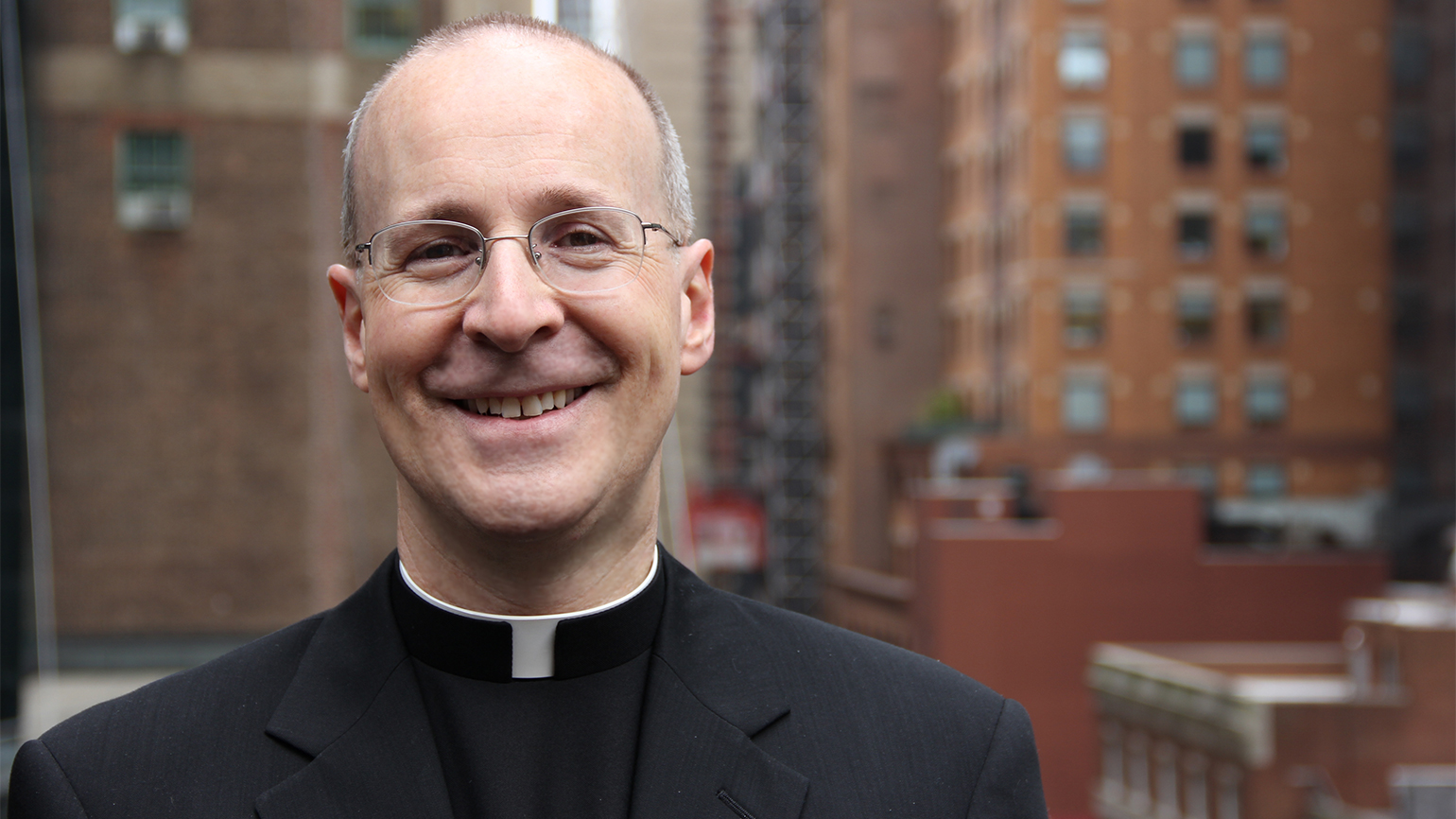
Father James Martin on the Sacredness of Laughter

We spoke to Father James Martin, Jesuit priest and best-selling author of Between Heaven and Mirth: Why Joy, Humor, and Laughter Are at the Heart of the Spiritual Life, about the sacred link between humor and spirituality…

What first got you interested in the spiritual side of humor?

As I went around the country talking about my book My Life with the Saints, I found that people were often shocked by stories I shared of the humor of the saints. It reminded me that we don’t understand the place of joy that humor and laughter in the spiritual life.

Why do you think that is?

I think we have a fundamental misunderstanding of who Jesus was. He was fully human. So he had a fully human sense of humor. The image Jesus chooses for heaven is a banquet or a party. It’s very significant that his first miracle is to make more wine at a party. That symbolism would not have been lost on the people of his time. Jesus’ miracles would have been occasions of joy for people.

How do you think humor is significant when it comes to a relationship with God?

God became human so we would be able to approach and encounter God. If we always see God as serious and judging and angry, then our ability as people of joy to relate to God is going to be limited. It’s going to really prevent our entering into a relationship with God on a deep level because we’re going to be afraid of God. You might even think, for example, that God frowns on laughter, which couldn’t be further from the truth.

You mention humor, joy and laughter as virtues. Can you explain what you mean by that?

Jesus continually says, “I have come so that your joy may be complete.” Humor is a virtue because it helps us not to take ourselves so seriously. Laughter is an enjoyment of God’s world. It’s a wonderful gift from God. Each of these things is holy in their own right.

Are there any Biblical examples of Jesus’ humor?

Sure! Many scripture scholars say we don’t understand the humor of first-century Palestine. Many of the parables probably would have been laugh-out-loud funny. Stories about a man who built his house on sand or gave his son a scorpion instead of a fish would have been seen as humorous. Jesus told clever stories and funny parables.

One of my favorite examples of biblical humor is that at one point Jesus said to the Pharisees, “You strain out a gnat and you swallow a camel.” The Aramaic word for camel is gamlâ’ and for gnat is qalmâ’. It’s a little wordplay. He’s doing a little pun. You can imagine his hearers thinking that’s pretty clever. But when we translate it into English, it doesn’t retain that sense of playfulness.

Are there any Old Testament examples of humor that we gloss over?

The first one would be Abraham and Sarah. When Abraham and Sarah, who are very old, find out they’re going to have a child, Sarah laughs at God. God says, “Why did you laugh?” and she says, “I didn’t laugh.” God says, “Oh, yes, you did.” And when Abraham and Sarah’s son is born, they name him Isaac, which means “he laughs.” The beginning of the three great monotheistic religions is a laugh!

I’ve never thought about it that way! All of my associations with that story are negative—Sarah disobeying God by laughing…

Right! But if I walked up to a 90-year-old woman and asked when she’s going to have a baby it would be funny!

So what do you think the spiritual significance of laughter is?

I think [laughter] is a spiritual release. Many times we laugh at something that is ridiculous so there’s a sense of perspective that the world is not perfect. If we can laugh at ourselves, it’s even better. It’s a sense that we’re not God. Even if we just laugh at a joke, we can enjoy life. There’s a release of spiritual energy. It’s like saying “I love this life” or “I enjoy this world” or “I’m not so perfect after all.” How can we say that each of those insights is not spiritual?

How can we cultivate a more joyful perspective of the world?

Well that’s a good question. I think the first thing would be to interact with people who have a joyful perspective and try to see the world through their eyes. The second thing is creating a joy inventory where you list all the things that make you joyful or make you laugh. And the third thing is taking every opportunity to laugh at yourself. That’s invaluable. There’s good laughter and there’s bad laughter. Good laughter builds up, bad laughter tears down. Good humor is self deprecating. Bad humor tries to make fun of someone else. It’s important to keep those things in perspective.

Read more: Divine Humor: How Laughter Benefits Us Spiritually

Far from Home

I felt a pang of sadness watching the farms and fields of Kansas shrink outside my window as the plane rose into the sky.

My visit to my hometown of Wichita from college in San Diego had been painfully short.

My cousin had passed away, and the cheapest flight I could get to attend his funeral routed me through Minneapolis, Detroit and Memphis—22 hours of travel for only 13 short hours at home.

Just enough time to pay my respects and see my family, but not enough to even call any of my friends, let alone see them.

I didn’t have the money to return to Wichita often, and I missed my friends back home, especially my best friend, Sherry, and our crew from church.

We’d sung in the choir, gone roller skating, worked in youth groups together ever since middle school. A trip home without seeing them, especially when I needed comfort so badly, just felt incomplete.

I walked slowly through the Detroit airport to my connecting flight in a desolate mood. Yet an­other long layover, dozing fitfully in waiting-area chairs and eating bad airport food.

“Carlota!” I heard someone shout behind me.

Was someone shouting for me? Or for a different Carlota? I wondered. Who would know me here, a thousand miles from home?

I turned around. “Sherry! I was just thinking about you!” I exclaimed, amazed. “I was just back in Wichita for my cousin’s funeral. I wished I could have stayed long enough to see you and the gang.”

We gave each other a big hug. “When’s your flight?” Sherry asked.

I rolled my eyes. “Not for another two hours,” I said.

“Walk me to my gate,” Sherry said. “We’ll catch up.” Sherry explained that she was here because our former pastor, who had moved to Detroit, had been honored in a special ceremony there. “Our flight back to Wichita has been delayed.”

“Our flight?” I asked.

Sherry pointed toward the gate. There, gathered in the waiting area, were all of my old church crew, in town for the ceremony—and to give me the comfort I so longed for.

Download your FREE ebook, Mysterious Ways: 9 Inspiring Stories that Show Evidence of God's Love and God's Grace

Family Finds Comfort in a Mysterious Camera

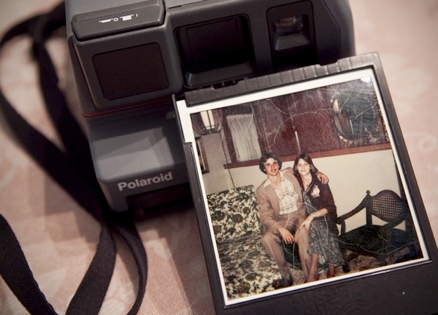
Last Thursday, 13-year-old Addison Logan of Wichita, Kansas, was spending time with his grandmother, Lois, visiting garage sales around town. About a mile away from his grandmother’s house, one item caught his eye. An old Polaroid camera.

How much did it cost? Only a dollar. After all, Polaroid doesn’t make the cameras or their film anymore. It’s obsolete. But even the popular photo-sharing app Instagram has recognized how iconic the look of those instant photos has become. There’s a whole cult of devotees out there nostalgic for the square, washed-out, glossy photos. Addison figured his dollar was money well spent, if he could get the camera working. It was, in his words, “pretty cool.”

When he got home, Addison got on the Internet and looked up how to take a picture with his garage-sale find. He managed to open up the camera. He was surprised to find an exposed photograph still stuck inside. It had been there for Lord knows how long.

Addison took the photo out and studied it. A young man and woman, sitting on a sofa. Addison took it to his grandmother.

Lois held the photo in her hands. “Where did you get this?” she asked her grandson. He told her.

“Addison, this picture is of my son, Scott. Your uncle,” Lois said.

Scott had died in a car accident 23 years before. Lois guessed the picture was taken 10 years or so before his death. Never seen by her, or anyone in the family, until now. The picture was taken with an old girlfriend. The home selling the camera had no connection with Scott, or the girlfriend. The seller said he’d picked it up at another garage sale, but he couldn’t remember when or where.

“I’m just shocked,” Addison’s father and Scott’s brother, Blake, told The Wichita Eagle. “The more time that passes, the more in disbelief I am. So many things have to come together for that to happen. It just seems supernatural. It’s almost like he’s reaching out to us, saying he’s still with us.”

At Guideposts, we’ve heard so many stories of a mysterious photograph providing solace to loved ones. In our June issue, you’ll read a story from Marie Olson of Colton, Oregon, who found comfort at a campsite while greiving the loss of her husband.

And its not just comfort that can be found in a photo—a discovered snapshot can also fulfill a wish, as it did for Kathy Pierce of Houston, Texas, on her trip to Israel.

Has a photograph comforted you in an unexpected way, a snapshot you discovered under strange circumstances? Did a photo reveal something wonderful and previously unknown? Send your photo to us, and your story. We’d love to share it with our readers!

cc
Read morhere: http://www.kansas.com/2012/05/25/2349030/wichita-boys-garage-sale-buy-holds.html#storylink=cpyThfccccc
Read more here: http://www.kansas.com/2012/05/25/2349030/wichita-boys-garage-sale-buy-holds.html#storylink=cp

Faith Provides Shelter from the Storm

A teacher’s supposed to have the answers. I can teach my fourth graders the state capitals and how to write cursive; I can list all the books in C. S. Lewis’s Chronicles of Narnia series.

But I can’t explain why some children died in the tornado that hit our school last May and the ones with me survived. All I can tell you is that the tragedy doesn’t mean God was absent.

My colleagues and I went back three weeks later to see the devastation where Plaza Towers Elementary once stood. Most of the debris had been hauled away. We brought chalk and Sharpies to write on the remaining rubble, a way to say goodbye. I stepped over concrete blocks to where my classroom had been.

“The best class ever,” I scrawled on the dusty linoleum. My first class, my first full year of teaching. I never imagined it ending like this. From here I could see the path we’d taken, down the hall and into the bathroom, our shelter from the storm. I remembered everything.

The Sunday before the storm, I was in our living room, getting things together for school. Tornado warnings had run on TV all weekend. They’re a fact of life here in Oklahoma, and our school frequently ran tornado drills. But I had never been in a twister’s path. The thought terrified me.

I was trained to teach and respond to a disaster, but was I ready? Every weather update increased my anxiety. Lives were in my hands. What if I faltered under pressure when my students needed me most?

I was putting away some manila folders when it happened. I looked up, and the living room wall seemed to melt away. In its place was an image of destruction. I could see myself walking in debris: wood, dirt, glass, bricks.

I closed my eyes, wishing the vision away. I opened them. It was still there. The disaster had come. And I wasn’t brave, I was completely paralyzed.

I called to my husband. “Preston, come here!” He came running. I rubbed my eyes; the image vanished. “Something bad is going to happen,” I told him, hardly able to breathe. And I was powerless to stop it.

“We should pray about it,” Preston said.

All at once, Psalm 91 came to mind. In my Bible study, we’d been analyzing it. “He will cover you with his pinions, and under his wings you will find refuge….”

Pinions, we’d learned, were the strongest feathers in a bird’s wing, able to withstand the most pressure without breaking. The psalm wasn’t just about protection… it was about making us strong in the face of danger. That’s what I needed. Preston and I prayed, and I felt my courage rising.

Monday at school started out quiet, but the tornado warnings persisted. In the afternoon, I gathered my children around me to read C. S. Lewis’s The Magician’s Nephew, but didn’t get far.

“All teachers and students, please seek safety immediately,” our principal announced over the intercom. “Tornado drill.” The sky was dark, lightning flashed, thunder roared, hail pelted the roof. In the distance, sirens wailed.

This is no drill. I felt the panic, the paralysis creep in. But I remembered I had to draw on God’s strength. “Follow me, students,” I said to my class. I led them into the hall, just as we’d drilled.

The other teachers and I debated whether to take an additional step—cramming into the bathrooms, which at least were away from the windows. I spoke up, as did some others. “Let’s go.” Forty of us crowded in. Some crawled under sinks, some huddled in stalls.

The approaching tornado was deafening. The ground shook. The power flickered, and the light streaming in from the hallway faded. The air smelled dank, rotten.

My phone rang. Preston! I held it to my ear. “Nikki,” he said, “I love you.” “I love you too,” I shouted back. The line went dead. Then the power went out completely.

My fear was so great I couldn’t think of what to do. Then those words from Psalm 91 came to me, the lines I’d prayed with Preston. “Crouch down,” I urged the children. “Backpacks and books over your heads. Fold your legs under you. Keep your backs to the wall.”

I sank down by the doorway. One girl started crying. I threw my arms around her.

I prayed, calling out to the screaming winds, “He will cover you with his pinions, and under his wings you shall find refuge….” Others prayed too.

The air pressure plummeted. Walls crashed, the roof lifted up, pipes broke, shards of metal and concrete flew. The wind sucked the air out of my lungs. I kept praying. Then I felt a hand against my back. Someone comforting me. I glanced up. No one was there. I shut my eyes again.

The hail stopped, the whipping winds ceased. The next time I looked up, there was nothing but sky above us. I peered out the doorway. The hall wasn’t there anymore.

We stepped carefully over the concrete blocks and bricks. First responders guided us out, holding our hands. I looked over the debris. Fallen beams, rain-soaked insulation, shattered glass. Devastation no one could have been prepared for.

Yet I’d seen it before, that Sunday. Everything, the awesome destruction, laid out before me. I had been ready. When the tornado came, I’d done what I thought I couldn’t—what I needed to do.

I wanted to thank God for that. So I’d come back, weeks after the disaster, Sharpie in hand. I walked through the rubble to the bathroom.

I knew what I wanted to write, what I had to say. The only answer I had found amid all the unanswerable questions. But the words were already written there by someone else. “Under his wings you shall find refuge….”

I don’t know why terrible things happen. But I know how we get through them. We are covered by pinions, the strongest feathers, ready to face whatever comes next.

Download your FREE ebook, Mysterious Ways: 9 Inspiring Stories that Show Evidence of God’s Love and God’s Grace

Faith Behind Bars: A Falsely Accused Child Finds Hope in God

Never did Hillary “Henry” Tumwesige think he’d spend the last 2 years of his childhood in prison for murders he didn’t commit.

In 2008, Hillary was just a normal 15 year-old boy growing up in Hoima, Uganda, a city in the country’s western region.

He’d wake up early in the morning to help his mother make chapatti (unleavened bread) to sell at local restaurants. Then, he’d head to school with his two younger brothers, Joseph and Herbert, where he was ranked first in his class. Hoping to achieve his dreams of going to university—a feat neither of his parents were able to do—he’d be in school from 8:00 a.m. to 5:00 p.m., then he’d study with other students until 9:00 p.m.

READ MORE: DEFEAT WORRY WITH THESE 3 PROMISES OF GOD

On Sundays, his family would go to church. That was where he built the strong faith he would need to get through the worst ordeal of his life.

On a sunny day that May, his whole life changed. Hillary went to school as usual, but during his entrepreneurship class, his headmaster walked through the door and motioned for Hillary to leave with him. Always obedient, Hillary followed anxiously after his headmaster, wondering what instructions he would have to follow.

Waiting around the corner for him was a police officer. As Hillary’s classmates looked on, the officer held Hillary up against a wall and arrested him for the murder of a man who was found buried in Hillary’s family’s backyard. When he was put into the police vehicle, he saw his younger brother Joseph and his mother in the car, both also arrested for the same crime.

Though he was shocked that they were all being accused of a crime they didn’t commit, “I never reacted negatively,” Hillary tells Guideposts.org of his arrest. “When I was taken to the police captain, I expected to be released in three days,” he says, remembering what he’d always heard about the procedure for people who had been arrested by mistake.

The night before his arrest, Hillary’s youngest brother Herbert had run outside to meet Hillary in front of their home in a panic, explaining that a man had been murdered in their yard. The man was an employee of Hillary’s father who had recently stolen Hillary’s mother’s chapattis and their savings from their home before going into hiding. A mob spotted the man in town and, despite Hillary’s father’s attempts to restrain them, the mob killed the man in front of Hillary’s home and left him dead at about 8:30 a.m., when Hillary and his brothers had been at school.

Feeling the police were too corrupt to be trusted not to accuse him of the murder, Hillary’s father buried the man in the backyard himself. None of them ever dreamed that Hillary, his mother, father and little brother Joseph would all be arrested and accused of the crime.

The three days Hillary thought it would take for him to be released came and went, uneventfully. Though Hillary’s mother was released after two weeks in prison, Hillary and Joseph and their father stayed in the Hoima prison for two months before getting a court hearing.

“I still had hope that I was going to be released,” he says, until he learned in court that his case had to be heard by the high court and they would have to wait until the next time the high court met. “‘When will the court sit?’ I asked, and the magistrate told me he didn’t know the time, the date, the hour and even the judge who was going to work upon our case. The only thing [to do] was go, relax and wait until that date. That’s when I realized, ‘Uh oh. It’s going to take a long time.’”

Hillary and Joseph were moved to Ihungu Remand Home, a juvenile prison in Masindi, to wait for the high court to meet, while their father remained in the Hoima prison.

Every day in prison, Hillary says, “I was praying and asking one thing: for God to help me out.” In the meantime, he made sure to take care of his little brother as best as he could. Being the great student and obedient child that he was, Hillary soon became the katikiro (prime minister) of his fellow juvenile prisoners.

“I was the one taking care of them,” he says. “I would take them to the hospital if they got sick. I took them to the public hospital to only get help from one doctor. Unfortunately, this one doctor wasn’t working appropriately.”

Hillary says the doctor would neglect them because they were juvenile prisoners. The doctor would make them wait very long periods of time and only treat one or two of them before leaving the office, or treating the doctor’s close friends first, making the juveniles spend the whole day standing around waiting for the doctor to treat them. “The doctor wasn’t having any empathy on the patients,” Hillary says, and it upset him greatly.

“I told God, if I am released, I will become a doctor and I will make a difference.”

As the months went on, however, it was looking less and less likely that Hillary and Joseph’s case would be heard quickly. To make matters worse, in December 2009, one of the juvenile prisoners died of asthma, but Hillary was accused of that death as well, since he was the leader, all but ensuring he would either face the death penalty or spend the rest of his life in prison.

His mother would come to visit him and Joseph whenever she could and she helped them stay strong as they waited for justice to be served.

READ MORE: FINDING STRENGTH IN THE JOY OF GOD

“Mom used to tell me always, ‘Don’t give up [Hillary] with prayers. Keep your faith strong. Nothing lasts forever, except the Word of God.’ And she was right.”

Hillary continued to fast and pray while in prison that God would deliver him and Joseph from this nightmare.

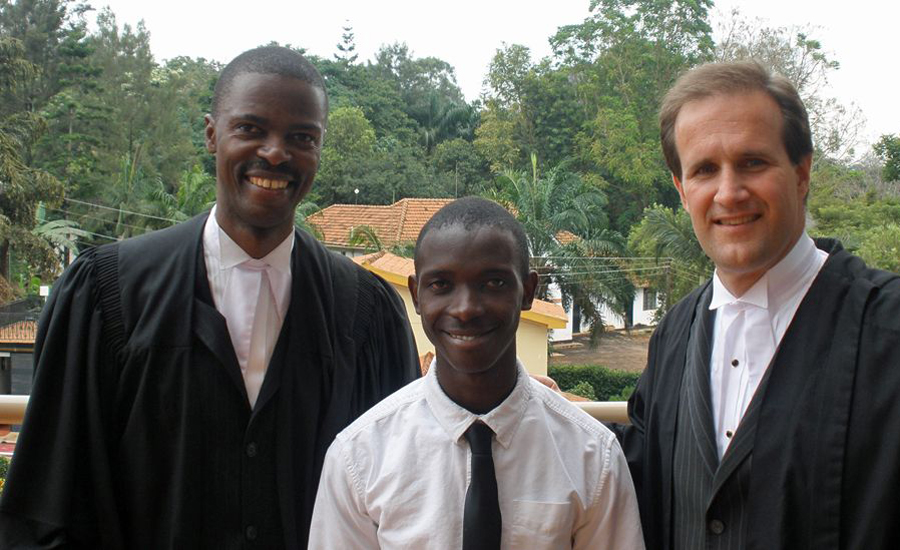
After 18 months, a team of pro bono lawyers, including Guideposts writer Jim Gash, helped to clear Hillary’s name of the first murder, along with Joseph and their father. But Hillary had to remain in prison alone as he faced the second murder charge. Six months later, at the age of 17, he was released on probation before finally being cleared of the second murder charge in 2015. Both brothers were enrolled in the Restore Leadership Academy so they could catch up on the years of education they missed.

Hillary never forgot his promise to God and went back to his studies more determined than ever to be a doctor. Despite every setback, Hillary kept the faith and at age 23, is now studying to be a medical doctor at Kampala International University. He will graduate in 2020.

As for the last years of his childhood that he lost to being falsely accused of horrific crimes, Hillary says he has no anger at all. “I believe God had plans for me,” he tells Guideposts.org. “All that happened happened for His name to be glorified.”

“It’s hard to believe the conditions I went through. I can’t imagine [going through] the suffering I went through again,” says Hillary, “But I’m still willing to go back to the prison to give a message of hope to the prisoners that, after every suffering, God is in control.”

Facebook Strangers Share More Than a Name

Today, technologies like Facebook connect people in ways few could have ever imagined. In some extraordinary cases, those ways seem to be aided by some unseen force…

Lael Kershaw Boyd of Mt. Pleasant, South Carolina, wasn’t getting the joy out of decorating for Christmas this year. Her mother had passed away in March, and she was missing her terribly. Lael took a break and went on Facebook.

“With a name like ‘Lael,’ I’m always excited and interested when I hear or learn of another Lael,” she told us. “Where did ‘that’ Lael get her name?”

That day, she searched for Lael and found one living about about 45 minutes away. She messaged her, never expecting to hear back. But she did:

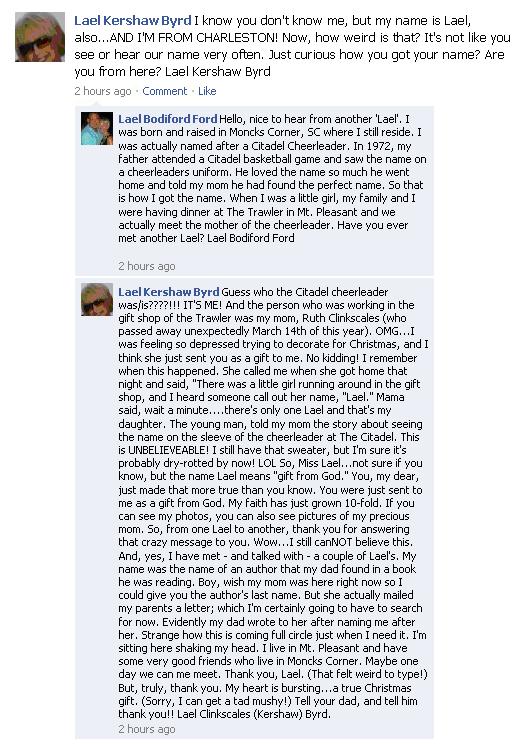
I know you don't know me, but my name is Lael, also...AND I'M FROM CHARLESTON! Now, how weird is that? It's not like you see or hear our name very often. Just curious how you got your name? Are you from here? Lael Kershaw Byrd . Hello, nice to hear from another 'Lael'. I was born and raised in Moncks Corner, SC where I still reside. I was actually named after a Citadel Cheerleader. In 1972, my father attended a Citadel basketball game and saw the name on a cheerleaders uniform. He loved the name so much he went home and told my mom he had found the perfect name. So that is how I got the name. When I was a little girl, my family and I were having dinner at The Trawler in Mt. Pleasant and we actually meet the mother of the cheerleader. Have you ever met another Lael? Lael Bodiford Ford . Guess who the Citadel cheerleader was/is????!!! IT'S ME! And the person who was working in the gift shop of the Trawler was my mom, Ruth Clinkscales (who passed away unexpectedly March 14th of this year). OMG...I was feeling so depressed trying to decorate for Christmas, and I think she just sent you as a gift to me. No kidding! I remember when this happened. She called me when she got home that night and said, "There was a little girl running around in the gift shop, and I heard someone call out her name, "Lael." Mama said, wait a minute....there's only one Lael and that's my daughter. The young man, told my mom the story about seeing the name on the sleeve of the cheerleader at The Citadel. This is UNBELIEVEABLE! I still have that sweater, but I'm sure it's probably dry-rotted by now! LOL So, Miss Lael...not sure if you know, but the name Lael means "gift from God." You, my dear, just made that more true than you know. You were just sent to me as a gift from God. My faith has just grown 10-fold. If you can see my photos, you can also see pictures of my precious mom. So, from one Lael to another, thank you for answering that crazy message to you. Wow...I still canNOT believe this. And, yes, I have met - and talked with - a couple of Lael's.  My name was the name of an author that my dad found in a book he was reading. Boy, wish my mom was here right now so I could give you the author's last name. But she actually mailed my parents a letter; which I'm certainly going to have to search for now. Evidently my dad wrote to her after naming me after her. Strange how this is coming full circle just when I need it. I'm sitting here shaking my head. I live in Mt. Pleasant and have some very good friends who live in Moncks Corner. Maybe one day we can me meet. Thank you, Lael. (That felt weird to type!) But, truly, thank you. My heart is bursting...a true Christmas gift. (Sorry, I can get a tad mushy!) Tell your dad, and tell him thank you!! Lael Clinkscales (Kershaw) Byrd.

For two people with the same name to find each other on Facebook isn’t amazing on its own. But to find the one that was named after you? And what are the chances that the younger Lael would share the story of meeting the other Lael’s mother, at the exact moment when the other Lael was missing her mom so much?

A gift from God indeed.

Congratulations to Laurie Savage, winner of the last giveaway of 2010. Laurie will receive the 2010 edition of His Mysterious Ways!

Merry Christmas everyone! I’ll be back in the New Year to share more incredible stories of providence, serendipity and kismet that we call Mysterious Ways.