Embrace God's truth with our new book, The Lies that Bind

Facebook Live: When Bubba Met God

A freak accident left James “Bubba” Bay convinced he’d die. Until a figure of light brought him hope—and a message he’ll never forget. Now, Bubba is sharing the story of his near-death experience in a special Facebook Live event.

Read his story from Mysterious Ways Magazine, Bubba’s Miraculous Encounter with God.

Join us May 30 at 3 p.m. EST at Facebook.com/MysteriousWays.

Have a question for Bubba? Email us in advance at mw@guideposts.org

Experience Has Taught This Nurse to Trust Her Intuition

I was 19 years old, studying for my associate’s degree in nursing. It was the winter of my last semester, and I was headed for the library. “Come eat lunch with us and study for the psych quiz tomorrow,” one of my classmates said. “The neurology exam isn’t until next week. We can cram for it later.” I shook my head. I couldn’t explain it. But I just couldn’t shake the feeling that I had to study my neurology materials for class right now.

I found a secluded spot in the library, peeled off my heavy wool coat and opened my textbook to a sec­tion the teacher hadn’t yet covered—the signs and symptoms of head injuries. I found myself absorbed in the material. Like nothing else in the world mattered. When I glanced at my watch, three hours had passed. I hurried home to my mother’s…and found Mom lying on the porch steps. She’d slipped on a patch of ice.

I helped her to the sofa. One moment she was alert, the next she was groggy. A list of symptoms popped up in my mind. Things I’d just read about. I rushed Mom to the hospital, where she underwent surgery to remove a blood clot in her brain. “Had she gone to bed tonight,” the neuro­surgeon told me later, “she probably would’ve died in her sleep.”

That was my first experience with nurse’s intuition. But not the last. I’ve been a nurse for more than 40 years. I’ve worked in every field the profes­sion has, from critical care to geron­tology. I’ve authored more than 100 articles in medical journals, I’ve written four award-winning nursing text­books and I have a Ph.D. in health and human services. My expertise has served me well.

It’s my intuition, though, that’s been my greatest guide. It has told me things about my patients that no chart, journal or textbook ever could. Though some scientists may scoff at the phenome­non, for which there is little beyond anecdotal evidence, there’s no deny­ing its existence. Whether you call it a hunch, a sixth sense, a nudge or a special inner knowing, nurses have been relying on their instincts to treat the patients in their care since before the days of Florence Nightingale.

Some, it seems, use it more than others. Nursing is both art and sci­ence, and not every nurse is intuitive. It’s a skill that must be honored and honed. In fact, according to the Uni­versity of Minnesota, it’s more experienced nurses who are more likely to use intuition. Research also indicates that those who are intuitive share certain traits. They’re introspective, highly observant. And they listen, really listen, to people.

READ MORE: CHECK OUT THESE REMARKABLE NURSING TALES!

Take nurse practitioner and instructor Sylvia Gardner, a former colleague. She re­calls a patient, an alcoholic, who walked into her clinic in West Virginia one day, limping and staggering. He claimed he hadn’t had a drink in days. No one believed him. “Everyone assumed he was fine,” Sylvia says. “They said he just ‘needed to go home and sleep it off.’”

But Sylvia had a different reaction. Warning bells went off in her head, unlike anything she’d ever experienced. She listened to her inner voice and examined the patient more closely. In fact, he had a fracture in his leg. Had Sylvia suc­cumbed to stereotypes, the patient would’ve been discharged and for­gotten. “I learned very early on,” Sylvia says, “that you simply cannot short­cut listening.”

Listening to oneself is important, even if doing so seems unorthodox. That’s what happened to post-anesthesia care nurse Kimberly Full­er, who relied on her instincts to treat a diabetic patient in his thirties three days after he underwent a cardiac catheterization and stent placement. The doctor had already written the patient’s discharge orders. But Kim­berly had a funny feeling about the “funny feeling” the patient casually mentioned in his right arm. She recognized the patient was in trouble, even though heart attack victims typically feel discomfort in their left arm, not their right.

“I know your wife’s on her way to pick you up,” Kimberly told the patient, “but let’s get a quick EKG. If everything’s okay, we’ll send you home.” The patient was annoyed by Kimberly’s interference. Until the test proved Kimberly’s own funny feeling and the patient was rushed back into the cath lab for another stent placement.

There’s no doubt that intuitive abili­ties like Kimberly’s stem, to a good degree, from experience. But part of a nurse’s intuition remains a mystery. From my numerous interviews with fellow nurses, it’s clear that many see their instincts as closely intertwined with spirituality. Could it be that God equips nurses with an intuitive gift, one that helps them see what others miss?

Gwen Skidmore, a longtime ER nurse, certainly thinks so. She told me her intuition is a “spiritual thing” that makes her hyperaware when something isn’t right. She prays for God’s guidance before each and every shift. After praying, she’ll often get a hunch that urges her to “do something more” for a particular pa­tient. She describes it as an uneasy feeling that propels her to get help before a crisis occurs. “I just know,” she says. “It’s not anything you can learn. There’s often just something about a patient that you can’t put your finger on.”

Gwen’s interventions have helped alter the course of many lives. So much so that patients seek her out to thank her. Doctors too. “I always tell new nurses to ‘go with your gut,’” she says. “It will never fail you.”

That’s a lesson I learned the night my instincts saved my mother’s life. And again, seven years later, on the last day of my Bachelor of Science nursing program. My professor ended class with words that would define the rest of my career: “Whenever you have a hunch about one of your patients, pay special attention. It will lead you in a direction that no theory ever can.”

The next day, I headed for the hospital, where I worked as a gastro­enterology nurse clinician. It was a Friday, and the support staff had gone home for the day. So it was up to me to wheel my patient, Roger, to his car. He’d just received a clean bill of health after an outpatient pro­cedure on his esophagus. On the elevator down to the lobby, though, a hunch like my teacher described completely overcame me.

When Roger and I exited the elevator, I ducked into the ladies’ room and grabbed a paper towel. I jotted my home number on it, something I nev­er did, and gave it to Roger’s wife. Just in case, I told her. Early the next day, the phone rang. It was Roger’s wife. She said Roger’s skin was clammy and he was vomiting blood. I hung up and immediately called for an ambulance. I met Roger and his wife at the ER. If he hadn’t gotten there just when he did, he would’ve bled to death.

Somehow my intuition got me to do something I’d never done before. Just the right thing.

Everyday Wonders

As I ponder the start of spring, I can’t help but think of the words of the theologian Karl Barth, “I find myself confronted by the wondrous reality of the living God.”

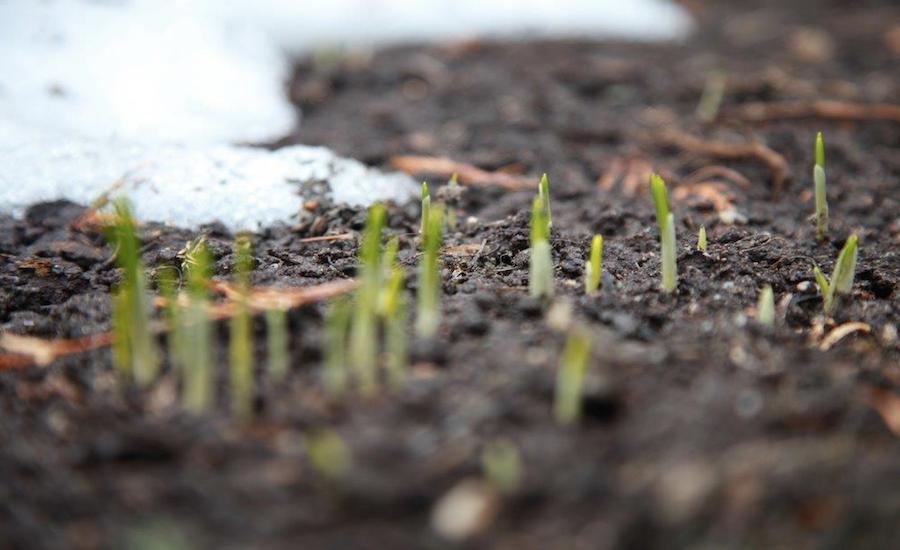
Although I can’t see all of nature at work, what I do see marvels me. The days are getting longer, sun rays warmer, and after a long gray winter, the world will grow green again!

Community Newsletter

Get More Inspiration Delivered to Your Inbox


Yet unless we deliberately stop to behold the signs of the season, we will miss them. The demands of everyday living can distract us from beholding God’s wondrous works. Even in the midst of hardships, if we look… we will find God’s miracles all around us. In the book of Job, a younger man tells him, “Hear this, O Job; stop and consider the wondrous works of God.”

In his autobiography, A Long Walk to Freedom, Nelson Mandela recalls the scene when he laid eyes on his granddaughter for the first time.

During the 14th year of imprisonment, Mandela gained permission for a visit from his daughter. She ran across the room and embraced him. He had not held her since she was a young girl.

Then his daughter placed her own newborn baby into his callused, leathery hands. He wrote, “To hold a newborn baby, so vulnerable and soft in my rough hands, hands that for too long had held only picks and shovels, was profound joy. I don’t think a man was ever happier to hold a baby that day.”

Whether we stop to embrace a newborn baby, observe spring’s tender sprouts, or see the sun setting at the end of a busy day, our spirit is renewed with hope as we consider God’s awesome handiwork. “His wondrous works declare that He is near.” (Psalm 75:1)

Albert Einstein said, “One cannot help but be in awe when he contemplates the mysteries of eternity, of life, of the marvelous structure of reality. It is enough if one tries merely to comprehend a little of this mystery every day. Never lose a holy curiosity.”

Do you have a holy curiosity? What in the world around us lifts your spirit? How has the wonder of God’s marvelous works shaped your spiritual life? Tell us your story.

Lord, no matter what a day holds, help me to stop and pray that I might see and experience Your wondrous works!

Emergency Landing

In 1971, as a newly licensed pilot, I was flying with my flight instructor from Vero Beach, Florida, to Longview, Texas. That night we hit bad weather over Mobile, Alabama, and air-traffic controllers suggested we fly north toward Jackson, Mississippi, to avoid an approaching storm.

As we rose above the clouds, I noticed the instrument panel lights flicker. A minute later, radios and instruments started going dead, then all our lights went out. Our situation was desperate, and as we flew an emergency triangle, we prayed for protection. We decided to drop below the clouds and try to see the ground. Soon we spotted the distant lights of Jackson and headed for the airport’s rotating beacon.

We circled the control tower twice, then got a green light to land. Without any electrical power, we had to lower the landing gear manually. At that moment, all the strobe landing lights came on, and slowly, safely we touched ground. Then the landing lights went off. That’s odd, I thought. At least they could have waited until we taxied to the ramp. It was even odder when a man from the tower asked us, “Who gave you permission to land?”

And then, little by little, we learned that no one in the tower had seen us circling overhead. The green light had been flashed by a traffic controller, who was explaining to his visiting pastor what he would do in case a plane ever attempted to land without radio communication. The emergency landing lights were part of the same demonstration.

Though the whole story can never be explained, I accept it with gratitude, knowing the Lord is watching out for me every day.

Easter Monday

Got a full stomach from all those chocolate Easter eggs? Picking out shreds of that green plastic Easter Bunny grass from beneath the couch and under the dining room table? Bringing a baggie to work of some of those leftover jelly beans? Ready to move on and put Easter behind you?

Stop. Easter is the holiday that lasts all year long. We should be able to wish each other “Happy Easter!” 365 days of the year. After that first Easter, it is here. It is always here.

So often we use spring as a metaphor to describe Easter. The daffodils coming up, the brown grass turning green again, the whole world coming to flower–aren’t these all signs of the Resurrection and new life?

But spring is cyclical, the seasons blend into one another, the rains of April leading to the flowers of May to the cherries of June to the autumn leaves of October to the harvest of November to the frigid snows of January to the bursting of the crocuses in March.

The Resurrection trumps all that. It is something entirely new. The world has been turned upside down. In Paul’s words, “We know that Christ has been raised from the dead and He will never die again. Death no longer has power over Him.”

And it no longer has power over us. So pass out those jelly beans and chocolate eggs and Easter Bunny grass all year long. You have gotten to Easter. You don’t have to ever leave it again.

There is a wonderful story a writer, Patt Barnes, told in Guideposts many years ago. He went to the cathedral on an Easter Monday and as he was leaving, he greeted an old disheveled woman sitting on the steps, selling flowers. He bought a boutonniere for his lapel.

“You’ve been sitting here for many years now,” he said. “And always smiling. You wear your troubles well.”

“You can’t reach my age and not have troubles,” she replied. “Only it’s like Jesus and Good Friday…”

“Yes?” he asked.

“Well, when Jesus was crucified on Good Friday, that was the worst day for the whole world. And when I get troubles I remember that, and then I think of what happened only three days later–Easter and our Lord arising. So when I get troubles, I’ve learned to wait three days…somehow everything gets all right again.”

Those words stayed with him whenever he faced trouble. “Give God a chance…wait three days.”

Happy Easter today and tomorrow and many days to come.

Read More: Mornings with Jesus Devotional

Easter, Day of Glorious Hope

The most tremendous of all earthly events took place almost 2000 years ago when Jesus of Nazareth, put to death by the cruel power of Rome, rose from His tomb and appeared again to His sorrowing followers. With their despair turned to joy, they were inspired to carry His spirit and His teachings to the ends of the earth.

That was the first and greatest Easter experience. But Easter experiences have been happening ever since. They happen every day. They can happen to me and they can happen to you.

Sometimes they are small, gentle moments of reawakening. It is no accident, I’m sure, that Easter comes in the radiant season of rebirth after the bleakness of winter. Each year I walk around my farm on Quaker Hill in Pawling, New York, and thrill to the sound of returning birds. I find myself tingling to the touch of the warm sun and the odor of new young grass.

I marvel at the thought that no one but God knows the process that makes the grass so green. I meditate on the miraculous profusion of spring flowers in their infinite form and color and variety. When I think of old friends and become aware of wonderful qualities I never appreciated before, they too seem to blossom out in a personal springtime.

The Easter experience can also happen to people who are discouraged or defeated, who are groping their way through life burdened by problems and only half-alive, who have lost their sense of wonder, their capacity to be deeply moved, their ability to love and hope and dream.

Time and again I have seen the power of the risen Lord reach out and enfold and awaken such people—people entombed by the power of alcohol or drugs, people enslaved by immorality, people who suffer from lost love, lost faith, lost hope—who then rebound, victorious and whole, from their dark night of the soul. When that happens, when the spirit of Easter really touches them, they too come back from the dead.

But the deepest message of Easter now is, and always has been, the promise that this life here on earth is only a beginning for all of us, that the here and the hereafter are merely different aspects of the same thing. “Because I live,” said Jesus, “ye shall live also.” (John 14:19) I take that tremendous promise to mean that eternity does not begin with death; we are living in it now. Death is but a change; a change for the better, that’s all.

This Easter message can reach the human heart in many ways. Not long ago Inez Lowdermilk, wife of the famous conservationist Dr. Walter C. Lowdermilk, shared such an experience with us here at Guideposts. She told how over 40 years ago her husband came upon three yucca plants that had been uprooted and left by bulldozers alongside a new mountain road. He brought them home and rooted them in his Berkeley, California, rock garden.

Within a couple of years, Mrs. Lowdermilk said, two of the yuccas bloomed and died according to their normal life cycle. The other plant did nothing but sit in the rock garden, protected by its circle of needlelike spears.

Walter Lowdermilk went on to become an international authority on forestry, and soil and water conservation, especially famous for his plan for the useful distribution of the waters of the Jordan River in the Holy Land. Last spring he became ill, and one day, 42 years after the rescue of the uprooted yucca plants, his doctor told the family that Waiter’s life was coming to a close.

Soon after, a stalk appeared above the spiny base of the long-dormant yucca. It continued to grow as Waiter’s life ebbed away. Everyone who entered the house watched the stalk grow almost a foot a day until it was over 15 feet tall. On the day that Walter died, it burst into magnificent blossoms, a glorious natural candle made of hundreds of little branches dripping with masses of small ivory-colored bells. The beauty of this masterpiece of nature continued for an entire month.

What does this lovely and gentle story have to say to us? We are here on earth for a short time. God wants us to accept His plan for our lives, to develop our talents and make the fullest, most selfless, most constructive use of them. And finally, when our work here is done, we will be taken home, like the yucca that waited until the time was ripe—and then burst into glorious bloom.

Do You Believe in Halloween?

An interesting discussion popped up in the comments of a Mysterious Ways story we ran a few years ago, prompted by a simple question from a British reader: “How come you celebrate Halloween in America? In England and Europe it’s very ‘frowned upon’ by the Christian community.”

Personally, I don’t see anything wrong with dressing up once a year and getting treats (other than the fact that there’s an age limit… I miss grabbing my plastic pumpkin bucket and collecting all those mini candy bars). But the responses to this question from Mysterious Ways readers were wide-ranging:

“This is a celebration of a day for Satan,” one reader wrote. Another saw the holiday as an opportunity for outreach: “Halloween is the one day God brings many lost right up to my doorsteps… I hand out the best candy bag and put a religious tract in it explaining the real meaning of Halloween. This is one of my biggest ministry days.” Of course, others thought everyone should just play nice: “I don’t think this is the appropriate place to discuss personal feelings on the celebration of Halloween.”

Mysterious Ways stories may be spooky sometimes, but I wouldn’t call them “ghost stories.” It’s not just that I think the idea of dead people hanging around us—when there are better places to be—is silly. It’s that nothing anyone has ever written or said about ghosts indicates they can hear our innermost thoughts or know what’s in our hearts (except, perhaps, the Stay Puft Marshmallow Man from Ghostbusters). In Mysterious Ways stories, however, that’s what seems to happen. Comfort comes to people in their moments of greatest need. My faith tells me that there’s only one being capable of providing that.

Maybe that’s why I don’t see Halloween as a threat. We’re not celebrating ghosts—we’re acknowledging there are spooky things in this world that have the capacity to surprise and sometimes delight us—and I think that opens our eyes to search for the source.

Is Halloween a celebration of the occult? Or do you agree with the commenter who wrote, “Any day can ‘belong’ to Satan if you allow it. I choose to let every day belong to God. Trick-or-treating is not evil… Lighten up and let children have fun!”

Have you had a Mysterious Ways experience on a scary Halloween night that reminded you who is in control every day of the year? Share your story with us.

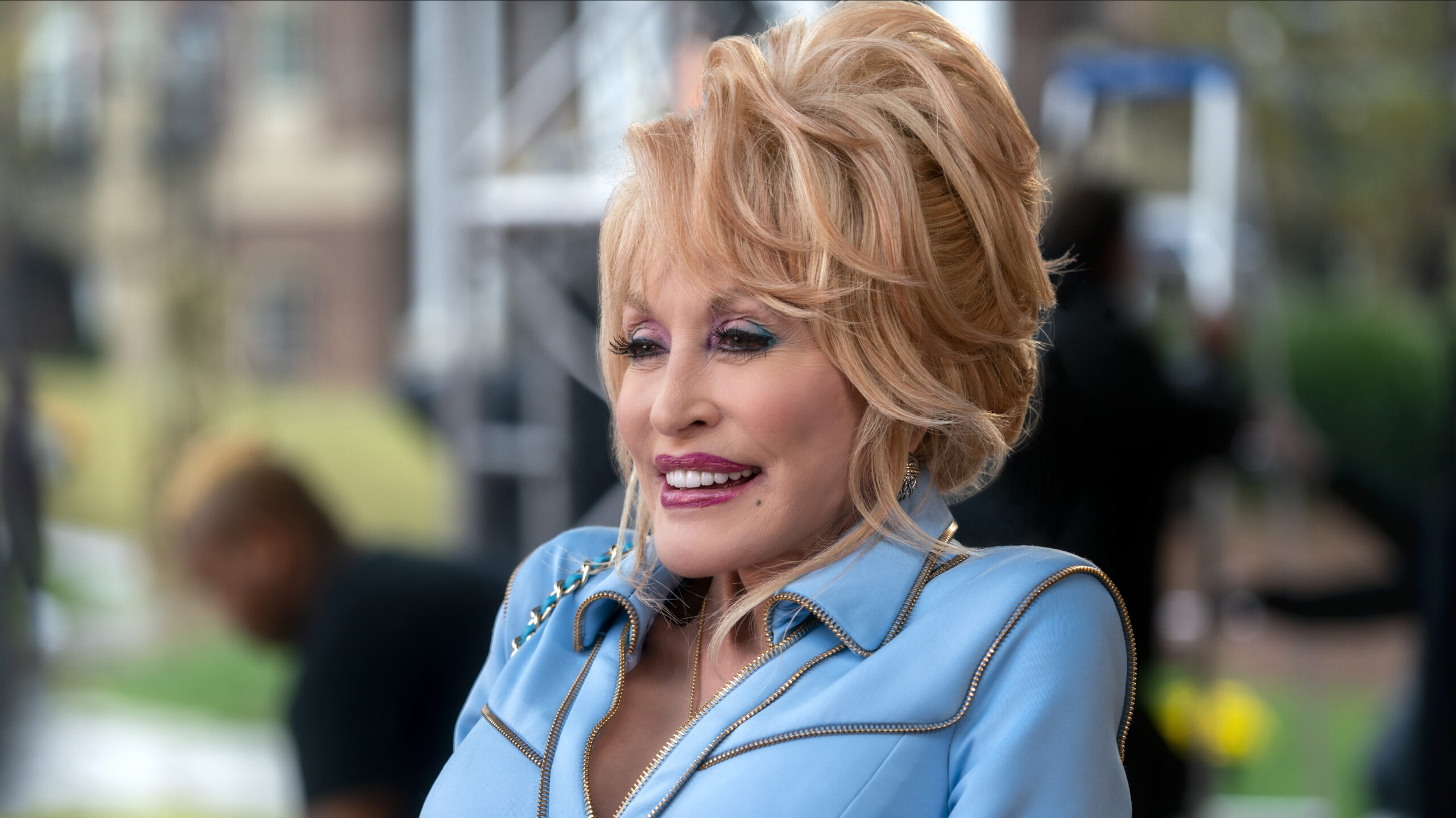
Dolly Parton on the Prophecy that Shaped Her Future

These days, Dolly Parton is busier than ever. The 73-year-old recently co-hosted the Country Music Awards and performed a special concert in honor of her 50th anniversary as an Opry member, one of the highest honors a country musician can receive. On top of all that, her new series Dolly Parton’s Heartstrings recently premiered on Netflix.

And Parton has no plans of slowing down. She’s still striving to live up to the calling that was placed on her life as a young girl.

Community Newsletter

Get More Inspiration Delivered to Your Inbox


“My grandpa was a Pentecostal preacher. So healing and praying and being anointed and all that stuff was nothing new to us, cause we survived because of our faith in God,” Parton said in a roundtable for Heartstrings at her DreamMore resort in Pigeon Forge, Tennessee.

In her church, prayer often involved anointing people with oil. Still, Parton was confused when an older woman in their congregation delivered a special message to her one day.

“She said I was anointed and [that] I was going to do great things,” Parton recalled.

Parton wasn’t sure what the word anointed meant so she asked her mom.

“Mama said…that just means that God has his hand on you, that you may do something special,” Parton said. “But that triggered a faith in me, because I believe that I was supposed to do something good…I never let go of that because I always felt responsible to God that I was supposed to be doing something for God. And so I still feel like that. And I’m still doing it. Trying to.”

This spiritual calling has been a driving force in her life for decades.

“I really feel like I have a calling,” Parton said. “I feel like God had told me early on in a feeling that I was supposed to go till He told me to stop and He [hasn’t] said nothing yet about quitting. And so I ain’t said nothing about retiring yet.”

One way she maintains her energy is through a daily prayer ritual.

“Every day I pray for God to lead me and to take out all the wrong things, wrong people in my life, bring all the right things, right people in, and to let me glorify Him and uplift mankind,” Parton said. “Let me be a light, and a vessel to be used…I just really want to do what I can in this world to make things better, if I can.”

Parton recently recommitted herself to creating things specifically focused on bringing light and faith into the world—something she thinks everyone can do.

“There is a God light in all of us, there’s a God coal or whatever,” Parton said. “There’s something bigger and better than us and we need to connect to that to make us better people. And the more you can draw from that, the better off you are, not just for yourself, but for all the things from people that you can touch by believing that.”

Does This Artistic Creation Encourage Healing?

O LORD, you have examined my heart and know everything about me. Psalm 139:1 (NLT)

I have been completely color-blind since birth, so I see the world like a black-and-white movie. Attending a class at church about using coloring to deepen my prayer life might seem like an odd choice for me. But when I saw the blurb for Colorful Prayer, I knew I needed to sign up. It sounded like fun, and I had labeled pencils. I appreciated anything that could allow me to weave creativity into my time with Jesus.

“This isn’t about artistic ability, and it isn’t about the colors,” the instructors assured us. “It’s about meditating on a Scripture and letting the picture flow from that.”

Still, when it came time to spend a few moments in prayer with our coloring page, verse, and pencils, I became insecure about being the only one in the room who couldn’t see the colors and was afraid I might put two together that didn’t match.

Then a kind voice whispered, I don’t care if your colors match. I created them all. Choose colors that mean something to you. The knowledge that Jesus could see what had always been a mystery to me and that He would know exactly why I chose red, purple, ocean blue, and lavender liberated me to create a prayer bursting with the colors of my gratitude to the One who knew and loved me. “O Lord you . . . know everything about me,” including the fears that so often get in our way, even when we’re trying to focus on Him.

When we trust Jesus’s love for the heart He knows so well, we find the freedom to worship and love Him from a deeper, more honest place.

Faith Step: Which colors have special meaning for you? Use them to create something that represents Jesus’s deep knowledge of you and love for you. Ask Him to free you from the fears that restrict you from trying new things

Divinely Connected Through Lyme Disease

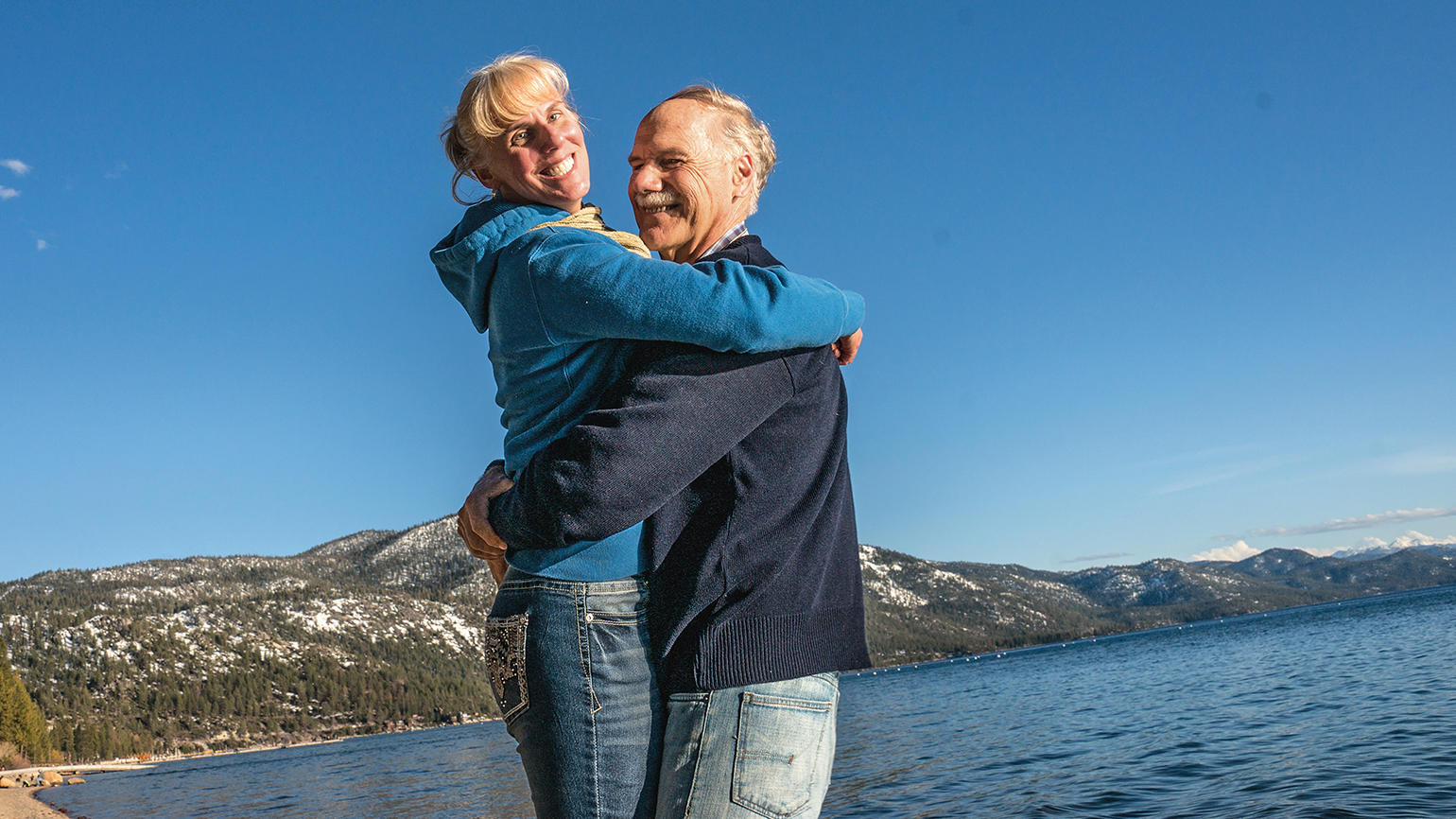
In the dream, 18 months before I came to the Nevada desert as a last resort, I stood at the window of a cozy lakeside cabin staring out at the tranquil blue water. How did I get here? I didn’t know. But I wasn’t alone. By a large stone fireplace, a tall, lean man watched over me. Although I couldn’t discern his fea­tures, I felt him smiling at me with pure radiance. He knew me better than anyone could. I was happy. Peaceful. Hopeful. Alive. Then I woke up to another day of pain.

Now I was receiving treatment at a facility in Reno, Nevada, for the illness that had stolen so many things—my job, my fiancé and most of my friends—before I even knew what it was: Lyme disease. I worried I’d die before the treatments took effect. They were brutal and intense. Most patients here had loved ones by their side, to help them through the grueling process. A friend from back home in New York, Jeanette, was able to stay with me for two weeks and accompany me from my hotel to the clinic.

“Don’t worry,” she said. “You’re going to be okay. You’re not alone in all this.”

BROWSE OUR SELECTION OF BOOKS ABOUT MIRACLES

I bit my tongue to keep from laugh­ing bitterly. Not alone? Once Jeanette left, who would be here for me?

For the past seven and a half years, I’d spent nearly every day in pain. First, it was just a rash. Then flu symp­toms that wouldn’t go away. Within two months, my immune system was shot and I was sick virtually all the time. I shuttled between medical ap­pointments and my bed. I was ex­hausted the moment I woke up in the morning. I couldn’t focus on any­thing. Work became impossible, and I had to give up my handbag design business. Eventually, I had to sell my home to cover the bills. It became too much for my fiancé to deal with—he left me. Who wants to marry someone who is always sick?

At last, a doctor figured out what was wrong: Lyme disease. I’d been bitten by a tick carrying the bacteria. Finally. A name for my illness. A diag­nosis. Now I would get better.

Well, not really. When not caught early, Lyme can spread throughout the body, causing heart problems, severe muscle and joint issues, and neuropathy. My disease had pro­gressed so far, I was on the verge of organ failure. Worst of all, a cure at this stage was very complicated and expensive. Sometimes all that could be done was to try to minimize the pain and fatigue.

What reason did I have to keep going? Always tired. Constantly nau­seous. Joints aching. Unbearably anxious. Ninety-eight percent of me was ready to quit. I cursed the insect that had bitten me, the tiny speck of living dust that was ruining my life.

Then I remembered that dream before my diagnosis. So vivid, so real. I’d woken with the blaze in the fireplace still warming my skin. The feeling of being loved, protected, by the faceless man who knew me intimately. I’d stared at my bedroom ceiling later that night, wondering who he was, wondering what it had all meant. Was I meant to keep fight­ing? That happiness I’d felt looking out that window…I couldn’t forget it. The two percent of me that was still willing to fight clung desperately to that hope.

In the 18 months since, I’d re­searched the best treatment and managed to get a spot at one of the best outpatient Lyme centers in the world, at the foot of the Sierra Nevada mountains. But I had no reason to think I’d ever get better.

Two days before Jeanette was scheduled to leave, I sat hooked up to an IV, drugs pumping through my system, feeling ill and antsy. “I need to go to the kitchen,” I said to my friend. I left the room and towed my IV pole down the hall, bags swinging. Maybe I’ll just walk out the door and into the desert someplace. Only Jeanette would miss me really. I turned my head.…

Out of nowhere, a man rushed around the corner, holding his IV pole as if it were the stick of a race car. Bam! Our poles collided. Mine nearly toppled over.

“I’m so sorry!” the man said, trying to untangle his IV from mine.

“No, it’s my fault,” I said. “I was spacing out.” I tugged my line free from his and looked up at him. He’s handsome. Tall, skinny. A grin spread over his face.

“Hi,” I said, “I’m Ana.”

“I’m Greg,” he said. “Funny bump­ing into you like this…”

He didn’t stop smiling for the next hour. He followed me to my room and we compared notes on our treat­ments, all the days of misery we’d spent not knowing what was wrong with us. But we also shared things that had nothing to do with why we were there—he told me about a beautiful river that ran through Reno, his current home, and the condo he was renovating for his mother. Three hours later, he offered to drive me back to my hotel. I almost forgot about Jeanette.

“It’s okay,” she said, smiling. “Ride with him.”

The day Jeanette had to leave, Greg took her to the airport. “I know how it feels to be alone in this,” he told me. “Maybe we can help take care of each other.”

After all that had happened, I fig­ured I had nothing to lose. If things didn’t work out, I wouldn’t be in a worse position than I was before. Who knows? I thought. He might even stay.

Greg stood by my side through the worst of days. He never flinched. Through it all, he radiated a warm kindness that felt so familiar, even though we’d just met.

Five months of his presence was enough to get me thinking—maybe that tiny tick was really a love bug. After all, the suffering and pain had ultimately led me to Greg. We mar­ried one year later.

An acquaintance found a condo for us to rent in Lake Tahoe, close enough to the center so we could easily continue our treatment. The minute we walked in, I knew I’d seen it before. The calm, blue waters of Lake Tahoe visible through the win­dow. The large stone fireplace. And Greg, smiling broadly, his eyes shin­ing with a stronger love than I could have ever dreamed.

What You Need to Know about Lyme Disease

Divine Intervention Saved His Life

Do you believe that God intervenes directly in our lives? Some 20 years ago, I would’ve told you absolutely not.

That’s when I took a trip to Boise, Idaho, for work. I was an electronics engineer and business consultant and needed to meet with an important client. I was walking around the city center beforehand when a woman approached me. I had a feeling she might be a member of some kind of group, interested in proselytizing and handing out pamphlets. Instead, she struck up a conversation. We exchanged pleasantries, made small talk. Then, unprompted, she launched into a seemingly random story.

“Years ago, I was in a terrible accident,” she said. “Hit-and-run. My toddler was in the back seat. I couldn’t get her out. We were trapped with no one around to help.”

Why is she telling me this? I wondered, growing uncomfortable. “A large man appeared out of nowhere,” she said. “He didn’t speak a word, just opened one of the damaged doors like it was nothing. He got my child out. I checked to make sure she was okay. When I looked up, he was gone! We’d been driving through farmland. There were no trees around or anything else that would shield him from view. He just disappeared!”

It was certainly an odd thing to mention. Especially out of the blue. I politely excused myself. It was time for my meeting anyway. As I walked away, I realized she hadn’t given me any literature. Why had she picked me to talk to? The story she’d shared had been interesting, though I doubted it was true. I believed in God more or less, but I didn’t think he could physically intervene in our world. As an engineer, I was a pretty logical person. I’d never seen or heard of anything I couldn’t explain. I figured there was probably an explanation for this story too.

For some reason, though, what she’d said stuck with me. It set me off on a years-long quest to find out more. I researched inexplicable spiritual experiences. Read up on the metaphysical. The more I learned, the more I wondered—had she come across some kind of miraculous bridge between the physical world and the spiritual? I was open to the idea but still had my doubts.

A few years later, my wife and I decided we were due for a vacation. I was working overtime and in need of a getaway. We opted for a weekend road trip to Sedona, Arizona, for its gorgeous landscape—red rocks rising from the dessert—and the vaunted spirituality of the area. In my years of research, I’d read about folks who claimed to feel powerful energy and have strange experiences in the mountains.

When my wife and I reached the hotel, she decided to rest. But I was anxious to check out the mountains. One of the energy spots was supposed to be on a nearby peak. “I’ll be back soon,” I told her, grabbing the car keys.

I drove to the site. I parked at the trailhead and started walking. There were no cars in the parking lot and no one else on the path. It was quiet as I hiked, my smooth-soled sneakers crunching along the sandy red dirt. Not the best shoes for hiking, I thought.

The higher up I got, the narrower and steeper the path became. The trees grew sparse. The slope dropped off sharply until I was walking on a cliff. I was almost to the peak. I stopped for a minute to take in the spectacular view. The red rocks burnished by the bright afternoon sun. I looked over the edge. There were no trees or plants blocking my view. I could see straight down a thousand feet. I turned back to the trail—and slipped.

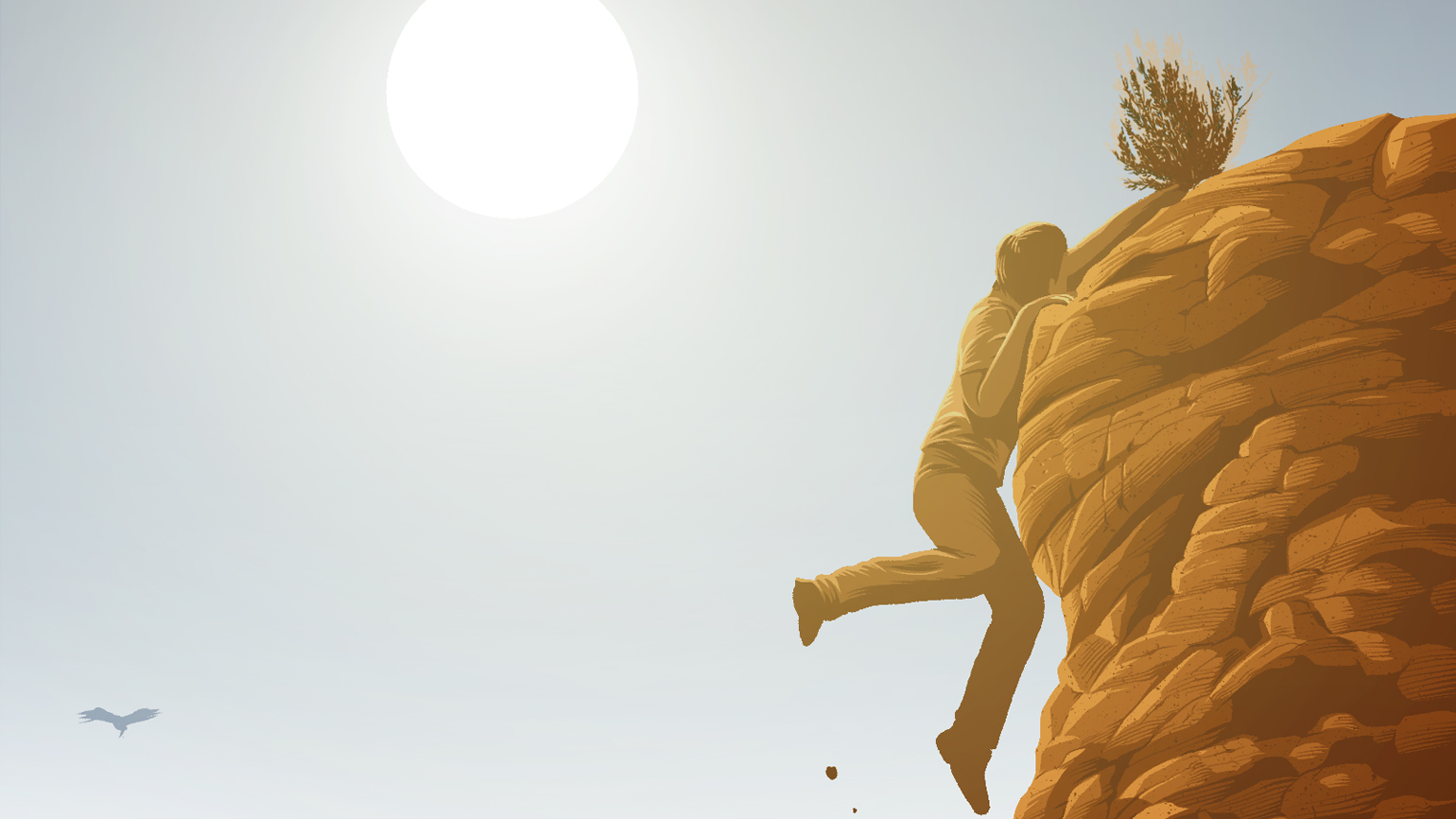
Suddenly, I was tumbling over myself. My hands grasped frantically for something—anything—to grab. Nothing. I saw the bright sky above me, the sun shining brilliantly into my eyes as I slid over the edge, my arms stretched out. It was harsh and beautiful. This is it, I thought. The last thing I’ll ever see.

Then I felt something placed against my hand. As if someone was pressing a rope into my palm. My fingers closed around it. Thwack! My body slammed against the side of the cliff, dangling in the air. I looked up. I was holding on to a shrub bending over the edge. I wondered how long the small plant would support my 250-pound frame.

Was this just a delay in my demise? I pulled up as hard as I could. Hand over hand. Would the plant hold? I muscled my way up to the base of the shrub, grabbed the edge of the cliff and pulled myself back onto solid ground. I lay there for a moment, breathing hard and shaking. I glanced at the small bush that had saved my life. It was the only plant life around. I knew it hadn’t been there before. I was sure of it. It seemed to have simply appeared under my fingers as I fell. How had it held me? How had I pulled myself up? Sure, adrenaline was a factor, but it felt like something else.

I made my way back down the trail, minding where I stepped the whole way. Back at the car, I looked up at the mountains one more time before heading back to the hotel. To this day, I can’t explain what happened to me on that cliff. No amount of research or logic will give me an answer. To be honest, I don’t need one. I know in my soul that the divine stepped in to help me that day. And now, when people express doubts about God working in our lives, I have a story of my own to tell.

Divine Intervention Helped Him Quit Smoking

“We’re starting a fundraising campaign to help with the cost of the new Family Life Center. And to make some renovations to the church,” my pastor announced after his Sunday sermon. “Please consider donating—no amount is too small. Anything would be a help.”

I didn’t have a lot of extra cash to burn, but I was dropping more than $30 a week on cigarettes. If I quit smoking, I could donate that money. After church ended, I left with that thought still on my mind.

At that point, I’d been a smoker for most of my life. I had picked up the habit when I was 15 years old. I was 55. I’d tried to quit many times. But inevitably, a few hours after my “last” cigarette, I’d start itching for another hit of nicotine. I always gave in.

Years ago, I’d ripped a photo of a blackened pair of smoker’s lungs out of a magazine at my doctor’s office. I’d kept it, to motivate myself. It was tucked away in my desk drawer, along with a list I’d written of reasons to quit. It numbered more than 20. But it hadn’t stopped me from smoking. More recently, my father, a lifelong smoker, had died after a long battle with lung cancer. That hadn’t stopped me either. So what made me think this time would be any different?

My wife, Jackie, was supportive when I told her my idea to donate the money I would have usually spent on cigarettes. I didn’t tell anyone else, though. Just in case it didn’t work out.

I made several earnest attempts over the next few weeks, but I just couldn’t stop smoking. One night, I stepped out onto the back deck (no smoking in the house) for a cigarette. I shook it out of the carton, rolled it around in my fingers and then lit up. I looked at the burning cigarette in my hand and hung my head. I was so frustrated. So disappointed with myself.

During my life, I’d prayed to God for many things. But I’d never once asked him for help conquering my addiction to nicotine. It never felt right to bother God with it. Smoking was my problem, something I needed to deal with on my own. But right now, I was at my breaking point.

“Lord, please, take this cup from me,” I whispered.

Immediately, I felt a rush of guilt for using Jesus’ words to pray about smoking. But, at the same time, it was the most heartfelt prayer I’d ever made. It took a while for me to gather the courage to try yet again, but finally I started the day without a cigarette. By the afternoon I realized that I wasn’t feeling that insistent urge to light up. I could smoke…but I didn’t have to.

I used nicotine patches, but even with them, I should’ve been experiencing withdrawal symptoms. I wasn’t. Soon I didn’t even need the patch. It was incredible. I donated my cigarette money to the church’s fundraiser, just as I’d planned.

Jackie was so proud. Family and friends congratulated me as well. I had trouble accepting the praise, because I didn’t feel as if I’d done anything. But I’d nod and smile anyway because I couldn’t even explain exactly what had happened. Had I experienced a miracle? Had God healed me of my addiction? Or would I disappoint myself once again?

I wasn’t sure until one night, when I had the most incredible dream. It felt acutely important. Heaven-sent. I dreamed I was in an auditorium packed with people. There was a stage, set up with a podium and a microphone. We were waiting for someone to speak.

“Joe!” a voice called out. There was a man on stage, wearing a suit. I couldn’t really see his face. “Joe Hester, get up here!” I was suddenly transported to the stage. “Tell me, Joe,” said the man, who somehow looked like everyone and no one I’d ever met, all at once. “Tell me, are you a smoker?”

No, I thought. Deep in my soul I knew it was true. I’m not a smoker. Not anymore.

When I woke up, my pillow was wet with tears. If I wasn’t sure before, now I was. On Sunday I gave my donation, confident I would do the same the following week. I’d actually quit smoking. As the pastor spoke, I looked down at the weekly bulletin grasped in my hand. Printed on the back, plain as anything, were the words: Lose your shyness, find your voice and tell them what God has done.

It was as if I’d been bopped upside the head. I knew exactly how I’d been able to beat my addiction and would tell anyone who asked. Jackie was first. I told her everything— about my desperate prayer, the dream, even the bulletin.

All this happened 16 years ago, and to this day, I haven’t had a single cigarette. Now, when people ask me how I quit, I tell them that I didn’t do it on my own. I finally bothered the One who could give me the help I needed.