Embrace God's truth with our new book, The Lies that Bind

Car Trouble and a Blessing in Disguise

Last weekend, while parallel parking on 5th Street in the East Village, my tire briefly went up on the curb and then rolled back off, slamming my car down with a loud bang. I got out to survey the damage and saw that my front bumper was hanging off. It was a Sunday, and I called all the garages I could find, but no one was open anywhere near my New York neighborhood. I left the car parked overnight until I could bring it to a garage on Monday.

When I returned after work the next day, I was struck by a sad sight. From front hood to rear tail lights, my black, shiny car was completely covered in icky white bird droppings. With the bumper hanging off and the polka dot paint job left by the feathered culprits, my poor car looked like it had narrowly escaped some apocalyptic disaster.

My mom and her cousin were in the city Monday evening to visit an elderly relative, so I met up with them for dinner. It was the first time my mom’s cousin had been back to the East Village since her father, my great uncle Moe (who grew up in the area), passed away earlier this year. We got to talking, and she mentioned wanting to see the garage where her father worked as a mechanic for so many years. On East 5th Street. Right across from where I was parked.

I hadn’t realized until then. What a coincidence, that my car should run into trouble right across from where my great uncle once plied his trade.

I brought the car to a mechanic that evening. Thankfully, he didn’t laugh at my car’s sorry state. His English was heavily accented, and as he worked, I could almost picture my Uncle Moe, who had a thick Yiddish accent, screwing the bumper back on. It was fixed in less than 10 minutes, and cost $20. I had no time, though, before Yom Kippur, to get the car washed.

On the Day of Atonement, parked at my in-laws’ house, my wife’s 89-year-old grandmother took one look at the car in the driveway and laughed. “I know, I know,” I said. “It’s gross.”

“No, this is good,” she said with a smile. “Don’t you know? It’s a sign of good luck and blessings. And you got a lot of them! It means you’ll have a good new year.”

I hadn’t heard that before about bird droppings, but I’m not one to argue with the matriarch of the family. It did make me think though. Uncle Moe had a great sense of humor… if he was going to reach out, this was certainly a funny way to do it.

I suppose if you’re like me, and you look for Mysterious Ways every day, you’ll start to see them everywhere. But I don’t see it as some silly delusion. Maybe a fender-bender is simply that. Maybe a flock of birds isn’t delivering a message. But if a small everyday experience can get me to think about God, and what lies just beyond what we can see, then I don’t think that’s such a bad thing.

Have you had an everyday experience—something annoying, something embarrassing, something frustrating—only to see it later in a completely different light? Did the experience move you in a powerful way? Send your story to us or share in the comments below.

Bubba’s Miraculous Encounter with God

Another Sunday evening. I sat in front of the TV, watching football and eating what I called a tuna special—tuna with whatever hap­pened to be in the fridge. I wasn’t much of a cook. I’d eaten a lot of tuna specials since my wife and I separated a year earlier. Our marriage just couldn’t withstand the grief we’d endured since losing two of our kids. Our son James was born prematurely and lived only 10 days. His older brother, Robert, died six years later at 18 of kidney disease. Not a day passed that I didn’t think of them.

I worked as a landscaper. I had a lot of time to myself as I tended gar­dens and mowed lawns. My hobby was metal detecting. I’d found all sorts of old and rare coins. That was something I did alone too. My brother, who owned the landscaping company I worked for, told me I needed to get out more. I knew he was right. I just couldn’t bring myself to do anything about it. I guess I could have gone to church. I believed in God, though I constantly wrestled with the question—if God was so holy and peaceful, why was there so much pain and violence in the world? Even in the Bible? I didn’t blame God for what happened to my sons. Still, sometimes I wondered where he’d been then. Had he even noticed?

Some tuna specials were better than others. This one was giving me indigestion. Maybe a walk would help. I lived on a rural road and it was pitch-dark, but I knew my way.

Outside was a cold, moonless November night. I turned right toward town, as I usually did. Up ahead, I saw some rowdy guys by the side of the road—they appeared drunk. I didn’t need them ruining my evening. I turned the other way. No streetlights there, but I didn’t mind. It was just the road and the woods. I wasn’t planning on going far.

I walked a while, then turned around for home. I saw what looked like headlights coming down the road. I stepped onto the shoulder to get out of the way. The ground was oddly soft. I felt myself slip on some wet leaves. Suddenly the earth gave way. I was falling! Plunging headfirst into nothingness. I landed hard. There was a bright flash and a sharp pain in my head. My ribs cracked. My spine twisted. Then I lost consciousness.

When I came to, I was on my back. Through the gloom I could make out a culvert—a large, rectangular open drain of sorts. I must have stepped off the edge of it in the darkness. I was splayed out on jagged rocks beneath it, where water flowed when it rained. Concrete walls on either side of the culvert obstructed my view—I couldn’t see the road above.

I felt massive pressure in my chest. I tried to call for help, but the only sound was a barely audible wheeze. Something trickled down my face. I reached up, and my fingers brushed a massive gash on my head.

You’re in bad shape, Bubba…. You’ve gotta think!

No one knew I was here. No one could even see down here from the road. I had to get up there somehow and hope a passing car saw me. Could I move?

I tried to sit up. Pain seared through my whole body, especially my back. My left arm didn’t work too well. Just move, I told myself. I managed to get on all fours and crawl toward the embankment that led up from the culvert. Every inch was agony.

I reached the embankment and struggled through tangled undergrowth, pulling myself up with branches and tree trunks. It felt like climbing Mount Everest. In my heart, I knew I’d never survive. My only thought was to get up the embankment, so my body would be easier to find later.

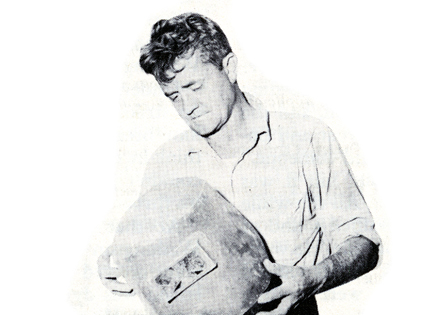
My hand bumped into something large and smooth, lying on the ground. A fallen log, probably stripped smooth from age. It was near the road—I could see that. I wrapped an arm around it and hauled myself partly over it, resting on its surface. I put my head on the smooth wood. A good place to die…

Just as I was closing my eyes, the darkness around me seemed to lighten. Was it morning? It couldn’t be. I hadn’t been down there for more than an hour. The brightness intensified. For a moment, it was like I was back in my childhood bedroom and my parents had come in to wake me early for a trip. The light grew and grew until it was almost blinding.

I squinted. The brightness was so powerful, so dazzling, that I could see everything in the wooded area around me with crystal clarity. The log I clung to, I realized, was old indeed, weathered smooth by time and somewhat hollowed out at the ends, home to insects and other creatures. A universe unto itself.

Wind swirled the leaves and tossed the branches above. I glanced up. A man was walking toward me. Someone else out for a stroll? The figure stood just a few feet away. At his arrival, my pain subsided. He had a kind, weathered face and a long beard. He wore a robe. The man was not alone. Two children were with him. One, a teenager. The other, a baby.

I gasped. James and Robert! My sons! How? How was it possible?

I looked at the figure again, desperate for answers. The air around him sparkled with iridescence. The questions faded from my mind. And I knew without a doubt. I was staring into the face of God.

The wind quieted. The woods became utterly still.

“I’m ready to come to you, God!” I cried out.

A voice spoke inside me. “It’s not your time, Jim. There are things left for you to do for me.”

“Me?” I said, breathless. “I’m no one special. I don’t go to church. I don’t even read the Bible!”

“You are special because you are my child. You don’t have to know the Bible to know me. My blessing is in everything. Learn to see those blessings and treasure them. Then tell everyone about me….”

It felt as if we talked for a long time. But I never spoke to my sons. I didn’t have to. I knew they were with God, that they were cared for. For the first time in my life, I was filled with indescribable peace. I wanted the feeling to go on and on. I wanted to lie on that log forever!

But the light began to fade. The figure receded. My sons too. The wind moved again, rustling the trees. The dark night returned. And, with it, agonizing pain.

This time, though, I didn’t mind. I knew now there was nothing to fear. I had things I needed to do for God. I couldn’t waste time. I had to get up. I pulled myself to my feet. How, ex­actly, I couldn’t say.

I wasn’t able to stand up straight—my back hurt too much and my legs barely worked. But somehow I hobbled across the road to the nearest house. I knocked on the door. It creaked open.

“Help,” I wheezed.

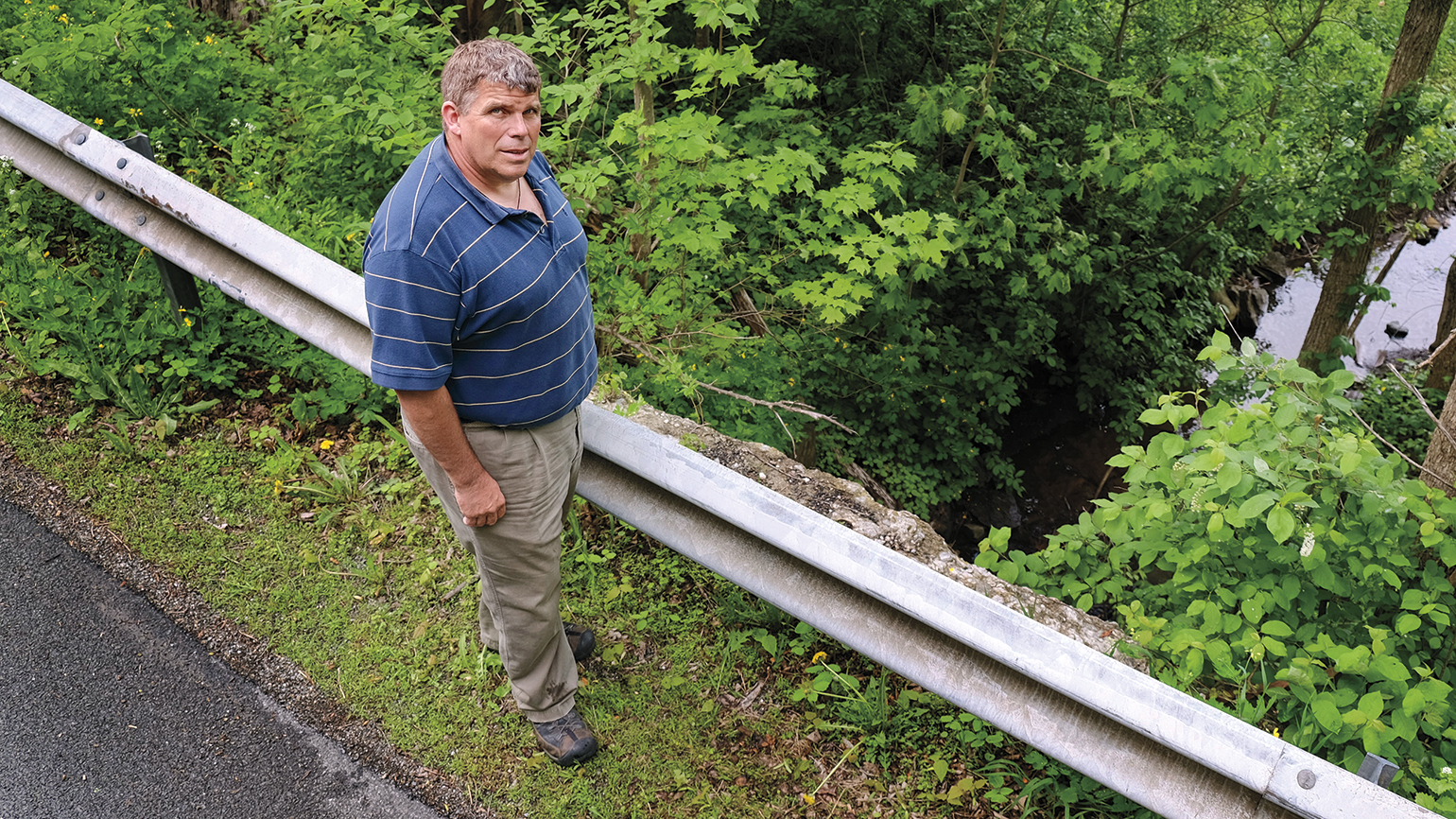
When I woke up in the hospital, I learned I’d been in a coma for seven days. My skull was cracked. My shoulder blade, 11 ribs and 10 vertebrae were broken. Turned out, a guardrail above the culvert had washed out years ago and I’d stepped right off the edge. I’d fallen 14 feet.

My brother came to visit. I knew I had to talk about what happened. But part of me wasn’t sure if I’d imagined it all. I’d suffered a head injury, after all. Maybe I’d made up that whole part about the log. Did it even exist? Had I been hallucinating?

“Bubba, how did you crawl back up to the road?” my brother asked me.

I opened my mouth to tell him about seeing God…and hesitated. “I think,” I finally said, “I think I saw God.”

My brother looked skeptical. “You were in pretty bad shape,” he said.

I told him about the log. The light. Seeing my kids.

My brother’s face changed. “A smooth log?” he said. “You’re sure? How were you able to see it in the darkness?”

“I saw every inch of it,” I said. “The light was so bright!”

I couldn’t tell if he thought I was nuts. Maybe I was. But later, when I was transferred to rehab, he took me to the computer room and pulled up a photo. “I took this the morning after you fell,” he said, showing me an image of the area around the culvert. “You can’t see it, but there was blood everywhere.”

And there, near the top of the embankment by the side of the road, was an old log. The same one I’d described to my brother, straight out of a coma.

It was not just another Sunday evening.

Breaking Down the Mystery of Speaking in Tongues

The controversial practice of speaking in tongues—glossolalia—is a puzzle to me. Not just that I don’t do it. But I also wonder how on earth others do. My preferred way of praying is to sit silently on the New York subway in the morning, my eyes closed.

I remember walking by a storefront church once with a friend and hearing what sounded like cacophony. “They’re praying in tongues,” my friend told me. Really?

I can accept talking in tongues in its historical context. Back in the first century, the disciples gathered in Jerusalem after Jesus’ resurrection and the Holy Spirit descended on them—veritable “flames of fire.” The apostles began to speak in different tongues, languages they had no knowledge of. More importantly, they were heard in the languages they spoke.

The great poet W.H. Auden once observed that what happened at Pentecost was more a gift of hearing than of speaking. That settled it for me. Under the right circumstances, believers could call on heavenly power to communicate. But what I heard coming out of that storefront church? That was something else. Ecstatic utterances, people raising their hands, eyes closed. Fervent requests voiced in what frankly sounded like utter gibberish. I was tempted to react more like some of the bystanders did that first Pentecost—they figured the disciples were drunk. The Holy Spirit? More like liquid spirits!

And yet, the phenomenon is well-documented and has persisted since the early days of the church. In America, its widespread practice dates back to the Azusa Street Revival in Los Angeles in 1906. The Holy Spirit descended, miracles occurred and Pentecostalism began its worldwide spread. Still, I never really knew anyone who actually spoke in tongues. It just seemed so outlandish. Imagine my surprise, then, when in the offices of Guideposts, my first boss and much beloved editor Van Varner said, “You know John speaks in tongues.” John? John Sherrill? John and his wife, Elizabeth – Tibby, as she’s known – were hallowed editors at Guideposts. The journalistic talent behind such classics as David Wilkerson’s The Cross and the Switchblade and Corrie Ten Boom’s The Hiding Place.

John was a World War II veteran and a wise, gregarious, generous man. He and Tibby met in college in Switzerland after the war. For years, he and Tibby had been members in the famously staid Episcopal Church, the same faith tradition my wife and I followed. I considered them dear colleagues and friends. But speaking in tongues? John? I labeled it as a quirk of his and paid it no more attention. Until recently. A year ago, John died at the age of 94. I attended his funeral. Much was said about his passion for prayer but nothing about…praying in tongues. As if it was some kind of family secret.

Then, a few months after the funeral, I was at work and noticed a book of John’s sitting on my shelf, They Speak in Other Tongues. A best-seller since its release in 1964. But I had never opened it. The one book of John’s I’d never read. Maybe the topic embarrassed me. Maybe I was just resistant. But, then, I’ve learned that resistance can be a sign that I’m avoiding something that needs my attention—now. With some trepidation, I turned to the book. John certainly did his research. He presented case after case of eyewitness accounts. Like the scholar of ancient Arabic who recognized someone speaking an esoteric language. A language she knew well but the speaker had no knowledge of. Or a Jewish man at a religious service.

He looked over his shoulder to see who was praying for him in Hebrew, only to find an Irishman who had never spoken a word of Hebrew in his life. These are instances of what some scholars call xenoglossy. John also made recordings of people speaking in unknown tongues and asked a few linguists to listen to them. The experts didn’t recognize any specific language. But, at the same time, they could tell a recording of Tibby pretending to talk in tongues was a fake, mere gibberish. (So much for my dismissal of talking in tongues as gibberish!)

John even invited a woman who had the gift of tongues to come to his office at Guideposts. She asked if he had any special concerns. He mentioned how Tibby had been fretting over a story she was writing, near tears, the deadline looming. The woman placed her hands on John’s head and prayed for Tibby, first in English and then in tongues. John didn’t understand a word of it. But, as the woman spoke, he claimed he felt a wave of warmth pass from her hands into his head and swiftly down through his arms and chest. Later at home, he asked Tibby, innocently enough, how the manuscript was going. Done, she said with relief. She’d just mailed it in. The story seemed to write itself.

And then John had his own personal experience over 50 years ago in an Atlantic City hotel, at a religious convention he’d attended to investigate the phenomenon. A small group of ministers and social workers had gathered in one of the guest rooms to speak about their needs and concerns. Someone suggested they pray. John bowed his head. He listened to the voices around him and heard them dissolve into tongues. In all other instances he’d been the reporter, looking in from the outside. But now his defenses came down. A man’s voice said, “I believe John wants the baptism in the Spirit.” And then the group formed a circle around him. “Now the tongues swelled to a crescendo,” John recalled in his book. “I opened my mouth, wondering if I too could join in, but nothing happened.”

He sensed that he needed to look up. More than that, he needed to lift his hands and cry out. It was just the sort of gesture he’d always rejected as showy, but now felt compelled to do. He raised his hands and heard himself say, “Praise the Lord.” Soon he too was talking and praying in tongues. As he would on occasion for the rest of his life. The key to his turnaround—this is what really hit me—was that he acknowledged that journalistic objectivity could only take you so far. Only when John lifted his head and raised his hands heavenward did he experience something new and powerful. I closed John’s book. I’d heard him once say that praying in tongues was a way to say what was sometimes beyond words. And now I understood.

That loosening up, getting in touch, being “a fool for Christ.” Or, to quote Paul again, “We don’t know what we should pray but the Spirit itself prays for us with unexpressed groans.” I still don’t pray in tongues. But I am certainly more understanding of the phenomenon. What I am sure about prayer is that there are times when we don’t know what words to say—what we could possibly ask for, what we could possibly want. What a gift to have the prayer provided in words beyond understanding, knowing that they are heard by the One who understands all.

Bolstered by the Faith of Strangers

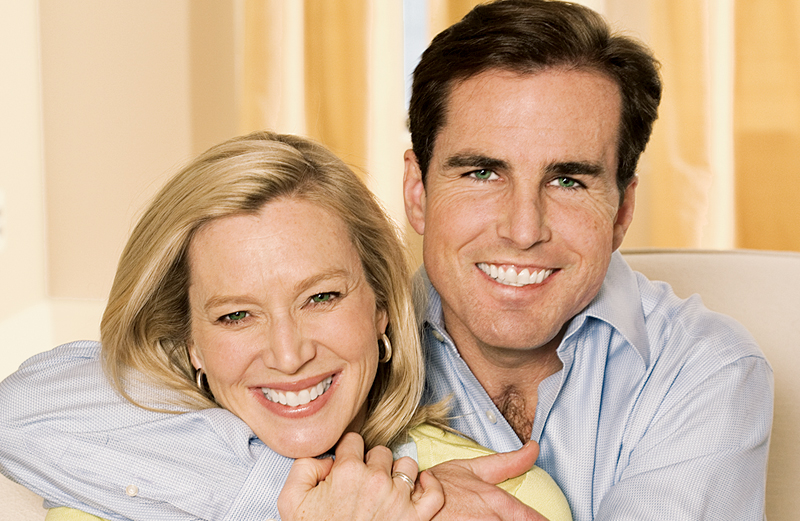
It was Bob’s fifth trip to Iraq, his first since becoming coanchor of ABC World News Tonight, and when I kissed him goodbye that morning last year, I was thinking about the exercise class I wanted to go to later that day and the logistics of taking our four kids to Disney World.

Obviously a national news anchor like Bob travels a lot, so I was used to handling things by myself. I didn’t usually worry about him. In fact, this time I didn’t really want to think of the danger he was facing at all. Better to block it all out of my mind.

Sunday morning, January 29, the call woke me up at the hotel in Disney World. It was the president of ABC News. “Lee, Bob has been wounded in Iraq,” he said, choosing his words carefully. “He’s alive but he may have taken shrapnel to the brain.”

I had to get out of that room—to think, to pray, to make some calls.

The kids were still asleep. I slipped on some clothes, grabbed my cell phone and dashed outside, my heart racing. There was a small lake outside the hotel and I set off around it at a fast pace. Part of me wanted to shout out at God, “Why us?”

Bob and I had had some tough moments in our marriage, including a time when I plunged into depression after a miscarriage. My faith had pulled me through and I was a stronger person for it.

Would the same faith sustain me now, even if the news got worse? I simply couldn’t imagine what life would be without my husband.

Cathryn, our 12-year-old, was awake when I got back inside. So was 14-year-old Mack. Mercifully the five-year-old twins were still asleep on the pullout couch.

“Guys,” I said, “Dad has been hurt in Iraq.” I told them what I’d learned, that Bob was riding in a tank with the army and something blew up, injuring him. “We don’t have a lot of information, but I know he’s getting great medical care.”

“He’s alive?” Cathryn asked, a quiver in her voice.

“Yes. They’re doing all they can for him.” Bob was being airlifted to Germany. I would go there immediately to see him. When he was stabilized, he’d come back to National Naval Medical Center in Bethesda. First we had to fly home to Westchester, outside of New York City.

I have to remain strong for our children, I told myself over and over. On the plane I fought to hide my tears. One thing at a time, I told myself. Just get everybody settled at home.

A big gray SUV pulled up in the driveway behind us when we drove in. Out stepped a friend. She already knew—and knew I had to go to Germany. She handed me a goodie bag for the plane with magazines, candy, gum, aspirin and a toothbrush. Then jumped into her car and drove away. Just like that.

It was the first indication of the huge network of friends and family that I would come to rely on over the next few months. They made Costco runs, took my children for playdates, drove them to soccer practices and confirmation classes and dropped off endless meals.

Bob’s brothers, my sisters, our parents all came and stayed with our children at various points, making it possible for me to be with Bob.

Bob was in intensive care when I got to Germany. The worst was true: The roadside IED had driven shrapnel into Bob’s head. They’d already removed half his skull to let his brain swell without crushing against the inside of the cranium and destroying brain function.

The doctors were guarded. Bob was young and in good shape, they said. He could recover. But for the first time I heard a phrase that would be repeated again and again: “It takes a long time for the brain to heal. Remember this is a marathon, not a sprint.”

Finally, I was allowed to see him. Nothing could have prepared me. He was unconscious. His head was swollen to the size of a rugby ball, deformed at the top where a piece of his skull was missing.

A ventilator tube had been inserted down his throat and all sorts of other tubes were coming out of his body, octopus-like. There were cuts and stitches on his cheeks, forehead and neck. His lips were swollen, his left eye looked like a dead fish.

I tried to convince myself that he didn’t look that bad, that this was the worst and he’d only get better from here. Then I leaned over and ever so gently kissed him through the hospital mask I wore. I spoke to him in a deliberate way that would continue for the next 35 days, hoping somehow he heard.

“I love you, sweetie. You’ve had an accident, but you’re going to be all right.”

Yet the shock of seeing my husband in that state was devastating. That roadside bomb in Iraq had ripped through all our lives. At least he’s alive, I kept telling myself. It’s a miracle that he’s alive.

I couldn’t fly with him to Bethesda, but he was given a quilt sewn by volunteers, the Heirloom Quilters Guild in West Jefferson, Ohio, signed by all the hospital staff.

Coming through customs, I had my first inkling of how fast our story had spread. I handed my passport through the Plexiglas window to the agent. She looked at it and her face softened. She squeezed my hand when she handed it back. “The nation’s thoughts and prayers are with you, Mrs. Woodruff,” she said.

What a powerful thing to hear! And how much I would need those prayers in the days and months ahead.

The routine began. At 6:30 every morning I would head over to the ICU at Bethesda from my friend’s home and check on Bob. He still hadn’t regained consciousness, though sometimes he opened his eyes.

In that overly cheery voice that a mother uses with her baby I would talk to him. I let him know about the kids. I told him stories about us, how we met and where we had lived, some of our best memories together. I brought music and had home movies for Bob to hear.

Friends had huge photos of the kids blown up and mounted them on the walls for Bob to see. His eyes were blank, but I told myself, Somewhere there’s a brain in there, healing.

Early mornings I swam at the nearby YMCA. It was like a kind of meditation, and I talked to God as I did my laps, talked to him as if he were right there in the water with me. Would I be all right? Would the kids? Could I handle whatever came next? What would Bob be like when he woke up?

“Prepare yourself, Mrs. Woodruff,” warned one doctor. “Bob will have to learn things all over again. Think of him as a baby learning to speak, then read and write….” I thought of my husband as a giant Baby Huey and was horrified.

The doctors said he might be violent, that sometimes people recovering from brain trauma hit their loved ones. They said he probably wouldn’t ever be able to do his job again. Please, God, I prayed in the waters of that pool, I want my husband back.

The e-mails, the notes, the cards kept coming. Someone sent a cross that he could hold in his hand—the clinging cross, she called it, shaped so it could be squeezed. Others sent homemade angels made out of paper clips.

They all told us they were praying for Bob, prayers made in synagogues, churches, mosques, community centers, living rooms and YMCAs. I read the notes to Bob and hung some of the cards up on the wall. When sometimes my own faith became hard to find, I felt myself draw on the faith of so many others.

There were hopeful moments, like the day Cathryn visited and kissed him. I looked at Bob’s face and saw a tear rolling down from the corner of his good eye. “He’s crying!” I shouted. He must have known his daughter was near.

One day I was sitting next to him and telling him, “I love you, I’m with you. You’re safe in a hospital in D.C.” All at once it was as if he came alive. He opened his eyes and mouth, trying to talk to me through the tracheotomy.

He pulled my hand toward him and I could swear I saw him mouth the words, “I love you, sweetie.” He became so agitated that the trache tube came out and the nurse had to give him a shot to calm him down, but I clung to that image of him trying to speak as much as I clung to the prayers on the walls around us.

In the fourth week they took out the trache tube and moved him to another ward. I had tried so hard to be strong, but I could feel my energy sagging.

On the first weekend of March, the children came to visit and when they spoke to their dad he gave no indication that he heard them. He had grown so thin and was fragile and pale, not like the daddy they remembered at all.

I missed being with them and couldn’t bear to see them go back to New York. How much longer could we go on?

Two days later I went for an early swim, as usual, then headed to Bob’s hospital room. I was thinking of the children back home, just getting up for school. I loved that moment when they just woke up from their dreams.

I pushed open the door to Bob’s room. I froze. He was sitting up in bed, a huge smile on his face. He saw me and lifted his hands in the air. “Hey, sweetie,” he said, “where have you been?”

I tried to speak but no words came out. This was so much more than I’d wanted and prayed for, that I couldn’t really believe it. My husband was back and he was calling me.

Half of me wanted to shout in relief and gratitude and half of me wanted to explain everything, how I’d been there day after day for five weeks. I dropped my coat and my swim bag to the floor and ran to him.

There were many months of therapy ahead. Bob came back to New York and spent his days as an inpatient at Columbia University Medical Center.

Sometimes he still struggled to find a word and we got really good at playing charades, but when he came up with a word like “unsettling” all on his own, I knew he was well on his way.

In May he had to have surgery—an acrylic skull plate was fused to bone where his skull was missing, to protect his brain—and he was free to go outdoors without a helmet. The old Bob was back.

Or was he? No person, no couple, no family goes through something like that without being changed and learning something about themselves they may never have learned otherwise.

Bob was fortunate. He had the best medical treatment possible, and we were blessed with the finest doctors and therapists. But the most important thing turned out to be all those prayers that held us close. I found that my faith was deepened by that fact, and that gave me strength, a greater strength than I’d ever known.

A White Light—Bob Woodruff

People ask me what I remember of the explosion. Very little.

We were filming a segment from the tank hatch. Because of the roar of the diesel engine it was hard to hear, but Doug, my cameraman, and I decided to give it a try.

We were coming to a stand of trees where insurgents were waiting. They say you never hear the bomb that hits you, and I didn’t. But I recall something even more profound. I found myself enveloped by a pure white light. It was peaceful.

My body fell back into the tank, but I floated above it in a place where there was no pain. I don’t think I even knew I’d been hit. The white light felt so good, like soft welcoming arms. Then it disappeared and I was awake on the floor of the tank.

I looked up and saw Doug arcross from me. I remember spitting blood and someone touching my head. But it’s the memory of that white light that’s clearest. I saw what I think must’ve been heaven. I can still feel its peacefulness.

Because of it, I have no fear of death now. Of course, I’d hate to leave my family, but I’m comforted by the thought of what will come next.

Download your FREE ebook, A Prayer for Every Need, by Dr. Norman Vincent Peale

Blind Woman’s Restored Sight a True Miracle

“The restoration of Mary Ann Franco’s vision is a true miracle. I don’t have a scientific explanation for it.”

You don’t expect those words to come from a neurosurgeon. But according to Dr. John Ashfar of Stuart, Florida, what he witnessed at Martin Memorial hospital was something beyond what his medical training taught him to expect.

The story was unearthed by ABC News affiliate WPBF of West Palm Beach. Twenty years ago, Mary Ann survived a car accident, but her injuries left her legally blind. Until recently, when she fell in her Okeechobee home and injured her spine.

Read more amazing stories! Click here to subscribe to Mysterious Ways

Mary Ann underwent surgery at the hospital to fix the damage… but the surgeon fixed more than he knew. She awoke and asked a nurse for pain medication—and realized she could actually see the nurse!

Doctors have offered plausible theories for how she could have regained her sight from a totally unrelated surgery, but none of them explain another oddity—before the accident, Mary Ann was colorblind. Now she’s not.

She’s seen her grandchildren for the first time, and her beloved cat and dog. She’s experiencing life anew, a gift she says, that can only be described as an “act of God.”

“In the mornings I get up and I look out and the sun is coming through the trees and the beams are coming down,” Mary Ann told WPBF. “Oh God, it’s so wonderful to see.”

One of our Guideposts readers on Facebook reminded us of another story of an accident that provided unexpected healing. In a classic Christmastime true story from the early ’80s, a partially-deaf child ran into an electric fence and was fortunate to survive. As the boy’s mother told us, what happened next was “strange and wonderful,” a gift her family would never forget. You can check it out here: An Exchange of Gifts.

Has an accident provided unexpected healing for you? Has a news story caught your eye that would be perfect to share in Mysterious Ways? Send your stories and discoveries to us!

Blessed with a New Outlook

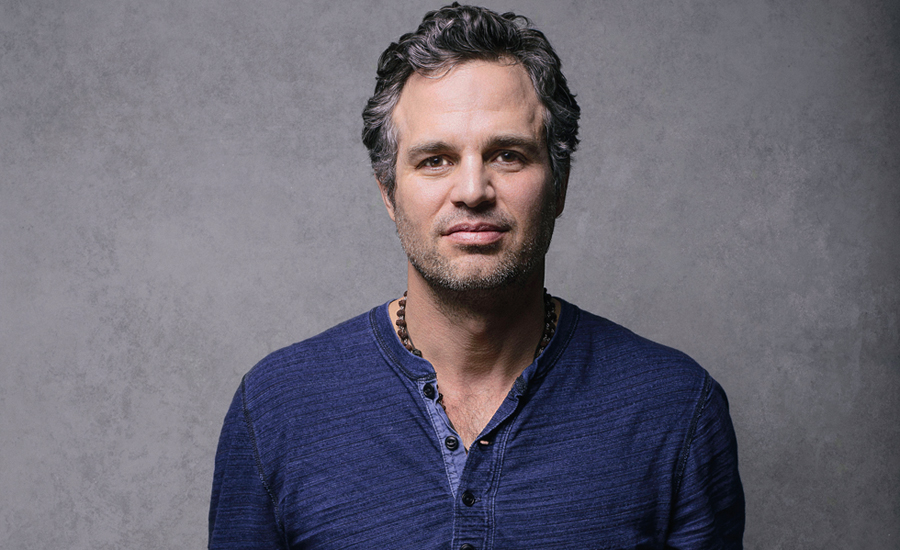
Have you ever had a dream that seemed more vivid than reality? Actor Mark Ruffalo did, in 2001. A dream that something was growing inside his head, slowly killing him. He awoke in tears. He’d had no headaches, blurred vision or other suspicious symptoms. Yet the dream convinced him he had a brain tumor.

After years of scraping by in Hollywood, he’d landed a plum role in a movie. The New York Times had lauded his performance. He and his wife, Sunrise, had just had their first child, Keen. Mark was shooting his current movie with his idol, Robert Redford. At age 34, how could he have a brain tumor?

READ MORE: RICHARD DREYFUSS’ MYSTERIOUS VISITOR

Mark told the set doctor about his disturbing dream. She was predictably skeptical, but sent him for a CAT scan to humor him. Incredibly, it revealed a benign mass on his facial nerve. Surgery was unavoidable, with a substantial risk that the left side of his face could be permanently paralyzed.

Mark began to plead with God. Don’t take my face, don’t take my life. I need to support my family.

The operation removed the tumor—but facial paralysis did set in. Mark withdrew to rural Upstate New York with his wife and newborn, fearful his acting days were over. It was there that God reached out again. Mark was on a solitary walk when he heard a voice whisper, Keep moving.

READ MORE: MATT DAMON’S MYSTERIOUS MATCHMAKER

Those words became his mantra as he focused on his future—as a husband and father. He laughed when Keen imitated his half-frozen smile. His relationship with Sunrise deepened.

Months later, he looked in the mirror and saw a twitch on the left side of his face. Before long, he had fully recovered. “Everything that seemed a curse was really the best possible thing, even my tumor,” Mark told Parade magazine. “I had a whole year with my son and wife, every waking hour. I wouldn’t give any of it back.”

Mark’s friends call it “getting Ruffaloed”—when a setback is a leap forward in disguise. We call it Mysterious Ways.

Balloons from Heaven Bring Unexpected Blessings

Today’s guest blogger is Mysterious Ways assistant editor Daniel Kessel.

A few weeks ago, three children in Moreno Valley, California, released a trio of colorful, helium-filled Mylar balloons into the sky. Attached to each was a handwritten, heartbreaking letter.

“Hi Mom, I miss you,” one letter read. “I hope you come and visit me soon because I have questions to ask, like why you had to leave…”

Each of the letters carried a small expression of the children’s grief. Their mother, 42-year-old Renee Finney, had recently lost a two-year battle with cancer. She’d passed away five days before Mother’s Day.

The children, ages 16, 18 and 25, had spent Mother’s Day weekend trying to raise the funds to give their mom a proper funeral. But even with a bake sale and car wash, they raised only a fraction of what they needed. The balloons were just a simple sendoff, but the best they could do to honor their beloved mom.

The next morning, 35 miles away in Murrieta, California, Yvette Melton was leaving for work when she discovered the shriveled balloons on her front lawn. She noticed the letters, untied them from the strings, and started reading.

Yvette’s heart ached at the messages. She Googled the names of the children who had signed the letters, and found Renee Finney’s obituary. I have to get in touch with them, tell them how much these letters moved me, Yvette thought. She called the funeral home. That’s when she learned they’d been having trouble affording the funeral expenses.

Not if Yvette had anything to do with it. That day at work, Yvette showed the letters to her boss and coworkers. Everyone felt the same way: They had to help. Within hours, they’d pooled enough money to match the Finney family’s fundraising efforts. That afternoon, Yvette created a donation page on the crowd-funding site GoFundMe. By the next day, enough money had been collected to cover the funeral costs completely, and then some.

The Finneys were astonished that the letters had such an impact. “I knew my mom probably wasn’t going to read them or reach her in heaven,” Karries Finney, the eldest daughter, told ABC News. “But honestly, now I know my mom was in heaven blowing those balloons right back down and put them on that porch.”

It isn’t the first time we’ve heard a story like this. Donna Teti of West Chester, Pennsylvania, also released balloons with letters after her twin sister passed away. Like the Finneys, she soon received comfort in the most surprising way. And Don Palmer of Jefferson, New York, didn’t release any balloons himself but was deeply affected by one that landed on his property at just the right moment.

Have you ever let go of something you never expected to hear about again, only for it to return unexpected blessings? If you’ve got a story of your own, send it to us. We’d love to share it with our readers!

A Valentine’s Day “Coincidence”

Father’s Day morning and I was up at the crack of dawn, on the hunt for antiques at a crowded flea market in Long Beach, California. I’m not a morning person. But my 70-year-old dad specifically requested we go there. Back in Delaware, he ran an antiques business with Mom. He’d heard about the Long Beach flea market from one of his antiquing buddies. “We have to get there early,” he told me. “Before all the good stuff is gone.”

I had moved to Los Angeles seven years before to pursue acting and writing. I’m an only child. My parents visited often. I knew they wished I lived closer. Still, they were always so supportive of my challenging career choice. I wanted to do something special for Dad that Father’s Day. I’d planned a weekend full of activities, culminating in dinner and a show at an invitation-only club in Hollywood. But Dad only wanted one thing: to go antiquing.

I trailed behind him sleepily, feeling as if I were at the Grand Bazaar in Istanbul. The market was in a huge parking lot with tents as far as the eye could see. Vendors hawked their wares—furniture, glass, china, jewelry, books, hats, you name it. Dad schmoozed with the vendors, snapping up good buys. I browsed a table of kitchen knickknacks. A pretty peach teapot. Some 1950s canisters like the ones Mom had.

On the edge of another table, something else caught my eye. A tiny tin with a logo of strawberries. And two words at the bottom: Dover, Del.

Dover, Delaware. A city 30 minutes from my hometown. How funny to see such a familiar name on a tin can some 3,000 miles away. I examined it closely. Above the city and state, it said Richardson & Robbins.

“Hey, Dad,” I said. “Look at this. Do you know anything about Richardson & Robbins?”

Dad turned the tin over in his hands. “Seems like an old cannery,” he said. “Probably closed a long time ago. Imagine finding this tin all the way out here on the West Coast.” He paused and looked at me, a twinkle in his bright blue eyes.

“Maybe it means you’re meant to be in Delaware!” he said.

I had to laugh. Dad was always teasing me about moving home. We got the tin, Dad’s treat. A few days later my parents headed back east. I put the tin in my china cabinet. I’d occasionally find my eyes drawn to it, especially during tough times. A reminder of Dad. That I wasn’t alone.

The tin sat there for three years, until Mom’s health took a turn for the worse. I moved back East to be closer, the tin from Dover tucked safely in my suitcase. It was difficult to put my career on hold, but it turned out to be a good decision. Nine months later, Dad died of a heart attack. Mom couldn’t bear the idea of living alone. We bought a house in northern Delaware and moved in together. The tin from Dover went up on our bookshelf.

In 2005, Mom passed away. I found myself at a crossroads. I didn’t know what to do next. Move back to California? Stay in Delaware? Pursue acting? Maybe writing? I felt so lost and alone without Mom and Dad.

That’s when my life took a turn. By a series of unbelievable coincidences, I got back in touch with my high school boyfriend, Kenny. I’d always wondered if he was the true love of my life. We hadn’t seen each other in 35 years. And then, one night, we ended up on the phone for hours. He asked me to meet him for lunch. I was over the moon. Nervous too. Was this a sign of what God wanted next for me? Was I even supposed to stay in Delaware? I couldn’t be sure. Until Kenny called to discuss the details of our date.

“How about we meet at my office?” Kenny said.

“Sounds great,” I said. “Where do you work?”

“Dover,” he said. “In the old Richardson & Robbins building. Do you know it?”

I met Kenny in the building’s lobby for our lunch date. The date that told me I wouldn’t be alone anymore, that my life was headed in a wonderful new direction. One I could’ve never imagined. Though, maybe Dad had sensed it all along.

A True Story of God’s Guidance

Through their 60-plus years of writing for Guideposts, John and Elizabeth Sherrill have encountered some incredibly inspiring stories, and shared them with us.

Now as they look back on their amazing journey of life and faith, the Sherrills are revisiting some of their favorites—survival stories, real life love stories, angel sightings and more—so that we can be inspired by them all over again.

My wife, Elizabeth, and I are often asked, “How do you find your stories?”

The answer is that, many times, we don’t find them; they find us. We’ll be on a trip somewhere, not even looking for a story, when all of a sudden there it is. A conversation overheard in a restaurant, an item in the local newspaper.

The first time I remember this happening was back in 1955. Elizabeth and I had gone from our home in New York to stay with a friend in Boston when a headline in the Boston Globe on our friend’s table caught our eye: “Man Buried Alive.”

The article reported that a welder had been working late and alone in a deep trench that ran through the center of West Roxbury, a nearby suburb, when the trench collapsed on him. It gave his name, Jack Sullivan, and the name of the hospital where he’d been taken. That was enough. We visited Jack in the hospital room, met his brother and talked to the man who’d found Jack just minutes before he would have suffocated.

A story had found us. And what a story it was; to this day it is one of the most astonishing experiences of God’s guidance we have ever encountered.

John worked with Jack’s brother, a fellow welder, to piece together the amazing sequence of events. To read about them, click here.

Download your FREE ebook, Mysterious Ways: 9 Inspiring Stories that Show Evidence of God’s Love and God’s Grace

A Teachable Inspiration

I grabbed a stack of envelopes off my desk and stood at the front of my classroom.

It was a perfect May day and I’d planned a fun activity for my sophomore English students—one that would get them engaged and excited. At least I hoped it would.

I had become a teacher to inspire kids, to help them reach their full potential. But I’d been at the high school here in Darien, Georgia, for three years now and no matter what I did, I didn’t feel like I was getting through to my students. Was I making any difference at all?

Rural Georgia was a long way away from bustling Cincinnati, Ohio, my hometown. I thought I would live there my whole life—near my family, my friends and everything familiar. After college I even spent a couple of years substitute teaching at the high school where I had graduated. But full-time teaching jobs were scarce in the Midwest, and when a job recruiter told me about a position in Georgia, I had to consider it carefully.

I always turn to God for guidance (I like to say I have him on speed dial), so that night I asked, Lord, should I apply for this job? Please show me where you want me to be.

A few days later I got an overwhelming urge to call the school. The principal practically hired me on the spot.

Boy, was it hard being a new teacher and an outsider! Cincinnati was a fairly large city. Darien didn’t have even a single stoplight. Back home in Ohio, my students were motivated and planned on going to college. Here, most of them barely paid attention during class and talked openly about dropping out.

About three years after I moved to Georgia I met and married my husband, John. My rock. Whenever I got down on myself, he would tell me that what I was doing was important. That it mattered. I wasn’t so sure. Each class I taught seemed more apathetic than the one before.

Is it I, Lord? I asked over and over.

Today, I hoped, would be different. “We’re going to try something new,” I said to my sophomores, and passed out the envelopes.

“What’s this for?” Stacy in the front row asked.

“I’m going to ask you three questions about your life and your goals. You’ll answer them in the form of a letter to yourself,” I explained. “Then you’ll seal that letter inside the envelope. In two years, after you graduate, I will mail it back to you so that you can see if you’re on track. The first question is: Where have you been?”

“I’ve been to Atlanta!” Stacy shouted. Everyone cracked up.

“Not a city,” I said. “I mean, what have you experienced? Talk about your highs and lows. The second and third questions are: Where are you going? and How will you get there?”
Silence.

“C’mon, guys, you can do this.”

“Who’s going to read these? You?” a student finally scoffed.

“No,” I said. “I’m going to put all of your envelopes into this manila folder. Then I’ll put it away until I have to mail them back to each of you. No peeking. I promise.”

They picked up their pens. Some, like Stacy, hurried along. Others, like Allison, Dawn and Amy, three friends who were my best students, took their time.

At home that night I put the manila folder on the top shelf of my bedroom closet and prayed for the best. And that’s where the envelope sat, for a year and a half.

In that time new batches of students had come and gone through my classroom. I continued to assign the letter project, but I still wondered whether I was making any impact on the kids.

A few days before Christmas break, my class walked in, talking, but their voices sounded more serious than usual. “I can’t believe it!” one girl said. “Think she’ll be okay?” asked another.

I listened as they described a horrific accident involving a senior named Dawn. She’d lost control of her car and was in a coma. Her family was praying for a miracle.

Dawn? A senior? Oh my gosh! She had been one of my best students. She had written a letter!

That night I pulled down the manila folder from my closet shelf and sorted through the envelopes. Midway through, I recognized Dawn’s distinctive script. I collapsed in the chair by my bed and cried.

What was I supposed to do with her letter? Destroy it? Give it to her parents? But what if it upset them?

For three days I prayed about what to do. Then I thought of Dawn’s brother. He was a freshman. I looked up his schedule, met him in the hallway after one of his classes and introduced myself. “Dawn wrote this,” I said, handing him the letter. “It’s from one of my class projects and I would like your parents to have it. Do you think you could pass it along to them?”

He nodded.

I didn’t hear anything more about Dawn until school reopened in January. Her friends Amy and Allison told me she had responded to her parents’ voices, squeezing their hands when they spoke to her.

One February morning Amy found me on hall duty. “Mrs. Durham! Guess what?” she said. “Dawn woke up last night! She asked for her mom. Isn’t that awesome?”

“That’s amazing! What great news!”

“But that’s not all,” she continued. “Dawn asked for you too.”

Me?

During my break I called John and told him I needed to see Dawn at the hospital, but I didn’t want to go alone.

“I’ll be right there,” he said.

I hardly noticed the route John took. My mind was racing. Why did Dawn ask for me? If I just woke from a coma, I sure wouldn’t want to see a teacher.

By the time we arrived at the hospital I was a nervous wreck. “I’m sure there’s a very good reason your student wants to see you,” John said reassuringly. He squeezed my hand then took a seat in the lobby. “I’ll wait right here for you.”

I got Dawn’s room number from the nurse at the reception desk and walked slowly down the hall. But when I got to her room, it was empty. Oh, no! I thought.

I backed out of the doorway. When I turned around a woman strode toward me. Dawn’s mother.

“If you’re looking for Dawn, she’s in the recreation room,” she said.

“Yes, actually, I am. I’m…Lori Durham,” I stammered. “Dawn’s sophomore English teacher. Amy told me Dawn woke up. She asked for me?”

“Durham?” she paused. “You’re the one who sent us the letter?”

“Yes,” I said.

Her eyes pooled with tears. “I can’t thank you enough,” she said. “We’ve read that letter to Dawn every day. It has brought her back to life. Have you read it?”

“No, ma’am, I haven’t,” I said.

She reached into her purse, pulled it out and handed it to me.

I unfolded the letter. “Where have you been?” Dawn had answered that first question by examining her life at school, at home and at church. She wrote of her strong faith and the tremendous love she had for her family. “Where are you going?” She was determined to go to college, she wrote, then law school, and she longed to be a wife and mother. Finally, she considered “How will you get there?” by taking her studies seriously.

Dawn’s answers were thoughtful but nothing out of the ordinary. Then my eyes went to the last paragraph: “I pray to God that if something should come between me and my goals, he will get this letter to me in time to make a difference. Thanks, Durham!”

I stared at Dawn’s words, my hands trembling. To think that I had considered destroying this letter!

“We’re going to have it framed,” Dawn’s mother said.

I looked up at her, speechless.

“Why don’t you come on down to the rec room with me,” she offered. “I know Dawn would love to see you.”

I practically sprinted there. Dawn was there, sitting in the back of the room, laughing with her family. She looked so vibrant, so alive. Our eyes met.

“Durham!” she shouted.

“Dawn!” I ran over and threw my arms around her. She hugged me tight. Tears streamed down my cheeks.

“Thank you, Durham. Thank you for everything,” she said.

Me? Make a difference? I didn’t have to wonder anymore.

Download your FREE ebook, Paths to Happiness: 7 Real Life Stories of Personal Growth, Self-Improvement and Positive Change

A Surprise Encounter at the Airport Brings Her Comfort

I was going to miss my flight.

I was at Myrtle Beach International Airport in South Carolina, waiting to fly out to Michigan and then New York, where two days earlier my 44-year-old daughter, Laurie, had died of a heroin overdose. I had lost my 45-year-old son to the same drug a year and a half earlier. Shock and heartbreak couldn’t begin to describe what I was feeling.

I already had my boarding pass when I got to the airport, but something nudged me to go to the ticket counter to check on my flight before I went through security. The agent told me my connecting flight to Michigan was delayed three hours, my flight to New York by another two hours.

“Please,” I told the ticket agent. “I just want to get to my family in New York. Is there anything you can do?”

“I have one seat left on a direct flight to LaGuardia Airport in New York City,” she said. “But it leaves in five minutes. Hurry!”

I raced through security. But in my haste, I completely forgot the gate number the ticket agent had told me. Now I stood frozen in place, staring at the departures board, feeling so lost and overwhelmed that I burst into tears. What else could possibly go wrong?

Just then, I felt a pair of arms wrap around me in a huge bear hug. What on earth? I turned around to find a man who was about my kids’ ages. He was beaming at me. “Hi, Mary-Ann!” he said.

He looked familiar, but I couldn’t place him.

“It’s me, Eric,” he said. “From the prayer group?”

Eric. I vaguely remembered him from a prayer group I belonged to, though we’d never really talked much. I certainly didn’t have time for chitchat now!

“I’m sorry, I have to go,” I said. “I’m going to miss my flight—I have to get to LaGuardia!”

“Wait,” Eric said. “That’s my flight too. Come with me.”

He led me to the gate, and we boarded just in time. We didn’t get a chance to talk much more, though. He was seated in a different part of the plane.

When we arrived at LaGuardia, I had to wait for my ride—I hadn’t had time before the flight to notify my family about the change in plans.

“I’m on my way to Texas for work,” Eric said. “Want to quickly grab some coffee while I wait for my connecting flight?”

We sat on a bench. I told Eric why I was in New York. How my daughter Laurie had died, just as my son had less than two years before. Eric’s face fell. He grew quiet.

“I never got to tell you this,” he said, “but I knew your son. We were in a recovery group together. I’ve been sober from drugs for 20 years, but I still go to meetings. That’s where I met your son. He always talked about his daughter, how much he loved her.”

Both my kids had been so loving and kind, good souls beneath their terrible addictions. It felt good to remember that.

“May I pray with you?” Eric asked. I nodded weakly. Together we prayed for Laurie and for me to be strong in the coming days.

I got up to go. “I’m so glad you were here,” I said.

“Funny you should say that,” Eric said. “When I booked this flight, I was so irritated that I had to go through New York just to get to Texas from South Carolina. Typical airlines, I thought. But obviously there was a reason….”

The airlines might have been delayed that day, but God’s timing was perfect.

A Surfer’s Divine Warning

I drove north on California’s Pacific Coast Highway after attending a work conference in Santa Cruz. It was roughly three hours away from where I lived in Pismo Beach, and I’d decided to make the most of the trip by hitting a new beach to surf. I was an avid surfer, and I was excited to try out a different spot.

It was a miserably gray day with intermittent rain showers, but the waves looked fun. I pulled into the parking lot to search the stretch of cliff-lined coast. My truck was the only vehicle. The beach was empty.

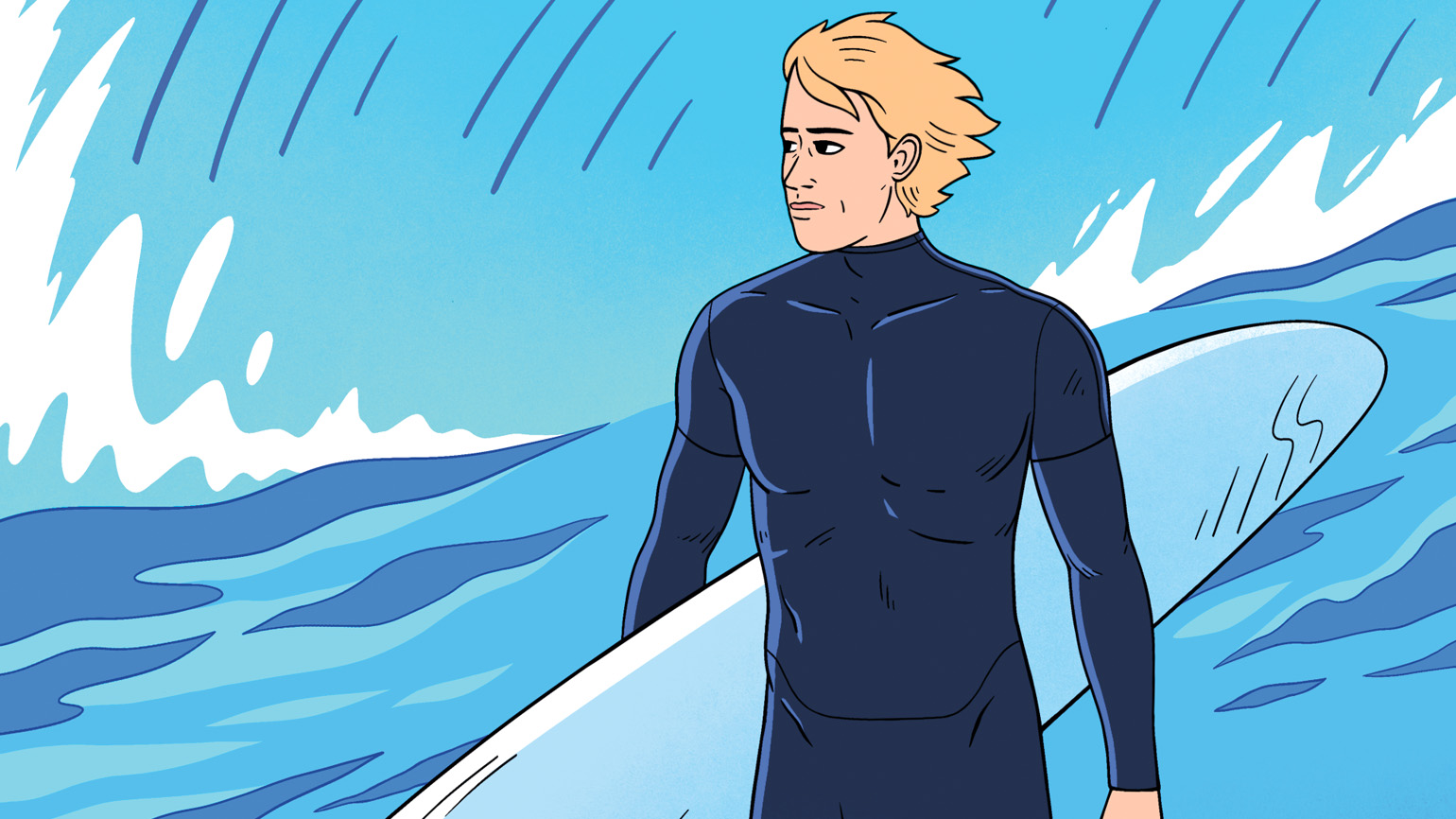
Surfboard under my arm, I headed down a flight of stairs to the beach. With the sand between my toes. I watched the water for a moment, taking in the waves. I was anxious to get out there.

Then I felt it. An inner conviction. Don’t paddle out. I’d never felt anything like it before, this urge. It cut through my thoughts as if it originated from somewhere else. It was strong. I wasn’t sure where it came from or what to make of it. But the waves looked so promising, and I felt young and invincible. So I quickly brushed aside the feeling and pulled on my wetsuit.

As I neared the water’s edge, I felt it again. Don’t paddle out. This time, almost pleading with me. I ignored it and dove into the surf, swimming quickly until I was out past the break.

I sat up on my board, bobbing in the water, and looked around, waiting to catch a wave. To my dismay, almost as soon as I’d paddled out, the waves turned to garbage. There was an incessant current that kept me paddling the whole time to stay in place. I was only in the water for roughly 30 minutes when, out of frustration, I decided I was leaving.

I caught one final wave and made my way to shore. Because of the current, I was a few hundred yards away from where I’d parked my car. I had to walk along the edge of the cliff-lined shore back to my truck. The tide was on the rise, leaving a small strip of beach next to the cliff face to walk on.

The edges of the waves gently lapped my feet as I made my way toward my truck. I rounded a small bend in the rocks. The water receded. And kept receding…

With terror, I realized that the water was about to surge, and I’d reached the mouth of a deep cave, with nowhere to go.

I braced for the wave’s impact. “God, help me!” I cried out. Then I was swept under the water. Everything went black.

When I came to, I was pinned to the back of the cave. The water was up to my neck. My surfboard had spun around behind me, protecting my head from the rocky wall. But I wasn’t out of danger yet. I had to get out of the cave before another wave came, before the tide rose even higher. I felt the water start to pull out to sea. I swam with everything in me, clearing the cave’s mouth. I didn’t stop until I reached a safe stretch of beach past the cliff face. I flopped onto the sand, panting, my heart pounding.

Lying there, I realized that God had tried to warn me. In his ultimate mercy, even though I’d ignored him, he’d protected me. I had only a few small bumps and bruises. I hadn’t inhaled any water. Sure, I was shaken up, but I was otherwise pretty much unharmed. It was a hard-learned lesson, and one I’ll never forget.

It’s been 22 years since that day. I still surf, but now I listen carefully for warnings before I head out. And if I get one, I heed it.