

Embrace God's truth with our new book, The Lies that Bind

An Angelic Answer to Prayer

Ma’am, there is no seat for you on the plane,” the check-in clerk at the airport told me. “You must fly standby only.”

“But, here, this is my ticket. I confirmed my seat three days ago.” The clerk only shook her head. “I’m sorry,” she said. “But there is no seat for you on this flight.”

I grabbed my luggage and wandered away from the counter before I burst into tears. I was alone in the domestic airport terminal in Delhi, India. I didn’t have any friends in the city. I didn’t even speak the language. What was I going to do?

I found an empty corner and plopped down on the cement floor. Maybe if I’d gotten here sooner…

I knew timing was everything when it came to overseas travel. I’d flown to India with my son, who was going on a trek in the Himalayas with some other college kids. After seeing him off, I planned to catch a connecting flight to North India to visit a friend.

I woke bright and early to make sure I had enough time to get from my hotel to the airport, and headed down to the lobby to grab myself a quick breakfast.

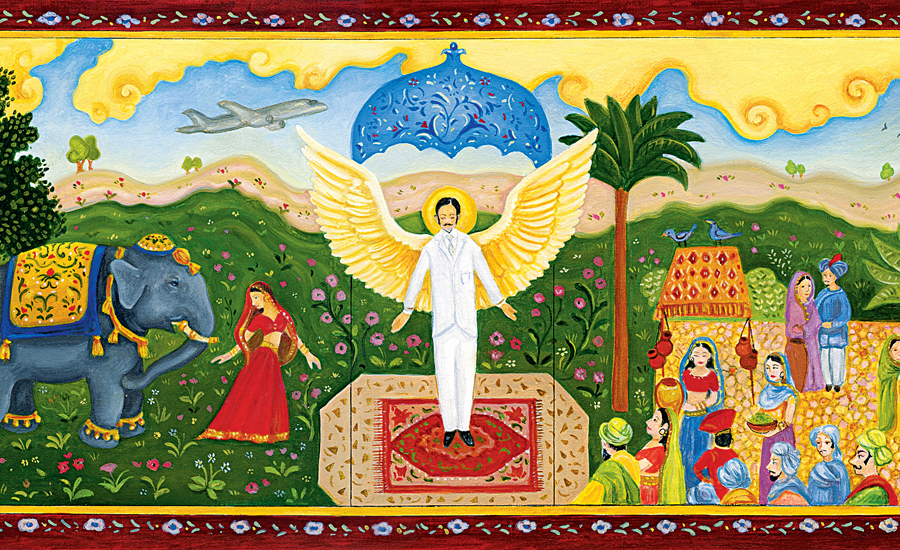
“Good morning, Ma’am,” a hotel attendant greeted me as I stepped out of the elevator. He was a diminutive man, dressed in a smart white uniform with gold buttons down the front.

“I’m looking for the buffet,” I said.

“But where are you from? What will you do here in my country? There is much for you to see!”

“I just arrived from America. Now I’m flying to North India to meet a friend. I leave for the airport directly after breakfast.”

“Ah, I see….” He went on and on, with every good intention, I was sure. But I fidgeted as we talked. I felt like I was wasting time. Can’t he tell I’m in a hurry?

Finally he led me to the breakfast room. I ate in record time, then ran back to my room to grab my luggage, wheeling it quickly through the lobby to the front door—

“Hello, Ma’am!” There was the hotel attendant again. I groaned. Now I really didn’t have time for small talk. But there was no getting away. After more friendly conversation, he helped me with my luggage and put me into a taxi.

The city was bustling with action. Rickshaws, bikes, cars and buses crowded the road, weaving in and around one another. Masses of people filled the edges of each street, moving in an endless rush.

Storefronts were loaded with merchandise, heaped high in the windows and stacked in sidewalk stalls outside. Colorful signs with peeling paint hung from every building. The air was filled with a cacophony of voices and honking horns.

I could barely focus on one thing before it was out of sight and replaced by something new. It was dizzying to behold, and before I knew it, the taxi was slowing to a stop outside the airport.

I stepped over a puddle and made my way to the terminal. By some miracle, I found the right line to enter the building—security x-rayed everyone’s luggage and allowed only ticketed passengers inside. How long will this take?

At my turn, I gathered my belongings and hurried over to the clerk’s counter at the other end of the building, only to find out that I had no seat.

Sitting on the floor, clutching my luggage, I was at a loss for what to do. The conversations around me were in Hindi. Colors whirled as women in bright saris rushed around to catch their flights. Nothing here was familiar. I felt invisible, a foreign woman praying quietly on the cold floor alone.

“Ma’am, did you get your flight?” I looked up in surprise at the hotel attendant, still dressed in his white suit. How relieved I was to see him!

“I’m on standby,” I said. “There’s no seat for me.”

“Give me your ticket and passport, and I will talk to them,” the man said. I hesitated, but handed both items over. He was the only person I knew in all of Delhi. He strode over to the ticket counter and began talking loudly in Hindi with the clerk.

A few minutes later, he marched back as if I was his one priority. But wasn’t he traveling too? I wondered. “Ma’am, here is your boarding pass. You now have a seat on the plane.”

I took the pass, stammering thank-yous. My plane called for boarding, and I pressed a tip into his hand and went on my way. I’d forgotten to ask if he was traveling, and why in uniform. And if not, how he had been allowed in the terminal without a ticket—as if I was his one priority!

As the plane climbed over the clouds I thought again about timing. It certainly was everything when it came to overseas travel—and to the way an angel in Delhi had escorted me every step of the way.

Download your FREE ebook, Angel Sightings: 7 Inspirational Stories About Heavenly Angels and Everyday Angels on Earth.


An American in China

Teach English in China and experience the nuances of an ancient culture…

I was experiencing the nuances, all right. I looked down at my bed—a generous description for that narrow plank two inches off the ground. Not even a thin mattress to rest my arthritic 62-year-old American self on. My roommate, Rosemary, giggled. I was used to that by now.

I’d arrived in Bao’an, on the outskirts of the city of Shenzhen, three weeks earlier, excited to teach English as part of my master’s degree program. I’d pictured my students hanging on my every word. It turned out eight-year-olds are the same everywhere—hyper! Plus, it was sweltering, and my classroom didn’t have so much as a fan. Thank goodness I’d finally mastered my first Chinese sentence. Wo yao bing shui—I’d like ice water. The other teachers in the program were just out of college, up for anything. Even the chicken feet and beef-blood stew in the cafeteria. Me, I couldn’t seem to settle in and get comfortable.

READ MORE: A COMFORTING SIGN FROM HEAVEN

Especially on that board bed. I crouched and crawled onto it, my joints creaking. Rosemary laughed again. “Rita, why’d you decide to enroll in this program, anyway?”

I’d seen the puzzled looks from the other teachers. The locals who stopped and stared—and sometimes reached out to touch my white-blonde hair. What in the world was a 60-something widow from Southern California doing in Bao’an, far off the tourist track?

I shifted to take the pressure off my bad knee. “Okay, Rosemary, if you really want to know…”

It all started with my husband, Paul. I never thought I’d find my soul mate at age 52. Then I met Paul at a church luncheon. It was the beginning of a wonderful adventure. Which was really different for me. I’d been at the same job—teaching elementary school—for 39 years. Not like Paul. He’d sailed the seven seas, even lived in Japan. I’d never set foot on foreign soil. Paul made plans for us to travel, see the world. “Rita, you gotta dream big,” he was always saying. “Get out of your comfort zone.” We were going to drive cross-country. Backpack through Europe. But five years into our marriage, Paul died of cancer. Counseling, support groups…nothing eased my grief. What was I supposed to do with my future now that the love of my life was gone?

Then, one spring morning, a voice blaring from my clock radio jolted me awake: “Teach English in China and experience the nuances of an ancient culture.…” Just as suddenly, the ad cut off, mid-message. The radio went back to music from the station I kept it tuned to. Strange.

I wanted to hear the rest of the message. I listened for that ad for a whole month. It never played again. Finally, I called the station.

“We don’t air any commercial like that,” the manager said. I persuaded her to send me a list of the station’s sponsors. I e-mailed every name on the list, asking, “Do you offer a program to teach in China?”

Only one sponsor said yes—Concordia University. It was about to launch a pilot program for teaching English in China, as a requirement for its Master of Arts in International Studies degree. I met with the dean and the program director for an interview.

The dean looked at me the way the locals here did. “I was surprised to receive your application,” he said. “How did you even hear about the program? We haven’t officially launched it yet.”

READ MORE: THE VOICE IN THE BACKSEAT

“On the radio.” I explained about the ad.

The dean looked even more perplexed. He turned to the program director. “Did you place that ad?”

The director shook his head. “We don’t have the budget for it.”

Nobody could account for the voice that came from my radio. An odd message blaring in the darkness, one I couldn’t ignore.

“So I packed my bags,” I told Rosemary. “I needed to dream big. Leave my comfort zone and try someplace new.” I tapped the plank beneath me. “I just wish it came with a more comfortable bed.”

This time when Rosemary laughed, I did too.

A Mysterious Ways Mea Culpa

I have to apologize, Mysterious Ways fans. I’ve let you down by not writing in this space every week as I should. It’s not that there haven’t been inexplicable stories of God’s grace in the news—it’s because I’ve been quite involved in the creation of a new Guideposts product I’m very excited about.

What exactly is it? Well, I don’t think I can spill the beans quite yet. But if you sign up for our Mysterious Ways newsletter, you’ll be among the first to hear about it. You’ll also receive a brand new Mysterious Ways story in your email inbox every week, guaranteed. No junk—just real life stories about the wonderful and unexpected ways in which an unseen hand reaches out to comfort, protect and inspire us.

Community Newsletter

Get More Inspiration Delivered to Your Inbox


This week’s newsletter story comes from our very own editor-in-chief, Edward Grinnan. He writes about a mysterious light that came to him in the midst of a very dark time in his life.

Many of my friends and family members have asked how they can receive the newsletter. Just click the link below to sign up and also receive a free Mysterious Ways e-book.

Mysterious Ways: 9 Inspiring Stories Revealing God’s Love and God’s Grace

And please, keep sending in your true stories to mw@guideposts.org. We always love to hear about the miracles and wonders that you have experienced.

A Mysterious Ways Giveaway Winner’s True Story

Congratulations to Dorothy Donahue, this week’s winner of the 2010 edition of His Mysterious Ways. This week, one lucky random commenter will receive a 2011 One-minute Devotions Page-A-Day Calendar, which features Mysterious Ways stories every weekend. Register below and get commenting!

Dorothy, in her comment, shared her own “Lost & Found” Mysterious Ways story:

“My son once gave me a set of crystal earrings for my birthday—they were way out of his price range, which I felt bad about, but knew he wanted to do something special for me.

One night after my shower, I realized I hadn’t taken out these very earrings, as I usually do before showering. To my dismay, one was gone! I went back to the bathroom and checked every inch, but there was no sign of it. I had showered in our pool bathroom, which has no tub or edge to keep the shower water contained, so I had taken the squeegee and carefully scraped all the water into the drain. My heart sank as I thought of it—now gone forever below the ground!

I checked out the small bathroom floor a couple of more times for any trace—nothing. I went back to my bedroom and got all teary-eyed—my son and I didn’t see each other often, so the earrings meant that much more to me. I prayed specifically for a miracle that somehow, somewhere it would show up and I would find it again.

Then I had a peace that I was going to find it. Just then I got the idea to go look in the bathroom again. How absurd! I’d checked so thoroughly.

I walked back to the pool bathroom, pushed the door open and took one step in. There in the middle of this tiny bathroom was my earring—sparkling and glimmering in the sunshine coming through the window.”

I love hearing stories from readers about how they felt or witnessed God’s presence in their lives. A lot of these stories tend to fit into different categories—like Dorothy’s “Lost and Found” story above. We also get what we like to call “His Humorous Ways,” surprising, funny moments that serve as little reminders from God to lighten up and laugh once in a while. Or “Perfect Timing” stories, which show us that we can make all the plans we want to, but God may have a different—and more important—schedule planned. We’ve heard some pretty amazing “How We Met” stories, about the strange twists and turns that led a couple to find out they were made for each other. And of course, we receive many “Comfort From Beyond” stories, in which God delivers signs to us that our departed loved ones are okay, allowing us to move on.

I really have the best job at Guideposts (don’t tell Edward), because reading these stories shows me that evidence of God’s love isn’t always in the big “miracles” we see in the newspapers. Usually, it’s in the things that happen in our lives everyday. These stories really inspire me. Even the ones we don’t publish. Just because our editors may think a story isn’t more than coincidence or can be easily explained away, doesn’t mean that I haven’t been touched by the writer’s positive attitude and honest faith.

Please continue to share your stories, or those of friends, below in the comments or in an email to mw@guideposts.org.

A Mysterious Sign in a Family Photo

Have you ever received an incredible sign from above in a photograph?

That’s what happened to today’s guest blogger Gigi Gerlach. In 2014, Gigi’s youngest son, Scott, took his own life. After his funeral, Gigi’s family discovered something in a photograph that gave them great comfort in the darkest of times.

Here’s Gigi’s story:

Back in August 2014, my family got together for a little reunion weekend. All four of my grown children came to my house in West Virginia with their spouses and kids. It was absolutely wonderful. We laughed, reminisced and bonded. My youngest son, Scott, who lived next door to my husband and me, was there too. He’d been struggling with drug addiction for some time. He was normally not so social, but this particular weekend he was different. He stayed at our house with his siblings and their families. He even went to a local hot dog festival with us.

Because everyone was home, I insisted on getting a family picture of all of us together. We took turns sitting on the front porch glider and snapping photos.

Just two weeks later, Scott took his life. We were completely devastated. After the funeral, my oldest son, Craig, returned home and looked at the photos he took on his phone during our family weekend.

Craig texted the family one of the photos he’d taken of all of us scattered on the front porch. There was Scott standing by our front door in his red tank top, watching the action. My husband pointed out the reflection of our neighbor’s house on our glass front door. There was a strange spot in one of the windows of the house. It looked like a person’s face.
We texted Craig about it. He responded with an enlargement of the photo. I couldn’t believe it when I saw it. In the window of my neighbor’s house, reflected on our front door, was an image of Jesus!

I went back to that photo time and time again in the weeks and months after. It gave me such comfort. To know that Jesus was with our family that weekend in August. That he was watching over Scott. Watching over all of us, always.

In devastating situations like this, I am reminded that the Lord said, “I will never leave thee, nor forsake thee.” I have proof that he didn’t.

A Mysterious Light Guided Two Lost Hikers to Safety

My date, Lisa, and I were huddled in the pitch black on a wooded ridge in the Colorado Rockies. All around us were rocks and sheer drops. We’d lost the trail. We were still a mile or more from the car. And it was getting colder by the minute.

I couldn’t believe I’d gotten us into this mess. I’d met Lisa through a family friend and invited her to hike Eagle Peak with me as our first date. I felt responsible for our safety and guilty that I’d put both of us in danger.

After all, I should’ve known better than to hike so close to nightfall without any flashlights or heavy jackets. I was a junior at the nearby Air Force Academy in Colorado Springs. A former Eagle Scout too. But I’d been so excited for our date, I didn’t think twice about heading out for the hike a little later than I usually would. I’d taken this trail before, and it was sunny and unseasonably warm that November day. I felt I had little reason to worry.

The hike had started out great. Lisa and I traversed a ridge densely forested in pines and firs, hiked over a saddle and climbed to the peak. We paused there to take in the glorious view, the brilliant trees, hawks wheeling on the updrafts, the setting sun…Wait a second. I checked my watch. Four o’clock?! Somehow we’d lost track of time. I suggested we head back, struggling to hide the worry in my voice. I hoped if we hurried, we’d make it before the sun went down and the temperature dropped along with it. But it was slow-going. By the time we finally arrived at the wooded ridge, the sun had set. The tree canopy blocked out the stars and the moon. When we could no longer see in front of us, I made us stop.

Now here we were, stuck on this ridge, immobilized by the darkness. We were both shivering violently, our teeth chattering uncontrollably. Lisa wore a sweater, and I had given her my light jacket. We were both in danger of hypothermia if we didn’t get off this mountain soon.

“We might have to crawl down,” I said to Lisa.

“Okay,” Lisa said, crouching to the ground. “I’ll stay close.”

I started out and immediately slipped on the scree. I caught myself. Lisa gasped and stopped behind me. Rocks clattered over the edge of the ridge. Who was I kidding? I had no way of knowing if we were heading toward a drop or even in the right direction. I felt utterly defeated. The only thing I could think to do was pray. I squeezed my eyes shut.

God, we need light, I prayed silently. It seemed like an impossible request in the given circumstances. Still, I didn’t know what else to pray for.

I am the light of the world.

A voice responded. But I hadn’t heard it out loud. It seemed to come from within, from my heart. I didn’t understand what the words meant. I stood up. Without understanding why, I knew that I needed to repeat these words to calm down and clear my mind.

“Lord, you are the light,” I whispered to myself.

An incredible peace filled me. As if somehow I knew everything would be okay. I took a deep breath, then glanced down. I gasped.

Surrounding my feet was a circle of blue-green light. It was faint, similar to the soft glow of an illuminated watch face. I could clearly see my shoes and was relieved to find that we were standing directly on the trail. But where was the light coming from? Was someone shining a flashlight? I looked around but couldn’t find the source of the mysterious glow.

I took a cautious step forward.

The glow moved with my feet. I took another step, and it moved with me again. I had an innate sense that this light was for me, that it had been sent to lead us.

“Lisa,” I said. “Follow me. I think I can get us out of here.”

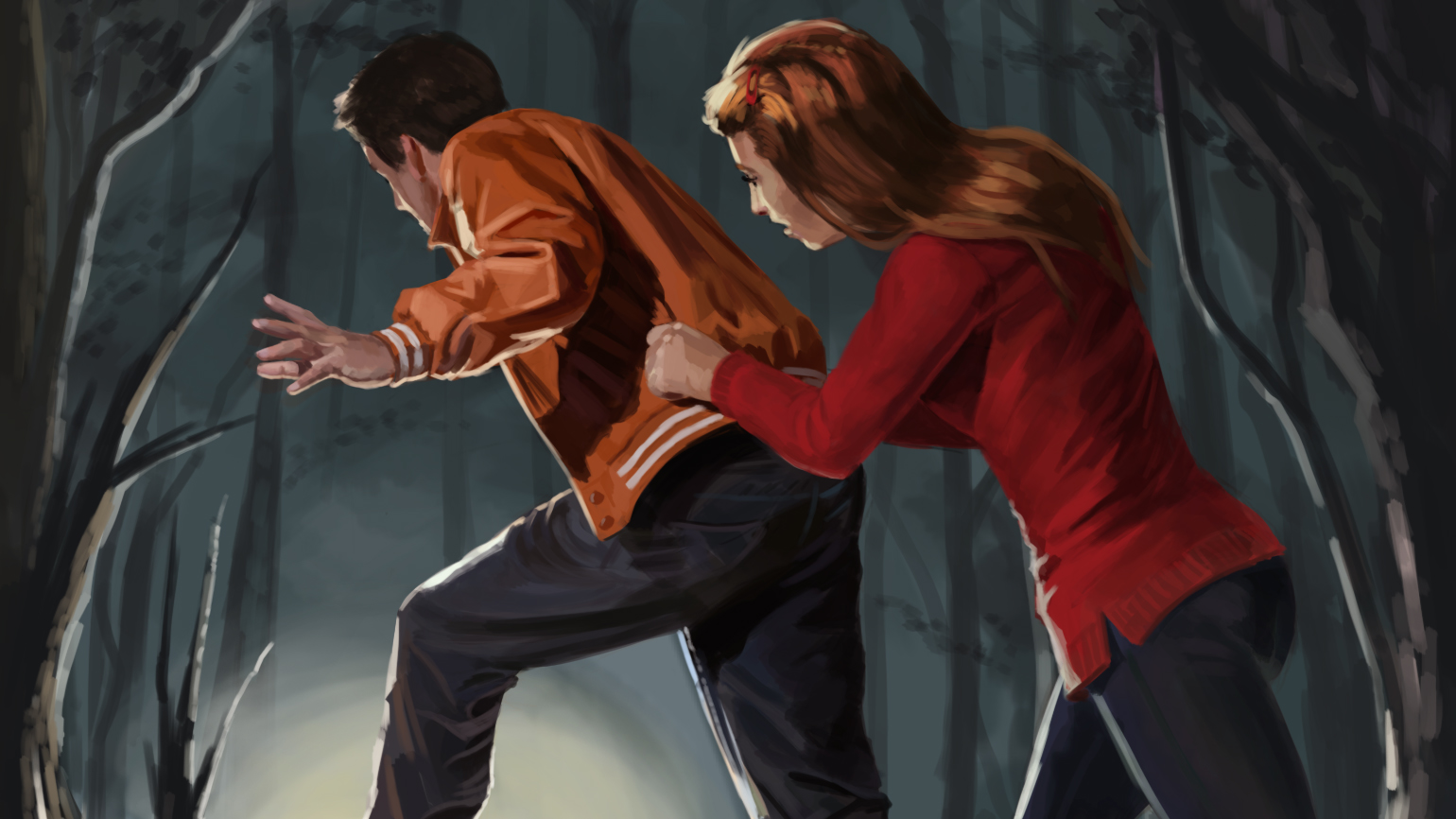
We edged forward slowly, Lisa’s hands on my hips so we wouldn’t get separated. With every step, the light stayed at my feet. I was tempted to ask Lisa if she could see the light too, but I worried that if I spoke about it, it might disappear. Just keep following it, I thought. We moved along. The feeling of calmness stayed with me.

After an hour of walking, we emerged from the trees. The light of the stars and the moon illuminated the scenery around us. I could now easily see the trail and the car at the trailhead. We’d made it! I looked around for the strange light, but it had disappeared. I never saw it again, but the feeling of comfort it brought me hasn’t faded, even in my darkest moments in the many years since.

Did you enjoy this story? Subscribe to Mysterious Ways magazine.

A Mysterious Dog Cured Her Loneliness

I was making my morning coffee in the kitchen and wondering how I would get through the day, especially with the rain coming down, when Tony’s picture toppled from the mantle in the family room. Again. Ever since my husband died two years earlier, that gold-framed photo—Tony posing with his prize hunting dogs—kept falling. That wasn’t all that was happening. Sometimes the TV would turn on out of the blue. And I’d get this feeling that Tony was still with me. Was it just the wishful thinking of a lonely widow? I couldn’t be sure.

I picked up the frame, dusted it off and put it back in place. I stared out the window that flanked the fireplace, thinking of Tony. If only he really were still here. I needed him now more than ever. It had been the most difficult two years of my life. Not only had Tony died of liver failure. My mom died around the same time too. Then came more bad news. The night before, my brother called. He’d been planning on moving into my spare room. Not anymore.

Get the new daily devotion for animal lovers!

“I have cancer, Patricia,” he told me on the phone. “It’s terminal.”

This wasn’t how I’d pictured my golden years. Tony and I had had big plans. I was a photographer and drug addiction counselor. Tony was a Vietnam vet who’d risen through the ranks to become a master chief petty officer in the Navy. We’d moved around a lot, every three years to a new naval base. It didn’t matter where we lived as long as we were together. After Tony retired, we decided to settle in one place for good. Tony was a country boy who loved nothing more than biscuits with gravy and Hank Williams. We moved into a farmhouse on 55 acres in north Georgia. I imagined a lifetime of sipping sweet tea on the back porch, while Tony spun yarns about coon hunting. His dream was to raise champion hunting dogs. Meanwhile, I had my heart set on getting a sweet little Yorkie.

“Can’t I talk you into a beagle or Lab?” Tony said, poking fun at my choice of a dog, one that could fit in my handbag. Yorkies weren’t exactly farm dogs. But I’d wanted one since I was a kid.

“You enjoy your hounds,” I said. “I’m getting a Yorkie.”

We had so many plans, so many dreams. But some months after we’d moved in, I found Tony on the porch, looking unsettled. “Doc says my liver is failing,” he said. “I’ll need a transplant.”

Like many soldiers who’d served in Vietnam, Tony had contracted hepatitis C and been exposed to Agent Orange. In my eyes, he’d always been invincible—a larger-than-life Southern gentleman, as tough as they come. I didn’t want to believe he could die. For eight months, we waited for a donor match. My mom, meanwhile, was diagnosed with pancreatic cancer. I stayed up night after night, researching both Tony and Mom’s conditions, hoping to find some detail the doctors might’ve missed. Finally Tony got a transplant. He recovered sooner than expected and was home in no time. But the victory was short-lived. Two months later, Tony suffered a massive blood clot and died. He was only 60. And Mom was gone too.

Our farmhouse, which had once been so lively and filled with laughter, was eerily quiet. So dark and empty. There was no one to greet me when I came home from work. No one to sit with on the back porch. No one to walk with around our property. These were the saddest two years of my life. And now my brother was sick too. I didn’t want to go through another battle all alone. I didn’t want to watch another person I loved die. I stared out the window at the rain, which was coming down even heavier now. I was about to head back to the kitchen when I happened to notice movement. Something small and furry emerged from the woods in the backyard. It trotted right up to the house.

I set my coffee cup on the counter, grabbed my raincoat and dashed outside. The animal darted back into the woods. I knelt and waited, staying calm. A minute later, a dog came running out. He pressed against my knees and looked up at me. He was shivering, his brown fur matted and covered in mud. But there was no mistaking him.

A Yorkie. The kind that could fit in a handbag. I stared at the dog in amazement. Yorkies were relatively rare, an expensive breed. My house was surrounded by 300 acres of woods and farmland, without another house for miles. So what was this dog doing on my property? How had he survived in woods full of coyotes?

I carried him into the house and dried him off. The Yorkie made himself right at home. He curled up at my feet on the porch. He followed me from room to room in the house. And I swear he cracked a doggie smile when I played Hank Williams. The dog had no collar, no tags. I asked around in town. Posted his photo online. Nobody had lost a Yorkie. No one came looking for him. He was mine to keep. I named him Hank. He never left my side.

Just as devoted as the one who’d sent him.

A Mysterious Confirmation of Purpose

I felt a cloud of dread hanging over me as I awoke one morning to the sound of one of my three roommates dancing around in the kitchen of my apartment on Maiden Lane. I knew that moving to downtown New York City for graduate school would be a big adjustment; I had a novel in my heart that I wanted to write full-time, and going back to school seemed the best way to get it done. But living with 19 and 20-year-olds and sleeping on a bunk bed at my age seemed ridiculous.

Why did I come here? I thought, as I dragged myself out of my lower bunk and got dressed to head to the library for a day of writing. I’d been living happily in my own apartment in Washington, D.C., just 30 minutes away from my family and a metro ride away from my close friends. I had a cushy job that I was proud of too. And a queen size bed! Couldn’t I have written my novel right there in my comfort zone?

After all, I was writing an alternative history novel about the real-life rebellions of enslaved Africans in 1790s Virginia. I’d based the plantation in my story on George Washington’s Mount Vernon, and even had an annual pass to visit and do research there as often as I wanted. What was the point of going to grad school in New York, a place where I had no friends, family or history to speak of?

Defeated, I laced up my shoes, slung my laptop case over my shoulder, waved a quiet goodbye to one of my roommates, and headed out the door. As I often do when I’m feeling down, I called my mom to lament as I walked my usual path down Maiden Lane and up Broadway toward the library.

“I shouldn’t have come here. Why did I come here?” I asked and she tried to reassure me. “You’re at a great school, you’re going to hone your craft! That’s what’s important,” she said. I let out a long, dramatic sigh, lifting my head up to the sky in response. That’s when a building I’d never seen before caught my eye.

Like this article? Sign up for “Your Weekly Inspiration”, a weekly newsletter of Inspirational stories of hope and faith – Click Here.

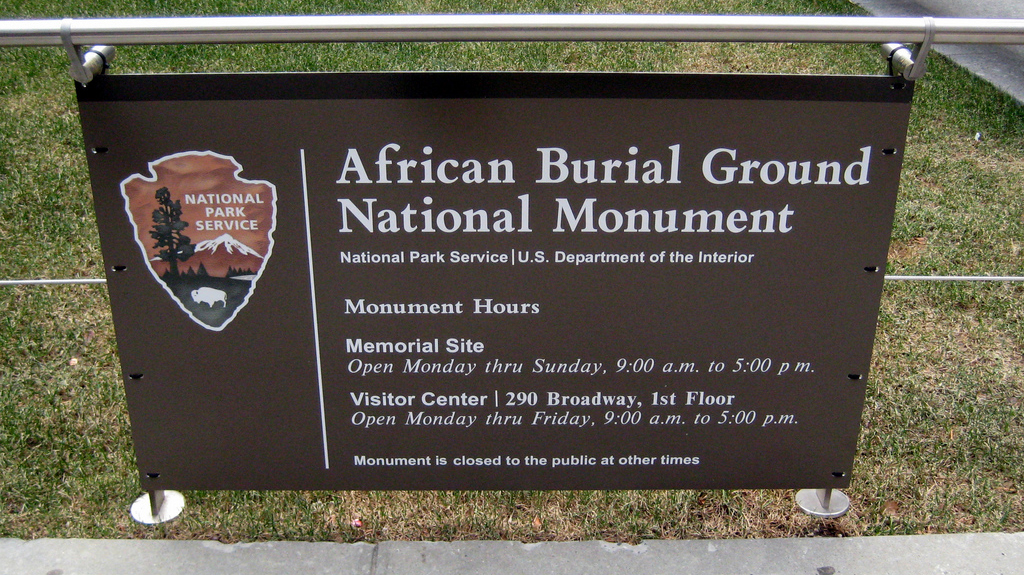
“African Burial Ground?” I read the signage on 290 Broadway out loud. My mom was just as confused as I was. What was a national monument to Africans doing in downtown New York City? I rushed off the phone and into the museum to find out.

The two-room museum didn’t look like much, but I eagerly shuffled into the theater to watch the introductory film. Taking notes, I couldn’t believe that I’d forgotten the enslavement of Africans in America largely began in New York in 1626. Nearly half of the population of New York City enslaved Africans in their homes. Before it abolished slavery 200 years later in 1827, New York was the largest state in which slavery was legal.

But what I didn’t know was that the famous street I walked up and down every day covered the burial ground of enslaved Africans. Discovered in 1991 during an excavation for a new federal building, these buried bones became a site of controversy as African Americans across the city protested to end the construction of the federal building. A compromise of sorts was made when the Burial Ground museum and memorial to house some of the discovered bones was proposed.

After the film, I walked around the exhibition floor, studying photos of the excavated bones and the contents of the graves: dolls, cowrie shells and other sentimental items. I began to feel a bit lighter, more encouraged, as I read what sociologists and archaeologists had pieced together about the enslaved people who were buried just below where I was standing. There was a connection–for my novel and for me–in New York, after all. I felt like those ancestors were walking with me, giving me a new strength and a new purpose to tell their stories.

The last fact I read that day about slavery in New York nearly knocked me over. The first rebellion of enslaved people in America took place in New York City, right near my apartment: at the intersection of Broadway and Maiden Lane.

Brooke Obie is the author of the award-winning debut novel Book of Addis: Cradled Embers.

A Mysterious Bird Brings a Message to Liam Neeson

Actor Liam Neeson’s Catholic faith and Irish heritage have helped shape the characters he portrays, whether he’s in a hard-hitting true story like Schindler’s List or blockbuster fare like Batman Begins and the Taken series.

His most recent role was as a Jesuit priest in the film Silence, which premiered last December at the Vatican. Liam grew up steeped in Celtic legends passed on by his mother. One of which proved eerily true when he was first breaking into Hollywood.

Liam grew up in Ballymena, Northern Ireland, during the time of violence between Protestants and Catholics known as the Troubles. His father was a custodian of a school; his mother was a cook.

According to Liam, his father was the strong, quiet type, who “never said five words when two would do.” He spent hours and hours in his greenhouse, caring for the canaries he raised, perhaps as a way to find peace during difficult times.

READ MORE: NEW FILM ‘SILENCE’ TAUGHT LIAM NEESON ABOUT FAITH

Early in Liam’s career, he starred in stage productions in Dublin and London and in British films. In 1987, at age 35, he moved to California.

One morning Liam spotted a red-breasted bird on the ledge of the open bedroom window of his small apartment on Venice Beach. The bird flew inside and circled the room three times, only to resume its perch on the ledge.

Liam got up to close the window, and the bird flew off toward the heavens, out of sight.

“I went back to bed and I started thinking about my father. Like, really thinking about my father,” Liam told the interviewer James Lipton on Inside the Actors Studio. “There’s a legend: If a bird comes into your house it’s a sign of death.”

Liam wasn’t the only one to encounter a bird that morning. “My sister Bernadette, she had a similar experience with a pigeon…she started thinking about our father too.”

About an hour later, Liam and Bernadette received word from back home—their father had passed away.

A Mother’s Survival Story

I put my feet up on the living room couch and switched on the TV. It felt nice to relax—if only for a moment. Good Friday. A day off from my college classes. The kids—James, 14, and Leslee, 10—didn’t have school either. It seemed like forever since I didn’t have something pressing to worry about, the kids’ school events, helping them with their homework, writing my own term paper, housework, errands. I’m a single mom and sometimes it was all I could do to hold everything together.

In the back of the house I heard boys laughing and shouting. I smiled at the racket. The house hadn’t felt this alive since we’d moved to Murfreesboro a little over a year ago. I’d been thrilled when James had asked if five boys could spend the night. I was already planning to watch my seven-year-old niece, Adrian. Leslee was spending the weekend at a friend’s house. It was great to see the kids adjusting so well. That was one thing I hadn’t had to worry about.

The TV went dark. Then it flashed to a team of news anchors. “We interrupt our regularly scheduled programming so we can bring you coverage of tornado activity in the Nashville area,” one said. Tornado? Outside, rain was falling, but it wasn’t a storm. Must be someplace on the other side of the city. Still, was there something I should do? I listened for more information but didn’t get any.

That was the hardest part these days, feeling like so much depended on me. I longed to meet more people, to feel like I was part of a community. I’d gone to church, wanting to put my trust in God, to have that comfort that no matter what things would be okay. But in the end, everything still seemed to fall on me.

“This just in,” the TV anchor again broke in. “The National Weather Service is reporting that a tornado has been spotted over Interstate 24 near Murfreesboro.” Interstate 24? That was only 20 minutes away! I looked outside. It was hailing. “Cool!” shouted one of the boys. “Let’s go outside.”

“No, you’re not,” I said. “There’s a tornado.” I needed a plan. Fast. Some way to protect a houseful of kids. We needed to get away from windows. But where could we go? We didn’t have a basement. An interior room, then. Someplace safe from falling objects. The bathroom was the most central room in the house. And it had a closet. But for eight people? There was no other choice.

“Listen,” I said to the boys and Adrian. “If it gets worse, get in the bathroom.”

The boys ran excited­ly between the front and back doors, opening them to watch the hail. Then I heard one call to me, “Miss Kim, I think you better come look at this.” I ran to the back door. A massive black cloud with flashes of blue light filled the sky. Omigosh! I thought. It’s coming right at us!

“Run!” I screamed. We scrambled to the bathroom closet. Then stopped. “Is this where you meant?” one of the boys asked. I knew what he was thinking. It was maybe five feet long and two feet deep. Too small. But already we could feel the air pressure pushing against us. There wasn’t time to go anywhere else. James went in first. Then the other boys piled in, lying on top of each other. I lifted Adrian and handed her to James.

“We’ll be okay,” I said, trying to hold back my rising fear. “James, whatever happens, don’t let go of Adrian.” I squeezed in last, my body bent like a pretzel, crouching over the kids’ bodies. Somehow we managed to shut the doors. It seemed like there wasn’t enough oxygen. We could hear rumbling outside getting louder, the air pressure literally squeezing us, as if the walls of the closet would crumble at any minute. Someone—more than one person—was crying. I could feel myself panicking. This closet was so rickety. I needed to do something. But what?

“Mom?” I heard James say in the darkness.

“Yes, dear,” I said, trying to keep my voice steady.

“I think we should pray.”

“Everyone pray as loud as you can,” I said. “God needs to hear us over the tornado.” The tornado roared. The closet shook. But I could still hear the sound of voices praying, mine joining in.

“Dear God, please protect us. Save us! Help me keep these children safe!” It felt like we prayed for hours.

“Miss Kim, something’s hitting me.” The top of the closet was falling in. The light fixture came loose and hit a boy in the head. Gray sky appeared above. We had to get out. The door wouldn’t open. The boys pounded on the sides of the closet, punching out a hole. I peered through the opening in the closet wall.

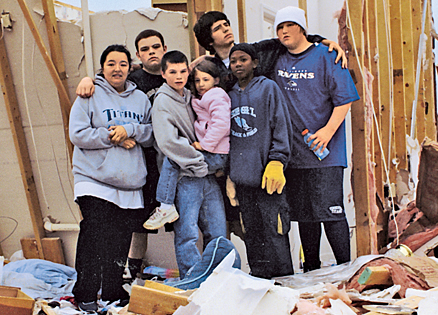
It was hard to get my bearings. It looked like a war zone. Could the tornado have carried us into someone else’s yard? I crawled through the hole and stepped over the inside wall of a house, then scrambled across a huge slab of siding. Part of a roof lay nearby. Where was my house? I took a few steps backward. Then it hit me. I was standing where my living room used to be. My house was gone! The bathroom closet was the only thing left standing. A flood of panic rushed over me. The kids! I started counting. Five…six…seven. They were all there! Safe! I threw my arms around them. We held each other in a massive bear hug. I didn’t want to let go of them.

I looked around the neighborhood. A house diagonal to mine was gone. Next door the roof was missing. Only half of my other neighbor’s house was standing. Then I knew once and for all, as certainly as I knew anything amidst this massive devastation, God had been there with us. That he was still with us. He must have had his arms wrapped tight around that closet! I led everyone to the house across the street. The neighbors weren’t home, but the tornado had torn the door off the garage. We went in to collect ourselves, glad to be somewhere with a roof.

The boys tried calling their parents on their cell phones, trying repeatedly before an occasional signal got through. The same scene played out over and over. “Mom, I’m telling the truth,” they’d say. “We were in a closet. Yes, a closet. It’s still there. But everything else is gone. Yes, Mom. I’m fine.”

Cars couldn’t get in our neighborhood. We walked to the closest boy’s house. Everywhere there was destruction, but I had this sense of wonder. We were alive and safe. All of us. Like a shield had been around us. The boy’s mom held him. Then she and I hugged. “You saved his life,” she kept saying.

“Not me,” I said. “God.”

With each reunion we hugged, cried, recounted every detail from the storm. “We have some clothes and furniture you can have,” one couple said. “You need to come over for dinner,” another said.

I spent the night at my sister’s. James stayed with one of the boys. Leslee stayed with her friend. The next day all of the boys’ families gathered at the ruins of my house. Anything that had ever mattered to me was gone. It was heartbreaking. But it was a pain I wasn’t facing alone. Nearly 20 people sorted through the rubble with me, doing whatever they could.

In the weeks that followed, my newfound friends welcomed me into their lives. Through them I met even more people. I lost everything I owned, yet I’d gained something none of life’s storms could take away: a community of friends and the absolute assurance that even in our darkest hour we’re never alone.

A Mother’s Easter Miracle

Pichilemu, my Chilean home, is known as the Capital of the Surf. People come from all over the world to ride our waves. My husband, Mitch, and I have lived here since the eldest of our five children was a baby, surfing and spreading the Gospel, living it in our home as well.

A couple Easters ago, I was especially focused on our youngest, 13-year-old Katrina. She and I had been talking about Easter in preparation for the upcoming service, but I wasn’t sure how much had really gotten through. Katrina has Down syndrome, and she often had trouble making herself understood. How could I know my daughter’s questions so I could fully convey the power of the Easter message?

“Why don’t we go to the beach?” I said. Floating on our surfboards in God’s ocean seemed a pretty good place to talk about miracles.

“Yay!” Katrina said and ran off to find her powder-blue board. She was a strong swimmer on the local team and a good surfer too. That was no surprise in my family—Mitch would rather surf than eat, and I’d been a lifeguard for years in California. Katrina had a childlike wonder about the sea. Sand castles, surfing, starfish—all were magical to her. Through her eyes, it was magical to me too.

The beach was packed, and we threw our stuff down near some neighbors. Sun sparkled off the water. A few surf schools were having lessons in the shallow, peaceful bay. Beyond them, out in deeper waters, I could see waves of 30 feet or more. Only the most experienced surfers ventured there. One of the kids in our group was a beginner, so, ever the lifeguard, I went with her down to the water and took my time settling her on her surfboard—too much time for Katrina. I let her paddle out ahead of us. “Not past those people,” I told her, pointing to some surfing students. “I want to be able to see you.”

“Okay, Mom!” she called, heading off in her shiny black wet suit.

The waters of the bay were shallow enough that if Katrina had any trouble, she could walk right out.

I turned back to see Katrina several yards away—and still paddling fast. “Katrina!” I shouted, surprised at her. “Come back!”

Katrina kept going, disappearing among the surfing students. “Katrina!” I took off after her. This was not the day for a game of chase.

It’s not easy to go after someone on a surfboard. Lying flat against the water’s surface, it’s hard to see anything. I paddled a few strokes, then sat up and scanned the water, squinting into the sunlight that reflected off the ocean’s spray. She couldn’t have gotten very far. My arms were longer, and I was stronger. Perhaps I’d passed her?

I twisted around to look up at the cliffs behind me, where a couple was walking. “Hello!” I yelled up to them. “Can you see a girl on a blue surfboard out there?”

The couple scanned the water. Almost immediately the woman pointed to the north—way farther than I had believed Katrina could be. But sure enough there she was, 400 yards away, on the other side of a sand bar—beyond the bay and well into dangerous waters. I couldn’t believe it.

“Katrina!” I screamed. People turned at the fear in my voice. All I could do was watch helplessly as Katrina rose up on a wave, crashed to the bottom and disappeared.

“We’ll find her!” a man called out. He and his friends headed toward her on their surfboards.

I twisted back to the couple on the cliff. “Please run to the surf shop!” I said. “My little girl’s out there. We need the Coast Guard!”

The couple rushed off. Lifeguards splashed into the water, and the surf instructors swam past me. People on the beach saw the commotion and moved to the water’s edge. With swift, powerful strokes, I paddled out of the bay and into the waters beyond, toward the last place I’d seen my daughter. Then I sat up and scanned the surf again.

The sunlight reflecting off the mist on the water made it almost impossible to see anything. I looked at my watch. It had been 30 minutes since Katrina had left me. I swam back to shore and stumbled up to one of the lifeguards. “Did anyone find her?”

“Not so far,” he said. “I’m only getting reports of a pod of toninas.

The Chilean dolphins were rarely seen around Pichilemu. These must have been migrating to warmer waters for mating season. Katrina had never seen one. Imagining how my daughter’s face would have lighted up at the idea of a pod of black dolphins, I felt my throat close up and my eyes fill with tears. Lord, please send your angels to help her.

I ran up and down the shore, squinting into the mist. Out in the water, the searchers did the best they could, but the big waves made it hard for them to get very far. Once more I paddled out on my board, hoping for a glimpse of Katrina. When I didn’t find her, I returned to the beach and scanned the children’s faces there, hoping against hope Katrina would suddenly appear among them. A friend from the surf shop came up beside me. “How long has she been missing?” he asked.

I looked at my watch. “Two hours!” I sobbed. It seemed as if only minutes had passed since I’d watched her crash down from that wave.

“She’s a strong swimmer,” he reminded me. “Don’t give up hope.”

I couldn’t give up hope. I bowed my head. I’d brought Katrina here today to teach her about miracles.

“I’m going to jog up the beach,” I said. “Follow the current north.” Off I went, but what did I expect to find? Katrina was in the water somewhere. There was little chance she’d get back to shore after all this time. Never had the promise and hope of Easter seemed so far away.

Another man jogged toward me from the other direction. “Have you seen a little girl with a blue surfboard?” I asked him.

The man pointed north and jogged on by. Had he seen her? I shielded my eyes from the sun and stared into the distance.

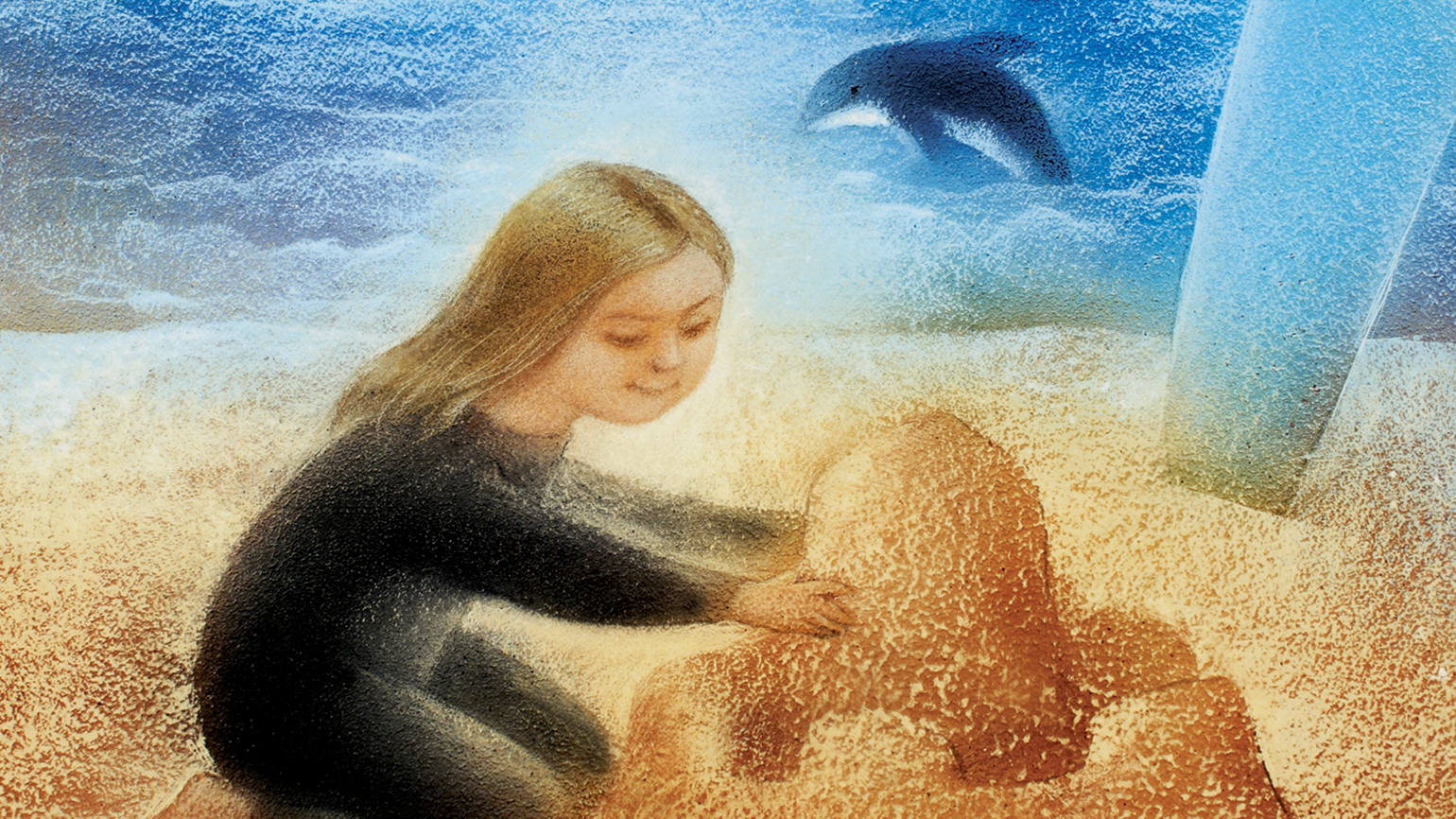
There, on the beach ahead, was a little figure in a black wet suit. She was sitting on the shore building a sand castle. Beside her was a powder-blue surfboard. “Katrina!” She looked up.

“Mom!” She scrambled up and ran into my arms. “Scary!” she said, pointing to the ocean. I asked her how on earth she made it back to shore.

“Dolphins, Mom!” said Katrina.

Dolphins? I didn’t know Katrina had learned the word.

“Sticky noses!” said Katrina. She poked her own nose forward, imitating the creatures she described. Then she used her hands to show them leaping in and out of the water. She made sweeping gestures with her arms, as if she were swimming, and looked from side to side.

Little by little, I began to understand: Katrina was swimming and the toninas surrounded her, touching her with their wet noses until she grabbed onto the dorsal fin of one of the pod. Then she’d just let him pull her back to shore.

Everyone gave a great cheer when we got back to the beach. We called in the searchers. The guys from the surf shop had brought Mitch from home, and he swept Katrina into his arms. She told the whole crowd about her magical dolphin adventure. I’d brought Katrina to the beach to teach her about miracles, but I never dreamed we’d witness one firsthand. Never had the promise and hope of Easter seemed so near.

For more inspiring stories, subscribe to Guideposts magazine.

A Most Unusual Easter Service

For the first time in my life I wouldn’t be in church on Easter Sunday. I’d promised my husband, George, that I would go camping with him and some of our friends that weekend in April to celebrate his birthday. It didn’t even cross my mind that it might be Easter.

Only later did I realize my mistake, too late to cancel the trip. That’s all right, I told myself. You go to church every Sunday. You can take this Sunday off.

But now I kept thinking of what I would be missing. Organ music ringing from the rafters, the sweet smell of Easter lilies at the altar, our friends dressed in their spring best, all of us repeating the ancient refrain: “He is risen, he is risen indeed.”

I kept replaying Easter memories: hunting colored eggs in the backyard with my brother as a child, driving five hours home from college to attend church with my parents, posing my children in their new outfits for the annual photo.

Even now when it was just George and me, empty nesters, sitting shoulder-to-shoulder in our packed church, Easter was special. I felt guilty about not celebrating.

As soon as we got to Cades Cove Campground, in the Great Smoky Mountains National Park, I hurried to the welcome station to ask the ranger if she knew of any groups holding Easter services.

“Not that I’ve heard,” she said.

“What about the churches in Cades Cove?”

The ranger frowned. “If they are, no one’s told us,” she said, shaking her head as if I’d asked an odd question.

Cades Cove is one of the most popular spots in the park. Every year almost two million visitors travel its 11-mile loop by car, foot or bicycle, to catch a glimpse of not just the wildlife in the area—the white-tailed deer, coyotes, wild turkey, red foxes, even the occasional black bear, symbol of the Great Smoky Mountains—but also its historical roots.

The first settlers came to Cades Cove in the 1820s. They cleared, plowed and planted the land. They built log cabins and barns and mills that sheltered and sustained them and their descendants for over a hundred years.

When the land was purchased to make a national park in the 1930s, these settlers’ families moved away. The preserved buildings remain, including Cades Cove’s three old churches.

I went back to our campsite. We played Scrabble and had campfire hot dogs for lunch. “Who’s up for a bike ride through Cades Cove?” I asked.

“I’d love to, Jennie.” “Sure.” “Count me in.” We headed off to the village. I pulled over at stop number four on the self-guided tour: the Primitive Baptist church. Maybe someone had posted a notice for a service? Nope. Same with stop number five, the Methodist church. And stop number seven, the Missionary Baptist church.

I’d struck out. There would be no Easter service for me this year.

Sunday morning I awoke at dawn to a heavy fog. George was still asleep and none of our friends were stirring. I scrawled a note, put it next to the coffeepot, grabbed my bike and pedaled to Cades Cove. “Morning,” I said to the ranger who was just unlocking the gate. “Happy Easter!”

The new grass in the meadow was fresh with dew. White dogwood blossoms dotted the woods. A doe and her fawn stared at me through the mist.

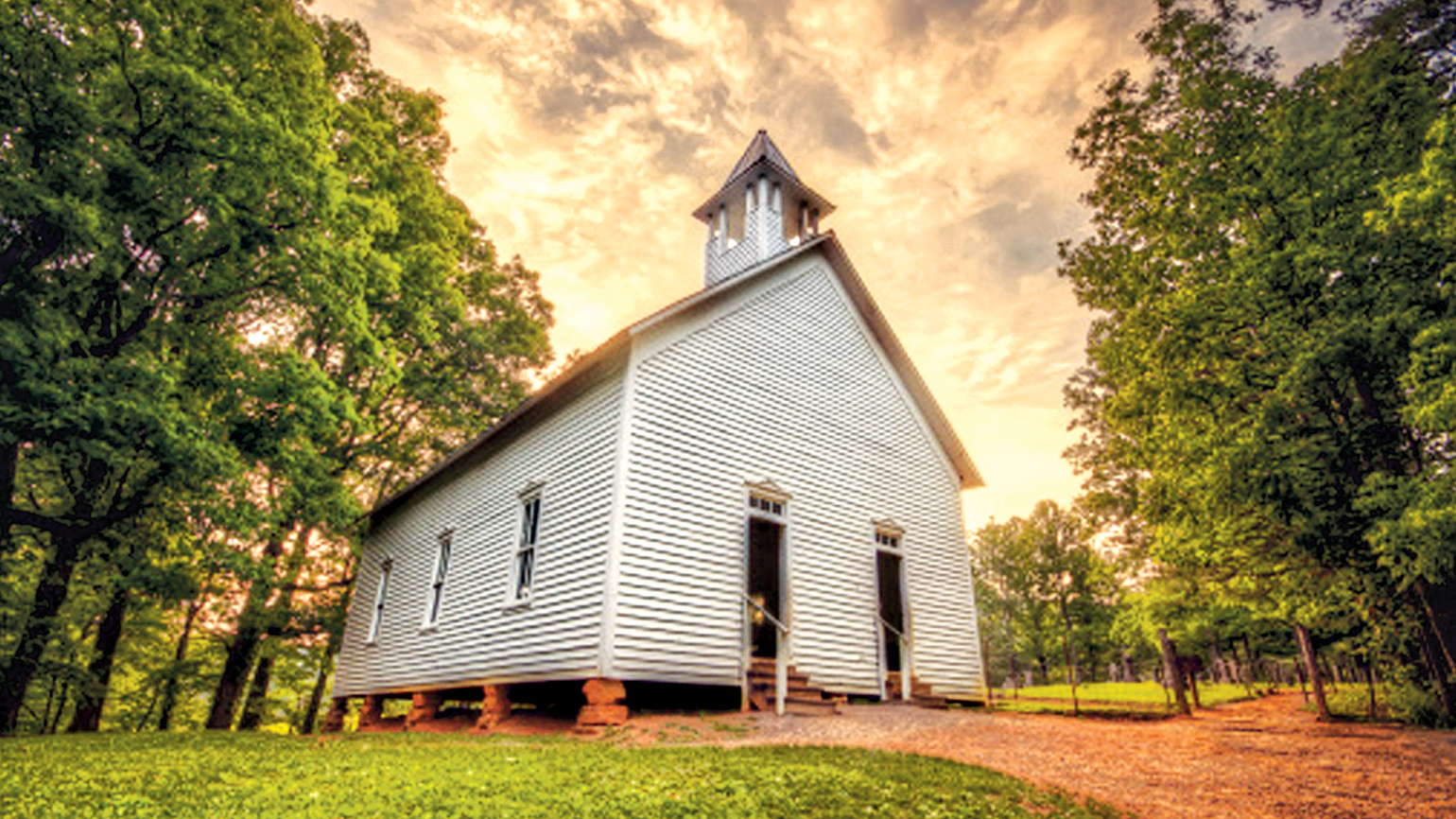
Three miles in, I came to the charming little Cades Cove Methodist Church. Built in 1902, the white clapboard building had a sheet-metal roof and a simple bell tower. It had two doors, one for men and one for women, and both were open.

I slipped inside. Three dozen pews, a massive wooden pulpit and, in the corner, an ancient piano. An Easter service should start with a hymn, I thought. I’m not much of a pianist and I only know one hymn by heart.

I sat down and haltingly picked out the notes: “Joyful, joyful, we adore thee, God of glory, Lord of love…” Then I stepped up to the pulpit, where I found a worn leather Bible.

“God bless everyone who opens this book,” a note read. I turned the yellowed pages to Luke’s gospel and read the account of the Resurrection, how the women came to the tomb on the third day, shocked to discover it empty.

There in that empty church, their surprise and bewilderment registered even more with me. I read aloud what the angels said to them: “Why seek ye the living among the dead? He is not here, but is risen…”

I looked up. A young couple with three small children stood in one of the doorways.

The dad took off his hat. “Excuse me,” he said. “We heard the piano. Are you having Easter here today?”

Was I? Easter had come to me all on its own: the blooming dogwoods, the deer, the new grass, the music, the lesson and, now, others to share it with. Christ had risen and was alive—for the women at the tomb, for me, for us. “Yes,” I said. “Come on in.”

I stayed at the pulpit and read the Easter story from Luke out loud, then the daughter suggested her favorite hymn, “Jesus Loves Me.” The mom asked if she could lead us in prayer and we all bowed our heads. “Thank you, God, for Easter and new friends.” “Amen,” we said.

We walked out of the church into the warm spring sun, a day bright with the promise of Easter.

Download your FREE ebook, The Power of Hope: 7 Inspirational Stories of People Rediscovering Faith, Hope and Love