Embrace God's truth with our new book, The Lies that Bind

A Missionary Pilot’s Miracle Landing

Years ago my husband, Dan, was a missionary pilot in Ecuador. We lived at the foot of the Andes Mountains, and when he flew he kept in touch with me at the base camp by radio. One day I was logging his position and altitude when he suddenly announced that his Cessna had engine trouble. He needed to make an emergency landing.

I looked at my map and saw nothing but steep hills dropping off into deep precipices. There was no flat space for miles around. From the sky, Dan searched for a road, a field, a meadow—any place he could possibly bring down the plane. He was losing altitude fast.

“Pray,” he said to his passenger, a missionary traveling with her four children. “Pray,” he said to me over the radio.

As the plane came through a pass, Dan saw a mountain village and a small green field. Down he came for a landing. He radioed his position to me and I drove to meet him. When I arrived, Dan’s plane was in a field surrounded by a crowd of Indians. My husband and his relieved passengers were unharmed. “Es un milagro,” one farmer repeated over and over again. “It’s a miracle.”

I assumed he was talking about the plane’s safe landing, but he had another milagro in mind.

That small green field had been filled with cows peacefully grazing. Suddenly, for no apparent reason, they had all started moving to one side of the field. Just before Dan’s plane came into view.

READ MORE: THE LONGEST PRAYER

A Miraculous Tale of Unexpected True Love

”You’re not getting any younger, you know,” Grammy said. “You’re 30 years old! For goodness’ sake, why aren’t you married yet?”

I winced. I’d come to this restaurant to have lunch with my grandmother, not to be interrogated about my love life—or lack thereof. I was painfully aware of my age. And my relationship status. Most of my friends were already married, some with children. I could feel my own biological clock ticking.

But the typical dating scene wasn’t me. I hated going to bars and trying to meet people. Really, I hated dating. The way things were going, I was headed for a life alone with only a cat for company. The only thing scarier than that image was the idea of being trapped in a marriage with the wrong person.

“You don’t understand, Grammy,” I said with a sigh. “I’m looking for more than just a decent man. I’m looking for Mr. Right. And it seems utterly impossible!”

“Impossible situations can become possible miracles,” Grammy said sagely.

“You’re not helping,” I muttered.

“I am helping! You’re just not listening! You shouldn’t be looking for a man, you should be looking for a miracle. Miracles happen, and they come in small moments. Keep your eyes open.”

Grammy’s words—confusing as they were—stayed with me. So a few days later, when I was driving home from work and an inexplicable but overwhelming urge to take a different route overcame me, I was extra receptive to it. I went with it, turning right instead of left at the next intersection. I wove my way along unfamiliar backroads, enjoying the change of scenery. Then, out of the corner of my eye, I saw it—a sign-corner board in front of a recreation center. It read: “Tired of the singles bar scene? Try singles square dancing. Inquire within.”

Was this one of those “miracle moments” that Grammy had been talking about? I quickly turned into the lot, parked and headed in to check it out.

The elderly gentleman inside was very helpful. He assured me that their square-dancing nights were the perfect place to meet “wholesome” single men. Their next lesson was held the following Tuesday. He pushed the sign-up sheet in front of me. I scribbled my name on it. “Here’s your dance card,” he said, sliding it across the counter. “You best be gettin’ yourself a square dance outfit. Petticoat Junction is a right affordable place. It’s just around the corner.”

Why not? I thought.

I was almost giddy picking out my outfit, with cowboy boots to match. But Tuesday night I found myself in the recreation center’s gym, nervously clutching my empty dance card in my hand and feeling silly.

“Bow to your corner, bow to your partner,” the caller’s voice crackled over the loudspeakers. “Join hands. Circle left.” Ladies’ petticoats swished, and men’s boots shuffled across the shiny wooden floor. I awkwardly watched the dancers from the sidelines, much like I had as a teen at school dances.

What are you doing? I scolded myself. This is crazy. You should just go home.

I headed to the exit, hoping to escape without being noticed. Just as I placed my hand on the door’s push bar, I glanced back, catching a glimpse of a redheaded man whisking his partner around the dance floor. His eyes met mine. Then he flashed me a wide, magnetic smile—the likes of which I’d never seen before. I felt my heart skip a beat as I hesitantly returned it. Maybe five more minutes wouldn’t hurt. I turned around and headed to the refreshment table.

“I’m guessin’ the fellas are keepin’ your dance card full,” said an older woman who was pouring herself a glass of lemonade.

“No, not really.”

“Don’t you go frettin’,” she said.

“Men are just shy little boys at heart. “Any of them younger fellas caught your attention?”

I could feel myself blush. “You see that man over there—the redheaded man sporting a cowboy hat?”

“I do. He was eyeing you earlier, you know.”

“Eyeing me?”

She smiled. “Oh, yes.”

The speaker crackled again. “The next dance begins in five minutes,” the caller said into the mic. “Gentlemen, find yourself a partner, square your sets.”

People scrambled to pair up. I watched the redheaded man. Whom would he ask? We locked eyes again.

“Look! He’s walking toward you!” the older woman exclaimed.

I couldn’t believe it, but he was. My heart was in my throat.

“Ma’am,” he greeted me. He tipped his hat. “Might I have the next dance?” His eyes were blue, I noticed. My mouth was dry. I quickly gathered my composure. “Yes,” I said, my voice quivering. “I’d love to.”

He took my hand in his, ushering me onto the dance floor. The music began, and I melted into his arms like I’d always belonged there. His name was Bill.

A few months later, as I stood at the altar exchanging wedding vows with Mr. Right, I realized Grammy had been right. Thank goodness I hadn’t run home before the miracle unfolded, moment by moment, each one leading me to Bill.

A Miraculous Silver Lining

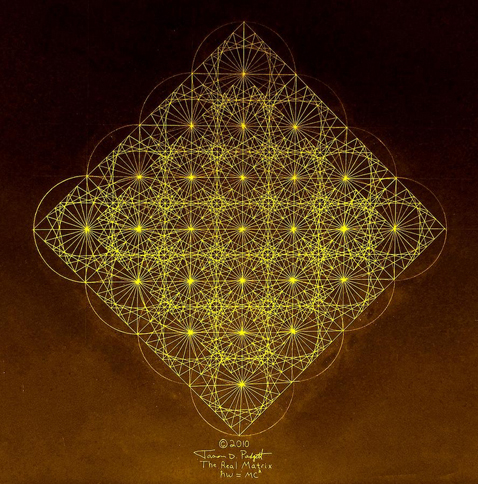
In 2002, 31-year-old Jason Padgett was an aimless college dropout living in Tacoma, Washington, selling futons at his dad’s furniture shop. Then one night, he was attacked by muggers and received a blow to the head that changed his life forever.

After the attack, Jason slowly developed the ability to draw intricate geometrical designs by hand, never-ending patterns often found in nature. “There is more that we cannot see in the universe than we can see,” Jason writes.

In the October/November 2015 issue of Mysterious Ways, editor Diana Aydin and I teamed up to tell Jason’s story. Click through the slideshow to see some of his geometrical genius for yourself.—Daniel Kessel

A Miraculous Sign of Comfort at the Western Wall

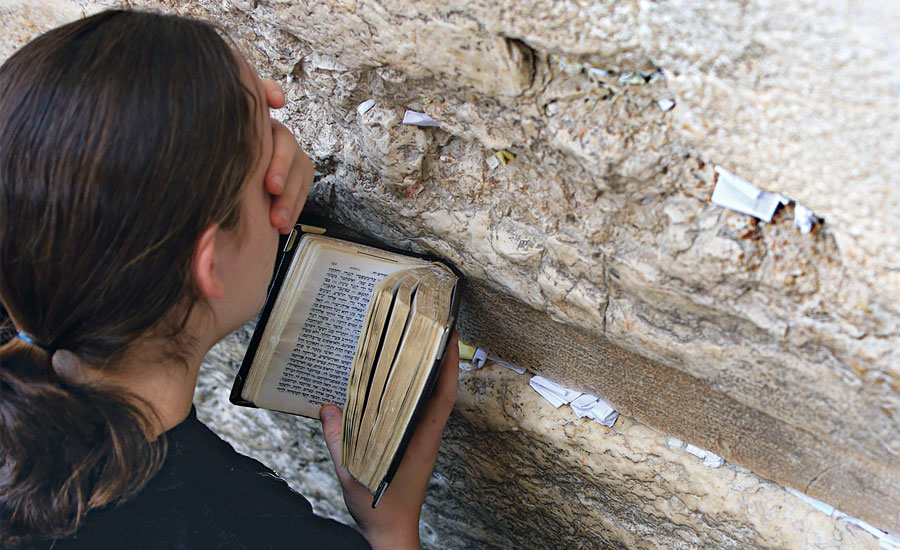
The Western Wall was even more breathtaking than it looked in photographs. The morning sun glistened off the towering limestone blocks while visitors of all ages and cultures, even soldiers in uniform, stood in prayer. My best friend, Ruth, and I hurried to the area where the women gathered, excited to pray at the foot of the Temple Mount, where our Jewish ancestors had felt closest to God.

In a little room to the right, hundreds of prayer books of different colors, sizes and languages were stacked. I grabbed one with Hebrew and English and stood next to Ruth, who’d brought her own from home, a siddur with a worn brown cover that had belonged to her mother, Sarah.

Tufts of greenery sprouted from cracks in the mammoth stones, along with folded notes containing prayers. I left a note myself, asking God to help me find my beshert—my soul mate. Ruth placed her own note in the Wall and bowed her head, her eyes closed, deep in devotion.

READ MORE: MY PRAYER AT THE WAILING WALL

“What did you pray for?” I asked when she was finished. Ruth wouldn’t say. That was unlike her, but I respected her privacy.

“I feel so at peace here,” she said.

Something had been on Ruth’s mind, that I knew. We’d been best friends since the third grade, and there was little we could hide from each other.

There weren’t many Jews where we were from in Iowa—and with names like Ruth Siegel and Eve Smalheiser we stood out. We had quickly bonded over our shared faith and family traditions, Shabbat dinners and our Bat Mitzvah lessons. We talked often of visiting Jerusalem one day.

“We’ll pray together at the Western Wall,” Ruth promised me when we were kids. “You’ll see.” Now we were both 20 years old, having come to Jerusalem sooner than we had dreamed.

We spent the rest of the day visiting the holy sites of Jerusalem, places we had read and dreamed about for years. But back at our hotel, Ruth flew into a panic. She tore through her bag, opened the drawers, dropped to the floor to look under the bed. “My prayer book!” she said. “It’s gone!”

“Let’s check again,” I said. “It must be somewhere.” We frantically looked around our room, until we ran out of places to look.

“Maybe I left it on one of the buses we took,” Ruth said.

We called the bus company, but no one had seen it. Ruth made her peace with the loss. “Maybe my book’s gone to someone who needs it more than I do,” she said.

READ MORE: THE PRAYER BOOK

I had to give her credit; she handled it with more grace than I would have. That was Ruth, though. Always one to focus on the blessings she had, not on the things she lost. We left Jerusalem with beautiful memories, hoping to come back someday.

I thought that my return trip would be with Ruth. Maybe with our future husbands, if my prayers were answered. Perhaps we’d both even make aliyah, or emigrate to Israel permanently.

I never thought that a year after our time in Jerusalem, I’d lose my best friend to cancer. I had no idea that Ruth was sick until the end, but she’d been fighting it for a while. Now I understood what she had prayed about so solemnly at the Western Wall.

I returned to Jerusalem alone. Still in mourning, approaching the first anniversary of her death. I did the only thing that I felt would help me with my grief—I returned to the Wall, the place where Ruth and I had felt such peace.

Those weathered limestone blocks were as I remembered them, gleaming in the hot sun, their cracks filled with paper prayers. I approached the Wall and asked God to help me through my friend’s death. But all I felt was sorrow. Without Ruth it just wasn’t the same.

I ducked into the little room to the right of the women’s prayer area. I combed through the stacks of prayer books, looking for one written in both English and Hebrew. My hand brushed across one with a brown cover, its faded title in English. I pulled it out and returned to the Wall outside, my heart heavy with my thoughts of Ruth, the memory of her praying beside me. And I flipped open the book.

In that moment, joy and gratitude replaced my grief. I didn’t feel alone.

Written inside the worn cover were two names. Names of people I knew. Sarah Goodman Siegel and her daughter, my best friend, Ruth. Of all the books I could have chosen, I had found Ruth’s siddur. Or had it found me?

A Miraculous Reunion

Life is made up of moments that lodge in our minds like scenes from a movie. Strung together, they tell a story of where we’ve come from, who we are, what we want to be.

It’s no fluke that when we play back the video of our lives, the scenes we remember most vividly are those when our story overlaps with anoth­er’s–however briefly. These shared scenes change each of us in power­ful ways. For better or worse.

Such a convergence occurred one day in March 1988. A scene Shel­ley Cumley wanted to forget. The 25-year-old from Seattle was driving south to Lake Tahoe for a week of skiing with her friends.

She rolled down her car window and stuck her hand out to catch the breeze. Noth­ing but green hills stretched out on either side of Interstate 5, California’s Cascade Wonderland Highway.

She looked in her side-view mir­ror. A red sports car was coming up fast. Too fast. It swerved over the double yellow lines and zoomed ahead, barely missing Shelley. She glimpsed the driver’s face. Wild eyes. He seemed intoxicated. He vanished around the next curve.

Farther down Interstate 5, travel-ing north, Roanna Farley glanced in the rearview at her seven-month-old baby, Nicole, fast asleep in the back. Was the car seat secure? Nicole was her first child; Roanna could never be cautious enough.

She turned her attention back to the road–just in time to see a flash of red cross into her lane.

The instant Shelley rounded the curve, she saw a trail of debris on the road. Broken glass and twisted steel littering the asphalt. A head-on col­lision, between the drunk driver and another vehicle. Shelley pulled over, jumped out of her car and ran toward the smoldering wreckage.

Roanna opened her eyes. The smell of gasoline and burning rubber hung in the air. She couldn’t move, but that wasn’t her concern. “My baby,” she cried weakly. “Where’s my baby?”

Shelley approached the crumpled sedan. She peered inside. A woman was trapped between the front seat and the dash, fading into uncon­sciousness. In the back, a tiny red­headed baby in a car seat, crying.

I have to get her out, Shelley thought. The leaking gas, the smoke. This car could blow up at any min­ute. Shelley wasn’t a mother, but a maternal instinct took over. The child’s safety came above all else. She opened the door and lifted the baby out of the car seat.

Roanna looked up in a daze. Ni­cole…A stranger was holding her–it was the last thing she saw before she lost consciousness completely.

Shelley rode in the ambulance with the baby all the way to the hospital. She learned the girl’s name in the emergency room: Nicole Farley. A triage doctor gave the baby an initial examination and told Shelley that Nicole was not in immediate danger. The mom was critical.

Shelley stayed at the hospital, praying for the wom­an’s life until Nicole’s father arrived.

Roanna opened her eyes in a hos­pital bed. She vaguely recalled riding in a helicopter. A kind EMT. White lights. Doctors and nurses crowding around her. After a week in intensive care, she was finally lucid.

Her foot had been impaled by the car’s seat adjuster, her left eye and nasal cavity were caved in, her pelvis broken. But she didn’t care about her own inju­ries. “Where is Nicole?” she asked. “Is my baby okay?” All she remem­bered was a stranger holding her.

In Lake Tahoe, Shelley sat in a ski lift and stared at the mountains in the distance. She kept thinking about the accident. Was Nicole’s mother going to be okay? Driving back home to Seattle at the end of the week, she made a detour. She stopped at the hospital to check in on the Farleys.

“Roanna is still in serious condi­tion,” the nurse told her, “but she’s going to pull through. Baby Nicole is in the pediatric wing.”

Shelley gave the nurse a puzzled look. “Why?” she asked. “The doctor told me the baby was fine.”

“I’m sorry, but we discovered Nicole suffered a spinal-cord injury. She’s paralyzed from the chest down.”

The room spun. Shelley couldn’t breathe. Was it my fault? Had she hurt the baby when she pulled her from the car seat? She left the hospi­tal quickly. She needed to get away. Away from the little girl whose life she’d ruined.

It was almost a month before Ro­anna could leave the hospital. She and her husband assessed the situ­ation with Nicole. They would need nurses, physical therapists, all the help they could get. But they were determined to help Nicole adapt to her injury and grow up to be independent.

“Always push a little harder”–that was the physical therapists’ advice to the Farleys. In Nicole’s toddler years, they encouraged her to do things for herself, like take out her own toys and put them away again. As she grew, she learned to propel her wheelchair on her own.

As soon as Nicole was old enough to under­stand, Roanna told her about the accident, and the mysterious strang­er who had come upon the scene.

Whenever Shelley thought of the Farleys, she was consumed by guilt. She pushed the memory of that week in 1988 deep within her. She joined a church in Seattle. Pursued a career as a dental assistant. Married and started a family of her own.

Once, when she took her kids to Disneyland, her mind went straight to Nicole. She lives in California. Maybe she’s here. Shelley scanned the crowds, looking for a redheaded girl in a wheelchair. She yearned to see her, yet at the same time dreaded that moment.

What if the Farleys held her respon­sible for the injury?

After 25 years, Shelley had decid­ed she was better off not knowing the answer. Nicole would be 25 now. The same age I was then. Yet Nicole would never ski at Lake Tahoe with friends. Shelley couldn’t bear to hear the sad story of what happened to the little girl.

In the Farley home, Nicole sat with her mom, sifting through photos of her life, beginning with that fateful day on Interstate 5. Pictures from the accident scene. Articles that ran in the paper. Shots of her and her mom in the hospital.

One by one, she put them in order, a timeline of the trag­edy, and of what came after.

She’d typed a script to go along with the photos. A message she want­ed to share. A tech-savvy friend would take the images and Nicole’s words and produce a video she could upload to YouTube and share with friends.

The idea to tell her story had popped into her head out of the blue, though she didn’t know if she was up to the task. But “Always push a little harder” had become her man­tra.

“If this video can stop one drunk driver or encourage one person with a disability, then this is all worth it,” Nicole said. Only thing left to do was choose the sound track.

Not long after, in Seattle, Shelley sat down with her lunch in front of her computer and checked her e-mail. One new message–the daily e-newsletter from GodVine. She opened it and scrolled through the day’s inspirational videos.

There were five, each with a thumbnail image. One showed a baby girl, smiling. Shelley clicked. Dark, dramatic mu­sic began to play.

“A stranger’s irresponsible deci­sion changed my life forever….”

A newspaper photo of a 1988 car accident filled the screen. A crushed sedan. Debris. All hauntingly familiar. A name flashed on the screen: Nicole Farley. The little girl who had lost her chance at a normal life. Shelley’s breath caught.

Then the music changed. “Nothing is impossible for me,” a woman sang, in a sweet, powerful voice. “You can do more than just survive,” the text on the video read. “You can overcome.”

In frame after frame, the redheaded girl was living. Reeling in the catch of the day on a fishing trip with her fam­ily. Swimming with dolphins. Traveling abroad with friends. Winning bake-offs. Even skiing!

She was extraordi­narily bright, and graduated from high school a year early. Now she lived on her own, and ran a day care out of her home. From her toddler years to her early teens, all the way up to adult­hood, Nicole was independent. Thriv­ing.

“My story isn’t just about the pain; it’s about faith, hope, love and trust in the face of tragedy,” the text read.

At the end, the captions revealed that the girl singing, with the beautiful voice, was Nicole. Tears welled in Shelley’s eyes. Nicole had grown up to have a full, happy life. According to the video, Roanna had made a full recovery.

Shelley played it back a dozen times, unable to get through it without cry­ing. One frame in the video jumped out at her. Nicole’s e-mail address. That night, Nicole checked her video on YouTube. Over 10,000 views! Friends had shared it with other friends on Facebook, and GodVine had picked it up.

So this is what it’s like to “go viral,” Nicole thought. Her in-box was flooded with e-mails from people who had been inspired. One from a woman named Shelley Cumley.

“Dear sweet Nicole,” it began. “Your video took my breath away the second I saw your name…. You see, I am the person who pulled you out of the car that day…. I have strug­gled over the years second-guessing myself and wondering if I made your injuries worse….

“I am so over­whelmed that your video literally was delivered to my in-box…. You are truly an inspiration…. Please know that if you ever wanted to talk to me, I am here…. Much love, Shelley.”

How was this possible? Hearing from the mysterious stranger who had arrived on the scene that day 25 years before? She had to reach out.

“Dear Shelley,” she wrote. “My fam­ily has nothing but gratitude for you. As my doctors have always told me, my spinal-cord injury occurred on impact. Your actions saved my mother and me. We hope to meet you face-to-face someday soon. With love, Nicole.”

This February, Shelley, Nicole and Roanna reunited in Portland, Oregon, sharing a scene once more–one they all wanted to remember.

Epilogue
Shelley Cumley told us more about the day of her reunion with Nicole and the Farley family, and what the experience has meant to her:

Following our e-mail connection, Nicole was in contact with a television reporter in her community. This reporter was familiar with Nicole’s life, and had actually done a story about her when she was just six years old.

The news anchor was putting together a 20-year follow-up segment and heard about our miraculous reconnection. Now this journalist wanted to interview me.

We arranged to meet at the home of Nicole’s grandparents in Portland, Oregon. I was told it would be just the reporter talking with me. If a meeting with Nicole were to happen, it would be at another time and place.

My husband and I travelled from Seattle and were warmly welcomed by Nicole’s grandparents. I was anxious about the interview, but very excited about what the Lord had done.

In her final question, the reporter asked what I would say to Nicole when I finally met her. I responded, and then the reporter told me to turn around and tell her myself. There, to my left, was a beautiful red-haired young woman in a wheelchair. It was Nicole!

My heart burst with emotion and I could not contain myself. Tears flowed freely as I embraced this young woman once again, 25 years after the traumatic day we first met. Minutes later Roanna joined us, and our bond was deep and immediate.

We spent several hours together and promised to stay in touch. Before departing, we all stood in a circle holding hands as Nicole’s grandfather prayed a prayer of blessing and gratitude. What had seemed like a nightmare for so long was now a beautiful dream come true.

All of us who have been part of this amazing journey give thanks to God in every aspect. By His grace, Nicole has been able to live her life. In His perfect plan, we will forever share our lives. Yet, beyond the countless details of our story, it all comes down to three simple words: Don’t give up.

No matter how deep our hurts, or how far we push them down, God never forgets our pain. He hears our prayers, even our very thoughts before we speak them. Trust Him and have hope. He is always at work to rescue and restore our hearts.

A Miraculous Midnight Delivery

Babies don’t follow a nine-to-five schedule, so how could obstetricians? I was asleep when the phone woke me in the early hours of a Sunday morning in December back in the 1980s. “You’re on call,” my wife said, shoving me toward the phone.

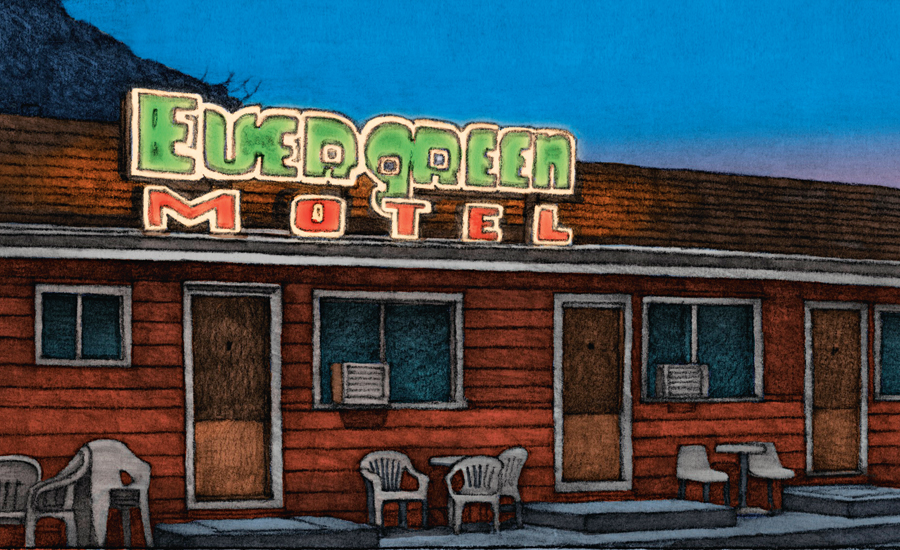
I was so sleepy it took a few seconds to understand what the person on the line was telling me. A midwife, at the Evergreen Motel. With her was an Amish couple from a community about three hours away. The woman was in labor.

“I work with Doctor Whitman,” she explained. “I tried to call him, but there was no answer. The service connected me to you.”

Dr. Whitman and I covered each other’s patients whenever needed, but I wasn’t familiar with midwives or the Amish community. “Dr. Whitman’s out of town doing some Christmas shopping,” I said.

“I’m attending a mother in the last stages of labor,” she explained. “Everything was going well, but then I lost the baby’s heart tones. I can’t pick them up with my stethoscope. I need Dr. Whitman’s Doppler to make sure everything’s okay.”

“No heart tones?” I said. Now I was fully awake. The Doppler used echoes to pick up the heart sounds, often finding tones a stethoscope missed. “This is a good time to take the couple to the hospital,” I said. “I’ll meet you there.”

The midwife insisted I come to the motel room. The couple had chosen the place because it was close to the hospital in case of an emergency, but they hoped to avoid it. “I want to honor their wishes,” the midwife said. “If I can just hear the heartbeat, I’d feel better.”

Maybe she would feel better, but I wouldn’t. I drove out to the motel, imagining what I would say to Dr. Whitman when he returned. How could he put me in this position?

The Evergreen was a small ma-and-pa motel tucked behind the Biscuit Café, three blocks from the rural hospital where I worked in Libby, Montana. There was only one car in the lot, though the neon sign read No Vacancy.

I walked up to the room with my Doppler, my breath misting in the air, and knocked.

“Thanks for coming,” the midwife said. “I still haven’t found a heartbeat, but she’s almost fully dilated.”

The motel bedspread was covered with sterile green surgical sheets. On top lay a young woman, her hair in a bun covered by a plain white bonnet. She wore a dark blue linen dress. Her husband had a full beard and clean upper lip.

“I thank thee for coming,” he said, then went back to whispering what seemed like a prayer. He, like the midwife, seemed to have complete faith that they were in good hands.

I tucked in the earpiece of the Doppler. In a few moments I picked up the reassuring squish squish of a normal fetal heartbeat. “The baby sounds fine,” I said, relieved. “You can bring the Doppler back to the hospital after,” I said, handing it to the midwife. I put on my coat and reached for the doorknob.

“Dr. Hufman, wait!” the midwife said. Something wasn’t right.

I put on gloves and checked the birth canal. The baby was midway down. But when I reached out my fingers, instead of feeling the top of a head I felt a nose, mouth and eyes.

“It’s a face presentation,” I said. My voice was calm and steady, but inside I was terrified. In a normal birth, a baby comes out of the womb head first, face turned down, the best position from which to navigate the curved birth canal.

In rare situations—so rare I’d never actually seen one myself—a baby came down with the face pointed forward, unable to negotiate the curve. The results could be serious—even fatal—for mother and child. I pulled the midwife aside.

“We have to get her to the hospital,” I whispered.

“Can’t you turn the head yourself?” she asked.

“With each contraction the head is getting wedged deeper in the canal,” I said. “The neck’s bending unnaturally. A normal birth is practically impossible. She needs an emergency C-section. It’s my call.”

I grabbed the phone, mentally calculating how long it would take the C-section team to get to the hospital with all its modern equipment. All these people had was me. I glanced over my shoulder.

The husband was still calmly praying beside his silent wife. For a second I envied his ignorance about obstetrics. How else to explain his faith?

“Doctor, look!”

The young Amish mother still hadn’t uttered a word, but her jaw was clenched—an unmistakable sign that she was pushing out the baby.

“No, that will only make things worse!” I said helplessly, hanging up the phone and running to her. At the opening of the birth canal a nose and two puffy eyelids appeared. There was no turning back now. “Push!” I said, slipping on a new pair of gloves.

Like an unexpected miracle, the baby’s head popped out, followed by a tiny body. She let out a cry that was music to my ears.

I examined the infant. Her little face was swollen like a pumpkin, but that was expected and would go away in a few days. Other than that she was fine. I placed the baby on her mother’s chest.

“Thank you, Lord!” said the midwife, looking up.

“Lord, we thank thee for our daughter and her safe delivery,” the father said. “And for the help you provided through these people.”

I stumbled out into the parking lot. Morning had broken. The parking lot was covered in a fresh, white, powdery snow.

As I stood there blinking at it, church bells started to ring. I’d forgotten it was Sunday. And who was in charge. Everywhere, at all hours, night and day.

Download your FREE ebook, True Inspirational Stories: 9 Real Life Stories of Hope & Faith.

A Miracle Just In Time

Today’s guest blogger is writer and actress Robin Hill-Page Glanden. I’ve been working with Robin on an upcoming story for Mysterious Ways magazine. We got to talking on the phone the other day and she told me a story I just had to share. One involving a beloved Felix the Cat clock and a timely miracle.

Here’s Robin’s story…

When I was a little girl growing up in Delaware, one of my favorite things was a plug-in clock that hung on my bedroom wall. It was a black-and-white Felix the Cat clock that looked just like my real-life tuxedo kitty. The eyes on the clock moved left and right, so did the tail.

Many years later, I moved to California to pursue my acting career. I was browsing an antiques shop when I stumbled on an updated version of the Felix the Cat clock. One that operated on batteries. I took it home and hung it on my kitchen wall. Right away, the eyes and tail swayed back and forth. After two weeks, they stopped. I changed the batteries, did everything I could to get them to move. No luck. The clock still kept perfect time, though, so it remained on my wall.

A few months later, my parents paid me a visit. I proudly showed off my clock to them. Mom was instantly charmed by it…and baffled. She tried everything she could to get the eyes and tail to move. She fussed over that clock her entire visit, tapping the tail every time she passed by the kitchen. Nothing worked.

Eventually, I moved back to Delaware, bringing my trusty clock with me. Once again, I hung it on my kitchen wall. Every time Mom would visit my apartment, she’d fiddle with the clock. Even after Dad passed away, and Mom and I moved in together. She’d take the clock off the wall, take the batteries out, put them back in and tap the tail over and over. But it refused to work.

Seven years after Dad died, Mom passed away suddenly. I was heartbroken. The day after her funeral, I just stood in the kitchen and watched the clock, even though I had to get going to work. A strange thought came to me out of nowhere: “Mom can make the Felix clock work now.”

The eyes and tail were still as usual. But I had to try. I gently tapped the clock’s tail, like Mom had done so many times before. It moved a little, then stopped. I tried again. The eyes and tail moved…and kept moving! I held my breath and watched in wonder. It was moving on its own steam!

When I returned home that night at 10 p.m., the clock was still working.

“Thank you, Mom,” I whispered. “I love you.”

The next morning, the eyes and tail had stopped. I tapped the tail several times again. Nothing.

Two months later, on my 50th birthday, I went to the kitchen to make a cup of coffee. The same strange thought came to me: “Mom can make the Felix clock work for my birthday.”

I tapped the tail. The eyes and tail started working again! When I went to bed, a little before midnight, the clock was still going. Sometime during the night, the eyes and tail stopped and were motionless by the time I came downstairs the next morning.

But Mom had granted my birthday wish.

Amazing Grace: The Healing Power of Music

Back in high school, one of my good friends invited me to the school’s Christmas concert, a performance of Handel’s Messiah. She would be playing the violin. I hesitated. I wanted to support my friend. The problem was that Messiah—which covers the birth, life and death of Jesus Christ—runs more than two and a half hours. Not exactly how I wanted to spend my Friday night.

I told myself I’d stay for an hour, then sneak out. So I took my seat in the auditorium. The lights went down, and I slouched in my seat, prepared to be bored out of my mind. But everything changed as soon as the first notes of the oratorio met my ears. Years later, I struggle to find the words to describe the feeling that filled me that day. It felt as if I’d encountered something divine. Sure, the story Messiah is religious, but that wasn’t what moved me so profoundly. It was the music itself in all its harmonic complexity that made me feel something only music could stir in me.

Words so often fail. Images fade. But music has the ability to transcend all those limitations—language, time, distance—to ignite something deep inside each of us. Ever since hearing Messiah in its entirety, I’ve wondered how a series of organized sounds can elevate our spiritual experience. And why.

I took my questions to John Robilette, a classical pianist who has performed for audiences all over the world. Something beautiful he’s noticed about his music is that it has the power to affect people in similar ways—regardless of the audience’s language barriers and cultural differences. “That’s what’s so wonderful about music,” he said. “It transcends differences. And you can feel it. You can feel it come across the room, the stage lights. It’s extrasensory. It’s a collective feeling. The emotions from people coming at you. You don’t know from where or how, but you feel it.”

Indeed, transcendence is the quality that has long tied music to spirituality. Worshipping God is tied to music—choirs, sung verses, chants. Before literacy was widespread, religious texts from all faith backgrounds were mostly sung, sometimes in languages that the congregation didn’t even understand.

Like Gregorian chant, a musical style inspired by earlier forms of plainsong that appeared in Jewish, early Christian and various Middle Eastern places of worship. It was sung in Latin, which in no way diminished its power to transport people.

From the beginning of Catholicism up until the twentieth century, Gregorian chant, a form of a capella, was routine in churches across Europe. Cathedral architecture even evolved specifically to amplify the otherworldly music, with cavernous ceilings and arching walls designed to reverberate and carry the acoustics to the farthest corners of the church. The feeling imparted by the music—of solemnity, meditative thought and divinity—transcended the bounds of language.

Now science backs up the feelings that churchgoers have experienced for centuries. Research shows that listening to Gregorian chant can be healing. This is because the chants are lacking instrumental accompaniment, encouraging the listener to unconsciously hone in on the rhythm of the vocals. The effect is a state synonymous with deep prayer and meditation.

Beyond putting the mind in a prayerful state, music can also relieve pain and promote healing. Yuval Ron, composer and author of the book Divine Attunement, says that this can be attributed to the vibrations created by melodies. “It is like receiving a subtle and sophisticated body massage. If sound vibrates the body at an effective frequency and appropriate volume, it yields healing effects.”

Researchers have observed as much. In a study at Khoo Teck Puat Hospital in Singapore, palliative care patients who took part in music therapy sessions experienced relief from their pain. “Music engagement allowed the patients to reconnect with the healthy parts of themselves, even in the face of a debilitating condition or disease-related suffering,” says music therapist Melanie Kwan, co-author of the study. The patients were comfortable enough to talk with loved ones and rest. In these cases, even when powerful pain medications didn’t work, music still reached people.

But why does music have such a powerful impact on our minds, bodies and souls? Yuval Ron says this is because music itself is a manifestation of divine energy. “It’s ethereal,” he says. “It’s not something that you can nail down or that you can make rules about. There’s no way to define it in a way the human brain can grasp.”

Even when the mind weakens, the brain’s regions connected to music remain untouched. Research indicates that the part of the brain that processes familiar music is activated despite degenerative brain diseases such as Alzheimer’s.

Take, for example, the story of Paul Harvey. A 79-year-old with dementia, Paul often has trouble remembering where he is or who the people are around him. “Sometimes he drifts into another world and I feel like I’m losing him,” his son, Nick, wrote in a viral tweet. “He is never more present, however, than when he plays the piano.”

When Nick came across his father’s 1981 song “Where’s the Sunshine?” and encouraged Paul to play it for him, Paul didn’t need the sheet music. Despite his dementia, he was able to perform the whole song perfectly—from memory. No one can explain exactly how something like this happens.

Music is a gift. A slice of heaven. A little bit of beauty that can be innately understood. Maybe that’s why it’s often the single avenue that remains when all else fails. But as John Robilette slides onto his piano bench and places his fingers on the keys, he’s not thinking about the hows and whys of it all.

“What principally interests me are the feelings,” he says. “The feelings music produces within people. The turn of a phrase. A harmony that touches your heart. The change in mood from a major to minor key. You can’t quantify it. And that’s the miracle.”

A Lost Family Heirloom’s Long Journey Home

I was leaving work when my phone rang.

“Hello?” I answered.

“Hey, Dusty,” said a voice. “It’s Martha.” Martha? She was an old work acquaintance, someone I hadn’t spoken to in years. “I know this is random,” she said, “but I believe I found a Bible that belongs to your family in a secondhand shop.”

I froze. It couldn’t be? Could it…?

“What does it look like?”

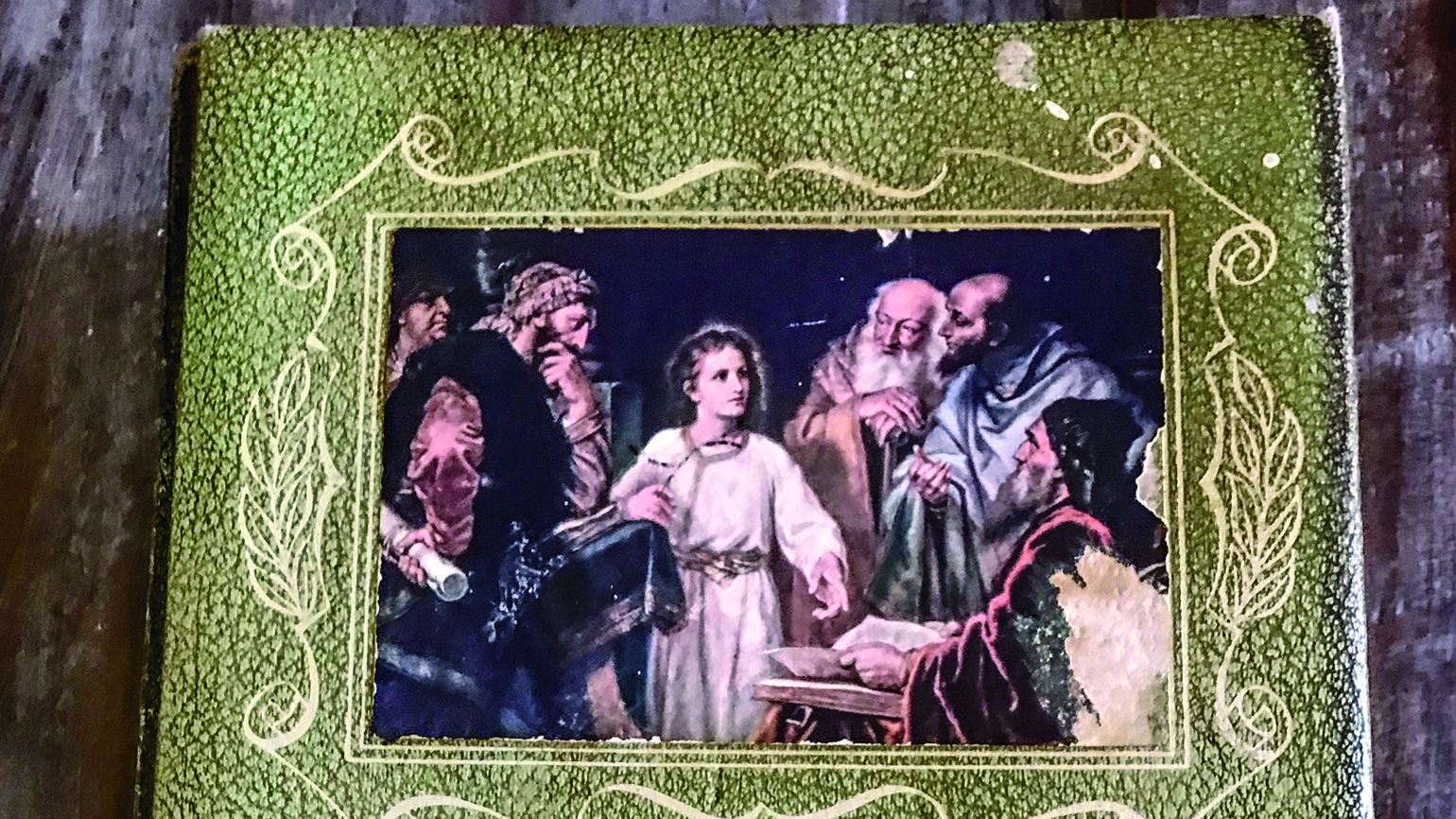
“It’s bound in green leather,” said Martha. “There’s a family tree on the inside, and your name is written on it! The pages are also a little singed—”

“That’s it! That’s my mom’s Bible!” I said, my hands shaking.

The Bible was a long-lost family heirloom, one I’d never expected to see again. It had been passed from generation to generation on my father’s side of the family. My father’s mother had passed it on to my mother shortly after she joined the family.

My father’s personality totally changed after the vows, Mom later said. He was verbally and physically abusive. I was young, but I can still remember the two of them screaming at each other. His threats of violence. Me cowering in fear in my bedroom, covering my ears, praying for the shouting to stop. Mom wanted to take us kids and leave. She just didn’t know how. She didn’t have a plan or any money of her own.

Then, one day, when I was seven years old, my mom took my sisters and me out to the park to play fetch with our dog. On the way back, we rounded the corner of our street to see smoke streaming from our windows. Mom ran to the door. It was hot to the touch. “Fire!” she shouted. “Go across the street and sit on the curb while I call for help!”

Luckily, no one was inside the house at the time. We watched, helpless, as the smoke thickened. Flames danced, rising higher and higher. Windows shattered from the heat. After what felt like ages to my seven-year-old mind, the fire department arrived and put out the blaze. They determined that it had been caused by a smoldering cigarette left in the ashtray in the living room.

We walked through the house, surveying the damage. Everything we owned was ruined. Everything except one item. It sat in the center of a charred coffee table, slightly singed but not too much worse for wear.

The little green Bible.

The fire turned out to be a strange blessing. Mom used part of the insurance money to buy a second car. While my father was at work one day, she piled the three of us kids, the dog and our few remaining belongings into the car and just drove. The Bible was one of the things she took with us.

She planned to drive from Ohio all the way to Florida, but we got as far as South Carolina before the car broke down. Mom figured it was far enough to keep my father from coming after us. She rented a mobile home and put our items, including the Bible, in storage.

At first, Mom was jumpy. She was terrified my father would show up and drag us back to Ohio. But thankfully, he left us alone.

A few years passed. Eventually, Mom met my stepfather, a kind and loving man. The kind of man she deserved. We moved to North Carolina as a family. The Bible was lost in the move, though Mom never forgot about it. Every so often, she’d retell the story of the little book unharmed by the flames.

Now, some 35 years later, a former coworker had stumbled across it, recognized the names inside and called me out of the blue.

Martha and I arranged to meet at a midway point between our houses. The Bible was smaller than I remembered. I opened it, carefully tracing my mother’s name with my finger. Yes, it was Mom’s Bible. I offered to pay Martha, but she refused. The shopkeeper had gifted it to her after hearing its story, she told me.

Truthfully, I would’ve paid any amount to see that look of inexpressible joy on Mom’s face as I gave it to her. She later passed away from cancer in 2005. My sister has the Bible now, with plans to pass it on to her daughter. It remains a reminder of Mom’s strength and the importance of faith. A little miracle that made it through hardship and found its way home. Just like us.

Did you enjoy this story? Subscribe to Mysterious Ways magazine.

A Long-Lost Love, Found

Just about there, I thought as I rounded the last curve.

I’m a hospice nurse and I don’t typically travel far beyond my small hometown of Henning, Minnesota, but today I was driving 50 miles to a nursing home in a neighboring town to check on a patient, filling in for a colleague.

Not that I minded. One joy of the job is meeting new people. Many of them tell me their life stories, which I always find fascinating, sometimes inspiring.

Growing up, I loved hearing my mom tell stories about her childhood in Henning, especially about her oldest brother, Maurice. He’d passed on long before I was born, when Mom was just nine years old, but even now she talked of him as if he’d just died.

“Did I ever tell you about the horse your uncle Maurice had?” Mom asked on a recent visit. “He knew how much I loved horses, but I was too young to have my own. So he taught me to ride his.”

She proudly recalled how Maurice enlisted in the army in the middle of World War II. But just three months before the war would end, he was killed by a Japanese sniper in the Philippine jungle.

“He was so close to coming home,” Mom said. She pulled out a tattered clipping of a poem Maurice had written. “It was for Sally, his fiancée,” she said. “She was a young country schoolteacher. When he returned from the war, they planned to marry.”

Mom read the poem to me:

We know that the world’s in a roar
But with God’s help we’ll win the war.
Then I return, I know not when
I want your love as it has been
And that thy love shall not tarry
From the girl I want to marry.
And this, among other things,
To hear the bells of our wedding ring.

“What happened to Sally?” I asked.

“I never knew. We heard she’d moved out West. But we lost touch. I always wished I could’ve talked with her. I loved her so much. But it’s too late now.”

Uncle Maurice and his long-lost love captured my imagination. Their story seemed like something from a tragic romance novel. I too wished I could talk to Sally, so I could know how the story turned out for the woman who would have been my aunt.

Sadly, Mom was right. Too many years had passed.

I pulled into the nursing home parking lot. I checked in at the front desk then walked into the patient’s room. The woman was very ill, unable to speak. No life stories today. I took her vital signs and updated her medical chart.

“I’m here for you,” I whispered to her.

“She hasn’t been very awake today,” came a voice from the other side of the curtain that divided the room. The patient’s roommate.

“Seems that way,” I said.

“Where are you from?” the roommate asked.

“Henning,” I answered.

“I taught there,” the roommate said, “a long time ago. What’s your name?”

I told her, but she didn’t recognize it.

“What about your maiden name, dear?” She didn’t know it, either.

“It’s okay,” I said. “You say it’s been a long time. Maybe you’ll recognize my mother’s maiden name.” I told it to her.

“What were her parents’ first names?” the woman asked, her voice growing stronger. I told her and she gave a little gasp. She pulled back the curtain. She was sitting in a rocking chair, her eyes wide.

All of a sudden, it clicked. Schoolteacher. Taught decades ago in our town… could it really be…

“My name is Sally,” she said. “I…I was engaged to your uncle Maurice.”

She poured out her story. Maurice’s death had been hard on her. She left her teaching job and moved to Washington.

“I loved your uncle so much. I had looked forward to being part of your family. I didn’t ever feel that chapter of my life closed.”

Sally married and had a son and three daughters. “We had a wonderful life,” Sally said. She had returned to Minnesota several years earlier.

“Would it be okay if my mom came to visit?” I asked. “She has always wondered about you.”

“That would be fine,” she said.

A short time later Mom went to see Sally. “She was as lovely as I remembered,” Mom told me. “We had a wonderful visit.” Sally even had her daughter send a picture of Maurice to Mom.

There was one thing, though. Sally had never read Maurice’s poem. So Mom read it to her. Sally loved it. Her eyes filled with tears.

The poem was the perfect ending to that chapter of her life, and she’d waited a lifetime to hear it. “I’m so happy you found her,” Mom said.

I’d gone to that nursing home 50 miles away to fill in for a colleague. I was there to check on a patient, and ended up meeting her roommate. Did I find Sally? Or was I led to her? I think I know.

Download your FREE ebook, Mysterious Ways: 9 Inspiring Stories that Show Evidence of God’s Love and God’s Grace

All the Miracles Fit to Print

I have a little secret to share.

When our staff first conceived of Mysterious Ways magazine, we felt there would be an audience for it—after all, the short feature in Guideposts was an overwhelming favorite of readers ever since it debuted in December 1981. But launching a new print magazine in today’s economy is a pretty scary proposition. Newsweek’s pages dwindled to nearly nothing before they let go of most of their staff and began publishing stories solely on the Web. Reader’s Digest filed for Chapter 11 bankruptcy protection. A lot of us here have seen two magazines we loved and poured our hearts into—Positive Thinking and Sweet 16—suspend publication. So we were cautious, guarded. Even as we finished the premiere issue and subscription forms began pouring in, we prepared ourselves for only a year’s worth of issues—six.

The secret? At the time, we couldn’t guarantee our magazine would capture enough people’s hearts to allow us to continue beyond those six issues. That’s why the subscription offers we sent out only gave the option for a year’s subscription, not two, like the Guideposts and Angels on Earth subscription offers do. We put the magazine out there, and prayed.

Today, however, we ship the fifth issue of Mysterious Ways to the printers and begin work on that sixth—and I’m happy to report it won’t be our last. With modest budgets for promotion or advertising, we had planned to get around 15,000 initial orders… instead, thanks in part to readers like you spreading the word, we’ve gotten nearly 60,000. And the feedback we’ve received is very encouraging. We’ve even had some people write in asking if they could work for us—one woman wrote in that she was happy to help out for free!

I don’t mean to toot my own horn. After all, it’s not me, nor is it our staff that makes Mysterious Ways the magazine it is. Not entirely. We owe thanks to you—the readers who have shared miraculous and wondrous experiences with us. And of course, we owe thanks to God, the original author of all these moments we retell in our pages.

Want to contribute a story? Send it directly to us—we read every one. Want to spread the word? Use the “Send,” “Like,” “Tweet” and “Share” buttons on the top of your favorite Mysterious Ways story on this site to send it to your friends (we all are guilty of forwarding those emails with turned-out-to-be-fake inspirational stories; why not send real ones?). Not only are these all great ways to help, they help you connect with others and open up the conversation about the everyday miracles and wonders in our lives.

We look forward to our sixth issue. And the seventh. And many more after that. There are a lot of these stories out there, that’s for sure. And they need someone to tell them.

All Quiet in the Chapel

Earlier this year, Guidepost’s longtime administrative assistant, Sharon Azar, retired. It was a sad day at the office. Sharon is one of the kindest people you’ll ever meet, known for her spunky style, generous spirit and love of animals. Really, she was like the St. Francis of our floor!

Before she left, I sat down with her over lunch to discuss miracles. “I’ve got a story for you,” she told me, a twinkle in her eye. “This happened many, many years ago, but I’ll never forget it…”

At the time, I had three dogs–Franz, Barney and Ginger. The two boys, Franz and Barney, didn’t see eye to eye, and I had great difficulty with their barking and frequent fights. On our walks, we stayed away from dog parks because they couldn’t socialize with other dogs. No matter what I did, Franz and Barney wouldn’t calm down.

Finally, I found a dog trainer, Robin Kovary, who agreed to work with me. Robin was wonderful. She’d helped develop a pet therapy program at St. Vincent’s hospital in New York City, where she brought dogs in to comfort the patients. She was just as loving with my dogs, and right away the two of us became friends.

Shortly after, though, Robin passed away from breast cancer. St. Vincent’s had a memorial service for her in their chapel, and Robin’s friends and family were encouraged to bring the dogs she’d worked with. I wanted to go…but how could I walk into a chapel with my dogs? Franz and Barney were ready to pick a fight at any moment.

So I devised a plan. I’d go late and stand in the back that way I could make a quick escape the moment Franz and Barney started making a fuss.

I walked into the chapel the day of the memorial, holding on extra tight to the leashes. The pews were packed with large, medium and small dogs of every breed. At least 100 dogs in all! It should have been a madhouse. But it was eerily still, so quiet you could hear a pin drop. Maybe I shouldn’t go in, I thought nervously.

Just then, an usher pointed to a seat smack dab in the middle of the chapel. I tried to explain that my dogs weren’t social and that I should really stay in the back. But, before I knew it, the usher had led me to the empty seat and I had no choice but to sit down. I was terrified, certain my dogs were going to cause a ruckus and ruin the sacred space.

What happened next, though, left me mystified. All three of my dogs sat down on the floor with a quiet obedience I’d never seen before. They didn’t bark at any of the other dogs or growl. They simply stared at the speakers at the pulpit. Very reverently, very sweetly. The chapel remained quiet the whole time, an entire hour. All the dogs, including my own, were rapt with attention.

Everyone in that room loved Robin and her spirit was clearly there. We were all feeling sadness and respect and love. The dogs felt it too. It was a magical, miraculous moment unlike anything I’d ever seen.

Have you ever experienced a miraculous moment with your pet? Share your story below!