


Embrace God's truth with our new book, The Lies that Bind

Amazing Grace: The Healing Power of Music

Back in high school, one of my good friends invited me to the school’s Christmas concert, a performance of Handel’s Messiah. She would be playing the violin. I hesitated. I wanted to support my friend. The problem was that Messiah—which covers the birth, life and death of Jesus Christ—runs more than two and a half hours. Not exactly how I wanted to spend my Friday night.

I told myself I’d stay for an hour, then sneak out. So I took my seat in the auditorium. The lights went down, and I slouched in my seat, prepared to be bored out of my mind. But everything changed as soon as the first notes of the oratorio met my ears. Years later, I struggle to find the words to describe the feeling that filled me that day. It felt as if I’d encountered something divine. Sure, the story Messiah is religious, but that wasn’t what moved me so profoundly. It was the music itself in all its harmonic complexity that made me feel something only music could stir in me.

Words so often fail. Images fade. But music has the ability to transcend all those limitations—language, time, distance—to ignite something deep inside each of us. Ever since hearing Messiah in its entirety, I’ve wondered how a series of organized sounds can elevate our spiritual experience. And why.

I took my questions to John Robilette, a classical pianist who has performed for audiences all over the world. Something beautiful he’s noticed about his music is that it has the power to affect people in similar ways—regardless of the audience’s language barriers and cultural differences. “That’s what’s so wonderful about music,” he said. “It transcends differences. And you can feel it. You can feel it come across the room, the stage lights. It’s extrasensory. It’s a collective feeling. The emotions from people coming at you. You don’t know from where or how, but you feel it.”

Indeed, transcendence is the quality that has long tied music to spirituality. Worshipping God is tied to music—choirs, sung verses, chants. Before literacy was widespread, religious texts from all faith backgrounds were mostly sung, sometimes in languages that the congregation didn’t even understand.

Like Gregorian chant, a musical style inspired by earlier forms of plainsong that appeared in Jewish, early Christian and various Middle Eastern places of worship. It was sung in Latin, which in no way diminished its power to transport people.

From the beginning of Catholicism up until the twentieth century, Gregorian chant, a form of a capella, was routine in churches across Europe. Cathedral architecture even evolved specifically to amplify the otherworldly music, with cavernous ceilings and arching walls designed to reverberate and carry the acoustics to the farthest corners of the church. The feeling imparted by the music—of solemnity, meditative thought and divinity—transcended the bounds of language.

Now science backs up the feelings that churchgoers have experienced for centuries. Research shows that listening to Gregorian chant can be healing. This is because the chants are lacking instrumental accompaniment, encouraging the listener to unconsciously hone in on the rhythm of the vocals. The effect is a state synonymous with deep prayer and meditation.

Beyond putting the mind in a prayerful state, music can also relieve pain and promote healing. Yuval Ron, composer and author of the book Divine Attunement, says that this can be attributed to the vibrations created by melodies. “It is like receiving a subtle and sophisticated body massage. If sound vibrates the body at an effective frequency and appropriate volume, it yields healing effects.”

Researchers have observed as much. In a study at Khoo Teck Puat Hospital in Singapore, palliative care patients who took part in music therapy sessions experienced relief from their pain. “Music engagement allowed the patients to reconnect with the healthy parts of themselves, even in the face of a debilitating condition or disease-related suffering,” says music therapist Melanie Kwan, co-author of the study. The patients were comfortable enough to talk with loved ones and rest. In these cases, even when powerful pain medications didn’t work, music still reached people.

But why does music have such a powerful impact on our minds, bodies and souls? Yuval Ron says this is because music itself is a manifestation of divine energy. “It’s ethereal,” he says. “It’s not something that you can nail down or that you can make rules about. There’s no way to define it in a way the human brain can grasp.”

Even when the mind weakens, the brain’s regions connected to music remain untouched. Research indicates that the part of the brain that processes familiar music is activated despite degenerative brain diseases such as Alzheimer’s.

Take, for example, the story of Paul Harvey. A 79-year-old with dementia, Paul often has trouble remembering where he is or who the people are around him. “Sometimes he drifts into another world and I feel like I’m losing him,” his son, Nick, wrote in a viral tweet. “He is never more present, however, than when he plays the piano.”

When Nick came across his father’s 1981 song “Where’s the Sunshine?” and encouraged Paul to play it for him, Paul didn’t need the sheet music. Despite his dementia, he was able to perform the whole song perfectly—from memory. No one can explain exactly how something like this happens.

Music is a gift. A slice of heaven. A little bit of beauty that can be innately understood. Maybe that’s why it’s often the single avenue that remains when all else fails. But as John Robilette slides onto his piano bench and places his fingers on the keys, he’s not thinking about the hows and whys of it all.

“What principally interests me are the feelings,” he says. “The feelings music produces within people. The turn of a phrase. A harmony that touches your heart. The change in mood from a major to minor key. You can’t quantify it. And that’s the miracle.”
A Lost Family Heirloom’s Long Journey Home

I was leaving work when my phone rang.

“Hello?” I answered.

“Hey, Dusty,” said a voice. “It’s Martha.” Martha? She was an old work acquaintance, someone I hadn’t spoken to in years. “I know this is random,” she said, “but I believe I found a Bible that belongs to your family in a secondhand shop.”

I froze. It couldn’t be? Could it…?

“What does it look like?”

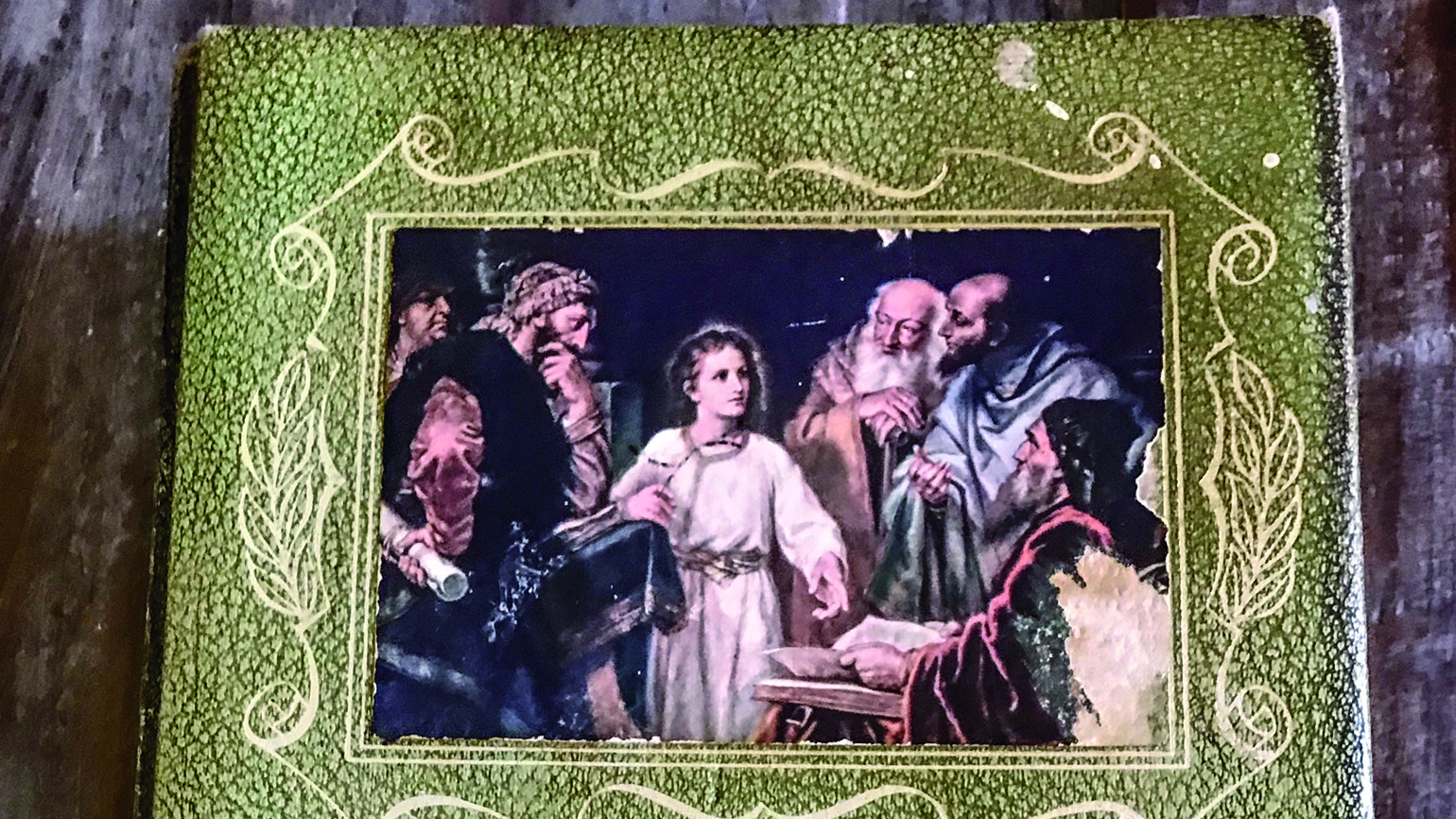
“It’s bound in green leather,” said Martha. “There’s a family tree on the inside, and your name is written on it! The pages are also a little singed—”

“That’s it! That’s my mom’s Bible!” I said, my hands shaking.

The Bible was a long-lost family heirloom, one I’d never expected to see again. It had been passed from generation to generation on my father’s side of the family. My father’s mother had passed it on to my mother shortly after she joined the family.

My father’s personality totally changed after the vows, Mom later said. He was verbally and physically abusive. I was young, but I can still remember the two of them screaming at each other. His threats of violence. Me cowering in fear in my bedroom, covering my ears, praying for the shouting to stop. Mom wanted to take us kids and leave. She just didn’t know how. She didn’t have a plan or any money of her own.

Then, one day, when I was seven years old, my mom took my sisters and me out to the park to play fetch with our dog. On the way back, we rounded the corner of our street to see smoke streaming from our windows. Mom ran to the door. It was hot to the touch. “Fire!” she shouted. “Go across the street and sit on the curb while I call for help!”

Luckily, no one was inside the house at the time. We watched, helpless, as the smoke thickened. Flames danced, rising higher and higher. Windows shattered from the heat. After what felt like ages to my seven-year-old mind, the fire department arrived and put out the blaze. They determined that it had been caused by a smoldering cigarette left in the ashtray in the living room.

We walked through the house, surveying the damage. Everything we owned was ruined. Everything except one item. It sat in the center of a charred coffee table, slightly singed but not too much worse for wear.

The little green Bible.

The fire turned out to be a strange blessing. Mom used part of the insurance money to buy a second car. While my father was at work one day, she piled the three of us kids, the dog and our few remaining belongings into the car and just drove. The Bible was one of the things she took with us.

She planned to drive from Ohio all the way to Florida, but we got as far as South Carolina before the car broke down. Mom figured it was far enough to keep my father from coming after us. She rented a mobile home and put our items, including the Bible, in storage.

At first, Mom was jumpy. She was terrified my father would show up and drag us back to Ohio. But thankfully, he left us alone.

A few years passed. Eventually, Mom met my stepfather, a kind and loving man. The kind of man she deserved. We moved to North Carolina as a family. The Bible was lost in the move, though Mom never forgot about it. Every so often, she’d retell the story of the little book unharmed by the flames.

Now, some 35 years later, a former coworker had stumbled across it, recognized the names inside and called me out of the blue.

Martha and I arranged to meet at a midway point between our houses. The Bible was smaller than I remembered. I opened it, carefully tracing my mother’s name with my finger. Yes, it was Mom’s Bible. I offered to pay Martha, but she refused. The shopkeeper had gifted it to her after hearing its story, she told me.

Truthfully, I would’ve paid any amount to see that look of inexpressible joy on Mom’s face as I gave it to her. She later passed away from cancer in 2005. My sister has the Bible now, with plans to pass it on to her daughter. It remains a reminder of Mom’s strength and the importance of faith. A little miracle that made it through hardship and found its way home. Just like us.

Did you enjoy this story? Subscribe to Mysterious Ways magazine.

A Long-Lost Love, Found

Just about there, I thought as I rounded the last curve.

I’m a hospice nurse and I don’t typically travel far beyond my small hometown of Henning, Minnesota, but today I was driving 50 miles to a nursing home in a neighboring town to check on a patient, filling in for a colleague.

Not that I minded. One joy of the job is meeting new people. Many of them tell me their life stories, which I always find fascinating, sometimes inspiring.

Growing up, I loved hearing my mom tell stories about her childhood in Henning, especially about her oldest brother, Maurice. He’d passed on long before I was born, when Mom was just nine years old, but even now she talked of him as if he’d just died.

“Did I ever tell you about the horse your uncle Maurice had?” Mom asked on a recent visit. “He knew how much I loved horses, but I was too young to have my own. So he taught me to ride his.”

She proudly recalled how Maurice enlisted in the army in the middle of World War II. But just three months before the war would end, he was killed by a Japanese sniper in the Philippine jungle.

“He was so close to coming home,” Mom said. She pulled out a tattered clipping of a poem Maurice had written. “It was for Sally, his fiancée,” she said. “She was a young country schoolteacher. When he returned from the war, they planned to marry.”

Mom read the poem to me:

We know that the world’s in a roar
But with God’s help we’ll win the war.
Then I return, I know not when
I want your love as it has been
And that thy love shall not tarry
From the girl I want to marry.
And this, among other things,
To hear the bells of our wedding ring.

“What happened to Sally?” I asked.

“I never knew. We heard she’d moved out West. But we lost touch. I always wished I could’ve talked with her. I loved her so much. But it’s too late now.”

Uncle Maurice and his long-lost love captured my imagination. Their story seemed like something from a tragic romance novel. I too wished I could talk to Sally, so I could know how the story turned out for the woman who would have been my aunt.

Sadly, Mom was right. Too many years had passed.

I pulled into the nursing home parking lot. I checked in at the front desk then walked into the patient’s room. The woman was very ill, unable to speak. No life stories today. I took her vital signs and updated her medical chart.

“I’m here for you,” I whispered to her.

“She hasn’t been very awake today,” came a voice from the other side of the curtain that divided the room. The patient’s roommate.

“Seems that way,” I said.

“Where are you from?” the roommate asked.

“Henning,” I answered.

“I taught there,” the roommate said, “a long time ago. What’s your name?”

I told her, but she didn’t recognize it.

“What about your maiden name, dear?” She didn’t know it, either.

“It’s okay,” I said. “You say it’s been a long time. Maybe you’ll recognize my mother’s maiden name.” I told it to her.

“What were her parents’ first names?” the woman asked, her voice growing stronger. I told her and she gave a little gasp. She pulled back the curtain. She was sitting in a rocking chair, her eyes wide.

All of a sudden, it clicked. Schoolteacher. Taught decades ago in our town… could it really be…

“My name is Sally,” she said. “I…I was engaged to your uncle Maurice.”

She poured out her story. Maurice’s death had been hard on her. She left her teaching job and moved to Washington.

“I loved your uncle so much. I had looked forward to being part of your family. I didn’t ever feel that chapter of my life closed.”

Sally married and had a son and three daughters. “We had a wonderful life,” Sally said. She had returned to Minnesota several years earlier.

“Would it be okay if my mom came to visit?” I asked. “She has always wondered about you.”

“That would be fine,” she said.

A short time later Mom went to see Sally. “She was as lovely as I remembered,” Mom told me. “We had a wonderful visit.” Sally even had her daughter send a picture of Maurice to Mom.

There was one thing, though. Sally had never read Maurice’s poem. So Mom read it to her. Sally loved it. Her eyes filled with tears.

The poem was the perfect ending to that chapter of her life, and she’d waited a lifetime to hear it. “I’m so happy you found her,” Mom said.

I’d gone to that nursing home 50 miles away to fill in for a colleague. I was there to check on a patient, and ended up meeting her roommate. Did I find Sally? Or was I led to her? I think I know.

Download your FREE ebook, Mysterious Ways: 9 Inspiring Stories that Show Evidence of God’s Love and God’s Grace

All the Miracles Fit to Print

I have a little secret to share.

When our staff first conceived of Mysterious Ways magazine, we felt there would be an audience for it—after all, the short feature in Guideposts was an overwhelming favorite of readers ever since it debuted in December 1981. But launching a new print magazine in today’s economy is a pretty scary proposition. Newsweek’s pages dwindled to nearly nothing before they let go of most of their staff and began publishing stories solely on the Web. Reader’s Digest filed for Chapter 11 bankruptcy protection. A lot of us here have seen two magazines we loved and poured our hearts into—Positive Thinking and Sweet 16—suspend publication. So we were cautious, guarded. Even as we finished the premiere issue and subscription forms began pouring in, we prepared ourselves for only a year’s worth of issues—six.

The secret? At the time, we couldn’t guarantee our magazine would capture enough people’s hearts to allow us to continue beyond those six issues. That’s why the subscription offers we sent out only gave the option for a year’s subscription, not two, like the Guideposts and Angels on Earth subscription offers do. We put the magazine out there, and prayed.

Today, however, we ship the fifth issue of Mysterious Ways to the printers and begin work on that sixth—and I’m happy to report it won’t be our last. With modest budgets for promotion or advertising, we had planned to get around 15,000 initial orders… instead, thanks in part to readers like you spreading the word, we’ve gotten nearly 60,000. And the feedback we’ve received is very encouraging. We’ve even had some people write in asking if they could work for us—one woman wrote in that she was happy to help out for free!

I don’t mean to toot my own horn. After all, it’s not me, nor is it our staff that makes Mysterious Ways the magazine it is. Not entirely. We owe thanks to you—the readers who have shared miraculous and wondrous experiences with us. And of course, we owe thanks to God, the original author of all these moments we retell in our pages.

Want to contribute a story? Send it directly to us—we read every one. Want to spread the word? Use the “Send,” “Like,” “Tweet” and “Share” buttons on the top of your favorite Mysterious Ways story on this site to send it to your friends (we all are guilty of forwarding those emails with turned-out-to-be-fake inspirational stories; why not send real ones?). Not only are these all great ways to help, they help you connect with others and open up the conversation about the everyday miracles and wonders in our lives.

We look forward to our sixth issue. And the seventh. And many more after that. There are a lot of these stories out there, that’s for sure. And they need someone to tell them.

All Quiet in the Chapel

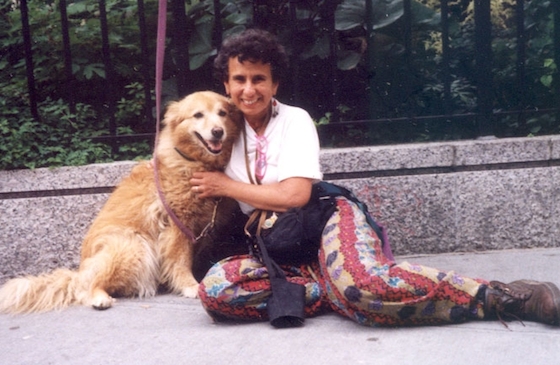
Earlier this year, Guidepost’s longtime administrative assistant, Sharon Azar, retired. It was a sad day at the office. Sharon is one of the kindest people you’ll ever meet, known for her spunky style, generous spirit and love of animals. Really, she was like the St. Francis of our floor!

Before she left, I sat down with her over lunch to discuss miracles. “I’ve got a story for you,” she told me, a twinkle in her eye. “This happened many, many years ago, but I’ll never forget it…”

At the time, I had three dogs–Franz, Barney and Ginger. The two boys, Franz and Barney, didn’t see eye to eye, and I had great difficulty with their barking and frequent fights. On our walks, we stayed away from dog parks because they couldn’t socialize with other dogs. No matter what I did, Franz and Barney wouldn’t calm down.

Finally, I found a dog trainer, Robin Kovary, who agreed to work with me. Robin was wonderful. She’d helped develop a pet therapy program at St. Vincent’s hospital in New York City, where she brought dogs in to comfort the patients. She was just as loving with my dogs, and right away the two of us became friends.

Shortly after, though, Robin passed away from breast cancer. St. Vincent’s had a memorial service for her in their chapel, and Robin’s friends and family were encouraged to bring the dogs she’d worked with. I wanted to go…but how could I walk into a chapel with my dogs? Franz and Barney were ready to pick a fight at any moment.

So I devised a plan. I’d go late and stand in the back that way I could make a quick escape the moment Franz and Barney started making a fuss.

I walked into the chapel the day of the memorial, holding on extra tight to the leashes. The pews were packed with large, medium and small dogs of every breed. At least 100 dogs in all! It should have been a madhouse. But it was eerily still, so quiet you could hear a pin drop. Maybe I shouldn’t go in, I thought nervously.

Just then, an usher pointed to a seat smack dab in the middle of the chapel. I tried to explain that my dogs weren’t social and that I should really stay in the back. But, before I knew it, the usher had led me to the empty seat and I had no choice but to sit down. I was terrified, certain my dogs were going to cause a ruckus and ruin the sacred space.

What happened next, though, left me mystified. All three of my dogs sat down on the floor with a quiet obedience I’d never seen before. They didn’t bark at any of the other dogs or growl. They simply stared at the speakers at the pulpit. Very reverently, very sweetly. The chapel remained quiet the whole time, an entire hour. All the dogs, including my own, were rapt with attention.

Everyone in that room loved Robin and her spirit was clearly there. We were all feeling sadness and respect and love. The dogs felt it too. It was a magical, miraculous moment unlike anything I’d ever seen.

Have you ever experienced a miraculous moment with your pet? Share your story below!

All God’s Creatures

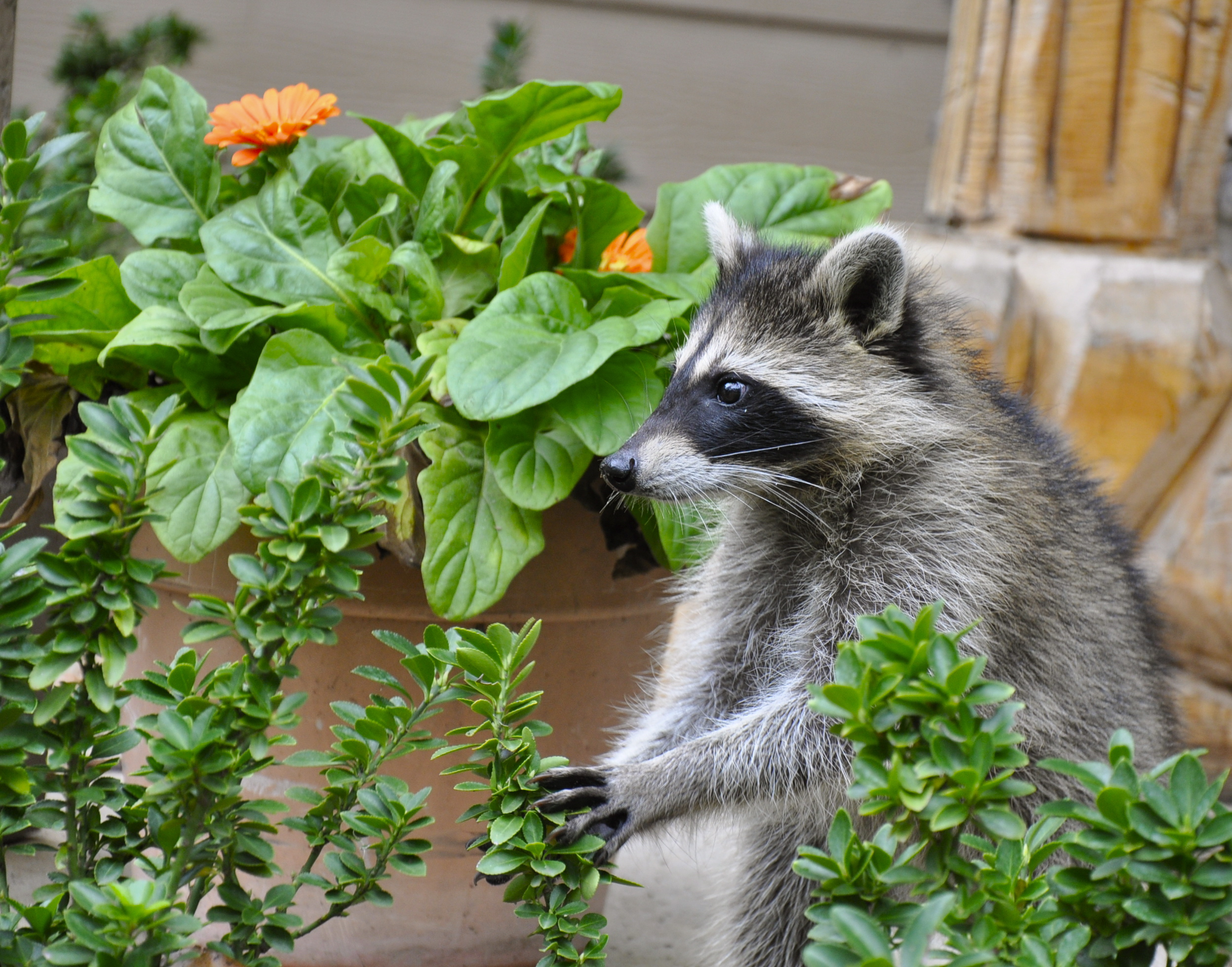
I was relaxing on a balmy Saturday morning when my wife, Joan, came inside from our backyard garden. “There’s another raccoon in the trap,” she said. “What do you want to do?”

“Greedy critters,” I grumbled. Raccoons are our chief competitors when it comes to plucking ripe tomatoes from the vine. They’re so good at stealing the fruit before we can get to it that we finally resorted to using a live trap.

So much for relaxing. “I’ll load him in the van, and we can let him out at the wildlife preserve,” I said. I put him in the back, then threw in the long hook I’d made out of an old metal coat hanger. It was perfect for keeping my hands safe from raccoon jaws when opening the trap door.

Joan climbed into the passenger seat. On our way to the preserve, she said, “Let’s stop at the grocery store first. We need bread and milk.”

“We could get it on the way home,” I said. It didn’t make any sense to stop now with an irritated raccoon caged in back.

“No,” Joan insisted. “I can’t explain it. But I just got this feeling we need to stop on the way.”

“Okay, honey,” I said.

I parked at the store and we went inside. When we came out with our groceries, there was a woman standing with a full cart by the car next to us, looking agitated.

“Could you help me?” she asked. “I locked my keys in my car. All my groceries are going to melt or spoil in this heat.” She was at her wit’s end. But what could I do? I’m no locksmith or mechanic.

“I’m sorry,” I said. I was about to walk away when a sudden thought stopped me. Greedy critters. I smiled. “Ma’am, I think I have just the thing

I got the long hook out from the back of the van, threaded it between the woman’s car window and the rubber molding, and with a little tug her lock popped right up.

At the nature preserve, Joan and I released our furry felon into the woods. Awed at the way a nuisance became something good, with a tiny nudge from the One who watches over all creatures, great and small.

A Life-Changing Lesson from Nature

My devotion in Daily Guideposts this month delves into the amazing impact the 17-year cicadas had on my life when they emerged in 2013. Here is more on the lasting lessons their brief appearance taught me about trusting God through the dark times and surrendering to change.

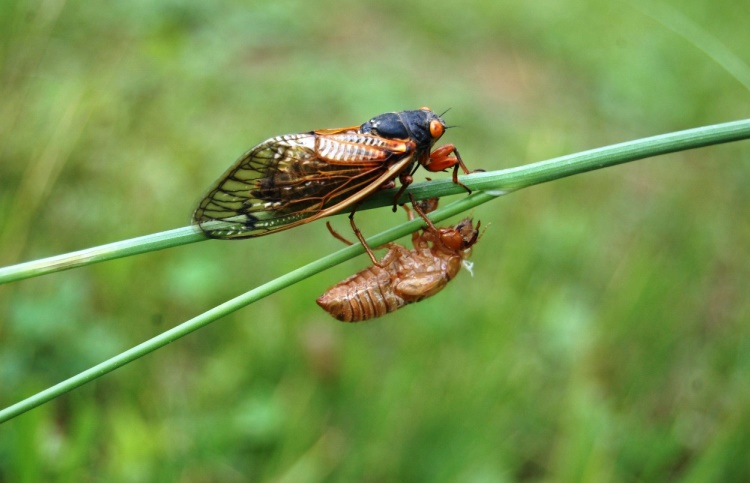
This morning I had my first sighting of the Magicicada. I was putting my son on the bus when I noticed a red-eyed insect hobbling on a dandelion. The cicada, newly emerged with fresh wings, stumbled along the grass and flowers. Leaning down I noticed another and another. The ground was crawling with them.

Magicada are periodical cicada, appearing every 13 or 17 years. The oldest insect in North America, they begin as rice-shaped eggs in the grooves of a tree. Once hatched, they fall to the ground and dig their way deep into earth. Seventeen years later, they emerge as hard-shelled, rust-colored nymphs. At first light, they climb upward to the nearest tree, picnic table, swingset, house, closest vertical surface, shed their skin, grow wings and fly.

Their presence is a catalyst to reflection, to look back over the years since their last appearance and consider the challenges overcome, the blessings received. Everywhere in the Hudson River Valley people are talking about the last time the cicadas were here 17 years ago—almost the time it takes for a newborn to reach the age of majority. Who was born, who we lost, job changes, life changes.

Where was I the last time Magicicadas graced the ground? I was fresh out of college in a job I didn’t really like, in between relationships and living an hour away. I remember disbelieving my family when they called to tell me about the cicada invasion. I tried to picture the scene when they said they were using a snow shovel to clear a path to the bird feeder. “You have to see them,” my sister Maria said. “There are over a million an acre.” I didn’t see them though. Back then, it seemed crazy to drive an hour to look at bugs.

I walk around the the cicada-covered trees. Magicada’s survival strategy is “predator satiation” which means they appear in unbelievable, crowded numbers and overwhelm the environment. Despite having little defenses most survive to mate.

READ MORE: FINDING GOD IN THE WILD

Hundreds are molting. Some are frozen waiting for their wings to strengthen. Others are just beginning to shed their skin. Nymphs climb over newly emerged fragile cicadas and I find myself helping some that have fallen. I carry them to places where their pink wings can spread and harden.

My favorite part, the a-ha moment that I wait for, is when the cicada pulls himself free and holds on to the shell of its old self while his wings strengthen, a brave leap of faith that takes my breath away. I watch the surrender, the rebirth, again and again. I never tire of seeing it—a secret of God it seems, a window to His grace.

Time stops and I stand in the moment, thinking about everything. How the last time the cicadas were here my sister was alive. Who would have thought she would die healthy in her sleep at 45? My sons weren’t born. I always imagined a daughter, but a son, two sons, blessings and love, the depths I never could have known.

Up close the cicadas are beautiful and ugly at the same time. Their red eyes give them a scary edge and I think about how we fear what we don’t understand. So often we resist change out of fear. Knowing the cicada’s history and all they’ve gone through is cause for respect. Here, their perseverance a testament of beauty.

Change is contagious. I look back on the dark times that I’ve been through since the last time the cicadas came. Like them, I had to climb out of the darkness of losing my sister. With time and faith, grief cracked open and let in light. Grief itself grows its own wings.

Morning after morning I get up just as the sun crests the tree tops and watch the wonder. I cherish these precious days knowing they are finite and I’ll have to wait another 17 years to witness it again—and only God knows what those years will bring.


In the end, all that was left was the Magicicada’s shed skin. Ghosts of who they had been piled beneath trees, scattered in the lawn, stuck in the crevices of the siding of our home, on the undersides of tree limbs—reminders of their ephemeral blessing—and a nudge from heaven to persevere through darkness. Trust change. Let go. Shed what what we no longer need. Leave it behind and fly.

READ MORE: THE SHAPE OF GOD’S LOVE

A Husband at My Door

Lonely? Sure, sometimes. But that was my cross to bear. After all, I’d asked God not to bring another man into my life. Not unless that man would stick with me for the rest of my days. I wasn’t about to put my heart out there only to get hurt. “If God wants me to get married again,” I said, “he’ll have to drop the guy at my doorstep.”

I remembered the moment I decided. After 16 years of marriage, my husband told me he loved another woman. That night everything fell apart; it felt like the walls of my bedroom were closing in. I tossed and turned, kicking at the sheets and pounding the mattress. I couldn’t get his words out of my head—“Bonda, it’s over.”

I was 35, with two kids and minus a husband. I buried my head in my pillow, smothering my tears. I had just one request for God. I’m begging you, I prayed. Don’t even let another man ask me out unless you plan for me to marry him. This hurts too much…

God sure kept up his end of the bargain. For 11 years, not a single man asked me out. Not even for a cup of coffee. I put all my energy into raising my son and daughter and focused on my job as a secretary. That kept me busy, at least until the kids went off to college.

There weren’t many single people in my small town in South Carolina. So I was used to playing the third wheel. Weekends were the worst, though. All my friends had husbands. I spent my free time playing the piano or doing chores like organizing the linen closet. Until I met Brenda and her husband, Charles, at a Bible study.

Brenda was the instructor and we became instant friends. She was so kind, so down-to-earth. But a real firecracker too. The life of the party. She looked out for me, made me feel like family.

On Friday nights, Brenda and Charles would show up at my door, armed with plans to get me out of the house. We’d laugh all through dinner, poking fun at Charles’s bright red suspenders.

Charles was a good ol’ boy. The kind of man who mounted deer antlers on his walls and loved a good juicy steak. But he was a gentleman too. He pulled out chairs for Brenda, opened doors, hung on every word she said. They made no secret of their devotion.

While Charles was off hunting on Saturdays, Brenda and I would check out flea markets, watch movies, cook together—she even showed me how to debone a chicken. “Not that I’ll do this often when I’m cooking for one,” I told her.

Her daughter, Charmaine, would join us too. We talked about everything. Brenda knew the Bible backward and forward. No matter how serious our discussions got, though, we always ended up in a fit of giggles. Maybe I don’t have a husband, I thought. But at least I’ve found a soul sister.

One day, I met Brenda for lunch. She wasn’t her usual self. Hardly touched her food. She was very pale. A few days later she called me. “Bonda, I’ve been diagnosed with leukemia,” she said.

Sign up for Guideposts Free e-Newsletters and Get Inspiration Delivered to Your Inbox

The bottom fell out of my world. How could I go on without my soul sister? Brenda’s condition worsened quickly. Soon she could barely speak from the pain. I sat by her hospital bed and held her hand. It was all I could do. Charles consulted every specialist, researched new treatments. “You think this is worth a try?” he’d ask me, desperation in his voice. It was hopeless. We all knew that.

Still, nothing could’ve prepared me when Charmaine called me at three-thirty one morning from the hospital. My friend was gone, just 26 days after her diagnosis, like a candle that had been snuffed out in an instant. She was only 48.

The weeks that followed were some of the darkest of my life. I could only imagine what they were like for Charles. I helped him go through Brenda’s things and mail out thank-you notes. I thought it might be awkward for us. Instead it was comforting to share my grief. Charmaine told me Brenda had worried about how Charles would fare without her. “She’d be happy to know you’re here through this,” she said. “She was counting on you.”

I struggled to get back to my routine. It was hard. A huge hole had opened in my life, as bad as when I got divorced. One day, I decided to go home on my lunch break to fix a sandwich and be alone with my thoughts. I hadn’t been back long when the doorbell rang. Who even knew I was there?

“Charles?” I said, opening the front screen door.

“I saw your car in the driveway,” he said. “Got worried you were sick.”

“I’m okay,” I said. “Just stopped home for lunch.”

He stood there and fiddled with his keys, flustered. I stared back.

“I’m so tired of eating TV dinners,” he blurted. “Would you maybe want to go grab a pizza with me tomorrow evening?”

I was about to make an excuse. Frankly, I didn’t much care for pizza. Then it hit me. There he was, a man standing on my doorstep. The first man to ask me out in 11 years, since I’d made my deal with God.

My cheeks burned. Why did it have to be Charles? Of all people! He was Brenda’s husband! I’d never thought about him like that. It was just plain wrong. But he looked so lonely, like a lost little boy. This wouldn’t be a date. We would just be two lonely people, eating pizza together. Old friends. “Sure I will,” I said, after what seemed like an eternity.

So Charles and I just kept on being lonely together. Dinners. Movies. Sat together in church, did some of the activities we’d once done with Brenda. Charmaine didn’t object to our relationship. In fact, she seemed to encourage it, sometimes inviting the two of us over for dinner. One day she told me why.

“The night she died, Mom made one last request. Something I never told Dad,” she said. “She said she wanted Dad to get married again. He needed a wife, I needed a mother. And she told me who she wanted that woman to be.”

Charles and I have been happily married for 25 years now. Not a day goes by when I don’t say a prayer of thanks for Brenda. And for the man who landed on my doorstep.

A Heaven-Sent Sign from Above

“Look for butterflies,” a friend told me after my mother’s death. “They’re symbols of life after life and of new beginnings. Signs from the loved ones we’ve lost, letting us know they’re okay.”

Mom would have believed that, I’m sure. She was in touch with nature. She loved walks by the lakes and woods near her home in Indiana—a love her failing body denied her near the end. To me, butterflies were just bugs. Watching Mom’s health collapse over the past seven years had only hardened my belief in the world around me. She’d suffered from multiple system atrophy—a cruel neurological disease that robs its victims of movement, their independence and, eventually, their lives. How could any loving creator allow that to happen to my mom?

Mom was granted custody of me after my parents divorced. Until I left home and started a family of my own, most of the time it was just the two of us, our own little team. She was my “go-to,” my sounding board, a source of wisdom. A best friend. Since her death, I couldn’t enjoy anything. I couldn’t feel anything. It seemed like nothing would ever change.

I was in no mood for my family’s annual summer vacation. But we all knew I needed one. We were headed to Michigan’s Sleeping Bear Dunes National Lakeshore. Good Morning America had named it the most beautiful place in America. Finally I agreed to go. I even brought a camera.

The Pierce Stocking Scenic Drive was seven miles of thick forests and views of Lake Michigan and the mighty dunes. There were 12 designated points of interest where visitors could stop. Is this really the most beautiful place in America? I thought at Number 3, peering through my camera lens at the sunlit stretches of water and sand. Pretty, but so what?

I could practically hear Mom telling me to enjoy myself, to lose myself in the awesome beauty. But I couldn’t stop thinking of how much more beautiful it would be if she were here. How much she would’ve appreciated it.

We reached stop Number 9—Lake Michigan Overlook. I expected more of the same in terms of views. I walked the sunny sidewalk that turned into an inclined sandy path, shaded by beech and maple trees. I heard the waves crashing against the shore far below as I made my way through the wooded maze. Finally I emerged at the crest of a sand dune. I gasped.

The cloudless sky was a radiant crystal blue, mirrored by the water, which reached all the way to the horizon. The sun reflected off the white sand, almost blindingly. Something flooded through me. All at once, I knew this was the most beautiful view I had ever seen. I closed my eyes and let the cool breeze off the lake caress my face. My body relaxed and I felt something break loose within me, ascending from the darkness and joining with the beautiful light around me. It felt like I was opening to the world again. Mom used to toss around the phrase heaven on earth—this place truly was.

Does Mom have a view like this? Does she feel what I feel now? The thought comforted me. I felt free from my grief. I felt joy.

I whipped out my camera and snapped a few photos. But no photo could capture the power of that moment, the healing I felt. I was ready to start living again—Mom wouldn’t have wanted it any other way.

While my family explored a bit further, I walked back to the car alone, still astonished by what had just happened. It was something beyond reality. As though Mom’s spirit had been lifting mine. Maybe my friend was on to something. There were wonders that seemed to reach from heaven, to comfort us in our pain.

I sat in the car and picked up my camera, scrolling through the pictures I’d taken that day. Even on a tiny screen, they looked pretty much like what I had seen. Except for one shot, at stop Number 9, Lake Michigan Overlook. There was a little dark blotch in the foreground, right in the middle of the photo. Did I get something on the lens?

I looked closer. The dark blotch on the screen slowly resolved into focus. It wasn’t a smudge. No, it was a single monarch butterfly.

A Heaven-Sent Encounter Became Comfort from Beyond

I pulled into the parking lot of the fast food restaurant. What am I doing here? I thought. I hardly ever eat fast food. I’d been out running errands, with no intention of stopping for lunch. But I was too lost in grief to think too much of it, or to try to plan a healthier option, so I parked and went inside to order.

My dad had died from a stroke a week before at the age of 81. There were five of us kids, and Dad had always made an effort to spend individual time with each of us. He used to drive me into the city for my ballet classes, and we had so many wonderful dinners together after, just Dad and me, before we drove back home. Yet some of my most cherished memories were of the whole family together, on Veterans Day.

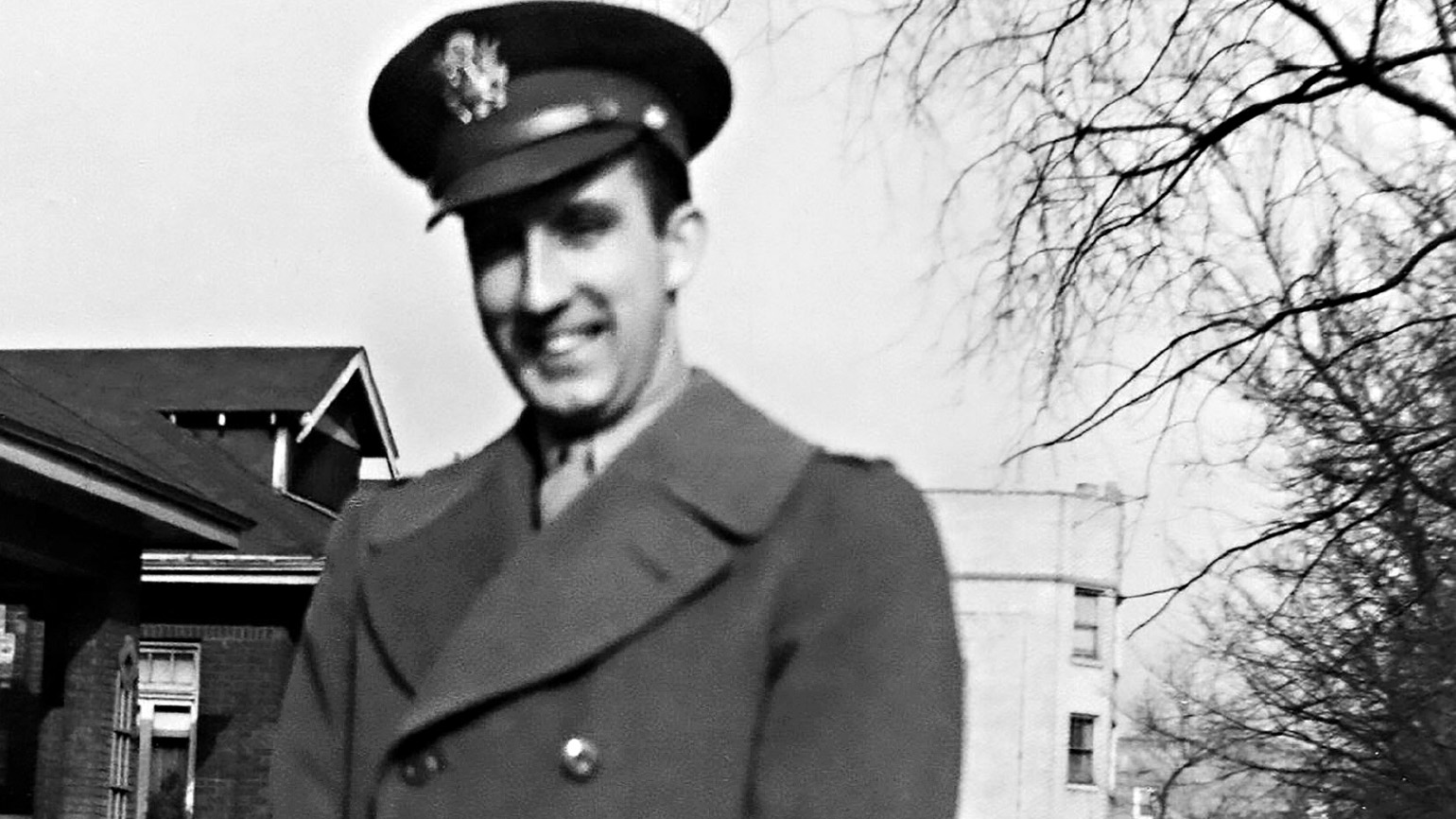
Dad had been a first lieutenant in the army, and his service defined him. On Veterans Day, he’d gather the family on the front lawn to watch him hoist the American flag. His face lit up with pride, watching as Old Glory unfurled in the breeze. Then we would all go to our town’s Veterans Day parade. We’d cheer and salute as men representing every branch of the military marched by. Afterward, over steaming mugs of hot cocoa, Dad told us what it was like to be a sharpshooter at two of the most famous battles in history: D-Day and the Battle of the Bulge. Dad was my hero, and I never tired of his stories.

I had to swallow the lump in my throat to place my fast food order. Dad had suffered an initial stroke that impaired his memory and much of his mobility. In the last few months of his life, he couldn’t speak much, and he didn’t seem to recognize any of us. We lived 800 miles away from each other, so I’d called him on Veterans Day.

“I love you so much, Dad,” I said into the phone. He tried to speak, but I couldn’t make out what he said. I wasn’t even sure he realized that it was me calling. My heart ached as we hung up. That was the last time I talked to him. He passed a few days later.

At the funeral, we displayed pictures of Dad in his military dress uniform, adorned with medals honoring his service. A flag was flown at the cemetery, and I’d stared at it for a long time that day. I stared into space now, waiting for my order to be ready. I can’t believe Dad’s really gone.

Someone reached past me for some napkins. “Excuse me, sweetie,” a man said.

His voice was so familiar! The tone and timbre were exactly like Dad’s. My dad, who just so happened to call me “sweetie.” I turned to look. The elderly man had my dad’s pale complexion, brown eyes and the same thick white hair. He wore identical silver-rimmed glasses. He was Dad’s height and even moved like Dad, bent in a slight stoop. The man could’ve been Dad’s twin.

The sight of him brought tears to my eyes, and I turned away. The man must have seen I was upset, because I felt a gentle hand on my shoulder. He patted my back, exactly the way Dad would have. I felt myself relax under the comforting touch. For the first time since Dad’s passing, a calm peace settled over me. It was as if God was trying to tell me something.

By the time I regained my composure, the man had sat at one of the tables to eat. You’re reading too much into this, I thought.

Feeling a bit embarrassed, I grabbed my meal from the counter and headed toward the exit. On the way to my car, I looked up to see one of the biggest and grandest American flags I’d ever seen, waving majestically in the breeze and back-lit by the afternoon sunlight. God had put an exclamation point on the healing peace I’d felt during my fast food restaurant encounter.

I’m so thankful God knew and understood my grief. Although Dad was gone, he’d always be with me.

A Heavenly Matchmaker

Sherrod Vaughn. Had there ever been a more melodious name? Not to my ears! I was reading the Newport News Daily Press over breakfast when I came across an article about a graduating senior at Ohio State University—a senior named Sherrod Vaughn. I had to know more!

According to the article, Sherrod was coming back home to Virginia for the summer to teach a life-saving course at one of our country clubs. A lifeguard! How brave!

I was a graduating senior too, but in high school. Sitting at my desk in math class that morning, I barely heard a word the teacher said. I looked studi­ous enough, writing in my notebook. But instead of taking notes, I was doodling hearts and spinning a fancy about the boy with the dreamy name.

Someday, somehow I would share it with him. Mrs. Sherrod Vaughn. I liked the sound of that even better, and doodled my way into summer vacation.

One balmy evening I relaxed on the porch swing, reading a book that was interesting enough to dis­tract me from my romantic notions. My brother-in-law, Chet, bounded up to the porch. “Myrtle,” he said, “how would you like a blind date tonight?”

“No, thanks,” I said. “I’d rather finish my book.” Besides, my heart was already taken. I dropped my eyes back to the page and gave the swing a little push. Chet sighed. “Too bad,” he said. “I met a fellow in my life-saving class today. I got the feeling you’d like him.”

I put my foot down and stopped the swing. “Life-saving class?” I said. “What’s this fellow’s name?”

Chet frowned. “It’s a strange name,” he said. “Sherwood, I think. No! Sherrod. That’s it. Sherrod Vaughn.”

Could Chet have seen my notebook? “Are you teasing me, Chet?”

Chet looked genuinely confused. “What are you talking about?”

I dropped my book to the floor and raced up the stairs. “I’ll be ready in thirty minutes!” I called over my shoulder.

Half an hour later a black Lincoln pulled up. I held my breath, watching from my bedroom window as Sherrod Vaughn stepped out. He was tall—over six feet—dressed in gray flannel slacks and a maroon Ohio State sweater. He’s as handsome as his name. I flew down the stairs.

Sherrod stared at me, speechless, when I opened the door and introduced myself. Does he know my secret? I worried.

We went to a movie, then to a drive-in restaurant. He was a perfect gentleman, but it seemed something was on his mind. When the food arrived, Sherrod took a deep breath. “Before we take anything off this tray,” he said, “I simply must tell you something.”

Oh, dear, this is all a big joke! And Chet’s in on it!

Sherrod reached into his pocket for his wallet. “While I was home for spring break, I saw this pic­ture in the paper and cut it out. I’ve carried it with me ever since.” It was my senior photo from the Newport News Daily Press. Why would Sherrod keep it in his wallet?

“The minute I saw this picture I made up my mind we would meet someday,” he said. “I didn’t know it would be tonight.”

Two years later, our names again appeared in the paper—this time together. The wedding announce­ment of Mr. and Mrs. Sherrod Vaughn.

Download your FREE ebook, Mysterious Ways: 9 Inspiring Stories that Show Evidence of God’s Love and God’s Grace

A Heartwarming Gift to Her Granddaughter

Wait. What was the doll doing back in my shopping cart? I thought I’d returned it to the shelf. Mom.

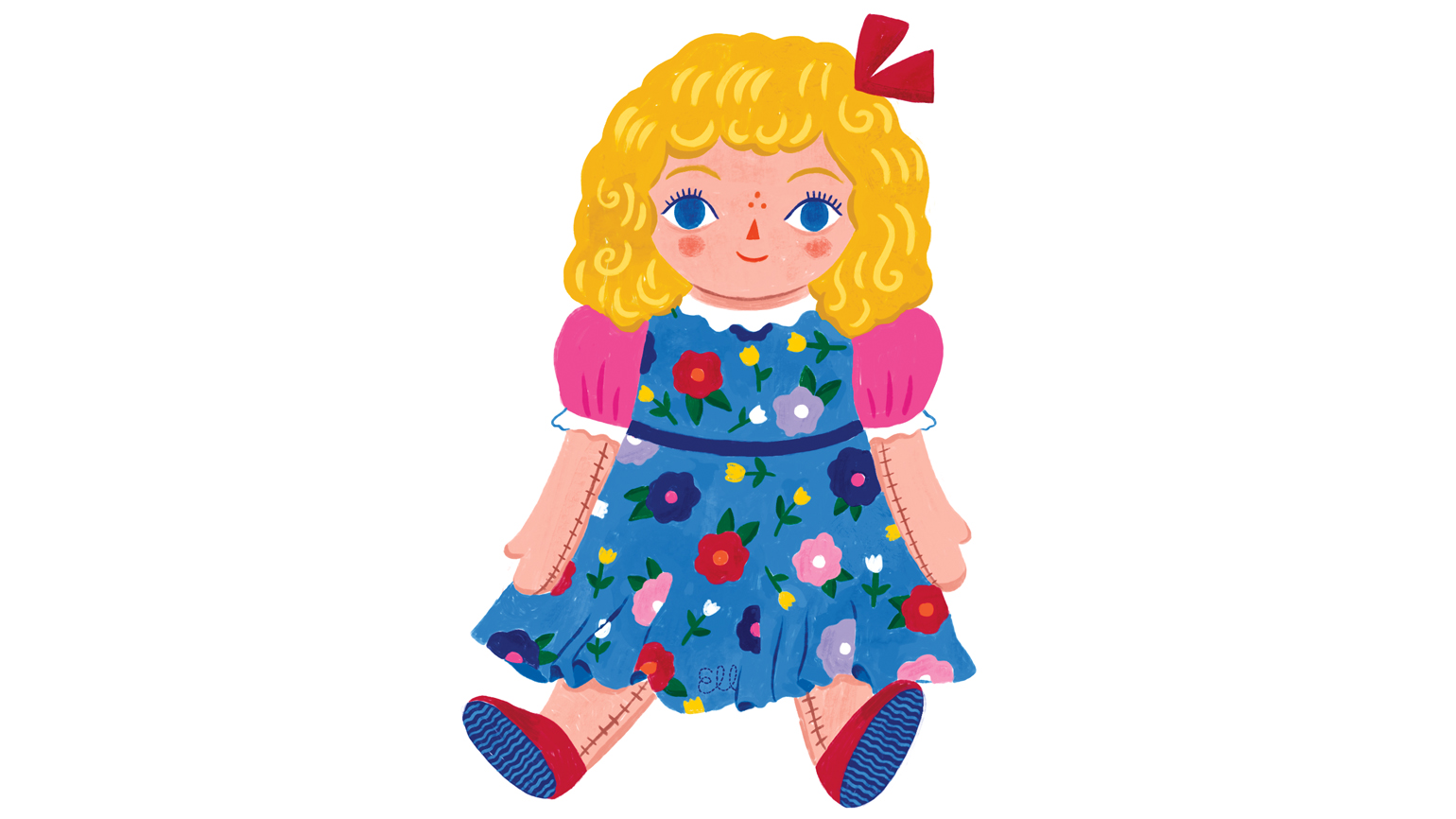
My 90-year-old mother had been drawn to the doll the moment we’d entered Goodwill. She must’ve snuck it back in when I wasn’t looking. It was a handmade fabric doll, with yellow yarn hair. Its eyes stared up at me.

“Mom, we’re not getting this doll,” I said, taking it out of the cart again. “You already have so many things to work with.”

“But I need this doll!” she said.

Mom was excited. Her only granddaughter, Ashley, was getting married. For Mom, that meant a shopping spree at Goodwill to collect supplies for making wedding decorations. Mom had always been a big crafter, even more so in recent years as poor health kept her mostly homebound. But she was determined, and I suspected there was no stopping her.

Ashley and Mom shared a special bond. For years, Mom had prayed to become a grandmother. I never had kids. It wasn’t until my younger sister, Tina, married a man with a daughter from a previous relationship that Mom’s prayers were finally answered.

Ashley was 11 years old when she joined the family. Mom was technically her step grandmother, but you’d never know it. She doted on Ashley, who affectionately called her Grandma C. The two became even closer when Ashley moved here to Wisconsin to live with her father and Tina.

So when Ashley announced her engagement, Mom was over the moon. We’d visited Goodwill multiple times in the past weeks. Mom had already collected multiple odds and ends for her project. I didn’t see where the doll fit into her plans.

We arrived at checkout, and I saw that Mom had managed to sneak the doll back into the cart. Oh well, I thought. She must have quite the idea for it.

“What are you going to do with her?” I asked on the drive home.

“You’ll see,” she said.

Sadly, Mom’s health worsened. She couldn’t work on the decorations as she’d hoped. She passed away a few months before Ashley got married. The wedding day was lovely but bittersweet. Grandma C was missed.

A year later, Ashley announced that she was expecting a baby girl. She and her husband had already picked out a name. Elliana. None of us had heard of it before. We all loved how unique it was. I couldn’t help but think of Mom. I wished she were still here. She would have loved to meet her first great-grandchild, and she would have approved of such a beautiful, unusual name.

One Saturday I went to Mom’s house to sort through her belongings. It had been slow going. More than a year had passed, and I still had boxes to go through. I walked up to the pile, pulled down a box and opened it. Right on top was a little handmade doll with yellow yarn hair. It took me a minute to place it. The doll from Goodwill!

I picked it up and noticed some embroidery near the hem of the doll’s dress. I don’t remember seeing this when we bought the doll, I thought. Mom wasn’t an embroiderer, so she hadn’t stitched it. It must’ve been there when we bought it. I smoothed the folds of the doll’s skirt and caught my breath.

Little Elliana just turned one. It was time. For her birthday, I gave her the doll. A gift from Great-Grandma C. One that was always meant for her. Because on the doll’s skirt, neatly stitched in cursive letters, is a name. Elliana.