Embrace God's truth with our new book, The Lies that Bind

Guideposts Classics: Arthur Godfrey on God’s Mysterious Gifts

Somewhere in this universe is a timeless, undeniable force. It’s stronger than granite, steel, majestic mountains towering into the sky—or nuclear fission.

Sooner or later—in strange and different manifestations—that force touches every human. Sure, some pass it off as a phenomenon that somehow cannot be reduced to exact scientific formula. To others it is the hand of the Almighty—a reminder that regardless of the grandeur of man and his accomplishments—God is still “running the show” here on earth.

Now, I want to tell you of such an experience. I have remembered it across the years and it will ring in my memory for as long as I live.

It’s about my dad—God bless him!

Let me explain a little about my dad. He was one of the most brilliant and warm persons I have ever known. A lecturer, newspaper man, magazine writer and raconteur—he was at home in any society. He was the well-rounded man I always wanted to be.

Of course, he had his failings, too. One was a disinclination towards business and finance. As a result, he went through several small fortunes and sometimes things were tough at home. That’s why I went on my own at 15. But I never blamed Dad.

All this is prelude to the point I want to make. But, if in telling it—one human, faltering on the precipice of lost faith or shaken belief—takes heart—my telling the story will have been worthwhile.

For out of it, I learned first-hand about that timeless force in this world. Now, whenever the adulation of the crowd dins in my ears… whenever temporary wealth and fame assault my senses and balance—it helps me remember that force—transcendent above the world itself.

It makes me remember how the hand of God is at work constantly and I am humble in His presence.

It was in 1923. I was stationed on board a Navy destroyer—in charge of radio communications. I had knocked around a lot since I left home. The years and life had not been too kind but the Navy had been a sanctuary, the only security I had known for a long time. One day, tired, I fell asleep in my bunk and I dreamed.

My dad—I had not seen him for years—suddenly walked into the room. He offered his hand, saying, “So long, Son.” I answered, “So long, Dad.” I said some kind of prayer. It wasn’t eloquent but it came from the heart.

I never saw him again. When I woke up, my buddies told me that at the exact time while I was asleep, the wires from shore hummed the news of my dad’s death.

Don’t tell me about science and its exact explanation of everything. Some things are bigger. God is the difference. He gets around.

For more inspiring stories, subscribe to Guideposts magazine.

Glimpses of Heaven: Sometimes Christmas Comes Early

This sacred time of year always brings back wonderful memories of Christmas past and all the joy and love wrapped up in them.

Christmas brings smiles, expressions of affection, often times held in reserve. People feel free to express the feelings deep in their hearts in ways they do not usually do throughout the year.

Community Newsletter

Get More Inspiration Delivered to Your Inbox


Christmas brings the sacred to our minds and hearts. It reminds us about the event that celebrates this time of year. We think more deeply about God’s love for us in sending us his Son as our Savior and Redeemer, so that we might spend eternity with him.

Christmas sometimes comes earlier than December 25th. My mind drifts back to a number of my terminally ill patients who knew that they would not be here on that date.

RELATED: PROOF OF HEAVEN, TRUE NEAR-DEATH EXPERIENCES

One, in particular, asked in October, “Can we put up our tree now and place the nativity scene where I can see it?” “Can we sing Christmas carols and share presents now and write cards to each other the way we always do?”

And so a beautiful Christmas tree was decorated in late October and the nativity scene was placed near his bed, where he could turn his head to ponder that event, any time he wanted to. His family sang carols and exchanged presents and shared expressions of love and affection just as they had always done, during this very holy season of the year. I do believe it was the loveliest Christmas ever for all of them. John died very soon after with a very peaceful and happy heart.


Guideposts Editor’s Choice

If you ever wondered what happens at the end of life’s journey, the awe-inspiring true accounts in Glimpses of Heaven will bring you assurance and peace. BUY NOW.

Finding Grace After a Child’s Death

Dear Trudy,

We lost our beloved Mitchell last Christmas. He took his own life after a struggle with drugs. He was just 21 years old.

God grants us all just enough of His grace to get through each day, but our family will never be the same.

I pray daily for our young people and the other families who wake up every day with the pain of losing a young person this way.


Dear Friend,

What a heartbreaking event for you and your family. There are just no words that can begin to comfort after a loss like this. At 21, Mitchell must have been in so much pain, tormented by his need for drugs and so disappointed in himself.

I think those who end their lives in this way must feel great despair and in that deep, dark place, cannot seem to find the light of hope at all. Mitchell wanted the pain to stop, to get his life in order, to be the young man he really was meant to be and the son you knew he could be.

Jesus speaks often of being with us when we are sorrowing. Trust that He is there, with you at all times. He never wanted this for Mitchell or you. You are blessed to understand His grace the way you do. Grace, as you know, is the unseen gift of His presence, especially when we do not feel Him near. In those instances, I always speak louder to Him, as if He can hear me better when I do. Of course I know that is not so, but the mother in me lets me know He understands.

As a Catholic, I often turn to Mary, Jesus’s mother, and ask her to speak to Him on my and my family’s behalf; because I remember in scripture that He never refused her anything, I know she does.

I promise to keep you in my prayers and that one day, the sun will shine for you again. Trust Him. His plan is perfect.

Blessings to you and yours,
Trudy Harris

Trudy gets so many questions and stories of end-of-life experiences from Guideposts readers, we decided to make her responses a regular feature on her blog. Her response to a letter about a grieving mother had several other parents sharing their stories as well.

Evidence of Life After Death

Lenora was dying.

She was 54 and had inoperable cancer. She lay in bed on pillows surrounded by fragrant flowers. The two of us were alone in her room.

Lenora’s family was gathered at her house. Suddenly she addressed me sternly.

“Ms. Nurse,” she said, pointing to a corner of the room, “this big angel comes and stands by my bed. Right there. He’s always smiling at me.” She fixed me with a look. “Ms. Nurse, when I see that angel, do you really think I see that angel?”

Something in Lenora’s tone told me she’d already tried convincing her family about this angel. Years before, when I first started working as a hospice nurse, I might have hesitated answering her question. I knew all too well the effects of medication and exhaustion on a dying brain.

That day, though, I knew exactly what to say. I knew, because years of working with people at the end of their lives had taught me a new, more hopeful and, I believe, more truthful understanding of death. I knew Lenora was seeing more, not less, than the rest of us.

“Yes, you do see that angel, Lenora. He’s right here in the room with you.”

I never planned to become a hospice nurse. In fact, when I entered nursing school in the 1950s, there was no such thing as hospice, the formal program of care for terminally ill people.

As a nurse I wanted to comfort people and save lives, not be there when they ended. If you’d asked me then, I’d probably have said what countless people have said to me over the years: “How depressing to deal with death every day!”

But it isn’t depressing. On the contrary, I mark the day I started work with hospice more than 20 years after I graduated nursing school as the beginning of my real education, an education in hope and joy.

I’ve learned that death is not to be feared. In God’s loving hands it’s the door to peace and everlasting life.

Discover Books with Inspiring Stories of Heaven and the Afterlife

My calling came about almost by accident. I worked for a while for a surgeon until I got married and had kids. I took a break from my career. Then my beloved father-in-law–we called him Grandfather–called one day with the news that he had pancreatic cancer.

He didn’t have long to live. He and his wife, worried about coping on their own, asked if they could stay with us. Of course.

Soon after Grandfather and Grandmother arrived, I was running errands when I saw a sign for the local hospice organization, started by a minister and a nurse named Paul Brenner and Dottie Dorion. I went in. “I don’t know exactly what you do here, but I think I need you,” I said to Dottie.

Soon, Dottie was helping care for Grandfather, ensuring he was comfortable and spiritually and emotionally prepared for what was happening to him. After he died, Dottie took me aside.

“You’re a born hospice nurse,” she said. “I watched you caring for your father-in-law. You don’t seem to have that fear of death some people have. We’d love to have you as a volunteer.”

I wasn’t sure what to say. True, I was comfortable caring for people at the end of their lives. I’d done it for my dad and for a neighbor named Mary Anne. But they were people I knew.

Dottie was telling me I had a gift. Finally I agreed to volunteer. I had the time now that the oldest of my sons was at college and my husband was traveling less for work.

At once I knew I’d found my calling. Not just because it felt good working again. Not even because I took to helping people in their last days.

I knew hospice was my calling because almost from the day I started, I met people who showed me just how thoroughly I had misunderstood death. I came to understand the joy God has prepared for his children.

Consider one of my patients, Frank, a 68-year-old father dying of lung disease. One day Frank said to me matter-of-factly, “John is here with me now. Can you see him? He’s by the chair.” He meant his son, John, who’d been killed years before in Vietnam.

Startled, I said I couldn’t see John. “What does he look like?” I asked.

“He looks wonderful in his uniform,” he said. “He says it’s time for me to go.” A few nights later Frank died in his sleep.

Then there was Hank who, the day before he died, told me he’d just had a visit from his son Shawn. Shawn was in prison and couldn’t have visited Hank in body. But Hank was adamant. “I needed to tell him I forgave him and loved him,” Hank said with perfect lucidity.

I began to see a pattern in my work. The closer my patients came to dying, the more their eyes and spirits seemed to open to a reality I only glimpsed dimly. One after another, patients recounted not just visits from absent loved ones but an extraordinary awareness of God’s presence.

Strengthen Your Faith with Free ebooks on Prayer, Bible Study and More

Sins they’d agonized over for years suddenly felt forgiven. Grievances they’d spent a lifetime nurturing vanished in a rush of reconciliation. Even unbelievers unaccountably yearned for God, questioning or arguing with me about my faith, until all at once they began praying.

Slowly it dawned on me that death is an ending only for those of us still wrapped up in the story of our own earthly lives. From the perspective of the dying, death is a strange and wonderful beginning, a threshold to some new and more beautiful world.

“Love must be like this, and it must be good,” a patient named Robin once told me. Robin was only 34. As death drew near, he focused ever more on his family gathered around him. He realized their love was a reflection of an even greater love awaiting him. The approach of death opened his eyes.

It has opened my eyes too. I remember when Grandfather was dying. One day we were sitting looking out the window. He turned to me and asked, “Who is that man standing there by the lake?”

“It’s the weeping willow tree,” I said.

“I see the tree,” he said with a smile. “I mean the man standing underneath. Who is he?” I saw no one and in those early days I had no idea what Grandfather might be referring to.

That evening, though, I told my youngest son what Grandfather had said. “Do you think he saw Jesus?” my son, who was 10, asked.

I put the same question to Grandfather at bedtime. “Yes, dear, why?” he replied. He died a few hours later.

I believe all who die yearning for God see a wondrous presence as Grandfather did, someone who welcomes them from this life into the next.

Thanks to my patients, I’ve been able to catch glimpses of that man under the willow tree, glimpses of heaven while I’m here on earth. There can be no greater hope than that.

Read more stories about heaven and the afterlife.

Embraced by God’s Love

I had the unique privilege of being interviewed by Father Ron Lengwin on KDKA radio in Pittsburgh. He makes the entire two hours just fly by; his very gentle interviewing style makes you feel as if you are sitting with him in his study or on a pew at the back of his church.

We discussed my second book, More Glimpses of Heaven, and where and how we discover God’s presence through the people he places around us, especially when we are close to death and he is calling us home.

He discussed one story after another, asking questions and pointing out the face and heart of Jesus where he found them. He spoke of the people in the book; he was moved by the new nurse who placed one long-stem American Beauty rose on my sister Maureen’s heart after she died. The nurse had no way of knowing the red rose had been my parents’ symbol of love for each other and for Maureen all their lives.

He spoke of the love a son, who was dying of AIDS at the time, lavished on his mother as she too was near death. He pointed out the unconditional love she had for her son and how much like Jesus she was. We have only to see clearly to recognize his face and heart in so many circumstances of life.

Father Lengwin invited callers to comment or share a story during the interview. One young man called to say he worked in a factory with high levels of electricity. An accident occurred during which 484 volts of electricity shot through his body and he was declared dead at the scene. He remembered a warm, pulsating sensation throughout his body and after a long period of time he was revived by a rescue squad doing CPR and woke up looking at the enormous clouds above him.

He was hospitalized for one month and awakened with the realization that he had lost his memory for a while. A very insightful nurse asked him if he’d had any visions or experiences when the accident happened. He said he distinctly remembered waking up and being engulfed with the feeling of total love and peace—being utterly embraced by the warmth of God’s love. When he recuperated he spoke at many churches and gatherings, telling everyone who would listen, “There really is a God, and he loves you.” He said his life would never be the same.

Dr. Raymond Moody: The Secrets of the Afterlife

When did you first become fascinated by the afterlife?
When I was growing up, in Georgia, there were people all around me who believed in the afterlife. But my parents regarded religion with a certain amount of bemusement. They weren’t atheists, they were just not interested.

I went to the University of Virginia in 1962 and decided to study philosophy. A lot of the great early philosophers, like Plato, were interested in cases of people who had supposedly died and come back.

In 1965, I met Dr. George Ritchie, a professor of psychiatry who had once been pronounced dead from pneumonia. His heart wasn’t beating for at least nine minutes. During that time, he underwent this amazing experience in which he saw different levels of eternity with Christ. Whether his experience was real or not, George absolutely was convinced. His goodness and solidity just came through.

READ MORE: SURPRISING FACTS ABOUT NEAR-DEATH EXPERIENCES

How do you define a near-death experience?
It’s a patterned experience people have after dying or almost dying. No two NDEs are exactly the same, but there are striking commonalities. Most people say they seem to leave their bodies and watch from above as their body is resuscitated. They pass down a dark tunnel and come out into a brilliant, warm and loving light.

They meet deceased friends and loved ones in spirit form. And they undergo a panoramic or holographic review of their lives in which they witness everything they’ve done from an external point of view. Often, this life review happens in the presence of a being of love and light.

Couldn’t the similarities of NDEs be explained by cultural influences?
I’ve gone to China, India, Japan, Russia, Africa, North and South America, and everywhere people tell me the same basic things. The accounts aren’t different, just the religious imagery.

People borrow imagery from their religious traditions to explain what they’ve experienced, but they’ll usually say, “I have to use the words from my own tradition because they’re the only ones I’ve got.”

Do you have to be religious to experience an NDE?
No, absolutely not. I have had lots of people tell me that, prior to having an NDE, they had no religious background. But they came back with some kind of assurance that there is a world beyond this one and that there is a God. It changes their lives dramatically. They come back and say that the most important thing we can do is to learn how to love. They have no more fear of death. Death is actually a transition.

What objections do detractors of NDEs raise?
Contemporary criticism of the idea of an afterlife is that it is unintelligible. To say that there’s a life after death is to say that there is life after the final irreversible sensation of life, which is a contradiction in logic. So we need a new set of rational principles for thinking about it.

READ MORE: NDEs—PROOF OF LIFE AFTER DEATH

What we can do is shift to an alternative set of rules that allows us to think about new ways to verify the afterlife. For example, it’s very common that people in their last days talk nonsense. People will say, “I knew my husband was talking nonsense. Yet, in the back of my mind, I somehow knew that it was important.”

If the mind shifted from one type of reality to some other framework of existence, and then came back from that, then of course people would talk nonsense! Now we have a method of actually scrutinizing the structure of that language and creating a classification system for types of nonsense.

It seems kind of ridiculous—“types of nonsense.” But the nonsense spoken by the dying falls into specific patterns; it’s not random. I’ve catalogued over 70 different types. We have the ability to actually follow the mind right through as it crosses into some other state of existence.

Critics say that there’s no scientific proof for NDEs, only stories.
Life after death is not a scientific question. It’s a philosophical and religious question. It may well be that sometime in the future we will have proof through science. But the fact that we don’t yet doesn’t mean that we can’t accept it on rational grounds. People just get so swept away by that word scientific.

Could the process of resuscitation or another physical process be causing NDEs?
What I can’t figure out is this—if it’s something physical, then why should bystanders sometimes share in a person’s NDE? This surgeon in Italy, for instance, told me that he was doing an elective operation on a fairly young man in good health. The patient had a cardiac arrest and the doctor was unable to resuscitate him. All of a sudden, the doors of the operating room were flung open and there was this woman.

She said, “I was out in the waiting room and my husband came to me. He told me to tell you that he’s not dead.” The doctor resumed the resuscitation and the patient’s heart started beating again. The first thing the patient said was, “I was up above my body and I kept trying to tell you I wasn’t dead, but you couldn’t hear me. So I told my wife.”

I hear from people all the time about how they participate in someone else’s NDE—that indicates that the experience is not due to oxygen deprivation to the brain.

Some people have admitted to lying about having an NDE. How can we tell who’s telling the truth?
There’s something different about people who’ve actually had NDEs. They have a serenity to them. With imposters, it’s all about “me, me, me.” Whereas someone who’s really been through this, it awakens a kind of modesty in them. A willingness to acknowledge that there’s a lot they don’t know.

In 1991, you attempted suicide and came close to death. What happened?
I had an autoimmune disease—one in which your body destroys your thyroid tissues. A typical symptom is suicidal ideations. Never did I think about having a near-death experience. I was just thinking about how unbearable the world seemed.

I didn’t have a life review or see my body from a distance. Just more of a sense that I was beginning to be drawn over into some different framework. It felt like I got close enough to see the city-limits sign. This world that we’re in seemed very dreamlike. I felt like I was waking up. Like when you look at something on a high-definition TV set—it looks more real than real.

One man I met who had an NDE after a suicide attempt compared it to walking out before the end of a movie—he was glad he survived because he needed to know how the movie turned out. That’s the attitude I’ve developed.

READ MORE: MY ANGELIC NEAR-DEATH EXPERIENCE

You wrote Life After Life at age 31. At 72, do you think more about your own mortality?
Oh, yes. Both my parents died at 72, so you have to think about things, especially when you have kids. I’m focusing on my kids and getting everything knitted together in this interesting existence that I’m in now. It’s very nice to be in the home stretch. It’s just fascinating to watch every little wrinkle form.

I’m ready to be out of here when God calls. My prayer is, Guide me gently through a painless and peaceful death on your schedule. That’s what I always say.

What are you still—excuse me—dying to find out about the afterlife?
You can’t really imagine what the afterlife is like until you get there, people tell me. So I’m not spending any time on that. I like to say that I’m an expert on the unknown and a specialist in guesswork. When I first looked through a telescope, when I was seven years old, I realized I’m never going to know much of anything. I don’t know that my curiosity will ever be satisfied. It’s just so much fun to keep on inquiring.

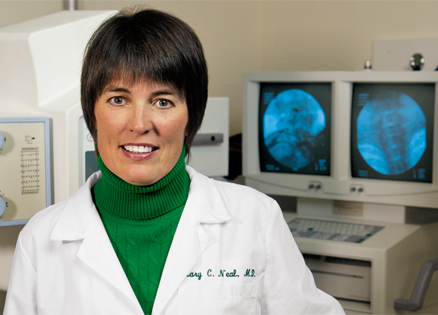
Dr. Mary C. Neal: A Sneak Peek of Heaven

I am a doctor, well versed in medical science and accustomed to fact-based explanations. Perhaps that’s why, on one level at least, it made me a bit uneasy when patients shared their faith despite my own strong Christian belief.

Maybe it was because I wondered if science and spirituality were truly compatible. I’d try to be open to what my patients said, although I confess I didn’t always understand.

I remember, early in my medical training, treating a 14-year-old girl who was dying. Death, after all, is a definitive medical fact. There’s nothing more scientific than death.

“Don’t be sad,” she told me. “My angels are with me. My parents need to let me go. Please be happy.” I desperately tried to believe her, but I still couldn’t understand the loss of this beautiful child.

Not until one day in the high mountains of Chile when I died myself, not until then did I finally see the light.

Discover Books with Inspiring Stories of Heaven and the Afterlife

My husband, Bill, and I had gone to Chile for a white-water kayaking vacation. Bill, like me, is an orthopedic surgeon and we share a practice, along with a love of outdoor adventure.

We had paddled on some of the roughest rivers in the United States and this was a chance to try our stuff on the wild, untamed waters of the Chilean Andes. We left our four young children at home with our longtime babysitter and traveled to one of the remotest corners of the globe.

Snow-fed rivers tumbled down volcanic slopes, with challenging 10- and 20- foot drops, perfect for us. Our guides were our good friends, Tom and Debbi Long, along with their sons. They’d been hosting white-water trips to Chile for years and knew exactly where to go and what we’d face.

Still, that morning, I had an uneasy feeling. Maybe it was because Bill was going to take the day off—he had some back pain that was bothering him. (You’d think that with both of us in the business we could avoid that!)

Or maybe it was because a new, less-experienced group of boaters was joining us that day. I just had this strange, shadowy feeling.

“Sure I can’t convince you?” I asked Bill one last time. “I can fix whatever’s ailing you.”

Bill chuckled. “I’ll take the truck and meet you at the takeout,” he said. “I’ll find a nice place to read and enjoy the scenery.” The views of thick subtropical forests and snow-covered peaks were breathtaking. Civilization was far away. I almost envied him his peace and quiet.

“Okay,” I said. “Give me your paddling jacket.” His was bright red, unlike my drab one. At least he could spot me easily from shore, and I’d have a part of him with me.

He drove us to the put-in. I slipped on his jacket and kissed him goodbye. Then I joined the rest of the group and we stepped into our boats. “We’ll stop before we hit our first big drop,” Tom said.

I put my feet against the foot braces and tightened the spray skirt around my waist. It would keep water out of the boat and my lower half dry. If a kayaker gets into trouble she can pull the loop, or “pull the chute” as we say, to release the spray skirt and escape the boat quickly.

Out of the corner of my eye I watched the new kayakers. One in particular wasn’t so sure of herself. I steered around her. We paddled downriver, stopping at the eddy above the falls. There was a narrow channel to the right and a larger main channel to the left.

“We’ll take the smaller channel,” Tom called over the water’s roar. “It’s more predictable.”

Good move, I thought, remembering the inexperienced kayaker. The left channel looked pretty hairy.

The first boater paddled down the channel on the right. I followed. The current moved swiftly. We headed forward. Suddenly her boat turned at an angle. She was being whipped sideways by the current. Then her boat got lodged between two boulders.

She jumped out and waded to shore, leaving her kayak on the rocks.

FIND HOPE, INSPIRATION, AND MORE IN OUR FREE EBOOKS

I’m going to have to go left. There was no stopping my momentum. I took a deep breath and plunged 15, 20 feet down the falls. My boat dove straight down. The force of the water was crushing. It ripped the paddle from my hands.

I smashed into some submerged rocks. My crazy dive stopped. Still upright, I was pinned. Trapped underwater. I couldn’t paddle. Couldn’t move. The waterfall was so strong it held me down.

My arms flopped in the vicious current. No one would ever see me in the turbulence, even with Bill’s blazing red jacket.

Pull the chute! I screamed silently. I grasped for the loop. Couldn’t reach it. The force against my arms was too strong. I pushed against the foot braces. Nothing. I tried to jiggle the boat. I desperately raised my head. Fresh air was only a couple of feet above me but I couldn’t reach it.

It was no use. I was stuck. My kayak, my coffin. You’re not in control, I told myself. Just let go.

I thought of Bill and our four kids, our family, our orthopedic practice. God, I prayed, I know you love me and have a plan for me. Thy will be done.

It was precisely at that instant something shifted in me, like a spiritual jolt. A great calm took me. It was like being a baby rocked and caressed in a mother’s arms. I had this absolutely certain sense that everything would be okay, no matter what happened.

I was overwhelmed by this peace. It completely transcended my panic and dread. I felt myself stop struggling. What about Bill and the children? Would they be all right? Could they survive without me? But that profound reassurance eased all my doubts.

“Okay, God,” I said. “Hurry up.”

READ MORE: REVEALING HEAVEN

At once the wild current grabbed me, jerking me out of my kayak. My knees folded back under me. I was dragged and battered by the river. I observed it clinically, dispassionately, as though I was my own patient: “Your knee bones just broke… You just tore your ligaments…”

And then the strangest thing yet— with something I can only describe as a pop my soul separated from my body.

I shot above the river into another realm. Fifteen or 20 human spirits rushed forward to welcome me. We hugged and danced. I could not identify them but I knew that I knew them, even with their outlines blurred. They were sent by God to guide me.

We began to glide along a path. We were going home. My eternal home. My companions could barely contain their joy. Joy at the instant of death. A feeling of absolute love pierced me, a feeling greater and so different from anything I’d ever known.

We were bathed in a light brighter than I had ever seen. I turned and looked down. Below me I glimpsed my body on the riverbank, the shell of an old friend.

Tom and his sons were beside my body. “Breathe, Mary, breathe!” they screamed, giving me CPR. I loved them and didn’t want them to be sad. You could go back for just one breath, I thought. At that, I flew down and took a breath, then instantly went back to my companions.

We traveled a path that led to a great hall, larger and more beautiful than anything I could conceive of, with an immense dome and a central arch built with shimmering gold blocks. I felt my soul gravitate toward the entrance, absorbed by the ever-present radiance.

Heaven. Irresistible paradise. Eternal home. I was flooded with an intense longing to be reunited with God.

Still Tom and his sons kept beckoning. Each time they begged me to take a breath I felt obligated to return quickly to my body and take another breath before continuing my journey. I grew impatient. I need to keep traveling. Let me go.

I understood everything my spiritual companions told me, even though they didn’t speak. All our thoughts simply merged. We were right at the archway with the golden bricks. Suddenly they turned to me.

“Not yet,” they said. “It’s not your time to enter. You have more to do on earth.” Sorrow filled me, as powerful as the great joy had been. I knew I had to go back, back to life. Yet I knew I would also return. Someday. Just not now.

I opened my eyes to see the faces of the Longs staring at me. They were amazed to see me conscious. I’d been “dead” for over 11 minutes. I couldn’t move my legs and assumed I’d broken my back.

The trip up the hillside and my reunion with Bill was filled with one miracle after another: like the mysterious ambulance that appeared out of nowhere in this remote wilderness and the helpers who assisted us, then disappeared.

Our trip back to the States was an incredible journey, an odyssey. There, I recovered slowly from my injuries (fortunately I diagnosed myself wrong; I did not break my back, thank God). But it’s taken even more time to absorb my experience.

In the 13 years since, I have seen how my work as a mom, a wife and a doctor has not been over. My most important job is to tell this story.

Perhaps it was entrusted to me because I am a doctor and I think in terms of facts and objective knowledge. But there is another world to which we’re called and it is the most true and beautiful we will ever experience. Our eternal home awaits us.

For more inspiring stories, subscribe to Guideposts magazine.

Download your FREE ebook, Messages from the Hereafter: 5 Inspiring Stories Offering Proof of the Afterlife


Do Our Pets Go to Heaven?

A few years back I wrote an article for Guideposts on a subject I knew readers were interested in: Do our beloved pets join us in heaven?

It’s a comforting notion, but I wanted to see if there was theological justification for it. Your response was an overwhelming yes.

The topic, I realized, deserved more than could fit into a single article. It deserved a whole book. Do animals have souls? Where do those souls go when they leave this earth? Will our pets be there to greet us when our own time comes?

And what happens to that unique, God-given personality we miss so much when a beloved pet dies?

Most of my article focused on what the Bible says on these subjects. But the Bible was only the beginning.

I eventually left Guideposts to work on the book full-time. Instead of spending my days in an office filled with people, I found myself alone with my computer.

Or rather, almost alone. I did have one steady companion, my schipperke Mercury. Schipperkes are smart, hyper-alert dogs. Once, I’d watched in astonishment as Mercury leapt up and caught a sparrow in mid-flight (don’t worry, I took the startled bird and released it unharmed).

But those days were long gone. Mercury’s glossy black coat was dull now and fringed with white, and his sight was so bad that when we visited friends with cats, he tottered right past them.

Often, in the midst of writing, I’d look down at Mercury lying at my feet and wonder how I’d cope when his time came.

Most of the letters I received in response to my Guideposts piece came from people who wanted to tell me how deeply they had grieved the loss of a pet. A surprising number had received assurance that came in a dream, a heavenly confirmation that their animal companions lived on.

“I was crushed,” ran a typical letter, “when my 15-year-old white Persian Mindy died in my arms. I’m a widow and my kids are grown. Mindy was all I had. I didn’t know if I could continue without her.

“One night a week or so after Mindy left me, I had an unbelievably vivid dream. Mindy was curled in my arms just as she always used to be. She was young and healthy again, her coat bright and shiny, her big yellow eyes clear and sharp.

“She looked up at me, and in those diamond eyes of hers I saw something I’ll never forget. I’m still here, she was telling me. Even though you can’t see me or touch me anymore, my spirit is with youand always will be.

“The dream was so vivid that it jolted me awake. I sensed something in the bedroom with me. Right away I knew what it was. Mindy’s spirit. I lay there quietly, thanking God for what he’d shown me. Finally, I went back to sleep.

“The next morning the feeling in the room was gone, but my view of the world had changed–for good.”

I did a little research into this phenomenon and discovered that these dreams usually come to us in what is technically known as the hypnagogic state. Hypnagogia occurs when we are in that strange place between waking and sleep, where we are neither fully conscious nor unconscious.

The word “hypnagogia” comes from combining the Greek words for “sleep” (hypnos) and for “conductor” (agogeus).

The third-century A.D. Greek philosopher Iamblichus called the visions that occur in this state “god-sent,” and even Aristotle–a philosopher not known for his flights of otherworldly fancy–wrote that “in the moment of awakening” a man may “surprise the images which present themselves to him in sleep.”

Can we–or, perhaps more important, should we–trust the messages we receive in the hypnagogic state? From Jacob’s vision of the ladder of angels in Genesis to the prophecy in Acts that “your young men shall see visions, your old men shall dream dreams,” the Bible is rich with suggestions that dreams can be a genuine conduit for God’s word.

As the biblical scholar Walter Brueggemann notes, “The ancients dared to imagine that this unbidden communication is one venue in which the holy purposes of God, perplexing and unreasonable as they might be, come to us.”

Most of us experience the hypnagogic state twice a day–in the morning when we exit the world of sleep and in the evening when we enter it again. At those moments, the doors of our mind are open, and evidence of a larger world can creep into our consciousness before the everyday waking world comes along and crowds it out.

That’s not to say every dream we have is a message from beyond. But some dreams unmistakably are. Some dreams are simply different from others, and when we have them we know it.

These dreams, the philosopher and religious scholar Titus Burckhardt writes, “mostly occur at dawn and continue until waking” and “are accompanied by an irrefutable feeling of objectivity. These are the dreams that come from the angel.”

In the classic hypnagogic pet dream, a bereaved pet owner sees her ill and aged animal young and vigorous again, in a beautiful setting–often, a green field alive with flowers.

People typically awake from these dreams suffused with a feeling of well-being. They know with certainty that their pets are okay, and that they will see them again one day.

I finished work on my book The Divine Life of Animals last fall. Then, just before Christmas, the moment I’d long known was coming arrived. Mercury and I were at my sister’s house for the holidays.

Two days into our visit he took a sudden turn for the worse. A vet told us that Mercury was very close to death, and administered a shot to end his pain.

I laid Mercury to rest in my sister’s backyard with his head facing east–the direction of sunrise and, I knew from my book research, the direction humans have buried their dead since prehistoric times.

Going to sleep that night, I wondered if, after all the reading I’d done about the dreams that grieving pet owners experience, I might have one of my own.

I didn’t. But later that morning, I walked out to Mercury’s resting place and something occurred to me. Often during those last two years of Mercury’s life, when I was working on my book, I’d hear whimpering.

I’d look down at Mercury, asleep in his bed, and see his paws moving. Tentatively, then excitedly, he would kick his legs and utter little barks.

Some of those dreams didn’t seem all that pleasant; maybe they were the canine equivalent of nightmares. In other dreams, though, Mercury seemed quite happy. So happy, in fact, that I would take care not to wake him and rob him of the joy of being able to run and gambol the way he’d loved to when he was younger.

What are you seeing? I asked him silently as I watched his paws, gray with age, kick and buck as if he were a pup chasing birds. But even as I asked, I knew the answer.

Mercury was getting a foretaste of a place where he truly would run and play again. A place we can never see with complete clarity here on earth, but which certain dreams–the dreams that come “from the angel”–give us a wondrous and reassuring glimpse.

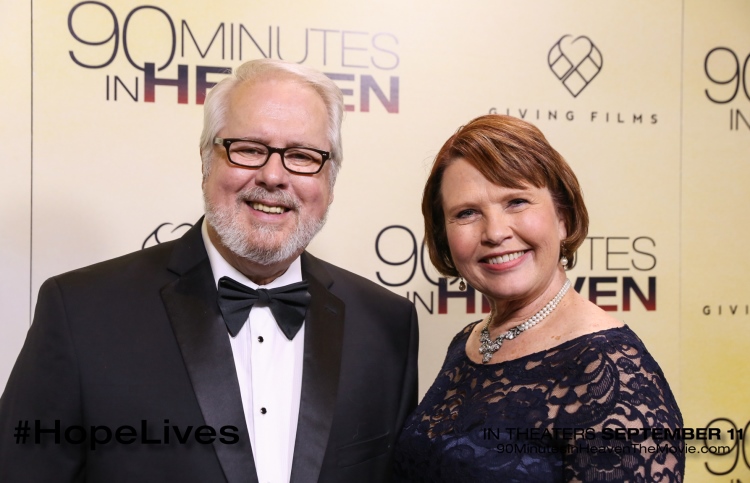
Don Piper on ’90 Minutes in Heaven’

Most people who know me know I died on January 18, 1989, went to heaven, and was prayed back to earth about ninety minutes later; however, many don’t know the rest of the story—a part I didn’t know until more than a year afterward. One powerful element came out when I ate at a Chinese restaurant with Dick and Anita Onerecker.

We had just come from church, where Dick served as the senior pastor. They had invited me to preach. My first encounter with Dick and Anita had been in the piney woods of East Texas. They were part of a leadership team for a church growth conference that ended on a Wednesday.

On a cold, rain-slicked rural road a few miles from the gates of the retreat center, a tractor-trailer truck crossed the center stripe of the two-lane highway on a bridge over Lake Livingston, and hit me head-on. I was killed instantly. The report stated, “Dead on the scene,” and they summoned the coroner. Although the accident involved three cars, there were no serious injuries to the other people.

Discover Books with Inspiring Stories of Heaven and the Afterlife

Because of the accident, traffic backed up in both directions. Dick and Anita also headed home from the conference. They had stopped for take-out coffee, and were half-a-mile from the accident. With so many cars backed up, they left their car and walked to the scene of the accident to see if they could be of assistance. Anita gave her hot coffee to an elderly man in one of the other accident vehicles. Dick sought out the emergency medical technicians. After Dick identified himself, one EMT said, “The man in the red car is dead; several people are badly shaken up, but not seriously hurt.”

Weeks after the accident, Dick told me, “The Lord spoke to me in a clear voice: ‘Pray for the man in the red car.’ ”

When Dick asked permission to get under the tarp that now covered my red Escort, an EMT refused. “The demolished car is too gruesome.” Dick persisted and the man relented. Despite the misty rain, Dick pulled back the tarp and crawled inside my Escort. He found my horribly mangled body slumped in the front seat. He prayed desperately for me, not knowing at that time for whom he was praying.

Even my intimate friends would not have recognized me. Both legs were crushed, one was severed. So was my left arm. My chest was impaled by the steering wheel. In addition to obvious wounds, I was bleeding from the ears and eyes. My best recollection of what I heard, and the one I related to Dick’s church, was that Dick had taken hold of my only intact limb, my right hand, and prayed fervently and urgently. He prayed that I would live and be delivered from internal injuries. He paused a few times and sang hymns.

At one point he began singing, “What a Friend We Have in Jesus.” I started to sing with Dick. At the shock of hearing my singing with him, he scurried from under the tarp and yelled, “The man is alive!” Once again, he crawled under the tarp and continued to pray— with even more intensity. We continued to sing while firefighters, now on the scene, tried to extricate me. I was unaware of the activity, so I can only report what Dick and others told me. I had been driving along Texas Highway 19 on my way to lead a Wednesday prayer service at our church in Alvin, a suburb of Houston.

On the bridge above Lake Livingston, a huge truck came at me. In my next moment of consciousness I was in the darkness, singing hymns along with a voice I didn’t recognize. The powerful hand that gripped mine infused me with strength, encouragement, and the will to survive. More than a year passed after my ordeal, and most of that time I was in a hospital bed and underwent sixteen surgeries (more would follow). Excruciating pain filled my body constantly. Because of God’s grace I slowly recovered and within a year I was able to preach at Dick’s church.

Find Hope, Inspiration, and More in our Free eBooks

I wore heavy leg braces and was still in agony, but I was alive and able to stand at the pulpit of the man who had prayed me back to life. I told Dick’s congregation about their pastor’s fervent prayers, our hymn singing in the wrecked car, and his strong hand that supported me and infused me with courage to hold on. Many people cried that day—and tears came to my own eyes as I relived that experience.

While we ate lunch after the worship service, Anita smiled and leaned toward me. “I need to correct something you said in the pul- pit this morning.” I returned her smile but I thought, that’s exactly what every preacher doesn’t want to hear. “I enjoyed hearing your testimony this morning. I know it wasn’t easy for you—” “No, it wasn’t.”  “There’s just one thing. The part where you talked about Dick holding your hand and praying for you—” I nodded. “That didn’t happen.” “I have many gaps in my memory, Anita, and some of my facts come from those who were there. But of one thing I am absolutely positive. I vividly remember holding his hand. That’s what inspired me to hold on. I remember—” “You were holding a hand as Dick prayed.” She peered intently at me. “But it wasn’t Dick’s hand.” I don’t know if I protested or stared silently. “But how—” “No one could have reached your hand while you were trapped inside your car. You were twisted so far to the right that your right hand was actually on the floor of the passenger’s side.” She paused and I nodded. “Dick reached through the back window of your car.” “That’s correct and—” “Dick placed his right arm between the front seats and your right shoulder—your unbroken arm.” “That’s right—” “Your right hand was beyond Dick’s reach.”

I stared at her uncomprehendingly. “But I remember the hand—it was so powerful. I know a hand grasped mine. I drew enormous strength and help from that hand. It gave me the power to hang on.” “There was a hand all right.” She paused and added, “But it wasn’t Dick’s.”

“If it wasn’t Dick’s hand, whose hand was it?” “I believe you know.” Just then I understood. God sent one of His ministering spirits—an angel—not only to hold my hand but also to infuse me with a will to live. There had been three of us inside that demolished car. It had been a heavenly trio.

Death and the Face of Evil

We always hope and pray that our loved ones will die well and in peace. While that occurs most of the time, there are occasions when that is not the case. Although somewhat unique in nature, the following describes an experience in which darkness rather than light appears. I share this daughter’s letter in the hope that it brings comfort to others in similar situations.

Dear Trudy,

I have a question for you that is not as positive as those normally associated with your column. My dad died of lung cancer and during his life he was far from a nice person. We had a very rocky relationship but, in the end, I tried to help him the best I could.

During the week I cared for him at home, he attempted to break everything in his room. I had to take out everything but the bed. He tried to break out the windows and escape, he yelled incessantly, he had delusions and visions. He was so destructive that I had to lock him in his room. I feared going in to feed him, give him water or his morphine. When I did, I’d open the door slowly to peek in and make sure he hadn’t made it over to the door to wait for me, though by this time, he’d lost the use of his legs.

One day I cracked open the door and peeked in. The room was dimly lit and he lay staring at me from the bed with a sinister smile on his face, glowing eyes, saying something to the effect of, “I see you trying to come get me.” Then suddenly I saw what looked like one of those stone garden gargoyle statues leap up from his body, in ghost or spirit form, and fly through the door I had open.

I’ve never heard of anything like this. I have relived this moment a few times since his death; it is always scary. The glow was not like the kind people speak of when someone dies gently and well. It was dark and scary and very real. I do hope to hear from you.

Name Withheld


I am so sorry to hear of your distressing experience with your dad’s death. While it is not very common, I have heard about and seen such things before.

I had in my care a man who, by his own admission, had lived a very evil life. One day while I was visiting with him, he threw his head back, after making a very obscene gesture with his mouth, and let out a guttural scream that was not of this world. At the very same moment, a hard, ice cold wind blew open the front door, in the middle of a warm spring evening. I was with him as he died and I must admit I have never seen a more hellacious struggle between good and evil in my life. While visiting my pastor later that evening, he explained to me that the struggle for a soul at the hour of death was something very real.

On another occasion, I saw a very ugly gargoyle face hang between two beds, and the look of glowing red eyes has never left me. We like to think that the concept of a devil is old-fashioned and that evil is not a genuine entity. I am sorry to say that both exist and that nothing would make the devil happier than winning a soul away from God. We must pray hard for a person who is in such distress and rely on the all-powerful, compassionate and loving heart of God to rescue them.

Trudy

Dad’s Test

My father had always been an astute observer of human character. Within seconds of meeting someone, he could sum up their strengths and flaws.

It was always a challenge to see if any of my boyfriends could pass Dad’s test. None did. Dad was always right—they didn’t pass my test either. After Dad died, I wondered how I’d figure it out on my own.

That’s when Jack arrived on the scene. He was different from any other guy I’d dated. He could sit for hours on the piano bench with my mother, discussing obscure composers. My brother Rick loudly announced that Jack wasn’t a turkey like the other guys I’d brought home. My sister, Denise, belly-laughed with him over old Danny Kaye films. And Jack was great with my brother Chuck, who has a mental disability.

One time, Chuck put his greasy hands, just dislodged from a cheeseburger, on Jack’s shoulders, kissed his cheek with ketchup-covered lips and called him by the wrong name, shouting, “Ah, Jeff, I luv ya!” Jack didn’t miss a beat. “I love you too, George!” Jack passed my family’s test. But what about Dad’s?

Then came the weekend of my mother’s birthday. Jack was coming down from his home in Milwaukee to Chicago. The day he was supposed to drive, I got a call: “Don’t worry,” he said, “but I’ve been in an accident.” His car had stalled; when he pulled over, another car careened into it. “I’m fine—but I need you to pick me up.”

Thank God he’s okay, I thought, as I drove up to Milwaukee. When I got there, we rushed to a flower shop for something for Mom. “How about gardenias?” Jack said, pointing out a beautiful white corsage.

“You never see those this time of year,” I said. The florist put the corsage in a box.

The entire ride, Jack was unusually quiet. “Are you all right?” I asked. We were pulling onto my mother’s street.

“I’ve been doing a lot of thinking,” he said. “I might be moving.” Moving? When was he going to tell me this? After he packed? Then he added, “Moving in with you.” I nearly put the car on the sidewalk.

“What?” I asked.

“I think we should get married,” he said. He told me he’d planned his proposal for a fancy restaurant, but after the accident, he decided to do it right away.

“Yes,” I whispered. We both sat stunned, tears running down our cheeks, unable to speak. I’d never known such a tender moment. If only Dad were here to give his final approval.

“Oh, let’s just go inside.” Jack laughed. We got out of the car and he walked up the driveway, carrying the corsage. My mother opened the door.

“Happy Birthday!” we shouted. Jack thrust the box at her. She opened it up. Suddenly, her eyes brimmed with tears. Jack and I looked at each other.

“Mom, what’s wrong?” I asked.

“I’m sorry,” she said, wiping her eyes. “This is only the second gardenia corsage I’ve ever received. I was given one years ago, long before you kids were born.”

“From who?” I asked.

“Your father,” Mom said. “He gave me one right before we were engaged.” My eyes locked on Jack’s as I blinked away tears.

Dad’s test? I knew Jack had passed.

Ben Breedlove and the Angels

This week’s contribution was written by Guideposts senior editor Celeste McCauley.

It’s not so out of the ordinary that 18-year-old Ben Breedlove would make his own video and post it on YouTube. After all, he had shot many already, a series of segments dishing out advice to teens.

But on Sunday, December 18, the high school senior from Austin, Texas, was inspired to shoot something different—a video with no sound, just flashcards telling his story. No one could have predicted it would be so prescient.

Ben was battling a life-threatening condition called hypertrophic cardiomyopathy, a thickening of the heart muscle. He had had three heart attacks already (the first at age 4) and got a pacemaker implanted in 2009. In Ben’s new video, called This Is My Story,his handwritten notecards said how proud he was of everything he’d done, about how he cheated death, and described his own remarkable near-death experience.

Unbeknownst to his friends and family, he put the video up on a new YouTube page. Exactly a week later, on Christmas Day, Ben suffered another heart attack. While filming his little brother jumping on his new trampoline, he lay down on the grass and never woke up. Word spread about his passing. That’s when Ben’s friends found his video and shared it with his teen sister, Ally, who in turn showed it to her heartbroken family that night. They were buoyed by it. They felt Ben was truly ready to say goodbye, and this video was a way of helping them get over the pain.

On the last flashcard, he asked, “Do you believe in angels?” He then on the next card, he wrote, “I do.” Was there ever any doubt?

Ben’s video has received more than 6 million hits and counting. If you haven’t seen it yet, take a look.