Embrace God's truth with our new book, The Lies that Bind

Being Here After Being in Heaven

I am often asked if dying and coming back influenced my decision to get ordained. The answer is yes and no. In some ways, I have always been on this path. I’ve had a strong interior spiritual call since I was a young boy. I’m sort of an accidental clergy member; I did not intend to remain at the pulpit, but I kept finding work that had to be done, so I did it.

Also, the intensity of my spirituality increased dramatically after my near-death experience, and I knew of no other way I could get away with spending hours each day in yoga and meditation and call it work. The work of ministry has allowed me the honor of sitting and conversing with many who are dying, and many who have died. And I feel better equipped to help because of my experience.

The best part of my ministry job has always been sitting with the dying—talking, praying, and simply being with them, being real, authentic, and truthful. I’ve found that, when I’ve shared my story, even if very briefly, expressing my assurance of eternal life, my hope, my knowing that I am known, has helped ease hundreds into death, and into Love-Hope-Joy-Beauty-Truth-Charity- Kindness-Compassion-Love-Patience-Beauty-Love.

I have been an unconventional pastor because I am an unconventional person, one who has at times run afoul of certain parishioners who had their own ideas of clerical propriety and dignity. I have never been good at either of those things. Inevitably, some of these parishioners have become gravely ill, and—whether they like it or not, whether I liked them or not—it has been and will be my duty to visit them and help their passage across. Once someone reaches the stage where he or she sees death coming, we have become the fastest of friends.

BUY PETER’S BOOK, HEAVEN IS BEAUTIFUL

I said it was an honor to sit with the dying, and it has been, every time. Part of this is because people often become more honest in their deaths; but more so, as the time nears, it is because the veil that hides heaven from the eyes of humans sometimes begins to lift. In the old days, when Auntie Mabel was dying, she might say, “I see an angel” or “I see my husband (or my mother).” The attendant might say, “No, dear. There is no angel here,” or “No, dear. Your mother (or your husband) has been dead for ten years. She (or he) is not here.”

These days, nurses, doctors, and clergy just let those who are dying express what they believe they are seeing, even if no one else can see it. Who is to say that what they see is not real, and that an angel or a deceased family member is not in the room? The veil between heaven and earth is lifted more often than we know.

For weeks after a funeral, it has been my job to visit the grieving mother, widow, husband, or child. Often, in hushed tones, they would lean across the kitchen table and say words such as these: “Peter, this is going to sound crazy. This morning when I came down for breakfast, there was Tom, standing right there by the sink with his back to me. I was shocked. He turned around, looked me in the eyes, and said, ‘Don’t worry, dear. I am okay. I’ll see you again.’ He smiled and then vanished.”

A hundred times or more, I’ve heard such stories from the grieving. Maybe you have a similar story or have heard one like it. If the afterlife is real, and I am here to tell you that it is, then why wouldn’t your loved one want to tell you that she or he is okay and all is well?

If you are dying right now, or fear dying, or love someone who is dying, then please, let me tell you this: You are not your body. You are your soul. Your soul inhabits your body. When you go across, or when the one you love departs, the soul does not die. Only the body dies. The real you does not die. When you die, you will carry with you—yourself—the you who is you, plus all the love you have given away or shared, and all the love you have gathered.

All the bits and pieces of love you have given or collected are in your soul right now, and they are yours to keep. They are your treasure. Jesus said, “Store up treasure for yourself in heaven, where moths and rust cannot destroy and thieves do not break in and steal” (Matthew 6:20). He was right. Every act of love accumulates in your soul. No one, and nothing, can take these from you or destroy them. Love is eternal, and love is inside you.

You also get to carry all the pain you have caused, and whether you choose to believe me or not, that pain is sin. We all sin. I still sin, probably every day; but I love every day, too, and I know that God is merciful and forgiving—thank God. You will carry your memories, your self, your mind, and your soul into heaven, a heaven where there is no pain, no boredom, no suffering, and where there is love and beauty beyond comprehension.

God is all-loving and knows you thoroughly already, from before you were born, even before you were knit in your mother’s womb. God created your innermost being. God knew you, and knows you (Jeremiah 1:5; Psalm 139:13). You are loved. You are beloved in particular. You have always been loved; you will always be loved. You are loved with a love beyond imagination, with a power of love beyond comprehension, a thousand times sweeter than the sweetest love you have ever felt. Love is how you were made. Love is how you exist. You will not end. When the trumpet blows for you, you will transform in the twinkling of an eye (1 Corinthians 15:52) and find yourself in the presence of God, who is Love and Mercy and Truth and Beauty.

Be prepared to be loved and to be welcomed: you are going Home. Death is only a doorway. When your time comes, as it must, walk through that doorway and love God. Trust God. Believe. That’s all you have to do—simply believe. You can believe in God, because God is Real. This life is simply one bridge in between.

A Vision of Heaven

I have often marveled at the words people utter just as they die. It has always been my belief that they are very important words, both for those speaking them and for those of us who are listening.

For years, these words were dismissed as nonsense, hallucinations or the result of medication and disease. Thirty-plus years of experience at the bedside of dying patients tell me otherwise.

In Acts 7:56, just before his death, St. Stephen was heard to say, “Look, I see an opening in the sky and the Son of Man standing at God’s right hand.” As he was being stoned to death, Stephen was heard praying, “Lord Jesus, receive my spirit.” He knew to whom he was going.

In Glimpses of Heaven, I wrote about Mark, who sat up under his own strength moments before his death and said, “There it is. I can see it; it’s beautiful.” What was Mark looking at?

And then there is the story of Louis; when he was about to die, the nurse said to him, “God is making your place in heaven now; you will see a glimpse of it just before you go in.” To which Louis answered with a smile, “I can already see a little bit of it,” as he lay down his head and died. What did Louis see just before he died?

When Steve Jobs died late last year, he left a legacy of unmatched brilliance to the world. According to his sister, who was with him at the end, he looked slowly around the room at her, his children and his life partner. Then, looking past all of them, just as he took his last breath, he was heard to say, “Oh wow. Oh wow. Oh wow.” What did God allow Steve Jobs to see as he welcomed him home? Here was a brilliant man who had created so much in his life—and even at the moment of his death, God was still surprising him.

A Spiritual Director on Inspiring ‘Sunset Moments’ of the Dying

“Death is a great adventure and a discovery,” says Ann Satterfield. In her role as a General Theological Seminary trained spiritual director and as a chaplain at the Memorial Sloan-Kettering hospital in New York, she’s been witness to many end-of-life experiences that seem to defy earthly explanations. Mysterious Ways assistant editor Dan Hoffman interviewed her to learn about her experiences with death over the years.

What unusual experiences do people typically have during their loved one’s final days, or at the moment of death? Have you heard stories that seem to hint at a world beyond ours?

There are lots of stories. I think sometimes people are shy about discussing them, but in spiritual support groups people are more at ease. Each story is unique, but people who are with the dying often describe a sense of peace along with grief or sadness. They may feel a sense of being held in loving energy, or have a vision of the dying person happy and whole in their afterlife.

These visions may or may not be shared by others in the room, but it’s not just a fantasy or a daydream—it comes from a reality beyond what can be empirically verified. It can also be as simple as just an overwhelming sense of tranquility. These experiences can touch any of the five senses. Some people feel something physical, while still others may hear something or see something. These experiences may or may not happen at the time of death; they often happen before or sometimes after.

BROWSE OUR BOOKS ON HEAVEN AND THE AFTERLIFE

Before you became a chaplain, had you ever encountered a mystical experience at the end of someone’s life?

My father was a thoracic surgeon and his work involved life and death. I grew up in a home where death was not a hysterical thing; it was a fact of life. When I was little, he would take me on rounds at the hospital. I would stay in the waiting room with patients’ family members and friends. I remember asking my father why we had to be so quiet in the hospital. He just said, “Well, because people are dying.” So even as a kid this reverential attitude about death made sense to me.

Years later when my father was dying, I knew one evening that when I was leaving his bedside it would be the last time I saw him alive. I gazed at him and saw a warm, rosy color surrounding him like an open cocoon. Then during that night I woke up and there was a beautiful blue light in the upper left corner of my room. I heard his voice. I can’t remember the words, but I felt in my heart he was reassuring me he was happy and safe and his love for me would never die.

What are the most surprising things you have learned about death? What did you learn that they couldn’t teach you about in your training?

It wasn’t so much a surprise but a discovery. I discovered how natural being around death feels and how powerful of an experience it can be—and how in the person dying, there is usually a point of acceptance. More specifically, one of the most interesting things I found was that people who know they’re going to die are more thoughtful. They’re often very straightforward and direct in their speech.

I think that’s part of the acceptance process—they’re doing excruciatingly important inner work. This is to be honored and accepted. When they ask to be alone, respect that. When they want you with them, sit with them in love. If you speak, speak from your heart with sensitivity and care.

What can we do to better face the fear of death?

Well, first I just want to say that it’s natural to be afraid because death is a great mystery. Fear is a normal part of the process, so I tell my patients to give that fear to God. That can make the feelings less intense and allow space for peace and tranquility and love. Also know that when you die, you let go of your physical body and you are transfigured. That’s what I witnessed with my first patient as a hospital chaplain intern, Mr. C—a transfiguration of God’s light shining through him and the image of Jesus Christ.

Shortly after I had that vision, he passed away. So know that death is the completion of human life on earth, but it is not an ending. It is a beginning of new life in God. I think just accepting that death is this transformation can be powerful and may mitigate some of the fear around it.

How do you minister to a person during their last days?

There’s no one blanket rule other than making sure I’m in a state of calm and tranquility and fully present to them. I can’t be preoccupied, and I take time between each patient to prepare myself for another sacred moment. The main thing is to be there and to listen, which alone can be very healing for both the patient and their family.

It’s really all about the dying person, so I always ask, “What is important to you now?” That is one of the biggest questions. That goes for the family members too—they need to ask themselves what is most important in the short amount of time they have left with their loved one. That can help them prepare for the loss.

What are some of the different ways you’ve seen people make peace with death and say goodbye?

Well, it’s unique for each individual obviously but people often will use their remaining time to put their affairs in order, or complete one last project that may have special meaning for them. One patient I had was of Russian ancestry from a few generations back. Before he died, he wanted to trace his ancestors to Russia and complete a family history that he could share with the people who survived him.

READ MORE: DR. RAYMOND MOODY ON THE SECRETS OF THE AFTERLIFE

The man was actually an atheist, but I still thought of him as having a spiritual nature. His concern was about leaving a legacy and about a larger cycle of life and death going back in history. He left that history to nourish his family members after he was gone, including those who have yet to be born. Focusing on what is important and accomplishing what you can supports the feeling of death as a completion.

What should people know about the moment of death? What should they look for?

It’s very typical when someone is dying and they’re not totally unconscious for the body to toss and turn. It’s not thrashing, it’s slower than that. The body stretches and pulls in different positions, turns over and back again, curls up. It’s the process of the body letting go. The person may or may not be in pain, but either way, these moments are holy. You don’t have to be free of pain to be in a sacred place.

The moment near death when heaven sometimes seems to shine throughthe “sunset moment”can be very healing. How can we pay closer attention and see God at work?

These moments are open to everyone and God does this democratically. It’s important that the dying person, or their loved ones, make more room for God before this time, which means something different for each person—it could be a simple as taking a walk in the woods, gazing at an infant, or listening to inspiring music, certainly praying—whatever brings you closer to God.

That being said, we shouldn’t limit ourselves and expect to have a particular experience. It can show up in many different ways, later in life or earlier before the death. What’s happening is so individual and specific to each person that we can’t judge it or compare it to other experiences people have had or we’ve heard about. If someone feels like they didn’t have a special experience, that in no way means they’ve lost something, or that their loved one is suffering in the afterlife.

So we shouldn’t draw any conclusions if we don’t encounter one of these sunset moments?

No, because here’s the thing about faith, regardless of which tradition it is: Something is happening all the time, whether you perceive it or not, whether you feel it or not, whether you experience it or not—it is happening. Having an extraordinary experience is not the important thing. The daily maintenance and care of one’s spiritual life is. This will help train us to be attuned to God’s action in life. Life is miraculous and astonishing, and the sacred infuses even what seems the most ordinary moments of life.

What have your experiences with death taught you about life?

That life and death are both great mysteries and it helps to look at them as an adventure and a discovery. Even the “end” is a new adventure. God is with us at our conception and our birth, during the unfolding of life, and in death.

When we die, we begin a new life in God. He is madly in love with each and every one of us, no matter what we’ve done or left undone. Even when we feel alone and lonely, God is with us and within us. All we need to do is ask to feel his presence, slow down to let the feelings arise, and do what nourishes our spiritual lives. Any little effort we make in this direction, God will respond, and respond generously, in the power and force of unconditional, eternal love.

A Son’s Last Words Before Entering Heaven

Several years ago, we had in our care three children from the same family, all of whom had the same neuromuscular degenerative disease. For parents to discover, after giving birth to three children, that all had the same disease was more than the heart could comprehend.

Yet the parents of these children cared for them in a way that was deeply moving. All of the medical professionals caring for their children were touched by the dedication and love their parents exhibited, selflessly being on call for each and every need, 24 hours a day, seven days a week.

The oldest child died first, and the parents, siblings and all those involved in their care were devastated. But the way he died and the things he said held so much meaning later on.

He was admitted into the hospital for care and although he did not appear to be close to death, he suddenly began to rapidly decline. It became evident that his time was near and that he was dying. His dad was holding the oxygen mask close to his face in order to help him breath. Pushing his hand away, his son said to him, “Don’t hold me, Dad; you don’t understand, I’m already walking. If you could only see what I see …” With that, he died.

Two other children were to die, much too soon after the older one went on to heaven. Did the older child pave the way for the younger ones not to be afraid when their time came? Their brother was already walking in heaven, after all; he had told them so before dying.

A Soldier’s Account of a Near-Death Experience

Most people who knew Bill Martin, a high school student in Bowie, Maryland, knew he was a Civil War buff. His interest started because of his father, Bill, Sr., who read all sorts of books on American history. Bill and his family visited battlefields across the country, including Shiloh in southwestern Tennessee. There he learned about the geography of the area, the events leading up to the battle and the staggering death toll suffered on both sides.

After returning from their trip, Bill and his mother, Phyllis, discussed the battle over dinner. “A colleague of mine told me something we didn’t hear about on our tour,” Phyllis said. Bill was all ears.

Some of the fallen soldiers’ wounds were said to have emitted a mysterious glow, and those soldiers were more likely to survive. Shiloh National Military Park was never able to confirm that anything of the sort took place, but the story spread so rapidly, it became something of a Civil War legend. What was this phenomenon that history had dubbed the Angel’s Glow?

Phyllis was a microbiologist for the USDA Agricultural Research Service in Beltsville, Maryland. Her research focused on bioluminescent bacteria—microorganisms that produce light—particularly the kinds that live in soil. One variation she studied, called Photorhabdus luminescens, emitted a blue glow. “My colleague wondered if bacteria had anything to do with the soldiers’ glowing wounds,” Phyllis said. “We may never know. It’s not something that scientists are clamoring to research.”

But Bill recognized an opportunity. “Do you think it’s possible it was bacteria?” he asked his mom. Being the family scientist, Phyllis replied, “Well, you can do an experiment and find out.”

In early April 1862, Union soldiers under the command of General Ulysses S. Grant were camped along the west bank of the Tennessee River in Hardin County. Their objective was to take over a nearby rail center that would give the Union control of the region. Before the reinforcements arrived, the Union soldiers were attacked by Confederate troops led by General Albert Sidney Johnston. What followed were two days of intense combat. On April 6, furious fighting took place in a local peach orchard.

But by April 7, with reinforcements, the Union secured a victory. The battle was over, but not without heavy human cost. The number of casualties was staggering: more than 23,000 Union and Confederate soldiers combined.

Combat doctors were unprepared—more than 16,000 wounded men needed care. Many of them lay sick and dying in the muddy fields, waiting for a medic or a bed. One evening, as dusk fell on the field of Shiloh, some of the soldiers noticed that their wounds were glowing a light blue.

It is believed that these wounds were cleaner and less prone to infection. Almost as if an unearthly power was protecting the soldiers. None of this was documented at the time, but it eventually became part of Civil War lore.

All these years later, the Angel’s Glow was still a mystery. Were there really angels in the battlefield at Shiloh? Or was it the work of a helpful bacteria? Bill resolved to find out.

Enlisting the help of his friend, Jonathan Curtis, Bill set out to find an answer. He handled the historical aspects of their project, and Jonathan focused on the science, with Phyllis advising. The boys’ research showed that the soil at Shiloh was a perfect breeding ground for P. luminescens bacteria. They put this bacteria in a petri dish with other infectious bacteria and found that it killed off dangerous pathogens. P. luminescens, while infectious, is not very dangerous to humans. It actually cleaned the soldiers’ wounds of the more harmful germs and stopped infection from spreading. Mystery solved?

Not so fast. The boys’ lab experiments showed that human body temperature was way too warm for P. luminescens to flourish. The bacteria needed colder temperatures to survive. Then how did these glowing bacteria thrive? Bill and Jonathan turned to the battle’s weather reports. Nighttime temperatures in Tennessee during early spring created some chilly conditions. The body temperature of a soldier exposed to the elements all night would have dipped dramatically.

To test their theory, Bill and Jonathan went outside on a cool spring day and sat in the rain. Using an infrared thermometer, the boys checked the surface temperatures of their legs. The temperature was low enough for P. luminescens to thrive! The wounded soldiers at Shiloh would have been even colder. Hypothermia created the very conditions the bacteria needed to survive. It seemed that the soldiers in the most danger were the ones who received a saving grace.

Even after the experiment was completed, Phyllis’s colleagues continued to approach her with their own theories about the Angel’s Glow. One friend who studies nematodes, a microscopic organism that creates P. luminescens, told her they often contaminate peaches. He wondered if Shiloh’s peach orchard, where part of the battle took place, had anything to do with the presence of the lifesaving bacteria. Even now, there’s so much left to discover.

Bill and Jonathan presented their research at the 2001 Intel International Science and Engineering Fair. They won first place in team competition for tracing the nearly 140-year-old mystery to bacteria.

For the wounded soldiers, survival was nothing short of miraculous. Writer Ambrose Bierce, who fought in many Civil War battles, including Shiloh, wrote that “God’s great angels stood invisible” among the soldiers. Invisible, yes, but still doing their divine work.

Did you enjoy this story? Subscribe to Angels on Earth magazine.

A Sign Her Husband Was Safe in Heaven

Winter never came to Florida the way it had come to Baltimore, where my husband, Ken, and I were born and raised. The only real season you could find where we lived in Jacksonville, Florida, as far as Ken and our boys were concerned, was baseball season.

And the truest mark of spring’s arrival was the start-up of spring training, the early reporting of pitchers and catchers, the regular players then arriving like migratory birds, and the easy, almost-lazy games as everyone warmed up slowly to the demands and promise of a new year, the long haul of the regular season, 162 games, the hope for October.

And the baseball season meant one thing for our family—or should I say one team?—the Baltimore Orioles.

Though they seemed always to break our hearts, we were ever-faithful to the O’s. At the breakfast table, Ken would read out the box scores to the boys—Kyle and Chris, 13 and 11 years old. The three of them bought and traded memorabilia and gear, their collection of Oriole artifacts bordering on a shrine.

We watched games whenever we could, admired Camden Yards’s outfield and its glorious view of waterfront warehouses and brickwork, and just as hard as we rooted for our “Iron Man,” Cal Ripken Jr., so we also rooted against our rival Yankees and Red Sox.

This was all part of normal life for our family, Ken taking the boys to St. Petersburg, where the Birds held spring camp, the boys oiling their Little League gloves with their father, who was also their team’s coach. And normal life was what we fought so hard to hold on to when Ken was diagnosed with brain cancer in 1996.

For two long years, the boys and I did everything we could to help Ken through the battle against his cancer. After running the gauntlet of craniotomies and upward of six weeks radiation, as well as rounds of experimental radiotherapy at the Mayo Clinic, we thought we were out of the woods. We all believed that the cancer was in remission.

Ken resumed his normal life, going back to his job in warehouse inventory, and our family resumed its normal days—the boys going to school, me to my job as a nursing professor at the community college.

Find Hope, Inspiration, and More in our Free eBooks

Maybe we’d raised our expectations too high, or had believed too much in Ken’s full recovery, or had wished too hard for our lives to return to normal again. All I really know was that we were devastated when, after a short relapse, my husband of 20 years died in December 1998. The boys were inconsolable. And I floated in a daze through the months following his passing.

We prayed for a healing of our grief, but there seemed no relief from the anguish we carried within us that winter. Each night I begged God to let me see Ken in my dreams, just so I would know he was all right. I needed to know that he was at peace, even if I wasn’t.

One morning, as spring approached, I tried to pull myself together and leave for work, but out in the yard I caught the most beautiful birdsong I’d ever heard—here, here, it sang, come right here, dear—like a flute. I gazed up into the spindly branches of the water oak in our yard, following the song until I saw the black, shiny feathers of a bird hidden in the leaves. And it did not leave.

The bird raised its head and let out a song so lovely it took my breath away. I ran to get my boys, but when we came back the bird was gone. “Kyle, Chris,” I said, “that bird sang for me. It was a sign from God—I know your father’s safe in heaven with him.”

The boys looked dubious, but they stood beside me to keep me from starting to cry or getting upset again. The three of us gazed into the empty tree for a few moments as the breeze drifted through the leaves. I breathed deeply for the first time in months and kissed the boys before I left for work.

Even if the bird wasn’t meant to be a sign, I felt such peace that day. At lunch I told a teacher friend, and she said she’d seen a cardinal when her father died—the cardinal was the state bird of Virginia, she explained, her father’s native home. That night, Chris was at the computer looking up birdsongs on the Encarta dictionary and playing them for me.

“Does this sound like your bird, Mom?” he asked after each new call. I listened to the songs from the other room: the jay, jay, jay of the blue jay, the three blind mice! of the golden-crowned sparrow, the chick a dee dee dee, and the woop err whill. Those were familiar to me. And then Chris played a flutelike birdsong—here, here, come right here, dear—and a shiver went through me.

“That’s it!” I yelled to my sons. “That’s my bird.”

Neither Chris nor Kyle answered from where they were. “Boys? Did you hear me? That was the one singing to me.”

“Are you sure?” they called.

“Positive,” I said. “What is it?”

They came to the doorway, both of them with smiles wide.

“What was it?” I asked again.

“Mom,” said Chris, “that bird was the Baltimore oriole.”

“How perfect!” I exclaimed. Nothing else in the world would have been as right as an oriole coming to our backyard, nothing so loving and puckish. It was as if that song lifted a terrible need to see Ken again—not removed it from us, but lifted it slightly—and made us see that things would go on from our season of grief.

Spring would come, the players reporting to camp while snow still threatened in Baltimore. When the Orioles took the field that year, I couldn’t help but smile through my tears.

Did you enjoy this story? Subscribe to Guideposts magazine.

A Second Chance at Life

The world was a terrifying place for nine-year-old Beth Praed. She was afraid of everything. Worms, spi­ders, even little roly-poly bugs. Thun­derstorms. A car driving slowly by her house in Indianapolis. You name it.

The dark scared her the most. She wouldn’t go to bed unless her mother first checked the room, turning on the light in her closet and the one on her nightstand.

Her mother would tuck her in and kiss her goodnight, then switch off the light by the bed.

“Leave the closet light on,” Beth pleaded.

“Yes, dear,” her mother said, and left the closet door open, just a crack.

“A little bit more, Mom, a little bit more,” Beth begged. Her hands trembled.

“Honey, you don’t need to worry,” her mother would tell her. “Jesus is always there, watching over us.”

Beth wasn’t entirely sure what that meant. To her it was one more unknown.

It wasn’t that she didn’t have fun. She and her two brothers would play tag and ride their bikes with the other kids in the neighborhood. But even then there was a part of her that was anxious, afraid something awful would happen.

For Beth’s tenth birthday her mother invited all the neighborhood children to her party. It was a wonderful day, but that evening Beth began gasping for air. Her body felt like it was on fire. Her mother gave her a sponge bath with cool water, but the fever wouldn’t break. Beth drifted in and out of consciousness. Her parents rushed her to the hospital.

READ MORE: A FLUTTERING SIGN FROM HEAVEN

The doctors were baffled. They ran test after test, but couldn’t determine a cause for her rapidly deteriorating condition. A week went by. Beth, her skin ghostly white, weak, barely conscious, drew closer to death.

“There’s nothing more we can do,” a doctor told her parents. Their neighbors, friends at church, the kids at school, were all praying for her. Her class sent handmade cards. But there was no improvement.

One night, Beth was alone in her room. Deep in her being, she’d always believed something bad awaited her. Now she just wanted it all to be over.

I’m ready to die now, she prayed. Please take me. Her eyelids grew heavy. She could feel herself slipping away…. A sharp, stabbing pain ripped through her chest. Before she could scream, the pain was gone. A soft golden aura filled the room. She could breathe again. Easily. Effortlessly.

Slowly her room faded around her. In the distance she saw a bright light, a pinprick that grew larger as it came closer. Her eyes fixed on it and she realized it wasn’t a light at all, but a man, walking—no, floating—toward her.

He wore a brown robe and had brown hair and a beard. His eyes met hers and seemed to envelop her with warmth, a comfort she’d never known.

Find Hope, Inspiration, and More in our Free eBooks

Are you ready to die? he asked. His lips never moved, but Beth heard him clearly.

No, she thought. I’m just a little girl. The man nodded and smiled, as if he knew Beth better than she knew herself. The question reverberated in her mind. Then, suddenly, as if she were watching a movie, she saw a woman with a son and two daughters. She saw her teaching music. Scenes of joy. And also sadness.

She saw the woman struggling to walk, her face contorted in pain. She didn’t under­stand everything she saw, but she knew it was a glimpse into time.

The man looked at her again, as if to ask, Do you want to live?

She took a deep breath. Yes, she said. I want to live.

The man turned and left, just as he had arrived, until only the pinprick of light was left, in the corner of her room. Beth looked down. Amazingly, she was standing in the middle of her bed. She tried to remember everything the man had shown her, but she could recall only the faintest of details.

A week later she left the hospital, the doctors astounded by her recovery from what they were now calling a severe case of pneumonia. Back home, that first night, her mother tucked her into bed and walked over to the closet to turn on the light.

“It’s okay, Mom,” Beth said. “I don’t need it.”

It was months before she fully re­gained her strength. And not just physically. That summer Beth thought a lot about the man who had visited her and the questions he’d asked.

One day she told her mom about it. “I know who the man was,” Beth said. “It was Jesus. He was there. Watching over me. Just like you said.”

Beth’s mother hugged her. Some­thing had definitely happened to her daughter in the hospital. She was sure of that. Beth wasn’t anxious any­more. She was practically fearless.

Try These Self-Help Books to Reach Your God-Given Purpose

As the years went by, every detail the robed man showed Beth came true. She grew up, got married, raised a son and two daughters, be­gan a long career teaching music. There was always this feeling that she was journeying down a path she had seen before.

It was so in­credibly reassuring, the security of knowing she wasn’t alone. She was sure there would be difficult times ahead, a terrible trauma, but she wasn’t afraid. Every day—her en­tire life—felt like a gift.

Then it happened. In 1995, at the age of 34, Beth began having difficulty seeing out of her right eye. Her legs and arms often felt numb. She had seizures. Some days, she could bare­ly get out of bed.

Doctors eventually diagnosed her symptoms as multiple sclerosis. An inflammatory disorder of the brain and spinal cord for which there is no known cure. It wasn’t a death sentence, but she could lose 10 to 15 years off her life. The attacks would get progressively worse with time. By the end, she’d lose the ability to walk.

A devastating outlook for anyone. Yet not for Beth. She yelled at God, plenty of times. But she remembered the vision she’d had at 10 years old, the man she’d seen and the words he’d said. They were as real as they’d been back then. She remained de­termined to live life to the fullest.

READ MORE: BEING HERE AFTER BEING IN HEAVEN

Today, though she uses a walker for long periods on her feet, Beth’s MS has stabilized. For how long, she doesn’t know. But she’s far too busy to worry about that.

She’s gone back to school at Western Michigan Uni­versity to pursue a master’s degree in counseling psychology. She dreams of being a comfort to the dy­ing. After all, she knows their fears and believes she knows the light that awaits them.

An Experience of My Own

It was may 8, 1994, Mother’s Day, and I was at a public telephone in a shopping mall in Las Vegas.

I was attending a conference at the University of Nevada, Las Vegas, on shared death experiences. After years of collecting the case studies of shared death experiences and considering their implications, I was about to launch a study that would examine the phenomenon, breaking them down into their component parts to try to figure out why and how they took place.

The implications were clear: that death opens a portal to the “other side.” By now I had faith that such a portal does exist. But obviously this supposition needed further evaluation. Faith alone gets you very little in the world of research.

At any rate, because it was Mother’s Day, I temporarily left the conference and went to the mall with my family. While there, I stopped at a pay phone to call my mother. She was seventy-four years old and still lived in the first house that she and my father owned, in Macon, Georgia.

As I dialed her telephone number, I had no problem imagining her sitting in the living room, reading the most recent issue of Guideposts magazine and waiting for her children to call.

“Well, hello, Raymond,” she said. “I knew you would call me today.”

Conversation with my mother had always been a great comfort to me. In fact, I have always been a devout mama’s boy, and truth be told, a man who enjoys the company of women more than men.

That attitude toward women has a lot to do with my upbringing. I was born on June 30, 1944, the very day that my father shipped out for WorldWar II. I don’t know what my mother was thinking as she labored to give birth to me that summer day. Given the way her life had gone up to that point, she probably thought that her husband would be killed in the war and never see his newborn son.

Eight of her fifteen brothers and sisters had died in childhood, and one more would be lost in the war. Death had been a constant companion for Mom, and it would be safe to say
that she didn’t expect the future to be any different.

I know mine was a difficult birth. Mom was young, I was large, and negative thoughts about her husband’s likelihood of returning from a very violent war were on her mind as she struggled with childbirth. The pains of labor, the dark memories, and the fear of the future all added up to a tremendous case of depression, which my young mother would only talk
about with her parents.

In those days, people didn’t speak freely about their emotions as they do now. Americans were almost devoutly stoic, expected to show quiet endurance in the face of adversity rather than let anyone know how they truly felt. The result for my mother was a worsening case of depression, one that she had to hold inside rather than express.

I think the town of Porterdale, Georgia, was filled with women coping with anxiety and sadness similar to my mother’s. World War II had emptied the town of all its young men, and the women of Porterdale lived with daily doubts that their sons, husbands and lovers would come home alive.

The war also left many of them childless. Few children had been born since the United States entered the war in 1941. And now, with my birth in 1944, an event of some importance had occurred in the town of Porterdale. There was a new baby. That was good for my mother. When she needed a rest or just some time alone, her parents would take over the role of parenting. They doted on me as if I were the only child they had ever seen, passing me constantly from one to the other in an effort to give my mother breathing space.

It was through them that I was “shared out” to the rest of the community, an arrangement that gave me a large and caring family of very loving women. All of the women in the neighborhood who were about the age of my grandmother unofficially adopted me as a grandchild of their own.

Two doors down was Mrs. Crowell. She became one of the most important figures in my life. I remember her as being a sweet but very strong woman, the kind I would eventually be most happy with in marriage. I would go see her all the time—as a child and later as a teen. She allowed me to enter her home without even knocking, which I did frequently. Once inside, I would curl up on her sofa and dream. She was among the most encouraging people in my life.

Her son told me at her funeral years later that when I was an infant she would hold me on her lap and repeat over and over to me, “Raymond, you are going to be a very special person someday.”

All of the women in town were encouraging and loving. It was through them—but especially through my mother—that I developed empathy, my most valuable personal and professional trait. After all, a psychiatrist without empathy is of little use to his patients.

Anyway, on this Mother’s Day in 1994, I stood in the mall talking to my mom and remembering a lifetime of great times together. She told me what my brothers and sisters were doing and recounted events in the neighborhood. Before long I realized that I had been on the phone for almost an hour.

“Mom, I have to go now. I was supposed to meet Cheryl (my wife) twenty minutes ago and I don’t want her to wait too long,” I said. “One more thing: How are you doing?”

“Oh, I’m fine,” she said very cheerfully. “Yesterday I got a rash on my arms but Kay (my sister) took me to the emergency room and the doctor there said it was nothing. So I’m about as good as I can be.”

I questioned her more about the rash but there wasn’t much else to say. “The ER doctor got me an appointment with a dermatologist tomorrow and we’ll see what he says,” she told me. “I don’t expect that it amounts to much.”

I wish she had been right.

A Deadly Prognosis and Strange Events
The next day I received a tearful phone call from my sister. She had gone to the dermatologist with Mom and watched as his pleasant demeanor turned to one of great concern. She knew there were problems when he ordered some tests and demanded immediate results back from the lab.

That afternoon, looking drained, the dermatologist rendered his diagnosis with no embellishments.

“Mrs. Moody, you have non-Hodgkin’s lymphoma,” he said. “You have two days to two weeks to live.”

This cancer of the white blood cells can be very fast growing, and according to the oncologist, hers was the fastest-growing possible—“fulminate,” as the doctor declared.

“I’m terribly sorry.”

I knew what this meant. The cancer was spreading so fast that chemotherapy would have little effect on its progression. We flew immediately to Macon, Georgia, and for the next two weeks we joined the rest of the Moody family in making her final days as comfortable as possible.

We stayed at her side for the last few days she was at home and then we all moved into the hospital and stayed with her until she died, which was two weeks to the day from when she was given her fatal diagnosis.

The day she died, we all gathered around the bed. She had been comatose for the last two days, but shortly before she passed she awoke and with great coherency told us that she loved us all very much.

“Please say that again, Momma?” asked my sister Kay.

With great effort Mom batted her oxygen mask away and said it again: “I love you all very much.”

It was a touching moment for us all, one that built false hope that she was perhaps recovering but also emphasized the powerful need she had to express love just one more time.

We all held hands around the bed—my two sisters, their husbands, and Cheryl and I—and waited for the inevitable moment of death. And as we waited, it happened to us: a shared death experience. As we held hands around the bed, the room seemed to change shape and four of the six of us felt as though we were being lifted off the ground. I had the feeling that the room had turned into the shape of an hourglass.

I felt a strong pull, like a riptide that was pulling me out to sea, only the pull was upward.

“Look,” said my sister, pointing to a spot at the end of the bed. “Dad’s here! He’s come back to get her!”

Everyone there reported later that the light in the room changed to a soft and fuzzy texture. It was like looking at light in a swimming pool at night. As all of this took place, there was great joy in the room. We all knew something truly incredible had happened to all of us as our mother died. It was as though the fabric of the universe had torn and for just a moment
we felt the energy of that place called heaven.

After the funeral we spent a few more days in Macon with my family, taking care of the loose ends that are always left after a death. It was during this period of time that we all began to compare our experiences at Mom’s bedside and realized how extraordinary they had been. We were all convinced by our individual experiences that we had each shared Mom’s death in a unique, spiritual way.

My brother-in-law, the Reverend Rick Lanford, a Methodist minister, summed it up best when he said, “I felt like I left my physical body and went into another plane with her. It was like nothing that had ever happened to me.”

I agreed completely with Rick.We all did. What should have been one of life’s least happy momentswas suddenly cause for elation.We had gone partway to heaven with our
mother.We had personally seen her off to heaven!

An Angelic Vision

Zippy stuck his head out the car window, grinning into the wind that ruffled his fur. We were having a fine time vacationing in a cabin in northern Minnesota for the month of August.

My husband, Bill, hiked; Zippy, our Shetland sheepdog, ran in the open space; and I painted. We left our hideaway to replace the creaky old bed frame in the cabin.

“Look over there!” I said, pointing up the road at a country store with a big sign hanging out front: Consignment Shop.

Bill pulled up and parked. Zippy jumped around in back, eager to get out. “You stay here for a second, Zippy,” I said. I climbed out and poked my head into the store, chock-full of stuff, floor to ceiling. “Mind if we bring our dog in?” I asked the blonde woman at the counter.

“No dogs allowed,” she said. “I’m awful sorry.”

Guess she isn’t a dog person, I thought. I motioned for Bill to come in alone. We couldn’t leave Zippy in the hot car for long. I picked through the narrow aisles, but I couldn’t really concentrate. “Be back in a sec,” I said to Bill, and made my way through the maze of items to check on Zippy.

He barked joyously as I approached. “Okay, boy,” I said, letting him out of the car. He jumped around at my feet and rolled over in the grass in front of the store. I scratched his tummy.

“He sure loves you,” someone said from behind me. It was the woman from the shop. She set a bowl of water on the ground. “My name’s Lana.” Zippy lapped up her kind offering. Lana scratched him behind his pointed ears. Guess I was wrong about her, I thought.

“I hate turning dogs away,” said Lana, “but the store’s overcrowded. You know what I think the best thing about heaven will be? Every dog will be welcome there!”

I raised my eyebrows. Dogs in heaven? Much as I loved Zippy I’d never considered such a thing. Zippy chased butterflies in the grass as if he couldn’t imagine a nicer place than where he was right now. Could there be an even better place waiting for him somewhere? “Do you really think there will be animals in heaven?” I asked.

Lana pointed up the hill. A driftwood cross was barely visible, sticking out of the ground. “That’s where my dog’s buried,” she said. I felt a pang in my heart looking at the distant cross. Zippy was 10 years old, and I couldn’t bear to think of a time when he would leave us, though I knew it would happen.

“I thought I’d lost him forever,” said Lana. “I was devastated. One night I was lying on my bed crying over it, and God gave me a vision.”

“You mean a dream?” I asked.

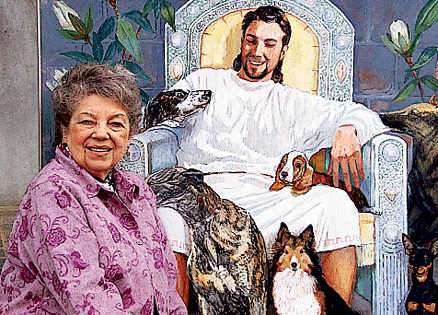
Lana shook her head. “It wasn’t your usual dream. Not by any stretch. Jesus was sitting on his throne. My dog had his paws up on Jesus’ lap. Jesus was rubbing him under the chin, just the way he liked.” Zippy lost interest in the butterflies and came and sat obediently by my side. He perked his ears up at Lana.

“My dog turned and looked at me,” she went on. “He thumped his tail on the ground. It was as if that animal had found his voice and told me: He was happy in heaven, so I shouldn’t grieve for him any longer.”

Zippy rolled over and wiggled on his back in the grass. I tried to picture Jesus rubbing his belly, the way Zippy liked. It seemed kind of silly. Why should it, though? I asked myself. Doesn’t God love all creatures of the earth?

Bill called from the store, “Found what we’re looking for!” Lana went to take care of business, and I got Zippy back in the car. I told Bill all about Lana’s vision during the drive back to the cabin, and I thought about it in the weeks after when I stood sketching in front of my easel. “I’m going to paint it,” I told Bill one morning. “Just like Lana described.”

I sketched Jesus on a throne with a sleek greyhound resting its head on his knee. “Do you approve, Zippy?” He panted, and I took that to mean yes. Once I started painting, more dogs appeared on the canvas. A German shepherd pulled at Jesus sleeve. A spaniel nosed his arm. Other dogs gathered at his feet, proud and content. I couldn’t keep them away, and Jesus didn’t seem to mind.

Zippy sat front and center, looking at the viewer the way Lana’s dog had turned and looked directly at her in the vision.

I entered the painting in a local art show back home in Illinois. People were drawn to it. “I always say heaven must be filled with dogs,” someone remarked. “Whenever I picture Jesus,” a woman told her friend, “I’m going to picture him like that.” I was delighted. Zippy was waiting for Bill and me when we got home. “One day you’ll sit at Jesus’ feet too,” I said, “and that will make it easier for me, if you get there before I do.”

The following August Bill, Zippy and I returned to Minnesota and drove straight to the consignment shop. I couldn’t wait to tell Lana how her vision had changed me. But the store was empty. I pressed my face against the glass. “There’s no hint a business ever operated here,” Bill said. Even the big sign was no more.

Zippy sniffed out the window and jumped out to chase a butterfly. I looked up the hill for the driftwood cross, but that too was gone, as if it had never existed. But I had Lana’s vision of heaven, captured in canvas and oils. I knew that the animals we loved would be loved and welcome there.

Download your free ebook, Angel Sightings: 7 Inspirational Stories About Heavenly Angels and Everyday Angels on Earth.

An Angel Escorted Her to Heaven

I was clearing up the breakfast dishes when the phone rang. “Something’s happened to your mom,” my dad said. He was trying to keep calm, but I could hear panic in his voice. “The ambulance should be here any minute.”

A rush of cold swept through my body, as if I could feel the blood draining to my feet. “Ambulance?”

“I found her collapsed on the floor. Hurry over! I’m alone here.”

I stumbled upstairs, jerked on my shoes and ran out to the car. Luckily my family all lived close together. My parents were only a few minutes away. I pulled out of my driveway and sped down the two-lane highway.

READ MORE: THE ANGELS WHO TOOK HER HOME

Mom hasn’t been well since the accident, I thought as I drove. She’d been hit by lightning and hadn’t truly recovered. God, be with her!

The front door to the house was thrown open when I arrived. I found my dad performing CPR in the hallway. Mom was stretched out on the floor in front of him. He looked up at me as I entered, his eyes full of anguish, his face white to the lips, sweaty with fear. I knew I’d carry the picture of it in my mind forever.

“Hang on, Mom,” I said, dropping to my knees to help Dad with the compressions. One, two, three… I counted them as I’d been taught in a life-saving course I’d taken at school. But would CPR be enough to help Mom? I touched my fingers to her wrist. No pulse. “Dear God, help us!” I said. “Help her, God!”

I leaned out the front door to search for the ambulance. The two-lane highway stretched out in both directions. Empty. About a hundred yards west, a gravel road turned off it toward a creek and picnic area. All quiet. Not a soul to be seen. How long since Dad called for help? I thought. When will they get here? “God, we need you!” I said.

I started to turn from the doorway. Out of the corner of my eye I saw a flurry of movement across the road. Suddenly there was a man there. Alone. Where did he come from? Not a second before the road had been empty.

The man took slow steps one way, then turned on his heels and walked in the other direction. He held his hands clasped behind his back, his head hung low as if in serious contemplation, and he paced. Back and forth, slowly and with determination.

Why was this stranger pacing in front of our house? I knew everyone in our small community. I’d never seen this man in my life.

“It’s no use!” Dad said. The man was still visible through the open door. He looked agitated, as if waiting for something. “I hear the ambulance!” I said.

READ MORE: TWO ANGELS LED THE WAY

The white vehicle pulled up with its whirling lights and screeching tires, and a team of EMTs jumped out.

“We need oxygen! She’s not breathing!” I called to them.

Dad and I got out of their way. All I could do now was pray. I bowed my head and prayed harder than I ever had before. When I opened my eyes I was looking at the man again. He was still pacing back and forth, his hands clasped behind him, his head bent.

His loose, soft-gray tunic came down to his knees over loose brown trousers. I could see even from a distance that his outfit was made of linen. The intricate weave of the material seemed to shine in the early morning light. On his feet were braided leather sandals.

Even in the chaos of the moment the man looked out of place. This was a farming community. Men wore Levi’s or overalls with plaid or denim shirts. On another day I might have puzzled over where the man could have come from, but this wasn’t another day.

The wall clock ticked away the minutes as the EMTs gave Mom oxygen. There was no change. One of them took her pulse again. He looked up at me and shook his head. “She’s gone.”

I covered my face and wept.

The EMTs took Mom into the ambulance. Two of my aunts and uncles happened by and comforted Dad as best they could. I walked out to the road as the ambulance pulled away. How can this be happening? I thought as the taillights disappeared around a bend in the road. It didn’t seem real. I had prayed for God’s presence here. But Mom was gone.

My aunt Leila came up beside me and gave me a squeeze. I barely felt it. She started to lead me back into the house and then paused. “Who is that man?” she asked, nodding across the road.

He had stopped his frantic pacing. Now he was walking right up to me. Although his expression was calm and soothing, the air around him almost seemed to crackle with energy. His clothing glowed with the strange sheen I’d noticed earlier. His eyes were large and dark. His voice, when he spoke, was low and smooth.

“I am sorry about your mother,” he said, looking into my eyes.

Before I could reply he went back across the street. He hadn’t bothered to check for traffic.

“Who is that?” Aunt Leila asked again. “How do you know him?”

“I don’t.” So how had he known it was my mother who had just died?

We went inside, where the rest of the family was watching. No one had seen the man before and between all of us we knew everyone in the vicinity. I lingered in the doorway to see where the stranger would go. He returned to the spot where he had been pacing.

Then he was gone.

I stepped out into the yard and looked up and down the highway, and down the gravel road. There was no sign of him. One second he was there, and in the next second he was gone. As if he had vanished right before my eyes. Everything about this stranger was adding up to something incredible. This was no man.

That night in bed I went over every detail of what I’d seen, from the flutter that had announced the stranger’s presence to the kindness in his eyes. I knew he was not a man. Nor was he a healing angel sent to save Mom’s life, or a warrior angel like I’d read about in the Bible. This was a different kind of angel. An angel who waited to escort Mom to her new home in heaven.

Did you enjoy this story? Subscribe to Angels on Earth magazine.

A Message of Love from the Hereafter

Morning light filtered through the curtains on the French window. My first thought of the day was of my husband, J.G. It had been the same every morning for the past couple of weeks since his death in January.

We’d been married 26 years. I couldn’t get used to the world without him. It was as if all the brightness had disappeared from my life.

J.G. was bright in so many ways. Bright smile, bright laugh—he even liked bright colors. Turning over in my bed, I could almost see him behind the wheel of a red pick-up truck.

As the owner of his own construction business, J.G. was in charge of choosing what vehicles they would drive. He knew exactly what color he wanted. “Are all your trucks red?” a new employee once asked him.

“Is there any other color?” J.G. said. Not as far as my husband was concerned.

Even illness wasn’t enough to dull J.G.’s bright spirit. A stroke made it difficult for him to get around. At first he used a walker, but after a couple of falls he realized that was too risky. It was time to get something safer, like a motorized wheelchair.

J.G. and I went to a medical supply store to pick one out. “We have a wide selection,” the man at the store said. “What are you looking for?”

“Anything in red?” J.G. asked.

“A red wheelchair?”

“Bright red,” said J.G. “Like a cardinal’s feathers.”

I was sure he was going to be disappointed. Red trucks were easy enough to come by, but who paints wheelchairs to look like fire engines? The salesman disappeared into the back of the store and returned wheeling a chair in cherry red.

“I’ll take it,” said J.G. without even bothering to try it out.

The salesman grinned and directed us to the cashier. “That was easy!”

Bright red, like a cardinal’s feathers, I thought as I sat up in bed. J.G. made everything as bright as a cardinal’s wings.

Cardinals, of course, were J.G.’s favorite bird. We didn’t see too many in Houston, where we lived during the week. But when we drove out here into the deep country on weekends we knew those red birds would be everywhere.

J.G. had counted on it when he built this house. He’d made sure to include a big wooden deck surrounded by trees. Every evening the two of us sat outside listening to the wind in the leaves and the call of the birds.

“I think there’s even more cardinals around since I got my wheelchair,”J.G. said to me one breezy evening after dinner. Some people wouldn’t think of a wheelchair as cheerful, but people always smiled when they saw J.G. ride by in his.

Maybe the birds felt the same way. Maybe they considered him one of them.

“They probably like the color as much as you do,” I said.

J.G. turned toward the trees. “Miss-you! Miss-you!” he called, imitating one of their signature calls. He cocked his head and listened. I held my breath. A moment later, sure enough, came an answer from above us. Miss-you! Miss-you!

“Can you believe some of the men at work don’t believe I can talk to cardinals?” J.G. said.

I’d been skeptical of J.G.’s claim myself until I’d witnessed one of their “conversations.” The birds really did seem to respond to his imitations of their call.

What I wouldn’t give to hear one of J.G.’s cardinal calls right now, I thought, looking into the gloom of my bedroom. Opening the curtains would let in the sunlight, I knew, but it wouldn’t bring back the brightness I’d lost in my life.

I was just about to lie back down and pull the covers over my head when something tapped hard on the window.

What on earth?

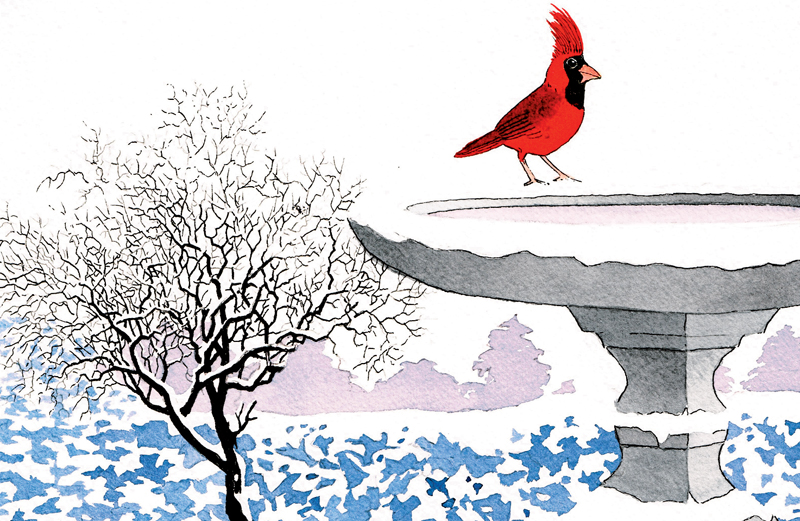
The urgent tapping came again, even louder this time. I went to the window and pushed aside the curtain. Sunlight poured into the room. I blinked at the cross-piece on the window. Looking back at me from his perch there was a bright red cardinal. “Miss-you! Miss-you!” the cardinal called, cocking his plumed head to look into my face.

The room suddenly got brighter—and it wasn’t the sunlight.

Apparently J.G. was still talking with the cardinals—or the angels—and sent one to make sure I wasn’t letting grief get the better of me. There was still plenty of brightness in the world and this little red bird wasn’t going to let me forget it.

The cardinal stayed close to the house all day. He peeped in at one window, then another, as if he was making sure I was okay. For the next few weeks he visited me every day.

J.G. is no longer with me in this world, but I can still find brightness in red pick-ups, cardinal songs and the love of God who made them all.

Download your FREE ebook, Messages from the Hereafter: 5 Inspiring Stories Offering Proof of the Afterlife.

A Journey to Heaven

What do you ask a man who has seen heaven? Maybe what God looks like, or if everyone wears white. Did he meet loved ones who had died before him? Was there any pain? Perhaps you ask if he’s absolutely sure it wasn’t all a figment of a distressed mind…or if he thinks you were born yesterday.

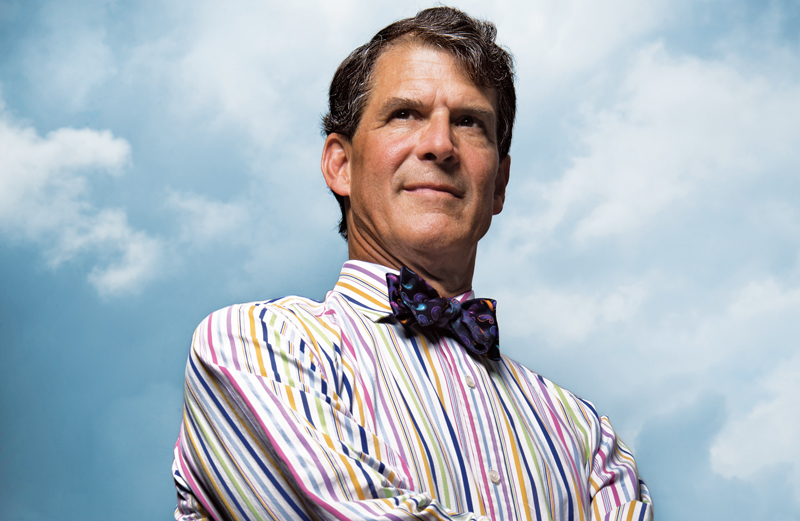
The prominent neurosurgeon Eben Alexander III addressed skeptics and believers alike after publishing his bestselling book Proof of Heaven, about his near-death experience, or NDE, while comatose for a week from a rare form of bacterial meningitis—a vivid journey from darkness through a gateway of light and into a valley of great beauty, led by a strangely familiar girl to a place where he felt the close, overwhelming presence of God.

But questions of his own remained. In his new book, The Map of Heaven, Eben shares the answers he found in the near-death experiences of others, and his attempts to revisit the spiritual realm—without the coma this time. Needless to say, we were intrigued….

You grew up with faith, correct? You knew the traditional view of heaven?
Right, I did. Although in my decades spent working as a neurosurgeon, I was having great trouble seeing how any kind of conscious awareness could survive the death of the brain and the body. That was very hard to explain…now, because of my experience, I can see much more clearly how all of that would work.

How do we know this wasn’t a hallucination or confabulation?
My brain was so wrecked by the bacterial meningitis that when I woke up, initially I had no memory of my life. I had no clue who my family members were standing around the bedside. That is one thing I could have clarified more in Proof of Heaven—my brain was really wrecked.

I had no memory of all that I knew about the brain. All that stuff was slow to come back, over many weeks. But I knew full well what had happened to me deep in coma. It was a spiritual odyssey.

Later I did think it had to be some kind of dream, but when the doctors and I reviewed my medical records, the exams and the scans, we came to realize my brain hadn’t been capable of dreaming. My doctors to this day have no explanation for how my brain came back.

Today you have no long-term effects from the meningitis?
Within three months I was not only back to normal, but better than I had been before in terms of my memories, my mental function. It’s really kind of shocking how that happened, but I ended up coming out ahead of where I had been in terms of my overall consciousness and awareness and intuitive function.

How did you begin to write about what you saw?
My older son, Eben IV, was majoring in neuroscience in college and saw me two days out of the hospital. He said there was like a light shining in me; I was much more present than ever before.

He couldn’t really understand that, especially knowing the neuroscience he did and having seen me deep in coma. He knew I should have been dead. He advised me to write everything down before I read anything about near-death experiences.

What challenges did you face when explaining your vision?
When I was writing, to me the word God was a puny little human word that didn’t do justice to the awe-inspiring power of that deity. That sense of unconditional love goes far beyond the words unconditional love.

This is not like telling somebody about a trip to Disneyland, so our earthly descriptors fall short. We don’t have words to describe it, we don’t have the concepts, although I felt that my words did about the best I could.

Even though I often point out that that beautiful realm had a lot of earthlike features—butterflies and flowers, my companion, a lovely woman on a butterfly wing—it’s better to look at it like an ideal world of which this world is kind of a pale reflection.

What sources helped you make sense of your experience?
I spent about six weeks writing everything I could remember from when I was deep in coma. Then I got into the near-death literature and was shocked because I realized that all those stories out there contained similar details to my story.

I started giving talks on my experience two and a half years before Proof of Heaven came out, and was soon contacted by numerous practitioners of mystical religious traditions to affirm how their most ancient teachings were consistent with my story.

I knew nothing of those religious traditions before my coma. These stories can sound so wacky, but when we share them, and other spiritually transformative experiences, it becomes clear that we are talking about the same realm, with one God, that deity at the core of all.

What do these heavenly experiences have in common?
People often do see angelic beings, light beings, soaring beings, with or without wings. I was really not aware of wings, but of beautiful trails flickering and sparkling. Also, of course, an encounter with a spiritual being of extreme power and essence that goes beyond all naming.

People often encounter departed souls of loved ones, even if they don’t know yet that that loved one has departed. Information passed from the spiritual realm in NDEs often comes with an imprimatur, some stamp of validation, sometimes as a clue to a deeper mystery.

These can be quite shocking, as when I recognized that my beautiful companion in the heavenly valley was the birth sister I had never known.

You were adopted, and she died before you found your biological parents. You’d never seen her before?
Correct. I received her picture in the mail four months later. There are numerous NDEs in which the subject obtains information, such as the actions of loved ones or interactions between doctors and nurses, often at a time when the patient’s brain was not functioning at a level able to process sensory information.

My favorite example is from a woman I met after a talk. She had gone to an outpatient center for a procedure under light general anesthesia. A complication resulted in a four-day coma, then prolonged recovery.

Work friends who came to visit her afterward were fascinated as she recounted that early on in her NDE, she encountered a longtime work colleague, whom I will call Ralph. He was happier than she had ever seen him—he was the most morose soul they had ever known.

After she told her colleagues, they broke the news—Ralph had died unexpectedly the day she went into coma.

You’ve tried to safely re-create your NDE. Is it really possible?
One of the greatest shocks was that while my neocortex was attacked by the meningitis, a far grander ultrareality presented itself. Consciousness is actually freed up to a much higher level when it’s released from the shackles of the brain.

We can turn off or limit the functions of our neocortex in other ways—like deep meditation and centering prayer. The most consistently powerful means for me now is to meditate with something called sacred acoustics.

Repeatedly in my coma journey, music and sound ushered me to higher levels. A beautiful melody took me through a bright portal into an ultra-real valley where pure spiritual beings were emanating hymns and chants and anthems from above.

I have not yet duplicated the full-blown ultra-reality of my coma, but I have revisited some of these realms through sound-enhanced meditation. Deep in our own consciousness we can find all of the answers, but it takes effort, persistence and a true yearning to know.

If heaven is so incredible, then what is this life for?
This is where we learn the lessons, of loving ourselves, loving all beings, showing compassion, forgiveness, acceptance. We are here to do that— manifest every bit of that love as our souls ascend to higher and higher levels. That’s why we are here.

We don’t just end this life and go sit on a cloud playing a harp somewhere; this is a dynamic process of learning and growing.

What transformation do those who have had an NDE report?
Very common is to lose any fear of death—to realize that these experiences actually point to a grand enhancement of our conscious awareness when our brain and body die. Death of the physical body is an awakening, a transition to a much higher level.

Also common is to realize that we are all truly here to love one another, that unconditional love is the coin of the realm. That love has infinite power to heal—the individual, the soul, all of humanity, all life on earth.

Also, the realization that accumulations in the material realm are only important as they allow for our soul’s ascendance in the spiritual realm—that our behavior around material things should involve giving for the greater good. My experience included all of these in large measure.

Here, we share more of our interview with Eben Alexander that we couldn’t fit in the magazine…

Can we ever “prove” heaven exists, from a scientific standpoint?
Science today is undergoing a profound revolution. The pure scientific materialism that assumed consciousness was a result of the physical workings of the atoms, molecules and cells of the brain, is crumbling.

The more we study the brain, and phenomena of non-local consciousness—our ability to be aware of things outside our scope of observation—the more we come to realize that the sheer complexity of the human brain cannot create consciousness.

Instead, the brain serves as a filter or reducing valve that limits preexisting consciousness into a narrow range of possible states.

I believe there is a reason for this “veil,” that prevents us from seeing the reality of our eternal spiritual selves as clearly as the moon rising in the sky every night. That is because we are here on Earth to learn lessons about loving ourselves and others.

We learn those lessons by being partially veiled from the richer reality that we witness in near-death experiences or any of the myriad forms of spiritually transformative experiences. All of that realm will never be uncovered through scientific investigations.

The human brain and mind are far too puny to remotely achieve that level of knowing—ever. But our science can reveal much more about it all, beginning with the study of non-local consciousness.

Any science that tries to ignore the reality of spirit, soul, consciousness is basically is trying to fight with one hand behind its back.

There’s a quote from Nikola Tesla that resonates with me: “The day science begins to study nonphysical phenomena, it will make more progress in one decade than in all the previous centuries of its existence.”

The brain limits consciousness? Are you saying that anyone’s consciousness can be unlocked if the right changes are made to the brain?
Examples of terminal lucidity and acquired savant syndromes are very common in the world of clinical neurology—yet they completely defy the simplistic "brain-creates-mind" model.

They demonstrate how damage to the physical brain can allow for the manifestation of superhuman mental capabilities, as in the savant syndromes, with inexplicable feats of memory, calculation, intuition and performance, or normalization of function in patients with advanced dementia, especially those who are close to the death.

Based on my extreme ultra-real experience as my neocortex was progressively dismantled by severe bacterial meningitis, I suspect that the "veiling" function of the physical brain has a substantial anatomic basis in the neocortex itself, that part of the brain that is most directly linked to all of the detailed modules of human conscious awareness and perception.

You talk about skydiving often in this book and your previous one. The message seems to be—there are experiences on Earth that help us approach the experience of heaven. How should people seek these out? What are other ways people can find the levels of consciousness you found?
For me, making 365 parachute jumps in college, most of which were group freefall formations, provided a rich source of excitement—really feeling alive for those spectacular experiences. Anytime we follow our passions and embrace the joys and miracles of our existence, we get closer to our true selves.

The most consistently powerful means for me now is to meditate or to use centering prayer to get in touch with the infinite consciousness available within us all.

You talk briefly about Carl Jung’s concept of “synchronicity,” events in our seemingly random world that appear distinctly un-random. It’s a common theme among our Mysterious Ways stories. How did Jung interpret these moments—and what do they say to you about the nature of our world?
The most famous synchronicity in Jung’s life occurred during a session with a patient who described a dream she’d had of being given a golden scarab, a carved Egyptian beetle. While she was telling him the dream, Jung heard a noise behind him, like a gentle tapping.

He turned and saw a scarabaeid beetle, knocking against the windowpane. Accounts like this indicate that our existence has meaning, that the whole universe has great purpose. There are no accidents—things happen for a reason.

A future book I am working on focuses on free will and the Divine plan, and how synchronicities are crucial in that evolving dance of our souls.

Here's a question from reader Nita Harrison of Murphy, North Carolina: “You say that there are trees, fields, animals, people in the heaven you saw. Are there snakes in heaven? From my childhood I've had a great fear of them.

"The other day as I was leaving my subdivision, a poisonous one was on the road and rose up to strike at my car, causing a recurrence of childhood nightmares.

"I had an accident once and felt I was about to be ushered into the presence of God. The love was so overwhelming and accepting. That would be so lovely and marvelous… the snake would not be. Thank you for an answer to this troubling (and maybe to others trifling) concern.”

That realm I described, with many earth-like features, is an ideal world on which our murky, pale material realm is based. Our fears are deeply connected to what we are meant to learn in this life, as are other apparent hurdles, challenges and difficulties.

One of the deepest lessons from my experience in this higher realm is that we have nothing to fear—by being eternal and infinitely empowered beings through our direct connection to the infinitely powerful creative being at the core of all existence.

There is not that sense of otherness that characterizes this world—nothing is isolated there. Everything is one. Nita, you will have no reason to fear in this next realm, because our direct connection to the Divine source of creation will allow us to be fearless.

Eben Alexander’s new book, Map of Heaven, will be available October 7th.