

Embrace God's truth with our new book, The Lies that Bind

Was It a Mirage from Home? Or an Angel?

The only place I’d seen military aircrafts, tanks or jungles in my small hometown of Oelwein, Iowa, was at the local movie theater. Iowa was more a place for ice cream vendors in the summer, hay rides in the fall and Salvation Army bell-ringers at Christmas.

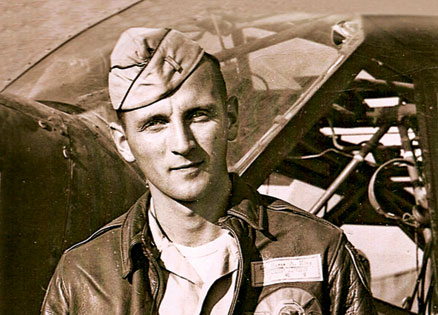
But as I headed over to the mess hut for my morning coffee that day in 1945, I barely noticed the jungle. My months in Burma airlifting supplies through China to the other Allied forces had gotten me used to airplanes and tropical birds. But still I missed the little things. Like a donut to go with my morning coffee. “Morning, Hank,” I said to my copilot, lifting my tin cup in a friendly toast. “Hope we only have one mission to run today.”

Burma was a jungle in many places. What roads it had were made for carts pulled by water buffalo, dirt trails that became long ribbons of mud when it rained. A two-and-a-half ton truck loaded with supplies could easily become stuck and disabled, resulting in hundreds of soldiers being denied necessary supplies.

Hank and I, and the other pilots in the 3rd Combat Cargo Squadron, could resupply our allies with food, ammo, spare parts, medicine and fuel in our C-47’s. We sometimes had to land our Douglas C-47 Skytrain, nicknamed Dottie, in rutty, captured Japanese air bases, or even on a straight stretch of road. If we couldn’t land, we dropped the supplies by parachute. More than once we returned from a flight to find bullet holes in the cockpit.

I finished my coffee and headed over to the briefing tent with Hank. The push to take Rangoon changed daily, and we were never sure where we would fly next.

“Resupplying a newly captured airfield way down on the Irrawaddy River,” Hank read from our orders when we came out of the tent.

One never knew what could happen here in the jungle. It made me long for the safety of Iowa. Imagining the familiar sights of my hometown I’d once taken for granted was now my greatest source of comfort.

We climbed aboard Dottie as the crew loaded up machine gun and mortar ammunition, along with some spare parts for jeeps. Swarms of insects buzzed outside our canopy. It was just before dawn by the time we finally got off the ground. We got to our destination without any trouble and watched some of the other cargo planes land from the sky. “Bring her down,” I said to Hank when we were cleared to land.

After a bumpy touchdown we followed a jeep to a spot where 20 soldiers waited to unload the supplies. We deplaned and I watched the guys unload the cargo. Iowa felt a million miles away as I swatted at a bug the size of a small fist. I closed my eyes and tried to picture Oelwein’s main street. I couldn’t do it.

I opened my eyes instead to Army uniforms from England, New Zealand, South Africa and Australia. Hank wandered up. “Hi there,” he said, with a cup of coffee and something else clutched in his hand.

“Hank,” I asked incredulously, “is that a real live donut?”

He took an exaggerated bite. “Where’d you get that?” I asked.

He nodded in the general direction of the tents. “Over there.”

“Over where?” I demanded.

He pointed with his half-eaten donut. “Over at that truck.”

I followed the direction of his arm. There in the middle of the Burmese jungle was a Salvation Army truck. The big red shield was unmistakable. It looked just like the sign over the Christmas red kettles in Oelwein. Only it was just about 12,000 miles from anything resembling Iowa. I blinked my eyes to make sure it wasn’t a mirage.

How did a Salvation Army truck get into the jungle? Where did it come from? Who were the people inside who were handing out free coffee and donuts to the Aussies, Brits and Yanks?

“Hey, King,” Hank said. “You better get one quick. They’ve almost got Dottie unloaded and we gotta get out of here.”

I ran to the truck and the woman inside passed me a coffee, donut and a wonderful smile. “We’ll be praying for you, soldier,” she said. I mumbled some sort of thanks and headed back to the plane, where Hank was starting the preflight.

I asked around when we got back to base, but I couldn’t unearth the story of that Salvation Army truck. I never saw it again, but the image of it stayed with me. Since my deployment, all I could think about was how far away I was from home. The truck was a piece of Iowa, a piece of what I was fighting for, even in the midst of the Burmese jungle. A sign from God can come in all shapes and sizes. That day along the Irrawaddy, mine came as a hot coffee, a donut, and a prayer from a very unlikely angel on earth.

Download your FREE ebook, Angel Sightings: 7 Inspirational Stories About Heavenly Angels and Everyday Angels on Earth
Underwater Angels

I completed my first scuba course and became passionate about the sport. I gave up my paychecks and began working in exchange for equipment. When the shop sponsored a trip to the Florida Springs, I couldn’t wait to go. The drive from Lexington to Florida was long and our group arrived after dark, but the water was beautiful, calm, and inviting that evening.

We novices were so eager to make our first open-water dive that we compelled our instructors to break the first rule of night diving: Never dive at night where you haven’t yet dived during the daytime. We impatiently donned our equipment and enthusiastically jumped into the water.

READ MORE: A SNEAK PEEK OF HEAVEN

Once under the surface, I stuck to my instructor like glue. We cruised along the bottom and I was thrilled with the splendor of the fish and the variety of the colors and shapes of the coral. My first open-water dive was living up to all of my expectations and, too soon for me, the air in our tanks neared empty and it was time to surface.

When we inflated our vests and kicked toward the surface, we did not pop through the water’s surface as expected, but we solidly struck rock. We swam in another direction and again struck rock. We had inadvertently entered a cave to which the exit was not obvious.

My instructor and I searched for the opening, but the visibility had been diminished when, in my inexperience, I kicked the bottom of the lake with my fins and raised a cloud of silt. We were running out of air and the tank alarms were echoing.

That’s when I remembered to pray. I called out to God and I was immediately filled with the feeling of God’s presence and the knowledge that He would show us the way out. He would see me through.

The silt began to clear and we saw several fish darting back and forth before lining up together, swimming in the current. They seemed to beckon us to follow, which we did. We made one last dive down to the bottom of the water in the direction of the fish, then swam upward and broke through the surface of the lake just as my instructor’s air tank emptied completely.

My instructor and I discussed our shared experience at length. He was entirely focused on himself, and was distraught at having lost control of the situation. He felt responsible for the mistakes that were made and what he thought was his poor judgment. He believed that we had survived because of pure luck. He judged himself a failure and proceeded to drink himself into a state of oblivion.

For my part, I had a profoundly different response to our survival. I did not believe that luck was involved. I had experienced a profound sense of calm and a knowledge that God was with us in the cave. I believed we had survived because God intervened, even though we had been such knuckleheads and He essentially had to push us out of the cave.

READ MORE: A JOURNEY TO HEAVEN

Training Service Dogs Gave Them a Second Chance at Life

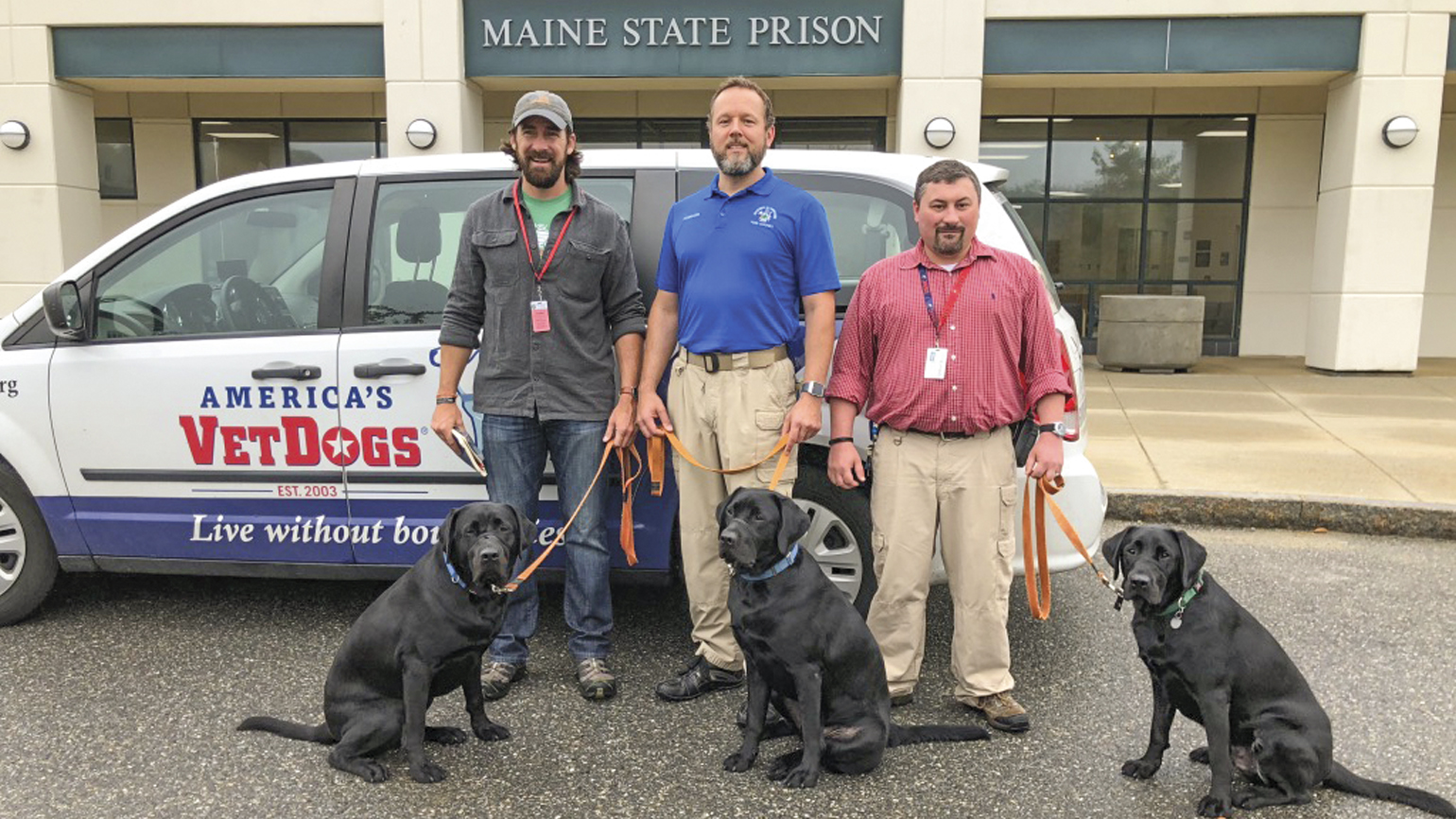
My security escort met me in the lobby of the Maine State Prison and led me to the visitation room. The large wide-open space with high ceilings and a carpeted floor held none of the sounds or smells of life behind bars, a world I knew too well from my time as a military prison guard. And yet I couldn’t help but feel on edge. For years I’d told myself I wanted nothing more to do with prisons or prisoners ever again. Now here I was a guest at the biggest lockup in the state, a two-hour drive from my home.

A dozen or so other visitors shifted restlessly in folding chairs facing the front of the room. Four inmates in white T-shirts and jeans, all of them veterans, sat in the very first row, each with a black Labrador at his feet.

The dogs were the main reason I was here. For the past 15 months, these inmates had been training the Labs to become service dogs for veterans on the outside. The prison program was co-sponsored by an organization called America’s VetDogs, and a representative had come out to “graduate” Chess, the first dog to pass all the requirements under the guidance of his trainer, Michael Kidd. Chess was ready to be of service to a veteran who suffered with PTSD.

I had a dog at home myself, a goofy-looking mutt named Fred, rescued from Afghanistan during my deployment eight years earlier. The story of how I smuggled Fred back to the States made headlines around the world. The prison warden had heard about the book I’d written and invited me to see the program as a fellow veteran. An interesting way to spend an afternoon, I figured. Nothing more. I hadn’t stopped to think that my memories would be coming with me.

Before I joined the Marines, I’d mostly avoided taking on any kind of responsibility. I couldn’t seem to find my place in the world. I’d hoped the military would demand something more of me and help me figure out what God had planned for my life. But I was assigned to the military police, working in prisons in South Carolina and Guantanamo Bay—a difficult, dehumanizing experience. I found myself looking down on the prisoners, begrudging anything that brought them the least bit of pleasure. In my mind, these vets were criminals and needed to be constantly reminded of it. After four long years I was finally able to transfer into the intelligence division, where I remained until I finished eight years of service. I hoped I’d grown less judgmental since then, but looking out at the men in the first row, I couldn’t say that was true.

The woman from America’s VetDogs walked to the podium to address the prisoners. “I’m extremely proud of these dogs and the work you’ve done with them,” she said. When she called Michael Kidd to the stage, Chess followed obediently at his heel.

“Chess came here as a rambunctious puppy,” the woman said to Michael, “and you have molded him into a highly trained companion with a commitment that would test the patience of the most experienced trainer.” Chess sat patiently beside Michael, calm and attentive. Fred would have been sniffing all over the room by now. I couldn’t imagine the work involved in training a dog to this level.

The woman knelt and slipped the official yellow vest, stitched with the words SERVICE DOG in bright red, over Chess’s head. Everyone stood and applauded the accomplishments of Chess and his trainer. But I imagined it was a bittersweet moment for Michael. He’d have to say goodbye to Chess.

Afterward I walked over to the two of them, Michael sitting on the floor with Chess between his legs, rubbing the dog’s big black ears. “What will you miss the most?” I asked.

“Having somebody that doesn’t judge you,” he said. “Chess just wants love and to give love.”

Again I thought about my judgmental attitude and the unease I’d felt upon seeing these men here today. A dog didn’t see people that way. I had so many more questions for Michael, but there wasn’t time.

He gave Chess a final hug, then handed over his leash and turned away, escorted with the other inmates back to their cells. I remembered how hard it had been for me to put Fred on a plane home to the States, where he would await my return at the end of my deployment. I missed him every minute, even though I knew we would be reunited. Michael would probably never see Chess again.

As I was leaving the prison, I asked the warden if I could meet with these inmates again to learn more about them and their work. He set up a meeting in one of the prison classrooms.

This time I brought Fred. He bounded about the group, bridging the initial awkwardness. Talking about Fred and what he meant in my life led to the prisoners talking about what the training relationships meant to them. The fulfillment it gave them. The sense of purpose such a commitment instilled. The unconditional love from their charges. Michael was so proud of what he’d accomplished with Chess. “Maybe you should put it down in words,” I told Michael. “Writing about Fred was such a release for me.”

“Maybe,” he said. I hoped I hadn’t overstepped. Writing wasn’t for everybody, so I was surprised when I received an email from a prison administrator who forwarded a lengthy, heartfelt letter Michael had written to me.

Michael talked about losing his father to cancer when he was 14. His decision to join the Army and the difficulties he had upon his return to civilian life. Becoming addicted to pills and robbing to support his habit. Receiving a 15-year prison sentence at age 22. Then how on Father’s Day he’d given his life to Christ. And how when the opportunity came to work with Chess it had felt meant to be. “Training Chess has given me purpose, helping a soldier I may never meet, someone struggling with feelings of isolation. Just like me.”

Just like me. The words resonated. These men were much more than the white T-shirts and jeans that had made me uneasy. Moreover, they were making a difference, even while they were locked away. Was there some difference I could make for them in return? I offered the only thing I could think of—writing and storytelling instruction at the prison. The warden was receptive to the idea.

Once a week I drove to the prison for the Purposeful Tails Writing Group. I brought Fred as often as possible, but we stretched our focus beyond the interest in dogs that had initially brought us together. I assigned the men a topic for each class, where they would read their work for all of us to discuss: a time when they received an act of kindness, a letter to their younger self, family strife, the temptation of alcohol and drugs. I was surprised by the depth of their responses and how freely they shared their emotions. Vets could be reluctant to do that.

On occasion I had the opportunity to see them in training sessions with the dogs, their watchful guardians, their messengers of hope and reassurance, with blessings that stretched far beyond the Maine State Prison walls to veterans all across the country. In time, I no longer saw the men as criminals but as thoughtful, caring men who had served their country, just as I had, even if they had made mistakes in the aftermath. We all wanted the same thing in the end—to feel like our lives matter. Training the dogs and telling our stories helped make that so.

I became convinced that my time at the Maine State Prison was no accident. Those inmates gave me a chance to redeem myself and leave behind my judgmental attitudes from the past. I’d seen God at work “on the inside,” showing that he loves each and every one of us, all worthy of a second chance. It seemed fitting that I got mine in prison.

For more angelic stories, subscribe to Angels on Earth magazine.

To Jack in Heaven

No matter how gently our veterinarian broke the news to me, nothing could prepare me for the shock I felt at having to put our beloved golden retriever, Jack, to sleep. When I walked out of his office, empty blue leash dangling from my hand, I couldn’t believe he was gone.

Beside me, my eight-year-old, Daniel, wiped the tears from his own face. He’d bravely insisted on being with his buddy at the end. I was grateful his baby brother, Colin, was too young to understand what was going on.

My husband, Ted, Daniel and I walked back to the car, where a family friend waited with four-year-old Anna. “Let’s go home,” Ted said quietly. He started up the car.

“But we forgot Jack,” Anna said. “Isn’t he coming home with us?”

Ted and I looked sadly at each other. We thought we’d explained all this to Anna. It looked like she hadn’t understood after all. “Jack isn’t coming home with us, honey,” Ted said. “Remember? The vet said he was very sick.”

“The vet couldn’t make Jack better, Anna,” Daniel said.

“Do you understand, sweetie?” I said. “Jack died.”

Anna nodded slowly. Ted backed out the car. Then, from the car seat, came Anna’s voice again. “But where is he?” she said, starting to cry. “When is he coming home?”

Daniel tried to comfort his sister. I looked helplessly at Ted. Her older brother could comprehend what was happening. Her baby brother wasn’t aware of anything at all. Poor Anna was stuck in the middle.

That night, when I tucked her into bed, I tried to cheer her up with happy stories of Jack. “When we brought you home from the hospital right after you were born, Jack came running to the door wagging his tail. He couldn’t wait to meet you!”

Anna looked longingly at the door to her bedroom. Usually when I tucked Anna into bed Jack would come padding in right behind me. Anna never went to sleep without getting a big, sloppy good-night kiss from Jack. “He’s never coming home?” she said. “Ever?”

“Jack was very old,” I said. “He didn’t feel well. Now he’s not sick anymore. He’s in heaven with God and the angels. And he’s very happy there. I promise.”

Was any of this making sense to her? We’d talked about heaven, but this was Anna’s first experience with death. She hadn’t known anyone else who’d died and gone to heaven.

She knew she had family who lived far away. We didn’t see them in person, but they loved Anna and knew she loved them in return. That gave me an idea.

“Why don’t we write a letter to Jack tomorrow?” I said. “You can tell him how much you love him.”

Anna smiled. She loved writing letters. I knew she couldn’t expect a return letter like she got when she wrote to her aunts and uncles, but maybe just talking to Jack would be a comfort.

Early next morning Anna got out her crayons and we sat down together at the dining room table. Anna selected just the right shade of yellow and drew a circle for a head, followed by a circle body and four circle legs. Then she added Jack’s long, feathery tail.

“Jack loved to play house,” she said as she drew. “And dress up.”

“He could never keep those sunglasses on, could he?” I said, remembering good old Jack sitting patiently in his dress while Anna arranged jewelry around his neck.

Anna selected another crayon to make a stick figure with long hair next to Jack. Then she added a bright yellow sun. When the portrait was finished she dictated a letter.

“Jack is sick. So now he is in heaven,” she said. “I love you and miss you.” She signed her name herself in lopsided letters. “Now we need to send this to Jack.”

I placed the letter in an envelope and wrote the address in block letters: TO JACK IN HEAVEN. Anna licked the envelope and together we put it in the mailbox.

Our mail carrier looked a little confused when she picked the letter up a couple hours later. But I went outside to quickly explain the situation. “No problem,” she said, and slipped the letter in her bag.

Once the letter was gone, I could only hope I’d done the right thing. Anna’s questions seemed to have stopped, but I wondered if she could really understand that Jack was in a truly happy place. And because of that, we could be happy for him.

“She’ll understand it in her own time,” said Ted one day after yet another discussion.

Just before lunch, there was a knock on the door. It was someone from the post office. He held up a box wrapped in brown paper. “Are you Miss Anna Baker?” he asked, looking down.

Anna nodded shyly.

“I have a special delivery for you.”

The box was addressed to Anna. The return address read: JACK IN HEAVEN. Anna ran with her box to the kitchen. “I manage the post office and saw your letter,” the man explained. “We lost our family dog recently. I have a daughter too.”

Back in the kitchen with Anna, I helped her unwrap the package. She pulled out a book about a puppy and a stuffed dog that looked a lot like Jack. She squeezed the dog to her chest. “There’s a letter too!” she said. “Read it, Mommy!”

“Dear Anna,” I read. “I have arrived safely in heaven.”

Anna’s eyes got wide. “Does he like it there?”

I continued. “It is really nice here. The other dogs and I play ball and swim all day. There are many squirrels to chase here and all the mail carriers have bones in their bags for us.” Anna giggled.

“My bed here isn’t as comfy as yours, but I want you to know that God takes good care of me here.” I looked down at Anna, who nodded slowly. She understands that, I thought. Jack went on to say how happy he was to receive Anna’s letter.

“I miss my family. I miss you,” he finished up. “God sends his blessings and wants you to know that he loves you. We will both be watching over you. Love, Jack.” I folded up the letter and handed it to Anna. She danced around the kitchen.

That night I tucked Anna into bed with her new stuffed dog beside her. “Jack is in heaven,” she said. “Jack is happy there. And that makes me happy too.”

Anna would be fine, I knew. Thanks to a letter that truly did come from heaven. By way of a post office angel with a loving heart.

Did you enjoy this story? Subscribe to Angels on Earth magazine.

Tiny Twinkling Angels

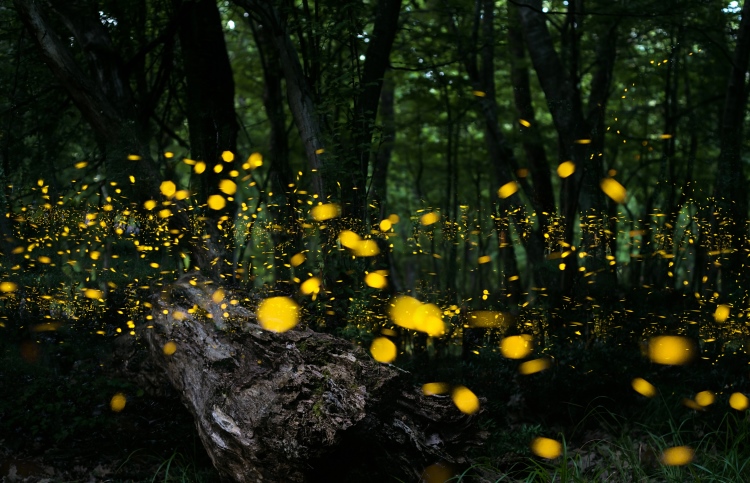
Heading to the Great Smoky Mountains National Park in June had become an annual tradition for a group of camping friends and me. That’s the only time the species of firefly Photinus carolinus, the only known synchronous fireflies in the western hemisphere, puts on a not-to-be-missed show.

The darker the night, the more spectacular the experience. On this particular evening, we were in luck. The new moon was just a pale sliver in the eastern sky as my friends and I crossed the footbridge that leads across Jake’s Creek from Elkmont campground.

READ MORE: FINDING TIME FOR LIFE’S TINY BLESSINGS

We made our way up a steep, narrow road to distance ourselves from the gathering crowd. Because flashlights are discouraged and must have the lens wrapped in red cellophane, only a couple of us carried one.

When we found a spot we liked, we spread quilts on the rocky ground and spoke in hushed tones as the sky turned from gray to dark blue to black. As total darkness finally descended, the synchronous fireflies began their magic. Dozens at first. Then hundreds. Then thousands. Maybe even millions, if it were possible to count them all. They didn’t blink on and off in metronome-like fashion. Instead, a great cluster of fireflies twinkled like tiny white Christmas lights and then went completely dark.

Six seconds later, the twinkling began again. Then darkness.

All up and down the mountain, as far as the eye could see, great waves of twinkling and then darkness swept past us.

I lay back on my quilt and watched in awe. I didn’t mean to fall asleep, but that’s exactly what happened. And my friends didn’t mean to go off and leave me, but that happened too.

When the firefly show was over after a couple of hours, they folded up their quilts in the quiet darkness and headed back to the campground.

No one thought to call the roll to make sure everyone was present. We were, after all, grown-ups who knew it was important to stay together in the wilderness. When I realized I was alone in pitch-black darkness, my heart began to race. I wasn’t sharing a tent with anyone. Chances were that, once everyone got back to the campsite, they’d all crawl into their sleeping bags in their own tents and not even realize I was missing until I didn’t show up for breakfast.

“Hey,” I shouted into the black night. “Where’d everybody go?”

My only answer was the rustling of the wind in the trees. I was all by myself, without a flashlight, in an ancient forest inhabited by all sorts of creatures I didn’t want to run into in the middle of the night. Snakes. Skunks. Foxes. Bobcats. Coyotes. And the animal that’s the symbol of the Great Smoky Mountains—the black bear.

I’d read that, over the past several years, black bears have made such an amazing comeback that it’s estimated that there are at least two bears per square mile in the park. Bears who prefer to do their foraging at night. My heart began beating even harder.

“Hey,” I shouted again, louder this time, “can anybody hear me?” Again, no answer.

READ MORE: BLESSED BY A BUTTERFLY KISS

I shuffled through the dew-wet grass until I felt the crunch of gravel under my feet. I had made it to the road leading back to the bridge. I strained my ears, hoping to hear human conversation. There was none.

I wore no watch, not that I could have seen it anyway, so I had no idea what time it was. Perhaps the best thing to do was to curl up in my quilt and wait for sunrise, which could easily be hours away. But before I could act on that plan, a twinkling of light caught my eye. It looked like a cluster of fireflies, which seemed strange because they, too, seemed to have abandoned me. Had they taken a break and were now tuning up for the second act of their nightly performance?

I looked up and down the mountains but saw no other clusters of twinkling lights. Only this one, hovering so close that I could have cupped some of the fireflies in my hand.

Slowly, the cluster began moving downhill. What could I do but follow? Though I was moving ever so slowly so as not to trip and fall in the pitch-black darkness, it took just a few minutes before the twinkling lights turned to the left.

I reached out my right hand and felt smooth wood. I had reached the footbridge that led to the campground! I placed my hand on the railing, moving more confidently now. The cluster of lights led me all the way across the bridge and then stopped.

Suddenly, I realized I could see the flickering of campfires and hear soft laughter and conversation. It didn’t take long for my eyes to adjust to the light shed by lanterns and campfires.

My tent was only a stone’s throw away. I turned to see if the fireflies were going to follow me all the way to my campsite, but they were nowhere to be seen. God’s tiny twinkling angels had led me to safety and then disappeared.


Remarkable evidence that angels walk among us

The Best Angels Stories 2016 tell us about God’s heavenly messengers through wondrous firsthand accounts of spine-tingling rescues…mysterious voices that come seemingly from nowhere…helping hands that rescue people from danger and then disappear…and so much more.
Order Now!

Three Angel Sites You’ll Also Love

Every once in a while I noodle around on the internet looking for angels. It occurred to me that if the editor in chief of an angel magazine can’t get enough of true angels stories, you probably can’t either.

So check out these links. You’ll find stories of heavenly angels, everyday earth angels, little angels and the guardian angels who protect them. Make some popcorn first—you’ll be sitting in front of your computer for a good long time!

Today’s angel site roundup:

Angelrealm.com

Ainglkiss.com/angels

Angels-online.com

Download your free ebook, Angel Sightings: 7 Inspirational Stories About Heavenly Angels and Everyday Angels on Earth.

This Tree Savior Was Really an Angel

Once a thick, beautiful canopy of oak trees had shaded our homes in Galveston’s historic East End, nearly hiding them from view. Now I stood on my porch and saw nothing but dead, barren branches extending from their trunks.

Ten months before, Hurricane Ike had ravaged the island. It killed nearly all our trees. At first I’d barely noticed. The storm filled the first floor of my house with wet, smelly muck.

Everything—carpet, antiques, artwork, appliances, furniture, the cheap but sentimental dining room set passed down from my mother—was ruined. Who had time to think about trees? The debris sat in front yards for months before the city was able to finally cart it all off.

I’d dreamed for years of leaving the hustle and bustle of Houston behind for the laid-back, sand-between-your-toes calm and serenity of Galveston. After a painful divorce, I’d finally made the leap. It was just what I needed, a little piece of heaven. But the storm had destroyed everything I’d worked so hard to build. Watching my possessions get tossed one by one on the trash heap made me feel like my dream of a new life was ruined as well.

Even the trees are ruined, I thought as I looked at the street from my porch. It was summer. I’d waited for months to see green shoots heralding the promise of rebirth, proof of God’s hand at work. But instead the branches looked like skeletons. The trees had choked on the saltwater and pollution from the bay.

The city had announced it would soon be cutting down the trees in public parks and medians. Homeowners were advised to do the same. The wood was destined for a landfill. Any day now I’d hear the horrible screech of a chain saw destroying what was left of my hopes.

I can’t bear to think of all those trees being turned into scrap, I thought, gazing at the branches curving from the trunk of the tree in front of my house. Two angels embracing—that’s what the branches looked like. Funny how I’d never noticed that before. All the more reason not to throw the trunk away. I remembered a visit to Biloxi, Mississippi, after Hurricane Katrina. Along the road fronting the beach I’d seen carvings made out of damaged trees. An egret, owls, dolphins. At the time I had no idea how they were done. Maybe it was time to find out.

I called the Biloxi City Planning Department. “It was a major undertaking,” the man who’d organized the carvings admitted. “There’s the cost for renting equipment, like cherry pickers and such, and that’s before you even hire an artist.”

I told him about all the damaged trees in Galveston. “Nearly 40,000 in all,” I said.

“Way too many to carve,” he said.

My heart sank. “I just hate for them to go to waste,” I said. “They must be good for something.”

The man thought a moment. “I know a shipyard that might be able to help,” he said. “The seaport in Mystic, Connecticut, is restoring the last wooden whaling ship in the world. They must need wood.” I called right away.

“You don’t know what this means to us,” the shipbuilder said. “We didn’t know where we were going to find a hundred tons of old wood!”

Filled with enthusiasm I called and made an appointment with the Galveston city manager. I couldn’t wait to tell him the trees didn’t have to go to waste. He unfortunately did not share my enthusiasm. “I’m happy to donate wood to the seaport,” he said when I went to his office. “But carving two trees at city hall and at two of the city parks? We don’t have the money for a project like that.”

“I’ll raise it,” I said, having no idea how. All I knew was, the trees needed me.

I talked up my idea everywhere. But people were rebuilding their homes and businesses; no one I talked to had extra cash to give. It seemed like this was an obstacle I couldn’t overcome. One more dream to throw on the scrap heap, I thought one night as I tried to generate interest at a neighborhood block party. Then a man I’d never met before approached me. “I’d like to give you $5,000,” he said, “but I need to remain anonymous.” I stared at him in amazement. I didn’t see any wings, but there was no doubt that I was looking at an angel. Just when I was ready to give up he saved my dream!

Now, with the city’s blessing, I searched on the internet for wood carvers. A man named Jim Phillips was interested. “I’ve never carved anything that large before,” he wrote, “but would love the opportunity.”

I took him to the trees outside of city hall, near the fire station. He’d carve a Dalmatian and a hydrant!

“I can see them in the wood already,” Jim said. “If you pay my expenses, I’ll do the carving for free.”

He started that weekend. A crowd gathered to watch the chain saw bite into the first branch, the sound echoing through downtown. Jim lopped off branches until just the trunk remained. He cut a gradual dip into the top, then a sharp curve into one side. It took a bit of imagination, but I could just make out a dog’s nose and head. With the tip of his saw Jim carefully cut a U into the wood and there was an ear! With each passing hour the dog slowly emerged, his chest, then front legs.

Jim finished the first tree in a week. The crowd applauded. One man came up to Jim. “Would you carve the tree in my yard?” he asked.

Jim was happy to oblige. Soon we were getting calls from homeowners all over Galveston. More carvers volunteered to help. Artist Earl Jones carved a hand holding a diploma from the tree outside the rec center. Dayle Lewis, from Richmond, Indiana, carved birds—herons, ibis and spoonbills—soaring from handcrafted branches.

All through the winter the whine of chain saws filled the air. The sound I’d once dreaded now filled me with anticipation. I couldn’t wait to see the latest creation: a heron, pelicans, a dolphin, mermaids and an angel cradling a bunny.

Between my neighbors’ enthusiasm and the Mystic Seaport we’d saved thousands of trees. But I couldn’t help thinking of the ones we hadn’t. God, help me be satisfied with saving what we could, I thought one night as I fell asleep. The next day the city got a call from Spain. A group there was building a full-scale replica of the Galveztown, the ship Bernardo de Galvez, the Spanish Governor of Louisiana, had used to fire on the British during the Revolutionary War. Did Galveston still have wood available? We sure did! The builders took all that was left, more than 200 tons. Not one twig went to the landfill.

Over 30 homeowners paid for their trees to be carved. Mine was last.

On a beautiful spring morning, Dayle Lewis joined me on my porch ready to go to work. Nine months had passed since I first saw the angels in my tree. Now it seemed like there were angels everywhere, in the wooden dolphins and pelicans, even the mermaids. They were messengers of hope. I’d thought a hurricane had destroyed my new life. Instead it showed me how beautiful that life really was.

See a slide show of the Galveston carvings!

Download your FREE ebook, Angel Gifts: Inspiring Stories and Angel Crafts to Nurture Your Creativity

This Sand Dollar Became a Heaven-Sent Sign

Gentle waves lapped at my bare feet as I walked along the Jersey Shore on an overcast day last summer. Sometimes I could almost hear God’s voice in the whisper of the water. I listened for him, but lately he had been silent. Even here at the ocean. The silence only made me miss my mother more, as if I were grieving her death all over again, feeling the sharp, fresh pain of being alone without her.

I tried to take comfort in the cool tickle of the water, the slight pull around my ankles as it changed course. I shielded my eyes from the sun and turned to see how far I’d walked. Traces of my footprints showed in a long chain in the wet sand. A solitary pair of footprints.

There were other people out walking. A few children hunting for shells. A man with a dog. Fishermen here and there. I dug my big toe into the sand, unearthing a scallop shell. Mom would like this one, I thought. Perhaps she would have kept it in the treasure box I’d found when I was cleaning out her apartment. I’d packed up her clothes, marked items for donation, gathered up keepsakes for the family to sort through together.

When I first came across the box, I didn’t know what it was. I opened it expecting to see old letters or documents she’d tucked away. Instead, I found a collection of things that didn’t go together. I ran my hand through the treasures. A matchbook. A round stone. A little carved bird. Memories that had meant something to Mom but were a mystery to me.

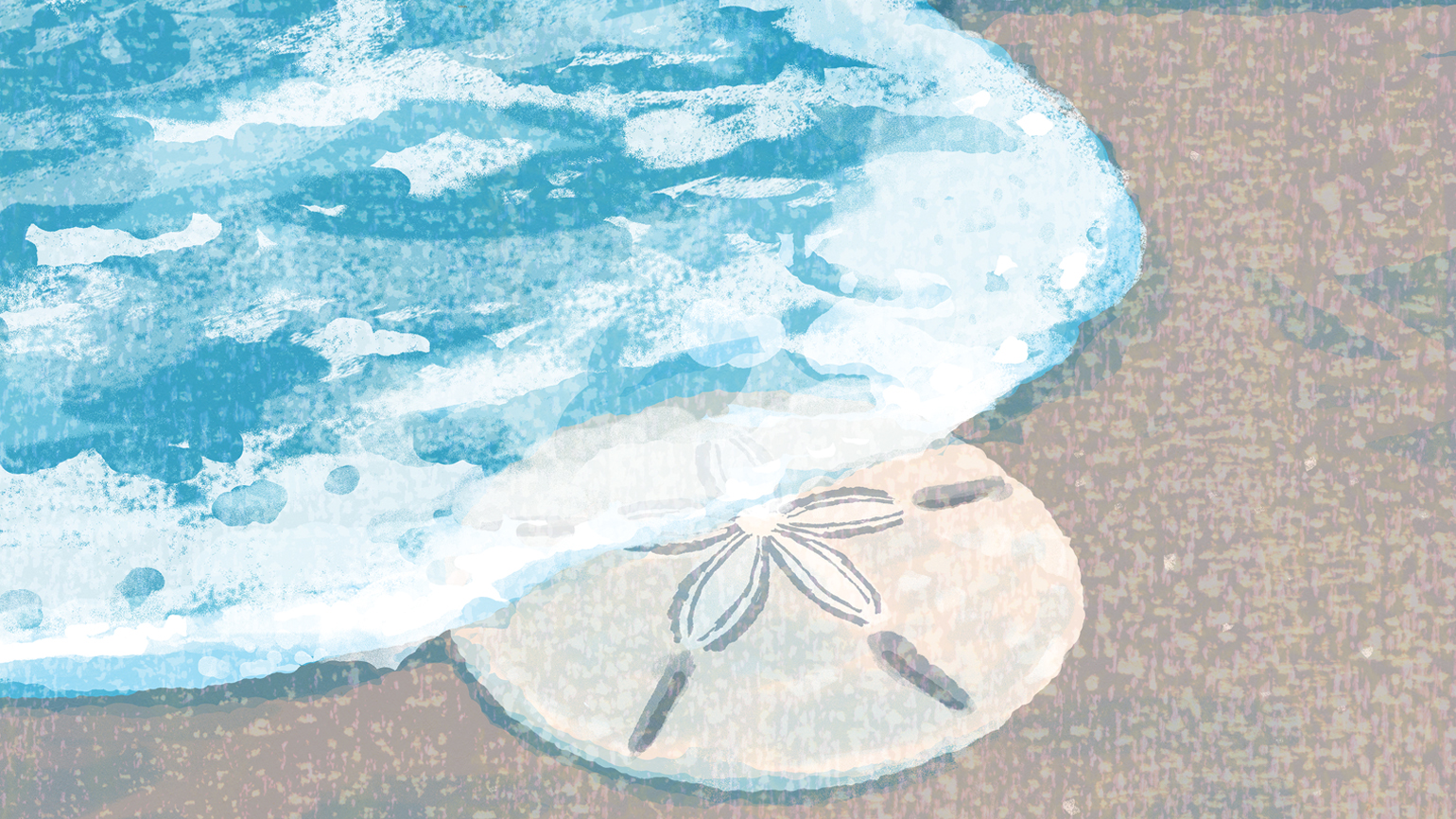
Then I spotted what looked like a flat disc and freed it from the jumble. A sand dollar with a hook on it, made to hang on a Christmas tree. There was a year painted on it too: 1989.

I continued walking down the beach, leaving the scallop shell for someone else to discover. I had a sand dollar to think about.

I’d recognized it in Mom’s treasure box right away. She’d given it to me in the spring of that year, 1989. The year I was expecting a baby at Christmas. Mom didn’t yet know that I’d lost the baby. She was so happy when she gave me the little present to open. “I saw it and thought of you,” she said. When I opened the gift, I burst into tears.

“Honey, what’s wrong?” She took me in her arms and let me cry. I don’t know how she could understand me through my tears. “I’m here,” she kept saying. “Just cry and cry. I’m not going to leave you.” Safe in her arms, in her love, I knew that everything would be okay.

Her gift of the sand dollar had been forgotten. At least by me. I didn’t even wonder about it as I struggled through that Christmas. But finding it years later in Mom’s treasure box told me it was her way of keeping her promise. I could almost feel her loving arms wrapped around me now on this beach. Hear her reassuring words, “I’m here.”

I took another step and stumbled. I plopped right onto the sand. Something in the surf had caught itself between my toes.

“Hey there,” a fisherman called. He ran over to help me. “You okay?”

“Oh, I’m fine,” I said, getting up.

I put a hand on his shoulder to balance myself and pulled whatever it was out from between my toes. I held it up in amazement. A perfect sand dollar, whole and unbroken. It was a message. God’s reassurance crashed over me like an ocean wave.

“That’s a really nice one!” the fisherman said. “Sand dollars almost never make it to shore in one piece. Not around here anyway.”

I brushed off my treasure and held it close on the walk home. God had made the same promise Mom did. I was never, ever alone.

For more angelic stories, subscribe to Angels on Earth magazine.

This Poetry Teacher Made a Lasting Impression

After retiring from a long career teaching English at Huntington East High School, my brother, Bob, planned to travel the world. Instead, I was visiting him in the hospital where he had undergone a triple coronary bypass and an aortic valve replacement. He had a long road to recovery ahead.

Bob didn’t have much experience with being a patient. Certainly not as much as I did. He had always been healthy and kept in good shape, working part-time as a chaplain since retirement. I had grown up with chronic illness, had dozens of surgeries. Even now I was facing a puzzling condition my doctors hadn’t yet identified. A condition that gave me symptoms similar to the ones Bob’s heart ailment gave him. I didn’t want to burden him with my own fears right now—he was grappling with uncertainties about what his ordeal would entail. I stroked his arm that held yet another IV catheter, wondering if I would soon face the same questions.

“I sure wasn’t expecting anything like this,” Bob said. “A failing heart. I can’t believe it.”

“I know it’s a shock. But we’re all here for you. You’re so blessed and loved. Your wonderful wife. Kids. Grandkids. More friends than you can count. I never go anywhere that someone isn’t saying something wonderful about your teaching days.”

“Thanks, Sis. You always say the sweetest things.” But I heard an “If you say so” in his voice.

I tried to reassure Bob about how valuable his life was, but I was trying to convince myself about my own life as well. I’d spent so much of my time trying to help others, both before my retirement as a nurse and now as a storyteller. But the world was full of those. Would anything I’d done really last after I was gone, like the famous poetry Bob taught in class?

A housekeeper entered the room with her mop and nodded to Bob in his bed. “Hey, Coach!” she said.

“Huh?” Bob squinted. He was a little groggy from his medication. I could tell he didn’t know who she was.

The housekeeper smiled. “I knew it was you. My daughter played on your soccer team. I still remember her reciting all those lines of poetry. She loves poems to this day.”

“I’d forgotten you coached soccer,” I said when the housekeeper left. “I think of you strictly as an English teacher.”

“I tried to combine the two pursuits,” Bob said. “I believed in the value of sports but knew few of my students would pursue sports as a career. I wanted to give them something more.”

He smiled to himself. “Those kids could come up with some great lines alright,” Bob said. “Sometimes a lot better than what I taught them.” He closed his eyes, then whispered, “‘Two roads diverged in a yellow wood, and sorry I could not travel both….’” He drifted off to sleep, quoting further from the immortal Robert Frost, one of his favorites. When Bob woke in pain, I hit the call button.

A nurse arrived with medication and a red velour pillow. “Hold this against your chest when you cough. It will keep your stitches secure, Coach.”

I turned my head. She was too young to have known Bob from school. Had he maybe coached a sibling or one of her parents?

“Word is, I need to quote something when I see you,” she continued. “Let’s see… ‘Hope is the thing with feathers.’ Don’t know what it means, but I always liked it.” Clearly Bob’s reputation was traveling through the hospital halls.

I visited Bob every day, sometimes more than once. I was so weak and short of breath, I rested in any available chair en route to his room. But I was drawn there, like a magnet to steel, as much to gain strength as to give strength to my brother.

Each time someone quoted poetry to “Coach,” I got a lift. It wasn’t any of those famous poets the staff was honoring with their words, it was Bob himself. He’d had no idea what an impression he’d made on so many.

One morning a technician came into his room to replace the incentive spirometer he’d been using since before his surgery.

“You’re doing great,” the tech said. “This will keep you from getting pneumonia, Coach. ‘To strive, to seek, to find, and not to yield.’”

“Alfred, Lord Tennyson,” Bob replied without missing a beat.

Just then, another technician entered the room. He was there to do a bedside chest X-ray, but not without getting in on the game. “‘Once more to the sticking place!’” he said as he positioned Bob.

“William Shakespeare!” I jumped in before my brother had a chance.

The poem play didn’t let up. His physical therapist quoted Wordsworth; an orderly chose William Blake. One afternoon a nurse arrived to flush Bob’s tubing. I saw his eyes widen at the giant needle in her hand. I’d distracted many patients in similar situations.

“Heard we gotta say something brilliant here, Coach,” the nurse said. “Here’s one: ‘Unless someone like you cares a whole awful lot, nothing is going to get better. It’s not.’ I’ll give you a hint: It’s not Shakespeare.”

“It’s Doctor Seuss!” Bob said, his face relaxing. “‘There’s no one alive who is youer than you!’”

That line gave me pause. I knew I’d been the best “me” I could be in all my years of nursing. God had made sure of that. Could it be that I’d made the same kind of loving impressions my brother had? I thought of all my former patients who still kept in touch and hoped maybe that was proof I had.

By the time Bob left the hospital for 12 weeks of outpatient cardiac rehab, there was no doubt in anyone’s mind that he’d made the world a better place. His on- and off-the-field poetry lessons had taken on a life of their own, and Bob was feeling positive about his recovery.

My own medical condition was finally identified: a medication error had caused a GI bleed that in turn led to extreme anemia. I fully recovered, thankfully with no heart damage. My attitude fully recovered as well. I didn’t need to be a famous poet to make a mark on the world. Everyday people make a big difference too.

For more angelic stories, subscribe to Angels on Earth magazine.

This Nurse Went Above and Beyond for a Patient In Need

I first met Jonathan Pinkard in December 2018. The day started normally. I walked into Piedmont Newnan Hospital in Newnan, Georgia, where I worked as an ICU nurse. When I arrived, my coworker told me about Jonathan, one of the patients I’d be caring for that day. He was 26, with autism and no home address, and he’d been in and out of the local hospitals since August.

Although he was in heart failure, he’d been removed from the transplant list because he wasn’t able to take care of himself. He couldn’t remember to take his medicine regularly. He didn’t eat right. Worse still, his PICC line, the intravenous tube used to administer medication, was always coming out. Without someone to help him manage his care, he wouldn’t be able to get back on the transplant list. “There’s no one to help him,” my coworker said. “His mom has health problems and lives in a nursing home. He never knew his dad. His grandmother raised him, but he’s been on his own ever since she died.”

I shook my head and went into Jonathan’s room. When I got there, he was clearly agitated. “Why is this happening to me?” he said. “I’m hungry, and they won’t let me eat.”

I checked his chart. “You’re having your PICC line reinserted, and you can’t eat until after the procedure is over.” He seemed so upset that I called and requested that they take him sooner. I couldn’t fix much for Jonathan, but at least I could make sure he got lunch.

When he was moved out of the ICU and onto the regular-care floor, I checked in on him before and after my shifts. Jonathan was a sweet young man, and we had some common interests. His favorite show was Family Feud. I watched it every night. We both loved college football. I rooted for the University of Georgia Bulldogs, and he was a fan of the University of Alabama Crimson Tide, and we had some lively discussions about the rivalry between the teams. I imagined that my own two sons would enjoy Jonathan’s company as much as I did.

His situation pulled at my heartstrings. He’d been given a death sentence and he hadn’t done anything wrong. What if he were one of my sons? I knew what I had to do. After all, I was a nurse and had an extra bedroom at home.

I sat down with my youngest, Austin, and told him about Jonathan. My oldest son had moved out long ago, and my middle son, Ryan, was away at college, but Austin still lived at home. He would have to deal with the most change. “I know it’s a lot, but Jonathan will die unless someone helps him,” I said. “I think God wants me to be that someone.” I waited for his response. God had called me to do this, and I didn’t want anyone to try to change my mind.

But Austin did no such thing. “Of course, Mom,” he said. “You have to do this. You’re the perfect person to help him out.” I breathed a sigh of relief, then called Ryan to let him know what was happening. “Jonathan would move into your room and you’d have to sleep on the couch when you came home,” I warned him.

“That’s no problem. I can tell this is important to you,” Ryan said.

To get Jonathan’s name back on the transplant list, I had to agree to be his full-time caregiver if a heart became available for the surgery. I had to sign a document promising to be with Jonathan 24 hours a day, seven days a week for the first month after the surgery. In order for me to be approved for an extended medical leave from work, Jonathan had to be a family member.

I applied to become his temporary legal guardian, but he had already taken to calling me Mama. I was nervous about having to defend my position, but everything went off without a hitch. I was granted guardianship and the necessary family medical leave from work. For the next few months I kept our situation as private as possible, praying for a heart for Jonathan.

On May 23, 2019, Jonathan was admitted to the hospital for a heart biopsy. Without a transplant, he had as little as six months to live. He was running out of time. I sat down on the edge of his hospital bed, hoping I had the right words. “You have an important decision to make,” I told him. As I explained that doctors wanted to surgically implant a left ventricle assist device, or LVAD, in his chest, I feared he wasn’t grasping the gravity of the situation, even though it was far from a perfect solution. The battery lasted for only 14 hours at a time. It had to be connected to power overnight, and we lived out in the country where the electricity sometimes went out. Then there were potential post-op complications of strokes or infections. But it was Jonathan’s decision. He refused the LVAD. My prayers for a new heart went into overdrive.

On the first of August, I got the call—a heart was available. Jonathan’s transplant surgery lasted eight hours. I spent the night in the waiting room, praying. “God, you’ve gotten him this far,” I murmured. “Be with him now.” When the doctors finally came out and told me everything had gone well, I nearly wept with relief. Ten days later, Jonathan came home to recover. Most of what he needed was guidance. I reminded him to take his antirejection medications four times a day. I took him to his weekly medical appointments. I taught him how to find and prepare low-sodium recipes and encouraged him to exercise. I wanted to teach Jonathan how to take care of himself so he could be independent.

Little by little, Jonathan regained his strength. After the first month, I had to return to work, but I didn’t need to worry. Austin was there with Jonathan when I wasn’t. His help was invaluable, and I couldn’t believe how selflessly he gave of his time. We watched Jonathan learn new things. When I was at work, he’d text me links to low-sodium recipes he wanted to try. When I got home in the evening, he was waiting for me on the front porch, ready to tell me about the progress he’d made that day.

Soon Jonathan was well enough to move out and start living on his own. God orchestrated everything to heal Jonathan, beyond anything I could have asked for. No one had questioned my instinct to do what I could to help a young man in need. Everyone had stepped up to smooth the process along, and I learned something wonderful. The world expects us to help one another.

Did you enjoy this story? Subscribe to Angels on Earth magazine.

This Heaven-Sent Tree Saved Her From the Storm

How many times had I stood in just this spot, waiting for the bus? And yet in all that time I’d never noticed—never really noticed—the beautiful tree that stood beside me.

I was running late for work as usual that spring morning after a good rain. Styling my hair always seemed to take longer than I anticipated. I rushed up to the neighborhood bus stop and brushed against a low-hanging branch. Water showered over me. Ugh, I thought. Somebody really should trim this tree.

As I shook off the droplets from my hair, I looked up. And up. And up. The tree towered above the attic of a two-story house. Her trunk was stout—too wide to get my arms around. She was quite a tree. Maybe her spray was just a friendly “Howdy, neighbor,” and I forgave her for messing up my hair. The bus pulled up, and I plucked off a cluster of almond-shaped leaves before boarding.

When I learned the tree was a honey locust, I gave her a name. “Mrs. Honey Locust” I’d call her, because she seemed old and wise, like a grandmotherly angel. Now that I’d made her acquaintance, I looked forward to seeing her every day, rain or shine. “Thanks for the shade, Mrs. Honey Locust,” I said on hot summer mornings. She responded with a wave of her branches. In the fall, she showered me with tiny golden leaves. Winter snow coated her in a flannel nightgown. She made waiting at the bus stop an adventure.

One day last August, I got to the bus stop early to be sure I wouldn’t be late for a hair appointment. I was desperate for a trim. “Hi, Mrs. Honey Locust!” I said, pressing my hand to her trunk. I heard a chirp from my bag and pulled out my phone.

“Severe weather warning for Johnson County,” the text read. “Wind gusts up to 80 mph. Seek shelter.”

“Oh, no,” I said, scanning the sky. “Not now.” There appeared to be no cause for alarm. No rain. A light breeze. Maybe the storm will miss us, I thought. I didn’t want to cancel my appointment. I glanced up at Mrs. Honey Locust for support. If anyone understood the importance of a good trim, she would. We waited for my bus.

Gray clouds gathered overhead, bruising the sky. The air smelled like rain. A strong wind rustled through Mrs. Honey Locust’s leaves. No sign of the bus, but I refused to give up as the street emptied.

I’ll be safer under the tree, I thought. I moved closer to Mrs. Honey Locust’s strong, sturdy trunk. That’s when I heard it. A voice from way above my head: “Run away now. Right now!”

I ran as fast as I could toward home. The wind whipped itself into a true gale. Shingles flew off my apartment building and smacked onto the street. It took a fiercely hard tug before the door flew open on its hinges. I ran inside for cover.

Outside, the wind howled. I heard a terrible crash. Not thunder. More like something heavy hitting the ground. The power flicked out. I shut all the blinds and tucked myself into the bathroom. I called to cancel my appointment. I could now see the danger I’d put myself in by refusing to heed the weather warning. I was lucky I’d listened to the voice from above.

It was midafternoon before the first bits of sunshine poked through the clouds. I breathed a sigh of relief. Then I heard another sound. A power saw grinding in the distance. My stomach tightened with dread. I pulled on a raincoat and ran down to the bus stop.

Mrs. Honey Locust had snapped at the base of her wide trunk and fallen hard across both lanes of the street. Workers were already clearing away the tree. The bus stop sign was knocked over by a huge branch that had fallen right where I had been standing—until I heard the voice from above. Perhaps it had come from Mrs. Honey Locust herself, my friendly angel tree.

For more angelic stories, subscribe to Angels on Earth magazine.

This Heaven-Sent Therapy Dog Brought Peace and Comfort

“Sophie would make a good therapy dog.”

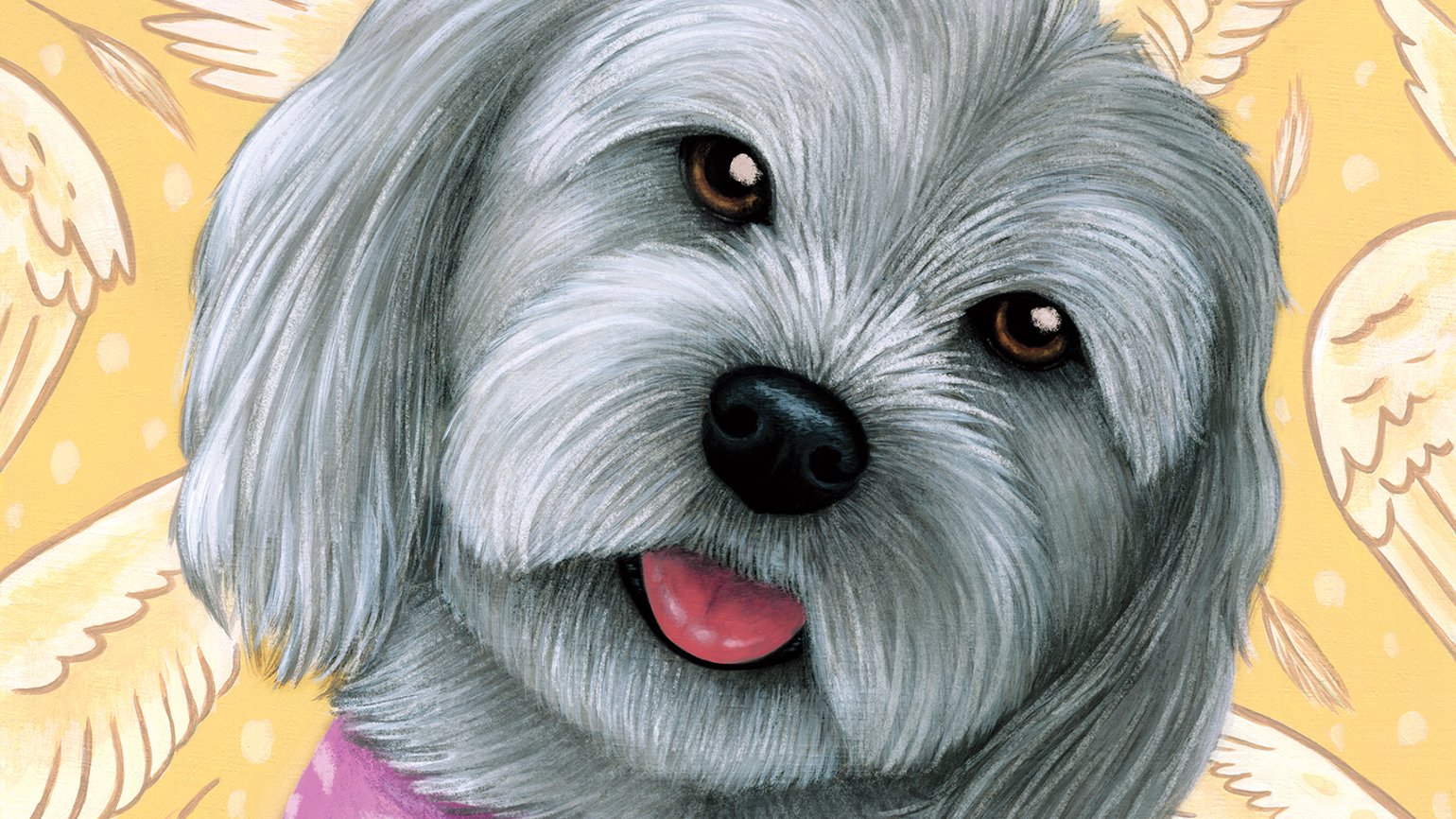
The day my dog trainer said those words, I didn’t even know what a therapy dog was. I certainly had no idea what traits my little Havanese had that would make her a candidate. But why not, I thought, if I can help people in need of some cheering up?

Now here I was, escorting Sophie into the hospital for our first day on the job. In the year and a half I had spent getting her certified, I’d learned what to expect. I would bring Sophie into a patient’s room for a brief pick-me-up visit, then we would move on. Of course, Sophie herself couldn’t understand her purpose in all of this, but she was always happy to meet new people, and that was enough.

We walked through the wide automatic sliding glass doors and into the lobby, where we were met by the nurse who ran the therapy dog program at the hospital. “Welcome, Sophie,” she said. “I’ll be taking you two around today.”

I followed the nurse down the hall. Sophie trotted along at my side, just as she’d been trained. “We’re a transitional care unit,” the nurse explained. “Most of our patients are seniors.” I knew how important it was for Sophie to be her gentlest. She’s trained and ready for this, I reminded myself.

Up ahead an older lady was making her way down the hall with a walker. A nurse walked beside her, holding on to a gait belt to keep her steady. We caught up to them, but the patient remained focused on her walker. I made sure Sophie didn’t interfere. As we were passing by at a safe distance, the lady turned her walker toward a chair against the wall. “Okay, we’ll stop for a rest,” her nurse said.

Once the lady was settled, she pointed a finger at Sophie. “Now, bring me that dog,” she said bluntly.

Surprised, I picked up Sophie and placed her in the woman’s lap. Sophie snuggled into her while the woman stroked her fur.

“Her name’s Sophie,” I said.

“Well, hello, Sophie,” she cooed. Aren’t you sweet?”

The lady talked to Sophie as if she were an old friend. “I had a little dog once,” she said. “She was a little bigger than you are.” She told Sophie about the many dogs she’d had in her life, what they liked to do, where she lived with them. That led to memories of her husband and children. Sophie’s gaze never left the woman’s face, as if she understood every one of the woman’s stories. When it was time for us to go she gave Sophie a hug.

“Good girl,” I told Sophie when we rejoined our host. She was looking at Sophie in a way that made me afraid we’d already made a mistake. Had we overstepped our bounds? Had I allowed Sophie to do something I shouldn’t have?

“You don’t realize what just happened,” the nurse said. “We have been evaluating that patient for five days and assumed she’d lost the ability to speak. Then she held Sophie and… you saw what happened.”

Sophie looked up at me and wagged her tail. Could she have known the miracle she’d performed? As much as I loved my Sophie and believed she was the most special dog in the world, I had to dismiss the thought as utterly preposterous.

But as we continued our hospital visits I really started to wonder.

Making our way through the hospital’s crowded entrance one day, Sophie jerked me away from the door. In all our visits, she’d never resisted going inside, and she’d done her business before we left the house. She was also trained not to pull on her leash, but she dragged me with unusual insistence to the benches out front, where a woman sat alone—a woman I hadn’t even noticed. Sophie jumped right up on the bench next to her. I was flabbergasted. “I’m so sorry for bothering you!”

“Oh, it’s no bother,” the woman said. “I’m waiting for my ride.” She ruffled Sophie’s ears. Then she started talking. It turned out she’d just gotten a frightening diagnosis. In the few minutes that Sophie spent with her, the woman seemed to relax just enough to find some hope in her situation. “Thanks for bringing her over,” she said when her ride arrived.

“I didn’t,” I confessed. “She brought me.” On some level, I thought, in some way, Sophie seems to know what her job is.

From then on I let Sophie take the lead. One afternoon we were waiting for the elevator to leave when a woman called us over to the waiting room. She acknowledged me politely, but patted her lap for Sophie. All her attention was on the tiny dog I put there.

“My daughter was supposed to go home today,” she said, “but there’s been a complication. Her husband is on his way, but it will take him a while to get here. They have a little baby at home, born just last week…”

I took a chair nearby, feeling almost like an intruder. But Sophie seemed to know that this was right where she belonged. She sat still and attentive, comfortable in the lap of the worried mother. When she got word her daughter was being moved to the ICU, we accompanied her to that waiting room. Sophie resettled with the woman in her chair. Finally her son-in-law called her cell to say he’d arrived at reception but wasn’t sure where to go. “A woman and a dog will come down and tell you how to find me. The dog’s name is Sophie.”

Driving home, I thought back to that day when my trainer said Sophie would make a good therapy dog. I still couldn’t put my finger on what it was about Sophie that made her so good at her job. What was her secret? The best explanation I got was from a man who worked in a hospice center that Sophie and I visited often. When the man became a patient himself and woke from a difficult surgery, the first thing he asked for was Sophie.

“Why Sophie?” I asked him when we were allowed to see him in the recovery room.

“I don’t know how to explain it,” he said. “All I can say is that she brings me a sense of peace and comfort.”

Maybe I didn’t need to know Sophie’s secret. She had been given a gift, a special assignment on this earth, and I had an assignment too. To help her share it.

Did you enjoy this story? Subscribe to Angels on Earth magazine.