

Embrace God's truth with our new book, The Lies that Bind

Guardian Angel Dear

Just a few more minutes and school would be over for the day.

I packed up my books and straightened my uniform, the same one worn by every girl at Blessed Sacrament Catholic School in St. Louis, Missouri. Finally the bell rang. “Bye, Sister,” I called as I passed her at the door.

I followed the crowd down the hall, jostled and carried along to the front door. Once outside I ran down the steps and over to the church, where I waited for my father to pick me up.

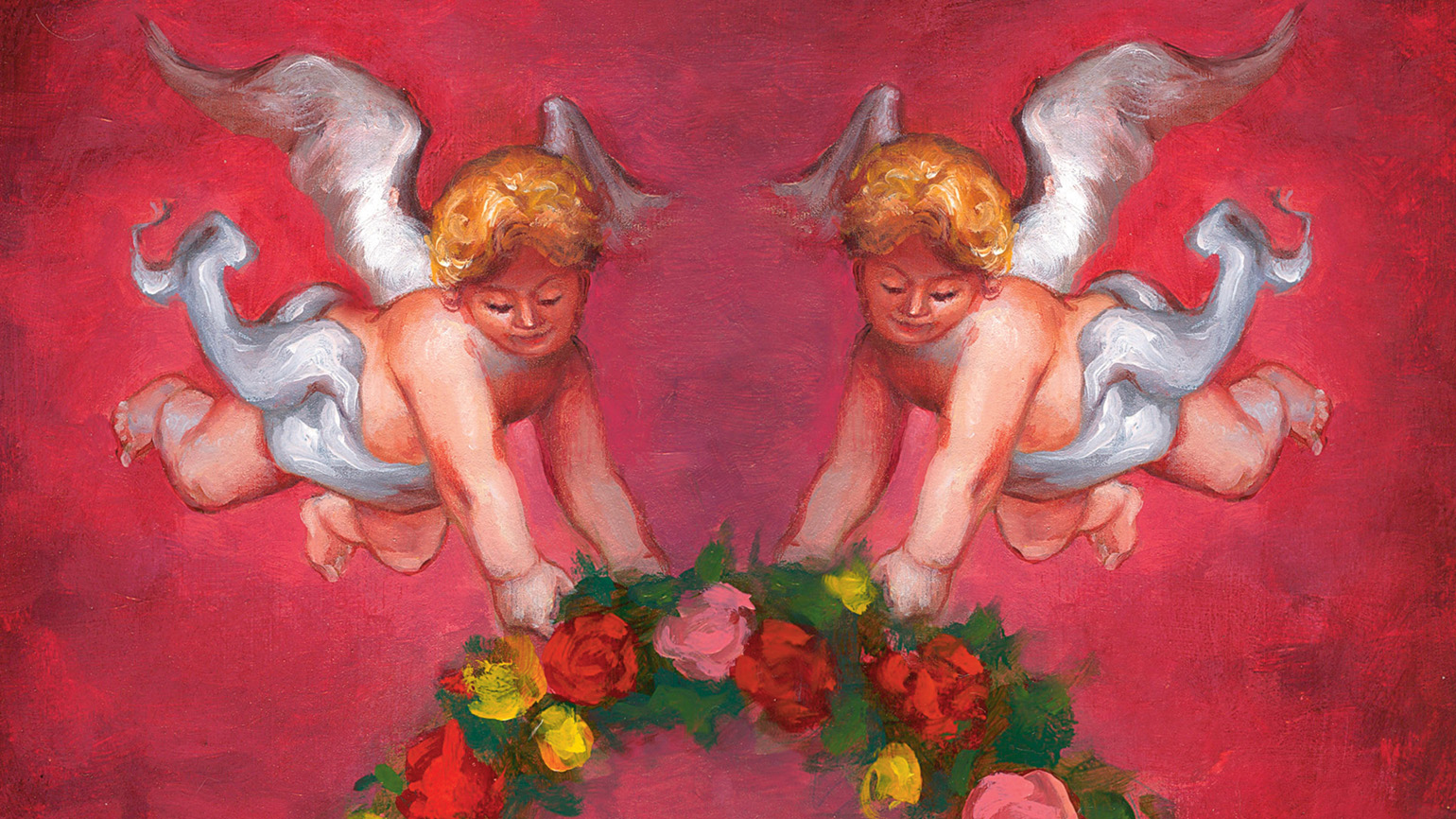
Inside it was quiet and peaceful. Statues of the angels looked down on me as I genuflected and made my way to the little chapel that was my favorite spot in the church. There hung the picture of two little children crossing a bridge. A beautiful blond angel watched over them, keeping them safe.

Find Hope, Inspiration and More in our Free eBooks

I knew the world held more magic and mystery than people could ever imagine, but this guardian angel somehow made it all real to me.

I recited the prayer Sister had taught us: “Angel of God, my guardian dear, to whom God’s love commits me here. Ever this day, be at my side, to light and guard, to rule and guide. Amen.”

The nuns said every child had a guardian angel, but sometimes I wondered if that really applied to girls like me. Girls who weren’t white like the nuns at Blessed Sacrament and the little boy and girl in the picture.

I was only in first grade back in 1959, but I knew black people and white people weren’t considered equal by some. I heard my parents talk about it when they thought I wasn’t listening.

I’d even heard adults claim there were two separate heavens, one for white people and one for black people. God, they said, lived in the white heaven.

The angel in the painting looked so kind and loving, but she was looking after white children. Why would God bother sending an angel down from white heaven to look after me?

Because he’s God, something in me said. I remembered all the things I’d been taught at church every Sunday with my family. “God is love,” the priest had said just last week. Sister had said the same thing a hundred times. “God created all of us.”

Why would God create me and not love me? I thought. In fact, why would God have created so many different people in the world who looked so many different ways if he only liked one kind of people?

I looked up at the picture again. The joy and courage the angel always gave me came flooding back. Maybe I didn’t have all the paintings and statues that white children had to prove that they had guardian angels, but I believed I had one all the same.

Maybe black children had to have a little more faith. “Thank you, God, for my life and for my guardian angel,” I said.

Read More: Guided to Heaven By His Guardian Angel

A car horn from outside broke me out of my reverie. I grabbed my books and dashed to the church door. When I got to the front steps, the strangest feeling came over me. It was like being engulfed in a presence, like a sacred mist. I’d never felt so peaceful or serene, even inside the little chapel.

I saw Dad behind the wheel of the car, but he was looking at something other than me. Even after I reached him he continued looking beyond me. I glanced back, but there was nothing there. I didn’t want to disturb my peaceful feeling by asking a lot of questions.

I got in. Neither of us said a word all the way home.

I was doing my homework in the living room when Dad said he wanted to talk. He sat down next to me and seemed to be struggling for words. He held my hand and took a deep breath.

“When you came down the church steps today,” he said, “I saw someone behind you. A tall, glowing lady with…” He hesitated. “A glowing bronze lady with huge wings!”

I gasped. My pencil rolled to the floor. “Wings?” I whispered.

“She was radiant,” Dad continued, his voice going soft. “So radiant and beautiful I couldn’t take my eyes off her. I could feel her incredible love for you pouring into me. I know I saw your guardian angel.”

I didn’t know what to say. Dad looked me right in the eye like what he was saying was the most important thing in the world. “You will always be protected by God and his angels,” he said. “I want you to remember that always.”

I flung myself into his arms. I did have my own guardian angel as beautiful as the one in the picture in the chapel. Never again would I wonder if God cared enough to send one just for me. My God, our God, who lives in one heaven for us all.

Did you enjoy this story? Subscribe to Angels on Earth magazine.

God’s Secret Agents

Modesty and spiritual power: Every Bible reader knows that these two qualities go hand in hand. Though it isn’t always easy to conceal their splendor and force from mortal eyes, the angels of the Bible often like to work incognito.

Think of the three shining strangers who visited Abraham at Mamre, for example, or the fourth man who showed up with Daniel’s friends in the fiery furnace. None of these people announced themselves as angels. Rather, they were simply and mysteriously there, at just the moment they were needed—and gone just as fast.

The Bible’s great human heroes do the same. Jewish legend says that after being taken up to heaven in a whirlwind, Elijah chose to descend to earth again and again over centuries, to help people unawares. He continues to return to this day, and when he does, he likes no disguise better than a beggar’s rags.

One place where this tradition of modesty and secrecy is most famously present is the group of stories and legends that have built up around the Lamed Vav—Hebrew for the number 36. First mentioned in Jewish teachings 1,700 years ago, the Lamed Vav are a group of saintlike men who never tire of doing good deeds for their fellow human beings.

Though not outright angels, the Lamed Vav do have a certain supernatural quality. They are privileged to be able to look directly upon God, and God himself, it is said, looks upon them as pillars holding up the human community. Legend has it that in every generation, you can always find exactly 36 of them doing their work on earth.

That is, if you can find them. For the most distinguishing characteristic of the Lamed Vav, along with their love for helping others, is their insistence upon anonymity. Modesty is so central to the Lamed Vav that, should fame or renown come the way of one of them, he must cease immediately from his activities.

One legend tells of a Russian couple whose son became mute. They asked their rabbi for help, and he told them to take their son and travel to a distant town. “There you will find a small house at the foot of a mountain belonging to a woodcutter,” he said. “Stay there until God sends a cure for your son.”

The couple did as told, but they were surprised to find that the woodcutter could not help them. Why come all that way?

“Well, I do happen to know a young man,” the woodcutter said. “A baker. He might be able to help.” In fact, the woodcutter told them, he had long suspected that the young man was a member of the Lamed Vav. Now, the woodcutter believed, he had proof. “That young man must be the real reason your rabbi sent you to me.”

The couple found the young man and told him of their encounter with the woodcutter, and of their rabbi’s words that had led them to him.

“What, he has discovered my hiding place?” said the young man. “Tell the rabbi that next time I won’t be so easy to find!”

With that he blessed the couple’s boy and vanished. Somewhere else on earth at that precise moment, we can assume, the young man’s place was taken by a new member of the Lamed Vav.

True or legendary, the Lamed Vav and the stories that have grown up around them illustrate a truth at the heart not only of Judaism but of all great spiritual traditions. God’s work happens best on earth when it is done with simplicity and humility, far from the limelight. And because this is so, we never know who, among the people we meet and interact with each day, might be one of the spiritual giants who are secretly holding up the whole world.

It’s sometimes the most ordinary, seemingly most overlooked people who make the biggest impact on our lives. Think back over the course of your own life. Picture all the people you’ve met who have done good things for you without any thought of receiving thanks. Who among them—a kind person in an airport, a friendly policeman, a teacher who never gave up on you—might actually have been one of the Lamed Vav?

Jewish wisdom tells us we never truly know—and that’s just the way God, and the Lamed Vav, want it.

Read more stories about heavenly angels and angels on earth.

God’s Angels Save the Day

My two grown daughters and I threw our stuff into the car for a quick weekend getaway to Florida. Just us girls. Autumn volunteered to drive. I climbed in front next to her, and Amber sat in back. We snapped on our seat belts, and we were off. The three of us sang to the radio at the top of our lungs, happy to be free. We left all our cares behind.

It was a great trip until the skies opened up outside Beaufort, South Carolina, on I-95. Torrents of rain burst from the clouds. The windshield wipers were useless. “I have to pull over,” Autumn said. She tried merging into the far right lane, but trucks barreled past, slamming sheets of water onto our car. It was disorienting, then worse—the tires slid left and right. We were all over the road. Autumn fought to steady the wheel. The car spun out of control. We careened into a motor home. The girls jumped out of the car. My chest throbbed.

“Get out, Mom. Come on!” Amber cried. “We’re not safe here next to the car.”

“I can’t,” I said. “My chest…”

Autumn took out her cell phone: “There’s been an accident. Send an ambulance!”

Trucks whizzed by. Amber and Autumn pulled me out of the car and helped me lie on my back in the grassy area by the roadside. Rain poured down on my face. I had to calm myself. Maybe then the pain in my chest would go away. I closed my eyes.

The rain stopped abruptly. I looked up. A man held an extra-large umbrella over me, shielding me from the downpour. My girls were by my side. Other kind faces surrounded us. A woman pulled bandages from her bag to treat a cut over Amber’s eye. Someone draped an afghan over me. A woman knelt by my side. “I’m going to take your pulse,” she said.

Another woman gently held my other hand. She said no one in the motor home was injured, and help was on the way for us. “We’re here for you till then,” she said. “Your daughters are fine. You will be too.”

I relaxed. We were in very good hands. The woman who took my pulse mentioned she was a nurse. “How do you like that?” said the woman who held my hand. “So am I.” And the other woman who tended to Amber’s cut was an eye specialist. We couldn’t have asked for better care. Everyone who’d appeared so suddenly in the rain seemed to be dispatched from heaven.

The pain in my chest began to subside. EMTs explained I was probably just bruised from the impact of the seat belt. Tests at the hospital confirmed we had no serious injuries. We’d left all our cares behind, but we were in God’s care all the way.

Did you enjoy this story? Subscribe to Angels on Earth magazine.

For Lent He Gave Up Doubting That Angels Surround Us

Who comes to our rescue when we’re lost? Who nurses us back to sanity and peace of mind when we have been stressed and tempted and asked to do what we think we can’t do? How do we get back to where we want to be and belong, back to the godliness inside of us?

These are the sort of questions that come to mind when I think about Lent, that wintry season before Easter, when we honor Jesus’ 40 days in the wilderness and look for ways to fast as he did. People ask me, “What are you going to give up for Lent this year?” Good question. What am I going to do for those 40 days? (Slightly nerdy aside: When we count those 40 days from Ash Wednesday to Easter, we don’t include Sundays, which technically are feast days.)

Over the years I’ve given up things like wine, steak and chocolate—even limited my time on social media and my cell phone use. I’ll never forget when my wife, Carol, gave up worrying for Lent. Turned out that was the year our two then-college-age sons decided to take their spring break trips south of the border—just as news of a Mexican drug-fueled crime wave splashed across the airwaves. Talk about being tested. Carol could have used some angels to intervene that week, but alas the boys traveled (and returned safely). Who knew that worry could be such a big temptation?

And yet, when I go back and read the Gospel accounts of Jesus being tempted in the desert where he fasted, I find myself more intrigued with the wilderness part. After all, he could have fasted closer to home, as most of us do. He could have given up food and drink in a more comfortable setting. But before launching his ministry, to be ready to do the miraculous things he knew he was going to be called to do, he took himself to the Judean desert—bleak, empty, inhospitable, lonely, forbidding.

The idea of testing myself this Lent doesn’t appeal to me, especially after the year we’ve had. Hasn’t there been enough of wilderness living already? Going into quarantine for long stretches, limiting our contacts with friends and family, attending church or Bible study by Zoom, coping with financial uncertainty, fighting our fears with no relief in sight. And not just for 40 days! Jesus, I ask while I struggle, is there nothing to rescue us?

Take a look, though, at the biblical sources. This is exactly when angels came into the picture. The Gospel of Mark, as always, puts it most succinctly: “He was in the wilderness 40 days, tempted by Satan; and he was with the wild beasts; and the angels waited on him.” Angels waited on him. Remember that, but first let’s explore the details of those temptations as offered in the Gospel of Matthew.

The devil didn’t dip into his bag of dirty tricks until the end of those 40 days, when Jesus would have been famished. How to lure a hungry man? Offer him some food. “If you are the Son of God,” Satan says. “Command these stones to become loaves of bread.” Jesus responds with Scripture: “ ‘One does not live by bread alone, but by every word that comes from the mouth of God.’ ”

Next, in a scene that I wish could be captured in a Spielberg movie, the devil flies Jesus through the air to the holy city of Jerusalem and puts him on the pinnacle of the temple, telling him to jump, quoting Scripture right back at him. “ ‘He will command his angels concerning you,’” Satan says, using words from Psalm 91. “ ‘On their hands they will bear you up, so that you will not dash your foot against a stone.’ ”

Jesus comes back at him with more Holy Writ, “Again, it is written, ‘Do not put the Lord your God to the test.’ ” (Note to self: When someone is hurling Bible verses at you like weapons, look more closely to their motives. Are they listening and talking with love?)

Last, in the greatest temptation of all, the devil takes Jesus to a mountaintop where they can look down on all the kingdoms of the world. There Satan makes his final offer: “All these I will give you, if you will fall down and worship me.” The message is pretty clear: Infinite worldly power comes with an exacting price. Even for the Son of God. I tell myself I wouldn’t be tempted by such a thing. Until I think about how nice it would be to have just a little bit more money, a little bit more prestige, perhaps…

Jesus’ final answer sends Satan packing. More Scripture, this time one of the Ten Commandments: “For it is written,” Jesus says, “ ‘Worship the Lord your God, and serve only him.’ ”

Now it never really occurred to me how much this whole battle must have cost Jesus until the end of the scene described in Matthew 4:11: “Then the devil left him, and suddenly angels came and waited on him.”

Jesus needed the help of the angels? Well, yes. Because at this moment and throughout his time on earth, he is one of us. Human. And despite the ability of the enemy to pull Jesus hither and yon, and his supreme ability to resist and argue back, he needs care, the sort of inner healing that only God can provide. Angelic comfort and rest.

Have you had enough of a wilderness experience this year? All that social distancing, all those scary headlines? Do you keep asking yourself, When will things get back to normal? The message I take from Jesus’ wilderness travails is that what follows is a whole new normal. You might feel spent. You wonder how you even survived. That’s okay. This Lent, I’m going to give up doubting that angels are right here, right now. And Easter is just around the corner. Always.

For more angelic stories, subscribe to Angels on Earth magazine.
Florida Artist Gives Everyone a Chance to Be an Angel

There have been quite a few angel sightings on social media lately.

That’s because Erica Group, an artist in DeLand, Florida decided—in a moment of inspiration—to etch a giant pair of wings onto the side of a local business.

Two years ago, Group was working at a small clothing boutique in downtown DeLand. The tiny store was located next to an alley that served as a backdrop for photos Group and her colleagues took of their new merchandise.

“Anytime we’d post a picture of us wearing clothing for the store, items would sell,” Group recalls.

One afternoon, Group was struck with an idea to fill the beautiful, blank canvas that was the alley’s wall with a pair of feathered wings.

She got permission from the owner of the West Volusia Beacon Newspaper to chalk her heavenly piece of artwork on the paper’s building and took some photos of the finished product to share on social media. Soon, people from all over town were coming to have their picture taken in front of the wings.

“It went crazy,” Groups says. “People kept coming into the store, asking where the wings were and taking their own pictures. It just started spreading.”

The owner of the building quickly caught onto the trend and asked Group to make the wings more permanent—replacing chalk with paint. Since then, more than 1,400 people have had their picture taken with the wings, usually sharing them on Twitter, Instagram and Facebook with the hashtag #DeLandWings.

“It’s become this cool treasure hunt in town,” Groups explains. “They’re tucked away in this alley, kind of hidden. I love walking back there and seeing people looking at them for the first time.”

The artist wants the wings to be interpreted however people wish — though she’s heard the word “angels” quite a bit.

“I love that they have ability to morph into different things,” Group says.

However you look at them, they certainly seem to be inspiring people and bringing a bit of joy to Group’s hometown.

“It’s very humbling,” Group says about how her artwork has touched so many lives. “I would love to do more wing murals in other small towns. I think it would be neat.”

Finding the Right Words

Public speaking has never been my problem. For years I was a lawyer. I can’t tell you how many closing arguments I’ve made. I guess it’s in my blood. My dad was a politician—Dayton, Ohio’s first African American mayor. So it shouldn’t have been hard to write the acceptance speech I was scheduled to deliver after being appointed to a judgeship in Common Pleas Court. Ascending to judge had been my dream—and the dream Dad had had for me, as well. I sat at my desk, pen in hand, paper in front of me. But no words came.

I wished I could have consulted Dad, asked him for guidance. He’d know the exact words to say, I thought. But Dad had died 16 months before.

Just then the phone rang. It was my sister Annette. “You’ll never guess what I found today while rummaging through some old papers,” she began. Just what I need, I thought. I’m trying to concentrate, and she’s off on a whirlwind of chatter.

I half-listened as she bantered on about this and that. Time was growing short. I tried to think about my speech. I thought again of Dad. He was 51 when he became mayor—my age. At the time, his daughter—my sister—Annette was 14. I had a 14-year-old daughter, too. Strange, I thought.

“Frances!” Annette shouted into the phone. “Frances, you’re not even listening!”

“Sorry,” I said. “I’m just so worried about what to say. I’m being sworn in tomorrow.”

“That’s what I’m trying to tell you,” she said. Annette had called because while riffling through Dad’s old papers, she discovered that the date of my swearing in was the same as the day Dad was named mayor.

Dad’s there with me, I thought. I thanked Annette and hung up the phone. I picked up my pen. It felt like Dad was watching over my shoulder. The words began to come. I stopped worrying. I knew I’d do just fine.

Read more Mysterious Ways.

“Family Circus” Author Bil Keane Joins the Heavenly Angels

I just learned that Bil Keane, the creator of the widely distributed Family Circus comic strip, has died of congestive lung failure at the age of 89.

Surely he’s up there with the heavenly angels, after a lifetime of drawing his feel-good, family-values cartoons. Keane said that everything he drew for the strip had happened to him, and it’s no wonder he could churn out endless material after raising a houseful of kids.

In one of Keane’s cartoons, Dolly and PJ watch out the window as their brother Billy attempts to climb from the top of the backyard fence onto a tree. Billy reaches for a limb from tippy toes, and you just know this is not a smart move. Dolly suggests, wisely, “Billy better hope his guardian angel didn’t get laid off.”

My favorites, though, showed the kids when they weren’t exactly being little angels. Like when Dolly, kneeling for her nightly prayers, asks her weary mom, “After I do my ‘please blesses,’ can I throw in a few ‘don’t blesses’?”

Keane made us all feel like one of the family.

Experiencing the Angelic Realm

A few years ago, I took my stepdaughter Evie snorkeling for the first time. She was eight, and though she’d put a face mask on before, she’d never had a chance to look below the waves in an area that was really populated with sea life. We were in the Bahamas, floating in the water by what looked like a pretty humdrum chunk of rock. Evie pushed and fumbled at her mask, getting the water out of it and blowing through her snorkel so she could breathe. When she was finally comfortable with her equipment, she lowered her head beneath the water.

Kaboom. The reef was swarming with fish—parrot fish, triggerfish, and swarms of little black-and-yellow sergeant majors that were all around her, investigating her completely without her knowledge. I’ll never forget the look in her eyes when she brought her head back out of the water and the uncontrollable smile that formed around the snorkel in her mouth. She had thought she was just bobbing about by a barren rock, when in fact she had been immersed in a whole other universe of color and light and life.

ENJOYING THIS EXCERPT? PURCHASE PROOF OF ANGELS.

Imagine: the world, changed in an instant from a place of fear and uncertainty and emptiness to a place of wonder and beauty and overwhelming numbers of beings, invisible but present all the same. Imagine a helmet like the ones old-fashioned divers used to wear: one that covers the entire head like a fishbowl. Then imagine that this helmet is made of a magical, glass-like substance, one so thin and unobtrusive that it lets just about everything through.

It never gets dirty, never gets wet, and is absolutely transparent to light and penetrable by air. Essentially, it’s as if this helmet isn’t there at all. Except it is. And the one thing this helmet blocks out—the one thing it keeps the person wearing it from experiencing— is the spiritual world. Everything else gets past these helmets. But that one thing—that singular, all-important part of the world, without which the world isn’t really the full, complete world at all, but only half of it—doesn’t make it through.

Sometimes, if the light and the circumstances are just right, you can catch a glimpse of the helmets on the heads of other people as they pass by you in the street. Sometimes the helmets other people wear are so obvious—so completely visible—that it seems laughable that they themselves could fail to notice that they’re wearing them. But then, just as often, most of us fail to notice that we ourselves are wearing one.

What kind of a world do we see when looking through these magical, spirit-filtering helmets? We see a world in which the earth is just the earth, where good things and bad things happen, where there is happiness and sorrow, where people are born and people die. Yet somehow, none of this seems to mean all that much. We see a world in which every- thing is relative and essentially insignificant, but complaining about this fact, or even bringing it up, seems silly.

Along with having no real purpose, the world seen through the glass of this helmet has no real justice either. Some people do “good” things, and others do “bad” things, but these are really just words we have cooked up to try to make sense of things that we actually can’t make any sense of. Bad people often do very well in this strange, pointless world, while nice ones have to bear up under all manner of pressures and struggles.

One of the strangest things about these helmets is that, even when we become aware that we’re wearing them, we can’t simply take them off. They can’t be wrenched off with our arms or shattered with a sledgehammer. They are extremely stubborn, extremely resilient.

At least, they are most of the time. But sometimes moments come along when these helmets seem to disappear all by themselves, with no effort on our part at all. Suddenly they are just . . . gone.

In moments like this, we find ourselves looking around at the world as if we’d never seen it before. Those moments are what Proof of Angels is about.

Everyday Angels to the Rescue

Deadlines are everything in the magazine business. That’s why I nearly hit the panic button when I was too sick to come in and close this issue. Who would oversee our final corrections and color work? And how could I ever write my editor’s note at home under the covers? But there was no way I was leaving the house.

From bed I made my first call: Nancy Galya, our administrative manager. “Feel better,” she said. “I’ll tell the Angels staff.” That was a big help, but I had to call my boss, Edward Grinnan, myself. I moved to the sofa and turned on my laptop.

Edward and I traded ideas about what I might write my editor’s note about, but I couldn’t seem to focus. Nothing felt right working from my quiet den. “I know you like to be at your desk, people in and out, all the activity going on around you,” Edward said. “But you’re going to have to improvise. You can talk to your readers from anywhere, even in your pj’s.”

I wasn’t good at improvising! I checked my e-mail. Three in a row from the Angels editors, Meg, Tanya and Kelly, all assuring me the issue was in good shape. “I’m giving it another proofread for good measure!” Kelly said. “All our authors are happy with their pieces,” Tanya wrote. And Meg was already looking at stories for the next issue.

Doug rang in from the art department: “The online video is ready to go!” Audrey and Olga sent a preview of the cover. A beautiful Easter angel filled my screen. She had wings but made me think of all the angels hard at work at the office, even when I couldn’t be, so that we could give you another issue of the best angel magazine there is.

I rearranged the sofa pillows and got on that editor’s note of mine. Turns out, it was easy to improvise when angels were everywhere. I guess they work from home too.

Download your FREE ebook, Angel Sightings: 7 Inspirational Stories About Heavenly Angels and Everyday Angels on Earth.

Even Turtles Must Have Guardian Angels

Our new house was perfect for everyone in my family—even our pet turtle, Squirt, who’d been living in a one-gallon tank. Once, our dog snatched him right out of it. Luckily the only damage was a small v-shaped chunk taken out of Squirt’s shell.

Squirt would be much happier in the one-hundred-gallon pond outside our new place. The kids could visit him there whenever they wanted. “Here you go,” my son, Josh, said as he put Squirt on the ground.

The whole family watched Squirt waddle over to the edge of the pond and paddle into the water. Each day when I left the house I checked on Squirt in his pond. Then one morning Squirt was gone!

“He must have wandered off!” I said. The kids were heartbroken. We searched the yard for days with no luck. Squirt was never coming back. “We’ll just have to ask the angels to watch over him,” I told Josh.

Years went by. We had other pets. Our new house became a home. One evening my husband, Paul, and I were coming back from a walk when we saw a turtle cross our path. I couldn’t help but think of Squirt as Paul scooped it up to save it from traffic.

“Look at this!” he said. There it was—a small v-shape piece was missing from the shell!

“Squirt!”

God’s angels had done much more than watch over our pet turtle. They’d brought him home!

Download your FREE ebook, Mysterious Ways: 9 Inspiring Stories that Show Evidence of God’s Love and God’s Grace

Education of an Angel

I stepped off the bus with a heavy heart.

Usually this was one of the most exciting parts of my week, going to my college biology class.

That class was the start of a whole new life for me. I’d been ill during high school and only earned my diploma later in night school. Finally I’d enrolled at Medgar Evers College, a brand-new school opened by New York’s City University system. The college was so new it didn’t have a campus. My biology class took place at a church in Brooklyn, a 45-minute bus ride from my parents’ house in Bay Ridge. I loved that class.

Except today I was coming to drop out for a while. The day before, my father had died. He’d been a janitor at a big building in midtown Manhattan. He’d fallen from a ledge at work and broken his leg. Three weeks later he’d suffered a fatal embolism. My mom wasn’t doing well either. She was struggling to recover from an operation. I’d already missed yesterday’s class and I was coming to tell the professor I wasn’t sure when I’d return.

I approached the church, a beautiful Gothic sanctuary more than 100 years old with a soaring bell tower, Lafayette Avenue Presbyterian. A warm September sun shone down.

“Good morning,” said a voice. Startled, I looked up to see a familiar face. A tall man with thinning blond hair in khaki pants and a blue collared shirt stood at the church door polishing the glass. I’d seen this man most days I came to class. I assumed he was a janitor like my father. He was always cleaning something or sweeping the walkway. He wore funny, old-fashioned glasses. He was friendly, always said hello to me.

“Didn’t see you yesterday,” he said.

Before I could reply to him my eyes filled with tears. “I know. My father died yesterday,” I choked.

The man’s face clouded with concern. “I’m very sorry,” he said. “Can I do anything for you?”

Suddenly the prospect of going to class and explaining about my father all over again filled me with dread. “Would you mind telling my professor what I just told you? She needs to know why I won’t be in class.”

“Of course,” the man said. “Come back soon.” I thanked him and walked quickly to the bus stop.

Things only got worse. My mother’s condition deteriorated, and I realized that without my father’s income I couldn’t take care of her and go to school at the same time. I’d gotten a job at a coffee shop but it didn’t pay much. I figured I wasn’t meant to get a college education.

On the morning I decided to drop out altogether I left the coffee shop and walked home. I was tired—my coffee shop shift had begun at 4:00 a.m.—and depressed. I collapsed onto the sofa and fell asleep. Hours later I awoke with a splitting headache. For a moment I wondered what was wrong with me. Then the strangest thing happened.

Despite the eruption in my head I felt a sudden urge to stand up. The urge became a command to leave the house and board the bus toward Lafayette Avenue Presbyterian. Still directed by this mysterious force, I got off the bus, walked to the church and sat on the steps outside. My class had long since ended for the day. The church appeared closed.

Minutes later the church door opened and I shrank back. White light poured from the door. I shielded my eyes and saw, silhouetted, a familiar figure. It was the man I’d often seen at the church, the one I assumed was a janitor. The moment I saw him my headache vanished. The man stepped toward me.

“I didn’t see you coming to class today,” he said, smiling.

“I—I didn’t go to class,” I replied. The man stared at me. Something about his gaze caused me to blurt, “I’m dropping out of school. I can’t afford it. I want to go but I can’t.”

The man nodded. “How much money do you need?” he asked.

“Eighty dollars a week,” I said.

“You just got yourself a working scholarship for three hundred and thirty-two dollars a month.” He extended a hand for me to shake. I looked at him.

The man laughed. “I’m sorry, I haven’t introduced myself. I’m George Knight, the pastor here. I need someone to answer the phone and vacuum after Sunday services. You start Sunday.”

My expression grew even more dumbfounded. “Get some rest,” George said. “I’ll see you Sunday.”

I did see George that Sunday. And for many years after. My friendship with him only confirmed the miraculous events of that providential day. The same week I began work at Lafayette Avenue Presbyterian my mother passed away. George attended the funeral and asked if I’d like to live in a spare room in the church’s rectory. I said yes and in the following years George helped me finish school, even doing my vacuuming whenever I got too overloaded with homework.

Eventually I graduated, married, landed a stable career and had a wonderful daughter who grew up to become a social worker. What would have happened if I’d never met George, never returned to his church and discovered he was so much more than the janitor?

Well, God doesn’t think in what-ifs. George Knight was my rescuing angel. I thank him in my heart each and every day.

Download your free ebook, Angel Sightings: 7 Inspirational Stories About Heavenly Angels and Everyday Angels on Earth.

Easter’s Wreath

I stood in the chill March wind staring up at a sculpture carved 600 years ago into the keystone above a doorway.

The carving, in high relief, depicted two angels with great folded wings holding between them a wreath of roses surrounding a pair of architect’s compasses.

I was visiting the ruins of Heidelberg Castle high above the Neckar River in Germany. Sightseeing is hard on the feet and I badly wanted to sit down. I kept thinking of a café I’d passed, climbing up to the castle: the signboard on the sidewalk showed a mug of hot chocolate topped with a glorious pyramid of whipped cream.

And still I lingered, puzzling over that carving. There was nothing unusual about the depiction of the compasses; medieval stonemasons often chiseled symbols of their trade as a kind of signature in stone. Nothing unusual, either, about a decorative wreath of roses.

What surprised me were the faces of the angels. Instead of the solemn and majestic features conventional for portrayals of these mighty messengers of God, these were children.

The slender brochure I’d picked up at the castle identified this building as “Ruprecht’s Palace”—all that remained of it—“built in 1400 for Prince Ruprecht III to celebrate his election as King of Germany.” Nothing about the carving above the entrance. Footsore and shivering I stayed there, but was unable to walk away, as though those silent angels had something to tell me.

All afternoon I’d felt a strange affinity for this destroyed fortress within its crumbling ramparts, maybe because in my own small way I too faced the loss of a “castle.”

After Easter, my husband and I were to leave our beloved home of 50 years and move to a small apartment. Might there be a message here for me? I set out in search of someone who could tell me the meaning of the sculpture.

I found her, an American tourist like myself, but armed with a hefty guidebook in German. This is the history she translated for me…

Ruprecht’s master builder, nameless as were most artisans in 1400, had two little sons, twins, who enjoyed watching their father at work. The pulleys and hoists, the hammering, the coming and going of mules and cart horses, held an endless fascination. Day after summer day, as the palace for King Ruprecht rose, the little boys climbed higher on the scaffolding to watch the lively scene.

The building was nearing completion when the tragedy occurred. The wooden platform on which the twins stood collapsed, killing both children.

Their devastated father laid down his compasses and other tools and shut himself away.

Without his supervision, work on the new palace ceased. For weeks as summer turned to fall, the construction site lay silent and deserted. The only thing the grieving father felt able to do was to cut a dozen roses each day from the castle garden—picking only white roses, white for the dead—and weave them into a wreath for the twins’ grave.

No one knows how much time passed this way, just that one night the father had an extraordinary dream. As he slept it seemed to him that two huge angels entered the room. They were his sons’ guardian angels, he believed, those angels assigned to every child at birth.

They brought news of his little boys. The angels told him that the twins were well and happy, and eager for him to finish the building they had watched going up with such excitement.

When the father woke the next morning, it was told that he found a wreath of roses—red roses for the living—at the foot of his bed. What is certain is that the master builder returned to his labors and Ruprecht’s palace was completed. In memory of his dream, the father carved on the keystone the two angels, the rose wreath, and the two compasses.

Regarding the angels’ child-like faces…perhaps in his dream the visages of the angels had been too bright to see or too unearthly to depict. In their place he carved the faces of his two little boys, alive, he now knew, forever.

What a message for Easter—and for me right now! I thought as I thanked my informant. When something precious is taken away, as ordinary as the loss of a well-loved house or as overwhelming as a death, this is the season when angels meet us at the tomb with the glorious shout of life undefeated.